
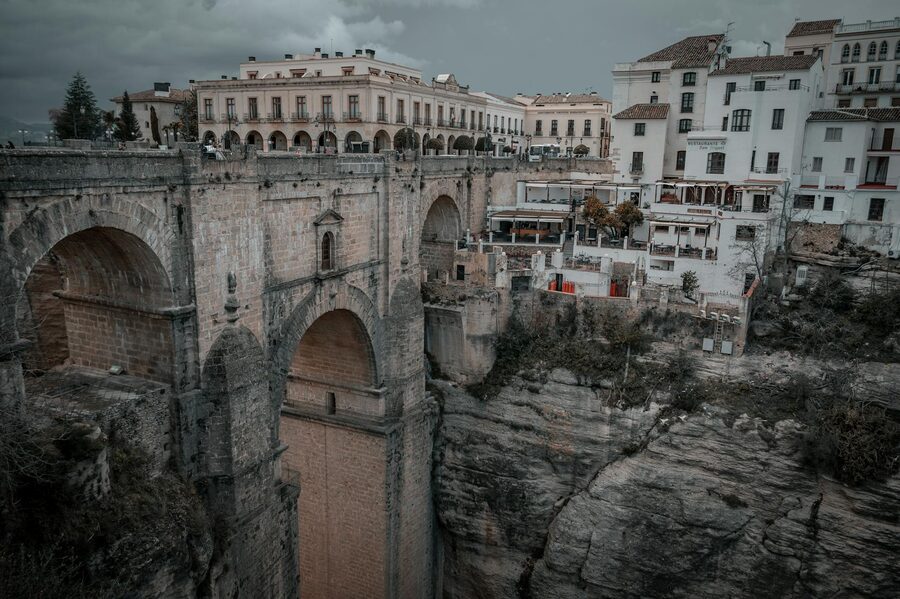
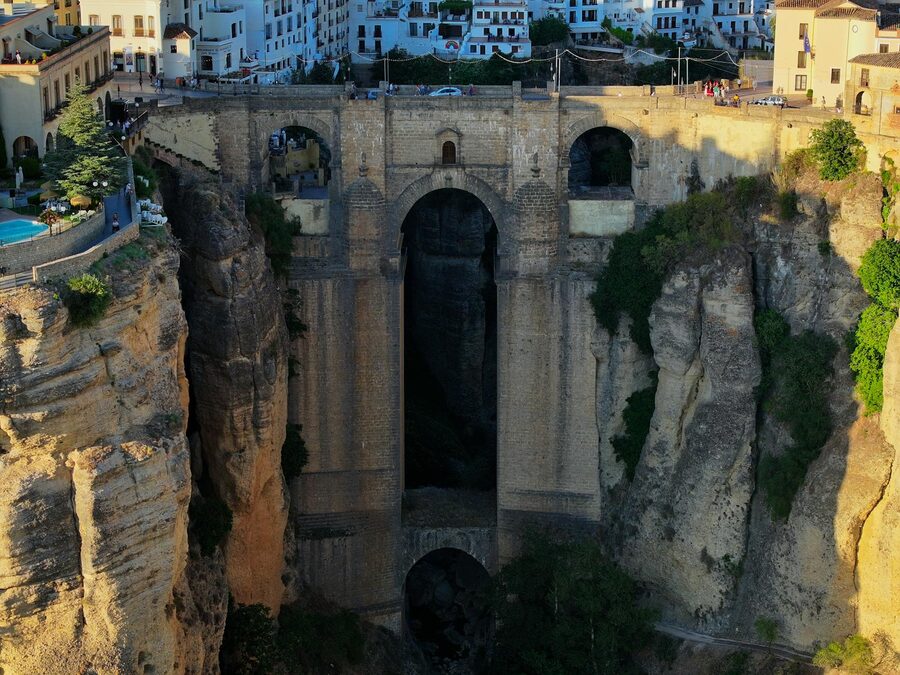
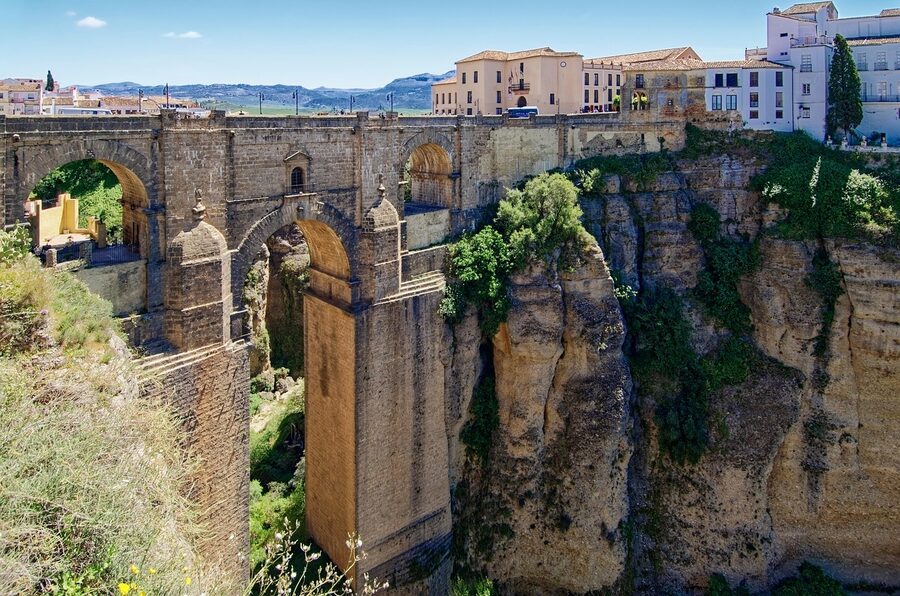
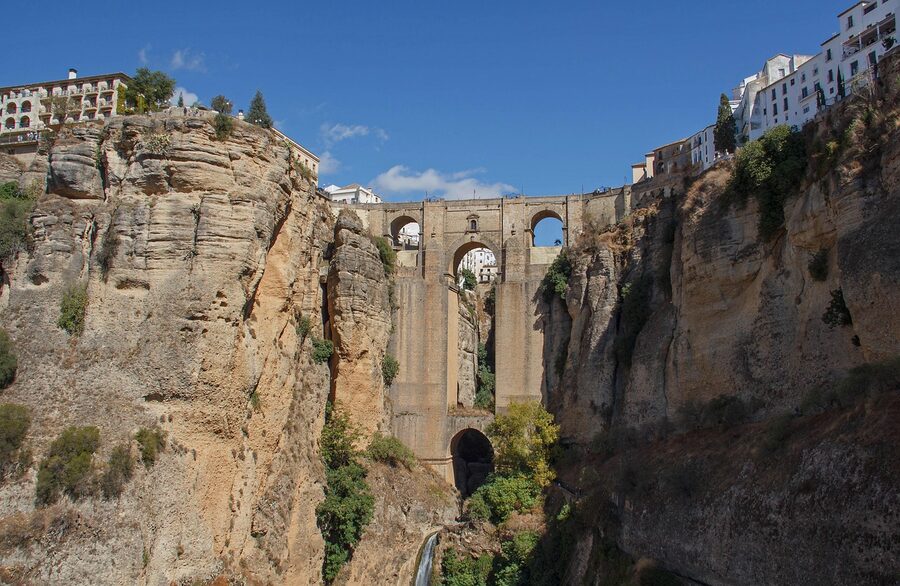
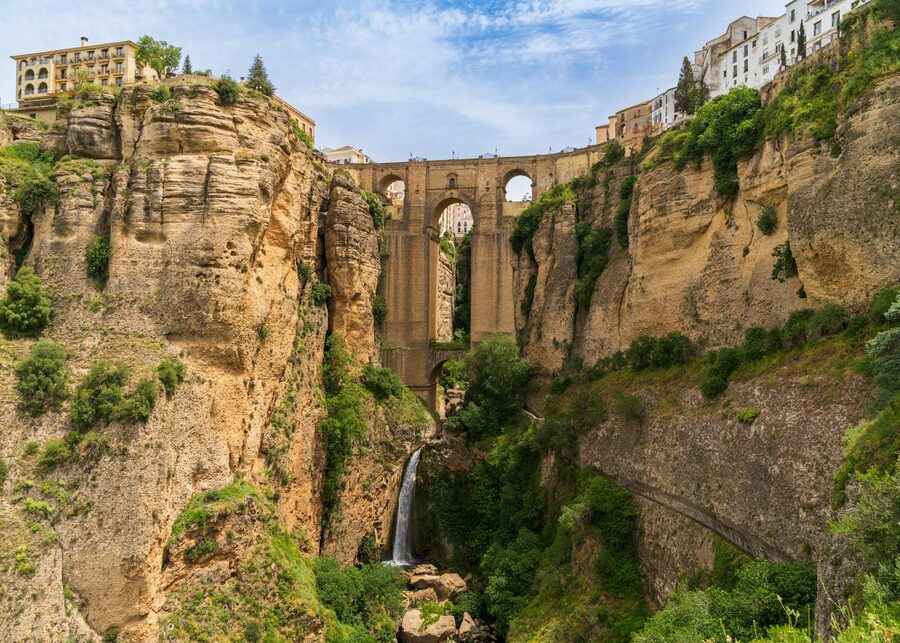
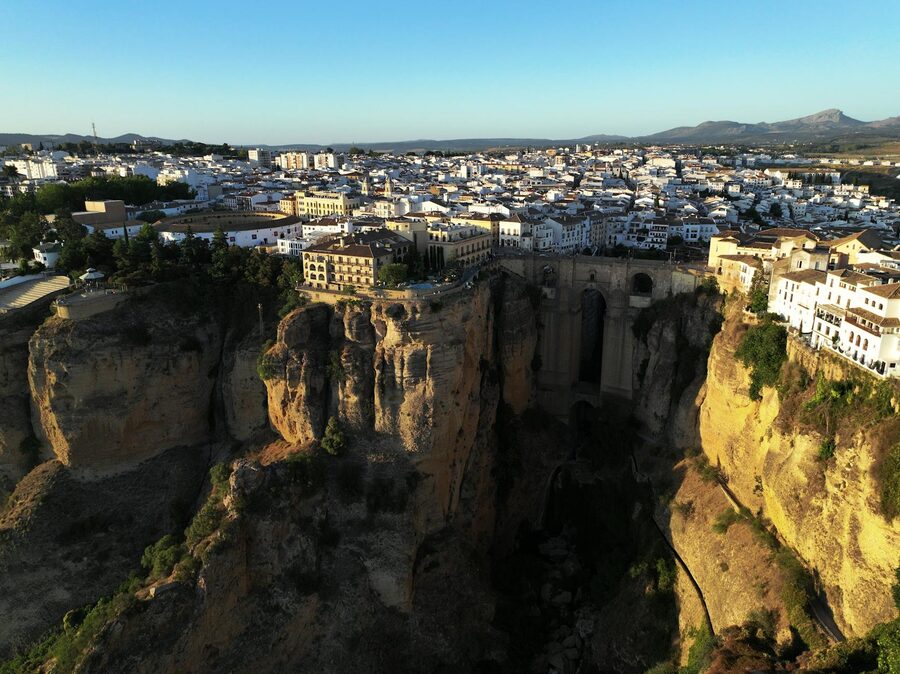
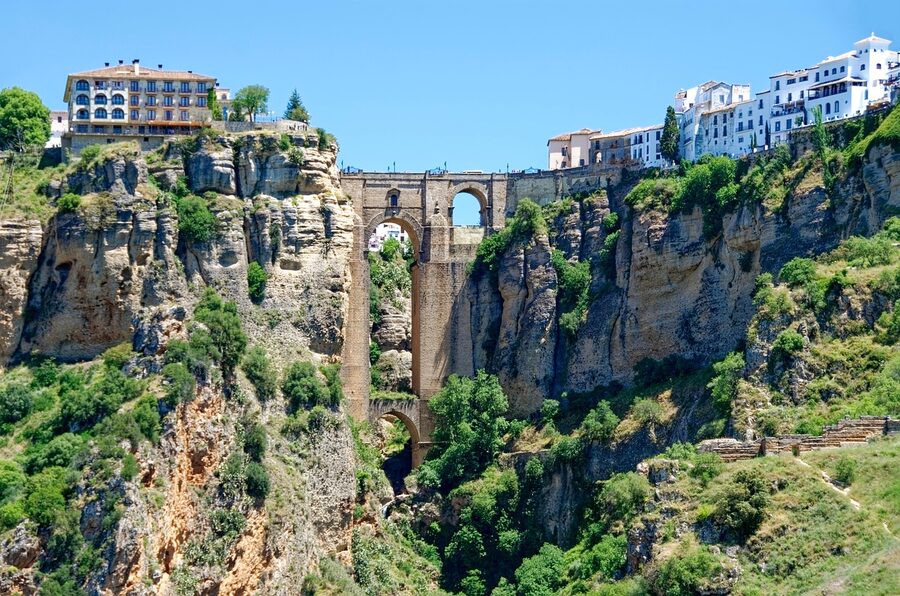
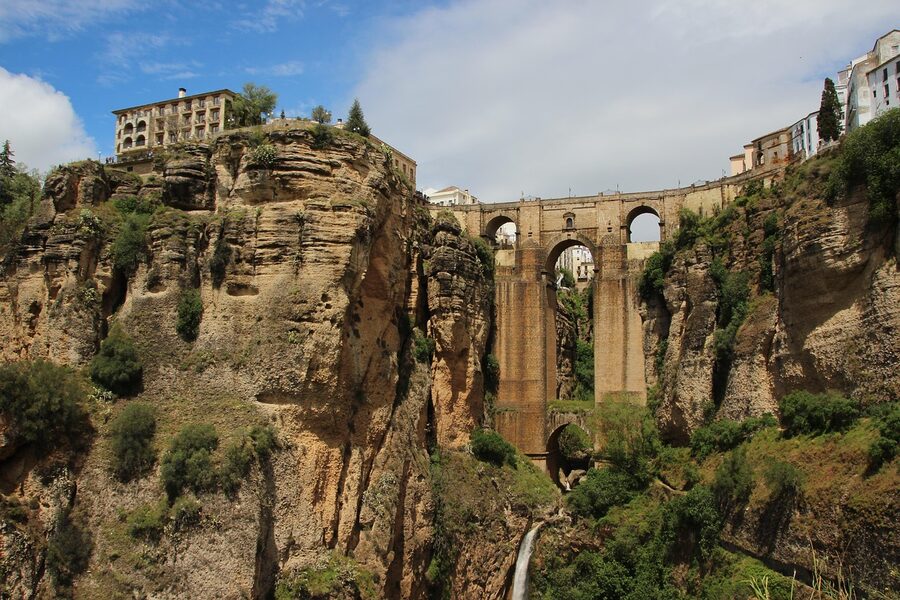
The Puente Nuevo took 42 years to build. The first architect died falling from the incomplete structure. And when you finally stand at the edge of El Tajo gorge, staring 120 metres straight down at the river threading through the canyon floor, you understand why someone would spend four decades trying to bridge it.
But here’s what most Seville day-trippers miss: Ronda is only half the story. The real magic of this route lies in the white villages scattered through the Sierra de Grazalema before you even reach that famous bridge. Tiny mountain pueblos where the streets are roofed by rock, where lime-washed walls glow against dark green hillsides, and where lunch costs a fraction of what you’d pay back in the city.
- In a Hurry? Here Are the 3 Best White Villages & Ronda Tours from Seville
- Why the White Villages and Ronda Make the Perfect Day Trip from Seville
- The Villages You’ll Visit
- Zahara de la Sierra
- Setenil de las Bodegas
- Grazalema
- Ronda: The Main Event
- The Best Tours to Book
- 1. Pueblos Blancos and Ronda Full-Day Trip —
- 2. White Villages and Ronda Day Tour —
- 3. Day Trip to Zahara, Setenil and Ronda — 3
- What the Whitewash Actually Means
- Ronda’s Dramatic History
- Practical Tips for the Day Trip
- When to Go
- What to Wear
- Eating Along the Route
- Photos You’ll Want to Take
- Getting There on Your Own (if You Skip the Tour)
- Arcos de la Frontera: The Gateway Village
- While You’re Planning Seville
In a Hurry? Here Are the 3 Best White Villages & Ronda Tours from Seville
- Best value: Pueblos Blancos and Ronda Full-Day Trip — $52/person. Full day covering multiple white villages plus Ronda, with olive oil tasting included. Check Availability
- Most popular: White Villages and Ronda Day Tour — $96/person. Well-structured Viator tour with expert guides and stops at the most photogenic pueblos. Check Availability
- Small group pick: Day Trip to Zahara, Setenil and Ronda — $103/person. Intimate small-group experience with Daniel or similarly passionate guides. Three focused stops, no rushing. Check Availability
Why the White Villages and Ronda Make the Perfect Day Trip from Seville
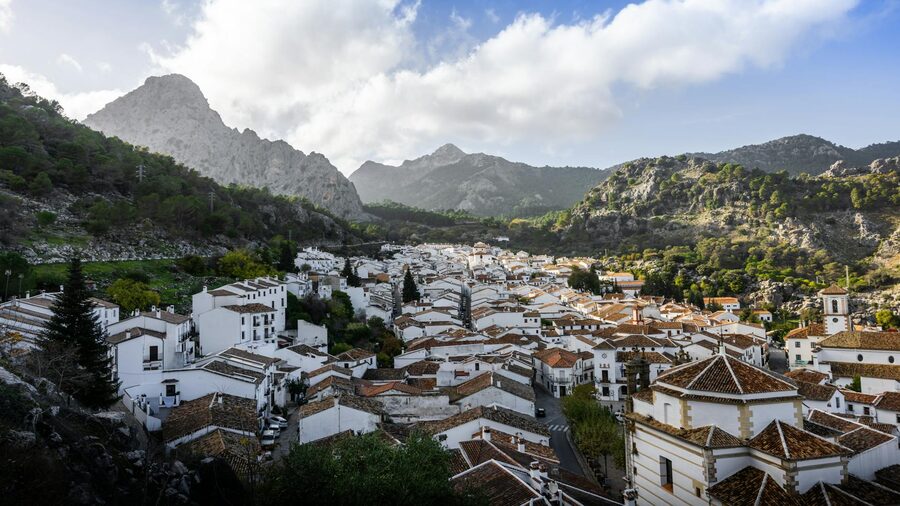
Seville is gorgeous. But after a couple of days wandering the Alcazar gardens and ticking off cathedral views, you start craving something rawer. The Pueblos Blancos deliver exactly that. These are working villages, not tourist sets. Farmers still lead goats through the streets in Grazalema. Old men play dominos outside bars in Zahara. And in Setenil de las Bodegas, people literally live under a cliff.
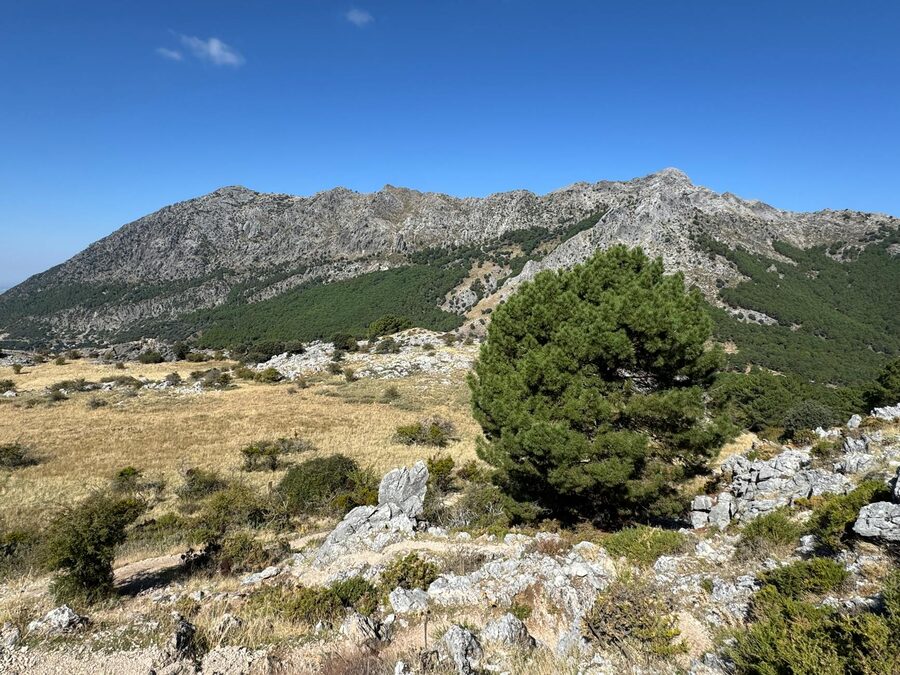
The route from Seville takes you southeast through rolling olive groves, then climbs sharply into the Sierra de Grazalema. The landscape shift is dramatic. Flat farmland becomes jagged limestone peaks covered in cork oak and wild olive. This is the rainiest corner of Spain (2,000mm a year, which sounds absurd for Andalusia), and the green shows it.
Most tours cover two or three white villages plus Ronda, all in a single day. The drive is about 90 minutes each way, which leaves a solid six hours for exploring. That’s enough time to wander, eat, take far too many photos, and still feel like you haven’t rushed.
The Villages You’ll Visit
Zahara de la Sierra
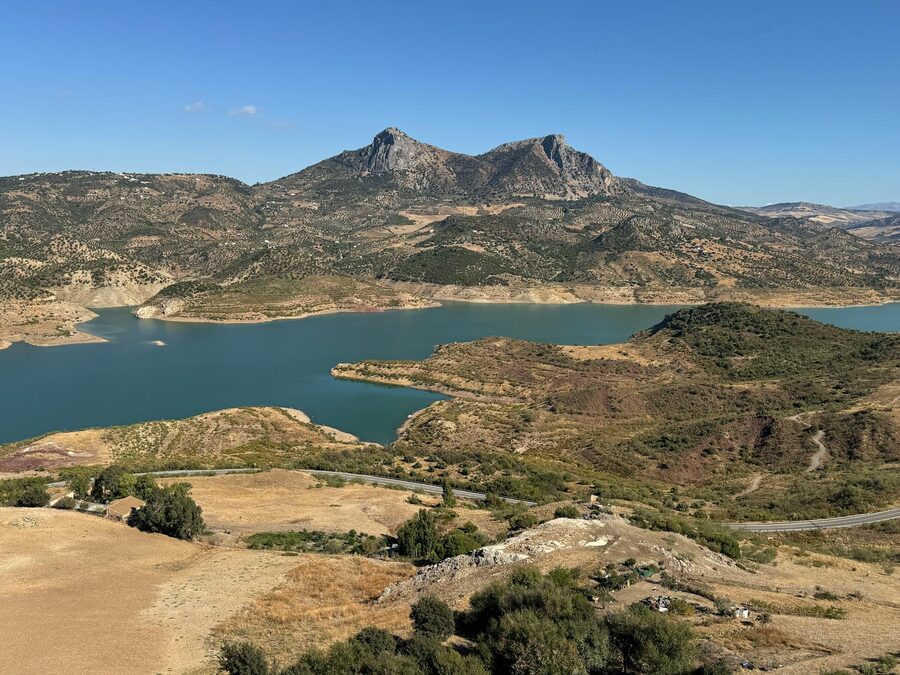
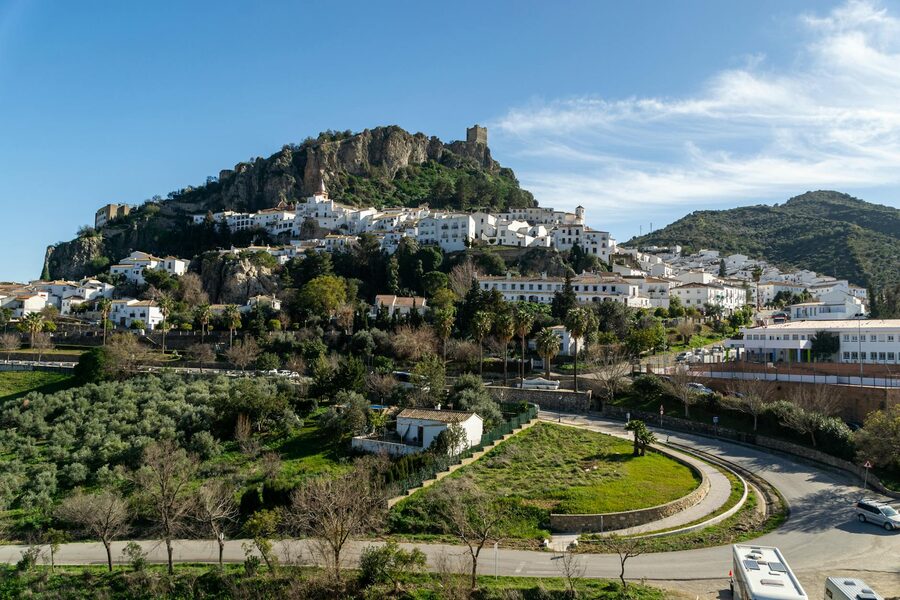
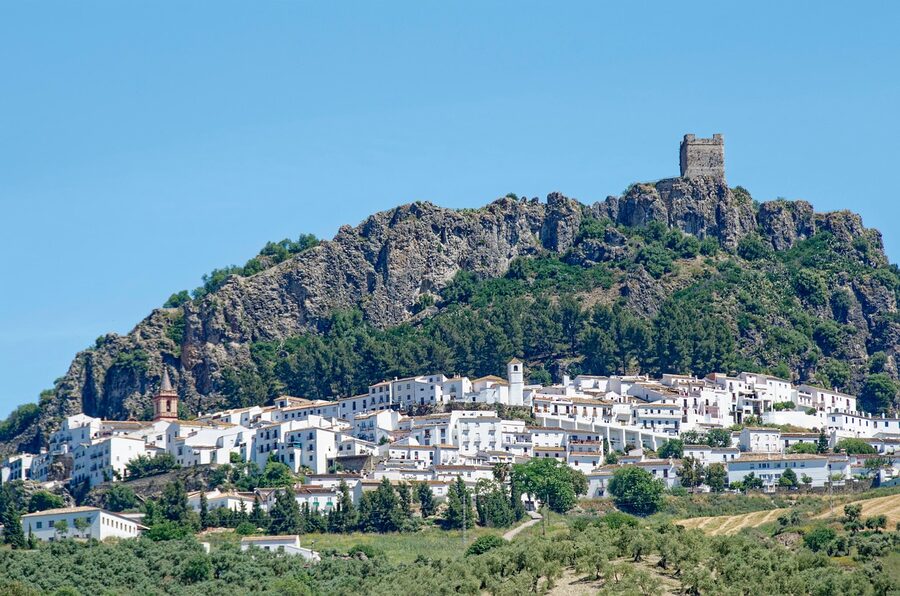
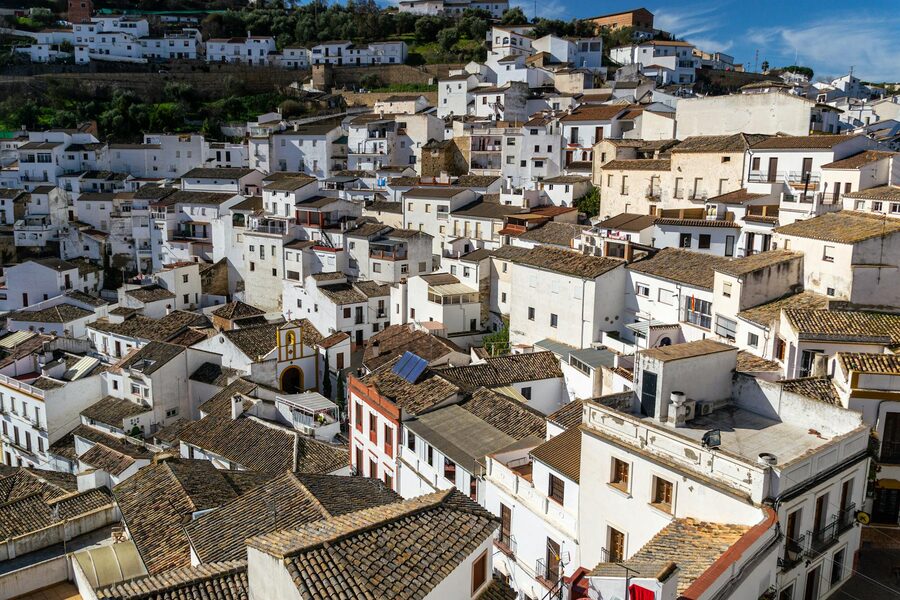
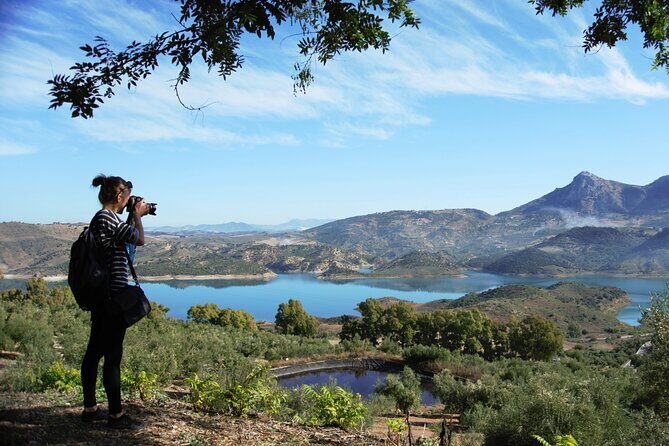
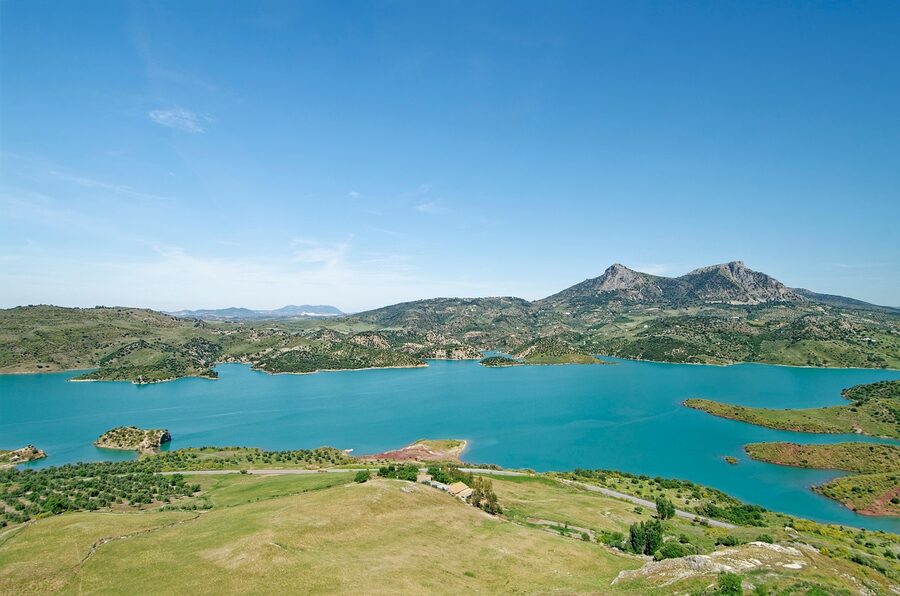
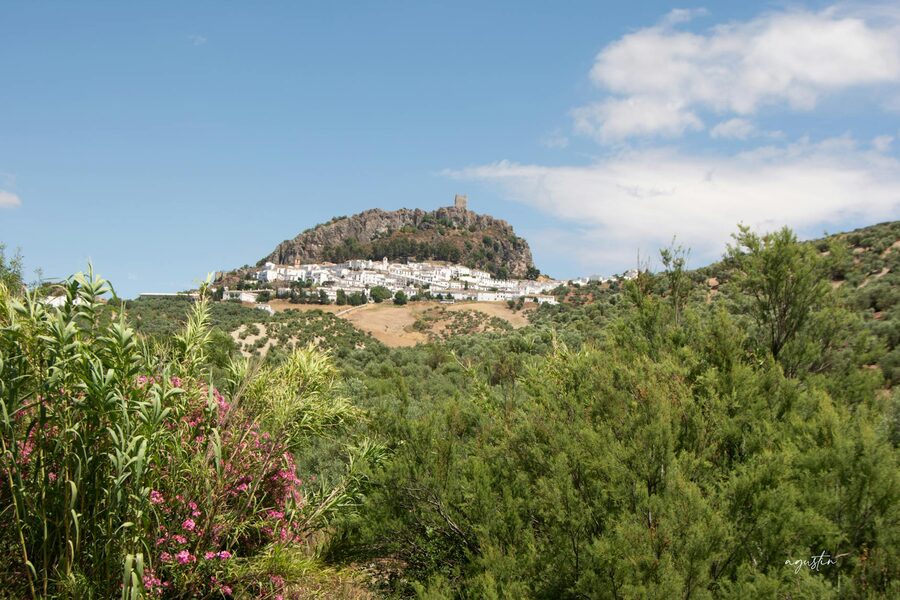
Most tours hit Zahara first. You see it from kilometres away: a pyramid of white houses crowned by a crumbling Moorish castle, reflected in the turquoise reservoir below. It’s the kind of view that makes you pull out your phone before the bus has even stopped.
The village itself takes about 45 minutes to explore properly. The climb to the castle at the top is steep but short, and from there you can see across the entire Sierra de Grazalema. The church of Santa Maria de la Mesa sits at the heart of the village, and the narrow streets below are lined with flower pots and ceramic tiles.
Setenil de las Bodegas
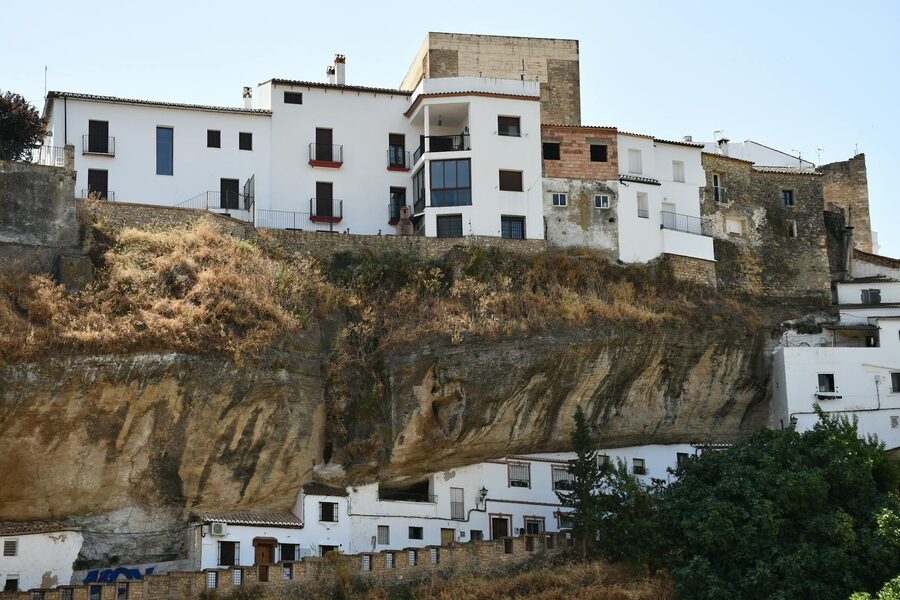
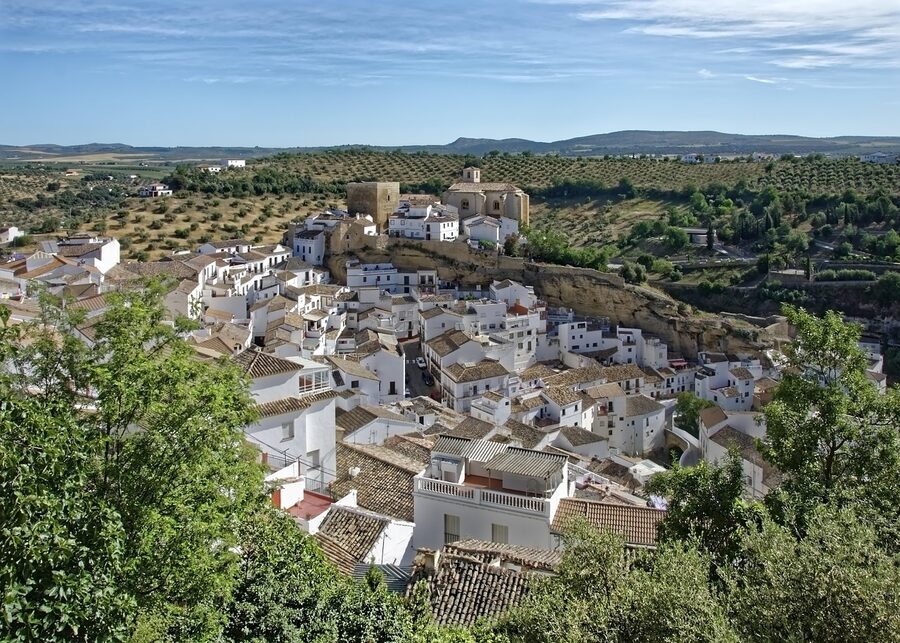
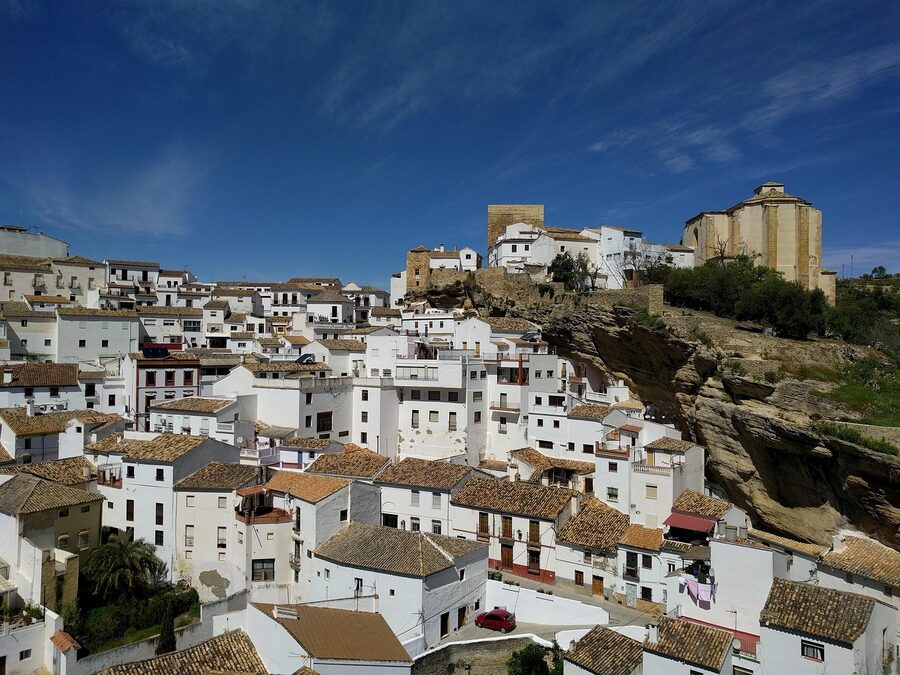
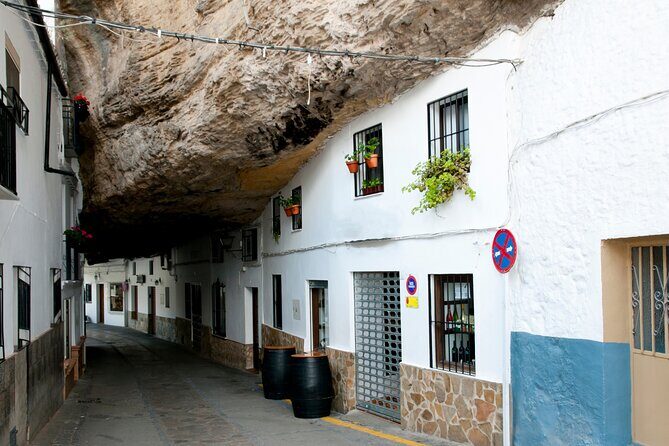
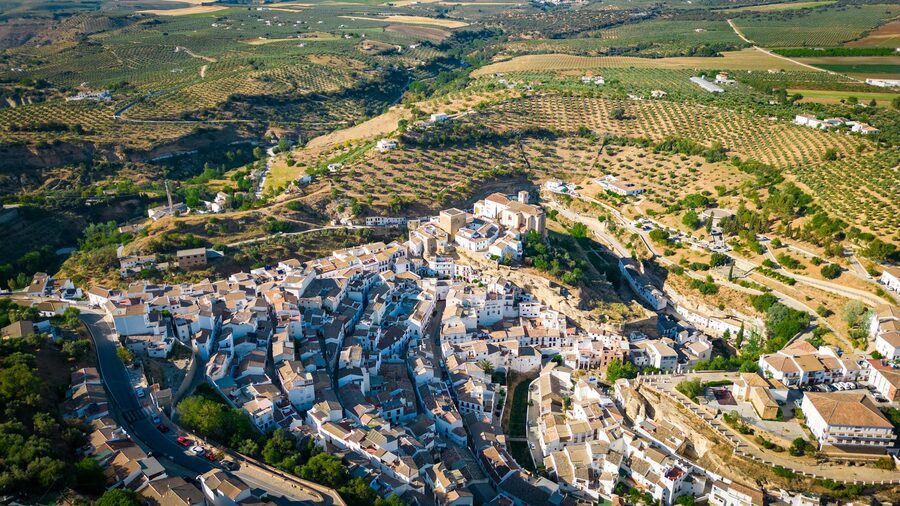
Setenil is the one that makes everyone’s jaw drop. Instead of building houses on top of the landscape, the people here built them into it. Giant rock overhangs serve as natural roofs, and entire streets run beneath cliff faces. Calle Cuevas del Sol (Street of the Sun Caves) and Calle Cuevas de la Sombra (Street of the Shadow Caves) are the most photographed, but the whole village has this half-underground quality.
The “bodegas” in the name refers to the wine cellars that once lined these cave streets. Today they’re mostly restaurants and shops, and sitting at a terrace table with solid rock six feet above your head is one of those moments that doesn’t photograph nearly as well as it feels.
Grazalema
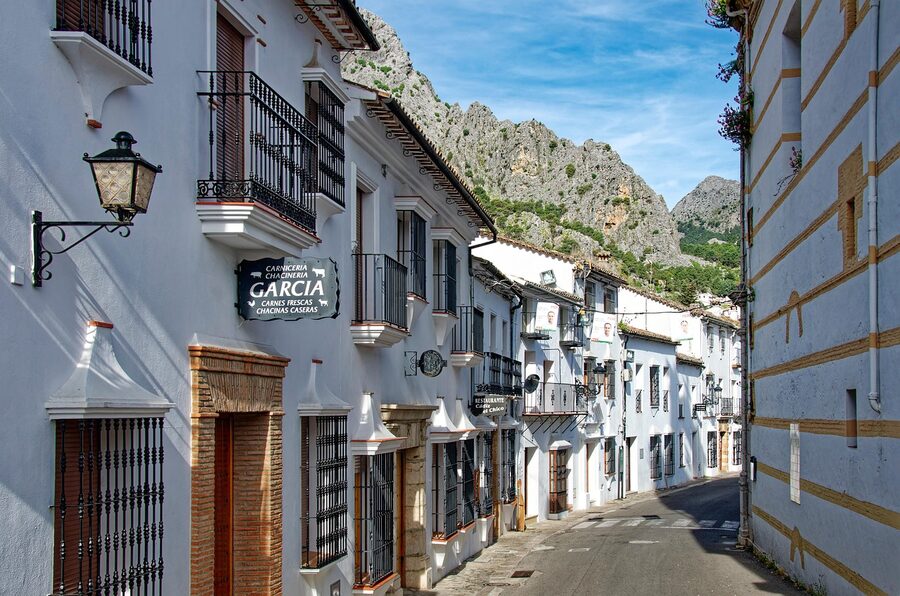
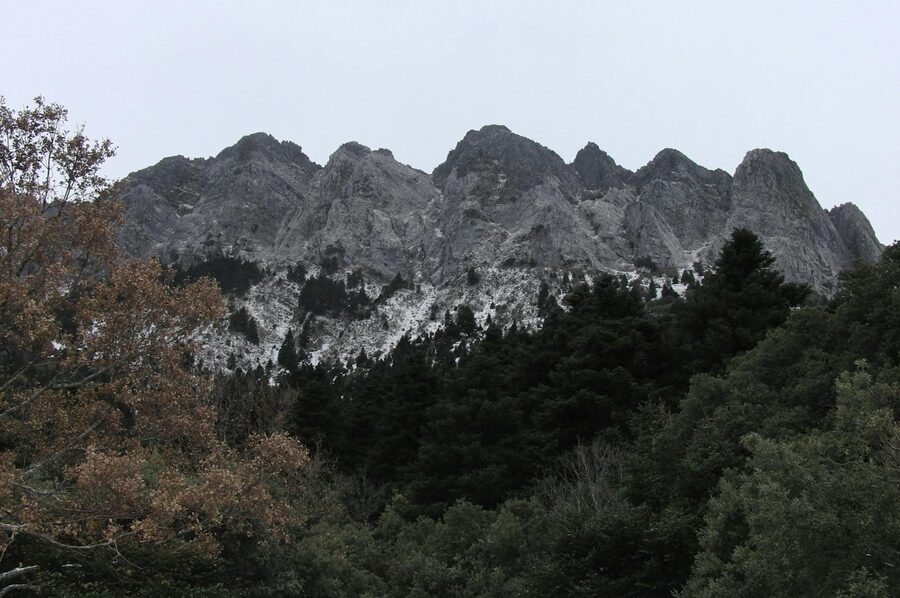
Not every tour stops at Grazalema, but the ones that do give you a taste of true mountain Andalusia. This village sits at around 800 metres elevation, squeezed between limestone peaks that catch the clouds rolling in from the Atlantic. The town square feels like a film set. White walls, red geraniums, a church bell tower, and mountains rising directly behind the rooftops.
Ronda: The Main Event
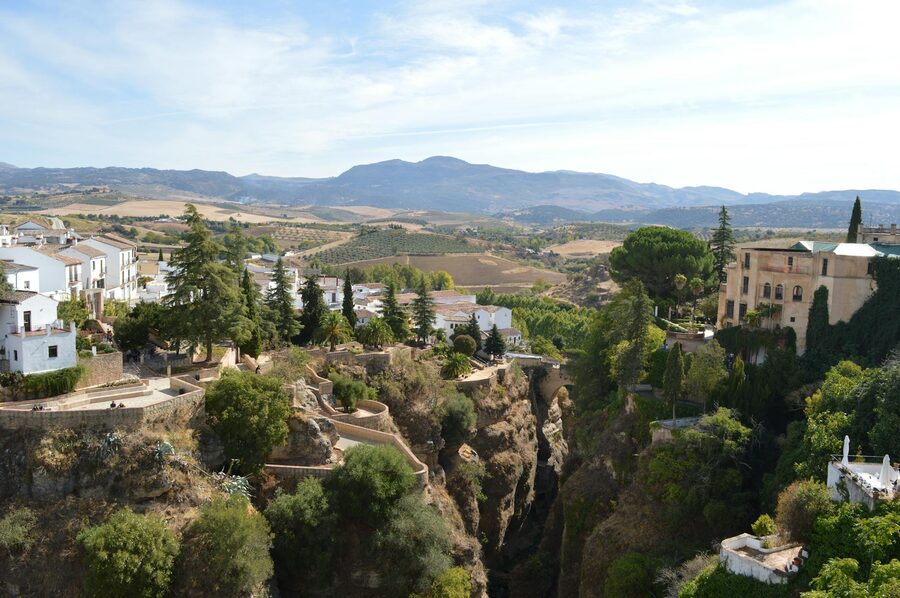
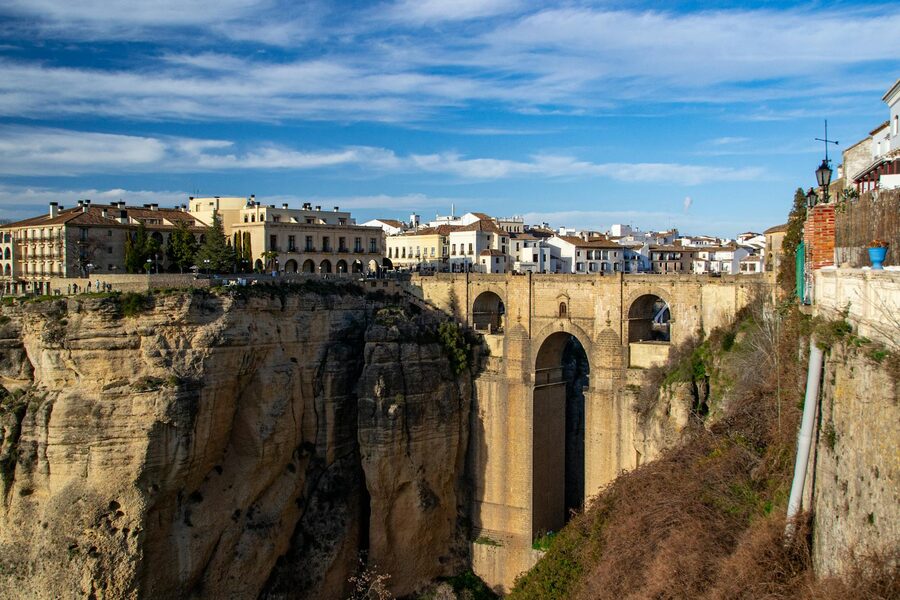
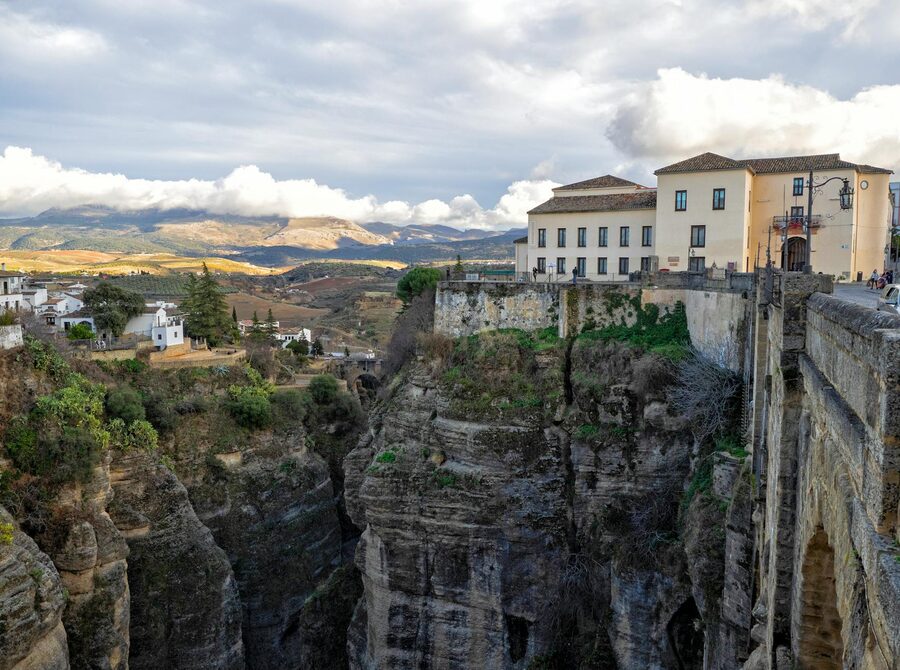
After the villages, you arrive in Ronda. It hits different when you’ve spent the morning in tiny pueblos with populations under 2,000. Ronda feels like a proper city by comparison, but it’s the gorge that commands attention. El Tajo splits the town in two, with the new town on one side and the old Moorish quarter on the other, connected by the Puente Nuevo.
Most tours give you about two hours of free time in Ronda. That’s enough to cross the bridge, peer into the gorge from multiple viewpoints, and grab lunch. If you’re fast, you can also duck into the Plaza de Toros, one of the oldest bullrings in Spain. Pedro Romero codified the rules of modern bullfighting here in the 18th century, and Hemingway later put Ronda on the literary map in Death in the Afternoon.
The Best Tours to Book
I’ve sorted these by the number of people who’ve actually booked and reviewed them. The top three all cover the core route (white villages plus Ronda), but they differ in group size, pace, and which specific villages they visit. All three depart from central Seville early in the morning and return by late afternoon.
1. Pueblos Blancos and Ronda Full-Day Trip — $52

This is the tour that thousands of Seville visitors end up on, and there’s a reason for that. At $52 per person, it covers more ground than options twice its price. The ten-hour itinerary includes multiple white villages, free time in Ronda, and a stop at an olive oil press where you taste two varieties and learn about the mechanical extraction process. Guides like Laura are known for dry humour and deep local knowledge, which makes the long drive between stops fly by. Our full review covers the itinerary and what to expect at each stop.
2. White Villages and Ronda Day Tour — $96
A step up in polish from the budget option, this Viator-listed tour spends ten hours threading through the Andalusian countryside with proper narration and well-timed stops. The itinerary adjusts depending on conditions. When weather disrupts planned village visits, guides reroute to alternatives rather than cancelling entirely. I’d recommend this for anyone who values commentary during the drive, since the guide talks throughout and provides real historical context rather than just pointing at landmarks. Check our detailed review for the full breakdown.
3. Day Trip to Zahara, Setenil and Ronda — $103
This is my pick if you want the most personal experience. Small group, private van, and a driver-guide who narrates the entire way through narrow mountain roads. The three stops are the highlights of the Pueblos Blancos route: Zahara for the castle and views, Setenil for the cave streets, Ronda for the bridge and a late lunch. Nine hours gives you generous free time at each location without feeling stretched thin. Read our review for all the details including what to eat and where.
What the Whitewash Actually Means
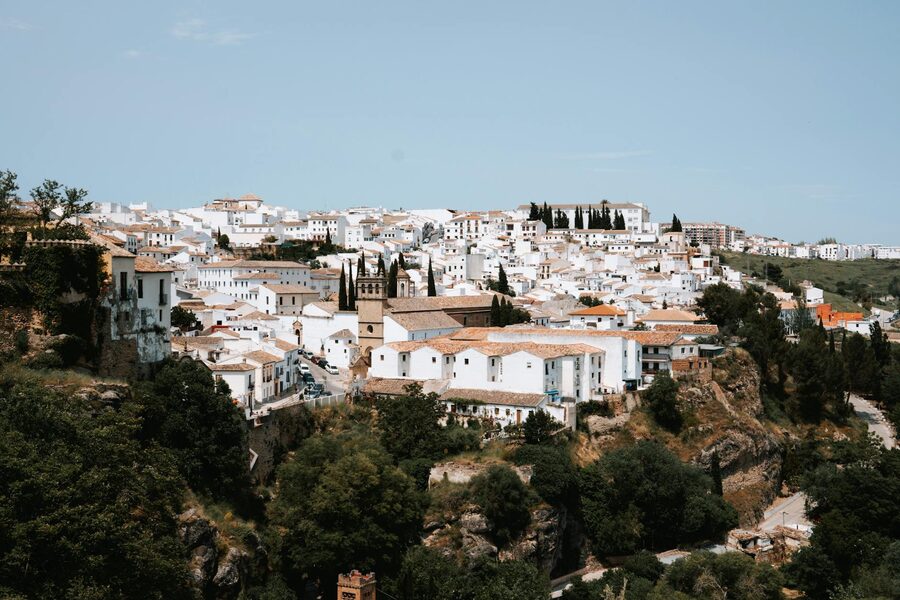
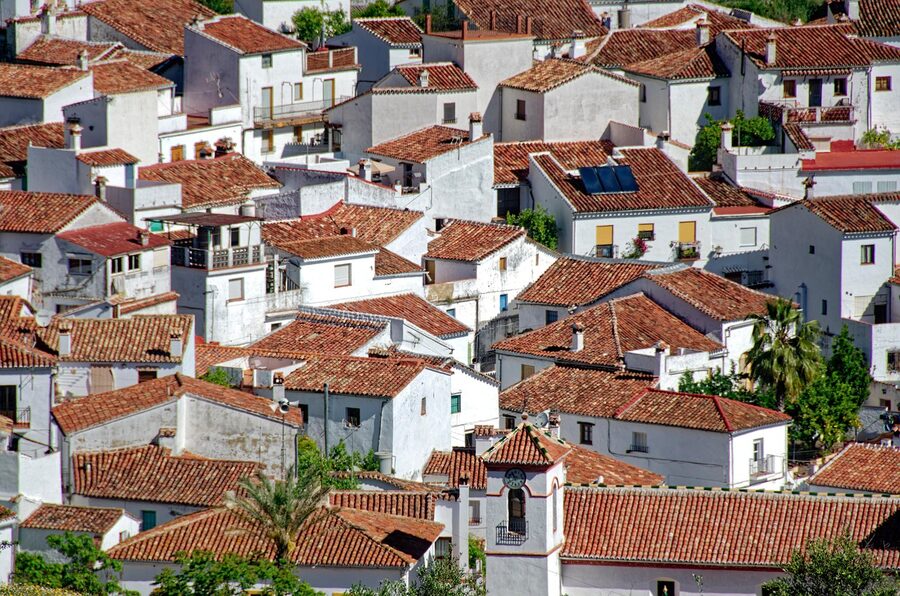
The white villages aren’t white by accident. The tradition of coating houses in cal (lime) goes back to the Moorish period, and it serves a double purpose that’s genuinely clever. First, the white surface reflects sunlight, keeping interiors cooler during summers that regularly push past 40 degrees. Second, lime is antimicrobial. During plague outbreaks and epidemics, lime-washing walls was a form of public health measure. The tradition stuck long after people forgot the medical reasoning.
Walk through any of these pueblos today and you’ll see fresh whitewash going up regularly. It’s not preservation theatre. Homeowners re-lime their walls every spring, the same way you might repaint a fence. The white gets whiter, the flower pots get brighter, and the contrast against the dark Sierra peaks gets more absurd.
Ronda’s Dramatic History
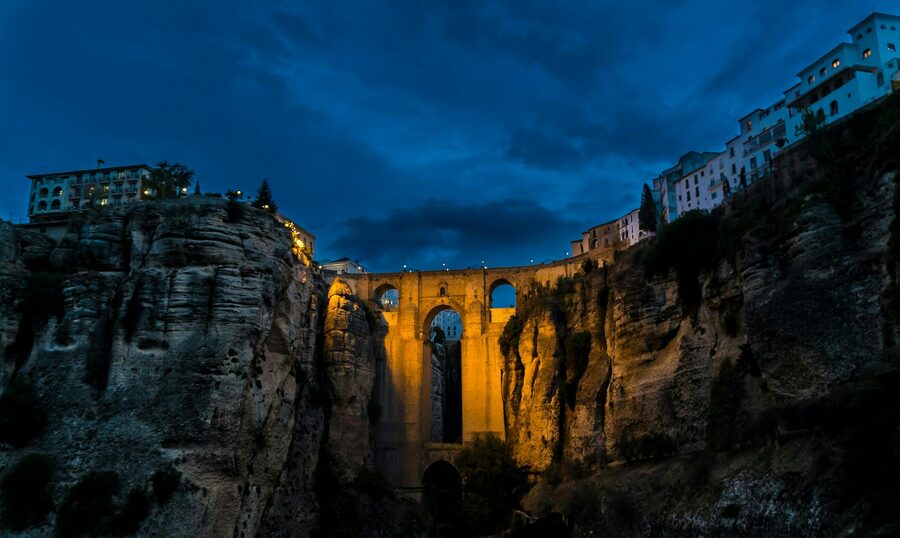
The Puente Nuevo bridge that everyone photographs was actually Ronda’s third attempt at spanning the gorge. The first two bridges were smaller and lower, built further upstream. The Puente Nuevo project began in 1751 under architect Jose Martin de Aldehuela. The first architect — his name is largely forgotten — fell to his death from the incomplete structure. Aldehuela took over and finished it in 1793, making it a 42-year build.
The room inside the central arch of the bridge served various purposes over the centuries. Most infamously, during the Spanish Civil War, it was used as a prison. Hemingway referenced Ronda’s civil war violence in For Whom the Bell Tolls, where prisoners are thrown from a cliff. Whether that specific detail came from the Puente Nuevo is debated, but the connection between Hemingway and Ronda is real. He spent considerable time in the city, drawn by the bullfighting culture.
The Plaza de Toros (bullring) is just as significant, though less photogenic from outside. Built in 1785, it’s one of the oldest in Spain and the birthplace of modern bullfighting rules. Pedro Romero, born in Ronda in 1754, killed over 5,600 bulls during his career and established the on-foot fighting style that replaced the older horseback tradition. Hemingway wrote about Romero too, in Death in the Afternoon, cementing Ronda’s reputation as the spiritual home of the corrida.
Practical Tips for the Day Trip
When to Go
Spring (March through May) is the best season. The Sierra de Grazalema is at its greenest, wildflowers carpet the hillsides, and temperatures hover around 20-25 degrees. Autumn (September through November) is equally good, with fewer crowds and warm but manageable weather.
Summer visits work but come with a caveat: temperatures in Ronda regularly hit 38-40 degrees in July and August. The white villages are even hotter because the narrow streets trap heat. I’d pick the earliest departure time available if you’re going in summer.
Winter is fine for Ronda itself, but the Sierra de Grazalema gets genuinely cold and wet. Remember, this is the wettest part of Spain. Some village roads can be closed or rerouted after heavy rain.
What to Wear
Layers. The temperature difference between Seville and the mountain villages can be 8-10 degrees. A light jacket for the morning is smart even in late spring. The streets in Setenil and Zahara are uneven cobblestone, so skip the sandals.
Eating Along the Route
Most tours include a lunch stop in Ronda, and I’d take advantage of it. The old town has solid restaurants near the bridge where you can get a proper meal for 12-18 euros. If your tour visits Setenil, the cave-street restaurants there serve excellent tapas under the rock overhangs. Order the chorizo a la brasa (grilled chorizo) and the local morcilla (blood sausage). Both are Setenil specialties.
Photos You’ll Want to Take
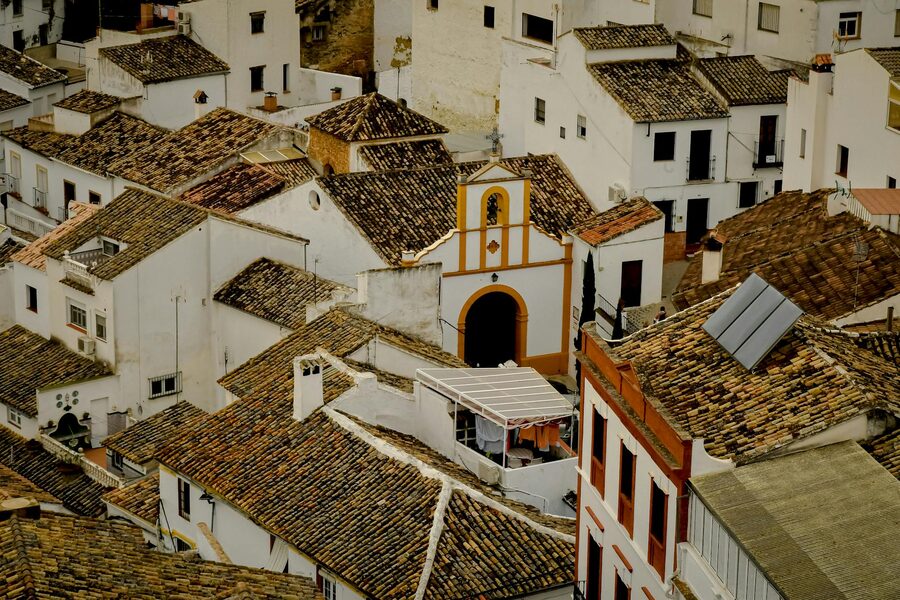
Everyone gets the Puente Nuevo shot, but there are a few angles that most people miss. In Ronda, walk down to the Jardines de Cuenca (Cuenca Gardens) on the gorge rim for a side angle that includes the full bridge and the canyon below. In Setenil, shoot Calle Cuevas del Sol from the far end looking back toward the church for the best framing of the rock overhead. In Zahara, the view from the castle ruins looking down is the postcard shot, but turn around and face the reservoir for something equally striking.
Getting There on Your Own (if You Skip the Tour)
You can do this route independently by rental car. The drive from Seville to Zahara takes about two hours via the A-382 and CA-9104. From Zahara to Setenil is another 30 minutes, and Setenil to Ronda is 20 minutes. The mountain roads are narrow but well-maintained, and the views through the windshield are part of the appeal.
Driving yourself means complete flexibility on timing, but it also means navigating those switchbacks through the Sierra de Grazalema without a guide pointing out the landmarks. Parking in Ronda is straightforward if you arrive before noon. After that, the main car parks near the old town fill up.
There’s no practical public transport connecting the white villages. A bus runs from Seville to Ronda directly, but it skips every village along the way. If you don’t want to drive and don’t want a tour, you’re out of options.
Arcos de la Frontera: The Gateway Village
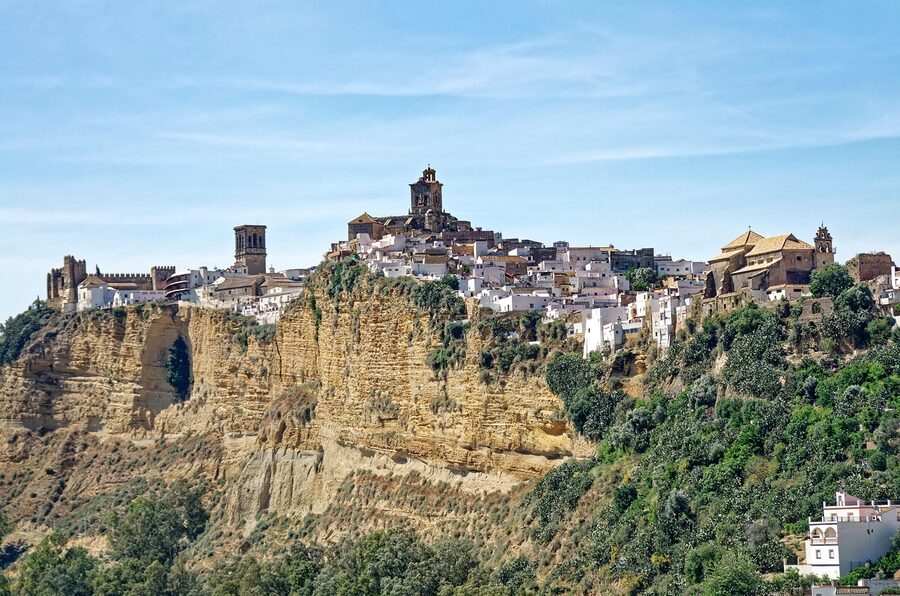
Some tours start or end with Arcos de la Frontera, the largest of the white villages and arguably the most dramatic entrance to the route. The old town sits on a narrow limestone ridge high above the Guadalete River, with cliff drops on three sides. The Basilica Minor de Santa Maria de la Asuncion and the Iglesia de San Pedro both occupy the highest points, and on clear days you can see as far as the mountains of Morocco from the mirador.
Arcos is also the most practical of the white villages for a longer stop. It has proper restaurants, shops, and an excellent parador (state-run hotel) built into the cliff edge. If you’re driving yourself and want to split the route over two days, Arcos is the obvious overnight.
While You’re Planning Seville
If the white villages and Ronda are your day-trip choice from Seville, you’ll want to fill the rest of your Seville days with the city’s own highlights. I’d start with Seville Cathedral tickets since the Giralda tower climb is something you don’t want to miss, and the Royal Alcazar deserves at least half a day. For a deeper look at the city on foot, our Seville walking tour guide covers the best options.
If this day trip has you craving more Andalusian adventures, visiting Ronda from Malaga is the other popular approach, especially if you’re splitting your trip between the two cities. And if vertigo-inducing walkways are your thing, the Caminito del Rey is about two hours from Seville and pairs well with a Ronda visit.
This article contains affiliate links. If you book through our links, we earn a small commission at no extra cost to you. This helps us keep creating detailed travel guides.