The best part of this day is the change of pace: Tokyo’s streets give way to Enoshima’s island paths, the Shonan shoreline, and the Enoden tram weaving through Kamakura. The famous railway crossing at Kamakura-koko-mae is a quick stop, but it links a real seaside town to a scene many anime fans know well.
I like two things about the plan: the Enoden ticket is included, so one of the area’s most appealing rides is built in, and the drive between far-flung stops can save you a lot of walking. The Great Buddha and Tsurugaoka Hachimangu also give the day more substance than a photo-stop tour.
The trade-off is that the stops are self-guided, and the schedule gives little detail about time at each place. The advertised starting price also varies by package, so check the exact option and what it includes before you book.
- At a glance
- A full day from Tokyo, with the hard connections handled
- Enoshima: island paths and a shrine with sea ties
- The Great Buddha: Kamakura’s essential landmark
- Kamakura-koko-mae: a famous crossing beside the sea
- Shonan Coast: coastal atmosphere, not a beach itinerary
- Tsurugaoka Hachimangu and Komachi-dori
- What the price buys, and what it does not
- Timing, meeting points, and practical cautions
- Should you book this Kamakura and Enoshima day trip?
- FAQ
- Is the Enoden train ticket included?
- Are round-trip transfers included?
- Is a tour guide included?
- Are meals and drinks included?
- Are entrance fees included?
- Where does the tour return?
- How long is the tour?
- Can I change or cancel my booking?
- The Best Of Fujisawa!
- More Tickets in Fujisawa
- More Tours in Fujisawa
- More Tour Reviews in Fujisawa
At a glance
 1 / 6
 2 / 6
 3 / 6
 4 / 6
 5 / 6
 6 / 6
- Enoshima’s shrine paths bring sea legends, greenery, and island views into the day.
- The Enoden ride is included, linking Fujisawa and Kamakura by a small train that passes through town.
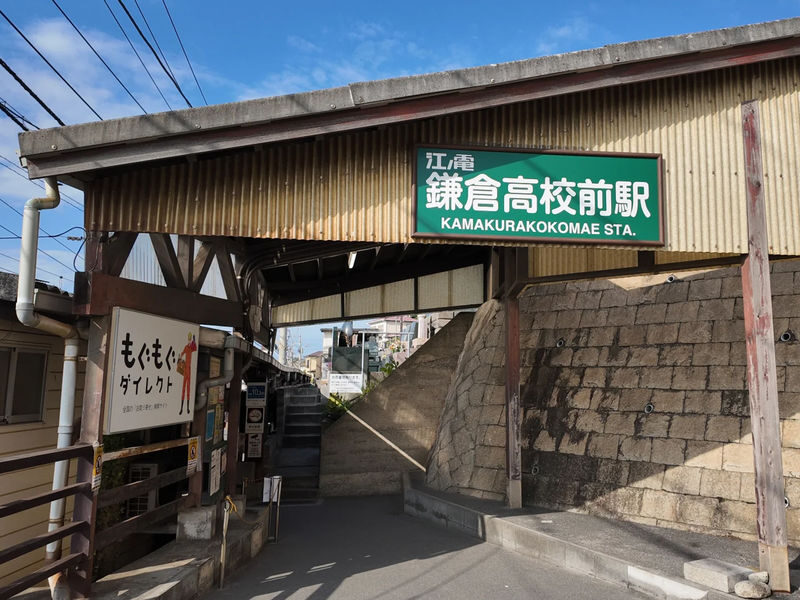
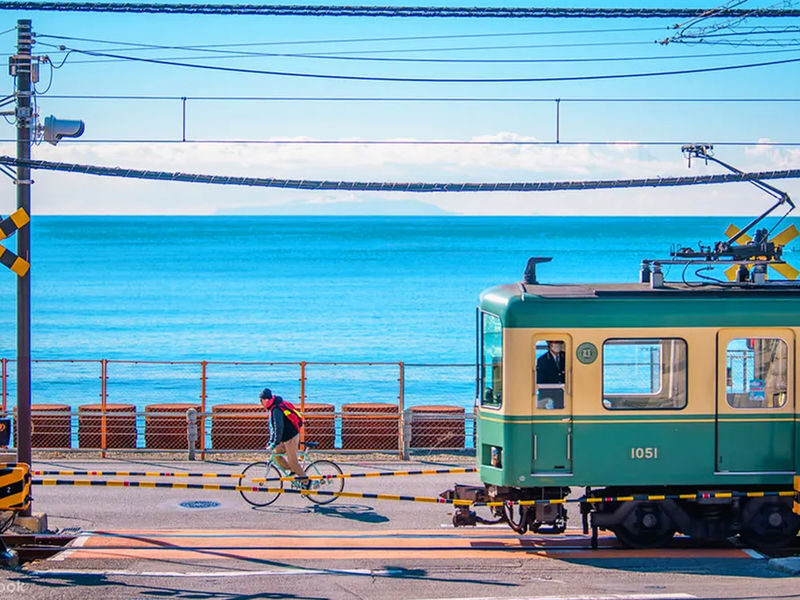
- Kamakura-koko-mae Station is the anime-famous crossing stop, though it is still an active station and a brief visit.
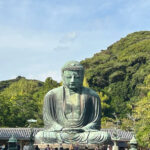
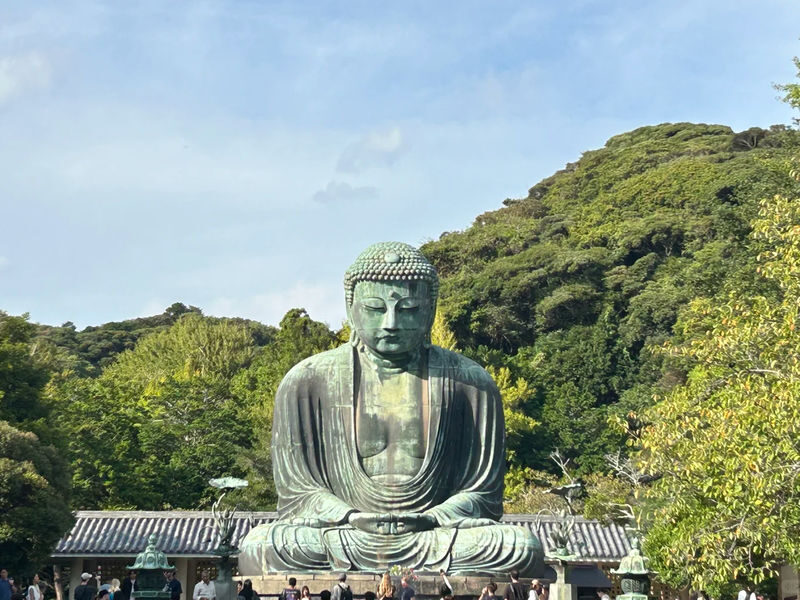
- The Great Buddha is a 13th-century bronze statue about 11.3 meters tall and weighing 121 tons.
- Tsurugaoka Hachimangu and Komachi-dori pair a major shrine visit with shops, cafes, and traditional snacks.
- Round-trip transport from Tokyo reduces the need to plan several separate connections, but traffic can change the day’s timing.
👉 See our pick of the What Are The Best Tours In Fujisawa? Our Top 10 Picks
A full day from Tokyo, with the hard connections handled
This is a long outing, usually running from a morning departure to an expected return around 18:00. You travel from Tokyo toward the coastal area around Kamakura, Enoshima, and Fujisawa, then return to either the Tokyo Station area or Shinjuku, depending on your selected meeting and return point.
That transport is a real part of the value. Kamakura and Enoshima are close enough to combine, but their sights are spread out. A bus or car between stops can spare you repeated station transfers and long walks, while the included Enoden ticket adds a local ride rather than making the whole day a highway trip.
One customer specifically praised driver Xiao Song for thoughtful pickup and drop-off arrangements and flexibility with locations, saying the day involved much less walking. That is useful evidence of what good transport can add, but it is one account, not a promise that every driver or group will have the same arrangement. The package options also differ: the assembly-point departure, a small-group meeting-point option, and hotel pickup and drop-off for a nine-person group are listed at different prices.
Be precise when you compare prices. The experience is advertised from $53.65, while the listed assembly-point package begins at $89.39, the small-group meeting-point option at $90.69, and the hotel pickup package at $106.45. Those figures may reflect different options or availability. Check the price shown for your date and package, and do not assume the cheapest displayed starting figure includes every convenience.
You can also read our reviews of more tours and experiences in Fujisawa


Enoshima: island paths and a shrine with sea ties
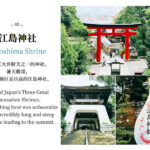
Enoshima is connected to Honshu by a bridge, making the island a natural first or early stop on a day that combines coast and culture. Its paths climb past greenery toward Enoshima Shrine, a complex with three main halls: Hetsunomiya, Nakatsunomiya, and Okutsunomiya. The shrine is associated with the sea god and Benzaiten, a goddess linked to beautiful legends.
I like this stop because it gives you a different feel from Kamakura’s temples and city streets. The island setting makes the religious sites part of a coastal visit, rather than a separate inland detour. You can expect walking on winding routes, so allow for hills and uneven pacing rather than treating Enoshima as a quick, flat stroll.
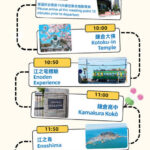
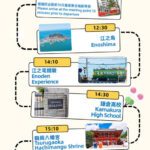
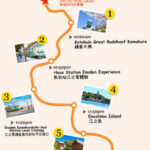
The schedule places a self-guided stop around 10:30, but it does not say exactly how long you have at Enoshima or which parts of the island are included. That matters if you want to visit all three shrine halls, linger on the paths, or stop for a meal. Ask the operator for the day’s current stop plan if you need a firm sense of available time.
The Great Buddha: Kamakura’s essential landmark
Kamakura’s Daibutsu stands at Kotoku-in Temple in Hase. The bronze figure dates to the 13th century, rises about 11.3 meters, and weighs roughly 121 tons. Its scale and quiet expression make it a strong counterpoint to the bustle of the coastal stops.
This is the tour’s clearest historical anchor. You are not just collecting seaside views and anime locations; you also get time with a major work of Japanese Buddhist art and a national cultural treasure. The statue’s fame means it can draw crowds, so a self-guided visit works best if you are comfortable moving at your own pace and finding the details that interest you.
A practical point: the included items specifically name the Enoden train ticket, but do not list admission to Kotoku-in or other sites. The Great Buddha is part of the advertised experience, but the supplied inclusions do not confirm that temple entry is covered. Check the package details before departure and bring money for any entrance fees or personal purchases.
Kamakura-koko-mae: a famous crossing beside the sea
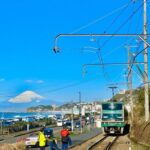
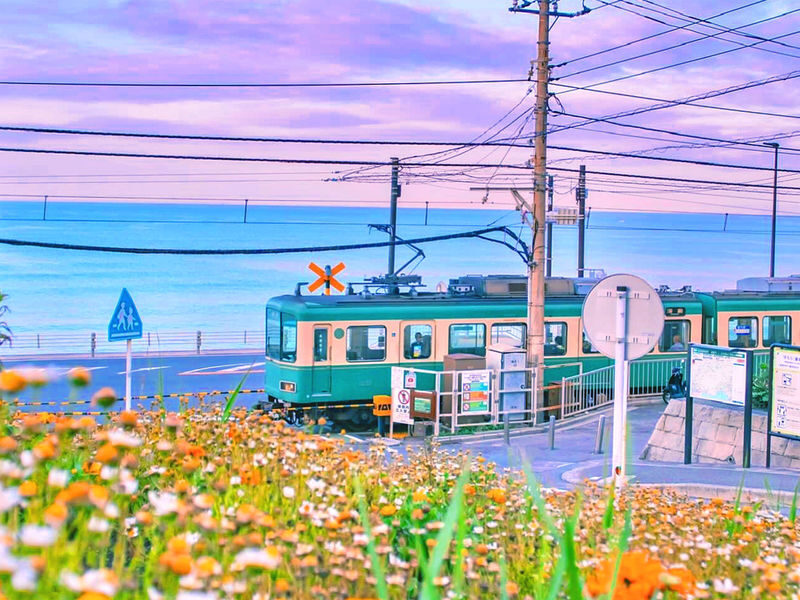
Kamakura High School and Kamakura-koko-mae Station are linked to a railway crossing made famous by Slam Dunk. For anime fans, seeing the crossing in its real setting can be a satisfying moment. The Enoden passes near the shoreline here, and the combination of tracks, street, and sea gives the stop its particular character.
Keep expectations grounded. The draw is a real place, not a staged attraction, and the station continues to serve local passengers. The schedule lists a visit to Kamakura High School at about 13:00 and an Enoden experience at Kamakura-koko-mae Station around 13:40, both self-guided. Treat the crossing as a short stop and be respectful of people using the station and nearby streets.
The Enoden ticket gives you more than a look at the train from the roadside. This small railway connects Fujisawa with Kamakura and is part of the area’s daily transport. Riding it is a practical way to experience the route, though the precise boarding point and length of the ride are not stated. If that detail matters to you, confirm it before booking.
Shonan Coast: coastal atmosphere, not a beach itinerary
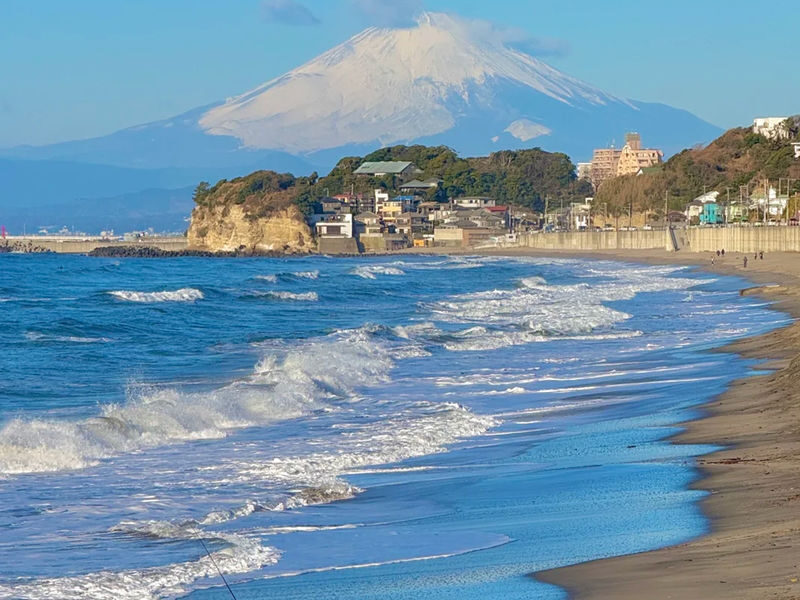
The Shonan Coast is the day’s breathing space between landmark visits. The area is associated with the sound of waves, sea breezes, and the Enoden passing through the coastal towns. That makes it a welcome change from shrine grounds and shopping streets.
Still, the tour does not specify a beach activity, swimming time, or a long stretch of unstructured seaside leisure. Think of this as a coastal stop within a busy sightseeing day, not a beach holiday. Weather will shape the experience, and the overall schedule may change with traffic or conditions.
Tsurugaoka Hachimangu and Komachi-dori
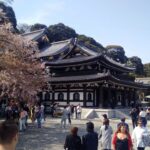
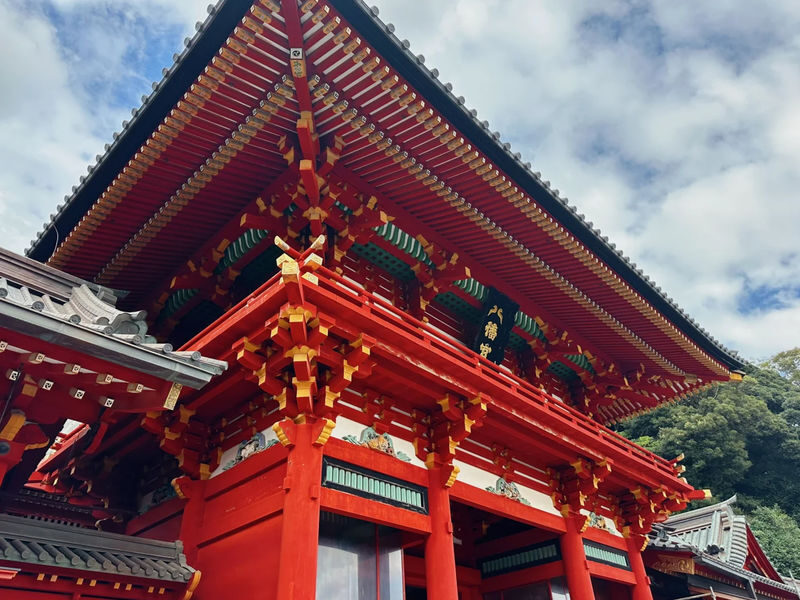
Tsurugaoka Hachimangu is one of Kamakura’s major shrines, set against a hillside with a formal approach, a dance hall, and a striking main hall. It is a place to pause, observe shrine customs, and get a sense of the city’s religious and cultural life. Seasonal changes add another reason to visit: cherry blossoms in spring and golden ginkgo leaves in autumn.
The tour lists this stop at about 14:10, with the visit self-guided. That gives you freedom to linger where you like, but the schedule does not state how long the stop lasts. If the shrine is a priority, check whether there is time to explore beyond the main buildings.
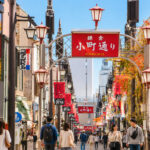
Nearby Komachi-dori is lined with shops selling wagashi, crafts, cafe fare, and local specialties. It is a handy place to browse or find a snack, but it can turn into a time sink if you stop at every shop. I would decide in advance whether you want a quick look, a food break, or a proper shopping pause, especially on a day with several other stops to fit in.
What the price buys, and what it does not
The most tangible inclusions are round-trip transfers from the selected meeting location, an Enoden ticket, and a listed English-, Chinese-, Japanese-, or Korean-speaking guide. Yet the package details also say that a tour guide is not included, while the inclusions name a language-speaking guide. That wording leaves the guide’s role unclear. Ask whether you should expect commentary, on-site assistance, or transport support only.
Meals, drinks, audio guide service, tips, and personal expenses are not included. Admission costs are not clearly identified in the included items either. Add those likely extras to your budget instead of judging value by the headline price alone.
For a day tripper, the main benefit is convenience: a long list of places is connected without needing to plan every transfer yourself. The value is strongest if you want a broad first look at Kamakura and Enoshima and are content with self-guided visits. It is weaker if you want long, unhurried time at each shrine, a detailed historical tour, or a specific amount of time on the beach.
Timing, meeting points, and practical cautions
There are departure times listed at 08:00 and 08:30, and you are asked to arrive 15 minutes early. The exact meeting location, vehicle plate, and guide details are sent by email between 16:00 and 22:00 Japan time on the day before the trip. Check the latest message carefully, especially if you receive more than one.
The expected return is around 18:00, either under the BEAMS sign at the Shin-Marunouchi Building near Tokyo Station or at Shinjuku MODE Gakuen, depending on your option. The actual arrival time can shift with road conditions, so leave your evening open rather than booking a tight onward plan.
The itinerary can change with traffic and weather. Wear clothes suited to the day and closed shoes; the operator advises against flip-flops, shorts, tank tops, and sleeveless shirts. The tour is not recommended for people with impaired mobility, pregnant women, or people with certain medical conditions, including high blood pressure or epilepsy. Infants and children count toward the passenger headcount. If you have a health condition, tell the operator in advance.
Should you book this Kamakura and Enoshima day trip?
Book it if you want a practical sampler of the coast, the Enoden, anime-linked Kamakura, and major cultural sites without arranging every transfer from Tokyo. The included train ticket and the possibility of less walking are useful strengths, and the stop variety gives the day more depth than a single-sight excursion.
Skip it, or choose a more focused outing, if you want a slow visit to every shrine, guaranteed guided commentary, or a clearly defined block of beach time. Before paying, confirm your departure point, the role of the guide, the admission costs, and the time allowed at the Great Buddha and Enoshima. Those details will tell you whether the package fits your pace.
Kamakura Daibutsu & Enoden (free ticket) & Kamakura Koko-mae Station & Shonan Coast & Enoshima & Tsurugaoka Hachimangu Shrine One-Day Tour
“Our driver, Xiao Song, was very thoughtful with the pick-up and drop-off, and was very accommodating with the locations. We had a great time and sa…”
FAQ
Is the Enoden train ticket included?
Yes. Admission to or use of the Enoden train ticket is listed as included.
Are round-trip transfers included?
Yes. Round-trip transfers to and from the selected meeting location are included.
Is a tour guide included?
The package information lists an English-, Chinese-, Japanese-, or Korean-speaking guide, but also says a tour guide is not included. The guide’s role is not clear, so confirm what support and commentary you should expect.
Are meals and drinks included?
No. Meals and beverages are not included.
Are entrance fees included?
The included items name the Enoden ticket but do not clearly list admission to the Great Buddha temple or other sites. Check the package details before booking.
Where does the tour return?
The listed return points are under the BEAMS sign at the Shin-Marunouchi Building near Tokyo Station or Shinjuku MODE Gakuen, depending on the selected option.
How long is the tour?
The listed departure times are 08:00 or 08:30, with an expected return around 18:00. Traffic and weather can change the schedule and arrival time.
Can I change or cancel my booking?
Changes are allowed until one day before the activity, subject to the stated exceptions. A full refund is available if you cancel at least 24 hours before the activity date, in local destination time.