Kintsugi turns breaks and flaws into part of an object’s beauty. At Urushi Studio Kodemari, you’ll use that idea to make a necklace or bracelet, guided through the work one step at a time. It’s a welcome change of pace from sightseeing, and you leave with a keepsake you made yourself.
I like two things in particular: the patient, close guidance makes this approachable even if you have never crafted anything, and the finished piece is personal, rather than a souvenir picked off a shelf. The quiet pace also gives you time to focus on the small decisions that make your accessory your own.
One point to keep in mind: this is a kintsugi-style accessory class, not a traditional pottery repair lesson. The method uses modern materials, and the level of hands-on help may vary. Some participants have had instructors make adjustments to their work, so speak up if you want to make every change yourself.
- At a glance
- What kintsugi means in this workshop
- From choosing a piece to adding the finishing touches
- The instructors and language support
- A good fit for families, couples and solo makers
- How the price compares with the keepsake
- Getting to the studio and planning your booking
- Should you book this kintsugi class?
- FAQ
- What will I make in the workshop?
- How long does the activity take?
- Do I need previous craft experience?
- Can children take part?
- Is English support available?
- Is parking available at the studio?
- The Best Of Naha!
- More Tours in Naha
- More Tour Reviews in Naha
At a glance
 1 / 8
 2 / 8
 3 / 8
 4 / 8
 5 / 8
 6 / 8
 7 / 8
 8 / 8
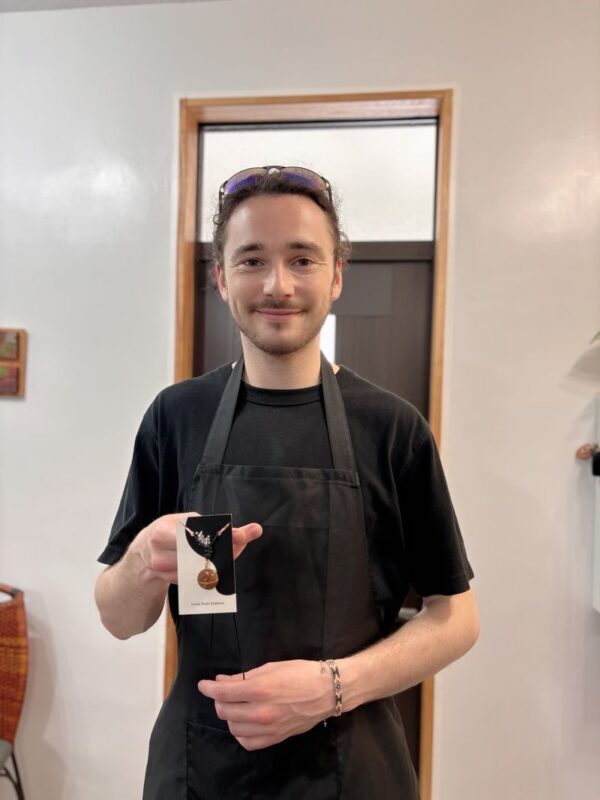
- Make a wearable keepsake: Choose the necklace or bracelet option and create an accessory to take home.
- No craft experience needed: The instructors guide you through the steps, making this suitable for beginners.
- Plan for a slow session: Allow roughly 1.5 to 2 hours, based on the length of recent classes.
- Expect English support: The experience includes an English and Japanese-speaking guide, though communication may also use written instructions and demonstrations.
- Bring the family: Children aged 7 and up can take part.
- Arrive on time: Get to the studio 10 minutes before your booking. There is no free parking at the studio.
👉 See our pick of the 3 Best Workshops & Classes In Naha (With Prices)
What kintsugi means in this workshop
Traditional kintsugi is the Japanese art of repairing broken pottery, often highlighting the repair rather than hiding it. This class brings that idea to wearable accessories: instead of simply covering a flaw, you make a small object whose finished look includes the marks and joins that give it character.
It’s worth knowing what you are booking. This is an accessory-making activity inspired by kintsugi, not a lesson in restoring a family teacup or working through the full traditional pottery process. A participant described the method as using modern materials such as resin and super glue. That makes the project accessible in a short class, but it is not the same as a long, specialist course in traditional urushi lacquer work.
That distinction does not make the workshop less worthwhile. It simply sets the right expectation: you come to learn about the craft, try a guided technique and make something wearable. If your main interest is the history and exact materials of traditional kintsugi, ask how much background the session will cover. One participant wanted more historical context, while others valued the chance to hear about the craft’s origins and see examples.
You can also read our reviews of more tours and experiences in Naha.


From choosing a piece to adding the finishing touches
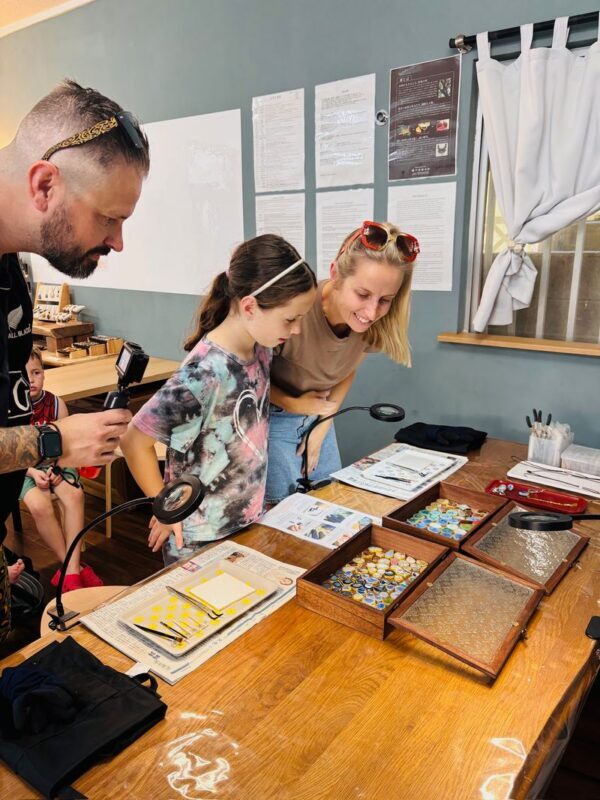
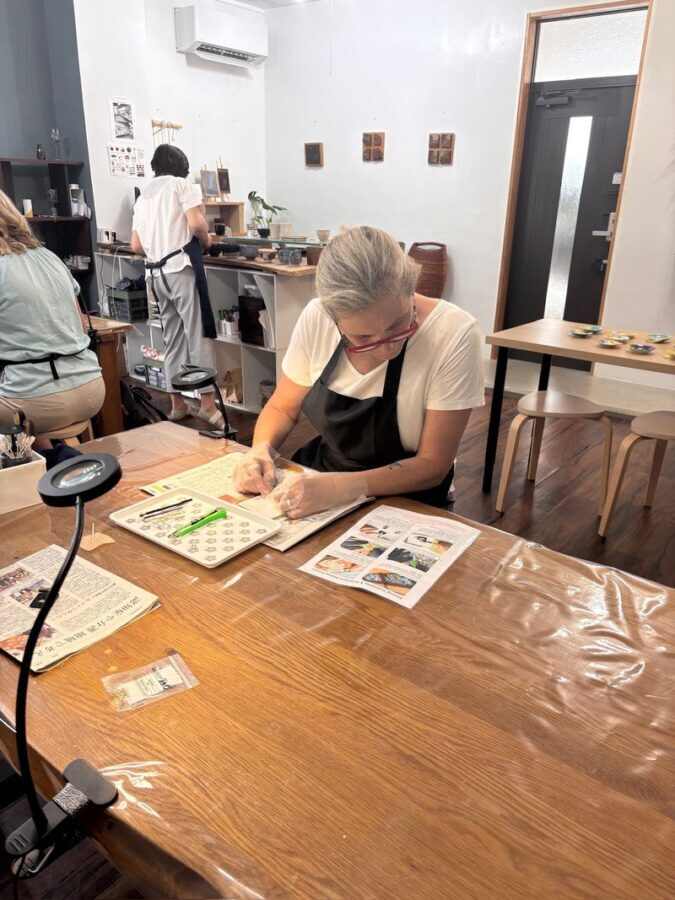
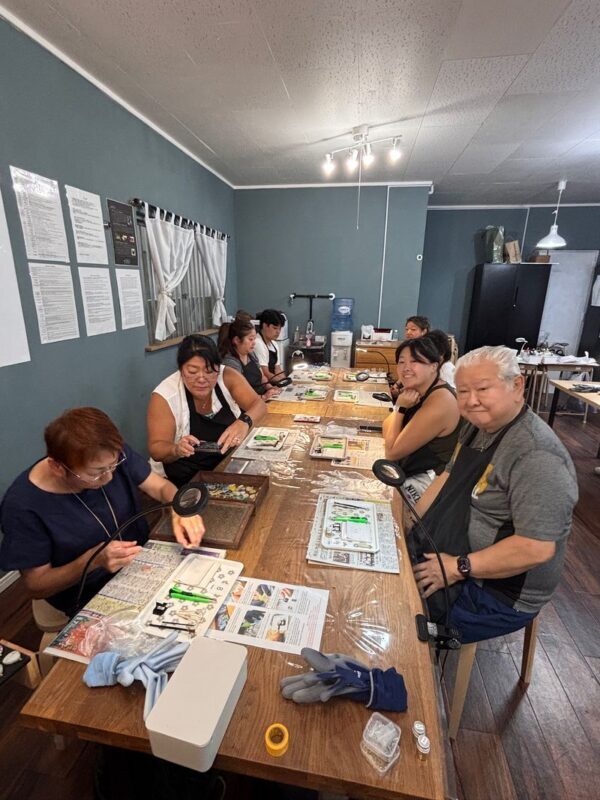
The workshop takes place at Urushi Studio Kodemari, at 1F, 2-16-6 Maejima, Naha. The studio has been described as small and cozy, which suits an activity built around close work at a table. It is a more intimate setting than a large group class, although the number of people in your session can vary.
You’ll begin by choosing the accessory offered with your booking. The listed package is for a necklace or bracelet. Some participants have made pendants or earrings, too, but don’t assume those are included in your package. Check the available choices when booking if you have a particular design in mind.
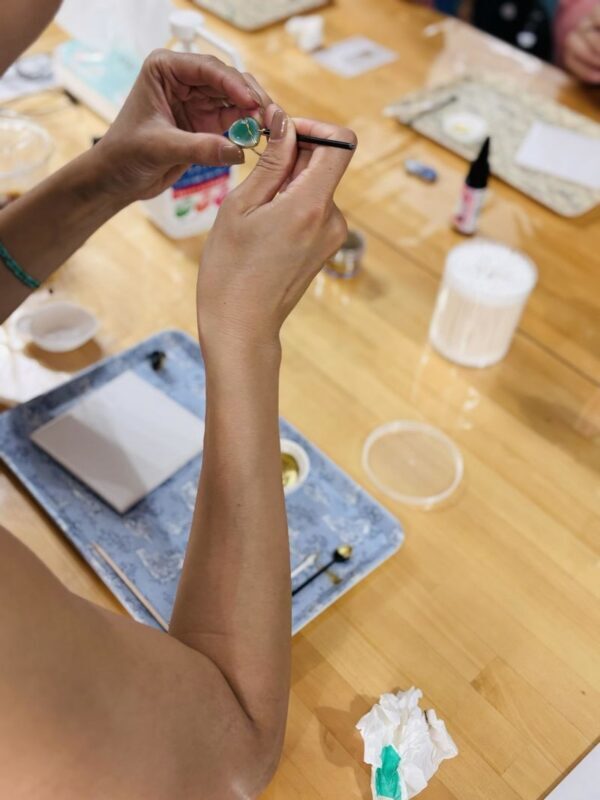
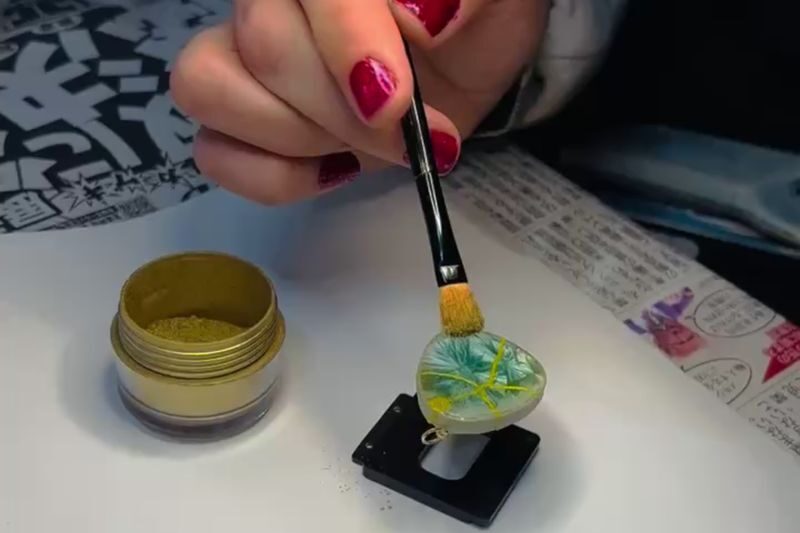
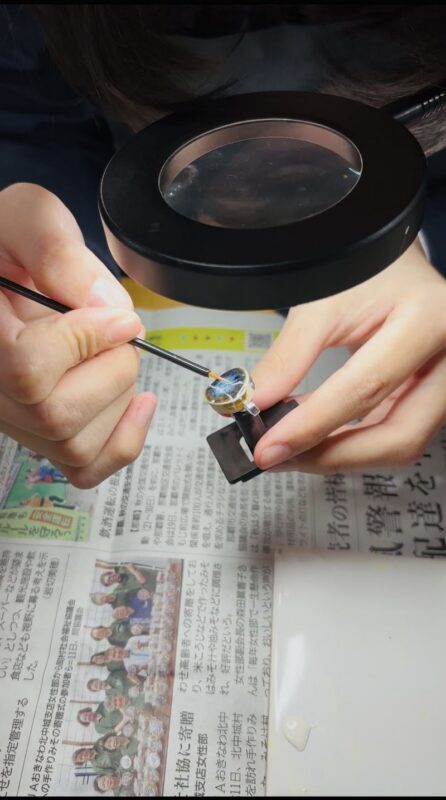
Next comes the making. Your instructor explains the process and demonstrates each step, then guides you as you work. The pace is hands-on but not a race. Several participants describe being able to do much of the work themselves after the instructor showed them what to do. That balance is useful: you get support when you need it, without every move being done for you.
The instructors check the piece as you go and can help correct mistakes. That is reassuring for beginners, especially when you are working with small details. It also makes communication important. If you have a strong idea of how you want the finished piece to look, say so early and repeat it before any changes are made. One participant was unhappy when an instructor adjusted the design without asking. Clear, friendly communication helps keep the result yours.
The class is generally a quiet, focused activity. Reports place it at about 1.5 to 2 hours, though the exact length may depend on the session and the pace of the work. There can be pauses while the instructors check or finish parts of a piece. If you prefer a brisk, nonstop class, that slower rhythm may test your patience. If you want a peaceful break from the day’s plans, it is part of the appeal.
Some sessions have ended with tea and a small sweet while the work received its finishing touches. Treat that as a possible extra, not a guaranteed part of the package. Before leaving, ask how to handle your accessory while it dries. One useful caution: the decorative lines can smudge if the piece touches plastic wrapping before it is fully dry. Take care when carrying it, and get clear instructions on when it is safe to pack away.
The instructors and language support
The experience includes Japanese-speaking staff and an English and Japanese-speaking guide. English communication has worked well for many participants, and an English instruction sheet has also been used. Still, the degree of spoken English may vary from one staff member to another, so be ready to follow demonstrations and written directions as well as conversation.
Named instructors Mayo and Aya have led some sessions. Participants have described them as patient and helpful, but staffing may change, so don’t book on the assumption that a particular instructor will be there. The key practical point is that the work is demonstrated and checked step by step, which gives beginners more than a set of written instructions to manage alone.
If the instructor reaches for your piece, ask what they plan to adjust before they do it. A simple question can prevent a mismatch between the maker’s vision and the instructor’s idea of a tidy finish. Good guidance should help you improve your work while still leaving you in charge of its character.
A good fit for families, couples and solo makers
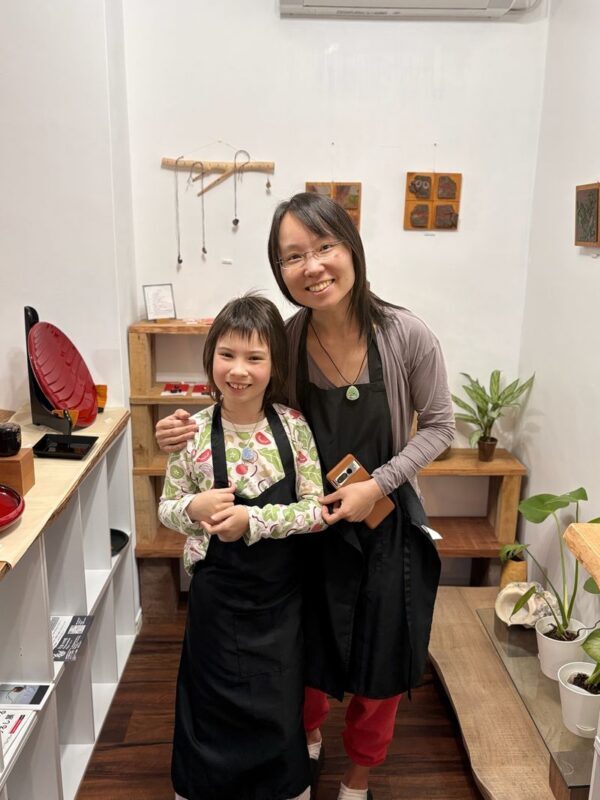
The minimum age is 7, making this a possible family activity for children who enjoy careful, hands-on work. Parents have taken part with children, and adults have attended with their grown children, too. It is a quieter outing than a theme park or water activity, and everyone can leave with a different piece.
The class can also suit a solo maker. Some sessions have had only one participant, which allowed for close attention, though being the sole person in a class may feel a little exposed at first. For couples and small family groups, it offers a shared activity without requiring everyone to make the same design.
I would not choose it for a child who wants a fast, messy craft session or for anyone who expects a large workshop with lots of room to experiment. The work asks for patience, and the studio is small. But if you like careful making, appreciate Japanese craft, or want a souvenir with a story behind it, the format makes good sense.
How the price compares with the keepsake
The listed price starts at US$44.25 for the necklace or bracelet experience. That is more than you might pay for a ready-made accessory, but the value is not just the object. You are paying for a guided session, time to make the piece yourself and an activity that gives context to a Japanese craft tradition.
The price is easiest to justify if you want a hands-on cultural stop rather than another shop visit. Your finished accessory is a useful reminder of the trip because you took part in making it. If you only want a polished piece of jewelry and have no interest in the process, buying one may be better value.
Check the package details before you book, especially if you hope to make a different type of accessory. The advertised option is a necklace or bracelet, even though other designs have been made in some classes. There is also no parking at the studio, so drivers should budget for a nearby paid lot.



Getting to the studio and planning your booking
The meeting point is Urushi Studio Kodemari in Maejima, Naha. Use the address, 1F, 2-16-6 Maejima, and allow time to find the entrance. Arrive 10 minutes before the scheduled start. Late arrivals and no-shows are not refundable, so do not plan to cut the timing close.
You’ll need to present the mobile voucher from the Klook app. The voucher is valid only for the date and time you booked. If your plans change, cancellation at least 24 hours before the activity date, using local destination time, qualifies for a full refund. In severe weather or another unforeseen event, the operator may cancel and offer a reschedule or refund.
If you are driving, plan for paid parking nearby. No parking is provided at the studio. For other transport details, check the route from your hotel or port on the day, since the supplied information does not specify a public transport stop or a guaranteed walking time.
Should you book this kintsugi class?
Book it if you want a calm, beginner-friendly craft session and like the idea of taking home something you made yourself. The best reasons to go are the patient step-by-step support, the personal nature of the finished accessory and the chance to spend an unhurried stretch of time with a Japanese craft.
Think twice if you want a deep technical course in traditional pottery repair, need a guaranteed specific instructor, or feel uncomfortable with an instructor making corrections to your work. For a smoother class, explain your design preferences clearly, ask before any changes are made and take care with the piece until it is fully dry. At about US$44.25, it is a solid choice for a hands-on souvenir, especially for families with children aged 7 and up, couples and curious solo makers.
Kintsugi Accessory Crafting in Naha, Okinawa
“The manager and staff were very kind; we were able to communicate in English even though we don't speak Japanese. They explained and checked every…”
FAQ
What will I make in the workshop?
The listed package lets you make a necklace or bracelet using a kintsugi-style technique. Other accessory types have been made in some sessions, but they are not specified as part of this package.
How long does the activity take?
Past sessions have taken about 1.5 to 2 hours. The exact length may vary.
Do I need previous craft experience?
No. The class is described as suitable for beginners, and instructors guide you through the steps.
Can children take part?
Yes. Participants must be at least 7 years old.
Is English support available?
Yes. The activity includes an English and Japanese-speaking guide. Japanese-speaking staff are also included, and English written instructions have been used.
Is parking available at the studio?
No parking is available at the studio. If you drive, use a nearby paid parking lot.