
Jane Austen lived in Bath for five years and hated it. She called it “vapour, shadow, smoke and confusion” and set two of her novels (Northanger Abbey and Persuasion) in a city she found socially exhausting. That is, famously, not the usual tourist brochure opener.

Bath is Britain’s most complete Georgian city, a UNESCO World Heritage site, and home to the only hot springs in the country. It’s also an easy day trip from London — 90 minutes by train and small enough to cover on foot in a single day. If you’re weighing it against the big coach-tour combos, the Windsor + Stonehenge + Bath day trip guide covers that option; this guide covers the Bath-only version.

This guide covers the best Bath walking tours, how the Roman Baths ticket actually works, and what to do with the 4-5 hours you’ll have in the city.
- In a Hurry? Here Are the Top Picks
- What to Actually Do in Bath
- The Roman Baths
- Bath Abbey
- The Royal Crescent and the Circus
- Pulteney Bridge
- Thermae Bath Spa
- The Best Tours to Book
- 1. Bath: City Walking Tour with Roman Baths Entry —
- 2. Bath: Guided Walking Tour — .94
- 3. Bath: Guided Ghost Tour —
- A Short History of Bath
- How to Get from London
- When to Visit
- What to Eat in Bath
- What to Wear and Bring
- Worth Knowing Before You Book
- Pairing Bath with Other UK Activities
- Worth the Day or Skippable?
- More UK Guides
In a Hurry? Here Are the Top Picks
Best value: Bath: City Walking Tour with Roman Baths Entry — $26 per person. Walking tour plus optional Roman Baths entry included.
Best walking tour: Bath: Guided Walking Tour — $26.94 per person. 1.5-hour walk with a local guide. The simplest way to see the city.
Best for atmosphere: Bath: Guided Ghost Tour — $24 per person. Two-hour evening ghost walk. Good add-on if you’re staying overnight.
What to Actually Do in Bath
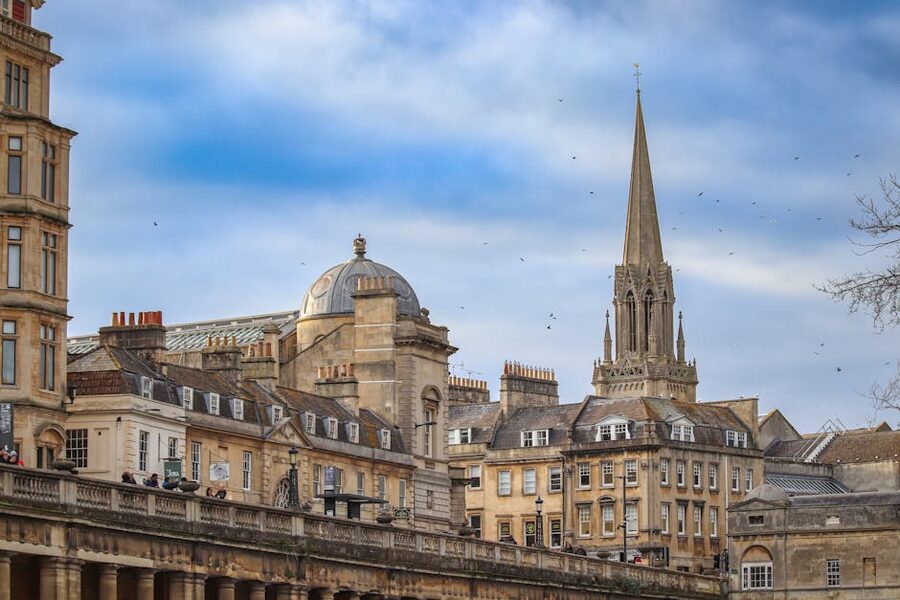
Bath is small enough to cover on foot in 4-5 hours. Here’s what fills that time.
The Roman Baths
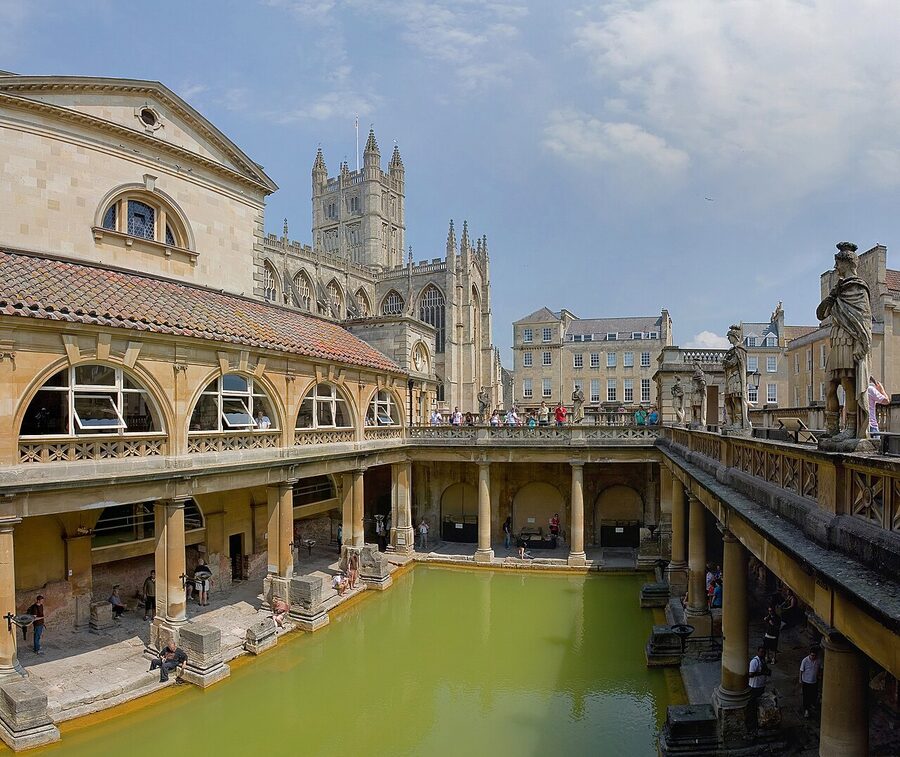
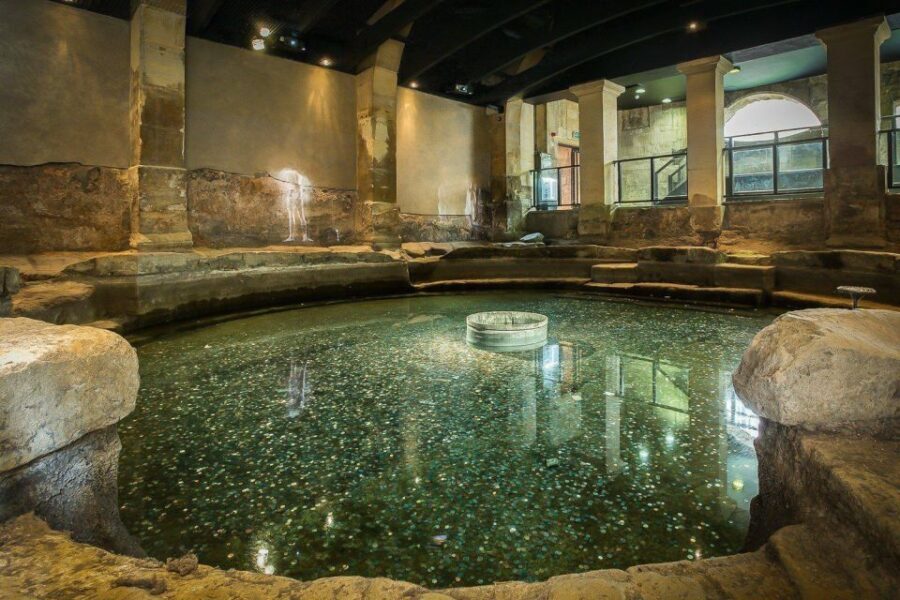
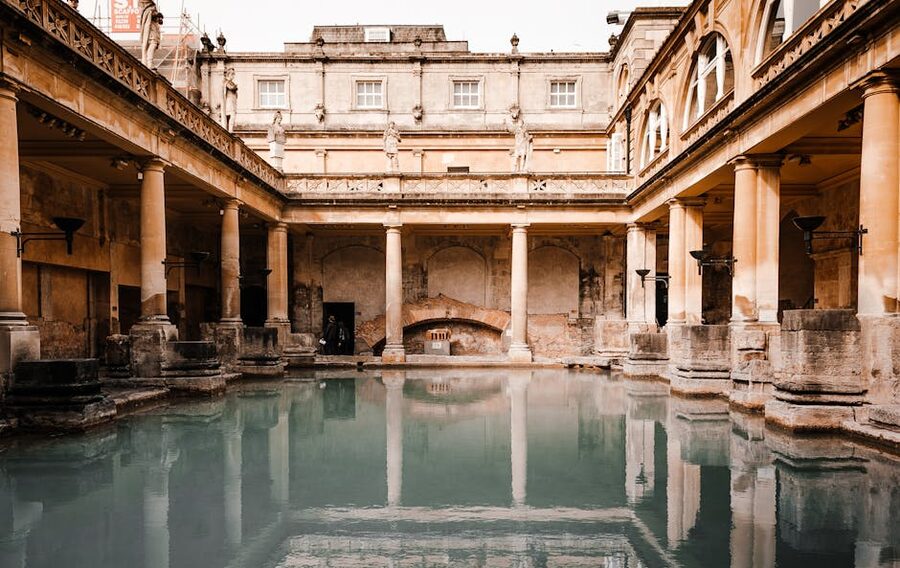
The main attraction. Built around 70 AD by Roman soldiers, rediscovered in the 1870s, and now a museum that gives you the most tangible Roman experience in Britain. Entry is £27 for adults (book online for a small saving) and includes an audio guide.
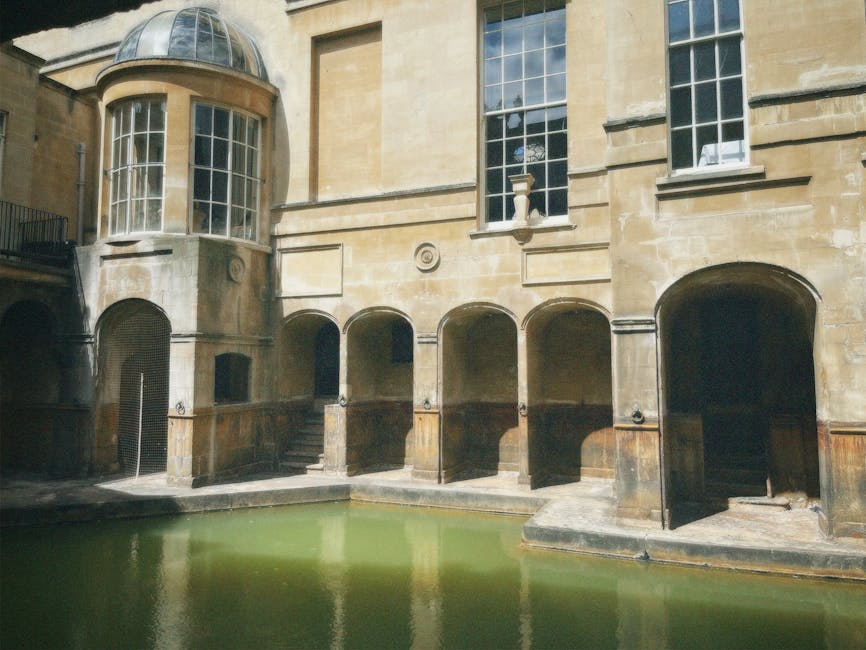
The complex has four parts: the Sacred Spring (where the hot water rises from the ground), the Roman Temple (partially preserved), the Roman Bath House (the complex of pools), and the museum (coins, altar fragments, a defixio or “curse tablet” scratched in lead by an angry Roman asking the goddess to harm a thief). Allow 90-120 minutes for a proper visit.
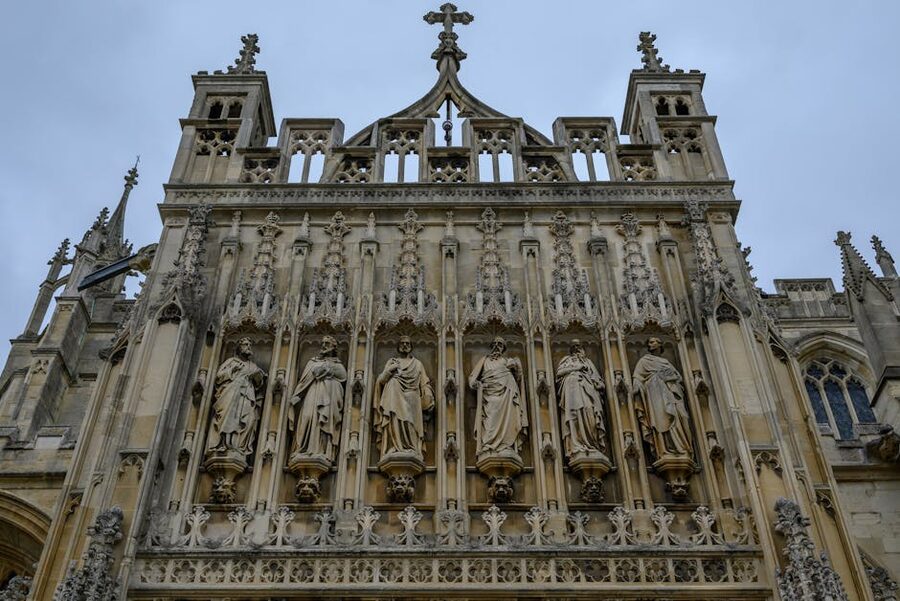
Bath Abbey
Next door to the Roman Baths. The current building is mostly 16th century, built on the site of a much older Anglo-Saxon abbey. Famous for its “ladder of angels” carved above the main entrance — which you can walk climb in the Tower Tour (limited hours, £12 extra).
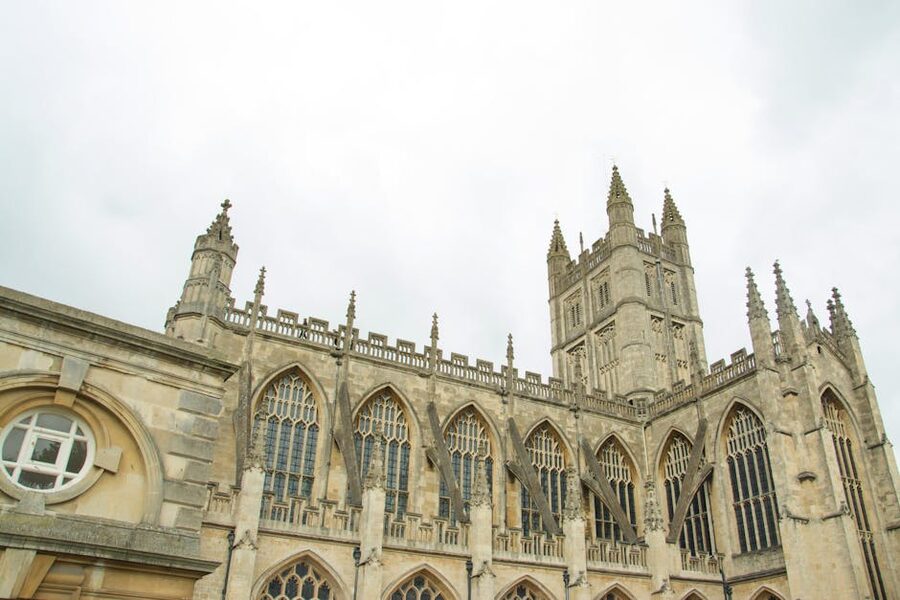
Free to enter (donation requested). Evensong services happen most days at 5:15pm.
The Royal Crescent and the Circus
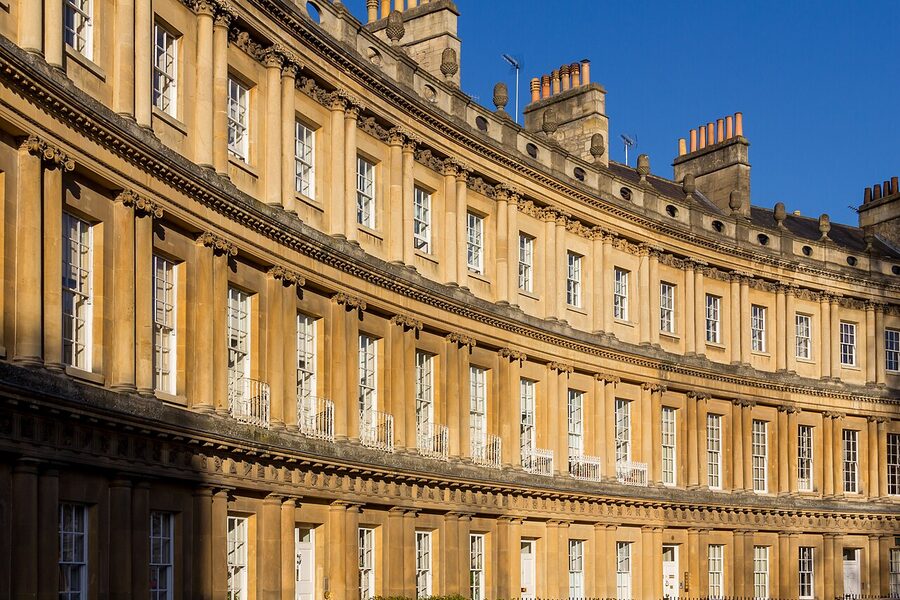
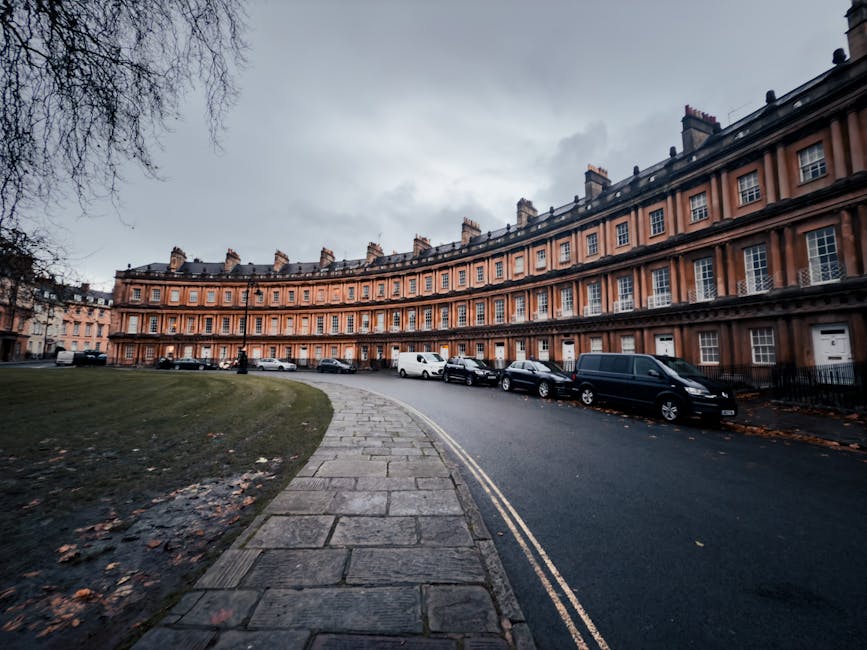
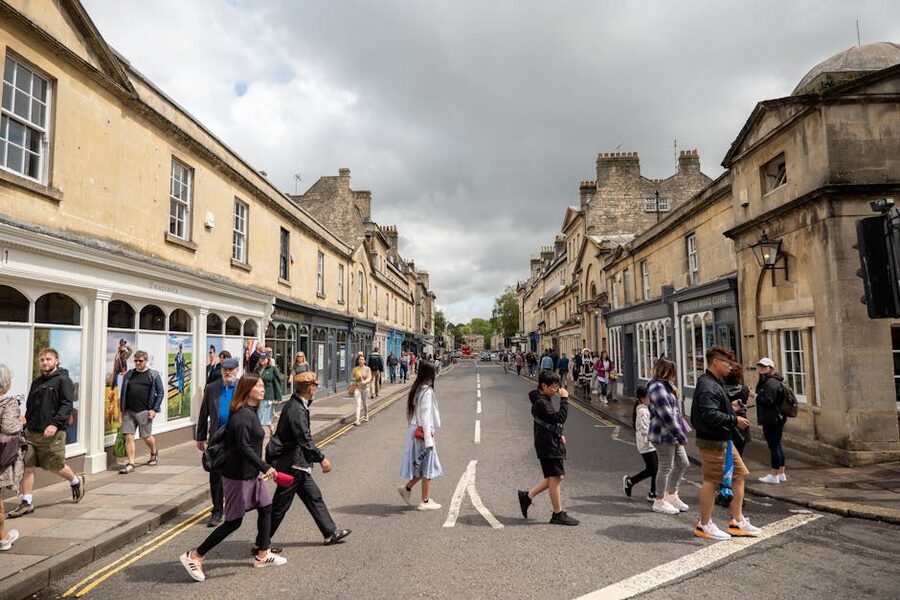
These are the two signature Georgian architectural spaces. The Royal Crescent is a curved terrace of 30 houses finished in 1774. The Circus is a circle of 33 houses finished in 1768. They’re both about 10 minutes’ walk north of the Roman Baths.
Number 1 Royal Crescent is open to the public as a museum (£14 entry) — it’s been restored to how a wealthy Georgian family would have lived in 1770. Worth doing if you’re interested in Jane Austen or Regency-era social history.
Pulteney Bridge
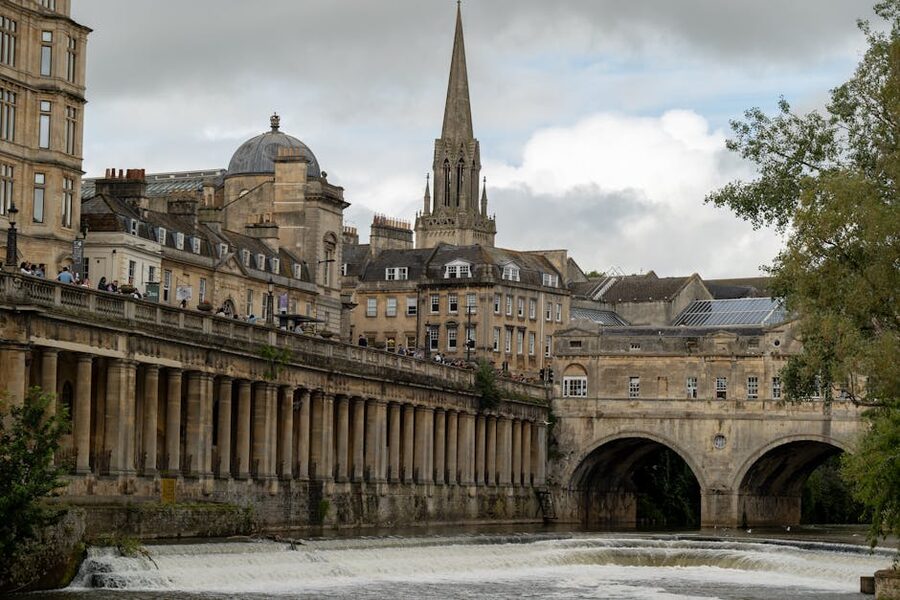
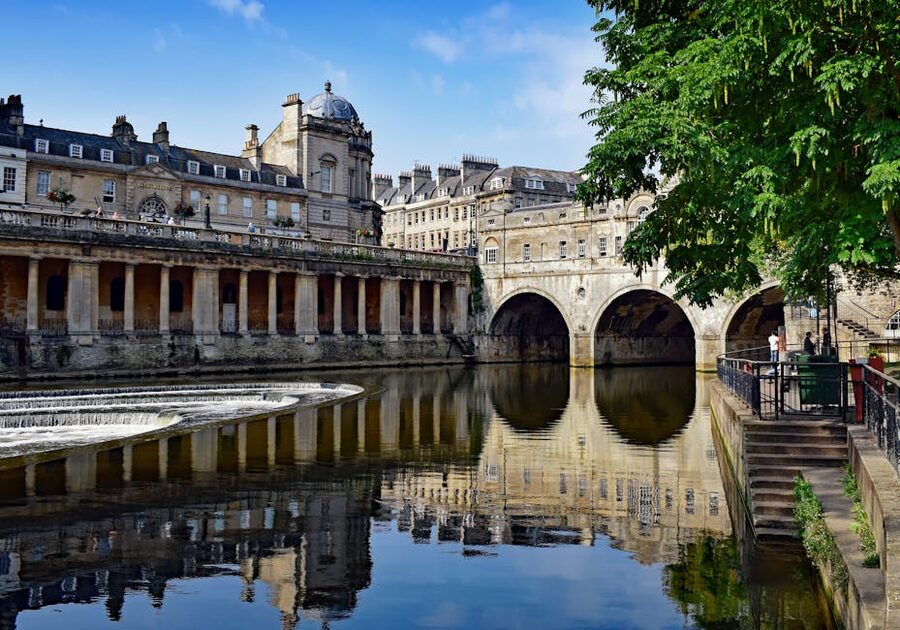
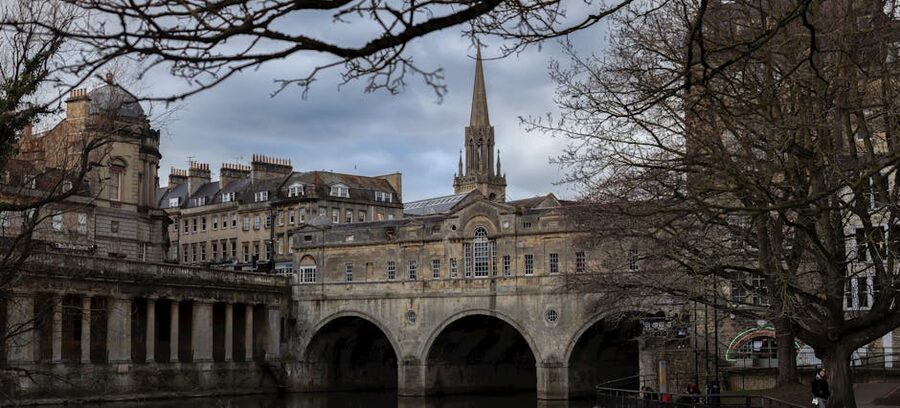
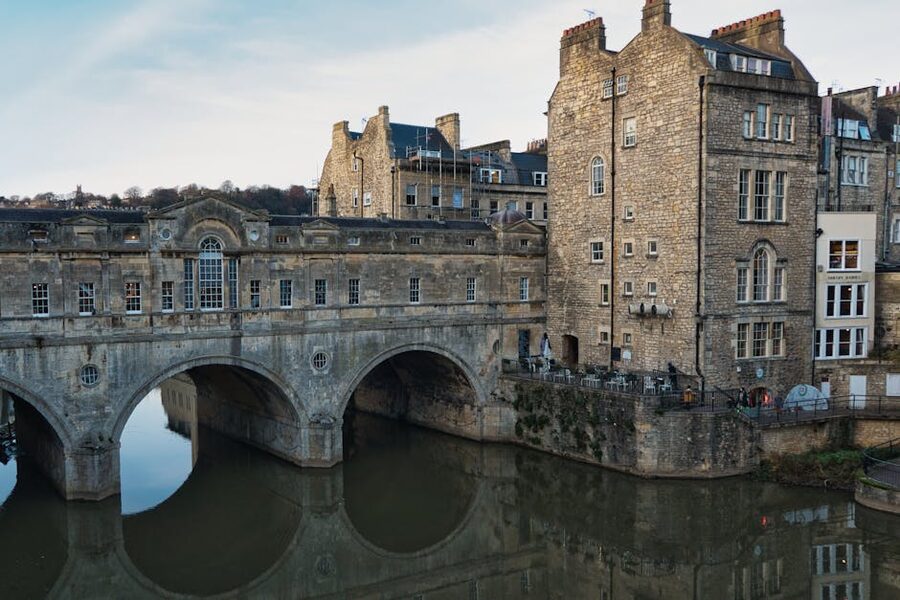
The photo stop. One of only four shop-lined bridges in the world (Florence’s Ponte Vecchio, Venice’s Rialto, Erfurt’s Krämerbrücke, and this). Built 1774 by Robert Adam. You can walk across it without realising it’s a bridge — the shops block the river view entirely. The best photo is from the south bank 50 metres downstream.
Thermae Bath Spa
The modern hot springs facility, 200 metres from the Roman Baths. This is where you actually swim in the hot water — the Roman Baths themselves are a museum, not a bathing complex. Thermae Bath Spa costs £42 for a 2-hour session (book ahead in summer) and includes a rooftop pool with a view over the city.
Most day-trippers skip Thermae because they’re rushed. If you have a full day and overnight in Bath, this is genuinely worth doing.
The Best Tours to Book
1. Bath: City Walking Tour with Roman Baths Entry — $26
The efficient option. A 1.5-2 hour walking tour with a local guide who covers the Abbey, the Royal Crescent, the Circus, and Pulteney Bridge, followed by timed entry to the Roman Baths. You save the queue-dodging hassle and get context before you see the baths — which materially improves the visit. Our review covers exactly what’s included and how much time you get at each stop. Guides are consistently praised for depth of Bath-specific knowledge — this isn’t a London-guide doing a sideline, these are Bath locals.
2. Bath: Guided Walking Tour — $26.94
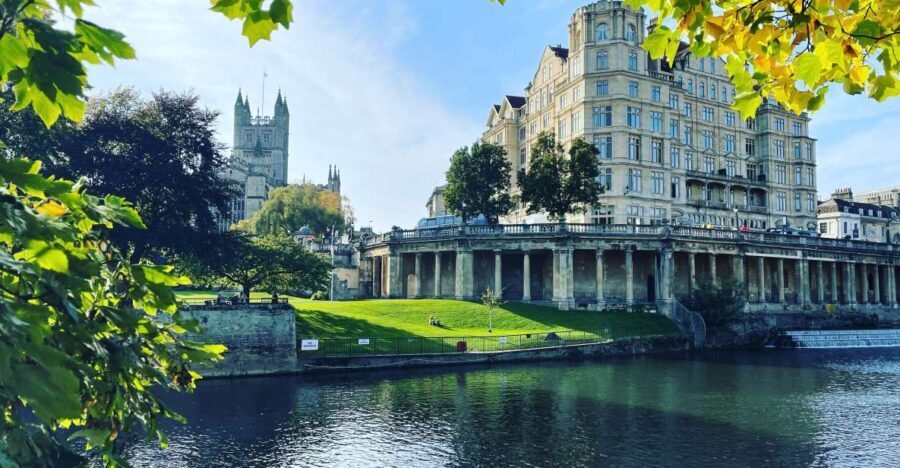
The simpler walking-only pick. Same 1.5-hour format, same core route, but without the Roman Baths add-on. Good choice if you’ve already booked Roman Baths entry separately or don’t plan to visit (which is rare but happens — some visitors are here for the architecture, not the archaeology). Our review compares this directly with the combined version. Guides are drawn from the same Bath-local pool.
3. Bath: Guided Ghost Tour — $24
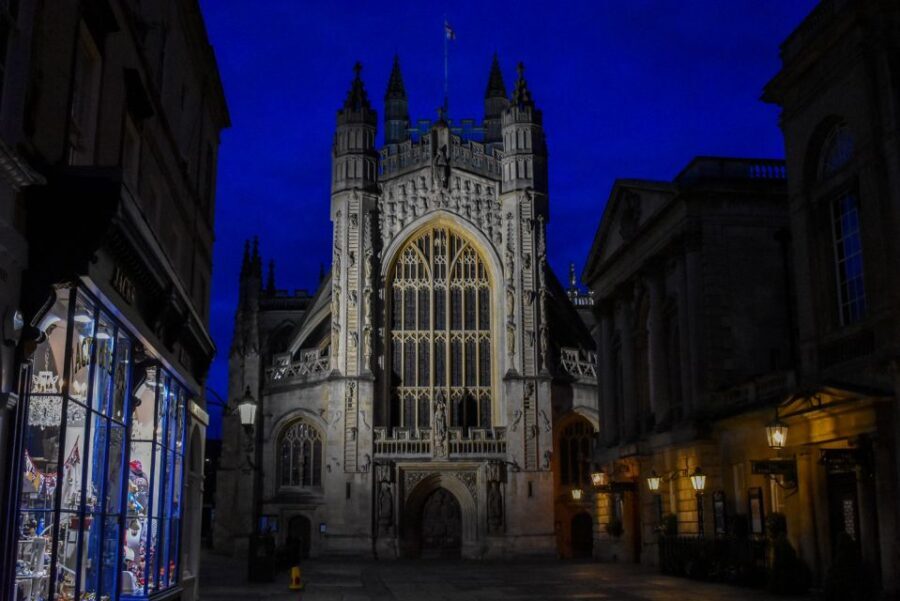
The evening alternative. Two hours after dark with a guide walking you past Bath’s murder sites, plague pits, and allegedly-haunted pubs. Bath has a surprisingly dense catalogue of ghost stories, most of them genuinely historically grounded. Our review covers the route and atmospheric quality. Best booked for an overnight stay — you don’t want to be running for the 9:30pm train back to London.
A Short History of Bath
Bath has been inhabited continuously for over 2,000 years. Three distinct eras shaped the city.
Roman era (43-410 AD): The Romans arrived in 43 AD and quickly identified the hot springs as a sacred site (the Celtic goddess Sulis was already there; they fused her with Minerva and built a temple). Construction of the Bath House started around 70 AD and continued for the next 300 years. The city (Aquae Sulis — “Waters of Sulis”) became one of the main spa resorts in Roman Britain.
Medieval era (5th-16th century): When the Romans left, the baths fell into disrepair. Bath became a small cathedral town. The current Abbey is from this period (finished 1539).
Georgian era (1700-1820): Bath’s second golden age. The architect John Wood the Elder and his son built most of what you see today — the Circus, the Royal Crescent, the Assembly Rooms. Bath became Britain’s most fashionable spa town; anyone who mattered in 18th-century society “took the waters” here for a season. Jane Austen arrived in 1801 and, as mentioned, didn’t enjoy it.
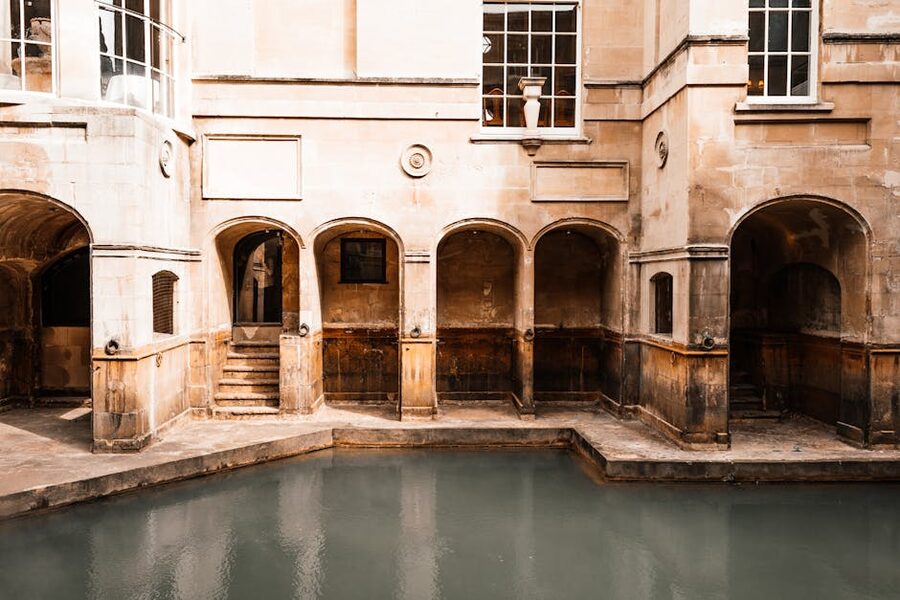
Bath’s UNESCO World Heritage listing came in 1987, covering the entire old city. It was re-listed in 2021 as part of a multi-country “Great Spa Towns of Europe” cluster alongside Baden-Baden, Karlsbad, and Spa itself.
How to Get from London
Train: London Paddington to Bath Spa is 90 minutes direct. Services run every 30 minutes during the day. Advance tickets from £18; on-the-day anytime tickets £60-80. The train is the best option for most visitors. Bath Spa station is 5 minutes’ walk from the city centre.
Coach: National Express from Victoria Coach Station. 2.5-3 hours, £15-25 return. Cheaper and slower than the train.
Car: 2 hours from central London via the M4. Bath has restrictive parking zones in the city centre; use a Park & Ride lot (£3 per day plus £3 per person for the bus) rather than driving into the middle.
Day tour bus from London: If you don’t want to deal with logistics, several operators run Bath-only coach tours for £70-90 per person — transport and Roman Baths entry included.
When to Visit
Bath is a year-round destination. Each season has its own thing.
April-May: Cherry blossoms in the Botanic Gardens, tulips on the Royal Crescent lawn, moderate crowds. Excellent.
June-August: Peak tourist season. Expect 30-45 minute queues at the Roman Baths on weekends. Book ahead.
September-October: Fewer crowds, autumn colours, warm enough to sit outside. My favourite time.
November-March: Quiet. Roman Baths interiors are the same temperature year-round. Bath Christmas Market (mid-November to mid-December) is one of the UK’s best — worth a specific December visit.
What to Eat in Bath
Two things every visitor should try.
A Bath Bun: a sweet, lightly-spiced bread roll with candied peel on top. Sally Lunn’s on North Parade Passage is the traditional place — they’ve been baking them since 1680. About £3-5 per bun with tea.
Afternoon Tea in the Pump Room: The Pump Room is the Georgian restaurant attached to the Roman Baths, where high society “took the waters” in the 1700s. You can still drink the spring water here (it tastes rough — high mineral content). Proper afternoon tea is £35-45 per person and the room itself is the main event — crystal chandeliers, string quartet most afternoons.
Beyond that, Bath has plenty of decent restaurants but it’s not a major food destination. Eat to get you through the day rather than planning the day around meals.
What to Wear and Bring
Comfortable walking shoes. Bath is cobblestone and steep in places — the walk from the Roman Baths to the Royal Crescent is uphill for about 300 metres.
Layers. Bath sits in a valley and traps weather — one hour can be warm sunshine, the next cold rain.
Camera or phone. Pulteney Bridge, the Royal Crescent, and the Abbey are the three postcard shots. The Circus is harder to photograph well — you need a fisheye or to stitch a panorama.
Cash isn’t strictly needed but useful for small purchases (market stalls, Bath Buns).
Advance ticket for the Roman Baths if visiting in summer — on-the-day queues can be 45+ minutes.
Worth Knowing Before You Book
The Roman Baths and the Thermae Bath Spa are two different places. The Roman Baths is a museum (you look at the water, don’t touch). Thermae Bath Spa is a modern spa (you swim in the hot springs water). Some tour listings are unclear — check which you’re paying for.
Walking tours in Bath are usually 1.5-2 hours. The self-guided walking option is almost as good if you have a good audio guide — Bath is compact and the landmarks are close together.
The Jane Austen Centre (on Gay Street) is separate from everything above. If you’re a fan, it’s a £15 entry fee and about 45 minutes. If you’re not, skip it — Austen famously didn’t like the place, and the exhibition treats that ambiguity poorly.
Free city maps are available at the Tourist Information Centre by the Abbey. Better than most paid walking apps.
Number 1 Royal Crescent opens Tue-Sun only, closed Mondays. Plan accordingly.
The Bath Skyline walk is a 6-mile circular trail around the city edge. Takes 2-3 hours, maintained by the National Trust, free. Great for clear days when you want to see the city in context.
Pairing Bath with Other UK Activities
Bath is usually done as either a full day trip or a 1-night stopover from London.
Full day trip: train at 9am, arrive 10:30, lunch in Bath, afternoon at the Roman Baths and Royal Crescent, evening train back. Catch the 6pm Paddington; you’re home by 7:30. Perfect structure.
2-day slow visit: Bath overnight. Day 1 for the main attractions (Roman Baths, Abbey, Georgian architecture). Day 2 for the Bath Skyline walk, Thermae Bath Spa, and a relaxed lunch. Train back in the afternoon.
Bath + Cotswolds: The Cotswolds start 30 minutes north of Bath. A two-day trip combining Bath with the Cotswolds villages is a classic English countryside combination. Drive rather than train for this combo.
Bath + Stonehenge: Stonehenge is 50 minutes southeast of Bath. If you’re already in Bath, booking a half-day tour to Stonehenge from Bath is cheaper than the London-based Stonehenge tours.
If you want another classic UK day trip, the Cambridge punting guide covers the university-town equivalent, and the Oxford walking tour covers Cambridge’s big rival.
Worth the Day or Skippable?
Worth the day if: you’re interested in Roman history, Georgian architecture, Jane Austen, or simply want a well-preserved English spa town for a day away from London.
Skippable if: you’ve already booked the Windsor-Stonehenge-Bath combo — that tour covers the Roman Baths in 2 hours and you’d be duplicating.
For most first-time UK visitors, Bath is worth a full day rather than a shared slot in a combo tour. The Roman Baths deserve 2 hours, the Georgian streets deserve 2 hours, and the Pump Room afternoon tea deserves its own hour. The combo gives you 2 hours total for all of this, which is why travellers who do the combo often come back for a proper Bath day later.
More UK Guides
Bath pairs well with other English-heritage day trips. The Cambridge punting tour and Oxford walking tour cover the other two classic university-town days. For big-hit coach tours, the Windsor-Stonehenge-Bath day trip guide combines Bath with two other London-area highlights. For quieter countryside, the Cotswolds day trip is the natural next read — many combined itineraries include both Bath and the Cotswolds. And for London-base days, the London walking tour and St Paul’s Cathedral guide are good companion reads.
Affiliate disclosure: We may earn a small commission from bookings made through the links on this page. It doesn’t change the price you pay and helps keep the site running.