
The EPIC Museum has almost no physical objects. It’s entirely digital — projected walls, touchscreens, recorded voices, animated maps, and short film loops in 20 galleries. For a museum about the 70 million people of Irish descent now living outside Ireland, that decision makes more sense than it sounds when you walk in.
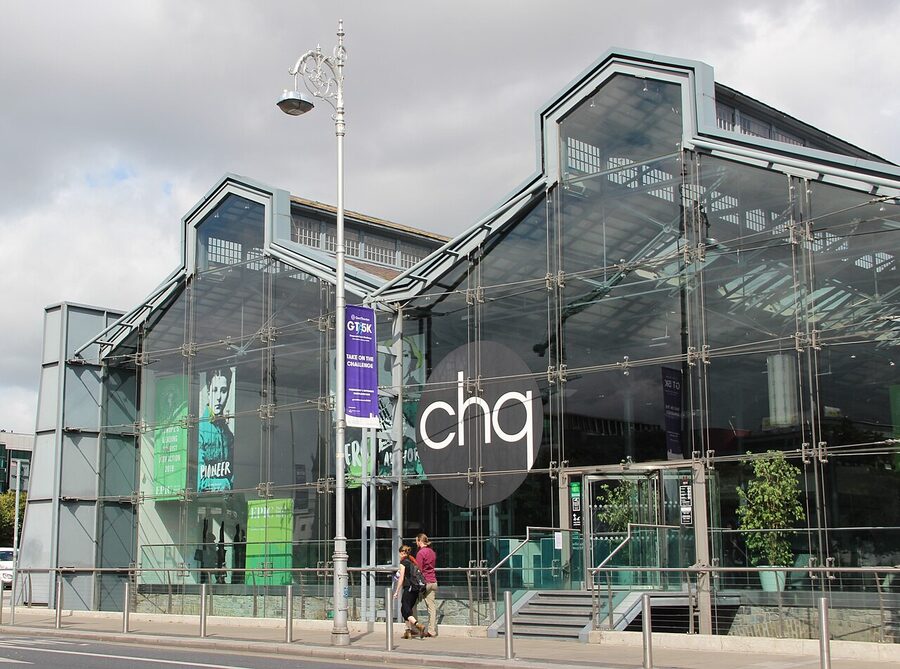

This guide covers the EPIC Museum admission ticket ($25), what it actually covers (the history of Irish emigration from 1500 to now), and how to pair it with the Jeanie Johnston famine ship and Famine Memorial next door for a proper 2-3 hour Irish-diaspora afternoon.

In a Hurry? The Dublin Emigration Museum Options
- The main ticket: EPIC Irish Emigration Museum Admission — around $25, 1-3 hours self-paced, 20 themed galleries.
- Complement with famine context: Irish Famine Exhibition Dublin — around $18, 1 hour, focused specifically on the 1845-1852 Great Famine.
- For the literary side: Dublin Literary Pub Crawl — around $30, 2.5 hours, evening tour of pubs associated with Joyce, Beckett, Behan, and Kavanagh.
_(53667000978).jpg)
- In a Hurry? The Dublin Emigration Museum Options
- What the EPIC Museum Is
- The Three Tour Options
- 1. EPIC Irish Emigration Museum Admission —
- 2. Irish Famine Exhibition Dublin —
- 3. Dublin Literary Pub Crawl —
- The Galleries — What’s Actually Inside
- The Building — CHQ’s Own History
- The Famine Memorial — Two Minutes’ Walk
- The Jeanie Johnston Famine Ship
- When to Go
- Getting There
- Who Should Visit
- Tickets and Practical Details
- Other Dublin Guides
What the EPIC Museum Is
EPIC stands for “Every Person Is Connected” — the founding pitch being that if you have Irish heritage (roughly 1 in 7 of the people reading this guide do), this museum is part of your story. The museum opened in 2016 and won European Museum of the Year in 2019 and 2020 back-to-back, which sounds like marketing until you walk through it.
Structure: 20 interconnected underground galleries in the original 1820 tobacco-warehouse vaults. Each gallery covers one theme of Irish emigration — why people left (galleries 1-5), how they travelled (6-8), where they went (9-14), what they did once there (15-18), and how the diaspora shapes Ireland now (19-20). You walk through in order; there’s no shortcut route.
The key decision the museum makes early: it doesn’t show you Irish emigrant artefacts. No preserved tickets, no famine-era spoons, no emigrant letters under glass. Instead it uses large-format projection, interactive screens, and audio recreations of voices to build the experience. Because the Irish diaspora was 10 million people across four centuries, individual artefacts can’t represent it. Digital media can.

The Three Tour Options
1. EPIC Irish Emigration Museum Admission — $25
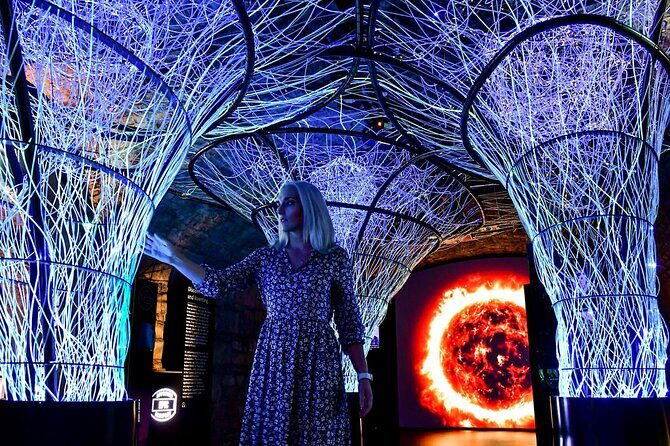
The main event and what this article is fundamentally about. $25 self-paced, no guided tour required, and the museum is explicitly designed for first-time visitors with no prior Irish history background. Walk through slowly and it’ll take 2-2.5 hours; at pace you can do it in 75 minutes. Audio content is English but many galleries have Spanish, French, German, and Chinese subtitles. Our full review covers which galleries are the best-executed and how to pace the visit.
2. Irish Famine Exhibition Dublin — $18
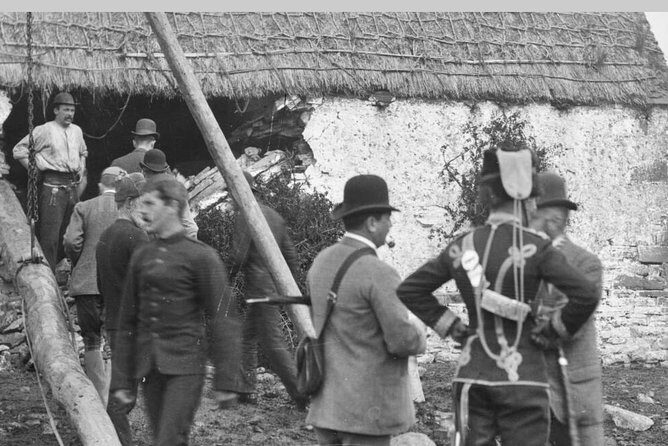
The pick if you want more depth on the famine specifically. EPIC covers it but in 1-2 galleries of 20; this exhibition is 100% famine, 60 minutes, $18. The two pair well — do this first for the famine detail, then EPIC for the wider emigration context. Useful for readers who are descendants of famine-era Irish-Americans looking for specific historical context. Our review covers the Famine Exhibition’s relationship to the Famine Memorial and EPIC.
3. Dublin Literary Pub Crawl — $30
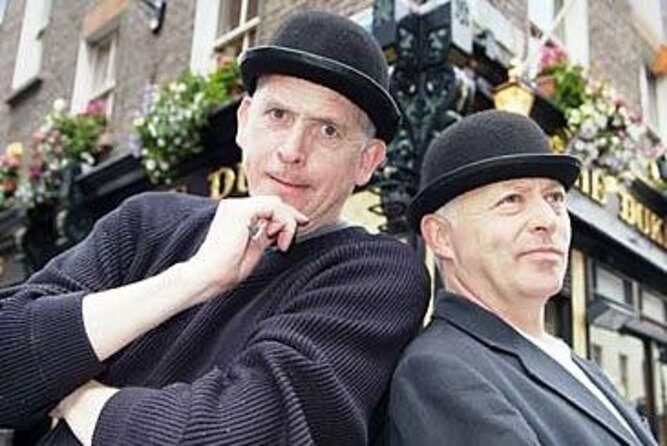
An evening companion to EPIC, not a substitute. The diaspora shaped Irish literary output as much as Irish literature shaped the diaspora — Joyce wrote Ulysses mostly from Trieste, Paris, and Zurich; Beckett wrote from Paris; Behan bounced between Dublin and New York. A post-EPIC literary pub crawl is thematically the right next evening. Our review covers the route and the actor quality.
The Galleries — What’s Actually Inside
The 20 galleries run in sequence; here’s what you see in the order EPIC presents them.
1-5. Why people left. Gallery 1 sets the scene — Ireland’s geography and pre-famine population. Galleries 2-3 cover the Great Famine (1845-1852) with animated maps showing population collapse by county. Galleries 4-5 cover later emigration waves — 1880s-1920s economic migration, 1930s-50s state-driven emigration, 1980s recession wave.
6-8. How they travelled. Coffin ships (1847-51, when 30% mortality on some voyages was routine), steamship emigration (1860s onwards, safer but still packed), and later 20th-century emigration (ferry to Britain, plane to America, Australia, Canada).

9-14. Where they went. Six galleries covering major diaspora destinations: United States (by far the largest), United Kingdom, Canada, Australia, Argentina (a surprisingly large destination), and mainland Europe. Each has a touchscreen where you can explore specific cities — Irish-Americans in Boston and New York, Irish-British in Liverpool and London, etc.
15-18. What they did once there. Irish involvement in American political life (every US president with confirmed Irish ancestry, which is most of them), the global Irish labour movement, Irish women in religious and educational life, and Irish artists abroad (O’Keeffe, Gallagher, et al). These are the four most substantial galleries in time and material.
19-20. The diaspora today. Interactive maps showing the modern 70-million-person diaspora, a wall of 1,500 portraits of famous Irish-descent people (from JFK to Stephen Colbert), and a final room where visitors can add their own story. You can scan your passport/ID and the museum emails you a certificate of Irish heritage — cheesy but apparently popular.
The Building — CHQ’s Own History
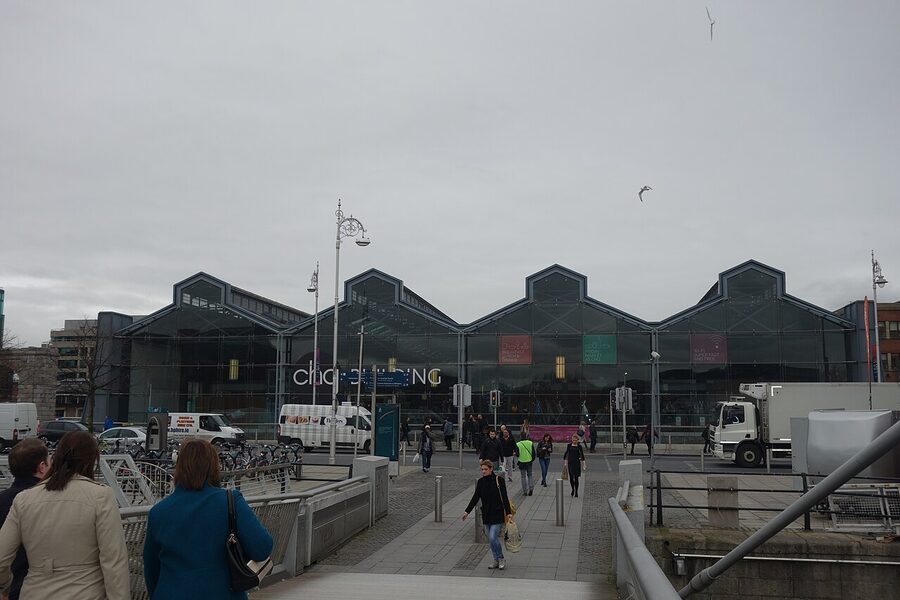
The CHQ Building predates the museum by nearly two centuries. It was built 1820 by John Rennie (the engineer who designed London’s Southwark Bridge) as a bonded warehouse for tobacco and tea arriving from the British colonies. The structure is dramatic — cast-iron columns, brick-vaulted ceilings, 2,400 square metres of basement space that had to be kept at constant humidity for the tobacco.
From 1820 to the 1970s it was a working warehouse. Dublin’s docks declined with the shift to containerisation in the 1970s; the building was used for storage and occasional events but not much else. In 2007 it was renovated by Dublin City Council as part of the Docklands regeneration and reopened as a shopping/dining complex. The EPIC Museum moved into the basement in 2016, using the original cast-iron-columned vaults as the exhibition space.
The choice of building is itself thematic: the tobacco and tea that came through these vaults were imperial trade goods, exactly the economic system that impoverished Ireland and forced millions to emigrate. Putting the emigration museum inside that building is a deliberate architectural argument.
The Famine Memorial — Two Minutes’ Walk
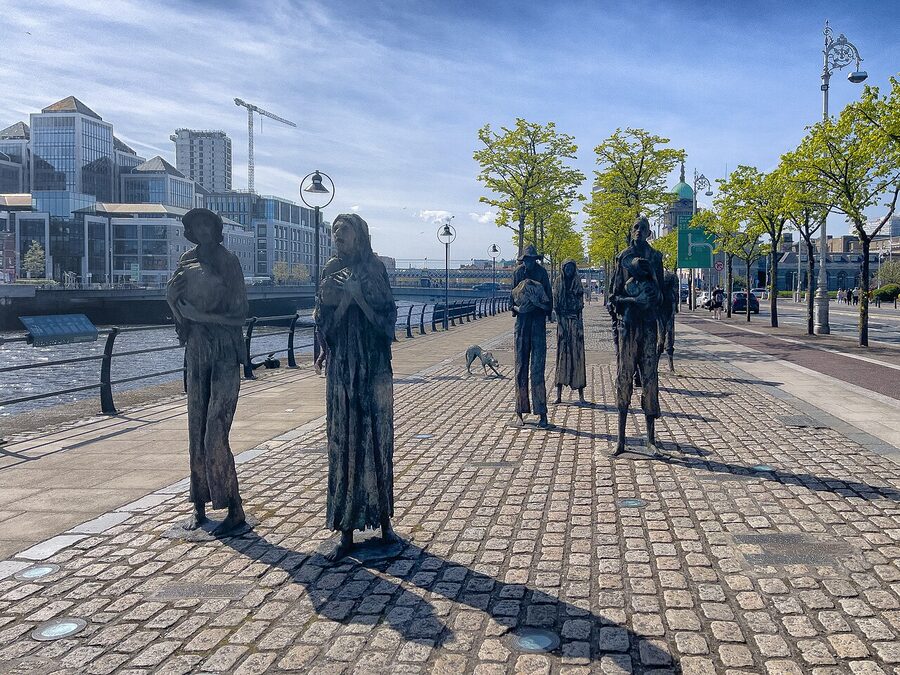
Before or after EPIC, walk 2 minutes east along the quay to the Famine Memorial. Seven emaciated bronze figures by sculptor Rowan Gillespie, installed 1997, walking toward the Liffey. They’re depicting the 1846-47 departures from Custom House Quay itself. The memorial sits on the exact spot where coffin ships left.
Gillespie’s figures are life-size, unsettlingly detailed — ribs visible through the clothes, a dog following one figure, a child carried by another. Walk around them slowly. They work best if you’ve just come from the EPIC Museum.
There’s a matching sculpture across the Atlantic in Toronto, Ireland Park, installed 2007. The Toronto figures are the same artist and are meant to be the same people on arrival. The Dublin set is “Departure”; the Toronto set is “Arrival.” You can see the Toronto figures on the EPIC Museum touchscreen map if you look for them.
The Jeanie Johnston Famine Ship
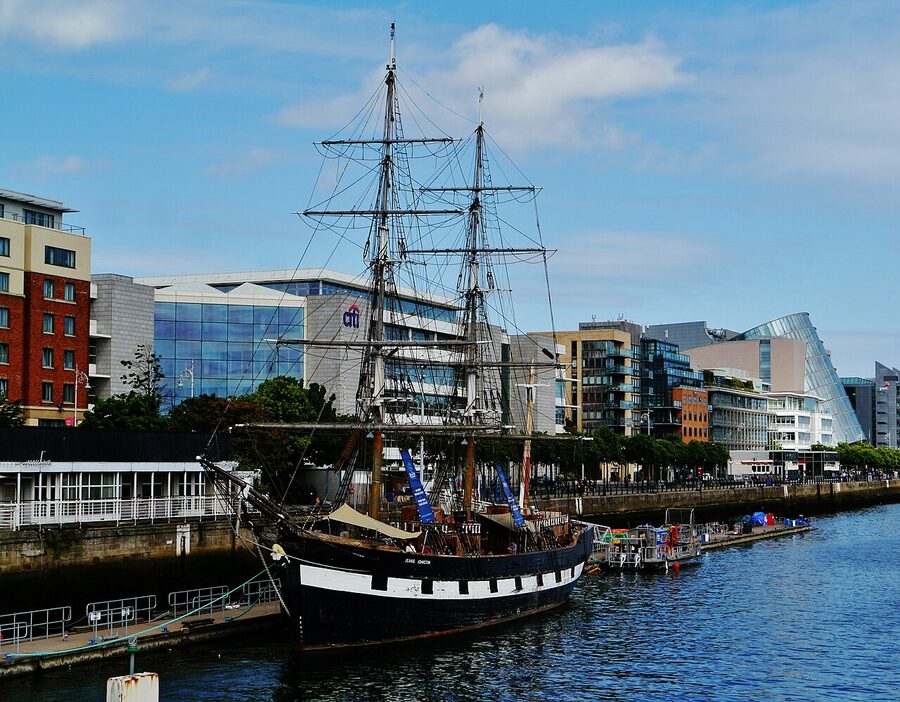
10 minutes’ walk west along the quay from EPIC. The Jeanie Johnston is a full-scale replica of an 1847 three-masted barque that made 16 voyages from Kerry to North America between 1848 and 1855. Unlike most famine ships (which lost 20-30% of passengers to typhus and starvation on crossing), the Jeanie Johnston had no passenger deaths across all 16 voyages — the owner Nicholas Donovan insisted on full rations and a ship’s doctor, unusual for the era.
The replica is a working ship. Below decks you see the emigrant quarters — bunks stacked three-high, 200 people in a space smaller than a small modern house — and you can stand in the galley where rations were prepared. Entry is €11, tours every hour. Separate ticket from EPIC; bundle as a 2.5-hour afternoon for the combined Irish-emigration experience.
When to Go
EPIC runs 10am-6:45pm daily, year-round except Christmas Day. Last entry is 5pm. Peak times are 11am-2pm in summer when tour groups arrive; mid-afternoon (3-4pm) is much quieter.
The museum is fully self-paced, so you can walk in any time during opening hours. Pre-booking isn’t strictly required, but in July-August tickets sell out 2-3 days ahead on peak weekend days. Winter you can walk in same-day.
Getting There
CHQ Building is on Custom House Quay in the Docklands. From O’Connell Street it’s an 8-minute walk east along the Liffey. From Trinity College it’s 12 minutes via the Samuel Beckett Bridge.

Public transport: the Luas Red Line stops at George’s Dock, 2 minutes from CHQ. Most Dublin Hop-On Hop-Off buses have a stop at the CHQ Building as well.
Who Should Visit
Visit EPIC if:
- You have Irish ancestry and want to understand the diaspora context for your family
- You’re interested in 19th-20th century migration history broadly
- You like museums that use digital interactive displays well
- You want to complement a Terezín-style serious-history morning with an Irish-specific focus
Skip EPIC if:
- You prefer traditional artefact-based museums with physical objects
- You have less than 90 minutes to commit
- You have kids under 10 — the material is dense and the reading load high
Tickets and Practical Details
Price. €19 adult standard ($25 on Viator with commission), reduced prices for students, families, and under-18s.
Duration. 1-3 hours self-paced. 2 hours is typical.
Audio. Free audio guide via the EPIC app (download before you arrive — signal is weak in the basement).
Accessibility. Step-free entry via lift; all galleries are level. Wheelchair access throughout.
Photography. Allowed, no flash. The gallery lighting is deliberately low for the projections — phone photos of the dimmer galleries usually come out too dark.
Café / shop. CHQ Building has a café on the ground floor; no café inside the museum.
Other Dublin Guides
EPIC pairs naturally with a Famine Memorial walk and the Jeanie Johnston visit (all three in one afternoon, 2.5 hours total). On separate days, pair with the Book of Kells walking tour (for 9th-century Irish heritage before the emigration period), a Hop-On Hop-Off day (to cover the rest of Dublin’s major sites), and the Jameson or Teeling distillery tours for the whiskey side of Irish history.
Kilmainham Gaol — where the 1916 Rising leaders were executed — is the other great Dublin history museum and the thematic counterweight to EPIC. EPIC covers what the Irish did abroad; Kilmainham covers what they did at home to become a republic.
Disclosure: This site earns a commission on bookings made through the links above, at no extra cost to you. We only recommend tours we’ve researched and would book ourselves.