
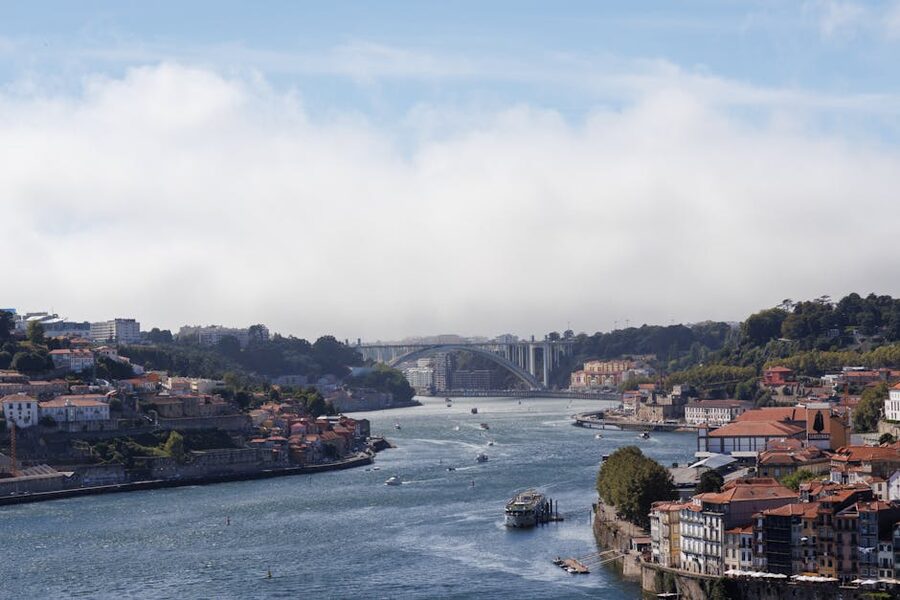
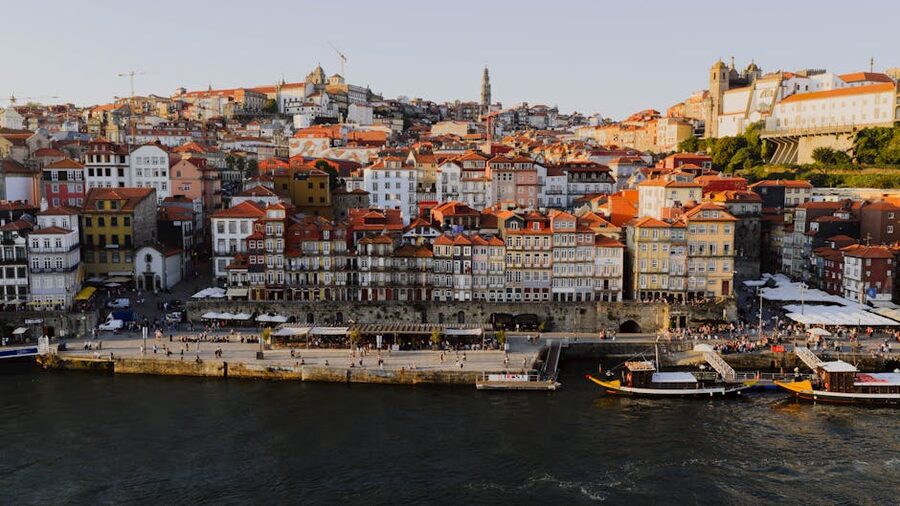
You’ve trudged up the hill from the Douro, slightly out of breath, glass of Chip Dry already in hand. You round the side of the lodge and the garden opens out — and there it is. The whole of Porto laid out across the river, terracotta roofs falling toward the water, Dom Luís I Bridge stitching the two banks together. That is the moment Taylor’s earns its reputation. Everything else — the cellars, the tastings, the audio guide — leads up to it.
Taylor’s sits high on the Vila Nova de Gaia hillside, off the riverfront where most of the other lodges cluster. It’s a bit of a climb. But the panoramic terrace is the genuine payoff of a Porto port wine afternoon, and the cellars themselves are 300 years deep.
.jpg)
.jpg)
- In a Hurry? My Top Picks for Taylor’s
- What you actually get for
- How long you’ll actually spend there
- The audio guide vs a live guide thing
- The three tours worth booking
- 1. Taylor’s Port Cellars & Tasting —
- 2. Taylor’s + WOW The Wine Experience —
- 3. Taylor’s + WOW Museum Pack —
- Booking practicalities
- Opening hours and last-tour timing
- Where to eat near Taylor’s
- Why Vila Nova de Gaia, not Porto, has the cellars
- A short course in port styles (so the tasting makes sense)
- The Taylor’s story (a quick history)
- Getting to Taylor’s from central Porto
- What to combine Taylor’s with
- Things I’d skip
- Best time of day, best time of year
- Practical questions answered
- What to do after Taylor’s
- Other Porto guides worth a look
In a Hurry? My Top Picks for Taylor’s
Best overall: Taylor’s Port Cellars & Tasting — $29. Self-paced audio tour, three tastings, the terrace. Done in about 90 minutes.
Best combo: Taylor’s + WOW Wine Experience — $40. Adds a serious wine museum next door. Easy half-day.
For a deeper sip: Taylor’s + WOW Museum Pack — $40. Same Taylor’s tour, plus your pick of one of five themed WOW museums.
What you actually get for $29
The standard Taylor’s ticket lands at around $29 and runs about 60-90 minutes if you take your time. Here’s how it breaks down:
You arrive, pay at the door (or skip the line via a pre-booked GetYourGuide ticket), and pick up an audio guide handset. The tour is self-paced — you walk through at your own speed, hold the device to your ear at numbered points, and move on when you’ve heard enough. Languages cover the obvious ones: English, Portuguese, French, Spanish, German, Italian, Dutch, Mandarin, Japanese.
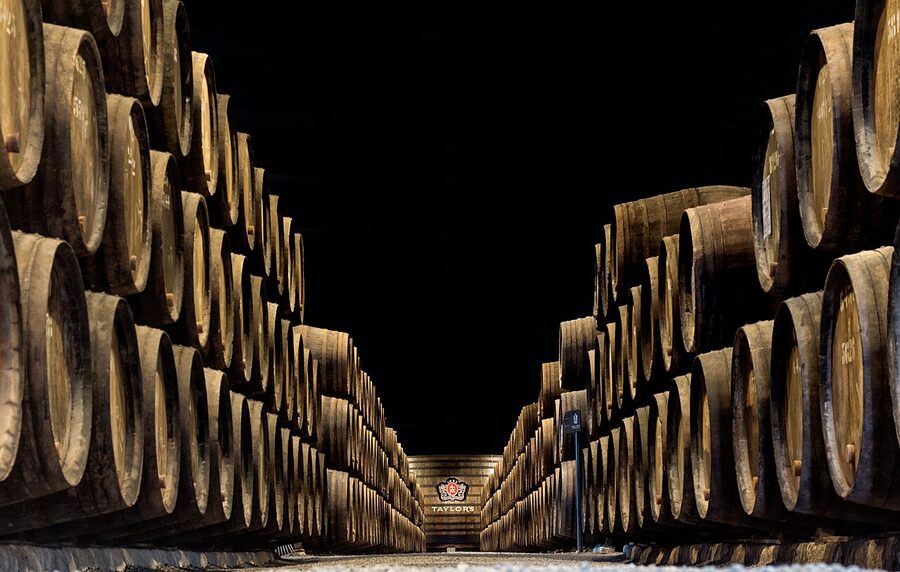
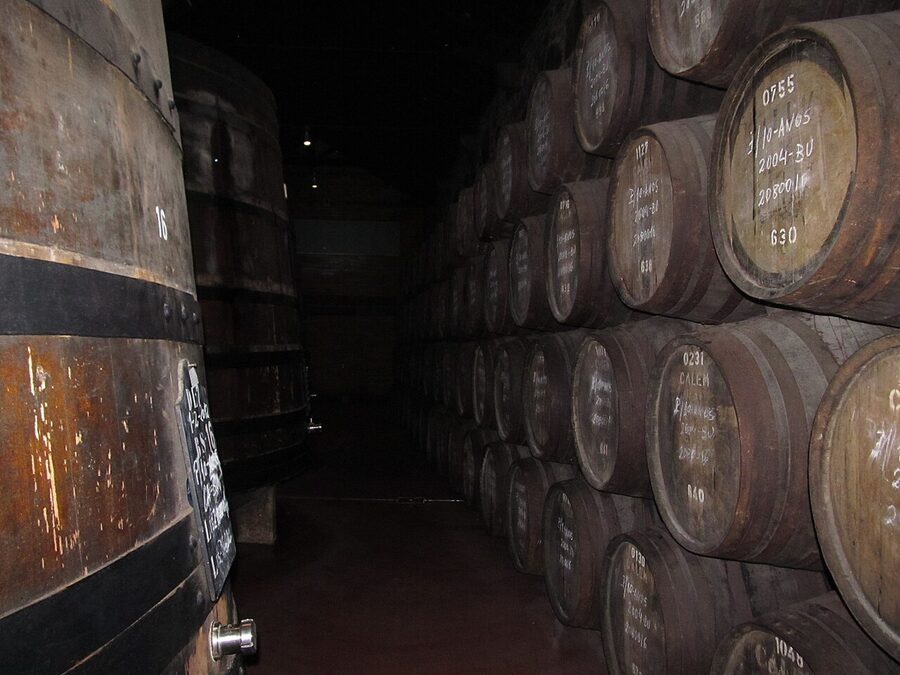
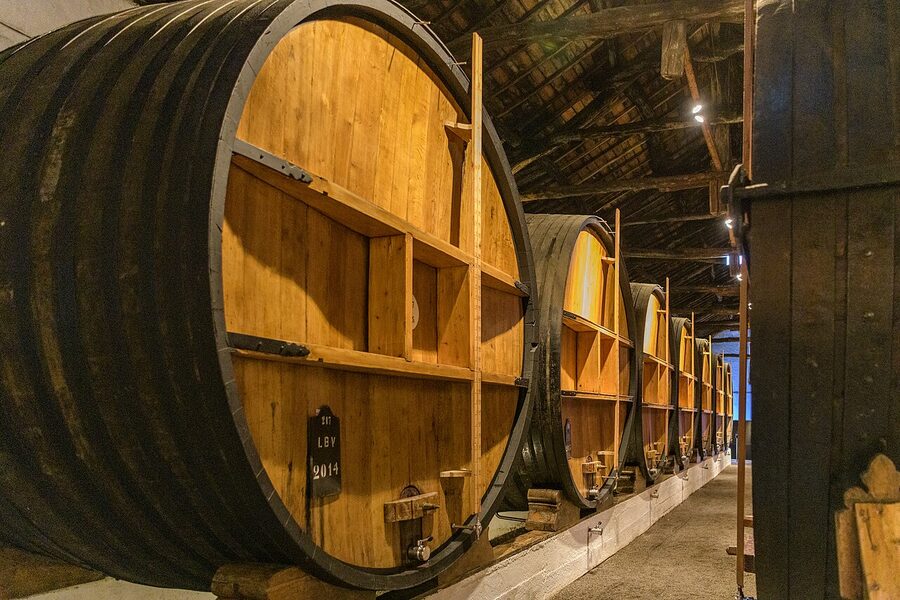
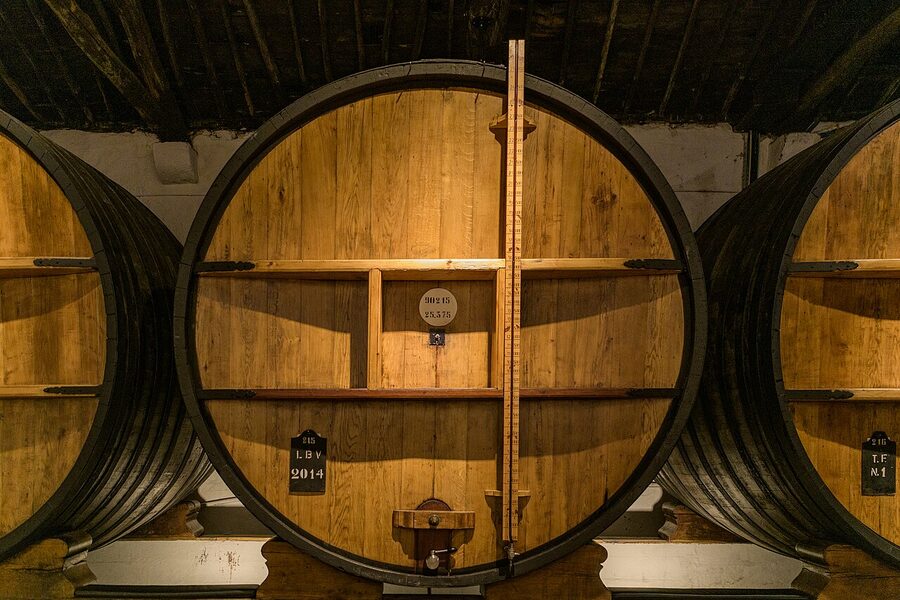
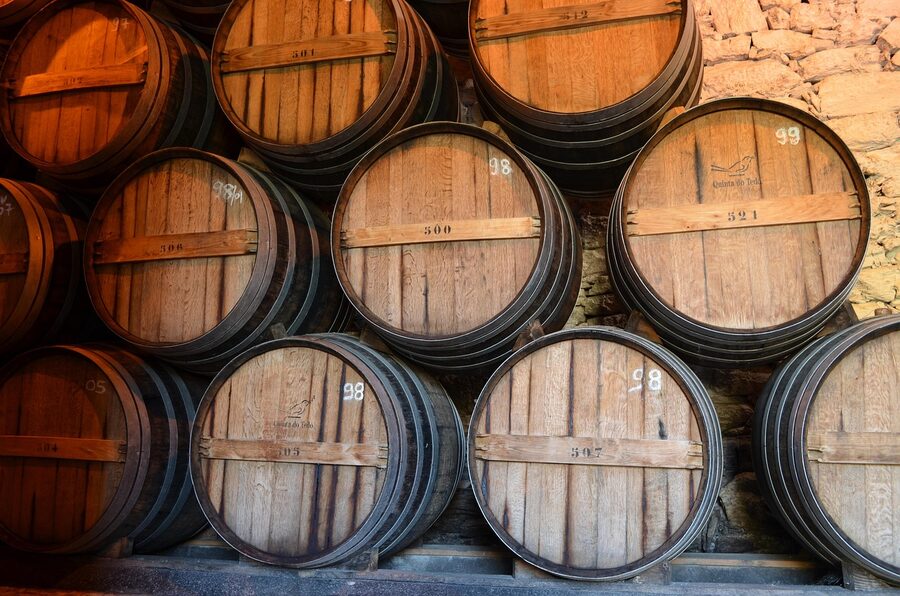
The route takes you through the main cellar halls — vaulted spaces full of large oak vats and smaller pipes — past the cooperage area, into a short film about the Douro and Taylor’s history, and then out into the Library tasting room. There you collect your three tastings and either drink them inside or carry them out to the terrace. Most people carry them out.
.jpg)
Three tastings are included as standard. Usually that’s a Chip Dry (Taylor’s own dry white port), a Late Bottled Vintage (LBV), and a 10 Year Tawny. You can pay extra at the bar for upgrades — a 20 or 30 Year Tawny, a vintage from a declared year, sometimes something poured by the half-bottle for serious tasters. Don’t feel obliged. The standard three already cover the main styles.
How long you’ll actually spend there
Two hours is a comfortable target. The audio tour itself takes 45 minutes if you listen to every track and don’t linger. Add 30-60 minutes for the tastings on the terrace, and another 15 if you want to look around the gift shop. If the weather is good, plan for closer to two and a half hours. The terrace tempts you to stay.
The audio guide vs a live guide thing
This is the one place Taylor’s splits opinion. The standard tour is self-guided with audio — there’s no person walking you through the cellars and answering questions. Some visitors love that (no waiting for a group, no rushing). Others find it less rich than the live tours offered by Sandeman or Ramos Pinto. If you want a guide who answers questions in real time, I’d nudge you toward Cálem’s tour instead. If you want quiet, your own pace, and the terrace, Taylor’s is the one.
The three tours worth booking
Taylor’s bookings on the GetYourGuide platform usually fall into one of these three: a clean standalone Taylor’s visit, a Taylor’s + WOW Wine Experience combo, or a Taylor’s + WOW Museum Pack with your pick of five themed museums. Pricing differences are small. The decision is really about whether you want to add WOW or not.
1. Taylor’s Port Cellars & Tasting — $29
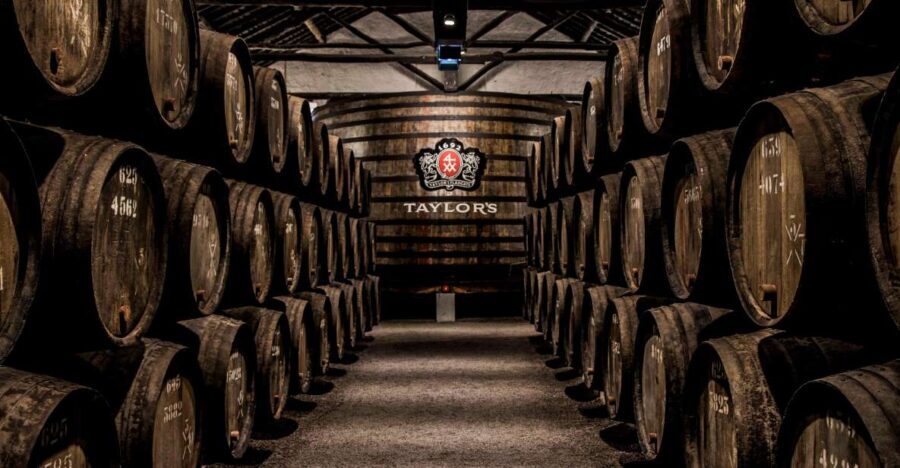
This is the one I’d book first. It’s the cellar tour Taylor’s has been refining for decades, and our full review walks through what each of the three tasting pours actually delivers. Self-paced, multilingual audio, three serious wines, and the terrace at the end. No upsell pressure.
2. Taylor’s + WOW The Wine Experience — $40
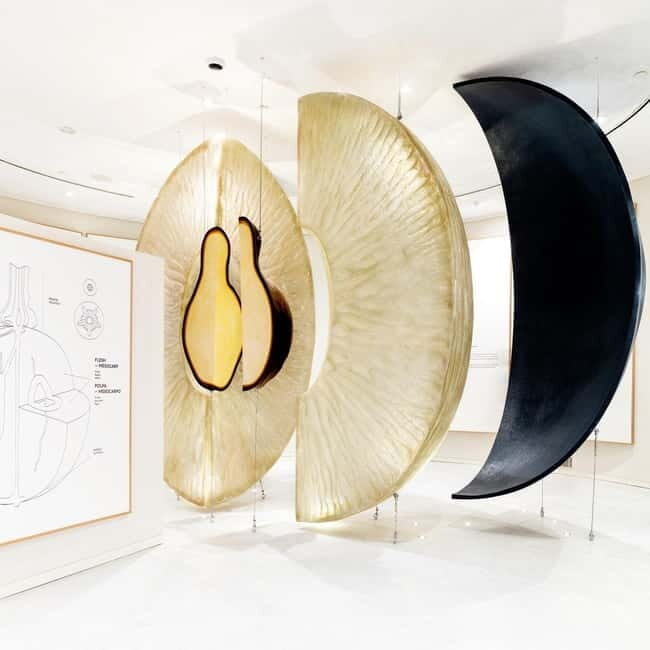
For an extra eleven dollars you fold in the WOW Wine Experience, the dedicated wine museum across from the lodge. Our tour breakdown covers what’s worth lingering over inside WOW (the aroma room is the unexpected highlight). It’s the right pick if you’ve got half a day and want context, not just a tasting.
3. Taylor’s + WOW Museum Pack — $40
Same Taylor’s experience, but instead of being locked into the wine museum you choose one of five WOW museums to add. Our guide runs through which of the five is worth your afternoon — Planet Cork is the surprise, the Chocolate Story is best for kids. Same $40 as the Wine Experience combo, more flexibility.
Booking practicalities
Tickets aren’t strictly required in advance — Taylor’s sells walk-up tickets at the gate. But here’s the catch. English-language audio handsets are limited, and on busy afternoons (May to October especially) you can show up and be told the next batch isn’t available for 90 minutes. That’s exactly what happened to one British blogger I read while researching this article. They ended up sitting on the terrace nursing a Chip Dry for an hour and a half before their tour started — pleasant, but not what they planned.
Pre-book online if you’re visiting between May and September. The GetYourGuide ticket lets you skip that queue. You pick a time slot, show up, scan the QR. Done.
.jpg)
Opening hours and last-tour timing
Taylor’s runs 10:00-18:00 most of the year, with the last tour entry around 17:00. Don’t rock up at 17:30 expecting to walk in. The tour itself is self-paced but they stop admitting new visitors so they can close the cellars and tasting room on schedule. If you only have a late afternoon free, pick another lodge with later hours or shift your itinerary so you’re at Taylor’s by 15:00 at the latest.
Where to eat near Taylor’s
The lodge has its own restaurant (Barão Fladgate), which is fine, expensive, and has the same panoramic view as the terrace. Three points down the menu are worth ordering — the bacalhau, the polvo, and the chocolate dessert with port reduction. The rest is hotel food. If you want something more local, walk back down to the Gaia waterfront and aim for one of the smaller tascas tucked in behind the riverside cafés.
Why Vila Nova de Gaia, not Porto, has the cellars
This trips up first-time visitors. The wine is named for Porto, the city is across the river, and yet every single port lodge sits in Vila Nova de Gaia, the smaller town on the south bank.
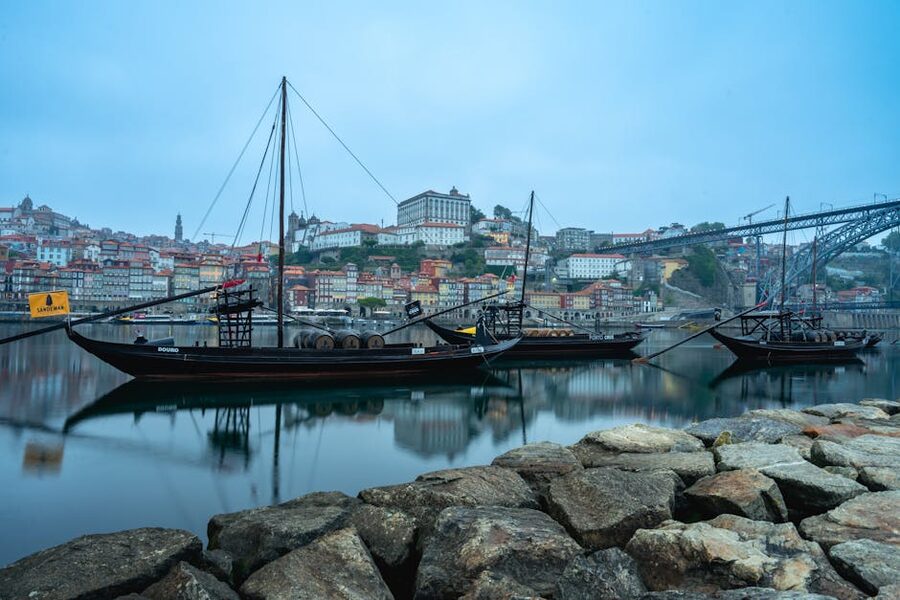
The reason is historical and slightly weird. Until the early 1980s, Portuguese law required all port wine to be aged in Vila Nova de Gaia specifically. The thinking was that the cooler, more humid riverside conditions on the Gaia side were better for aging — and that concentrating the trade in one place made quality control easier. The law has since been relaxed, but by then the lodges had been there for 300 years and weren’t moving.
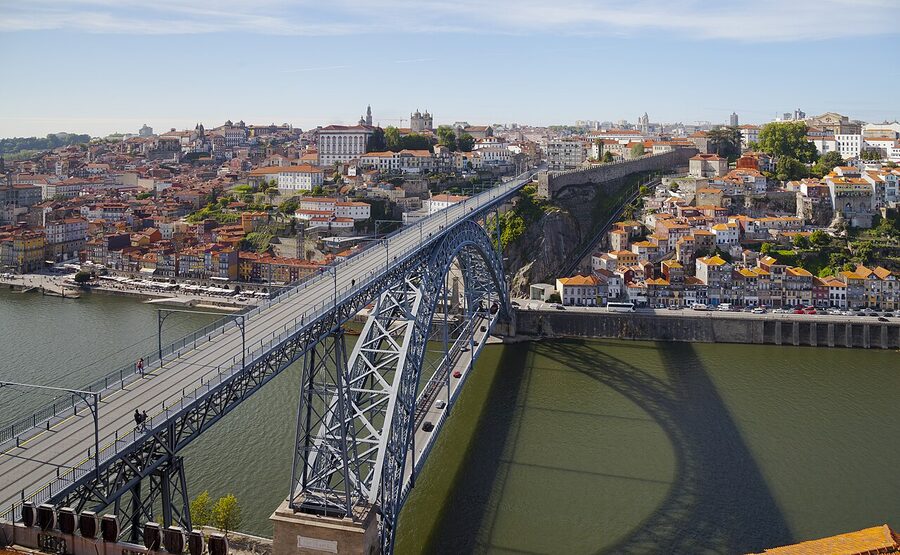
Practically, this means a typical port-cellar afternoon involves crossing the Douro at least once. The Dom Luís I Bridge has two decks — pedestrians use the upper deck (next to the metro line) for a much better view, or the lower deck if your knees don’t fancy the climb. Walk across the upper deck once, ride the funicular or take the metro back. That’s the move.

A short course in port styles (so the tasting makes sense)
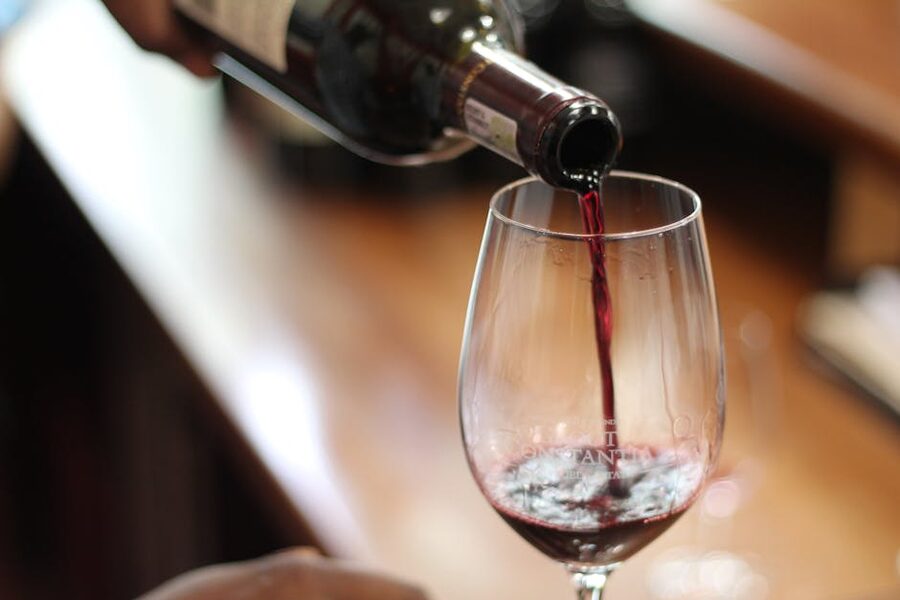
The audio guide covers this, but it’s worth knowing before you go. Port is fortified — that means a neutral grape spirit gets added partway through fermentation. The yeast dies, the sugar stops converting, and you end up with a sweeter, stronger wine (around 19-22% ABV). Everything else is about how it ages.
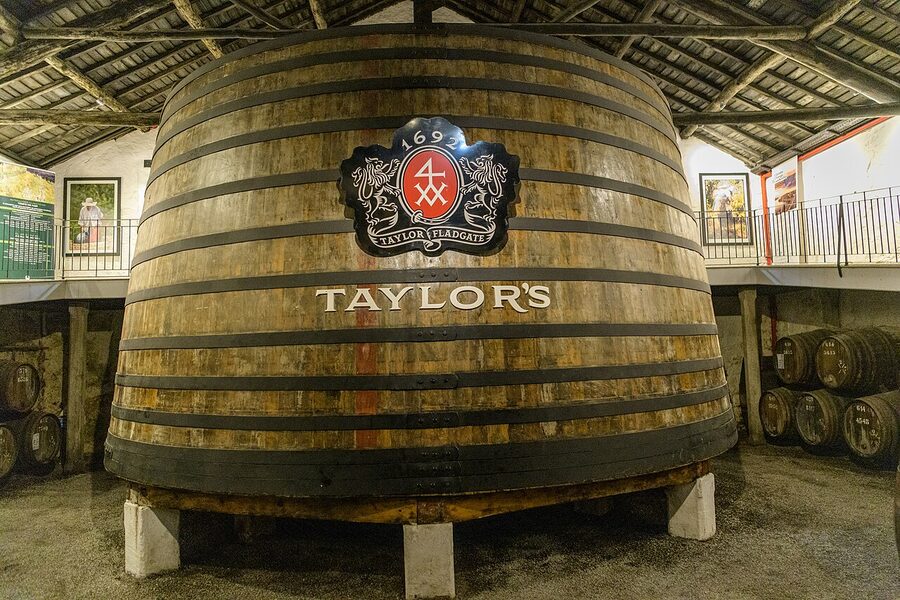
Ruby ports are aged in big oak vats, where less of the wine touches the wood. They keep their deep red colour and fruit. LBV (Late Bottled Vintage) is the ruby family’s most serious member — Taylor’s actually invented the LBV style in 1970, and they consider it their flagship. It’s the closest most of us will ever get to drinking a vintage port.
.jpg)
Tawny ports are aged in smaller pipes, where more of the wine kisses the wood. They oxidise, the colour fades from red to amber, and they pick up flavours of nuts, butterscotch, raisin, sometimes coffee. You’ll see 10, 20, 30, and 40 year tawnies — those numbers refer to the average age of the blend, not a fixed vintage. The 10-Year Tawny is the standard tasting pour. The 20 is the upgrade I’d happily pay for.
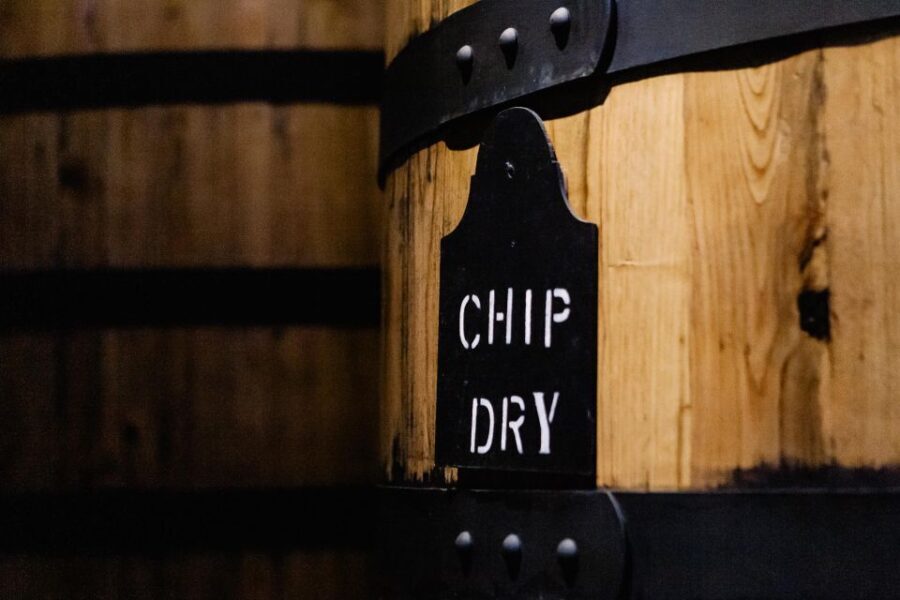
White ports are made from white grapes, lightly aged, and traditionally drunk as an aperitif over ice with a slice of lemon and tonic. Taylor’s Chip Dry was the first dry white port on the market — they’re proud of it. Whether you’ll like it is a different question. Many visitors don’t.
Vintage ports are the rare beasts. Bottled after only two years in cask, then aged in glass for 20-40 years before drinking. Vintages are only declared in exceptional years (roughly 3 in every 10), and once opened they need to be drunk within a couple of days. You won’t taste a vintage on the standard tour, but you can pay to upgrade if you’re curious.
The Taylor’s story (a quick history)
Taylor’s was founded in 1692 — that’s not a typo. The same year Salem was burning witches, an Englishman called Job Bearsley set up a wine trading firm in Porto. The Taylor name came later, when a Mr Taylor joined the partnership in 1816. Today the company is still privately owned by descendants of one of the founding families, the Yeatmans, which makes Taylor’s one of the very few large port houses that hasn’t been swallowed by a multinational.
The English connection isn’t an accident. From 1689 onward Britain was at war with France for various reasons (mostly William of Orange’s politics) and English wine merchants couldn’t get French claret. They pivoted to Portugal — a long-time ally — and started shipping wine from the Douro Valley. The wine kept spoiling on the journey, so someone tried adding brandy to stabilise it. That’s how port was invented. Most of the historic English-named houses (Taylor’s, Cockburn’s, Croft, Graham’s, Sandeman, Warre’s) trace back to that 18th-century pivot.

Getting to Taylor’s from central Porto
Taylor’s is at Rua do Choupelo 250, Vila Nova de Gaia. Three ways to get there from the Porto side of the river:
Walk. If you’re starting in Ribeira (the Porto waterfront), cross the Dom Luís I Bridge on the lower deck, walk along the Gaia waterfront for 5 minutes, then start climbing. The walk up Rua do Choupelo takes another 7-10 minutes and it’s steep. About 25-30 minutes total from Ribeira. Worth it for the views as you climb.
Funicular plus a short walk. Take the Funicular dos Guindais (or just walk the upper deck of Dom Luís) to the Gaia side. Then walk along Cais de Gaia and follow the signs for Taylor’s up the hill. Same final climb, just different starting point.
Tuk-tuk or Uber. If your knees aren’t up to it, an Uber from central Porto runs around 5-7 euros. Tuk-tuks are everywhere and many of the half-day Porto tuk-tuk tours include a port cellar stop, though they usually drop you at a riverside lodge rather than Taylor’s specifically.
What to combine Taylor’s with
You don’t need to visit four cellars in one day. One serious cellar visit is plenty — your palate is shot after about six tastings anyway. So treat Taylor’s as the centrepiece of a Vila Nova de Gaia afternoon and build around it.
If you’re craving views, finish the afternoon by walking back down to the Gaia waterfront and catching a river cruise on the Douro — the Six Bridges Cruise is the standard, around 50 minutes, and it gives you the Porto skyline from a third angle (after the bridge and the terrace). Or wander the Porto Spiritus multimedia show in central Porto if you want a non-wine afternoon activity.
Morning before Taylor’s? A walking tour of central Porto covers Ribeira, the cathedral, São Bento station, and Clérigos before lunch. Climbing Clérigos Tower takes 30 minutes and gives you the same Porto skyline you’ll see from Taylor’s, just from the other bank.
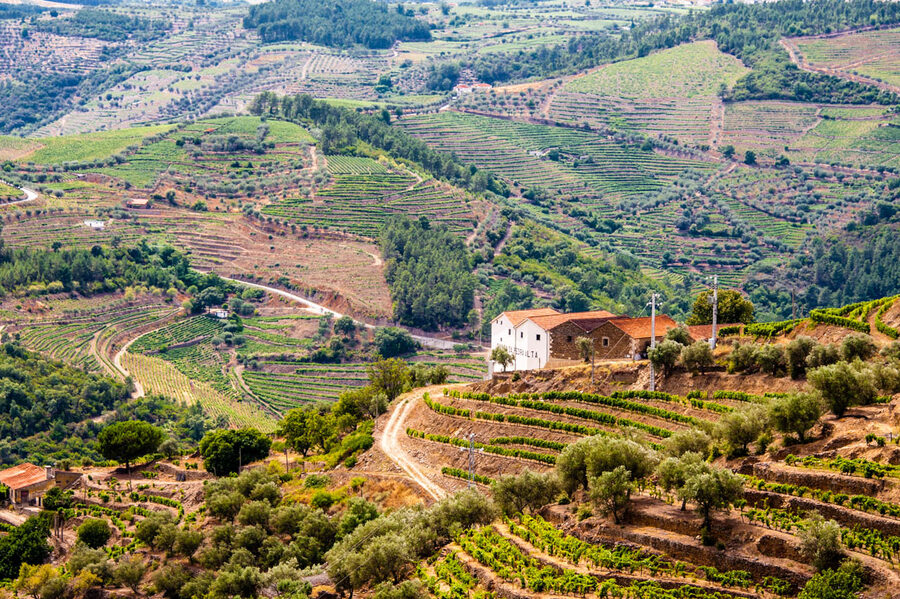
For something different on a longer Porto stay, the Douro Valley day trip takes you upriver to the actual vineyards. After the cellar tour the valley makes more sense — you’ll recognise the quinta names from Taylor’s labels. Braga and Guimarães is the other classic Porto day trip if wine country isn’t your thing.
Things I’d skip
A few notes after reading through traveller experiences and the tour data:
Don’t book a multi-cellar bundle. Some operators sell “visit three port cellars in one afternoon” packages. Skip them. You’ll be rushed, you’ll lose the tasting overlap, and the differences between lodges blur after the second visit. Pick one — Taylor’s or another — and do it properly.
Don’t pay for the live-guide upgrade unless it’s clearly described. Taylor’s standard tour is audio-guided. Some third-party resellers list “guided tours” of Taylor’s that are really just a guided walk to the lodge plus the same audio handset. Read what’s actually included before paying double.
Skip vintage tasting upgrades unless you’re already into port. A 1985 Vintage by the glass at Taylor’s runs around 30 euros. It’s incredible. But if you’ve never tried port before, the standard three pours teach you more.
Best time of day, best time of year
Best time of day is 15:00-17:00. You arrive after the lunch crowd has thinned, you tour with daylight still good for the photos in the cellars, and you finish on the terrace just as the sun starts dropping behind the Porto rooftops. If you can only do morning, go right at opening — 10:00 — before the cruise-ship daytrippers arrive.
Best time of year is shoulder season: April-May or September-October. The cellars are temperature-controlled so the inside is fine year-round, but the terrace is the whole point and you want it sunny. July and August are hot, crowded, and the queue for English audio guides genuinely runs an hour. Winter (December to February) is the quietest by far — bring a sweater for the cellars (they sit at around 16°C inside) and a coat for the terrace.
Practical questions answered
Is Taylor’s wheelchair accessible? Partially. The terrace and tasting room are accessible. The cellar tour involves uneven cobbled floors and a few short stairs — Taylor’s offers an alternative shorter route for visitors with mobility issues if you call ahead.
Are kids allowed? Yes, and entry for under-18s is free, though they obviously can’t drink the tastings. The cellar tour is short enough that most kids cope. WOW (the Wine Experience museum next door) has activities aimed at families.
Can I buy bottles to take home? Yes. The shop on the way out stocks the full Taylor’s range. Prices are roughly the same as you’d pay in a Portuguese supermarket — cheaper than airport duty-free for most lines. Keep the bottles upright in checked luggage and wrap them in a sweater.
How does Taylor’s compare to Cálem and Sandeman? Cálem is the cheapest and includes a fado show option in the evenings — see our Cálem guide for the full picture. Sandeman is the most theatrical (the guides wear capes), with great riverside access. Taylor’s is the most prestigious in port world terms, slightly more expensive, and has the best terrace view by a long way. Our overview of all the cellars compares them side by side if you can’t decide.
What to do after Taylor’s
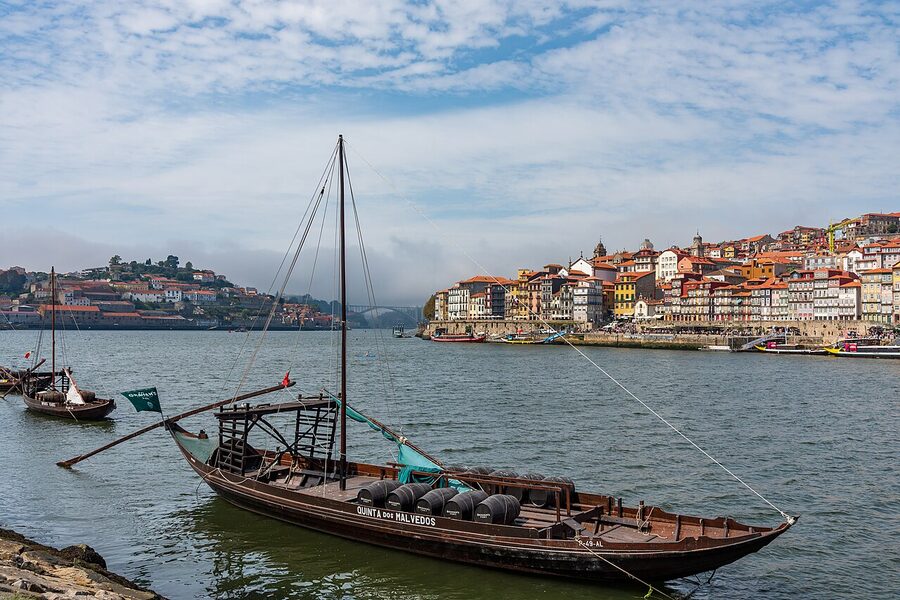
The terrace stays in your head for a few hours. So does the Tawny if you upgraded to the 20-Year. Once you’ve finished, the natural next move is to walk back down to the Gaia waterfront and follow the river east a few hundred metres — the colourful cluster of cafés and bars on the Cais de Gaia is set up for exactly this kind of afternoon. Sit, watch the rabelos and rowing boats, decide whether you want dinner now or another tasting first.
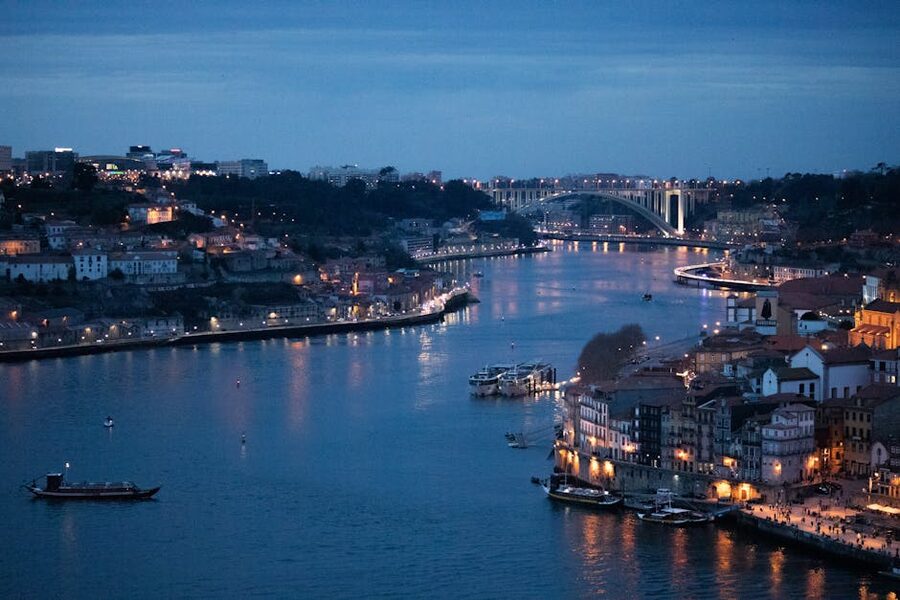
If you’ve timed it right, the lights on the Porto side will start coming on around the time you cross back. Walk over the upper deck of the Dom Luís Bridge once it’s properly dark — the city looks like a Christmas card. If your evening is still open, a fado show works as a contrast piece, or the Porto food tour turns the rest of the night into something more substantial than another glass of port and a hotel sandwich.
Other Porto guides worth a look
Taylor’s is one piece of a Porto trip and it makes more sense if you’ve read around it. Our port cellars overview is the place to start — it compares the major lodges so you can decide whether Taylor’s is your one. The Six Bridges Cruise pairs naturally with a cellar visit (river first or river after, both work). For getting your bearings on day one, the hop-on hop-off bus drops at Cais de Gaia and saves the legs. Livraria Lello is the famous Harry-Potter-ish bookshop a short walk from Clérigos — book in advance or skip. And if you’re stretching the trip another day, the Douro Valley day trip closes the loop on the port wine story by taking you to the source.
Affiliate disclosure: Some of the booking links in this guide are affiliate links. If you book a tour through one of them we earn a small commission at no extra cost to you. It helps keep the site running. We only recommend tours we’d take ourselves.