
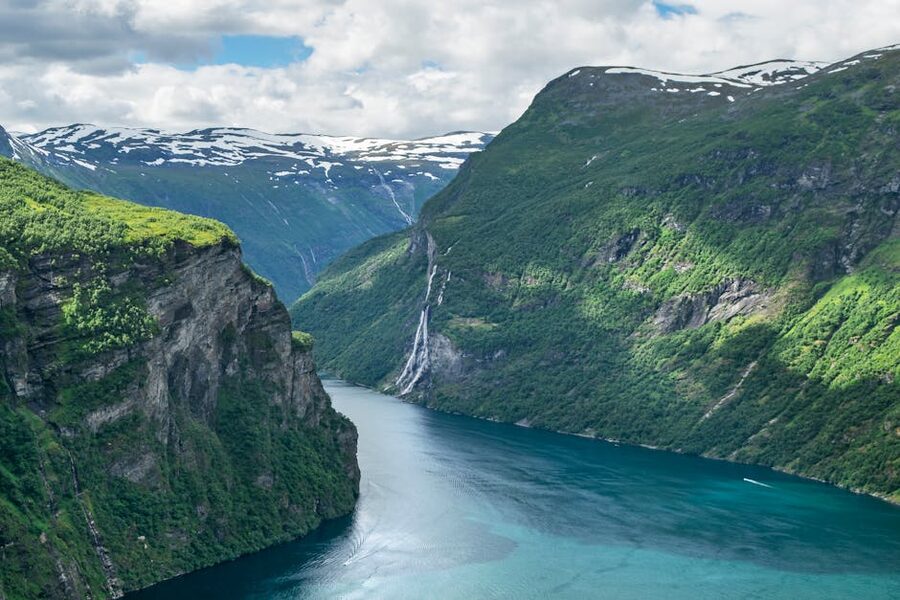
You drive up Nibbevegen for what feels like an hour. Switchbacks, snow patches in July, a shifting wall of rock on one side and nothing much on the other. The bus parks. You climb the last short stretch of metal walkway to the platform at 1,500 metres, and the entire Geirangerfjord opens up below you. Cruise ships look like bath toys. The waterfalls look like white threads. That moment is what the day tour is built around, and it’s why most people who book this end up calling it the best day they had in Norway.
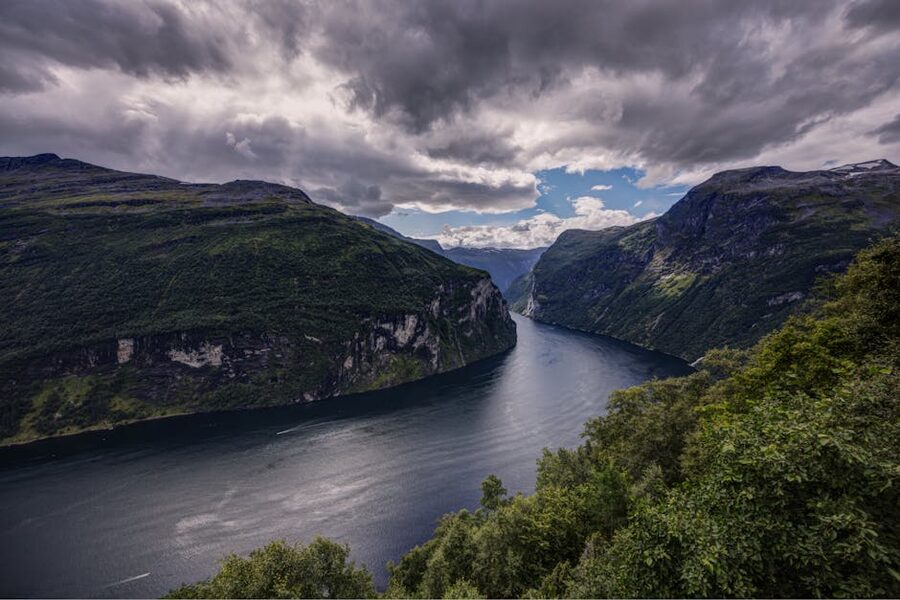
The standard day tour bundles three big payoffs into about three and a half hours: a stop at Dalsnibba (1,500m), a quick pull-in at Flydalsjuvet (the rock that hangs over the fjord and gets posted to Instagram about 4,000 times a day), and the descent down Ørnevegen, the Eagle Road, with its 11 hairpin turns and the big finish at Eagle Bend. Some tours add a fjord cruise. Most just do the road. This guide breaks down which version is worth your money.

In a hurry?
The full picture: the 3.5-hour Dalsnibba, Flydalsjuvet & Eagle Bend bus tour from $115. The one most people book.
Cheapest fjord cruise: the 90-minute boat trip past Seven Sisters and the Suitor from $69. Skip the road, see the cliffs from below.
Most fun on the water: the RIB fjordsafari from $94, an hour of wet, fast, and loud.
- In a hurry?
- What the standard Geiranger day tour actually includes
- The three viewpoints, ranked by payoff
- 1. Dalsnibba (1,500m)
- 2. Eagle Bend (Ørnesvingen)
- 3. Flydalsjuvet
- The three day tours worth booking
- 1. Geiranger: Dalsnibba, Flydalsjuvet, Eagle Bend & Fjords Tour: 5
- 2. Geiranger Fjord and Waterfalls Sightseeing Boat Trip:
- 3. Geiranger RIB Fjordsafari:
- How to actually get to Geiranger
- When to book and what to expect from the weather
- The Seven Sisters and the Suitor
- What to bring and wear
- UNESCO and what that actually means here
- Skageflå and the cliff farms
- Geiranger compared to other Norwegian fjords
- Where the day tour fits in a longer Norway trip
- Booking checklist
- Other Norway guides
What the standard Geiranger day tour actually includes
The phrase “Geiranger day tour” covers a handful of slightly different products. Before you book anything, work out which one you want. Here’s the breakdown.
The most-booked version is a 3 to 4 hour guided bus that leaves from Geiranger village (so you have to already be in town, usually off a cruise ship or staying overnight). It loops through three viewpoints in order: Dalsnibba first while the road is clear, then Flydalsjuvet on the way back down, then Eagle Bend on the climb out toward Eidsdal. The bus is small, comfortable, and has big windows. The guide narrates throughout. You get 15 to 25 minutes at each stop. Done by lunch.
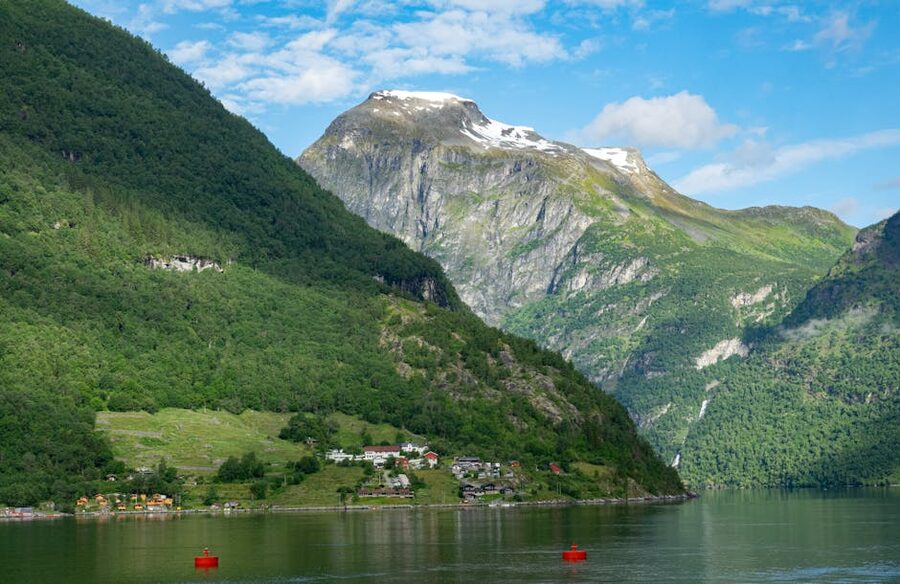
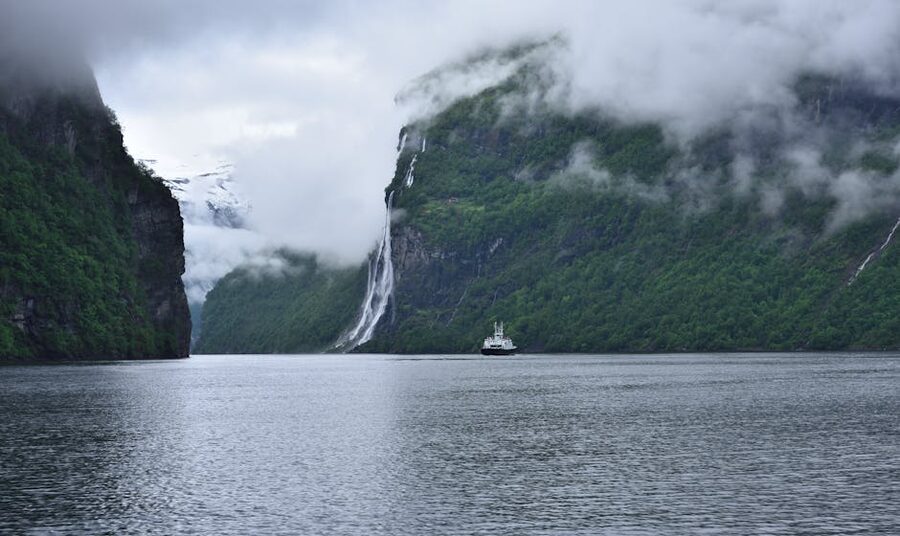
The cruise-only version drops the road entirely. It’s a 75 to 90 minute boat trip that runs the same route the cruise ships take, just smaller and slower. You see the fjord from below, which is a completely different perspective from Dalsnibba. The Seven Sisters waterfalls are the headline. The Suitor (Friaren) waterfall on the opposite cliff is the other one. There’s a passenger boat, plus a faster RIB version that gets you closer to the waterfalls and pretty wet.
The combo version is what most cruise-ship passengers end up doing if they have a full day in port: bus to the viewpoints in the morning, fjord cruise in the afternoon. It’s about six hours total. Pricey, but it’s the only way to see Geiranger from above and below in one go.
If you’re driving yourself and don’t need a guide, you can do all three viewpoints solo and save the tour cost. The road is open. Parking exists at all three stops. The catch is that you don’t get the local commentary, and Dalsnibba charges a 200 NOK toll per car to drive up Nibbevegen. The bus tour bundles that toll into the price.
The three viewpoints, ranked by payoff

1. Dalsnibba (1,500m)
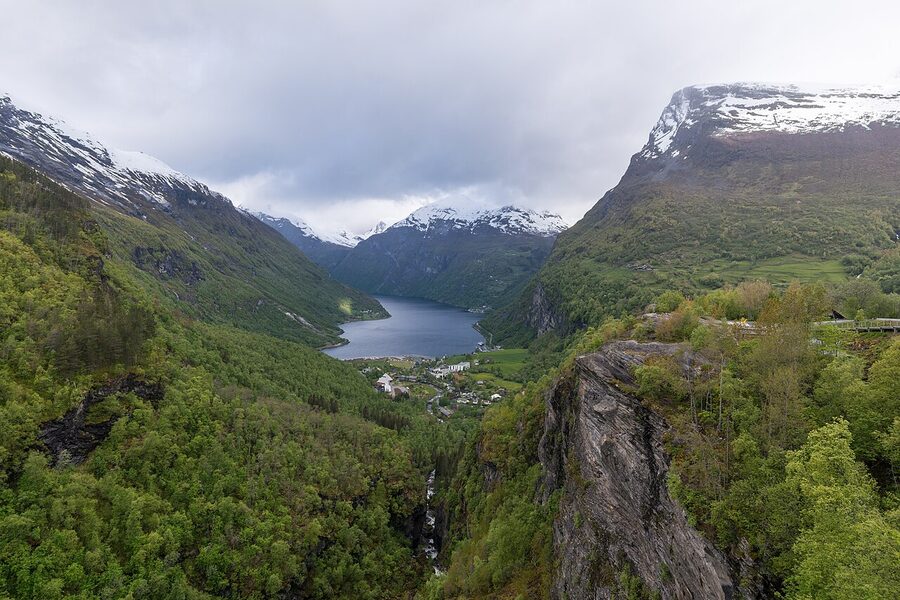
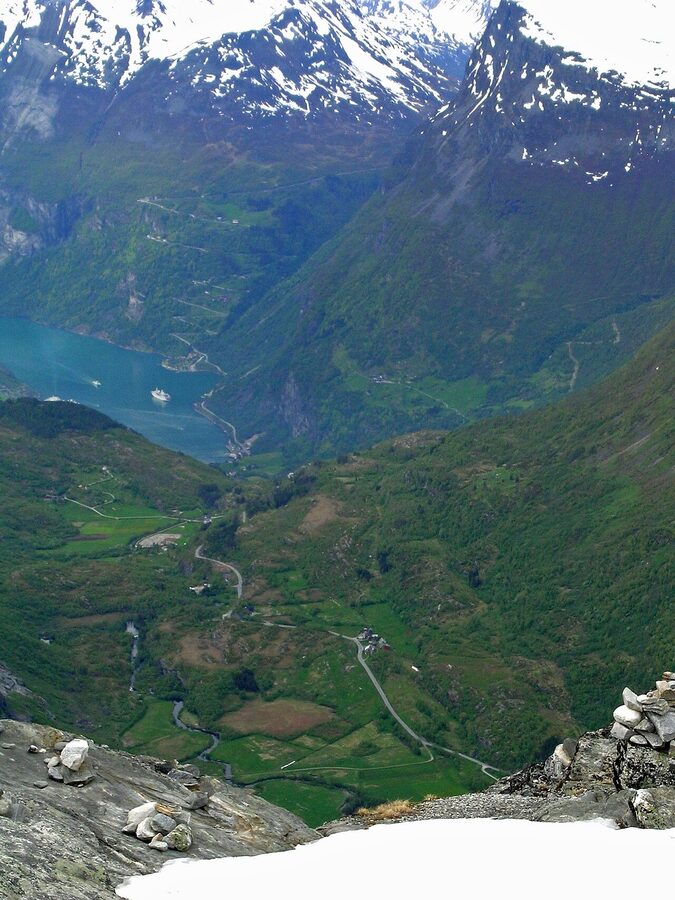
The reason most people book this tour. Dalsnibba isn’t the highest road in Norway, but it’s the highest road in Norway that ends in a fjord view this dramatic. The drive up takes about 25 minutes from Geiranger village along Nibbevegen, a narrow toll road that switchbacks past the lake at Djupvatnet (often still half-frozen in June). The viewing platform is called Geiranger Skywalk, and it’s a metal cantilever that pushes out a few metres past the cliff edge. You can see down the entire 15km of the inner fjord on a clear day.
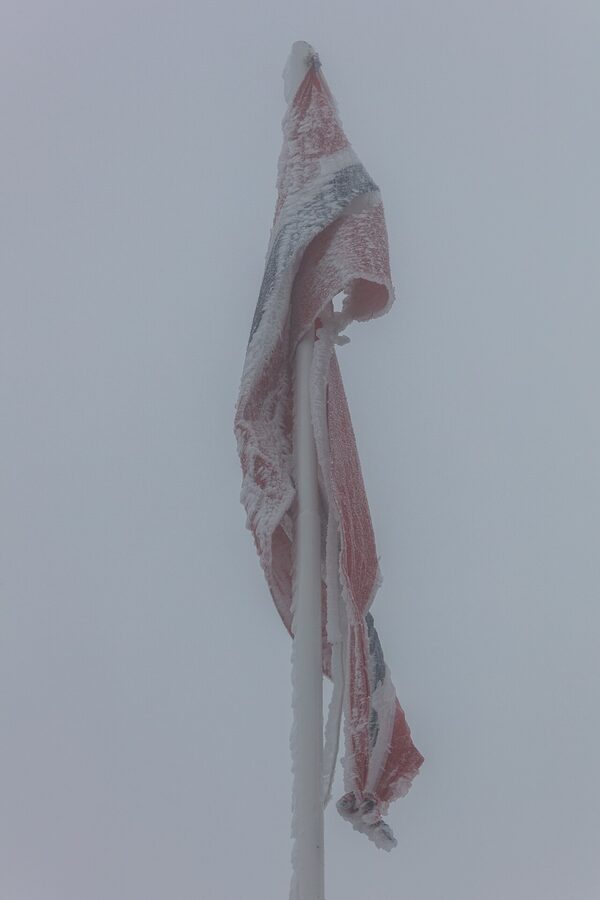
Two practical notes. First, the temperature drops fast. It can be 18°C in the village and 4°C at the top with snow on the ground in July. Bring a fleece. Second, the cloud ceiling is real. There are days when the platform is in cloud and you see nothing. The bus tours run rain or shine, and the refund policies vary. Check before you board.

2. Eagle Bend (Ørnesvingen)
The other side of Geirangerfjord, and a different kind of viewpoint. To get there you climb Ørnevegen, the Eagle Road, out of the village toward Eidsdal. Eleven hairpin bends. The road keeps coiling tighter and you keep gaining height, and the view through the rear window keeps opening. Then the road levels at the top, the bus pulls into a wide pull-out, and the whole fjord is laid out below you with the Seven Sisters waterfalls cascading on the opposite cliff. That’s Eagle Bend.

It’s lower than Dalsnibba (about 620m), so the perspective is different. You’re looking across the fjord rather than straight down it. On a tour bus you get about 15 minutes here. Plenty of time. The platform itself is a flat stone terrace with a low railing. The fjord is right there.
If you’re heading north toward Ålesund afterward, you’ll drive Ørnevegen anyway. If you’re staying in the village, you need a tour or a rental car to see Eagle Bend.
3. Flydalsjuvet
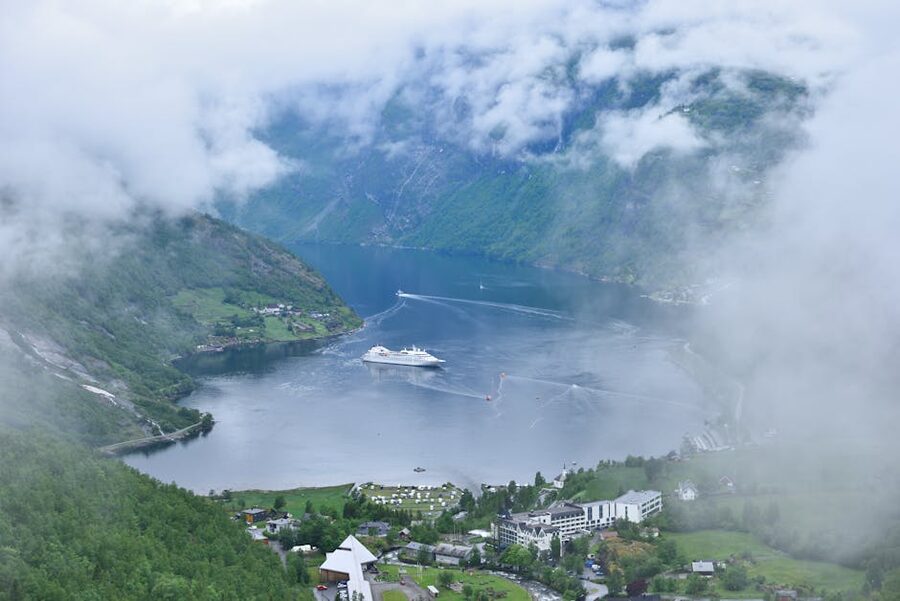
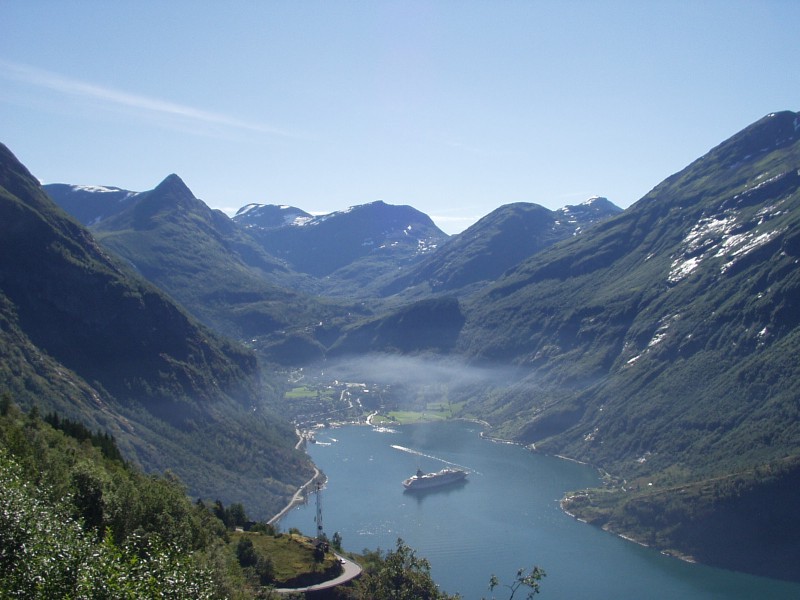
The most photographed of the three, and the shortest stop. Flydalsjuvet is the rock you’ve seen on Norway tourism brochures: a chunk of stone that juts out over the fjord with the village 200m below. Everyone climbs onto it for the photo. It’s less suspended than the marketing makes it look (there’s a slope behind it), but the angle of the village against the fjord is genuinely good.
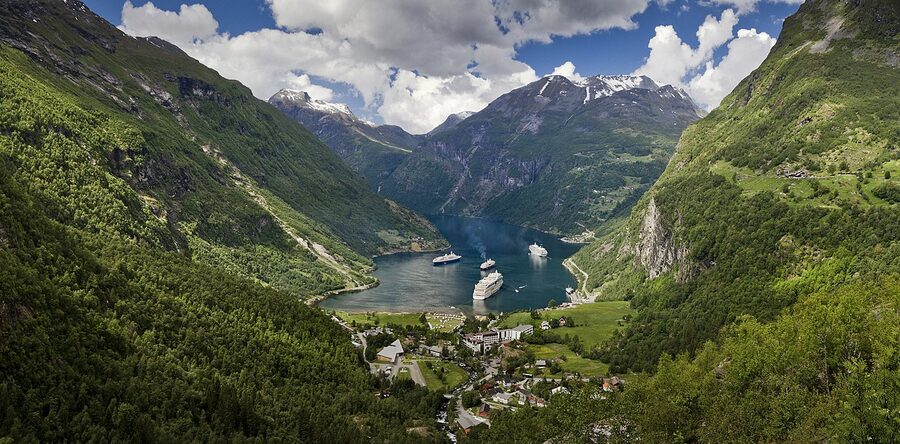

The viewpoint pull-out has a small parking area, an information sign, and a path of about 100m to the rock itself. Tour buses give you 10 to 15 minutes here. That’s usually enough. The viewpoint can get crowded when two cruise ships are in port, so morning and late afternoon are calmer. If your bus tour goes Dalsnibba first, you’ll usually hit Flydalsjuvet on the descent at a sensible time.
The three day tours worth booking
I’ve looked at every Geiranger product on the major affiliate platforms. Three are clearly the strongest. They cover the road, the boat, and the wet adrenaline option. Pick one based on what you actually want from the day.
1. Geiranger: Dalsnibba, Flydalsjuvet, Eagle Bend & Fjords Tour: $115
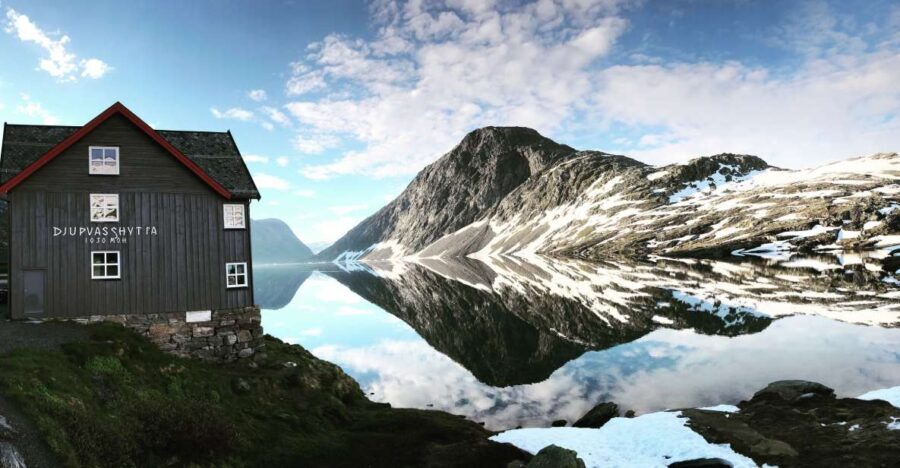
This is the version most readers should book. It’s 3.5 hours, runs from May to September, and the route order (Dalsnibba while the road is clear, Flydalsjuvet on the descent, Eagle Bend at the end) is the right one. Our full review goes into the bus, the guide, and what to expect at each stop if you want the granular take. The Dalsnibba toll is included in the price, which matters because it’s 200 NOK per car if you drive yourself.
2. Geiranger Fjord and Waterfalls Sightseeing Boat Trip: $69
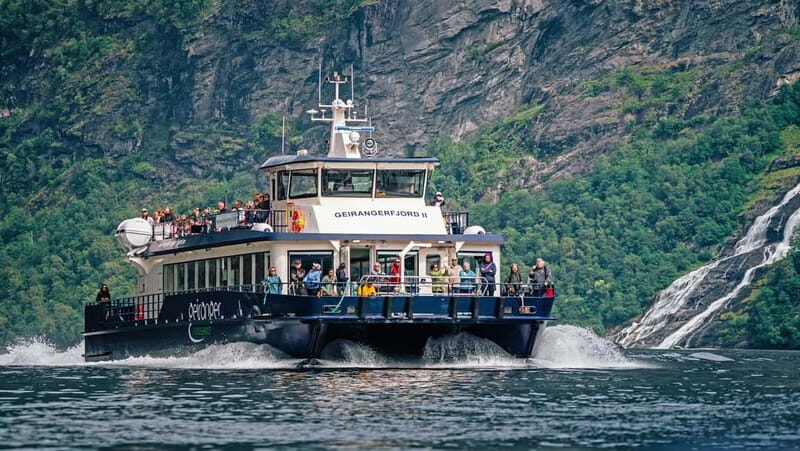
If the road version sounds like too much bus and you’d rather see the cliffs from below, this 75 to 90 minute boat trip is the cheapest way in. It runs from Geiranger village, gets you within spray range of Seven Sisters, and turns at the Suitor (Friaren) waterfall on the opposite cliff. Our review covers the boat itself and what season to book for the most water in the falls. Combine it with the bus tour for a full day above and below.
3. Geiranger RIB Fjordsafari: $94
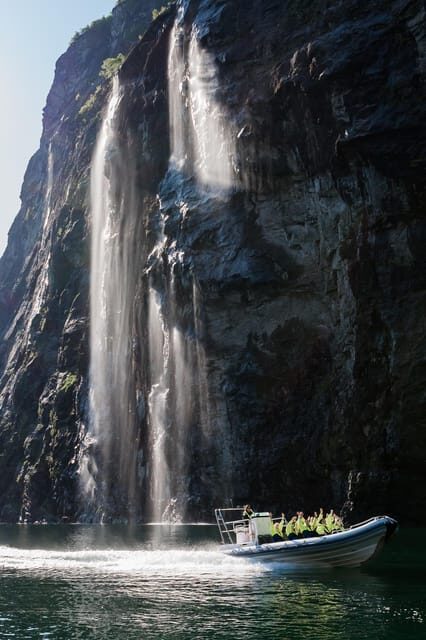
The RIB fjordsafari is the wet adrenaline option: an hour on a small fast boat, the kind where they hand you a survival suit before you board. You cover more of the fjord than the regular sightseeing trip and get closer to the waterfalls. Our review breaks down the suit, the noise, and how close you actually get. Better in summer than shoulder season because it really is cold.
How to actually get to Geiranger
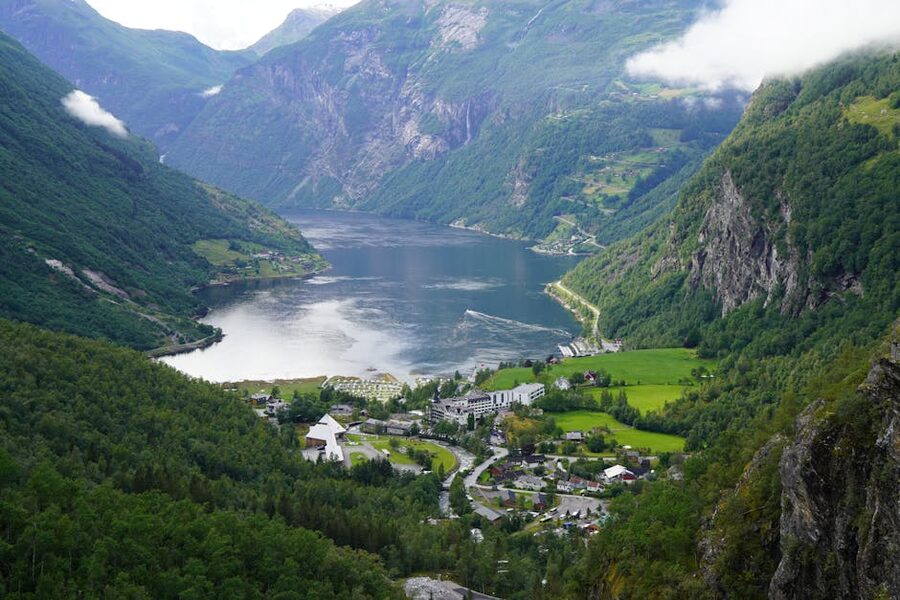
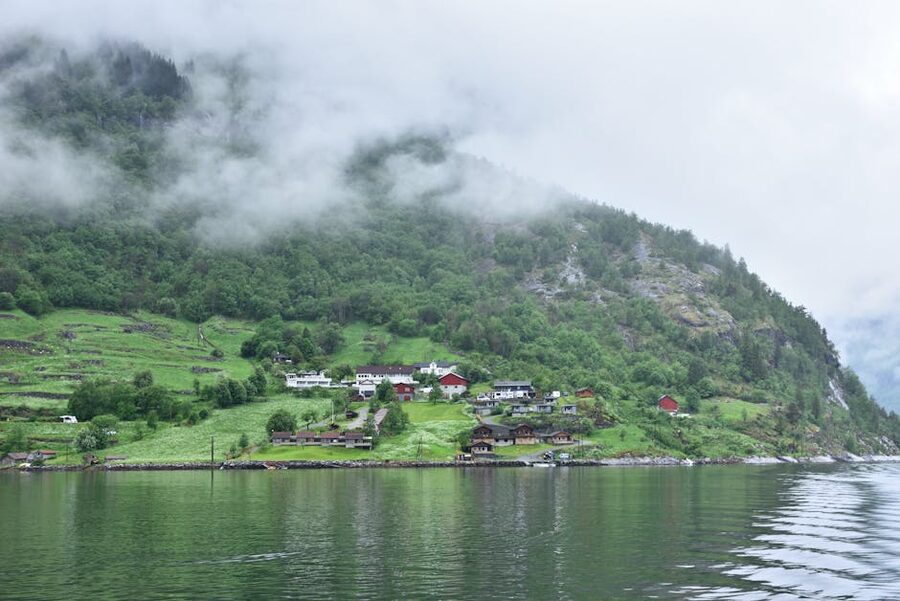
Geiranger village is small (about 250 permanent residents), tucked at the head of the inner fjord. There are five ways in.
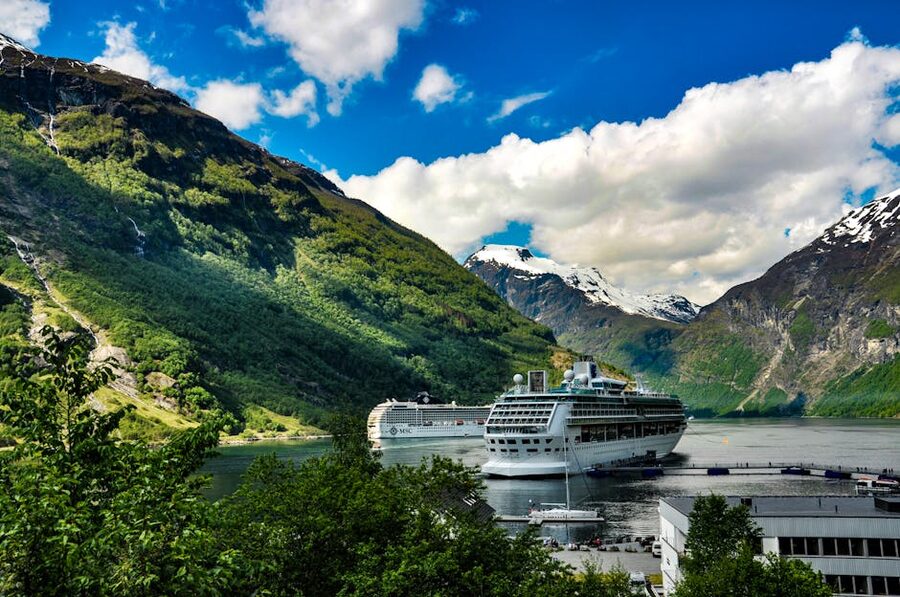
Cruise ship. Probably how 60% of summer visitors arrive. Geiranger is on the standard Norwegian fjords cruise route from Bergen and Hamburg, and big ships dock right in the village. If you’re on a cruise, the day tours leave from a few hundred metres from the gangway. Most cruise lines run their own bus, but the independent tours are usually cheaper and the same route.
Public bus from Ålesund. Bus 350 runs from Ålesund through Stranda to Geiranger in summer (mid-June to mid-August). It takes about three hours and stops are limited. Check current Vy/Mor i Gang timetables.
Drive from Bergen. About 380 km north, roughly seven hours including the Lavik-Oppedal ferry. Long but spectacular. Most self-drivers break it in two and overnight in Ålesund or Stryn.
Drive from Oslo. About 460 km, six to seven hours via Lillehammer and Otta. Faster than the Bergen route because there’s less ferry. Doable as a long day, better as an overnight.
Hurtigruten. The Norwegian coastal ferry calls at Geiranger on its summer route between Bergen and Kirkenes. It’s scenic and slow and not especially cheap, but it does deliver you straight into the inner fjord.
When to book and what to expect from the weather
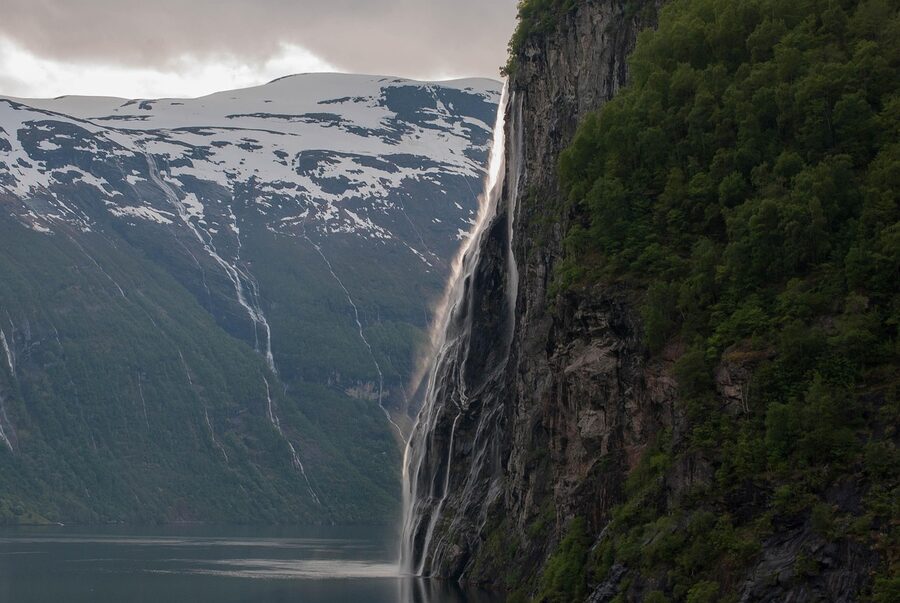
The Geiranger tour season is short. Most operators run from mid-May to early October, with the absolute peak in July and the first half of August. Outside that window the Dalsnibba road closes (usually under 5m of snow until late May), and the cruise ships stop calling.
For the best weather odds, look at late June through mid-August. Daytime highs in the village run 16-22°C. At Dalsnibba, expect 4-10°C. Rain is normal here. Plan for at least one wet day in three. The fjord still looks great in rain because the waterfalls feed off it.
Book the tour at least a few days ahead in July and August, especially if a cruise ship is in port that day. The 8am and 10am slots fill first because they finish before the 2pm cruise re-board.
Cancellation policy. Most Geiranger day tours through the major platforms are free to cancel up to 24 hours before. That’s useful here because the weather actually matters. If the Dalsnibba forecast shows cloud at 1,400m on your day, you can shift to the next morning without losing money.
The Seven Sisters and the Suitor
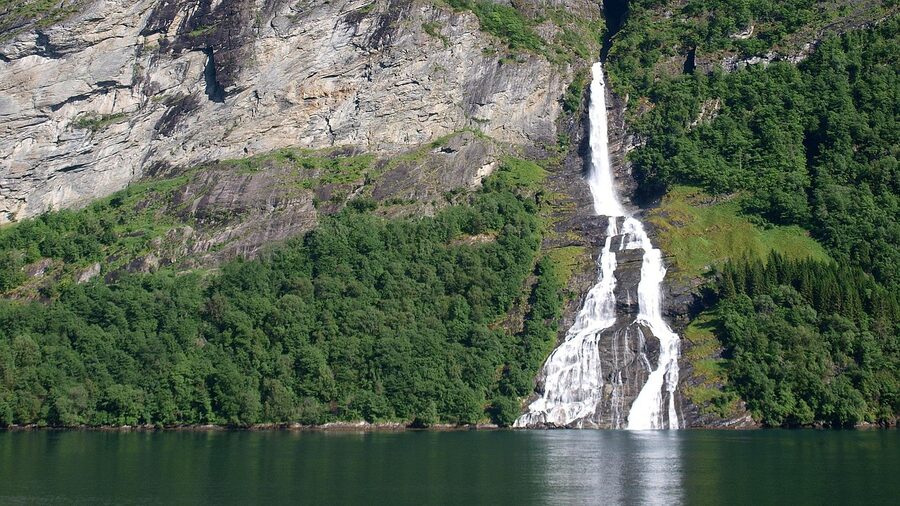
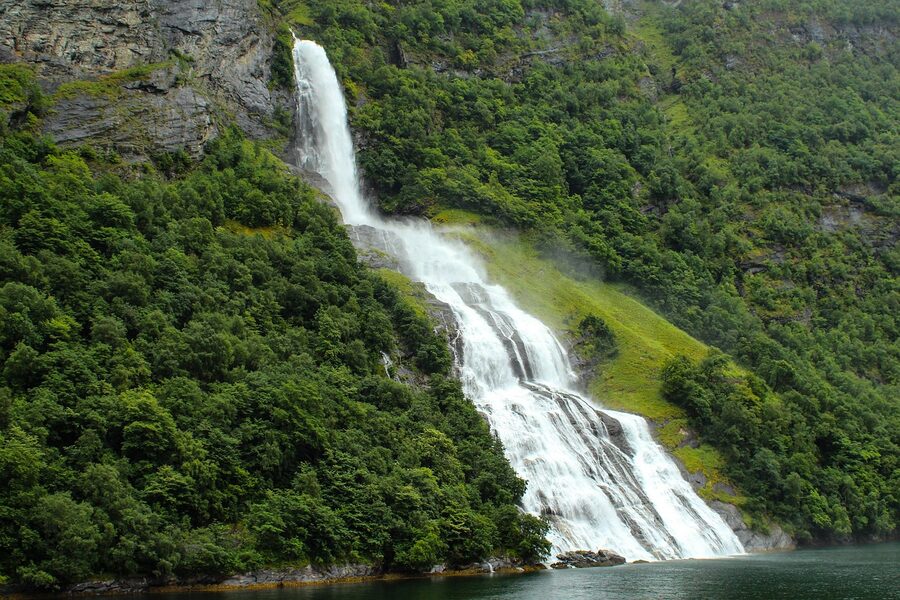
If you’re doing the cruise version, these are the two waterfall sets you’ll see. The Seven Sisters (De syv søstrene) sit on the north side of the fjord, a row of seven separate falls dropping about 250m off the cliff. They’re fullest in June when the snowmelt is at peak. By August some of the smaller sisters thin out to a trickle. Across the fjord, the Suitor (Friaren) falls in a single ribbon, supposedly the would-be lover the Sisters keep rejecting. Norwegian folklore is good with the soap-opera angle.
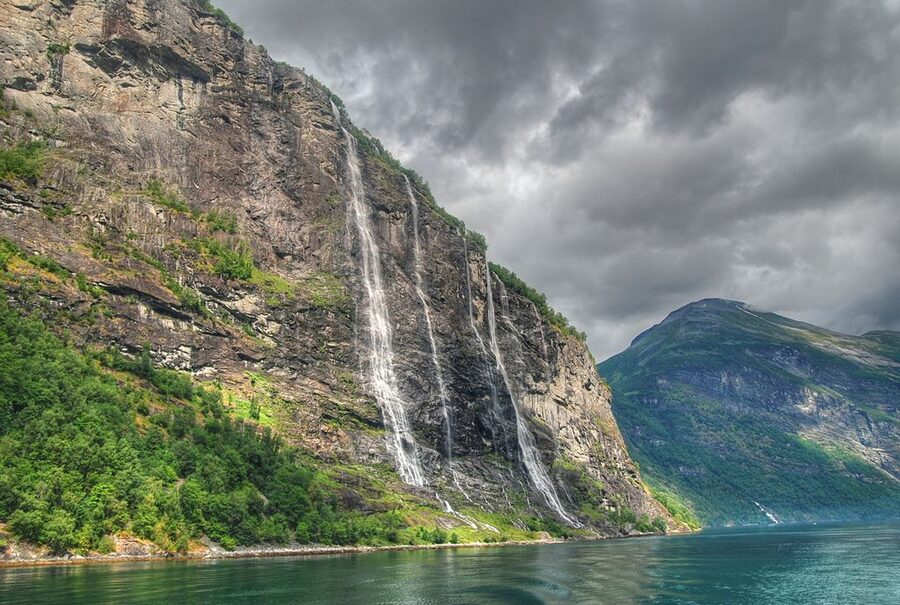

The boat tours stop or slow down for both. The bus tours don’t see them at all unless you add the cruise leg. That’s the main reason combo tours exist.
What to bring and wear
Geiranger is one of those places where the temperature varies by 15°C in the same hour, so layers do most of the work.
For the bus tour, bring a fleece or light jacket even on a sunny July morning. You’ll need it on the platform at Dalsnibba and not at all in the village. Sturdy shoes are fine, no boots required: the platforms are paved and short. A wind layer helps because the metal walkway at Dalsnibba sits exposed and gets gusty.
For the boat trip, the regular sightseeing boat is partly enclosed and you’ll be fine in a jumper. The RIB is different. They give you a survival suit and gloves but it’s still cold and wet, especially the spray when you cut through swell. Don’t bring a phone you’re not willing to hold tight.
A few small practical bits. Cash isn’t needed (Norway is essentially card-only). The toilets at Dalsnibba and Flydalsjuvet are basic. There’s a small café at Dalsnibba where a coffee runs about 50 NOK. If you’re prone to motion sickness, the bus on Nibbevegen is genuinely tight on the switchbacks. Sit toward the front.
UNESCO and what that actually means here
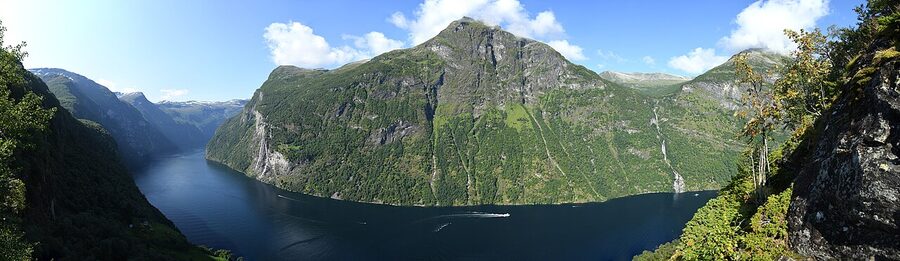

Geirangerfjord was added to the UNESCO World Heritage list in 2005, paired with Nærøyfjord further south. The criteria were essentially “archetypal fjord landscape, exceptional natural beauty,” which is the kind of language UNESCO uses when something is simply too obviously good to argue with.
The practical effect of the listing is that the cruise traffic is being limited. From 2026 onward, only zero-emission cruise ships will be allowed into the inner Geirangerfjord. Most large ships were converted or rerouted to Nærøyfjord. If you’re visiting on a cruise, your itinerary may have changed compared to a few years ago.
For day tour visitors arriving by bus or car, this doesn’t change anything. The road tours, the cruise tours from the village, and the RIB safaris all continue as before. If anything, fewer cruise ships in port mean less crowded viewpoints.
Skageflå and the cliff farms
Most day tours don’t go here, but it’s worth knowing about. Until the 1960s, several farms clung to the sheer walls of Geirangerfjord, accessed only by climbing rope ladders from boats. Skageflå is the most famous. The story is that when the tax collector visited, the farmers would pull the ladder up. Some farms had children that were tied to the rocks so they wouldn’t fall off.
Skageflå is now a kayak destination and a hike from the village. Some boat tours stop at the cliff base and let you climb the steep path up to the abandoned farmhouse. If you have a full day in Geiranger and want something deeper than the standard road circuit, this is where to go. It’s a different kind of payoff: smaller, slower, and you do the work.
Geiranger compared to other Norwegian fjords
If you’ve already booked a fjord experience elsewhere in Norway, you might wonder whether Geiranger adds anything. Short answer: yes. Geirangerfjord is narrower, taller-walled, and has the cleanest road access of any UNESCO fjord in Norway. The viewpoints (Dalsnibba in particular) are unique. There’s no equivalent payoff at Sognefjord or Hardangerfjord.
If you’re comparing it to a Bergen-based fjord cruise, the experience is different. A Bergen fjord cruise covers Sognefjord and gives you the deep, wide fjord experience over a full day on the water. Geiranger is shorter and more vertical: less wide-water, more sheer-cliff. The two are complementary, not duplicates.
If you’re heading further south on the same trip, Pulpit Rock from Stavanger is the closest comparable payoff: a flat platform, 600m of vertical drop, and a fjord at the bottom. Difference is, Pulpit Rock is a four-hour hike to the view, where Dalsnibba is a 25-minute drive. Different ways to earn the same kind of moment.
And the railway version of all this is the Flåm line. The Flåm Railway from Bergen drops 866m down to the inner fjord at Aurlandsfjord, with five waterfall stops on the way. It’s a train, not a bus, and the perspective is wholly different. If you have time, do all three.
Where the day tour fits in a longer Norway trip
If you’re here for a single day off a cruise, the standard 3.5-hour bus tour is the right call. You won’t have time for more.
If you’re overnight, do the bus tour in the morning and the cruise in the afternoon. That’s the full picture from above and below. Add a Skageflå hike on day two if you’re here for longer.
If you’re building a Norway road trip, work Geiranger into a route between Ålesund and Stryn. Spend the night in Geiranger, do the road in the morning, then drive Trollstigen south the next day. Trollstigen is a separate set of switchbacks (also famous, also cheap to drive yourself), and combined with Eagle Bend it makes a strong 24 hours of mountain road.
Booking checklist
Before you book, run through these.
Are you on a cruise? If yes, your booking window is tight. Lock in the 8am or 10am bus tour as soon as your itinerary is confirmed. The 12pm and later slots can run too close to your re-board call.
What’s the forecast? The Norwegian Meteorological Institute’s yr.no is the local standard. Check Dalsnibba and Geiranger separately. They’re only 18km apart but the temperature and cloud profiles differ by a lot.
Do you want above or below? If you can only do one, pick Dalsnibba and the road. The cruise from below is fantastic but it’s more accessible and more frequent on cruise itineraries. The road is the harder thing to organise solo.
How much do you actually want to spend? The full bus tour is around $115. The cruise alone is $69. The combo through the major platforms typically lands at $160-180. Check what’s included (Dalsnibba toll, headphones for narration, hot drink, etc.) because the cheap ones strip those out.
Other Norway guides
If you’re heading further north on the same trip, the Lofoten Islands are about a day’s drive from here and worth the detour for the silent cruise alone. The Trollfjord silent electric-boat cruise is the closest experience to Geiranger’s scale that we’ve found in Norway, and the format (electric, no engine noise) makes it work as a contrast to the diesel-driven boats out of Geiranger village.
For Stavanger, the Pulpit Rock hike and the Lysefjord cruise from below are the same trick we’ve described here: see the cliff from above, then see the same cliff from below. If you only have a few days in Norway and want fjord variety, that’s the smarter pairing than two days in Geiranger.
For Oslo, the Oslo fjord cruise is a different beast: lower mountains, more islands, much shorter ferry hops. It’s less photogenic than Geiranger but useful if you have an afternoon to fill in the capital and want a couple of hours on the water. The same goes for the Oslo hop-on hop-off bus if you’re trying to bolt a few half-days of city sightseeing onto a fjord-heavy itinerary.
And up in Tromsø, the northern lights, husky sledding, fjord fishing cruise, and Sommarøy islands tour all run on different rules to Geiranger. Most of those are October-March products. Geiranger is May-September. Plan a Norway trip around the season, not the city.
This article includes affiliate links. If you book through them, we may earn a small commission at no extra cost to you. We only recommend tours we’d book ourselves.