
The smell hits you before the picture does. Roasted oak, dripping suckling pig, and that faint sour-bread tang from the Segovia bakeries wedged between the aqueduct and the old town. You’ve been on the bus from Madrid for an hour, you’ve stood under twenty-eight metres of Roman granite, and now a guide is herding you down a side street toward a restaurant where the lunch will be quick because the bus leaves for Ávila in ninety minutes. This is the trade-off of the three-cities-in-one-day trip from Madrid, and it’s the only way to actually pull off Segovia, Ávila and Toledo in a single twelve-hour swing.
Three UNESCO World Heritage cities, three completely different vibes, one long day. It’s punishing. It’s also the most efficient way to do it if you’ve only got three or four days in Madrid.
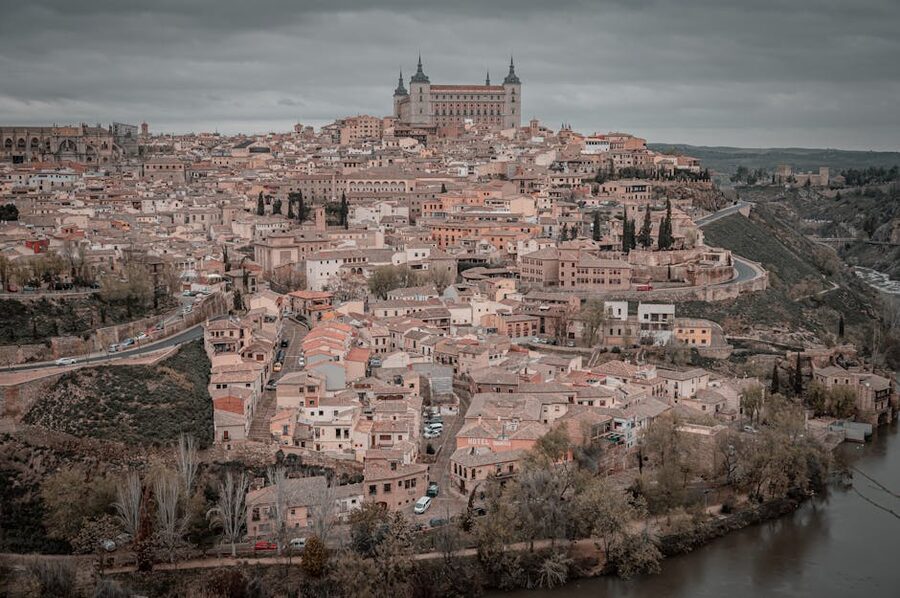
Cheapest 2-city: Madrid: Segovia and Toledo Tour, Alcazar, and Cathedral, $48. Drops Ávila but adds the Alcázar entry plus Toledo Cathedral, far more time per city, much less rushed.
Smaller-group 3-city: From Madrid: Segovia, Ávila, and Toledo Guided Tour, $99. The GetYourGuide alternative if the Viator one is sold out.

- What you’re actually signing up for
- Three tours worth booking
- 1. Three Cities in One Day: Segovia, Ávila & Toledo from Madrid: 7
- 2. Madrid: Segovia and Toledo Tour, Alcázar, and Cathedral:
- 3. From Madrid: Segovia, Ávila and Toledo Guided Tour:
- Should you actually do all three?
- Segovia: aqueduct first, everything else second
- Ávila: walls and not much else
- Toledo: where you actually get time
- The food situation
- What time of year to go
- Three things you can do but probably shouldn’t
- Sticky practical bits
- The history bit (skim if you don’t care)
- Other Madrid day-trip and ticket guides
What you’re actually signing up for
The “Three Cities in One Day” framing is accurate to what it is: a 12-hour bus day. Pickup is around 8am from a central Madrid meeting point (most operators use a spot near Plaza de España or the Las Ventas metro). You’re back around 9pm, sometimes later if Madrid traffic is bad on the return.
Here’s the rough rhythm. One hour north on the AP-6 to Segovia. Two hours in Segovia, including the aqueduct, the cathedral square, and a quick lunch. One hour west to Ávila. Forty-five minutes to an hour at the walls. One and a half to two hours south to Toledo. Three to four hours in Toledo, the longest stop. Ninety minutes back to Madrid. The order varies by operator, some run Toledo first and Segovia last, but the totals come out within twenty minutes of each other.
The key thing to understand: you don’t get to enter every monument in every city. Toledo Cathedral entry is included on most tours. The Alcázar of Segovia is usually optional and not on the cheaper Viator combo. The walls of Ávila are free to walk on, but the timed paid section sometimes gets skipped because the group is on a clock. Read the inclusions list before you book.
Three tours worth booking
I’ve shipped through every Segovia/Ávila/Toledo combo on Viator and GetYourGuide and pulled the three that actually deliver on the day. The first is the long-running Viator flagship, the second the cheaper two-city alternative for travellers who’d rather skip Ávila and have more time in Toledo, the third the GetYourGuide three-city option that runs in smaller groups when the big bus tour sells out.
1. Three Cities in One Day: Segovia, Ávila & Toledo from Madrid: $127
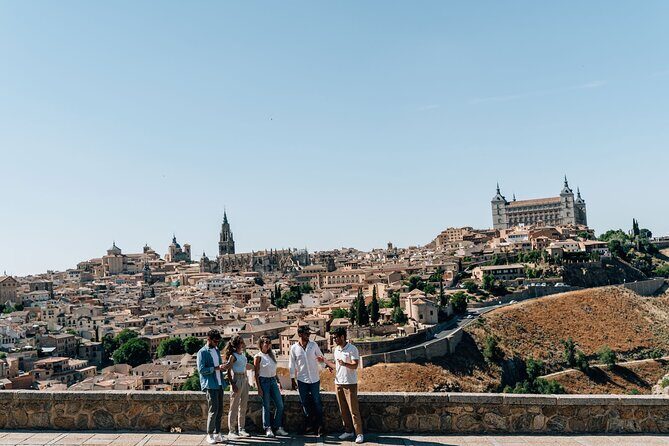
This is the workhorse three-city option, and the one most travellers end up on. The price isn’t trivial, but the Toledo Cathedral entry alone is worth the upcharge over the cheaper alternatives, and the climate-controlled bus matters in July when Castile gets brutal. Our full review goes into the lunch upgrade and the bilingual-guide caveat in detail.
Check Availability
Read our full review
2. Madrid: Segovia and Toledo Tour, Alcázar, and Cathedral: $48
If you’ve already seen medieval city walls elsewhere in Spain, this is the better trip. Ávila is beautiful but the walls are the only major draw, and you can do them justice on a separate day later. Our review covers the bilingual group split and the Las Ventas metro meeting point, neither of which the booking page makes obvious.
Check Availability
Read our full review
3. From Madrid: Segovia, Ávila and Toledo Guided Tour: $99
Same itinerary, different operator, sometimes a tighter group. The price sits between the cheap two-city and the Viator three-city, and the Toledo Cathedral interior is included on the standard option. Our review talks through how the timing differs (this one tends to start ten minutes later and run a bit shorter in Ávila).
Check Availability
Read our full review
Should you actually do all three?

The real answer: it depends on how long you’re in Spain and what you’ve already booked.
If you’ve got four days in Madrid and zero other day trips planned, yes. The combo gives you a snapshot of three completely different periods of Spanish history (Roman engineering in Segovia, medieval Christian Spain in Ávila, layered Christian-Muslim-Jewish Toledo) without renting a car or learning the Renfe timetable. You’ll be tired, but you’ll have seen things you wouldn’t otherwise reach.
If you’ve got more time, split it. Toledo deserves a full day, ideally with an overnight so you can see the city after the day-tour buses leave at 5pm. Segovia and Ávila pair naturally as a two-city day from Madrid (we have a separate Ávila + Segovia day-trip guide for that one), and Toledo can be its own dedicated outing using the cheap AVE train and our Toledo from Madrid writeup.
And if you’re already planning a Castilian road trip, skip the day tour entirely. Drive yourself, stay one night in Segovia and one in Toledo, and use Ávila as a lunch stop. The day tour is for travellers without a car who want a structured introduction to all three.
Segovia: aqueduct first, everything else second
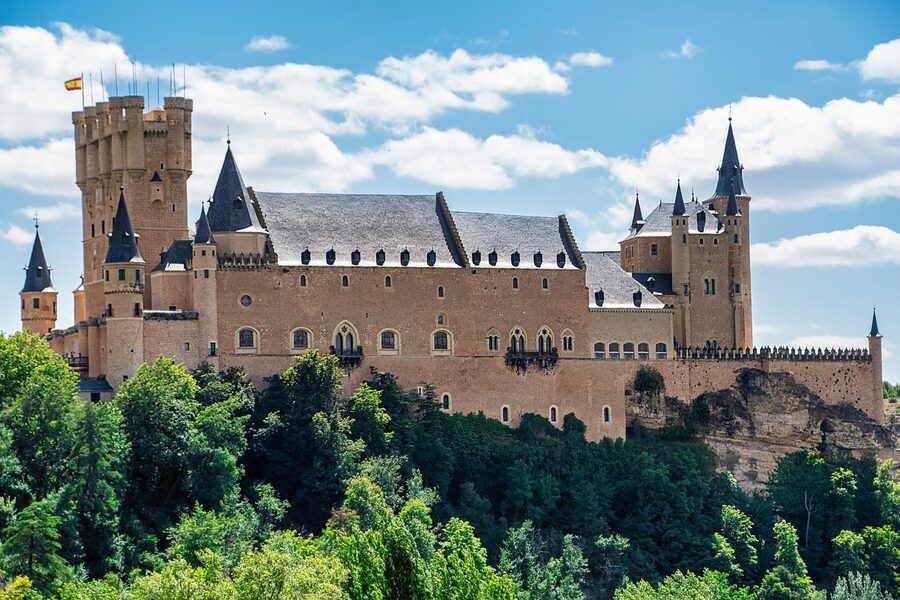
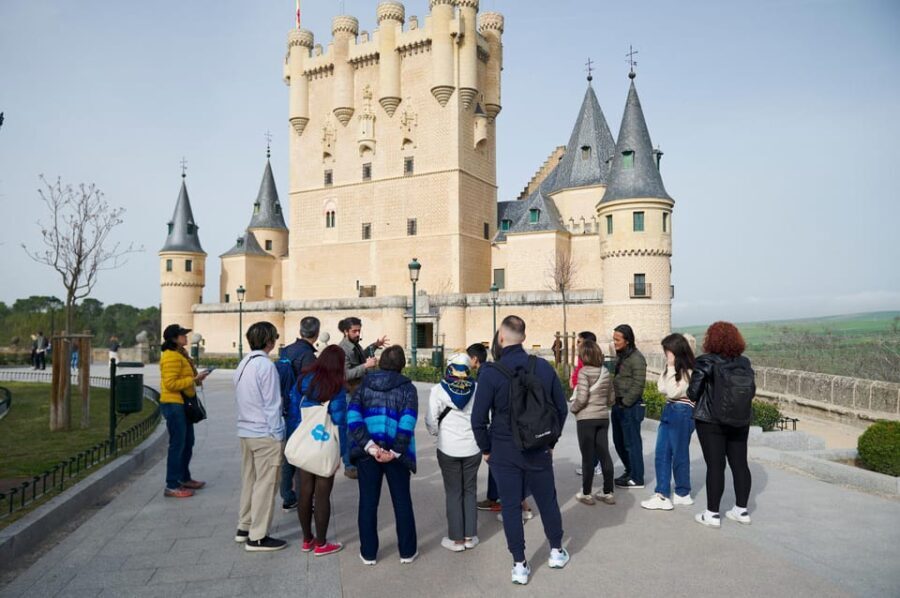
You’ll have roughly two hours here. Spend most of it at the aqueduct and around the old town. The Alcázar is striking from the outside but the interior is small, and on a tight day-tour schedule the queue alone can eat thirty minutes.
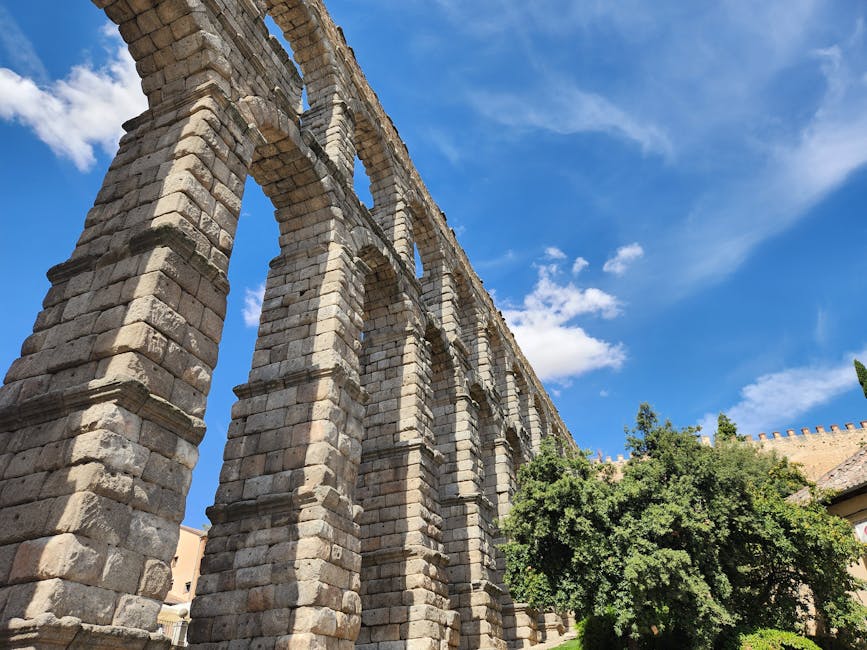
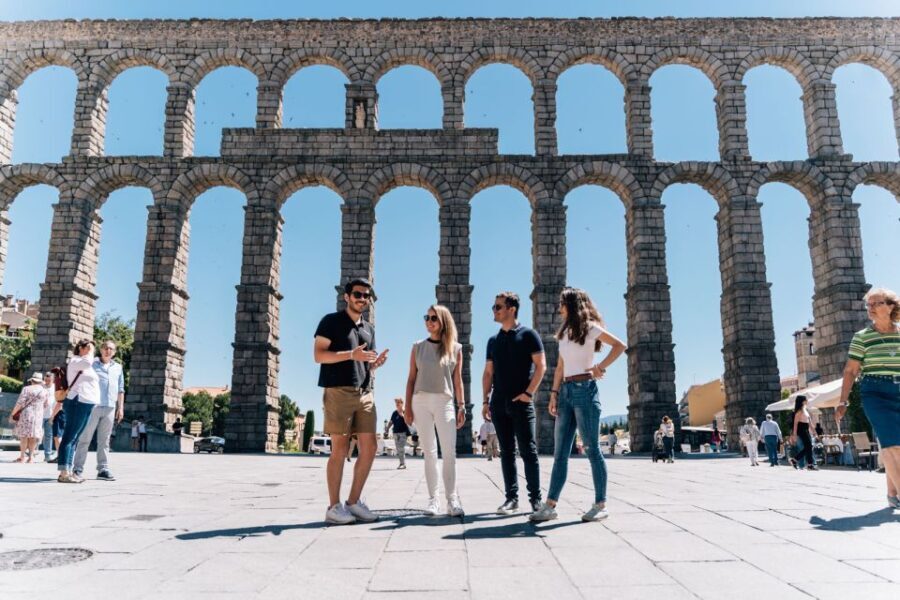
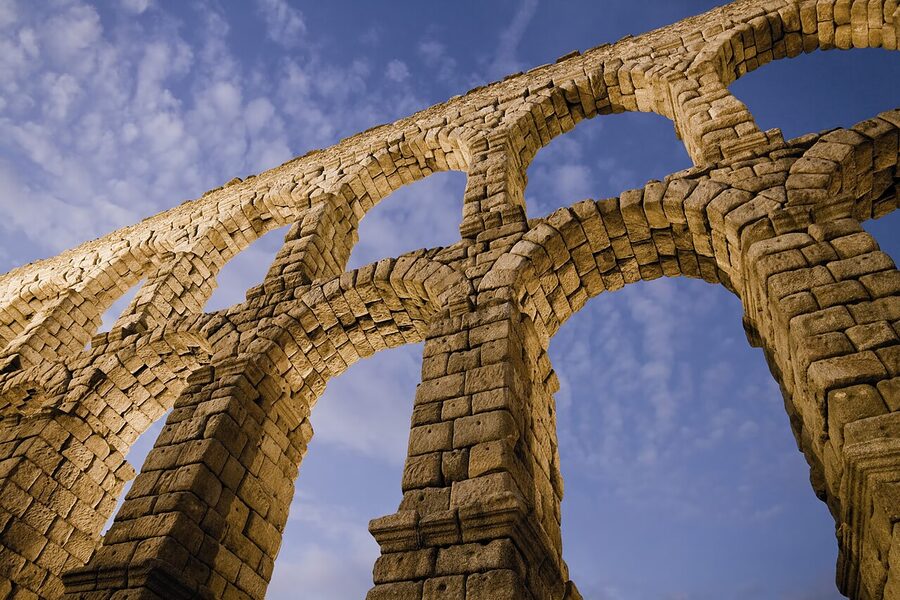
The aqueduct’s central section, where it crosses Plaza del Azoguejo, is the section worth standing under. It’s about twenty-eight metres tall and was built in the late first century, mostly from unmortared granite blocks. Locals will tell you the Devil built it overnight. The plaque tells you Romans built it across roughly fifty years. Both stories are part of the city.
From there, walk uphill toward the cathedral. The streets are paved with cobbles small enough to bother bad shoes. The Cathedral of Santa María (the “Lady of Cathedrals” because of its size) sits on the main plaza and is usually a quick exterior stop on the day tour, not an interior visit. Beyond it, the old town narrows and the smell of roasting suckling pig (cochinillo asado) gets stronger as you approach lunch hour.
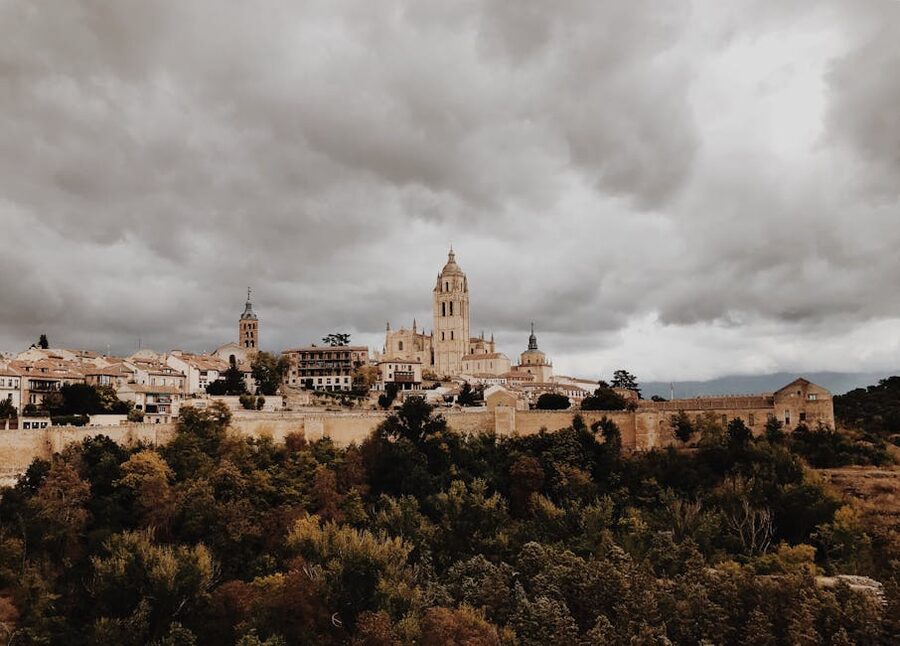
About lunch: cochinillo is the Segovian thing. It’s roast suckling pig, served with the skin still crackling, and the famous version is at Mesón de Cándido near the aqueduct, which has the place plastered with photos of the owner cutting the pig with a plate. It’s touristy and expensive (around €30 per person for the cochinillo plate alone) but the dish is genuinely better here than at most other restaurants in the country. If you’re on the budget two-city tour without a meal upgrade, you’ll have free time to find your own. The streets just east of the cathedral have a handful of menú-del-día spots running €15 to €18.
Ávila: walls and not much else
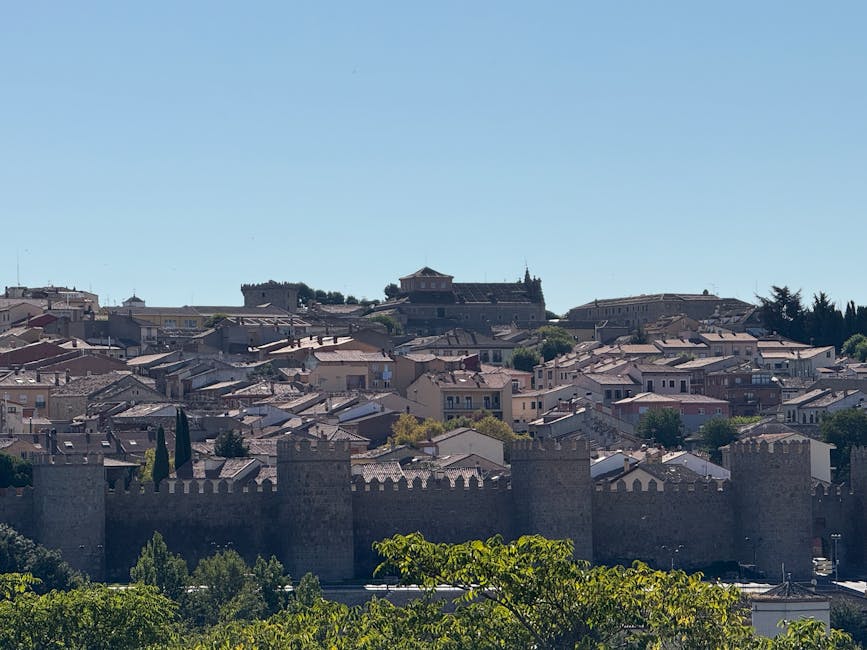
This is the city that gets the shortest stop, and people sometimes complain about that. They shouldn’t. Ávila is gorgeous but it’s also small. The medieval walls are the showpiece, and outside of those, the cathedral and the Convent of Santa Teresa (the patron saint of Spain was born here in 1515) are the two other interior stops worth queuing for, but neither is included on the day tour.
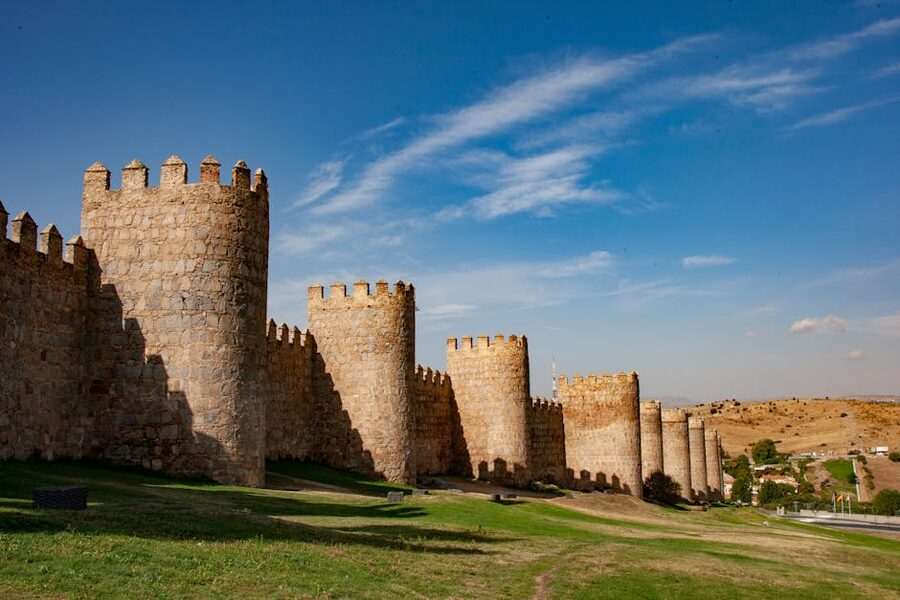
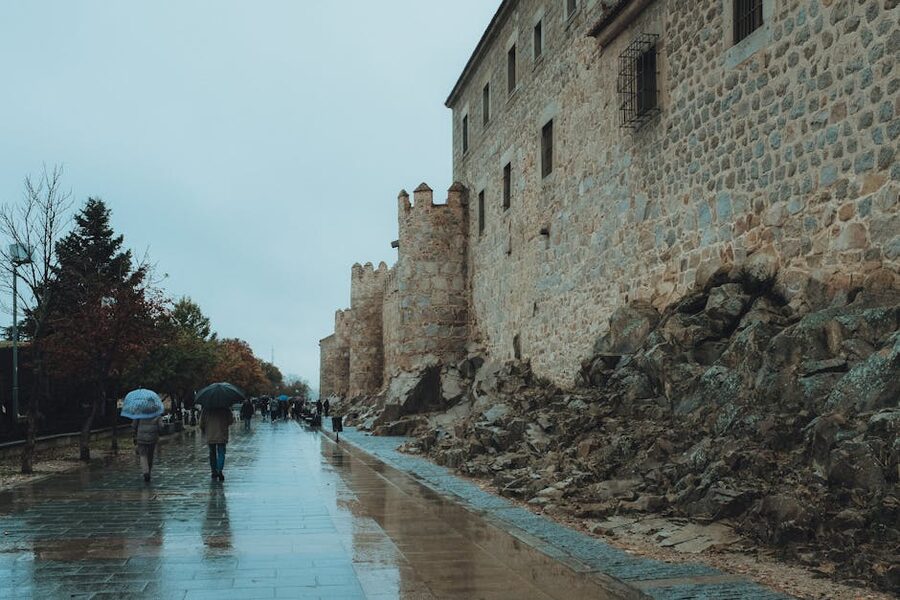
What you do get is a wall walk. The full circuit is around 2.5 km and almost completely intact, which makes Ávila one of the best-preserved medieval city walls in Europe and a UNESCO site since 1985. Eighty-eight semicircular bastion towers, four major gates, and the highest provincial capital in Spain at 1,131 metres above sea level.
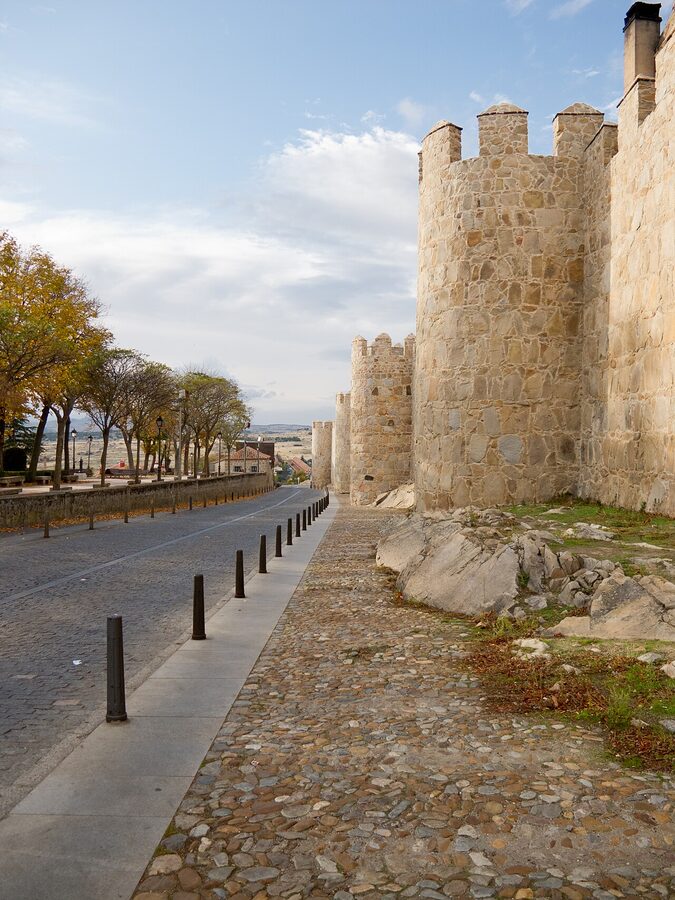

Practical note about the altitude: 1,131 metres means the wind hits hard even in summer. Bring a layer. I’ve been here in late June with sun on my arms and a wind that made my eyes water at the western end of the walls. Most people in shorts and a t-shirt are fine. Most people in only a t-shirt regret it.
If you have free time, walk away from the obvious tourist groups and around to the western end where the walls drop down toward the open countryside. The view back across the plain is the thing photographers go quiet about. Most coach tour stops cluster at the eastern entrance near the cathedral, so the western walls stay quieter.
Toledo: where you actually get time
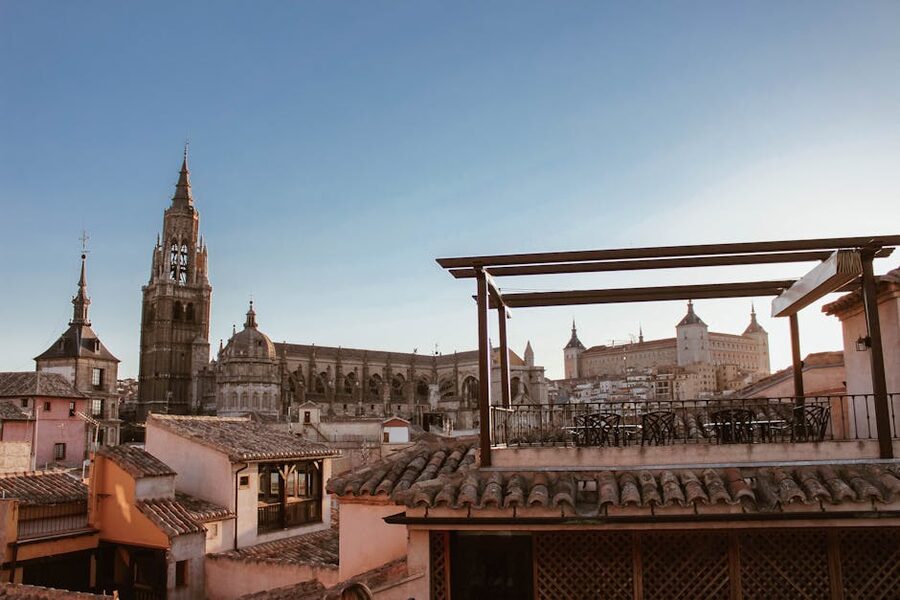
Toledo gets the most time, three to four hours, and that’s correct. It’s the most layered of the three cities and the one you’ll most regret rushing.
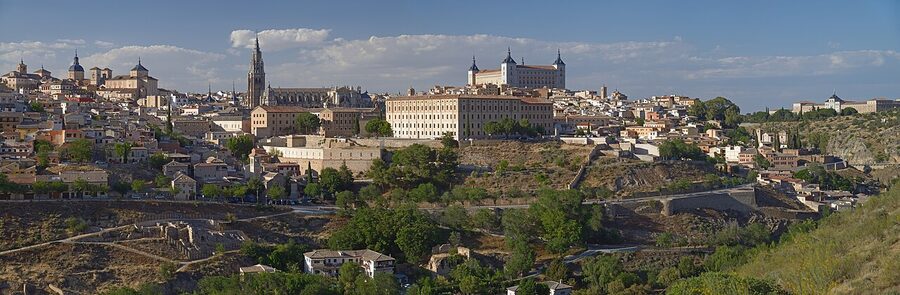
The standard tour walking route enters from the eastern side of the old town near the Alcázar, drops into the Cathedral (interior visit included on most three-city packages), passes through the Jewish Quarter near the Sinagoga del Tránsito, and ends near the Plaza de Zocodover for the free time. That’s the part where you choose what to do with your last hour and a half: shop, eat, or walk down toward the Tagus for the river view.
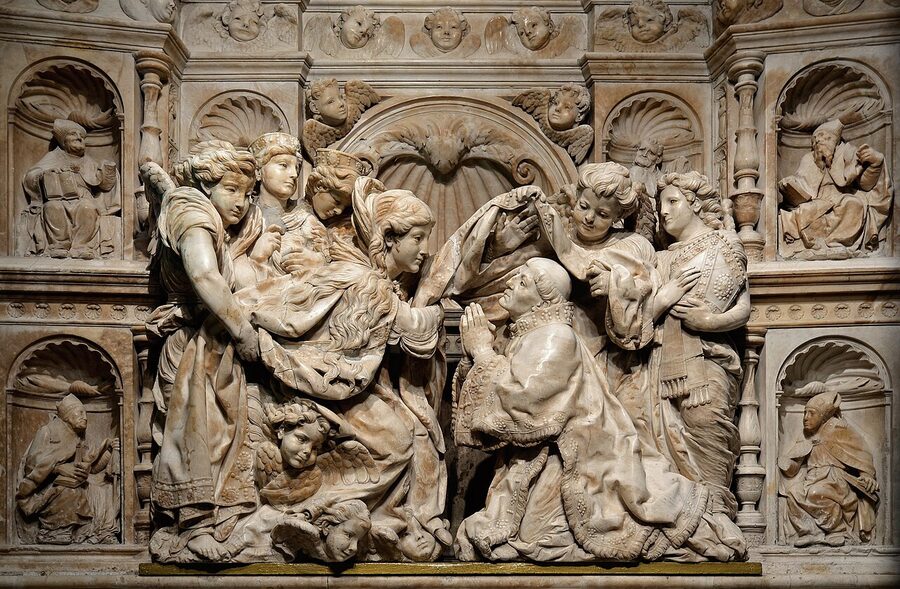

The cathedral is the priority. If you’ve only got time for one interior visit in Toledo, this is it. The Transparente, an 18th-century baroque skylight by Narciso Tomé, was carved out of the existing Gothic structure to let natural light into the ambulatory. It’s overwhelming in a way photos don’t quite capture, the gold and the marble figures and the actual sunbeam coming through, all in one spot. Worth ten minutes alone.
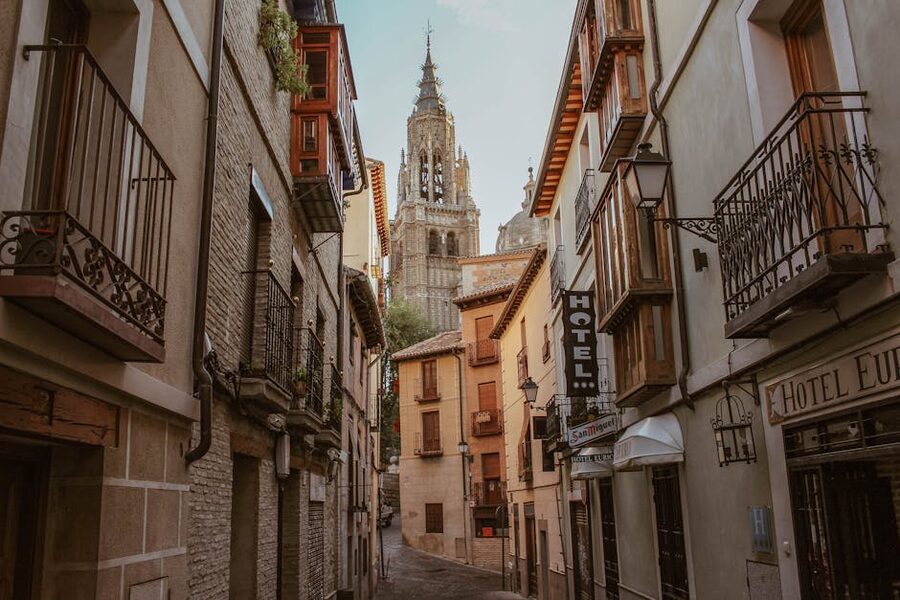
If the cathedral isn’t on your tour or you’re done with it, walk west toward the Sinagoga del Tránsito and the Jewish Quarter. The synagogue (now a museum, also called Museo Sefardí) covers the city’s Jewish history with English-language panels and is a quiet break from the cathedral crowds. Entry is around €3 and skipped on most day tours, but if you have a free hour it’s well worth the detour.
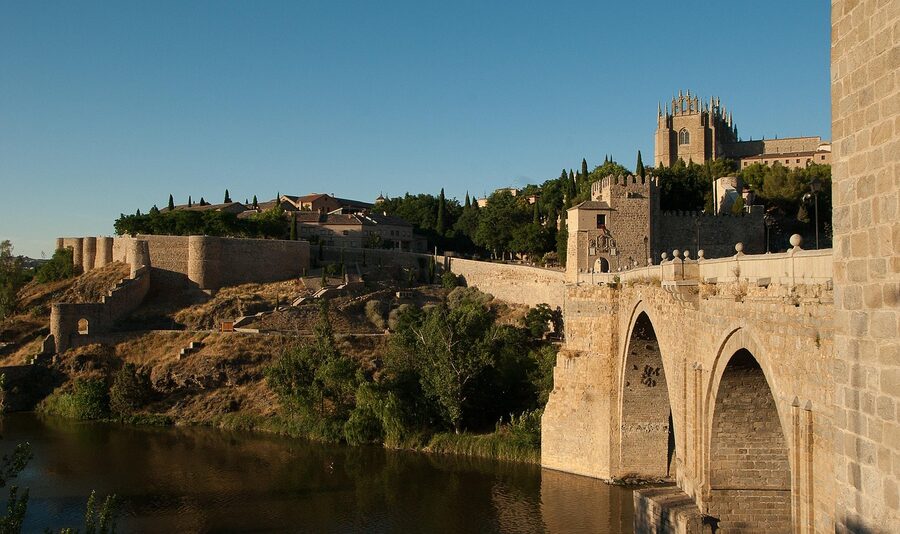
About the Mirador del Valle. This is the south-facing overlook across the river that gives you the postcard shot of the entire city stacked on its rock. Most tour buses pause here on the way in or out, but not all of them. If your guide doesn’t mention it, ask. It’s a five-minute photo stop that turns the whole day from a list of monuments into one specific image you’ll keep.
The food situation


Lunch is the big practical question on this trip. Most tours stop in Segovia for it because Segovia is famous for cochinillo and the restaurants are set up to feed coach groups quickly. A few stop in Toledo. None of them stop in Ávila for lunch.
The lunch upgrade option, when offered, is usually €15 to €25 per person on top of the tour price, and it includes a starter, mains (cochinillo or judiones de la Granja, a hearty white-bean stew), dessert, and a glass of wine. It’s structured for tour groups, so the food comes out fast and the seating is communal. It’s not a foodie experience, but it’s a real meal.
The skip-the-lunch option is usually free time of about an hour, which is enough for a sandwich and a coffee but not a full sit-down meal. If you skip the upgrade, eat early (Segovia kitchens get slammed at 1:30pm) and avoid anywhere with photos of food on the door, those are the worst.
What I’d actually do: skip the upgrade in Segovia, find a menú del día spot two streets back from the aqueduct (the streets running east toward Plaza Mayor de Segovia have several), eat for €15, and have wine money left over for a beer in Toledo before the bus leaves.
What time of year to go
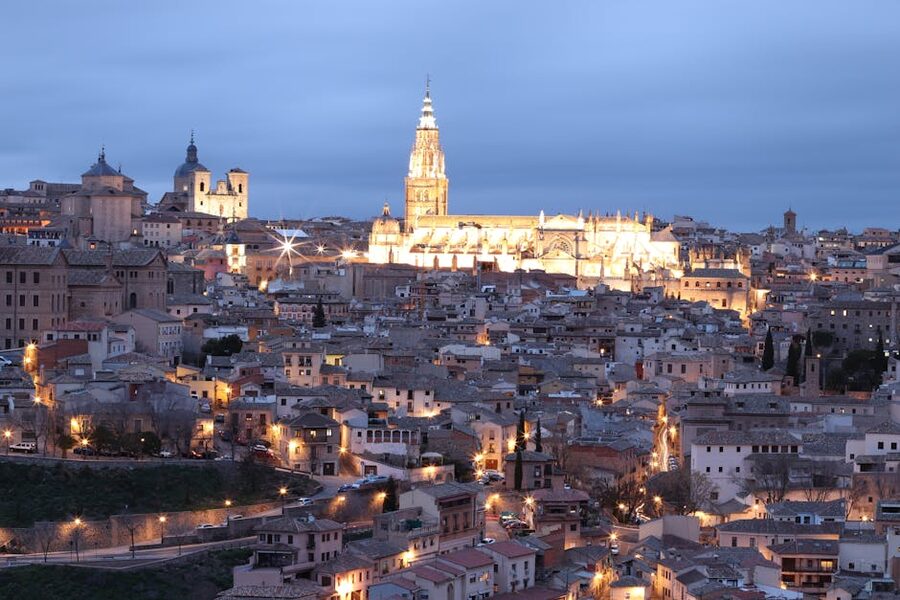
Castilla is hot in summer and cold in winter. There’s almost no shade on the Ávila walls, very little in central Toledo, and Segovia’s old town has narrow streets that channel sun. July and August are punishing if you’re not used to dry 35°C heat. December through February can drop below zero in the morning, especially in Ávila where the altitude makes it the coldest of the three.
The sweet spot is late April to early June, or September to mid-October. Daytime around 18 to 25°C, the wheat fields between the cities look better, and the tour groups are smaller. Late May and early October specifically are when I’d go.
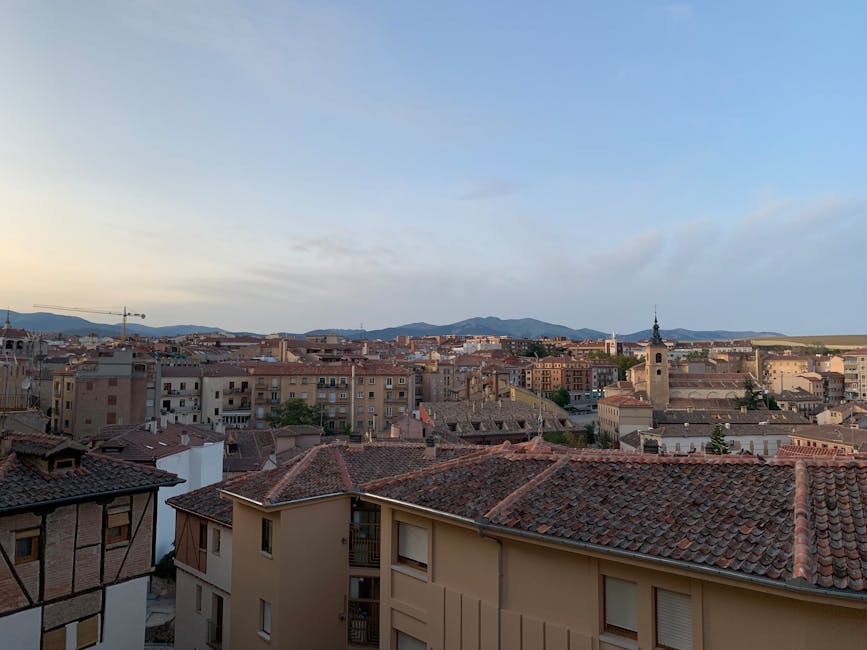
Avoid: any major Spanish public holiday (the buses still run but Toledo gets jammed), the entire week between Christmas and New Year (some monuments shorten their hours), and the first week of August when half of Madrid is on holiday and the bus traffic in and out of the city is brutal.
Three things you can do but probably shouldn’t
One: try to do the trip yourself by public transport. It’s possible. There’s an AVE high-speed train to Segovia (28 minutes) and one to Toledo (33 minutes), and a regular Renfe to Ávila. But the schedules don’t connect, and you’d have to backtrack through Madrid between cities. The math comes out to maybe €60 in train fares plus a full day of stress. The tour bus is faster, cheaper for the combined route, and removes the timing problem.
Two: try to walk the entire Ávila wall in 45 minutes. You can’t. The full circuit is about 2.5 km and the paid section has limited entry points. Pick the western or northern stretch and accept that you’re not seeing the whole thing.
Three: book the cheapest tour and assume it includes everything. The €48 two-city option is great, but you’re trading three things: Ávila entirely, Toledo Cathedral interior on some operators, and the smaller-group experience. Read the inclusions list. The price difference between tours is almost always tied to specific entries.
Sticky practical bits

Bathrooms. The bus stops aren’t generous. Hit the Madrid bathroom before pickup, use the Segovia restaurant bathroom even if you don’t eat there (a coffee buys you the right), and there’s a public toilet near the Toledo cathedral square (look for the small “WC” signs near the Cathedral’s eastern side).
Cash. Almost everything in central Madrid takes cards, but small Segovia bakeries, the Sinagoga del Tránsito ticket window, and some Toledo cafés are cash-only or have a €10 minimum. Bring €40 in small notes and coins.
Comfortable shoes are non-negotiable. You walk roughly 8-12 km across the day, mostly on cobbles, with the Toledo old town being particularly punishing on bad knees. Sandals are fine if you’ve broken them in. Heels are not.
Photography. The good light is mid-morning in Segovia (aqueduct backlit by the rising sun), early afternoon in Ávila (wall stones look golden), and the last hour in Toledo (the cathedral spire glows). The bad light is straight noon, when the Castilian sun flattens everything.
Bus seating. If you’re prone to motion sickness, request the front. The AP-6 to Segovia and the A-42 to Toledo have rolling hills that surprise people who thought central Spain was flat. Take a Dramamine if you know you’re sensitive.
The history bit (skim if you don’t care)
Each of the three cities anchors a different chapter of Spanish history.
Segovia is the Roman one. The aqueduct dates from the late first century AD, around the reign of Trajan or Domitian, and brought water from the Sierra de Guadarrama mountains roughly 17 km away. It’s still one of the most intact Roman aqueducts anywhere in the empire, and it ran functionally until the mid-19th century. The city also became a Castilian royal seat in the medieval period, which is why the Alcázar is here, but the Roman story is the one that catches.
Ávila is the Catholic-saints-and-walls one. The walls themselves date from the late 11th and early 12th centuries, built after Christian forces took the area back from the Almoravids during the Reconquista. The city later became a centre of Castilian Catholicism: Santa Teresa de Ávila, the great mystic and Carmelite reformer, was born here in 1515 and her relics are still in the Convent of Santa Teresa in the old town.
Toledo is the layered one. It’s the deepest of the three historically. Roman (yes, here too), Visigothic (it was the Visigothic capital of Hispania in the 6th and 7th centuries), Muslim under the Caliphate of Córdoba, then Christian again after Alfonso VI of León and Castile took the city in 1085. For about three centuries after that, Toledo was famously the city where Christian, Muslim and Jewish scholars worked side by side translating Arabic and Greek texts into Latin (the “Toledo School of Translators”). That layered history is what you’re seeing when the guide takes you past the cathedral, the Sinagoga del Tránsito, and the old mudéjar-style brickwork all in the same hour.
Other Madrid day-trip and ticket guides
If this combo seems like too much, the natural next move is to read our individual Toledo from Madrid guide (the deepest single-city option), the Ávila and Segovia day trip (the two-city alternative without Toledo), or the El Escorial and Valley of the Fallen trip if you’d rather head north-west than south. All three pair well with a couple of full Madrid days using the Prado tickets, the Reina Sofía tickets for Picasso’s Guernica, and the Royal Palace tickets for the city’s biggest interior. If you want a structured intro to Madrid itself before any day trip, check the Essential Madrid combo tour, the tuk-tuk tour, the walking tour, or the panoramic bus tour. For travellers connecting Madrid with Barcelona, the Barcelona in One Day tour is the equivalent intro on the other end of the AVE line.
This article contains affiliate links. If you book through them, we earn a small commission at no extra cost to you. We only recommend tours we’ve actually researched and would book ourselves.