
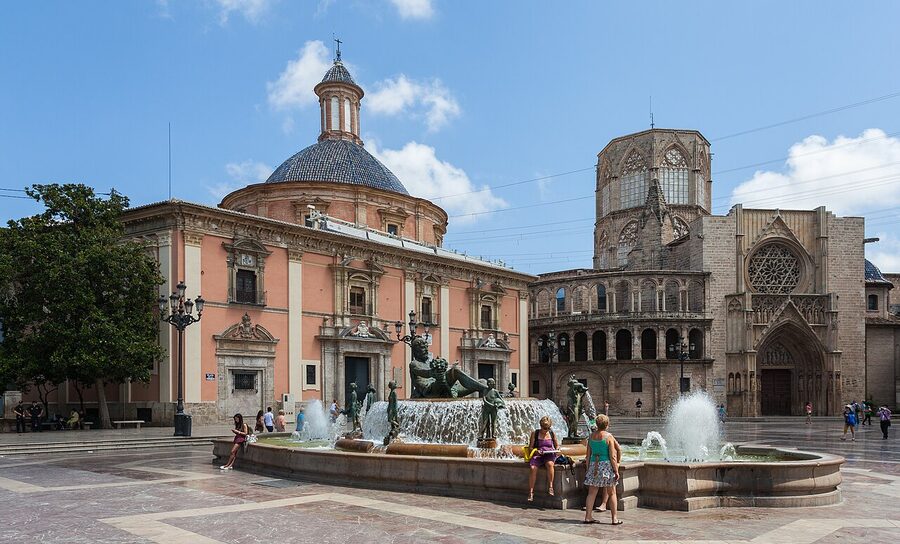
You’re three glasses in, candlelight wobbling on stone walls a thousand years older than the wine you’re drinking, and the guide is explaining why the Bobal grape was nearly forgotten. The street noise of Plaza de la Virgen has vanished. Above your head, the cathedral square fills with evening light; down here in the old Almoravid cistern, you’re cool, slightly tipsy, and chewing your way through a slice of coca de tomate that tastes more like Valencia than anything you’ve eaten since the airport.
That’s the moment Valencia’s wine-and-tapas walking tours actually pay off, and it’s why I keep recommending them over the city’s standard food walks. You get the old-town highlights you’d already planned to see, plus an underground finale most visitors walk past without knowing it’s there.
Best for GetYourGuide users: Old Town Tour, Wine and Tapas in an 11th c. Monument, $94. Same format, different operator, easy free-cancellation booking.

- What you actually get on these tours
- The Two Tours Worth Booking
- 1. Valencia Old Town Tour with Wine and Tapas in 11th Century Monument: .74
- 2. Valencia: Old Town Tour, Wine and Tapas in an 11th c. Monument:
- What the food actually is
- The wine, in short
- The cistern, briefly explained
- Where you actually walk
- When to book and which slot to take
- Getting to the meeting point
- Practical things worth knowing
- How this stacks up against tapas tours elsewhere in Spain
- If you have an extra evening
- What I’d do differently second time around
- The other Valencia tours I’d add to your trip
What you actually get on these tours
Both of the well-reviewed Valencia old-town wine-and-tapas tours follow roughly the same shape. About ninety minutes of walking, around ninety minutes sitting down to eat and drink, and a small group capped at twelve. You meet near Plaza de la Virgen or Plaza de la Reina, do a loop through the Barrio del Carmen, then descend into a private space underneath the city where the tasting happens.
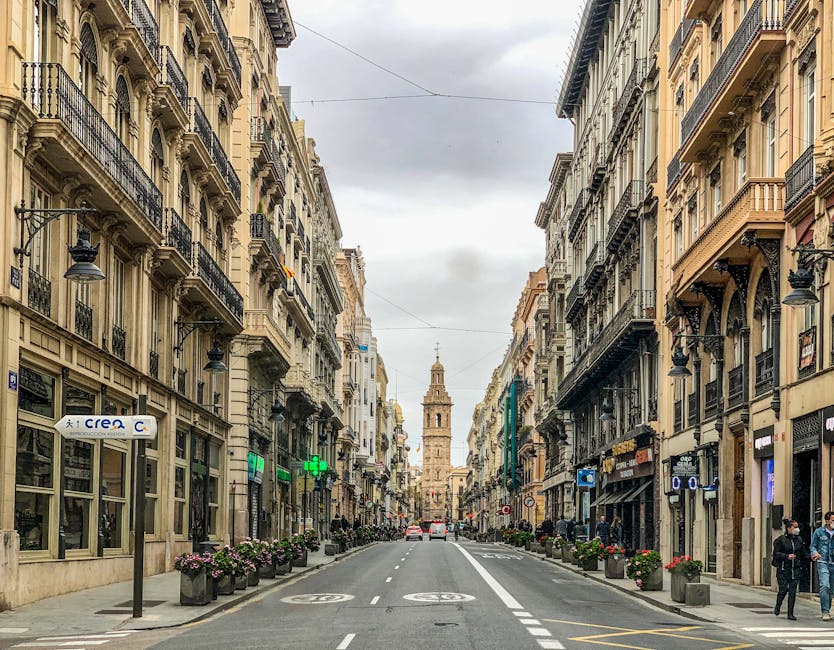
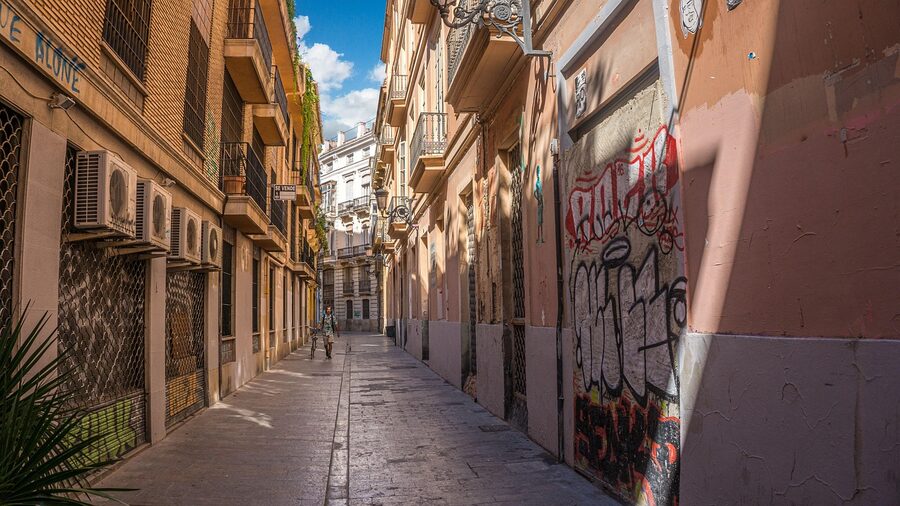
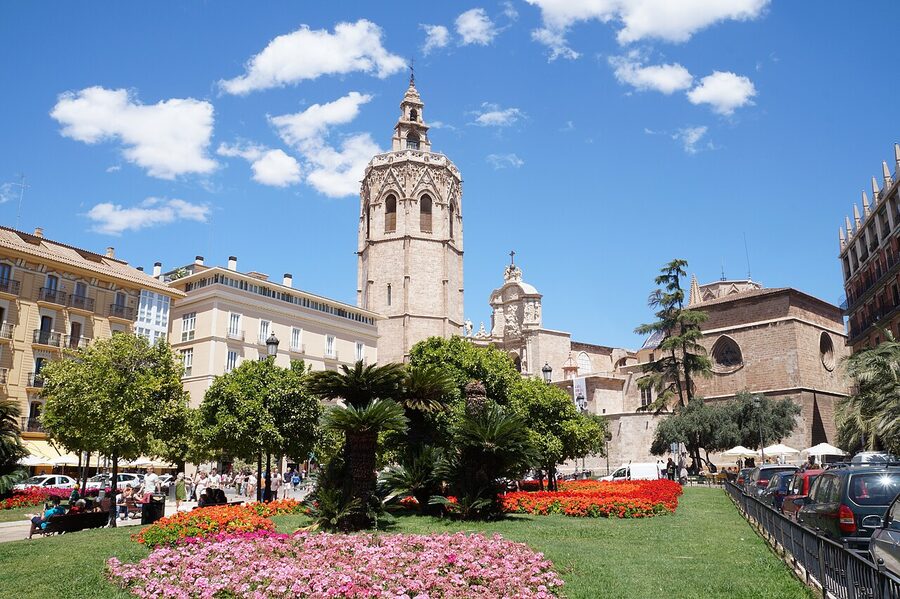
The walking part is unhurried. You’re not racing through landmarks. The guide stops at the cathedral, the silk exchange, the Mercado Central, and a few smaller spots most guidebooks skip, like the medieval bath house on Carrer dels Banys de l’Almirall. Expect 4-5 stops total, with stories along the way about Roman walls, the Borgia popes (yes, both of them were Valencian), and why the city had two cathedrals before deciding which one to keep.

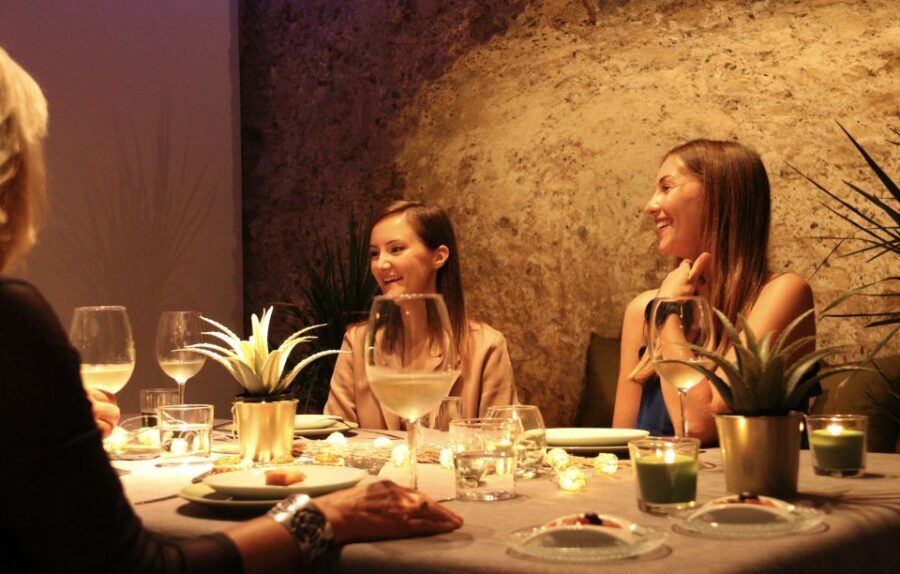
Then comes the part the title is selling. The “11th century monument” both tours use is one of two Almoravid-era spaces in the old town. One is an underground cistern beneath Plaza de la Virgen, the other is a medieval Arabic bath complex a few streets away. Operators have set up wooden tables, tealights, and a small bar inside, and you eat down there with the lights low and the temperature naturally cool. It’s not a gimmick. The space is genuinely that old, and the contrast with the noise and heat above is what makes the tour memorable.
The food itself is the second reason these tours work. You’re not getting a sad ham-and-cheese platter. The standard tasting runs to about ten dishes, weighted toward Valencian rather than generic Spanish, and the wines are local. More on both below.
The Two Tours Worth Booking
1. Valencia Old Town Tour with Wine and Tapas in 11th Century Monument: $96.74
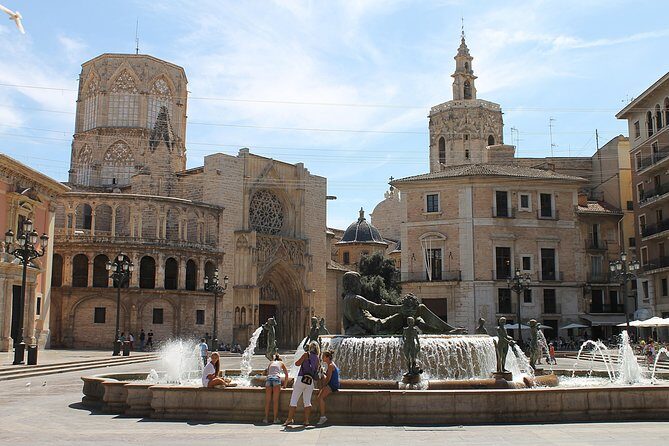
This is the longer-running of the two operators, and the one I’d pick first if dates work. Four hours, twelve guests max, and a full ten-course tasting paired with regional wines inside the cistern. Our full review of this tour walks through the food list and why the small group cap matters. The guides are food-and-wine specialists rather than general historians, which shows up in the kind of details you get about the Bobal reds.
Check Availability
Read our full review
2. Valencia: Old Town Tour, Wine and Tapas in an 11th c. Monument: $94
Same format, different operator, two-dollar saving, and the booking flow lives on GetYourGuide instead of Viator. Slightly shorter walking section (closer to one hour at a leisurely pace) and a tighter focus on food origins than history. Our review of this version covers how the two operators differ on dietary restrictions, which is worth knowing if you’re vegetarian or coeliac.
Check Availability
Read our full review
Honest comparison. They’re more alike than different. The Viator version has the longer walking portion and a slightly more theatrical tasting. The GetYourGuide version is cheaper and easier to cancel. If you book either and end up with a guide named Martha, you’ve drawn the long straw, but every guide I’ve heard about on either tour has been good. This is one of those rare tour categories where the question isn’t really which operator, it’s which platform you prefer.
What the food actually is
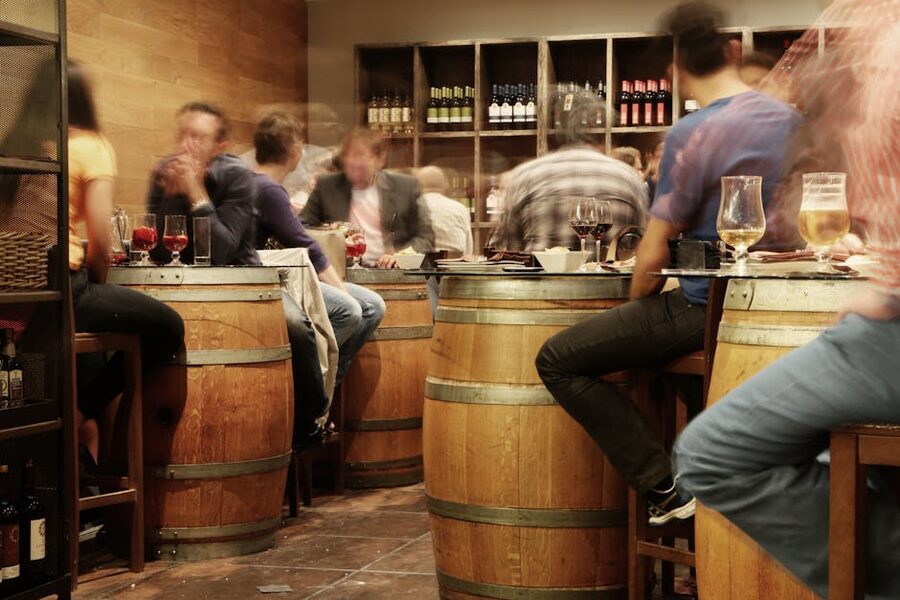
Here’s where these tours separate themselves from the generic “Spanish tapas” walks you can do in any city. Valencia has its own food culture, and a good operator leans into it instead of feeding you patatas bravas like you’re in Madrid.
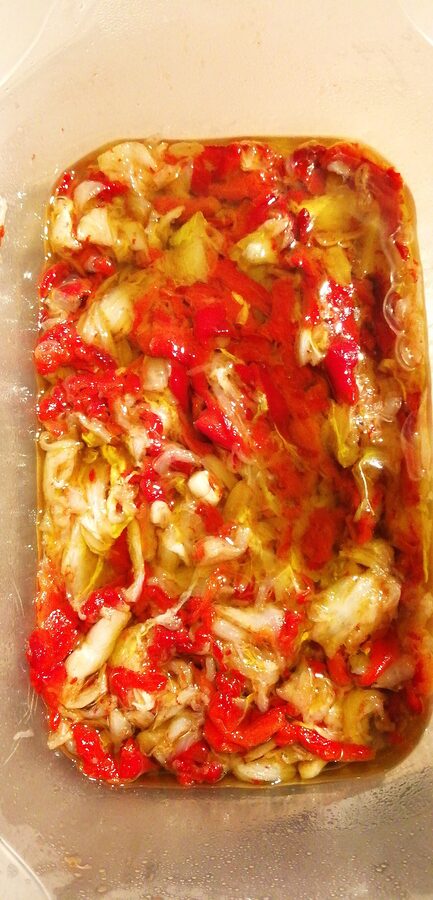
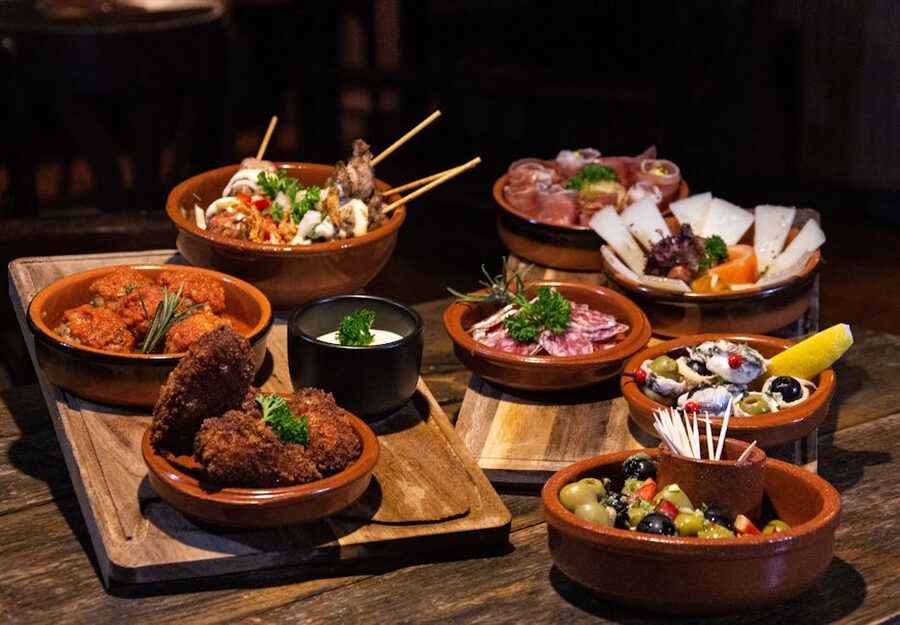
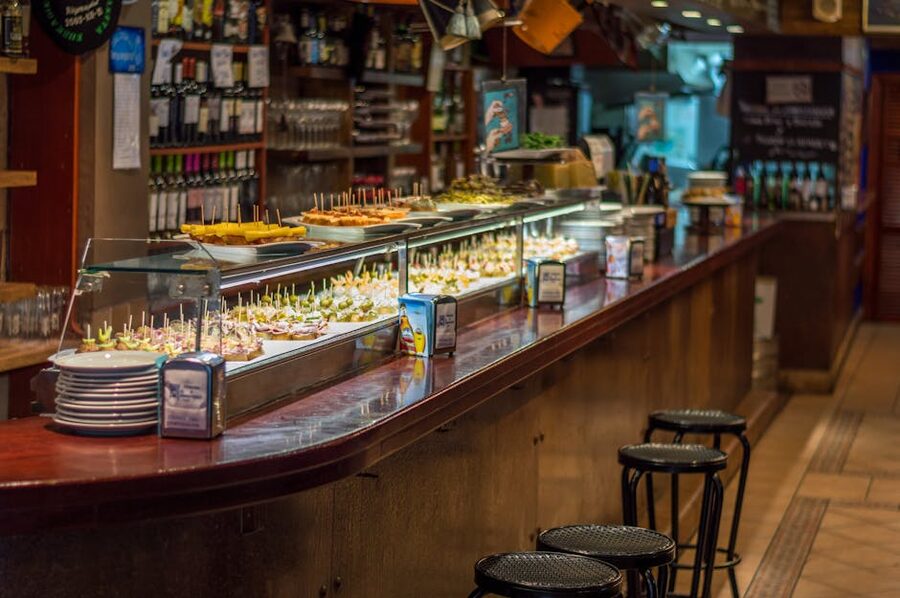
The list rotates seasonally, but typical stops include esgarraet (salted cod shredded with roasted red peppers, olive oil, garlic), coca de tomate (a flat-bread Valencian cousin of focaccia, with crushed tomato and tuna), titaina (a tuna-and-pepper hash from the El Cabanyal fishing district), and clóchinas if you’re there in the May-to-August window when the tiny local mussels are in season. There’s almost always a small slice of cured meat and a Valencian cheese, often the soft Tronchón.

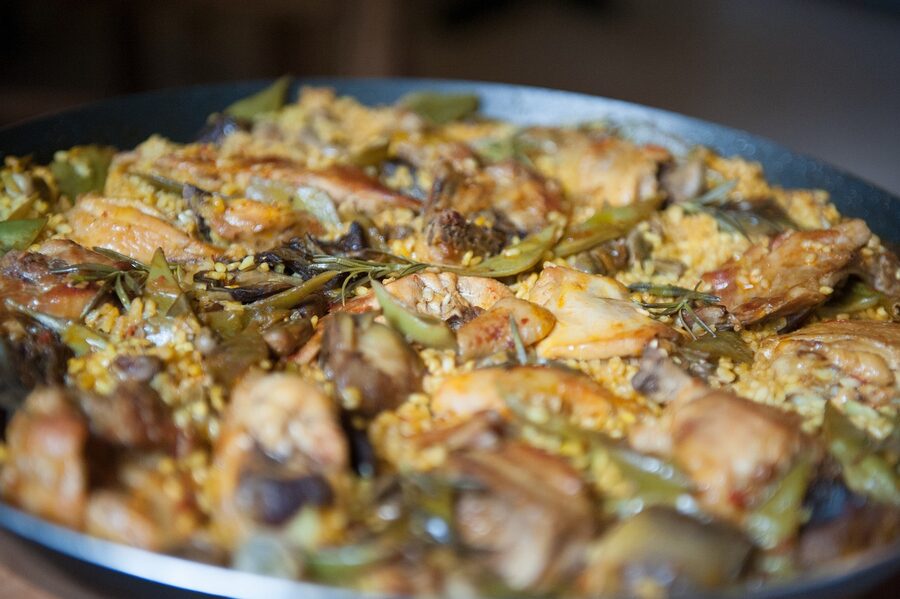
If paella shows up at all, it’s usually a small portion at the end, and it’ll be the actual Valencian version, with rabbit and chicken rather than seafood. If you want a full paella experience, that’s not what these tours are for. Booking a paella cooking class is the better move for that, and the two pair beautifully across two evenings.
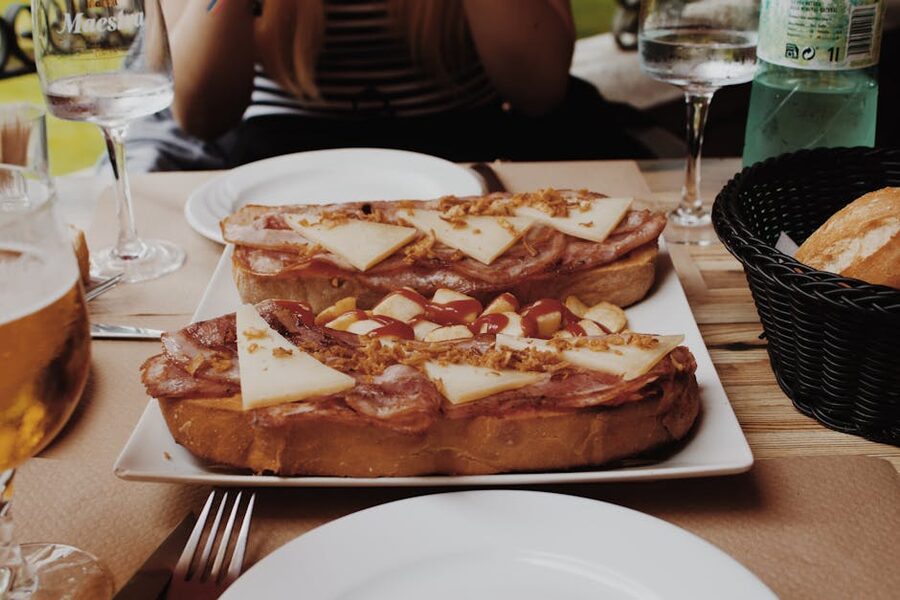
For dessert, the operators tend to either bring out a small turrón slab (Valencian almond nougat from Jijona) or finish with a horchata-and-fartón pairing if you’re walking the tour earlier in the day rather than the evening slot. Horchata, in case you don’t know yet, is a cold tigernut milk that Valencians drink the way Italians drink coffee. It’s not for everyone, but having it explained by someone whose grandmother makes it is a different experience to ordering one solo at a kiosk.
The wine, in short
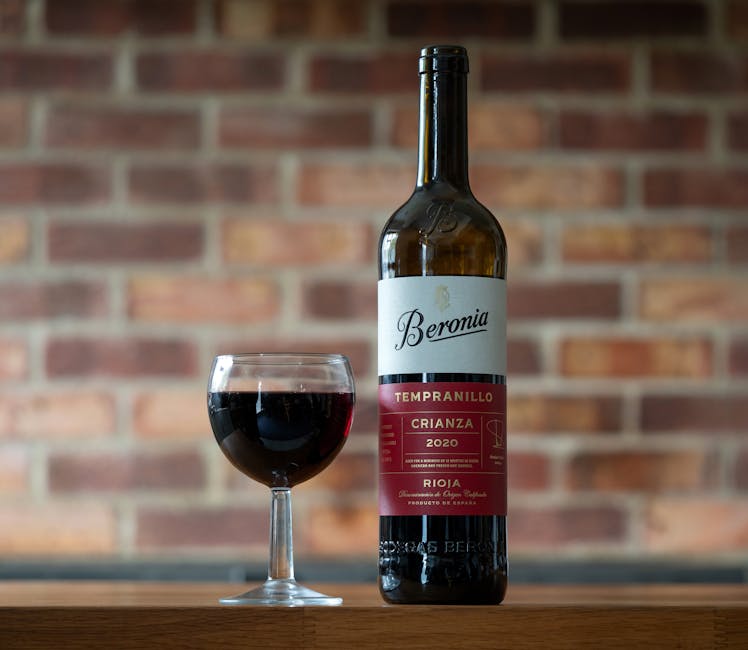
Valencia has its own DO (Denominación de Origen), and the wine portion of these tours is built around it rather than the more famous Rioja or Ribera del Duero you’d get pushed in Madrid. You’ll usually try four or five wines across the meal, sometimes six if the operator is feeling generous.
Expect to taste a Bobal red from the Utiel-Requena subregion (a thick-skinned grape that nearly disappeared in the 1980s and is having a quiet renaissance), a Valencia DO white made from Merseguera or Macabeo, and often a sweet Moscatel from the coast for dessert. If the operator stocks Mistela, try it. It’s a sweet fortified wine made by adding spirit to unfermented grape juice, and it’s the kind of thing you can’t easily get outside the Comunitat Valenciana.
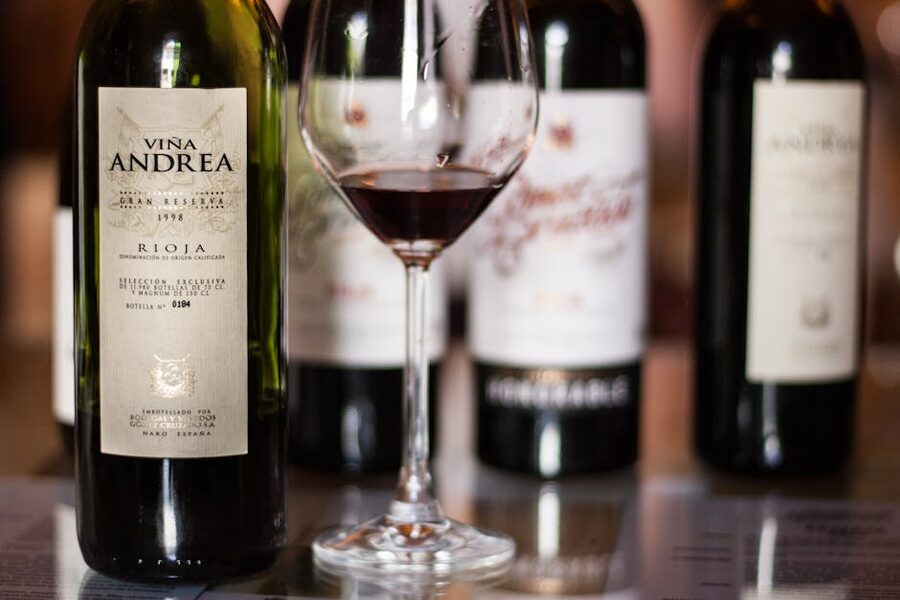
One small thing both tours do well. The wine pours don’t shrink as the night goes on, the way they sometimes do on the budget Barcelona equivalents. You’re getting a proper tasting amount each time. If you don’t drink alcohol, every operator I’ve checked will substitute non-alcoholic options (typically horchata, tinto de verano without the wine, or a vermouth-style alcohol-free aperitif), but flag it on booking.
The cistern, briefly explained
The “11th century monument” framing in both tour titles refers to the Almoravid period of Valencia’s history, when the city was called Balansiya and was part of the Taifa of Valencia under the Almoravids and later the Almohads. The cistern under Plaza de la Virgen is one of several underground spaces that survived the Christian reconquest in 1238, when James I of Aragon took the city.
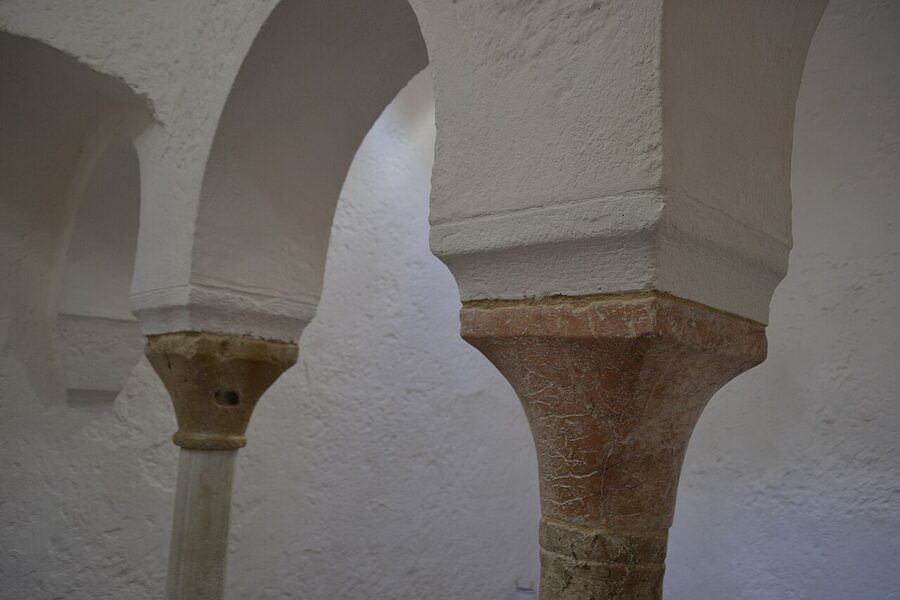

What you actually walk into is a low stone room, vaulted ceilings, with the original well-shaft still visible. The temperature down there sits around 18 degrees year-round. In August, when Valencia hits 33 outside, the cistern is a relief. In February, it’s chilly enough that you’ll want a light layer on top. Both operators warn you in the booking emails, but it’s worth repeating: bring a thin jumper or a wrap. You’ll be sitting still for an hour.
Lighting is candles and one or two warm lamps. Phone photos work, video does not, and most operators will gently nudge you to put the phone down for the first twenty minutes. The instinct to film a candlelit medieval cellar is universal, and so is the disappointment of the footage afterwards. Eat first, photograph the third or fourth plate.
Where you actually walk
The walking route on both tours covers what I’d call the “essential” Valencia old town circuit. If this is your first day in the city, the tour doubles as your introduction to the historic centre and saves you a separate sightseeing afternoon.
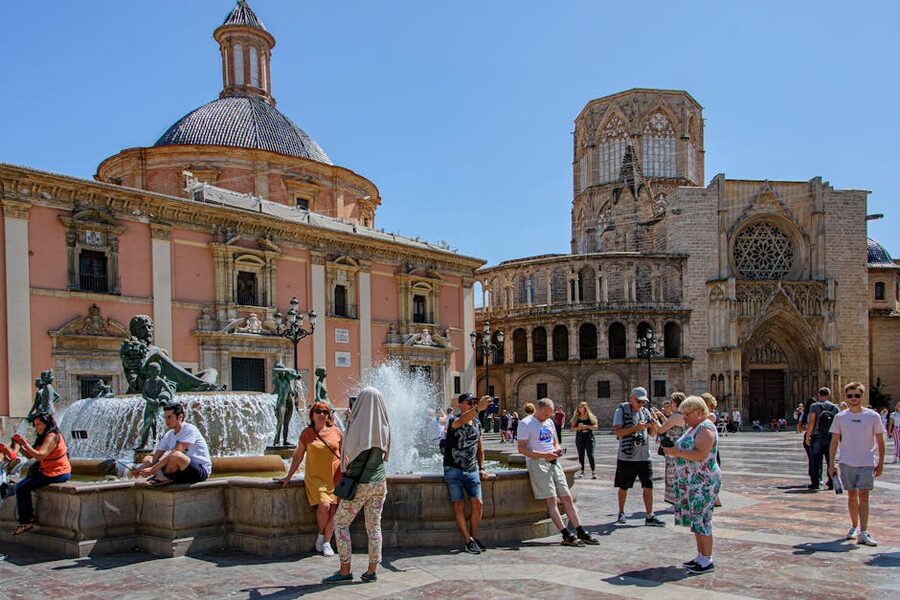
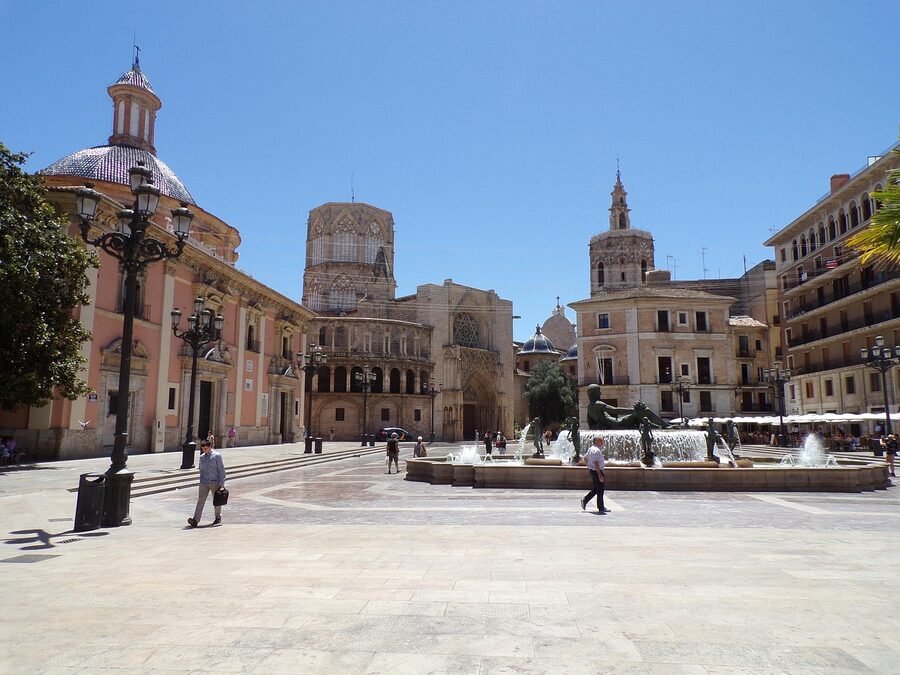
Plaza de la Virgen is usually stop one or two. The Turia fountain in the centre, with its eight figures pouring water into a basin, represents the river and the eight irrigation channels that have run through the Valencian huerta since Roman times. The Tribunal de las Aguas, a thousand-year-old farmers’ water court, still meets at noon every Thursday at the cathedral’s Apostles’ Door. UNESCO has it listed as intangible heritage. If your tour falls on a Thursday, this is one of the only public sights in Spain where a working medieval institution is on display.
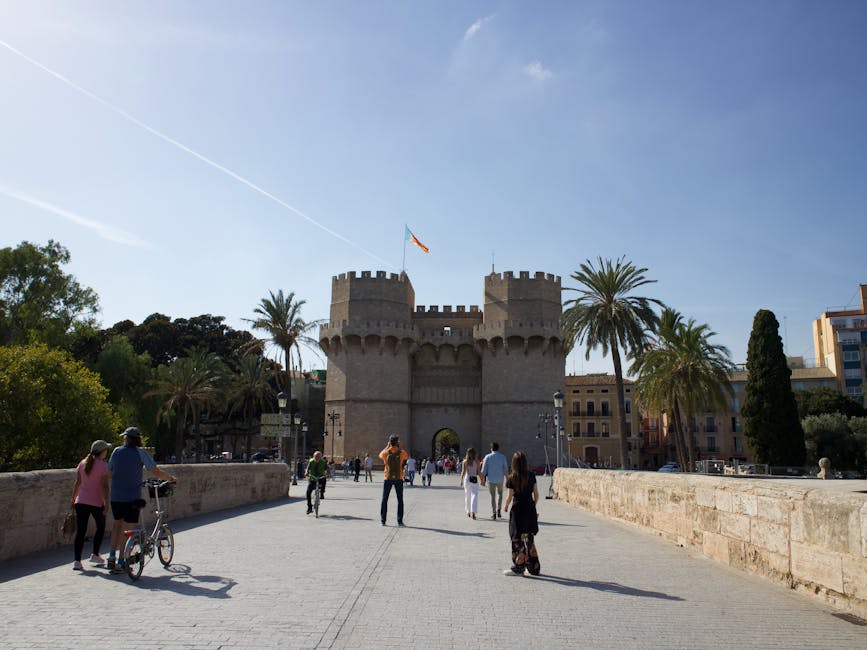
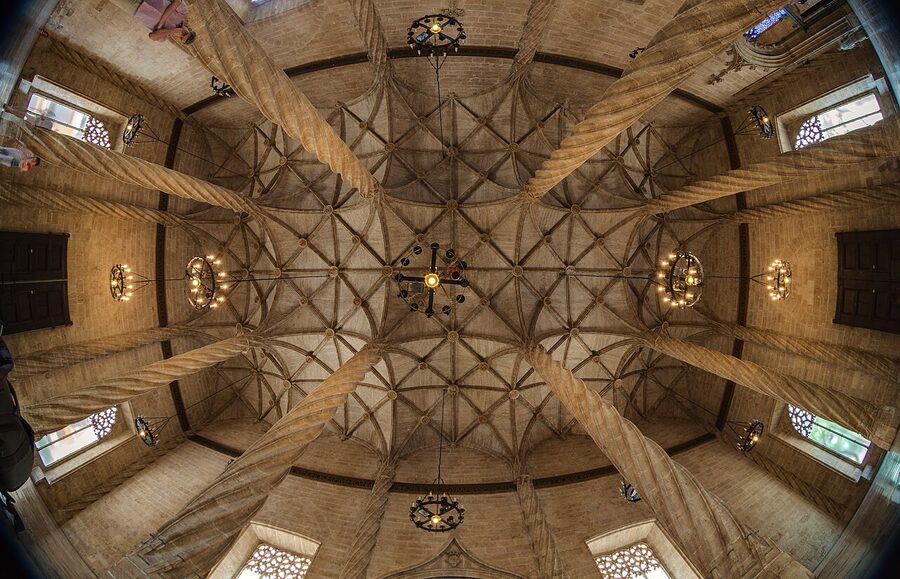
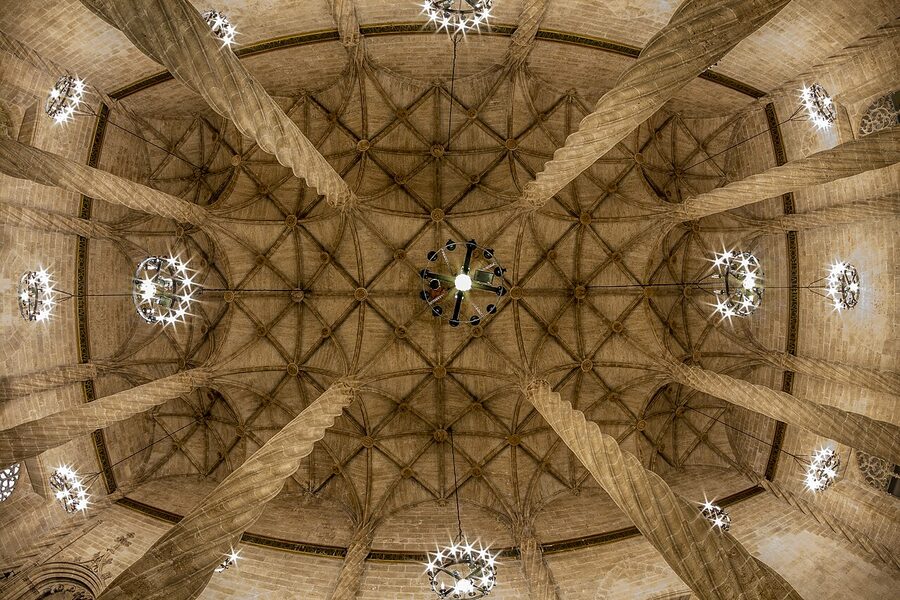
From the Plaza, most tours cut west into the Barrio del Carmen and stop at La Lonja de la Seda, the 15th-century silk exchange that is the city’s main UNESCO site. From outside it looks like a fortified Gothic palace; inside, the Sala de Contratación has a forest of twisted spiral columns holding up a ribbed vault, and it’s genuinely one of the most beautiful single rooms in Spain. Most tours don’t go inside on the walk (timing usually doesn’t work), but a separate two-euro ticket is worth it on a different day.


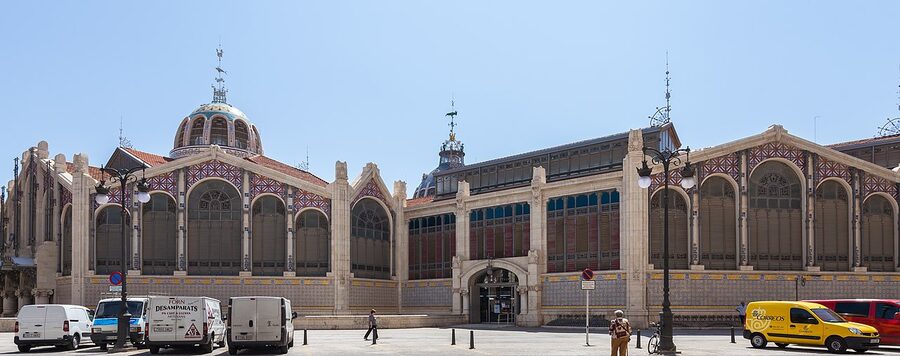
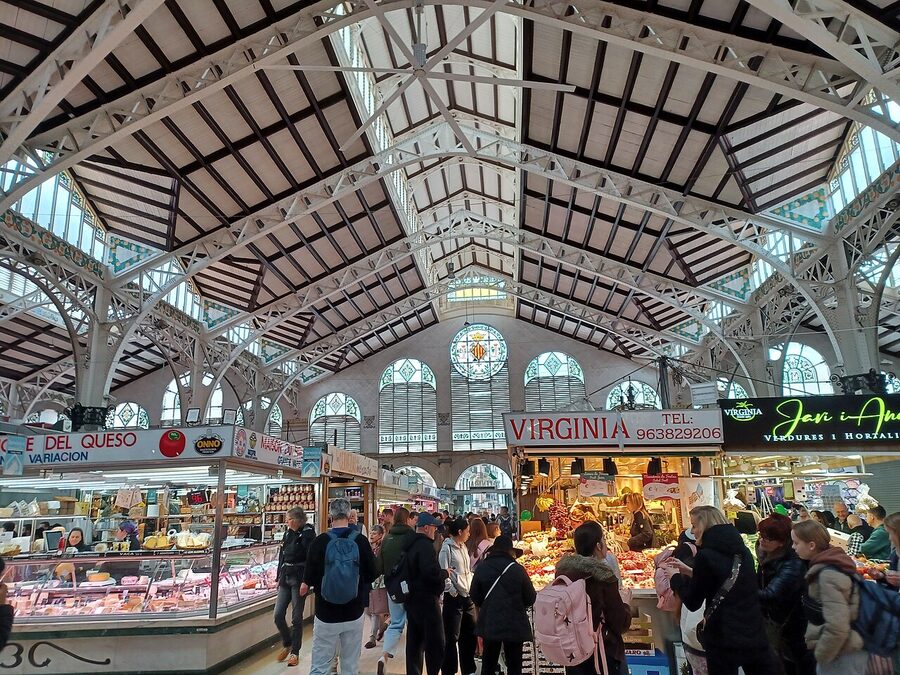
Across the street sits the Mercado Central, the biggest fresh-produce market in Europe under a single roof. Both tours stop outside it (the market closes at 3pm so the evening tours just admire the modernist tilework), and a few operators duck into the morning equivalent for a cured-meat tasting if you’re on the rare 11am slot. The exterior alone is one of the city’s most photographed buildings, all coloured tiles and an ironwork-and-stained-glass dome.


When to book and which slot to take
Three time slots, depending on operator: 11am, 6pm, or 7pm. The 11am tour is rare (only one operator regularly offers it) and runs lighter on wine, more on history. The 6pm slot is the standard for the Viator tour. The 7pm is the GetYourGuide default.
For a first-time visitor, take the 7pm. The walking is in the cooler part of the day, the cellar finale lines up with proper dinner time, and you’ll get the candlelit-cellar effect at full strength because the natural light has gone. Take the 11am only if you’re flying out the same evening and want lunch to count as a tour.
Days of the week matter less than you’d think. Some operators close on Mondays, but both of the recommended ones run seven days a week with seasonal exceptions. The big constraint is Las Fallas, the city’s enormous March 15-19 festival, when most tour operators either suspend service or charge premium rates. Outside Fallas week, book three to five days ahead in summer; same-day or one-day-ahead is usually fine in shoulder season.
Getting to the meeting point
Both tours meet inside the old-town pedestrian zone, either at Plaza de la Virgen or Plaza de la Reina, depending on the operator. Both squares are about ten minutes’ walk from Estación del Norte (the main rail station) and roughly fifteen minutes from Colón metro stop.
If you’re staying in the Ruzafa district or near the City of Arts, factor in another fifteen minutes for the bus or metro ride. The metro stop you want is Xàtiva or Colón. From Xàtiva, walk north up Avenida Marqués de Sotelo, through Plaza del Ayuntamiento, and you’re on Carrer de Sant Vicent Màrtir, which leads straight to Plaza de la Reina.
If your hotel is far from the centre and you’ve also bought a city pass, a useful trick is to use the Valencia hop-on hop-off bus to reach the old town and then walk to the meeting point from the Cathedral stop. The bus drops you essentially at the door. The other practical option is the Valencia Tourist Card, which covers the metro and a chunk of the city’s main attractions, though not the food tour itself.
Practical things worth knowing
A few small details that have either made my life easier or come up in conversation with people I’ve sent on the tour.
Bring cash for tips. Both operators are honest about not requiring tips, but they’re absolutely standard if your guide is good. Ten to fifteen euros per couple is fair for a four-hour tour. Card-only tippers can hand a note over at the end; nobody will mind.
Don’t eat a heavy lunch. The 6pm and 7pm tours are designed to substitute for dinner, and they will fill you up. Twelve plates plus four glasses of wine plus dessert is genuinely a meal, not a tasting.
Wear shoes you can walk in. Valencia’s old-town cobbles look picturesque and they are slippery, especially after rain or in the early evening when condensation settles. The cistern entrance involves a short stone staircase. Heels are a bad idea.
Tell the operator about allergies and dietary needs at booking, not on the night. Both operators are good with vegetarian, fish-free, gluten-free, and pork-free variations. The Viator operator handles coeliac better than most. The GetYourGuide one has a stronger vegan track record, in part because the lead guide is herself vegetarian. Either way, give them 48 hours’ notice if you can.
Children are welcome but it’s not really a kids’ tour. Both operators accept under-12s at a discounted rate (around 60% of the adult price), but the cellar tasting is more enjoyable as an adult experience. Save it for date night and book your kids onto the harbour boat tour the next afternoon.
How this stacks up against tapas tours elsewhere in Spain
Valencia’s old-town wine-and-tapas tour does something none of the others quite manage. The 11th-century cellar setting is genuinely unusual, and the food list is local rather than pan-Spanish.
If you’ve already done a Barcelona tapas tour, expect Valencia to feel quieter and more food-focused. Barcelona tours tend to hit three or four bars in the Born or Gracia neighbourhoods, with the social energy of a pub crawl. Valencia’s tours are slower, with the long sit-down finale that the Barcelona equivalents don’t have.
If you’ve done a tapas tour in Madrid, you’ll notice the food is genuinely different. Madrid’s tour food is mostly Castilian or pan-Spanish: cocido, callos, jamón. Valencia’s is coastal and rice-based, with a fish lean and a Moorish history showing up in the saffron, the tigernut horchata, and the almonds in the desserts.
And against a Seville tapas tour, the contrast is sharper still. Seville’s tours are in three or four atmospheric tabernas in Triana or Santa Cruz; you walk between them and eat standing up. Valencia’s is one walk-in, one extended sit-down, in a location none of the other Spanish food tours can match. If you only do one Spanish tapas tour on your trip, Valencia’s gives you the strongest single venue for the money.
If you have an extra evening
Pair the food tour with a flamenco show on the night before or after. Flamenco isn’t traditional to Valencia in the way it is to Andalusia, but the city has two long-running tablaos that put on competent shows aimed at visitors. Booking a Valencia flamenco show takes ninety minutes and works well as a 10pm finish after an early dinner elsewhere. Don’t try to do both on the same night; the cellar tasting is too long, the 7pm flamenco starts too soon after, and you’ll feel rushed.

If you’d rather lean further into food, the natural follow-up is a Valencian paella cooking class the next morning. The class typically starts with a market visit, which gives you a daylight tour of the Mercado Central you only saw the outside of the night before. It’s one of the better one-two food sequences I’ve put a friend on, and the two together cost less than a single tasting menu in the centre.
Combo travellers heading north into Catalunya might also want to look at the Barcelona paella class as a comparison. They’re not the same dish despite the name. Valencia’s is the original, with rabbit and snails. Barcelona’s leans coastal and seafood-forward.
What I’d do differently second time around
I underestimated how full I’d be at the end. First time, I’d booked a late-evening rooftop bar afterwards thinking I’d want a final drink. I rolled into the hotel at 11pm having walked past three bars I’d planned to visit, completely unable to face another glass.
The other thing I’d change is the booking timing. I went in late June, when the cellar tasting was the highlight because outside was 32 degrees and humid. Looking back, late September or October would have given me a better walking tour without losing the cellar’s appeal. The October light in Valencia is also softer, and the squares look different in golden hour than they do in summer.
One small note for solo travellers. Both tours work well alone. The cap-of-twelve format means you’ll talk to the rest of the group within the first fifteen minutes of the walking section, and by the time you sit down for the tasting you’ve usually paired off into conversations. I’ve been on both as a solo and never felt awkward; the wine cellar setting is intimate enough that it dissolves the usual group-tour distance.
The other Valencia tours I’d add to your trip
Two days is the minimum for Valencia and three is better. The wine-and-tapas tour fills one evening; the rest of your time can lean into the city’s other strengths. The big architectural set piece is the City of Arts and Sciences, Calatrava’s white-and-blue futurist complex on the dry Turia riverbed. Half a day at minimum. The aquarium alone is the largest in Europe and absorbs a full afternoon if you let it.
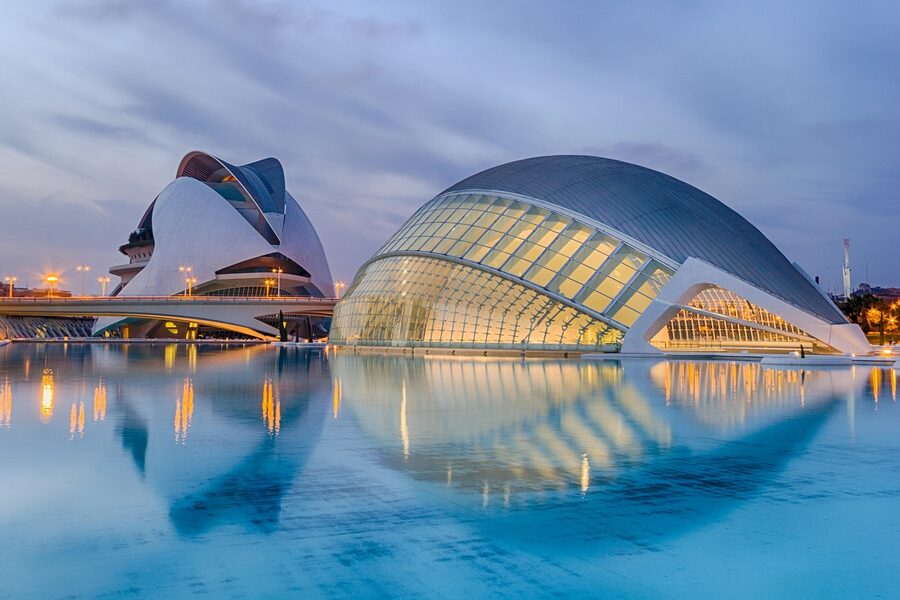
For the harbour and beach side of the city, a boat tour from the marina shows you Valencia from the water, which is the best way to understand why the port matters as much as it does to the city’s economy and food. And if it’s your first afternoon and you want to orient quickly, the hop-on hop-off bus covers the gap between the centro and the City of Arts in fifteen minutes, which on foot would take you a tired forty-five.
For broader Spain comparisons, our walk-throughs of the essential Madrid tour and Seville’s cathedral and Alcazar combo are the closest equivalents in scope, both for an afternoon orientation in a new Spanish city.
Affiliate disclosure: We earn a small commission when you book through the links above. It costs you nothing extra and it pays for the site. We only recommend tours we’d send a friend on.