
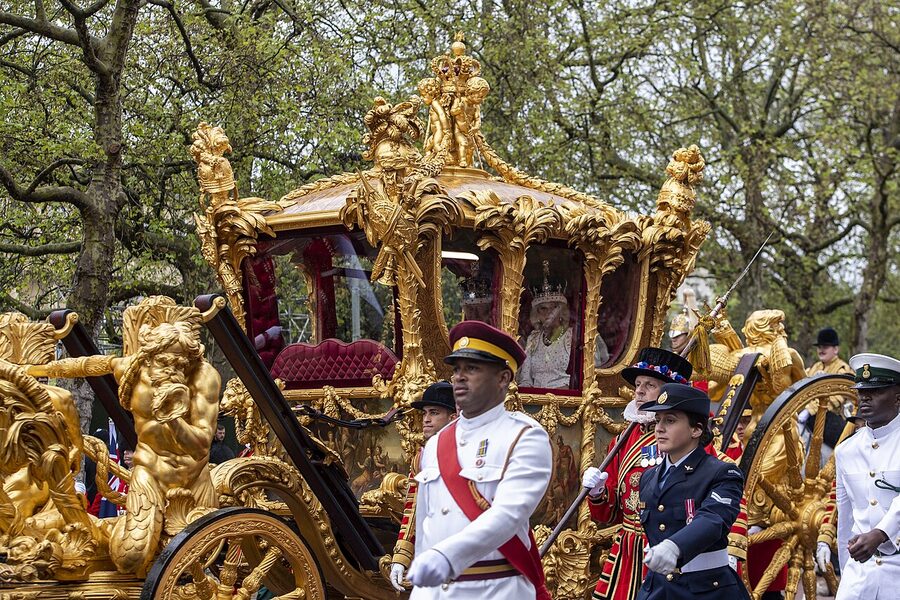
Here’s the mistake people keep making: they fly to London in October, march down to Buckingham Palace expecting to walk the State Rooms, and find the doors locked until next August. The State Rooms only open about ten weeks a year, in late summer, when the King is up at Balmoral. What most visitors don’t realise is that fifty metres around the corner, in the same palace complex, the Royal Mews is still open and quietly housing the most extraordinary thing in the building: the four-tonne Gold State Coach that pulled King Charles III to his coronation in May 2023. Tickets are about £17. The queue is short. And you stand close enough to count the carved cherubs on the door panels.
Want a guide: Royal Walking Tour with Guard Change and Royal Mews, $80. Three hours of expert guiding from St James’s to the Mews, with the changing of the guard slotted in.
Cheapest entry: Royal Mews Admission via Viator, $25. Same access, alternative platform if you book through Viator habitually.

.jpg)
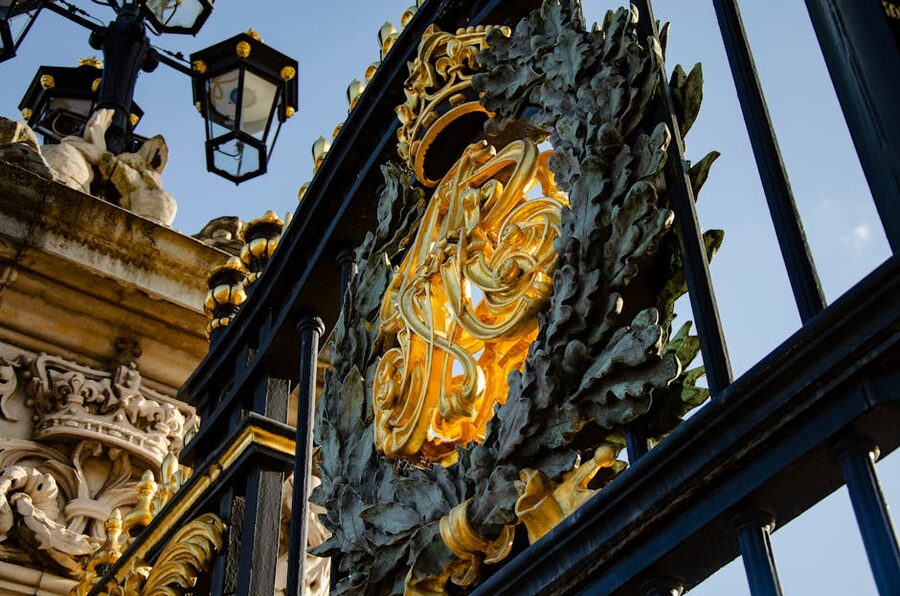

- The State Rooms vs Royal Mews mix-up
- Is it actually worth £17?
- How to book and what kind of ticket to get
- The three tours we’d actually recommend
- 1. Buckingham Palace: The Royal Mews Entrance Ticket:
- 2. Royal Walking Tour with Guard Change and Royal Mews:
- 3. Buckingham Palace: Admission ticket to The Royal Mews (Viator):
- What’s actually inside
- The horses
- The free warden tour
- How to time your visit around the Changing of the Guard
- Practical bits
- A bit of history (worth reading before you go in)
- When to go
- What I wish I’d known before going
- Other London tickets and tours worth your time
The State Rooms vs Royal Mews mix-up
This catches a surprising number of people, so it’s worth getting clear before you book anything else.
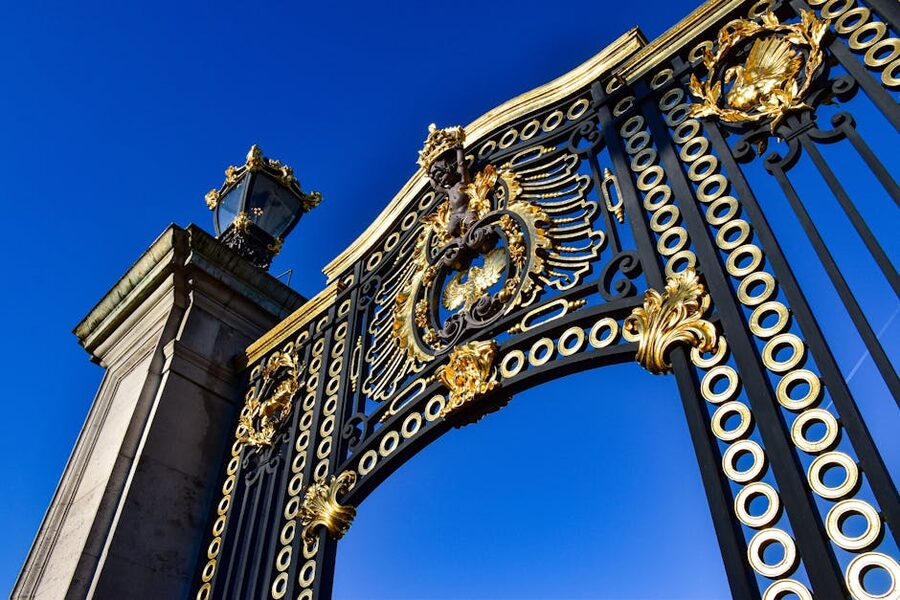
Buckingham Palace has three separate ticketed visitor experiences, each with its own entrance, its own ticket, and its own opening calendar. The State Rooms are the famous gilded staterooms with the throne, the picture gallery, and the white drawing room. Those are the rooms you’ve seen on television. They open for about ten weeks each summer, roughly late July to late September, when the King is on holiday in Scotland. Outside those weeks, you cannot get in. End of story.
The King’s Gallery (formerly the Queen’s Gallery) is a small art gallery on the south side of the palace that rotates exhibitions from the Royal Collection. It’s open most of the year but is genuinely a different experience. Quiet, art-focused, no carriages.
The Royal Mews is the working stable and coach house where the carriages and horses live. It’s open most of the year, closed only in mid-winter and during one autumn maintenance window (usually mid-November through to mid-February, with a small handful of January and February openings). Prices around £17 for adults, £10 for under-17s, with family tickets and £1 access tickets for those on means-tested benefits.
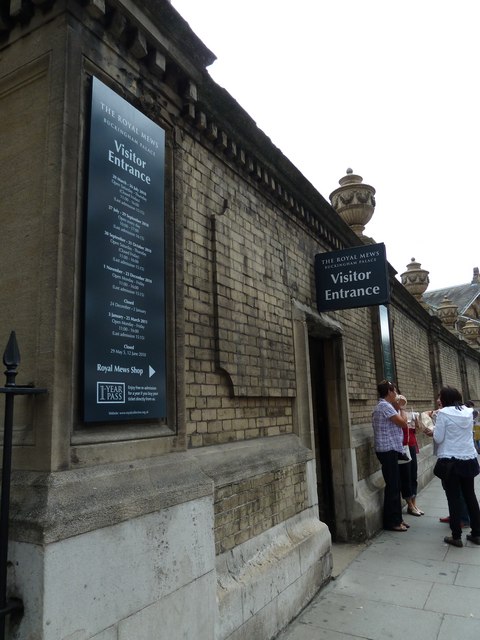

So if you’re in London anytime between roughly mid-February and mid-November, the Mews is the only one of the three Buckingham Palace tickets you can definitely get. From mid-July to late September you can do all three on the same day if you plan it carefully. If you turn up in October hoping to walk the State Rooms, you’ve missed them. The Mews and the King’s Gallery are your options.
One thing the official website is slightly cagey about: dates change year to year. Always check the Royal Collection Trust calendar for the specific weeks you’re visiting, especially if you’re booking far in advance. The mid-February reopening date can drift by a week either side depending on when works finish.
Is it actually worth £17?
I went in mildly skeptical. Carriages aren’t normally my thing, and the Royal Mews has the kind of name that suggests something dusty and academic.
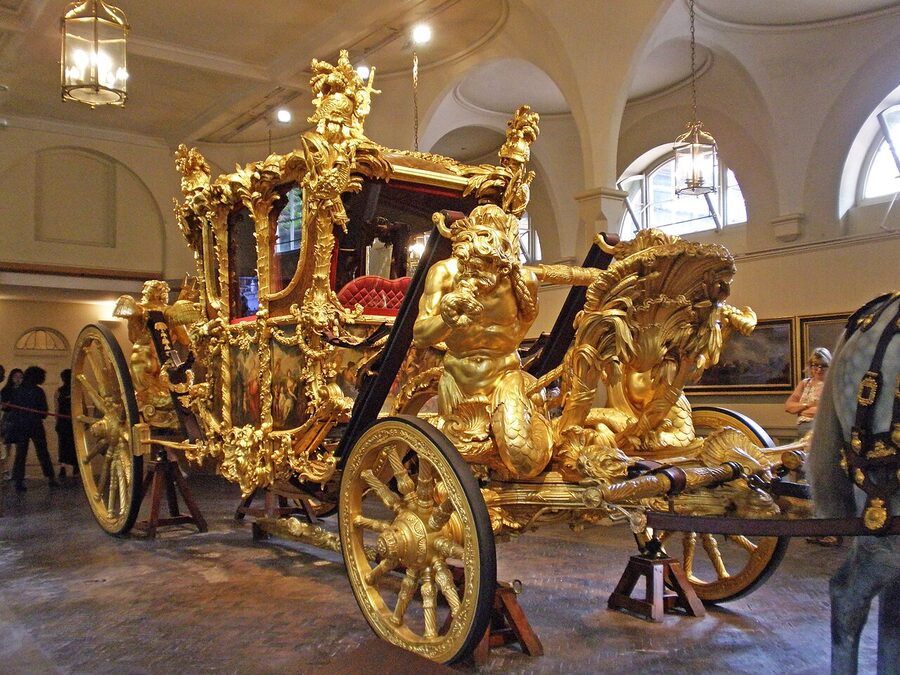
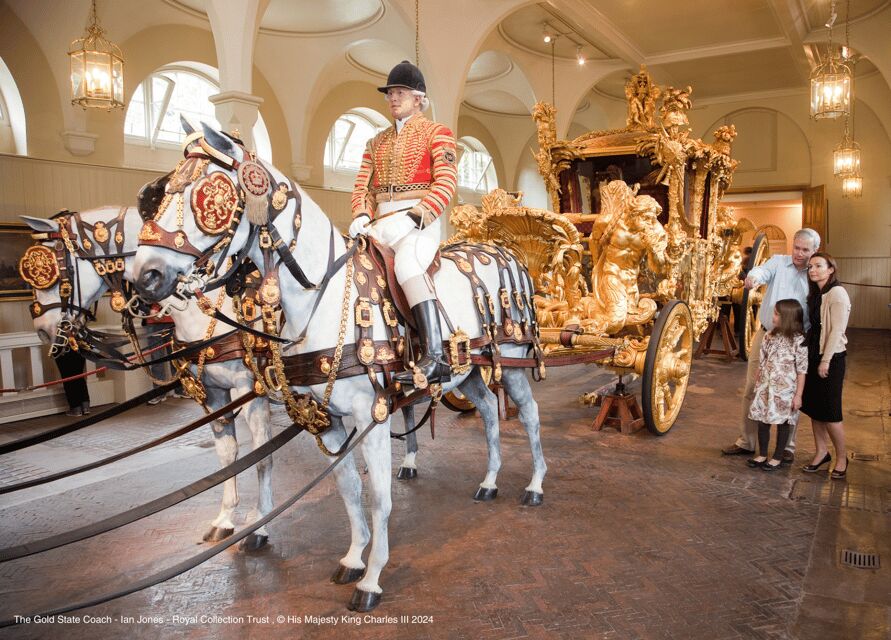
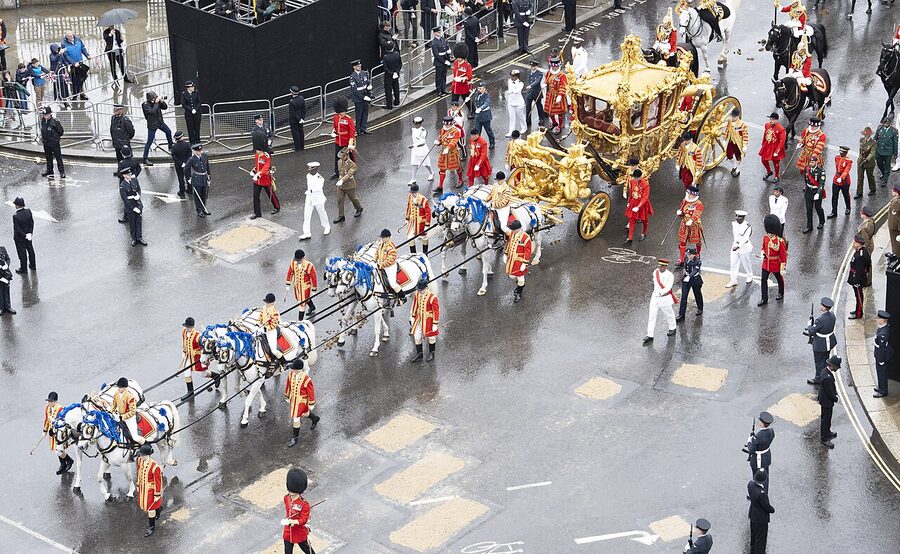
It isn’t. The Gold State Coach is one of those objects that genuinely feels different to look at in person than in any photograph you’ve seen of it. Photos flatten the gilding. In real life it catches the natural light coming through the courtyard skylights and you understand why people lined the streets to see it for the coronation, even if you watched the same coronation on television and thought the carriage looked vaguely cartoonish. It does not look cartoonish in person. It looks like four tonnes of carved oak that took twelve years of someone’s life to make.
The other thing that surprises people: you’re not behind a velvet rope at the back of a hall. You’re walking around the carriage. You can read the date on the wheel rim. You can see the leather suspension straps that gave Queen Elizabeth II her famously blunt verdict on the ride: not a comfortable one. King William IV called it being “tossed in a rough sea.” For something the monarchy has used at every coronation since 1831, that’s a useful detail to know.

So yes, worth it. With one caveat: if you’re travelling with kids under about eight who are not horse-mad, the visit can feel a bit thin. There aren’t interactive displays. The horses might not be in their stalls during your visit (working horses come and go). The thing that holds adults’ attention, the carriages, doesn’t always hold a six-year-old’s attention.
How to book and what kind of ticket to get
Three sensible booking routes. Each has trade-offs.
Booking direct through the Royal Collection Trust website (rct.uk) is the most straightforward. You pick your date and a one-hour entry slot, pay, and either print or save the ticket on your phone. Adult price hovers around £17, family pricing brings it down per head. The benefit: you can convert your ticket into a 1-Year Pass for free if you decide on the day, which is excellent value if you’re a Londoner or coming back for the King’s Gallery later.
Booking through GetYourGuide or Viator gets you the same entry but in dollar pricing with the cancellation policies you might already trust if you book everything else through them. There’s no skip-the-line benefit because the queue is rarely an issue at the Mews to begin with. Pick this route if you’re collecting all your London bookings on one platform.
Booking a guided package, like the Royal Walking Tour with Guard Change and Royal Mews, gets you a human guide with stories you won’t find on the multimedia headset, plus the logistical sequencing of timing the Mews around the changing of the guard. More expensive (about £60-80 depending on operator) and a longer day, but worth it if you’re only in London briefly and want one walk that strings together the major royal sites.
One genuinely useful tip: if you’re on Universal Credit or another named UK means-tested benefit, the Royal Collection Trust runs a £1 ticket scheme. You book through their access page rather than the standard ticket page. Worth knowing if it applies to you, and worth telling friends who’d never think to ask.
The three tours we’d actually recommend
These are the products that have worked for our readers, sorted by what they’re best at.
1. Buckingham Palace: The Royal Mews Entrance Ticket: $23
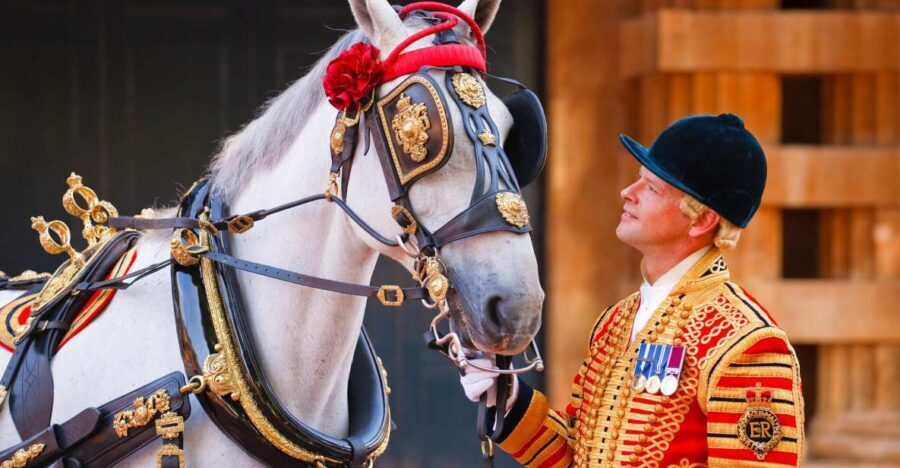
This is what most people end up booking and it’s the right call. Our review covers the multimedia guide quality and how to time the free 45-minute warden tour, which runs a few times a day and is genuinely the best part if your slot lines up with one. The drawback the operator doesn’t shout about: security is airport-level, so don’t bring big bags.
Check Availability
Read our full review
2. Royal Walking Tour with Guard Change and Royal Mews: $80
The package option. You meet the guide near St James’s Palace, walk through the royal parks, watch the changing of the guard from a planned vantage point, then enter the Royal Mews together. Our review of this tour goes into the guide quality, which seems to be the make-or-break factor; readers who get a good one (Pete is named more than once in feedback) tend to call it the best three hours of their London trip.
Check Availability
Read our full review
3. Buckingham Palace: Admission ticket to The Royal Mews (Viator): $25
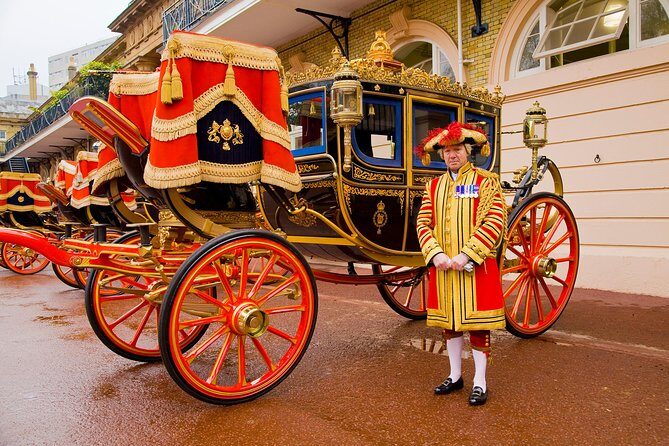
Functionally the same as the GetYourGuide entrance ticket: timed entry, multimedia guide, optional warden tour. The main reason to book this version is platform familiarity. Our review here notes that Viator’s listed duration of 45 minutes is misleading; most readers spend an hour and a half inside, especially if the warden tour aligns.
Check Availability
Read our full review
What’s actually inside
The Mews is laid out as a quadrangle. You enter through a security check, then follow a one-way route around the courtyard.
The first set of rooms holds the working state coaches. The Gold State Coach gets a hall to itself, which is correct: it’s seven and a half metres long, three and a half metres tall, weighs four tonnes, and you cannot photograph the whole thing in one shot from inside the room without backing into the opposite wall. Painted side panels by Giovanni Battista Cipriani, carved cherubs and tritons by Joseph Wilton, gilded oak top to bottom. Built for George III in 1762.
Next door is the Diamond Jubilee State Coach, finished in 2014 and the newest carriage in the collection. This is the one Charles actually used on the way to Westminster Abbey for his coronation, before swapping to the Gold State Coach for the more visible ride home. The Diamond Jubilee has hidden bits of British history embedded in the woodwork: timbers from HMS Victory, the Mary Rose, Sir Isaac Newton’s apple tree at Woolsthorpe Manor, even a fragment from the Antarctic huts of Captain Scott. Pause in front of it long enough and the multimedia guide will list them all. It’s nerdy and lovely.
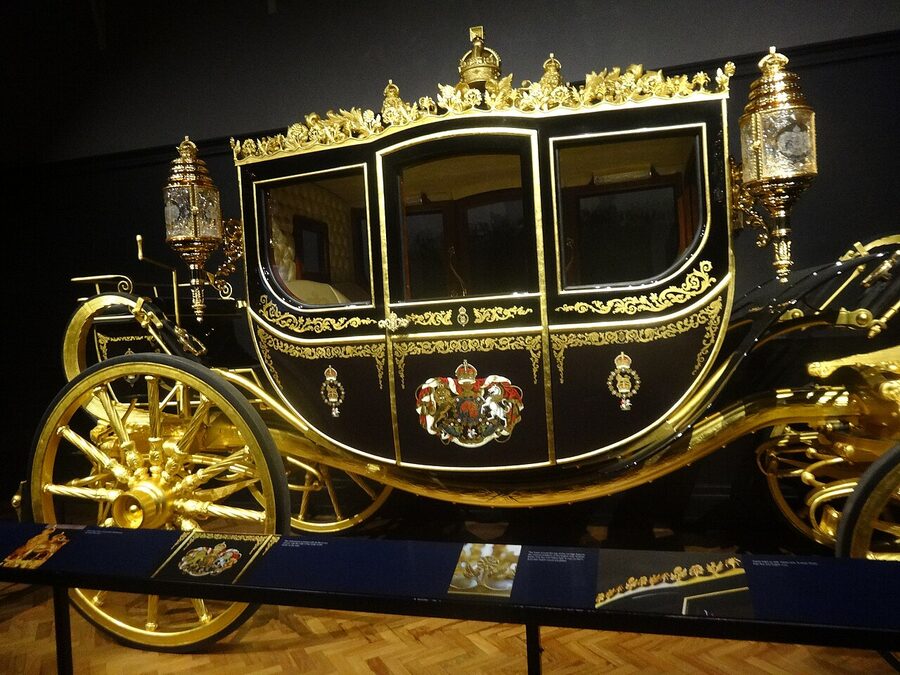

Beyond those two, the collection includes the Australian State Coach (gifted in 1988, used for the State Opening of Parliament), the Scottish State Coach, the Irish State Coach, and the Glass Coach, which is the carriage that gets used for royal weddings; you’ve seen it on television without knowing it. The Glass Coach has, well, glass sides. That’s the entire concept. Public can see the bride.
The car shed at the back holds the state Bentleys and Rolls-Royces, plus, as of recently, a few electric cars. The Royal Family has gone partly electric for shorter journeys. Whether that detail interests you depends on whether you came for the carriages or the modern monarchy.
The horses
This was the surprise for me. I wasn’t expecting to care about the horses, and I cared about the horses.
The Mews keeps about thirty horses on site at any one time. Roughly a dozen Windsor Greys (the dappled grey breed traditionally used to draw royal carriages, named for the original herd kept at Windsor) and around eighteen Cleveland Bays (the dark bay breed used for almost everything else). They live in stalls along the west side of the quadrangle, and on most days you can walk past three or four of them peering out over their stable doors.
.jpg)
If you’re on the warden tour, the horse section is where it really earns its keep. The wardens know which horses are old, which ones bite (one in particular has a name and a small reputation), which ones drew which carriages on which state occasions. They know the horses individually because they work with them daily. That’s the part you cannot get from a multimedia handset.
One small thing worth knowing: the Mews still operates a daily messenger run between Buckingham Palace and St James’s Palace, by horse-drawn brougham. It has run uninterrupted since 1843. You won’t necessarily see it during your visit (it goes out early), but the brougham itself is in the courtyard.

The free warden tour
This is the thing that turns a 45-minute speed-run into a proper afternoon. It’s also the thing the booking page won’t tell you about clearly.
The Mews runs a free 45-minute guided tour with one of their wardens, several times a day, at posted times. It’s included in your ticket. You don’t have to pre-book it; you just turn up at the meeting point inside the Mews at the right time and join. There’s no upgrade fee. There’s no upsell.
What you get is a small-group walk around the same route you’d do alone, but with a person who actually works at the Mews telling you the things the audio guide won’t say. Which carriage is everyone’s favourite to clean. Which horse hates the sound of motorbikes. What it’s like backstage during a state visit. Which coronation crown jewel was nearly dropped in 1953 (apocryphal, possibly, but a good story).
The catch: tour times shift a bit by season and by day, and they fill up because they cap at around twenty people. Aim for a slot one tour after your entry time. So if your ticket is 11:00, look at the warden tour board on entry and try to join the noon or 12:30 walk. That gives you 30 minutes to do a quick first sweep on your own before joining the guided one for round two with context.
.jpg)
How to time your visit around the Changing of the Guard
Half the people booking the Mews are also booking the Changing of the Guard for the same morning. Sensible, because they’re a five-minute walk apart and on the same site. Less sensible if you don’t know the timing.
The Changing of the Guard ceremony at Buckingham Palace runs at 10:45 and finishes around 11:45 (it’s a roughly hour-long ceremony with the actual handover happening in the middle). It runs daily in summer, alternating days the rest of the year, and gets cancelled in heavy rain. The crowd starts forming around 10:00. By 10:30 the front-row spots at the Victoria Memorial railings are gone.
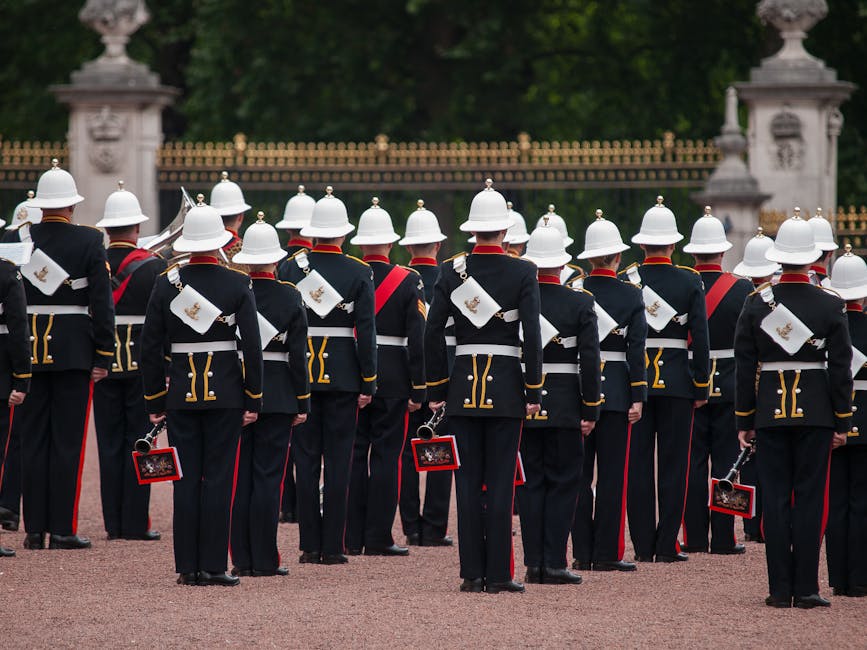
The Mews opens around 10:00 in summer (later in winter; check the day). Last entry is usually 4:15 with the site closing at 5:00. So the cleanest schedule is: book your Mews ticket for around midday, arrive at 10:00 to watch the changing of the guard from the Mall side or from the railings, leave around 11:30 and walk straight round to the Mews entrance for your noon slot. You’ll have roughly two and a half hours inside the Mews, which is long enough for the warden tour and a thorough self-guided sweep. Lunch afterwards on Victoria Street.
If you’re trying to combine all three Buckingham Palace tickets in summer, the order is: Mews in the morning (10:30-12:30), King’s Gallery for an hour at 12:45, lunch, then State Rooms in the afternoon (timed entry usually starts at 14:00 or 14:30). Don’t try to reverse this; the Mews is at its best when you’re fresh.
Practical bits
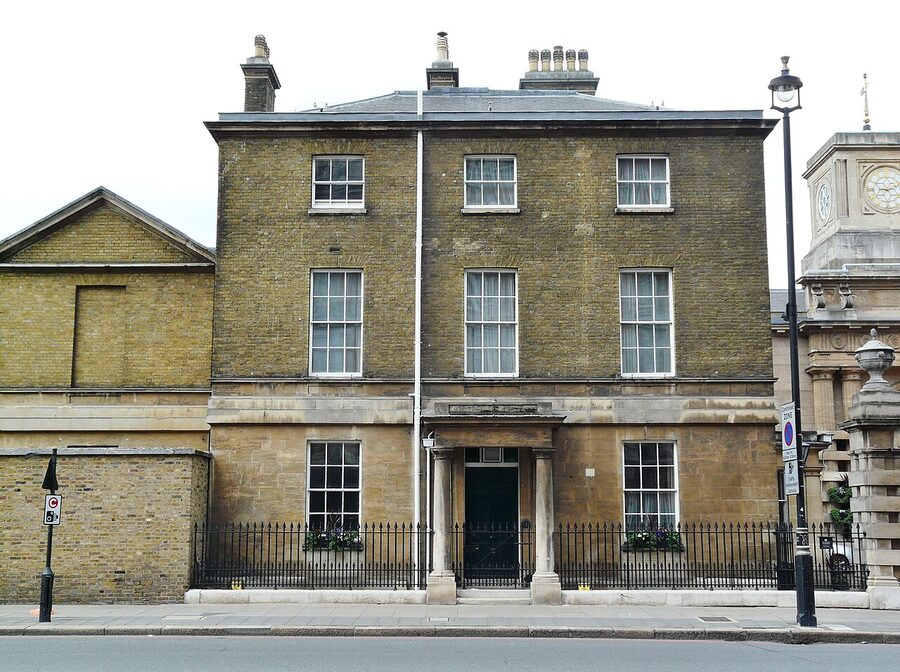
Getting there. Closest tube stations are Victoria (about 7 minutes’ walk down Buckingham Palace Road), Hyde Park Corner (10 minutes through Green Park), and St James’s Park (8 minutes). Buses 11, 211, C1, and C10 all stop on Buckingham Palace Road within a minute of the entrance. There’s no parking; don’t try to drive.
Bag policy. Security is genuinely airport-level. No bags larger than 40x35x16cm. There is a free cloakroom inside but it’s small and gets full on busy days. If you’re arriving with luggage from the train at Victoria, leave it in the station’s left luggage and walk over without it.
Photography. Allowed everywhere except in the King’s Gallery (which is a separate ticket anyway). No flash, no tripods. Phone photography is fine. The lighting in the coach halls is dim by design (UV damages the paintwork), so phone photos look a bit muddy unless you stabilise hard.
Accessibility. The site is mostly flat and step-free with ramps. The Mews has wheelchair loan available; pre-book through the Royal Collection Trust. The cobblestones in the courtyard are uneven, so if you’re using a wheelchair, expect some bumpy patches between the buildings.
Food. There’s a small refreshment cart but no proper café. Don’t plan to eat here. The closest decent options are along Victoria Street (5 minutes back towards the station) or the cafés in Green Park.

A bit of history (worth reading before you go in)
The word “mews” comes from falconry. Originally a mews was a building where royal hawks were kept during the moulting season (mews from the verb “to mew”, meaning to moult). The royal mews at Charing Cross, on what’s now Trafalgar Square, started as a hawk house in the 14th century and only became stables under Henry VII when the hawks were moved out. So the building is called what it’s called for a reason that has nothing to do with horses.
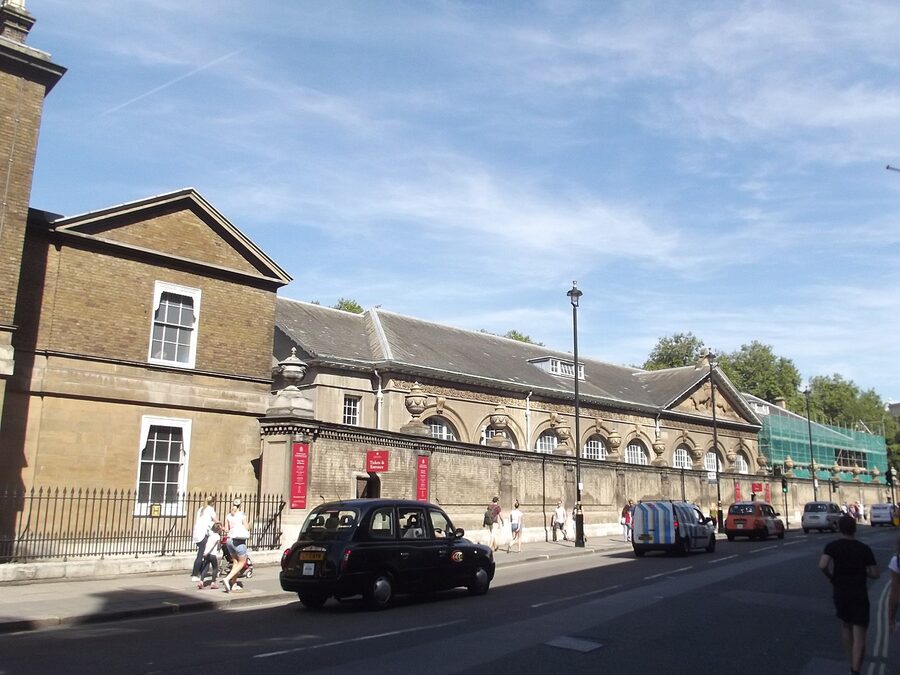
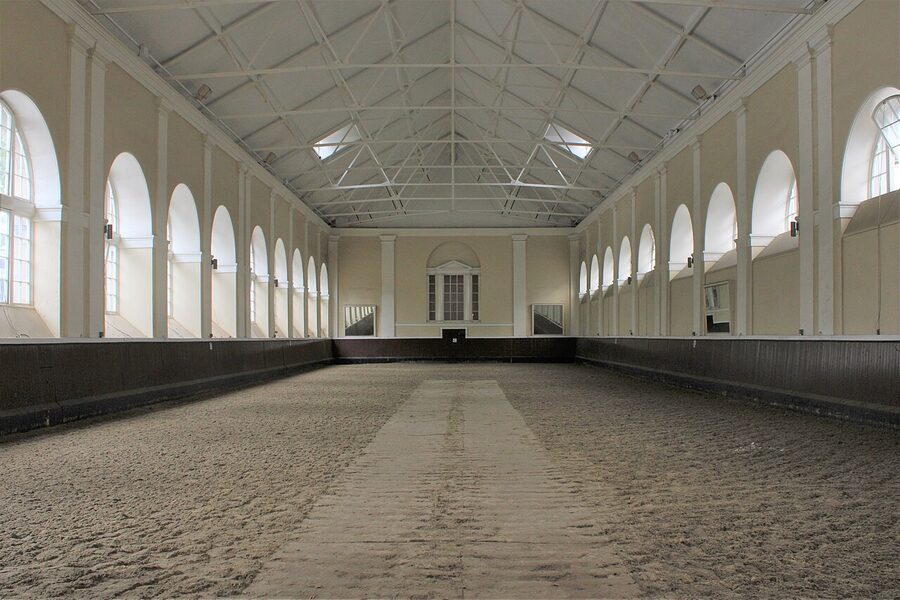
The current Royal Mews moved to Buckingham Palace in the 1820s, when George IV cleared the old Charing Cross site for what became Trafalgar Square. The new buildings, designed by John Nash, were finished in 1825. The Riding School wing is older and predates the move; it was designed by William Chambers in 1764 for what was then Buckingham House. It’s the oldest active riding school in the world.
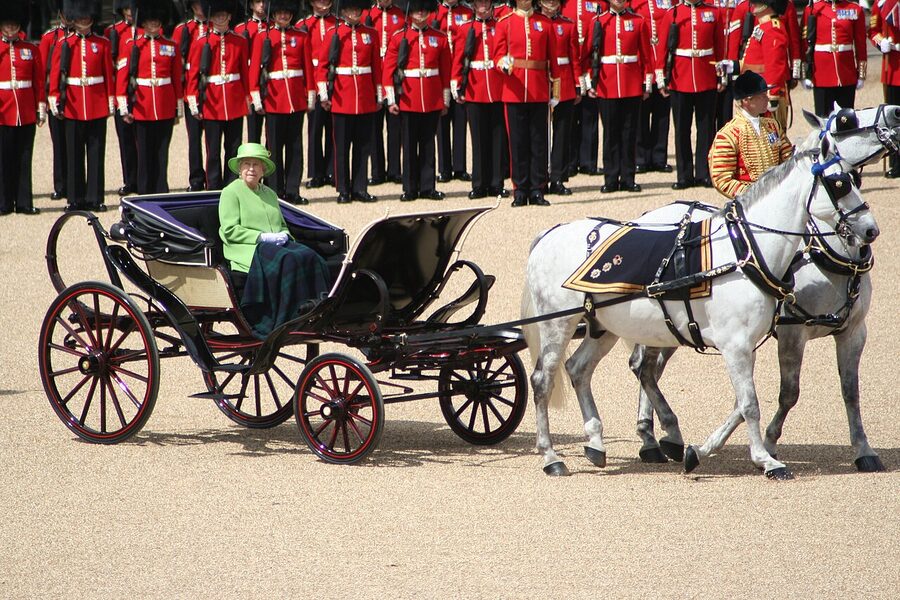

The Gold State Coach itself was commissioned by George III in 1760 and delivered, after some delay, in 1762. It cost £7,562 then, which is several million today. Its first ceremonial outing was the State Opening of Parliament in November 1762. Every coronation since 1831 has used it, including the Queen’s in 1953 and Charles III’s in 2023. Wikipedia notes a small cottage industry of monarchs complaining about how rough the ride is. William IV said it was like being tossed in a rough sea. George VI called it “one of the most uncomfortable coaches ever built.” Queen Elizabeth II said the same in slightly more diplomatic language. Charles III, when he had the choice, used it only for the homeward leg of the procession in 2023.
So what you’re standing next to is essentially a cursed throne on wheels: ceremonially required for coronations by long tradition, physically miserable to ride in, gorgeous from outside, and built to be slow. There are not many objects in London with this much history concentrated in one place.
When to go
The Mews is open most weeks of the year except a maintenance closure that typically runs from mid-November through mid-February. Within the open season:
March to June is excellent. The horses are around, the courtyard isn’t crowded, the spring light through the skylights makes the gilding work. School groups appear on weekday mornings; afternoons are quieter.
July to September is busiest because all three Buckingham Palace tickets (State Rooms, King’s Gallery, Mews) overlap, and the city is in full tourist swing. Book the earliest available slot of the day to beat the crowd. The State Rooms route channels people across to the Mews afterwards.
October and the first half of November are quietly great. The State Rooms are closed, the Mews is still open, and entry slots are easy to book at short notice. If you’re trying to do royal London on a smaller budget and a smaller crowd, this is your window.
Mid-February to early March is the soft re-opening. Some weeks the Mews opens, some it doesn’t. Always check the day before.
What I wish I’d known before going
A few things, in no particular order:
The multimedia handset is included free with your ticket. Pick it up at the entrance even if you don’t think you’ll use it; some of the labels in the coach hall are minimal and the headset fills in the gaps.
The audio guide in foreign languages can be patchy. If you’re a non-English speaker, ask at the entrance whether your language has the full version or only the abridged. Some have both, some have only the short one.
If you’re claustrophobic, the coach hall around the Gold State Coach can feel tight when busy. Aim for a midweek mid-morning slot rather than weekend afternoon if that matters to you.
The £1 access scheme for those on UK means-tested benefits is a separate booking page on the Royal Collection Trust site. Worth knowing about whether it applies to you or to someone you’d recommend.
You can convert your standard ticket into a 1-Year Pass on the day for no extra cost. If you’re thinking of coming back for the King’s Gallery or the State Rooms in summer, do this. Free unlimited re-admission for a year is a bizarre giveaway, and they don’t make it obvious.
Other London tickets and tours worth your time
The Royal Mews works best in a day that strings together a few royal sites. The natural pair is the Buckingham Palace State Rooms if you’re visiting in July, August or September; outside those weeks the State Rooms aren’t an option, but the Royal Mews fills that gap nicely. The Changing of the Guard tour times perfectly with a midday Mews slot, and is the easiest way to see the ceremony without having to fight for a railings spot at 10:00. If you’re branching out to other royal residences while in London, Kensington Palace is the obvious half-day add-on (very different feel, more domestic, more about Queen Victoria’s childhood than coronations), and Windsor Castle is the full-day add-on if you want the bigger and older royal residence.
For broader London ticket value, the London Pass covers the Royal Mews along with most of the major attractions; if you’re doing three or more in a day, the maths works out. Outside London, the closest comparable royal residence experiences are the Royal Palace in Stockholm (the working royal palace there) and the Royal Palace of Madrid (much grander, no working horses, but the same sense of stepping inside a functioning monarchy’s day-to-day).
Fellow London day-trippers might also want a look at the White Cliffs of Dover and Canterbury day trip for the south-coast pairing, London Zoo if you’re travelling with kids and want a follow-up to the Mews horses, or, on a wholly different scale, Stockholm City Hall as an example of a working civic palace that opens its doors year-round.
Disclosure: this article contains affiliate links. If you book through them, we may earn a small commission at no extra cost to you. It helps us keep researching and writing these guides.