In Osaka, you can learn to shape three kinds of sushi, then round out the meal with yakitori, tofu miso soup, pickles, and dessert. This 2.5-hour class is more than a sushi demo: you take part in the cooking while an English- and Japanese-speaking instructor explains both the methods and the reasons behind them.
I like two things in particular: you get to try nigiri, gunkan maki, and maki sushi in one sitting, and the class adds cooked dishes so you leave with a fuller picture of a Japanese meal. A participant also described the instructor’s explanations as detailed, including why certain methods are used, which is exactly the sort of teaching that helps a recipe make sense later.
One point to weigh is the price, from US$112.35, which is a sizable spend for a cooking lesson. It makes more sense if you value hands-on instruction, a full prepared meal, and take-home recipes, rather than simply wanting a quick sushi snack.
- Key points to know before you book
- Three sushi styles, one useful lesson
- The lesson is hands-on, not a cooking show
- Yakitori and miso soup make it a fuller meal
- The story behind the food adds value
- What the 2.5 hours are likely to feel like
- Is US2.35 a fair price?
- Getting to Banix北堀江
- Who will enjoy this Osaka cooking class?
- Should you book it?
- FAQ
- How long is the sushi class?
- Where does the class meet?
- What dishes are included?
- Is English-language instruction available?
- What is the minimum age?
- Can the class accommodate dietary requirements?
- What is the cancellation policy?
- The Best Of Osaka!
- More Workshops & Classes in Osaka
- More Tours in Osaka
- More Tour Reviews in Osaka
Key points to know before you book
 1 / 9
 2 / 9
 3 / 9
 4 / 9
 5 / 9
 6 / 9
 7 / 9
 8 / 9
 9 / 9
- Three sushi styles: Make nigiri, gunkan maki, and maki sushi with an instructor.
- More than sushi: The menu also includes two yakitori skewers, tofu miso soup, pickles, and dessert.
- Hands-on teaching: Each participant gets to cook, with explanations of both technique and purpose.
- English is available: The guide speaks English and Japanese, so you can follow the lesson in English.
- A central Osaka meeting point: Meet at Banix北堀江, a three-minute walk from Nishi-Nagahori Station.
- Check dietary needs and age rules: Pescetarian and gluten-intolerant requirements can be accommodated if shared in advance. Participants must be at least seven.
👉 See our pick of the The Top 15 Workshops & Classes In Osaka
Three sushi styles, one useful lesson
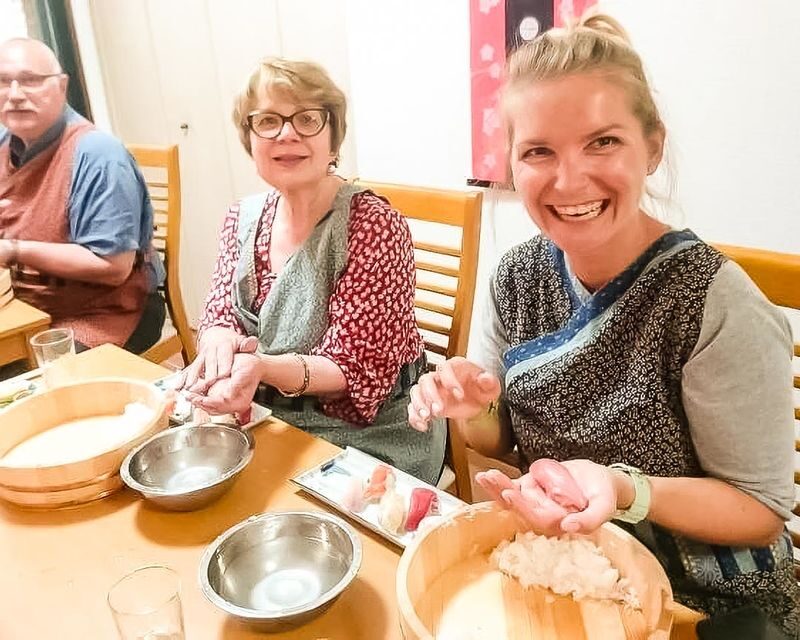
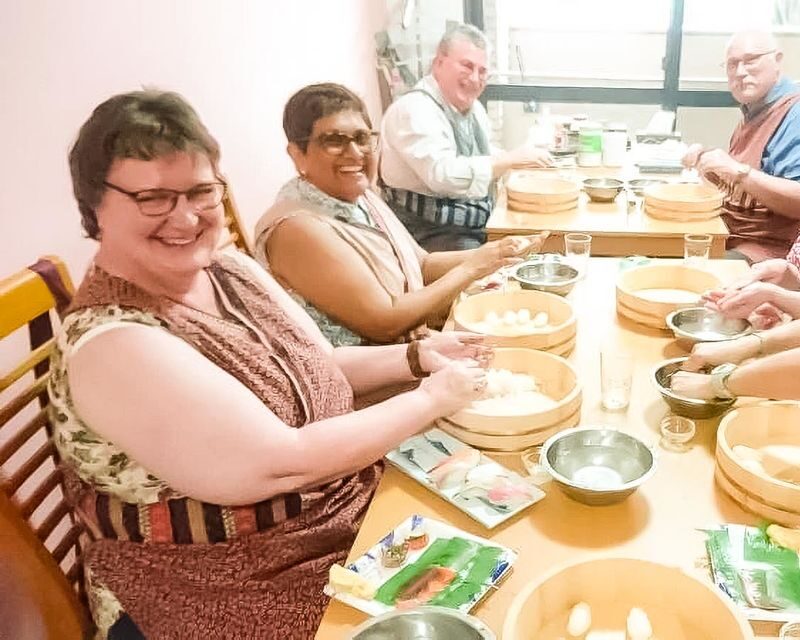
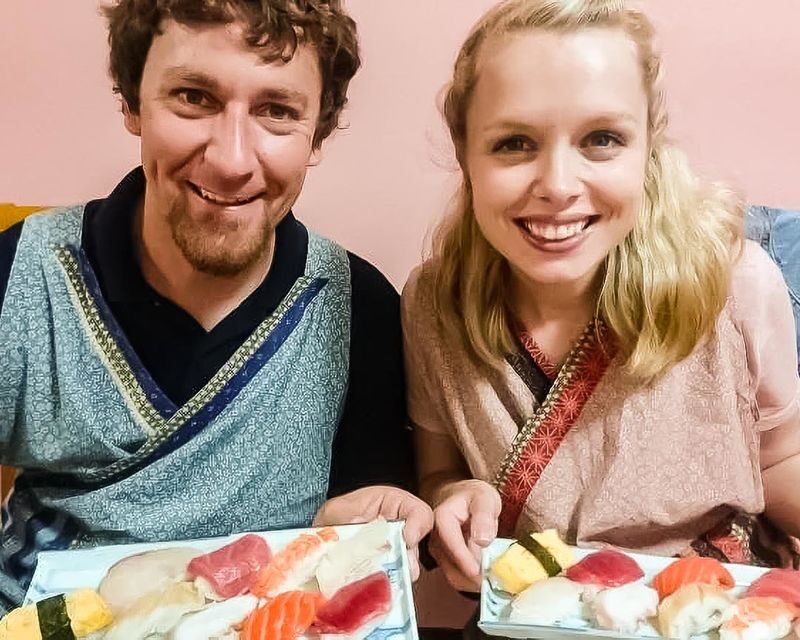
The main draw is the chance to work with three forms of sushi rather than spend the whole class repeating one basic roll. You’ll make nigiri, gunkan maki, and maki sushi, each with a different shape and assembly method. That variety is useful if you’ve eaten sushi many times but never thought much about how the pieces are built.
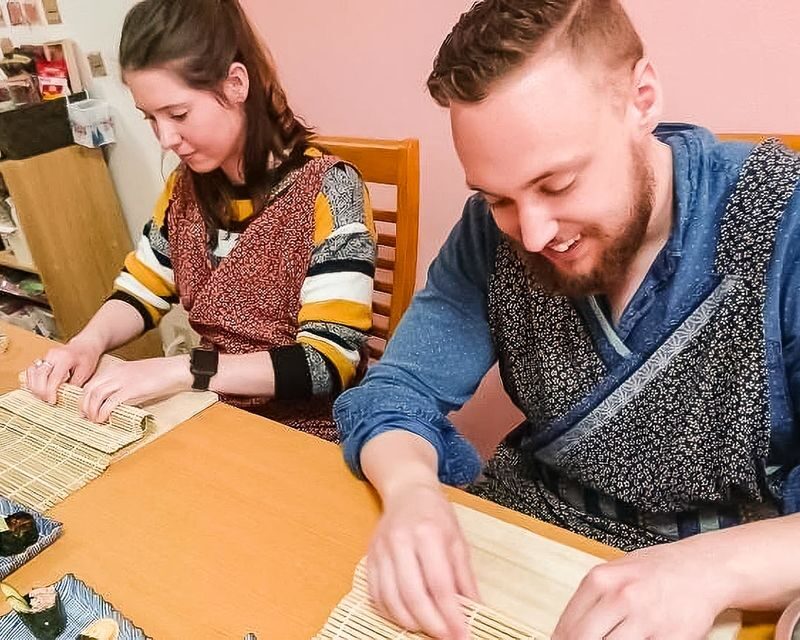
Nigiri is the familiar hand-shaped rice topped with fish or another ingredient. Gunkan maki has a small band of seaweed around the rice, creating a cup-like shape. Maki sushi is rolled, then cut into pieces. The class introduces these differences in practical terms: you learn by making them, not just by hearing their names.
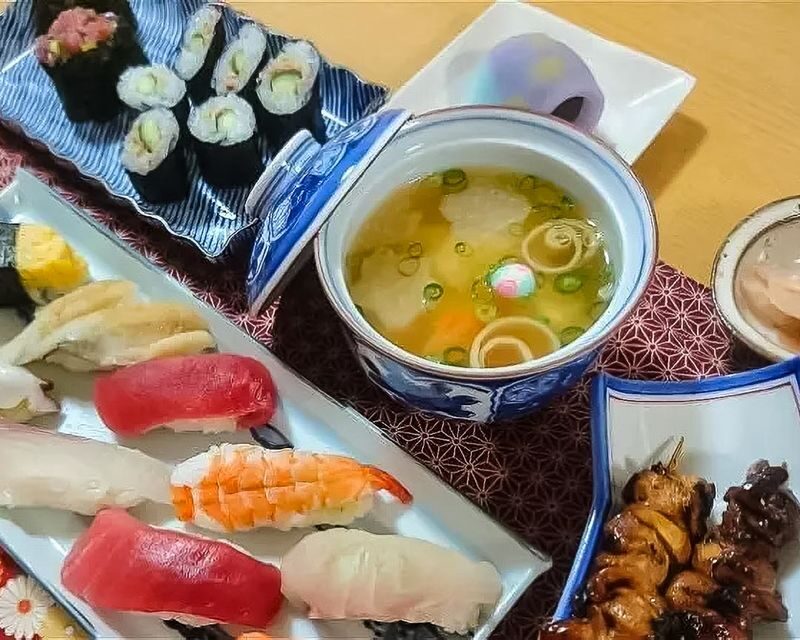
The menu lists nine pieces of nigiri, two gunkan maki, and one maki sushi. Those quantities give you a clear idea of the meal, though the class is not described as an unlimited feast. The point is to learn the forms and techniques, then enjoy the food you prepare.
If you’re new to sushi making, the instructor’s explanations matter as much as the finished pieces. One participant highlighted that the teaching covered not only how to cook, but why each method works. That kind of context can help you remember the steps when you try the recipes at home.
You can also read our reviews of more tours and experiences in Osaka


The lesson is hands-on, not a cooking show
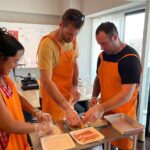
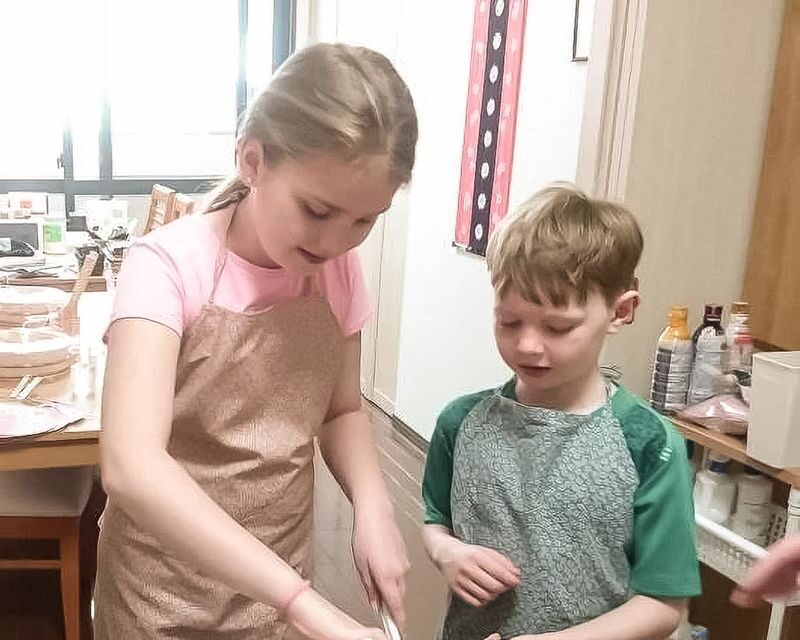
This class is designed for you to cook, not sit back while someone else does all the work. Each participant gets a chance to prepare the dishes, with the instructor guiding the process. That makes the 2.5-hour format worthwhile: you have time to learn several techniques and put them into practice.
It’s also a good fit if you want a social activity that gives you something to do with your hands. Sushi shaping rewards patience, and your first pieces may not look like the ones in a restaurant window. That is part of the fun. You can focus on the steps and enjoy the meal, rather than worrying about perfect presentation.
The instructor speaks English and Japanese. No instructor name is provided, so you should not expect to book a class with a particular named teacher. The useful point is that English-language guidance is available, including explanations of the cooking methods and the dishes’ background.
Yakitori and miso soup make it a fuller meal
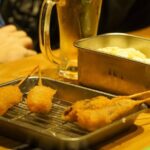
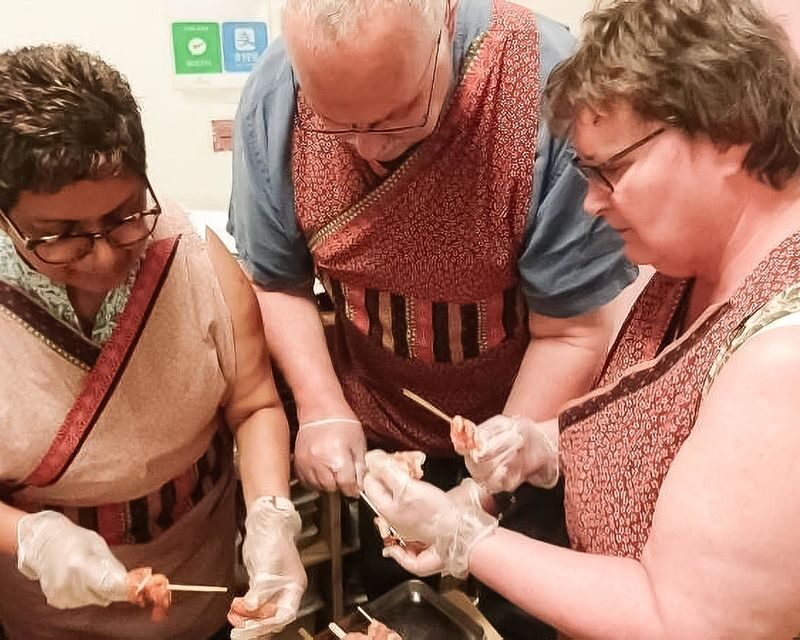
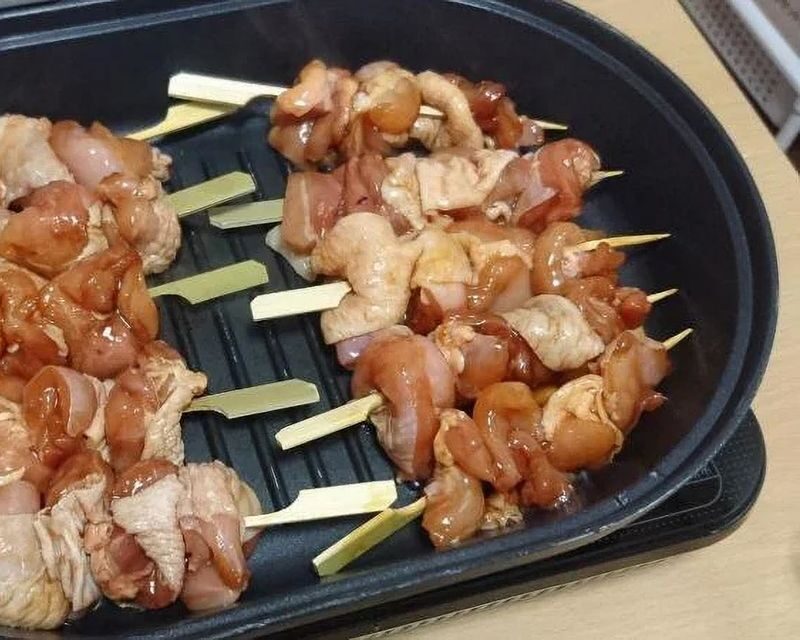
After the sushi, you’ll turn to yakitori, Japanese-style grilled chicken skewers. The menu includes two skewers. This shifts the lesson from rice and seafood to a cooked dish, and gives you a chance to learn another familiar part of Japanese food culture.
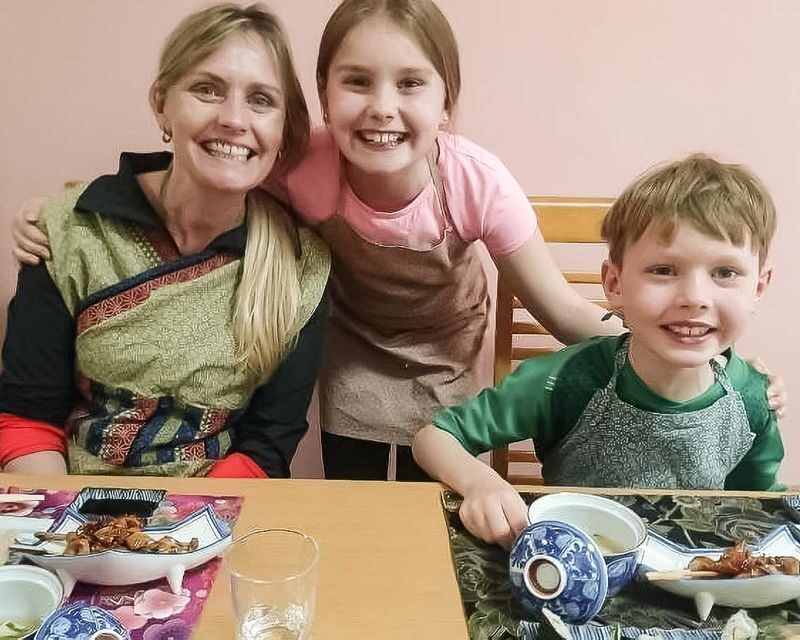
You’ll also prepare miso soup with tofu, then have pickles alongside the meal. These additions help the class feel like more than a sushi workshop. You get a mix of textures and flavors, and a better sense of how sushi can sit within a broader meal.
The menu ends with traditional Japanese sweets. The dessert is included, though the specific sweet is not named. If you’re looking for a class that covers an entire regional menu or a long list of recipes, this one is more focused: three sushi styles, yakitori, soup, and a sweet finish.
The food list includes raw fish, cooked eel, chicken, eggs, and a small amount of alcoholic seasoning. Keep those ingredients in mind if you have allergies, avoid raw seafood, or do not consume alcohol. Pescetarian and gluten-intolerant needs can be accommodated, but you should tell the class in advance. If you have another dietary restriction, ask before booking rather than assuming it can be handled.
The story behind the food adds value
Sushi is often treated as something to order and eat, but its forms and preparation have their own logic. This class includes background on the history of the dishes you make, as well as hands-on cooking. That context can turn a recipe into a useful lesson in how the food is put together.
The appeal is not a sweeping survey of Japanese cuisine. You’re concentrating on a small set of dishes, with enough variety to make the session feel broad without rushing through a long menu. If you want a practical introduction to sushi and a few companion dishes, that balance is sensible.
I especially value the attention to reasons, not just instructions. It is easy to copy a sequence once, then forget it. Understanding why a step matters gives you a better chance of recreating the food later. Recipes are provided to take home, so the class continues to be useful after the meal is over.
What the 2.5 hours are likely to feel like
The class lasts two and a half hours. You’ll meet the instructor at Banix北堀江, then work through sushi preparation and the accompanying dishes. The supplied details do not give a minute-by-minute schedule, so it’s best not to expect a fixed order or a precise time allotment for each recipe.
The session’s scope is substantial for a short class: three sushi forms, yakitori, tofu miso soup, pickles, and dessert. That is enough variety to keep the lesson moving, but it also means the class is not an extended deep study of one technique. If you want to master a single sushi style in great detail, a narrower workshop may suit you better.
You’ll eat the dishes you make, so the cooking lesson doubles as a meal. That adds value to the price, especially if you plan to arrive hungry. Still, the main return is the instruction and recipes, not simply the quantity of food.



Is US$112.35 a fair price?
The class starts at US$112.35 for the 2.5-hour package. That is not a bargain-priced lunch, and you should compare it with what you want from the experience. You’re paying for guided, hands-on instruction, ingredients, cooking tools, tableware, a multi-part meal, and recipes to take home.
For a visitor who wants a memorable food activity and a skill to practise afterward, the price can be reasonable. You get more than a demonstration and more than a single dish. The instructor explains the method, and the menu takes you from sushi to grilled chicken, soup, and dessert.
If your priority is simply to eat sushi cheaply, spend the money at a restaurant instead. The class earns its value through participation and learning. It may also appeal to families with children old enough to join, although children aged seven to seventeen must attend with a paying adult, and everyone, including infants and children, must be included in the passenger headcount.
Getting to Banix北堀江
The meeting point is Banix北堀江, about a three-minute walk from Nishi-Nagahori Station. Transport is not included, so you’ll need to make your own way there. After booking, your voucher provides more detailed directions and a Google Maps link.
Plan to arrive on time. If an emergency or other issue may make you late, contact the class in advance. Late arrival could mean you cannot join, which matters for a lesson that depends on a group moving through several cooking steps together.
You receive confirmation within 48 hours. The mobile voucher is valid only for the date and time shown, so check those details before heading out. You can cancel for a full refund if you do so at least 72 hours before the activity, using the destination’s local time as the cutoff.
Who will enjoy this Osaka cooking class?
This is a strong choice if you like learning by doing and want a food activity that includes more than sushi. It suits first-time sushi makers, curious food lovers, and families with children aged seven or older who can take part with a paying adult. English-language instruction makes it accessible if you don’t speak Japanese.
It is less suitable if you want a private lesson, a long specialist course, or a menu without raw fish or the other listed ingredients. The class is also not for children under seven. Check dietary needs before you book, especially if you have a restriction beyond pescetarian eating or gluten intolerance.
Should you book it?
Book this class if you want to make several recognizable Japanese dishes yourself, understand the reasons behind the techniques, and sit down to eat what you prepared. The combination of three sushi styles, yakitori, miso soup, and dessert gives the session more range than a sushi-only demonstration.
Skip it if the price feels high for a cooking activity or if you mainly want a quick meal. For the right person, the value lies in the hands-on teaching and recipes you can use at home, not just the food on the table.
Sushi Making Lessons in Osaka (2.5 Hours)
“The teacher explained in detail and could speak English. He not only explained the cooking method, but also explained the reasons behind it in deta…”
FAQ
How long is the sushi class?
The class lasts 2.5 hours.
Where does the class meet?
Meet your host at Banix北堀江 in Osaka, about a three-minute walk from Nishi-Nagahori Station. Directions and a Google Maps link are provided on the voucher.
What dishes are included?
You’ll make nine nigiri sushi, two gunkan maki, one maki sushi, two yakitori skewers, tofu miso soup, and dessert. Pickles are also included.
Is English-language instruction available?
Yes. The guide speaks English and Japanese.
What is the minimum age?
Participants must be at least seven years old. Children aged seven to seventeen must be accompanied by a paying adult, and children under seven cannot join.
Can the class accommodate dietary requirements?
Pescetarian and gluten-intolerant requirements can be accommodated if you inform the class in advance. The class uses raw fish, cooked eel, chicken, eggs, and a small amount of alcoholic seasoning.
What is the cancellation policy?
You can receive a full refund if you cancel at least 72 hours before the activity date, using destination local time.