A glowing piece of steel, a hammer, and a room full of ringing blows: at studio NIN, you make a small knife by working the metal yourself. The blacksmiths guide each step, so you don’t need craft experience, but you should be ready to put your arms to work.
I like two things in particular: you learn by doing, not just by watching, and the finished knife is a useful keepsake rather than a trinket. The instructors also explain the process in English or Japanese and step in when your hammering needs a correction.
The main consideration is the effort. Forging can take more than an hour, the workshop gets hot, and the standard knife is small, around 13 to 15 centimeters. If you want a larger kitchen knife, this is a short introduction to the craft, not a full-day smithing course.
- At a glance
- Turning steel into a knife at studio NIN
- The hammering is the heart of the class
- Grinding gives the blade its shape
- What you take home
- A small class in a quiet part of Kyoto
- Is the price worth it?
- Who will enjoy this most?
- Should you book the Kyoto knife-making class?
- FAQ
- How long does the knife-making class take?
- How big is the knife?
- Do I need experience to take part?
- Is a wooden handle included?
- How do I get to studio NIN Yase?
- What are the age and group-size limits?
- The Best Of Kyoto!
- More Tours in Kyoto
- More Tour Reviews in Kyoto
At a glance
 1 / 9
 2 / 9
 3 / 9
 4 / 9
 5 / 9
 6 / 9
 7 / 9
 8 / 9
 9 / 9
- You forge the blade yourself: Hammering hot metal into shape is the heart of the session, followed by grinding and sharpening.
- The finished knife is compact: Expect a handmade blade about 13 to 15 centimeters long, with some variation from one person’s work to another.
- Plan for 2.5 to 3 hours: The class is described as about 150 minutes, but the pace can stretch depending on your group.
- The work is physical: Hammering for a long stretch can tire your arms, and the shop can feel hot near the forge.
- It’s a small-group class: Groups range from one to ten participants, with English- and Japanese-speaking instruction.
- The studio is near a train station: studio NIN Yase is a one-minute walk from Yase-Hieizanguchi Station on the Eizan Electric Railway.
👉 See our pick of the We Rank Kyoto’s 15 Top Workshops & Classes
Turning steel into a knife at studio NIN
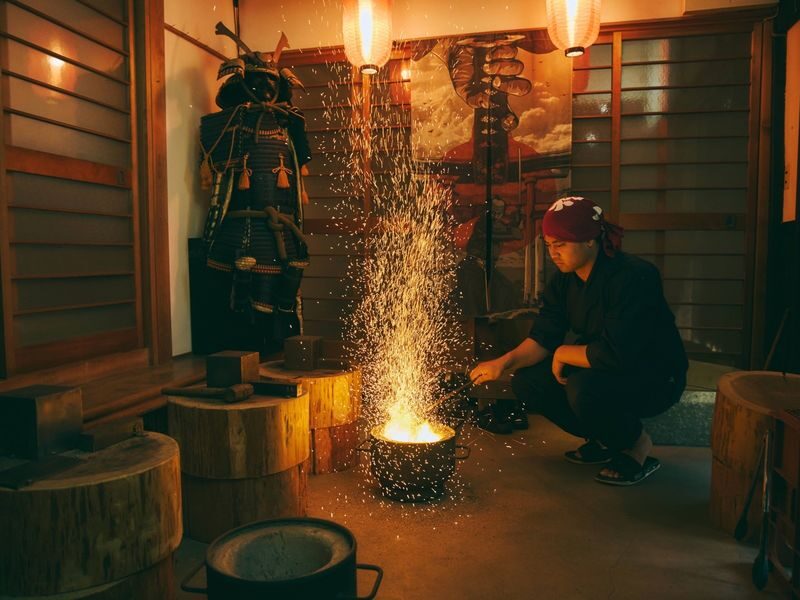
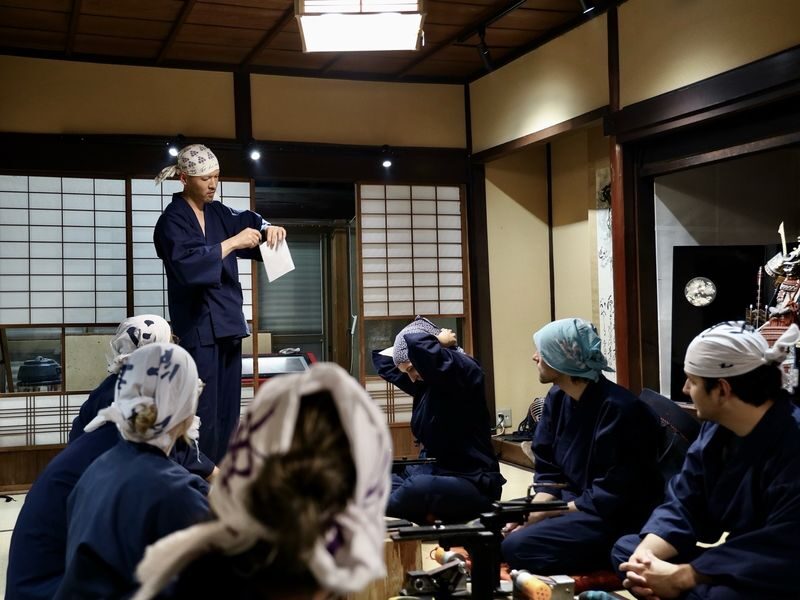
The class takes place at studio NIN Yase in Sakyo Ward, a quieter part of Kyoto near the base of Mount Hiei. This is a working blacksmith shop, not a staged demonstration. You change into traditional work clothes, get an introduction to the tools and process, then set to work making your own knife.
You’ll be guided through the main stages of knife-making: forging the metal, shaping the blade, grinding it, and sharpening it. The exact rhythm depends on the group and how quickly each person works. The listed class time is about 150 minutes, while the full session can run around two and a half to three hours. Leave breathing room before your next appointment.
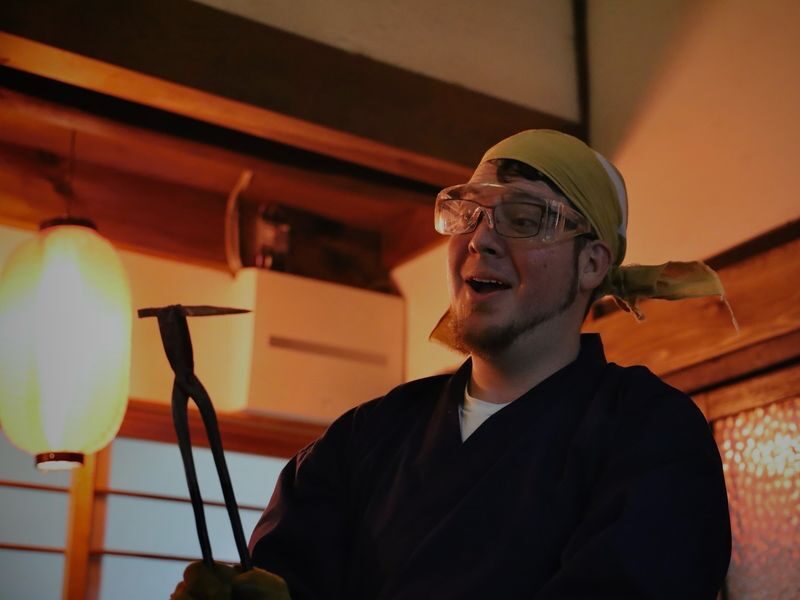
The instructors explain each task and help you correct the shape as you go. Taka, Mao, Ako, Shun, and other staff members have led sessions, but the instructors on your date may differ. What matters is that the class is designed for beginners. You don’t need to arrive knowing how to handle a hammer.
You can also read our reviews of more tours and experiences in Kyoto.



The hammering is the heart of the class
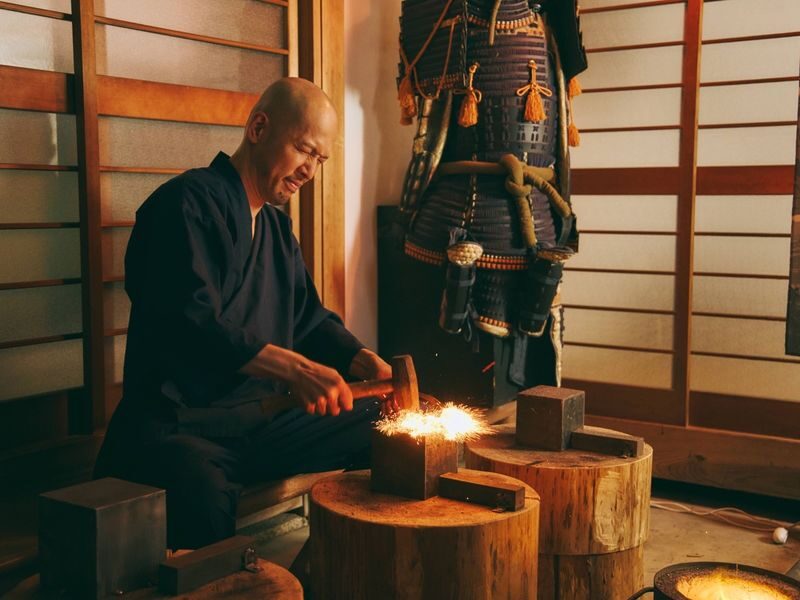
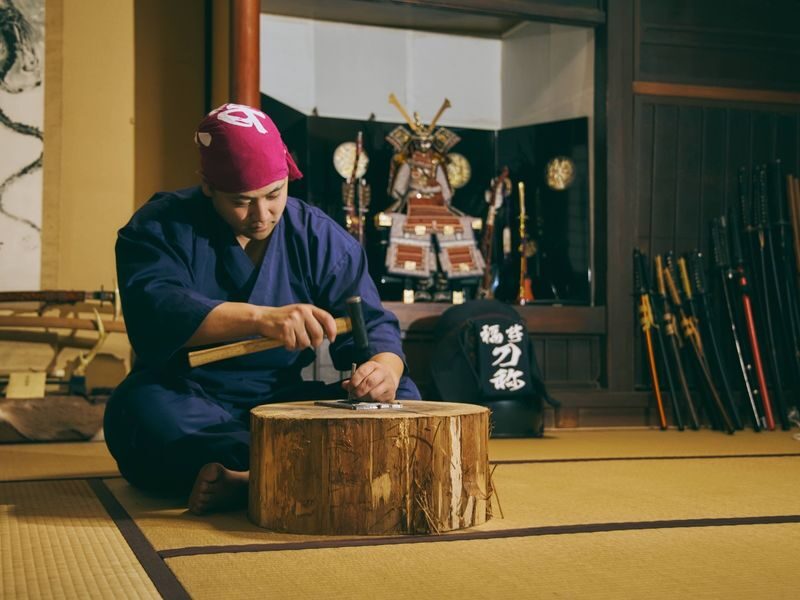
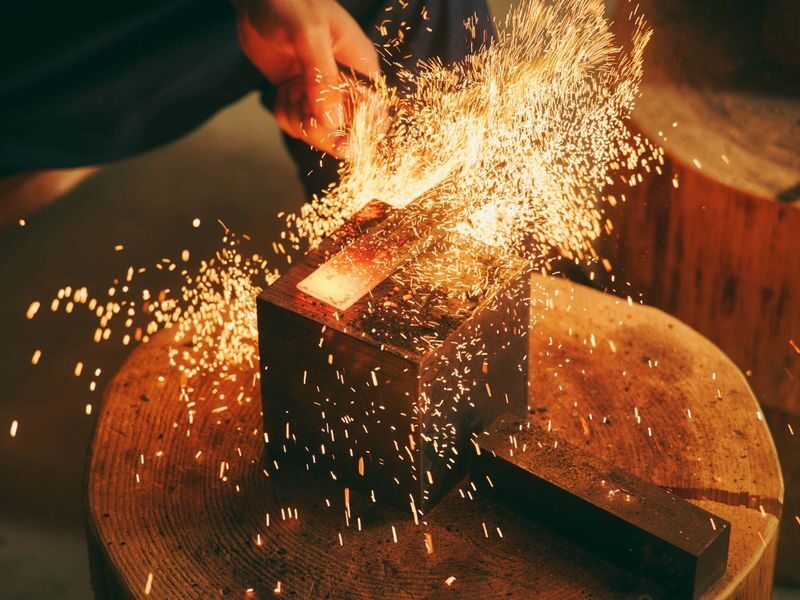
Forging is the part that makes this more than a craft activity. You use repeated hammer blows to flatten and shape heated metal, working toward the outline of a blade. This takes focus and effort. Some people find the rhythm satisfying; others find it tiring. Either way, it gives you a direct sense of how much work sits behind a finished knife.
Expect to spend a substantial portion of the class hammering. Some participants have needed more than an hour for the forging stage, followed by another long stretch of grinding and sharpening. The staff can help if your arm gets tired or your blade starts to go off course, but this is not a class where you simply watch a craftsperson do the difficult parts.
The shop can also get hot. The heat is most noticeable near the center of the room, so if you’re sensitive to it, ask where you can stand while still taking part safely. Wear comfortable clothes under the work outfit, and don’t book this as a restful activity between two long walking tours.
Grinding gives the blade its shape
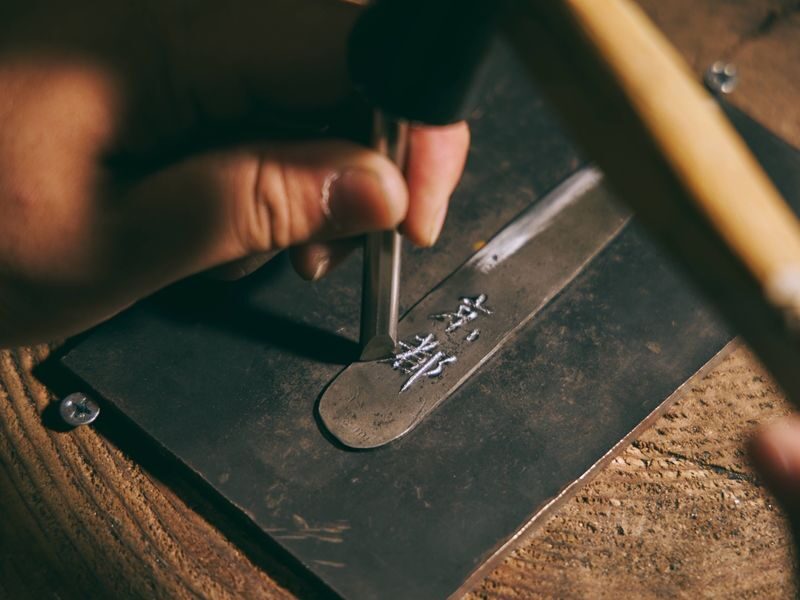
After forging, you move on to grinding and sharpening. This stage turns a rough piece of worked metal into something that looks and feels more like a knife. The equipment is professional, and instructors guide you as you refine the blade. They also step in to help tidy up mistakes, so a beginner’s uneven hammering does not have to define the final result.
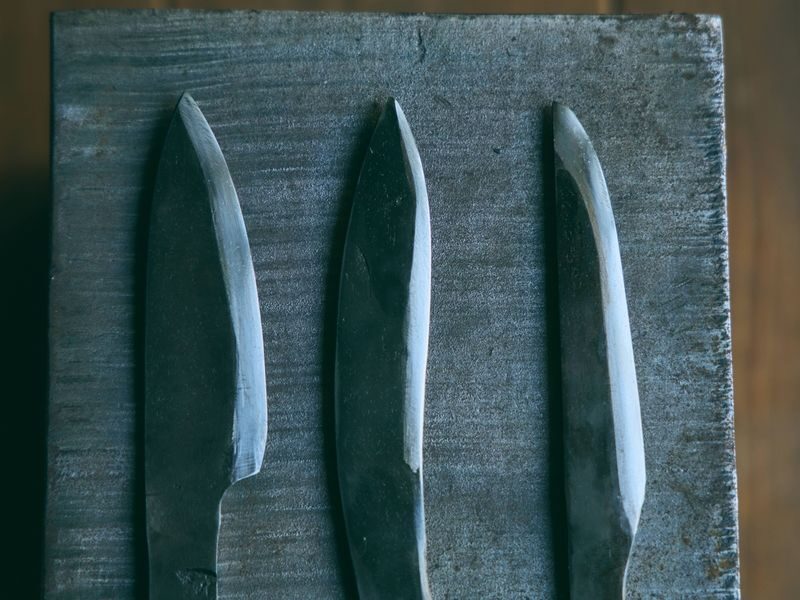
This is often the point when the knife starts to feel personal. You can see the effect of your effort in its shape and finish, even if it isn’t perfectly uniform. That handmade quality is part of the point: you leave with a blade that carries signs of the process, not a factory-perfect object.
Safety guidance is part of the class. You’ll receive instructions and protective equipment, and staff keep an eye on participants as they work. Listen closely, especially around hot metal and grinding tools. The experience is hands-on, but you’re not left to figure out the machinery alone.
What you take home
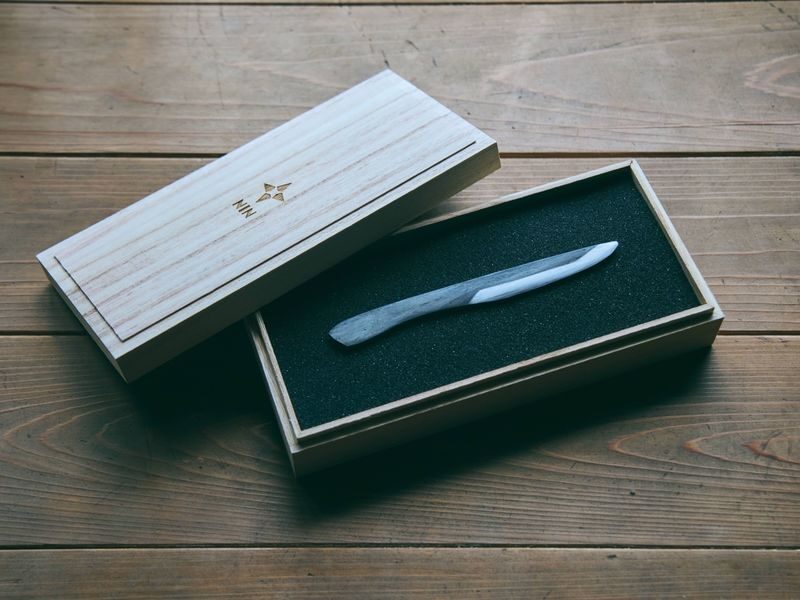
The standard knife is about 13 to 15 centimeters, with some variation depending on how each person works the metal. It’s a practical size for a small kitchen knife or keepsake, but it is not a full-size chef’s knife. The studio offers this shorter format so visitors can try forging in a few hours. A regular cooking knife can take more than five hours to make and cost over $400, according to the workshop’s explanation.
The standard design uses a simple iron handle rather than a wooden one. Some participants have described an optional handle upgrade costing around 5,000 yen, which may include a handle to attach at home. Because the standard knife and possible add-ons can be easy to confuse, ask what is included in your chosen package before you book. Don’t assume a wooden handle is part of the base price.
A handmade knife is a memorable souvenir, but it is also a sharp tool. Take care when packing and transporting it, and check the rules that apply to your onward travel. The class focuses on making the knife, not on travel-specific packing or shipping arrangements.
A small class in a quiet part of Kyoto
The meeting point is studio NIN Yase, at 168-1 Yasenosecho in Sakyo Ward. It’s a one-minute walk from Yase-Hieizanguchi Station on the Eizan Electric Railway. That makes public transport a practical way to reach the studio, though the location is away from central Kyoto’s main sightseeing districts. Allow time for the journey and check your route before setting out.
The activity lists departure times of 10:00 and 14:30. Return times are given as 12:30 and 16:30, but the actual session can run longer depending on the group. Follow the time confirmed for your booking rather than relying on the rough timetable.
Studio NIN also operates a second workshop, studio NIN Kendo, with the same facilities and experience. Unless staff tell you otherwise, go to studio NIN Yase. If the venue changes, the team will contact you in advance, so check your messages before leaving.
Groups can range from one to ten people. That small size makes it easier for instructors to give help when a participant needs it. It also suits couples, families, and friends who want to work side by side. If someone in your party cannot take part, they may be able to watch, but check with the studio ahead of time.

Is the price worth it?
The experience starts at $159.79. That is a significant amount for a two-and-a-half-hour activity, so the value depends on what you want from the class. You’re paying for access to a working blacksmith shop, professional tools, instruction, and the chance to make an object with your own hands. The knife also gives the activity a lasting, practical result.
Compared with a full-size knife-making course, this is a shorter and less costly way to try forging. You get a taste of the craft without committing five or more hours or paying several hundred dollars. The trade-off is the smaller blade and a simplified process. If your goal is to make a serious, full-size cooking knife, you’ll want to seek out a longer class.
The potential extra cost for a handle deserves a closer look. The basic knife has an iron handle, while some participants have paid about 5,000 yen for a handle upgrade. Confirm the current options and price before booking so the final cost is clear. The base price may feel easier to justify if you value the process as much as the finished knife.
Who will enjoy this most?
This is a good fit if you like practical activities, want to understand a Japanese craft through direct work, or are looking for a souvenir with a story behind it. You’ll get more from the session if you’re comfortable standing, concentrating, and using your arms for an extended stretch. It can also work well for families with older children who are keen to try a hands-on task.
The stated age guidance says participants must be 15 or older, while children aged 10 to 15 must be accompanied by a paying adult. If you’re booking for a child, confirm the age rule with the operator, since the wording overlaps at age 15.
If you’re after a gentle, air-conditioned activity or have limited arm strength, this may not be the best choice. You can ask for help, but forging is still physical, and the heat is part of the workshop environment. It’s also less suited to anyone who expects a flawless, shop-ready knife from their first attempt. The aim is to learn the basic process and make something by hand.
Should you book the Kyoto knife-making class?
Book it if you want a hands-on craft experience, don’t mind a workout, and like the idea of taking home a knife you helped forge. The patient, step-by-step instruction makes it approachable for first-timers, and the small group size gives the class a personal feel.
Think twice if your priority is a large kitchen knife, a low-effort afternoon, or a fixed finish with no possible add-on costs. For most curious beginners, though, this is a distinctive way to spend part of a Kyoto day. Check the handle options, allow up to three hours, and arrive ready to swing a hammer.
Kyoto: Authentic Knife-Making Experience at a Blacksmith Shop
“This was some of the most fun I had on this trip. Taka was my guide through it and he was so knowledgeable about the history and the art form. They…”
FAQ
How long does the knife-making class take?
The class is listed at about 150 minutes. Allow around two and a half to three hours, since the pace depends on the group.
How big is the knife?
The finished knife is approximately 13 to 15 centimeters long. Because it is handmade, the size can vary.
Do I need experience to take part?
No. The class is intended for beginners, and instructors guide you through the process and help when needed.
Is a wooden handle included?
No wooden handle is included as standard. The knife uses a simple iron handle, and some participants have described an optional handle upgrade. Confirm the current options and cost before booking.
How do I get to studio NIN Yase?
The studio is at 168-1 Yasenosecho, Sakyo Ward, Kyoto. It is a one-minute walk from Yase-Hieizanguchi Station on the Eizan Electric Railway.
What are the age and group-size limits?
The stated minimum age is 15. Children aged 10 to 15 must be accompanied by a paying adult. Groups range from one to ten participants.