Kintsugi turns a break into part of a pot’s design. At this workshop in Osaka’s Namba district, you work with lacquer and gold powder to create a repaired plate or bowl of your own, with an instructor guiding you through the process.
I like that you leave with a handmade souvenir, not just a short demonstration, and that the session introduces the idea behind kintsugi as well as its technique. The staff names that come up often include Kai, Yukari, Phil, and Emma, though your instructor may differ.
One thing to plan for: the basic price includes a small plate, while larger or premium pieces cost extra. The timing is also described in several ways, so leave a little breathing room rather than scheduling a tight connection afterward.
- Kintsugi in Namba: What to Know
- Making a Break Part of the Design
- Choosing Your Plate Before You Begin
- What the 90-Minute Session Feels Like
- A Cultural Activity That Fits Into an Osaka Day
- The Best Part Is the Instructor’s Help
- Is the Starting Price Good Value?
- Timing, Booking, and Small-Workshop Practicalities
- Who Should Book This Kintsugi Workshop?
- FAQ
- How long does the kintsugi workshop take?
- Where is the workshop?
- What is the starting price?
- Is an English-speaking instructor included?
- Can I take my finished piece home?
- Are premium plates included in the price?
- Is there an age limit?
- Are pets allowed?
- Can I cancel or change my booking?
- The Best Of Osaka!
- More Workshops & Classes in Osaka
- More Tours in Osaka
- More Tour Reviews in Osaka
Kintsugi in Namba: What to Know
- Make a gold-accented repair: Work with lacquer and gold powder to give pottery a new look.
- Choose a plate or bowl: Several included plate designs are available, while premium options may cost more.
- Get hands-on guidance: Instructors help throughout the process, so you do not need to be an experienced artist.
- Take your work home: Your finished piece serves as a personal reminder of your time in Osaka.
- Set aside more than an hour: The package is described as 90 minutes, but the session may take longer.
- Find it in central Namba: The workshop is at Sanei Midosuji Building, 8F, in Osaka’s Chuo Ward.
👉 See our pick of the The Top 15 Workshops & Classes In Osaka
Making a Break Part of the Design
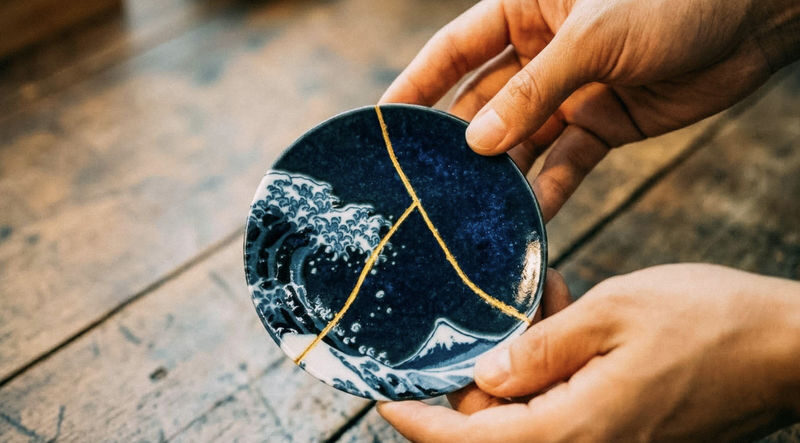
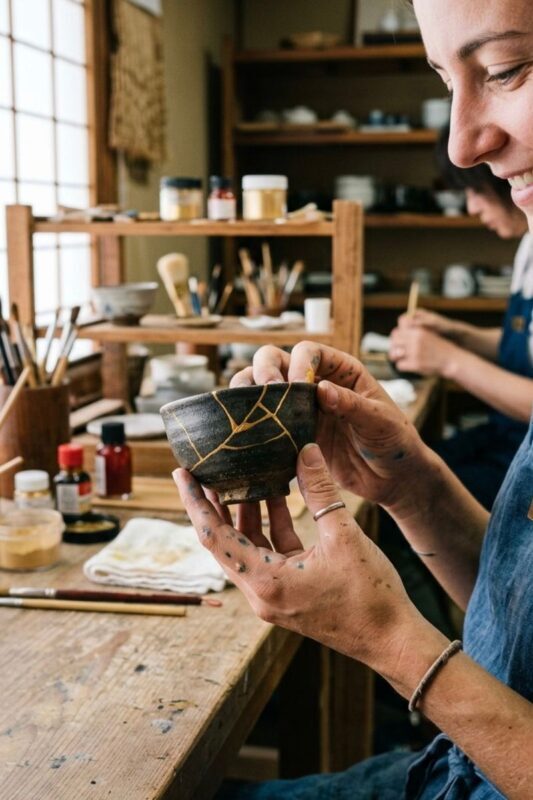
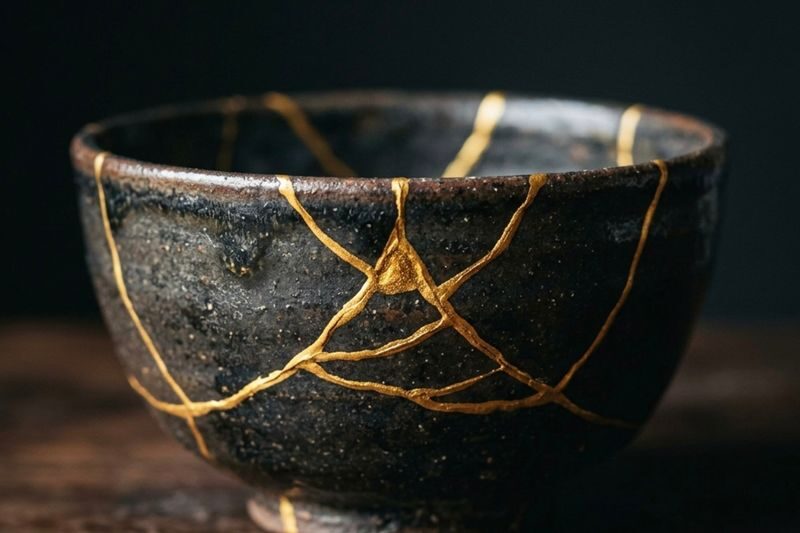
Kintsugi is the Japanese craft of repairing broken pottery with lacquer and gold powder. Instead of trying to hide the damage, the repaired line becomes a visible part of the object. That idea gives this workshop more meaning than a standard souvenir-making class: you leave with an object you worked on yourself, and a small introduction to an aesthetic that values marks and irregularities.
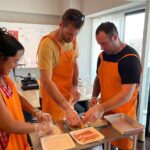
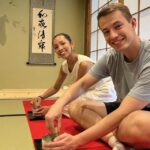
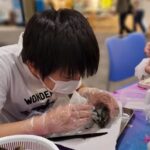
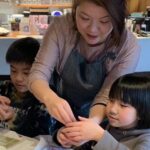
You will be guided through a hands-on session using a plate or bowl. The activity is designed for beginners, and instructors explain the process and help as you work. Past instructors have included Kai, Yukari, Phil, Emma, Kohei, and others, but the staff member leading your session can vary.
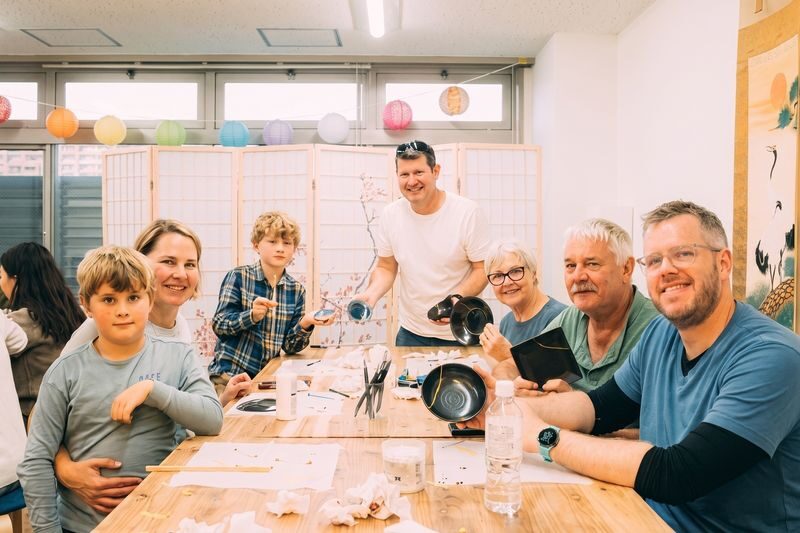
The class takes place in a small workshop in Namba. That can make the experience feel focused and personal, but it also means the room may feel close when the group is full. Group size is listed as one to 20, so do not expect a private lesson unless your booking happens to be the only one.
You can also read our reviews of more tours and experiences in Osaka


Choosing Your Plate Before You Begin
The included plate options give you a straightforward way to take part without paying more than the starting price. Several designs may be available, including small blue-and-white plates, but the choice and selection can vary. The included piece is modest in size, so think of it as a keepsake rather than a large serving dish.
If you want a larger plate or bowl, you can pay to upgrade. That extra charge is worth considering before you arrive, especially if you have a particular look or size in mind. The workshop’s starting price is from $24.35, but a premium piece will raise the total.
The practical choice is simple: stick with the included plate if the experience matters more to you than the size of the souvenir. Upgrade only if you know you want a larger or more decorative piece. You can ask about the available choices before settling on one.
What the 90-Minute Session Feels Like
The package is called a 90-minute traditional kintsugi workshop. The activity description also gives a one-hour duration, while the workshop portion of the schedule is listed at about 80 minutes. In practice, some sessions may run closer to two hours, so I would avoid booking a meal, show, or train connection immediately afterward.
At the start, your instructor introduces kintsugi and the basic idea of repairing pottery with gold powder. Then you choose your piece and work through the repair with guidance. The exact steps are not described in detail, and the instructor will lead you through the materials and technique on the day.
This is a making class, not a long lecture on Japanese craft history. You get a short cultural introduction alongside the practical work, then spend most of your time focusing on your own piece. That balance suits anyone who wants context but would rather learn by doing.
You do not need to arrive with artistic confidence. The class is set up for beginners, and the staff help with each stage. If you like making things, you can enjoy shaping your design; if you are less sure of your hands, you can follow the instructor’s guidance and take your time.
A Cultural Activity That Fits Into an Osaka Day
Namba is a useful base for a short indoor activity, and the workshop’s address is Sanei Midosuji Building, 8F, 3 Chome-5-8 Namba, Chuo Ward, Osaka. It is a meet-up activity rather than a tour with transport, so you make your own way to the building. The meeting time is selected when you book, with options listed from 10:00 through 18:00, subject to availability.
The workshop can be a welcome change of pace if your Osaka plans are heavy on shopping, food, and sightseeing. It is indoors, which makes it a practical option on a rainy day. At the same time, it is not a substitute for seeing a major cultural site: think of it as a compact craft experience that gives you a chance to make something and learn a little about Japanese aesthetics.
Families can also consider it. There is no age limit, and children have taken part with adults. Since the activity involves careful handwork and materials, you will want to help younger children follow the instructor’s directions. Pets are not allowed.
The Best Part Is the Instructor’s Help
The most important ingredient is the instruction. The process can look delicate, and it is easier to enjoy when someone shows you what to do rather than leaving you to guess. Instructors named by participants include Kai, who is described as patient and encouraging, and Yukari, who guided people through the steps and shared the history of kintsugi. Phil, Emma, Kohei, and other staff have also led sessions.
Those names are useful as a sense of the workshop’s teaching style, not as a promise that a particular person will be there. Staff assignments can change. What you can expect is an English-speaking guide and hands-on help during the activity.
The English support matters if you want to understand more than the mechanics. It lets you ask questions as you work and follow the cultural explanation without having to rely on guesswork. The class is also suited to mixed skill levels, so you can attend with an artistic friend or a family member who has never tried a craft workshop.


Is the Starting Price Good Value?
At $24.35 to start, the workshop is an affordable way to add a hands-on activity to an Osaka visit. The price covers admission to the activity and an English-speaking guide. You also finish with a piece you made, which gives the experience a tangible return beyond the hour or so spent at the table.
The main value question is the pottery choice. A small plate is included, but larger or premium options cost extra. If you are happy with the standard selection, the base price looks like good value for a guided class and a personal souvenir. If you have your heart set on a larger bowl, factor in the upgrade before comparing prices.
There are also personal expenses and tips that are not included. No tip is specified as part of the activity price. Keep your spending expectations modest, and decide about any upgrade before you begin if you want to stay within a firm budget.
Timing, Booking, and Small-Workshop Practicalities
The schedule offers several start times, from 10:00 to 18:00, but the available return times depend on the time you choose and the session length. The voucher is valid only on the date and time selected, so check those details carefully before you go. You present a mobile voucher at the workshop.
The booking can be changed up to 24 hours before the activity starts, with exceptions for certain booking types. You can cancel for a full refund at least 24 hours before the activity date, using local time. In extreme weather or unforeseen circumstances, the operator may cancel and offer a new date or a refund.
Because the room is small and the workshop may take longer than the stated package duration, arrive for your chosen time and keep the rest of your day flexible. If you are fitting this between other plans, allow closer to two hours rather than assuming you will be finished in 60 minutes.
Who Should Book This Kintsugi Workshop?
Book it if you want a modestly priced, indoor activity with a cultural angle and something personal to take home. It is especially appealing if you enjoy crafts, want a change from sightseeing, or are looking for an activity to share with family. You do not need prior art experience, and the English-speaking instructor can guide you through the work.
Think twice if you are looking for a long, in-depth course in traditional pottery repair, or if you want a large finished piece without paying extra. This is a short introduction, and the included plate is small. Still, for a focused session in central Namba, the mix of practical instruction, cultural context, and a souvenir you make yourself is a strong use of an hour or two.
Namba, Osaka: Experience the Art of Kintsugi Workshop
“We had a wonderful time with our child. The meaning behind Kintsugi was also lovely. Highly recommended.”
FAQ
How long does the kintsugi workshop take?
The package is described as 90 minutes, while other duration details give about one hour or 80 minutes for the workshop. Some sessions may take closer to two hours, so leave extra time in your schedule.
Where is the workshop?
It is held at Sanei Midosuji Building, 8F, 3 Chome-5-8 Namba, Chuo Ward, Osaka, Japan.
What is the starting price?
The listed starting price is $24.35. Larger or premium plates and bowls may cost extra.
Is an English-speaking instructor included?
Yes. An English-speaking guide is included, and instructors guide participants through the activity.
Can I take my finished piece home?
Yes. You can take your completed work home as a souvenir.
Are premium plates included in the price?
No. Some plate options are included, while premium plate upgrades are available for an additional charge.
Is there an age limit?
No age limit is specified for this activity.
Are pets allowed?
No. Pets are prohibited.
Can I cancel or change my booking?
You can cancel for a full refund at least 24 hours before the activity date, using local time. Changes are allowed until 24 hours before the activity starts, with some exceptions for particular booking types.