Amanohashidate’s long pine-covered sandbar is the headline, but the best reason to take this trip is that it also brings you to two very different corners of northern Kyoto: Ine’s working harbor and Miyama’s thatched-roof village. In one day, you trade Osaka’s city streets for a coast, a celebrated sea view, and a quiet mountain settlement.
I like the contrast between the stops, and the round-trip bus from Osaka makes this far-flung route much easier than arranging several connections yourself. I also like that the tour leaves you free to explore rather than keeping you on a guide-led walk at every stop.
The trade-off is time. You get about 40 minutes in Ine and Miyama, and two hours at Amanohashidate, with long bus rides between the sights. Go for a sampler of northern Kyoto, not a slow, in-depth visit.
- What to know before you book
- A full day beyond Osaka
- Ine’s boathouses and life by the bay
- Amanohashidate: the view and the sandbar
- Miyama’s thatched roofs and mountain setting
- Is US.09 good value?
- Who should take this trip?
- FAQ
- Where does the tour depart from?
- When does the tour return to Osaka?
- How much time is spent at each stop?
- Is the seagull cruise included?
- Are meals and drinks included?
- Can one person book this tour?
- The Best Of Osaka!
- More Tours in Osaka
- More Tour Reviews in Osaka
What to know before you book
 1 / 7
 2 / 7
 3 / 7
 4 / 7
 5 / 7
 6 / 7
 7 / 7
- Ine’s boathouses put the harbor right at your doorstep: Around 200 wooden buildings line the bay, with boat storage at water level and living space above.
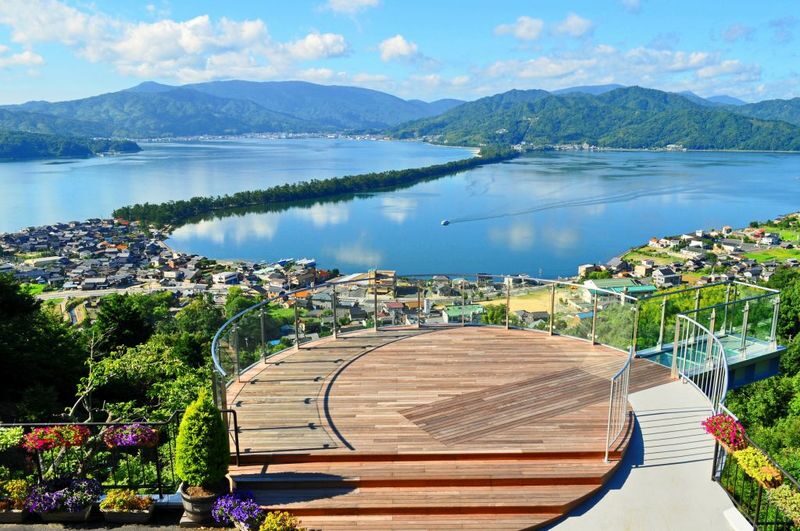
- Amanohashidate is a 3.6-kilometer sandbar: About 8,000 pine trees grow along this strip across Miyazu Bay. The two-hour stop gives you time to see the view and explore, but not to linger over every option.
- Miyama offers a change of pace: Its thatched Gassho-style houses sit among mountains and fields, with a distinctly rural feel.
- The day starts early and ends in Osaka: Meet at Nipponbashi Station Exit 2 at 7:20 a.m. and plan to return around 5:20 p.m., subject to traffic and weather.
- The price starts at US$51.09: Round-trip transfers and multilingual staff are included. Food, admission tickets, and personal expenses are not.
- A seagull cruise is an optional extra: It offers another way to see Ine Bay, but you should budget separately for it.
👉 See our pick of the The Top 15 Workshops & Classes In Osaka
A full day beyond Osaka
This is a long-distance day trip, not a quick hop to the Kyoto countryside. The schedule includes roughly four hours of driving in total, divided among the route’s legs, plus time at three separate stops. That is the bargain: you cover a lot of ground without planning the transport yourself, but each place gets a set time window.
The bus leaves from Nipponbashi Station in Osaka at 7:20 a.m. You need to arrive at least 10 minutes early. The return is scheduled for about 5:20 p.m. at Osaka Nipponbashi Station Exit 2, though road and weather conditions can shift the timing.
The tour includes a multilingual-speaking staff member and round-trip transfers. Guide Hu Jun has led a departure and was described as clear and easy to understand, but the assigned guide may differ on your date. A driver and guide can make a complicated route simpler, especially when you are visiting three places in one day.
You can book for one person, which makes this a practical option if you are travelling solo or simply do not have a group to organize. The activity has no age limit, though it is not recommended for people with impaired physical mobility. Wear clothing suited to the day’s weather, since the visits include time outdoors.
You can also read our reviews of more tours and experiences in Osaka.
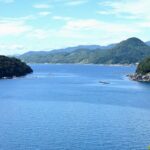
Ine’s boathouses and life by the bay
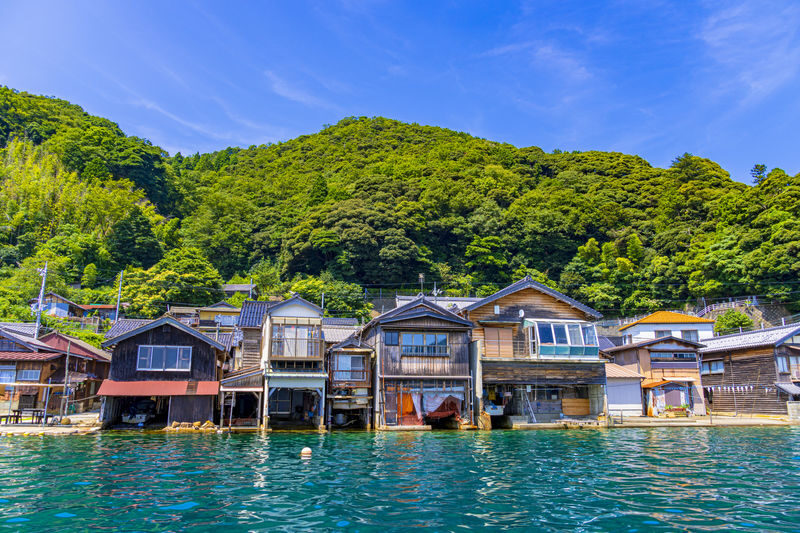
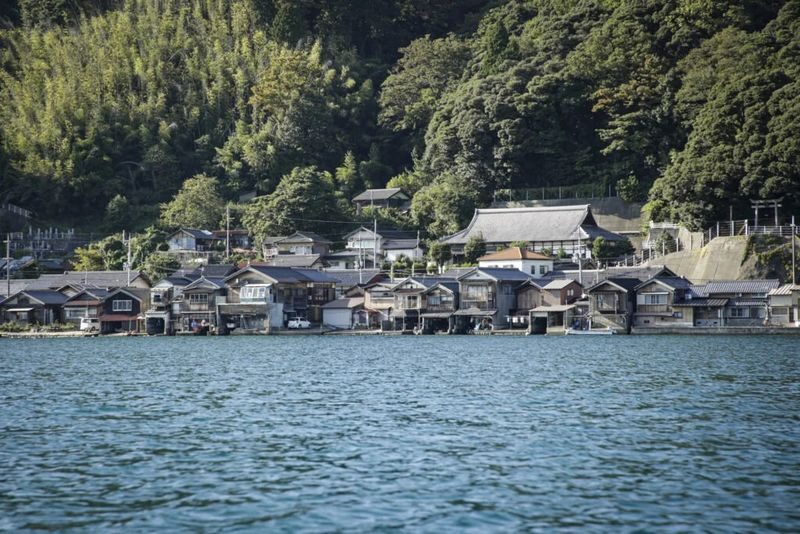
Ine is a small fishing settlement on the coast of northern Kyoto Prefecture. Its defining feature is the Funaya, traditional wooden houses built directly along the bay. Around 200 stand by the water, arranged so boats can be brought into the ground-floor boathouse while the upper floor serves as living space.
That design is the point of the visit. These are not simply pretty buildings facing the sea; their layout reflects a way of living closely tied to fishing and the harbor. From the shore, you can take in the line of houses and the relationship between the buildings and the water.
The stop is about 40 minutes and self-guided. That gives you a short walk and time to look around, but it is not enough for a leisurely exploration of the village. If you want a longer stay, a cruise around the bay, or time to stop for a meal, this schedule may feel tight.
A seagull cruise is an optional way to see the harbor from the water. It is not included in the tour price, so bring extra money if you want to take it. The tour’s inclusions do not cover meals, drinks, or other personal expenses either.
Amanohashidate: the view and the sandbar
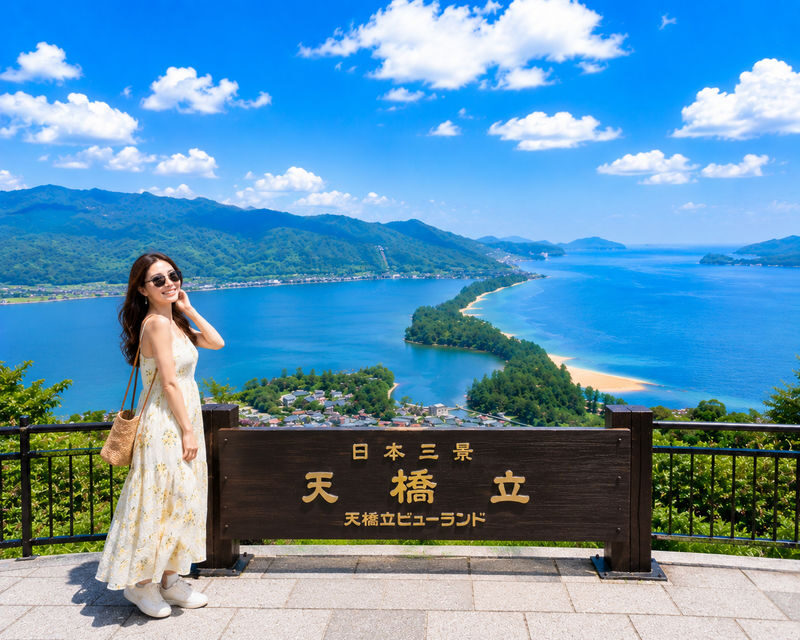
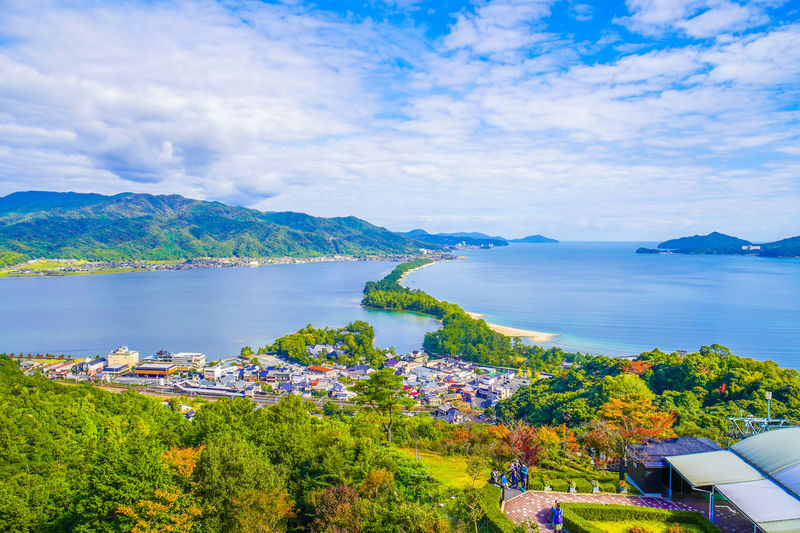
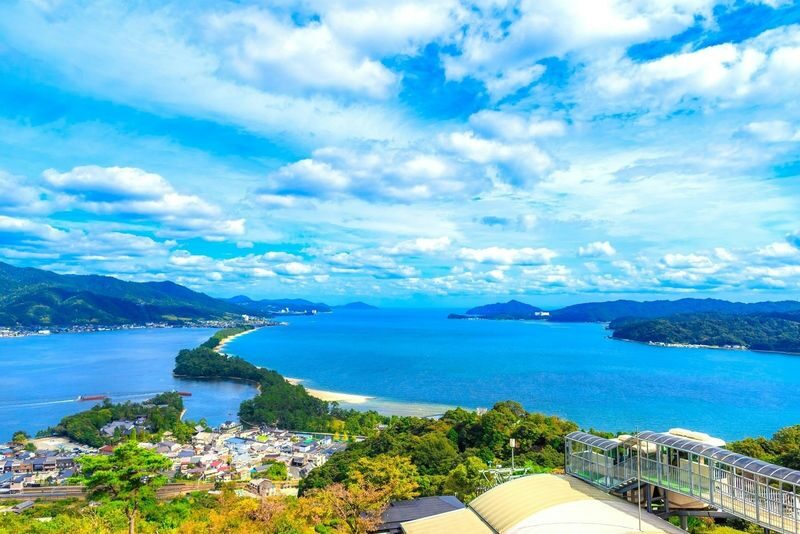
Amanohashidate is one of Japan’s three celebrated scenic views, set across Miyazu Bay in Kyoto Prefecture. The sandbar stretches about 3.6 kilometers and is covered with roughly 8,000 pine trees. From above, it can look like a bridge reaching across the water, which explains the name’s association with a bridge to heaven.
You have about two hours here, making it the longest stop of the day. The main draw is the view from Hiryukan Observatory, where you can look across the bay and see the sandbar’s shape. Reaching the viewpoint and appreciating the panorama should be your priority if the view is what brought you here.
There are other ways to use the stop. You can walk along the sandbar, visit Chionji Temple, or spend time at Amanohashidate Onsen. But the clock matters: two hours is a useful window, not an open-ended visit. You may need to choose between the observatory, a walk, and the temple rather than trying to fit everything in.
The observatory and other paid attractions may require separate admission. Tickets are not included in the tour price. Check what you want to do before setting off, then keep enough time to return to the bus at the appointed spot.
This is the stop where the tour gives you the most room, and it is also the one most likely to reward a clear plan. If you simply want the famous view, the allotted time should be more comfortable than the shorter visits to Ine and Miyama. If you want a long walk across the sandbar, a temple visit, and a soak, expect to make choices.
Miyama’s thatched roofs and mountain setting
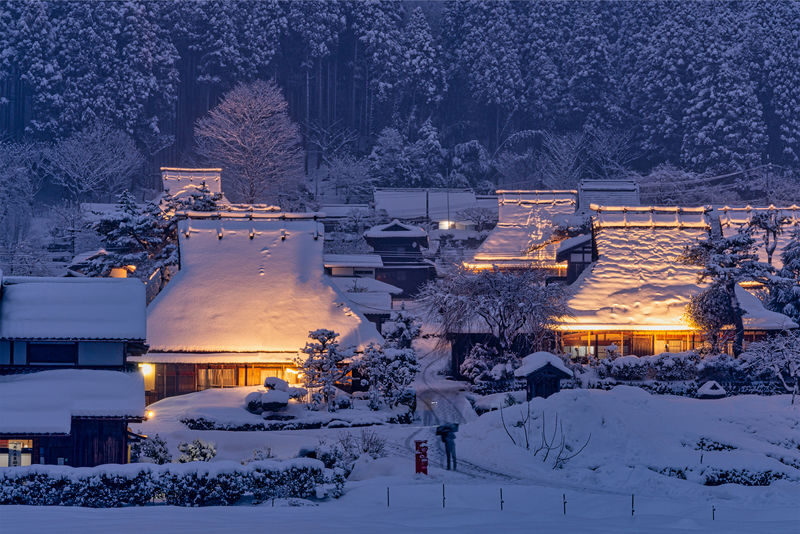
Miyama Kayabuki no Sato is a rural settlement in Nantan City, surrounded by mountains and fields. Its traditional Gassho-style houses, with thatched roofs, give it a very different character from the coastal streets of Ine and the open bay at Amanohashidate.
The village’s appeal is its quiet, traditional setting. The surrounding scenery shifts with the seasons: the area is green in spring and summer, autumn brings changing foliage, and winter can bring snow to the roofs. Those seasonal changes matter here, since the village’s appearance depends as much on its mountain setting as on the buildings themselves.
You have around 40 minutes to explore on your own. That is enough for a look around and a few photographs, but not a long village visit. Treat this as a short stop to take in the architecture and atmosphere, rather than a chance to explore the wider area at a relaxed pace.
The order of the three stops may be affected by traffic and weather, so do not build a separate, timed plan around a particular arrival hour. The tour is designed to cover all three sites in one day; its value lies in that broad overview, not in giving you a full afternoon in Miyama.
Is US$51.09 good value?
At a starting price of US$51.09, the main value is the transport. You are taken from Osaka to three separated destinations in northern Kyoto and brought back the same day. Doing the route independently means organizing the connections and managing the timing yourself; the tour keeps those pieces together.
The cost does not cover everything once you arrive. Admission tickets, meals, drinks, and personal expenses are excluded, and the optional seagull cruise costs extra. Your total spending will depend on which paid activities you choose and whether you buy food along the way.
Value also depends on what you want from the day. If you would otherwise skip these places because the transport feels too complicated, the bus tour makes a varied route accessible. If your goal is to spend several hours in each village or take your time at the observatory, a fixed group schedule is a poor match.
The day’s most praised features in accounts of recent departures are the convenient pickup and return, the guide’s clear explanations, and the range of scenery. One account singled out Hu Jun for being easy to understand, while another praised the driver and guide as professional and kind. Those are encouraging signs, though no particular guide or service style is guaranteed on your date.
The main caution is the pace. One account found the time at the stops compressed, while another felt there was enough time at Amanohashidate and Ine. Both reactions make sense: the schedule gives you a useful taste, but how rushed it feels depends on your priorities, the day’s conditions, and how many activities you try to fit in.
Who should take this trip?
I would choose this tour if you have one spare day in Osaka and want to see more of Kyoto Prefecture than the familiar city sights. It is especially handy if you are travelling alone, do not want to arrange several transport legs, or value a guided day with a clear route and return to Osaka.
It also suits anyone who likes variety. Ine is about harbor life and wooden boathouses; Amanohashidate is about a broad coastal view and pine-covered sandbar; Miyama is about traditional houses in a mountain village. The three stops feel distinct rather than like three versions of the same outing.
I would look for a slower or more tailored plan if you have limited mobility, want a full visit to every site, or dislike long bus rides. You should also be comfortable with an early start and a schedule that gives you less than an hour at two of the stops.
Book it for the reach and variety, not for a deep stay in any single place. If a broad day out from Osaka sounds right, the bus removes much of the transport fuss and delivers a striking mix of coast, viewpoint, and countryside. If you want to linger, choose fewer destinations and give them more time.
Group of 1 Possible: One-Day Tour to Japan Sea’s Kyoto Amanohashidate, Ine Boathouse, and Miyama Thatched Village | Superb View Amanohashidate, 100-Year Boathouse Scenery, Miyama Town Thatched Roof Panorama | Limited to Round Trip from Osaka
“The itinerary was great, and the pick-up and drop-off were excellent. Worth recommending.”
FAQ
Where does the tour depart from?
It departs from Osaka, meeting at Nipponbashi Station Exit 2. The scheduled departure is 7:20 a.m., and you should arrive at least 10 minutes early.
When does the tour return to Osaka?
The scheduled return is about 5:20 p.m. at Osaka Nipponbashi Station Exit 2. Traffic and weather can affect the schedule.
How much time is spent at each stop?
The self-guided visits are about 40 minutes in Ine, two hours at Amanohashidate, and 40 minutes in Miyama.
Is the seagull cruise included?
No. The cruise is optional, and tickets and other admission costs are not included in the tour price.
Are meals and drinks included?
No. Meals, beverages, admission tickets, and personal expenses are not included.
Can one person book this tour?
Yes. The activity is offered with the possibility of booking for one person.