
Here’s something most travel guides don’t tell you about Porto bike tours: nearly every operator switched to e-bikes years ago, and not because they wanted to. Porto sits on hills steep enough that a 20-something local on a fixed-gear would still arrive sweating. The few standard-bike tours that survived stick to the flat riverside route along the Douro and never climb back up to the Cathedral, the Clérigos, or anywhere else worth seeing on the higher streets.
.jpg)
In a Hurry? Best Porto Bike Tours
Best overall: Porto City Highlights 3-Hour E-Bike Tour — around $51, the city panorama on assisted bikes that actually handle the hills.
Best for fitter riders: Porto: 3-Hour Bike Tour (Riverside Route) — about $57, regular bikes on the flatter Foz and Matosinhos beach loop.
Best private: Porto Private Bike Tour with a Local Guide — about $57 per person, your route, your stops, your pace.
- In a Hurry? Best Porto Bike Tours
- Why nearly every Porto tour is on an e-bike
- The five things you’ll see on basically every tour
- Old town loop or river-and-beach route?
- What it actually costs
- The three tours I’d actually book
- 1. Porto: City Highlights 3-Hour Guided Electric Bike Tour —
- 2. Porto: 3-Hour Bike Tour (Foz and Matosinhos) —
- 3. Porto: Private Bike Tour with a Local Guide — per person
- When to book and when to ride
- What to wear and bring
- How a Porto bike tour fits into the rest of your stay
- The mistakes I see first-timers make
- The history bit, briefly
- One last thing about the bikes themselves
- Other Porto guides worth a look
Why nearly every Porto tour is on an e-bike
Look at a Porto map and the city seems compact. A few square kilometres, a river running through the middle, two bridges, the old town on the north bank. Easy bike territory.
Then you stand at the bottom of Rua das Flores and look up. Or worse, you start at Cais da Ribeira and try to ride back up to São Bento. There’s a reason Porto’s nickname locally is the city of hills, and it’s the same reason that the e-bike is now the default for organised tours.
.JPG)
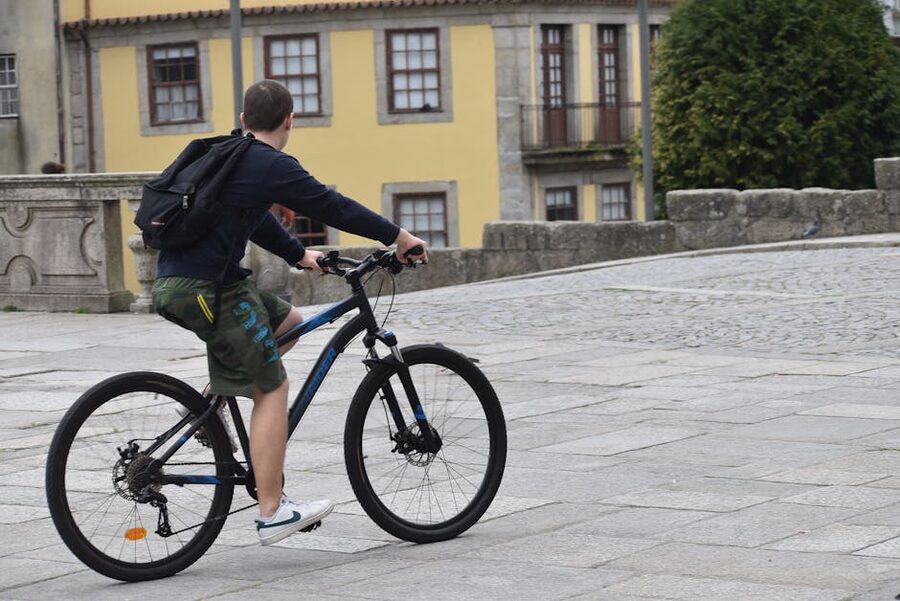
The hills aren’t all of it either. Porto’s streets are mostly granite cobbles, polished smooth by centuries of carriages and now thousands of tourists every day. They look great in photos. They are not great to brake on when wet. An e-bike with proper hydraulic disc brakes makes this manageable. A rental bike with cable rim brakes — which is what the cheaper rentals near the river still hand out — does not.
So when you see two tour prices that look almost identical, the question to ask is: e-bike or push bike? If it’s a push bike, find out where the route actually goes. The cheap-bike tours are usually flat-only, which means you skip the old town and ride the Douro instead. That can be a great tour. It just isn’t the one most first-timers expect.
The five things you’ll see on basically every tour
Most Porto bike tours follow some variation of the same loop, because the city’s photogenic spots are tightly clustered along the river. The differences between operators are in the order, the pace, and how long each stop lasts.
Expect every tour to include some version of these:
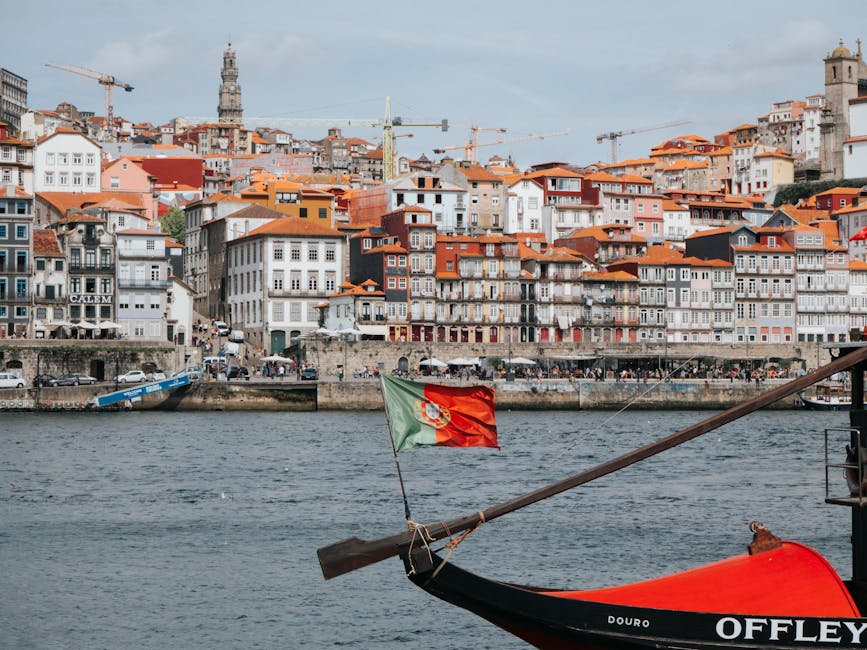
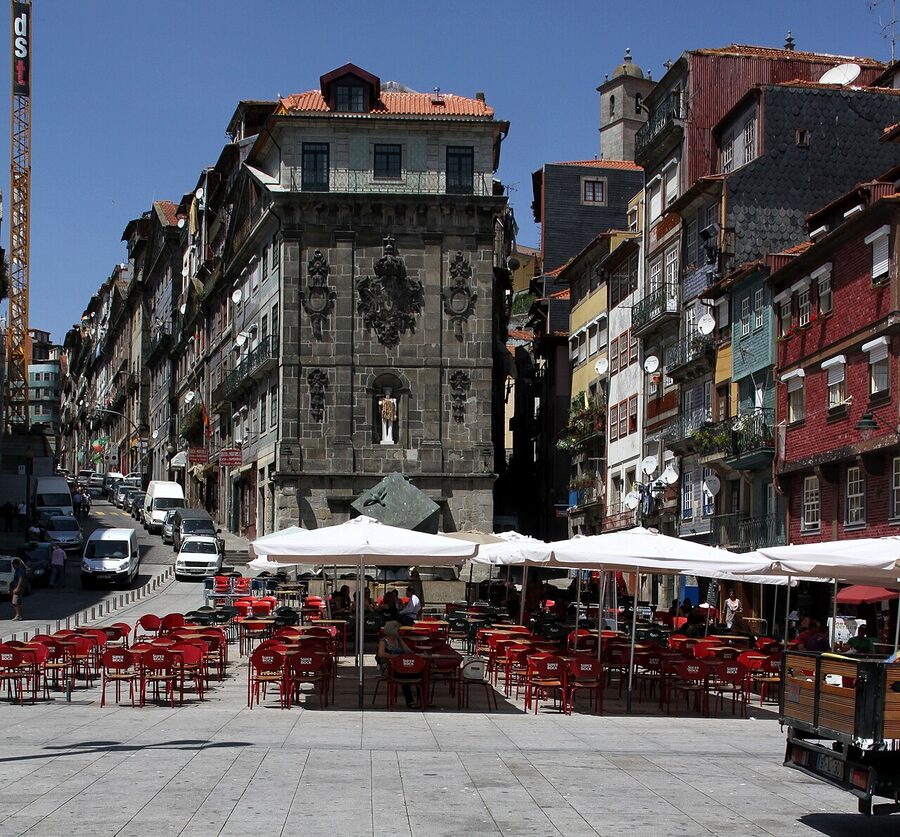
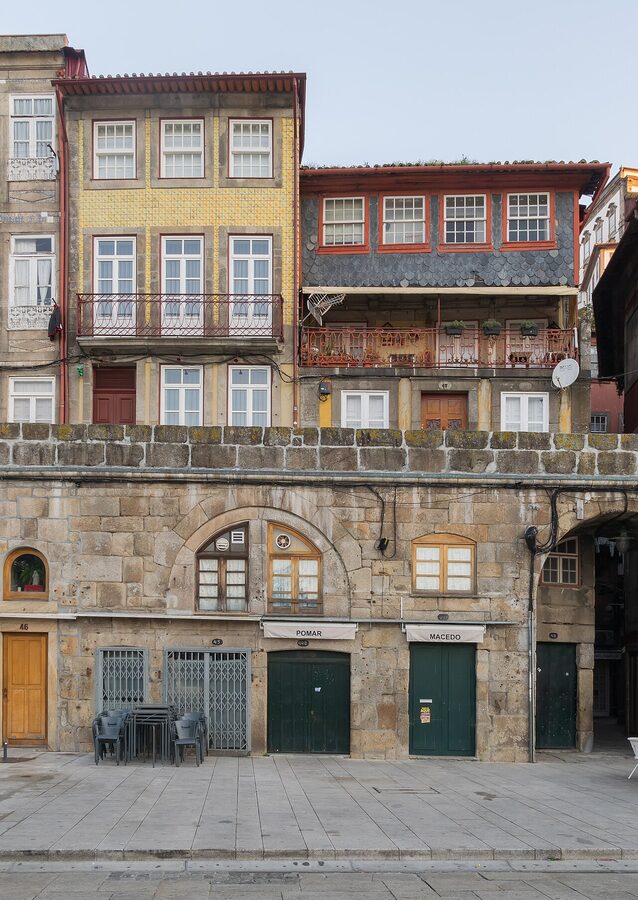
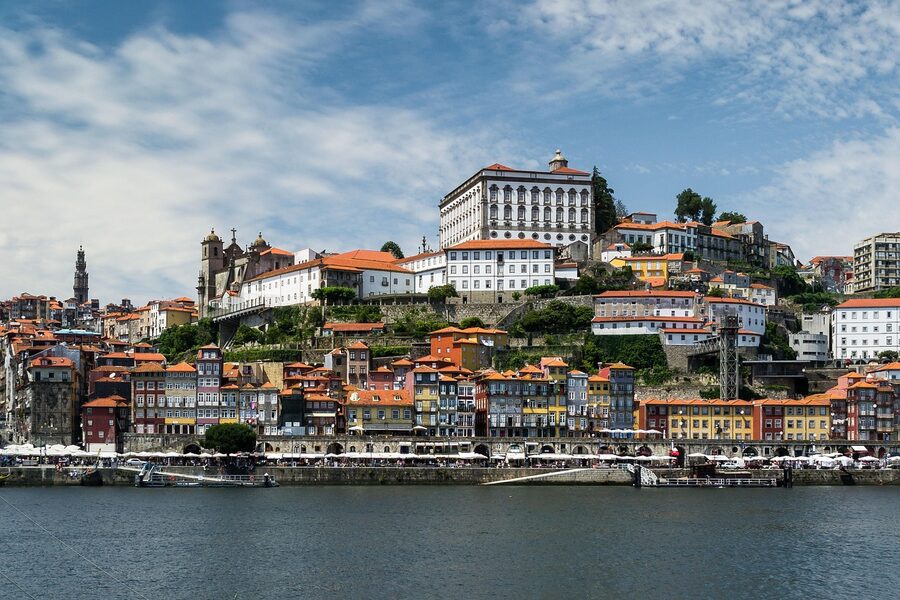
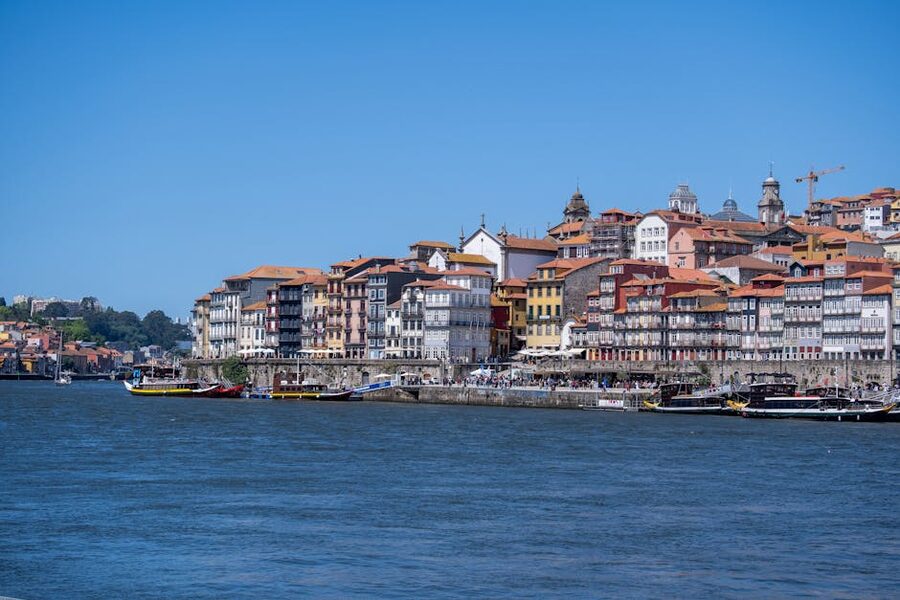
The Ribeira waterfront. Cobbled, narrow, packed with tour boats and people drinking €4 ports outside cafés. Bikes navigate this slowly. Most tours dismount here and walk for a hundred metres before remounting.
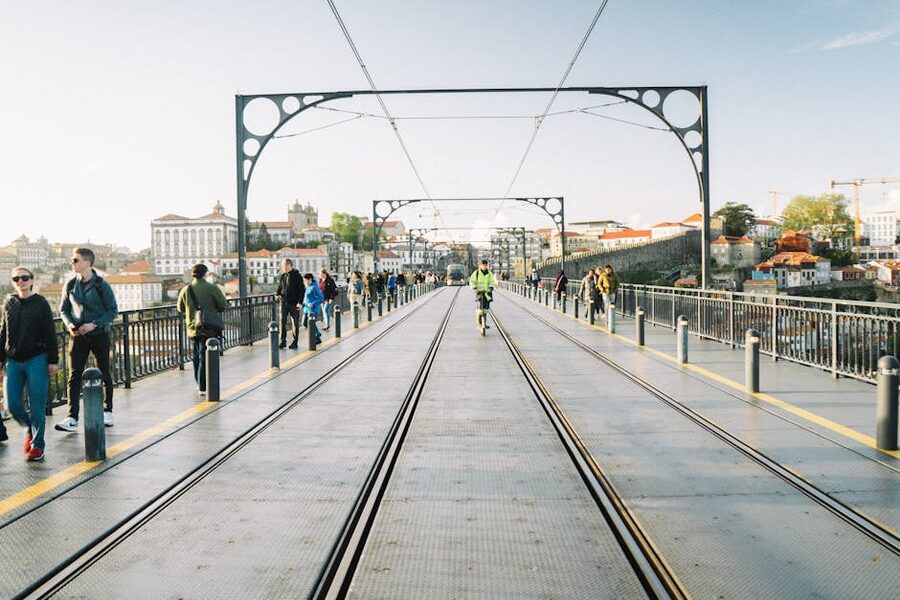
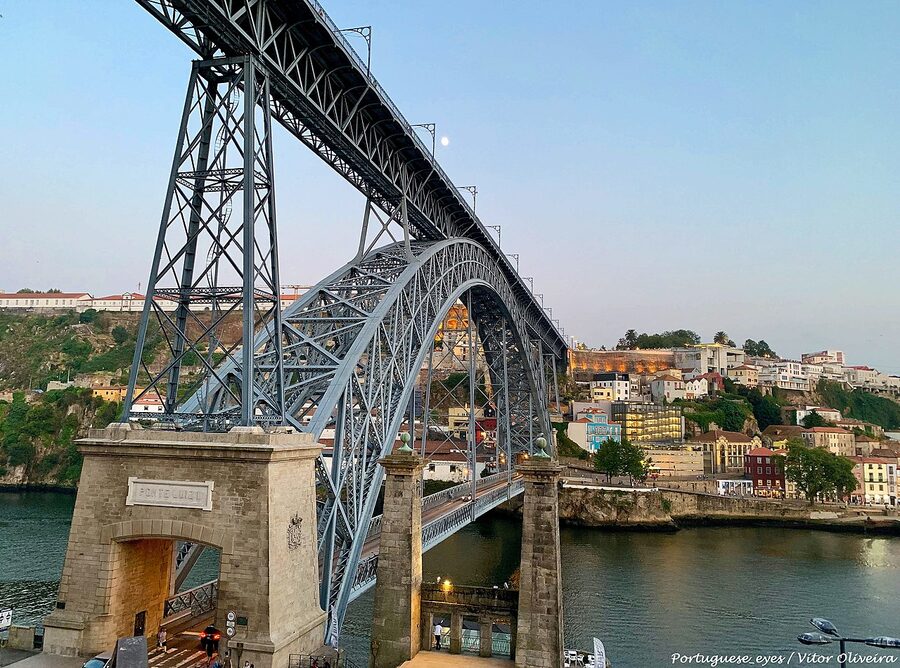
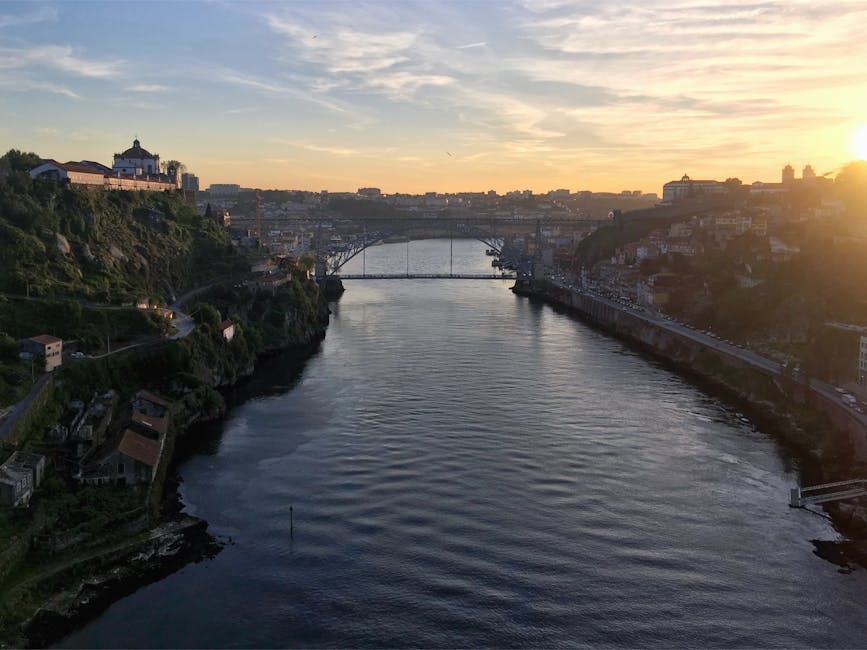
The Luís I bridge crossing. Almost every tour rides the upper deck across to Vila Nova de Gaia. It’s flat, the views are absurd, and traffic is restricted to trams and bikes — no cars. The ride itself takes about two minutes. The photo stop afterwards takes longer than the ride.
.jpg)
Vila Nova de Gaia and the port lodges. Cross the bridge, you’re in Gaia. Every tour rides past at least three or four port lodges — Sandeman’s distinctive black-cape sign, Cálem’s terracotta arches, Taylor’s up the hill. Most tours don’t stop for a tasting because that would balloon the duration, but they’ll point them out for the cellar tour you’re going to want to book separately. If port wine is what you’re really after, our guide on how to visit Porto’s port wine cellars covers the cellar tour scene properly.
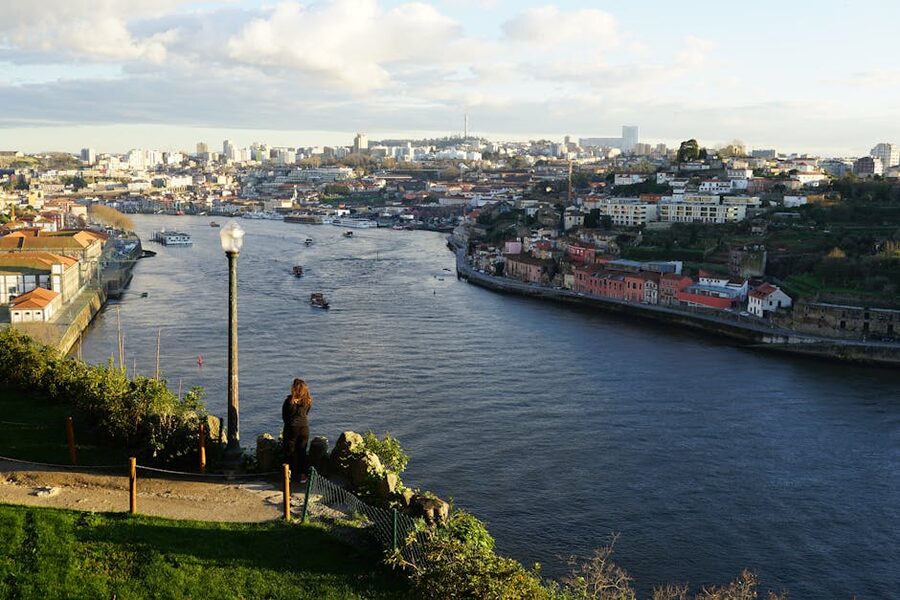
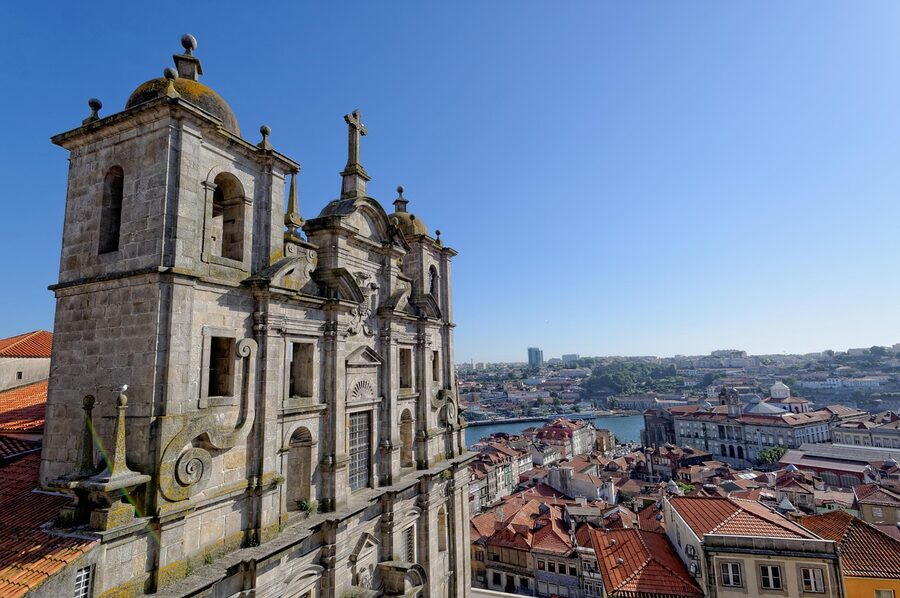
The cathedral viewpoint. Whether your tour climbs up to the Sé or just stops below the cathedral terrace, you’ll get the rooftops-and-river panorama. This is the shot you’ve seen on every Porto postcard. With an e-bike, the climb is nothing. On a regular bike, this is where you find out which kind of tour you booked.
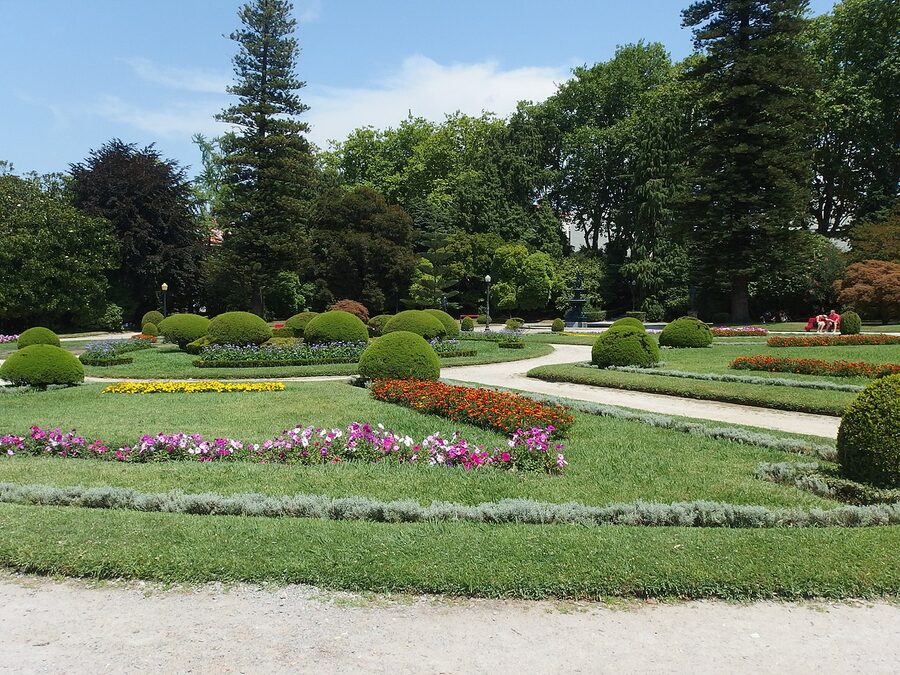
The Crystal Palace gardens. Some tours include this, some don’t. It’s a hilltop park west of the centre with peacocks, sweeping Douro views, and shade if you booked an afternoon tour in July. Worth asking about specifically — the gardens are one of Porto’s better-kept secrets and a much quieter pause than the cathedral terrace.
.jpg)
Old town loop or river-and-beach route?
There are essentially two flavours of Porto bike tour, and most operators sell both.
The old town loop stays close to the centre — Aliados, Clérigos, the Cathedral, Ribeira, Luís I bridge, Gaia, back over. It’s hill-heavy and almost always done on e-bikes. You see more landmarks per minute, but you also stop more, dismount more, and weave through pedestrians more. Two hours, max, before it gets tedious. This is the “I want to know Porto by sundown” tour.

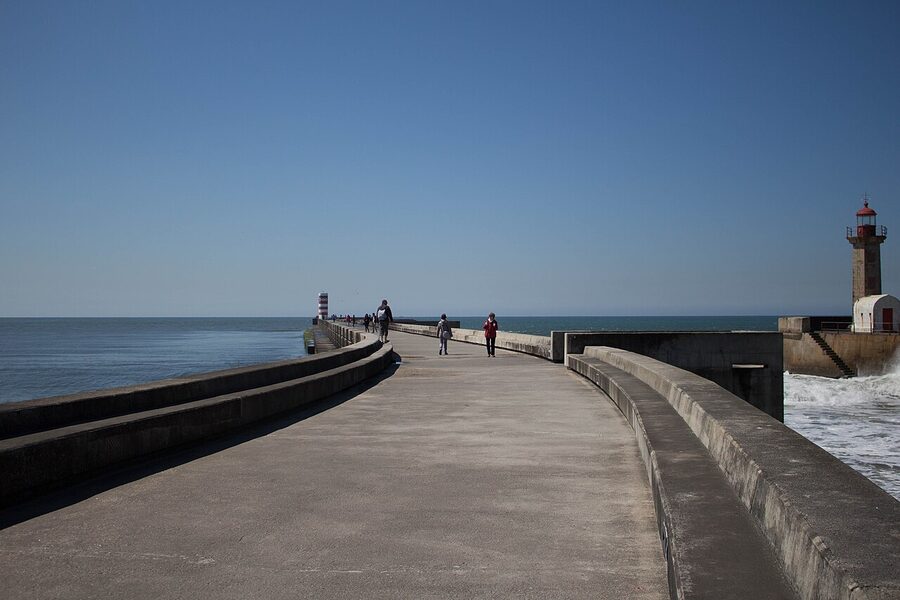
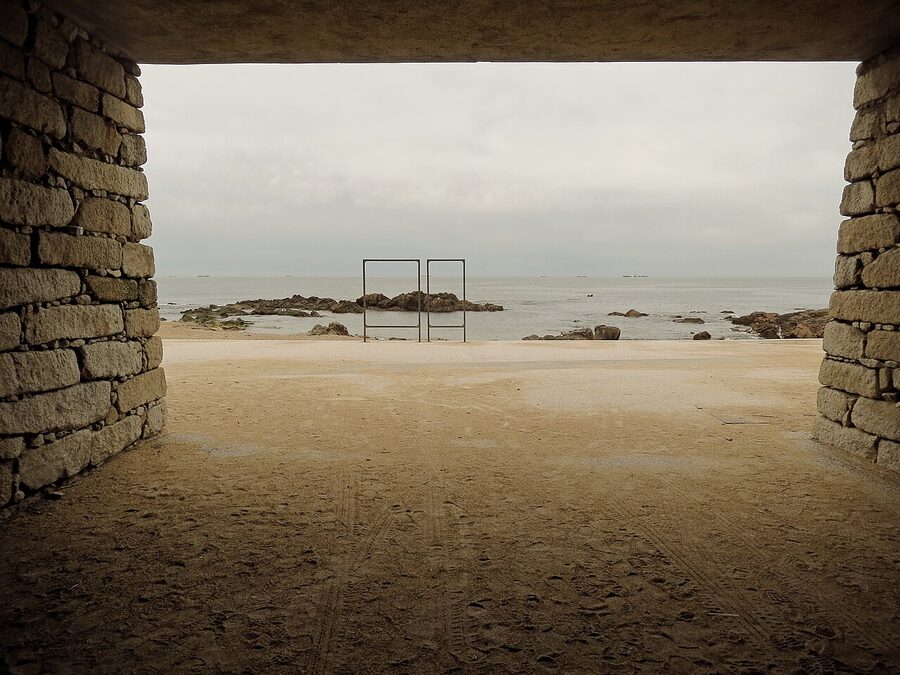
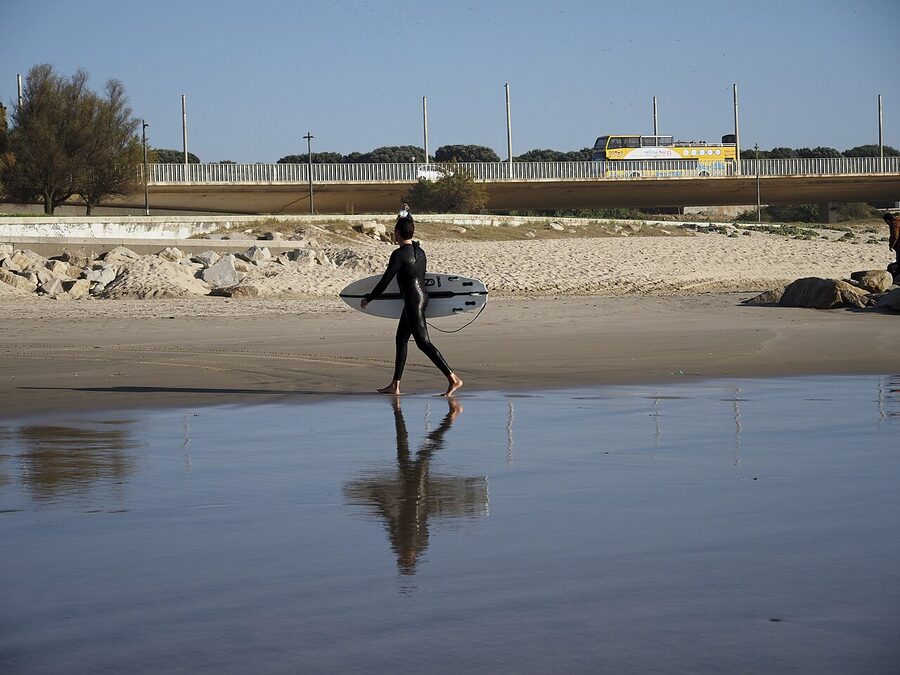
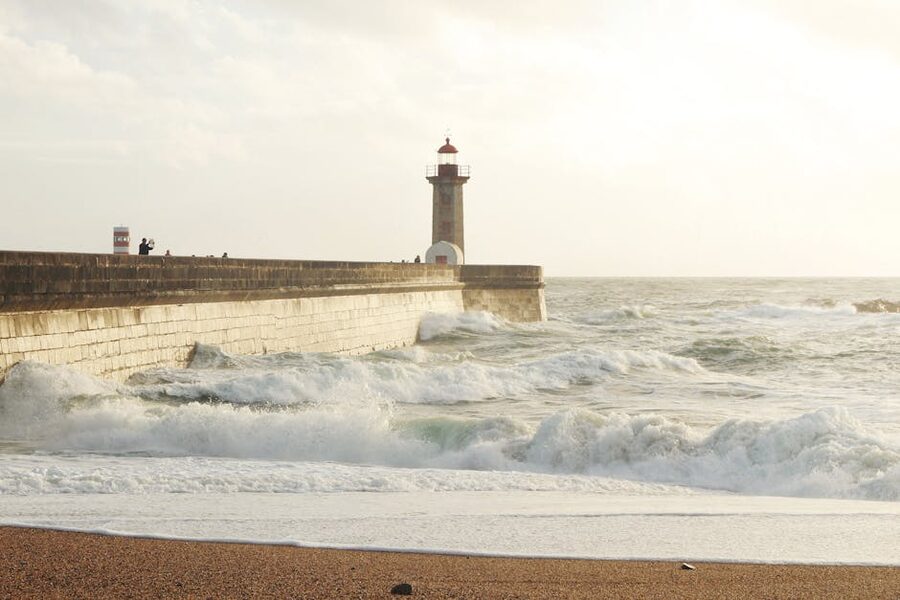
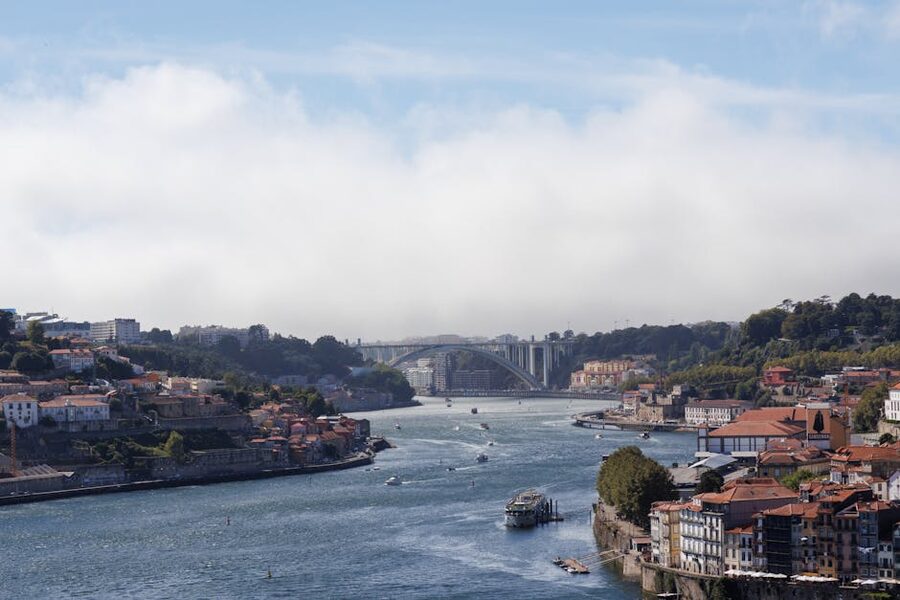
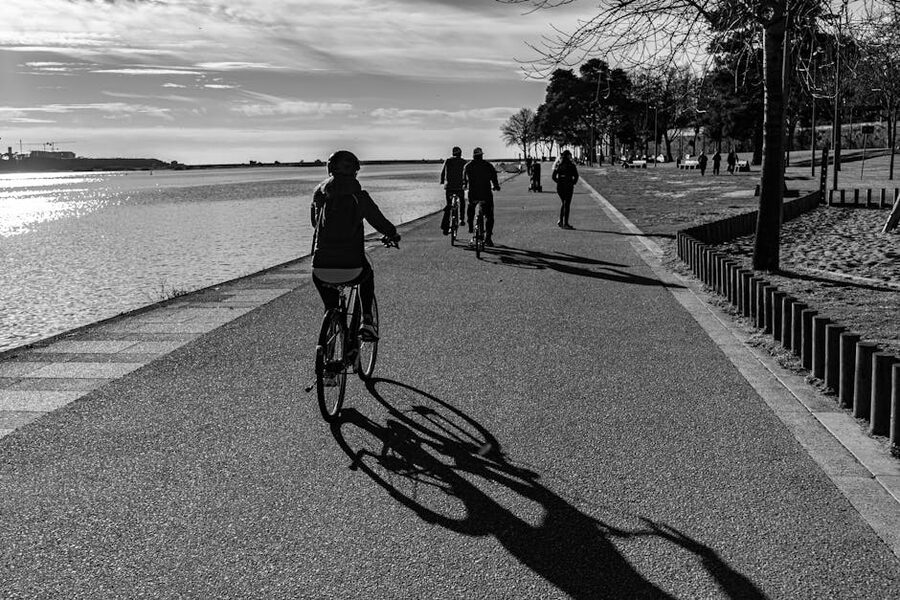
The river-and-beach route heads west from the centre along the Douro, past the iron-arched Ponte da Arrábida, all the way out to Foz do Douro where the river meets the Atlantic, then up the coastal path to Matosinhos. It’s flatter, faster, and longer — typically three hours including a coffee stop. This is the route I’d pick on a second day in Porto, or if you’ve already done a walking tour and you’ve got the orientation sorted.
.jpg)
.jpg)
If you’ve only got one bike tour in you, go old town loop on an e-bike. The river-and-beach is gorgeous but it’s also the kind of ride you can replicate on a rental bike on day two.
What it actually costs
Group e-bike tours start around $45-$55 per person for a 3-hour tour, which is the standard length. That gets you the bike, helmet, water, a guide, and usually a stop at a viewpoint with a port wine taste or a coffee. Cheaper than that and you’re getting a longer tour with a less-experienced guide on older bikes — usually fine, but read the recent reviews.
Private tours run $55-$75 per person if there are two of you, less per head if you’ve got more. The break-even point versus a group tour is around three people. If you’re a family of four, private is almost always cheaper than buying four group spots.
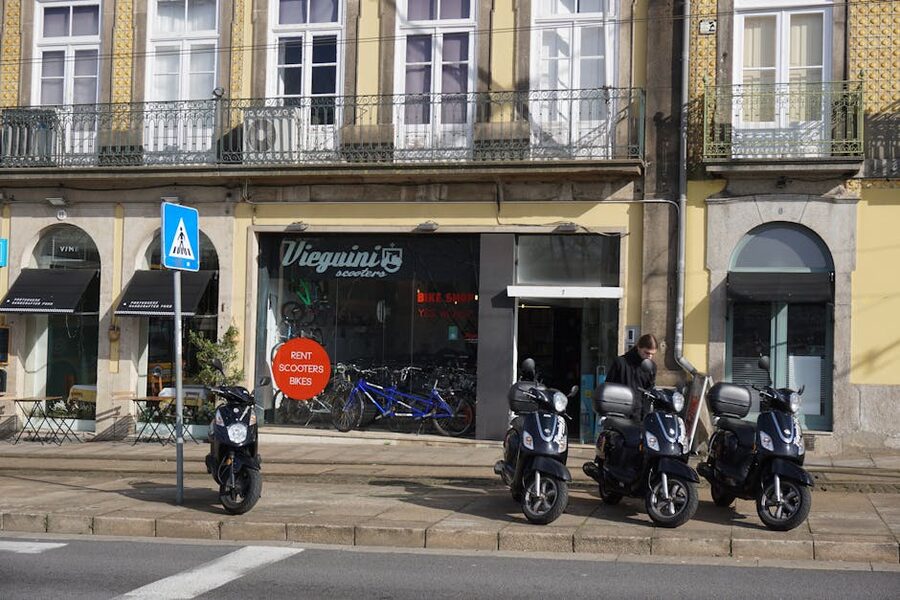
The walk-in rate at most rental shops is roughly the same as the online tour price. The catch is that walking in means you’re touring solo with whatever the shop hands you. The guide is the value — local knowledge, the photo angles you wouldn’t have found, and the rolling commentary that turns a route into a story. I’ve done both. The guided version is worth the extra fifteen euros.
What you don’t pay for and shouldn’t be charged extra for: helmet, lock, water bottle, basic insurance. If a tour bills these as add-ons, book a different one.
The three tours I’d actually book
I’ve ridden all three of these or read the recent reviews carefully enough to vouch for the format. The order is by what you’d want for a typical first visit — pick based on whether you want hill-heavy old town, the flatter coastal route, or a private tour.
1. Porto: City Highlights 3-Hour Guided Electric Bike Tour — $51
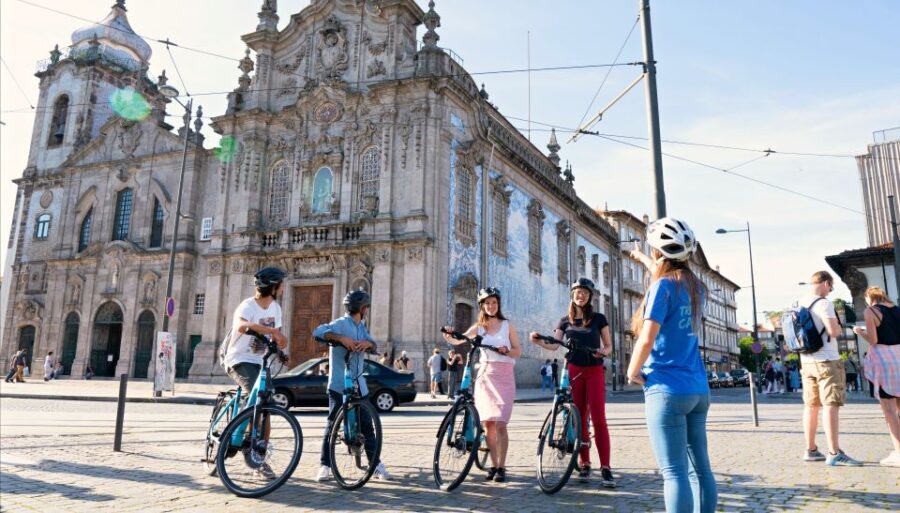
If you’ve got one bike-tour slot and want the city panorama version, this is the one. Three hours is the right length — long enough to see everything from above the river to the Gaia side, short enough that your legs are still working at dinner. Our full review goes into which start time is best and what the guide route actually looks like in practice. Sofia is the guide most groups end up with and she’s worth the booking on her own.
2. Porto: 3-Hour Bike Tour (Foz and Matosinhos) — $57
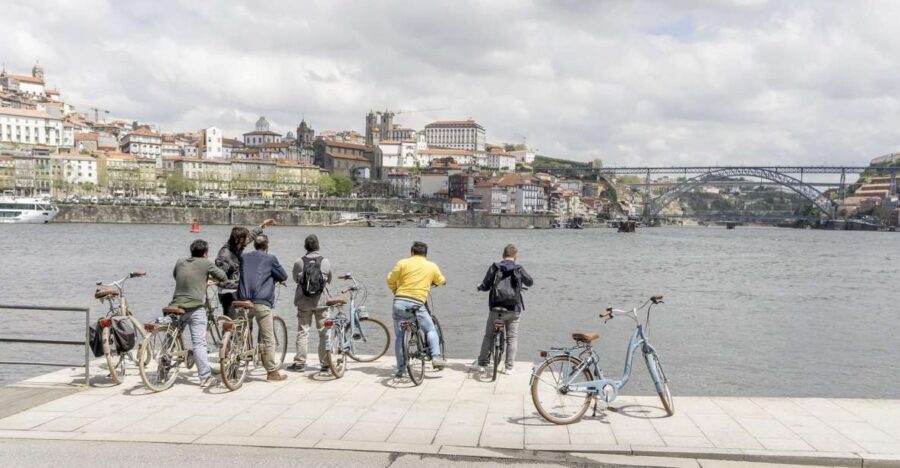
This is the bike tour I’d pick on day two of a Porto trip, after you’ve already done a walking tour of the old town. It’s almost entirely flat — the route follows the Douro out to where it meets the Atlantic and then continues along the coast. Our review notes that the bikes are kept in good condition and the helmets actually fit, which sounds basic until you’ve rented somewhere it isn’t true.
3. Porto: Private Bike Tour with a Local Guide — $57 per person
For families and groups of three or more, the private tour drops below the group price per head and gives you the tour you actually want — not the standardised loop. The guides bend the route to whether you’re more into history, photo spots, or food. Our full review covers what to ask the guide on day-of, including the question that gets you the better café stop.
When to book and when to ride
Book at least 24 hours ahead in shoulder season, longer in summer. Porto bike tours are a smaller pool than the river cruises or walking tours — fewer operators, smaller group sizes — and they fill up. The 9am and 2pm slots go first because they avoid both the morning fog and the evening cruise traffic on the bridge.
For the riding itself, the two times that work best:
March to early June — temperatures around 18-22°C, clear days more often than not, and the city hasn’t filled up yet. Best month is May, when everything’s green and the light stays usable until past 8pm.
Mid-September to October — the heat has dropped, the cruise crowds have thinned, and the harvest is on in the Douro Valley which means port lodges are at their most active. You’ll get the sunset lighting on the river without the sweat of August.
July and August are not ideal. Porto stays in the high 20s, the cobbles bake, and the bridge gets crowded enough that bike tours queue to cross. If you have to ride in summer, book a 9am slot or a 6pm slot — anything in between is just hot.
Winter (December to February) is fine if you don’t mind drizzle — Porto rains a lot from November through March, and tours often run anyway with light waterproofs provided. Cold isn’t really the issue. Wet cobbles are. If a tour offers a refund or reschedule for rain on the day, it’s worth booking; if it doesn’t, wait for a clearer week.
What to wear and bring
Porto bike tours are not technical rides. You don’t need cycling kit. But there are a few things that make the difference between a comfortable three hours and a memorable one for the wrong reasons:
Trainers or flat-soled shoes. Sandals slip off the pedals on the cobbles. Heeled shoes are obvious no. The tour-provided pedals are usually flat platforms, no clips.
Layered tops. Even in summer, the morning starts cool by the river and warms up steeply. A T-shirt under a light hoodie is the right call. You’ll be tying the hoodie around your waist by 11am.
Sunglasses, even if it’s overcast. Porto’s morning fog burns off fast and the light off the Douro is sharp. Without sunglasses you’re squinting for the second half of the tour.
A small backpack or cross-body bag. Most tour bikes have a basket or a small rack, but you can’t trust either with a phone. Anything you actually want to keep needs to go on you.
.jpg)
What you don’t need: cycling gloves, a water bottle (operators provide), or a phone holder for the bike. The tour pace doesn’t justify any of it.
How a Porto bike tour fits into the rest of your stay
If you’ve got two days in Porto, the bike tour fits best on day one — afternoon, ideally. You arrive, drop your bags, eat a pastel de nata for lunch, and start the bike tour at 2pm. By 5pm you’ve seen most of the city and you’ve got dinner near Ribeira ahead of you. The next day is for slower stuff: climbing the Clérigos tower, queuing for Livraria Lello if you’ve planned ahead, the port lodge tours.
Three days, you’ve got more options. Pair the bike tour with a six-bridges river cruise for the matching view from the water, or do the bike on day one and a Porto food tour on day three. The food tour and the bike tour overlap on a couple of stops, but that’s fine — eating tripe and drinking vinho verde standing still hits different from doing it ten minutes after a hill climb.
If you’re combining Porto with Lisbon, the same operators run a parallel bike tour in Lisbon with a similar e-bike-mandatory hilly profile. Lisbon’s tours tend to be longer and cover more neighbourhoods because the city itself is bigger; Porto’s bike tours are tighter and more concentrated on the river.
For day trips, a bike tour pairs well with a Douro Valley trip — bike day in Porto first to get the city sorted, then the valley day to see where all the wine is actually grown.
The mistakes I see first-timers make
A few patterns from watching tours load and unload at the Ribeira:
Booking a 4-hour tour as your first activity in Porto. If you’ve just arrived and you’re jet-lagged, three hours is enough. Save the longer formats for day two when your legs are warmed up.
Going for the cheapest option without checking if it’s e-bike or push bike. A €30 tour is usually a regular bike on the flat route. That’s a fine ride. It’s just not the same product as a €50 e-bike old-town loop. The price difference is the bike, not the guide.
Taking the tour in the afternoon and then trying to do a port cellar tour at 6pm. A bike tour ending at 5pm leaves you tired and slightly damp. The port cellar tours need attention spans. Do them on different days.
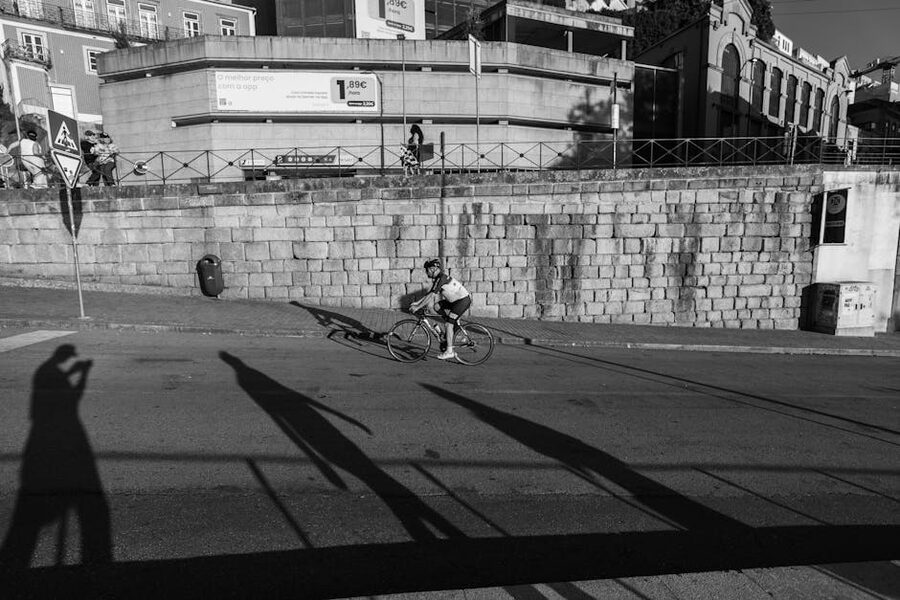
Skipping the helmet because it doesn’t look right with your photos. The cobbles in Porto are not forgiving when you go over the bars. Wear it.
Assuming you can hop off the tour to do a port lodge midway. You can’t really. The lodge tours are 45 minutes minimum and the bikes need to be locked somewhere safe. If a port wine tasting is part of your day, book a tour that explicitly stops for one — most do, but only for 20 minutes at one specific lodge.
The history bit, briefly
Cycling in Porto isn’t quite the locals’ thing, despite the city’s flat coastal belt. The hills, the cobbles, and historically the lack of dedicated infrastructure pushed serious cycling out to the Douro Valley and the coastal paths instead. The dedicated tour scene only really took off in the mid-2010s when e-bikes became cheap enough to rent fleet-style.
.jpg)
The Luís I bridge, which features in basically every tour, is the city’s signature engineering piece. A double-decker iron arch, designed by Théophile Seyrig — a former partner of Eiffel — and finished in 1886. The upper deck used to carry car traffic; it was converted to metro and pedestrian-bike use in 2003, which is exactly why bike tours can ride it now without dodging cars.
The route most operators use today is essentially the same one that walking tours have followed for fifty years. The bike just lets you do it in three hours instead of six, and lets you skip the bits where you’re trudging up cobbled steps in the heat.
One last thing about the bikes themselves
If you have any choice in operator, ask about the e-bike model. The good ones use Bosch or Shimano mid-drive motors, which give a smooth assist and have batteries that last the full tour without sweating. The cheap ones use no-name hub motors, which are fine on the flat but stutter on the steeper climbs — exactly when you actually need them.
Tyre size matters too. 35mm or wider eats the cobbles without rattling your wrists. Anything skinnier on Porto’s stone surface gets unpleasant fast. Most reputable tour operators have moved to gravel-style bikes for exactly this reason; if your bike has 28mm tyres, it’s a road-bike conversion and won’t be as comfortable.
Helmets, water, locks, and basic insurance should all be included. If they’re priced as add-ons, that’s a flag — pick a different operator. Reputable tours have these standard, and the booking platform reviews will flag operators that don’t.
Other Porto guides worth a look
If you’re putting together a few days in Porto, the bike tour is one piece of the puzzle. Pair it with a walking tour on a different day if you want the slower-paced version of the same old town, or the hop-on hop-off bus if mobility is a concern. The tuk-tuk tour is the lazy cousin of the bike tour — same route, no pedalling, but you don’t get the workout side and you do pay a bit more.
For viewpoints, the Clérigos Tower climb is the obvious follow-up — bike tour gets you the Cathedral panorama, Clérigos gets you the inverse view from the other hill. Add the Porto Card if you’re stacking lots of attractions. And if port wine is what you really came for, the port cellar guide covers all the major lodges in Gaia.
Affiliate disclosure: Some links above go to GetYourGuide and Viator, which means we earn a small commission if you book through them. It doesn’t change what you pay or which tours we recommend — we’d write the same guide either way.