
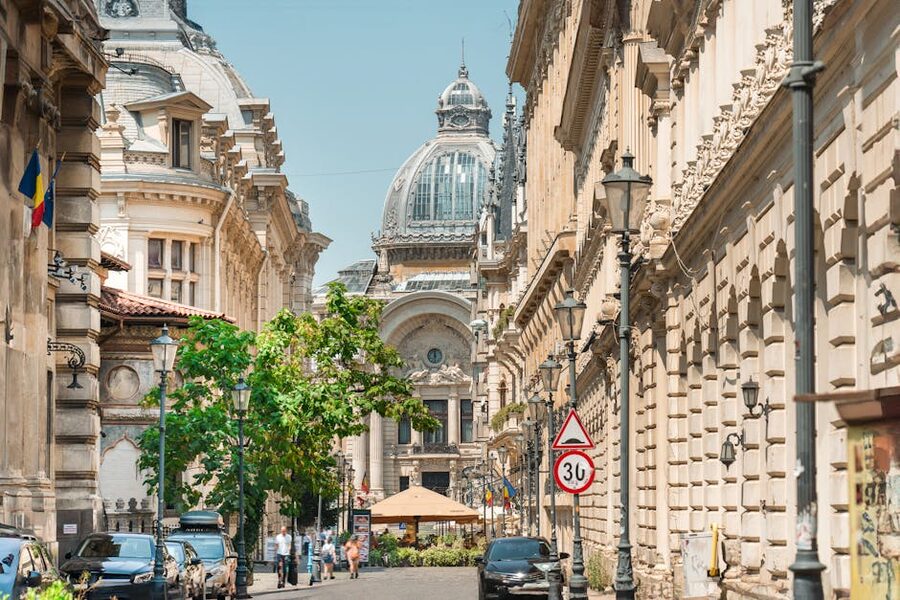
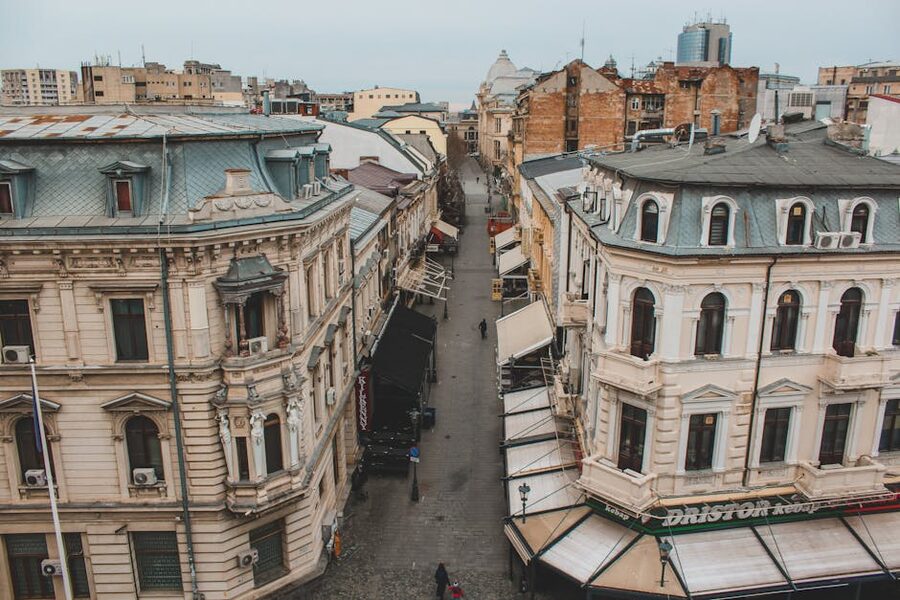
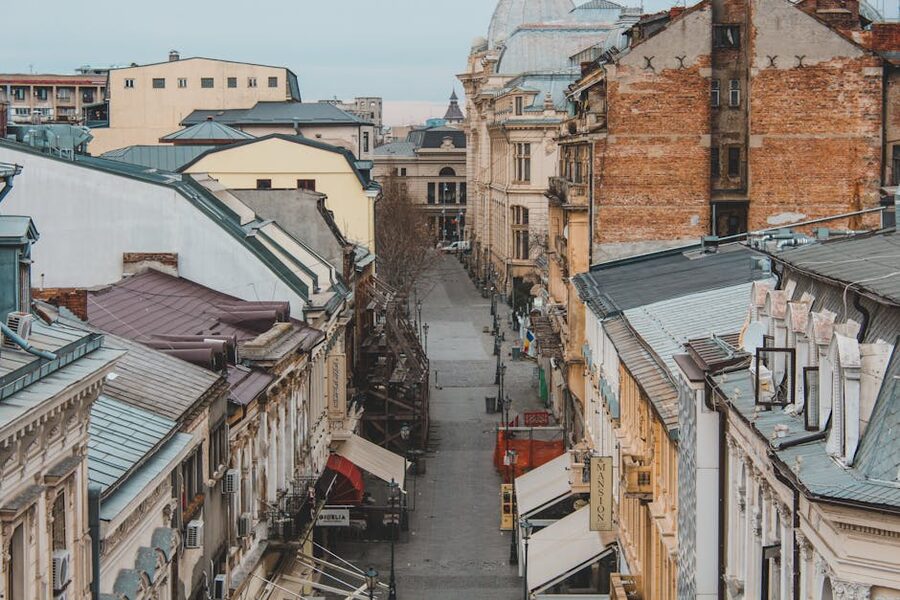
Stand at the corner of Strada Lipscani and Strada Smârdan and look both ways. To one side, a powder-blue Belle Époque facade with stucco swags and an iron balcony. To the other side, a slab of grey concrete, ten storeys, no decoration, the kind of apartment block that reads “Soviet textbook” before you finish the sentence. Same street. Same block. The communism walking tour is built around this exact contrast, and once you start seeing it, you cannot unsee it on any street in Bucharest.
The good news is the city’s two best operators take small groups, run roughly three hours, and cost about thirty dollars. Choosing between them is more about the guide than the route, and I’ll explain why below.
Best on Viator: The Real Tour of Communism, $33. Smaller routine, slightly more time at each stop, Octavian’s the one to ask for.
If you want the castle combo too: Pair the walking tour with the Bran Castle and Dracula tickets guide, do the city tour on day one, the castle on day two.
- What you actually walk through
- Picking between the two operators
- 1. Communism and History Guided City Walking Tour:
- 2. The Real Tour of Communism:
- What you’ll actually learn
- The “Little Paris” before
- What the regime did to the city
- The 1989 Revolution, the version locals tell
- The set-piece stops, briefly
- Revolution Square
- The Palace of Parliament approach
- Casa Scânteii / Casa Presei Libere
- Calea Victoriei
- Lipscani / Old Town
- Practical things worth knowing before you book
- When to go
- How long, how far
- Group size
- What to bring
- Where to meet
- Language
- If you only have one day in Bucharest
- If you have two days
- What about the dark history? Is this tour appropriate?
- What it costs, end to end
- Booking the right time slot
- What it does not cover
- One more thing worth saying
- Pairing this tour with the rest of Bucharest
What you actually walk through
The two main operators run very similar routes. Both start near the centre, both finish near Revolution Square or the Old Town, both hit the same five or six set-piece stops. The differences are in the order, the pacing, and how much time the guide is willing to spend on the side streets where the contrast lives.
Here’s what’s on the standard itinerary, more or less in walking order, for both tours:
- Revolution Square (Piața Revoluției). The plaza where Ceaușescu gave his last speech on 21 December 1989, with the balcony of the former Central Committee building still visible. The crowd was meant to applaud. Instead they booed. He looked confused, the live broadcast cut, and the regime fell within four days. The balcony’s still there, painted institutional cream, looking ordinary.
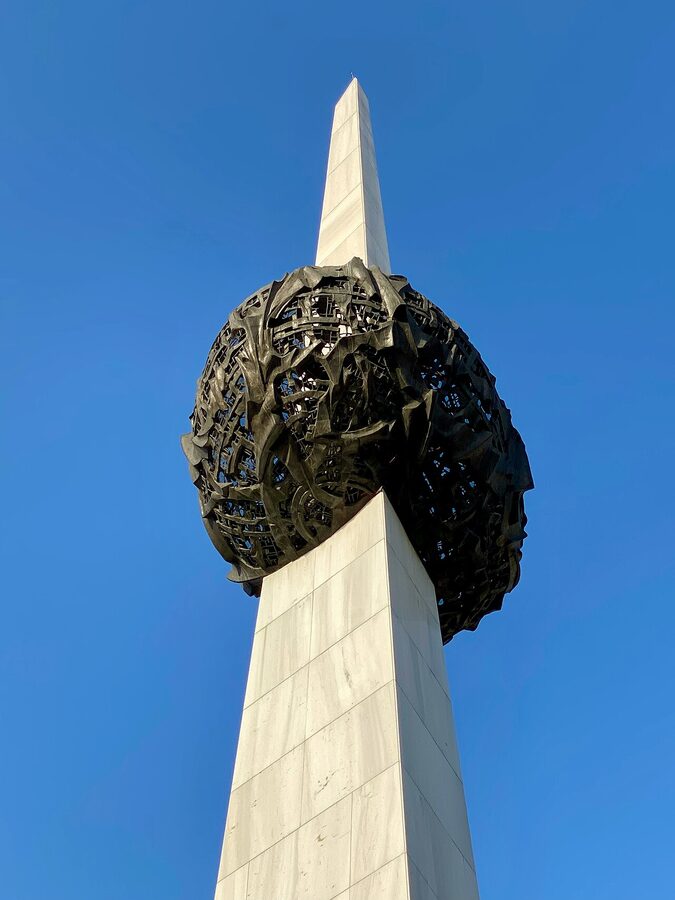
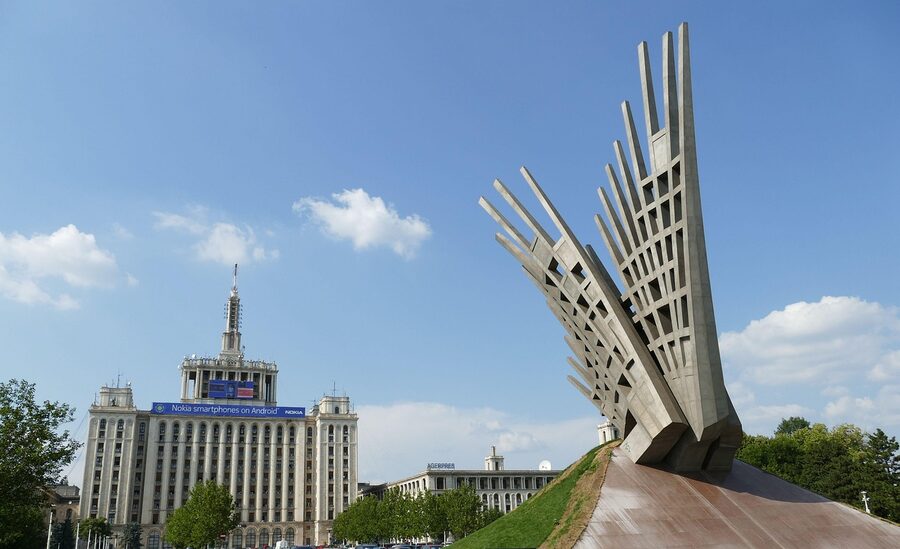
- The Memorial of Rebirth. Mihai Buculei’s controversial 25-metre obelisk, finished in 2005 to commemorate the 1989 dead. Locals nicknamed it “the potato on a stick” within a week. Your guide will probably let you make up your own mind.
- Calea Victoriei. The Champs-Élysées-modeled boulevard that ran through pre-war “Little Paris” Bucharest. Half of it survived, half of it didn’t. Walking it is where you start to see the layering.
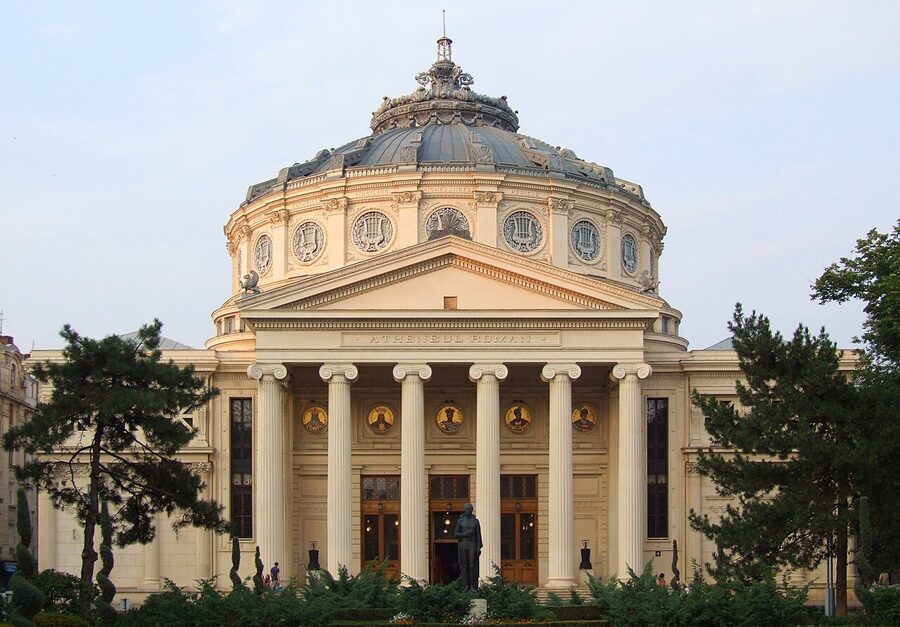
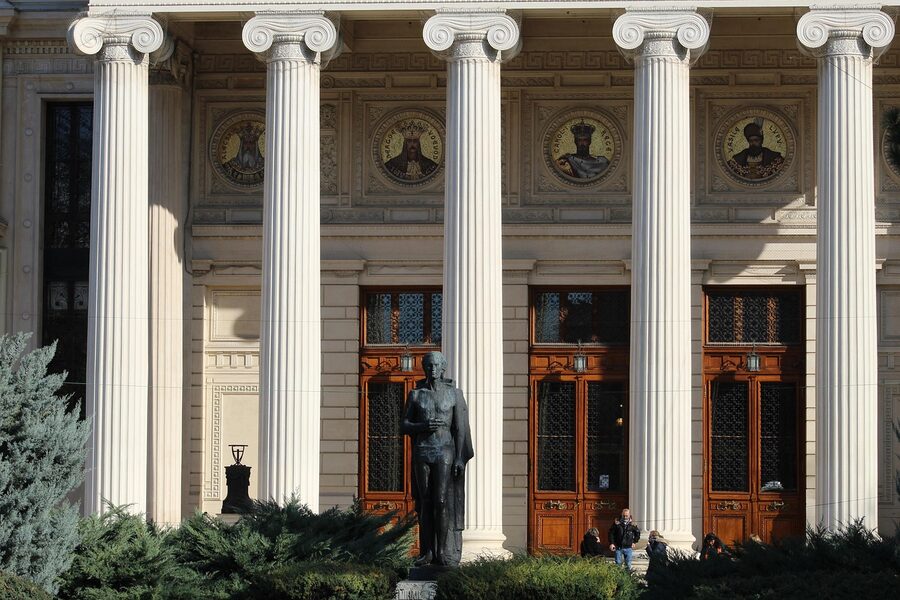
- The Romanian Athenaeum. 1888 concert hall, dome and Corinthian columns, the building Ceaușescu wanted to demolish for one of his projects and which the Communist Party themselves blocked. Stops are usually outside, not in.
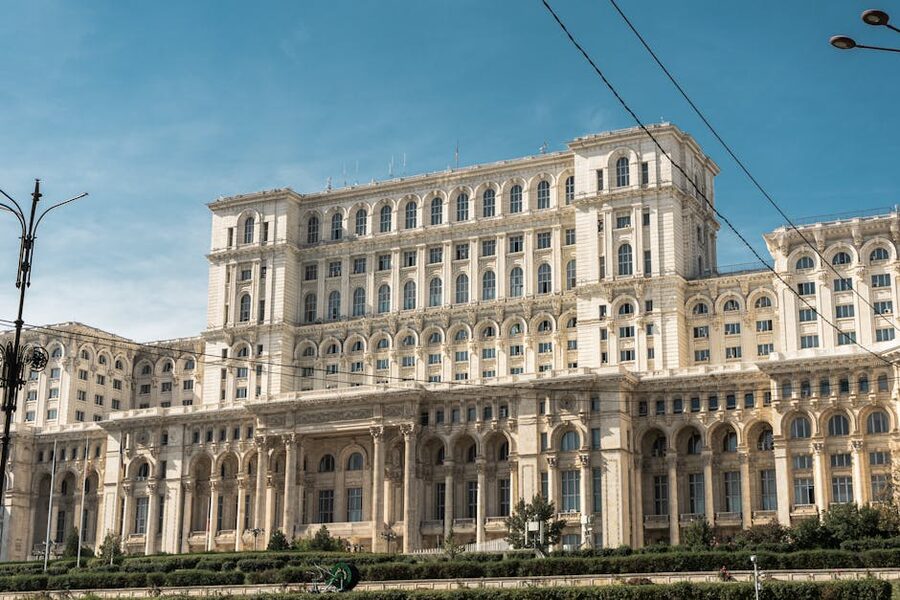
- The Palace of Parliament approach. You don’t go in. You walk up Bulevardul Unirii, the boulevard built one metre wider than the Champs-Élysées on Ceaușescu’s orders, and the building gradually fills the entire view in front of you.
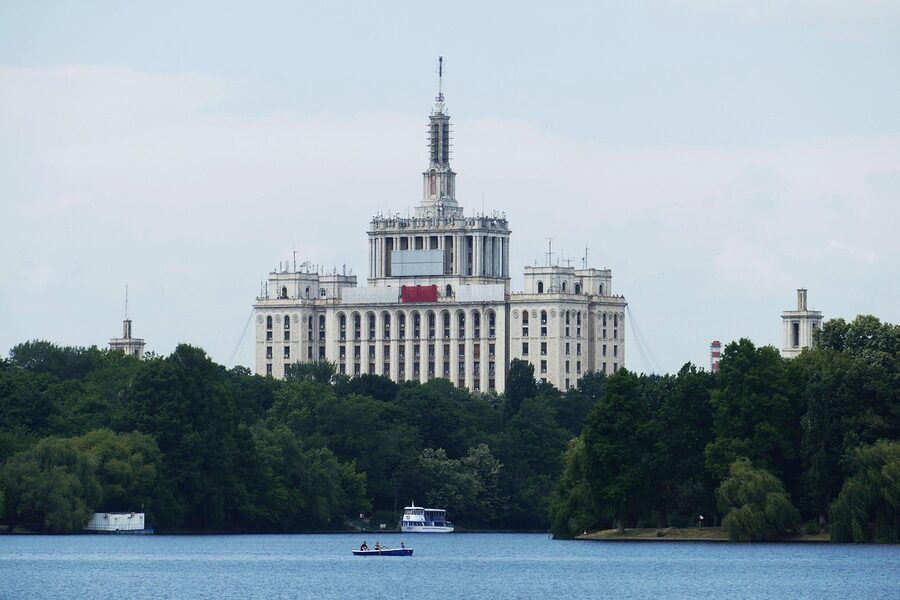
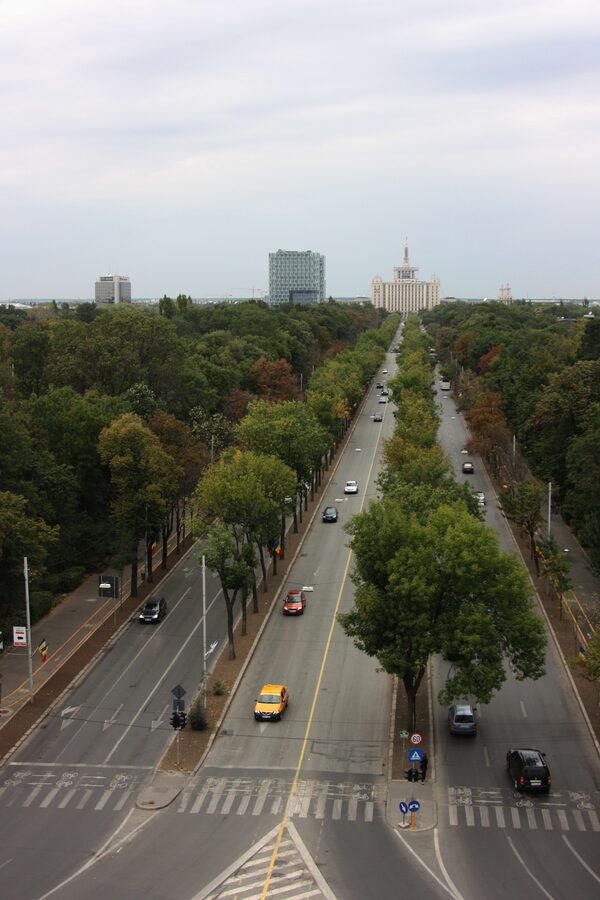
- Casa Scânteii / Casa Presei Libere. Some operators detour north to the Stalinist printing-house complex (1956, modeled on Moscow State University). Some skip it because it’s a 15-minute taxi out. Worth asking before you book if it matters to you.
- The Old Town (Lipscani). Tour usually finishes in the surviving Belle Époque arcades around Strada Lipscani and Strada Smârdan, which is where the side-by-side communist-meets-pre-war stuff is most visible.


Picking between the two operators
You won’t go wrong with either, but they’re not interchangeable. Here are the three options worth considering, in order. The first two are the city’s mainstream picks. The third is the existing Bran Castle guide, which is its own day out and pairs nicely.
1. Communism and History Guided City Walking Tour: $31
This is the tour I’d recommend first if you only have time for one. Three hours, central pickup, a route that hits every set-piece without sprinting. The guides are the differentiator: Andreea, Mihai and Daniela are all Bucharestians who lived through at least the tail end of this, and the personal anecdotes are what lift it above a textbook walk-through. Our full review of this walking tour covers the practical pickup logistics and what to ask the guide if you want extra time at the Memorial of Rebirth.
Check Availability
Read our full review
2. The Real Tour of Communism: $33
The Viator equivalent of the GetYourGuide pick above, run by BUSINESS TRAVEL SOLUTIONS. Same three hours, similar route, but a slightly tighter group and more time on the dictatorship-mechanics side: how the Securitate informant network worked, what daily life was like in the 1980s rationing years. Octavian is the guide to request. Our full Real Tour of Communism review goes into how the pacing differs from the GetYourGuide version. Some uneven streets and uphill stretches.
Check Availability
Read our full review
What you’ll actually learn
Some of this you can read on a Wikipedia page. Most of it sticks better when someone is pointing at the actual building.

The “Little Paris” before
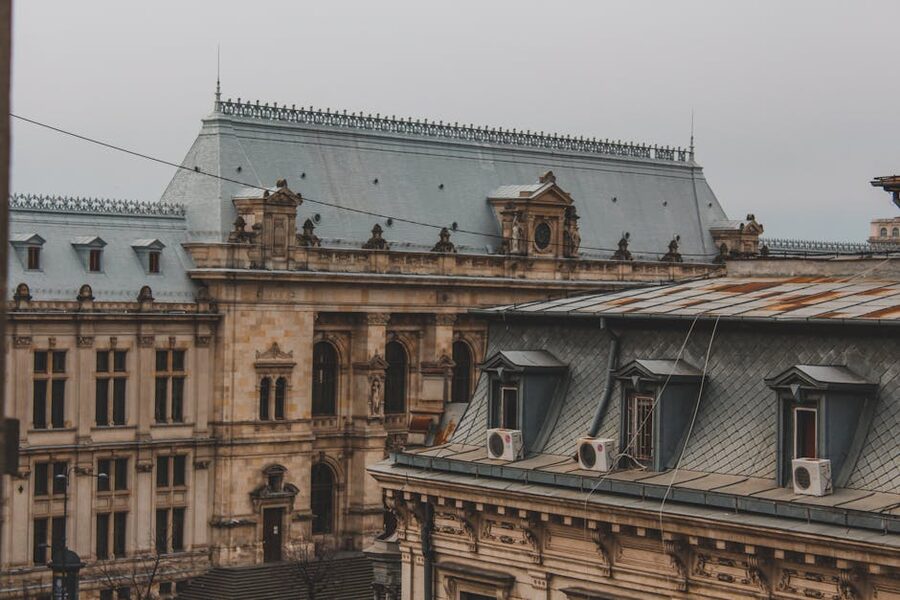
Pre-war Bucharest had a real claim to the nickname. The boulevards were laid out in the 1880s and 1890s in deliberate imitation of Paris, with French architects hired for several of the major buildings. The Romanian Athenaeum (1888) is the showcase: domed, columned, modeled on a French temple plan. Calea Victoriei was the equivalent of the Champs-Élysées, lined with embassies, Belle Époque hotels, and the kind of cafés where the literary crowd hung around all afternoon. The Cişmigiu Gardens, laid out in the 1850s, were full of imported plane trees.
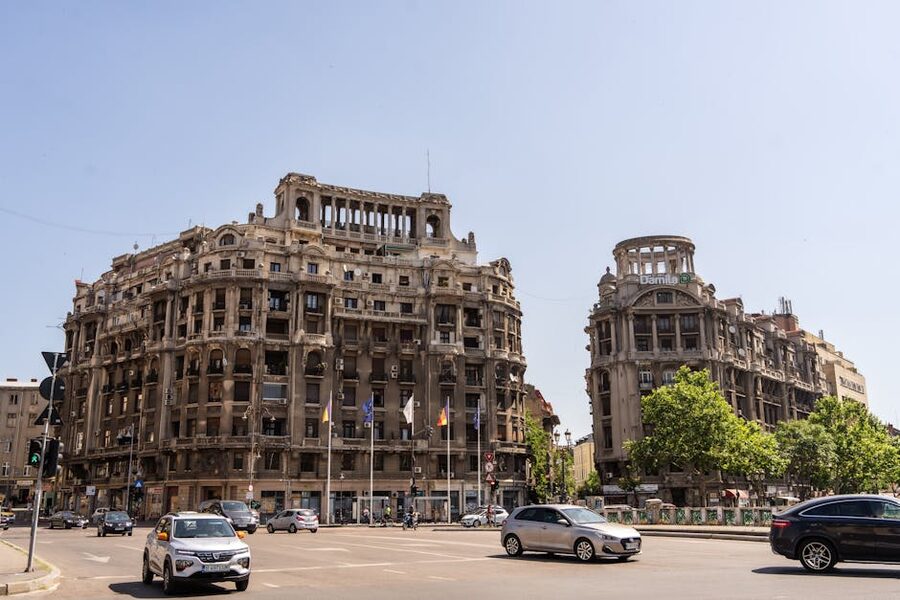
That city was real, and bits of it are still standing. You’ll walk past several stretches of it on the tour, mostly along Calea Victoriei and around Strada Lipscani. Recognising the contrast is half the point of the three hours.

What the regime did to the city
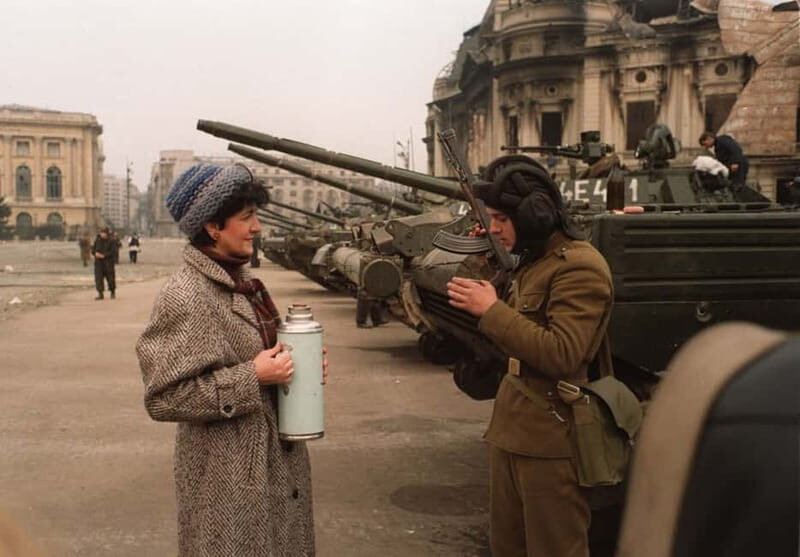
The short version: a March 1977 earthquake gave Ceaușescu a pretext, and a 1984 “systematization” plan turned the pretext into a building programme. Over the next five years, around seven square kilometres of central Bucharest were demolished. That’s roughly a quarter of the historic city. Thirty-plus Orthodox churches went, including some 17th-century ones; tens of thousands of homes; whole working-class neighbourhoods like Uranus and Văcărești. People got two weeks’ notice and a flat in a new block on the outskirts.
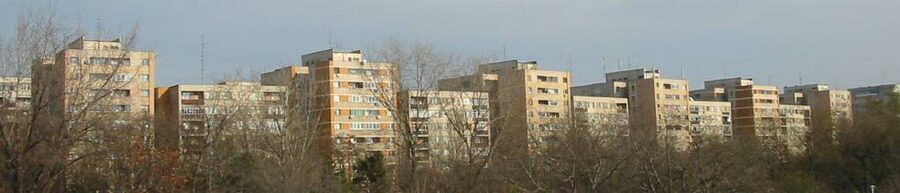
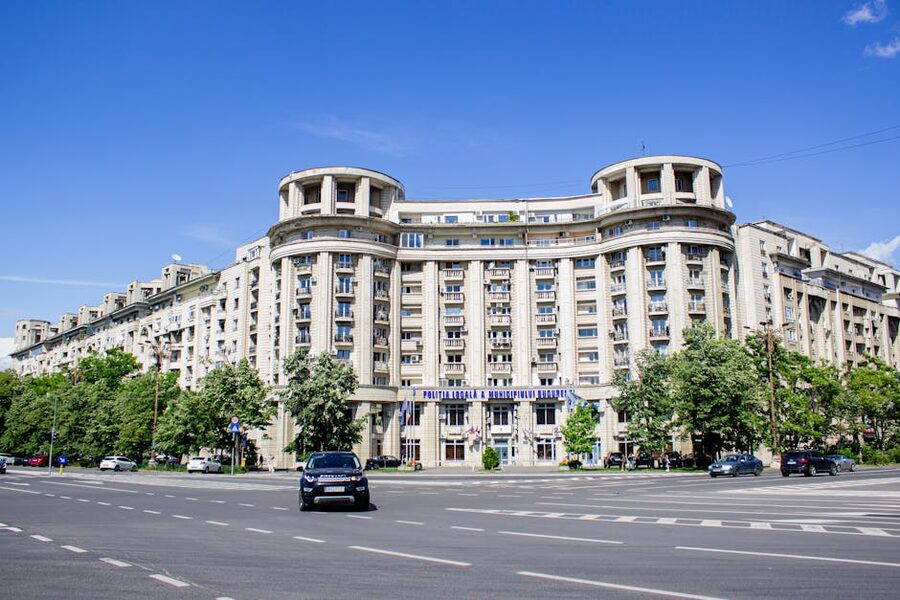
What replaced it: Bulevardul Unirii (the boulevard built deliberately one metre wider than the Champs-Élysées), the Palace of Parliament at its head, and the rows of identical apartment blocks that line the rest of it. Walk it now, and the boulevard is too wide for the traffic that uses it. It feels like a film set at the wrong scale. That’s the point your guide will be trying to make.
The 1989 Revolution, the version locals tell
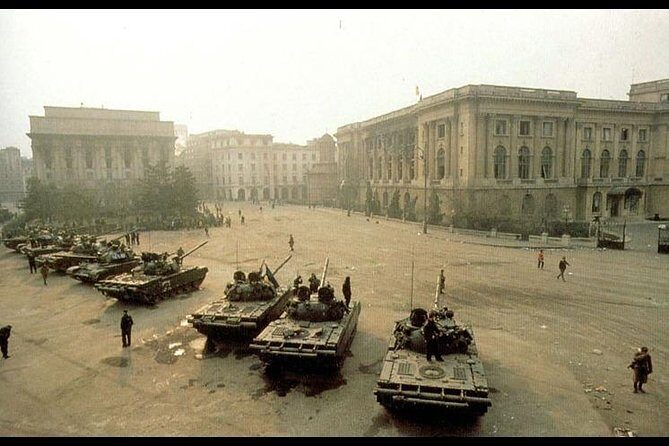
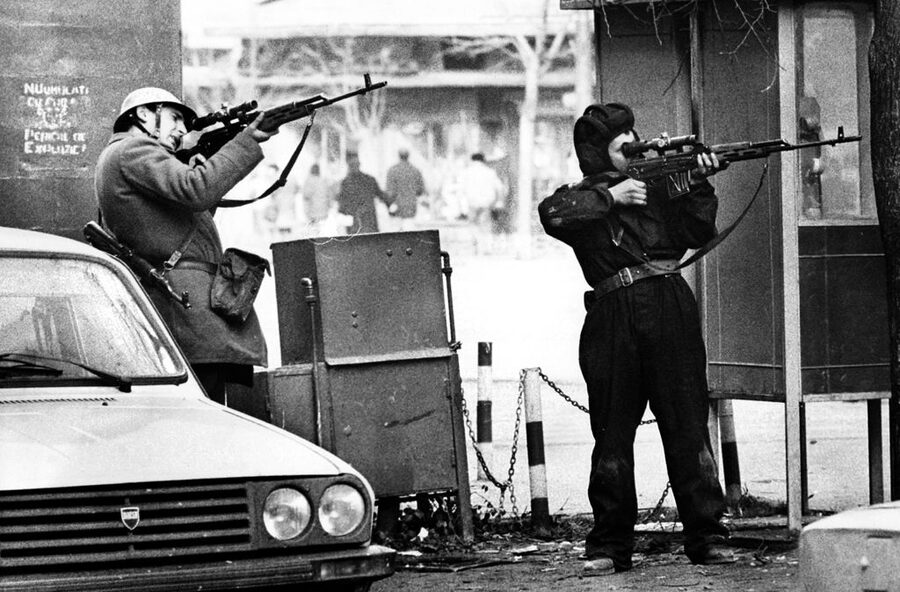
You’ll hear a different account of December 1989 from a Bucharest guide than the one in the Western press at the time. The official version was clean: Ceaușescu booed at his own rally, fled by helicopter, captured at Târgoviște, executed on Christmas Day after a 90-minute trial. The locals’ version is messier. Who fired the first shots in the streets between 21 and 25 December is still genuinely disputed. The death toll (around 1,100 across the country, 162 in Bucharest itself) was higher in the days after Ceaușescu was captured than before. There are theories. Your guide will have one.
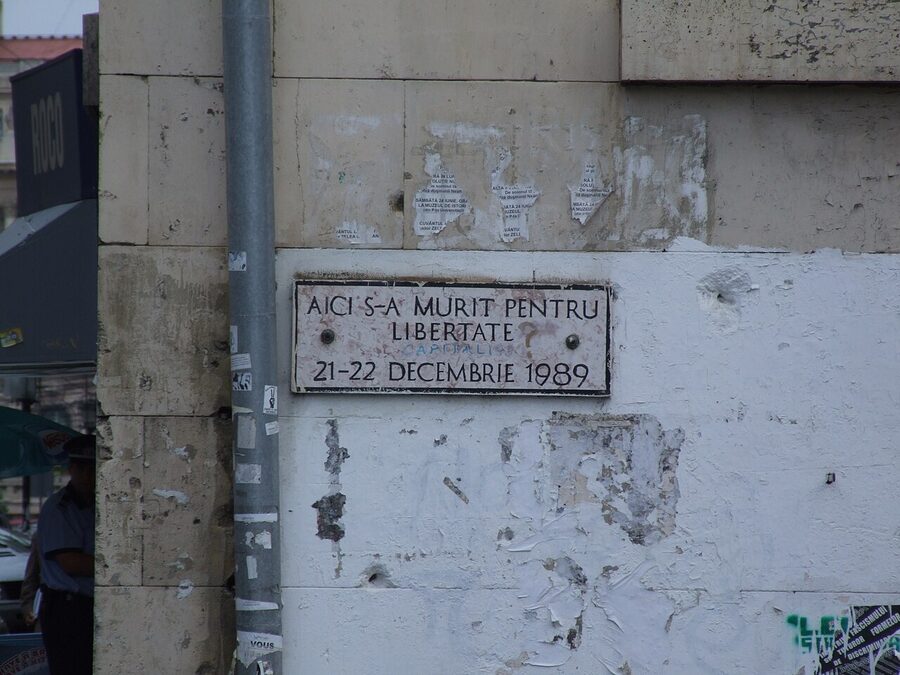
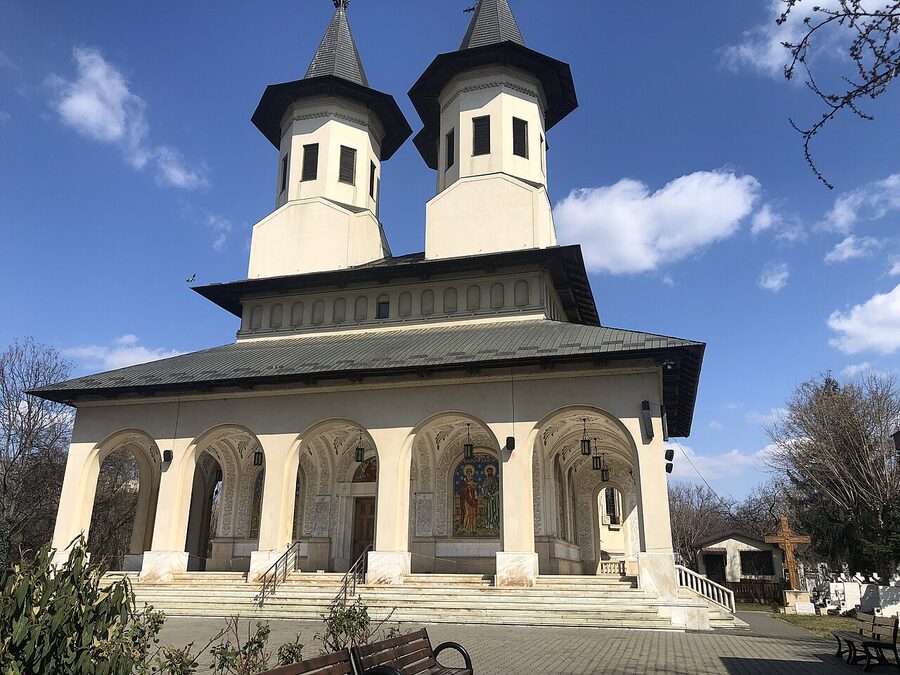
Most operators end this part of the tour at the small commemorative plaques on Revolution Square, or at the Church of the Heroes of the Revolution a few streets away. It’s a quiet, slightly awkward stop. There aren’t many tourists.

.jpg)
The set-piece stops, briefly
Revolution Square
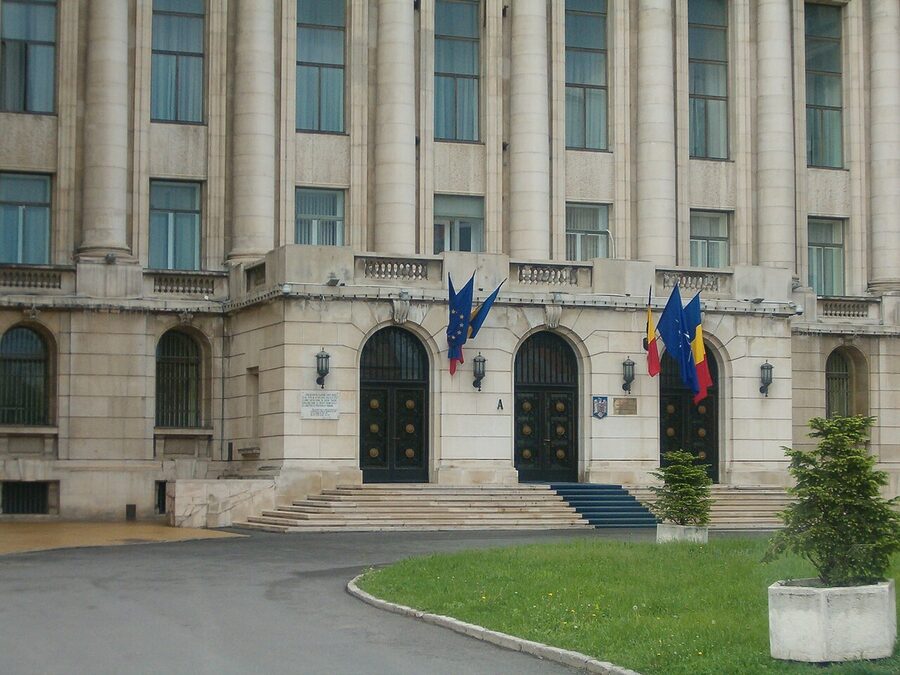
Don’t expect a vast plaza. It’s modest, oddly shaped, hemmed in by the former Royal Palace (now the National Museum of Art), the Athenaeum, the Cretulescu Church and the Central University Library, which still has visible 1989 bullet damage on its corner. The balcony where Ceaușescu spoke is on the building behind you when you face the Memorial of Rebirth. Look up. It’s smaller than you’d expect.
The Palace of Parliament approach
You walk up to it, not in. The exterior is the point: the building is still the heaviest in the world by mass, and the boulevard that leads to it is a lesson in megalomaniac urban design. If you want to see inside, that’s a separate booking with passport, and it’s worth doing on a different morning. The Palace of Parliament tickets guide covers exactly how that works.
Casa Scânteii / Casa Presei Libere
If your tour includes this stop, you’ve got the more thorough operator. The 1956 Stalinist printing-house complex sits in Piața Presei Libere, a 15-minute taxi or bus ride north of the centre. It’s a near-direct copy of Moscow State University, with the same wedding-cake spire. From a distance it looks slightly toy-like. Close up, the scale is what gets you. There used to be a Lenin statue out the front. It’s gone now.

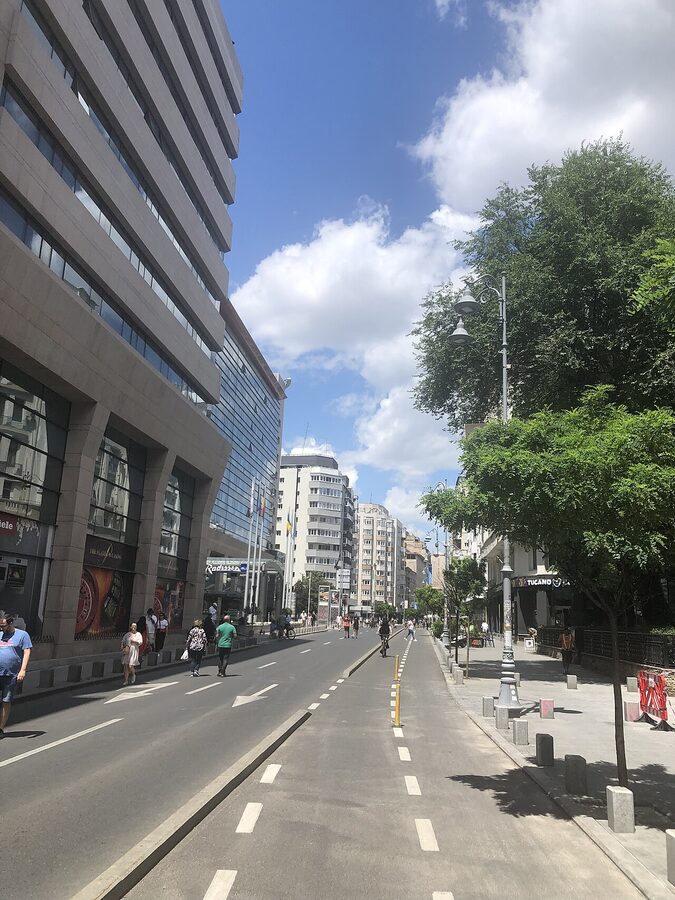
Calea Victoriei
Walk the southern half, where the surviving 19th-century buildings cluster. Look for the Cantacuzino Palace (now the George Enescu Museum, and one of the prettiest Art Nouveau buildings in the country), the CEC Palace, and the National Museum of Romanian History.

Lipscani / Old Town
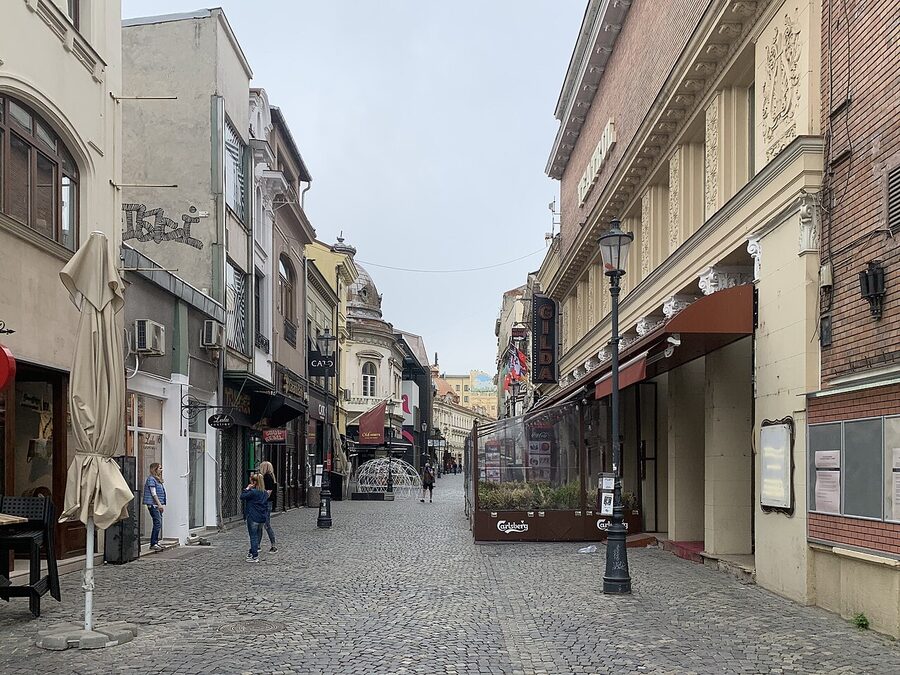
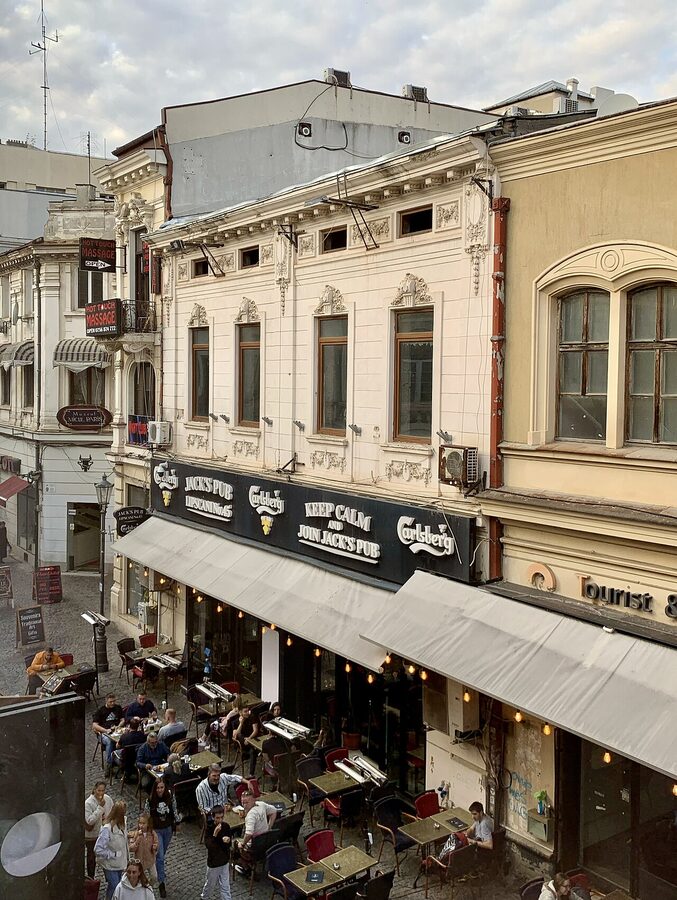
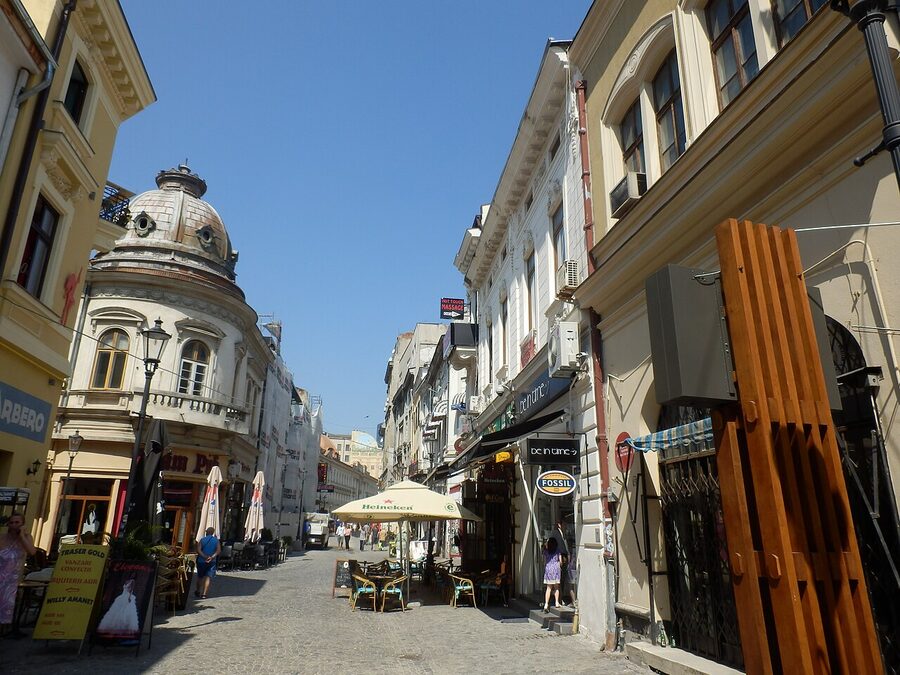
Most tours wrap up here. Strada Lipscani is the old merchants’ street, named after the textile traders who came in from Leipzig in the 18th century. The arcades and merchant houses survived because the area was zoned for “preservation as commercial heritage” in 1979. Today it’s mostly bars and restaurants, with the architecture intact above eye level. Look up.


.jpg)
Practical things worth knowing before you book
When to go
April through October is the obvious window. Bucharest gets cold and grey from November through March, and three hours outdoors in February with the wind off the plain is genuinely miserable. Within the warm months, May and September are the best (mid-20s, low humidity, longer days). Avoid the August heat-spike weeks if you can; the city hits 35°C and there’s no shade on Bulevardul Unirii.
How long, how far
Three hours, roughly four kilometres of actual walking, mostly flat. There’s a small uphill stretch on the Old Town side and some uneven cobblestones along Lipscani. Decent shoes, not heels. If you have mobility issues, ask the operator before you book; both companies will tell you straight whether it’ll work for you.
Group size
Both standard tours run with 8 to 14 people. Anything bigger and you stop being able to hear the guide on a noisy boulevard. Both operators offer private versions for around four times the per-person price, which is worth it for groups of three or four because you split the cost and you get to ask actual questions instead of standing politely at the back.
What to bring
Water, comfortable shoes, sun-cream in summer, a light jacket in shoulder season. Cash isn’t strictly needed, but small lei notes are useful for tipping the guide and for any quick coffee stop the group makes. Most guides will accept a tip in euros or dollars but lei is friendlier. The going rate is around 30-50 lei per person.
Where to meet
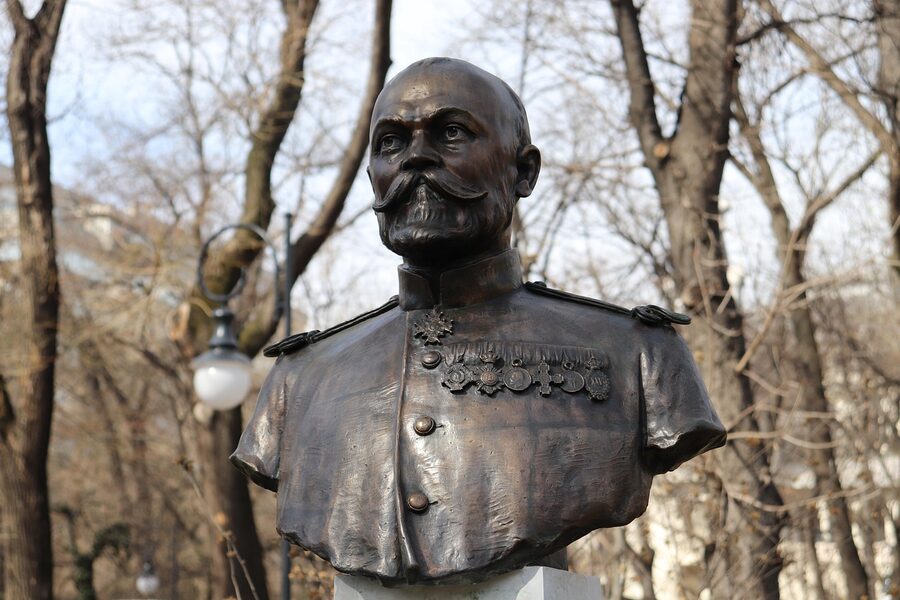
Both operators meet centrally. The GetYourGuide tour (Communism and History) starts at the Carol I statue in front of the National University Library on Calea Victoriei. The Viator tour (Real Tour of Communism) starts at the Patriarchal Palace on Dealul Mitropoliei, a slightly more atmospheric meeting point. Both are walkable from the Old Town. Get there ten minutes early, they don’t wait long.
Language
English is the default for both. Some guides speak Spanish, French, German or Italian if you ask in advance. Romanian-language tours exist but they’re aimed at school groups, not us.
If you only have one day in Bucharest
Do the walking tour in the morning (most start 10am or 10.30am). That puts you back in the Old Town around 1.30pm with the rest of the afternoon free. Have lunch at Caru cu Bere, the 1879 beer hall a five-minute walk from where the tour ends, and order the mici (grilled minced-meat sausages) with mustard. The evening is for either the Athenaeum (cheap concerts most weeks) or a longer dinner at Hanu’ lui Manuc, the 1808 caravanserai courtyard a few blocks south. None of that is on the tour, but the tour is what makes the rest of the day make sense.
If you have two days
Day one: walking tour in the morning, Old Town in the afternoon, dinner somewhere on Lipscani. Day two: split between the Palace of Parliament interior and a half-day excursion. The obvious choice for the second day is the Bran Castle and Dracula tickets, which is the deeper-Bran-only option, or the bigger combo trip if you’ve got time for the full Dracula, Peles and Brasov day trip. The combo is twelve hours but it’s the headline Romania-from-Bucharest day out. If you’re a wellness person rather than a castle person, the Therme Bucharest spa is the alternative half-day, and it’s a strong contrast piece to the communism tour, fluorescent palms and thermal pools after a morning of brutalism.
What about the dark history? Is this tour appropriate?
Yes. It’s not a misery tour. It doesn’t dwell on the worst Securitate stories, it doesn’t show you torture sites, and it doesn’t ask you to feel guilty for being a tourist. The 1980s rationing-and-surveillance years are covered, and the December 1989 deaths are mentioned, but the framing is “this happened, and you should know what you’re walking past, and here are the survivors”. That’s the right pitch.
Compare with the equivalent dark-history walking tours elsewhere in Eastern and Central Europe. The Jewish Quarter tour in Krakow covers a different and heavier subject (Kazimierz, the wartime ghetto, Schindler’s factory) and is closer to a memorial walk. The Berlin Third Reich walking tour is the closest analogue tonally, and the general Berlin walking tour handles divided-city material in a similar light-touch register. Bucharest’s communism tour sits in the middle: not breezy, but not heavy either.
What it costs, end to end
Tour: $31 to $33 per person. Tip: 30-50 lei (about $7-11). Coffee or water on the route: 10-15 lei. Lunch afterwards at Caru cu Bere or similar: around 80-120 lei. So budget roughly $50-60 per person for the full half-day including a sit-down lunch, more if you go for a craft beer at the end.
Compare that with the equivalent in Western Europe: a Berlin Third Reich walking tour is around €25-30, a London Tower of London tour is over £35, the average Madrid free walking tour expects a €15-20 tip. Bucharest is still cheaper, and the personal-history density is higher because the people doing the tours actually lived through the end of it.
Booking the right time slot
Standard slots are 10am, 10.30am or 2pm. The morning slots are better. The afternoon slot in summer means you’re walking the unshaded sections at the hottest part of the day, and the late finish (around 5pm) cuts into dinner planning. Both operators publish their availability roughly 60 days out on GetYourGuide and Viator. Weekend slots fill first.
A note on cancellation: both operators run free cancellation up to 24 hours before. The actual cancellation rate is low (low-frequency tours that depend on guide availability), so don’t book three weekend slots and pick on the day. Pick once. Stick with it.
What it does not cover
It’s a city walking tour. It does not cover:
- The interior of the Palace of Parliament. Separate booking, separate ticket, three-hour interior tour with passport.
- The communist museums proper. The Sighet Memorial Museum is in northern Romania (a six-hour drive). The Museum of the Romanian Peasant has some communist-era material in the basement, but it’s a side-show.
- Securitate prison sites in any depth. There’s a small cell-block exhibit at Jilava on the city outskirts, but it’s not on the standard route. Ask if you’re specifically interested.
- The pre-communist royal Romania. Peles Castle (the royal summer residence in Sinaia) is a different day out entirely.
If any of those are bucket-list items, plan for them separately.
One more thing worth saying
If you’ve read a lot about Romania already (a couple of Cărtărescu novels, the Anne Applebaum book on Eastern Europe, anything on the December 1989 Revolution), the tour will feel slightly thin in the middle. Most operators pitch at someone who knows roughly nothing, which is the right call commercially. Either go private (you can ask harder questions) or pair with the Palace of Parliament interior tour the next day, which goes deeper into the building’s actual statistics.
If you’ve read nothing, the tour is the perfect introduction. Three hours, walked the actual ground, met someone who lived through it. You’ll come out understanding why Bucharest looks the way it looks. That’s a lot for $31.
Pairing this tour with the rest of Bucharest
The walking tour is the glue. Once you’ve done it, the other half-day attractions in the city stop looking like isolated landmarks and start looking like pieces of a single 80-year argument about what Bucharest was meant to be. The Palace of Parliament interior tour is the deep-dive on the building you walked up to but didn’t go into. The Therme spa is the after-piece, the modern Romania that’s quietly building a different kind of national showpiece, this one fluorescent and palm-treed. The Dracula, Peles and Brasov day trip takes you out of Bucharest entirely and into the older Romania, the pre-Stalin one, the one Ceaușescu was ostensibly competing with when he built Unirii. Do all four if you have three or four days. Do the walking tour first. Everything else lands harder afterwards.
Affiliate disclosure: when you book through the GetYourGuide and Viator links above, a small commission supports this site. Prices are exactly the same as booking direct.