
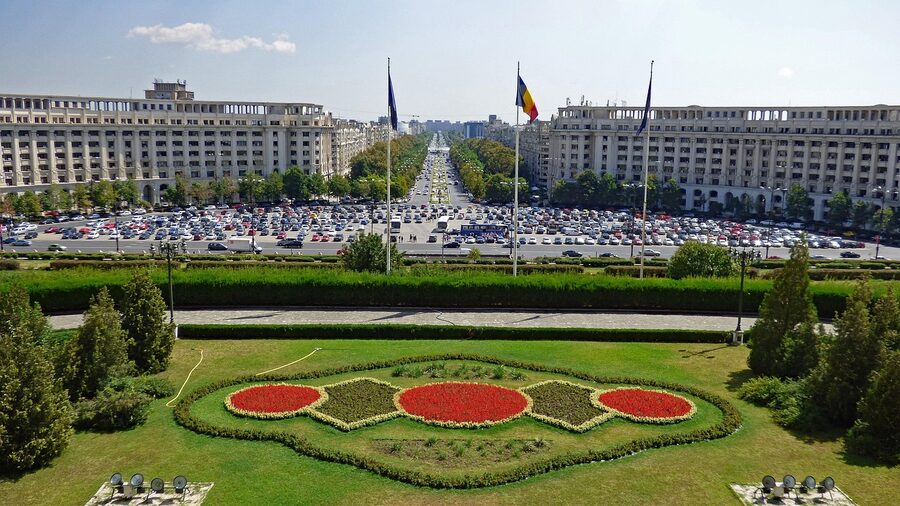
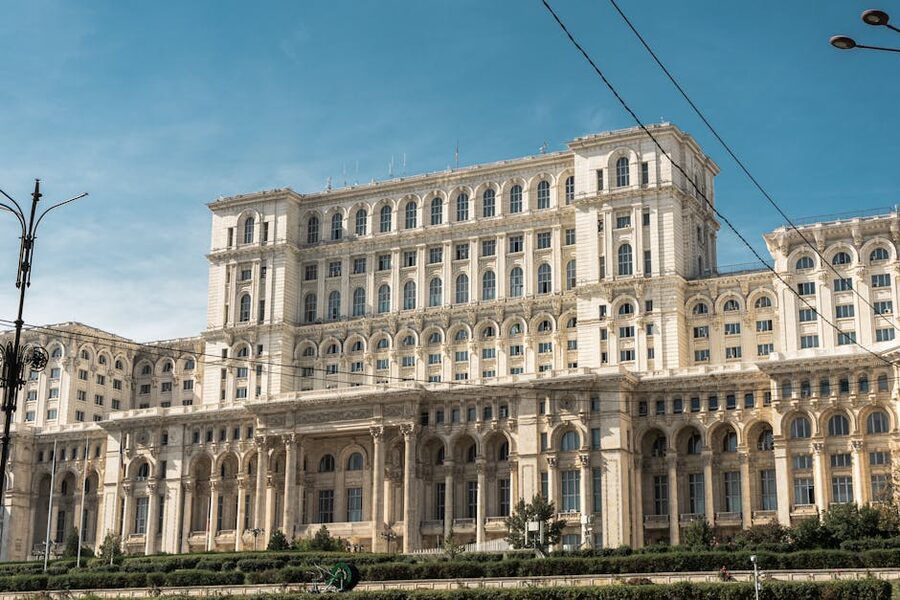
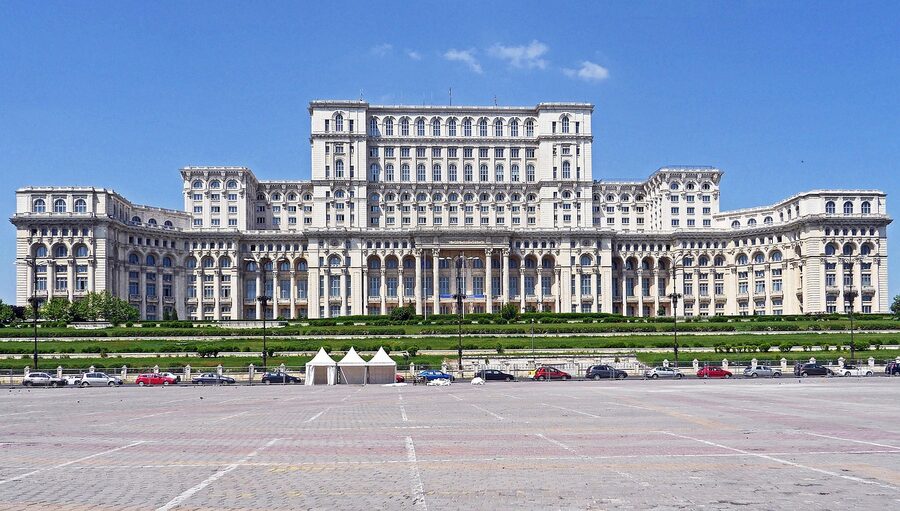
Here is the fact that should reframe everything before you book a ticket: the Palace of Parliament is the heaviest building on Earth. Guinness has it at over four billion kilograms of marble, steel and concrete, more than the Great Pyramid of Giza, sitting on a single block of central Bucharest that used to be a neighbourhood. You don’t grasp the scale of that until you stand on the balcony and look down Bulevardul Unirii, the longest avenue in Europe by design, built one metre wider than the Champs-Élysées specifically so it could win the comparison. Tickets are cheap. The story is not.
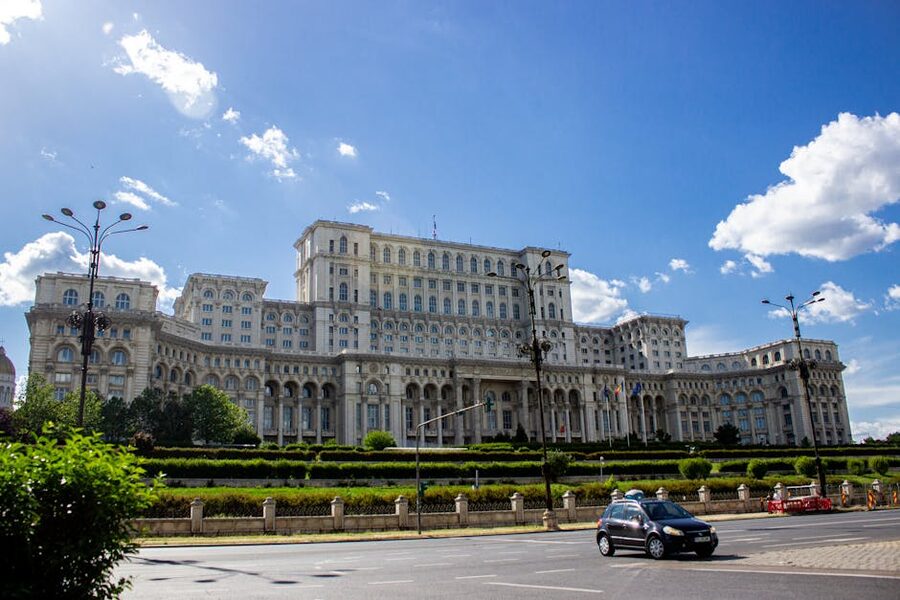
Skip the queue: Parliament Palace Skip-the-Line Ticket, $29. Pre-booked entry slot if you tried calling +40 733 558 102 and it went to voicemail.
Local-guide pick: Tickets and Guide, $38. Bilingual guide meets you outside, walks you to the right entrance, gives context the Parliament’s own guides skip.
- How tickets actually work
- Ticket types and prices
- The passport rule (don’t ignore this)
- Picking the right tour
- 1. Palace of Parliament Tickets and Guide:
- 2. Palace of Parliament Tickets and Guided Tour:
- 3. Parliament Palace Skip-the-Line Ticket:
- What you actually see inside
- The view from the Cuza balcony
- The City Panorama add-on
- The history nobody tells you on the tour
- How long does a visit really take?
- When to go
- Getting there
- Common mistakes to avoid
- Combine it with
How tickets actually work
Two ways in. You book direct with the Parliament by phone (English-speaking staff, +40 733 558 102 or +40 733 558 103, between 9am and 4pm at least 24 hours ahead) and pay 40 lei in cash or card on the day. Or you book through a tour platform like GetYourGuide and pay roughly $28 to $38 for the same tour, sometimes with a private guide bolted on the front. The Parliament’s own guides are included either way, and you can’t avoid them. Self-guided isn’t an option here.
The phone line works, mostly. Romanian staff answer, switch to English when you start talking, and read your name back to you. They send no email confirmation, just a slot time. Show up 15 minutes early at the Constantin Brancusi Exhibition Hall on Calea 13 Septembrie (the side of the building, not the front). Ticket queue, then security, then walk to the meeting point inside the lobby.
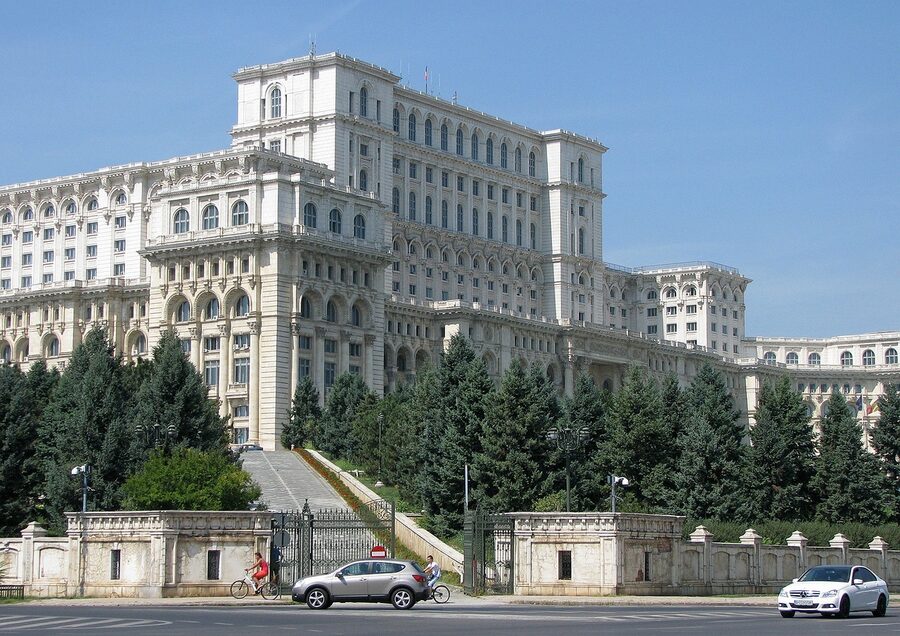
The platform booking is worth the markup if any of the following apply to you: you’re tight on time and can’t risk a phone call going to voicemail, you don’t speak any Romanian and want a smoother handoff, or you want to be picked up at a meeting point in the city centre and walked over rather than navigating the Brancusi entrance yourself. The size of the building is genuinely confusing on arrival, and the front entrance you can see from across Piata Constitutiei is not the visitor entrance.
Ticket types and prices
Five tour options. The standard tour and the standard-plus-basement tour are what most travellers want.
- Standard tour: 40 lei adult, around €8. Two floors of reception halls, ~75 minutes including the security walk.
- Standard plus basement: 45 lei adult, around €10. Adds a stairwell descent into part of the underground level. Cool if you’re into the conspiracy stories about the bunker but doesn’t include the bunker itself.
- City Panorama / Terrace: 600 lei for up to six people, ~€125 split. Elevator to the upper terrace where Michael Jackson did his 1992 “Hello Budapest” speech (yes, he meant Bucharest). Genuinely the best view of central Bucharest.
- Premium package: 1,400 lei for a group of 35, ~€290. For tour operators and large families.
- Free entry: kids 0-6, persons with disabilities and one companion. Bring documentation.
You buy on the day at the Brancusi Hall ticket window, even if you’ve pre-booked the slot. They take card. The platform tours bundle the ticket cost into the price, which is why the platform price is closer to $28 than the €8 face value.
The passport rule (don’t ignore this)
You need an original passport or original national ID card. Not a photo on your phone, not a photocopy, not a driver’s licence. Romanian security keeps your passport at the entrance and gives you a tag, which you swap back at the exit. People get turned away at the door for this every day. If you’re staying in a hotel that holds passports for registration, get yours back before the tour and bring it.
Security is airport-style. Bag through the X-ray, you walk through the metal detector, no liquids over 100ml, no large bags. They have a cloakroom but it fills up. A small daypack is fine; a full suitcase is not. Tripods aren’t allowed. Cameras are allowed and so are phones, no flash.
Picking the right tour
Three tours we keep recommending, ranked by how many of our readers come back saying they’d book the same one again. All three include the standard ticket. The difference is who guides you, how the meeting works, and whether English is the default.
1. Palace of Parliament Tickets and Guide: $38
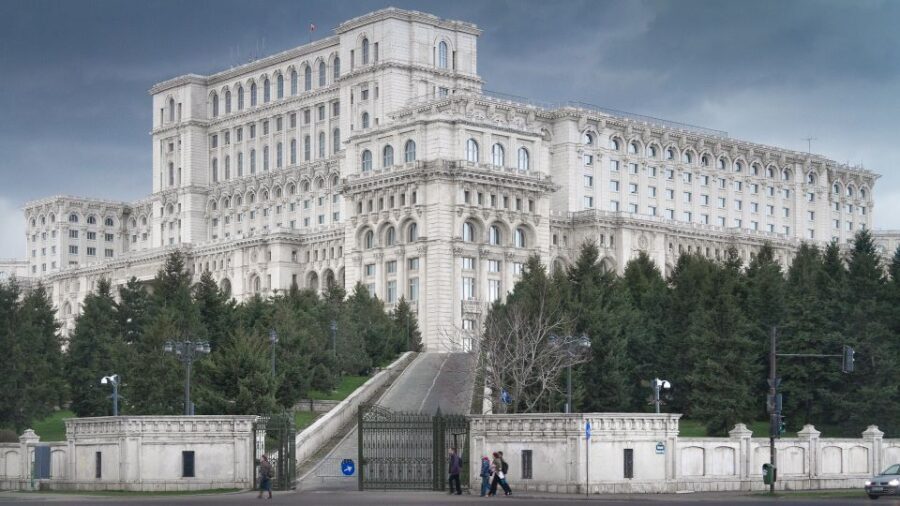
This is the one most readers thank us for. A local guide meets you off-site, walks you to the correct entrance (which, as covered in our full review, is the trickiest part of the visit on your own), and stays with you to add the political and demolition-history context the Parliament’s own guides won’t touch. Pricier than the bare ticket but you get a real guide, not just an entrance slot.
Check Availability
Read our full review
2. Palace of Parliament Tickets and Guided Tour: $28
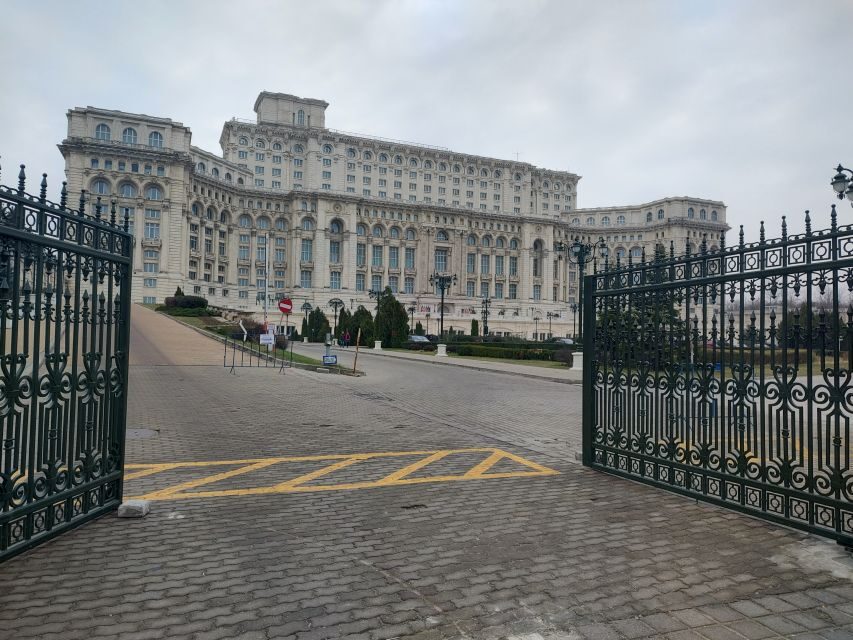
If you just want a guaranteed slot at the lowest price, pick this one. Our full review walks through what the official guides do and don’t cover. Heads-up that the tour is genuinely just an hour, which is short for a building this size, and a few readers have called it rushed. Still the best ratio of price to access if you’re on a budget.
Check Availability
Read our full review
3. Parliament Palace Skip-the-Line Ticket: $29
The middle ground. A bit more than the bare guided ticket, a bit less than the local-guide tour. You get a confirmed entry slot and the Parliament’s own guide, with no need to phone Bucharest yourself. The marble-and-chandelier impression in the conference rooms is exactly what readers tell us afterwards, and it lines up with what we wrote in our review.
Check Availability
Read our full review
What you actually see inside
The standard tour is two floors and roughly 20 rooms out of 1,100. The Parliament’s own guide leads, in English, takes you up the main marble staircase, across the upper hall (Sala C.A. Rosetti), and through a sequence of named reception rooms. You’ll get the running list of statistics: tonnes of marble per room, weight of the carpet, height of the chandeliers. Half of it sounds invented and isn’t.
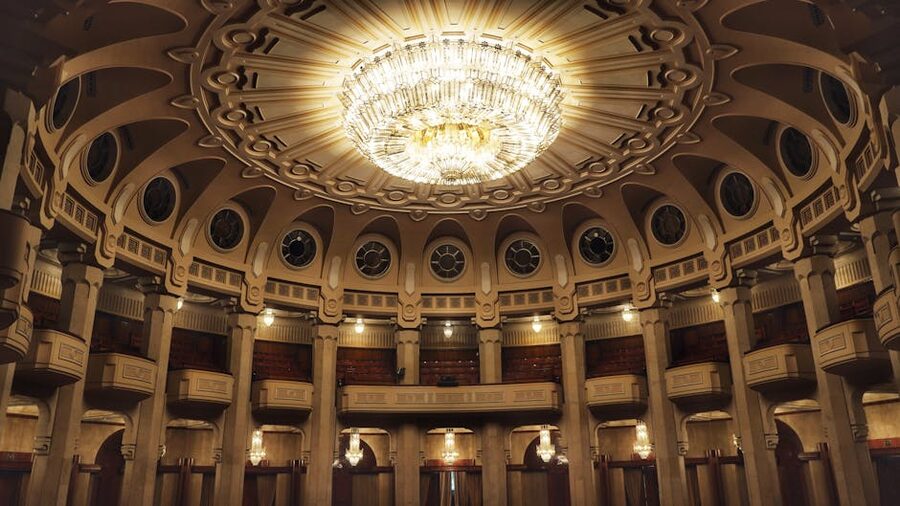
The rooms you’ll see by name on a standard tour are roughly:
- Sala Nicolae Titulescu: the smaller reception hall used for diplomatic receptions today. Walnut panelling, modest by Parliament standards.
- Sala Drepturilor Omului (Human Rights Hall): built for international conferences, with simultaneous-translation booths still in place.
- Sala Take Ionescu: lighter and more decorative, used for press events.
- Sala Unirii (Union Hall): the show-stopper. The 2,200-square-metre carpet weighs three tonnes and was woven inside the room because no door is wide enough.
- Sala Alexandru Ioan Cuza: highest ceiling of any room on the tour, with the ceremonial balcony overlooking Bulevardul Unirii. This is the balcony Michael Jackson waved from in 1992.
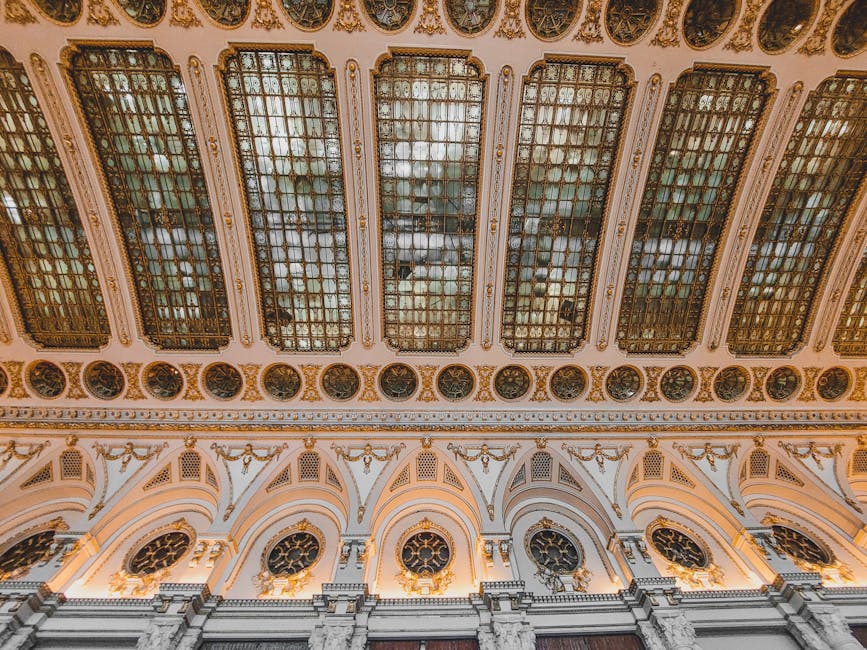
You don’t see the Senate or Chamber of Deputies plenary halls on the standard tour. Both are working chambers and only open during specific Heritage Days events. You also don’t see the bunker level. The basement add-on is a stairwell descent to a couple of corridors and meeting rooms, not the nuclear shelter, which the government still classifies as restricted.
The view from the Cuza balcony
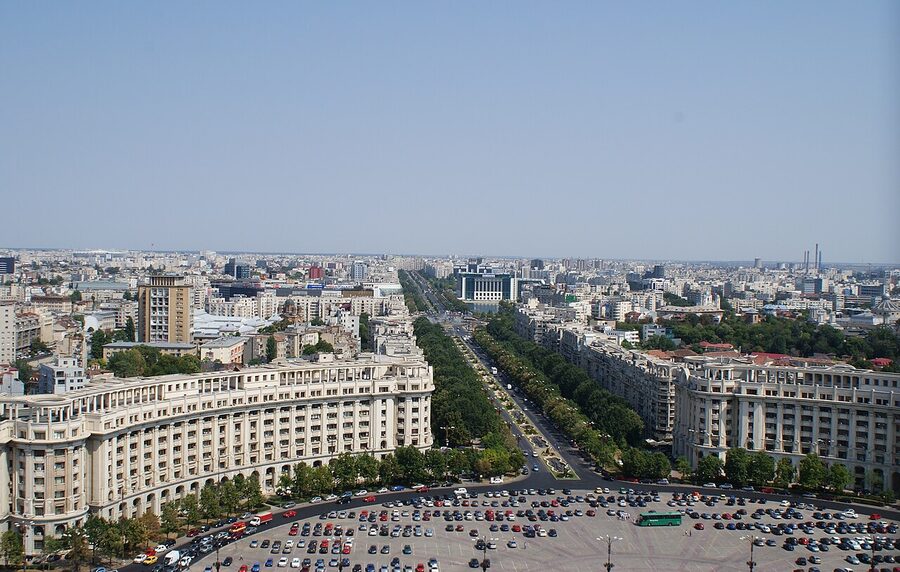
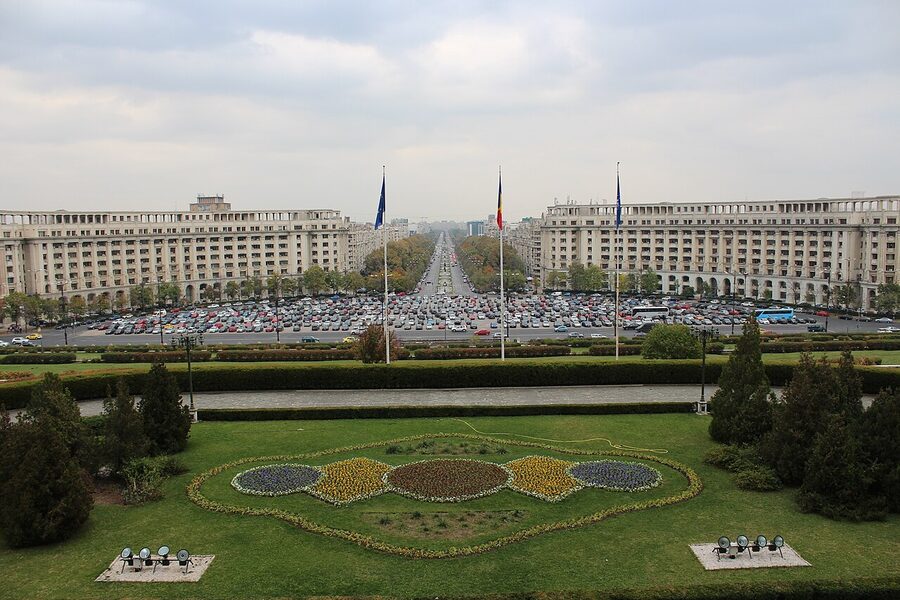
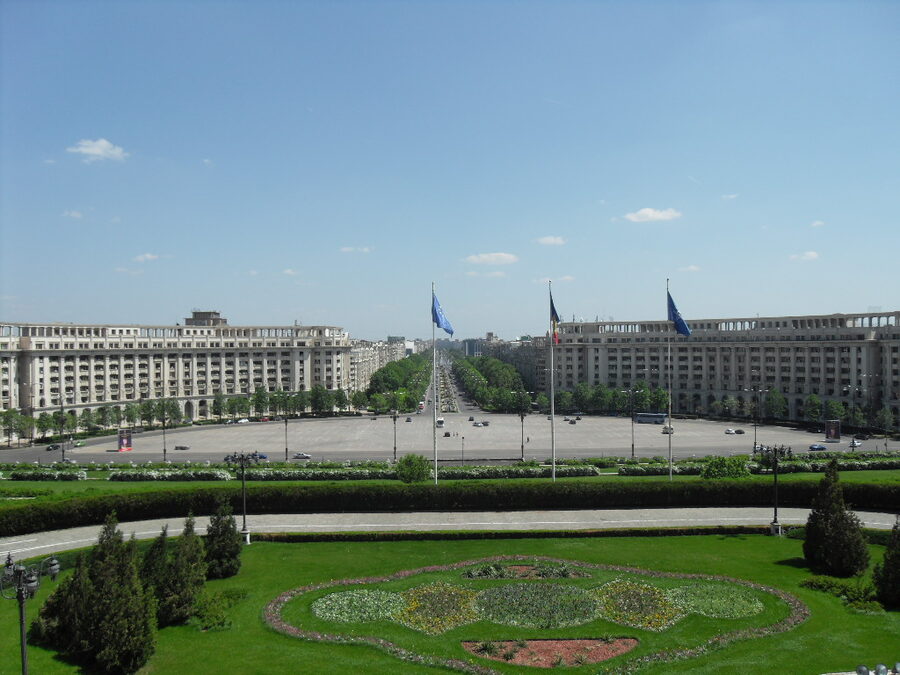
You step out onto a stone balcony about a third of the way down the building’s width, and Bulevardul Unirii unrolls in front of you in a straight line of fountains, eight lanes of traffic, and twenty-something blocks of identical 1980s apartment buildings. This is the moment most people pull out a phone. It’s also the moment the demolition history hits. Every one of those blocks is built on top of a neighbourhood that was bulldozed in the late 1970s and 1980s.
The City Panorama add-on
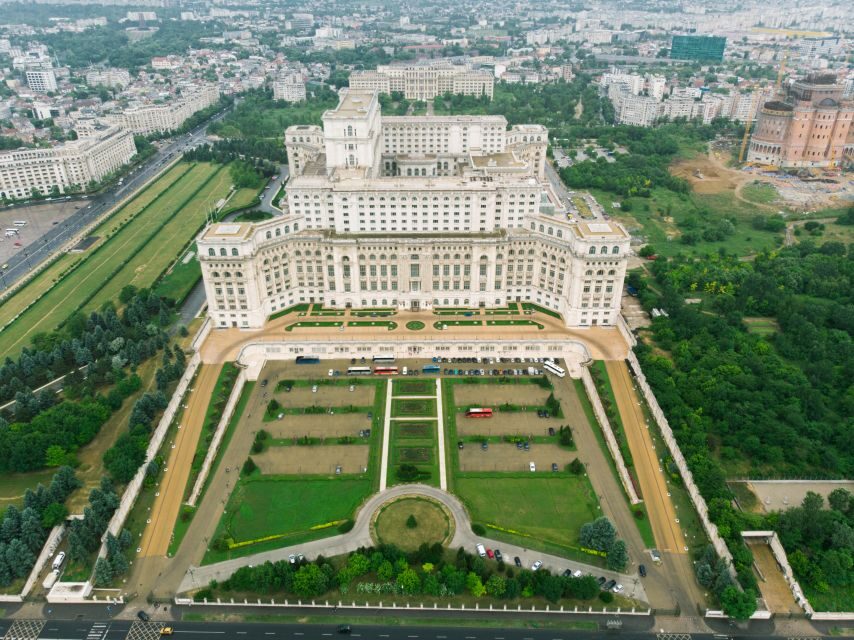
The 600-lei terrace tour is a separate booking and worth it if there are six of you and you can split the cost. You take a small lift to the upper terrace and get a 360-degree view, with the Carpathians visible to the north on a clear day. It’s the only way to see the building’s real scale, because from Piata Constitutiei you only see one of its four façades.
The history nobody tells you on the tour
The Parliament’s own guides give you architecture and statistics. They don’t dwell much on what the site was before. So here’s the part that matters.
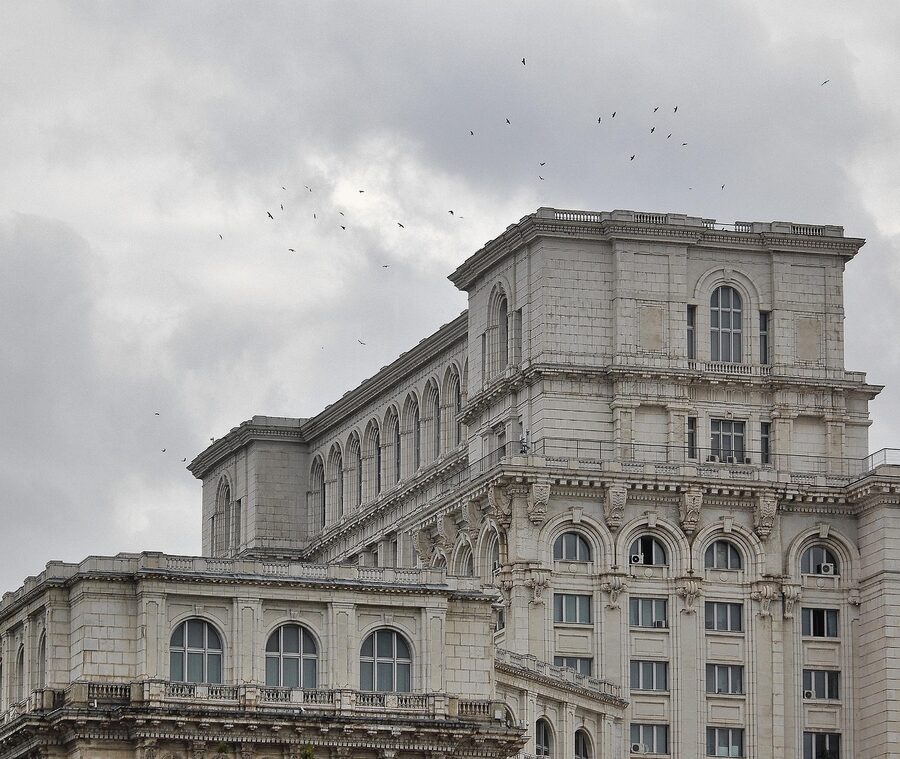
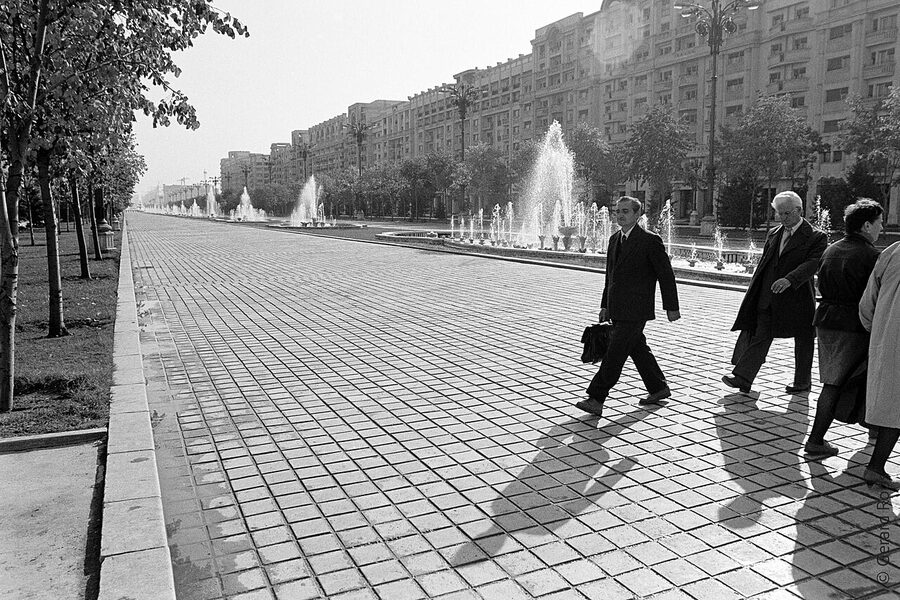
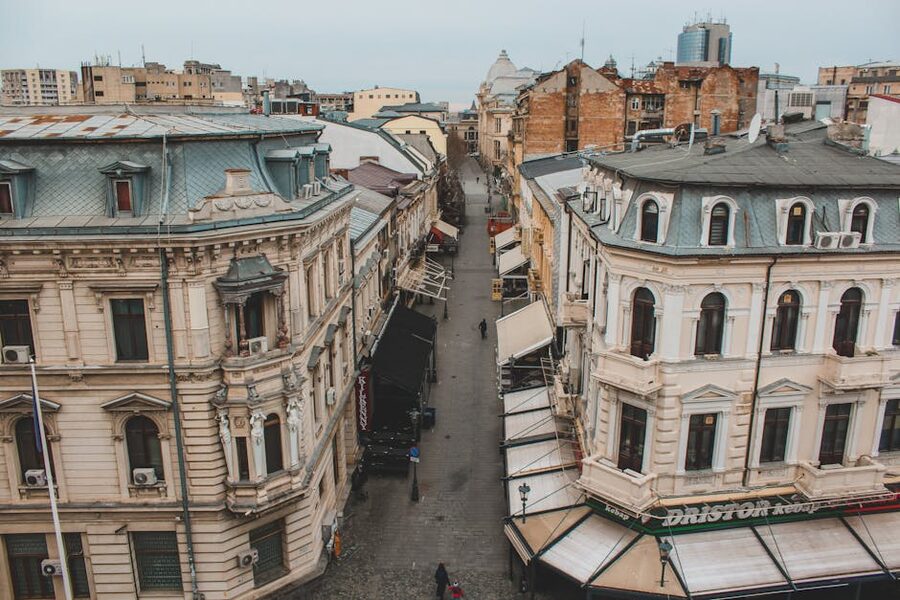
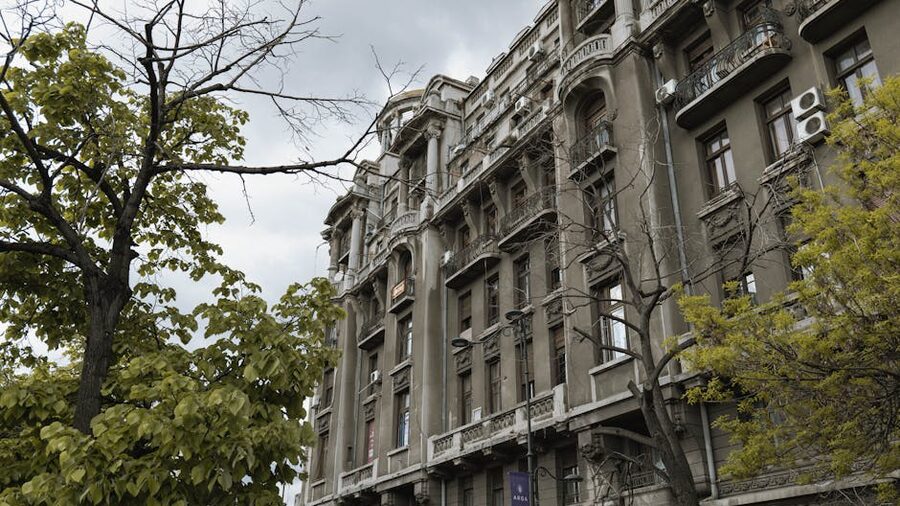
Until 1977 the hill the Palace stands on was Spirea Hill, a tightly packed neighbourhood of Belle Époque townhouses, Orthodox churches, two synagogues, and the Vacaresti Monastery, an 18th-century complex that was one of the most important religious sites in southeastern Europe. On 4 March 1977 a 7.4 magnitude earthquake hit Bucharest and damaged a lot of the city. Ceausescu used it as cover. By 1984 around 7 square kilometres of central Bucharest had been demolished, including 30+ churches, two synagogues, and over 30,000 homes. Residents got 24 hours’ notice in some cases.
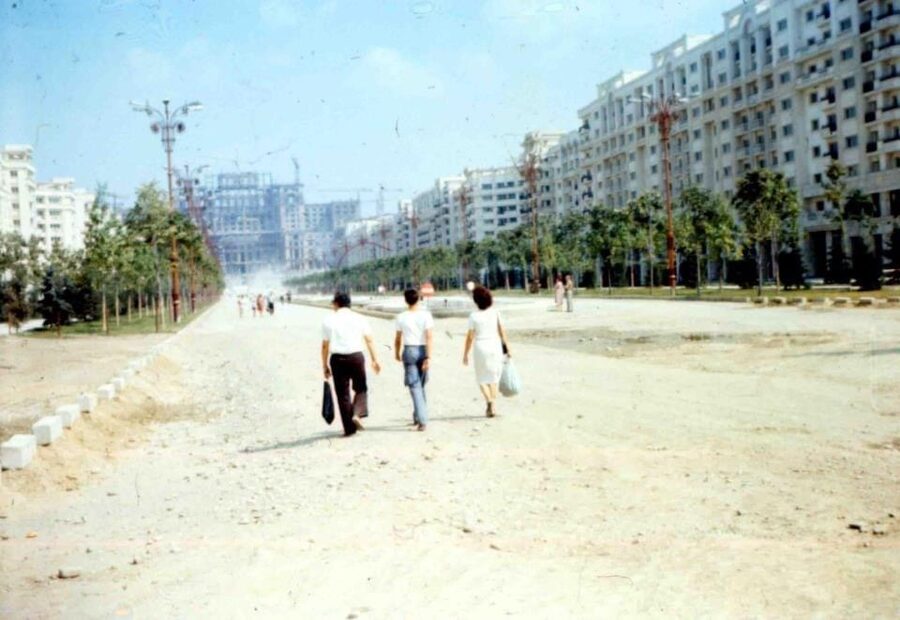
Construction started in 1984 with 700 architects led by Anca Petrescu, who was 28 when she won the design competition. At peak around 20,000 workers and 5,000 soldiers worked the site in three shifts. Ceausescu visited weekly and ordered changes that meant entire wings were demolished and rebuilt during construction. The building was officially called Casa Republicii (House of the Republic), informally Casa Poporului (House of the People), and after 1990 renamed Palatul Parlamentului when the new democratic parliament moved in.
.jpg)
The official cost is impossible to pin down because the Romanian state has never disclosed it fully. Estimates run from $3 billion to $4 billion in 1989 dollars, in a country whose entire foreign debt at the time was around $11 billion. Ceausescu’s program of paying off that debt by exporting food while Romanians starved is the political backdrop you should hold in mind when you walk past the gold leaf.
Then on 21 December 1989 Ceausescu gave a speech from the balcony of the Central Committee building (a different building, downtown by Revolution Square) and the crowd booed him. Within four days he was dead. The Palace was three-quarters built, sat as a shell for two years, and was finished in 1997 as the Parliament we tour today. The story of those four days is the foundation of the city’s communism walking tour, which is the single best companion booking to this one.
How long does a visit really take?
Plan two and a half hours from when you leave your hotel. The actual tour is 60 to 75 minutes. Add 20 minutes for security and ID processing, 15 to find the Brancusi entrance and queue at the ticket window, and at least 15 to walk back out and collect your passport.

If you’ve added the basement, allow another 30 minutes. If you’re doing the City Panorama terrace tour separately, that’s its own ~45-minute slot and a different ticket.
When to go
Daily 9am to 5pm March through October, 10am to 4pm November through February. Last entry is 30 minutes before closing. Tours leave roughly every 30 minutes in summer and every hour off-season.
Best time of day is the 11am or 11.30am slot. Earlier and you compete with the rush of people who didn’t pre-book trying to get a same-day ticket. Later and the afternoon Bulevardul-Unirii light from the Cuza balcony is too harsh for photos. November through February is genuinely quieter, sometimes you’ll have a small group of six or eight rather than a packed group of twenty. Avoid Tuesdays mid-morning if there’s a parliamentary session, the schedule shifts and tours get cut from two floors to one.
Getting there
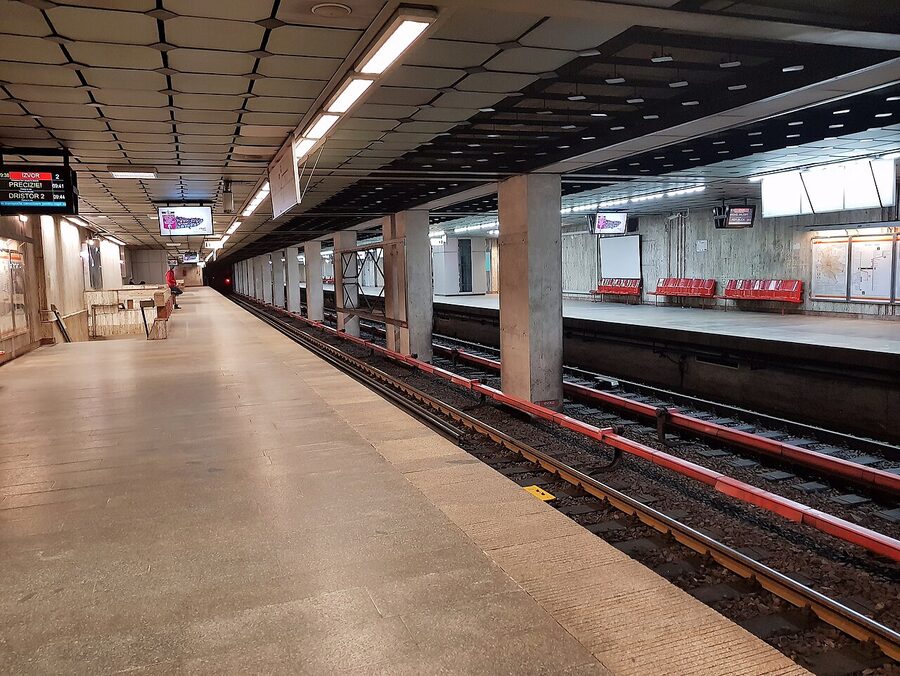

Metro to Izvor (M1, blue line) and walk five minutes around the north side of the building to Calea 13 Septembrie. Don’t get out at Piata Unirii thinking the front of the building is the entrance. The front looks like the entrance, but it isn’t, and the walk around the perimeter to find the visitor entrance takes 20 sweaty minutes in summer.
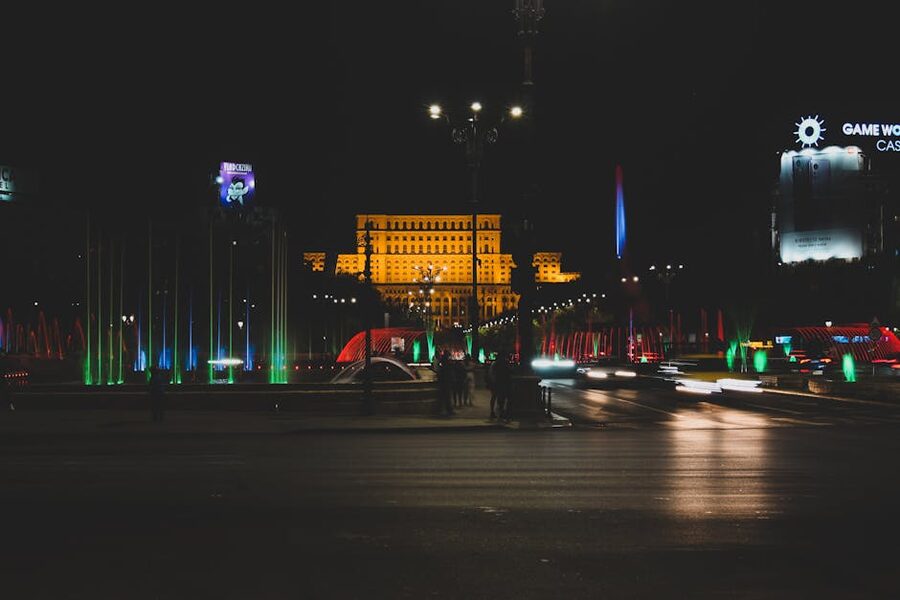
Taxi or Bolt to the entrance directly works fine and costs 15 to 25 lei from anywhere central. Tell the driver “Brancusi entrance, Palatul Parlamentului” rather than just the Palace name.
Common mistakes to avoid
Three things readers regularly get wrong on this visit, in rough order of how annoying each one is.
First, showing up at the front of the building. The visitor entrance is on the side, at Constantin Brancusi Exhibition Hall on Calea 13 Septembrie. The vast staircase you can see from Piata Constitutiei is for state visits only and is a 25-minute walk from the actual ticket office.
Second, not bringing a real passport or ID. Romanian security takes this seriously. Driver’s licences, hotel registration cards and phone photos do not work. They will turn you away. If your tour is at 11am and you realise at 10.45 that your passport is at the hotel, you’ve lost the tour.
Third, expecting to see the bunker. The bunker level is restricted and the basement-add-on tour does not go there. If a guide tells you they can sneak you into the bunker, they’re lying. The 8 underground floors aren’t open to the public and aren’t going to be.

Combine it with
The Palace makes most sense as half of a double-header. Pair it with a communism walking tour in the morning so the Palace’s history clicks when you walk in, or with a Dracula’s Castle, Peles and Brasov day trip the next day for a complete weekend in Romania. If your trip is built around Romania’s iconic landmark and you’d rather skip the multi-castle marathon, look at how Bran Castle tickets work on their own instead. After two heavy days like that, the Therme Bucharest spa is the obvious decompress.
If you’ve toured European parliaments before, this one will reframe your expectations. Stockholm’s City Hall is more elegant and historically richer for an hour of your time. Madrid’s Royal Palace has more art. London’s Buckingham Palace only opens for ten weeks in summer. Stockholm’s Royal Palace is interesting but smaller. Budapest’s parallel parliament-and-grand-architecture story turns up on the Budapest walking tour if you’re heading west afterwards. The Bucharest Parliament is the only one of these that operates as a piece of communist-era megalomania repurposed for democracy. That’s the pitch. Whether you find it impressive or grotesque depends on you.
This article contains affiliate links. We may earn a small commission if you book a tour through one of them, at no extra cost to you. It helps us keep the site running.