
I watched a guy in regular swim trunks walk up to a rafting check-in counter in Bovec one July morning. He looked confused when the staff handed him a 5mm neoprene wetsuit, neoprene booties, a fleece-lined splash jacket, and a helmet. He said something like “isn’t this overkill, it’s summer?” The guide just smiled and told him the river was about 11 degrees Celsius that day. He went pale. He’d packed for swimming pools.
That’s the mistake almost every first-timer makes on the Soča. The water is glacier-fed and barely warms up even in August. The wetsuit is not optional gear; it’s the only reason you can stay in the boat for three hours without your fingers going numb. The other classic mistake is picking the cheapest operator without checking which river section they run, because two trips advertised at €60 can mean wildly different things on this river. This guide covers both.
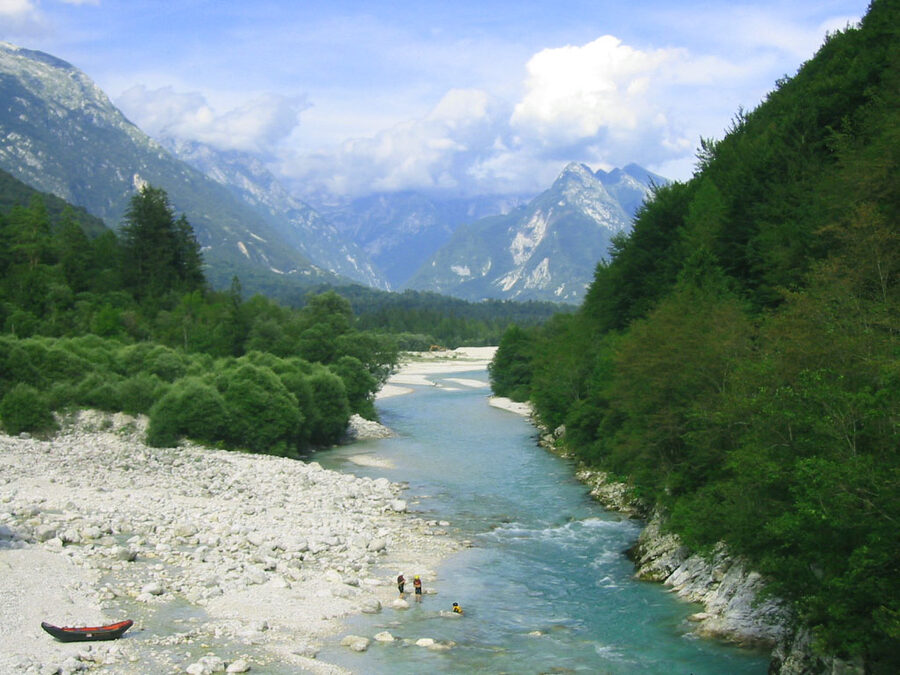
Most popular: Whitewater Rafting on Soca River with SportMix, $87. The longest-running operator in the valley, run out of a base in town, easiest pickup logistics if you’re staying in Bovec.
If you want it gentler: SportMix family-friendly Bovec section, from $87. Same base, calmer stretch, suitable for kids 6 and up if the operator confirms water levels.
.jpg)
- The two mistakes that ruin Soča rafting trips
- Which Soča section should you actually book
- Čezsoča to Srpenica (Class I-II): the family float
- Boka to Trnovo ob Soči (Class II-III, sometimes IV): the standard adventure
- Trnovo to Kobarid (Class IV-V+): the technical run
- The 3 best Soča rafting tours to book
- 1. Adventure Rafting with Photo Service in Bovec:
- 2. Whitewater Rafting on Soca River with SportMix:
- What you actually do on the trip
- Why the Soča looks the way it does
- When to go (and what to avoid)
- How to actually get to Bovec
- Boka Waterfall and what else is in the valley
- What to bring (and what not to)
- Things people actually wonder before booking
- Where to stay if you’re rafting
- If you’re putting together a wider Slovenia trip
The two mistakes that ruin Soča rafting trips
Let’s get the practical stuff out of the way first because it’s the part that actually matters.
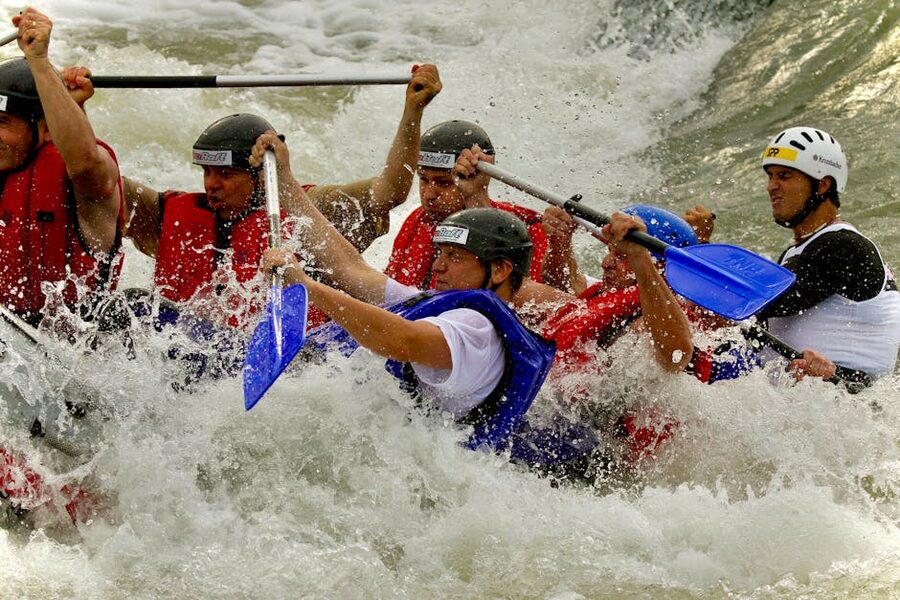
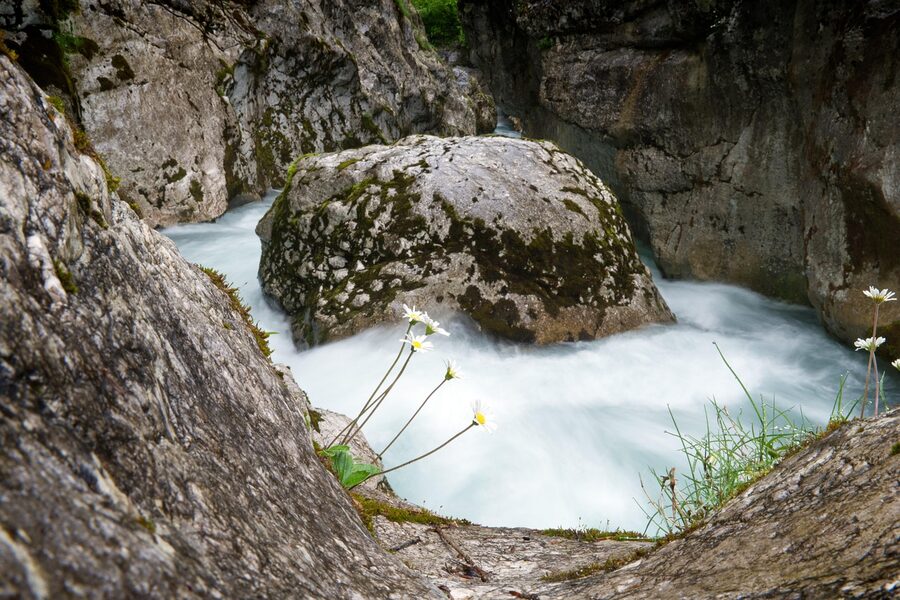
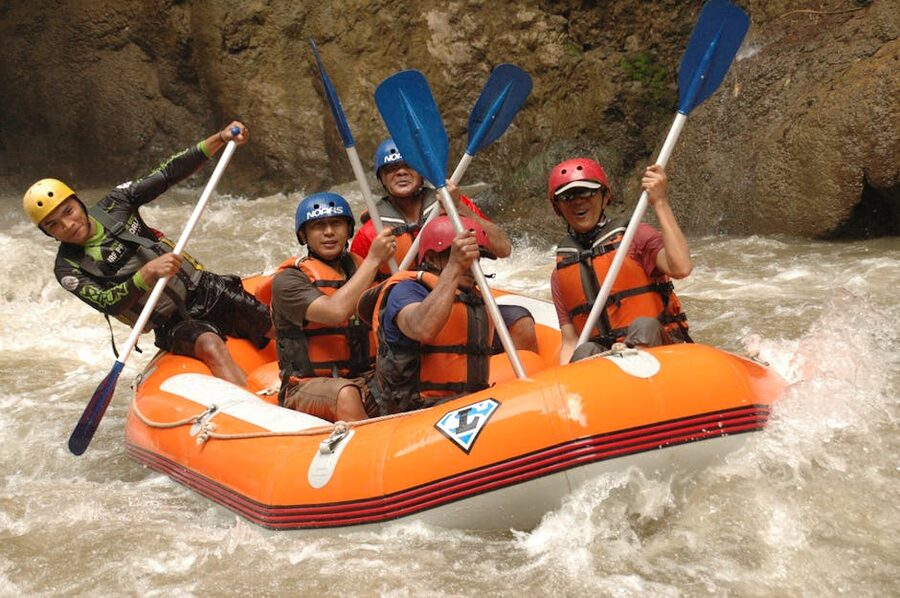
Mistake one: assuming summer water is warm water. The Soča starts as snowmelt in the Julian Alps and runs through limestone gorges that never get direct sun. In June and July, the water sits at 8 to 11 degrees Celsius. By late August it might creep up to 13 or 14 in the slow pools. That’s pool water in early spring back home, not summer river water. If you fall out of the raft (and people do, on every trip), you’ll be in there for somewhere between five seconds and a minute before someone hauls you back in. Without a wetsuit, that’s enough time to lose dexterity in your hands and start gasping uncontrollably. Every reputable operator gives you a 5mm wetsuit, a splash jacket, neoprene booties or shoes, a helmet, and a buoyancy aid. Wear all of it. Don’t try to be the cool one in shorts.
Mistake two: booking on price alone without reading the river section. The Soča rafts at four different difficulty levels depending on where you put in and where you take out. A €55 trip from Čezsoča to Srpenica is mostly a float with two or three small wave trains. A €70 trip from Boka to Trnovo is genuine Class III water with two technical drops and a holding pour-over near the end. Both get advertised as “Soča rafting in Bovec.” If you book the cheap one expecting whitewater, you’ll spend three hours wondering when it gets exciting. If you book the harder one with grandma along, she’ll be terrified for an hour. Read the section before you click pay.
Which Soča section should you actually book
Three commercial sections, with one bonus section that almost nobody runs except specialty operators. Here’s how they actually compare.
Čezsoča to Srpenica (Class I-II): the family float
About 8 kilometres of mostly calm water with playful waves in three or four spots. Trip lasts roughly 1.5 hours on the river plus another hour for kit-up, transfer, and changing. Water temp matters less here because you almost never get fully wet. Most operators take kids from age 6 on this section, and a few will take 4-year-olds with a parent if conditions are calm. This is the section to book if you’re travelling with anyone over 65 or under 10, or if you’re hungover and just want to look at the colour.
Boka to Trnovo ob Soči (Class II-III, sometimes IV): the standard adventure
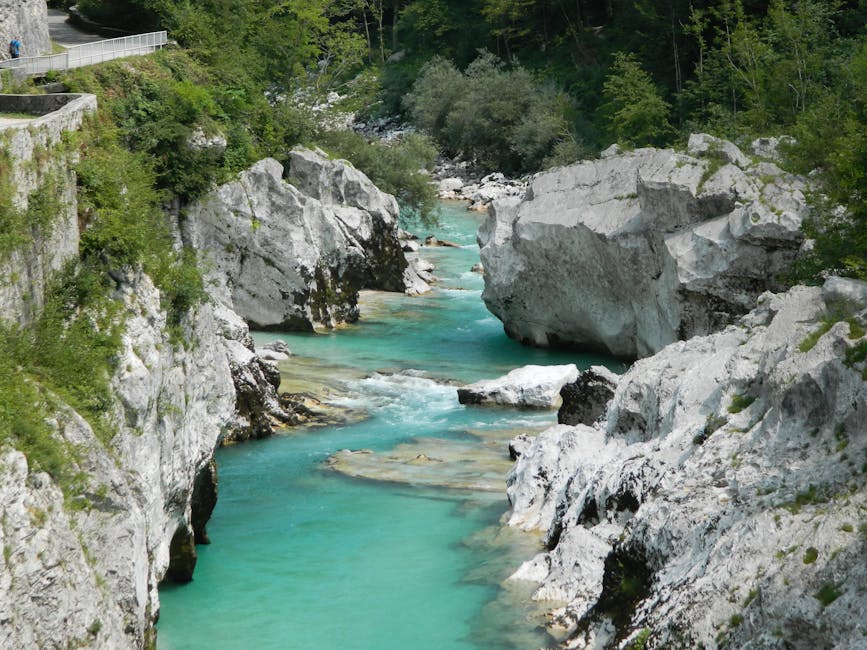
This is what most people actually mean when they say “Soča rafting.” About 10 kilometres total, around 90 minutes to 2 hours on the water, with named rapids the guide will call out as you approach. The Boka section starts near the famous waterfall (more on that below), runs through a couple of limestone-walled gorges, and finishes at Trnovo where there’s usually a pebble beach for a swim if anyone’s brave enough. In May and early June after snowmelt, this section can bump up to genuine Class IV in places, which is why operators sometimes split groups by experience. Kids 12 and up usually fine, kids 8 to 11 only if water is low and the operator says yes.
Trnovo to Kobarid (Class IV-V+): the technical run
Almost no commercial operator runs the full upper section because it’s genuinely dangerous in places. There’s a 3-metre drop near Otona that has flipped commercial rafts before, and the consequences of a swim there are serious. If you specifically want this stretch, look for outfits that use smaller 4-person rafts and require a swim test before launch. SportMix and one or two others run it on request with experienced groups only. Don’t book this as your first ever rafting trip.
The 3 best Soča rafting tours to book
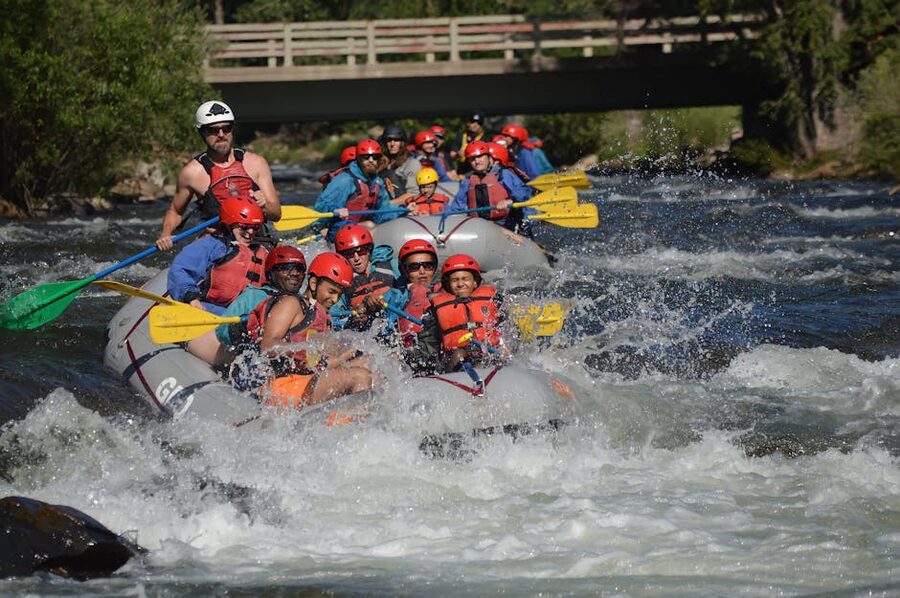
There are roughly a dozen operators in Bovec running rafting daily through the season. Two stand out for English-speaking visitors booking online, and a third covers the gentler family option. All include wetsuit, jacket, helmet, buoyancy aid, paddle, certified guide, transfer to the put-in, and return to base.
1. Adventure Rafting with Photo Service in Bovec: $71
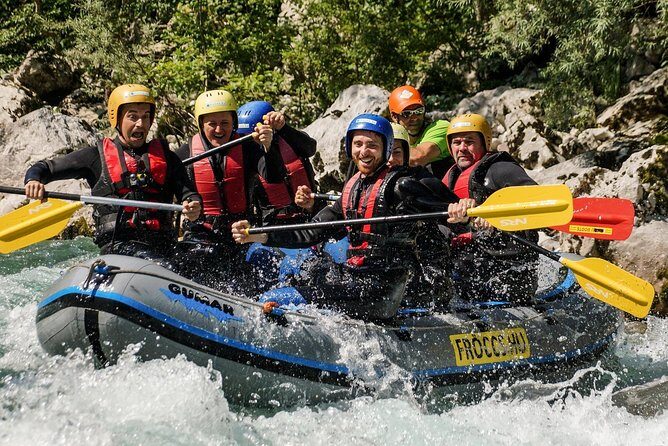
Run by Froccs Rafting Club, who’ve been on the river since the early 2000s. Three hours, the standard Boka-to-Trnovo section, plus a guide-shot photo set you can download afterward. Our full review of Adventure Rafting in Bovec covers the meeting-point logistics and what’s actually included in the photo bundle.
Check Availability
Read our full review
2. Whitewater Rafting on Soca River with SportMix: $87
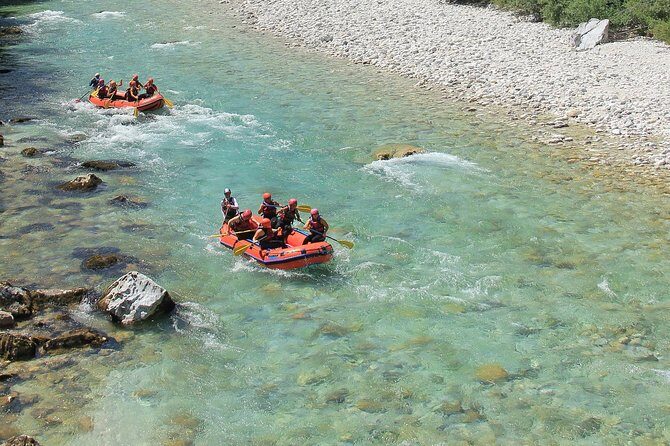
The longest-established outfit in the valley, with their own changing rooms, hot showers, and a small bar at the base. Three hours total, the standard adventure section. Slightly pricier than the Froccs option, but our SportMix Soča rafting review notes the changing facilities alone are worth the extra ten euros if you’ve got nowhere else to dry off.
Check Availability
Read our full review
What you actually do on the trip
Most trips run on a tight schedule, so it helps to know what’s coming. You arrive at the operator’s base in Bovec roughly 30 minutes before your slot. They check you in, hand you a wetsuit and gear, and point you at a changing room. The wetsuit fight is genuinely the worst part of the day. They’re tight, cold, and slightly damp from yesterday’s group. Everyone struggles. Don’t worry about it.
Once you’re kitted up, a minibus takes you to the put-in point, usually 10 to 20 minutes upstream. The guide runs the safety briefing on the riverbank: paddle commands, what to do if you fall in, how to get back into the raft, where to put your feet. Pay attention. The “high-side” call (where everyone leans hard to one side to stop the raft flipping) is the one that actually matters.
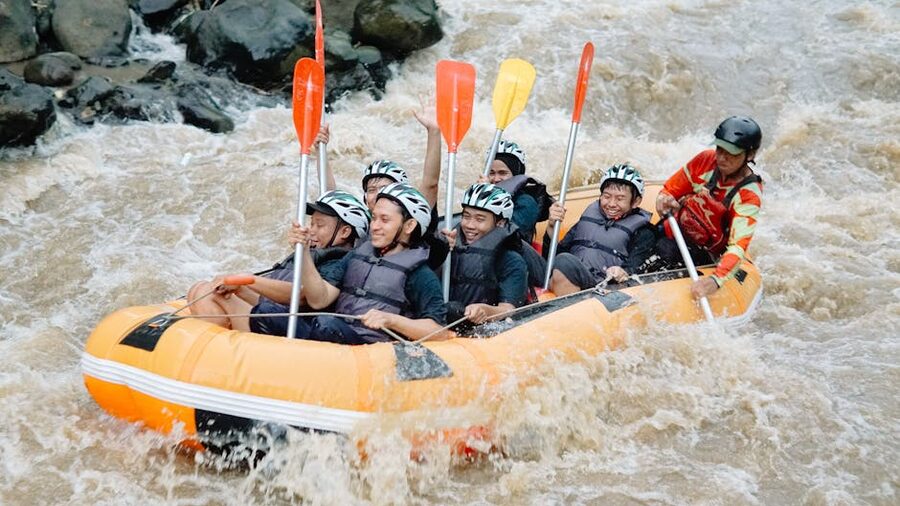
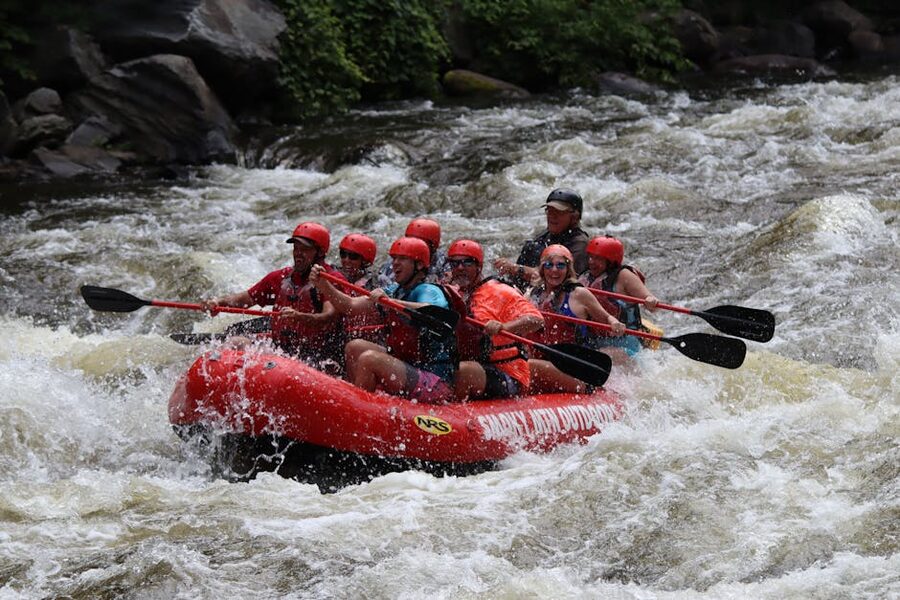
Then you launch. The first 10 minutes are flat water for practising paddle strokes. After that, the rapids start coming in waves. On the standard Boka section you’ll hit four or five named rapids in sequence, with calm pools between them where the guide will point out a waterfall or a rock formation. Most operators stop once on the river for swimming or jumping off a low cliff, weather and group skill permitting. Then a final stretch, takeout at Trnovo, minibus back to base, hot shower, done.
Why the Soča looks the way it does
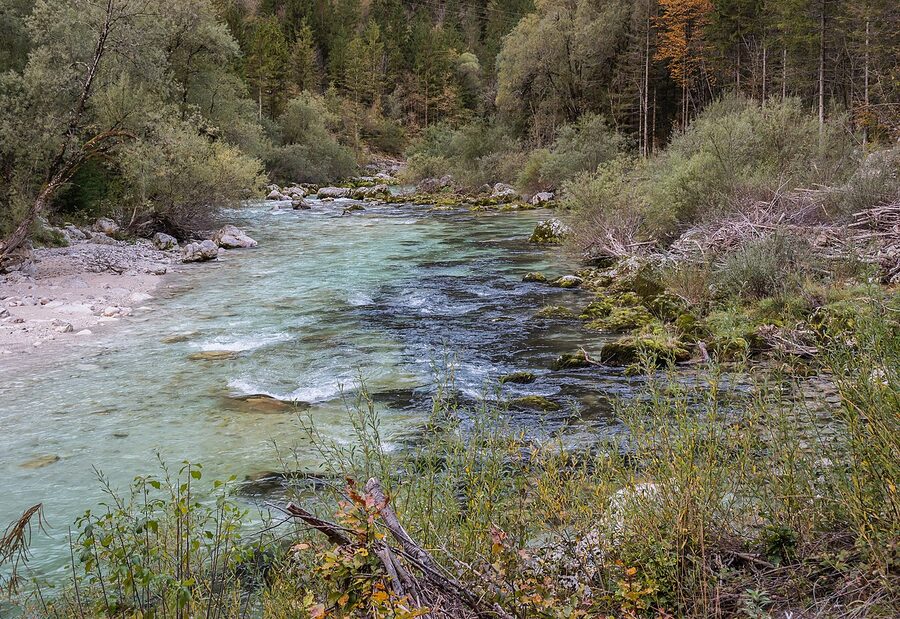
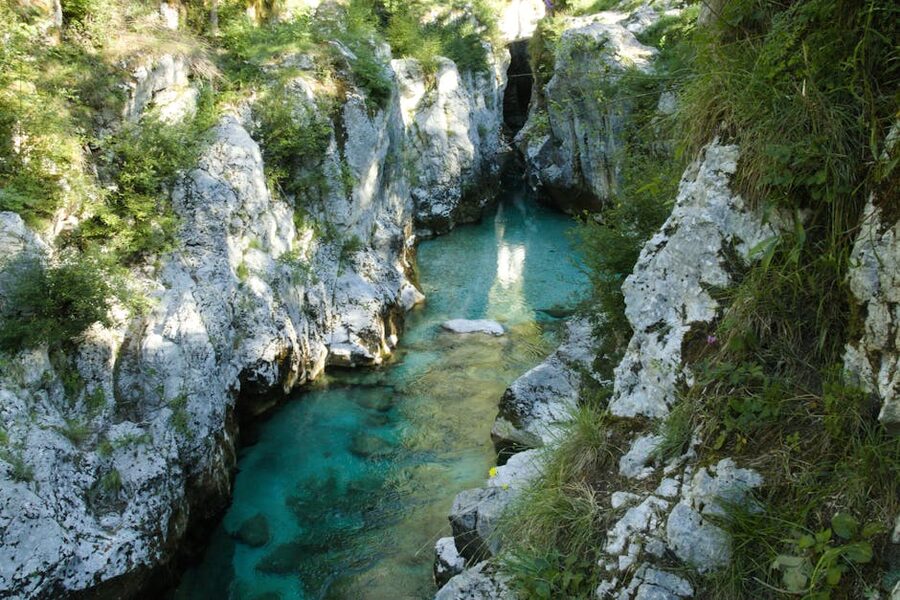
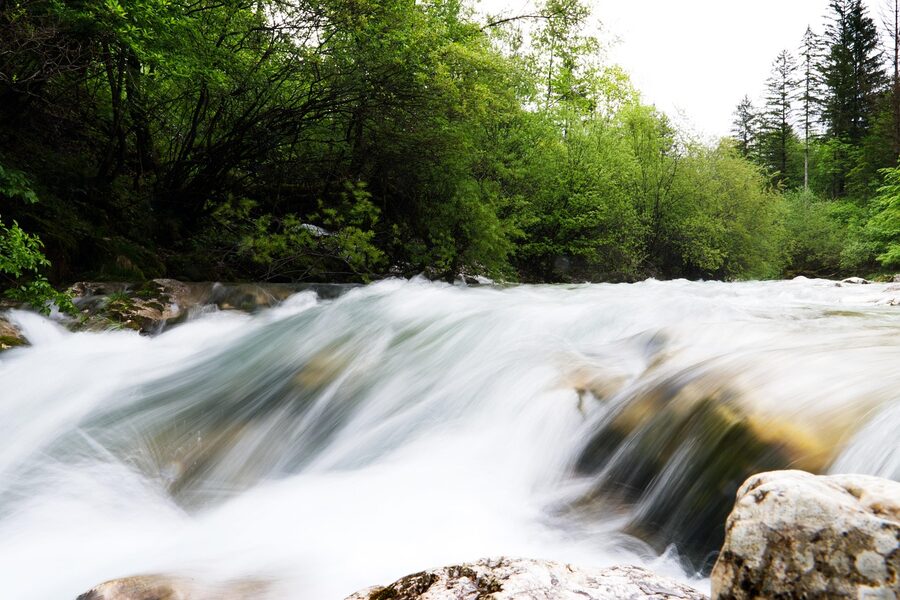
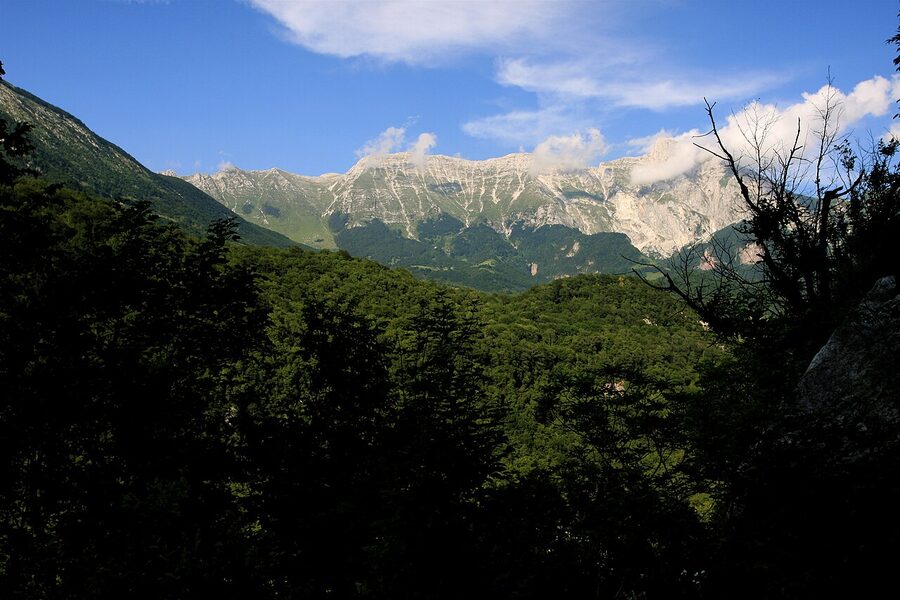
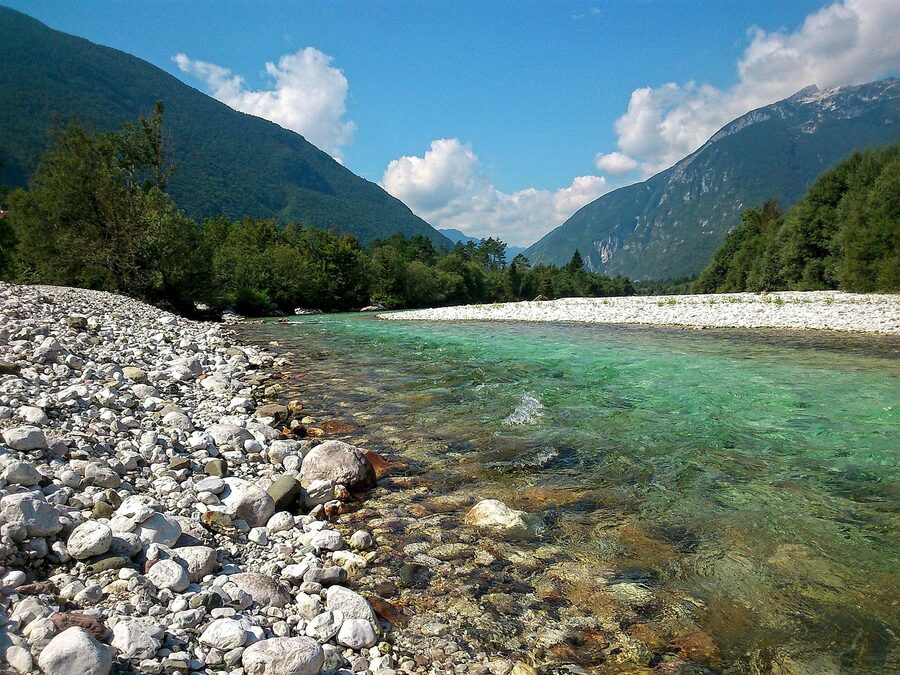
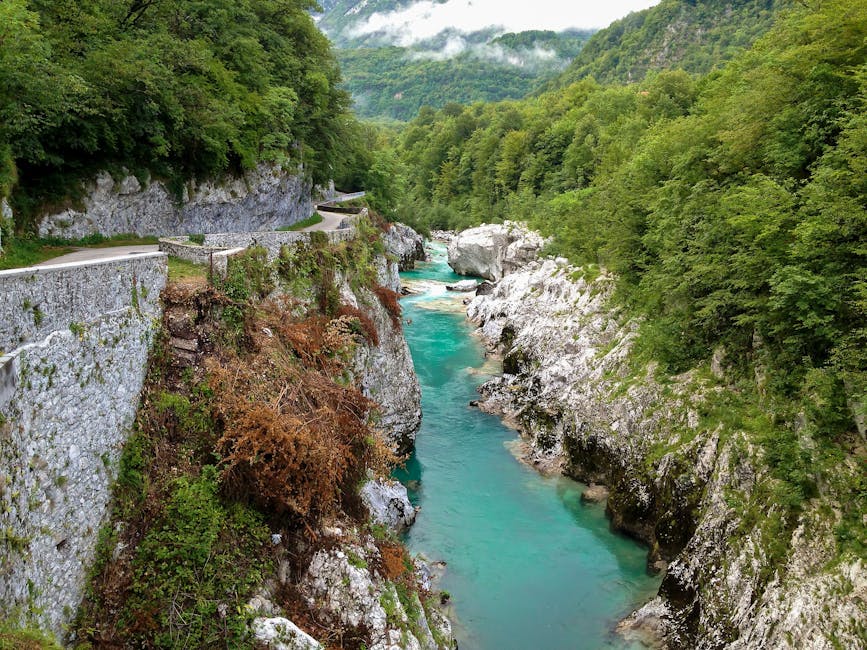
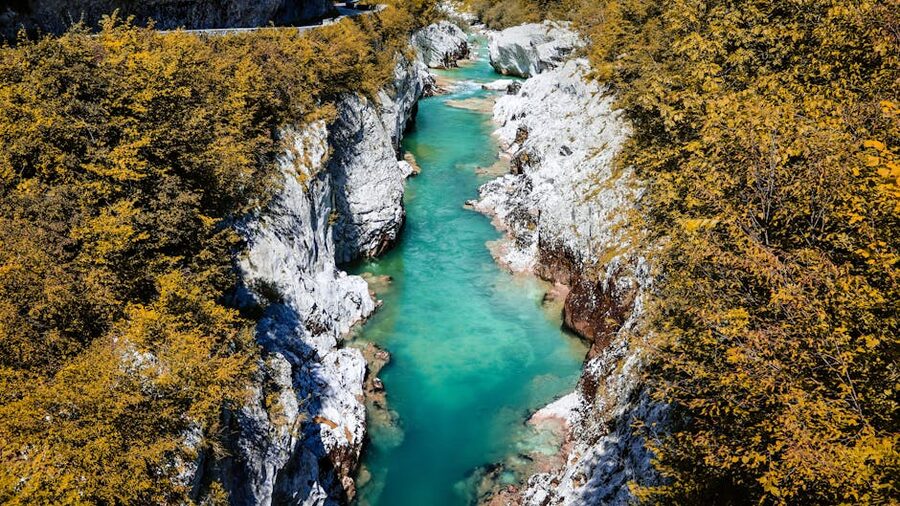
The colour is real, and there’s a geological reason for it. The Soča rises high in the Trenta valley below Triglav, Slovenia’s highest peak, and runs about 138 kilometres through limestone bedrock before crossing into Italy and emptying into the Gulf of Trieste. The limestone is what does it. The water is full of suspended micro-fine calcium carbonate particles that scatter sunlight at the green-blue end of the spectrum. The same effect makes Lake Bled blue-green and turns Plitvice in Croatia into postcard turquoise. Nothing exotic, just chemistry.
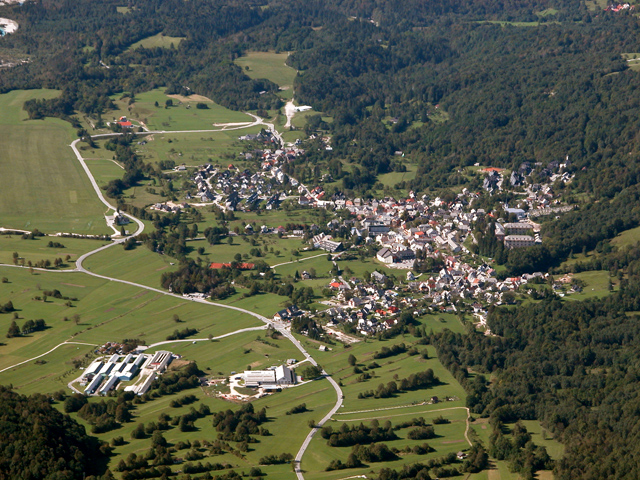
The valley itself is a serious place historically. The Soča front in World War I was where Italian and Austro-Hungarian armies fought twelve battles between 1915 and 1917, killing roughly 300,000 soldiers in the surrounding mountains. Hemingway drove an ambulance here in 1918 and used the landscape for “A Farewell to Arms.” There are open-air war museums and trench remnants scattered through the hills above Bovec and Kobarid, which is worth a look if you’ve got a non-rafting day in the valley.
.jpg)

When to go (and what to avoid)
The rafting season runs April through October, with real differences across the months.
April and early May are for serious paddlers only. Snowmelt pumps the river volume up, the water is closer to 5 degrees, and Class III sections temporarily become Class IV. Many operators run reduced groups in this window. The upside: fewer crowds and dramatic high-water descents.
Late May through mid-June is the sweet spot for adventurous rafters. Water is still pushy, weather is warming up, and the Julian Alps still have snow. Schools haven’t broken up yet so booking is easy.
July and August are peak season. Water levels drop, rapids mellow out, water temperature creeps up to maybe 14 degrees. This is when families go. Operators are at maximum capacity, so book at least a week ahead, two weeks for weekends.
September is the best month if you want a balance. Water still runs, weather still warm enough to enjoy a swim stop, crowds drop after schools start, and the surrounding forests start turning. Bring a fleece for after.
October is the autumn close. Water gets cold again, days are short, and many operators wind down. Possible but you’ll have limited choice of trip times.
What to avoid: heavy rain days. The Soča rises fast after rain in the upper valley because there’s no big reservoir buffering the flow. If your operator calls in the morning to say they’re cancelling or moving you to a calmer section, listen. They’ve seen this happen.
How to actually get to Bovec
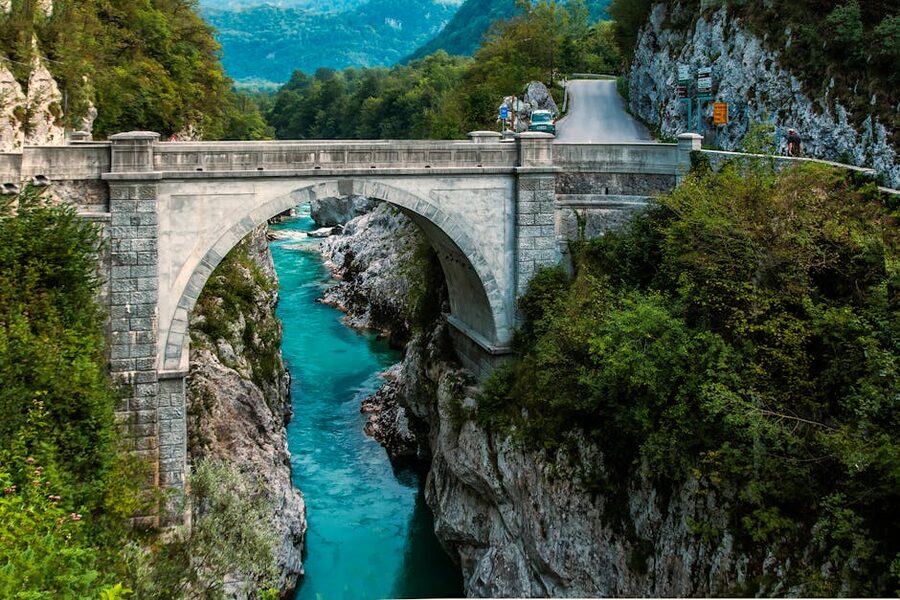
Bovec sits in the far northwest corner of Slovenia, tucked against the Italian border. There’s no train. Drive yourself or take a transfer.
From Ljubljana the drive is around 2 to 2.5 hours via the Vršič Pass in summer (a famous switchback road, 50 hairpin turns, closed in winter) or via Italy through Tarvisio if the pass is closed. The Vršič route is more scenic and adds about 30 minutes if you stop for photos, which you will. From the Ljubljana airport (Brnik) it’s about 2 hours 15 minutes via Idrija. From Trieste in Italy it’s about 1 hour 30 minutes through the border at Robič.
If you don’t want to drive, several operators arrange transfers from Ljubljana for an extra €30 to €50 per person each way. Less common but available. If you’re already exploring Slovenia from the capital, it’s worth combining with a Lake Bled day trip from Ljubljana earlier in the week, since the routes pass through the same general region.
Public buses do run from Ljubljana to Bovec via Kranj and Bohinj, taking 4 to 5 hours each way with a change. Theoretically possible. Practically a bad idea if you only have a day, because the schedule won’t sync with rafting times.
Boka Waterfall and what else is in the valley
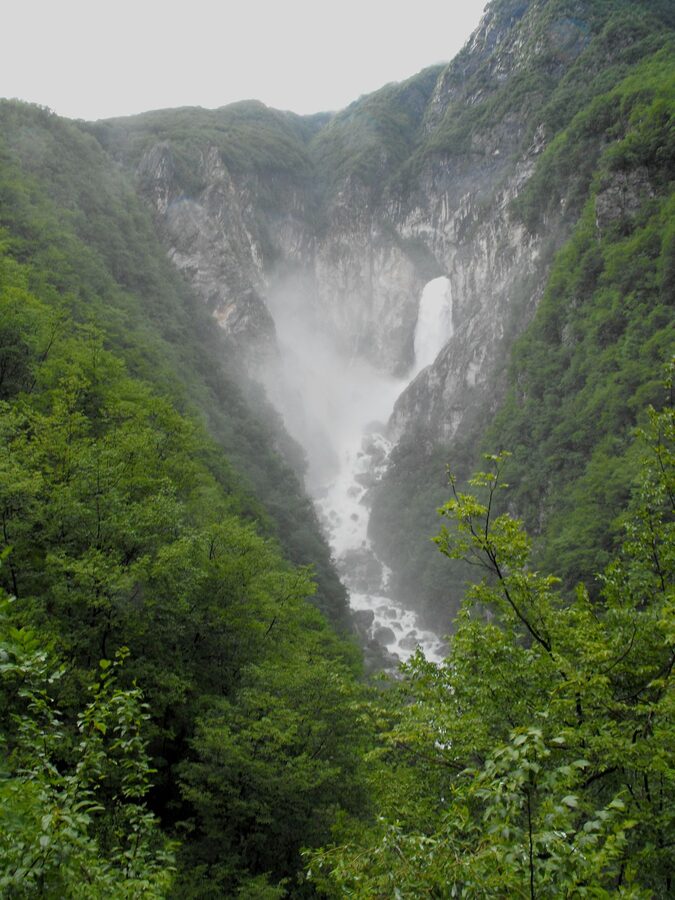
The Boka section of the rafting run starts near the base of Slovenia’s highest waterfall, which is one of those things you see on the way to your put-in and end up wanting to come back for. Boka drops 106 metres in a single plunge from a karst spring, then a further 30 metres in a second cascade below. In April and May it’s at full thunder from snowmelt and visible from kilometres away. By August it slows to a trickle. There’s a viewing platform reached by a 30-minute uphill walk from the road.
If you have a second day in Bovec, the canyoning trips on the Sušec or Fratarica streams are the obvious follow-up. So is the Mt Kanin cable car (the highest in Slovenia, top station at 2,202 metres) for views back over the valley you just rafted. The town itself is small. There are about a dozen restaurants, mostly serving Soča trout and the local frika potato pancake. Good Slovenian wine list at most places.
.jpg)
What to bring (and what not to)
The operator gives you the gear. You bring almost nothing. Here’s the actual list.
Bring: a swimsuit to wear under the wetsuit, a quick-dry towel, a complete change of dry clothes for after, sunscreen (the alpine sun is stronger than you think even when it’s cool), water, and a snack. Sandals or flip-flops for walking around base before and after. Cash for a coffee or a beer at the operator’s base bar.
Don’t bring: a phone you care about, a watch, sunglasses you can’t tie on, jewellery, anything in pockets, a GoPro unless you have a chest mount with a tether (helmet GoPros come off in big drops). Most operators have a dry-bag rack at base where you can leave your phone and wallet during the trip. Don’t trust a “waterproof” pouch on a string around your neck, they get torn off in the bigger holes.
Eat lightly before. A full breakfast doesn’t sit well after the first hole. A pastry and coffee an hour before is about right.
Things people actually wonder before booking
Will I fall out? Maybe. On a good guide on a standard run, full-boat ejections happen on maybe 1 trip in 10 in summer. Individual swimmers (one person out, rest of boat fine) happen more often, especially on the technical drops. Operators are set up for it. You float feet-first downstream, someone throws you a rope or you’re fished out at the next eddy. The wetsuit makes it bearable.
Is it OK if I can’t swim? Most reputable operators want at least basic comfort in water. The buoyancy aid will float you, but if you panic when your face goes under, you’re going to have a bad time. Some operators are stricter than others, so call ahead and tell them if you’re nervous about it.
Can I do this with a group of mixed ability? Yes, on the standard adventure section if everyone is over 12. Below that age, split into two groups and put the kids on the family-float section. Don’t try to compromise with one group on a section that’s wrong for half of them.
What about rafting versus kayaking? Rafting is the team boat. Kayaking is solo or duo, much harder, and you need to be able to roll if you flip. For first-timers in Bovec, raft. Save kayaking for a return visit.
Is it actually fun, or just cold? It’s actually fun. The cold is real for the first 10 minutes and then you forget about it. The colour does not get old. Coming off the river warm, fed, and grinning is one of those memories that sticks.
Where to stay if you’re rafting
Most operators want you on-site 30 minutes before launch, so staying somewhere walkable in Bovec town saves a morning of stress. Hotel Sanje ob Soči on the river side and Hotel Mangart in the centre are the two solid mid-range options. There’s also a cluster of guesthouses (Pristava Lepena, Apartmaji Vidic) that work well for groups. If you’re driving, the campsite at Polovnik takes campers and tents and is 10 minutes’ walk from most rafting bases.
Avoid staying in Kobarid and trying to commute. It’s only 25 km away but the road is twisty and you’ll lose an hour each way you didn’t plan for.
If you’re putting together a wider Slovenia trip
Most rafting visitors give Bovec one or two nights and pair it with the bigger sights. The standard Slovenia week looks like Ljubljana for a day, then Lake Bled for a day or two, then Bovec for the rafting and possibly a canyoning add-on, then back. If that’s roughly your shape, the Lake Bled day trip from Ljubljana covers the lake and pletna boat logistics in detail, and the Postojna Cave and Predjama Castle tour writeup covers the karst-cave headline experience down in the southwest. You’d want a separate day for that, ideally on a rest day from anything physical because the cave is 10 degrees year round and your legs will be tired from rafting. Capital sightseeing is covered in the Ljubljana Castle tickets guide, which is the easy half-day add-on at the end of the trip.
If your travel style is the active outdoor kind, the rafting and canyoning combo in Bovec sits in the same family as the Mallorca quad bike and snorkel adventure or the Cofete jeep safari in Fuerteventura, the kind of half-day where you hand over your phone and just commit. The volcano buggy tour in Lanzarote is a similar single-day adrenaline thing if you’re plotting a longer adventure-trip arc.
Some links in this article are affiliate links. If you book through them we may earn a small commission at no extra cost to you. We only recommend operators we’d actually use ourselves.