
Is the funicular worth €6, or should you just walk up to Ljubljana Castle? It’s the question every first-time visitor asks at the bottom of Castle Hill, and the answer depends entirely on what kind of day you’re having in Ljubljana and who you’re with.
I’ll get to the funicular debate in a minute. First the practical stuff: ticket types, what’s actually inside the castle (more than you’d expect), and which guided product is worth the upgrade.
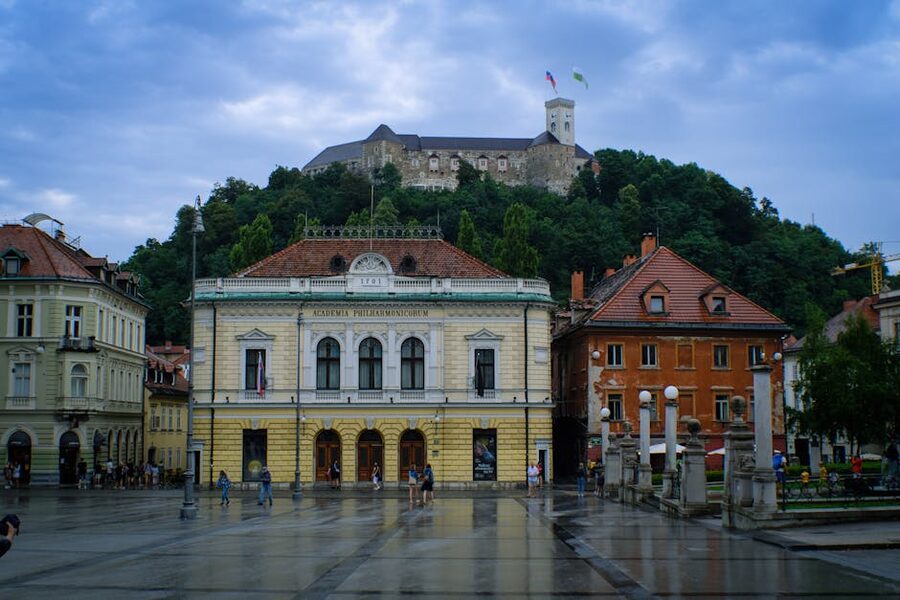
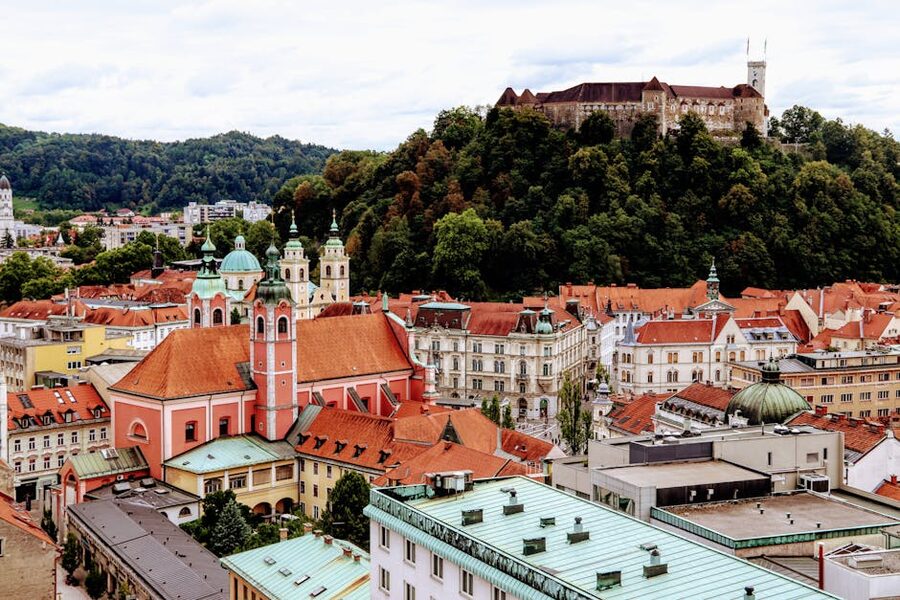
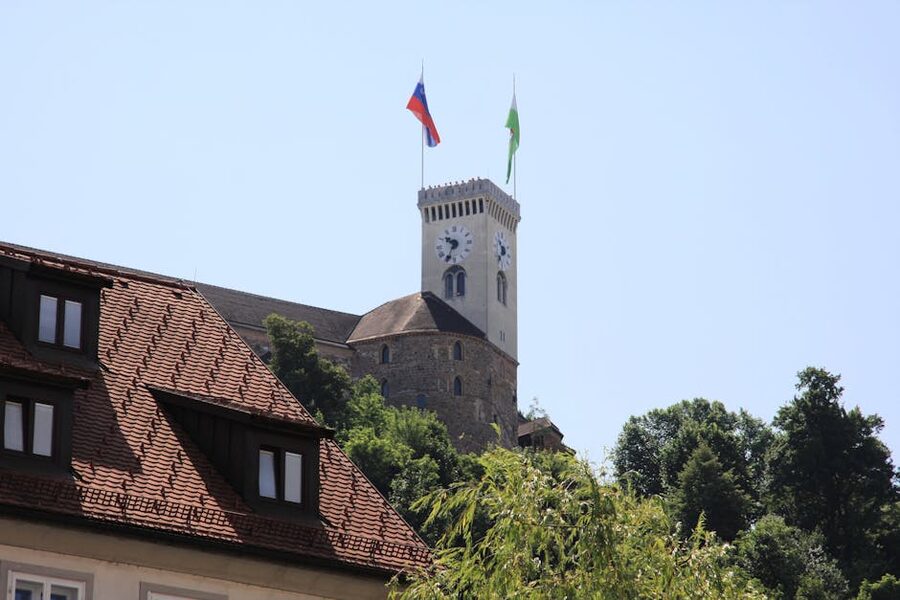
Best with a guide: Guided Walk and Funicular Ride to Ljubljana Castle, $23. Two-hour walking tour through the Old Town, then up by funicular for the castle context.
If you’ve got kids: Time Machine Guided Tour, $28. Costumed actors play historical figures. Genuinely fun for ages 6 and up.
- So, Funicular or Walk?
- What’s Actually Inside
- The Outlook Tower
- The Slovenian History Exhibition
- The Museum of Puppetry
- The Virtual Castle
- The Chapel of St George
- Ticket Types and What They Actually Cost
- Which Tour to Book
- 1. Ljubljana Castle Entry Ticket with Optional Funicular Ride:
- 2. Guided Walk and Funicular Ride to Ljubljana Castle:
- 3. Ljubljana Castle Time Machine Guided Tour:
- How to Get to Castle Hill
- A Bit of History (Skip If You Just Want Tickets)
- When to Visit
- What to Eat at the Castle
- Combining the Castle with Other Things
- What to Skip
- If You Want to See More Slovenia
So, Funicular or Walk?
Here’s the actual answer most people don’t get from a brochure: walk up, ride the funicular down.
The walk is short but properly steep. From Vodnikov trg (the market square) it’s about ten minutes on a paved path called Reber, then a switchback called Studentovska. From the Triple Bridge you’re looking at fifteen to twenty minutes including the climb. It’s not hard, but it’s enough that you’ll be warm at the top, even in October.
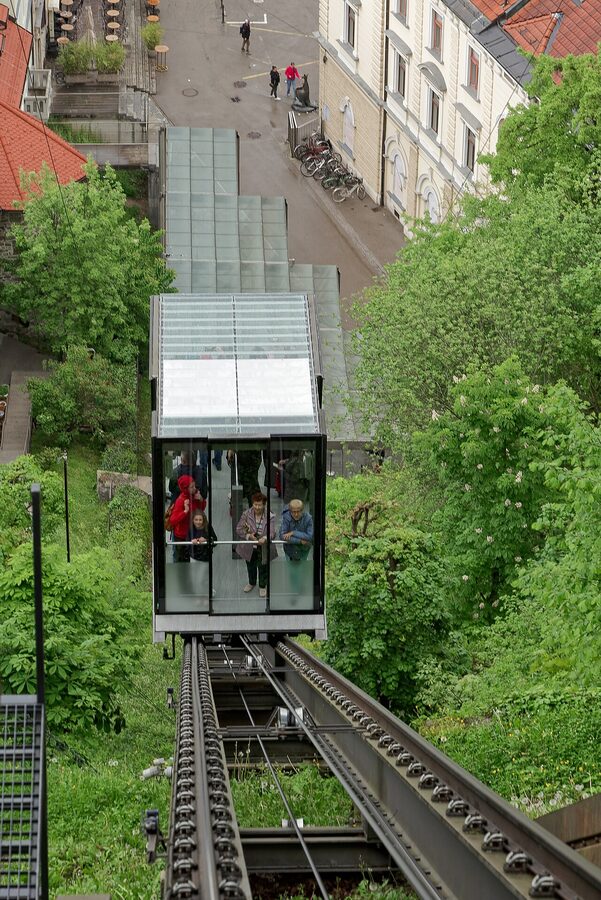

The funicular costs €4.50 round trip on its own (€6 if you’re buying it as a return-only standalone). But here’s where the maths gets interesting: the basic Castle Ticket alone is €15. The Castle Ticket with funicular is €19. So the upgrade is €4 per person, which is cheaper than buying the funicular separately. If anyone in your group has knee trouble, a stroller, or you’re just doing castle plus city in one tight day, get the bundle.
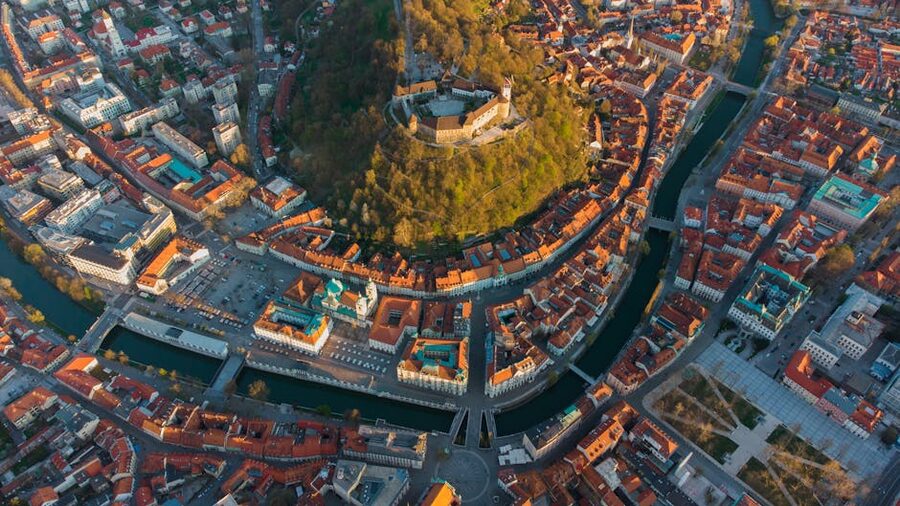
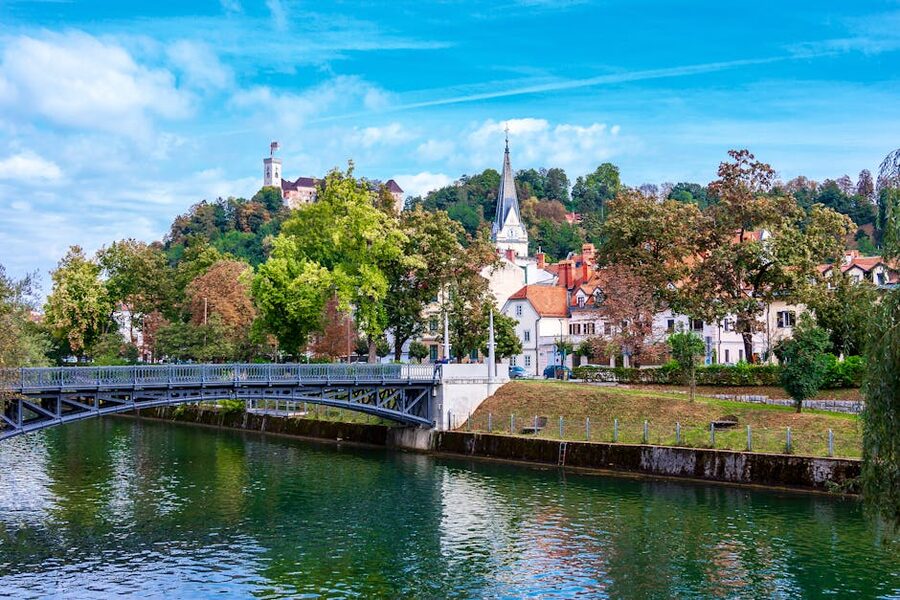
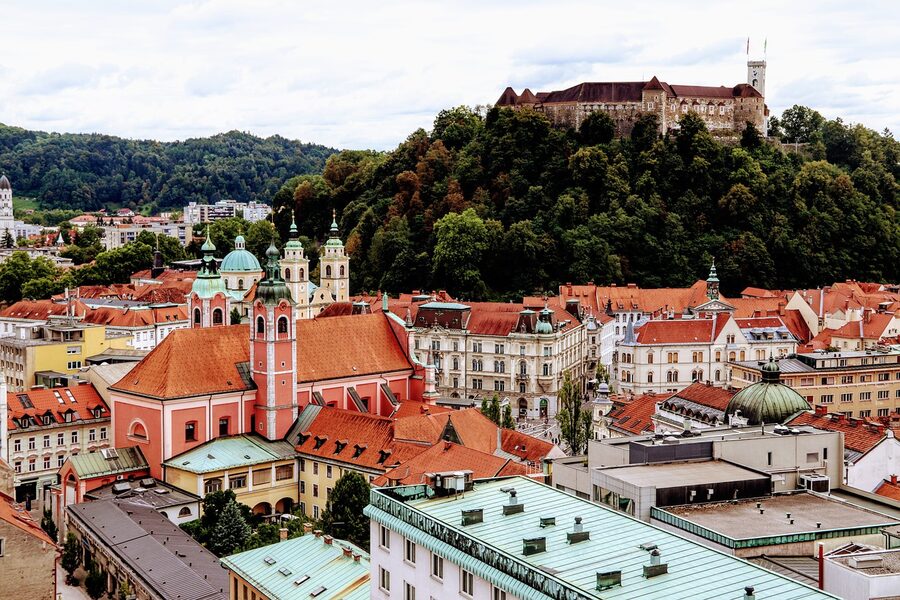
If you’re young, fit, and you’ve got the afternoon free, walk. The path goes through wooded switchbacks with intermittent views down over the red roofs of the Old Town, and it’s the kind of casual climb where you’ll stop twice for photos before you even realise you’ve been walking. Then take the funicular down at sunset and you’ve had both experiences.
What’s Actually Inside
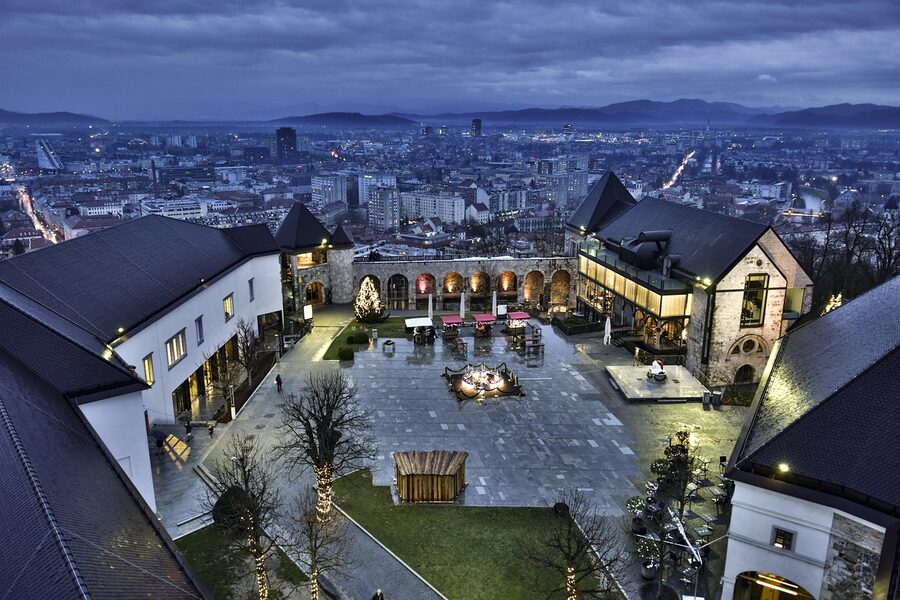
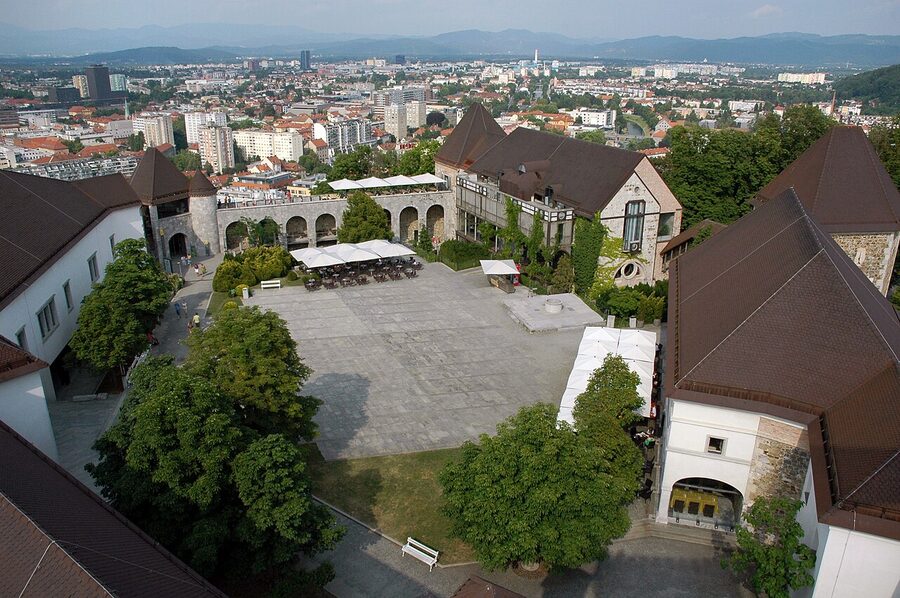
This is where the castle surprises people. Most arrive expecting a quick photo opportunity and a viewpoint. What you actually get is a working cultural complex with five separate paid attractions inside the walls, plus a chapel, plus a restaurant, plus the courtyard which is free to wander.
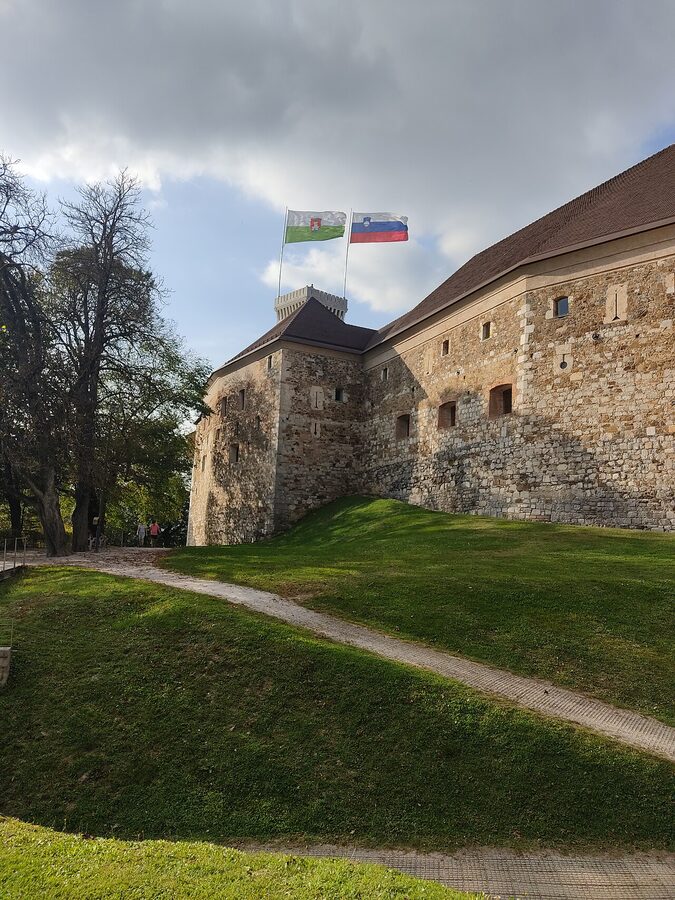

The Castle Ticket bundles four of the main attractions: the Outlook Tower, the Slovenian History Exhibition, the Museum of Puppetry, and a 12-minute animated film called the Virtual Castle. You can do the lot in about 90 minutes if you’re moving briskly, or stretch it to half a day if you take it slow.
The Outlook Tower
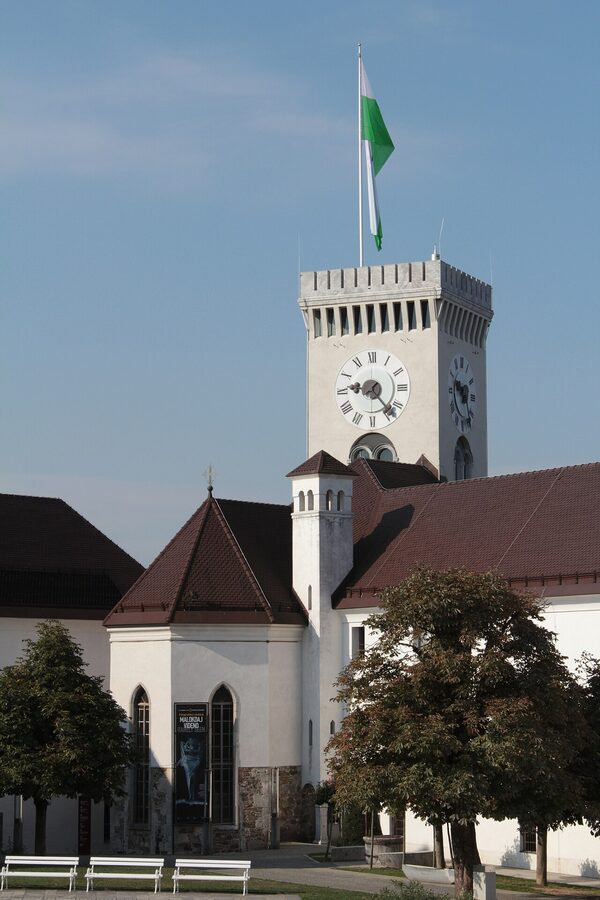
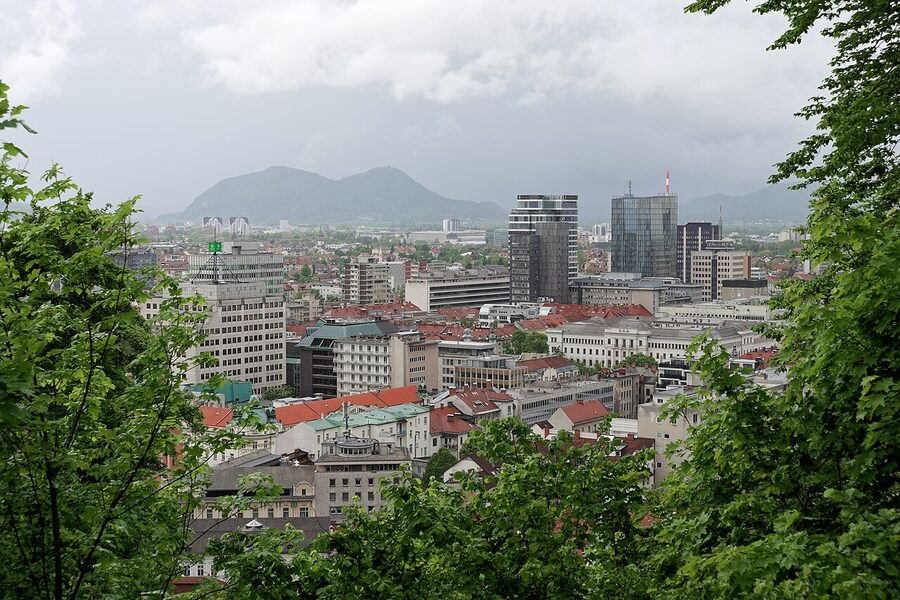
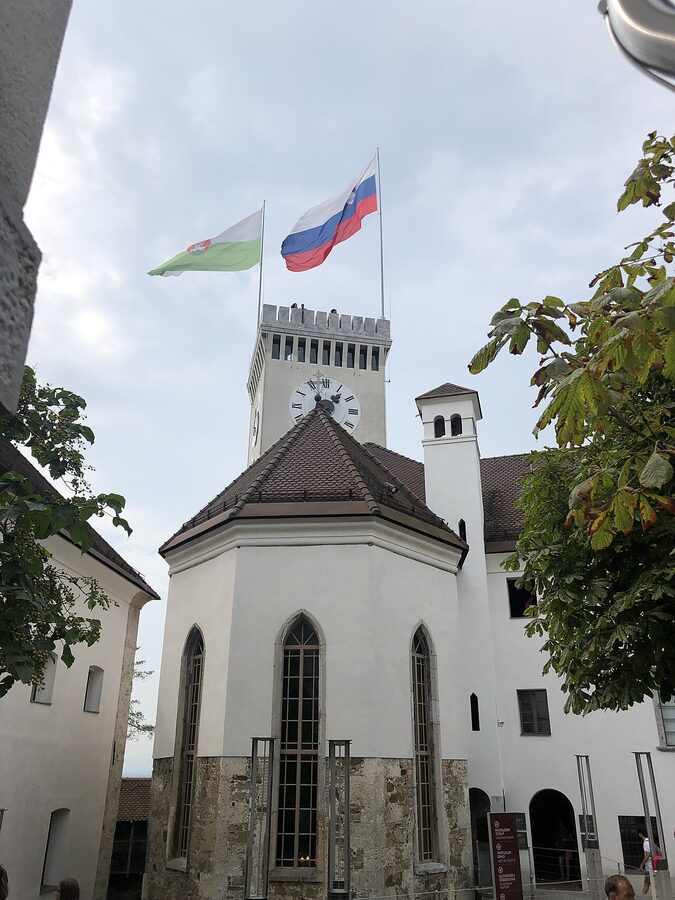
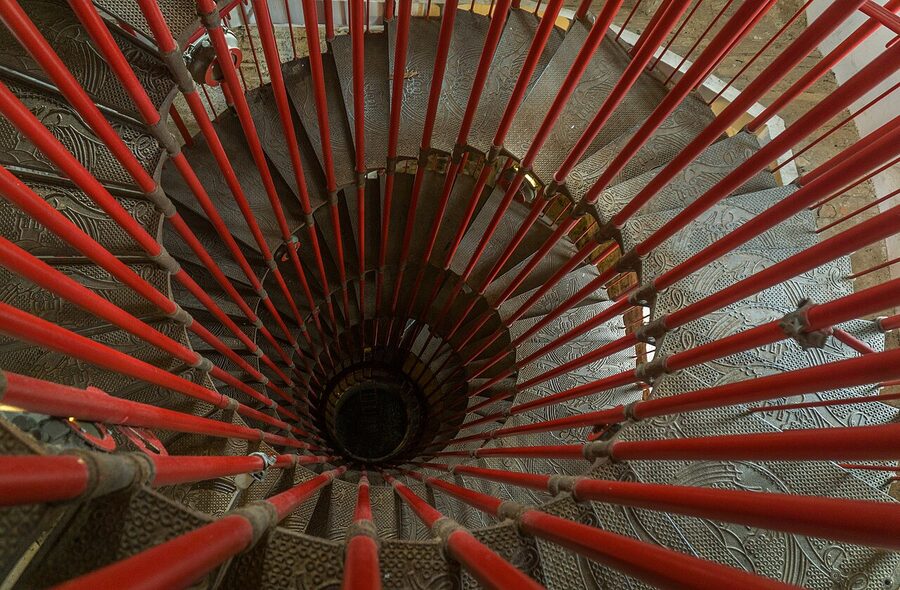
This is the one you came for. Ninety steps up a spiral staircase, a tight squeeze on the way up if it’s busy, and then you pop out onto a circular walkway with a 360-degree view of the city and the Julian Alps behind it. On a clear day you can see Triglav, Slovenia’s tallest mountain. On a hazy August afternoon you’ll see the rooftops and a soft blur where the mountains should be. Either way, it’s the best photo angle on Ljubljana you’ll ever get.


The Slovenian History Exhibition
This caught me off guard. I went in expecting a dry timeline of dates and walked out an hour later having been given a genuinely useful crash course in why Slovenia is its own country. The exhibition runs from prehistoric finds through Roman Emona, the medieval period, the Habsburg era, the Yugoslav decades, and the 1991 declaration of independence. It’s well-paced and the English signage is good.
If you’re spending more than a day in Slovenia, this is the single best way to understand what you’re looking at when you wander Ljubljana. It also makes the Old Town more interesting afterward.
The Museum of Puppetry
Sounds niche. Is more interesting than it sounds. Slovenia has a serious puppet tradition going back to the early 20th century, and the museum has both historic puppets and an interactive area where you can try working some of them. Kids love it. Adults usually walk in sceptical and walk out forty minutes later having had a quietly good time.
The Virtual Castle
A 12-minute animated film about the castle’s history, projected in a small theatre. You sit, you watch, you leave. It’s polished and not too long. Worth it on a rainy day, skippable on a sunny one.
The Chapel of St George
Built in 1489. It’s small, it’s quiet, and the painted ceiling has the coats of arms of the provincial governors of Carniola. Free to enter with any castle ticket. Most people walk past it on the way to the tower without realising it’s there.
.jpg)
Ticket Types and What They Actually Cost
Pricing on the official site looks slightly confusing because there are two ticket tiers and a funicular add-on layered on top. Here’s the cheat sheet for adults, in euros, as of this season:
- Castle Ticket €15. Covers the four bundled attractions. No guide.
- Castle Ticket plus Funicular €19. Adds round-trip funicular.
- Guided Tour plus Castle Ticket €19. Same attractions plus a roughly hour-long guided walk inside the castle. No funicular.
- Guided Tour plus Castle Ticket plus Funicular €23. The full bundle.
Children aged 7 to 18, students, and pensioners get reduced prices across the board (€10.50 for the basic ticket, €16 for the full guided combo with funicular). Family tickets exist for two adults plus at least one child and run €36 to €55 depending on what you bundle. Children under 7 are free.
One thing the official site doesn’t make obvious: tickets bought through GetYourGuide and Viator are usually a euro or two cheaper than buying at the door, plus they’re refundable up to 24 hours before. If your travel dates have any wobble at all, book through one of the OTAs. If you’re 100% sure of your day, walking up and buying at the entrance is fine and supports the castle directly.
Which Tour to Book
Three options worth considering. They’re genuinely different products, not three flavours of the same thing.
1. Ljubljana Castle Entry Ticket with Optional Funicular Ride: $17
This is the one to buy if you want maximum flexibility. Self-paced, no fixed time slot beyond the entrance day, and our full review of the GYG entry ticket covers what’s included and the small print. You skip nothing important by going un-guided. The audio guide on the official castle app is decent and free.
Check Availability
Read our full review
2. Guided Walk and Funicular Ride to Ljubljana Castle: $23
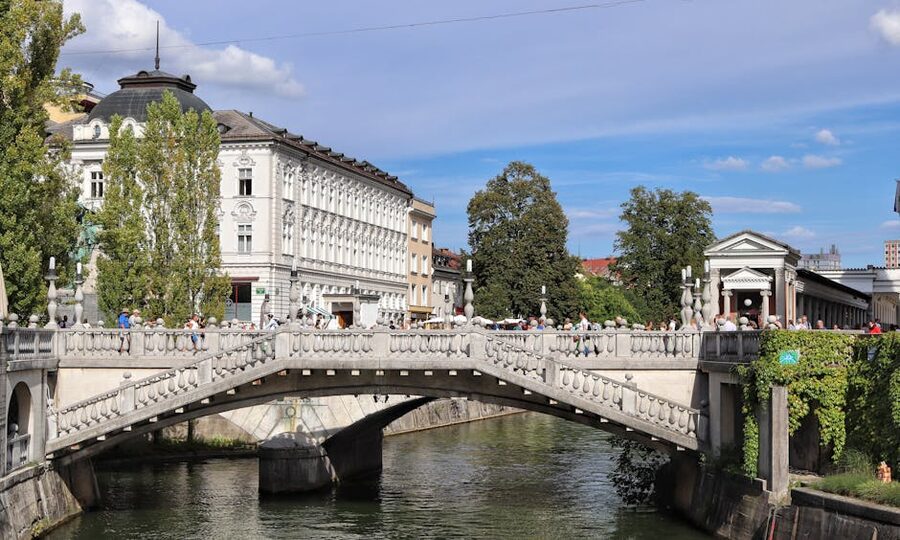
Two hours, includes a proper Old Town walk to the Town Hall, the Triple Bridge, the Dragon Bridge area, and then up the funicular for the castle context. The guides are local and rated highly, so this is the option if you want the full Ljubljana orientation in one go. Our in-depth take on this guided walk goes into what the guides cover, which is more substantial than you’d think for the price.
Check Availability
Read our full review
3. Ljubljana Castle Time Machine Guided Tour: $28
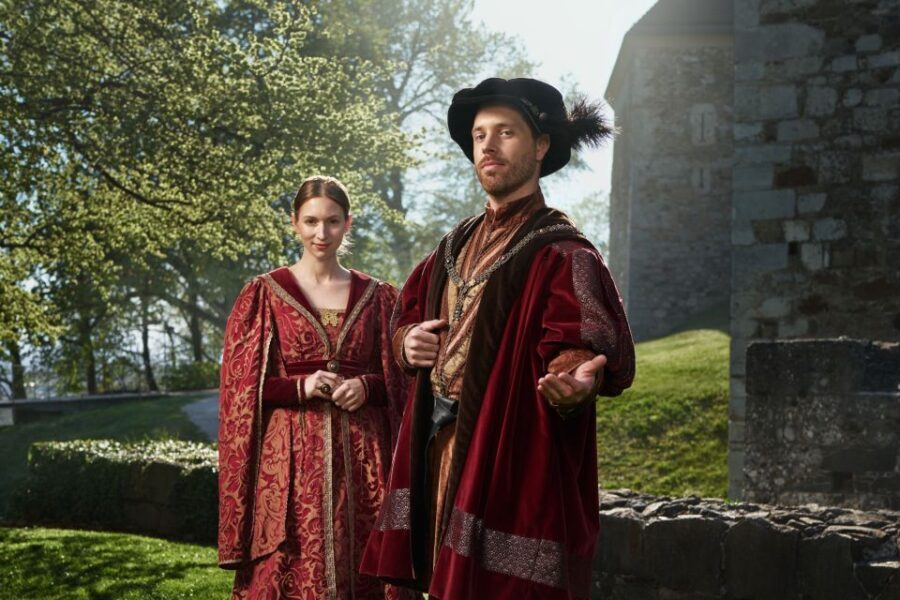
An hour with a costumed guide and a few historical “characters” who pop up at different rooms. It sounds like the kind of thing that would make adults cringe. It doesn’t. The acting is good, the script is informed by actual castle history, and kids love it. Best option if you’ve got a 6-to-12-year-old who’s getting bored of regular museums.
Check Availability
How to Get to Castle Hill
Three routes, depending on how you like to travel.
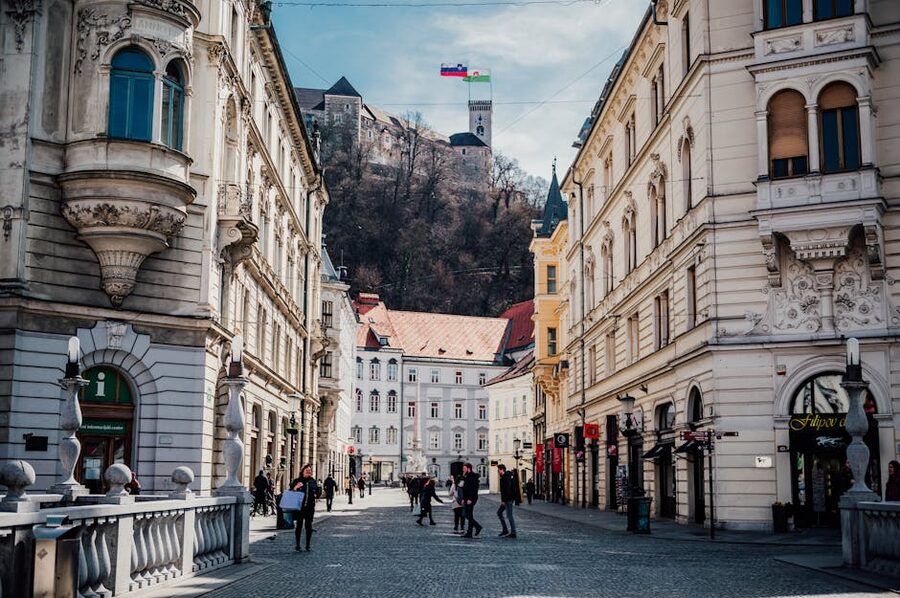
On foot. From Vodnikov trg market: about 10 minutes via Studentovska, the most direct route. From the Triple Bridge or Prešeren Square: 15-20 minutes. The path is paved and signposted but properly steep in places. Wear shoes you can grip in. Locals tend to do this route every weekend.
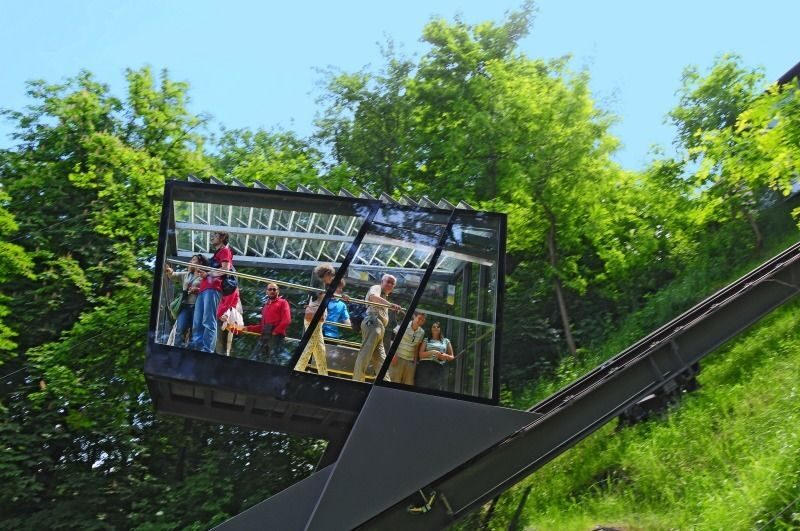
By funicular. Lower station is on Krekov trg, a short walk from Vodnikov market. One minute up, runs roughly every 10 minutes from 9am to 9pm (until 11pm in July and August). Round trip €6 standalone, but built into most castle ticket bundles for €4 extra over the basic ticket. Capacity is 20 people, so on a busy summer afternoon you’ll wait a couple of cycles.
The tourist train. A small road train picks up at Prešeren Square and Kongresni Square and trundles up via the road. €5 round trip, takes about 10 minutes one way, and runs hourly in season. Good for older relatives who can’t manage the funicular queue or the walk. Skip it otherwise.

A Bit of History (Skip If You Just Want Tickets)
Most castle articles bury the history at the front of the page. I’ll keep this short and put it down here so you can skip past if you don’t care.
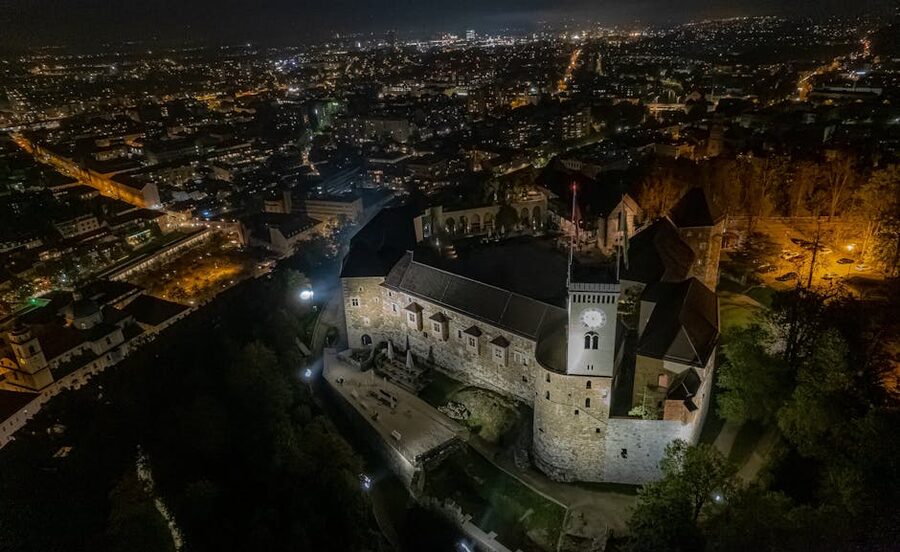
The hill itself has been fortified since the Late Bronze Age. There was a Celtic settlement, then a Roman watchtower as part of the defences of Emona (Ljubljana’s Roman name). The first stone castle on this site went up in the 11th century under the Spanheim dukes. What you see today is mostly post-1511, after the earthquake that flattened the medieval castle. The Habsburgs used it as a fortress, then a barracks, then briefly as a prison.

By the 19th century the castle was a slum. Yugoslavia took it over after the First World War, and serious restoration began in the 1960s under city ownership. The version you visit today reflects roughly fifty years of slow, careful renovation. The medieval stonework is still original. The interior fit-out, the cafe, the gift shop, and the modern stairwells are all post-restoration.
One specific fact worth carrying with you: this is where Slovenia’s parliament met in the medieval period. The hill was the political centre of the Carniola region long before the Old Town existed in its current form.
When to Visit
The castle is open every day of the year, with reduced hours in winter. Standard summer hours are 9am to 11pm; winter hours pull back to roughly 10am to 6pm. The Outlook Tower closes about an hour before the rest of the complex.
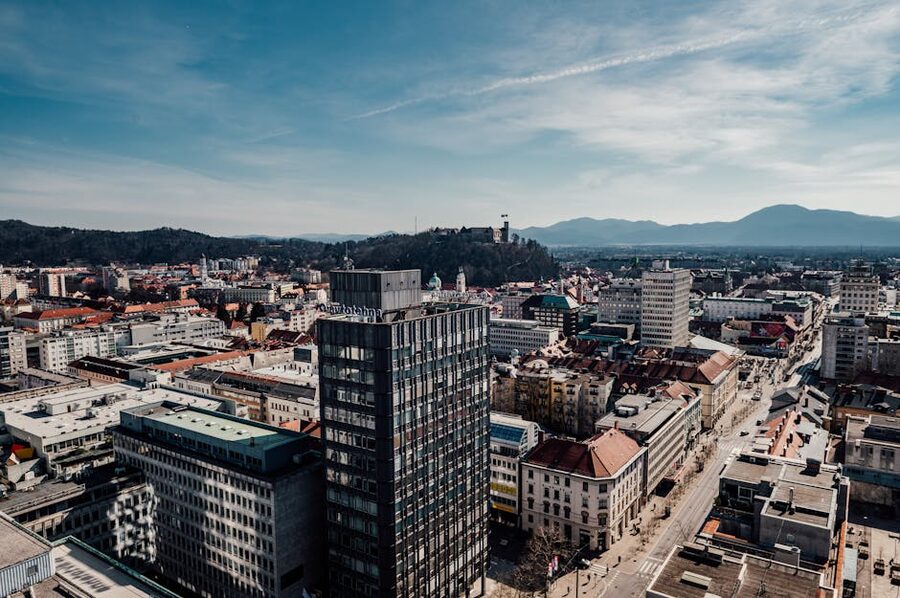
Best time of day. 9-10am for tower photos with empty space and morning light. After 5pm for golden-hour views and emptier exhibitions, but you’ll only have an hour or two before the museums close. Avoid noon to 3pm in July and August unless you want to share the tower with a cruise ship group.
Free days. The castle offers free entry on a couple of public holidays per year (Slovenian Statehood Day on 25 June, Cultural Day on 8 February). These are mobbed. The free days are not worth planning a trip around.
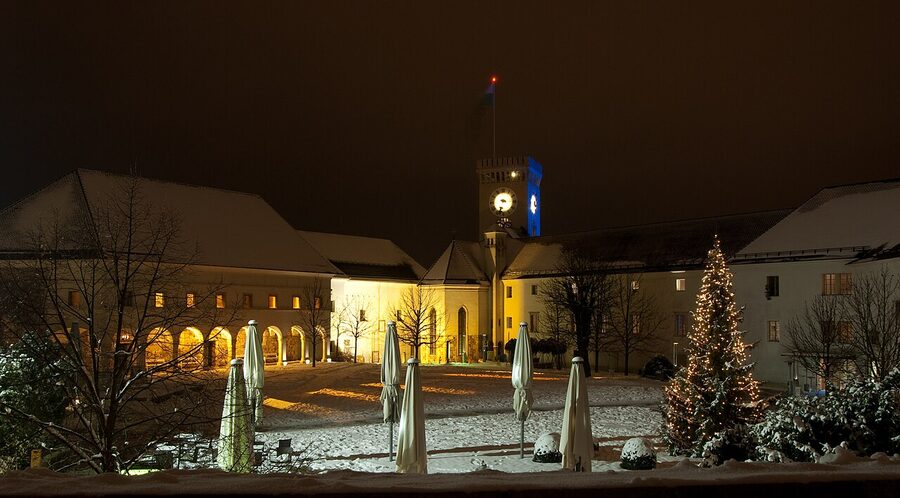
Wet weather. Surprisingly fine. The funicular runs in rain, the courtyard has covered arcades, and most of what you came to see is indoors anyway. The only thing that closes is the Outlook Tower if the wind is bad.
What to Eat at the Castle
The castle has two food spots. Strelec is a fine-dining restaurant inside the Archers’ Tower with a Michelin recommendation, set menus in the €80 to €120 range, and a view down the Ljubljanica river. Reservations essential. Probably overkill if you’re just doing the castle, but it’s one of the more memorable meals in Slovenia if you build an evening around it.
Gostilna na gradu is the casual castle restaurant in the courtyard buildings. Slovenian classics, prices around €15 to €25 a main, decent local wine list. This is where most visitors actually eat. Reasonable rather than mind-blowing.
The cafe in the courtyard does coffee, cake, and sandwiches if you just want a sit-down between attractions. Cash and card both work.
Combining the Castle with Other Things
The castle is small enough to bolt onto another half-day plan rather than building a full day around it.
The most natural pairing is the Old Town immediately after. Come down via the funicular, hit the Central Market for cheese and bread, walk the Plečnik colonnade, then settle in at a riverside cafe along the Ljubljanica. That’s a complete first day in Ljubljana for under €30 of attraction tickets including the castle.
If you’ve got two days in Ljubljana, the castle morning pairs well with a Lake Bled day trip the next day. Most visitors find the contrast useful: castle for the city history, Bled for the alpine landscape. We’ve put together a guide on how to book a Lake Bled day trip from Ljubljana that breaks down the standard combos with Bohinj and the Savica Waterfall.
Another natural pairing is a karst tour. Slovenia’s headline attraction outside Ljubljana isn’t actually Bled, it’s Postojna Cave with the Predjama Castle next door. We’ve covered that in detail in our guide to booking the Postojna Cave and Predjama Castle combo. Doable as a day trip from Ljubljana, takes about 6-8 hours including transport.
For something more active, the Soča Valley sits about two and a half hours northwest of Ljubljana and runs the most photogenic rafting in Central Europe on glacier-fed turquoise water. Not a same-day add-on from the castle, but if you’re building a Slovenia week our take on booking Soča River rafting in Bovec walks through the operator and section choices.
What to Skip
A few straight takes on the bits of the castle experience that aren’t worth your time or money:
The Escape Castle game is a separate paid experience on top of the castle ticket. Fun if you really love escape rooms. The puzzles are basic and the pricing is high relative to a standard escape room in town.
The castle gift shop sells ordinary tourist tat at slightly above-tourist-tat prices. Skip and buy your Slovenian souvenirs at the Central Market instead.
The tourist train for getting up the hill, unless you have mobility issues. Walk or take the funicular.
The “Penitentiary” exhibit in the Erazem Tower used to be its own paid add-on. It’s small and mostly Slovenian-language signage. Bundled with most tickets now, so see it if it’s free; don’t pay extra.
If You Want to See More Slovenia
Ljubljana works as a base for almost everything else in the country. The castle gives you the city in an hour or two, and from the funicular station you’re a 90-minute drive from Lake Bled, two and a half hours from the Soča Valley, and 50 minutes from Postojna Cave. The country’s compact in a way that surprises people. You can see most of the headline sights inside a five-day window if you’re keen.
For lake-and-alps days, our breakdown of Lake Bled day trips from Ljubljana covers the standard tours that combine Bled with Bohinj and the Savica Waterfall. For karst caves and the dramatic Renaissance castle built into a cliff, see how to book the Postojna and Predjama tour. For genuine adventure on glacier-fed water, our Soča rafting guide is the place to start.
For European castle parallels worth booking once you’re back home: Windsor Castle is the obvious British one, Stirling Castle is the Scottish equivalent of Ljubljana’s hilltop fortress, and the Buda Castle walking tour in Budapest covers similar ground for a Habsburg-era capital landmark. The Royal Palace in Stockholm is a different beast (royal residence rather than fortress) but pairs well in any “European capitals” itinerary. The Castle of the Moors at Sintra is the other dramatic clifftop fortress in Europe worth pairing mentally with Ljubljana.
Affiliate disclosure: some of the booking links in this article are affiliate links. If you book a tour through them we may earn a small commission at no extra cost to you. It helps keep these guides free.