
At peak bloom, Sewaritei’s 1.4-kilometer embankment becomes a long arch of Somei Yoshino blossoms, while the rivers meet in the open view beyond the trees. This day tour pairs that walk with Fushimi’s old canal district and Daigo-ji, where thousands of cherry trees fill a temple complex tied to Toyotomi Hideyoshi’s famous 1598 blossom-viewing banquet.
I like the contrast between Fushimi’s sake-brewery waterways and Sewaritei’s wide-open river views, and I like having a private vehicle connect the three stops instead of working out Kyoto-area transfers on a busy spring day. Guides including Wenling, Mingming, and Mimi have been praised for clear explanations and practical help, from taking photos to adjusting stop times.
The main catch is important: the Fushimi boat ride is not included, despite the boat being prominent in the tour’s name and highlights. You need to reserve it separately, and seats can sell out. The schedule also gives Sewaritei 1 hour 50 minutes, which may feel brief if you want a leisurely walk, festival food, and time for photos.
- At a glance
- Three very different spring stops
- Fushimi’s canal tells the story of a working waterway
- Daigo-ji pairs blossom viewing with temple history
- Sewaritei is the long walk beneath the blossoms
- The guide and vehicle make the day easier
- What the price covers, and what it does not
- Timing, blossoms, and practical planning
- Who should book this Kyoto blossom trip?
- FAQ
- Does the tour include a Fushimi Jikkokubune boat ride?
- Is Daigo-ji Temple admission included?
- How much time is scheduled at each stop?
- Where does the tour depart from?
- What time does the tour return?
- What languages can the guide speak?
- When are the cherry blossoms expected to bloom?
- Are meals and drinks included?
- Is there an age limit?
- What happens if bad weather affects the tour?
- More Tour Reviews in Yawata
At a glance
 1 / 6
 2 / 6
 3 / 6
 4 / 6
 5 / 6
 6 / 6
- Fushimi is a riverside walk, not a boat ticket: The Jikkokubune cruise needs to be booked independently.
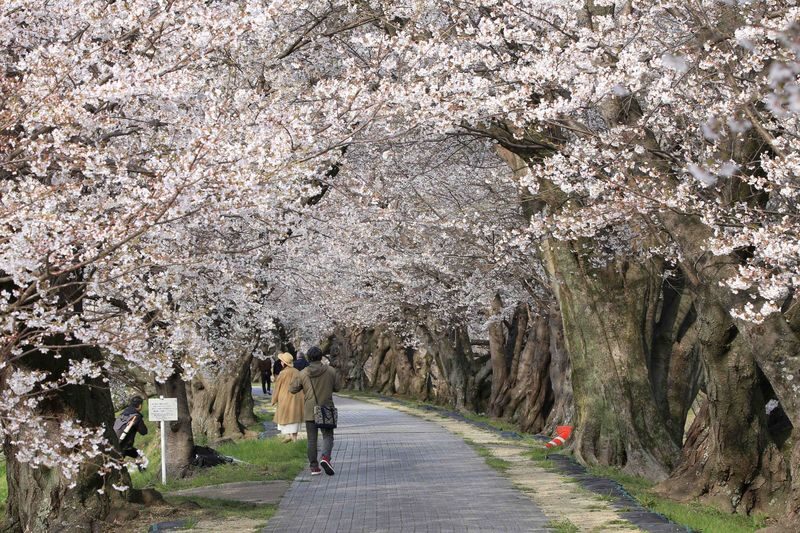
- Sewaritei’s tunnel runs for 1.4 kilometers: About 250 Somei Yoshino trees line the embankment.
- Daigo-ji has more than one cherry-viewing area: Its Sanbo-in, Garan, and Reihokan areas contain different varieties.
- The day has three self-guided stops: The guide helps coordinate the outing, but you explore each attraction on your own.
- Temple admission costs extra: The spring or autumn pass is about ¥1,500 per adult.
- Bloom timing is never guaranteed: The tour proceeds as scheduled even if the blossoms arrive early or late.
Three very different spring stops
This Kyoto cherry blossom day tour connects three places with distinct moods. Fushimi is about water, old transport routes, and sake breweries. Sewaritei is a long, open-air walk beneath a canopy of blossoms. Daigo-ji brings you into a major temple complex with a celebrated place in Kyoto’s spring traditions.
The route is designed for a day trip from Osaka or Kyoto. It saves you from arranging separate transport between the stops, which matters during blossom season, when popular places can be crowded and road conditions can shift. You still need to manage your own time at each site, and the vehicle follows a set schedule.
The tour’s advertised price starts at US$60.55, while the named Kyoto Cherry Blossom Day Trip package is shown from US$75.69. Since the listed figures differ, check the price for your chosen date and package before paying. Also allow for costs beyond the tour price: Daigo-ji admission, any Fushimi boat ticket, meals, drinks, and personal purchases are not included.
You can also read our reviews of more tours and experiences in Yawata.


Fushimi’s canal tells the story of a working waterway
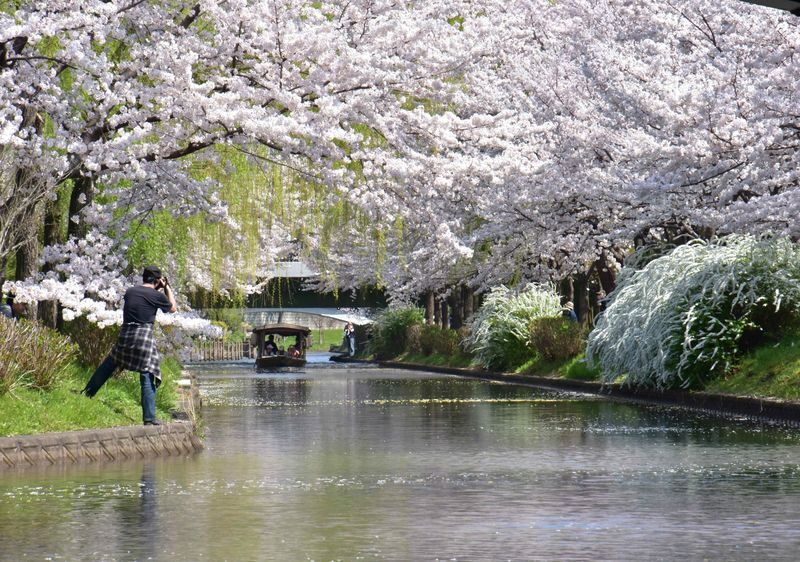
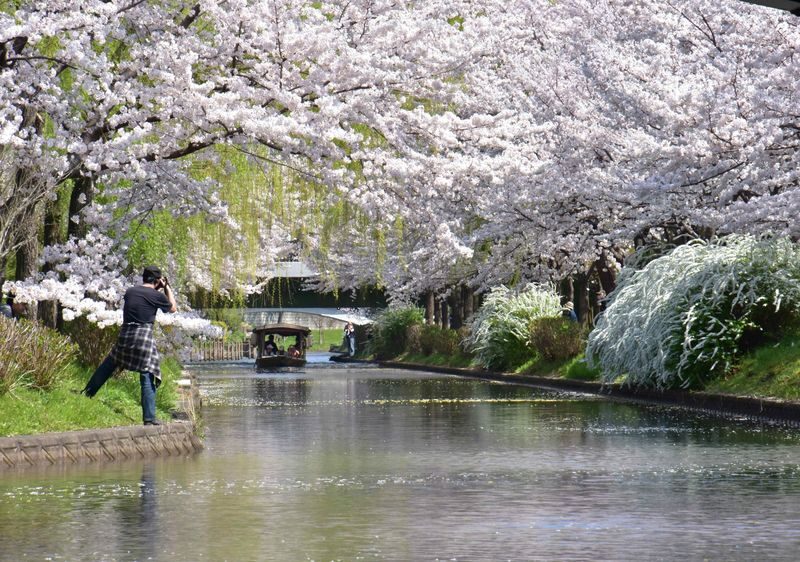
The first stop is Fushimi Jikkokubune, with about an hour for a self-guided riverside stroll. The distributary once carried passengers and cargo. Today, the canal and its banks give you a quieter way to see the area’s old sake-brewing identity, with willows, cherry trees, and traditional breweries sharing the scene.
The route includes a walk beside the water, not a ride on the Jikkokubune boat. That distinction deserves attention if cruising is the main reason you are considering this outing. Boat tickets are separate, and the tour information says you must book your cruise yourself. A guide helped one visitor look for an alternative when boat tickets had sold out online, but that is not a substitute for securing a seat in advance.
If you cannot get a boat ticket, the walk still gives you a worthwhile hour in Fushimi. One visitor with an interest in sake was taken to the Gekkeikan Sake Museum after the boat had sold out. Treat that as an example of a guide adapting to a situation, not as a guaranteed stop or included admission.
The estimated flowering period here is late March to early April. As with the other stops, the exact timing changes with the weather. If the trees are not at their peak, you still have the canal, willows, and brewery setting, but the blossom display may not match the photographs you have in mind.
Daigo-ji pairs blossom viewing with temple history
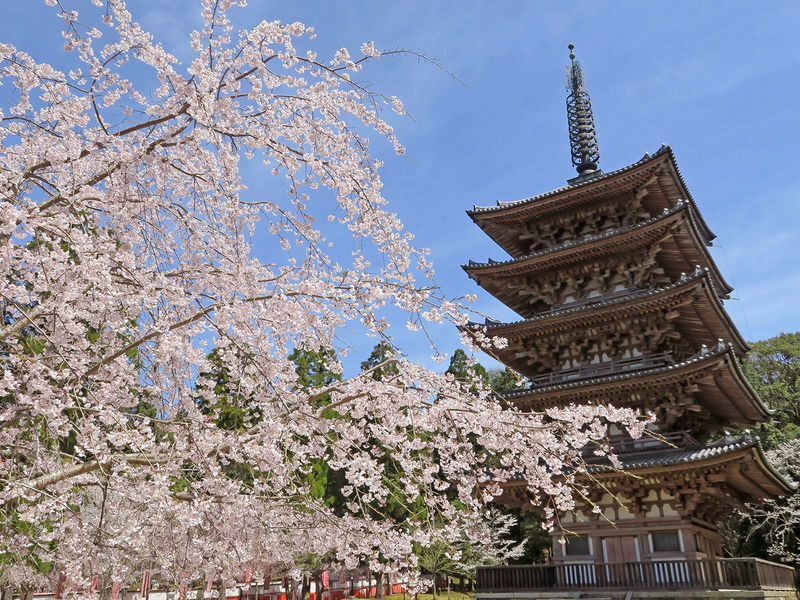
Daigo-ji is a World Heritage site and one of Kyoto’s best-known spring sights. The temple became especially associated with cherry blossom viewing after Toyotomi Hideyoshi held his Daigo Cherry Blossom Viewing banquet here in 1598. That connection gives the scenery a little more context than a simple walk beneath flowering trees.
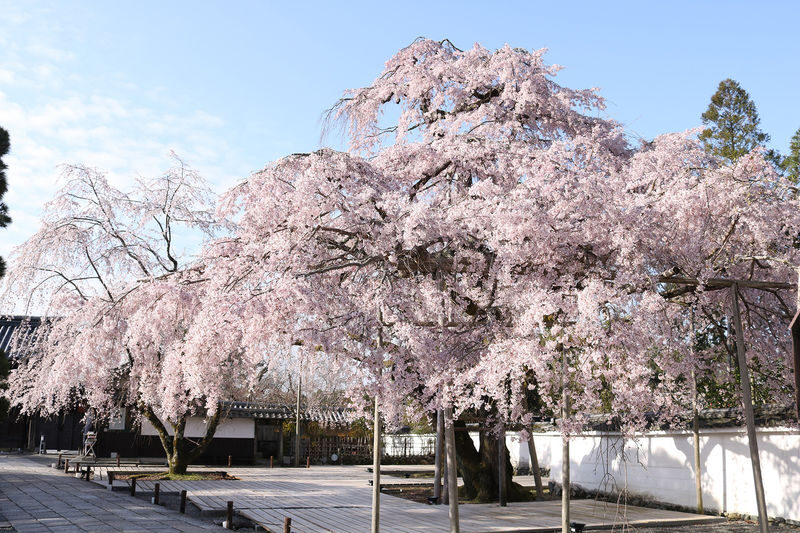
The grounds are extensive, with cherry trees spread through the Sanbo-in and Garan areas and around the Reihokan Museum. You may see Somei Yoshino, weeping cherry, and mountain cherry varieties. In total, the grounds hold thousands of cherry trees, so the experience is broader than a single temple building or one photogenic path.
You have about an hour to explore, and admission is extra. The spring or autumn pass is approximately ¥1,500 per adult. Keep that cost in your budget, and check what areas your ticket covers when you arrive. The grounds are large enough that an hour calls for choosing what matters most to you rather than trying to see everything.
This stop can be the day’s most rewarding visit if you value temple architecture and history along with flowers. It can also feel like a long stop if you would rather spend more time beneath Sewaritei’s blossom canopy. The balance between the two is a matter of taste, and the fixed schedule leaves limited room to linger.
Sewaritei is the long walk beneath the blossoms
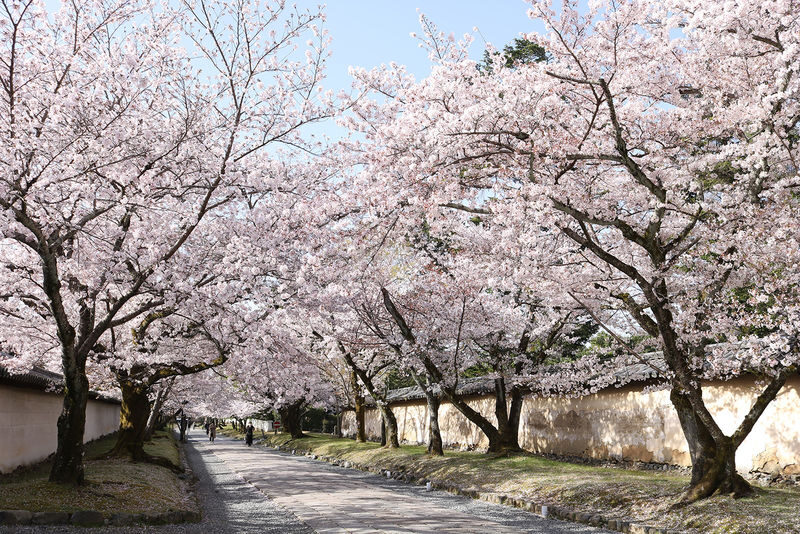
The Yodo Riverside Park Sewaritei District, also known as Sewari-tei, is the most distinctive blossom walk on the route. About 250 Somei Yoshino trees line a 1.4-kilometer embankment, forming the famous spring tunnel. When the trees are in bloom, branches meet overhead and petals drift across the path.
The setting opens out beyond the trees, with views toward the meeting point of the Kizugawa and Yodogawa rivers. That combination makes Sewaritei different from a temple garden: you get a long walk, a canopy overhead, and broad river views rather than a close sequence of historic buildings.
The stop lasts 1 hour 50 minutes. That gives you time to walk, take photographs, and pause, but the full path is 1.4 kilometers and there may be festival activity during blossom season. If you want to walk the route slowly, browse food stalls, and find a good picnic spot, you may need to choose among those pleasures. One visitor felt Sewaritei deserved at least two hours and Daigo-ji less time, a fair point for anyone whose priority is the flower tunnel.
The annual Sewari-tei Sakura Festival adds food stalls and limited-time events. You might find local snacks alongside other casual food, but meals and drinks are not part of the tour price. Bring money for anything you want to buy, and do not count on a full sit-down meal during this short visit.
The guide and vehicle make the day easier
The guide is a practical part of this tour, not just a voice giving background facts. The route involves three stops, free time, and a return journey, so clear instructions and sensible timing can make the day feel much less hurried. Guides named in participant feedback include Wenling, Mingming, and Mimi. Their reported strengths include detailed explanations, local food suggestions, help taking photos, and adjusting the time spent at a stop when possible.
The day is not a private tour for your party. The transfer is by vehicle, with the vehicle type assigned according to the number of people. For a small group, the driver may also act as the accompanying staff member, with no separate tour leader. One guide has been described as managing a group of 40, which gives a sense of the scale a group can reach, though the exact size on your date is not specified.
Transfers are included from the designated meeting point. The Osaka departure is at Kani Doraku Dotonbori East Store, with check-in around 7:40 to 7:50. There is also a Kyoto Station pickup around 8:50 to 9:00, but its timing depends on road conditions coming from Osaka. The return is scheduled for Kyoto Station’s Hachijo Exit at 16:00 and the Osaka meeting point at 17:00.
Arrive 10 minutes before your departure time. The vehicle will not wait for late arrivals, and latecomers or no-shows are not eligible for a refund. Since traffic and weather can alter the schedule, avoid booking an evening activity that depends on arriving back at a precise time.
What the price covers, and what it does not
The tour price buys round-trip transfers, a guide who speaks English, Chinese, or Japanese, and operator-provided insurance. In practical terms, the main value is the transport and coordination across three separate sights in one day. For a visitor based in Osaka, that can be easier than arranging every leg independently during the spring rush.
The price does not include the Fushimi boat cruise, Daigo-ji admission, meals, drinks, personal expenses, or tips. Those exclusions matter most if you are comparing the tour with a self-planned day. Add the temple ticket and any boat fare before deciding that the tour is the cheaper option.
For the boat, the key question is not only cost but availability. It requires a separate reservation, and one visitor found tickets sold out online. If sailing is essential to your plans, confirm that you can reserve a cruise before booking the day tour. Otherwise, think of Fushimi as a riverside walk with an optional boat, not as a guaranteed boat excursion.
The schedule’s value lies in reaching all three places without making you navigate each transfer. The tradeoff is limited freedom: you cannot spend the whole day at your favorite stop, and the tour may need to adjust for traffic or weather. The balance works best if you want variety and a straightforward route more than a slow, independent day.
Timing, blossoms, and practical planning
The estimated flowering period at all three stops is late March to early April, but the actual bloom depends on the season’s weather. The tour runs on its scheduled date whether blossoms are at full bloom or not. You are paying for transport and access to the route, not a guarantee of peak flowers.
Bad weather such as a typhoon or blizzard can lead the operator to cancel. A decision is made by 18:00 local time on the day before departure, with notification by email. Other weather or traffic problems can change the order or availability of stops, so keep your plans flexible.
The vehicle has limited luggage storage. Ask in advance if you need to bring large bags, and avoid assuming there will be room for bulky luggage. During free time, you are responsible for your own safety and belongings.
The tour requires at least 15 participants. If that number is not met, it may be cancelled, with a rescheduled time or refund offered. Confirmation is due 48 hours before departure; contact customer support if you do not receive the confirmation email.
Who should book this Kyoto blossom trip?
I would choose this tour if you are staying in Osaka or Kyoto and want to see three very different blossom settings in one day without planning the transfers yourself. It suits first-time visitors, people keen on spring scenery, and anyone who values a guide’s help with local context and day-to-day coordination.
It is less suitable if your first priority is definitely riding the Fushimi boat and you have not secured a separate reservation. It may also frustrate you if you want a slow temple visit or a long, unhurried picnic at Sewaritei. The tour gives you a broad sample, not a full day at any one place.
Book it for the mix of canal, temple, and riverbank scenery, and for the convenience of a vehicle linking them. Before you do, confirm the package price, budget for Daigo-ji, and reserve the boat separately if you want to cruise. Most important, treat the blossoms as a seasonal possibility rather than a promise.
Kyoto Cherry Blossom Day Tour: Fushimi Jikkokubune Boat Walk / Sewari Dike Cherry Blossom Tunnel / Daigo-ji Temple (Departure from Osaka/Kyoto)
“The tour had a comfortable itinerary. The tour guide was very friendly, patient and helpful. l enjoyed the trip tremendously.”
FAQ
Does the tour include a Fushimi Jikkokubune boat ride?
No. The Fushimi stop includes a self-guided riverside walk. Boat tickets are not included, and you must reserve a cruise separately.
Is Daigo-ji Temple admission included?
No. The spring or autumn pass costs about ¥1,500 per adult, according to the tour information.
How much time is scheduled at each stop?
The schedule allows about one hour at Fushimi, one hour at Daigo-ji, and 1 hour 50 minutes at Sewaritei.
Where does the tour depart from?
The Osaka meeting point is Kani Doraku Dotonbori East Store. There is also a Kyoto Station pickup, with arrival time depending on traffic from Osaka.
What time does the tour return?
The scheduled return is 16:00 at Kyoto Station’s Hachijo Exit and 17:00 at the Osaka meeting point. Traffic may cause delays.
What languages can the guide speak?
The included guide may speak English, Chinese, or Japanese.
When are the cherry blossoms expected to bloom?
The estimated blooming period is late March to early April. Weather can shift the timing, and the tour proceeds even if blossoms are not at peak bloom.
Are meals and drinks included?
No. Meals, beverages, and other personal expenses are not included.
Is there an age limit?
No. The activity information gives no age limit.
What happens if bad weather affects the tour?
In severe weather such as a typhoon or blizzard, the operator decides by 18:00 local time the day before departure whether to cancel and sends notice by email. Traffic and weather may also lead to itinerary changes.