
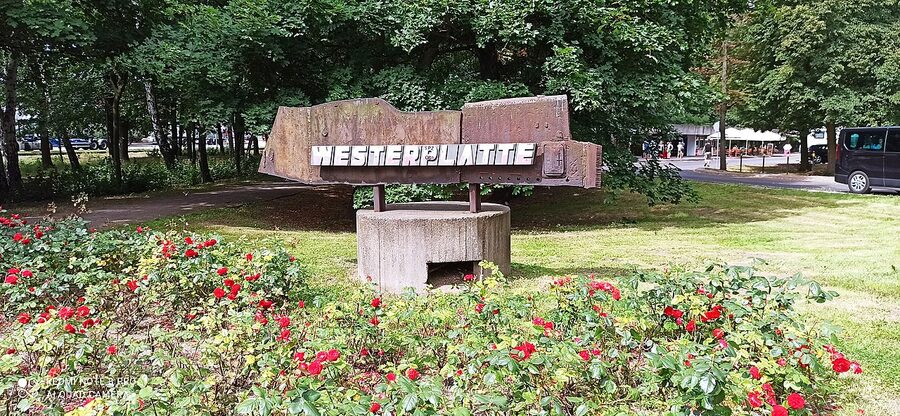
Major Henryk Sucharski had 182 men, an old training ship called the Wilk as moral support, and a barracks the size of a tennis court. The Germans had a battleship anchored 150 metres offshore, dive bombers, marines, and the assumption that the place would fall in six hours. The Polish garrison at Westerplatte held out for seven days. That stubbornness is what you sail past on a Westerplatte cruise from Gdańsk, and it changes how the trip feels long before the boat ties up at the peninsula.
I went out on a chilly morning in late spring expecting a sightseeing loop and got something quieter. This guide covers how to book the cruise, which operator to pick, what you’ll actually see on the water and on the peninsula, and how much time to set aside.


In a Hurry
Best for most people: the standard round-trip cruise to Westerplatte from the Long Embankment, about 80 minutes, $33. Live commentary in Polish, English, and German.
If you want to walk the memorial: book the Gdańsk, Sopot and Westerplatte private guided tour, around five hours, $243 per person, with a real military historian.
If you have a full day: the Malbork Castle and Westerplatte tour with lunch pairs the WWII site with the largest brick castle in Europe, seven hours, $349.
- In a Hurry
- What a Westerplatte Cruise Actually Is
- Who runs the cruises
- Three Ways to Book
- 1. Gdańsk: Guided Round-Trip Cruise to Westerplatte:
- 2. Gdańsk, Sopot and Westerplatte Private Guided Tour: 3
- 3. Malbork Castle and Westerplatte Tour with Local Lunch: 9
- What Happened Here, in Plain Words
- Booking the Round-Trip Cruise
- What the ticket actually gets you
- Where to stand for the best view
- What You’ll See on the Water
- If You Want to Walk the Memorial
- What’s actually on the peninsula
- Reading material before you go
- Logistics for the Cruise
- Where to find the boat
- What to bring
- Toilets and accessibility
- Cancellations and weather
- When to Go
- What to Pair It With
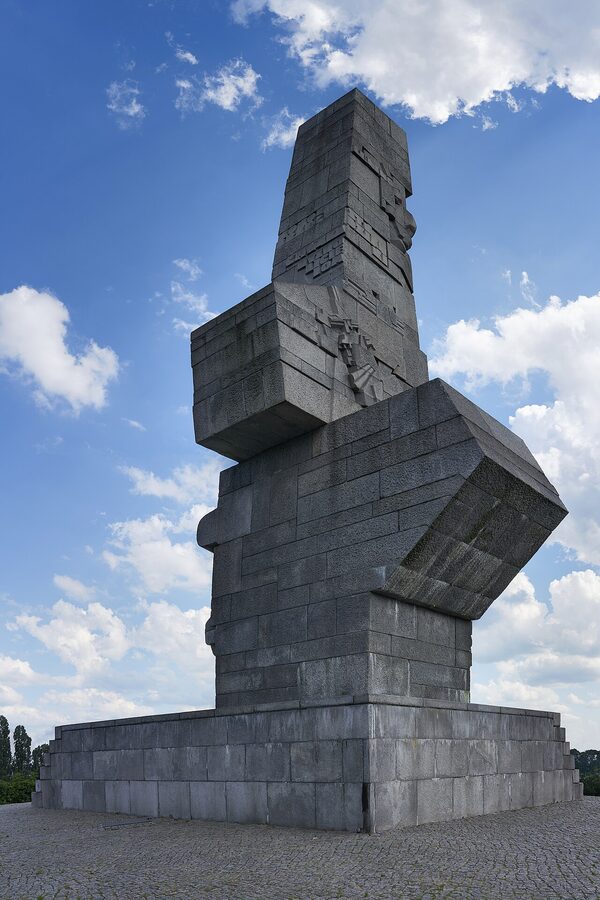
- The Memorial Itself, Up Close
- Practical Notes I Wish I’d Had
- Is the Cruise Worth Doing?
- How Westerplatte Sits Alongside Other Polish Memorial Sites
- Other Gdańsk Trips Worth Looking At
What a Westerplatte Cruise Actually Is
Two things to settle before you book. There are two different Westerplatte experiences sold under similar names, and people confuse them all the time.
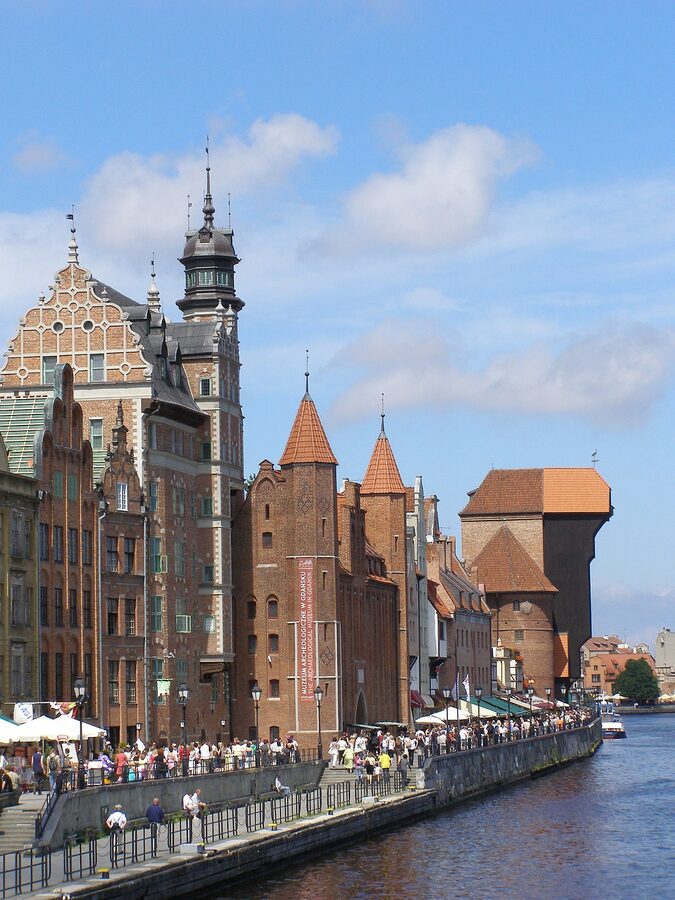
The first is the round-trip cruise. You board a tour boat at the Long Embankment in Gdańsk Old Town, sail down the Motława River, cross into the Martwa Wisła (Dead Vistula) channel, pass the active port and shipyard, then loop around the Westerplatte peninsula and come back. About 80 minutes. You don’t get off the boat. You see the memorial complex from the water as the captain slows down for photos. Live commentary tells you which crane was bombed in 1939, which ship is the museum vessel SS Sołdek, and what you’re looking at on the peninsula itself.
The second is a guided tour with a Westerplatte landing. Either a private car/minibus from your hotel, or an organised group tour, or sometimes a cruise that includes a stop. You walk the memorial grounds with a guide for 60 to 90 minutes, see the monument up close, visit the ruined barracks, and read the inscriptions in person.

Both are valid, but they answer different questions. If you’ve already read about September 1939 and want a feel for the geography, the cruise is enough. If you want the place to land emotionally, you have to walk it. I did the cruise first and then went back two days later to walk the memorial. The cruise gave me the scale. The walk gave me the silence.
Who runs the cruises
Departures from the Long Embankment are split between a few operators. The big GetYourGuide-listed product is the most reliable for online booking. There are also walk-up booths along the Embankment selling the same kind of trip, sometimes a few złoty cheaper but with thinner commentary. If you only have one shot at it and you want English narration that goes deeper than “this is the Crane, built in the 14th century,” book ahead.
Three Ways to Book
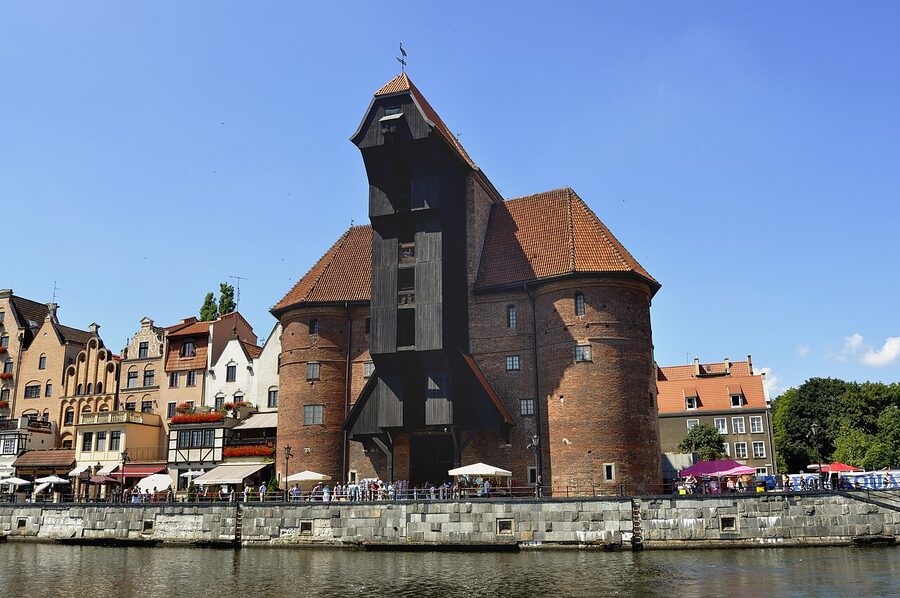

1. Gdańsk: Guided Round-Trip Cruise to Westerplatte: $33
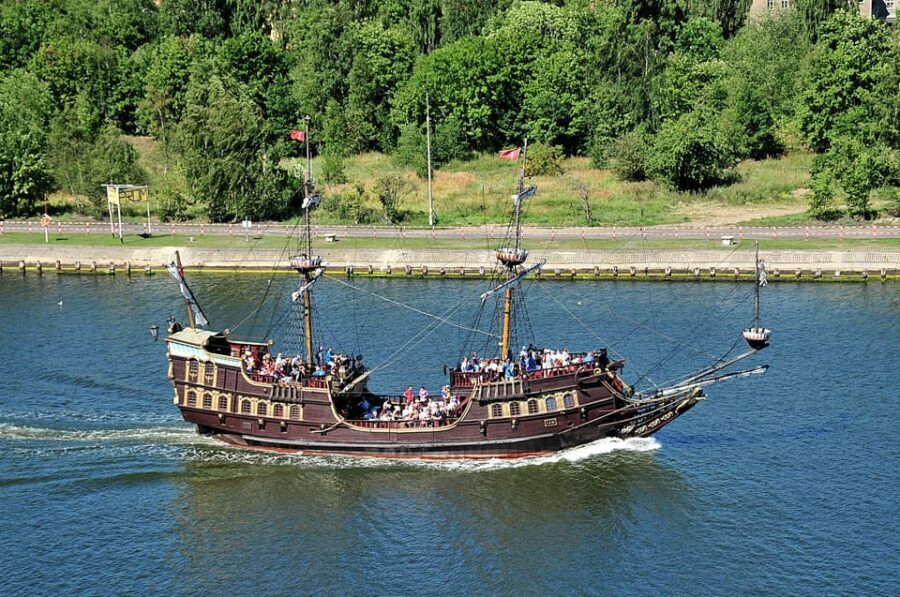
This is the trip most travellers should book. Roughly 80 minutes round trip from the Long Embankment, live commentary in three languages, a stretch of cruising past the cranes that built half of Eastern Europe’s merchant fleet, and a slow loop around Westerplatte itself. Our full review covers the seating issue (a ticket guarantees boarding, not a seat) and which side of the boat to pick for the best monument view on the way out.
2. Gdańsk, Sopot and Westerplatte Private Guided Tour: $243
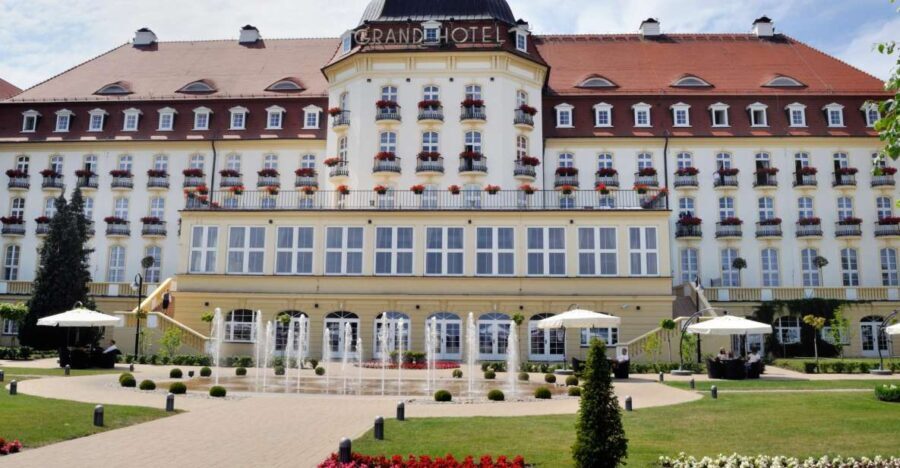
This one is heavy on military and political history, by design. The guide walks you through Gdańsk Old Town, then drives north to Sopot to see where Hitler stayed during his September 1939 visit, then out to Westerplatte for a proper memorial walk. It’s expensive and quite specialised. Our full review notes that it suits WWII enthusiasts more than first-time Gdańsk visitors looking for general sightseeing.
3. Malbork Castle and Westerplatte Tour with Local Lunch: $349
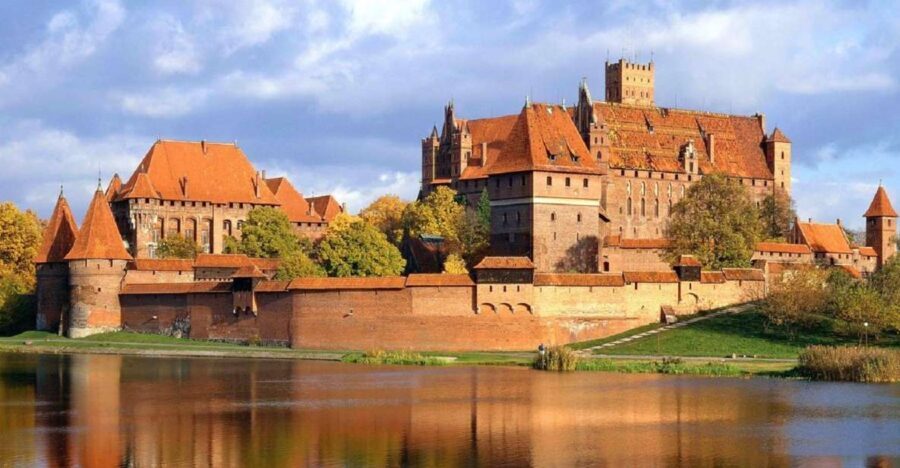
If you have one full day in Gdańsk and want to combine the WWII story with medieval Poland, this works. Malbork is the largest brick castle in the world and the former Teutonic Knights’ stronghold. The Westerplatte stop is shorter than on a dedicated tour but it’s there. Our review flags that the castle’s medieval stairs are not great for travellers with mobility issues.
What Happened Here, in Plain Words
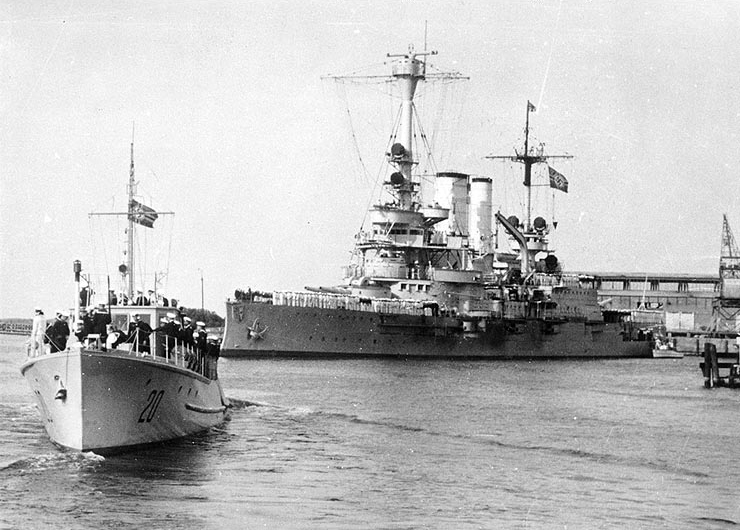
Westerplatte was a small Polish military depot. About 20 hectares of pine woods, a barracks, five concrete guardhouses, and a railway spur. Under the Treaty of Versailles, Gdańsk (then Danzig) was a Free City, and Poland kept a tiny military outpost there to handle weapons shipments through the port.
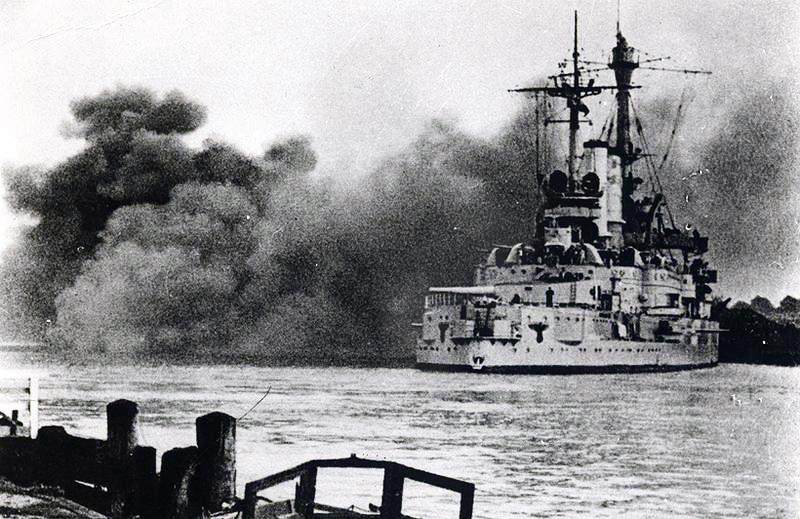
On 25 August 1939, the German battleship SMS Schleswig-Holstein sailed into Gdańsk on what was officially a goodwill visit. It tied up about 150 metres from Westerplatte. Six days later, at 04:48 on 1 September, it opened fire on the depot. Those were the first shots of the Second World War. Stuka dive bombers came in at noon. SS marines tried to storm the peninsula on day one and were thrown back.
The Polish commander, Major Henryk Sucharski, had been told to hold for 12 hours. He held for seven days. The garrison surrendered on 7 September after their water and ammunition ran low and the bombing had wiped out two of the five guardhouses. Fifteen Polish defenders died. The survivors were taken prisoner. Sucharski was kept in German camps until the end of the war, then died in Italy in 1946.
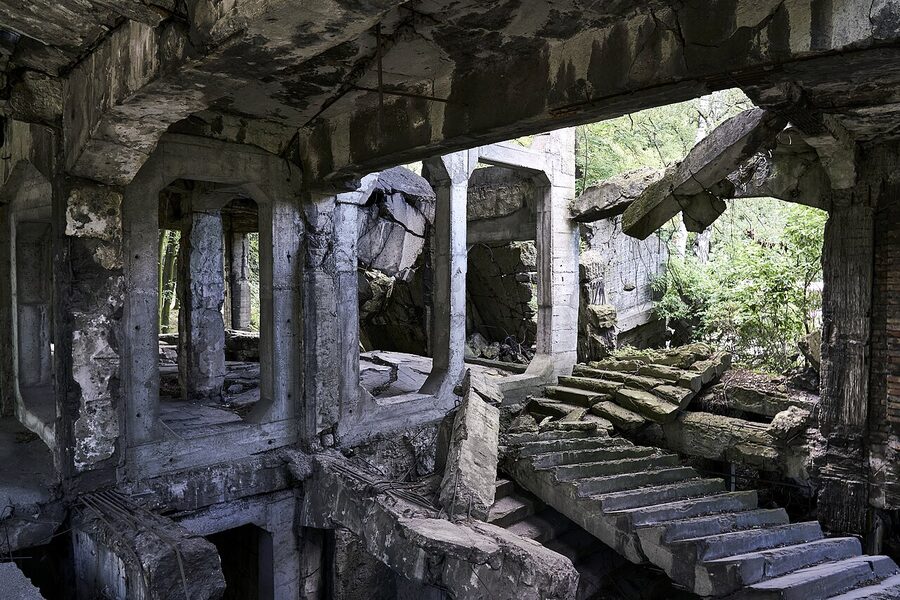

The number that sticks with people is the seven days. There’s nothing tactically remarkable about that. The Wehrmacht was advancing across western Poland by then. Warsaw fell on 27 September. But Westerplatte was the first place where the German army was told no, and so the resistance there became a symbol that outgrew the actual military significance of the depot. The poem schoolchildren in Poland still learn ends with “And the Westerplatte men marched, in fours, to heaven.” That’s the weight you sail past.
Booking the Round-Trip Cruise
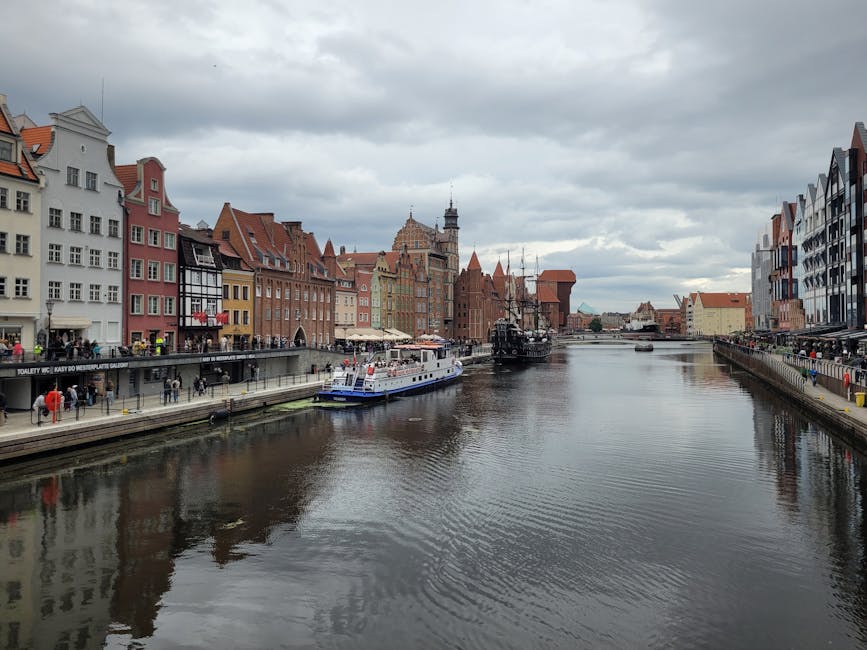
The standard round-trip cruise runs from late March to late October, with multiple departures per day in summer (typically 10:00, 12:00, 14:00, 16:00, sometimes a 18:00 sunset run) and a reduced shoulder-season schedule. Winter departures are rare and weather-dependent.
You can:
- Book online via GetYourGuide for $33, which guarantees boarding on a specific departure.
- Walk up to one of the booths along the Long Embankment on the day, where prices are sometimes 10-15% cheaper but availability isn’t guaranteed in summer.
- Buy direct from the operator’s pier kiosk, which is a coin-toss on language depending on which kid is on shift.
I’ve done all three. Online wins for predictability. The booth wins for short-notice flexibility. The pier kiosk only wins if you’re already there and the next boat is leaving in five minutes.
What the ticket actually gets you
A boarding pass for a specific departure. Not a reserved seat. The boats are mid-sized, around 80 to 120 passengers depending on which vessel is rotating that day. If you want a seat upstairs in the open air, queue 15 minutes before departure. If you don’t mind the enclosed lower deck with windows, you can show up five minutes early and still find space.
Headsets aren’t issued. Commentary comes through the boat’s speakers, alternating Polish, English, and German. If the speaker near you is on the wrong side, walk a few metres along the deck.
Where to stand for the best view
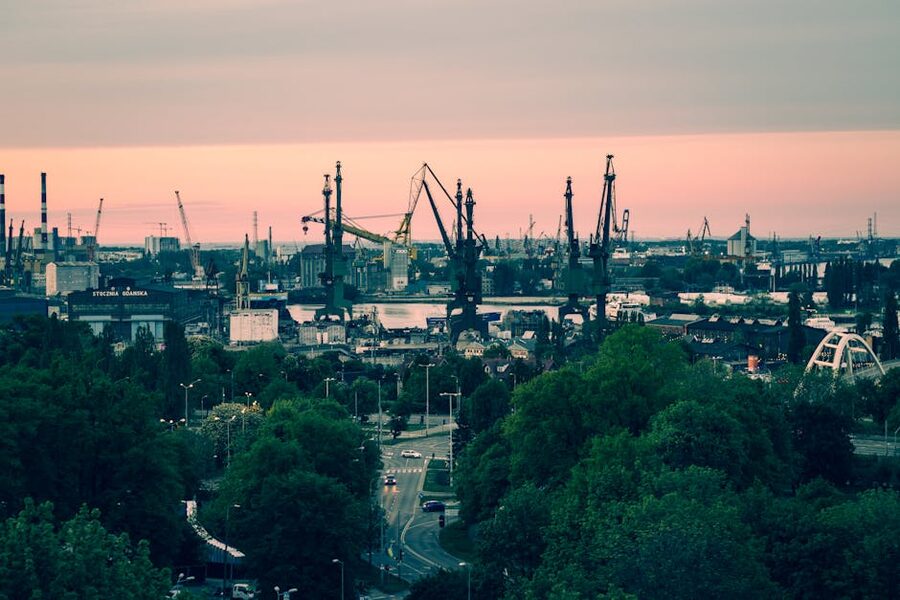
Coming out of the Old Town, sit on the right (starboard) side. That puts you facing the working shipyard and the Solidarity Monument area, which is the most interesting industrial stretch and gives you the best angle on the historic Crane as you push off.
On the way back, the same side faces the Westerplatte peninsula and the monument as the boat loops. So you don’t need to swap sides. Get there early, claim a starboard upper-deck spot, stay put.
What You’ll See on the Water
The cruise route is more interesting than I expected. The first 20 minutes are working Gdańsk: ferry terminals, container yards, the Solidarity shipyard where Lech Wałęsa worked as an electrician, and rusted dry docks that look exactly like they did in the 1980s photos.
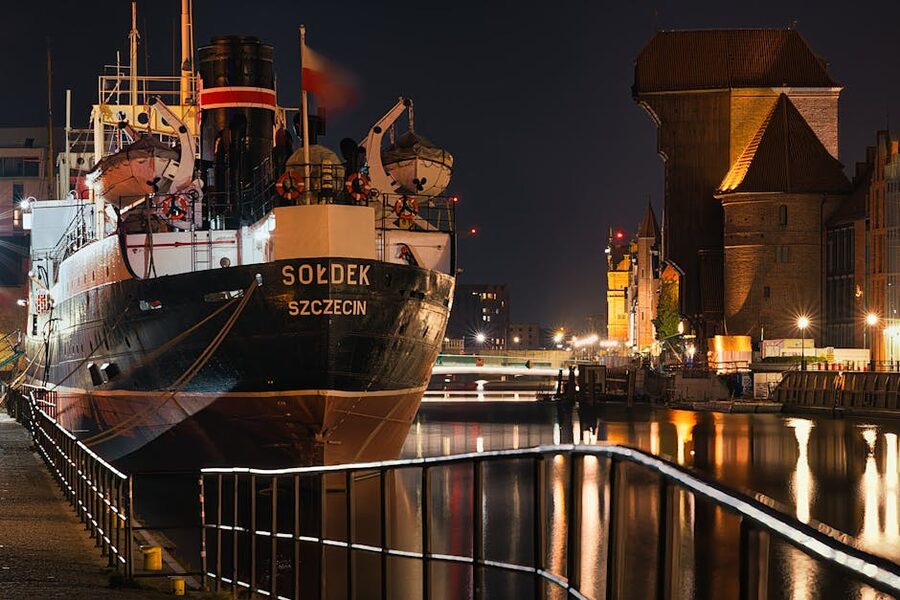
About halfway out, you cross from the Motława into the Martwa Wisła. The water broadens. The pleasure-boat traffic disappears and you’re sharing the channel with cargo ships. This is where the commentary usually shifts to 1939: which side of the channel was the Polish line, where the Schleswig-Holstein was anchored, what the marines were trying to do when they came ashore.
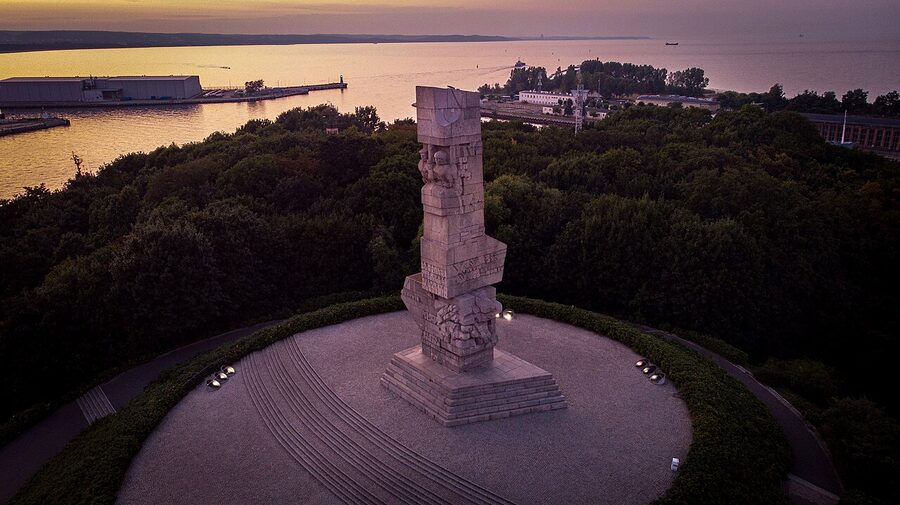
Then the peninsula appears on the right. The monument is the giveaway, a tall granite slab on top of an artificial mound, visible from a kilometre off. The boat slows. You loop around the tip of Westerplatte. From the water, you can see the beach where the Polish defenders watched the Schleswig-Holstein anchor on 25 August 1939, knowing what was coming.
If You Want to Walk the Memorial
The cruise doesn’t stop. To set foot on Westerplatte, you need a different trip: the private guided tour, the Malbork combo, a hop-on hop-off bus, or you take the public 106 bus from the Old Town and walk the grounds yourself.
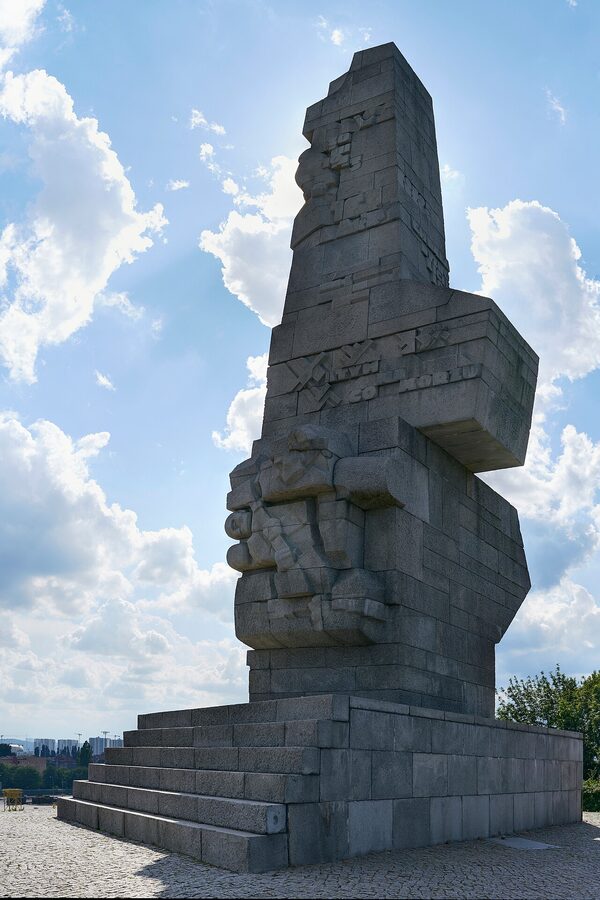

The site is open year-round, free of charge, and never closes (the grounds are part of the city). The new museum building, run by the Museum of the Second World War, is a separate ticket and worth it. Allow 90 minutes for a slow walk of the memorial, or three hours including the museum.
What’s actually on the peninsula
Five things, mostly:
- The Monument to the Coast Defenders, on the artificial mound. The lift up the mound was decommissioned during my visit; you walk a curving path to the top. Worth the climb. The view from the base of the monument looks straight down the channel where the Schleswig-Holstein opened fire.
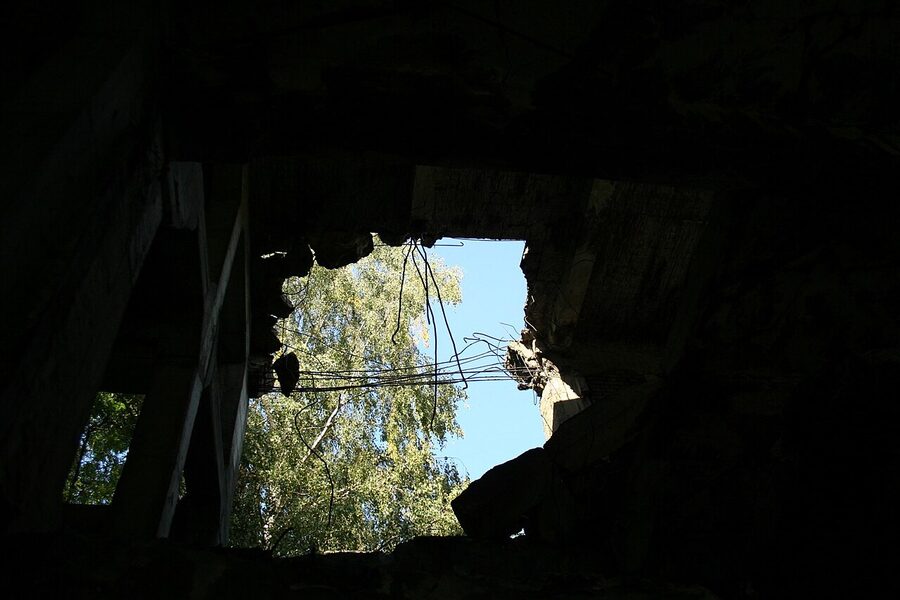
- The ruins of Guardhouse 1 and the barracks. Partially preserved in their bombed-out state. You can walk into the basements. Information panels in Polish, English, and German.
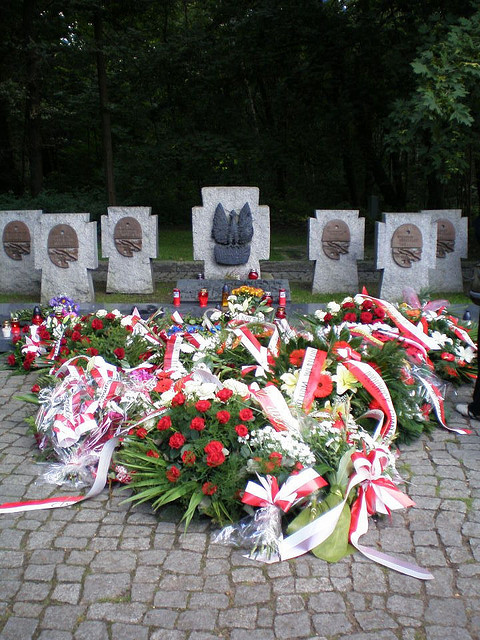
- The Polish Soldiers’ Cemetery, marking the graves of the 15 defenders who died in September 1939.
- The “Never Again War” stone, with the inscription “Nigdy Więcej Wojny” cut into the rock at the base of the monument.
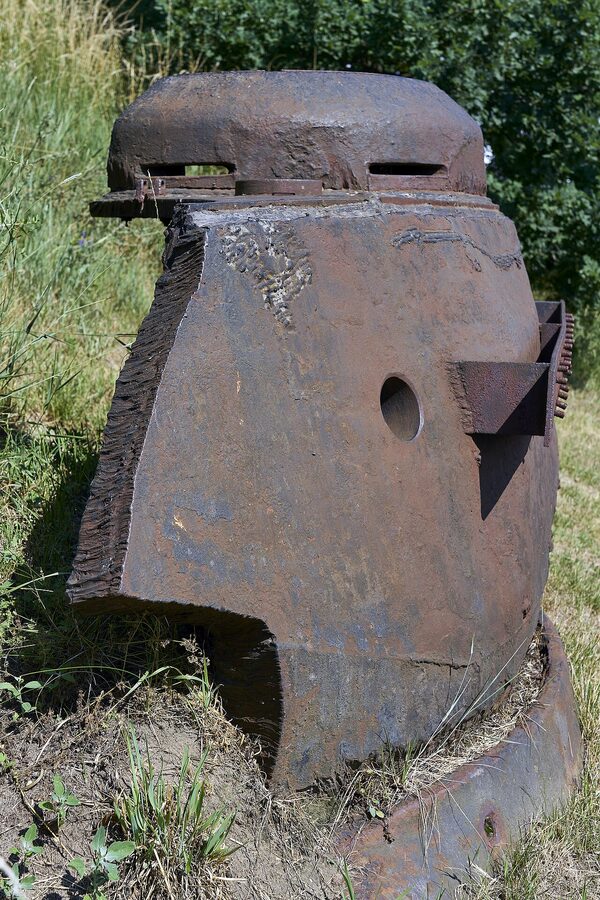
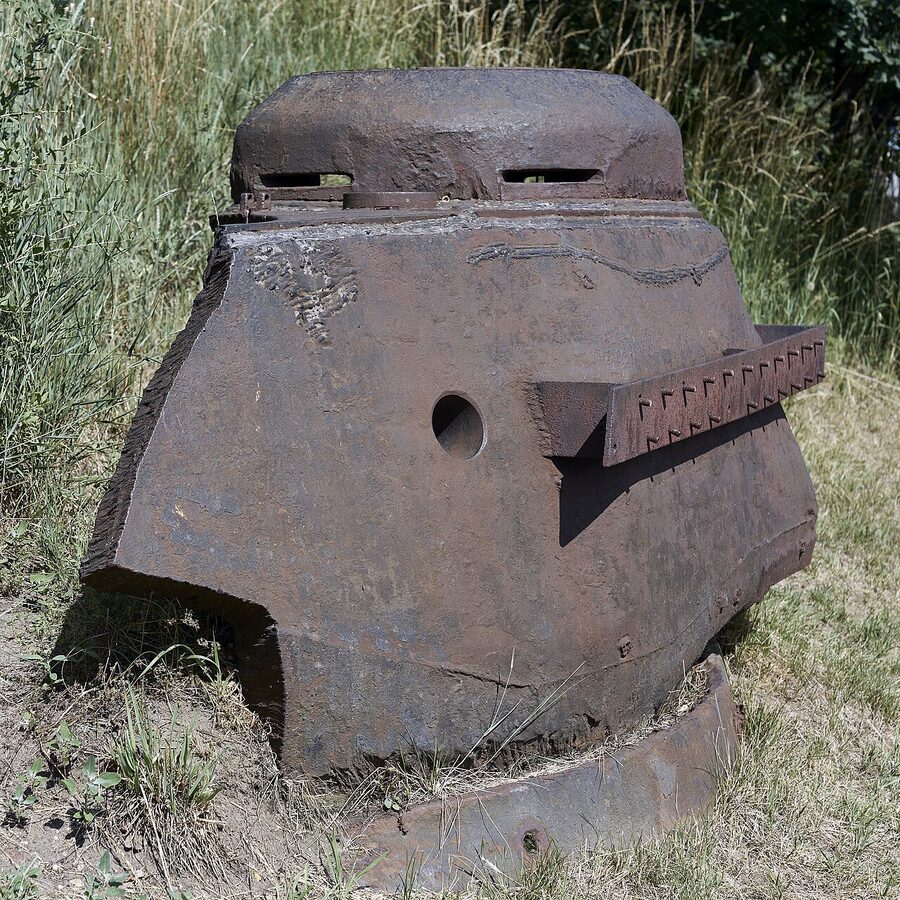
- The WWII tank fragments displayed near the entrance, salvaged from later battles in the area.


Reading material before you go
You’ll get more out of both the cruise and the walk if you’ve spent 30 minutes reading about September 1939 first. The bare minimum: who Sucharski was, what the Free City of Danzig actually was politically, and what the Schleswig-Holstein looked like (an old pre-dreadnought, not a modern battleship, built in 1908, by 1939 a training vessel, dragged out of mothballs because it could intimidate without provoking the British).
If you have time for one book, Alexandra Richie’s Warsaw 1944 covers the broader Polish wartime story with brutal honesty. For Westerplatte specifically, the Museum of the Second World War’s onsite material is the best primary source short of the Polish-language histories.
Logistics for the Cruise
Where to find the boat
The Long Embankment (Długie Pobrzeże) runs along the west bank of the Motława River through the heart of Gdańsk Old Town. From the Green Gate (the riverside gate at the end of Długi Targ, the main square), turn right and walk about 100 metres. The Westerplatte cruise booths are in a row of small wooden kiosks, painted blue, with departure boards listing the next sailings.
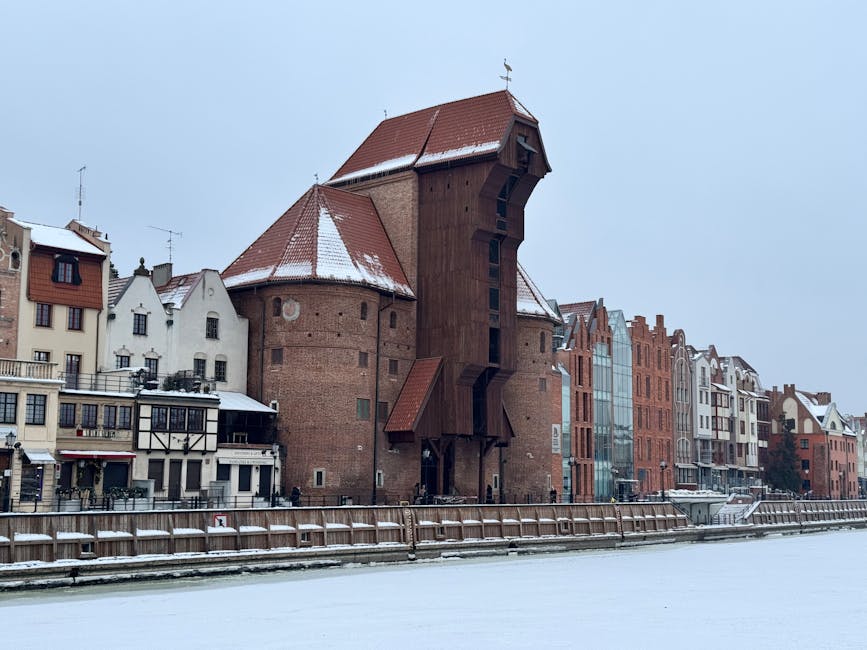
If you’re staying in central Gdańsk, you can walk here from anywhere in the Old Town in under 10 minutes. From the train station, it’s about 15 minutes on foot or one stop on the 8 tram to Brama Wyżynna, then a five-minute walk through the Old Town gates.
What to bring
Layers, even in July. The river is exposed and the wind off the Baltic carries through the Motława channel. A light waterproof is sensible from April through October. Sunglasses help on the upper deck even on grey days, because the water glare is constant.
You don’t need food. The boat doesn’t sell anything beyond bottled water and beer. Eat before or after at one of the restaurants on Długi Targ.
Toilets and accessibility
There’s a single toilet on board, downstairs near the engine. Use it before you board. The boats are not wheelchair accessible. The gangplank is steep and the upper deck is reached by a narrow ladder. If mobility is an issue, the private guided tour to Westerplatte (Tour 2 above) is a better fit because the operator picks you up and the memorial grounds are flat and walkable.
Cancellations and weather
Cruises run in light rain. They cancel only for serious wind or fog that closes the port channel. If your sailing is cancelled, GetYourGuide refunds automatically. Walk-up tickets get rescheduled to the next available sailing or refunded at the booth.
When to Go
.JPG)
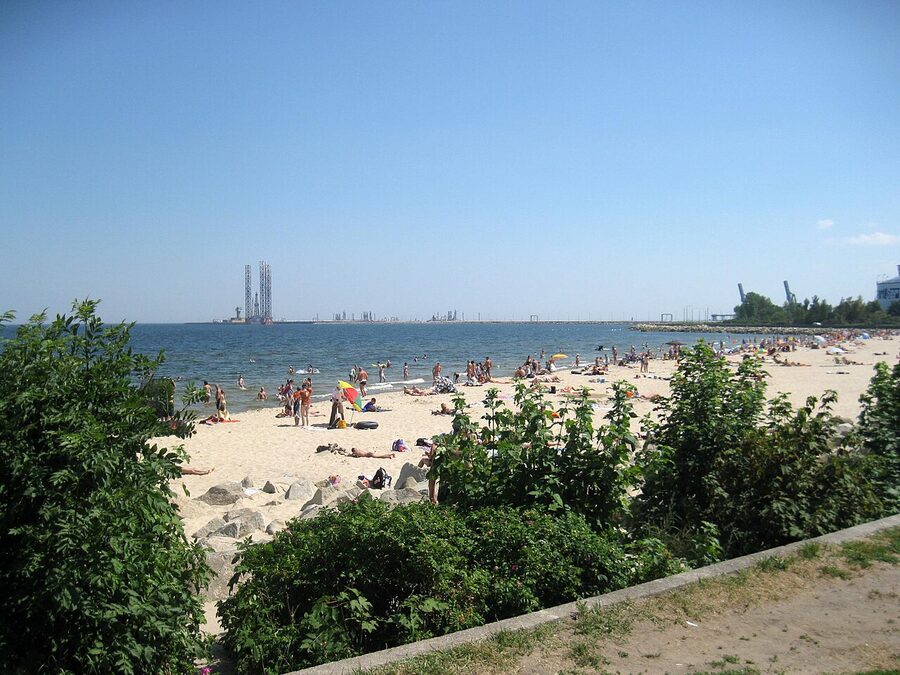
Best months: May, June, and September. The weather holds, the tourist crush hasn’t peaked, and the boat is rarely full.
Peak summer: July and August are busy. Book the cruise online a day or two ahead. Walk-ups are still possible but you may have to wait two or three sailings to get on. The 16:00 departure is usually less crowded than the 12:00.
Shoulder season: April and October work if you’re prepared for cold wind. The light is gorgeous in October: soft, low, autumn-Baltic colour. Fewer departures (often only 11:00 and 14:00).
Anniversary: 1 September is a Polish national day of remembrance. The official commemorations at Westerplatte start at 04:48 in the morning, the exact moment the firing began. There are usually no commercial cruises that morning. The grounds are open to the public for a national service.
Winter: Most operators stop running in late October. The river sometimes ices over in January and February. If you’re in Gdańsk in winter and want to see Westerplatte, take the public 106 bus from Brama Wyżynna and walk the memorial. The site is open year-round.
What to Pair It With
You can comfortably do the cruise plus another major Gdańsk attraction in one day. A few combinations that work:
- Cruise + Old Town walk: the obvious one. The cruise gives you the river view and the wartime context; the Old Town walk gives you the Hanseatic merchant city. Pair the morning cruise with an afternoon Old Town walking tour.
- Cruise + Museum of the Second World War: the museum is on the way back to the Old Town from the Westerplatte direction (though the cruise doesn’t pass it on the water). Skip the cruise’s afternoon and spend three hours in the museum. It’s one of the best WWII museums in Europe and the Westerplatte exhibits there contextualise what you saw on the water.
- Cruise + Solidarity Centre: on the same theme of “Gdańsk as the place where European history pivoted.” The Solidarity exhibition is at the old shipyard. The cruise passes the cranes; the Solidarity Centre tells you who worked under them.
- Cruise + historical Polish boat trip: Gdańsk also runs cruises on replica galleons and traditional schooners. Different vessel, different mood. Worth a separate booking on a different day.

The Memorial Itself, Up Close
If you’ve decided to get off the boat and walk the peninsula, this is what to expect.
The bus drops you at the visitors’ car park at the entrance. There’s a small kiosk selling coffee and pierogi from a window. From there you walk a tarmac path past the WWII tank fragments and up towards the monument. The path is flat for the first 400 metres, then climbs the artificial mound on a long curving ramp. Slow walk, 25 minutes from car park to monument summit.

From the top of the monument you see the channel, the working port to the south, and the open Baltic to the north. On a clear day you can pick out container ships heading for Hamburg and Rotterdam on the horizon. The wind is constant. People speak quietly here, even when there are school groups.
The basement ruins of Guardhouse 1 are 200 metres back down the path. You can step down a short staircase into the bombed basement. The walls still show the shrapnel patterns. There’s a small information board in three languages.

The cemetery sits a few minutes’ walk from the basement, in a clearing surrounded by the same pine trees that were here in 1939. Each grave is marked. There’s an empty path in the centre and a low stone wall at the back. Most visitors take their hats off here.
Practical Notes I Wish I’d Had
A handful of things that aren’t obvious from the booking page:
- The boats don’t stop. If a cruise listing says “Westerplatte” and shows a 60-90 minute duration, it’s a round-trip from the water, not a landing. Read the description carefully.
- Don’t expect to spot the exact spot the Schleswig-Holstein anchored. The channel has been dredged and widened multiple times since 1939. The commentary will gesture at “approximately here,” which is the best anyone can do.
- Bus 106 is the cheap way to walk Westerplatte. 5 PLN one way, runs every 30 minutes, takes about 25 minutes from Brama Wyżynna. Goes door-to-door to the memorial entrance. If you only want to walk the memorial and don’t care about the river view, skip the cruise and bus it.
- The Museum of the Second World War is not at Westerplatte. It’s a separate building near the Old Town. Don’t confuse them. The new exhibition pavilion at Westerplatte is smaller, and run by the same museum, but the main exhibition is in town.
- Cash works, cards work, but bring small złoty. The walk-up booths often run out of change for 200 PLN notes by mid-afternoon.
- The wind chill is real. A trip that feels comfortable on land becomes 5 degrees colder on the upper deck once the boat is moving. Always bring a jacket.

Is the Cruise Worth Doing?
Yes, if you’re going to walk the memorial too. The cruise is best as a setup. It gives you the geography, the scale of the port, and an hour to read about September 1939 before you stand at the monument. The water gives you something the bus doesn’t: a sense of how exposed the Polish position was, and how short the firing range from the Schleswig-Holstein actually was.
Mixed verdict if you’re only doing the cruise. 80 minutes on a tour boat is a lot to ask if you don’t already care about the history. The sightseeing element, port cranes, shipyards, the Crane on the way out, is interesting but a bit thin on its own. The emotional weight comes from knowing what happened. If you have a book or a documentary in your back pocket, the cruise lands. If you don’t, it can feel a bit thin.
Skip the cruise entirely if you’re tight on time and would rather walk the memorial properly. Take bus 106 and spend two hours on foot. You’ll get more from it.

How Westerplatte Sits Alongside Other Polish Memorial Sites
Poland has more sites of memory per square kilometre than almost any country in Europe. If you’re spending more than a week here, Westerplatte is one stop on a longer route. A few places it pairs well with, depending on where you’re heading next.
Auschwitz-Birkenau, near Krakow. The other end of the Polish wartime story, and not comparable in any direct sense. Where Westerplatte is the sharp opening of the war, Auschwitz is its grim core. If you’re spending time in southern Poland, the Auschwitz day trip from Krakow is the standard route, and the Auschwitz and Wieliczka combined day trip works if you only have one day to give to that part of southern Poland.
The Krakow Jewish Quarter (Kazimierz). Different cluster of stories, mostly pre-war and Holocaust, but on the same wider arc. Walking Kazimierz with a guide is a useful counterweight to the military focus of Westerplatte, and Schindler’s old enamel works is part of the same neighbourhood story.
Warsaw Old Town. Like Gdańsk, Warsaw was destroyed during the war and rebuilt brick by brick. The Warsaw Old Town walking tour covers that reconstruction story, with the Royal Castle as the centrepiece, and reading it on foot makes the Westerplatte cruise hit harder later.
The Vistula at Krakow and Warsaw. Different rivers, different cities, but Poland’s relationship with its rivers is one of the through-lines of the wartime story. If you’ve enjoyed the Westerplatte cruise, an evening Vistula cruise in Krakow or the galar cruise on the Vistula in Warsaw gives you the same water-level perspective on different cities.
Other Gdańsk Trips Worth Looking At
Gdańsk rewards more than a single afternoon. If you’ve booked the cruise and are looking for what else to fit into a long weekend or a five-day stay, a few suggestions. The historical Polish boat cruise on a replica galleon is the obvious counterpart to the Westerplatte trip, same river and a completely different mood. An Old Town walking tour in Gdańsk works as a half-day complement, especially if your guide can take you past the merchant houses on Mariacka and the Mariacki Church. If you have a full day spare, the Tricity area (Sopot for the pier, Gdynia for the maritime museum) is a 30-minute train ride and a different texture from the Old Town. And for cross-country comparison, the hop-on hop-off in Warsaw or the Chopin concert in Warsaw is the easy way to extend your Polish trip into the capital. For the Krakow side of a longer Polish itinerary, the Krakow Old Town walking tour covers a city that escaped wartime destruction, and reads as a useful counterweight to Gdańsk’s reconstruction story.

Affiliate disclosure: this article contains affiliate links to GetYourGuide. If you book through them, we earn a small commission at no extra cost to you. It helps keep the site running.