
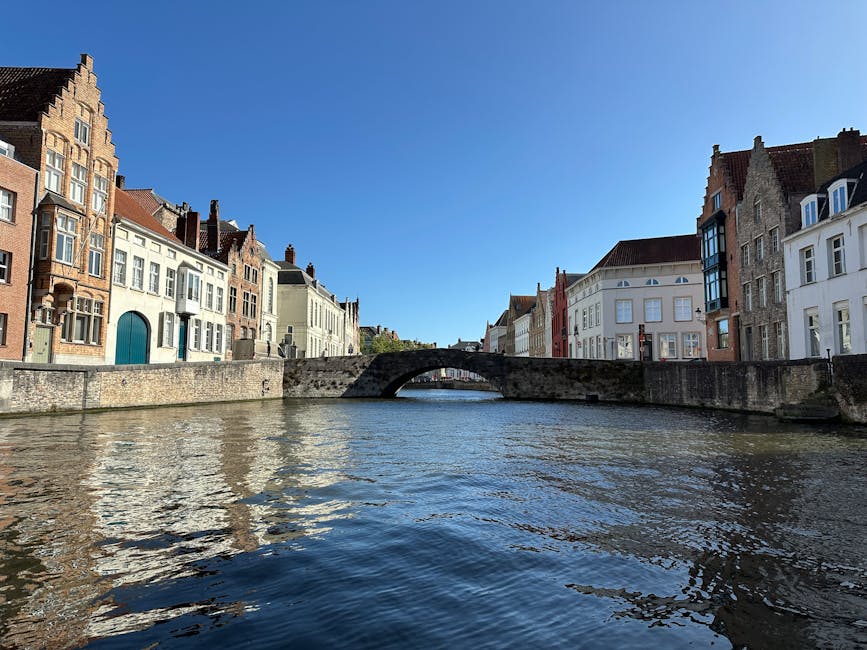
The boat ducks under the bridge and everything goes quiet. Voices stop. The little electric motor barely hums. For maybe four seconds, all you can hear is water lapping against 800-year-old stones and the soft slap of the wake bouncing back from the brick walls a metre either side of you. Then you’re out the other side, sunlight again, the guide picks up the story, and Bruges keeps unspooling around you. That hush under the bridges is the sound that stays.
This guide is for booking a combined boat-and-walking tour in Bruges, not a day trip from somewhere else. If you’re already here for the day, an evening, or longer, the half-on-foot half-on-water format covers more of the city than either approach alone. Below: which tours are worth the money, what you’ll actually see, when to book, and a few honest warnings.
- In a Hurry? Three Quick Picks
- Why Combine the Boat and the Walk
- The Three Tours Worth Booking
- 1. Small Group Boat Cruise and Guided Walking Tour:
- 2. Guided Tour and Boat Ride with Optional Beer Tasting:
- 3. Legends of Bruges Walking Tour (Pair with Standalone Boat): from tip
- What You’ll Actually See
- The Markt
- Burg Square
- The Basilica of the Holy Blood
- The Boat Loop
- The Beguinage and Lake of Love
- Booking Logistics
- When to Book
- Where to Meet
- How Long It Really Takes
- What to Bring
- Refund and Cancellation
- Choosing Your Time of Day
- How Bruges Compares to the Brussels Day Trip Version
- The History You’ll Hear (and Some You Won’t)
- Honest Warnings
- If You Have More Time in Bruges
- Where to Eat After the Tour
- Beyond Bruges
In a Hurry? Three Quick Picks
Best overall: Small Group Boat Cruise + Guided Walking Tour. 2.5 hours, around $51, the highest-rated combined product in the city.
Best value: Guided Tour and Boat Ride with Optional Beer Tasting. Same boat, same walking landmarks, around $36 with a beer add-on.
Cheapest start: Legends of Bruges Free Walking Tour. Pay-what-you-want walking tour, then add any standalone canal boat for around 16 euros.
Why Combine the Boat and the Walk
Doing one without the other gives you half the city. Walk-only and you miss the angle that built the place. Boat-only and you skim the surface, learning a few stories at the speed of the current.
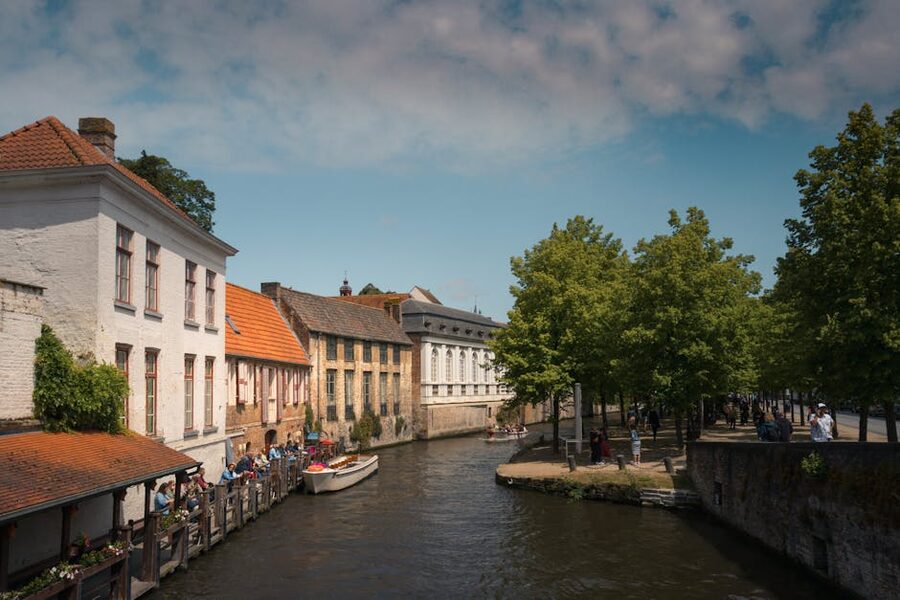
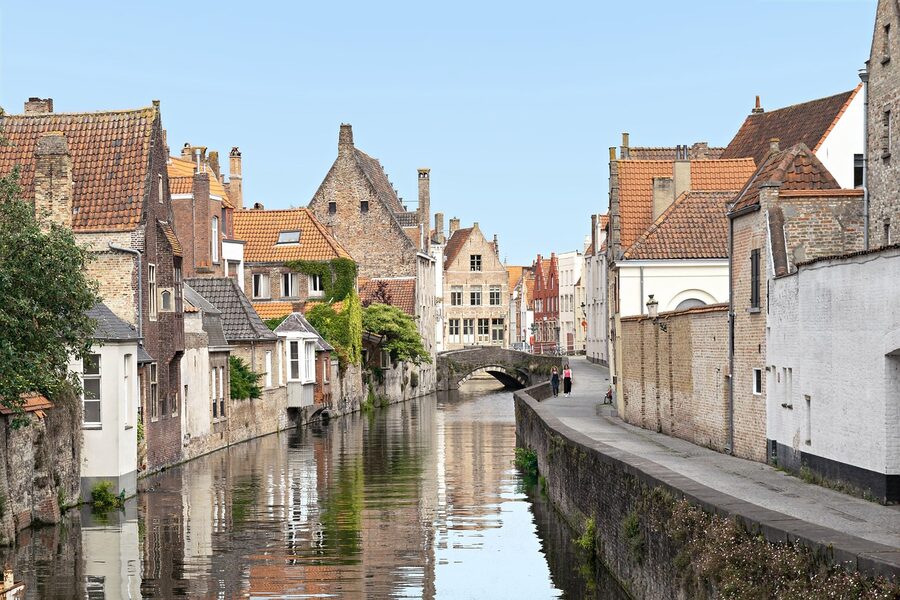
Bruges is laid out around its water. The Reien (the local name for the canal network) was the trade route that made the city rich in the 1200s and 1300s, when Bruges was one of the wealthiest places in Europe. Wool came in by water, finished cloth went out by water, money piled up. Then the harbour silted, the trade moved to Antwerp, and Bruges got frozen in time. That freezing is why everything still looks medieval. The canal is the reason for the city as you see it now, so seeing the city only from the streets is a bit like reading the book with every other page missing.
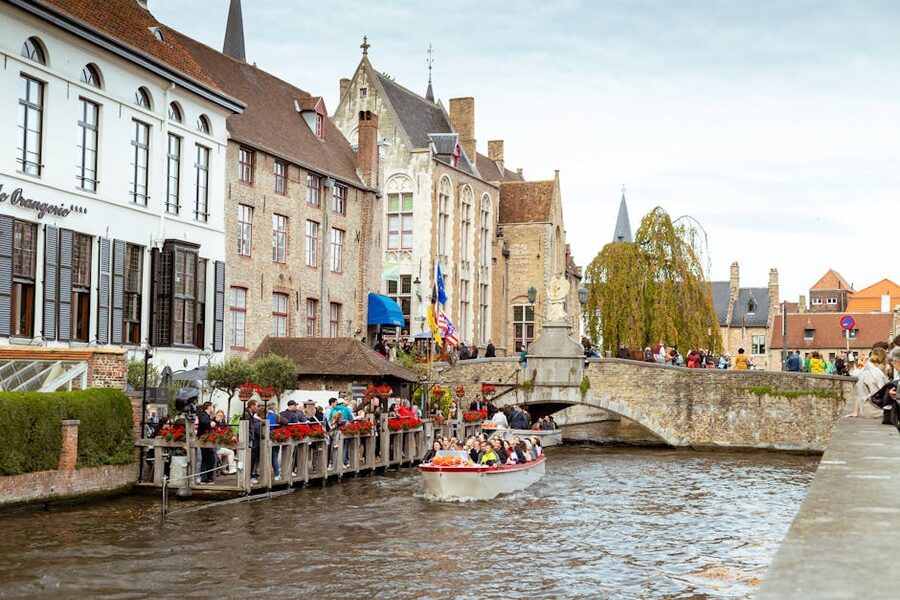
The boats run in a loop on the central Reien for around 30 minutes. The skippers commentate live in usually three languages. Walking, you cover Markt, Burg Square, the Basilica of the Holy Blood, and (depending on guide) some smaller bits like the Old St John’s Hospital, Church of Our Lady from outside, and the Beguinage. Together it’s about 2.5 hours of city, with the boat as the photogenic centrepiece and the walk as the context that makes the photos mean something.
One more reason to do both: the boat gives your feet a break in the middle. Bruges is small but the cobbles are brutal. Half an hour sitting down, mid-tour, is exactly what you need before the second walking leg.
The Three Tours Worth Booking
I’ve sorted these by what we’d actually book ourselves, not by price. The differences between them are smaller than the marketing copy makes out. They all visit the same Reien, the same Markt, the same Burg. What changes is group size, guide quality, the price, and what’s included on top.
1. Small Group Boat Cruise and Guided Walking Tour: $51
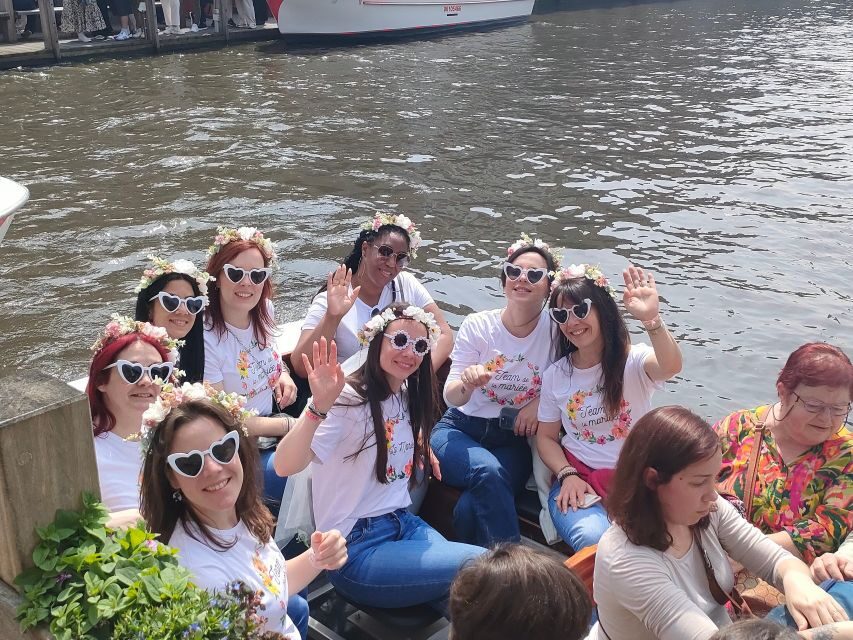
This is the one most people should book. Group sizes are capped tight (usually 12-15), the guides have local accreditation, and the route covers the Markt, Burg Square, Basilica of the Holy Blood, and the Begijnhof on foot before you board the boat. Our full review gets into the differences between morning and afternoon slots, plus the extras some guides throw in like Belgian fries history or which chocolate shop is actually local-owned. Pickup is at the Markt by the statue, easy to find even if your hotel is a fifteen-minute walk away.
2. Guided Tour and Boat Ride with Optional Beer Tasting: $36
Same loop, bigger group, lower price. The optional beer add-on is the differentiator: a few small pours from local breweries, usually slotted between the walk and the boat so nobody falls in. Worth doing if you want a low-effort intro to Belgian beer without committing to a separate brewery tour. Our full write-up covers when the beer add-on is worth the extra euros and when it’s just a small splash. Skip the add-on if you’ve already got a Halve Maan brewery tour booked.
3. Legends of Bruges Walking Tour (Pair with Standalone Boat): from $4 tip
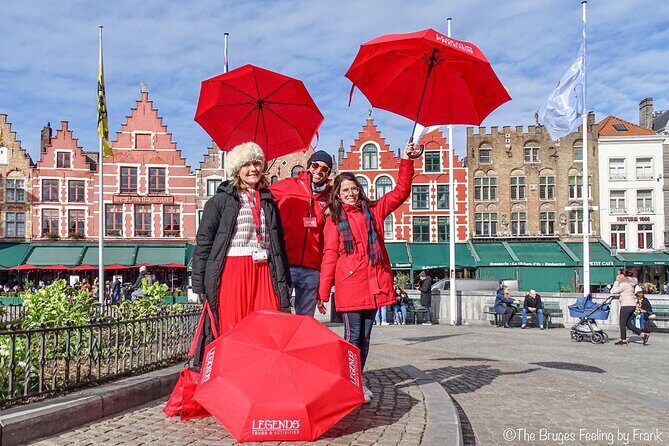
This is the budget play. The Legends of Bruges walking tour is officially free (tip what you think it’s worth, 10 to 15 euros is normal), and it covers the same Markt-Burg-Basilica core as the paid combos. Then walk to one of the four canal boat docks (Rozenhoedkaai is the easiest to find), pay around 16 euros at the kiosk, and you’ve spent half what the bundled tours cost. Our review explains why the guides are surprisingly good despite the no-fixed-price format. The downside: you have to coordinate the timings yourself, and the boat queues at peak hours can run 30 minutes.
What You’ll Actually See
Both halves of the tour have a fixed-ish itinerary. Operators tweak the order and add a stop here or there, but the spine is consistent. Here’s what shows up on essentially every combined tour, and what to look out for at each one.
The Markt
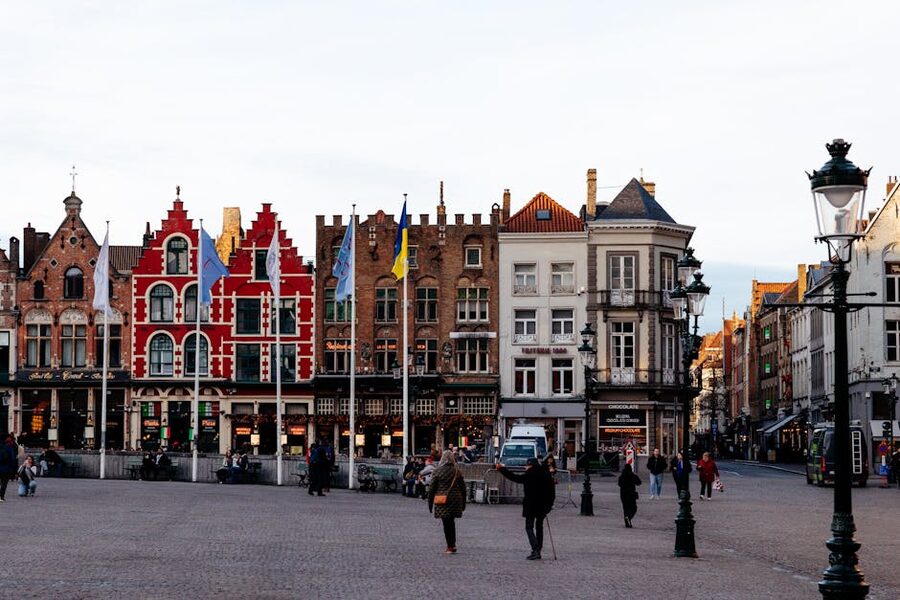
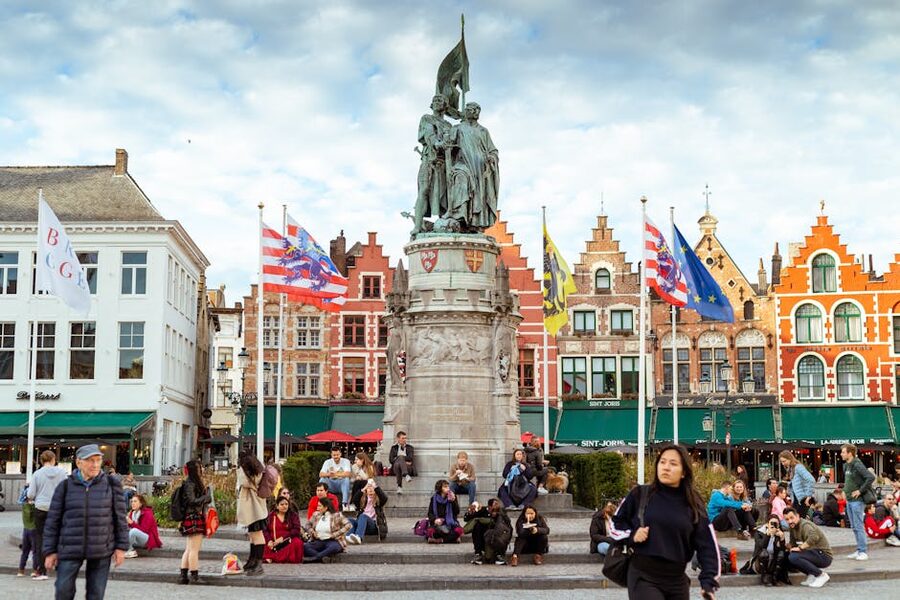
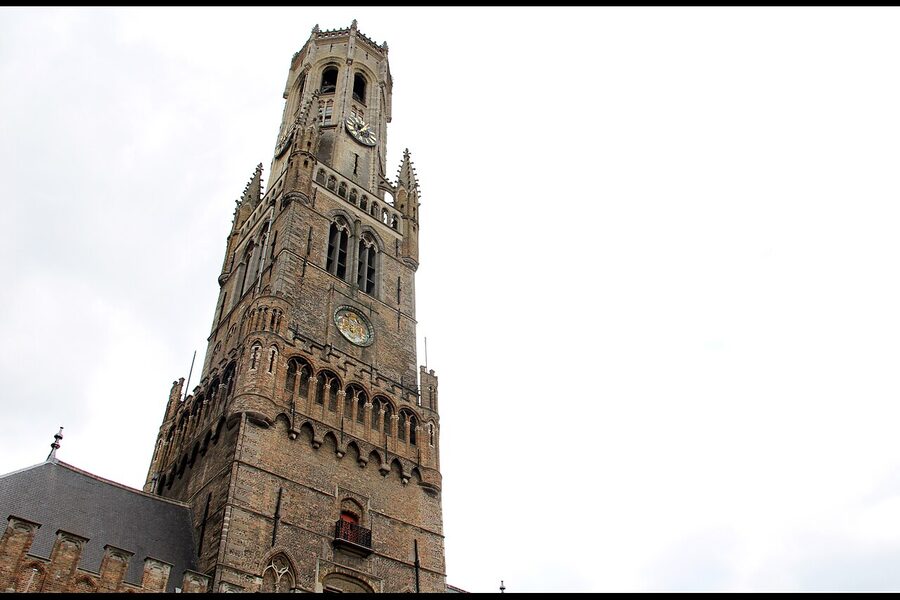
This is the start point for almost every Bruges tour. The square is dominated by the Belfort tower (83 metres, you can climb it later) and surrounded by the kind of step-gable Flemish houses that became the city’s calling card. Notice the colours: those reds, ochres, and greens aren’t paint, they’re the original brick and limestone weathered for 600 years. There’s a statue in the middle of two men holding shields, Jan Breydel and Pieter de Coninck, butcher and weaver, who led the 1302 uprising against the French. Locals still mention them when they want to say “we’re not French and we never were.”
.jpg)
Burg Square
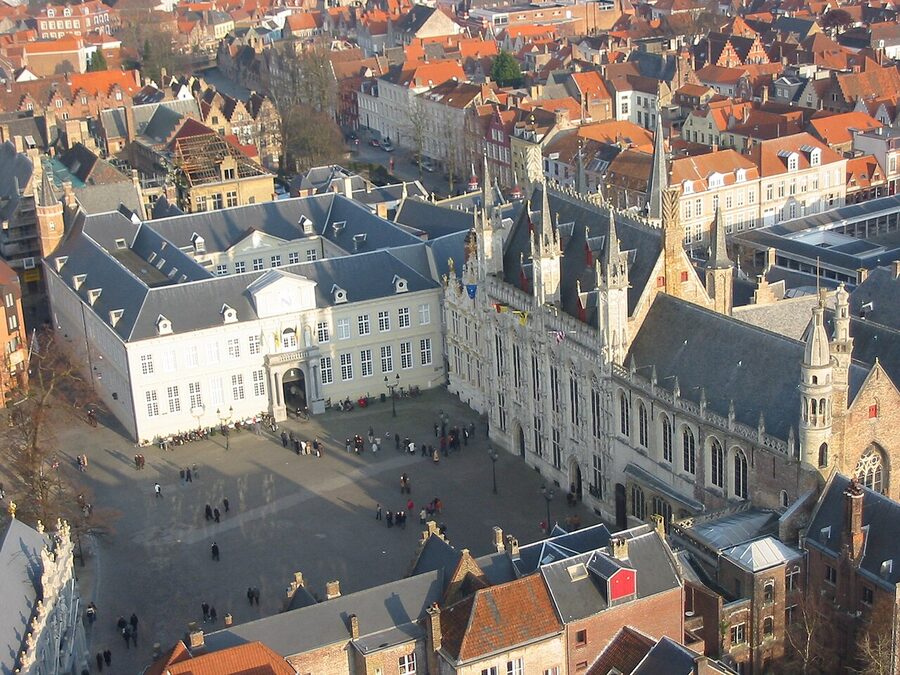
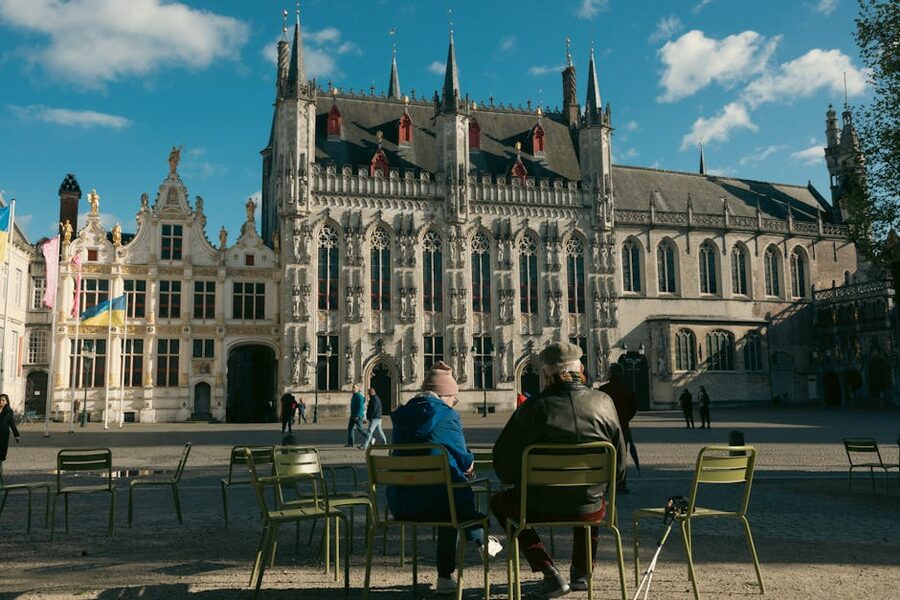
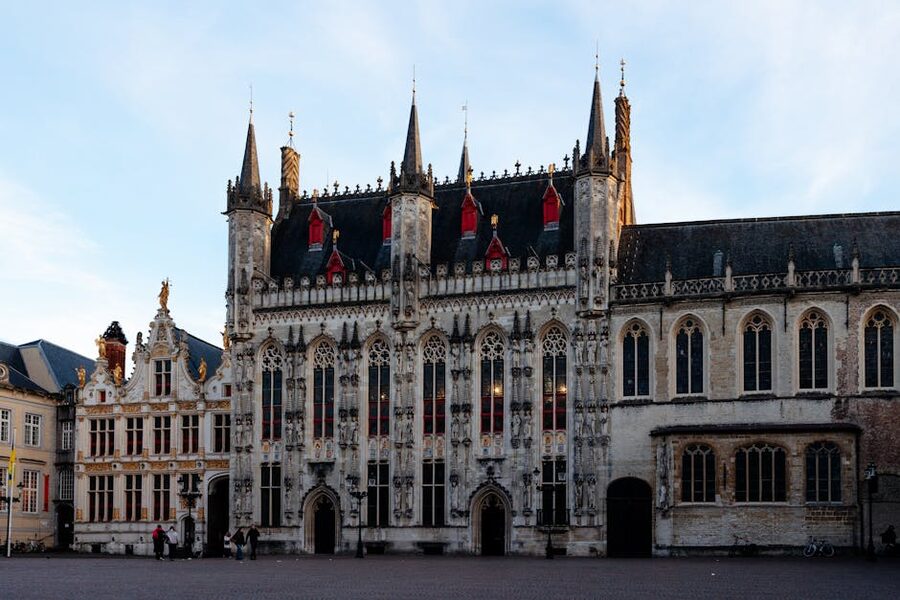
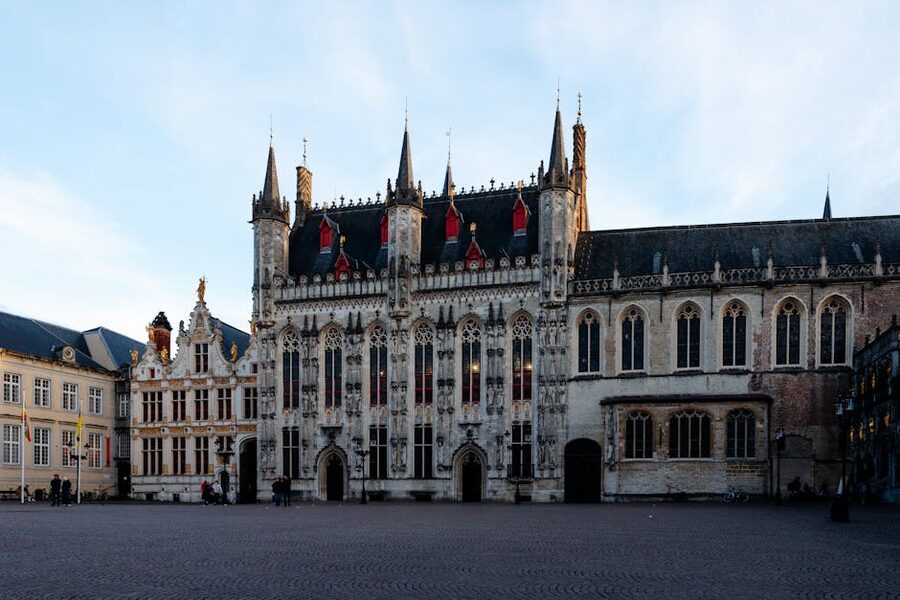
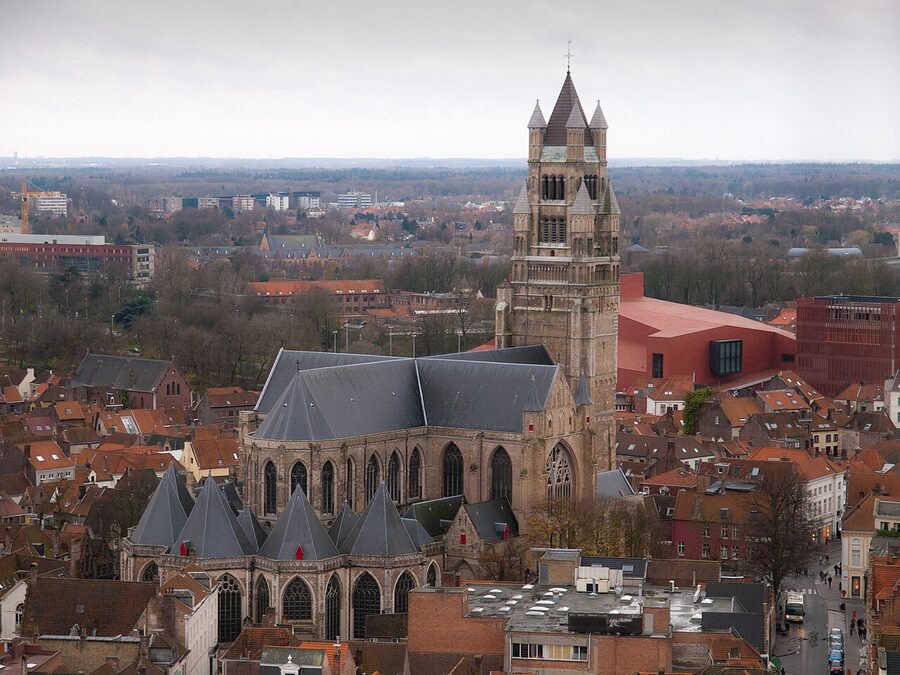
Two minutes walk from Markt and you’re standing in a smaller, denser square ringed by some of the most ornate buildings in Belgium. The Stadhuis (Town Hall, 1376) is the gold-and-white fronted Gothic building you can’t miss. To its right is the Basilica of the Holy Blood, an unassuming brown-brick exterior hiding the most theatrically decorated chapel in the country.

The Basilica of the Holy Blood
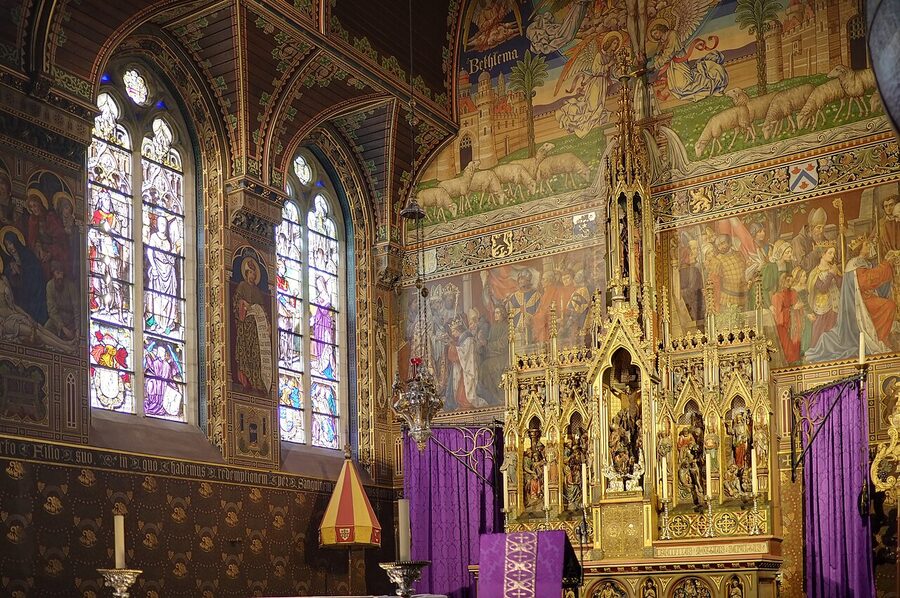
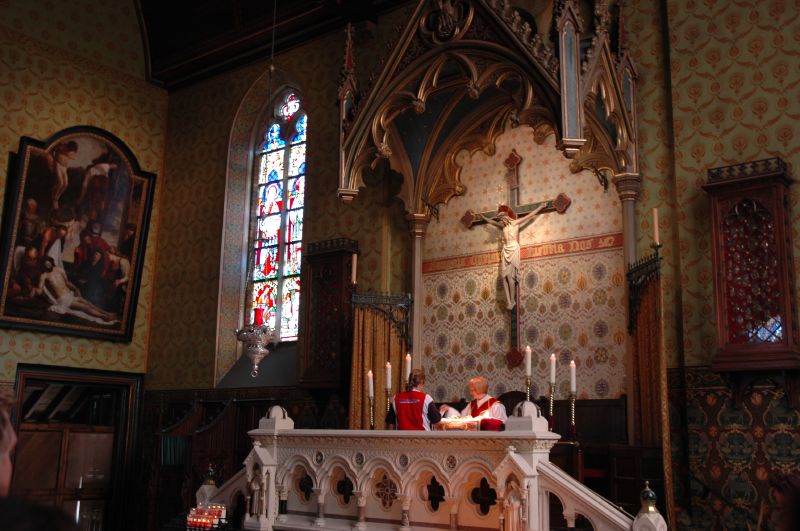
Worth lingering at. The lower chapel is sober Romanesque, the upper chapel is full-on Neo-Gothic with painted walls, gold leaf, and a small reliquary that supposedly contains a few drops of Christ’s blood, brought back from the Second Crusade in 1150. Whether you buy the relic story or not, the chapel itself is one of the most decorated rooms in Belgium and entry is free (a euro or two donation is usual). Some guided tours skip the interior. Ask before you book if it matters to you.
.jpg)

The Boat Loop
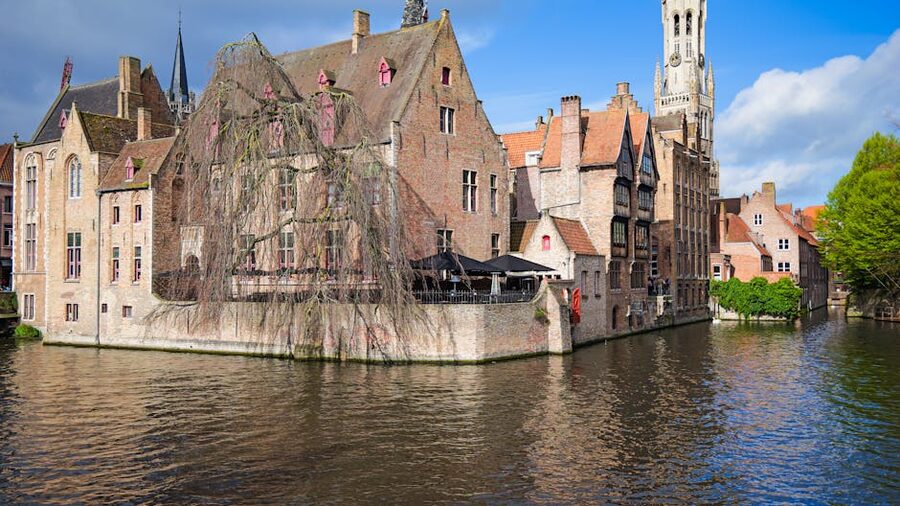
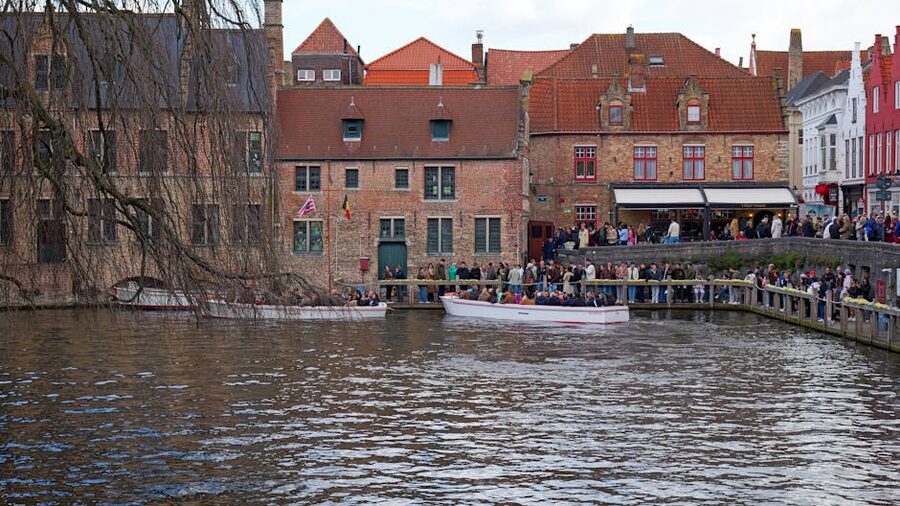
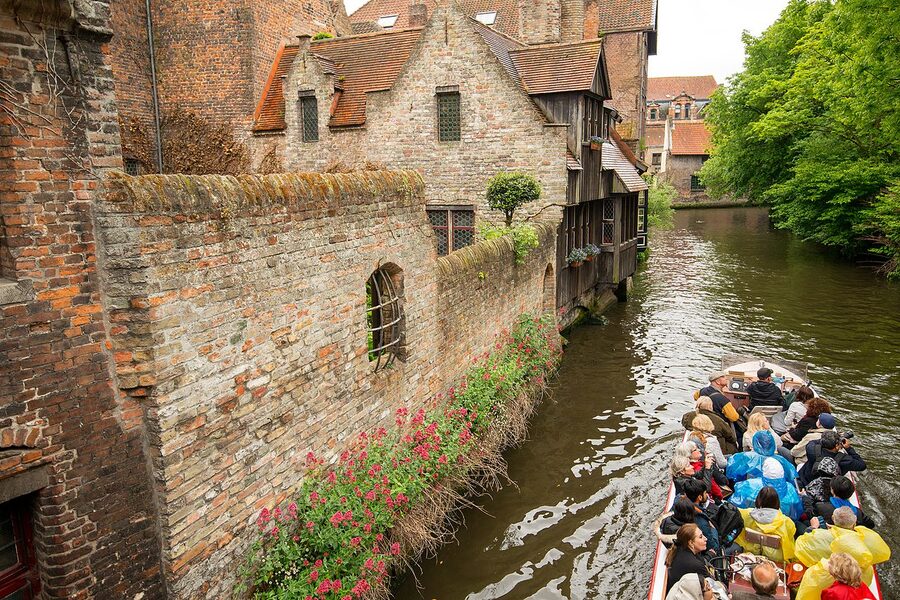
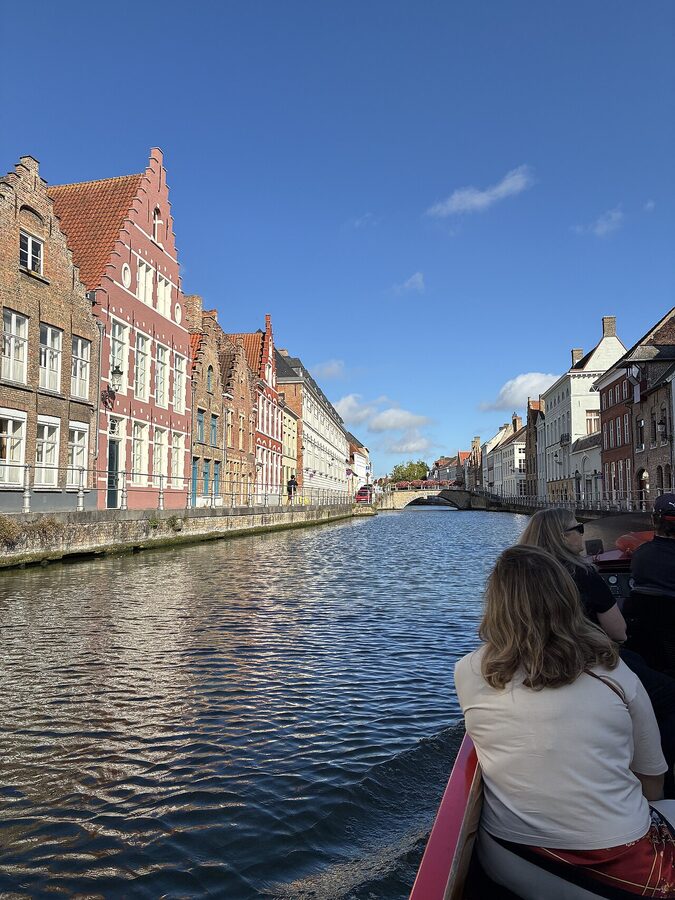
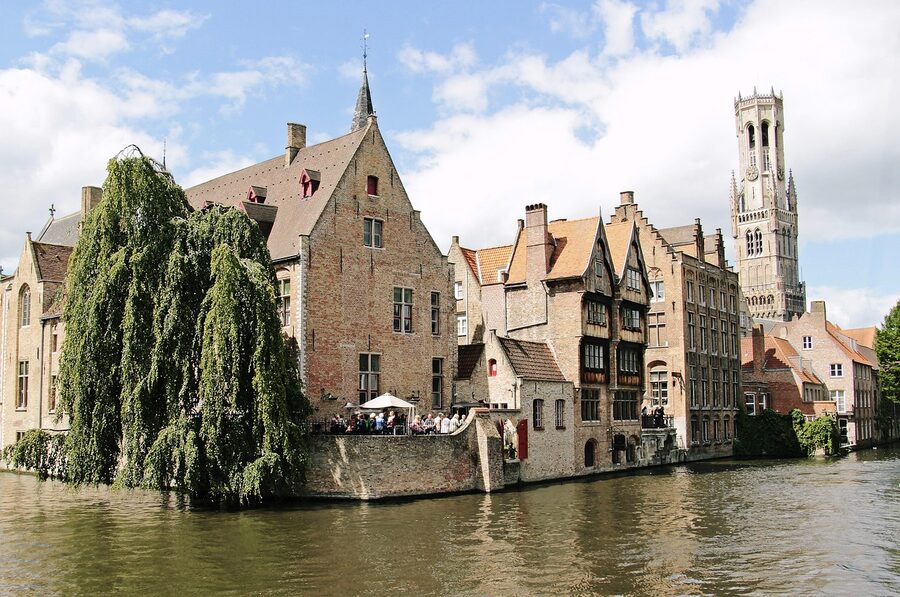
You board at one of the four official jetties: Rozenhoedkaai, Huidenvettersplein, Nieuwstraat, or Katelijnestraat. They all run the same route and use the same boats. The skippers are all licensed, the boats are open-topped (with covers in rain), and the loop is around 30 minutes including a five-minute pause at the prettiest corner.

.jpg)
_and_Belfry_of_Bruges,_Bruges,_Belgium_(Ank_Kumar,_Infosys_Limited)_01.jpg)
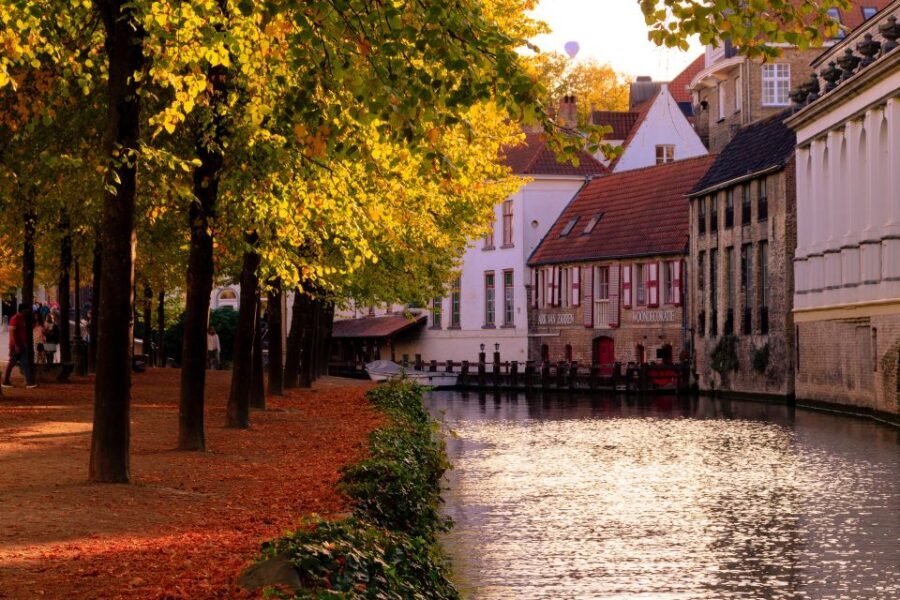
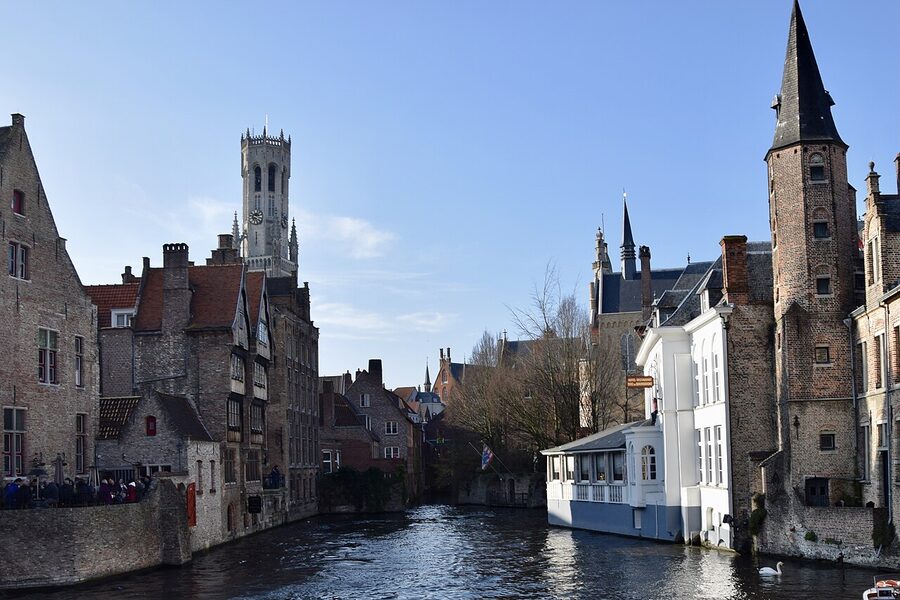
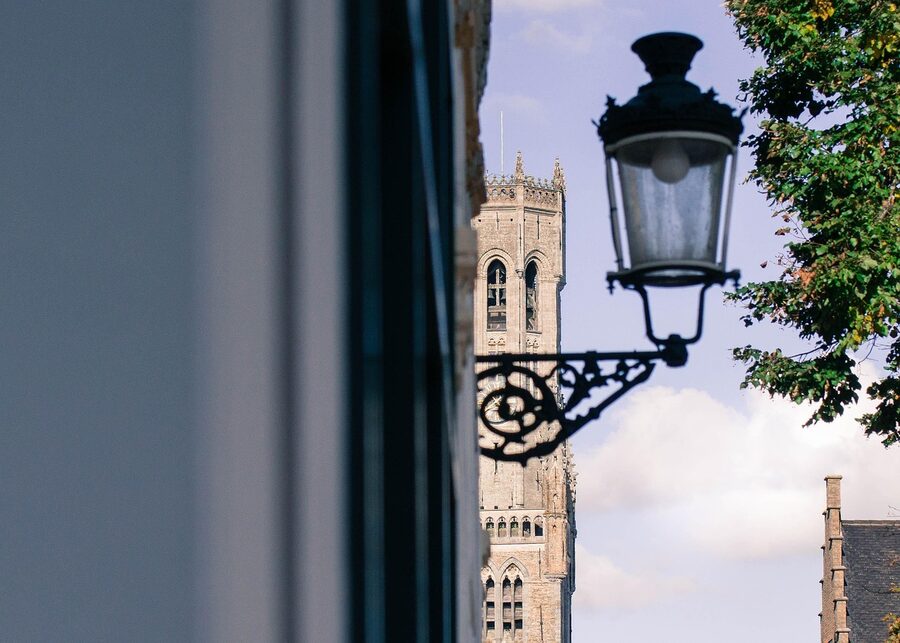
The loop hits the central Reien, dips under five low bridges (heads down: the lowest one has about 1.5 metres clearance and tall passengers genuinely need to duck), and circles back to the jetty. You’ll pass the Belfort framed from the water, the Begijnhof’s outer wall, and a string of canal-side gardens that don’t show up on the walking route at all. The hush-under-the-bridges thing is real and it’s the moment you’ll remember most.
The Beguinage and Lake of Love
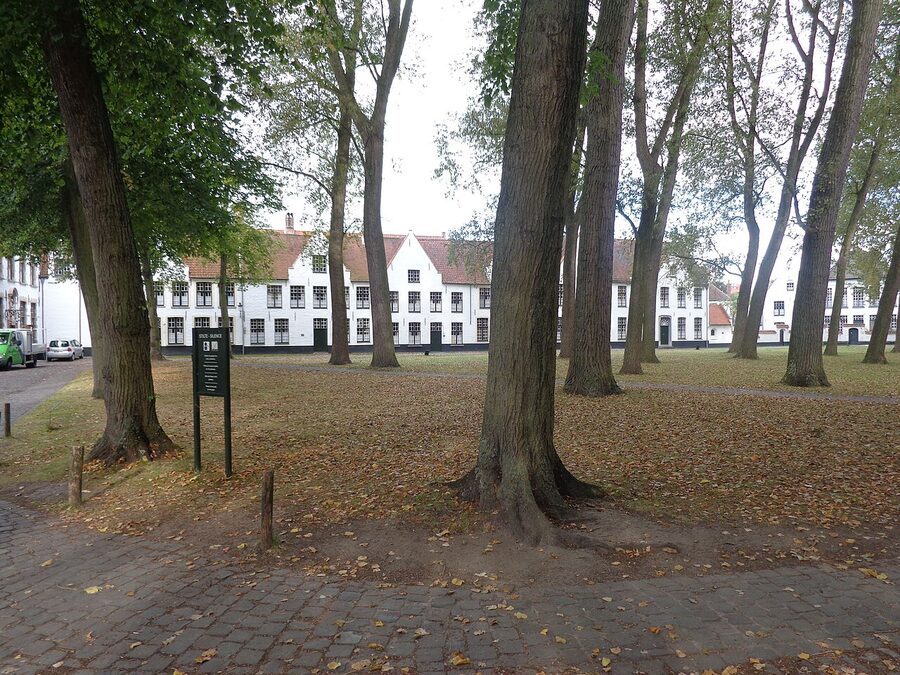
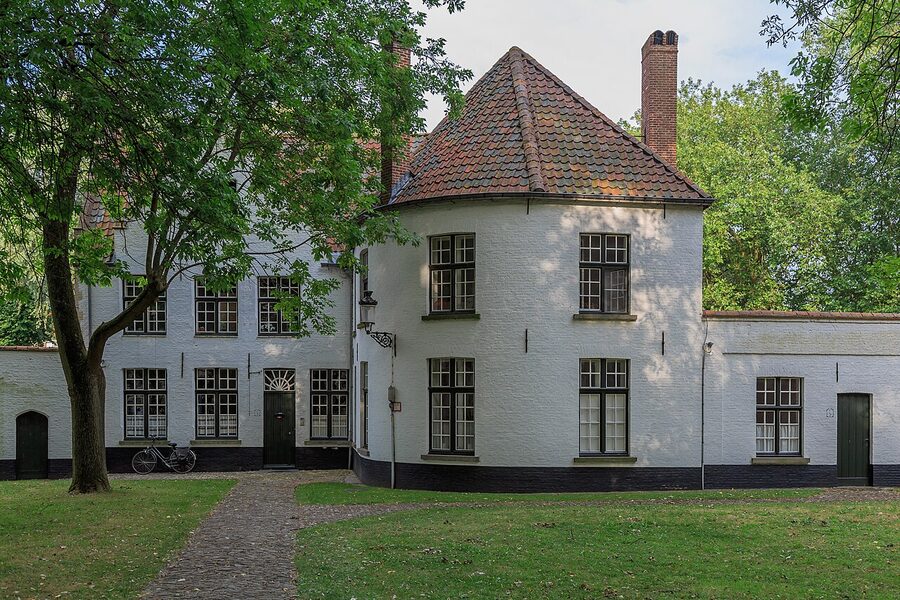
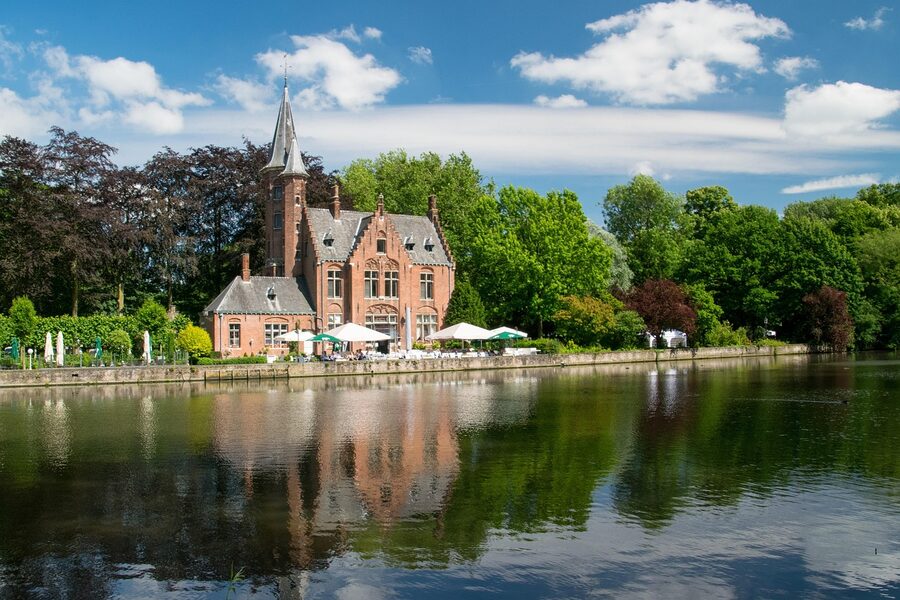
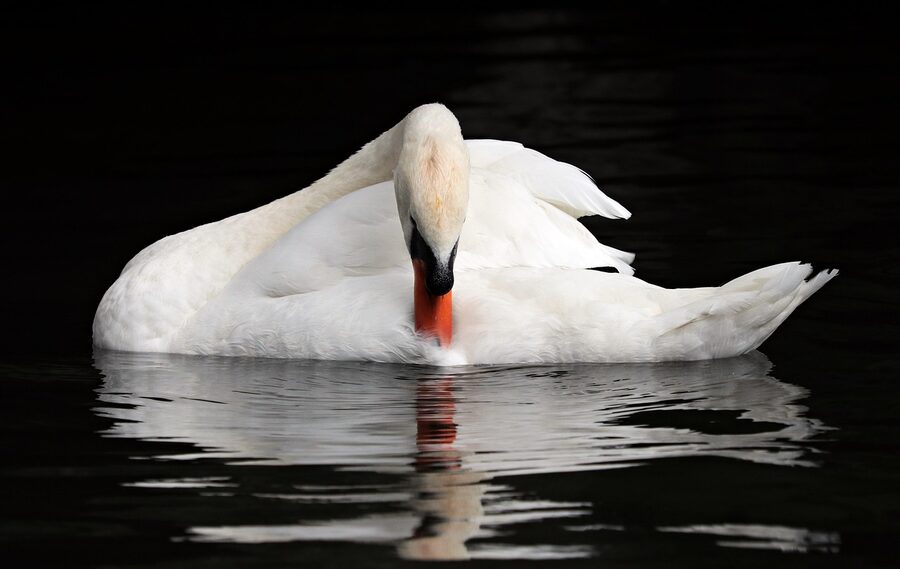
Most combined tours end at or near the Beguinage (Begijnhof), a walled complex of white houses around a courtyard of poplar trees that until 1928 was home to the Beguines, a lay religious order of women. It’s still inhabited (Benedictine nuns since the 1930s) so you walk quietly. Beyond it is the Minnewater, the Lake of Love, a wide pond with swans on it that’s been the city’s reservoir since 1300. Story has it the swans were imposed by the Habsburgs as punishment for a beheaded local official whose family crest had a swan; locals had to keep swans on the water forever as penance. The swans are still there.


Booking Logistics
A few practical things that confuse first-time bookers.
When to Book
For July and August, book at least two weeks ahead. The combined tours sell out for peak slots (10am, 11am, 2pm) and the standalone boats run on a queue-only system, so you can be looking at 45 minutes in line on a hot Saturday. Off-peak (November to March, weekdays in April-May and September-October), you can usually walk up and book the same day, even for the small-group tours. Online booking is faster, gives you a printable confirmation, and lets you swap times if your morning runs over.
Where to Meet
Almost every tour starts at the Markt, near the statue of Breydel and de Coninck. A few start at the Belfort entrance instead. Confirmation emails always say which. Get there ten minutes early and look for someone holding a sign or umbrella. The guides use them on busy days because there can be six tours leaving the Markt simultaneously.
How Long It Really Takes
The advertised time is 2.5 hours but realistic total is closer to 3, including buffer time at the start (people arriving late) and the Beguinage finish. The boat itself is 30 minutes; the walk is the bulk of the time. Plan for half a day even if the tour is short. You’ll want to eat after.
What to Bring
Comfortable shoes are non-negotiable. The cobbles in Bruges are large, slippery when wet, and arranged at random angles. A light layer for the boat (it’s a few degrees cooler on the water, even in July). A power bank for your phone if you take a lot of photos. You don’t need water; there are fountains all over the city, including a free one at the Markt, but locals never use them, so do as you wish.
Refund and Cancellation
Most GetYourGuide and Viator combined tours offer 24-hour free cancellation. Read the specific listing; a few of the smaller-group products require 48 hours. Weather cancellations are operator-side: the boats run in light rain (covers go on) but pause for thunderstorms, and you’ll get a full refund or a re-booking offer.
Choosing Your Time of Day
This matters more than people expect. The same tour at 10am and 4pm is genuinely different.
Morning (9am-11am): The light is best. Crowds are smallest. Cafes have just opened on Markt and the smell of fresh bread is everywhere. The boats are emptier. The downside is the morning chill on the water in shoulder seasons.
Midday (11am-2pm): The busiest stretch. Avoid if you can. Tour groups stack on Markt, the photos all have other tour groups in them, and the cobbles are crowded. The boats run at full capacity. Skip this slot unless it’s your only option.
Afternoon (2pm-4pm): Crowds have started moving toward Damme or the Beguinage, the shadows are long, and the Belfort starts to glow against the sky. Good for photos that aren’t about the buildings themselves but about the atmosphere. The boat in afternoon light is genuinely beautiful.
Evening (5pm onwards): Last boats run until around 6pm in summer (4pm in winter). After that, the canal jetties close and you switch to walking-only. The evening walking tours are run by a few specialists and lean into the storytelling angle: ghost stories, criminal history, that kind of thing. Different vibe, worth it as a separate booking.
How Bruges Compares to the Brussels Day Trip Version
If you’re choosing between booking your tour in Bruges itself or as a day trip from Brussels, the in-Bruges version (this guide) gives you more time. A day trip out of Brussels typically allocates around 3 hours of Bruges, factoring out the train rides. Booking on the ground in Bruges, you get the same 2.5-hour combined tour with no commuting on either side, plus the rest of the afternoon to wander, eat, and find a quiet canal-side bench. If you only have one day in Belgium, see our guide to visiting Bruges from Brussels instead. It covers the day-trip logistics in detail. But if you’re staying overnight, this article is what you want.
The History You’ll Hear (and Some You Won’t)
Most tour guides cover the same headline facts. Trade in the 1200s, silting in the 1500s, the city forgotten for 300 years, then “rediscovered” by Belgian Romantics in the late 1800s and put on the tourist map. The Beguinage story, the Holy Blood relic, Breydel and de Coninck. All true, all worth hearing.
What guides skip:
Bruges was effectively the first stock market. The Hotel ter Beurze in the late 1300s and 1400s was where Italian merchants gathered to trade share certificates of trading expeditions, and the word “bourse” (stock exchange) comes from the Van der Beurze family who owned the building. Walk past the building (Vlamingstraat 35) on any combined walking tour and the guide will probably point at it and move on; it’s the more important historical site than the basilica, but it doesn’t make a good photo.
The city was sacked by the French Revolutionary army in 1794. The Stadhuis lost all 49 of its statues, the Basilica was deconsecrated and used as a military storehouse, and tens of thousands of artworks were carted off to Paris. The 19th-century restoration is what you see today; almost nothing in Bruges is “original medieval.” That doesn’t make it less impressive. The restoration was painstaking and accurate. But it’s a more interesting story than “frozen in time.”
Bruges had the largest concentration of Italian banking families outside Italy in the 1400s. The Medici had a branch here; so did the Strozzi and the Rapondi. The luxury cloth trade depended on these banks for letters of credit, which is also part of why Italian Renaissance painters (Petrus Christus, Hans Memling) ended up working in the city.

Honest Warnings
A few things people complain about often enough that I should mention them.
The boat queues for standalone (no booking) rides can be brutal in summer. If you go the budget route (free walking tour plus standalone boat), get to the canal jetty by 9am or after 4pm. The midday queues at Rozenhoedkaai have run 40 minutes on hot July weekends.
Some guides recite a script. The combined-tour market is competitive, the guides are mostly freelance, and the script-quality varies. Look for tours that mention small groups (10 to 15 people). Those operators tend to hire better guides. The cheapest large-group products sometimes feel like coach-tour content read out loud.
Bruges is a horse-and-carriage city in places. If you’re sensitive to the smell or the welfare angle, know that some streets in the centre are crossed by carriage routes and the Markt has a permanent stand. The carriage rides are not part of any combined boat-and-walk tour, but you’ll see them.
Saturday is wedding day. The Stadhuis on Burg Square is the city’s most popular wedding venue and Saturdays are full. Tours work around this but parts of the building are closed off and photo angles are blocked. If your trip is short, go Tuesday to Thursday.
Pickpocketing is rare but not unheard of. The Markt and the boat jetties are the two spots where it’s been reported. Wear bags crossbody, keep phones zipped away. Bruges is one of the safest cities in Belgium overall, but the tourist-density spots are the exception.
If You Have More Time in Bruges
The combined boat-and-walk is the perfect 3-hour intro. If you’ve got a full day or you’re staying overnight, here’s what’s worth adding.
The chocolate scene. A guided Bruges beer and chocolate tour overlaps about 30 percent with the combined boat tour but adds tastings at three or four real chocolatiers and a Halve Maan beer flight. If you can only do one extra activity, this is it. For a hands-on look at the city’s chocolate-making heritage, the Choco-Story museum (in Brussels) tickets guide also covers the equivalent Bruges branch: same museum group, same curation.
Bike tour. Bruges is small enough that a 2-hour bike tour covers the bits the boat skips, especially the windmills along the eastern wall and the harbour at Damme. Most rental shops are near the train station.
The Beguinage on its own. Yes, the combined tour ends here. But come back at 7am or 7pm without a group and the place is empty and silent. It’s a different building when you’re alone in it.
Halve Maan brewery tour. The brewery underneath the Beguinage, the only operational brewery in the centre, with a 3-kilometre underground beer pipeline that pumps lager from the brewhouse to the bottling plant outside the city walls. The tour is a separate booking, not part of any combined product.
Where to Eat After the Tour
Most tours end around the Begijnhof or back at Markt. Both areas have excellent food but with very different price points.
Near Begijnhof: De Halve Maan brewery itself does pub food. Excellent if you’ve just done a boat tour and want a cold beer 50 metres from where you got off the water. Touristy menu, fine for one meal.
Near Markt: The square is overpriced. Walk two minutes off it in any direction and prices drop by 40 percent for the same quality. Restaurant Quartier (Hertsbergestraat 1) is small, locally-loved, and reservation-only at peak times.
Anywhere with frites: The fries here are not a tourist gimmick. Belgians invented twice-fried potatoes and the fries are denser, crunchier, and saltier than most countries get. Frietkot Number 1, two blocks from Markt, is the consensus best.
Beyond Bruges
If you’re spending more than two days in Belgium, the obvious extension is Brussels. From Bruges to Brussels is around an hour by train, and a Brussels base lets you cover the capital plus easy day trips. Brussels walking tours hit the Grand Place, comic mural trail, and St Hubert galleries; the Brussels hop-on hop-off bus is the easier option if you’re only there for a day. The capital’s iconic Atomium tickets sell out for weekends so book ahead, and a Brussels chocolate tour is the obvious sister to anything you do in Bruges. The other Belgian flagship is Ghent, around 25 minutes from Bruges by train and almost always less crowded. See our Ghent guide for the day-trip logistics. A separate Antwerp walking tour covers Belgium’s other major historic city and the diamond district. If you’re craving a full Belgian pub-crawl atmosphere afterwards, the Brussels pub crawl guide covers the Saint-Géry and Sablon nightlife circuits.
For comparable European canal cities, our guides on the Vistula evening cruise in Krakow and Galar cruise in Warsaw cover similar boat-on-historic-river formats. And if walking tours are your thing, parallel guides for Budapest, Krakow, and Lisbon sit in the same family.
Affiliate disclosure: Some links in this article go to GetYourGuide and Viator. If you book through them we may earn a small commission at no extra cost to you. Prices and availability mentioned are based on listings at the time of writing and may have changed.