
You feel it through your shoes first. The marble in the entrance hall is cold, then your soles find the 17th-century parquet of the Royal Apartments and the temperature shifts to a faint warmth that smells of beeswax and old paper. Your footsteps go from clipped to muffled, and the rooms throw them back at you in a low echo that makes you start walking on tiptoe without meaning to. You’re wandering through a working royal residence, the largest still-functioning royal palace in Europe, and the building is doing the talking.
Best for time-pressed: Royal Palace Museums and Gamla Stan skip-the-line, $249. Cuts the queue and pairs the palace with the old town.
Best full day: 7-hour Royal Palace and Castle tour, $420. Adds Drottningholm and Wenngarn for the maximalist palace day.

- What you actually get with one ticket
- The catch with public guided tours
- Three tours worth your time
- 1. Inside The Crown: Stockholm Royal Palace Private Guided Tour: 0
- 2. Royal Palace Museums and Gamla Stan Skip-the-line: 9
- 3. Royal Palace and Castle Tour from Stockholm: 0
- The Royal Apartments, room by room
- The Hall of State
- The Royal Treasury (Skattkammaren)
- Tre Kronor Museum: the burned castle underneath
- Gustav III’s Museum of Antiquities
- Changing of the Guard
- How to time your visit
- The free things you don’t need a ticket for
- How to get there
- What to see nearby
- A short history (for the people who care)
- Practical things people don’t put in guidebooks
- If you’ve already booked the basics
What you actually get with one ticket
One adult ticket runs about 200 SEK at the door (a bit less if you book online in advance, sometimes a few crowns more in peak summer). Roughly $20 USD. That single ticket covers five separate things, which is the part most people don’t realise until they’re inside:
- The Royal Apartments, including Karl XI’s Gallery, the Bernadotte Apartments, and the Guest Apartments where visiting heads of state actually sleep.
- The Royal Treasury in the cellar, which holds the regalia: King Erik XIV’s crown from 1561, the sceptre, the orb, the keys.
- The Tre Kronor Museum, set inside the original 13th-century castle foundations under the north wing.
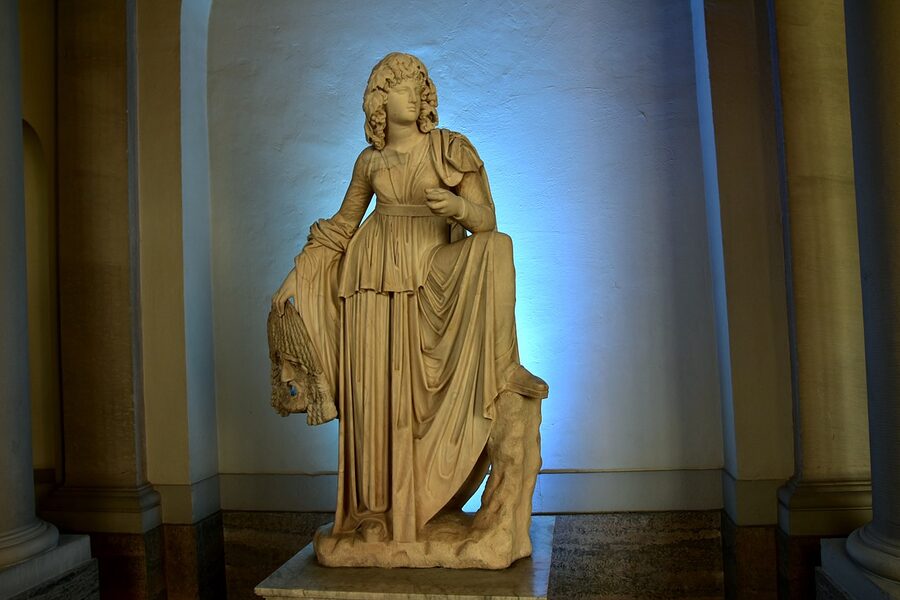
- Gustav III’s Museum of Antiquities, an 18th-century collection of Roman marbles displayed exactly as Gustav arranged them.
- The Hall of State and Royal Chapel, when they’re open (the Hall of State closes for state events).
Children and youth (7-17) pay around 100 SEK. Under 7s are free. Family tickets exist (two adults plus up to four kids). The Stockholm Pass and Go City pass both include palace entry, which can make sense if you’re hitting Vasa, Skansen, and the palace in the same trip. We unpack that maths in our guide to the Stockholm Pass.
Tickets are sold at the entrances and online via the official Kungliga Slotten site. If you’re going in summer (June through August) the queue at the door can swallow 20-30 minutes, especially around 11am when the cruise-ship groups arrive. Outside summer you can usually walk straight up to the cash desk.
The catch with public guided tours
The 45-minute English guided tour through the Royal Apartments is included in the regular ticket price during summer. You don’t pay extra. You do, however, need a spot, and they cap numbers at maybe 25 per group. Sign up at the front desk when you arrive. They run several times a day in peak season, and only weekends in winter. If you turn up at 2pm in July expecting the next tour to have space, you may end up walking the rooms on your own with the floor map, which is fine but you’ll miss the stories.
Three tours worth your time
Three tours rise above the rest if you’d rather have a guide than self-navigate. They cover different needs and budgets, so pick by what your day looks like, not just by price.
1. Inside The Crown: Stockholm Royal Palace Private Guided Tour: $180
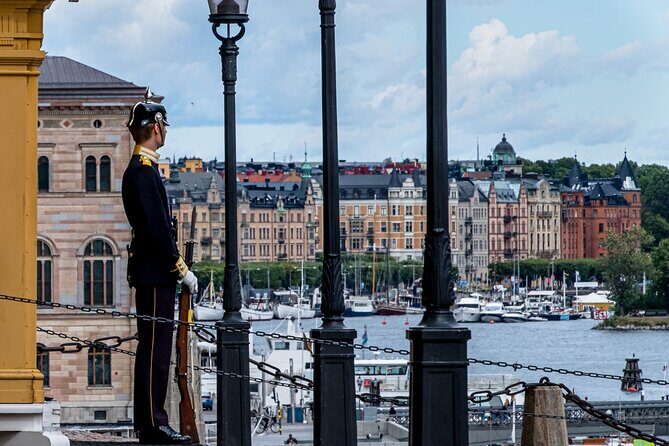
This is the pick if you’ve got a single morning and you care about history. It’s a private 90-minute walk through the Royal Palace with a guide who knows the families, the politics, and which painting has been there since the 1750s. Our full review of Inside The Crown goes into the guide quality, which is the differentiator here.
Check Availability
Read our full review
2. Royal Palace Museums and Gamla Stan Skip-the-line: $249

Pricier per hour but you skip the summer queue and get Gamla Stan’s narrow alleys included. Useful if it’s your first day in Stockholm and you want palace context plus a feel for the surrounding old town in one go. Our review of the skip-the-line tour covers what’s actually included beyond the headline.
Check Availability
Read our full review
3. Royal Palace and Castle Tour from Stockholm: $420
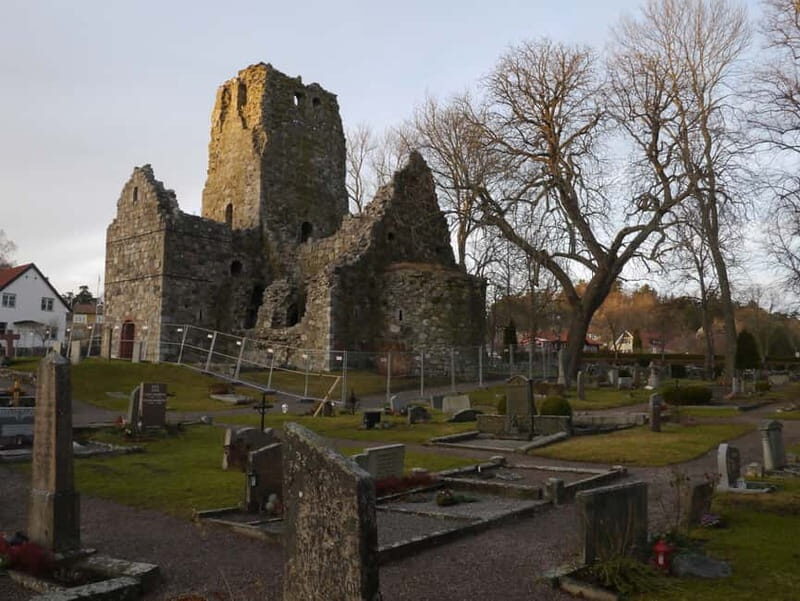
This is the maximalist option. Seven hours, three palaces, transport handled. You’ll see the city palace, the UNESCO-listed Drottningholm out on Lovön island, and Wenngarn’s baroque gardens. Our full review of the 7-hour palace tour breaks down whether the pace works for you (it can be a lot).
Check Availability
Read our full review
The Royal Apartments, room by room
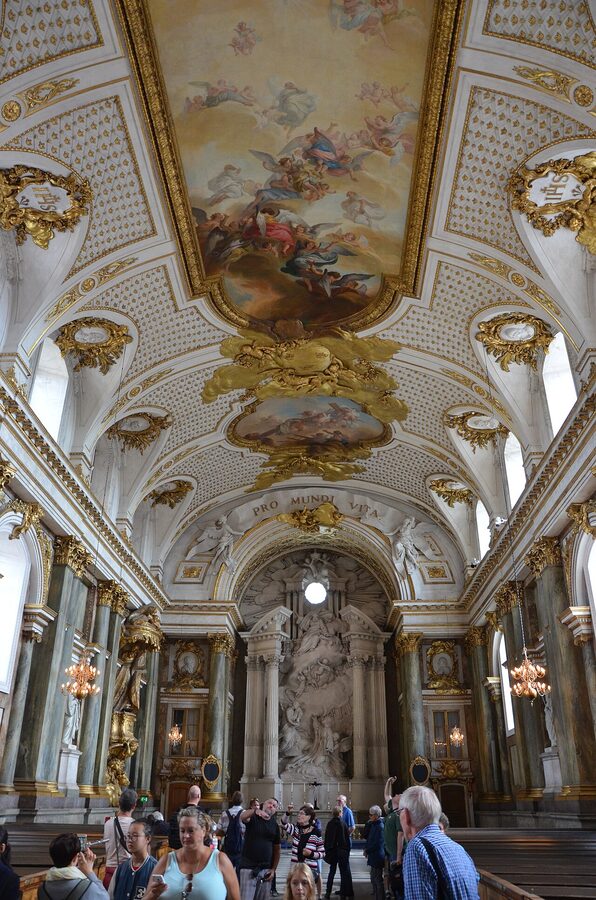

The Apartments are the part most people remember, and they take up almost the entire piano nobile (the first floor up from the entrance). The route walks you through about a dozen rooms in sequence. A few specific ones stand out.
Karl XI’s Gallery is the showpiece, modelled on the Hall of Mirrors at Versailles but smaller and more livable. The painted ceiling is by the French court painter Jacques Foucquet. State dinners still happen here. If you’re lucky, you’ll see staff setting up a long table for that night’s event, plates already out.
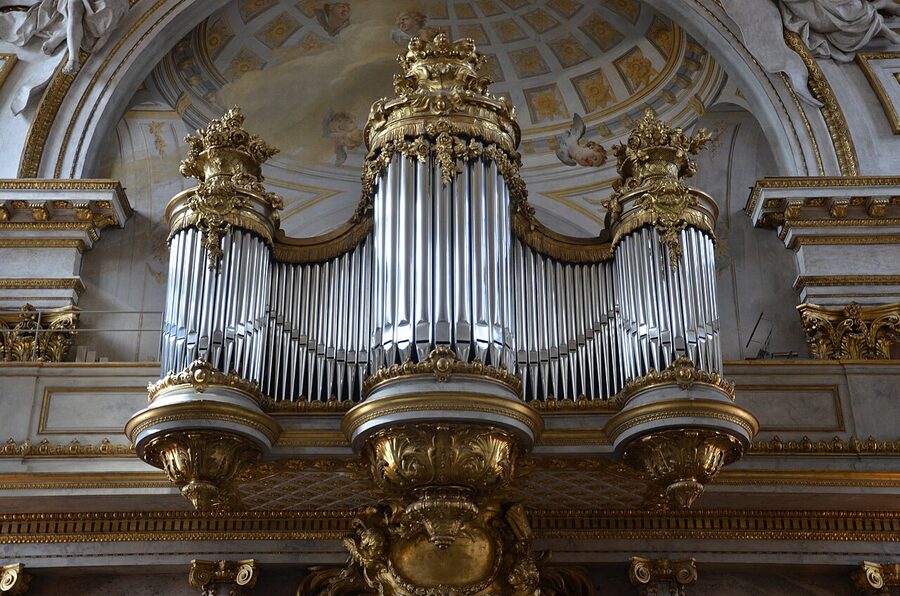

The Bernadotte Apartments are named for the current royal house. Karl XIV Johan, who founded the Bernadotte dynasty, was originally a French general (one of Napoleon’s). Sweden invited him over in 1810 to be heir to a king with no children. He stayed. The dynasty’s been there ever since. The apartments retain his Empire-style furniture, deep crimsons and gilt and a lot of bronze.
The Guest Apartments are where visiting heads of state actually sleep when they come on state visits. You’ll see the bed Obama used, the bed the Pope used, the bed every G7 leader who’s visited Sweden in the last 50 years has used. They show you the room, but the bedrooms themselves are usually roped off.
The Hall of State
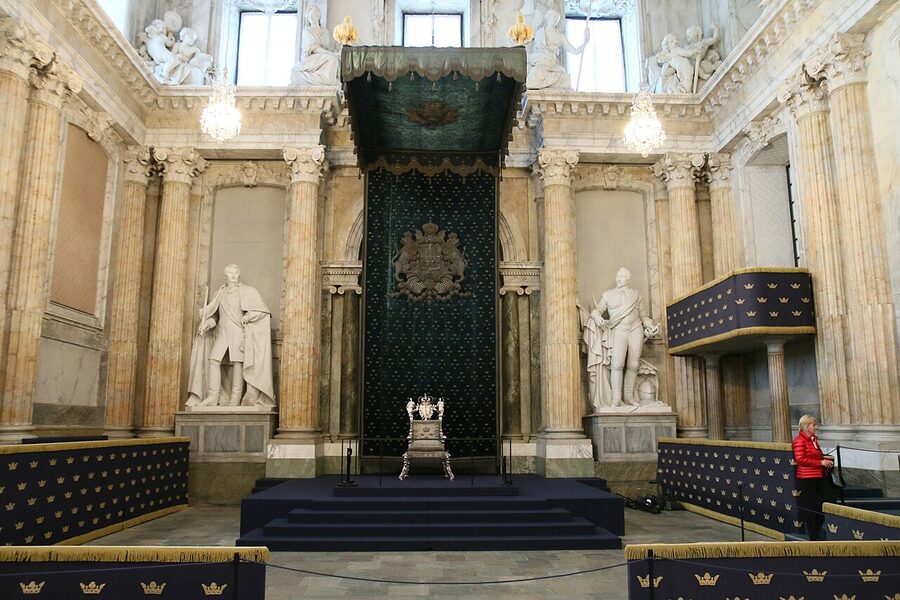

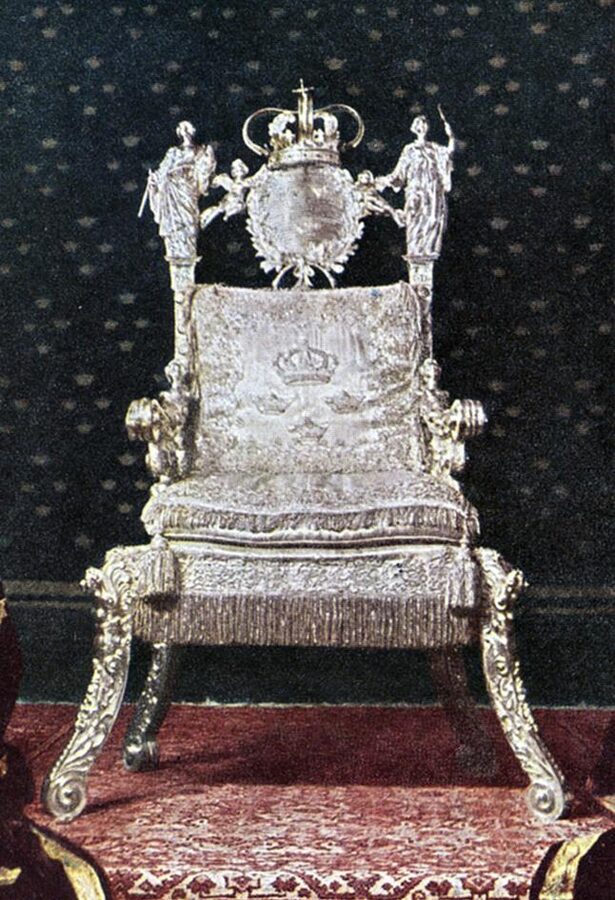
The Hall of State, or Rikssalen, runs across the south wing of the palace and is two stories high. It’s where parliament was formally opened every year until 1975, when the practice ended. The silver throne in the centre, designed by Abraham Drentwett in Augsburg around 1650, was a gift from the chancellor Magnus Gabriel De la Gardie to Queen Christina. She never used it for an actual coronation. Most queens since haven’t either, but it’s still set up as if one might happen tomorrow.
If you visit during a state event the Hall of State will be closed. Check the Kungliga Slotten website for current hours; they post closure dates a month or two ahead.
The Royal Treasury (Skattkammaren)
You take the stairs down into the cellar, two storeys below the courtyard, and the air gets cooler and a little dusty. The Treasury is small, maybe four rooms total, but it holds the regalia of Swedish monarchy. Velvet-lined cases. Recessed lighting. Almost nobody talking out loud, partly because it’s a bit church-like, partly because you can hear yourself breathe.
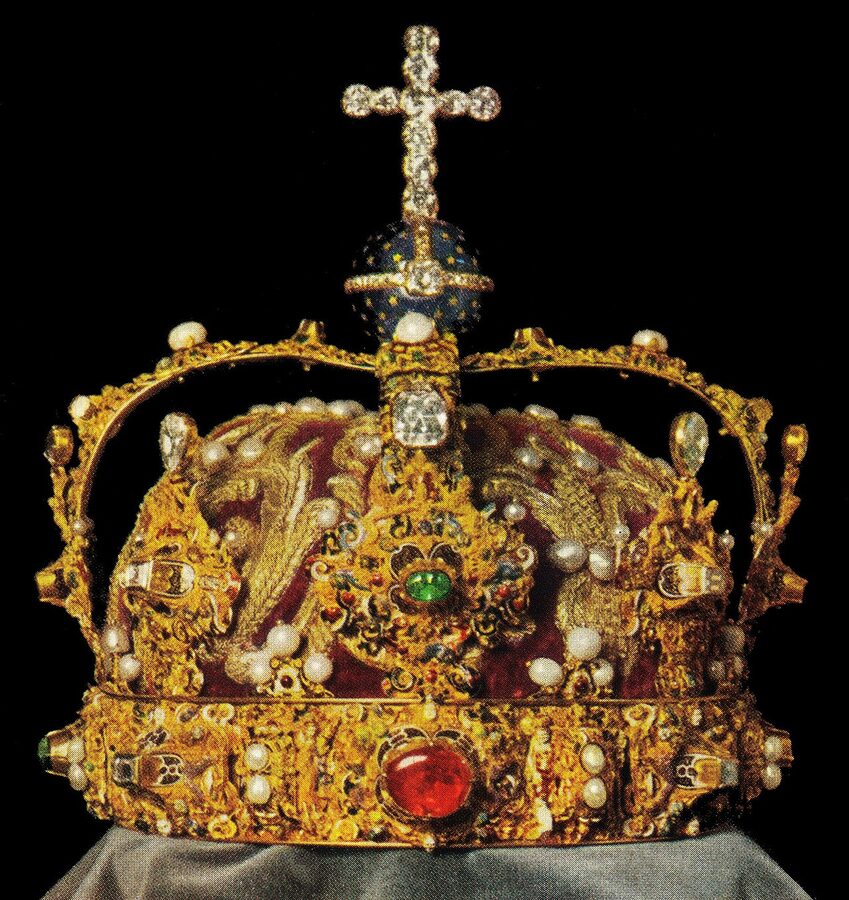
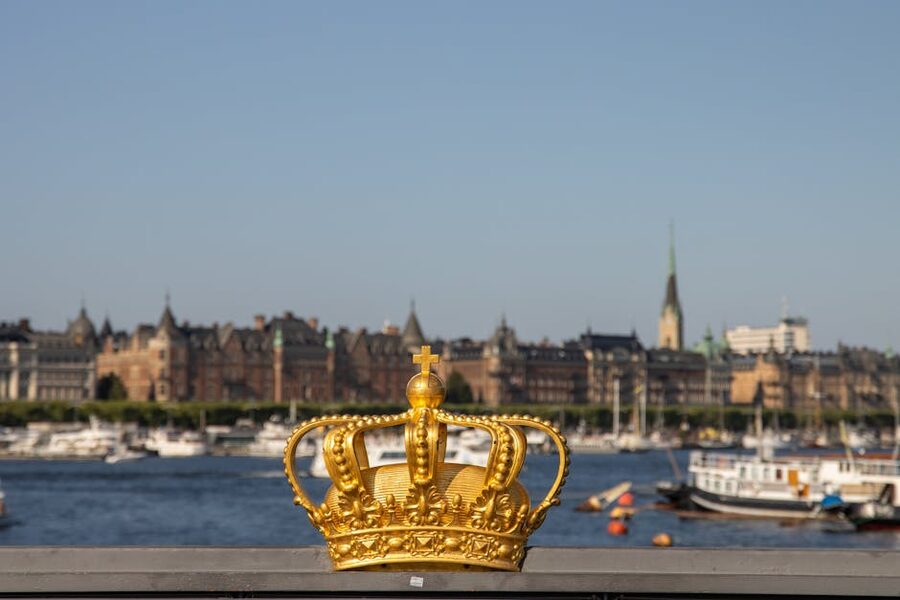
The crown of Erik XIV, made in 1561 for his coronation, is the centrepiece. It’s gold, set with pearls and table-cut gemstones in the style of the period. The sceptre and orb are nearby. There’s a key as well: the symbolic key to the kingdom. They use these for the opening of parliament every September, when they’re carried in by a court official, displayed, and taken back. It’s the only time they leave the Treasury.
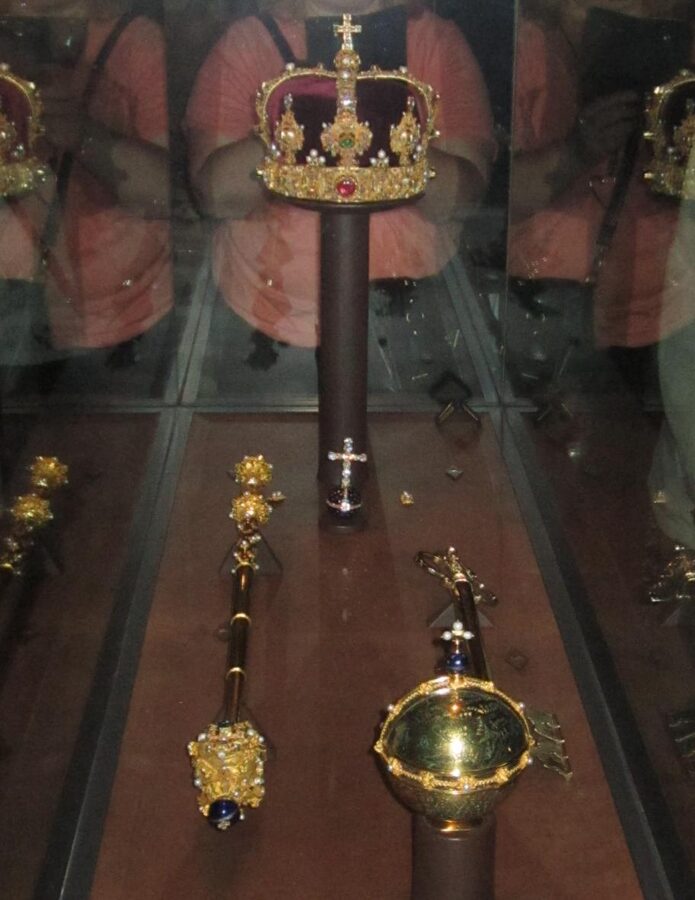
One thing competitors leave out: the Treasury also has the swords of state, including Gustav Vasa’s funeral sword from 1560 and the so-called Sword of State that’s used in coronations. The cabinet they’re in is to the right as you enter. Easy to miss because everyone walks toward the crown.
Photography is allowed without flash. No tripod. The light is dim, so an iPhone Night Mode shot of the Erik crown actually works better than a daytime DSLR.
Tre Kronor Museum: the burned castle underneath
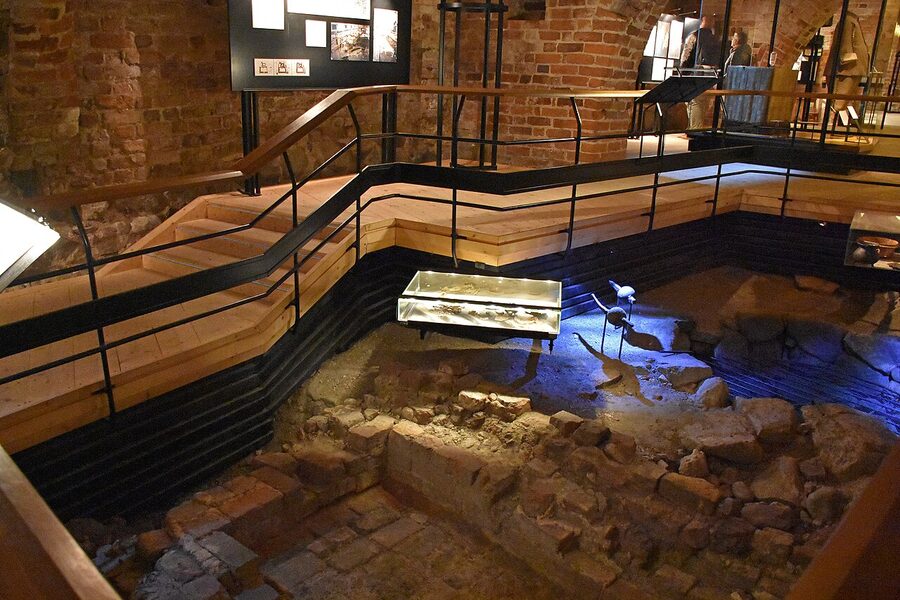
This is the part of the ticket I’d argue is the most underrated. The current Royal Palace burned down in 1697, but it wasn’t the first castle on this rock. The previous one, called Tre Kronor (Three Crowns), had been there since the 13th century and was a defensive fortress before it became a renaissance residence. When it burned, most of the medieval foundations survived because they were stone and below ground.
The Tre Kronor Museum is set inside those foundations. You walk through actual 700-year-old stone walls. Cool and slightly damp. The exhibition shows fire-damaged objects pulled from the ruins (door fittings, ceramic, a bell) plus a scale model of how the original castle looked. It’s also where you learn the fire started in the attic above the queen’s bedchamber, that the king’s library of 17,786 books was almost completely lost, and that they kept the inhabitants safe by lowering them out the windows on knotted bedsheets.
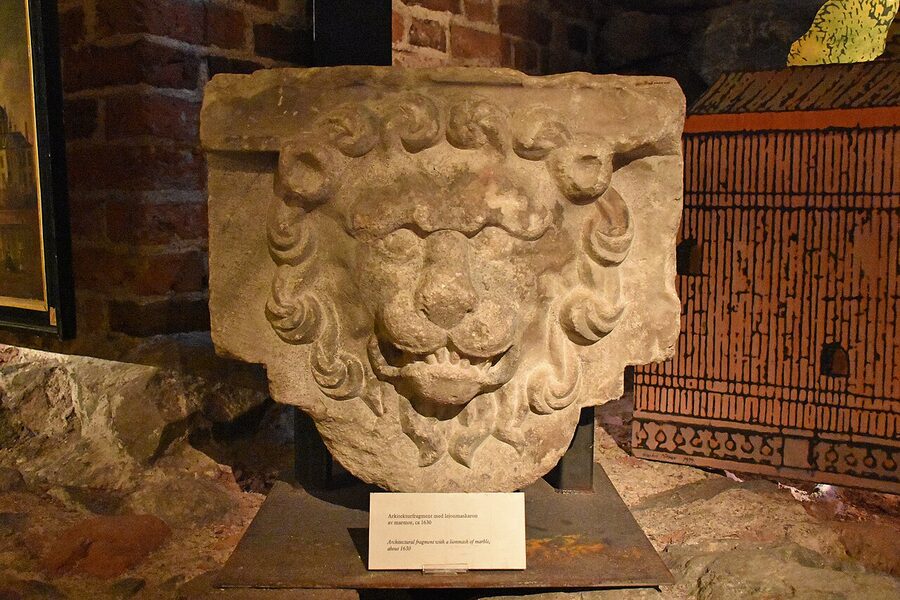
Most visitors skip this section because it’s tucked off the main route. Don’t. It’s the only place in Stockholm where you can stand in a 13th-century building.
Gustav III’s Museum of Antiquities
_(35428586104).jpg)
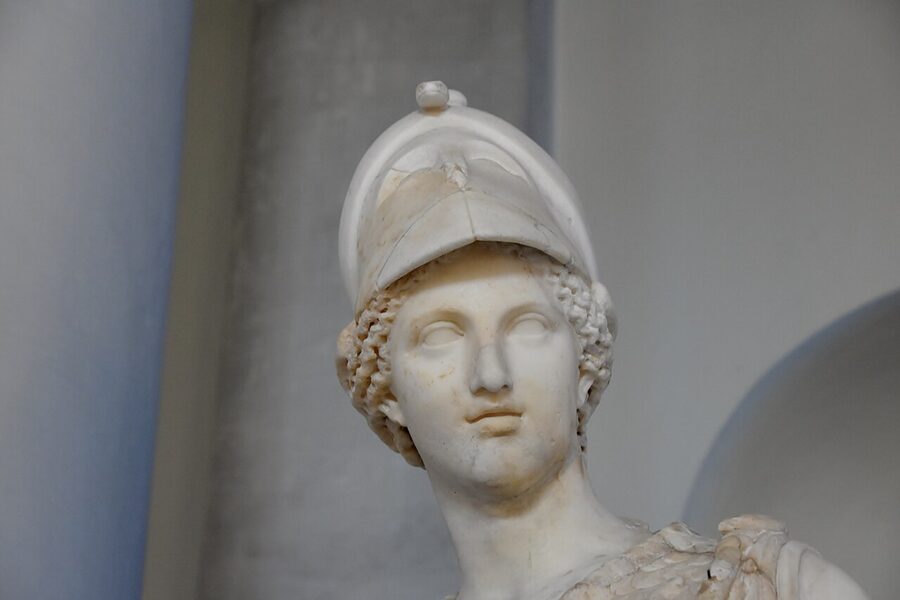
This one is a curiosity, and it’s the section easiest to miss because it requires a separate entrance and isn’t always staffed. Gustav III went on a Grand Tour to Italy in 1783-1784. He came back with around 200 Roman sculptures, mostly from Hadrian’s Villa. After his death (he was assassinated at a masked ball in 1792, which is its own opera) his collection was opened to the public in 1794, making this technically Sweden’s first public museum.
The genius of it is that the rooms haven’t been restaged. You’re seeing the marbles arranged exactly the way Gustav III wanted them, with the same labels (in French, because of course) and the same lighting strategy. It’s a museum of how museums used to be. You’ll be the only person in there half the time.
_(35867872500).jpg)
It’s open late spring through summer (typically mid-May through mid-September). Confirm before going. Outside that window the rooms are closed for conservation.
Changing of the Guard
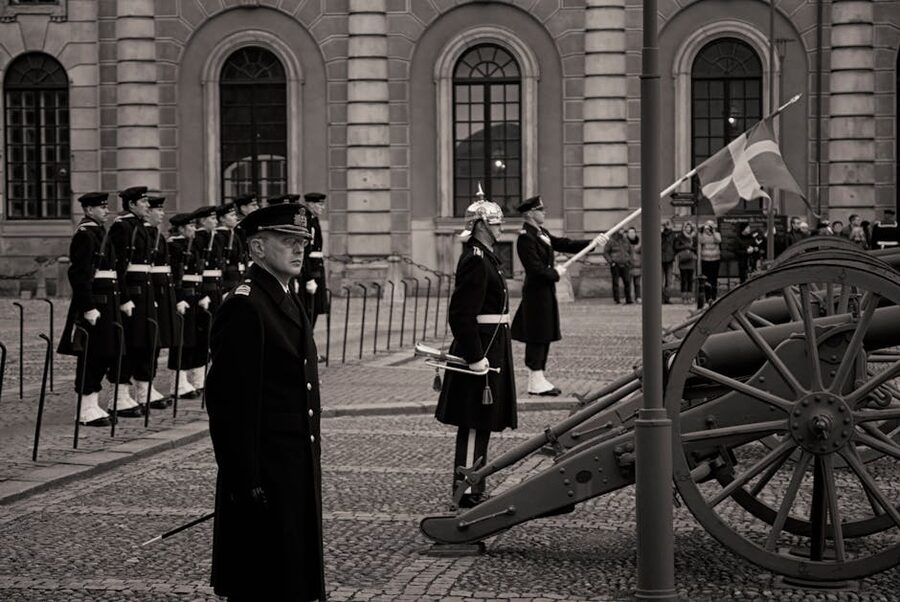
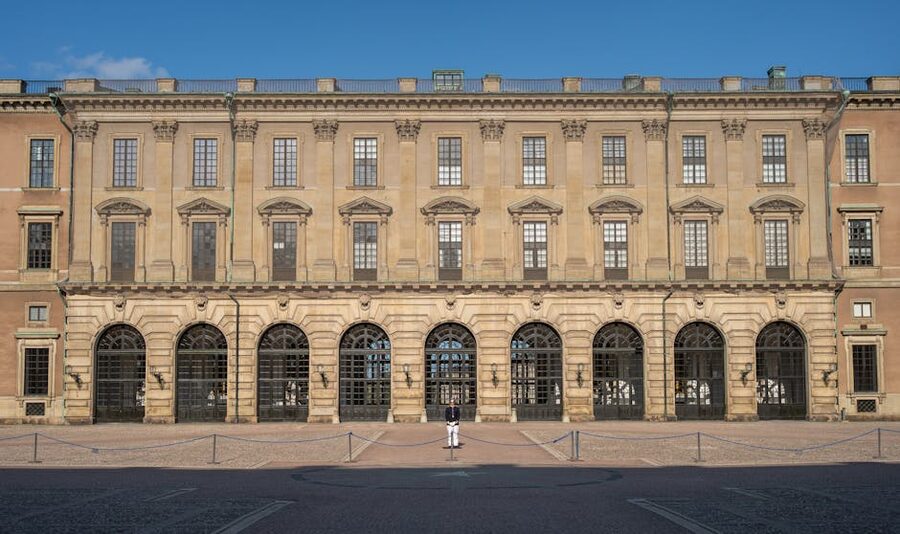
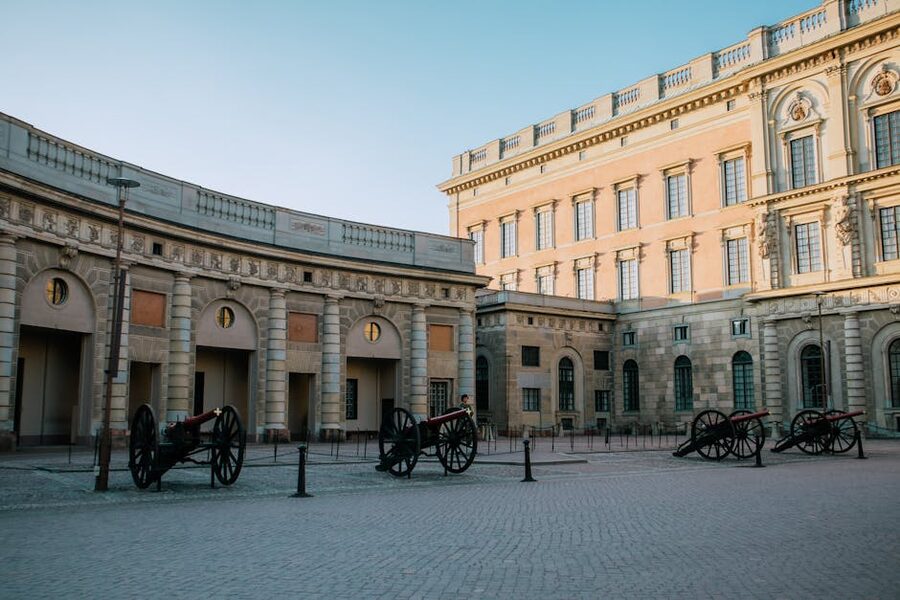
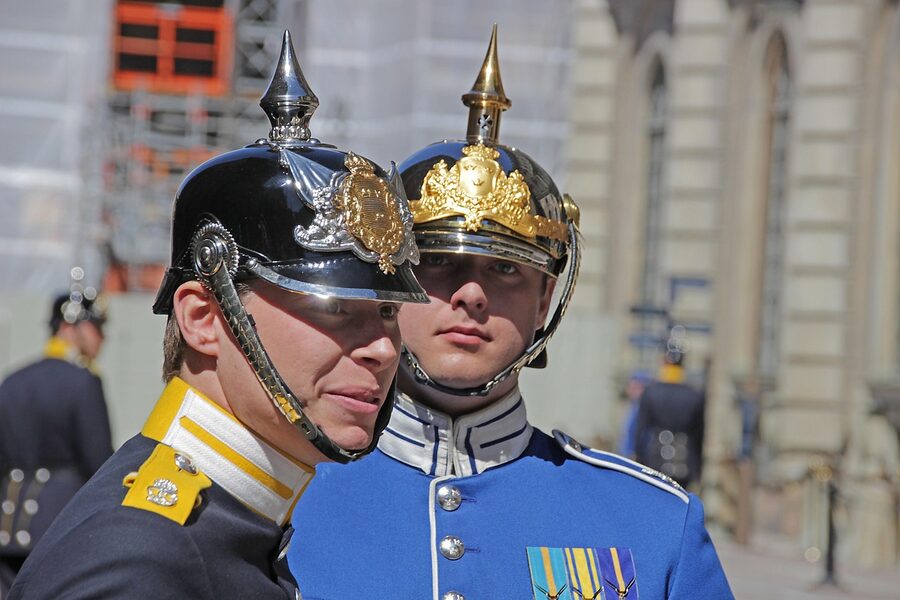
The Changing of the Guard happens daily and is free. Times shift slightly by season but in summer the parade leaves from the Army Museum on Östermalm at 11:45 and arrives at the palace courtyard for 12:15. Sundays and holidays it’s a bigger affair with a mounted guard and a military band. Weekdays are simpler, foot guards only.
The actual ceremony at the palace runs until about 13:00. If you’re going inside the palace anyway, time your ticket to start after the ceremony and watch from the courtyard before going in. Free entertainment, no extra cost, and the courtyard is open to the public during the changeover so you don’t need to be inside the palace to see it.
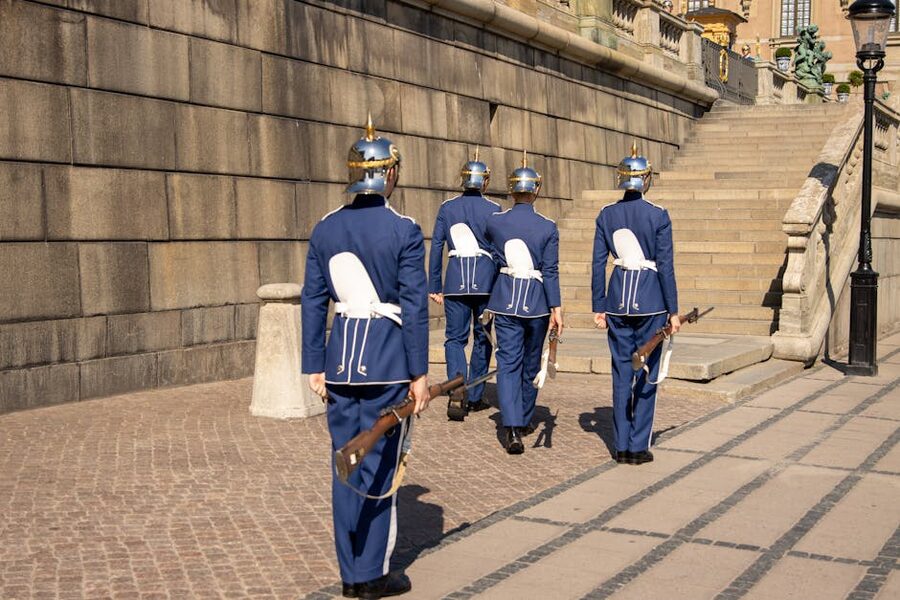
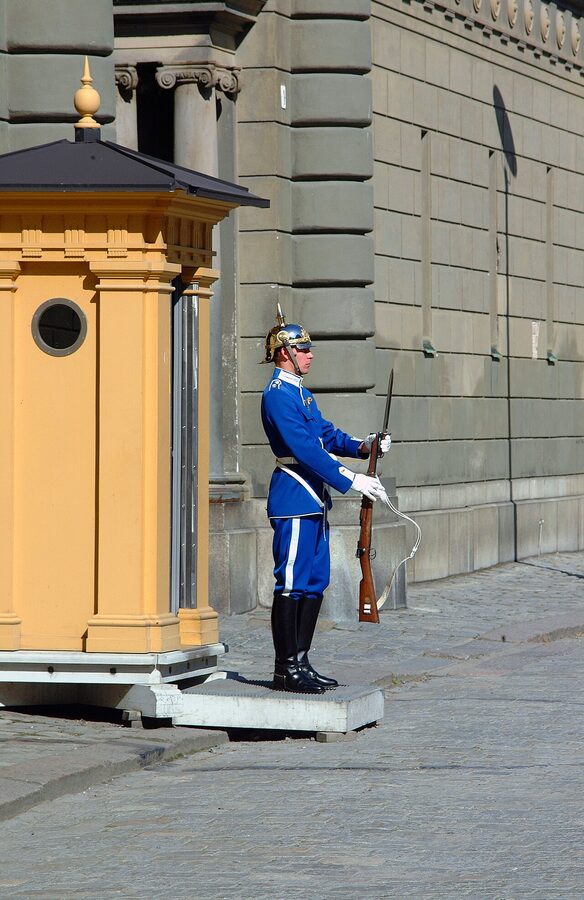

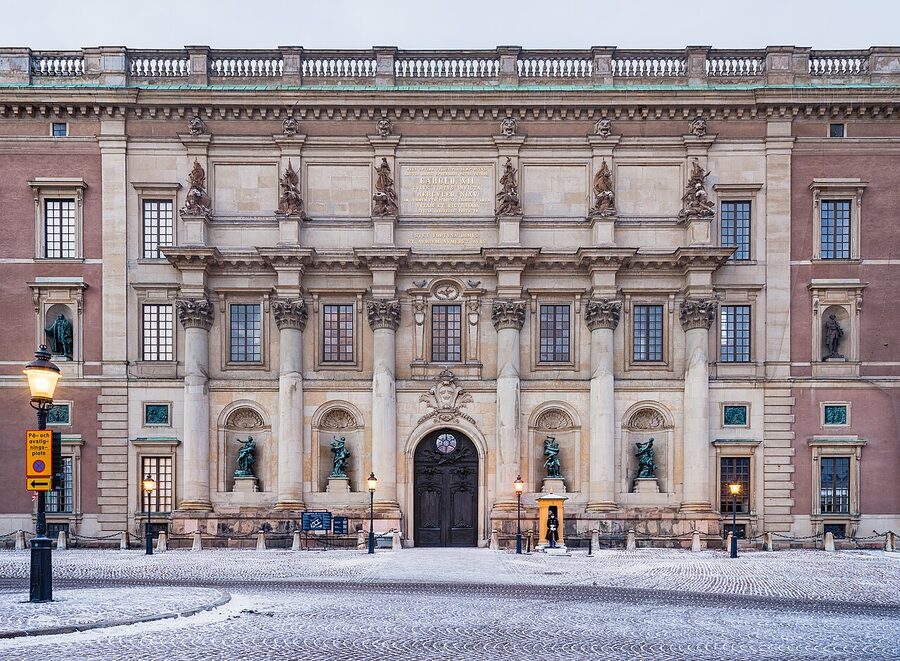
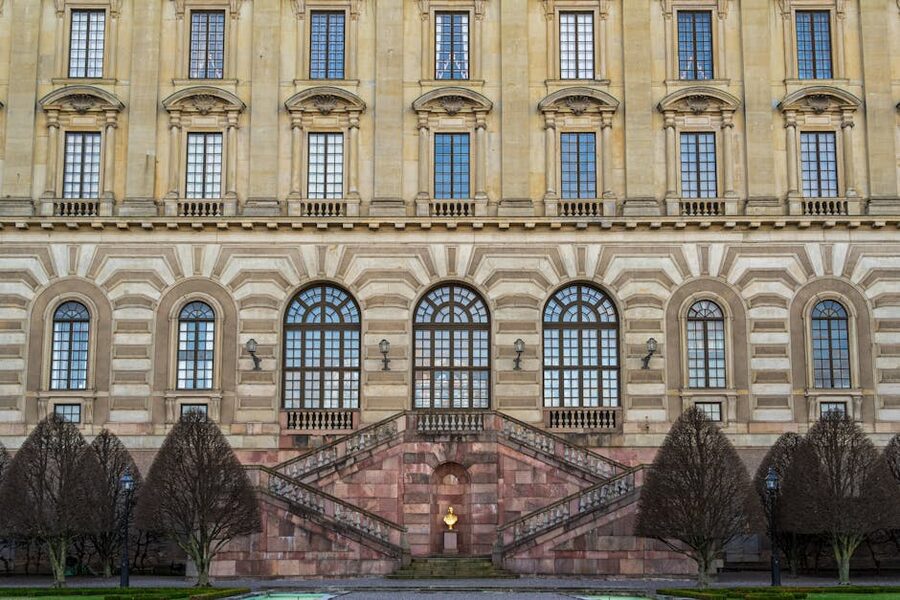
Best photo spots: the courtyard side near the Lejonbacken stairs, looking out toward the southern facade. The light is best in late morning. Avoid the inner courtyard if you’ve got mobility issues, the cobbles are uneven.
How to time your visit
Best month: May or early September. Daylight is long, queues are short, the antiquities museum is open. June through August is busiest. Mid-October through April is quietest but the Hall of State guided tours run only on weekends and the antiquities museum is closed.
Best time of day: 10am opening or 3pm. The midday block (11:30-13:30) overlaps with the guard ceremony and cruise-ship groups. Get there at opening if you want a quiet Treasury. Get there at 3pm if you want to catch the late-afternoon light on the south facade.
How long to stay: Two hours minimum if you’re moving fast and skipping at least one section. Three hours if you want to see all five things on the ticket. Four hours if you also want to do the Storkyrkan cathedral next door, which you really should.
The free things you don’t need a ticket for
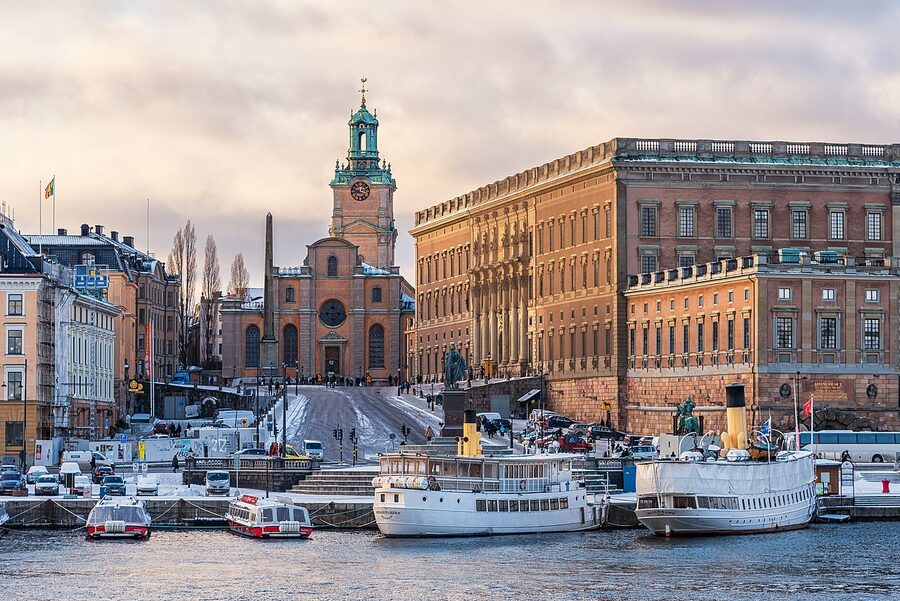

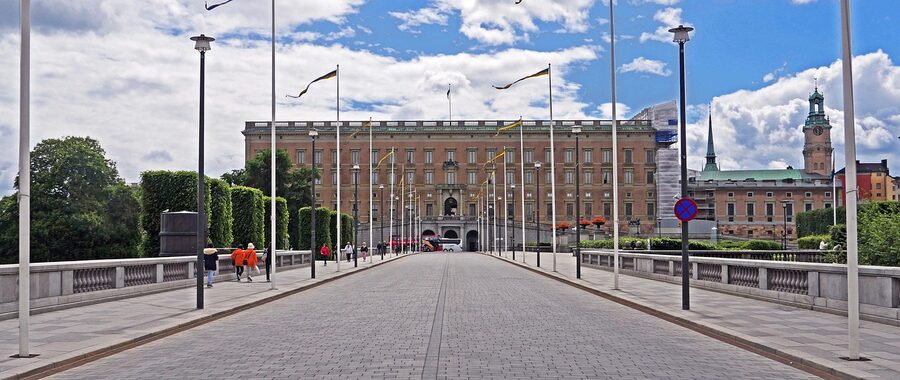
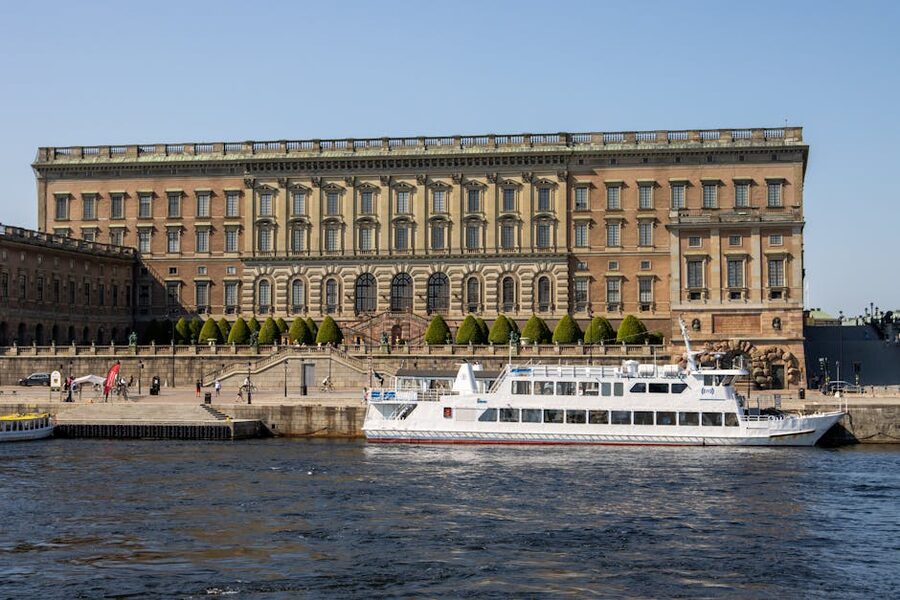
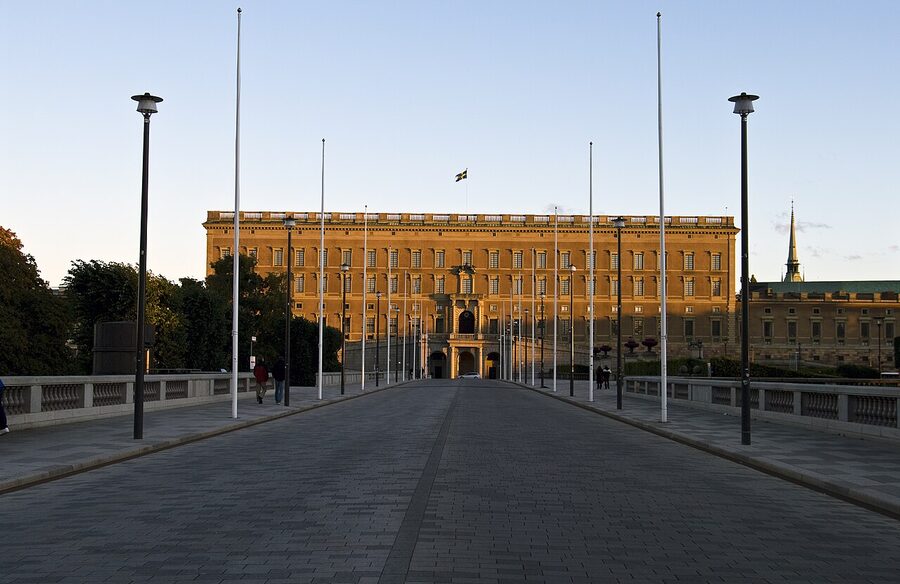
You don’t need a ticket to walk into the inner courtyard, see the guard ceremony, photograph the Lejonbacken (the stairway with the bronze lions), or stand on Norrbro looking back at the south facade. Plenty of people who don’t go inside still get a real sense of the place from these access points alone. If you’re just passing through Stockholm for a day, a quick walk around the exterior costs nothing and takes 30 minutes.
How to get there
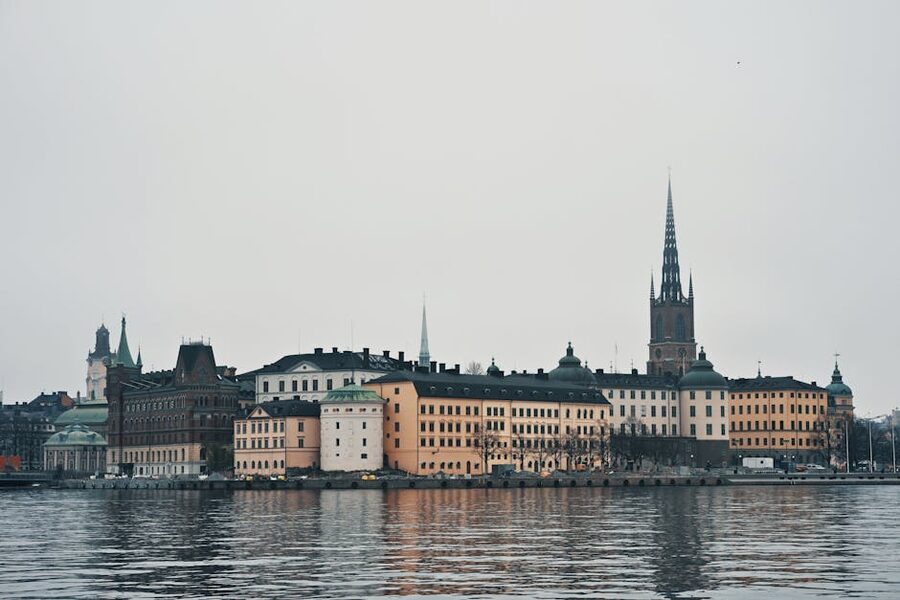
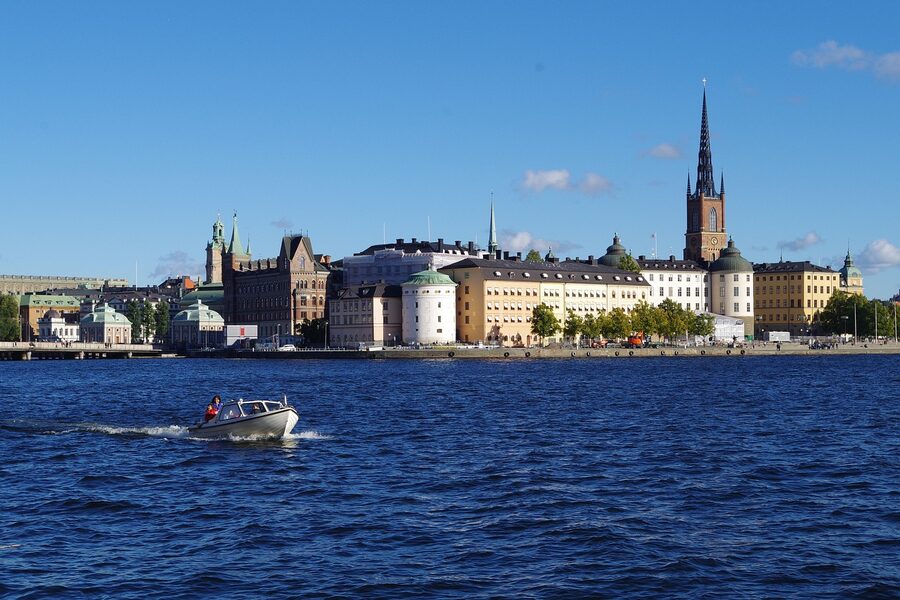
The palace sits on Stadsholmen, the main island of Gamla Stan. The closest metro is Gamla Stan station (T-bana, red and green lines), about a 5-minute walk south of the palace through the old town. From Centralstation it’s a 10-minute walk across Norrbro bridge. From Slussen it’s 8 minutes north through Gamla Stan.
If you’re coming on the hop-on-hop-off bus, the palace is on the standard route. Same goes for the harbour boat tours, which give you an angle of the palace from the water you can’t get any other way. We compare both options in our guide to the Stockholm hop-on-hop-off bus and our guide to Stockholm boat tours.
Driving in is a bad idea. Gamla Stan is mostly pedestrianised, the parking is non-existent, and the streets are tight enough that you’ll regret your rental car. If you’re staying outside Stockholm and need to drive, park at one of the P-Hus garages on Norrmalm and walk the rest.
What to see nearby
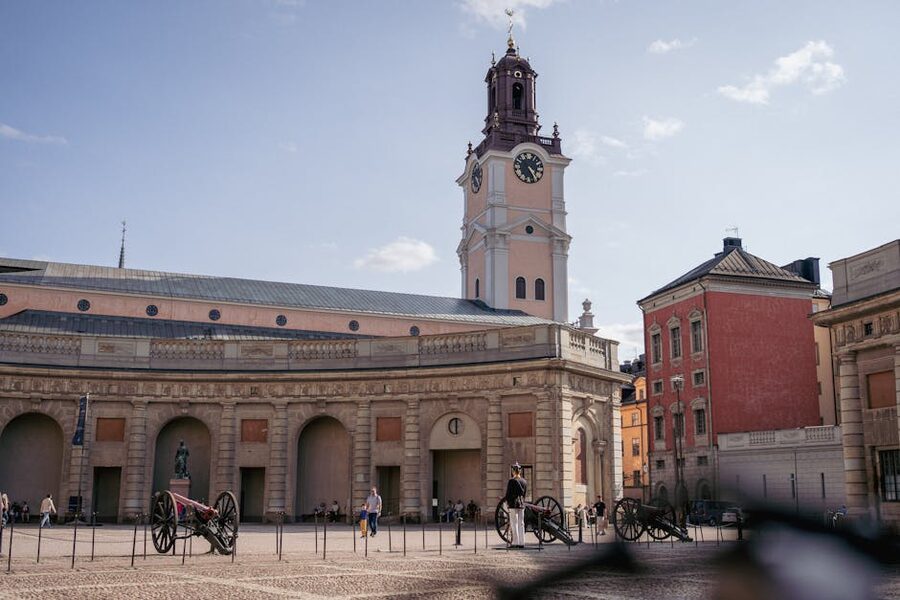
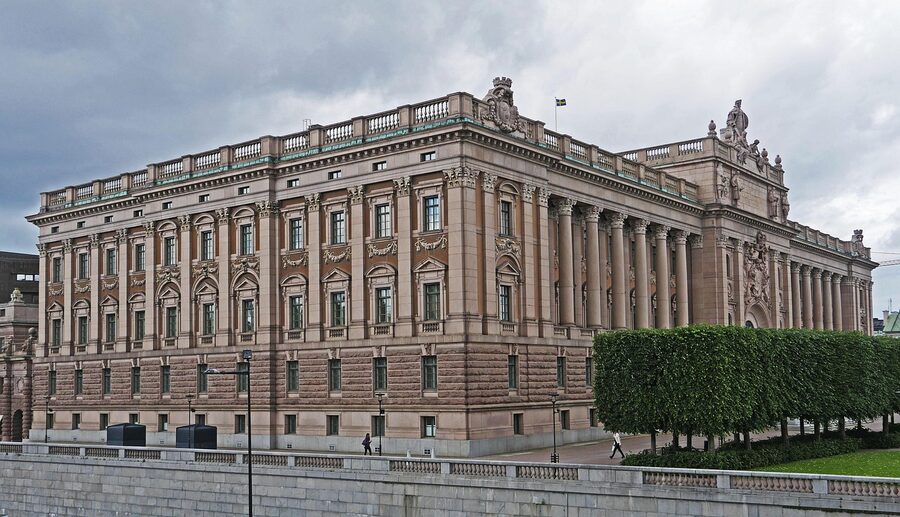
Right next door is Storkyrkan (the cathedral), which holds the famous 1489 statue of Saint George and the Dragon, carved from oak and elk antler. Five-minute visit, mostly free. Across Norrbro is the Riksdag (parliament), which runs free public tours in summer. Walk five more minutes south and you’re in Stortorget, the medieval main square, with the Nobel Prize Museum in the old Stock Exchange building.
Across the harbour on Kungsholmen is Stadshuset (City Hall), home of the Nobel Banquet, which we cover in our guide to booking the City Hall tour. About a 20-minute walk or 5 minutes by bus from the palace.
A short history (for the people who care)
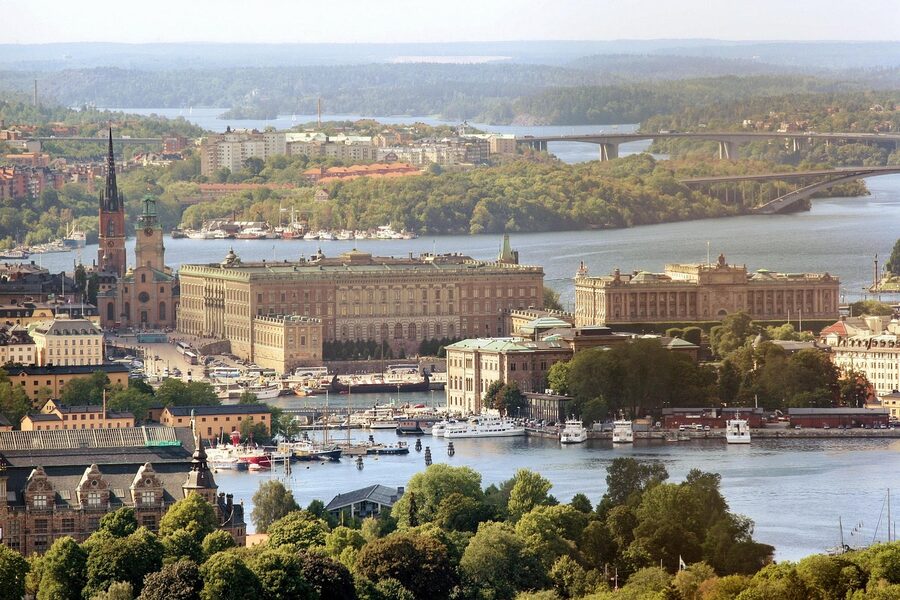
The original castle on this rock was built in the 13th century by Birger Jarl, who founded Stockholm itself. It was called Tre Kronor (Three Crowns) and was a fortified medieval castle, all towers and tight loopholes. By the 16th century the kings had renovated it into a renaissance palace, but the basic structure stayed medieval underneath.
On May 7, 1697, the whole thing burned. The fire started in the attic, possibly from a chimney spark, possibly from a candle. It moved fast through the roof beams. Most of the upper floors were lost in a few hours. The royal family escaped, the library mostly didn’t.
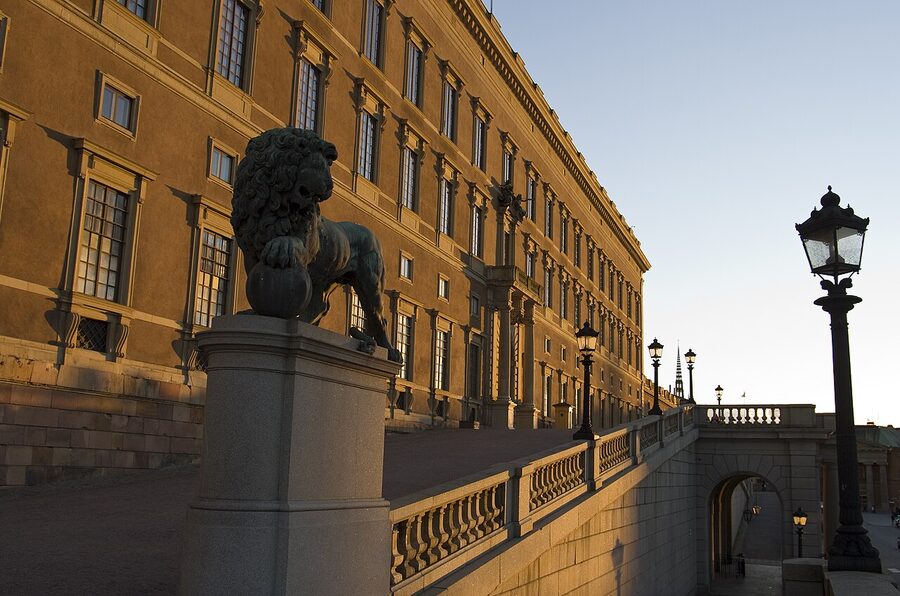

The architect Nicodemus Tessin the Younger had actually drawn plans for a new palace before the fire happened, and within months he was given the job of replacing the entire structure. He chose a Roman baroque idiom: the building you see today is essentially Italian, transplanted to Sweden. Construction took 60 years (1697 to 1754) and Tessin didn’t live to see it finished. His son took over.
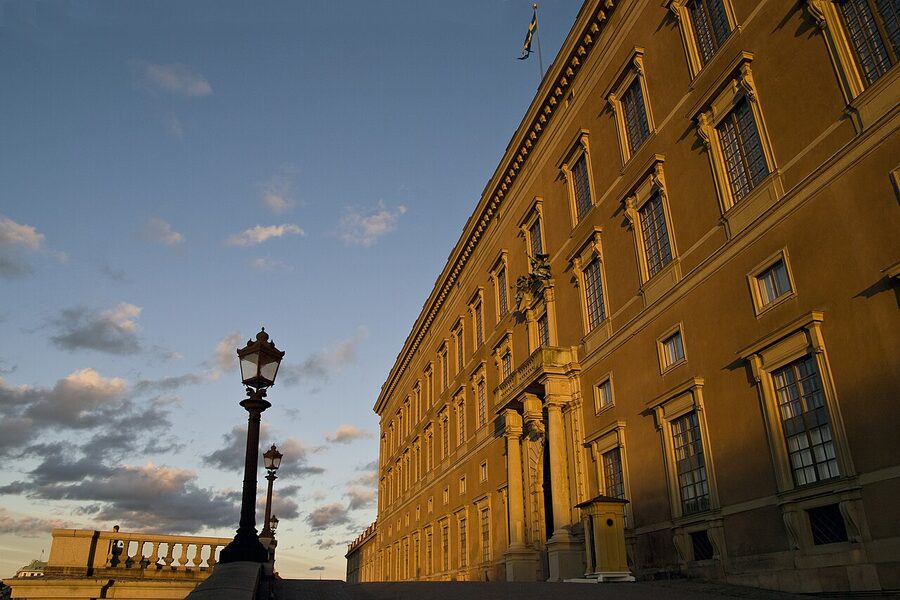
The palace has been the royal residence since 1754, although the current royal family lives at Drottningholm, about 11 kilometres west, and uses Stockholm only for official functions. The 600-plus rooms include offices, ceremonial spaces, and ten guest apartments. Most of the building is closed to the public, even on the most generous tour ticket.

Practical things people don’t put in guidebooks

A few things that aren’t on the official site:
The cafe inside is mediocre. Skip the palace cafeteria and walk five minutes to Chokladkoppen on Stortorget for proper Swedish hot chocolate. Or grab a kanelbulle from Vetekatten on Kungsgatan if you’re heading north afterwards.
Toilets are limited. One in the basement near the Treasury, one near the entrance. Use them when you see them. The next decent toilet is in the Storkyrkan visitor centre or back at the metro station.
The audio guide is not included. If you’re walking on your own, the printed floor map is free but limited. The audio guide adds about 80 SEK and is decent, although the narration is more dry-historical than story-led.
Photography rules vary. Apartments and Hall of State: photos OK, no flash, no tripod. Treasury: same. Tre Kronor: same. Antiquities: same. Royal Chapel: photos generally not allowed during services.
Cloakroom is mandatory in winter. You can’t carry a large coat or backpack through the apartments. The cloakroom near the entrance is staffed and free, but you’ll wait a few minutes on a busy day.
The flag tells you something. If the Swedish flag is flying from the highest tower, the King is officially in Stockholm. He may not actually be in the palace at that moment (he could be at Drottningholm, or abroad), but it’s a residence-status indicator. On state visits, both the Swedish flag and the visiting country’s flag fly side by side.
If you’ve already booked the basics
Once the palace is sorted, the rest of central Stockholm has plenty more to keep you busy. The Vasa Museum on Djurgården is the obvious next stop, with the 17th-century warship that sank on its maiden voyage just down the harbour. The Skansen open-air museum is on the same island. If you want to add something different, the Fotografiska photography museum across the water on Södermalm is open late and has the best Stockholm panorama from its top-floor restaurant. For a guided walk through Gamla Stan after your palace visit, our guide to walking tours of Stockholm covers what to look for in a small-group route. And if your kids are losing patience with crowns and parquet, the ABBA Museum on Djurgården usually fixes that fast.
Affiliate disclosure: We may earn a small commission if you book through links on this page, at no extra cost to you. It helps keep the site running.