
My cousin Petra arrived in Gothenburg with the immovable conviction that city passes were a tourist tax dressed up as a saving. She’d done Lisbon, Copenhagen and Amsterdam without one and felt smug about it. Then on the Friday morning of her trip, she sat in a cafe near Korsvägen, opened a calculator app, and started adding up what we’d already planned for that day. Universeum at 295 SEK. The Hop-On Hop-Off bus at roughly 350. Maritiman if there was time, another 165.
By the time she’d hit attraction two she went quiet for a moment, then said, “I think the pass actually pays for itself before lunch.”
That’s the whole article in one anecdote, really. The Go City Gothenburg Pass is not magic, and it’s not always the right call. But for the specific kind of trip most readers of this site are planning, the maths quietly stacks in its favour, especially if you start your day at a museum that costs north of 250 SEK on the door.



- In a Hurry? Pick the Pass That Fits Your Trip
- The Verdict First, Because You’re Busy
- Three Pass Options Compared
- 1. Go City Gothenburg All-Inclusive Pass:
- 2. Stockholm All-Inclusive Pass: (Sweden combo trips)
- 3. Universeum Single Entry Ticket:
- What’s Actually On the Pass
- What’s Specifically NOT Included (and Why It Matters)
- How the Maths Actually Works
- The Single Most Important Pass Rule
- How to Actually Buy It
- A Practical 1-Day Pass Itinerary
- A Multi-Day Pass Itinerary (the 2- or 3-Day Plan)
- How the Pass Plays With the Hop-On Hop-Off Bus
- Things the Pass Skips That Are Worth Adding Anyway
- Comparing the Gothenburg Pass to Other European City Passes
- Common Mistakes I See Pass Buyers Make
- Other Gothenburg Tickets and Tours Worth Booking
In a Hurry? Pick the Pass That Fits Your Trip
Best value for most travellers: The Go City Gothenburg All-Inclusive Pass on GetYourGuide, from $47. Twenty-plus attractions, the Hop-On Hop-Off bus, the Paddan boat, Universeum and the Maritiman all on one digital pass. Pick this if you’ll do three or more paid attractions on at least one of your days.
If you’re doing Stockholm and Gothenburg in one trip: Buy the Stockholm All-Inclusive Pass from $95 for your Stockholm days and the Gothenburg pass for your Gothenburg days. They’re sold separately, both run on the Go City app, and the Stockholm pass is genuinely the better deal of the two because Vasa Museum and Skansen alone almost cover its cost.
If you’re skipping the pass entirely: Buy a single Universeum entry ticket at $27. If you’re only doing one paid attraction in Gothenburg, make it Universeum, and don’t bother with the pass.
The Verdict First, Because You’re Busy

Buy the pass if you’re going to do Universeum plus the Hop-On bus plus one more thing on the same day. That trio alone (around 295 + 350 + 150 SEK at door prices) clears the cost of a 1-day pass with room to spare. Buy it especially if you’re travelling with kids, because Universeum eats half a day, costs a fortune in singles, and is on the pass.
Skip the pass if you’re a one-museum-and-three-coffees traveller, if you arrive in Gothenburg after 3pm on day one and can’t bank the rest of the day, or if your bucket list is mostly Liseberg and the World of Volvo. Both of those big-name attractions are not on the pass, and that surprises people every week.
Skip it also if you’re already planning to take our Haga walking tour as your one cultural activity. That tour is on a different platform, isn’t included in Go City, and a single Haga walk plus a tram ride home is well below the cost of a 1-day pass.

Three Pass Options Compared
1. Go City Gothenburg All-Inclusive Pass: $47

This is the one we’d buy nine times out of ten. Twenty-plus Gothenburg attractions, four duration options (1, 2, 3 or 5 days), and the headline redemptions of Universeum, the Hop-On Hop-Off bus and the Paddan boat tour are all on it. Our full Gothenburg pass review covers the day-by-day maths, but the short version: it almost always pays back on day one if you start before 11am.
Check Availability
Read our full review
2. Stockholm All-Inclusive Pass: $95 (Sweden combo trips)

Not Gothenburg-specific, but the natural sibling buy if your Sweden itinerary takes in both cities. The Stockholm pass covers Vasa, Skansen, ABBA Museum and the hop-on bus, all in one product. We’ve covered the activation timing tricks in detail in our Stockholm Pass guide; the same Go City app holds both passes, so you don’t end up with two ticketing systems.
Check Availability
Read our full review
3. Universeum Single Entry Ticket: $27

The “skip the pass” alternative. If your Gothenburg trip is short and you only have time for one big-ticket attraction, Universeum is the one. Our Universeum tickets guide walks through the timed-entry quirks and the best two hours to arrive. At $27 it’s a third of the cost of a 1-day pass, so if it’s the only thing you’ll redeem, the pass is poor value.
Check Availability
Read our full review
What’s Actually On the Pass
The line-up shifts a little each year as Go City adds and drops partners, but the core has been stable for the last few seasons. Here’s a clear sweep of what matters, grouped by how often I see pass holders actually redeem each one.

The headline redemptions: Universeum (the science centre and rainforest), Maritiman (the world’s largest floating ship museum), the Gothenburg Museum of Art (Konstmuseet), the Gothenburg City Museum, and the Röhsska Museum of design. Universeum alone is worth roughly 60% of the cost of a 1-day pass at the door.


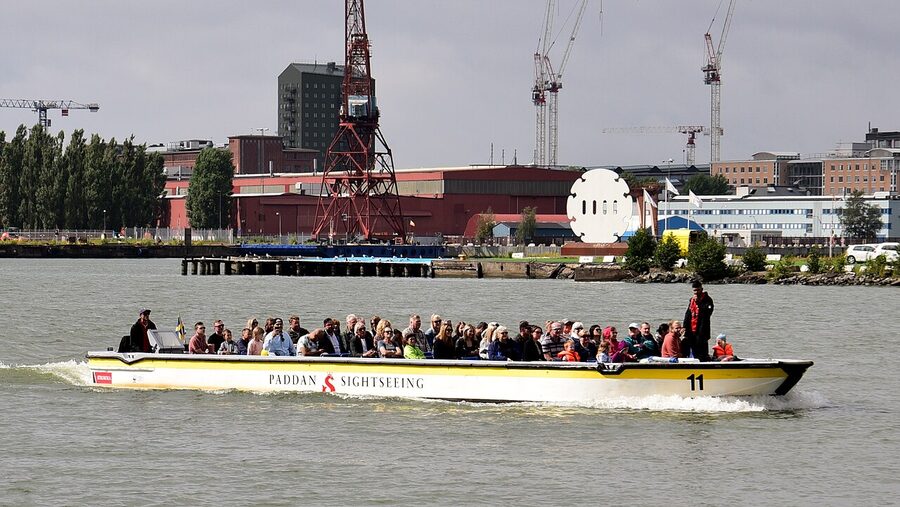
The boats and buses: The Paddan canal boat, the Hop-On Hop-Off bus, the Hop-On Hop-Off boat (separate from the canal cruise), the Gothenburg Archipelago day cruise to Vrångö, and a boat trip out to Vinga lighthouse. The boats are quietly the best-value redemptions per krona on a sunny day.
.jpg)
The smaller ones: Slottsskogen Adventure Golf, Bohus Fortress (a 30-minute bus ride out of town in Kungälv), the Röda Sten contemporary art bunker under the Älvsborg Bridge, and the Alfons Åberg children’s culture centre. These won’t anchor a pass day on their own, but they’re useful gap-fillers if the weather goes sideways.


What’s Specifically NOT Included (and Why It Matters)


This is where the Tripadvisor one-star reviews come from. People assume “all-inclusive” means everything in town, then arrive at the Liseberg gate and discover their pass is useless. So, plainly:
- Liseberg amusement park is NOT included. Single tickets run around 165 SEK for park entry plus a separate ride pass on top. Budget for it as a totally separate day.
- World of Volvo is NOT included. The newish brand experience near Lisebergsbanan opens in 2024 and isn’t a Go City partner. About 195 SEK on the door.
- The Gothenburg Eye / Gothenburg View observation deck is NOT included, despite being one of the most photographed views over the harbour.
- Public transport is NOT included. No tram, no city bus, no commuter ferry. The Hop-On Hop-Off tourist bus is included, but you can’t use the pass on a regular Västtrafik tram into town.


If you’ve come to Gothenburg specifically for Liseberg or Volvo, the pass becomes a bad deal fast. You’d be buying two tickets, one of which you barely use. In that case, just buy the things you want directly and skip the pass entirely.
How the Maths Actually Works
The trick with any duration-based pass is that the per-day cost drops fast as you go up in length, but only if you actually use each day. Here’s the structure as of writing:
- 1-day pass: around $47 adult / 469 SEK. Break-even point: roughly two paid attractions plus the bus.
- 2-day pass: around $59 / 599 SEK. Effective per-day cost ~$30. Break-even: any one big-ticket museum per day.
- 3-day pass: around $69 / 699 SEK. Effective per-day cost ~$23. The sweet-spot length for most readers.
- 5-day pass: around $89 / 899 SEK. Effective per-day cost ~$18. Only worth it if you’re staying a full week and prepared to commit.
Petra ended up buying the 2-day pass after our Friday-morning calculator session and used it hard on day one (Universeum, HoHo bus, Paddan, Maritiman) and gently on day two (Konstmuseet, archipelago boat). She broke even before lunch on day one and was about 200 SEK ahead by the end of day two. That’s a typical, not optimistic, result.

The Single Most Important Pass Rule
Activate at opening time, not later. The pass runs on continuous calendar days, not 24-hour blocks. Activate at 4pm and you’ve burned half a day before dinner. This is the single biggest mistake I see Go City buyers make, in any city, and it applies just as hard in Gothenburg.
The pass starts the moment you scan it on your first attraction. If you arrive in town at noon and decide to “save” the pass for tomorrow, that’s smart. If you arrive at noon and immediately scan in for a Paddan boat, your day-one window now ends at midnight, and you’ve effectively bought a half-day pass at the price of a full one.

The corollary: don’t activate on a Monday in winter. Half the smaller museums on the pass close on Mondays. You’ll be paying a full day’s pass to enter Universeum and the Maritiman, both of which are open Mondays, and not much else.
How to Actually Buy It
Three reseller routes lead to the same Go City product, so the question is mostly about who you trust with payment data and what currency you want to be charged in.
GetYourGuide is what we link to. The advantage: same Go City pass, slightly slicker checkout, automatic email delivery, and you can cancel up to 24 hours before activation. We have a long working relationship with GYG so support tends to be responsive if anything goes sideways.
Viator sells the same pass through a separate listing. Same coverage, often the same price. Useful if you’ve got Viator credit kicking around from another booking.
Gocity.com direct is the cheapest route in theory because there’s no reseller markup. In practice, the price difference is usually small or zero, and the GYG cancellation policy is more generous. We default to GYG for that reason.

A Practical 1-Day Pass Itinerary
If you’re buying the pass for a single day, this is the route I’d run. It clears the cost easily and leaves dinner free for somewhere not on the pass.
09:30, Maritiman. Open at 10am most of the year, but the Lilla Bommen waterfront is worth ten minutes of wandering before it does. Allow 90 minutes for the ships, the destroyer, and a quick poke around the submarine. 11:30, walk to the Hop-On Hop-Off bus stop at Lilla Bommen. Don’t take it back into town; take it OUT towards Liseberg, get off at Korsvägen, and walk to Universeum.

12:00 to 14:30, Universeum. This is the linchpin. Two and a half hours covers the rainforest, the aquarium, the Antarctic exhibit and the science floor. Don’t try to do all seven floors; you’ll burn out. 15:00, walk back to Korsvägen and pick up the Paddan boat. The boat departs from Kungsportsplatsen, but the HoHo bus will drop you within 5 minutes of the dock. The 50-minute Paddan loop is the most relaxing thing you’ll do all day.

16:30, Konstmuseet if you’ve still got energy. The art museum stays open until 18:00 most days, 20:00 on Wednesdays. By this point you’ve redeemed five things and the pass has paid for itself twice over.
A Multi-Day Pass Itinerary (the 2- or 3-Day Plan)

For the 2-day pass, repeat the day-one plan above on day one, then dedicate day two to the slower, further-afield options. The archipelago day cruise eats six hours but is genuinely brilliant in summer. Bohus Fortress in Kungälv is a 30-minute regional bus ride and a half-day round trip. The Hop-On Hop-Off boat (different from the canal Paddan) is the cheap way to see the Älvsborg side of the river.
For the 3-day pass, add a day three based on whatever you missed. The Röhsska design museum is a sleeper hit. The Gothenburg Museum of Art is worth a full afternoon if you skipped it on day one. If the weather collapses, Maritiman has a covered submarine that I’ve genuinely spent an hour in during a thunderstorm.

For the 5-day pass, you’re either travelling with kids who’ll want repeat Universeum trips, or you’re being optimistic about Gothenburg’s pace. Realistically, three days is plenty of pass for most travellers. The 5-day pass is best as a two-traveller value play where one of you wants to spread it across a slower week.
How the Pass Plays With the Hop-On Hop-Off Bus
This is the question I get asked second most often. The Hop-On Hop-Off bus is one of the most-redeemed line items on the pass, but it isn’t the only HoHo option in town. There’s the official City Sightseeing one, and a separate 24-hour ticket sold by a different operator at a slightly different stop list.

The pass covers the City Sightseeing Gothenburg Hop-On Hop-Off bus, which is the bigger of the two networks with about 14 stops. Our Hop-On Hop-Off bus guide covers the route in detail. If you redeem this on the pass on day one, you’ve effectively pulled $38 out of the $47 pass cost in one tap.
Things the Pass Skips That Are Worth Adding Anyway
The pass is a base layer, not a complete itinerary. A few things outside it that you should still factor into your Gothenburg planning:


The Amphibious Bus. Not on the pass and a different ticketing system, but one of the more memorable things you can do in Gothenburg. Our amphibious bus guide walks through the surreal moment when the bus drives down a ramp and floats. Worth doing on a non-pass day.
The archipelago ferry from Saltholmen. The Go City pass includes one specific archipelago cruise, but the cheaper option is a public Styrsö Bolaget ferry to Vrångö or Brännö, which costs the price of a single tram ticket and gives you four hours on a quiet island. We cover the difference in our archipelago cruise guide.
A guided Haga walk. Haga is the cobblestoned old district most pass holders walk through anyway. A guided tour of it is the kind of thing the pass doesn’t cover but absolutely should; we’ve broken down the operators in the Haga walking tour guide.

Comparing the Gothenburg Pass to Other European City Passes
If you’ve used a European city pass before, you’re already calibrated. If you haven’t, here’s how the Gothenburg one stacks up against three I’d consider its closest siblings.
Versus the Stockholm Pass: The Stockholm pass is the better deal because Vasa, Skansen and ABBA Museum are all unmissable and all on it. The Gothenburg one is a softer recommendation: there are fewer “you’d buy this anyway” anchor attractions. But Universeum + Hop-On bus is a strong enough anchor for most travellers.
Versus the I amsterdam City Card: Amsterdam’s card includes public transport, which the Gothenburg pass does not. That changes the maths. In Amsterdam, the pass starts paying back from the moment you tap onto a tram. In Gothenburg, you’re carrying a separate Västtrafik ticket alongside.
Versus the Lisbon Card: Lisbon’s card is the closest direct comparison. Both cover ~25 attractions plus key tours; both are most useful for travellers doing 3+ paid things per day. The Lisbon Card includes train transport to Sintra, which the Gothenburg pass has no direct equivalent for.
Versus the Copenhagen Card: Of all four, Copenhagen’s is the most generous because it includes all public transport AND the train to the airport. The Gothenburg pass is more attraction-focused. Different products, similar buyer.
Common Mistakes I See Pass Buyers Make
Five repeats, in rough order of frequency:
- Buying a 5-day pass for a 7-day trip. You’ll never use day five. A 3-day pass and two unstructured days is almost always the better split.
- Activating late on day one. See above. Activate at 9:30, not 14:00. Half-day activations are the single biggest cause of “I didn’t get value” complaints.
- Assuming Liseberg is on it. It isn’t. Repeat: it isn’t. Plan Liseberg as a separate day with a separate ticket.
- Trying to use it on a tram. The pass doesn’t cover Västtrafik. Buy a 24-hour or 72-hour Västtrafik day ticket separately on the V-app.
- Not booking advance reservations for the bigger redemptions. Universeum and the archipelago cruise both want you to book a time slot through Go City’s app, even with the pass. Don’t show up cold and hope.
Other Gothenburg Tickets and Tours Worth Booking
The pass is one buy of three or four you’ll probably make for a Gothenburg trip. The natural companions: a separate Amphibious Bus tour if you’ve got kids and want one big “wait, the bus is in the water now?” memory; an archipelago cruise on a non-pass day so you don’t waste pass time on a six-hour outing; and our Haga walking tour for the slow afternoon when you want a guide rather than a checklist. If you’re combining Gothenburg with Stockholm in the same trip, our Stockholm Hop-On Hop-Off guide and Vasa Museum tickets guide are the natural next reads.
Affiliate disclosure: some of the links in this article go to GetYourGuide and Viator. If you book through them, we earn a small commission at no extra cost to you. We only recommend tours we’d send a friend to, and we won’t link to a tour we wouldn’t.