
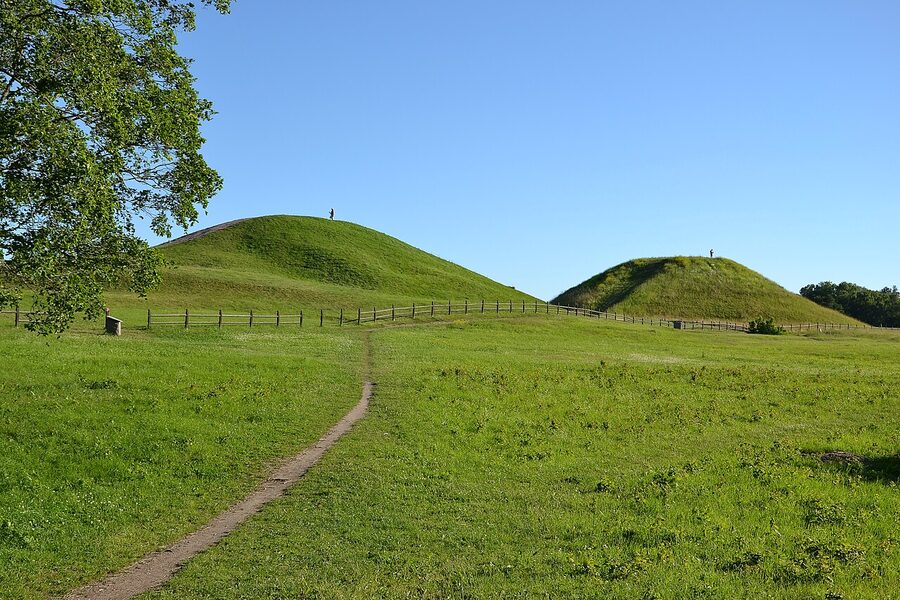
My friend Helena booked this trip on a whim. She’d been in Stockholm three days, was tired of museums, and wanted to see “actual countryside.” She came back at 7pm slightly windburned, slightly tipsy from a cardamom bun and coffee in Sigtuna, and said the moment that stuck with her wasn’t the cathedral or the rune stones. It was standing on top of one of the Old Uppsala burial mounds with the wind cutting across the grass, realising she was on top of a king.
That’s the strange thing about a Sigtuna and Uppsala day trip. The brochure language (“Viking heritage”, “9 hours”, “fika”) undersells what the day actually does to you. So this guide is the practical version: how to book it, what you’ll actually see, and which of the three tours that dominate the route is right for you.
Best small group: Uppsala & Sigtuna Viking Sites Tour, $235. Max 17 guests, fika at a working farm called Granby Fram.
Best price: Viking History & Swedish Countryside Tour, $274. Same itinerary, slightly different operator, often the easiest to grab last-minute.
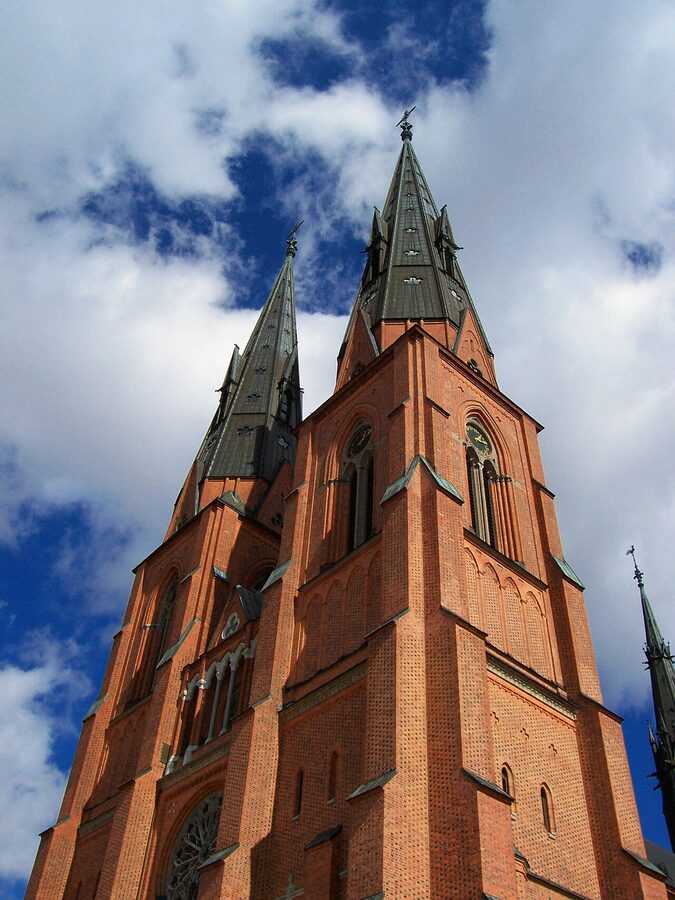
The Sigtuna and Uppsala combo works because the two towns do completely different things. Sigtuna is small, slow, and 1,000 years old. Uppsala is a working university city of 175,000 with a medieval cathedral, a hilltop castle, and the burial mounds of the kings who ruled Sweden before Sweden was Sweden. Together they fit a single day without feeling rushed.

- Why book the tour instead of doing it yourself
- The three tours that actually run this route
- 1. Viking History, Fika & Countryside 9h Tour: 8
- 2. Uppsala & Sigtuna Viking Sites Small Group Tour: 5
- 3. Viking History & Swedish Countryside Tour: 4
- What a typical day actually looks like
- Sigtuna: what to see and how long it takes
- Old Uppsala: the part most travellers don’t expect
- Uppsala centre: cathedral, university, castle, garden
- What you’ll actually eat (and where)
- Best time of year to do this trip
- How to book and what to watch for
- Is it worth doing if you’ve only got three days in Stockholm?
- Other Stockholm day-trip and ticket guides
Why book the tour instead of doing it yourself
You can absolutely DIY this trip. Train Stockholm Central to Märsta is 40 minutes, every 15 minutes, runs on the SL standard ticket. From Märsta, bus 570 or 575 drops you in Sigtuna in 20 minutes. Trains Märsta to Uppsala go every 30 minutes, take 20-30 minutes. Uppsala back to Stockholm is the easiest leg, direct trains every half hour, 40 minutes. Total cost: maybe 250 SEK if you’re sharp with the SL Reskassa.
So why pay for a tour? Three reasons.
First, the actual Viking content sits outside both towns. The Old Uppsala burial mounds (Kungshögarna) are 5km north of Uppsala centre. The runestones along the Sigtuna woods aren’t on Stora Gatan, they’re scattered across the surrounding parishes. Without a guide, you’re going to walk Stora Gatan, see the cathedral, and miss most of what makes this region historically interesting.
Second, the timing is brutal on public transport. Märsta connections are well-timed but not synced. If you miss one bus, you’re sitting at a suburban interchange for 30 minutes. Doing the full DIY route comfortably takes about 11 hours door-to-door. The 9-hour guided version actually delivers more content because nobody is staring at a bus stop timetable.
Third, the storytelling. Helena’s tour guide was a Swedish guy called Olaf who’d grown up on a farm 30 minutes from the burial mounds. The reason she ended up obsessed with the mounds is that he spent 20 minutes explaining how Viking-age rulers picked the highest visible point in the landscape so the burial dominated the eye-line of every farmer working the surrounding fields. That kind of context doesn’t come from a Wikipedia page on the bus.
.JPG)
The three tours that actually run this route
Almost every operator selling “Sigtuna and Uppsala” out of Stockholm runs essentially the same route in essentially the same order. Pick-up around 9am from a central Stockholm meeting point, 45 minutes to Sigtuna, 90 minutes there, 30-minute drive to either Old Uppsala or Uppsala centre, fika somewhere in the middle, return to Stockholm by 6pm. The differences are group size, vehicle quality, what’s included in the fika, and how the guide handles the historical content.
1. Viking History, Fika & Countryside 9h Tour: $298
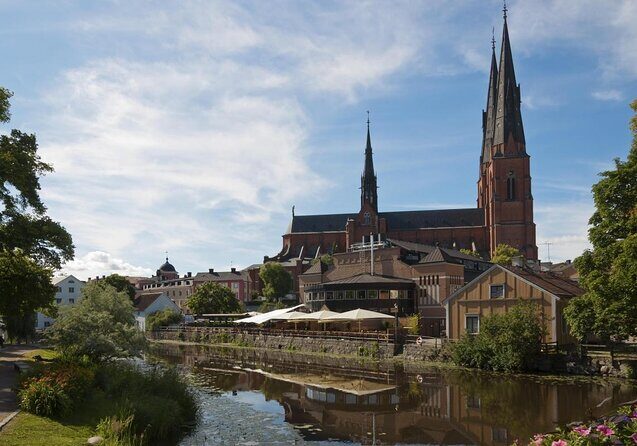
This is the default booking and the one Helena went on. Comfortable air-conditioned van, max 8 people, full nine hours, hotel pickup in central Stockholm. The two named guides who keep coming up in feedback are Olaf and Gabriel, both Swedish, both clearly into their material. Our full review of this Sigtuna and Uppsala tour covers the exact stops, the fika cafe, and the Old Uppsala route in detail. Book this one if you want the well-organised default and don’t mind paying for it.
Check Availability
Read our full review
2. Uppsala & Sigtuna Viking Sites Small Group Tour: $235
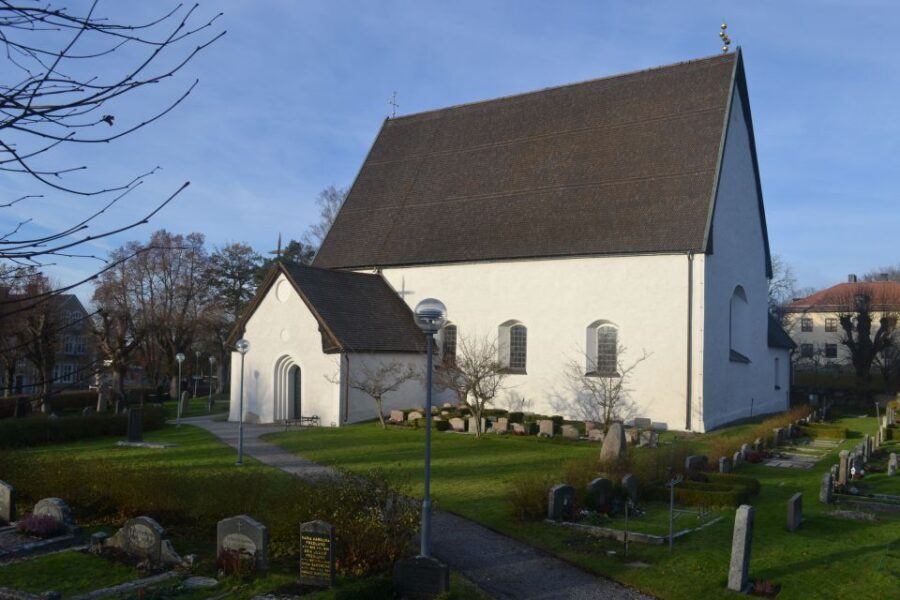
The cheapest of the three and the one I’d pick if I had to choose blind. Group size capped at 17, which is bigger than the Viator van but small enough that you can ask questions without feeling like a class. The fika happens at Granby Fram, a working farm rather than a cafe, which gives the morning a slightly different texture. The small-group Sigtuna and Uppsala tour review goes into the Granby Fram stop and the small-group dynamics. Book this one if you want the best price-to-experience ratio.
Check Availability
Read our full review
3. Viking History & Swedish Countryside Tour: $274
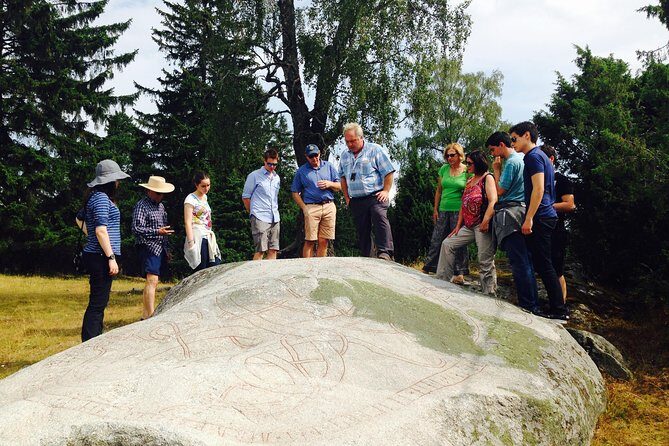
If the first option is sold out and you don’t want the small-group format, this is the next pick. Same nine hours, same Sigtuna-then-Uppsala route, comparable guide quality. The two recurring names in feedback for this one are Urban and Olof, who both seem to lean harder into the medieval-church side than the Viking-burial side. Our Viking History and Swedish Countryside review compares it directly with the headline Viator listing. Book this one as a backup or if you want a slightly more church-focused emphasis.
Check Availability
Read our full review
What a typical day actually looks like
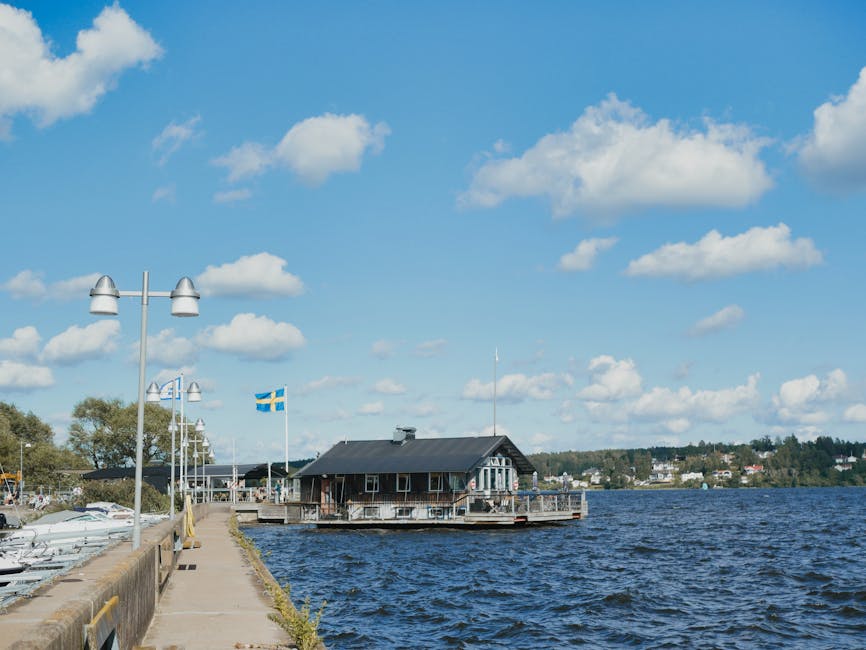
Pickup is between 8:30 and 9:00 from central Stockholm, usually a hotel or a meeting point near the Royal Palace. The drive north on the E4 takes about 45 minutes and skirts Lake Mälaren for most of it. If you’ve done the Stockholm archipelago boat tour or the classic Stockholm boat tour, you’ll recognise the same waterway.
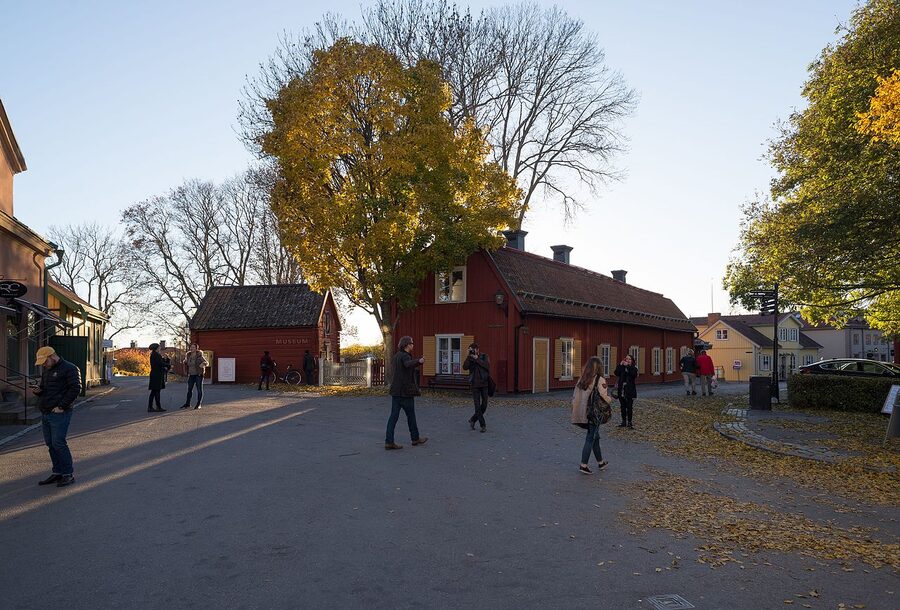
You arrive in Sigtuna around 9:45, park near the harbour, and the guide walks you straight up to Stora Gatan. The whole town is essentially one long historic street with side alleys, so you don’t need a map. Most tours give you 90 minutes here, which sounds short but is genuinely enough. Twenty minutes for the church ruins, twenty for Mariakyrkan, twenty for the museum if you go in, half an hour for fika.

Around 11:30 you’re back in the van, heading either to Gamla Uppsala (the burial mounds, 30 minutes north) or directly to Uppsala centre. The smarter operators do the mounds first while you’re still energised. The mounds need walking, not just looking, and they’re better in cool morning weather than warm afternoon sun.
Lunch is usually around 13:00, either packed by the operator or done independently in Uppsala. Most tours give you 60-75 minutes for lunch on your own, which is enough for a sit-down meal somewhere on Svartbäcksgatan. Try Saluhallen if it’s open, the food hall on Sankt Eriks Torg has decent Swedish lunches for 130-160 SEK.
Afternoons are Uppsala. Cathedral first (always), then either the castle, the botanical garden, or the riverside walk depending on weather and what the group wants. You’re back on the road by 16:30 and rolling into central Stockholm by 18:00.
Sigtuna: what to see and how long it takes
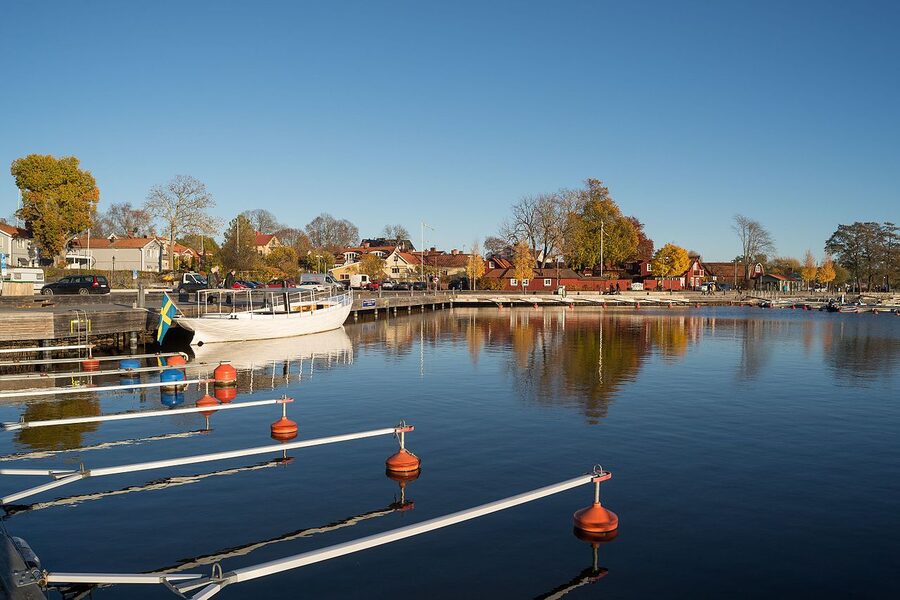

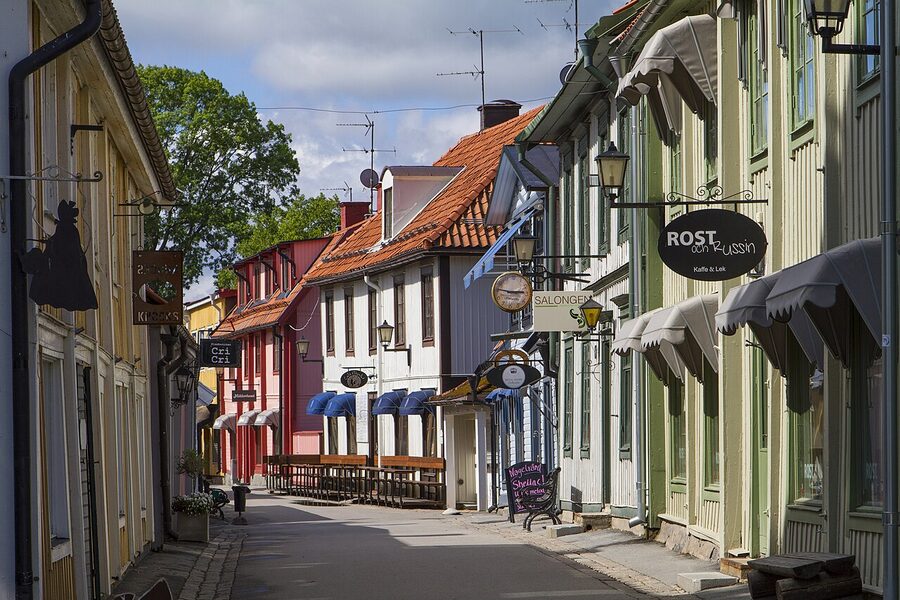
Sigtuna was founded around 970 AD, which makes it Sweden’s oldest town by any sane measure. The big draw isn’t a single landmark, it’s the texture of the place. You walk down a street that’s been a street for over a thousand years, past wooden houses painted in falu red and pale yellow, past a 13th-century church and the ruins of two more.
The four things actually worth your 90 minutes are these:
Stora Gatan itself. Walk it slowly, top to bottom, both sides. The buildings are 17th and 18th century, but the layout follows the original Viking-age plan. Look for the carved house numbers on the older properties.
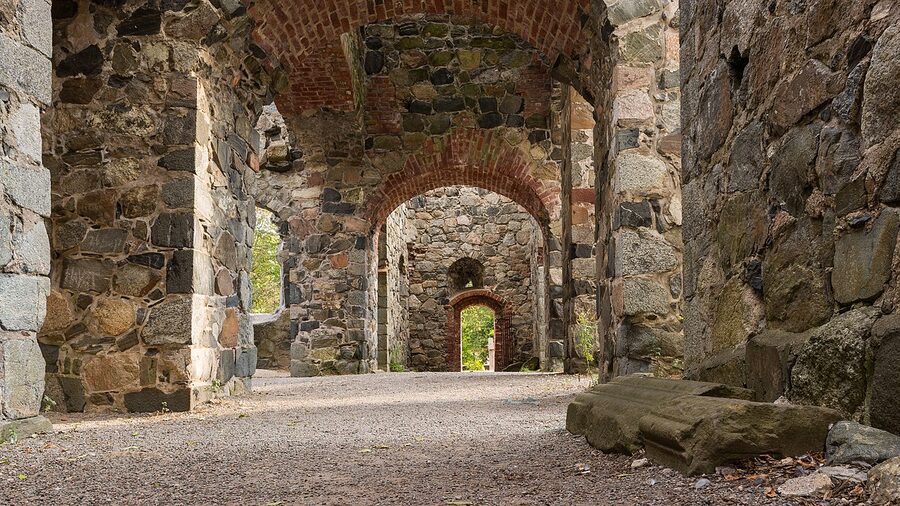
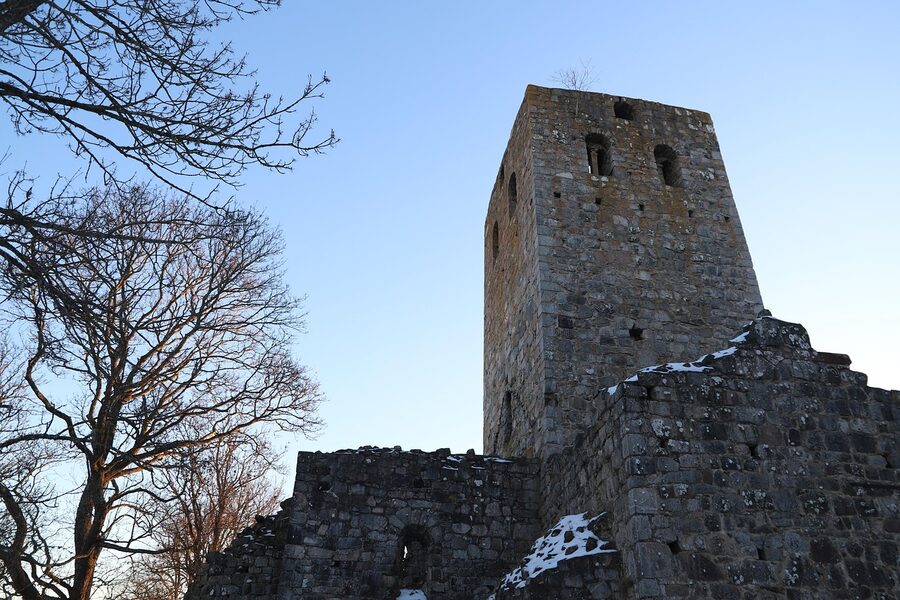
Sankt Olofs kyrkoruin. The St Olaf’s Church ruins. You can’t go inside (the structure is genuinely unstable in places) but the cemetery wraps around it and the back wall has the best angle for photos. If you came on a tour, the guide will spend ten minutes here on the church’s destruction by Estonian raiders in 1187.

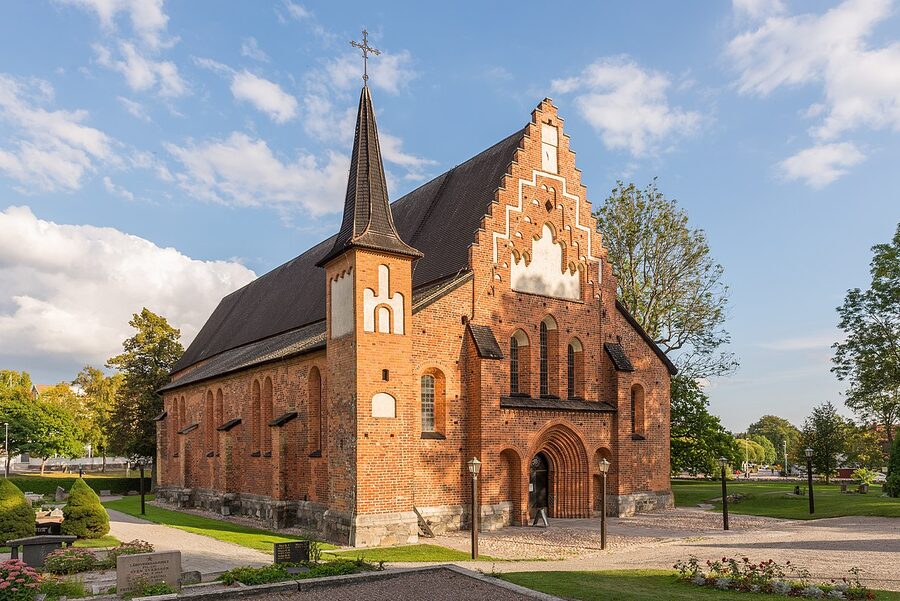
Mariakyrkan (St Mary’s Church). Built around 1240 by Dominican monks. This one is fully intact and still active as Sigtuna’s parish church. The brickwork is the headline, it’s one of the oldest surviving brick buildings in central Sweden. Inside, the medieval wall paintings on the north transept are worth ten minutes.

Fika at Tant Bruns. Tant Bruns Coffee House is the proper old-school option, in a wooden building from the 1700s with a low-beamed ceiling. The cardamom buns are baked in-house, the coffee is straightforward Swedish brew (not flat whites, not pour-overs, just hot strong filter coffee). Expect to pay around 75 SEK for a coffee and a bun. If Tant Bruns is full, Sigtuna Stads Hotell has a more refined option with a view over the lake.
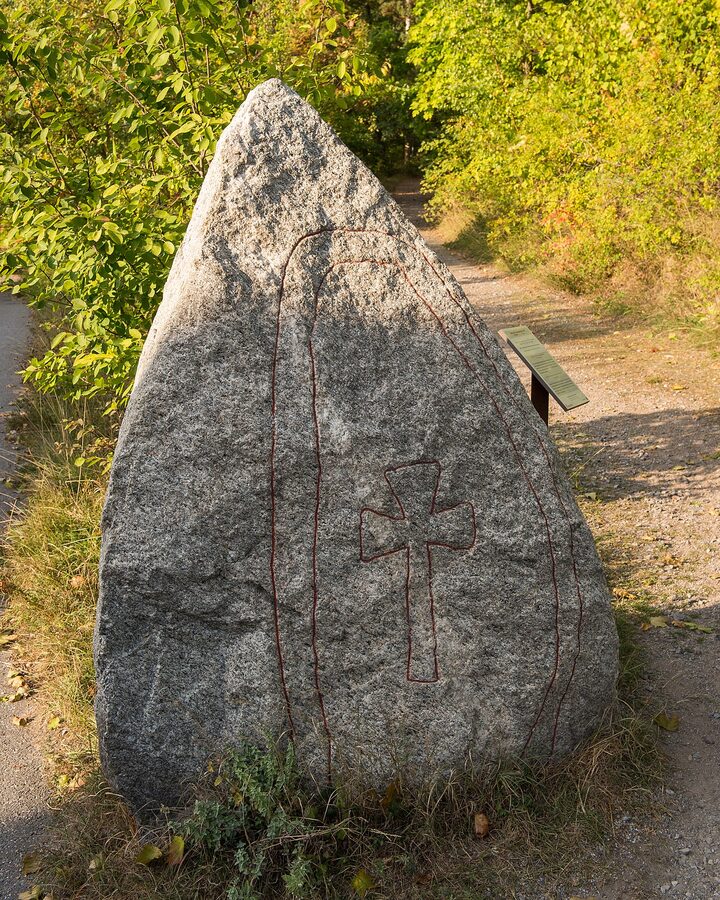
The runestone is a separate Viking-era highlight. There’s one near the Stora Gatan area, but the more dramatic ones (U379, U389) are scattered through the woods on the edge of town. If you came on a guided tour, the operator usually walks you out to at least one. If you DIY, ask at the Sigtuna Museum desk for the best route.

Old Uppsala: the part most travellers don’t expect
Gamla Uppsala (Old Uppsala) is 5km north of central Uppsala. It’s three giant grass-covered burial mounds, a small medieval church built directly on top of what was once a major pagan temple, and a museum that does a quiet but excellent job of explaining what was happening here in the 6th-11th centuries.
The mounds (Kungshögarna) are the headline. Three of them, each about 9-10 metres high and 60-70 metres across at the base, dating from around 550-600 AD. Excavations in the 1840s and 1870s found cremated remains and grave goods consistent with high-status burials, possibly the legendary kings Aun, Egil, and Adils mentioned in Old Norse sagas. Modern archaeologists won’t commit to who’s in there, but they will commit to “definitely royalty” and “definitely pre-Viking but spiritually central to the Vikings who came after.”
Walk the loop path that goes around the back of the mounds. The front view is the postcard, the back view is the one that does something to you. From up there you can see the whole landscape stretching east, the same flat fertile plain Viking-age farmers were working when the burials happened. That’s the moment Helena talked about.

The medieval church on the mound site (Gamla Uppsala kyrka) was built around 1100 AD on top of an older wooden temple. There’s a long debate about whether the wooden temple ever existed in the form Adam of Bremen described in 1070 (golden idols, human sacrifice, a sacred grove of hanged men), but most archaeologists now lean toward “yes, something major was definitely there.” The current stone church is small, atmospheric, and quietly worth ten minutes. Look for the runestone fragments built into the porch wall.
The museum (Gamla Uppsala museum, free entry on most guided tours, 100 SEK independently) is genuinely good. Twenty-five minutes is enough.
Uppsala centre: cathedral, university, castle, garden
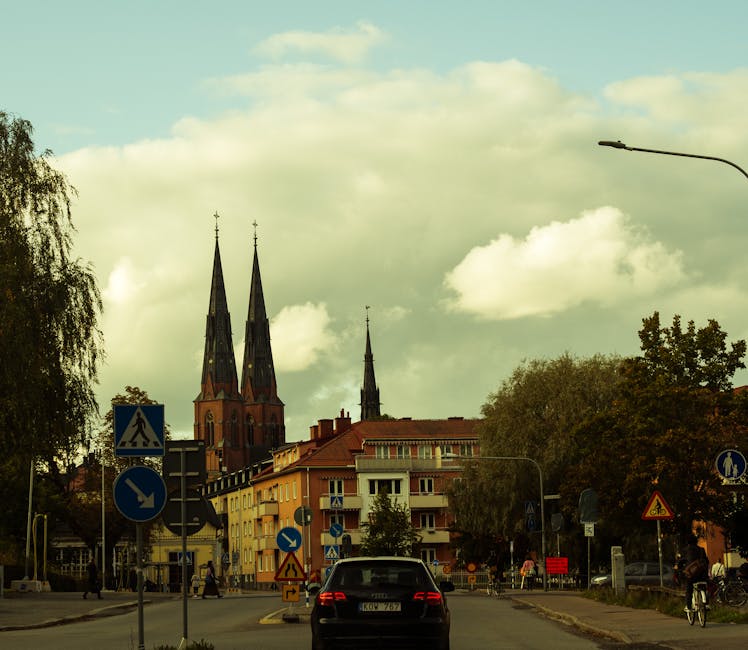
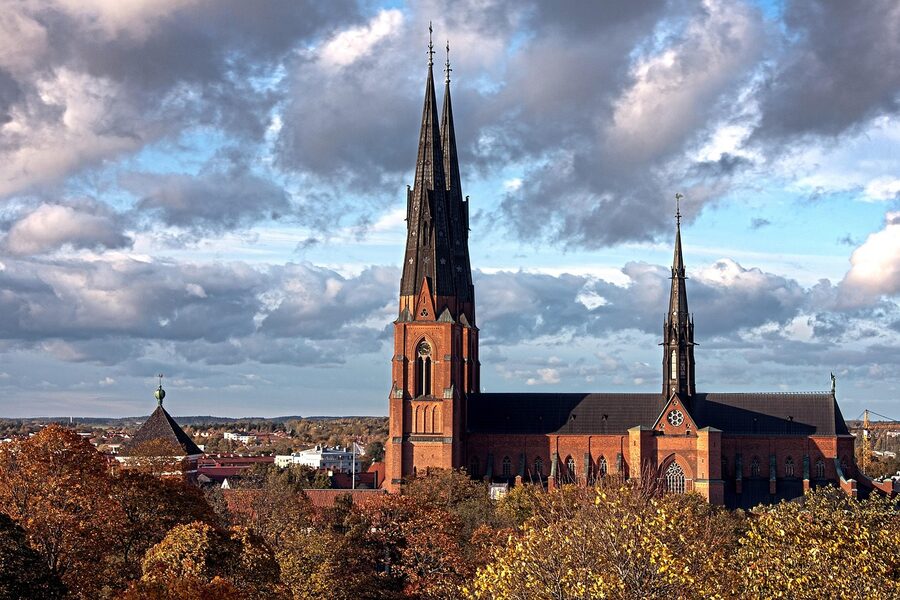
The Cathedral (Uppsala Domkyrka) is the largest church in the Nordics and the place where Swedish kings were traditionally crowned. The exterior is French High Gothic in red brick. The interior is bigger than you expect once you’re standing in the nave, with chapels along the north and south aisles and the tomb of King Gustav Vasa (who unified Sweden in 1523) in the choir. Free entry, open 8am-6pm most days. Photos allowed without flash.
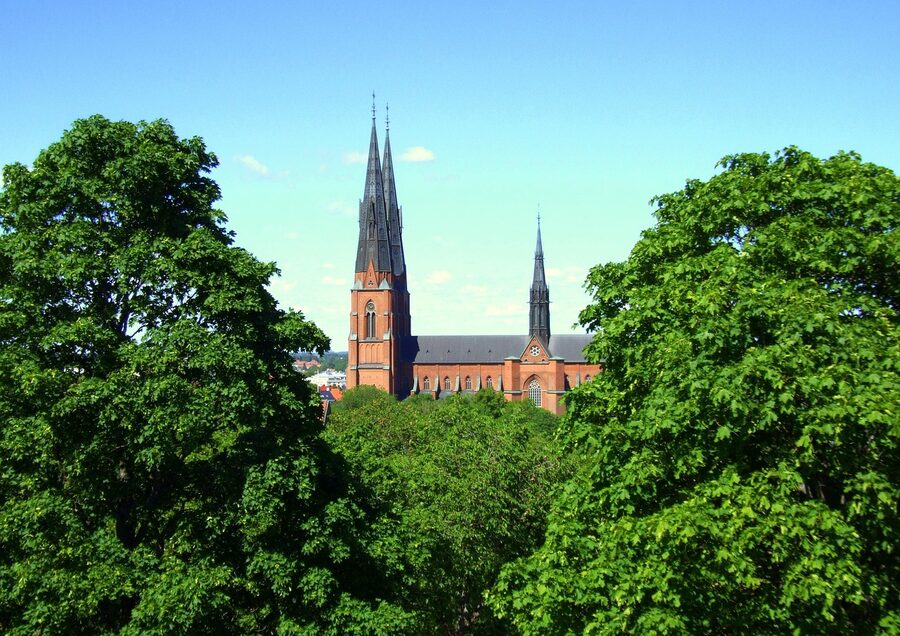
Don’t skip Gunilla’s Bell tower, which is the small detached belfry on the cathedral’s north side. You don’t need to climb anything, just walk around it. The bell hangs at ground level for inspection in summer and the carved date stone (1638) is still legible.
Uppsala University is right next door. Founded 1477, oldest university in the Nordics, currently around 50,000 students. The headline building is Carolina Rediviva, the main library, which holds the Codex Argenteus (the 6th-century silver-ink Bible written in Gothic, brought to Sweden as war loot in the 17th century). The library has a small public exhibition room where the Codex is on display behind glass. Free entry, open weekdays 9-6. This is a 20-minute stop, not an hour.
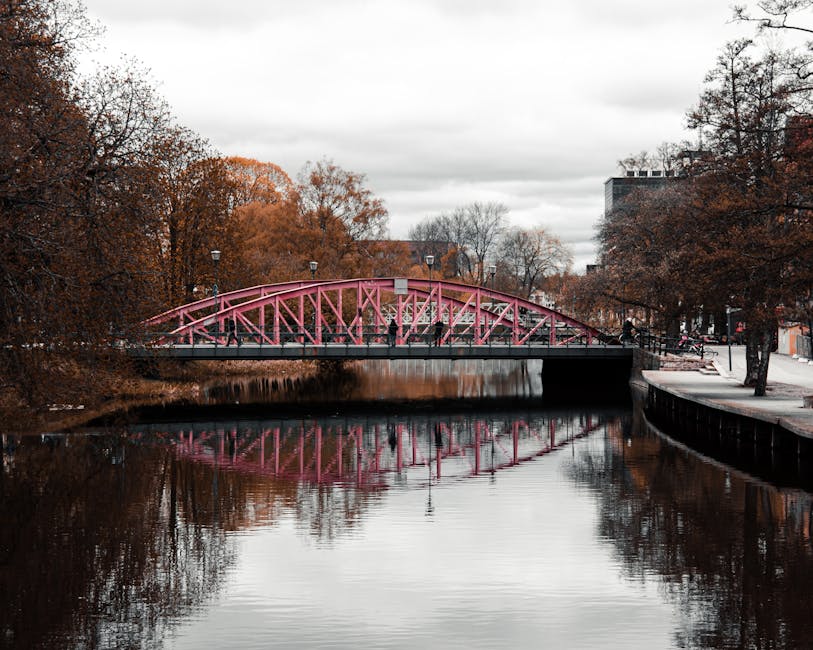
The botanical garden (Uppsala Botaniska Trädgården) is the part most people miss because it’s tucked behind the castle. Established by Olaus Rudbeck in 1655, restructured by Carl Linnaeus’s son in 1787, it’s the working teaching garden of the university’s botany department. The Linneanum building is the orange-yellow neoclassical structure on the south side. Free entry, open dawn to dusk. If it’s raining, the walk is still worth it.
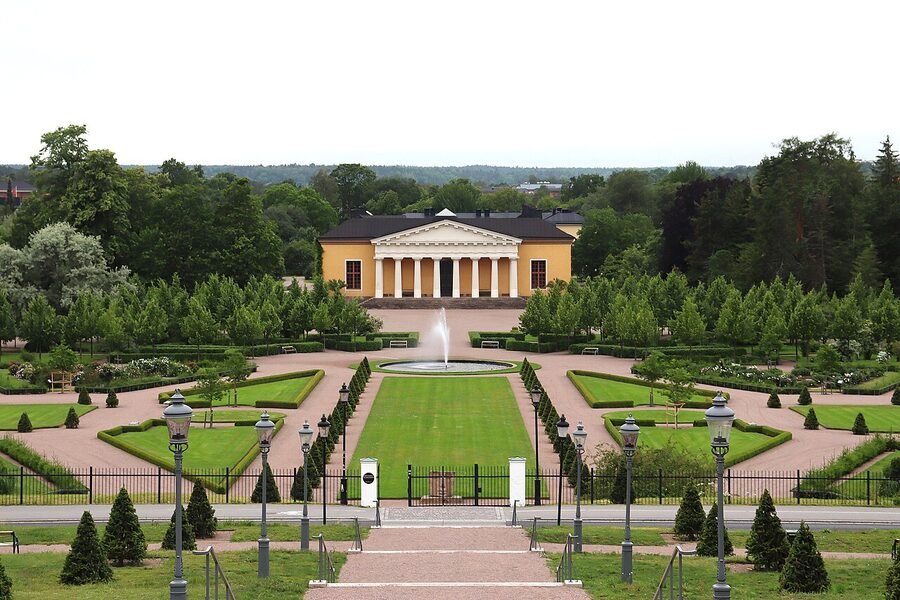

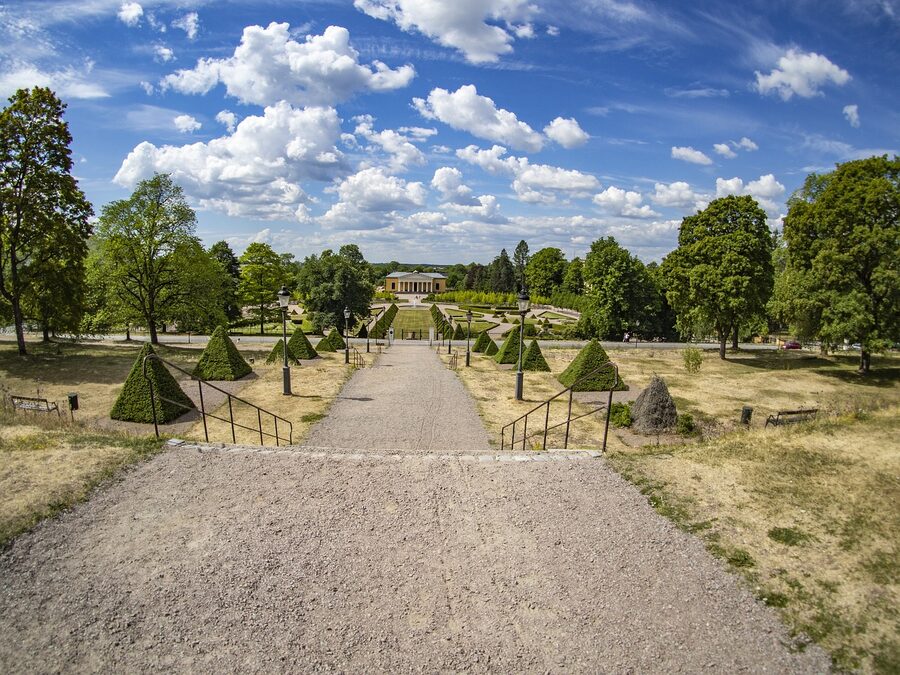
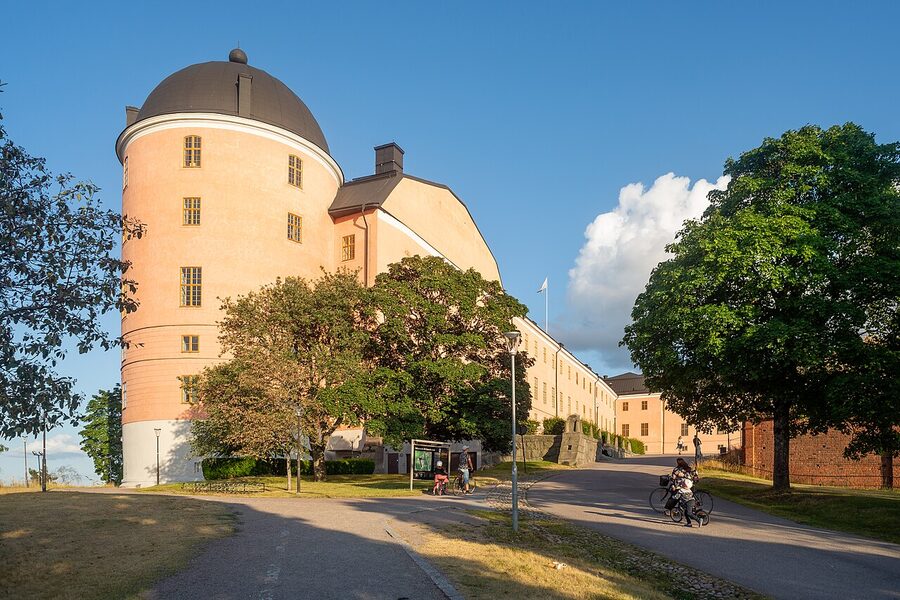
Uppsala Castle (Uppsala Slott) sits on the hill at the south end of the botanical garden. It’s 16th century, built by Gustav Vasa, painted that distinctive salmon pink. The castle now holds three museums (the Art Museum, the Castle Museum, and the Vasaborgen exhibition on the original 1500s structure). On a tight day-trip schedule you probably won’t have time to go inside, but walking around the castle exterior and looking back over Uppsala from the hilltop is worth 15 minutes regardless.

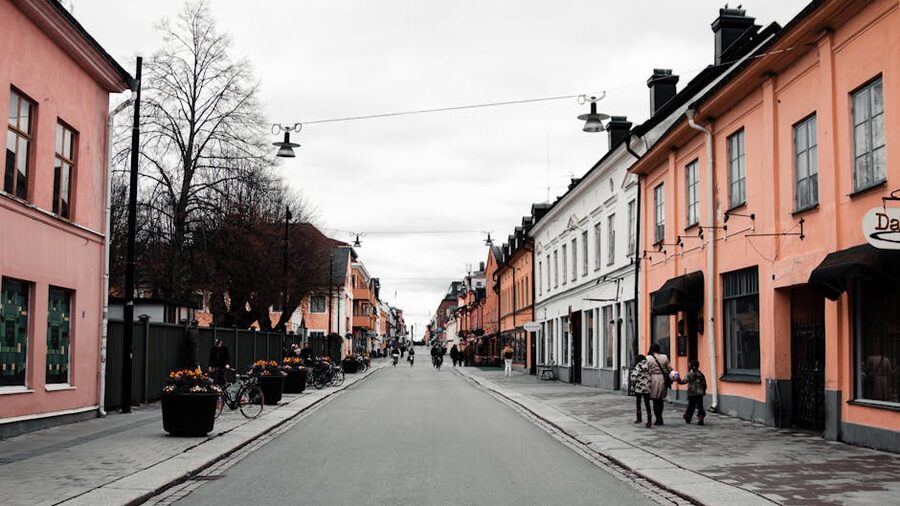
If you have any time left after the castle, walk down to the riverside (Svandammen, the swan pond at the foot of the castle hill) and follow the Fyris river path north to Svartbäcksgatan, the main pedestrian shopping street. Most independent visitors finish the day with a beer at Churchill Arms or a coffee at Café Linné before catching the train back to Stockholm.
What you’ll actually eat (and where)
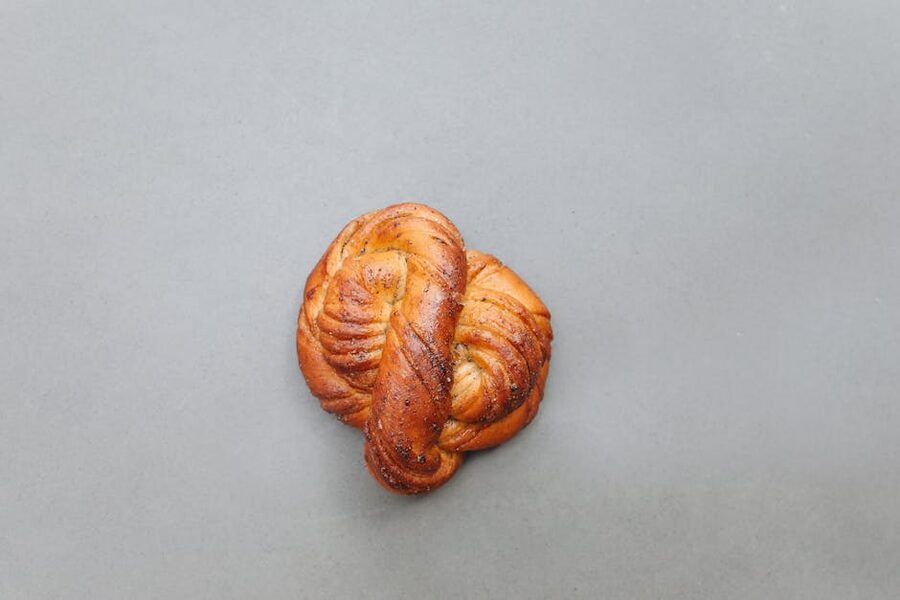
Fika is the unmissable food moment of the day, and it’s almost always built into the tour. The standard tour fika is a kanelbulle (cinnamon bun) or kardemummabulle (cardamom bun) with filter coffee, served either at Tant Bruns in Sigtuna or at Granby Fram (the working farm cafe used by the small-group tour). Both are excellent. Cardamom over cinnamon if you’ve never tried it.
Lunch is on you, in Uppsala, usually with 60-75 minutes free time. Three options that work on a day-trip schedule:
Saluhallen (Sankt Eriks Torg) is the central food hall. Open kitchen counters, sit-down sushi, Vietnamese, Swedish meatballs, soup. Lunch dishes 130-160 SEK. Fast service, English menus, easy.
Hambergs Fisk on Fyristorg is the upscale option if you want a proper sit-down meal. Lunch menu 195 SEK for two courses, fish-focused. You need to be quick because lunch service ends at 14:00.
If you just want to keep walking, the Espresso House on Kungsängsgatan does a perfectly acceptable salad-and-soup combo for under 130 SEK. Not exciting but reliable.
Avoid the cafes immediately around the cathedral. They’re set up for tour groups and price accordingly.
Best time of year to do this trip
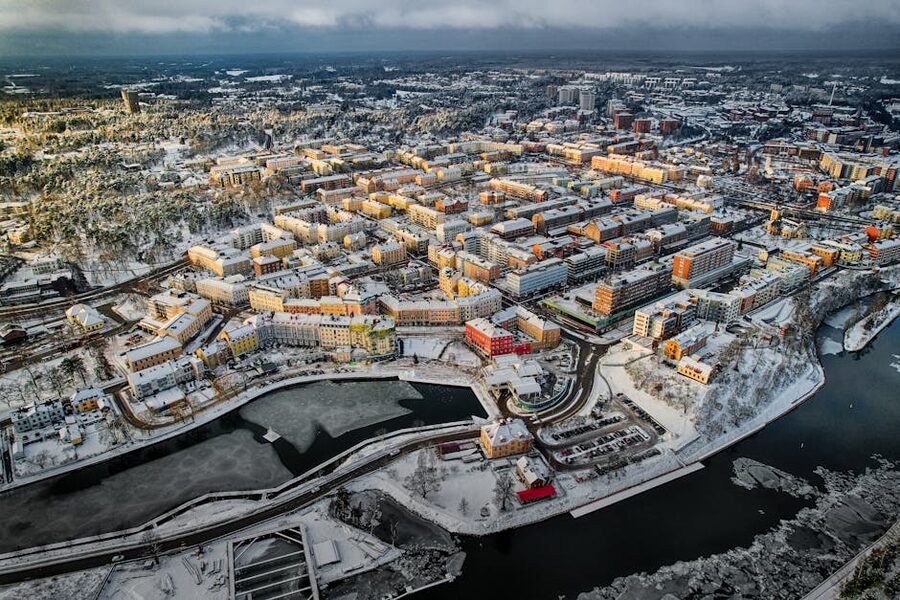
May through September is the prime window. Long daylight, cafes all open, gardens in bloom, mounds dry enough to walk comfortably. June and July are peak, with the longest light and the most crowded tour buses. The trade-off: prices are slightly higher and the small-group tours sell out two weeks in advance.
April and October are the underrated months. Cooler, quieter, autumn light is genuinely beautiful, and you can usually book a spot 48 hours ahead. October has the cathedral-with-yellow-trees photo most travel guides use as the cover shot.
November to March is winter Sweden. The tours still run (most operators don’t shut down) but several practical things change. Daylight is short, sunset is around 3pm in December and January. The mounds are walkable but slippery if there’s been snow. Tant Bruns sometimes shuts early. The upside is that the cathedrals look stunning in low winter sun and you get the genuine northern-Europe feel of the place.
Whatever month you pick, dress in layers. The Old Uppsala mounds are exposed, the wind off the plain is constant, and even on warm summer days you’ll want a windbreaker for the burial-site walk. Comfortable shoes for cobblestones in Sigtuna; the streets aren’t difficult but they’re not flat either.
How to book and what to watch for
All three tours above are bookable through their respective platforms. Viator and GetYourGuide both let you cancel free up to 24 hours before. Hotel pickup is included with the small-group GYG tour but optional (sometimes free, sometimes 100-200 SEK extra) on the Viator listings. Read the meeting-point details carefully when you book; the central Stockholm pickup point is usually a hotel near the central station, but it changes between operators.
Book at least three days ahead for May-September weekends and at least seven days ahead for July dates. Off-season (October-April), 48 hours is usually enough.
One thing nobody mentions: the Uppsala Cathedral organ is sometimes being tuned during morning practice (Wednesdays and Fridays usually). If your tour gets you to the cathedral around 11am on those days, you might walk in to live organ music for free. Worth knowing if your operator runs that schedule.
Is it worth doing if you’ve only got three days in Stockholm?
If it’s your first time in Stockholm and you’ve only got 72 hours, probably not. You’re better off using day three for the Stockholm archipelago, the Vasa Museum, or the Skansen open-air museum. Stockholm has enough that a short trip should focus on Stockholm.
If you’ve got four or more days, this trip earns its slot. It’s the obvious second-week add-on, and it does something Stockholm doesn’t, which is give you the deep-history Swedish countryside in a single day without renting a car.
Helena, who has now told this story to about thirty different people, summarised it as “the day I realised Sweden is older than I thought it was.” Which is not a sentence the brochure would write.
Other Stockholm day-trip and ticket guides
If you’re piecing together a longer Stockholm itinerary, the obvious siblings to this trip are the other museum and ticket guides we’ve published recently. If your Sweden trip continues to Malmö, the Disgusting Food Museum tickets guide covers an entirely different niche-museum experience down south. The Viking Museum tickets guide on Djurgården pairs incredibly well with this Sigtuna-Uppsala trip; do the Viking Museum the day before so you arrive at the Old Uppsala mounds already primed on the saga material. And if wildlife is more your speed than rune stones, the Moose Safari from Stockholm guide covers the Tiveden National Park option, also a full-day countryside trip but with a totally different mood.
For the wider Stockholm picture, the Stockholm Pass guide is worth a read if you’re stacking three or more attraction tickets. The Stockholm walking tour guide and the food tour guide are both better choices than another bus tour if you’ve already done the hop-on hop-off. And if you’re chasing northern lights afterwards, the Kiruna Northern Lights tour guide gets you 1,200km north into Lapland for the same Viking-history-meets-deep-Sweden feel, just at -20°C with aurora overhead instead of grass mounds in sunshine.
Affiliate disclosure: some links in this guide go to Viator and GetYourGuide. If you book through them, we earn a small commission at no extra cost to you. We only recommend tours we’d actually book ourselves.