
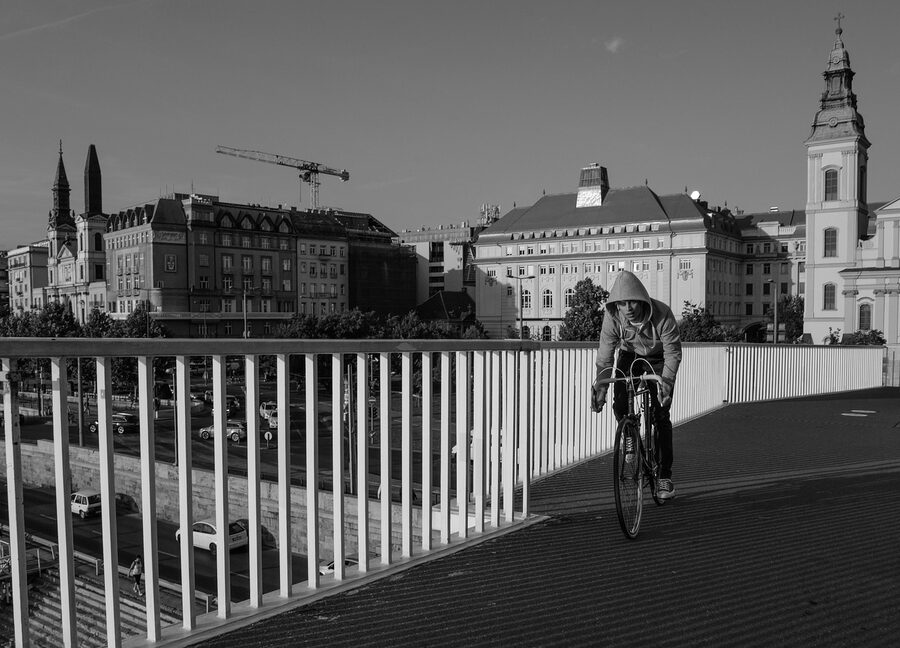
There is a stretch of bike lane that runs along the Pest side of the Danube where you can see the whole Buda skyline — Castle Hill, the Fisherman’s Bastion turrets, Matthias Church spire — and nobody is honking at you or trying to sell you a river cruise ticket. Just you, the bike, the river, and one of the best city views in Europe rolling past at ten kilometers an hour.
That is why bike tours in Budapest work so well. The city is surprisingly flat on the Pest side, the distances between major landmarks are short enough to cover on two wheels, and the dedicated cycling paths along the Danube are genuinely good — not “good for Eastern Europe” good, but properly maintained and separated from traffic. You cross the Chain Bridge, climb a little into the Castle District, coast back down, and you have seen more of the city in three hours than most walking tours cover in four.
Booking one is straightforward, but there are enough options to make it confusing. Standard bike tours, e-bike tours, food-and-bike combos, even monster roller tours (basically oversized scooters with fat tires). I have sorted through the main options so you do not have to spend an hour comparing listings.
Best overall: Grand Sightseeing Bike Tour — $44. Three hours covering both Buda and Pest with a local guide who actually knows the backstreets. The most complete option.
Best for beginners: City Discovery Bike Tour — $38. Two and a half hours at a relaxed pace. Good bikes, friendly guides, flat route through the highlights.
Best for comfort: Downtown Electric Bike Tour — $63. Three and a half hours on an e-bike means Buda’s hills feel like nothing. Worth it if you do not cycle regularly.
- What Budapest Bike Tours Actually Cover
- The Best Budapest Bike Tours to Book
- 1. Budapest Grand Sightseeing Bike Tour
- 2. Budapest Guided City Discovery Bike Tour
- 3. Budapest Downtown Electric Bike Tour
- Standard Bike vs. E-Bike: Which One?
- When to Book a Budapest Bike Tour
- Practical Stuff Nobody Mentions
- Beyond the Bike: What Else to Do in Budapest
What Budapest Bike Tours Actually Cover
Most bike tours in Budapest follow a similar loop, and for good reason — the major landmarks are clustered along both sides of the Danube within a few kilometers of each other. A typical three-hour tour covers:
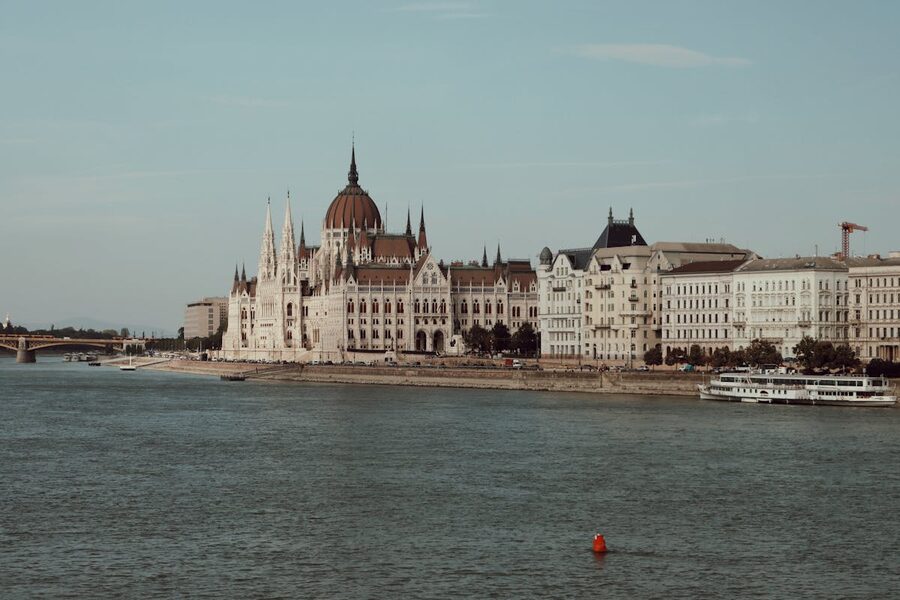
The Pest side: Heroes’ Square, Andrassy Avenue (Budapest’s answer to the Champs-Elysees, except with better coffee shops), the Parliament building, the Shoes on the Danube memorial, and St. Stephen’s Basilica. The riding here is dead flat and mostly on dedicated bike lanes.
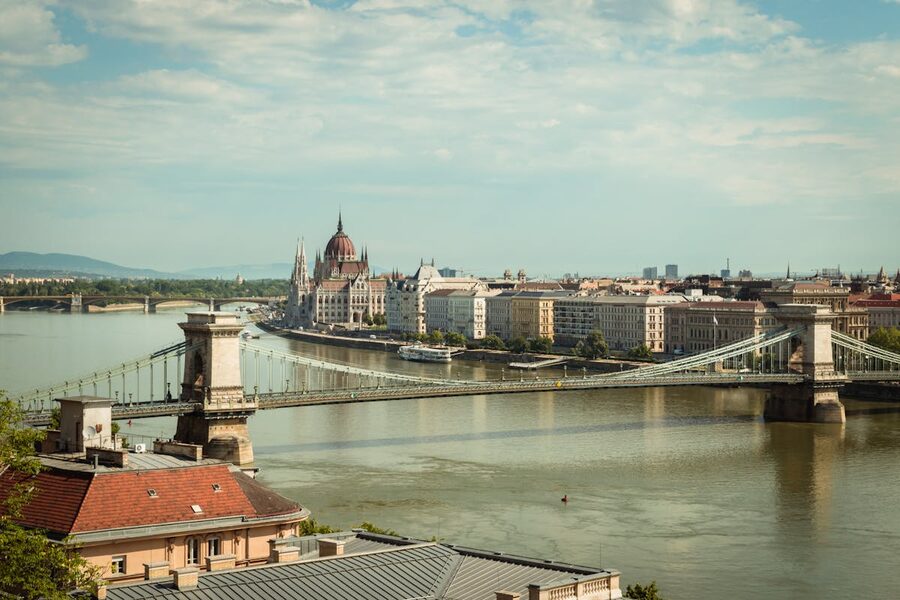
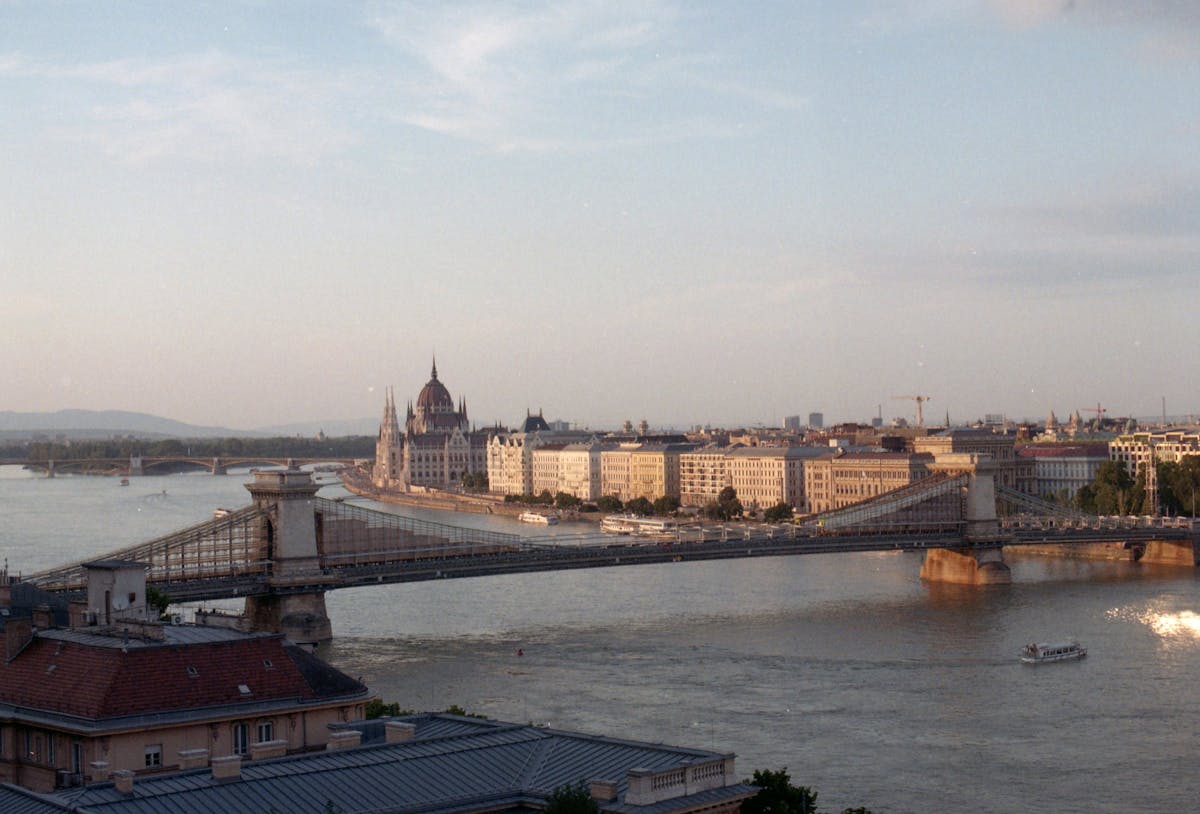
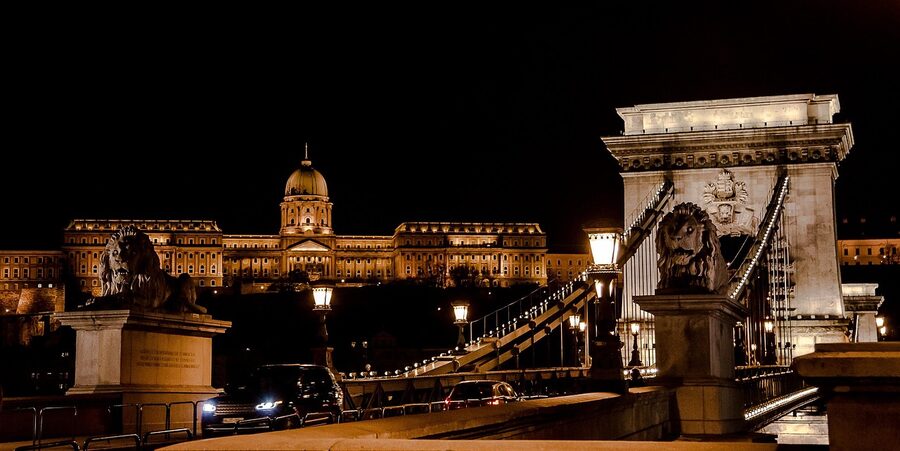
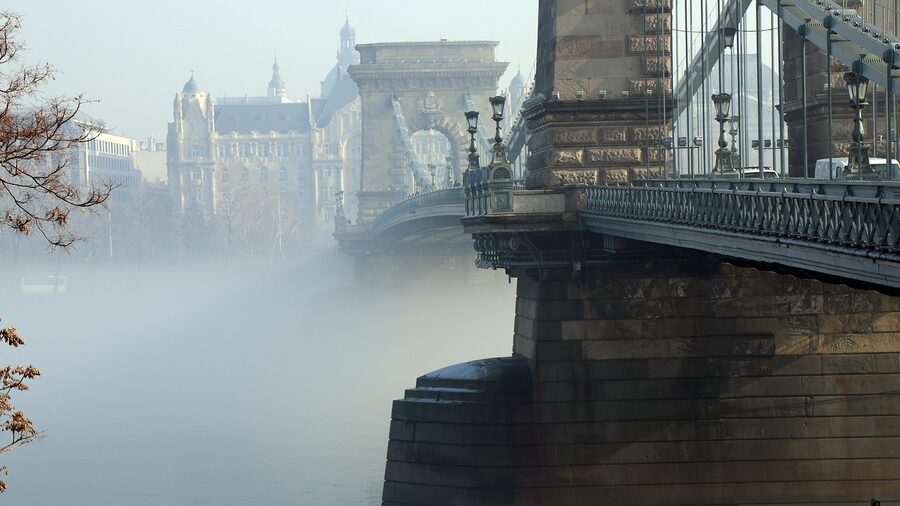
The bridge crossing: Almost every tour crosses the Chain Bridge or Margaret Bridge. The Chain Bridge is the iconic one — stone lions at each end, panoramic views in both directions, and a bike lane that is mercifully separated from the bus traffic.
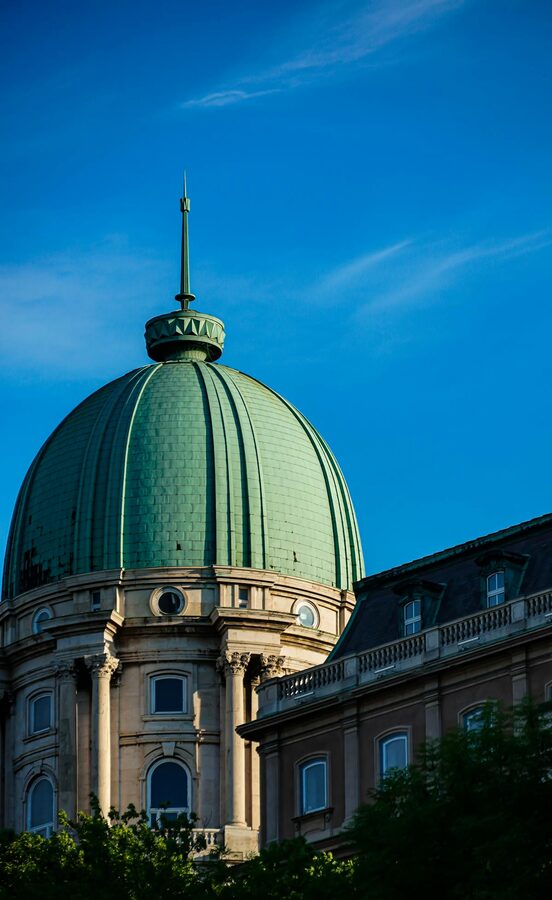
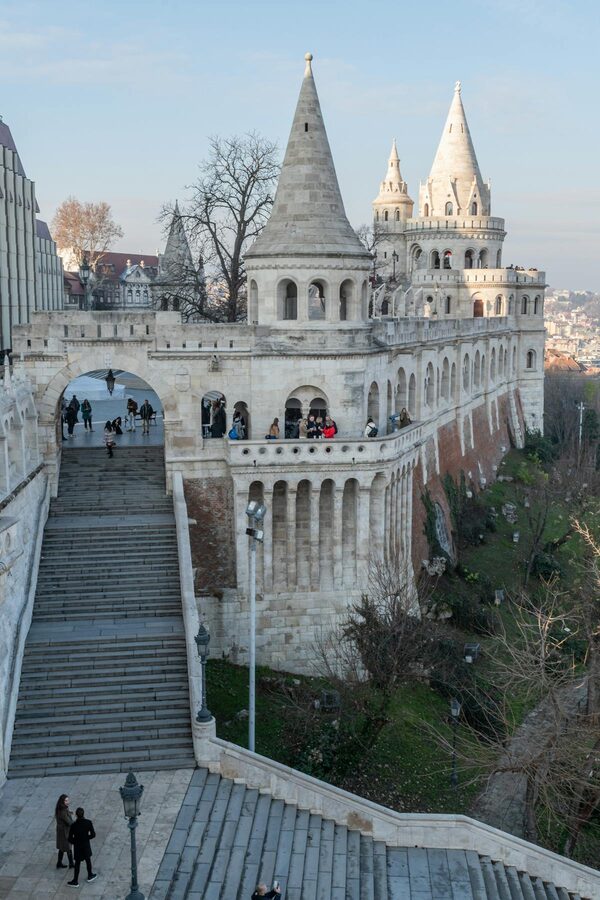
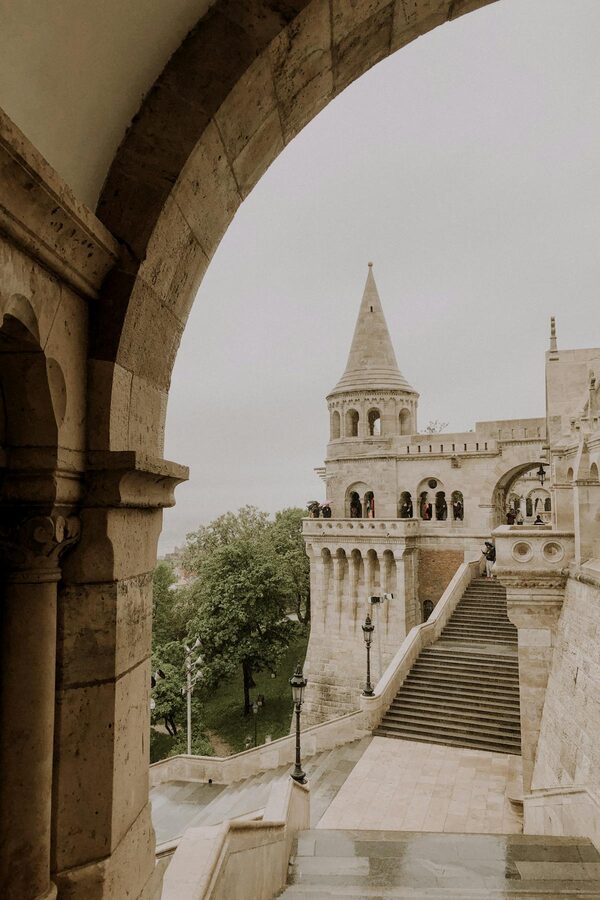
The Buda side: Castle Hill, Fisherman’s Bastion, Matthias Church, and the lookout points above the river. This is the only section with any real elevation, and even that is manageable. E-bike tours make it feel like nothing.
The total distance is usually 10-15 kilometers, which sounds like a lot but at a leisurely touring pace with frequent stops, it does not feel like exercise. You spend more time off the bike taking photos and listening to the guide than actually pedaling.
The Best Budapest Bike Tours to Book
I pulled these from our database of tour reviews. These are the most booked and highest-rated cycling tours in Budapest, and each one covers a slightly different angle on the city.
1. Budapest Grand Sightseeing Bike Tour
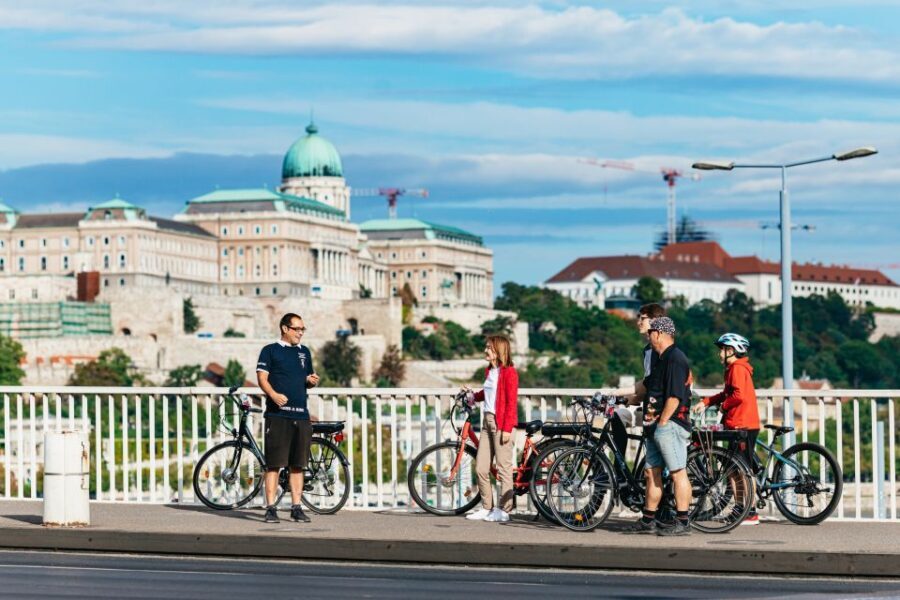
Three hours, both sides of the river, and a guide who goes beyond the Wikipedia version of Budapest history. This is the most thorough bike tour available — you cross the Chain Bridge, ride up to Buda Castle, loop through the Castle District, then come back to Pest for the Parliament, Basilica, and the Jewish Quarter.
The bikes are well-maintained city bikes with gears (important for the Buda hills), and the group sizes stay small enough that you can actually hear the guide. The pace is relaxed — this is not a cycling workout, it is a sightseeing tour that happens to be on bikes.
Price: $44 per person | Duration: 3 hours
2. Budapest Guided City Discovery Bike Tour
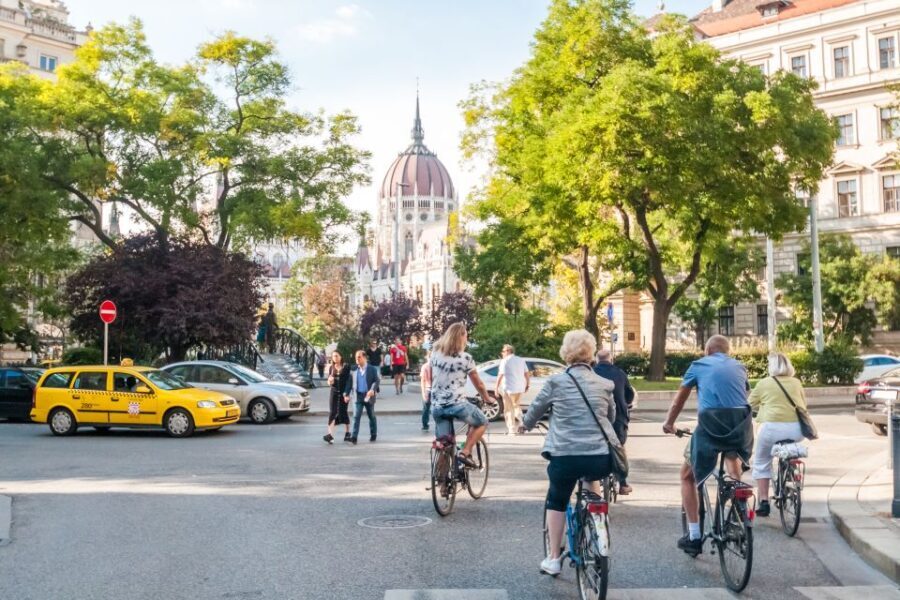
A half-day tour that covers the main highlights at a pace that works for everyone from casual cyclists to people who have not been on a bike in years. The route hits Parliament, the Chain Bridge, the Castle District, and several spots along the Danube embankment.
What makes this one stand out is the guide interaction — they stop at local cafes, point out details you would never notice on your own (like the bullet holes still visible on some Pest buildings from 1956), and adjust the route based on what the group is interested in.
Price: $38 per person | Duration: 2.5 hours
3. Budapest Downtown Electric Bike Tour
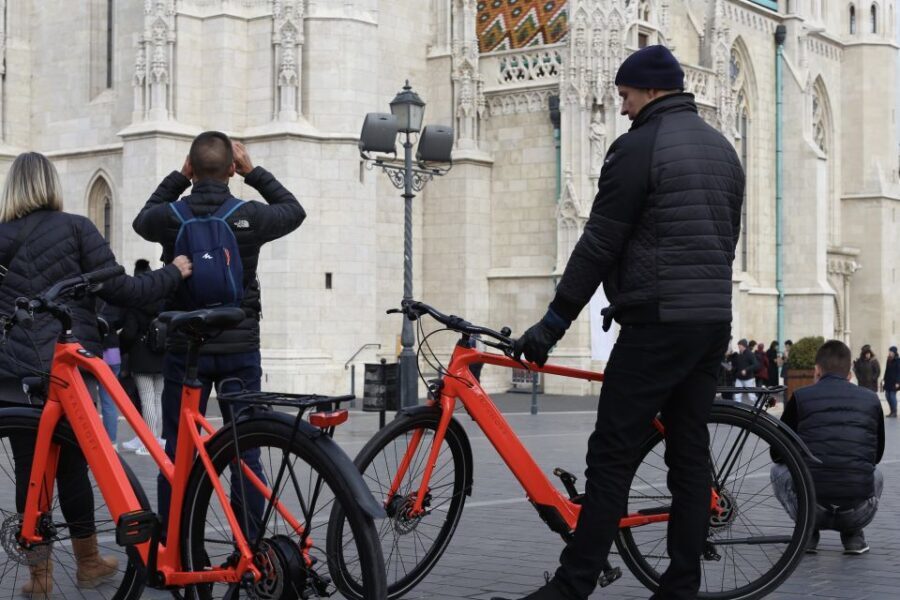
Three and a half hours on an electric bike, which means you cover more ground with less effort. The e-bikes make the Buda hills feel like a gentle incline rather than a workout, and the extended duration means the guide can include Margaret Island and the less-visited sections of the riverbank that regular bike tours skip.
This costs more than the standard tours, but if you are not a regular cyclist — or if you are visiting in July and August when Budapest turns into a furnace — the electric assist is worth every extra dollar. You arrive at each landmark fresh instead of sweaty.
Price: $63 per person | Duration: 3.5 hours
Standard Bike vs. E-Bike: Which One?
This comes down to one question: how do you feel about the Buda hills?
Budapest’s Pest side is flat. Completely, boringly flat. You could ride all day along the Danube promenade without breaking a sweat. But crossing to Buda means climbing Castle Hill, and while it is not the Tour de France, it is a proper incline that will have casual cyclists breathing hard by the top.
On a standard bike, the hill takes about five to eight minutes of steady pedaling. It is doable for anyone in reasonable shape, and most guides pace it slowly with a rest stop halfway up. If you cycle even occasionally at home, you will be fine.
On an e-bike, the hill barely registers. You pedal, the motor assists, and you arrive at the top wondering what the fuss was about. The downside is cost — e-bike tours run $20-30 more than standard tours, and the bikes are heavier to handle in tight spaces around the Castle District.
My take: if you are under 50, cycle sometimes, and it is not the height of summer, save the money and take a standard bike tour. If you are older, not a regular cyclist, or visiting in July-August when temperatures hit 35 degrees, the e-bike is a smart call.
When to Book a Budapest Bike Tour
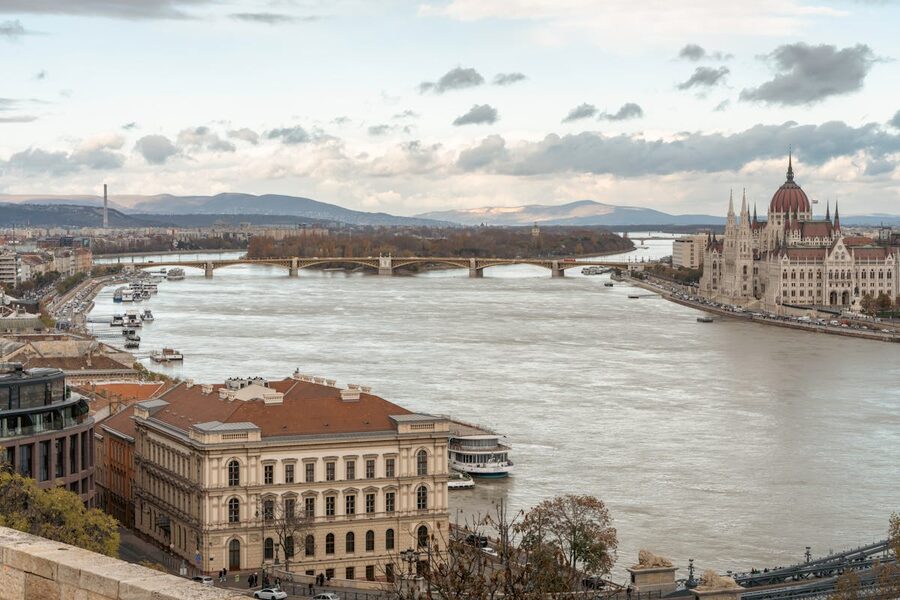
Best months: April through October, with September and October being the sweet spot. The heat has broken, the autumn light is gorgeous, and the summer tourist crush has eased up.
Avoid: Mid-July through mid-August unless you enjoy cycling in 35-degree heat. The tours still run, but you will be stopping for water every ten minutes and the Parliament viewpoint becomes more about shade than scenery.
Morning vs. afternoon: Morning tours (starting 10am) are best for photos — the light hits the Parliament perfectly from the Buda side. Afternoon tours (starting 2-3pm) are better if you want to end near the ruin bars for a post-ride drink.
Booking lead time: Most tours have daily departures and availability is rarely an issue outside of peak summer weekends. Booking 1-2 days ahead is enough. Same-day booking often works for the larger tour operators.
Practical Stuff Nobody Mentions
What to wear: Comfortable clothes, closed-toe shoes (not sandals — the cobblestones in the Castle District will destroy your feet), and sunscreen. Helmets are provided but not mandatory for adults in Hungary. I would wear one anyway.
Bags and cameras: Most bikes have a small front basket. Bring a crossbody bag or backpack — you will want your hands free. A phone with a lanyard works better than a camera for the frequent stops.
Fitness level required: Low. If you can ride a bike at all, you can do these tours. The pace is slow, the stops are frequent, and the distances are short. The only challenge is the Buda hill section, and even that is brief.
Meeting points: Most tours depart from the Pest side, usually near Deak Ferenc Square or Vorosmarty Square in the city center. These are both major metro stops, so getting there is straightforward.
Cancellation: Most operators offer free cancellation up to 24 hours before. Weather cancellations (heavy rain) are usually rescheduled for free. Light rain usually means the tour goes ahead — bring a light jacket if the forecast looks iffy.
Beyond the Bike: What Else to Do in Budapest
A bike tour covers the outdoor sights perfectly, but Budapest has layers that work better explored on foot or from the water. After your ride, there are several things that pair well with the cycling experience.
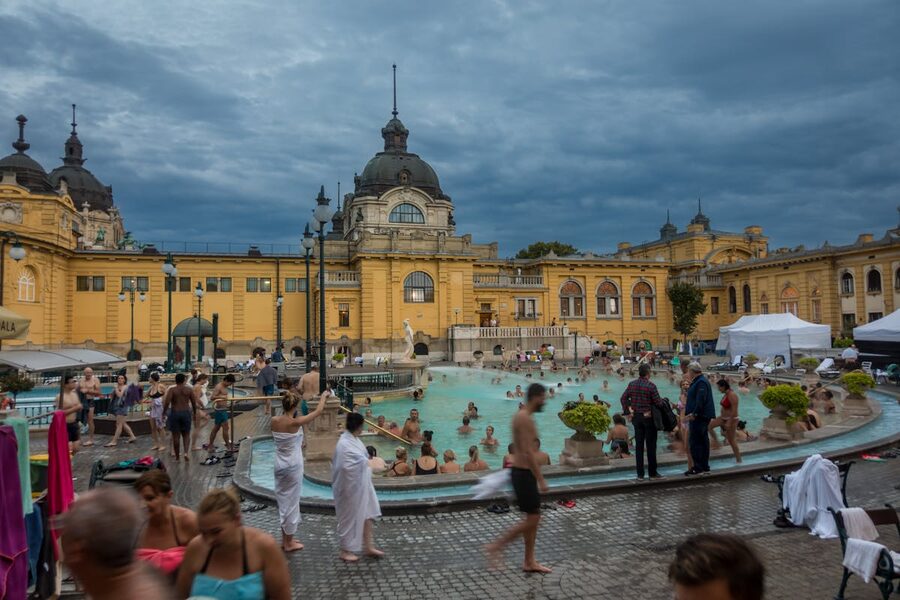
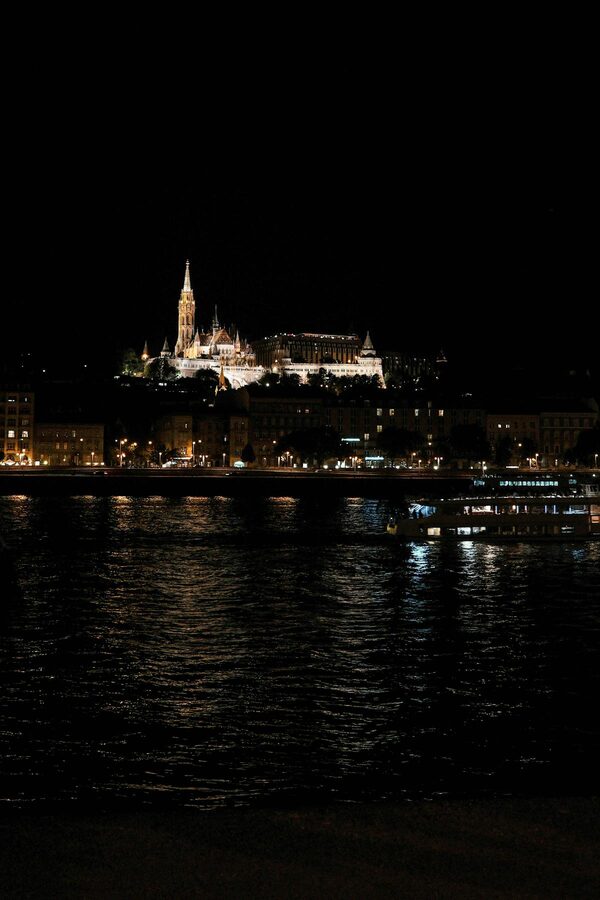
The Danube evening cruises give you the same landmarks from water level, and seeing them lit up at night after cycling past them during the day is a completely different experience. The Szechenyi thermal baths are the best possible recovery after a bike tour — hot mineral water soaking into tired legs while steam rises around a neo-Baroque palace. And if the Castle District grabbed your attention during the ride, the Buda Castle museums deserve a proper visit on foot, without the time pressure of a guided tour.
The Hungarian Parliament is one of those buildings that looks imposing from the bike but reveals its real drama on the inside. The guided tours take you through the ceremonial staircase and the old House of Lords chamber, both dripping in gold leaf and stained glass. Book a morning slot for the day after your ride while you still remember how the building looked from the Danube embankment.
St. Stephen’s Basilica is another landmark you will pedal past on most tours, and the interior is worth going back for. The dome observation deck at 65 meters gives you a 360-degree view that puts the whole bike route into context — you can trace your path along both banks of the river from up there.
Budapest is one of those cities where each experience makes the next one better. The bike tour gives you the lay of the land, the mental map that turns a foreign city into somewhere you can navigate. Everything you do after that — the baths, the cruises, the ruin bars, the goulash — slots into a framework you already understand because you have cycled past all of it.
This article contains affiliate links. When you book through these links, we may earn a small commission at no extra cost to you. This helps us keep producing free travel guides.