
The funicular was broken when I visited. Just stopped running, no explanation, no sign, nothing. I stood at the bottom of Castle Hill with a printed-out ticket in my hand like it was 1997, staring up at a slope that suddenly looked a lot steeper than it did in the photos.
I walked up. Everyone walks up eventually. And honestly, the climb turned out to be the best part of arriving at Buda Castle, because you pass through the kind of quiet residential streets and hidden staircases that most visitors skip entirely.
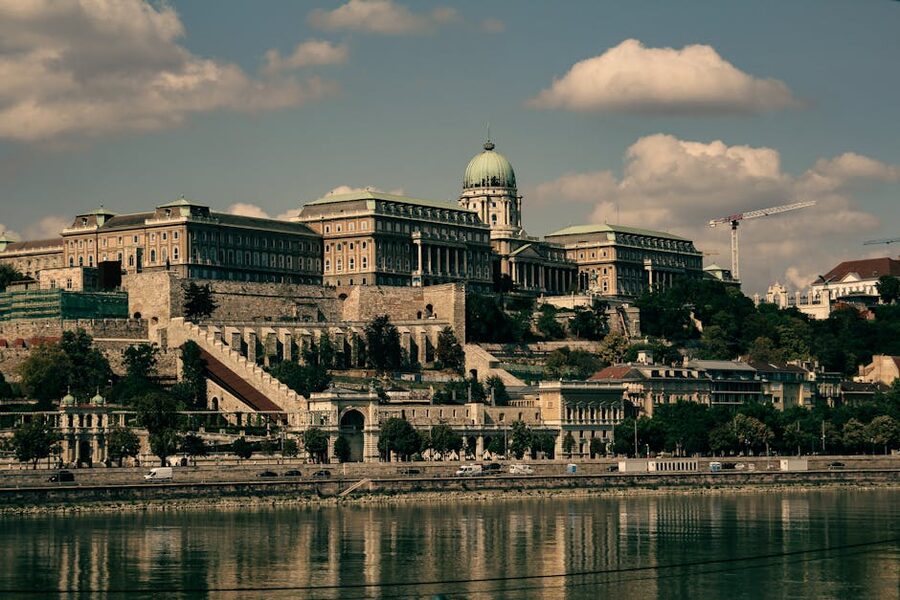
Buda Castle is not one thing. It is a sprawling hilltop complex that includes the Royal Palace, the Hungarian National Gallery, the Budapest History Museum, Matthias Church, Fisherman’s Bastion, and a labyrinth underneath that used to serve as a hospital during World War II. Most people come expecting a single building and leave realizing they could have spent an entire day up here.
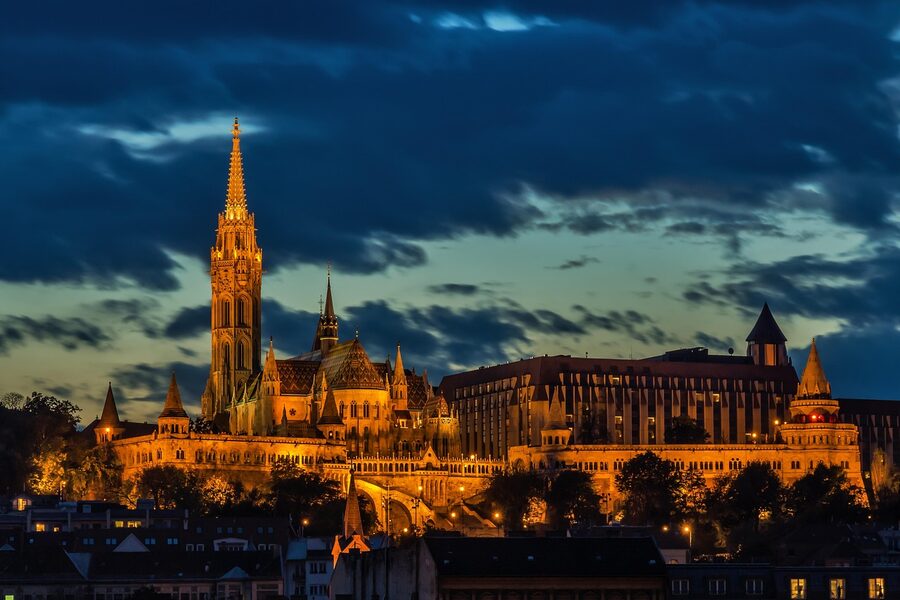

Best overall: Buda Castle Walk with Matthias Church Entry — $73.80. Two hours with a local guide plus actual entry into Matthias Church, which most walking tours skip.
Best budget: Dark History & Vampire Night Tour — $21.77. Nearly two hours of legends and ghost stories through the castle district after dark. Surprisingly informative under the theatrics.
Best for hidden gems: Fisherman’s Bastion & Hidden Gems Tour — $3.63. A tip-based walking tour that takes you to viewpoints and side streets the other groups walk right past.
- How the Buda Castle Ticket System Works
- Official Tickets vs Guided Tours
- The Best Buda Castle Tours to Book
- 1. Buda Castle Walk with Matthias Church Entry — .80
- 2. Buda Castle District Dark History & Vampire Night Tour — .77
- 3. Buda Castle Tour: Fisherman’s Bastion & Hidden Gems — .63
- When to Visit Buda Castle
- How to Get to Buda Castle
- Tips That Will Save You Time
- What You Will Actually See Up There
- While You Are in Budapest
How the Buda Castle Ticket System Works
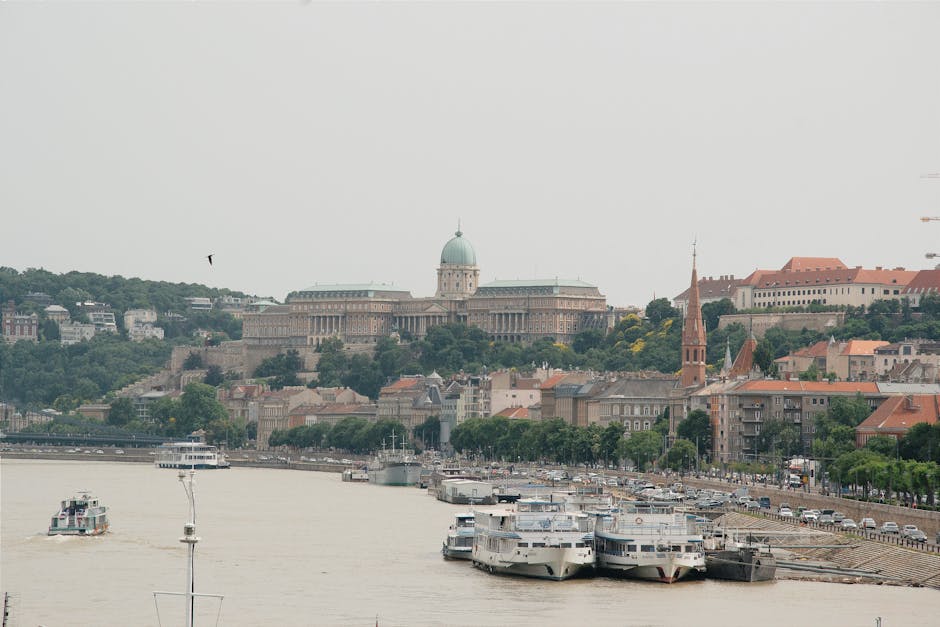
Here is the thing that confuses most visitors: Buda Castle itself, meaning the exterior grounds, courtyards, and terraces of the Royal Palace, is completely free to walk around. You do not need a ticket to get up to Castle Hill, wander the grounds, or take in the Danube panorama from the terrace. The castle complex is open to the public and you can walk freely through the courtyards at any time.
What does require tickets are the specific attractions inside the complex:
Hungarian National Gallery — housed in the main palace building, this is the country’s largest art collection. Tickets are around 3,200 HUF (about $9) for adults. Free for EU citizens under 26. The permanent collection covers Hungarian art from the Middle Ages to the present, and they rotate temporary exhibitions throughout the year.
Budapest History Museum — in the southern wing of the palace. Tickets run about 2,400 HUF (around $7). The medieval cellar section is the highlight, where you walk through excavated Gothic chambers from the original 14th-century palace. This is the part most people photograph without realizing what they are looking at.
Matthias Church — technically outside the palace walls but right next to Fisherman’s Bastion. Entry is 3,000 HUF (about $8.50) for adults. The interior is covered in geometric frescoes that look nothing like any other church you have been in. Photography is allowed.
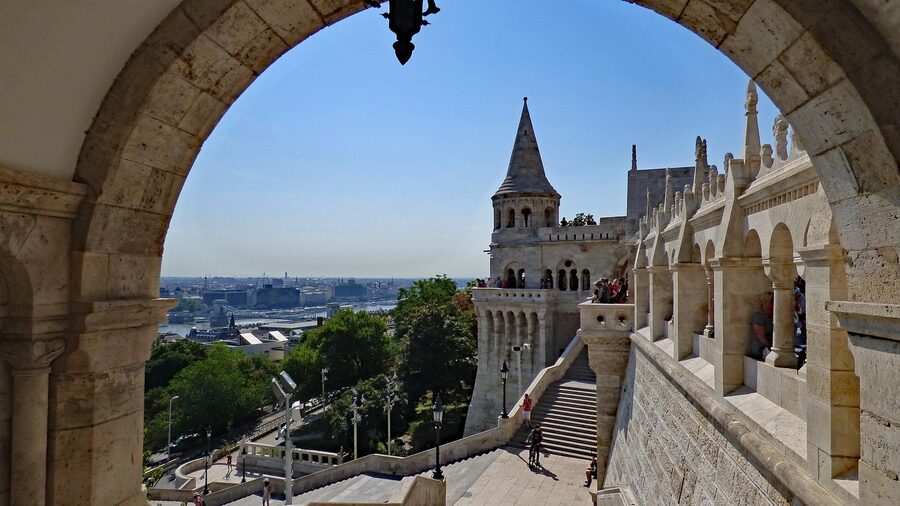
Fisherman’s Bastion upper terrace — the lower terraces are free year-round, but the upper terrace charges a small fee during peak season (roughly March through October). Expect to pay around 1,200 HUF ($3.50). Before 8am and after 7pm, it is free.
Hospital in the Rock — the underground hospital and nuclear bunker beneath Castle Hill. This one books up fast. Tickets are around 4,800 HUF ($14) and you can only visit with a guided tour. Buy online in advance or risk a sold-out slot.
Castle Hill Funicular (Budavari Siklo) — if it is running (check before you go), a one-way ticket is about 2,000 HUF ($5.70) and round trip is 3,000 HUF ($8.50). Children under 3 ride free. It takes about 90 seconds and honestly the novelty wears off fast, but the views during the ascent are pleasant.
Official Tickets vs Guided Tours
You can absolutely do Buda Castle on your own. Walk up the hill, wander the courtyards, buy individual tickets at each attraction, and figure things out as you go. I have done it both ways and there are real trade-offs worth thinking about.
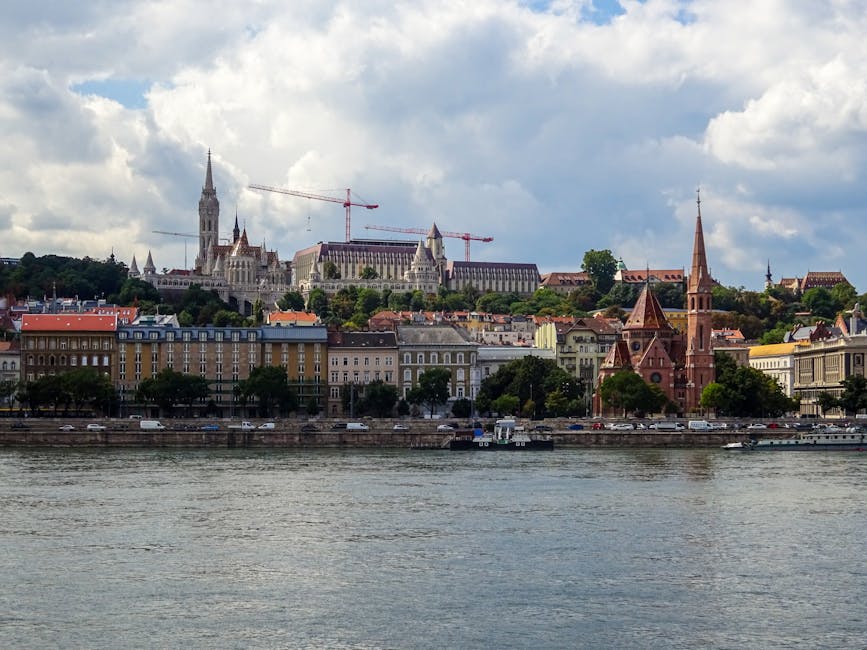
Going on your own works well if you are the type who reads plaques, has a decent guidebook or audio guide app, and does not mind piecing together the history yourself. You save money on guide fees and you move at your own pace. The downside is that Castle Hill is genuinely confusing to navigate the first time. Streets dead-end into courtyards, signs are inconsistent, and the really interesting bits (medieval foundations, hidden viewpoints, the old Jewish quarter) are easy to walk right past.
A guided tour makes sense if you want to actually understand what you are looking at. Buda Castle has been destroyed and rebuilt so many times — Mongols, Ottomans, Habsburgs, Soviets — that without context, you are just walking past pretty buildings. A good guide connects the layers. They also get you into Matthias Church with skip-the-line entry on some tours, and they know the viewpoints that are not in the guidebooks.
My honest take: if you are only spending one afternoon on Castle Hill, a guided walking tour gives you more per hour than going solo. If you have a full day and enjoy museums, go solo and buy individual tickets as you explore.
The Best Buda Castle Tours to Book
I went through the available Buda Castle walking tours in our database and narrowed it down to three that cover different budgets and styles. These are the ones that consistently deliver, based on what visitors actually report back.
1. Buda Castle Walk with Matthias Church Entry — $73.80
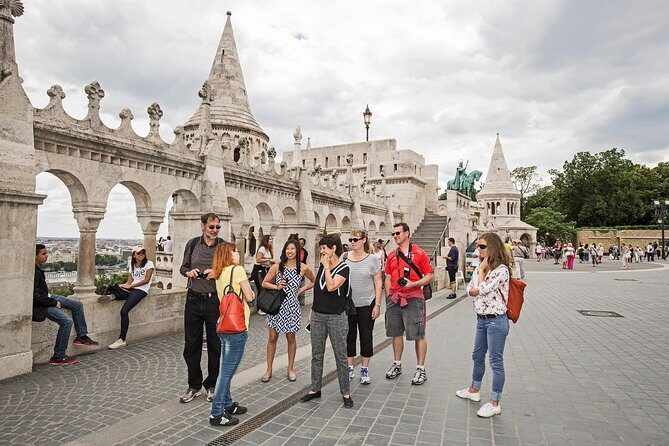
This is the one I would pick if I could only book one thing on Castle Hill. Two hours with a local guide who covers the Royal Palace grounds, Fisherman’s Bastion, and — this is the key differentiator — you actually go inside Matthias Church rather than just peering through the door.
At $73.80 per person it is not cheap, but that includes the church entry fee and a guide who knows the district inside out. The groups stay small enough that you can ask questions without shouting. Visitors consistently mention the guide quality as the highlight, which tells you the tour lives or dies on its people rather than a scripted route.
If you are comparing it to buying a Matthias Church ticket yourself ($8.50) and wandering with a free audio guide, the extra sixty-odd dollars gets you context, skip-the-line entry, and about 700 years of history explained by someone who genuinely cares about it.
2. Buda Castle District Dark History & Vampire Night Tour — $21.77
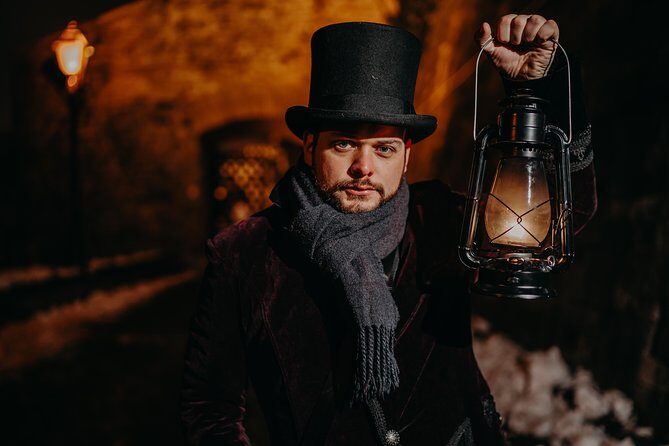
This is the wildcard pick, and I mean that as a compliment. At $21.77 for nearly two hours, it is the most affordable guided option on Castle Hill, and the night setting transforms the whole experience. The guide walks you through the darker chapters of Hungarian history — executions, vampire legends, political intrigue — against the backdrop of an illuminated castle district with almost no one else around.
It is not a horror show. The Dark History Night Tour is genuinely educational, weaving folklore with real historical events. A few visitors have mentioned that the guide can be hit-or-miss on energy levels, which is fair — it is an outdoor walking tour and performance varies. But when the guide is on, this is one of the most memorable evenings you can have in Budapest for under twenty-five dollars.
Best booked as a complement to a daytime visit rather than your only Castle Hill experience. You will cover similar ground but see it through a completely different lens.
3. Buda Castle Tour: Fisherman’s Bastion & Hidden Gems — $3.63
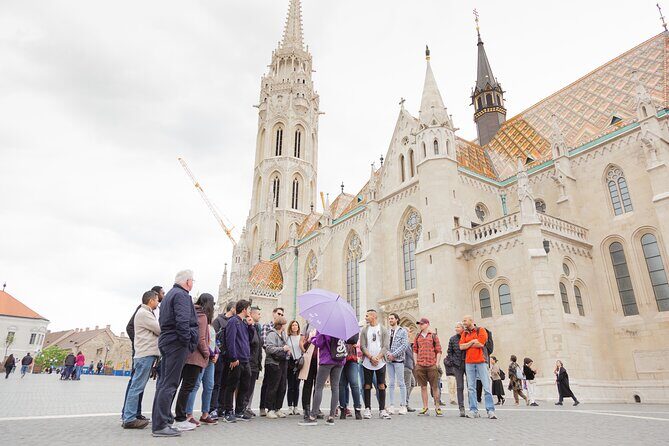
The listed price of $3.63 is essentially a booking fee — this is a tip-based free walking tour where you pay what you think it was worth at the end. That model keeps guides sharp, because their income depends on keeping you interested for two hours straight.
What sets this apart from the other Buda Castle walking tours is the emphasis on spots that are not on the standard route. The guide takes you to panoramic viewpoints that the bigger tour groups skip, through residential courtyards that feel private, and to architectural details that you would absolutely miss on your own. Fisherman’s Bastion is the headliner but the side streets are the real draw.
If you are on a tight budget or just want a solid introduction before exploring on your own, this is the obvious starting point. Tip generously if your guide is good — most visitors report that they are.
When to Visit Buda Castle
Timing matters more on Castle Hill than at most Budapest attractions, because so much of the experience is outdoors.
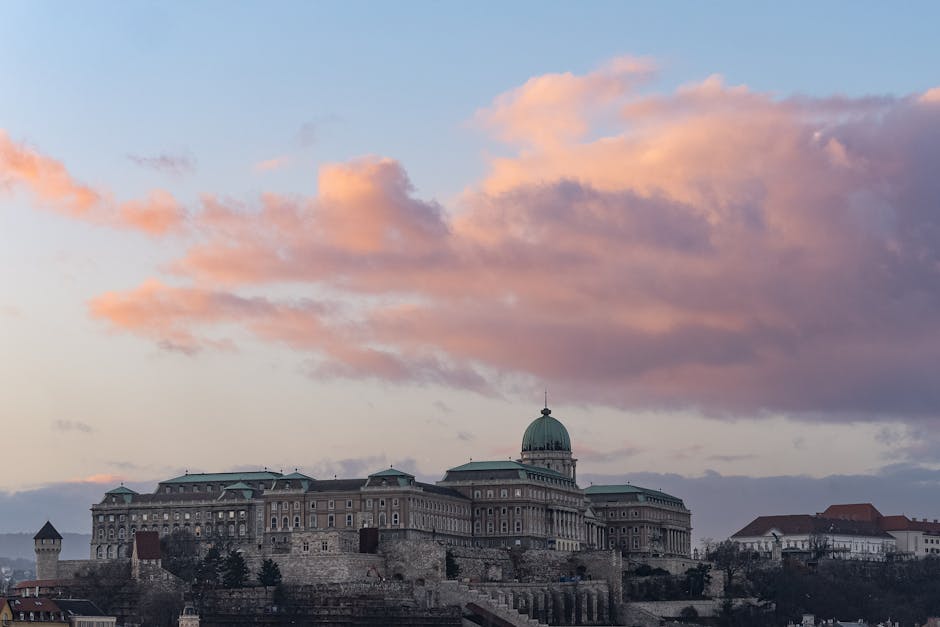
Best time of day: Arrive between 9 and 10 in the morning if you want the castle grounds mostly to yourself. The big tour buses start rolling in around 11am and the area stays packed until mid-afternoon. Alternatively, come after 3pm when the day-trippers are heading back to their hotels. Late afternoon light on the Danube from the terrace is worth planning around.
Best season: Spring (April through May) and early fall (September through October) hit the sweet spot. Comfortable walking temperatures, manageable crowds, and long daylight hours. Summer is fine but Castle Hill is completely exposed — there is almost no shade on the terraces and Fisherman’s Bastion in July feels like a baking sheet.
Winter visits: Castle Hill in winter is underrated. Fewer visitors, dramatic skies, and the Danube views with snow-dusted rooftops are beautiful. The Christmas market on Castle Hill (usually late November through early January) adds atmosphere. Dress warmly — the wind on the exposed terraces is no joke.
Opening hours vary by attraction: The castle grounds are open 24/7. The Hungarian National Gallery opens Tuesday through Sunday, 10am to 6pm. Matthias Church opens daily from 9am to 5pm (later in summer). The Hospital in the Rock runs guided tours throughout the day but check their schedule for specific times. Fisherman’s Bastion upper terrace is ticketed roughly from 9am to 7pm in peak season.
How to Get to Buda Castle
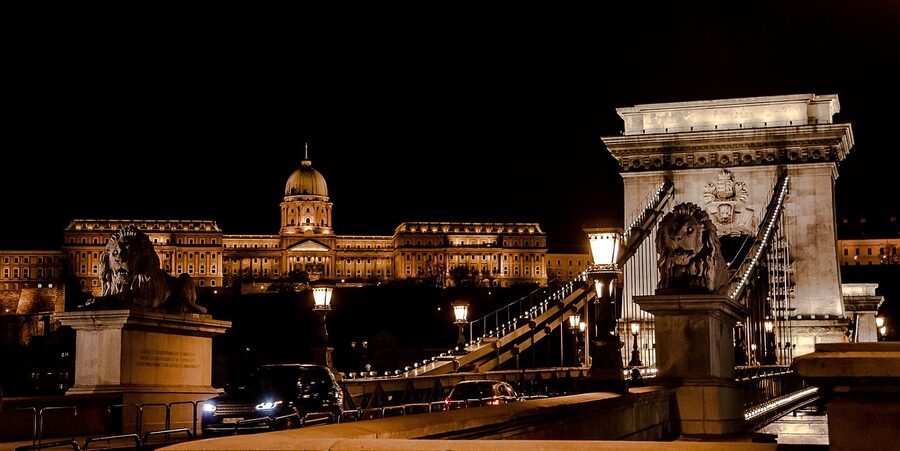
Walk up from Clark Adam Square: This is my preferred approach. Cross the Chain Bridge from the Pest side, and at Clark Adam Square you will see stairs and a winding path leading up to the castle. The walk takes about 15 minutes and is moderately steep. Wear decent shoes.
Castle Hill Funicular (Budavari Siklo): Departs from Clark Adam Square and takes you directly to the Royal Palace terrace in about 90 seconds. One-way tickets are around 2,000 HUF. Note: the funicular undergoes periodic maintenance closures, so check the BKV website before you plan around it.
Bus 16 or 16A: Runs from Deak Ferenc Square (the central metro hub) directly to Castle Hill. This is the easiest option if you are coming from central Pest. Runs every 10-15 minutes. Use a standard Budapest transit ticket or pass.
From the Buda side: If you are staying in Buda, you can walk up from Szena Square or take the stairs from Batthyany Square (metro M2 line). The Batthyany approach gives you a lovely walk through the Varkert (Castle Garden) on the way up.
By taxi or Bolt: Drivers can take you up to the castle area, though traffic is restricted in some parts of the district. Ask to be dropped at Szentharomsag Square (Trinity Square) for easy access to Matthias Church and Fisherman’s Bastion, or at the Habsburg Steps for the Royal Palace.
Tips That Will Save You Time
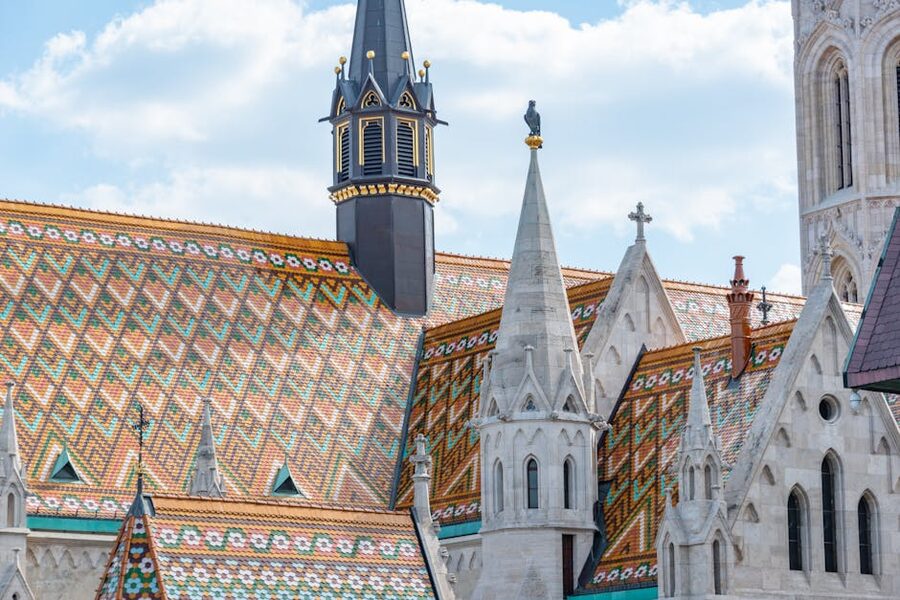
Buy Matthias Church tickets online. The queue at the door can be 20-30 minutes deep during peak season. Online tickets let you skip it. The church website sells timed entry slots.
Do not try to see everything in two hours. Castle Hill rewards slow exploration. If you rush through the Royal Palace, Matthias Church, Fisherman’s Bastion, and a museum in a single sprint, you will remember none of it. Pick two or three things and do them properly.
The Hospital in the Rock sells out. Book at least a day ahead online, especially for morning slots. It is one of the most unusual museum experiences in Budapest and the capacity is limited to small guided groups.
Comfortable shoes are not optional. Castle Hill is cobblestones, stairs, and slopes. Anything with a thin sole or a heel is going to be a problem by hour two.
Bring water in summer. There are a few cafes and kiosks on Castle Hill, but they charge tourist prices and the queues get long. The terraces have zero shade.
Fisherman’s Bastion is free before 8am. If you are an early riser, you can have the upper terrace entirely to yourself and skip the modest entry fee. The light at sunrise is spectacular and photographers know it — you might see a few others with tripods, but nothing like the midday crowds.
The Labyrinth entrance is easy to miss. Look for it on Uri Street, marked with a small sign. It is underground and cool even in summer, making it a good midday escape from the heat.
What You Will Actually See Up There
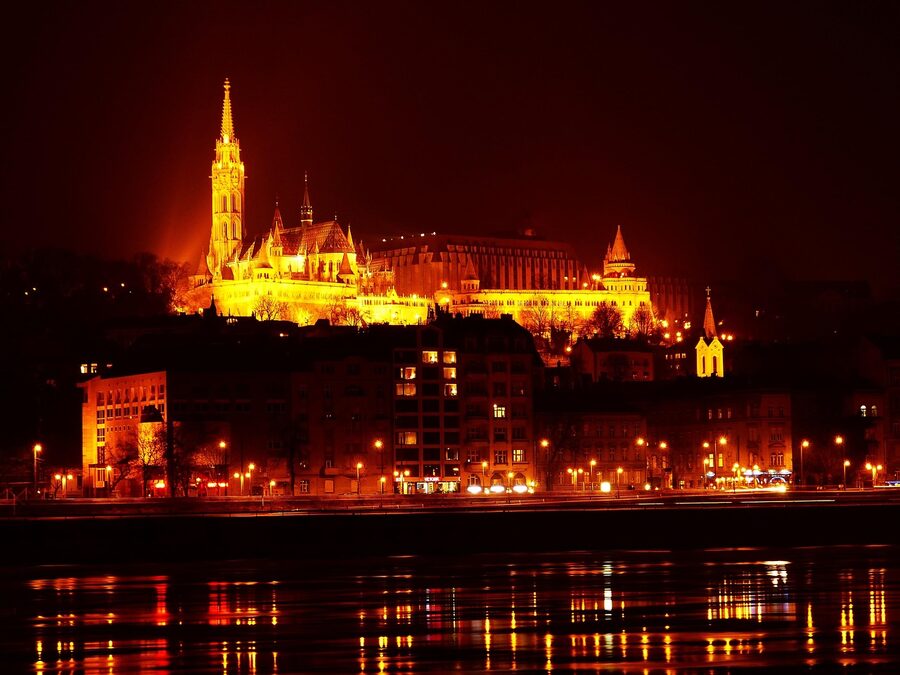
Castle Hill is a UNESCO World Heritage Site, and once you are up there it becomes obvious why. The whole district is essentially an open-air museum where the layers of Hungarian history stack on top of each other like geological strata.
The Royal Palace dominates the southern end of the hill. The current building is mostly an 18th and 19th century reconstruction — the Ottomans, the Habsburgs, and then Soviet siege bombardment during World War II did a number on whatever came before. Today it houses the Hungarian National Gallery and the Budapest History Museum. The gallery’s collection of Hungarian painting is genuinely impressive, particularly the 19th century works. The History Museum’s medieval cellar is the sleeper hit: excavated Gothic and Renaissance chambers from the original 14th century palace, with stone carvings and chapel remains.
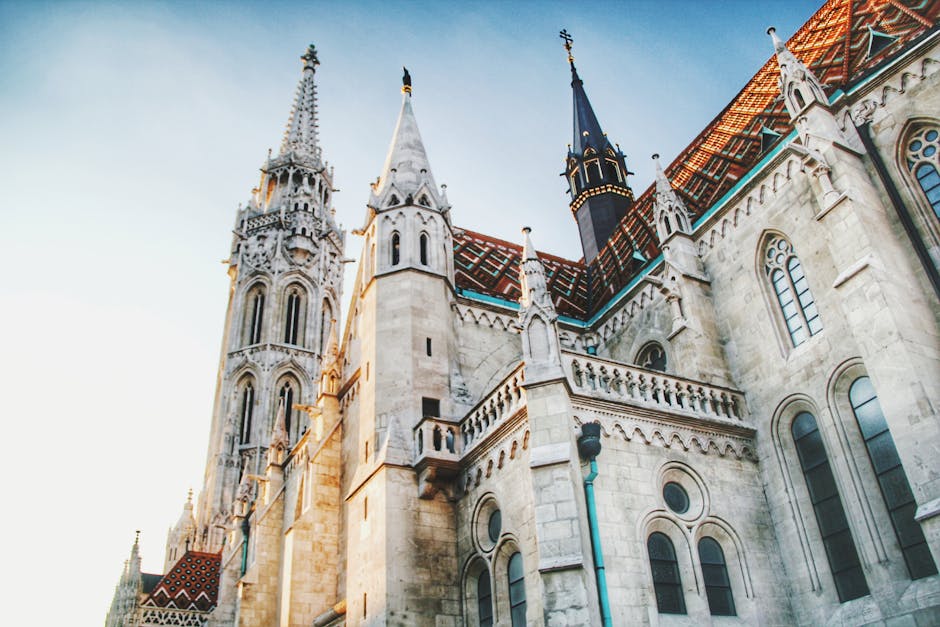
Matthias Church is the architectural highlight for most visitors. Named after King Matthias Corvinus who held both of his weddings here, the church has been a mosque, a Baroque chapel, and a coronation church over its 700-year history. The interior frescoes by Bertalan Szekely and Karoly Lotz cover the walls and ceilings in geometric patterns that feel more Ottoman than Gothic — a reminder of the 150 years of Turkish occupation that left its mark on everything in Budapest.
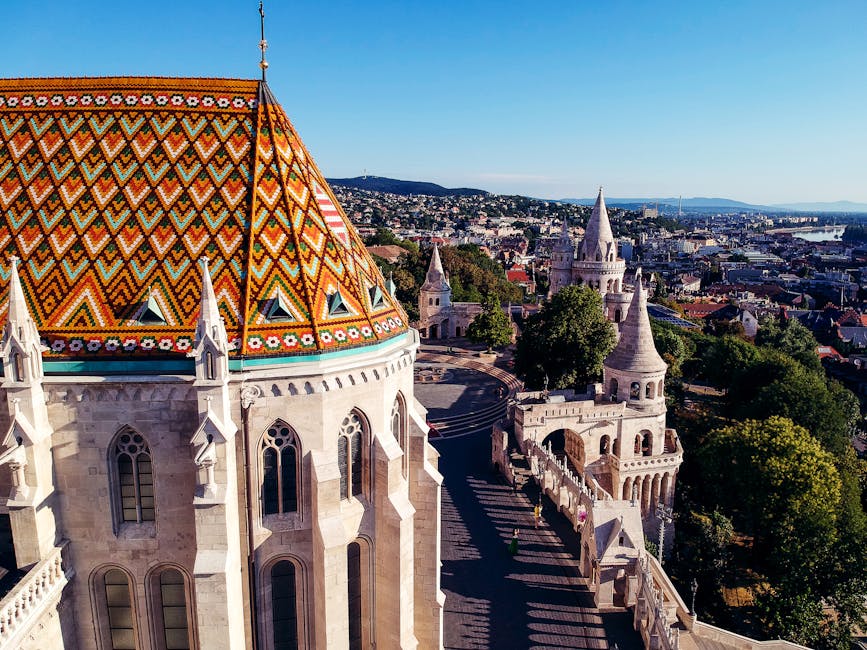
Fisherman’s Bastion sits right behind Matthias Church and is the most photographed spot in Budapest. Built between 1895 and 1902, its seven turrets represent the seven Magyar tribes that founded Hungary. It was never a defensive structure — it was designed as a decorative viewing platform, and it works beautifully as one. The panorama across the Danube to Parliament, the bridges, and the Pest skyline is the best in the city, full stop.
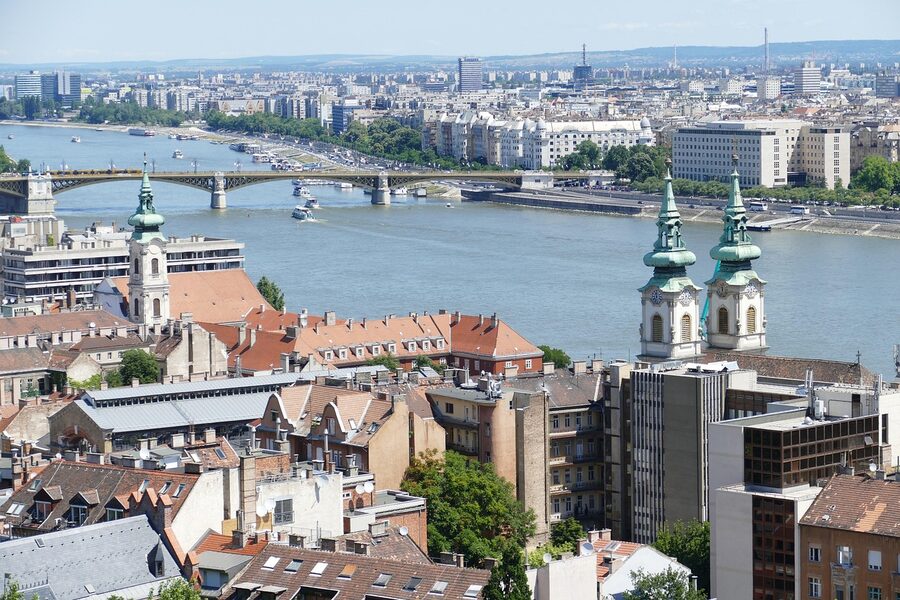
The Castle District streets are worth exploring beyond the main sights. Uri Street is the oldest and longest street in the district, with medieval house facades hiding behind Baroque and Neoclassical fronts. Tancsics Mihaly Street has the old Jewish quarter, including a medieval synagogue. Szentharomsag Square (Trinity Square) is the central gathering point with the Holy Trinity Column, built in the 18th century as a plague memorial.
While You Are in Budapest
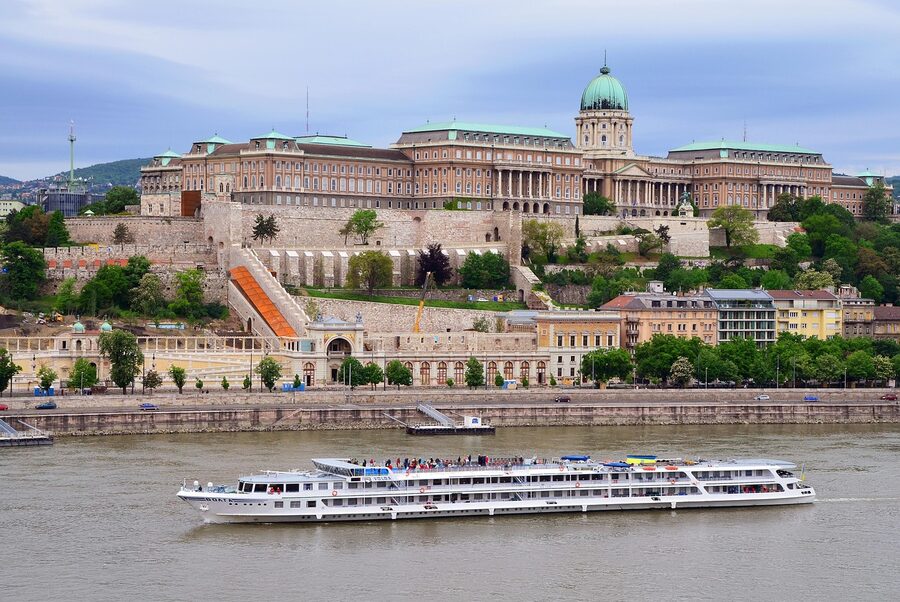
Buda Castle pairs naturally with several other Budapest highlights that are close by or connected. A Danube River cruise gives you the castle from the water, which is arguably the best angle and particularly good at night when the whole hillside is floodlit. If you are spending more than a day in the city, the Szechenyi Thermal Baths on the Pest side are the perfect way to recover from a morning of cobblestone walking — soak for an hour, let your feet forgive you.
If you want another dose of Budapest architecture, St. Stephen’s Basilica is a short walk from the Chain Bridge on the Pest side, with a dome terrace that gives you a panoramic view right back across at the castle you just explored.
The Hungarian Parliament is visible from Castle Hill — that massive neo-Gothic building stretching along the Pest embankment. Seeing it from above on Castle Hill and then touring the interior the next day, walking through halls covered in gold leaf, is one of those experiences where the scale only hits you once you are standing inside.
A guided bike tour is another way to experience the Castle District — most tours include the climb up to the Fishermans Bastion and loop back down to the Danube, covering both banks in a few hours. If the cobblestones wore you out on foot, the bike handles the flat Pest side effortlessly and the Buda hill section is mercifully brief.
This article contains affiliate links. When you book through these links, we may earn a small commission at no extra cost to you. This helps us keep producing free travel guides.