
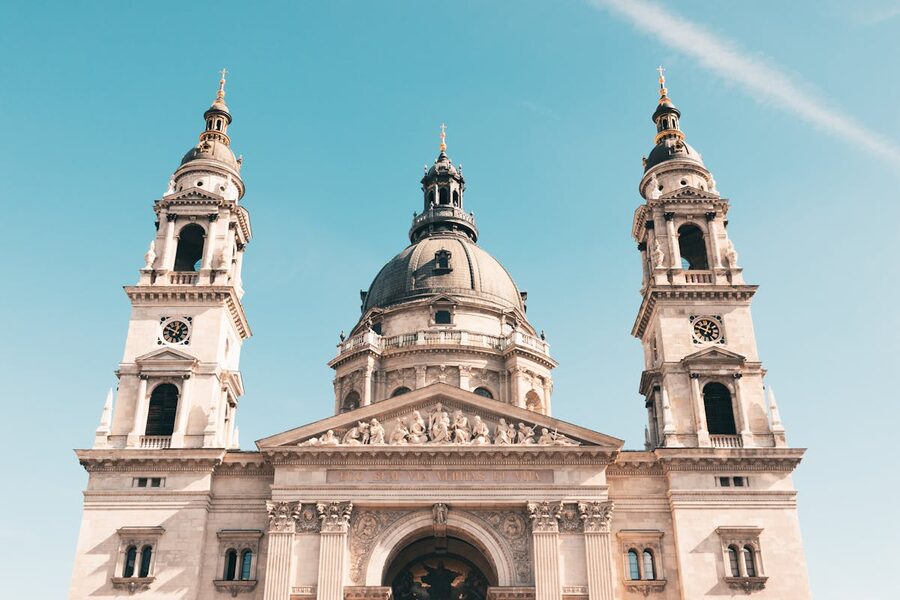
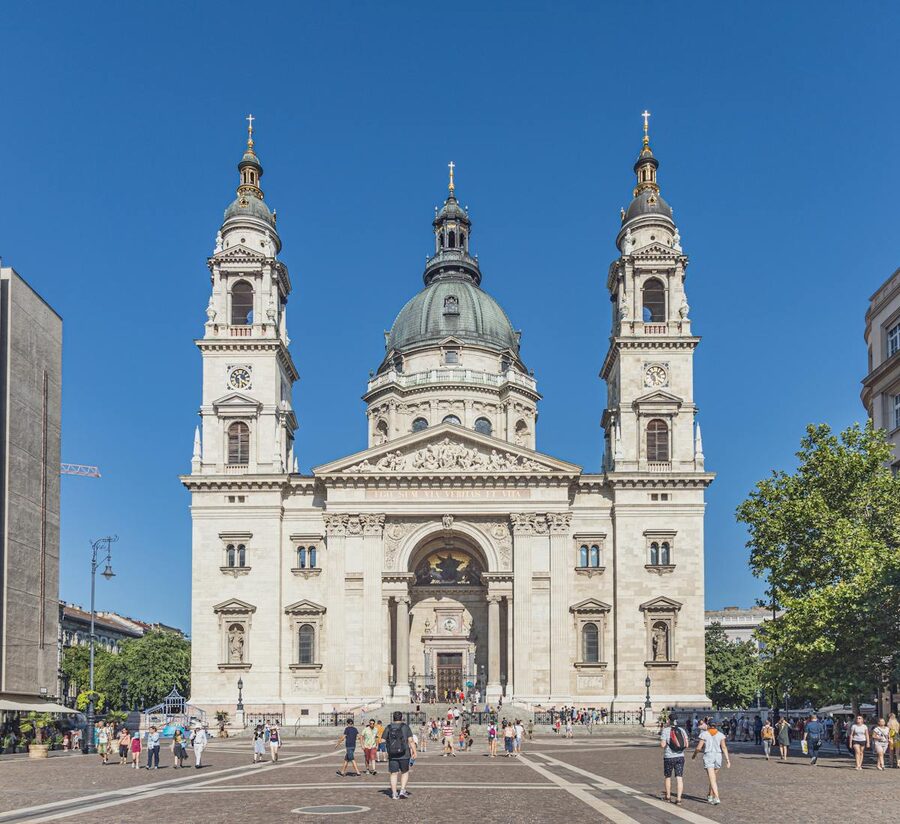
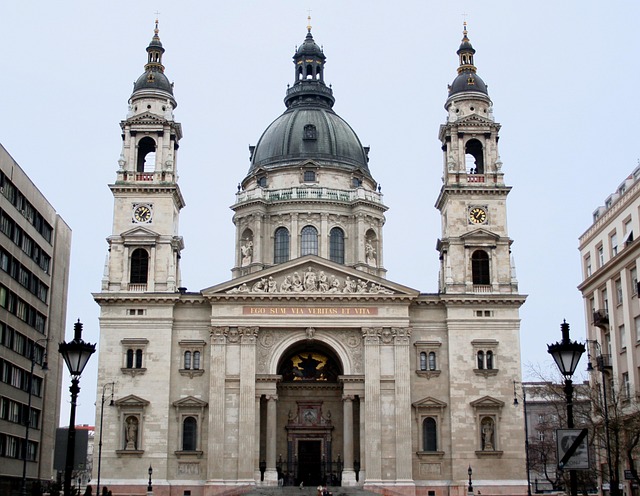
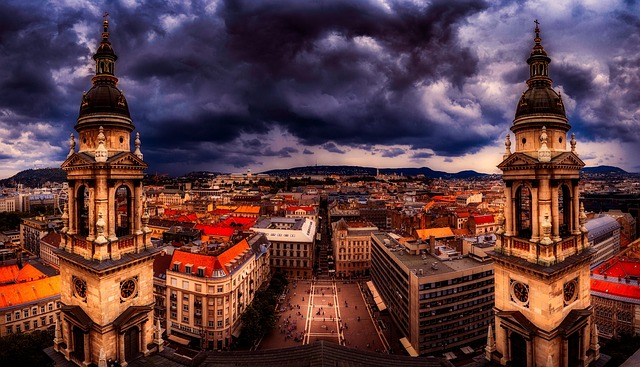
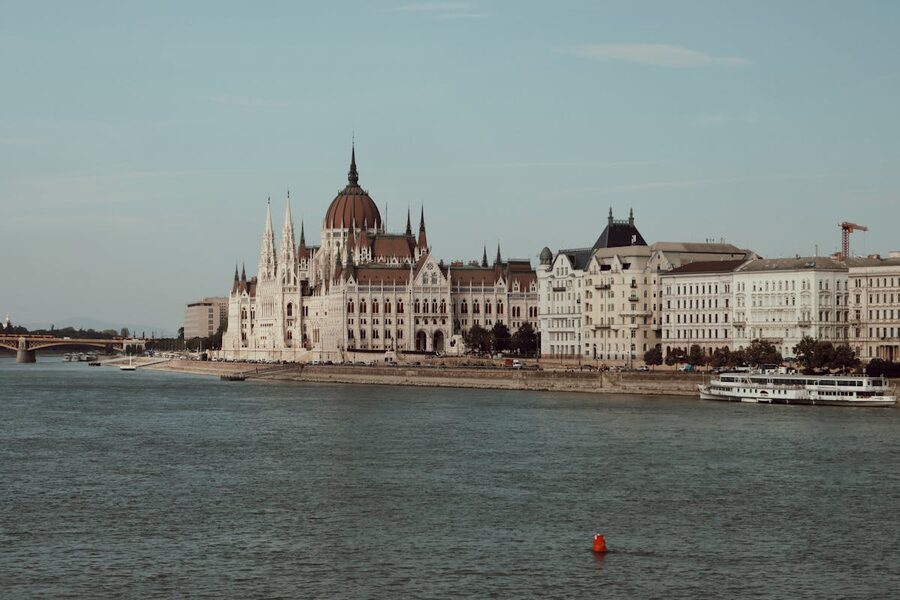
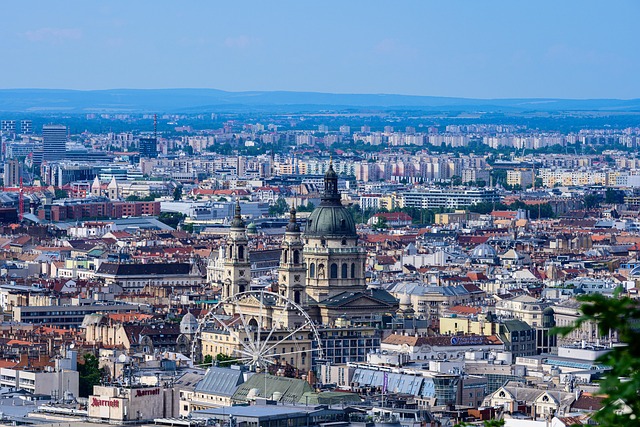
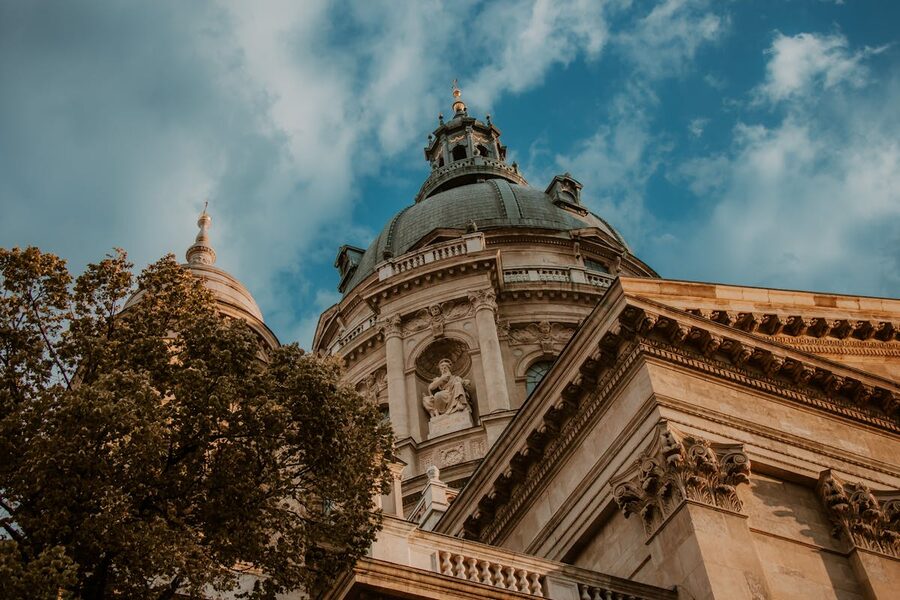
The dome of St. Stephen’s Basilica sits exactly 96 meters above the streets of Pest. That number matters, because Hungarian law says no building in Budapest can exceed it — a rule that ties the church to Parliament in a neat bit of architectural rivalry. Standing on the observation deck, looking out across the Danube and over to the Buda hills, you understand why they picked that height. It feels like the ceiling of the city.
I first visited on a Tuesday afternoon in October, mostly because I’d heard about the mummified right hand of Hungary’s founding king kept in a side chapel. That sounded too strange to skip. The hand turned out to be genuinely eerie — you feed coins into a machine, a light clicks on for thirty seconds, and there it is behind glass, over a thousand years old. But the real surprise was everything else: the ceiling frescoes, the weight of the marble, and the view from that dome platform that made every other lookout in Budapest feel redundant.
Getting tickets is straightforward once you know how the system works, but there are a few things that trip people up — especially around the dome access and the concert schedule. Here’s what I wish I’d known before my first visit.
Best overall: St. Stephen’s Basilica Entry with Options — $12. Skip-the-line entry with dome access included. The most popular ticket for good reason.
Best guided experience: St Stephen’s Basilica Tour — $21. Guided walk-through with tower access and a guide who actually knows the history.
Best special experience: Classical Music Concert — $70. Live orchestral performance inside the basilica. The acoustics alone are worth the price.
- How the Ticket System Works
- Official Tickets vs. Skip-the-Line Tours
- The Best St. Stephen’s Basilica Tours to Book
- 1. Budapest: St. Stephen’s Basilica Entry with Options —
- 2. Budapest: St Stephen’s Basilica Tour —
- 3. Budapest: Classical Music Concerts in St Stephen’s Basilica —
- When to Visit
- How to Get There
- Tips That Will Save You Time
- What You’ll Actually See Inside
- More Budapest Guides
How the Ticket System Works
St. Stephen’s Basilica runs its own ticketing, and the pricing is simpler than you’d expect for a major European landmark. The basilica itself charges around 2,000 HUF (roughly $5-6 USD) for general entry. That gets you into the nave, the Holy Right Hand chapel, and the treasury. The panoramic dome observation deck is a separate ticket at 3,200 HUF (about $9 USD).
You can buy tickets at the door, but the queue gets long between 11am and 2pm — especially in summer. The official website at bazilika.jegy.eu sells online tickets, but most visitors find it easier to grab a skip-the-line ticket through a tour platform that bundles entry with dome access.
Children under 7 enter free. Students with a valid ID get reduced rates. There’s no separate ticket for the Holy Right Hand — it’s included with general entry, though the chapel has a coin-operated light (drop in 200 HUF and you get about 30 seconds of illumination to see the relic properly).
Important: The dome ticket is NOT included in the basic entry fee. If you want both — and you absolutely should — either buy them separately or grab a combined ticket from a tour operator that bundles everything.
Official Tickets vs. Skip-the-Line Tours
Buying directly at the basilica saves you a few dollars, but you’ll wait in line — sometimes thirty minutes or more during peak season. The official website works but is only in Hungarian and English, and the interface is clunky on mobile.
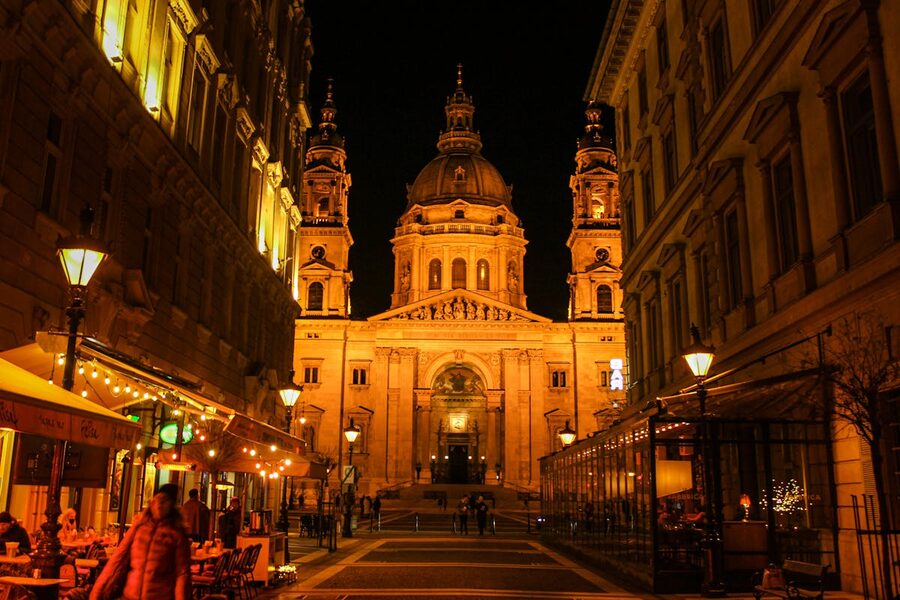
Skip-the-line tickets through platforms like GetYourGuide cost slightly more but eliminate the queue entirely. You walk past the line, scan your voucher, and you’re in. During July and August, this alone saves you 20-40 minutes of standing in the sun on a shadeless square.
Guided tours add genuine value here because the basilica doesn’t have great signage. Without a guide, you’ll walk past the marble mosaic floor without knowing it depicts the Hungarian coat of arms, miss the significance of the four evangelists on the dome pendentives, and probably not notice the organ with its 6,500+ pipes. A guide fills in the gaps that plaques don’t.
My take: If you just want to see the interior and climb the dome, a skip-the-line ticket with dome access is the best value. If you want the full story of what you’re looking at, pay the extra for a guided tour.
The Best St. Stephen’s Basilica Tours to Book
1. Budapest: St. Stephen’s Basilica Entry with Options — $12
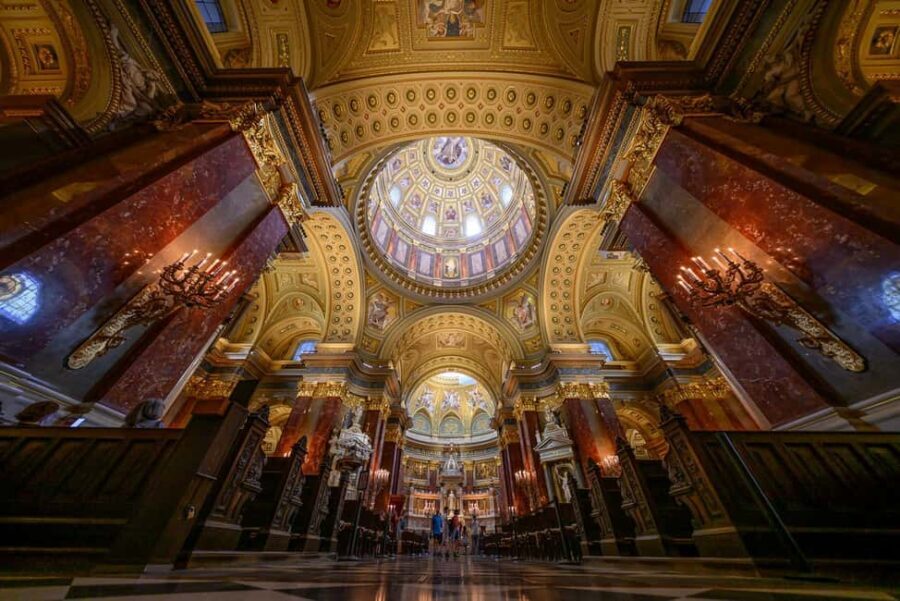
This is the ticket most visitors should start with. At $12, it’s barely more than the official door price, but you skip the queue entirely. The flexible options let you add dome access, a guided tour, or both — so you can customize based on how deep you want to go.
The dome access alone makes this worth it. You can take the elevator most of the way up (there are still a few dozen stairs at the top), and the 360-degree panorama covers the Parliament building, the Danube, Fisherman’s Bastion, and the Buda hills. On a clear day, you can see all the way to the edge of the Great Hungarian Plain.
This is easily the most popular basilica ticket in Budapest, and for good reason — it covers everything most visitors want without overcomplicating it.
2. Budapest: St Stephen’s Basilica Tour — $21
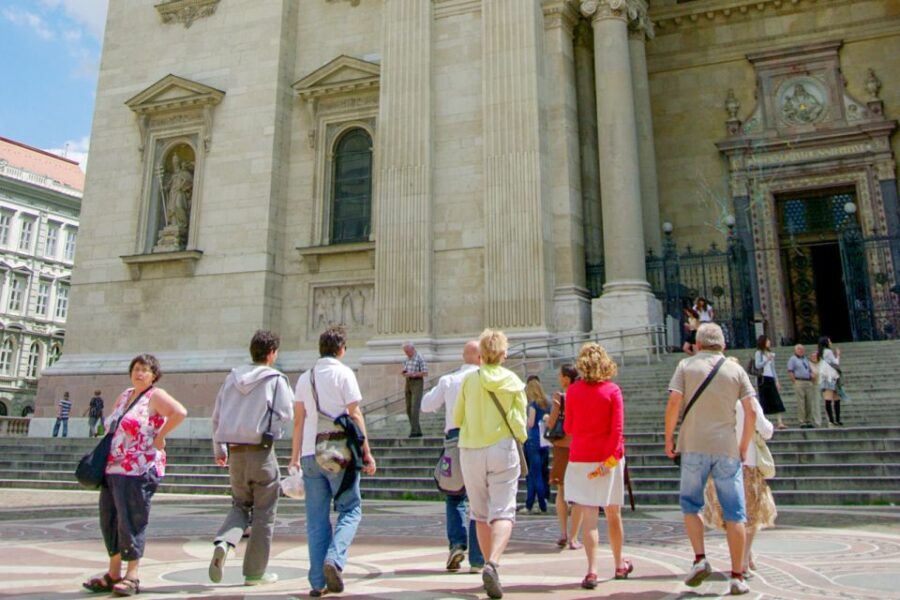
The difference between walking around the basilica alone and having someone explain it is enormous. This $21 guided tour covers the full interior including areas most self-guided visitors miss — the treasury, the side chapels, and the story behind the Holy Right Hand relic. The tour runs 1 to 1.5 hours and includes tower access with those panoramic views.
Your guide covers the 54-year construction saga, the dome collapse that happened partway through and forced a redesign, and why the basilica’s height of 96 meters is constitutionally tied to Parliament. These aren’t things you’d figure out from a plaque on the wall. The small group format means you can actually ask questions, and the skip-the-line access means you’re inside while the door queue is still forming.
For $9 more than the basic entry, you get context that makes every room in the building more interesting. I’d call this the sweet spot between budget and premium.
3. Budapest: Classical Music Concerts in St Stephen’s Basilica — $70
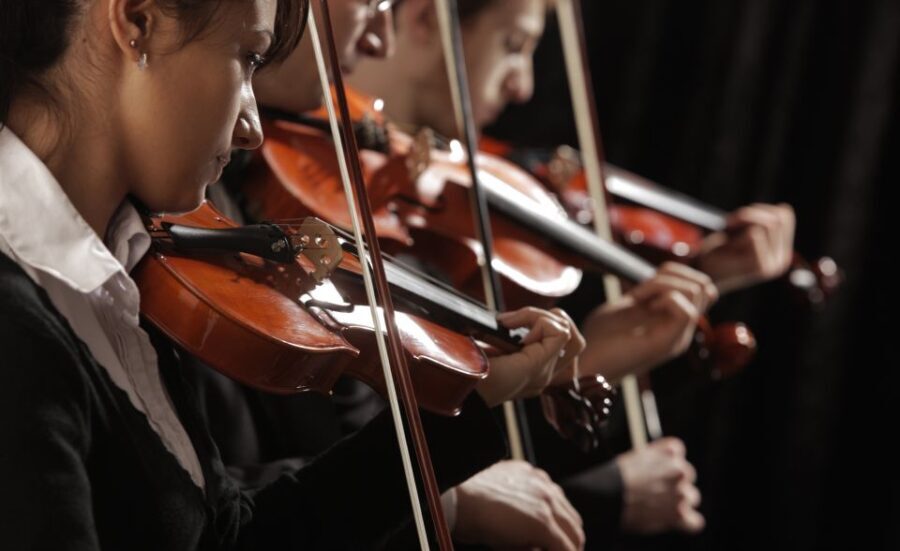
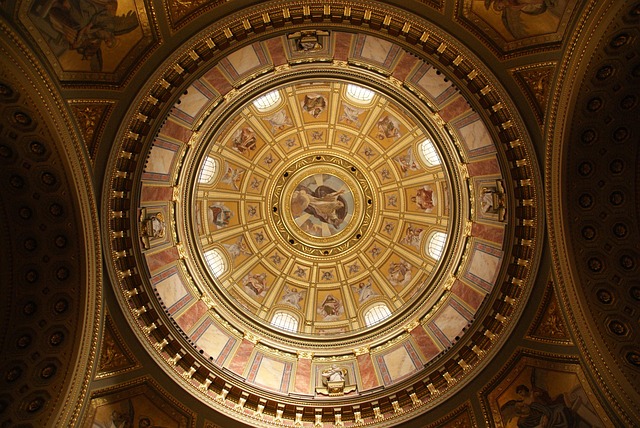
This is a completely different experience from a daytime visit. The $70 concert ticket puts you inside the basilica for a live classical performance — typically strings, organ, or a combination — in a space that was literally designed for sound. The 96-meter dome acts as a natural amplifier, and the marble surfaces create resonance that modern concert halls spend millions trying to replicate.
Concert programs rotate, but you’ll typically hear Vivaldi, Mozart, Bach, or Hungarian composers. The performers are professional musicians, not background entertainment. Seating options range from standard nave seats to premium front-row positions. Shows usually run about an hour to 70 minutes.
At $70 it’s the priciest option on this list, but if you care about music at all, this is one of the best concert venues in Central Europe. The building wasn’t designed as a concert hall, but it performs like one. Pair it with a daytime visit to see the frescoes and the dome, and you’ve had two completely different experiences of the same space.
When to Visit
The basilica’s hours shift slightly depending on the day:
- Monday to Friday: 9:00 AM — 5:15 PM
- Saturday: 9:00 AM — 1:00 PM
- Sunday: 1:00 PM — 5:15 PM (morning reserved for services)
The dome observation deck closes 30 minutes before the basilica does. The treasury keeps the same hours as the main church. During major religious holidays (Easter, Christmas), expect modified hours or full closures for services.
Best times to visit: First thing in the morning (9-10am) or late afternoon (after 3pm). The midday rush between 11am and 2pm is the worst, especially June through September. Saturday has shorter hours (closing at 1pm), so plan accordingly. Sunday opens late because of morning Mass — the upside is that the afternoon crowd is thinner since most tour groups have moved on by then.
Organ concerts typically happen in the evenings, separate from regular visiting hours. Check the schedule at szentistvanterem.hu or through concert ticket providers. Shows sell out in peak season, so book ahead.
How to Get There
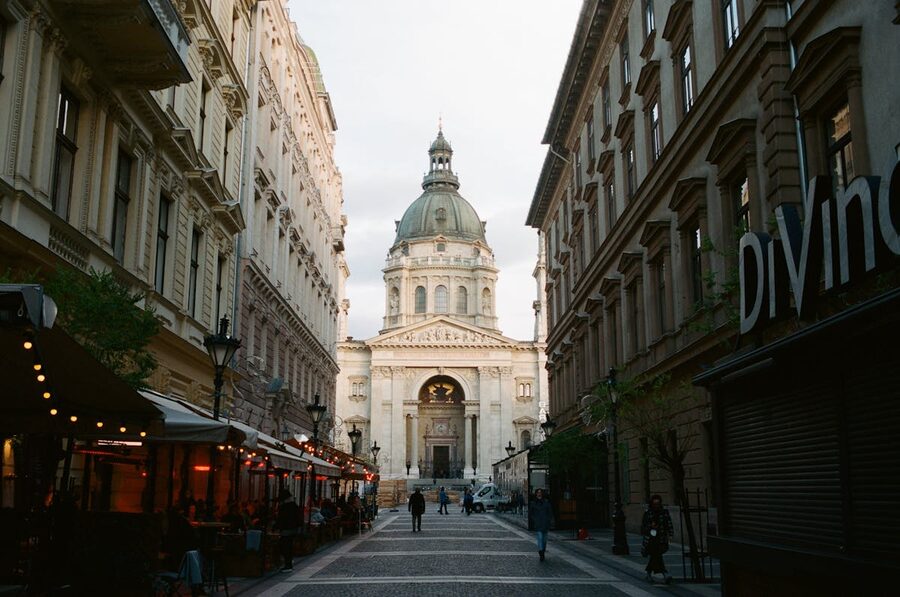
The basilica sits in the heart of Pest’s District V, and getting there is easy from almost anywhere in the city.
Metro: The closest station is Bajcsy-Zsilinszky ut on the M1 (yellow) line — about a 2-minute walk. Arany Janos utca on the M3 (blue) line is slightly farther, roughly 3-4 minutes on foot. If you’re coming from the Buda side, Deak Ferenc ter (where all three main metro lines intersect) is about a 5-minute walk.
Tram: Lines 47 and 49 stop at Deak Ferenc ter, an easy walk from there.
Walking: If you’re staying anywhere in the District V or VI area, you can probably walk. From the Chain Bridge, it’s about 10 minutes on foot. From the Opera House on Andrassy ut, it’s 5 minutes. The Parliament building is roughly a 15-minute walk along the riverbank and then inland.
Tips That Will Save You Time
- Dress modestly. Shoulders and knees should be covered. They turn people away in tank tops and short shorts. Carry a light scarf in your bag during summer — it doubles as a cover-up.
- Bring coins for the Holy Right Hand. The relic chapel uses a coin-operated light. Drop in 200 HUF and you get about 30 seconds of illumination. Without the light, you’re squinting at a dark case and wondering what you’re looking at.
- Take the elevator for the dome. There are roughly 300 stairs if you want the exercise, but the elevator takes you most of the way up. You’ll still climb a few dozen steps at the top regardless. The elevator is included in dome tickets — no extra charge.
- Flash photography is banned. Tripods too. Phone cameras in natural light work fine in the nave. The dome interior is harder to photograph well, but the view from the observation deck is all natural light anyway.
- The observation deck has no glass walls. There’s a railing, but it’s open air. Brilliant for photos, less brilliant if you’re afraid of heights. Wind picks up significantly at 96 meters.
- Audio guides are available at the entrance, but if you’re already booked on a guided tour, skip them — the overlap is redundant.
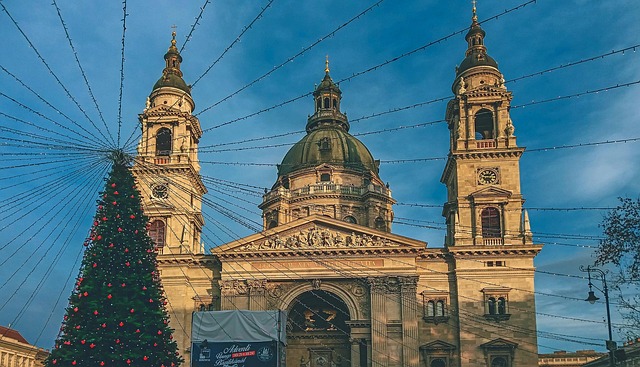
- The Christmas market at the basilica (late November through December) is one of Budapest’s best. The facade becomes a light show canvas, and the market stalls fill the entire square. If you’re visiting in winter, time your basilica trip to coincide with the market.
What You’ll Actually See Inside
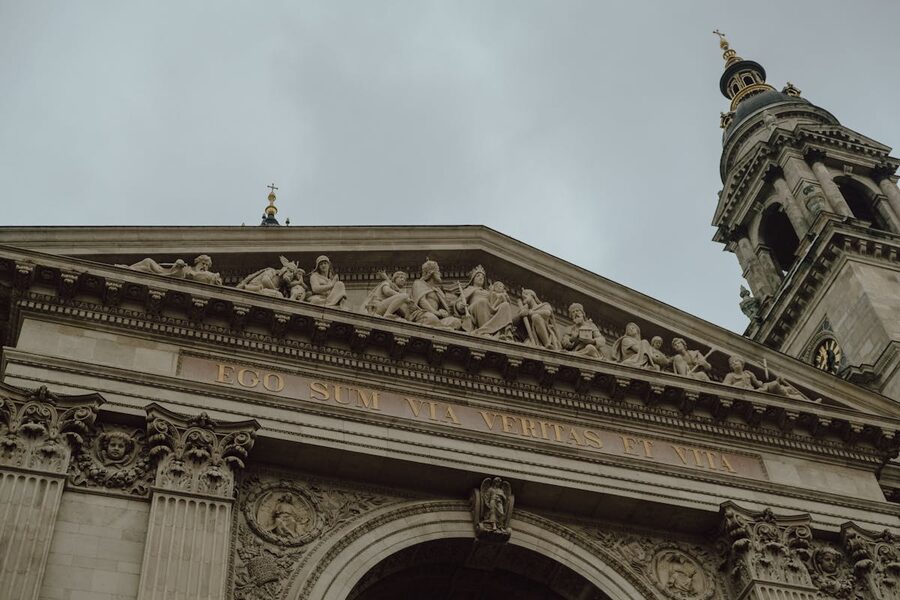
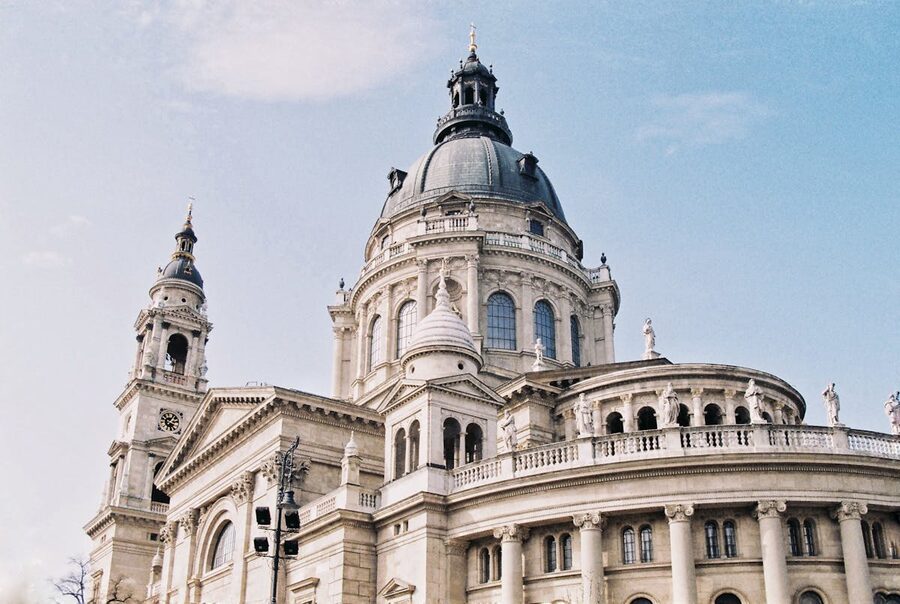
The basilica took 54 years to build, from 1851 to 1905, and the construction history is almost as dramatic as the building itself. The original architect, Jozsef Hild, died before finishing. His replacement, Miklos Ybl, had to redesign the entire dome after it collapsed partway through construction. A third architect, Jozsef Kauser, finally completed the project. Three architects, five decades, one building — and somehow it all holds together as a cohesive Neo-Classical statement.
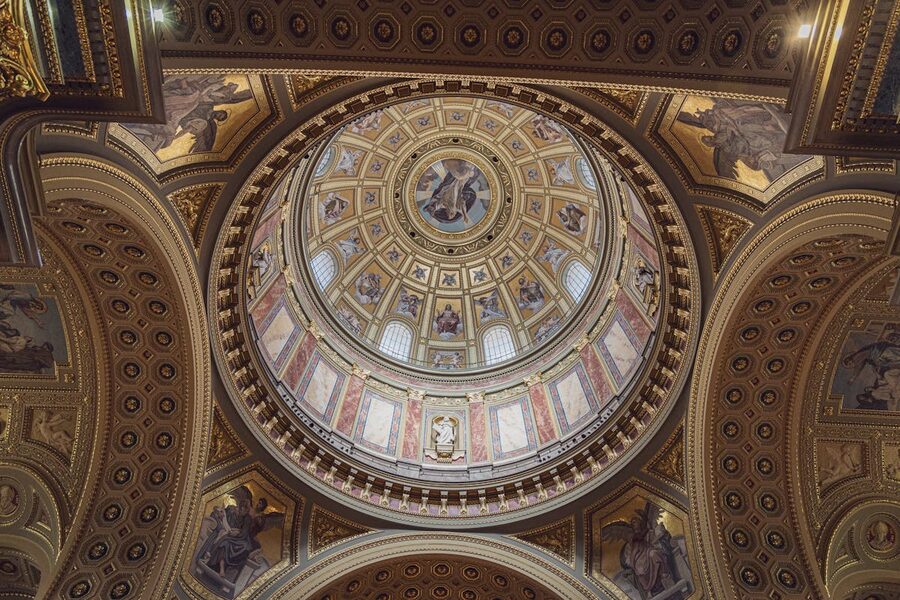
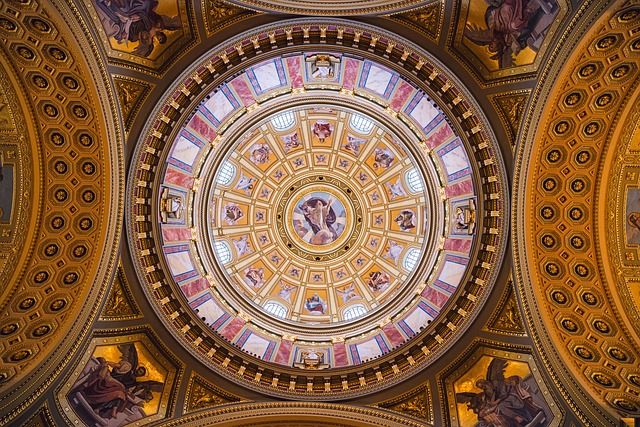
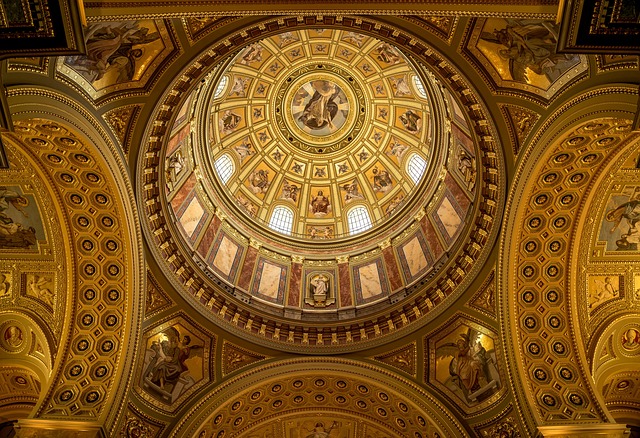
The interior uses over 50 types of marble, which sounds excessive until you’re standing there and realize each surface has a slightly different tone and texture. The main altar features a marble statue of St. Stephen (the king, not the biblical saint) flanked by bronze reliefs depicting scenes from his life. The four dome pendentives hold mosaic representations of the four evangelists — Matthew, Mark, Luke, and John.
The Holy Right Hand is the basilica’s most famous relic — the mummified right hand of King Stephen I, Hungary’s first Christian king who founded the nation in the year 1000. It’s kept in an ornate reliquary in a dedicated chapel behind the main altar. The hand has had a wilder journey than most museum artifacts: stolen, recovered, smuggled across borders during the Ottoman invasion, hidden during the Soviet era, and finally returned to the basilica. Believer or skeptic, the history behind it is wild.
The organ is worth paying attention to even if you’re not attending a concert. It houses over 6,500 pipes, making it one of the largest in Hungary. If you happen to be inside during a practice session (usually mornings), you’ll hear it fill the space in a way that recordings can’t capture.
The treasury (located in the rear of the building) holds ecclesiastical vestments, gold chalices, and medieval liturgical objects. It’s small — you’ll walk through in ten minutes — but some of the pieces date back centuries and the craftsmanship is remarkable.
More Budapest Guides
If you are spending a few days in Budapest, St. Stephen’s Basilica pairs well with a Danube river cruise — most evening cruises pass directly in front of the illuminated Parliament building, and you can book one for the same night as a basilica visit since they run after sunset. The Szechenyi thermal baths are a completely different kind of Budapest experience and make a great contrast to a morning of church architecture. Both are within easy reach of the basilica by metro.
Across the Chain Bridge, the Buda Castle complex dominates the hilltop on the opposite bank. You can see it from the basilica’s dome terrace, but walking the Castle District in person — the Matthias Church, Fishermans Bastion, and the cobblestone lanes — is worth a proper half-day. The funicular from the Chain Bridge gets you up the hill in two minutes.
The Hungarian Parliament is a 15-minute walk north along the Danube embankment from the basilica. Both buildings stand at exactly 96 meters tall — a deliberate nod to the year 896 AD when Hungary was founded — and visiting them back-to-back lets you compare two very different architectural approaches to the same symbolic height restriction.
For a more active way to connect these landmarks, a guided bike tour covers St. Stephen’s Square, the Parliament, the Chain Bridge, and the Castle District in a single three-hour loop. It is a good option if you want to see how all these places relate to each other geographically before diving deeper into any one of them.
This article contains affiliate links. When you book through these links, we may earn a small commission at no extra cost to you. This helps us keep producing free travel guides.