
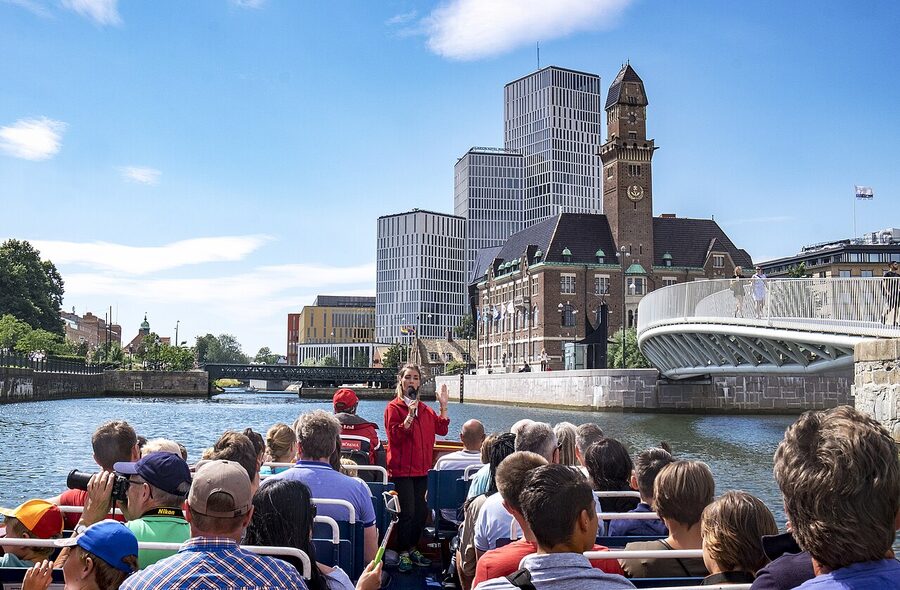
Heads down. Now. The guide says it twice in fast Swedish, then English, and the boat slides under a bridge so low you can read the underside of the cobblestones. Three seconds of dark, the smell of damp stone, and you’re back in daylight on the other side, blinking, while everyone laughs nervously and the next bridge is already in view.
That’s the Rundan, the standard 50-minute loop through Malmö’s old defensive canals, and it’s the one boat tour worth booking in this city. Below: how it works, what you’ll actually see, and the practical bits no one tells you before you turn up at Norra Vallgatan.
.jpg)
- What the Rundan actually is
- How to book it
- What it costs and what you get
- Why morning slots beat afternoons
- The featured tour: Rundan, in detail
- 1. Malmö Rundan Sightseeing Boat Tour:
- The route, bridge by interesting bridge
- Malmöhus Castle
- Kapstensbron
- Kungsparken (King’s Garden)
- The City Library
- The Casino and Stadshus
- The low bridges
- The Western Harbour and Turning Torso (from a distance)
- The history nobody else tells you
- When to go
- Best time of day
- What to bring (and what you don’t need)
- Getting to the dock
- Combining it with the rest of your day
- Languages and accessibility
- Compared to canal tours elsewhere in Sweden
- Common questions
- Can I bring a drink on board?
- What if it’s raining hard?
- Is it worth doing if I’ve already done a Stockholm or Copenhagen canal tour?
- Can I just turn up and buy a ticket?
- Where the Rundan fits in a Sweden itinerary
What the Rundan actually is
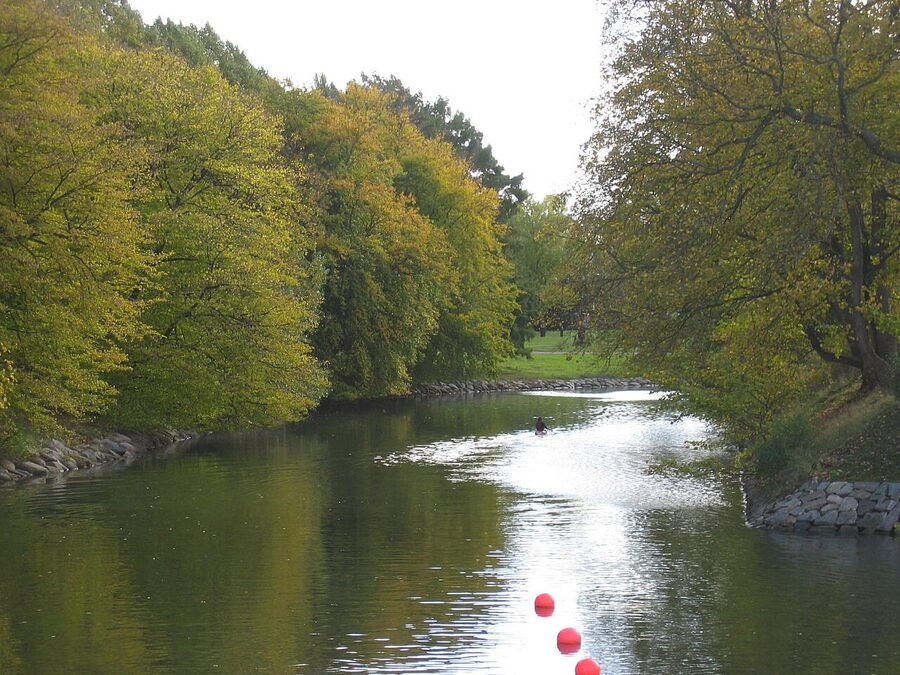
Rundan means “the round” in Swedish, and that’s exactly what it is, a single loop through Malmö’s old fortress canals that brings you back to where you started. The boats are flat-bottomed and open on top in summer, with a glassed-in heated cabin from late spring and early autumn when the wind off the Öresund gets sharp.
The route is basically the moat that used to defend the city. When Malmö was a Danish fortress town in the 1500s, these channels were the front line. Now they’re a green ring of water around Old Town, with the Castle on one side, parks on the other, and 22 bridges crossing overhead. The guide will keep mentioning the bridge count because at least four of them are low enough that you have to duck. They’re not joking. Each boat seats around 50 on bench seats, so unless you book a private charter you’ll be sat next to strangers.
How to book it
The simplest way is online through GetYourGuide for the standard $23 ticket. You pick a date and a time slot, get a QR code, and turn up at the dock. No printing, no paper. The dock itself is at Norra Vallgatan, two minutes’ walk from Malmö Central Station, on the canal side directly opposite the railway.
You can also walk up and buy a same-day ticket from the booth at the dock. In high summer, July and the first half of August, this gets risky. Tours sell out, especially the late afternoon slots when the light is best. If you’ve made the trip from Copenhagen for the day, don’t bet on walk-ups.

What it costs and what you get
$23 per adult is the standard rate. Kids under about 7 ride free if they sit on a parent’s lap, otherwise it’s a reduced-fare ticket for under-15s, around 60 percent of the adult price. The full-route loop is 50 minutes; there’s also a shorter 45-minute version that occasionally runs in shoulder season when demand is lower. Note that Malmö doesn’t have a city-wide attraction pass like the Stockholm Pass or the Gothenburg Go City Pass, so each ticket is bought standalone.
Included: the boat ride itself, the live guide, and a free rain poncho if the weather turns. The guides are quick about this, and you’ll need it more often than you think. Skåne weather can switch from sun to drizzle in 10 minutes flat.
Not included: drinks, food, headsets. There’s no cafe on board, no toilet, no audio guide system. The guide just stands at the front and talks the whole way. If you have kids who need entertainment for an hour, factor that in.
Why morning slots beat afternoons
The 10am and 11am tours are usually the calmest. Less traffic on the canals (the GoBoat picnic boats start later in the day and add chaos), the guide hasn’t done four loops already, and the light coming off the water through the bridges is much softer. Afternoon tours from 2pm onwards get the most crowds and tend to be louder.
If you want photos: book a tour around 6pm or 7pm in summer. Sweden in June has light until past 10pm and the canal water turns gold for an hour. The guide doesn’t change but the photos do.
The featured tour: Rundan, in detail
1. Malmö Rundan Sightseeing Boat Tour: $23
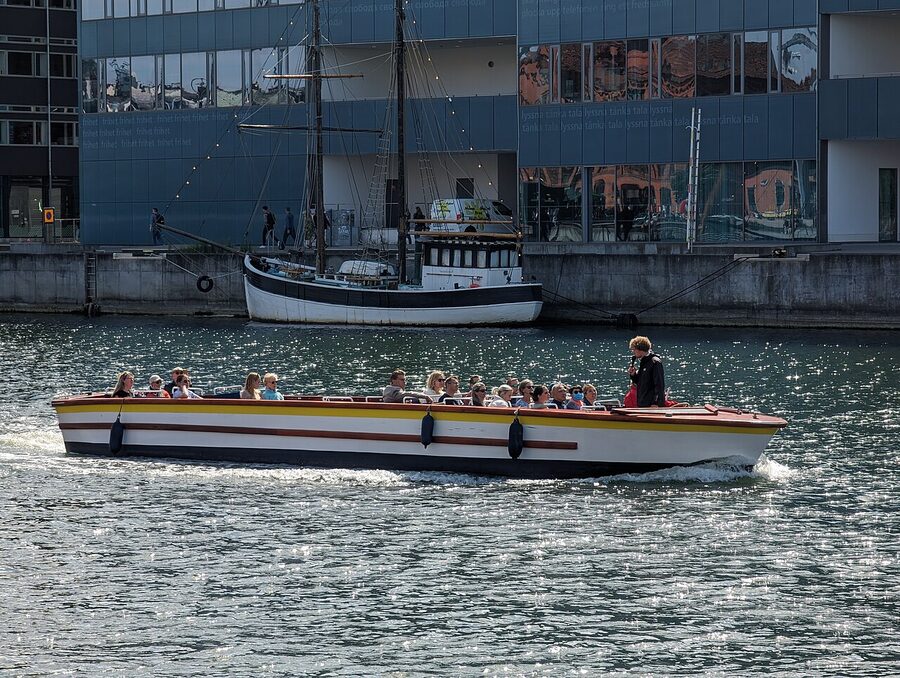

This is the only proper canal boat product in Malmö, run by Strömma, who also operate the canal boats in Stockholm and Gothenburg. Our full review covers what passengers actually mention afterwards (the guides are the headline; the bridges are the running joke), and breaks down the difference between the standard and shoulder-season runs. The booking page is straightforward, and tickets stay valid for the date and time you pick.
Check Availability
Read our full review
The route, bridge by interesting bridge
The boat sets off from Norra Vallgatan, runs west along the northern canal, swings down past the Castle, follows the southern moat past the parks, and loops back. Roughly 50 minutes, 22 bridges. Here are the ones the guide will actually point out.

Malmöhus Castle
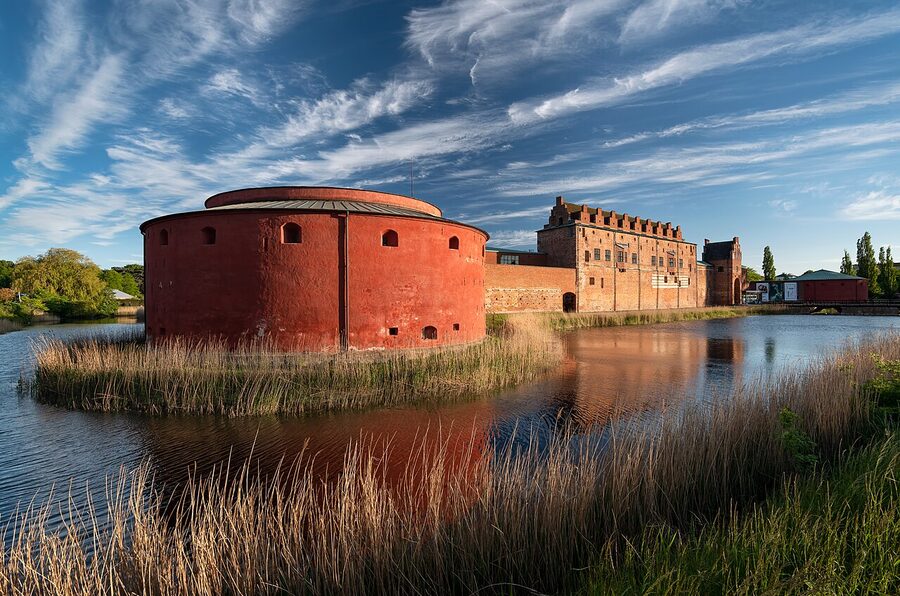
The big one. Built by the Danes in the 1530s when Malmö was their second city, it’s been a fortress, a prison (Scotland’s James Hepburn died here in 1578 after going mad in a cell), and is now a museum complex with the city art collection and natural history museum inside. The boat passes the moat-facing facade, which is the part you can’t really see from the street.
Kapstensbron
Easy to miss if the guide doesn’t flag it. Kapstensbron has a stone set into the side bearing Malmö’s coat of arms, dated to the 16th century. It’s one of the oldest known depictions of the city emblem (the griffin’s head, on a red and silver field) and it’s still up there, weathered into the stonework.
Kungsparken (King’s Garden)
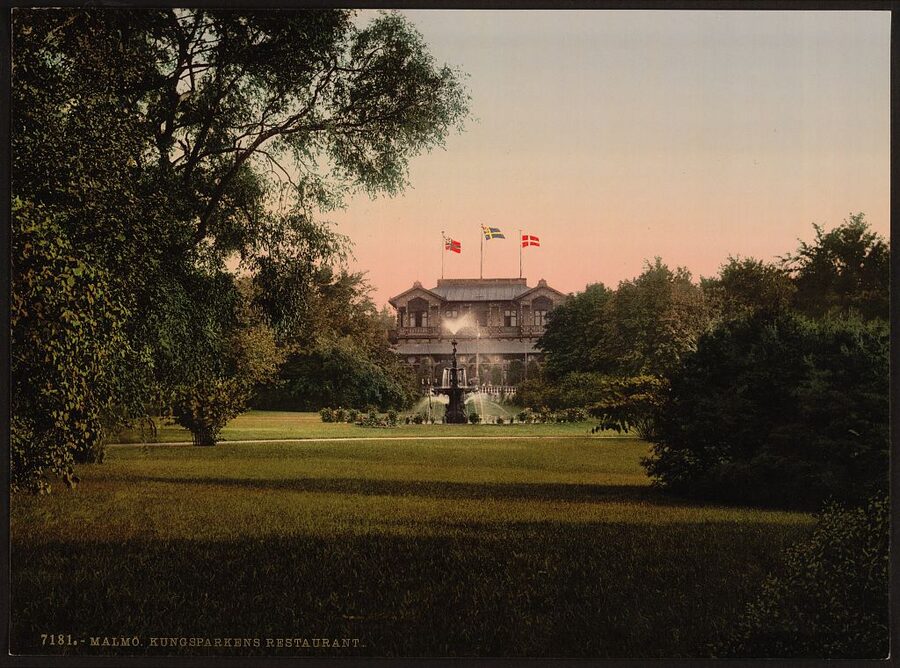
Malmö’s oldest park, laid out in the 1870s on what used to be the Castle’s gun emplacements. From the boat you see the southern edge with the old restaurant pavilion (1881) and a string of weeping willows along the bank. If you’ve got the rest of the afternoon, walk back through it: the trees are over 150 years old and the pond at the centre still has a small population of European pond turtles.

The City Library
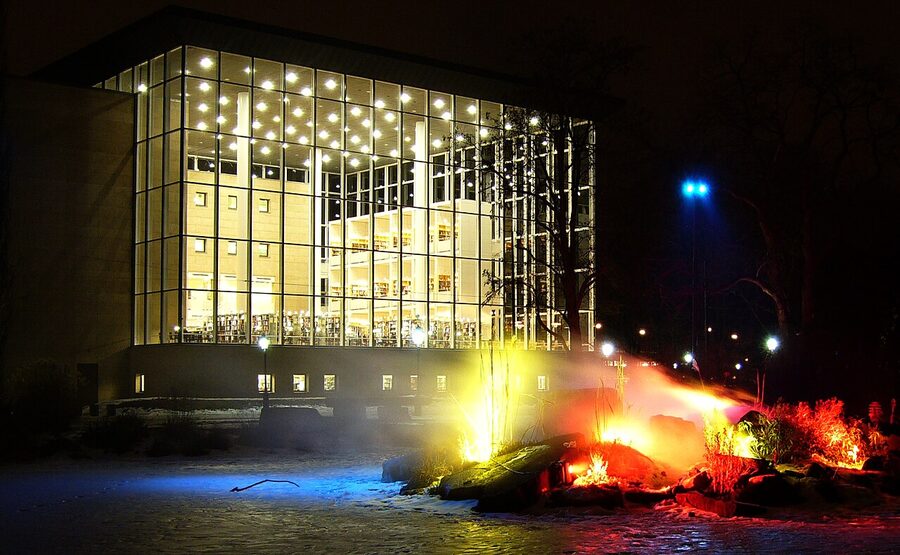
Henning Larsen’s “Calendar of Light” wing, all glass and white concrete, opened in 1999 and grafted onto the original 1946 library building. From the canal it’s gorgeous, almost cathedral-shaped, full of natural light. Worth coming back inside; the reading room overlooks Kungsparken and is open to the public for free.

The Casino and Stadshus
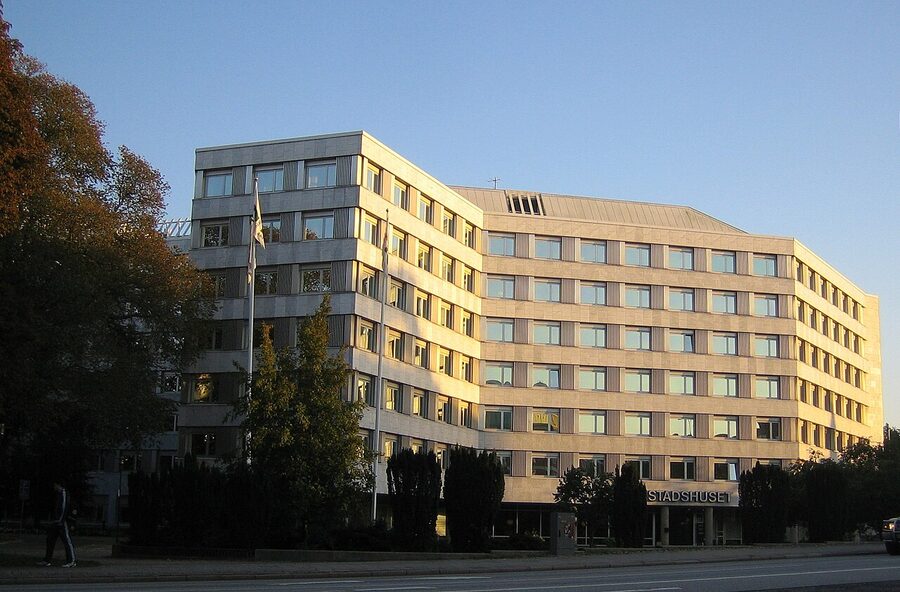
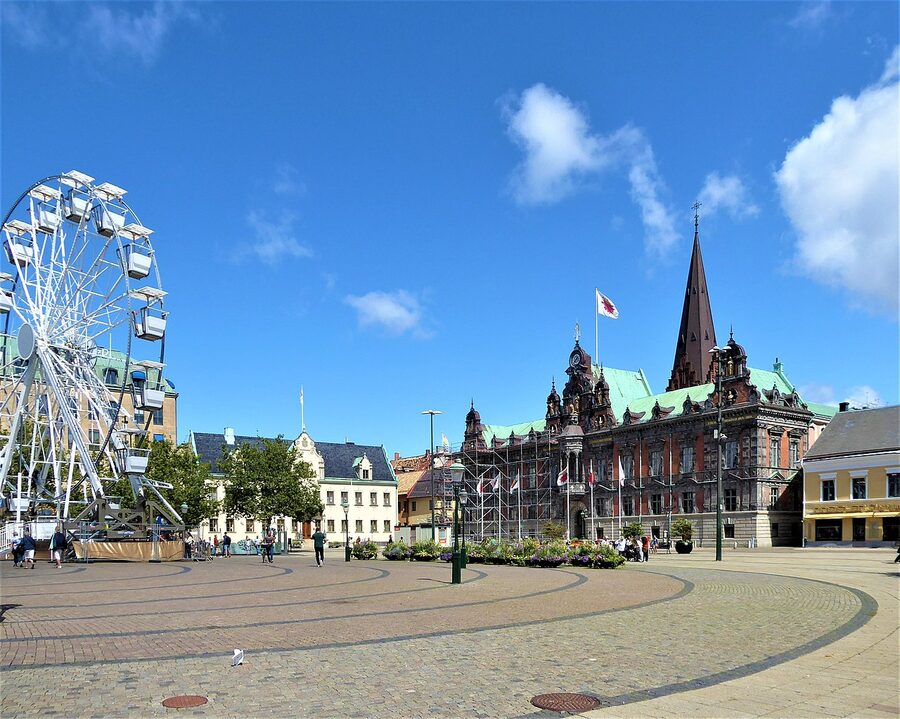
The Casino building (originally the 19th-century Hotel Kramer) sits on the corner where the canal turns past Stortorget. Just past it is the rear of the Stadshus, the city hall. The famous Renaissance front you see in postcards faces the square; the boat sees the back, which is plainer and a fair bit older.
The low bridges
Four of the 22 bridges are properly low. The guide will tell you to duck and means it. The lowest is just south of the Casino and clears the boat by maybe 30 centimetres on a normal water day. Locals stand on the bridges sometimes and wave at the passengers; it’s a thing.
The Western Harbour and Turning Torso (from a distance)
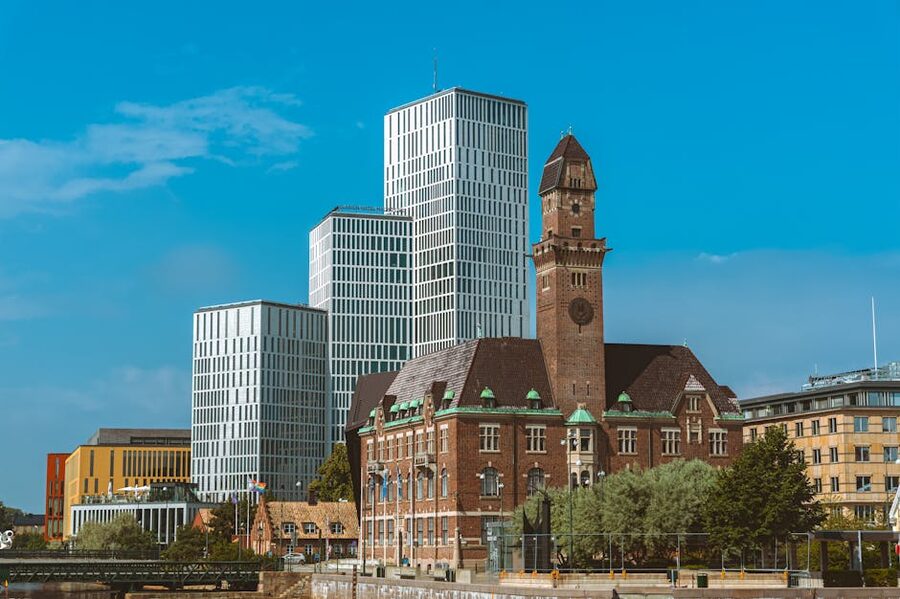
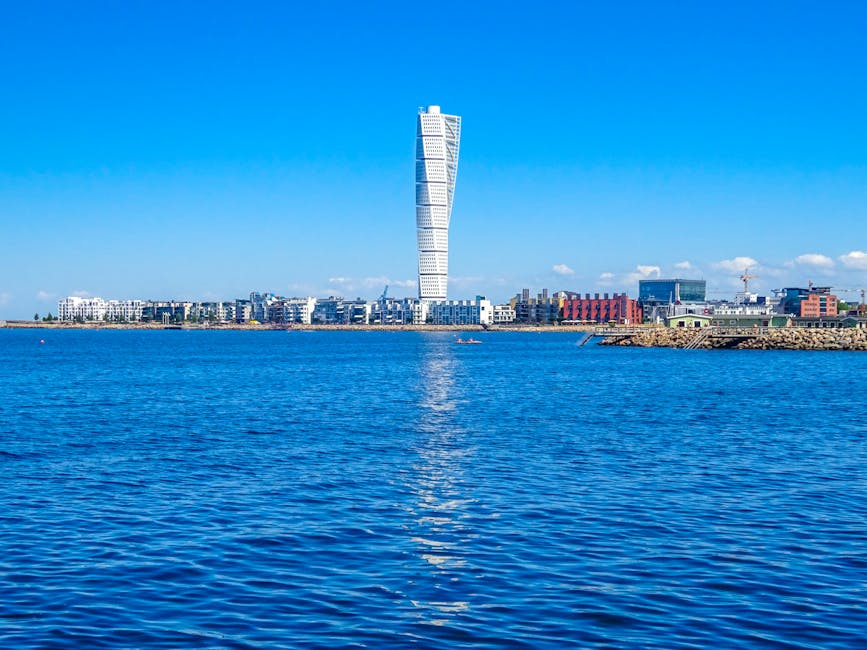
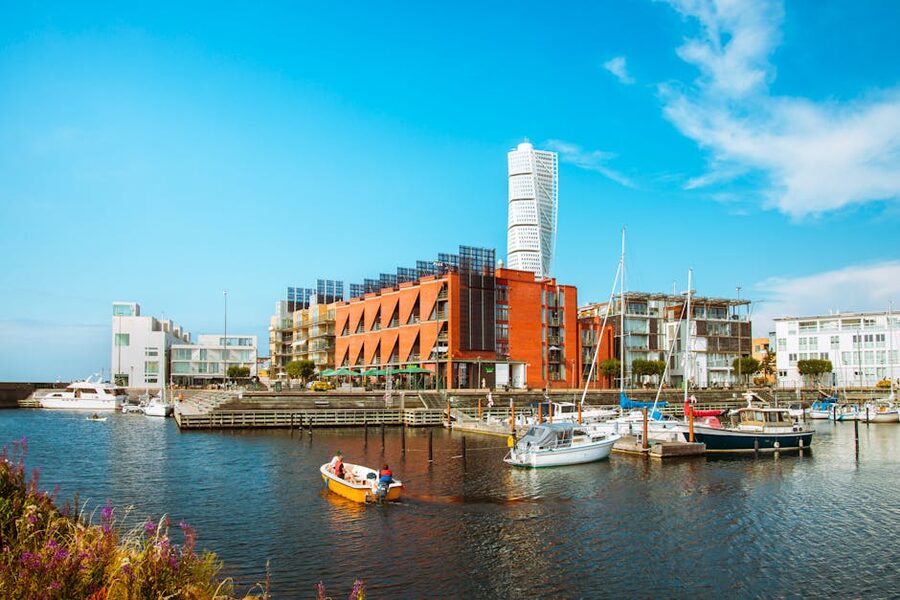
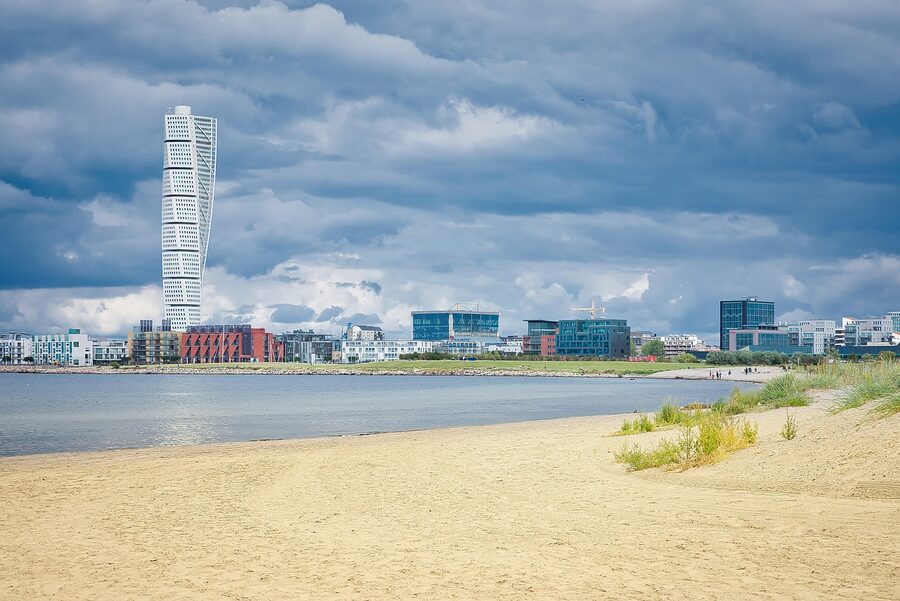
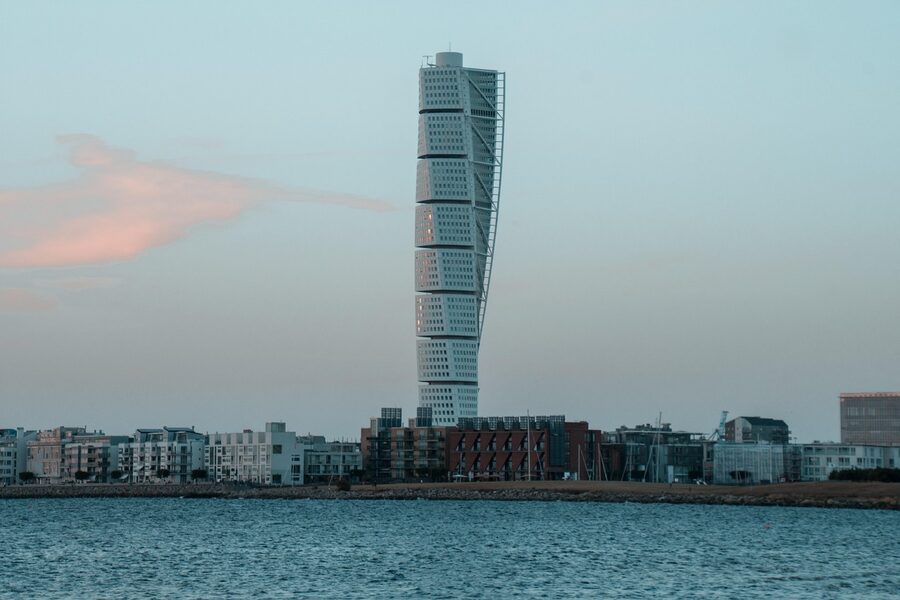
The classic Rundan loop doesn’t actually enter Västra Hamnen, but you’ll see the Turning Torso poking up over the rooftops on the northern stretch. If you want a proper look at it from the water, the longer 75-minute Rundan extension occasionally adds a Western Harbour leg. Ask at the booth; it’s not always advertised.
The history nobody else tells you
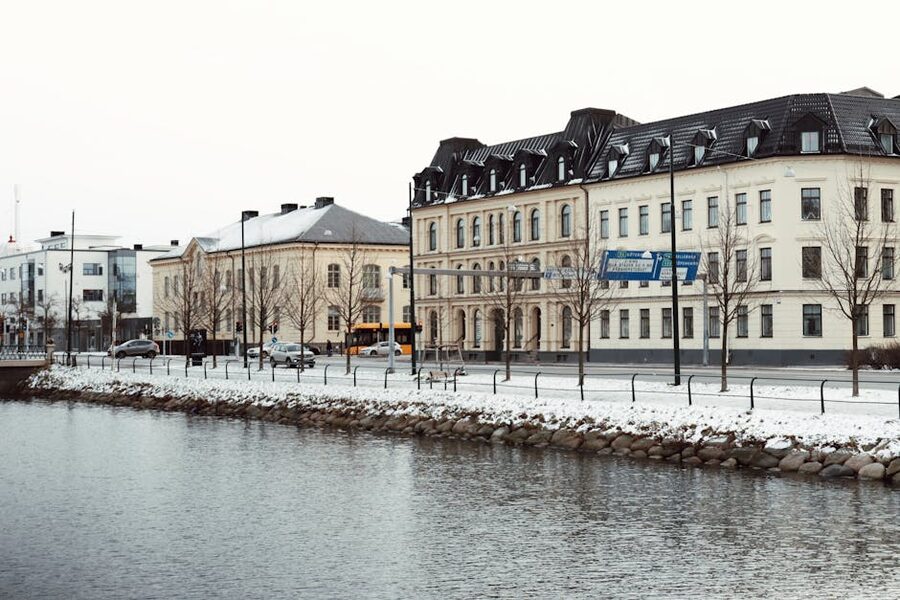
The canal you’re floating on isn’t pretty by accident. It’s the moat. Malmö was a fortress town for 400 years, and the entire ring of water around Old Town was dug as a defensive perimeter when the city belonged to Denmark. The Castle on the western edge was the strongest point; the canals were how the Danes intended to keep the Swedes out.
It didn’t work. In 1658, after the Treaty of Roskilde, Malmö became Swedish overnight along with the rest of Skåne. The fortifications stayed up for another century or so before being torn down or filled in. The bits left, what you’re floating through, are the inner moat. The outer defensive earthworks became the parks: Kungsparken, Slottsparken, and Pildammsparken were all gun emplacements first, gardens second.
.jpg)
The boat dock at Norra Vallgatan is on the spot where the inner harbour used to receive Hanseatic League grain shipments in the 1400s. The street name itself, Vallgatan, just means “rampart street”. You’re booking a tourist experience that’s been made out of military infrastructure that’s been gradually demilitarised for the last 350 years. Every bridge you duck under was put there because someone needed to cross the moat.
When to go
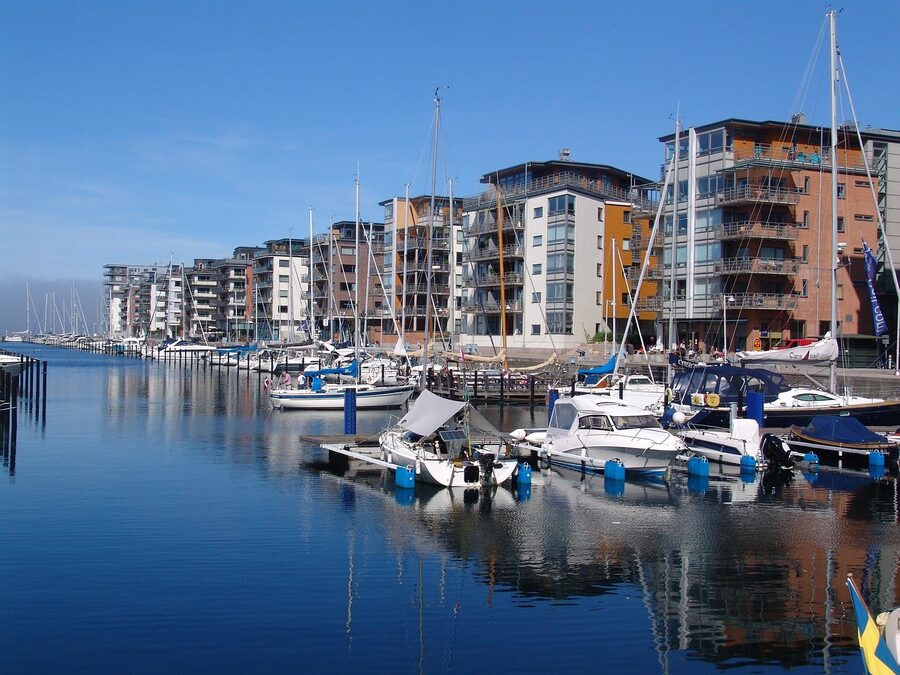
Tours run from late April or early May to early October, depending on the year and how cold the spring stays. The shoulder season (May, September, early October) is genuinely lovely, fewer crowds and you usually get the heated cabin going on cooler days. High summer (mid-June to mid-August) is busy, hot, and the most fun for atmosphere; expect packed boats, but also the longest light and the warmest evenings.
Avoid: the very first week of operations in late April. Boats sometimes don’t run if the canal is still partly frozen, and the guide rotation isn’t fully staffed yet. Also avoid: anything outdoors in Malmö during Eurovision week if it’s a host year. The whole canal area gets cordoned off for security.
Best time of day
For photos: 6pm-8pm in summer, when the canal water turns warm gold and most of the day’s tourist crowds have moved on to dinner. For comfort with kids: 10am or 11am, when energy levels are still good and the boat hasn’t been baking in the sun. For solitude: the very first tour on a Sunday morning, which is sometimes only a third full.
What to bring (and what you don’t need)
Bring: a thin layer even in high summer, because the canal sits in shadow for stretches and the breeze on the water is colder than the streets. A camera or just a phone. Sunglasses, even on cloudy days, because the water reflects hard.
Skip: an umbrella (you can’t put one up under the bridges). A picnic (no eating on board, and 50 minutes is not long). A sunhat with a wide brim if it’s windy, because it’ll go in the canal at some point. Locals know this; visitors regularly lose hats.
Getting to the dock
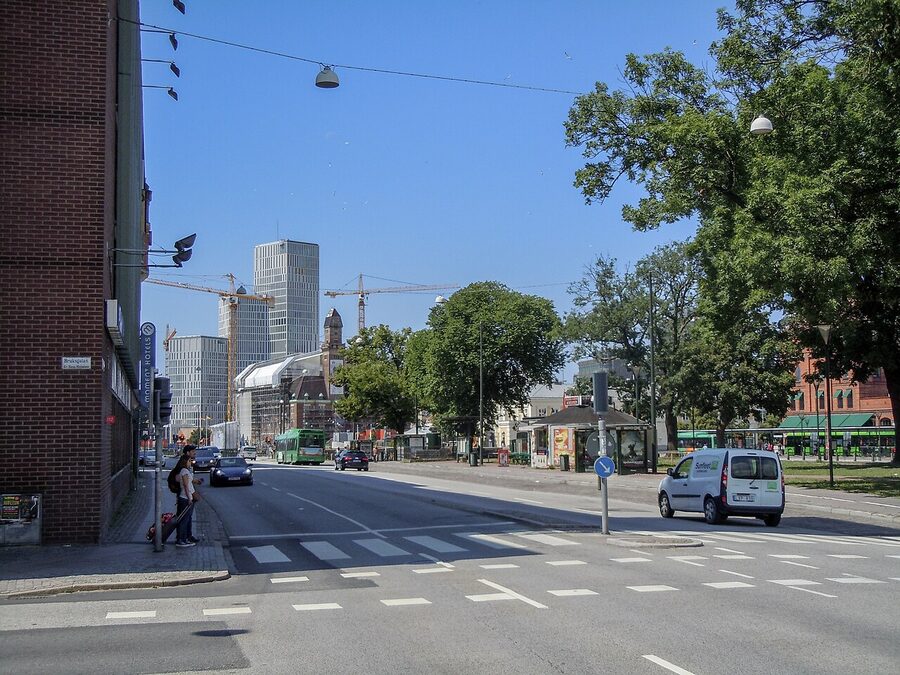

The Rundan dock is at Norra Vallgatan, on the canal side directly across from Malmö Central Station. From the station’s main exit on Centralplan, walk straight ahead onto the road bridge over the canal, turn left at the water, and follow the dockside path for about 90 seconds. You’ll see the green and yellow Rundan kiosk and the boat ramps.
From Stortorget (Old Town main square): walk north on Hamngatan for around four minutes, you’ll come straight to the dock.
From the Öresund train (if you’re coming from Copenhagen): the train terminates at Malmö Central or Triangeln. From Central, follow the directions above. From Triangeln, take the metro one stop or walk for 15 minutes through the Old Town.
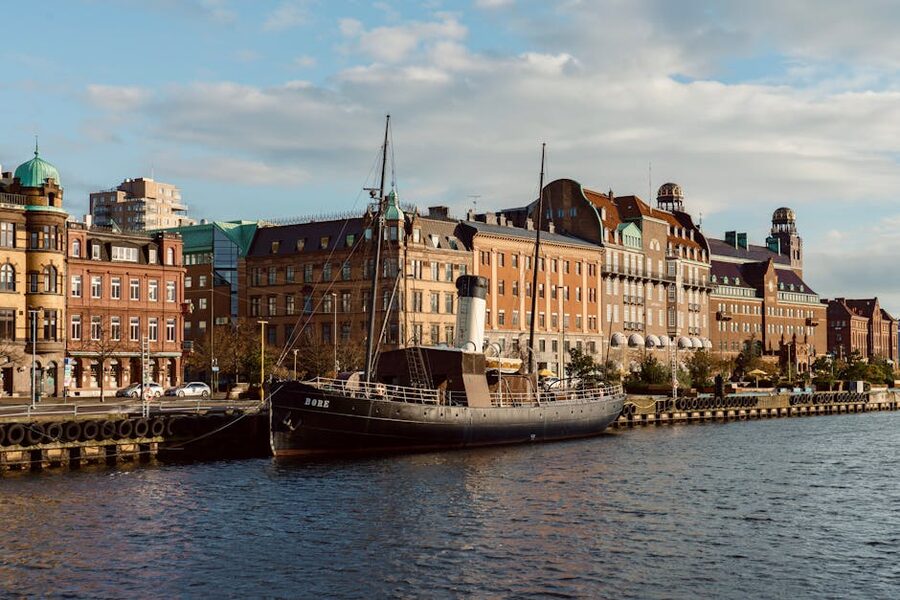
Combining it with the rest of your day
The Rundan is a 50-minute thing, which is short enough to do as part of a half-day in Malmö. A typical itinerary that works: arrive on the train from Copenhagen at 10am, do the 11am Rundan tour, walk five minutes to Stortorget for lunch at one of the cafes, spend the afternoon at the Disgusting Food Museum or Malmöhus, train back to Copenhagen by dinner.
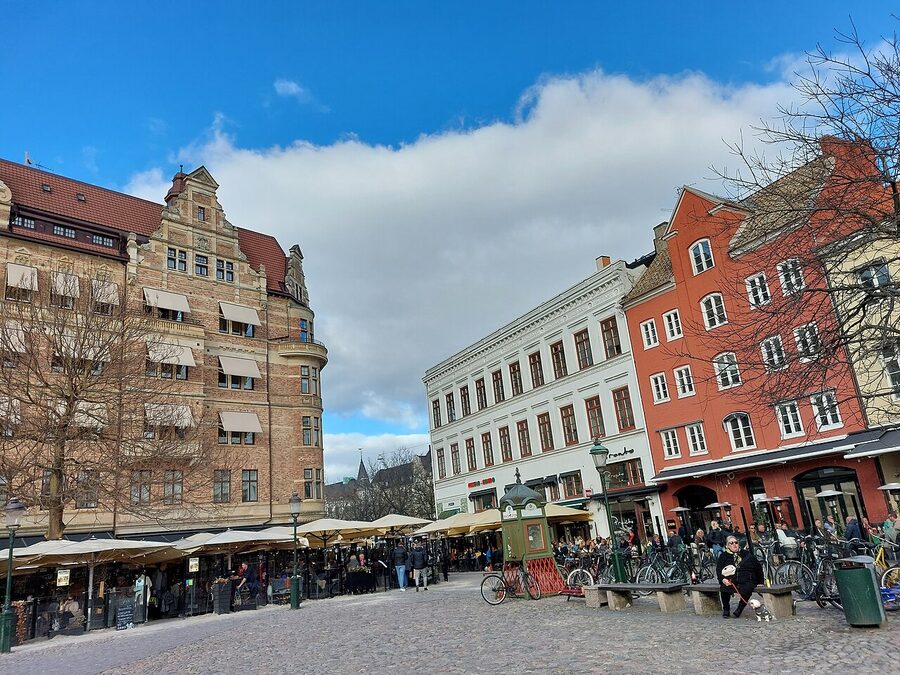
If you’d rather see the city on foot afterwards, the standard Malmö walking tour picks up the threads the boat doesn’t reach: the Möllevången immigrant-food district, Lilla Torg, the medieval St Petri church. The two tours pair well, water first to get the geography, walk second to fill in the streets. If you’ve already done a Gothenburg trip and you’re curious how Malmö’s neighbourhood walking compares to the Haga walking tour, the closest equivalent is Möllevången: same immigrant-shaped food culture, very different aesthetic.
For one of Malmö’s odder attractions, the Disgusting Food Museum is ten minutes from the boat dock on foot. It’s not for everyone, but if you’ve come from Copenhagen for the day, you might as well check off both.

Languages and accessibility
Tours run in Swedish and English by default, with the guide doing both back to back. They’ll do German on request if there’s a critical mass of German speakers on board. French and Spanish happen occasionally in summer when seasonal staff are bilingual. Don’t expect translation on the spot for other languages.
Wheelchair access is limited. The boats can fit one folding wheelchair via a ramp, but you need to call the operator ahead at least 24 hours in advance and confirm the boat going out has the ramp configuration. Not all of them do. The guide is good at helping but the canal infrastructure isn’t.
Compared to canal tours elsewhere in Sweden
If you’re doing a wider Sweden trip, the obvious comparison is the Paddan canal cruise in Gothenburg. They’re cousins, both flat-bottomed boats, both run by Strömma, both feature ducking under low bridges. Gothenburg’s loop is older (Paddan has been running for 80 years) and more theatrical; Malmö’s is shorter and feels more like a working canal than a tourist set piece. If you have to pick one, Gothenburg is the bigger production. Malmö’s is the better light.
The closest equivalent in Stockholm is the Stockholm boat tour through the central waterways, but that’s saltwater, much bigger boats, and a totally different feel. Stockholm is sea-and-bridges; Malmö is moat-and-park.
Common questions
Can I bring a drink on board?
Officially no, in practice no one will stop you with a coffee in a takeaway cup. Beer is genuinely not allowed and the guide will ask you to put it away.
What if it’s raining hard?
Tours run in light to moderate rain; the staff hand out free ponchos and the guide makes jokes about Skåne weather. If a proper storm rolls in, they cancel and refund or rebook for the next available slot. Lightning grounds the boats automatically.
Is it worth doing if I’ve already done a Stockholm or Copenhagen canal tour?
Yes, if you have an hour to spare and you’re already in Malmö. The character is different from both. If you’re choosing between making a day trip from Copenhagen specifically for the boat or doing something else: pick the something else, and do the Rundan only if you’re in Malmö anyway.
Can I just turn up and buy a ticket?
Yes in May, June (early), September and October. Risky in July and the first half of August, especially after 1pm. If you’ve come on the train specifically, just book ahead online. Not knowing whether your slot exists is worse than the $23 you might have saved by walking up.
Where the Rundan fits in a Sweden itinerary
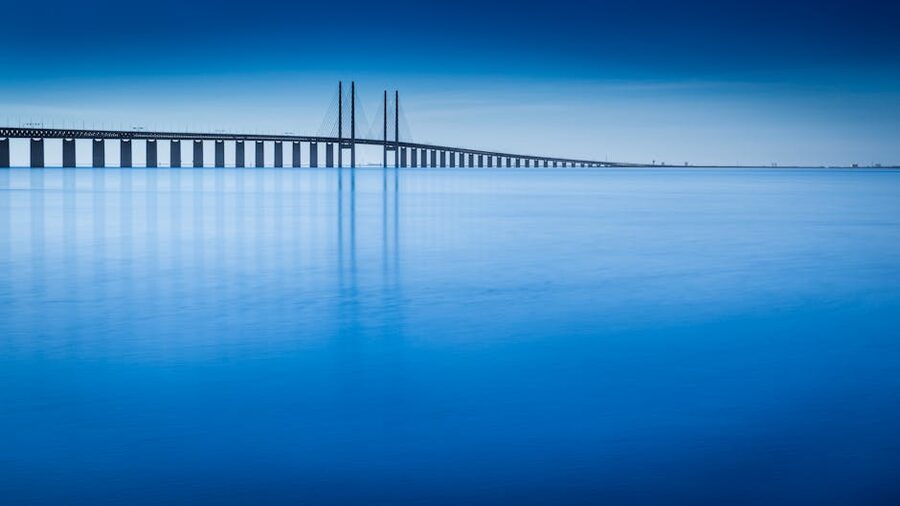
If you’re working your way south through Sweden, Malmö makes the natural last stop before you cross the Öresund Bridge into Denmark. Spend half a day on the canals and the Old Town, eat lunch on Stortorget, and you’ll have seen what’s worth seeing. The Rundan is the fastest way to get the city’s geography sorted in your head before you start wandering on foot.
Coming the other direction (a Copenhagen trip with a Malmö extension), the Rundan works as your two-hour orientation: train across the bridge, do the boat, walk to lunch, train back. You’ll have seen the city at canal level, which is how it was designed to be seen 500 years ago. After this you can branch out: the walking tour for the streets, the Disgusting Food Museum for an afternoon’s weirdness, or the longer Gothenburg archipelago cruise if you’ve got more days and are heading north. The boat tour itself stays the bedrock everyone agrees on.
Affiliate disclosure: We earn a small commission if you book through the links above, at no extra cost to you. It’s how we keep this site running.