
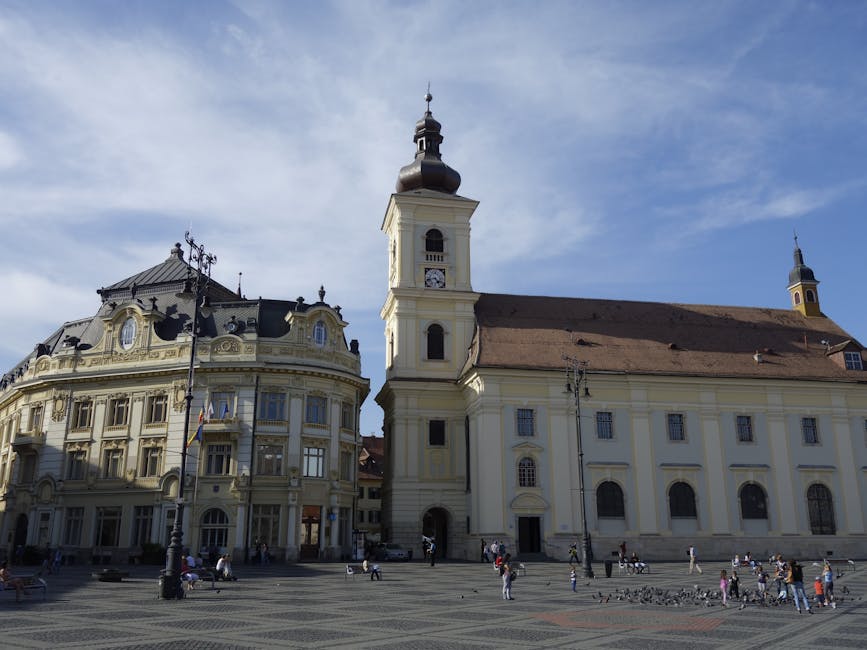
Is Sibiu worth the trip if you’ve already wandered Brasov? That’s the question I get more than any other about this city, and the honest answer takes a paragraph or two to land.
Brasov and Sibiu are both Saxon citadels, both founded by German settlers around the same medieval window, both wrapped in walls that survived Tatars, Turks and centuries of empire-shuffling. On paper they’re twins. Spend a morning in each and they feel like cousins rather than copies.
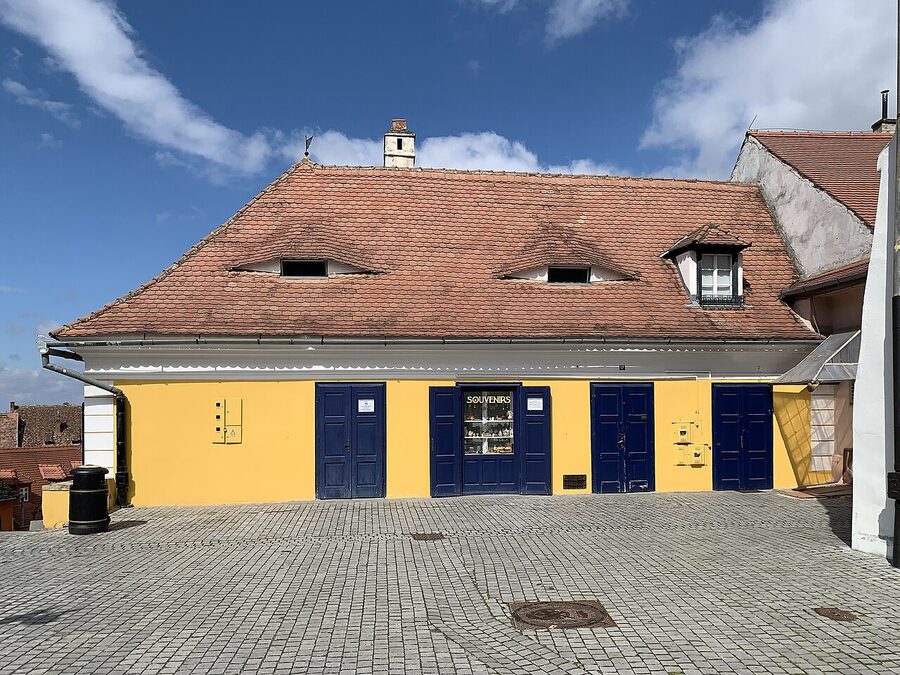
Sibiu is the quieter, more German one. Brasov leans Romanian, busy, with the Black Church and Tampa cable car pulling crowds up the mountain. Sibiu’s old town is flatter, smaller, and woven with little stairways and tunnels you don’t expect. The famous “eyes” peering down from the rooftops aren’t a marketing line. They’re real, they’re everywhere, and they make the squares feel watched in a way that’s hard to shake.

_-_img_07.jpg)
So yes, it’s worth it. The catch is that doing Sibiu well takes a guide, not a guidebook. The history is dense, the squares are confusing on a map, and the legends behind the Bridge of Lies and the Stairs Passage don’t tell themselves. A two-hour sightseeing tour solves all of that for less than the price of a decent dinner.
Best mid-tier: SB01 City Tour Sibiu, $35. Two hours, slightly deeper history, smaller groups. Worth the upgrade if you care about context.
Best private: Private Walking Tour of Sibiu, $24. Cheapest private guide in the city. Pace it however you want, ask whatever you want.
- What a Sibiu sightseeing tour actually covers
- What’s normally included
- The three sightseeing tours I’d actually book
- 1. Sibiu: Daily Sightseeing Guided Tour:
- 2. SB01 City Tour Sibiu: Exploring the Heart of Transylvania:
- 3. Private Walking Tour of Sibiu:
- 4. Sibiu Old Town Exploration Game and Self-Guided Tour:
- How to pick between them
- Where to start, and where the tours actually meet
- Timing
- The eyes, and why everyone photographs them
- The Brukenthal Museum: skip on a tour, do on your own
- What the Council Tower climb gets you
- Day trips from Sibiu if you’ve got more than a day
- Where Sibiu came from, the very short version
- Practical bits before you go
- Money and tipping
- Getting to Sibiu
- How long to stay
- Best season
- Weather and what to wear
- Other Romania tickets and tours worth pairing with Sibiu
What a Sibiu sightseeing tour actually covers
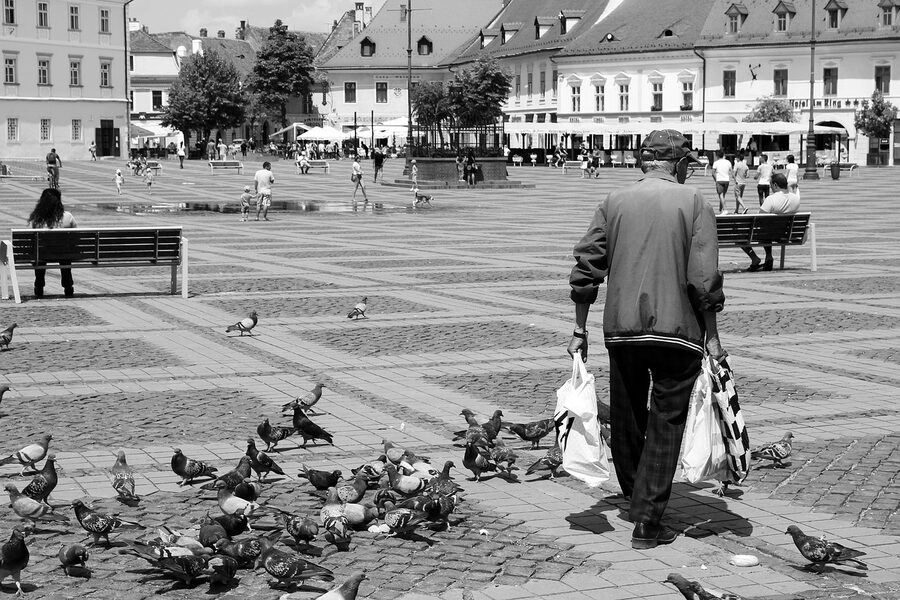
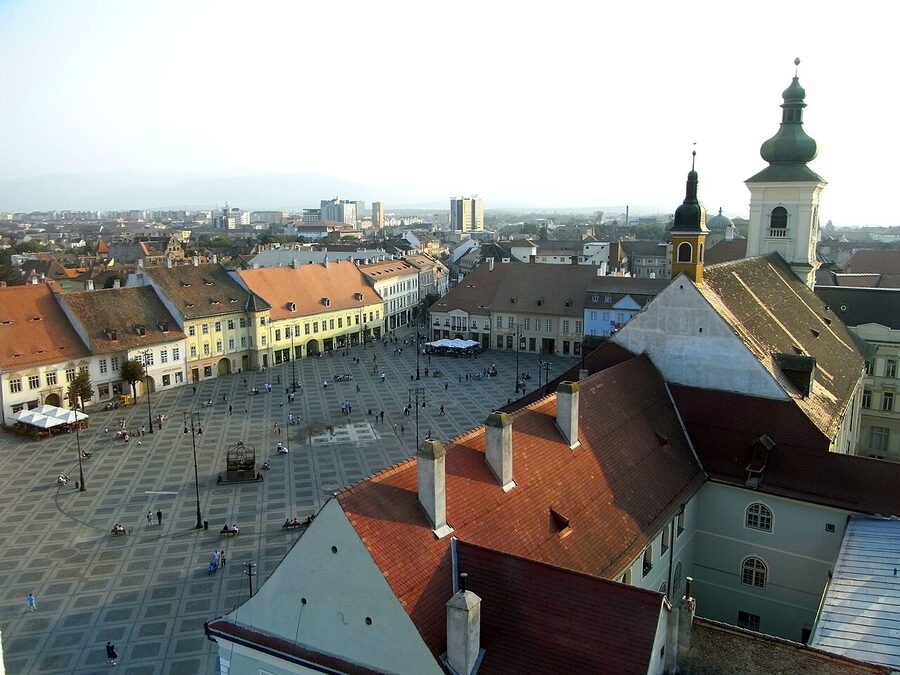
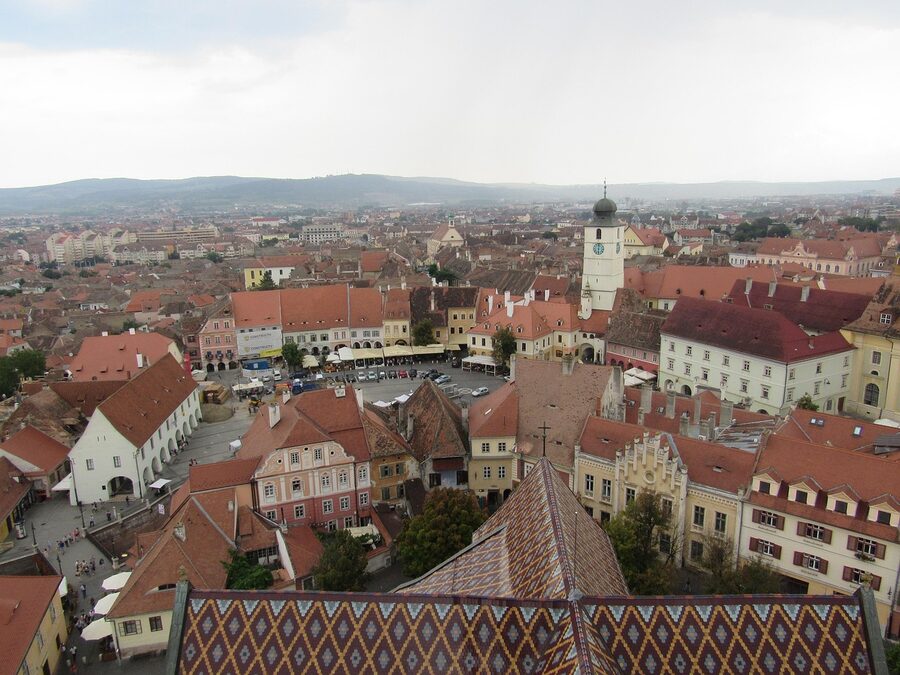
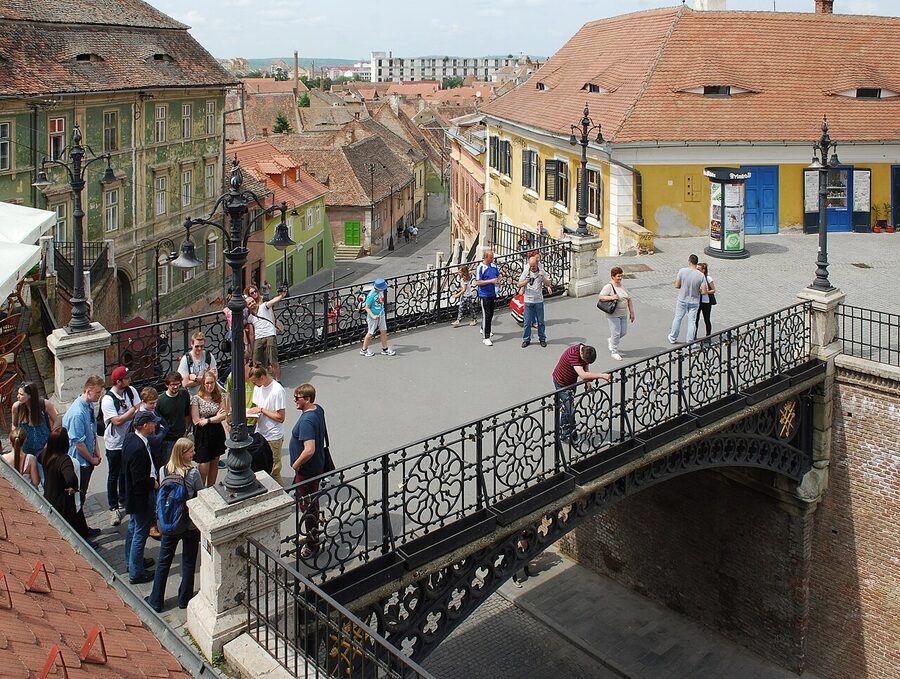
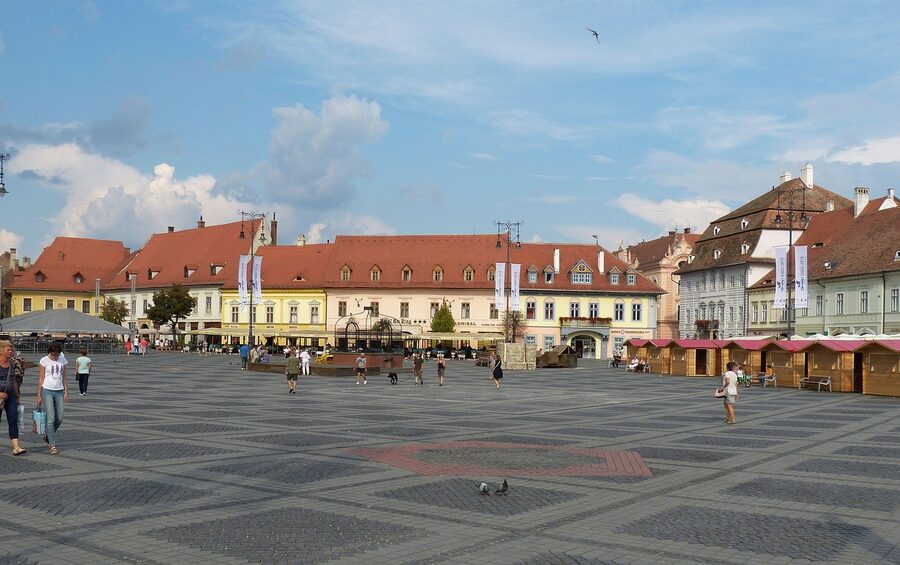
The standard route hits three connected squares plus a handful of buildings nobody would find on their own. Most tours start in Piata Mare, the Great Square, in front of the Brukenthal Palace. From there you slip through the passage between the Council Tower and the Catholic Church into Piata Mica, the Small Square. That’s where the Bridge of Lies hangs over Strada Ocnei. A few minutes north and you’re in Piata Huet, the third square, dominated by the Lutheran Cathedral with its 73-metre Gothic tower.
Almost every tour worth booking covers those three. The differences are pacing, group size, what’s included inside the buildings, and how much the guide riffs on legends versus dates.
Standard 1.5 to 2-hour walks usually skip building interiors. You’ll stand outside the Brukenthal Museum, hear about it, and move on. If you want to actually go in, plan to budget separately, the museum’s worth two hours on its own. Same goes for climbing the Council Tower (about 5 lei) and the Lutheran Cathedral tower (about 10 lei). Your guide will point you at the entrances but won’t usually walk you up.
What’s normally included
Every reputable Sibiu walking tour I’ve seen covers:
- Piata Mare and the story of why it’s a UNESCO-shortlist square
- The Brukenthal Palace facade and the Samuel von Brukenthal story
- The Council Tower and the passage to Piata Mica
- The Bridge of Lies legend (yes, you have to lie on it)
- The Stairs Passage down to the lower town
- The Lutheran Cathedral exterior, often with a peek inside
- The eye-window houses and why they look like that
What’s almost never included: museum entry, tower climbs, the Brukenthal Library, the Orthodox Cathedral on Strada Mitropoliei (it’s a 10-minute walk from the historic core and most tours skip it). Budget a separate afternoon if those matter to you.

The three sightseeing tours I’d actually book
I’ve waded through the Sibiu walking-tour listings on GetYourGuide and Viator and the field is smaller than you’d think. Maybe six legitimate operators, the rest are private guides selling the same product at different price points. These three are the ones I’d hand cash to a friend for.
1. Sibiu: Daily Sightseeing Guided Tour: $16
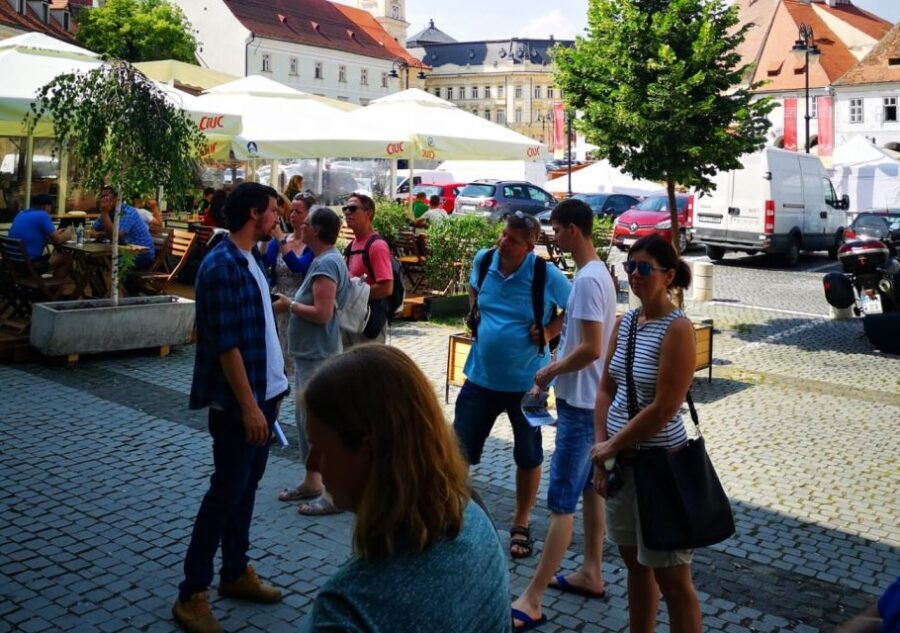
This is the cheapest legitimate guided tour you’ll find in Sibiu and the one I’d default to for most travellers. It runs every day at a fixed time, group size is small enough that the guide can hear questions, and the route covers Piata Mare, Piata Mica, Piata Huet plus the Bridge of Lies and the eye-window streets. Our full review has the meeting-point details and why guides like Ciprion get repeat-named in feedback. At sixteen dollars it costs less than a sit-down lunch and you walk away knowing the layout.
Check Availability
Read our full review
2. SB01 City Tour Sibiu: Exploring the Heart of Transylvania: $35
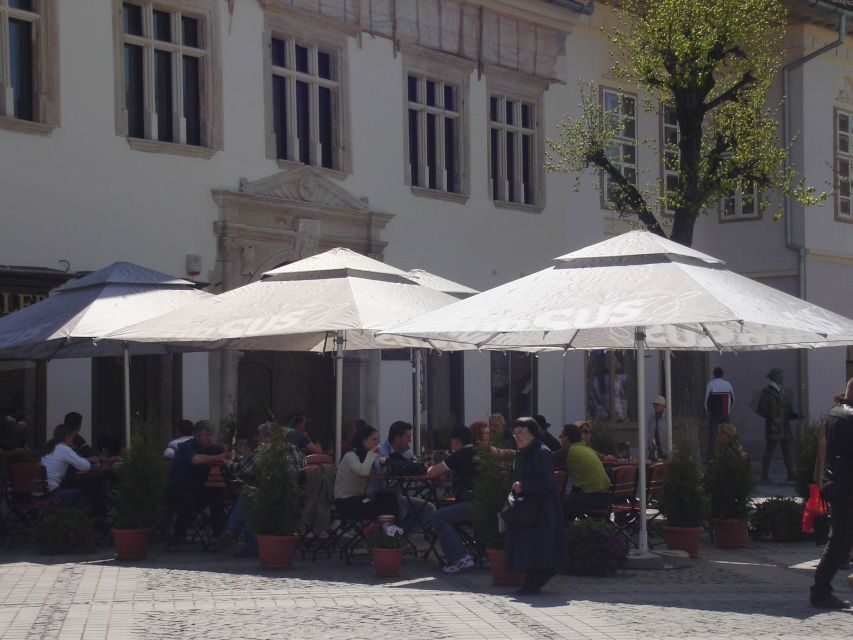
If you want a guide who can actually breathe between sights, this is the upgrade. Two hours instead of one and a half, smaller groups, more depth on the Saxon-Romanian-Hungarian layered history that makes Sibiu confusing if you only get the Romanian half. Corina is the most-praised guide on the operator’s roster. Our review covers what the extra thirty minutes actually gets you and which guides to ask for.
Check Availability
Read our full review
3. Private Walking Tour of Sibiu: $24
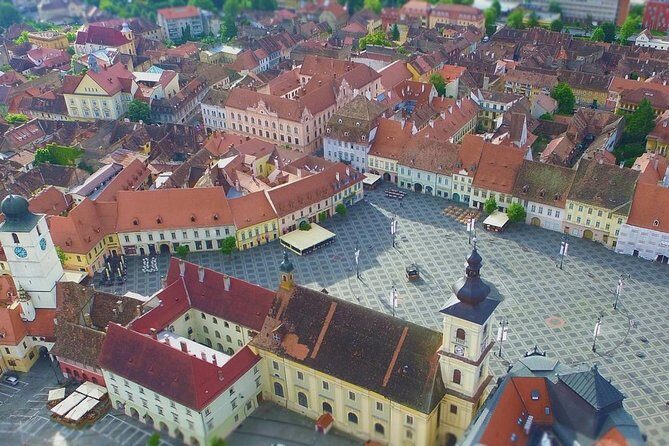
This is the surprise pick. A private guide for less than the SB01 group rate. The trade-off is the operator runs a single guide, so you don’t get to pick. But the route is identical to the group tours and you can drag it longer if you want, or cut it short and head to coffee. Worth it for couples and small families who’d rather not walk in a pack of twelve. Our review explains who runs it and how the meeting works.
Check Availability
Read our full review
4. Sibiu Old Town Exploration Game and Self-Guided Tour: $6
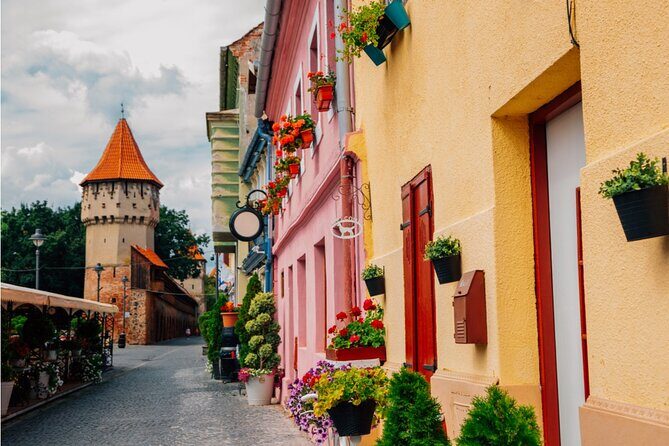
I’m including this one because the format is different enough to be useful. It’s not a guided tour, it’s an app-driven scavenger hunt that walks you between Sibiu’s seven historic towers solving small puzzles along the way. Six dollars per phone, runs at your pace, and kids actually engage instead of dragging behind. The full review notes that the app is a bit clunky but the route covers ground a guided walk wouldn’t.
Check Availability
Read our full review
How to pick between them
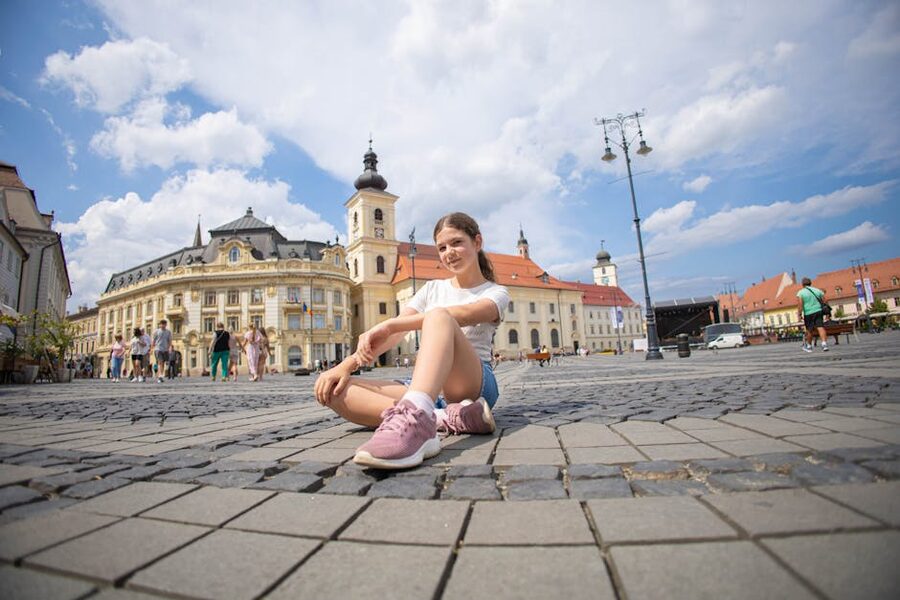
If you’ve got an afternoon and a tight budget, take the daily $16 tour. It hits everything and you’ll have time for the Brukenthal Museum afterwards.
If you care about Saxon-vs-Romanian context and find guided rushing annoying, pay for SB01. The extra thirty minutes is the difference between learning the names of three squares and understanding why they exist.
If you’re in town with a partner or two friends and you’d rather walk at your own pace, the private tour is genuinely the best deal in Sibiu walking. Cheaper than the group SB01 if you’re two people splitting it, and you can detour to whatever bakery looks good.
Skip the guided format entirely if you have small kids. The exploration game wins for under-twelves. They’ll engage with the puzzles in a way they won’t with a guide reciting dates.
Where to start, and where the tours actually meet
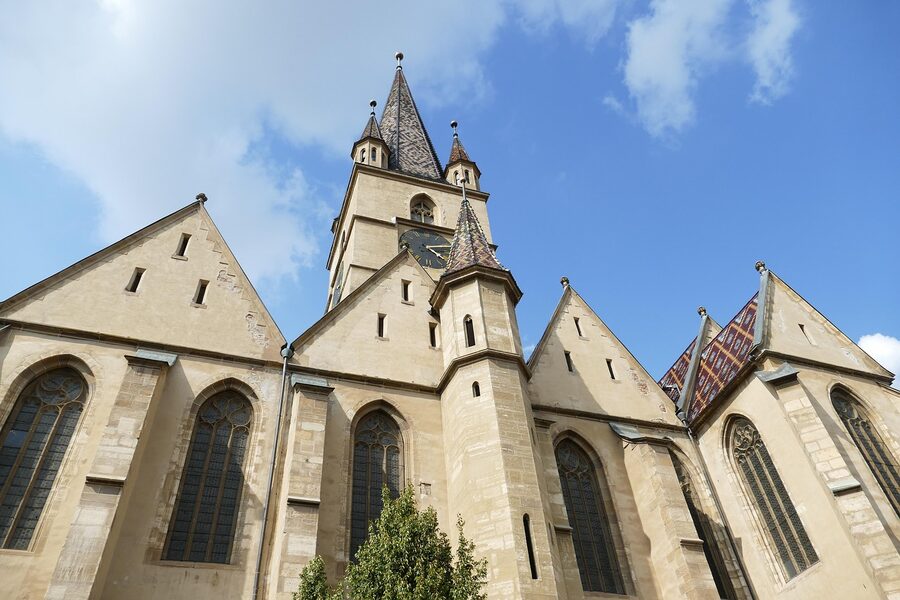
Almost every Sibiu sightseeing tour meets in or near Piata Mare. The Daily Sightseeing tour meets in front of the Brukenthal Palace. SB01 starts at the same spot, just on a different schedule. The private tour usually meets at Piata Albert Huet by the Lutheran Cathedral, but the operator confirms via email after booking.
If you’re staying inside the historic walls, you can walk to any meeting point in five to ten minutes. From the train station it’s a 15-minute walk south through the lower town and up the Stairs Passage. Don’t bother with a taxi, the historic core is pedestrianised and you’d have to get out and walk anyway.
Timing
Morning tours are quieter and cooler. Sibiu’s squares fill up with day-trippers after 10am, especially in summer. The 9am or 9.30am slots run with smaller groups and you can actually hear the guide. Afternoon tours from 2pm onward catch the late-lunch crowd and the squares are louder. Evening light on Piata Mare is genuinely beautiful from about 7pm in summer, but most guided tours don’t run that late.
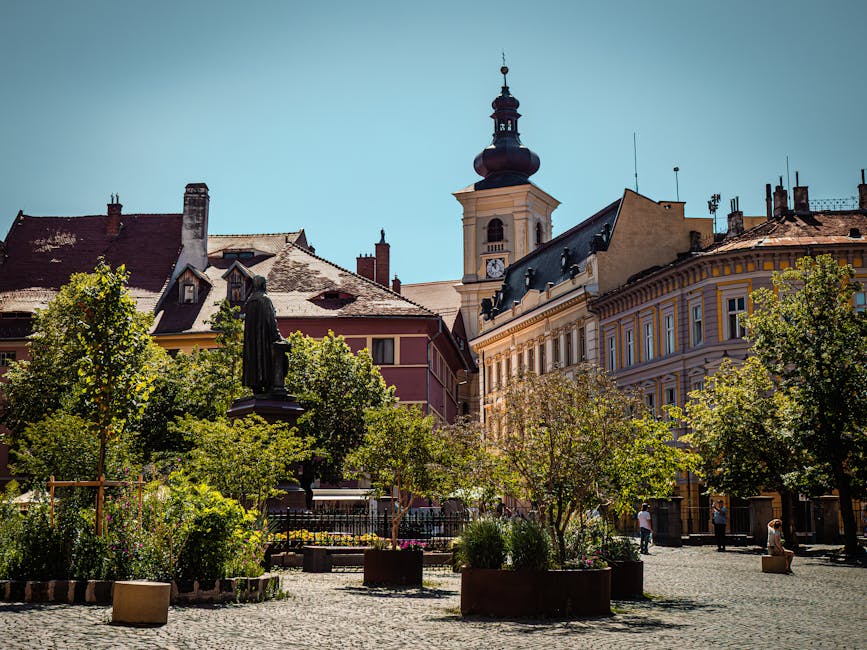
The eyes, and why everyone photographs them
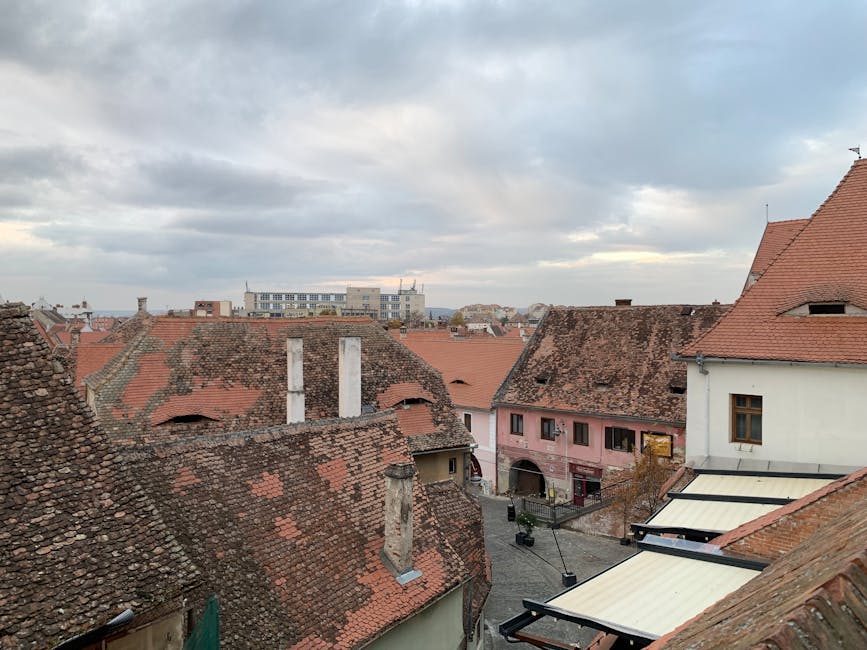
The eye-shaped dormer windows on Sibiu’s rooftops are the city’s signature image. Practical answer: they’re 18th-century attic vents with hooded shutters that let air circulate through grain stores. Fun answer: locals will tell you they were built so the Saxon merchants could spy on their neighbours, and that the shape was deliberate. Both are partly true.
You’ll see them best from the centre of Piata Mica looking up at the buildings on the south side, and from Piata Albert Huet looking back across the rooftops toward the Council Tower. Most guided tours stop at one of these spots specifically to point them out. If your guide doesn’t, ask, the photographers in your group will thank you.
The Brukenthal Museum: skip on a tour, do on your own
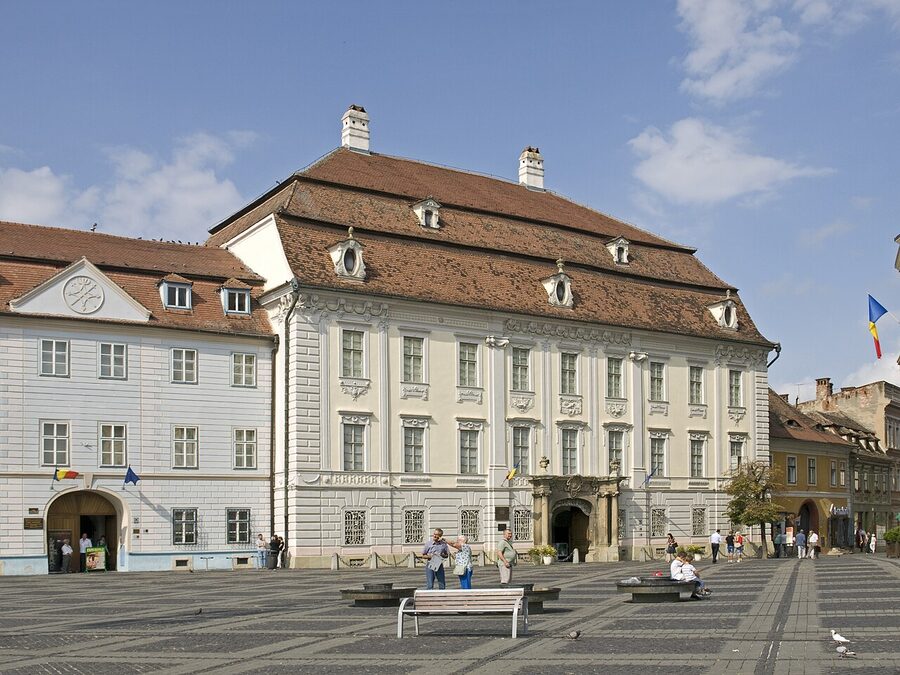

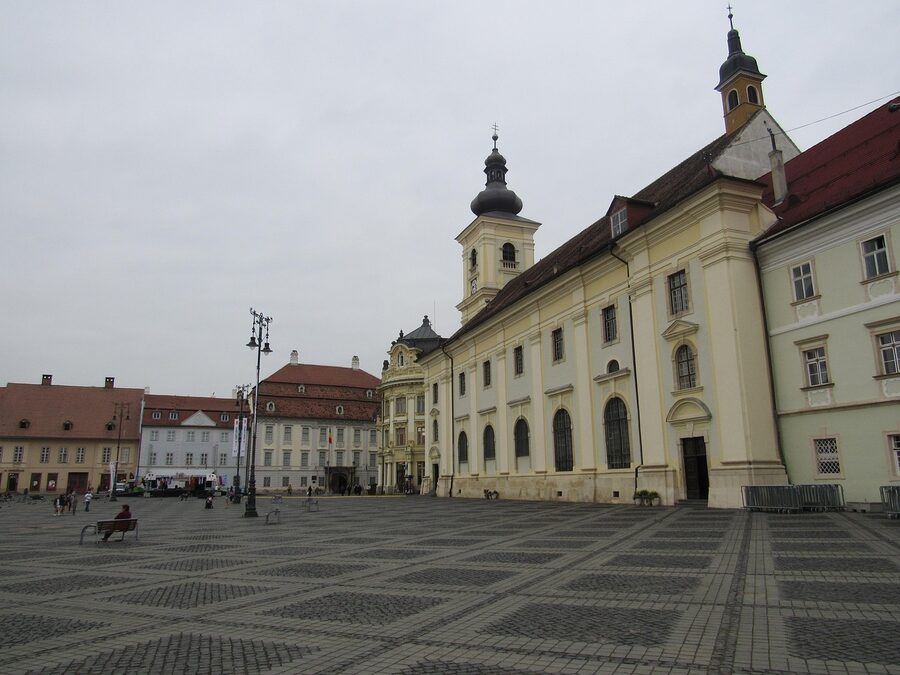
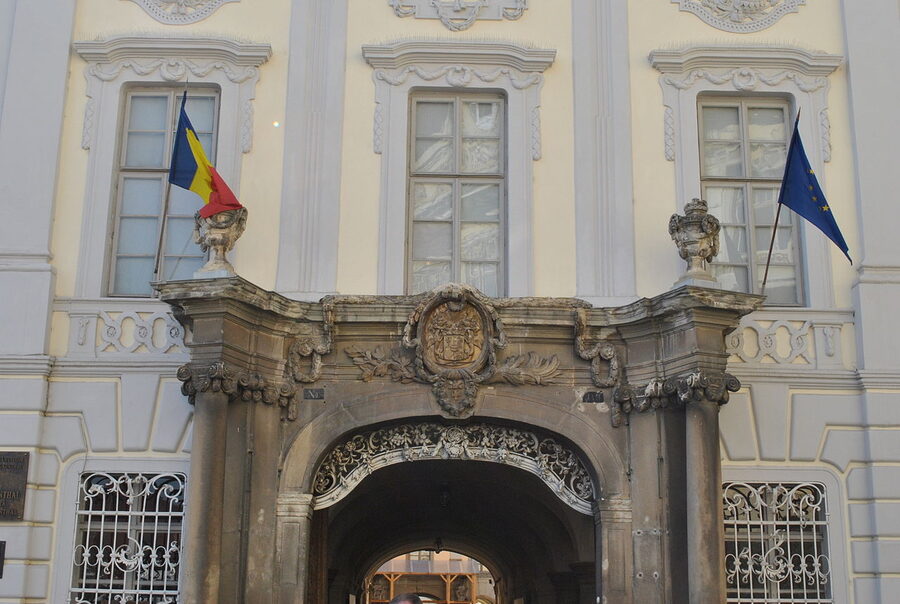
The Brukenthal is the second-oldest public art museum in Romania (1817) and houses Samuel von Brukenthal’s personal collection of European Old Masters. It’s better than you’d expect from a small Romanian city. Cranach, Memling, smaller pieces by Brueghel-school painters, and a good run of Flemish and Italian work.
The reason it doesn’t make sense to do as part of a 90-minute walking tour: you need at least 90 minutes inside the museum alone, and your guide can’t take you. Better plan: do the walking tour first, get oriented, then come back to the Brukenthal in the afternoon when the squares get loud. Entry is around 30 lei (about $7).
.jpg)
Closed Mondays and Tuesdays in winter, Mondays only in summer. Always check the day-of website before walking over because the museum sometimes closes for events without much notice.
What the Council Tower climb gets you
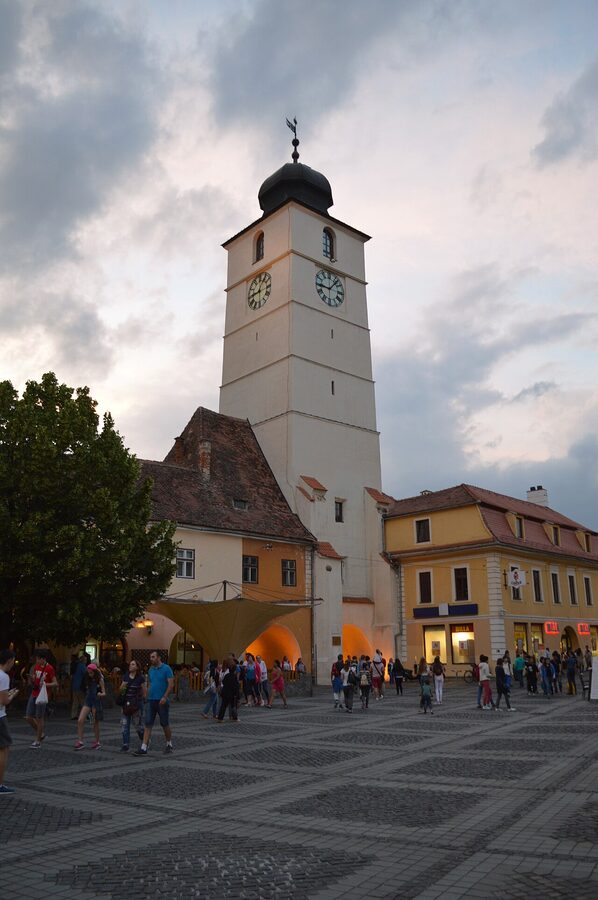
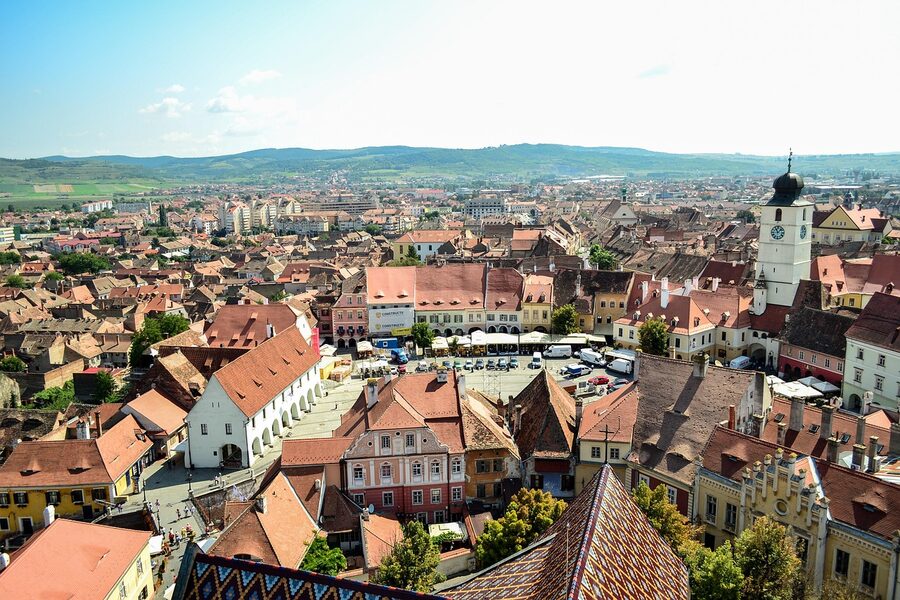
If you do one paid extra in Sibiu, climb the Council Tower. Five lei to enter, about 142 steps up a tight medieval spiral, and you come out on a balcony with the best view in the city. You see the eye-windows from above, the connecting passage between Piata Mare and Piata Mica, the Lutheran Cathedral spire, and the Carpathians on a clear day.
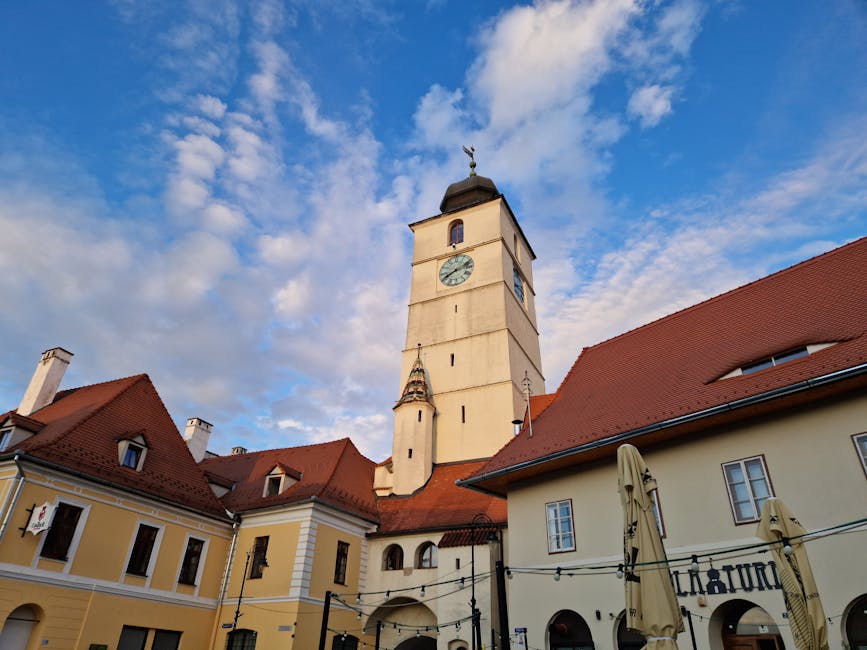
The stairs are not for anyone unsteady on tight spiral steps. There’s no lift. Wear shoes that grip and use the rope handrail, the steps are worn smooth in places. Five minutes up, plan to spend ten minutes at the top, five minutes down.
Day trips from Sibiu if you’ve got more than a day
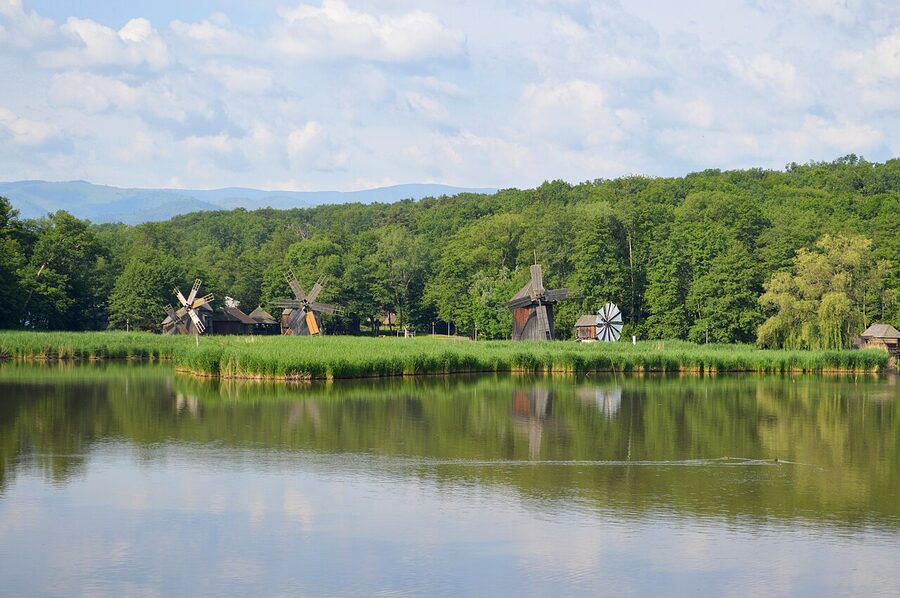
The ASTRA National Museum Complex is the obvious side trip. It’s an open-air ethnographic museum 4km south of Sibiu, with about 400 traditional buildings (mills, churches, peasant houses) reassembled across 96 hectares of forest around Lake Dumbrava. Plan three hours minimum. Bus 13 runs from the centre, or a Bolt is around 25 lei.
If you’ve got a full day, the loops everyone considers from Sibiu are:
- Corvin Castle and Alba Iulia, around 8 hours total. Corvin is the dramatic Hunyadi family castle in Hunedoara, used as a stand-in for Bran in plenty of Dracula material. Alba Iulia is the star-shaped Habsburg-era citadel where modern Romania was declared in 1918.
- Sighisoara, around 2 hours each way. Vlad the Impaler’s birthplace, UNESCO-listed citadel, more compact than Sibiu’s centre.
- Bran Castle and Brasov, around 3 hours each way. Possible as a long day from Sibiu but better done as a Brasov-base trip.
- The Transfagarasan Highway, only viable June through October. The mountain road that Top Gear made famous, with hairpins climbing up to Balea Lake at 2,034m.
If Brasov-origin trips interest you, our guide on booking a Bran Castle day trip from Brasov covers the standard three-castle loop, and the Sighisoara day trip from Brasov guide covers the Saxon citadel that often pairs with Viscri and Rupea. Brasov is a slightly better base for those trips because it’s closer to Bran, but Sibiu’s the better base for Corvin and Alba Iulia.
Where Sibiu came from, the very short version
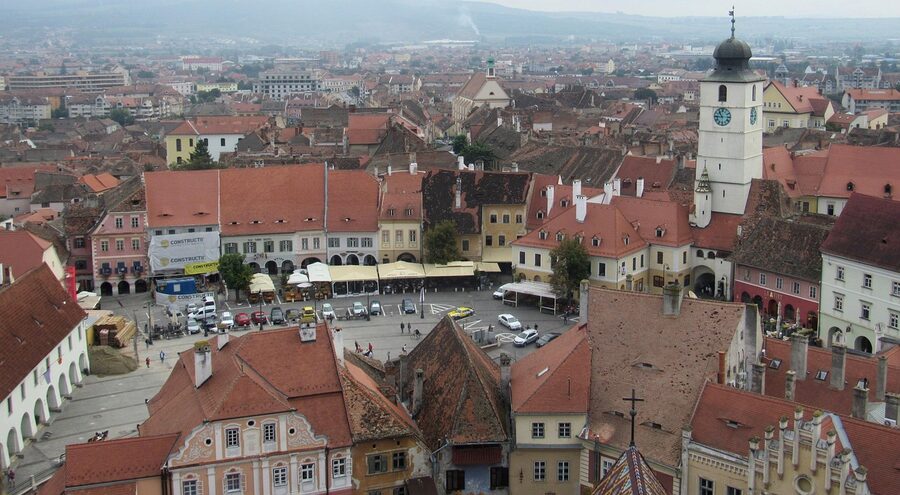
Sibiu was founded in the mid-12th century by Saxons invited by the Hungarian crown to settle Transylvania. The original German name, Hermannstadt, stuck for 700 years and you’ll still see it on signs and museum labels. The town grew rich on trade between Vienna, Budapest and the Ottoman world, then walled itself in three concentric rings against Tatar and Turkish raids.
It became the seat of the Lutheran church in Transylvania, the largest Saxon city, and the de-facto cultural capital of the German-Romanian community for centuries. Most of that Saxon population left for Germany after 1945 and again in the 1990s. What stayed are the buildings, the churches, the squares and the eye windows.
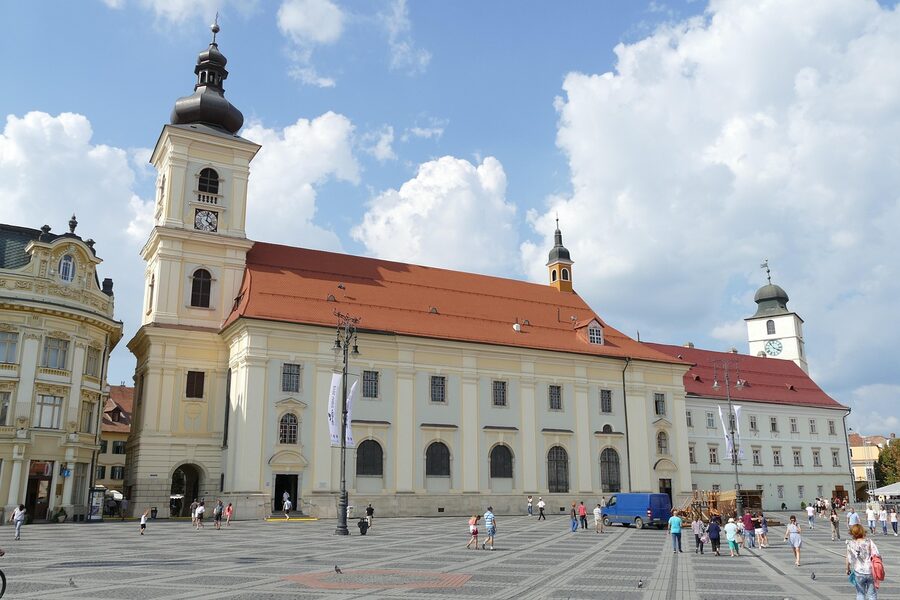
One famous local: Klaus Iohannis, ethnic Saxon, served as Sibiu’s mayor from 2000 to 2014 and then as Romania’s president. He’s the reason Sibiu was tidied up so visibly in the 2000s; the cobbles, the lighting, the restored facades on Piata Mare all date from his mayoral run.
Sibiu was also Romania’s first European Capital of Culture, jointly with Luxembourg, in 2007. The festival circuit that exploded that year (the Sibiu International Theatre Festival, now the third biggest in the world after Edinburgh and Avignon) is a leftover.
Practical bits before you go
Money and tipping
Tours quoted in dollars on GetYourGuide and Viator are charged in Romanian lei at the operator’s current rate, usually within a few cents of the listed USD price. Lei (RON) trades at around 4.5 to the dollar. Tipping a walking-tour guide 10 to 15 lei per person ($2 to $3) is standard and appreciated. Card payments work everywhere in town except a few small bakeries.
Getting to Sibiu
Sibiu has a small international airport with direct Wizz Air flights from London, Munich and a handful of other European cities, and Lufthansa and Austrian connections via Frankfurt and Vienna. From Bucharest the train takes 5.5 to 6 hours, the bus is about the same. From Brasov it’s 2.5 hours by car or bus, no direct train. From Cluj it’s about 3.5 hours by car.
How long to stay
Two nights is the sweet spot. Day one: walking tour, Council Tower, dinner. Day two: Brukenthal Museum, ASTRA Museum in the afternoon, evening on Piata Mare. Three nights only if you want to do a full day trip to Corvin or Sighisoara. One night and you’ll feel rushed.
Best season
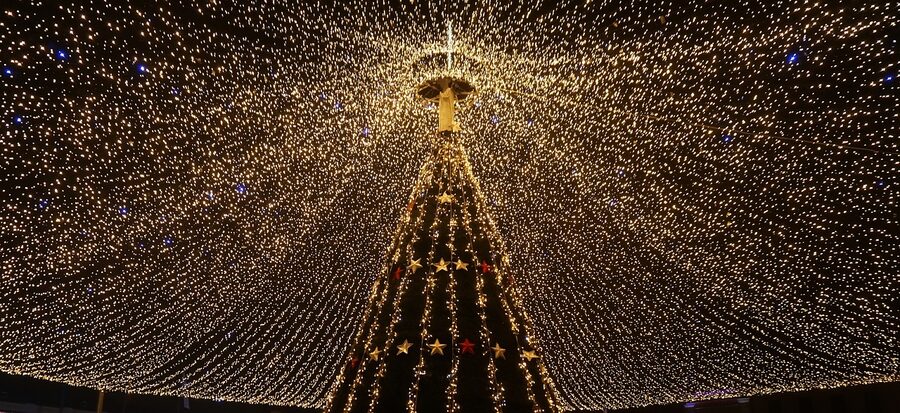
May through September is ideal. June and September are quietest. July and August are warm and pleasant but the squares get busy. Winter is cold (Sibiu sits at 415m and gets snow) but the Christmas market is one of the best in Eastern Europe, running roughly mid-November to early January.
Weather and what to wear
Comfortable shoes are non-negotiable. The cobbles are the original 14th-century stones in places and they’re rough. Heels won’t survive Piata Mare. Layers in spring and autumn, the temperature drops 10C between the square in sunlight and the shaded passages. Summer brings short, hard thunderstorms, pack a light shell.
Other Romania tickets and tours worth pairing with Sibiu
If you’re doing a full Transylvania loop, the natural pairings are the Bran Castle day trip from Brasov for the Dracula-castle box, the Brown bear watching tour from Brasov for the Carpathian wildlife angle (Romania has Europe’s largest bear population), and the Sighisoara day trip from Brasov for the smaller Saxon citadel that pairs with Viscri and Rupea Fortress.
From Bucharest, the standout is the Dracula, Peles and Brasov day trip from Bucharest, which packs three castles plus Brasov into one long day if you’re tight on time. Worth knowing it’s the inverse routing of starting in Brasov, so if you’re already in Transylvania, do the Brasov-origin version instead.
If you’re spending time in Bucharest before or after, the Bran Castle ticket guide covers visiting independently rather than on a coach tour, and the Palace of Parliament ticket guide covers the Ceausescu-era megabuilding (second-largest administrative building in the world after the Pentagon). The communism walking tour of Bucharest pairs particularly well with Sibiu because the contrast between Saxon medieval town and Soviet-era Bucharest is vivid. The Therme Bucharest spa is a half-day rest stop near the airport on a long-trip last-day if you’re flying out from OTP.
If you’ve already been to similar walking-tour-led citadels elsewhere, the closest parallels are Segovia, Avila and Toledo as a day trip from Madrid (three medieval cities in one day, similar Saxon-equivalent feel), the Cathedral, Giralda and Alcazar combo in Seville, and Toledo as a half-day from Madrid for the layered religion-and-walls thing. For walking-tour-style castle visits, Windsor Castle in England and Stirling Castle in Scotland share the citadel-with-stories pattern Sibiu does.
For another wildlife day trip in the region, the husky sled tour from Kiruna in Swedish Lapland is the closest hands-on-animals parallel, with the moose safari from Stockholm being the actual closest large-mammal-watching cousin to Brasov bear watching.
Affiliate disclosure: links to GetYourGuide and Viator earn us a small commission if you book; it never costs you extra. We only recommend tours we’d take ourselves.