
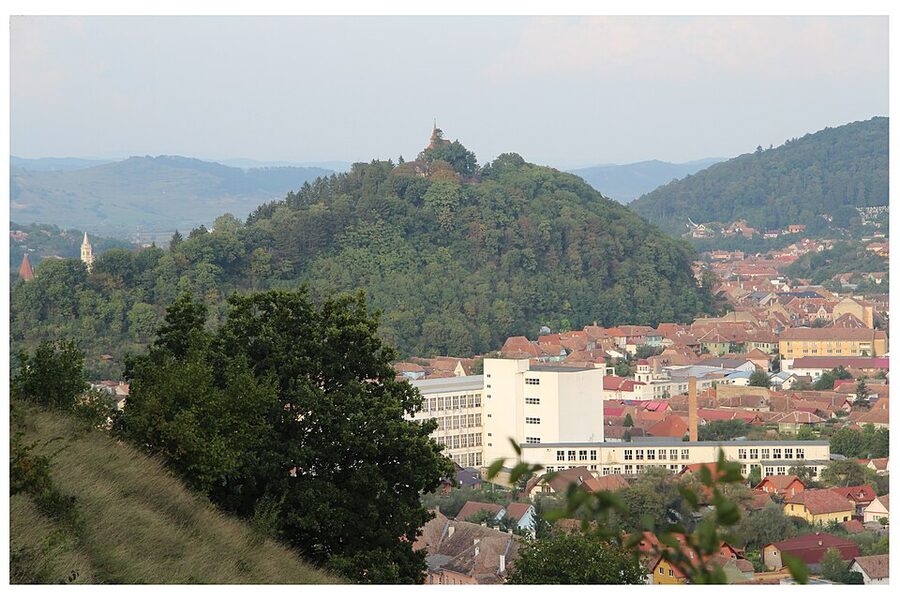
You climb the Covered Stairway in the dim, with worn oak treads creaking under your boots and the wooden roof closing over your head like a barn loft. Then you step out onto the plateau, the Church on the Hill behind you and the whole medieval citadel of Sighișoara spilling down the slope below: red-tiled roofs, the Clock Tower poking up through them, the Carpathians far in the haze. That’s the moment that makes the early start from Brașov worth it.
Most travellers staying in Brașov assume Sighișoara needs a full overnight or a Bucharest-to-Sighișoara coach trip. It doesn’t. From Brașov you can do Sighișoara plus one or two Saxon stops in a single day and be back for dinner.

Best for slow travellers: Sighișoara & Viscri UNESCO Day Tour, $106. Skips Rupea so you get longer inside Sighișoara.
Best private: Sighișoara & Viscri Private Full-Day, $126. Hotel pickup, your pace, room for kids or grandparents.
- Why this trip is so much easier from Brașov than Bucharest
- What you actually see on a Sighișoara day trip from Brașov
- The three tours worth booking from Brașov
- 1. Viscri, Sighișoara & Rupea Fortress Small-Group Tour: 1
- 2. Sighișoara & Viscri UNESCO Day Tour: 6
- 3. Sighișoara & Viscri Private Full-Day Tour: 6
- Inside the citadel: what to actually do once you are there
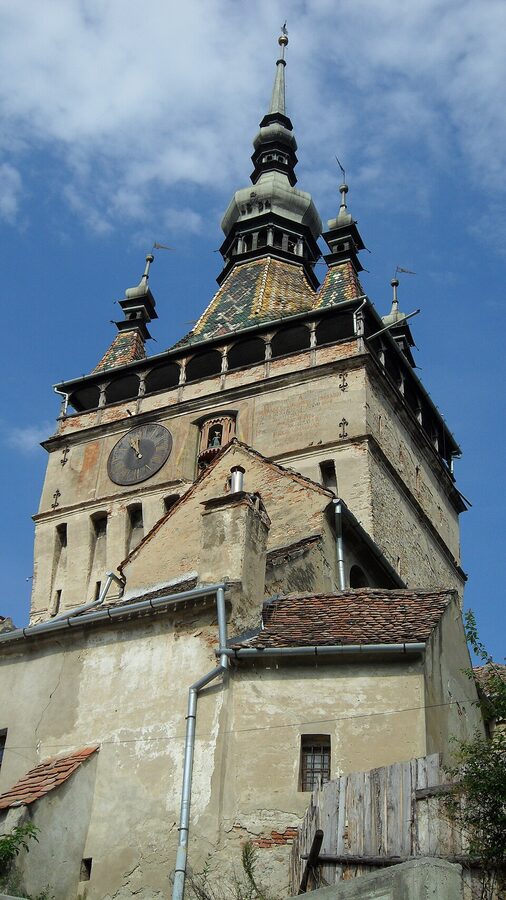
- The Clock Tower (Turnul cu Ceas)
- The House of Vlad Dracul
- The Covered Stairway and Church on the Hill
- The Roman Catholic and Trinity churches
- Viscri: a Saxon village frozen in time
- What to eat in Viscri
- Rupea Fortress: the third stop
- The history that makes Sighișoara different
- The Vlad III question
- When to go and what the day actually looks like
- Going independently: train, bus, rental car
- Practical bits I wish I had known
- If you are combining Sighișoara with the rest of Brașov
Why this trip is so much easier from Brașov than Bucharest
The mistake most travellers make is booking a Bucharest day trip after they’ve already moved to Brașov. They wake at 4am, sit on a coach for two and a half hours, do Sighișoara on a tight schedule, then sit on a coach for another two and a half hours back through Bucharest traffic. Twelve hours, mostly road.
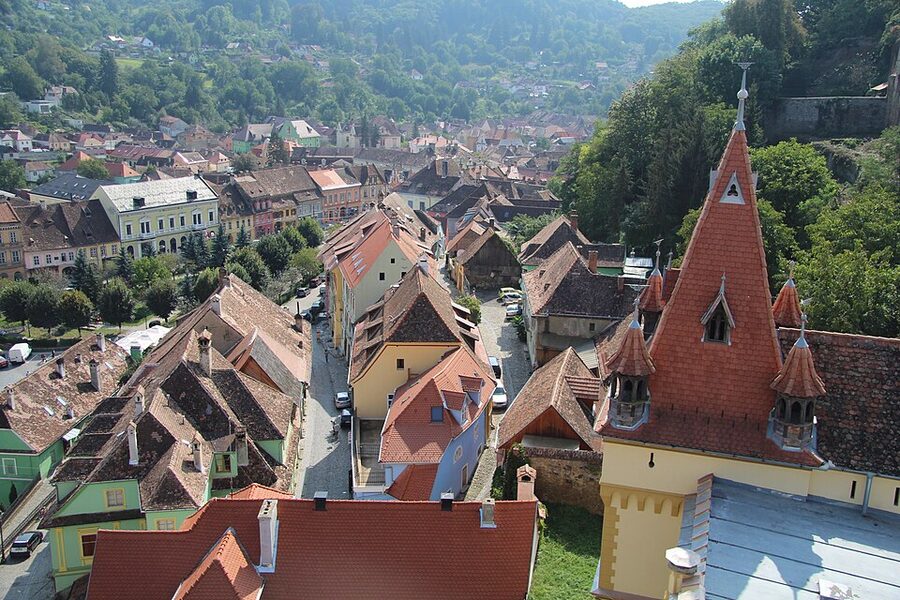
From Brașov it’s different. Sighișoara is about 120 km north, roughly two hours by car or three by train. Most operators run small-group minivans on the road through the Saxon villages, so you get there fresh enough to actually enjoy the citadel. You also have time on the way for either Viscri or Rupea Fortress (sometimes both), which are off the main highway and not viable on a Bucharest day. The Bran Castle from Brasov route covers the southern Carpathian castles in the same Brașov base.
If you’re staying in Bucharest and have a full day to spare, the Dracula’s Castle, Peleș and Brașov combo from Bucharest is the right pick because you’re combining three Carpathian castles in a single shot. From Brașov, that combo doesn’t make sense. You’re already in the middle of it.
What you actually see on a Sighișoara day trip from Brașov
Three or four stops, depending on the operator:
- Sighișoara citadel itself: roughly two hours inside the walls. The Clock Tower museum, the Covered Stairway and the Church on the Hill, Vlad’s birthplace, plus an hour for lunch in one of the squares.
- Viscri: a tiny Saxon village with a 12th-century fortified church, UNESCO-listed. King Charles III owns a guesthouse here and has championed the village’s preservation since the 1990s. About 90 minutes on the ground.
- Rupea Fortress (some itineraries): a 13th-century hilltop fortress restored in 2012, with views over the surrounding plateau. About 45 minutes.
- Lunch: usually at a Saxon-village guesthouse or in Sighișoara. Most tours quote the meal separately, so check before you book.

The three tours worth booking from Brașov
I’ve narrowed this to three. The Brașov-origin Sighișoara market is small (maybe a dozen products on Viator and GetYourGuide combined), and most are repackages of two or three vans run by the same Brașov operators. These three cover the realistic options: shared, slow, and private.
1. Viscri, Sighișoara & Rupea Fortress Small-Group Tour: $111
This is the one I would book first. Nine hours, small group, the three big stops in one ticket. Charlie and a couple of other Brașov-based guides run it most days; our full review covers what is actually included on the day and what is a paid add-on. Lunch is usually arranged at a Viscri guesthouse for around 15 euros cash, ordered separately on the day.
Check Availability
Read our full review
2. Sighișoara & Viscri UNESCO Day Tour: $106
The slower option. Two stops instead of three means you are not racing the Clock Tower closing time, and the Viscri stop is long enough to actually walk the village rather than just see the church. Bogdan, the most-named guide on this product, runs it through GetYourGuide; we cover the small-group dynamics and pickup logistics in the review.
Check Availability
Read our full review
3. Sighișoara & Viscri Private Full-Day Tour: $126
The private upgrade. About 15 dollars more than the small group on a per-person basis at two travellers, and you get hotel pickup, the freedom to stop for photos in the Saxon villages along the way, and a guide who will re-route if Viscri church happens to be closed (it sometimes is on Sundays). Worth it if you are travelling with parents, kids, or anyone who would rather not climb in and out of a minivan with strangers; the full review notes the operators we would actually book.
Check Availability
Read our full review
Inside the citadel: what to actually do once you are there
You will have roughly two hours inside the walls on a group tour, three on a private. That’s enough for the four landmarks people come for, plus a coffee. Here’s the order I would walk it.
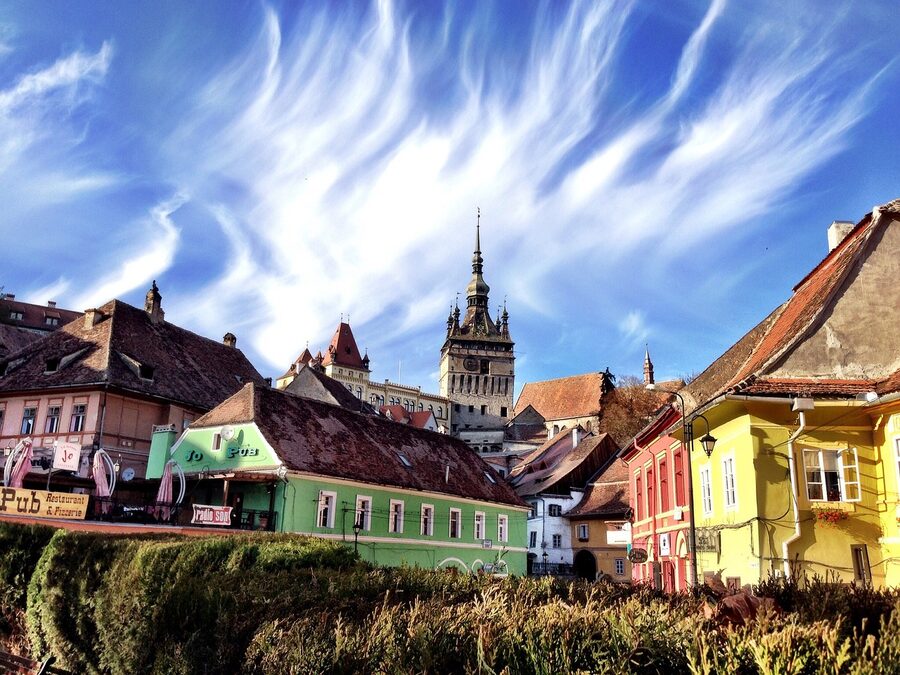
The Clock Tower (Turnul cu Ceas)
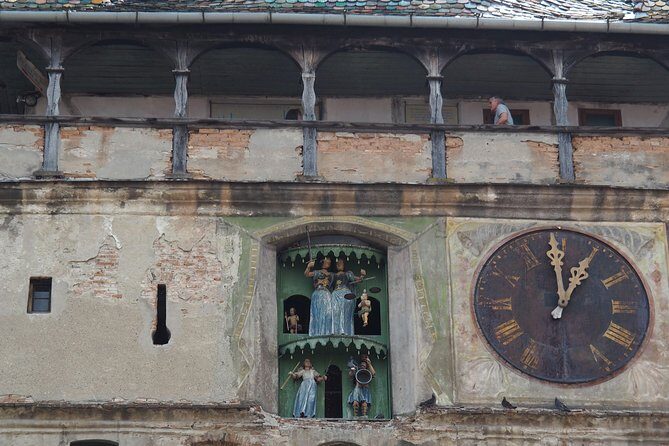
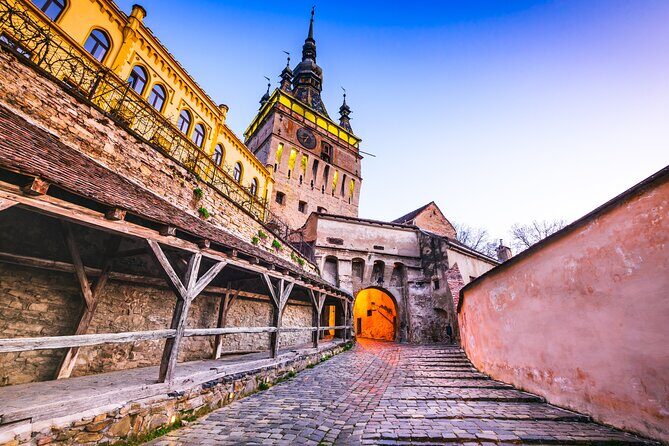
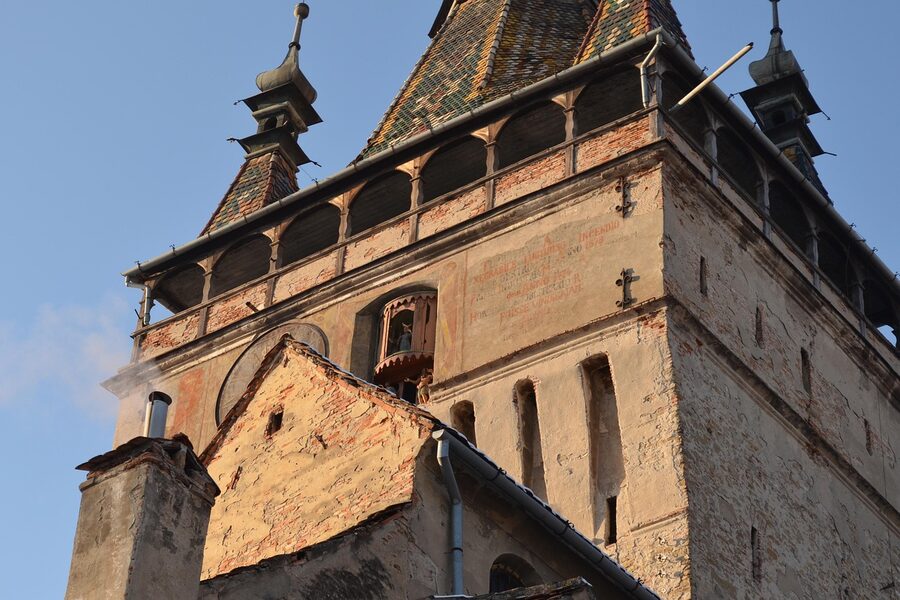
Start here. Walk in through the Lower Gate (the only road tunnel into the citadel) and the Clock Tower is the first thing you see, 64 metres of 14th-century stone with a working clockwork mechanism inside. The wooden figures rotate on the hour and the originals from 1648 are still mostly in place, though the painted ones you see outside are 19th-century replacements.
Climbing it costs around 25 lei (about 5 euros) and is the best money you will spend inside the citadel. From the top you get the rooftop shot of the citadel that ends up on every postcard. The stairs are steep and narrow, and the museum on the way up is small enough to skim if you are tight on time.

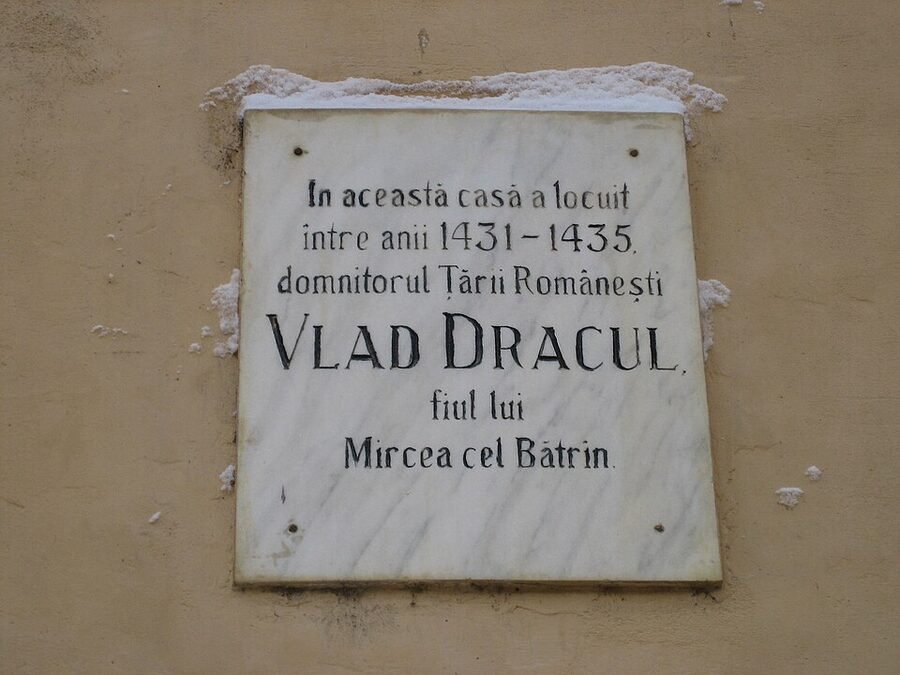
The House of Vlad Dracul
Right next to the Clock Tower, on the corner of the main square, is the ochre-painted house where Vlad III (the Impaler, the historical Dracula) was born in 1431. His father, Vlad Dracul, lived here while serving as a regional voivode. The ground floor is a restaurant; the upper floor is a small Vlad museum that you pay a few lei to see.
Honestly, skip the museum unless you are a Dracula completist. It is two rooms and a coffin gag. The exterior plaque, the photo from the square, and a coffee on the terrace are enough. The restaurant food is fine but tourist-priced; better lunch is in one of the side streets, not on the square.

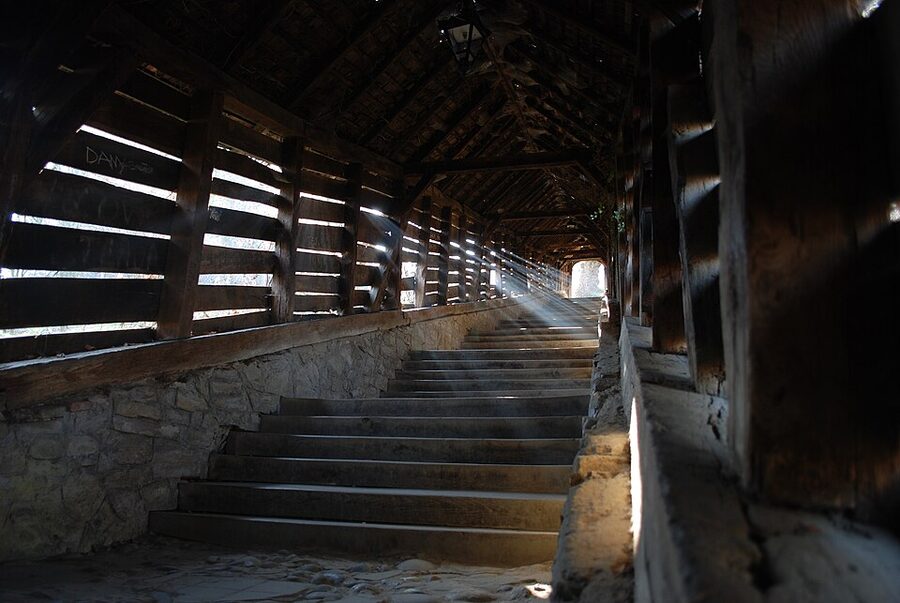
The Covered Stairway and Church on the Hill
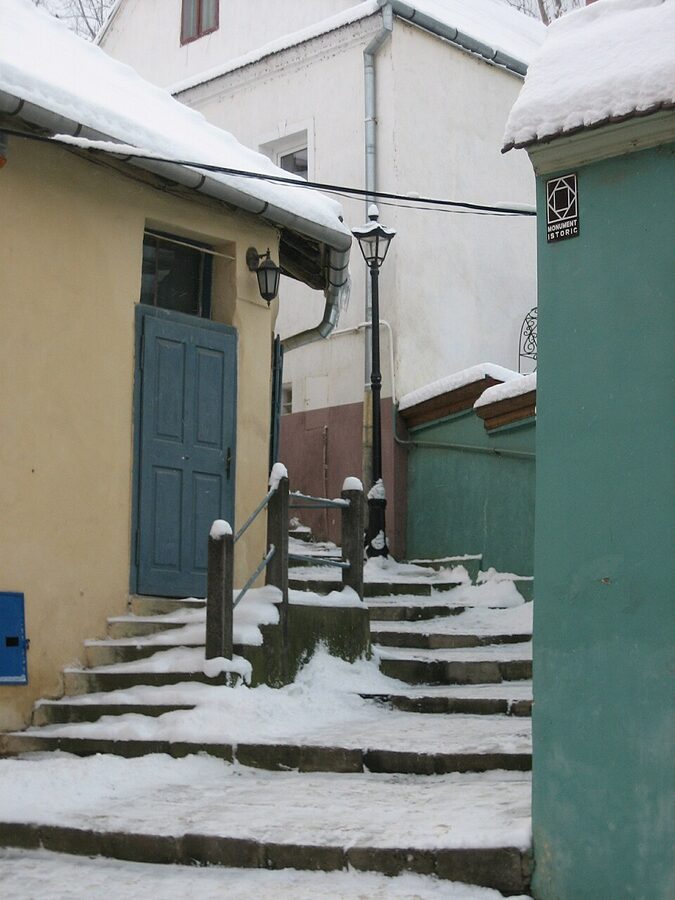
This is the payoff. From the upper square, the Covered Stairway (Scara Acoperită, sometimes called the Schoolhouse Stairs) climbs 175 wooden-roofed steps up the hillside to the Church on the Hill (Biserica din Deal, the Bergkirche in Saxon German). It was built in 1642 to shelter schoolchildren walking up to the Saxon school in winter; the roof originally had 300 steps, now closer to 175 after renovations.
The climb is the moment that sells the whole trip. Worn oak treads, dim light through the wooden roof slats, the smell of old timber, and the gradient steeper than you expect. Then you push out at the top into a sudden churchyard with the Bergkirche directly in front of you and the Saxon cemetery sloping down behind it. The church itself is plain Lutheran inside, the kind of stripped-back Saxon Protestant space you will see in the Viscri or Biertan villages too. Worth a quiet few minutes.


The Roman Catholic and Trinity churches
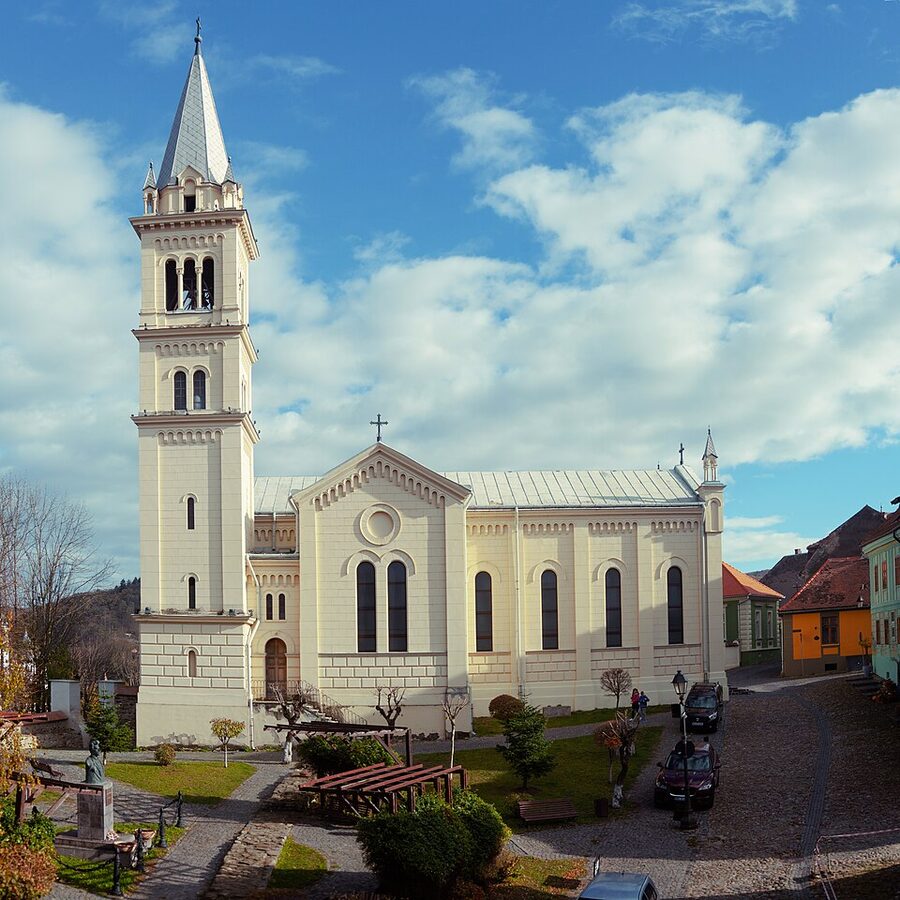
Less famous, often skipped on group tours, both worth ten minutes if you are walking the citadel on your own. The Roman Catholic Church inside the walls is small and bright, with a baroque interior that contrasts the bare Saxon Lutheran style on the hill. The Holy Trinity (Orthodox) Church sits down in the lower town, just outside the citadel walls, and is striking from the river side.

Viscri: a Saxon village frozen in time
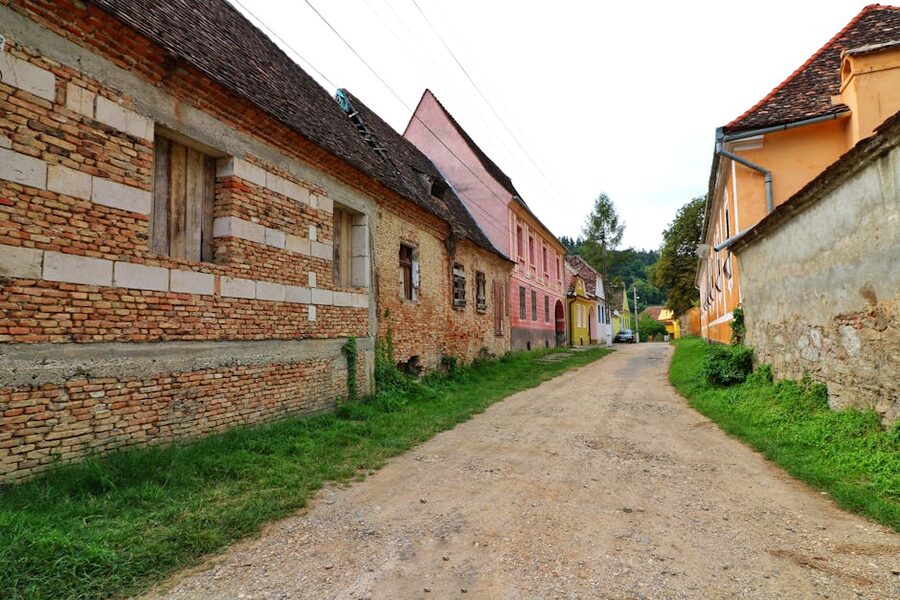
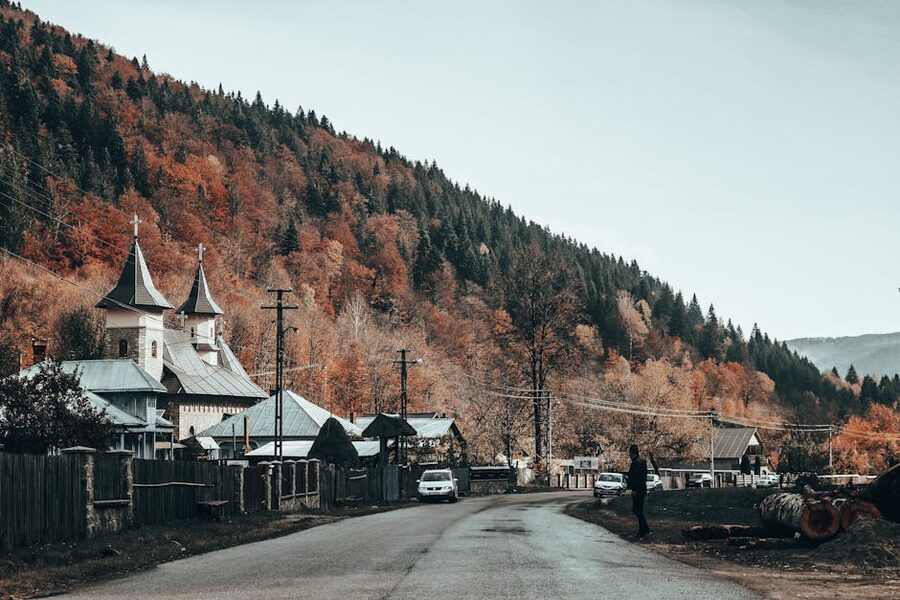
Viscri is the village most travellers do not expect. About 40 minutes off the main Brașov to Sighișoara road, it is a strip of pastel houses with a fortified church at one end and dirt roads connecting them. The road in is unpaved past a certain point and gets muddy after rain.
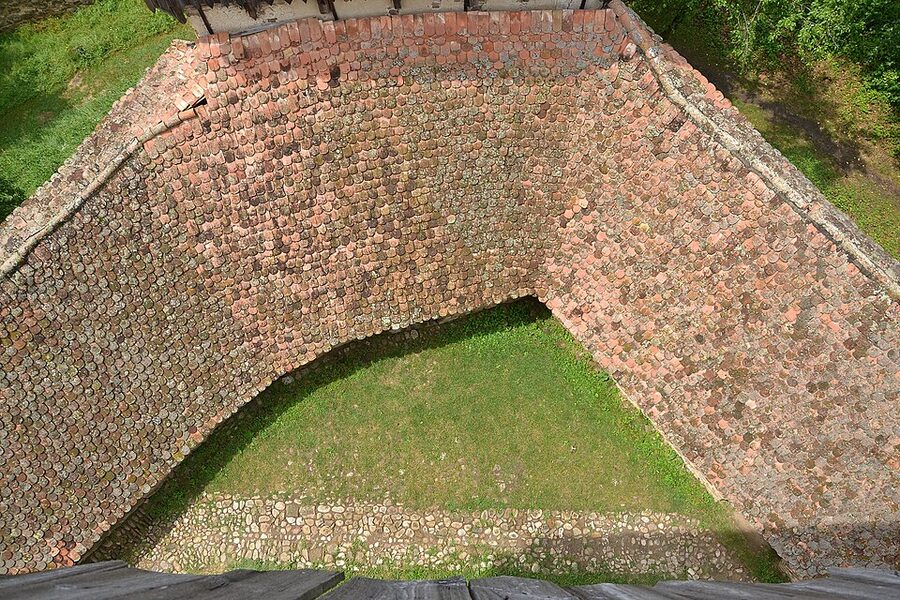
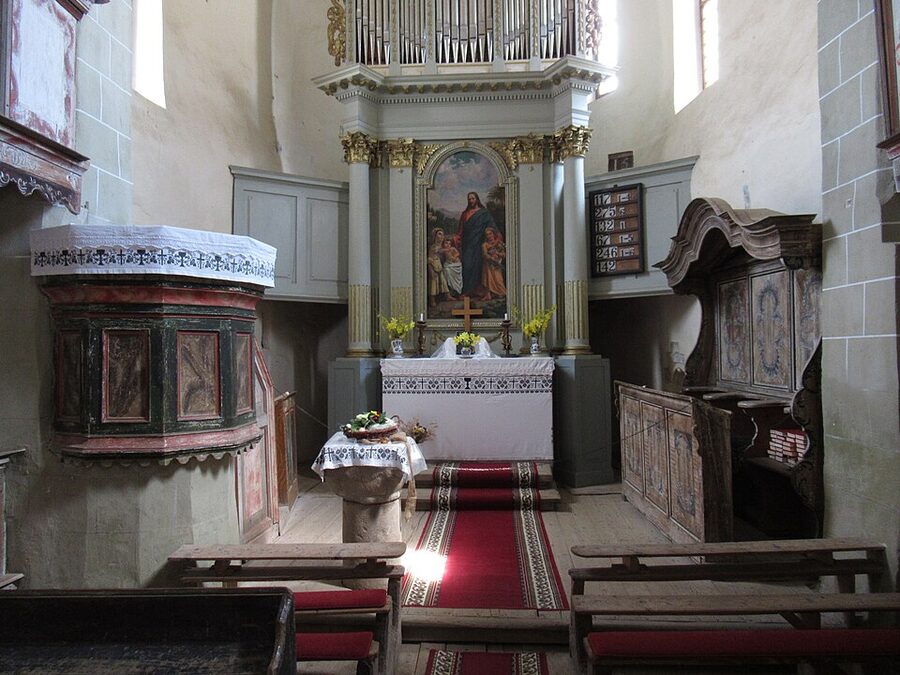
The 12th-century fortified church is the headline. It is one of the best-preserved Saxon fortified churches in Transylvania, UNESCO-listed since 1999, with white walls and a defensive ring you can walk around. Inside, the church is plain and small, but the church museum (a single room of Saxon textiles, household items, and farming tools) gives you the village in miniature.
,_Transylvania.jpg)

King Charles III’s connection here is not a marketing line. He bought a Saxon house in 2006, supports the local Mihai Eminescu Trust restoration work, and stays for a few days most years. His guesthouse is rentable when he is not using it; you cannot book it on the day, but you can sometimes look in from the road. The village still feels like a place where people live, not a museum, which is more than you can say for a lot of UNESCO sites.
What to eat in Viscri
Lunch on most tours is arranged at a guesthouse in Viscri. Expect ciorbă (Romanian sour soup, usually with vegetables and beef or chicken), a main of polenta with cheese and smoked meat, and palinka (plum brandy) at the end whether you wanted it or not. About 15 euros cash per person, ordered separately on the day. The food is honest village cooking: not refined, very filling, easily the best lunch you will have on this circuit.
Rupea Fortress: the third stop
Rupea is the dramatic hilltop fortress between Brașov and Sighișoara. From a distance it looks like the kind of fortress your imagination invented when you were eight: a stone crown sitting on a hill above the village. From up close it is a 13th-century fortress that was lived in until the 18th century, abandoned, and restored with EU money in 2012.
You climb up via a sloped path or a winding road, walk through three rings of walls, and end up at the top with a 360-degree view over the Transylvanian plateau. About 45 minutes is enough; the museum inside is small. Entry is around 25 lei (about 5 euros).
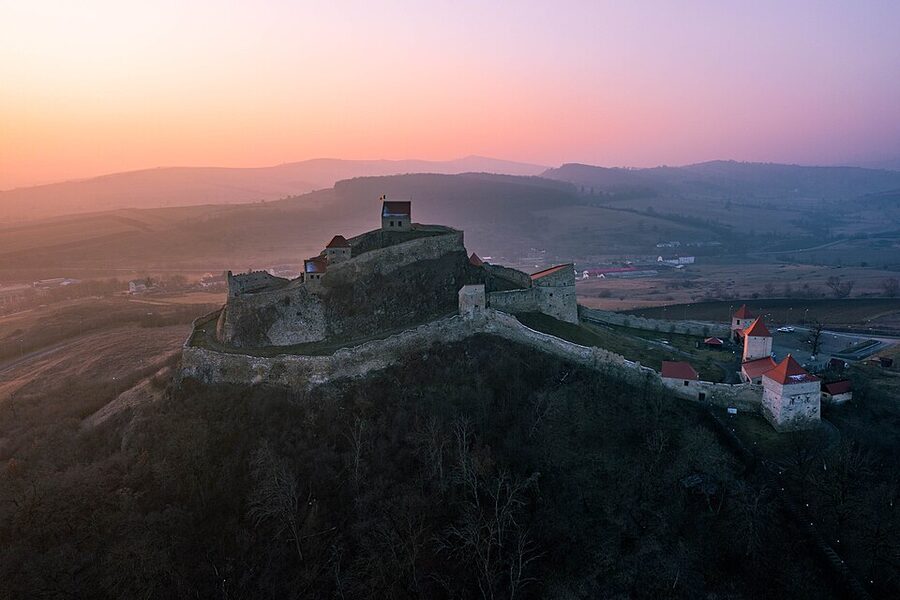

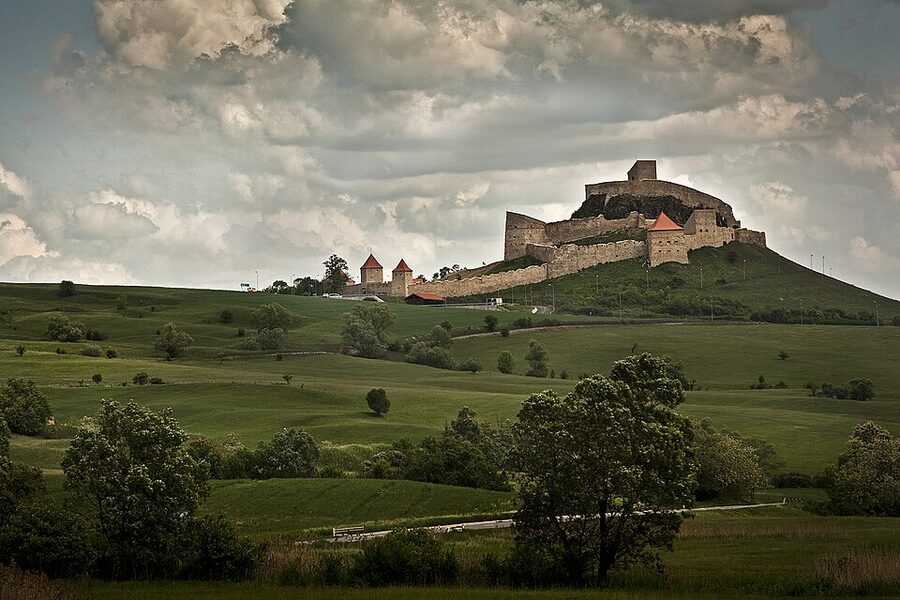

If you have to drop one stop to get a slower day in Sighișoara, drop Rupea. Viscri is the more singular experience.
The history that makes Sighișoara different
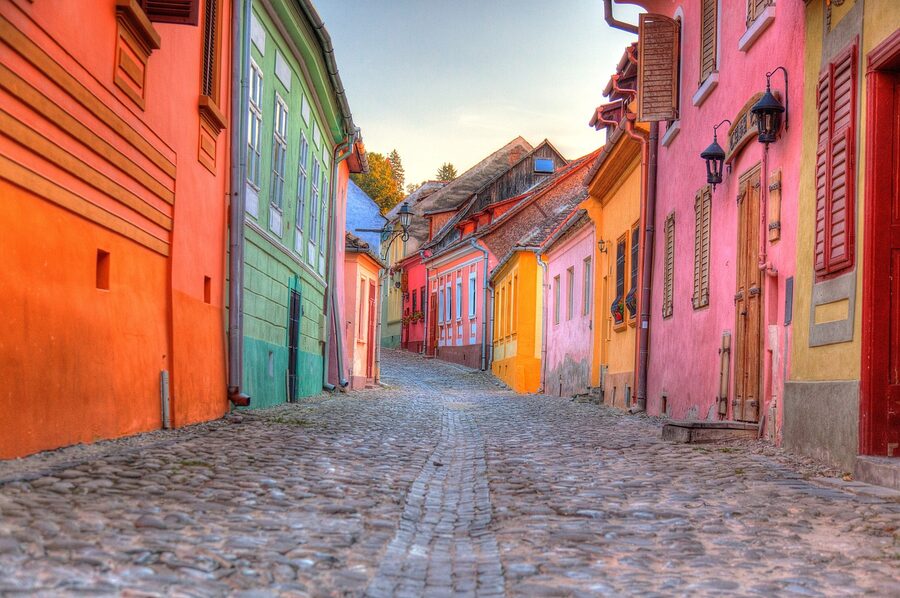
Sighișoara was founded in the late 12th century by Transylvanian Saxons, German-speaking settlers brought in by the Hungarian crown to defend the eastern frontier. By 1280 it was a fortified town, by 1500 one of the seven walled Saxon citadels (the Siebenbürgen, which is also the Saxon name for Transylvania itself: seven fortresses). The walls had 14 towers originally, one for each guild that maintained it; nine of those towers still stand, including the Tailors Tower, the Tinsmiths Tower, and the famous Clock Tower, which was the Council Tower of the citadel.
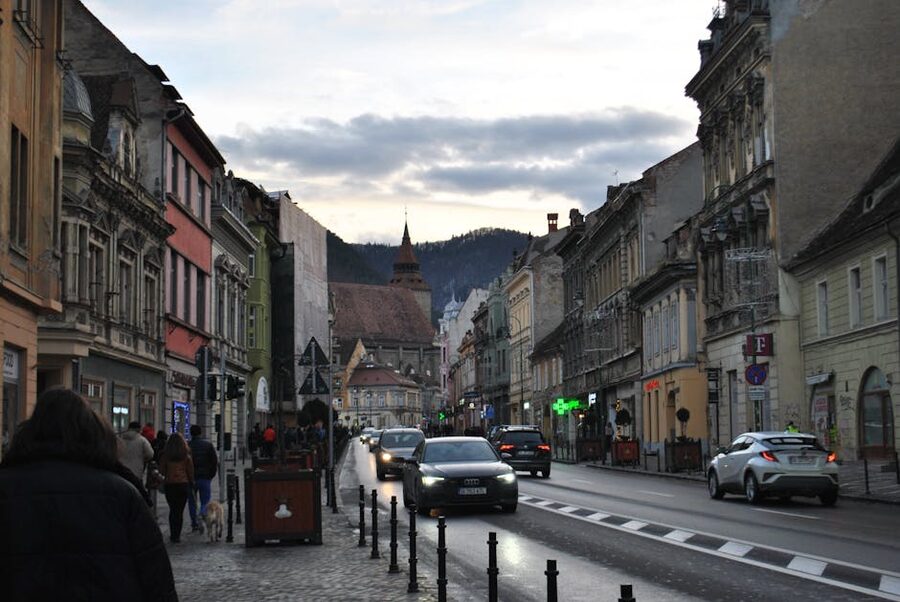
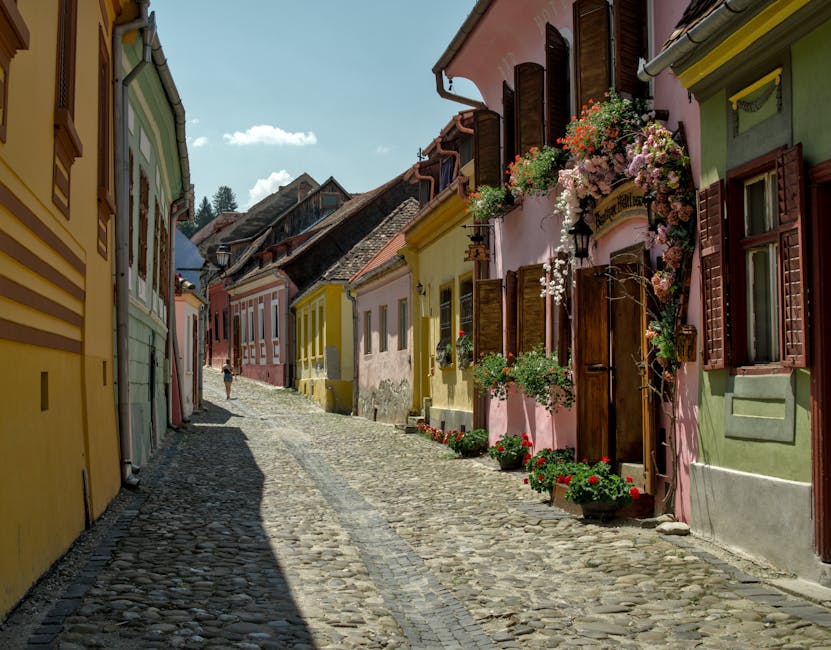
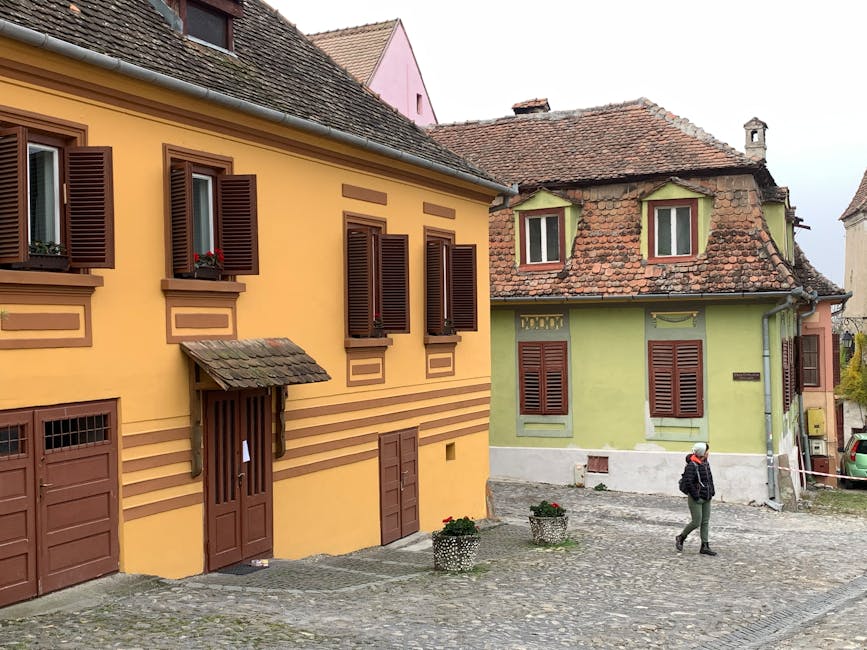
What makes the citadel unusual today is that it is still inhabited. People live in the painted houses, run shops, send children to school here. There are maybe a dozen still-occupied medieval citadels in Europe; Sighișoara is one of the smallest and the only one of its size in southeastern Europe. UNESCO listed it in 1999 partly because of that continuity, not just the architecture.
The Saxon population that built and maintained the citadel for 800 years is mostly gone now: emigrated to Germany after 1990, when post-Communist Romania allowed Saxons to leave and reunified Germany paid for their resettlement. The villages around Sighișoara, including Viscri, were emptied of their Saxon inhabitants almost overnight. The fortified churches and timbered houses survived because of restoration work funded by groups like the Mihai Eminescu Trust and a handful of returning Saxon descendants.
The Vlad III question
The connection to Vlad III (Vlad the Impaler, the historical figure behind Bram Stoker’s Dracula) is real but limited. He was born in Sighișoara in 1431, his father lived in the corner house I mentioned earlier, and he probably spent the first four or five years of his life in the citadel before the family moved to Wallachia. After that he had no further connection to Sighișoara. His later life, his wars with the Ottomans, his impalement of prisoners, all happened in Wallachia and Moldavia, not Transylvania.
So the citadel sells the Dracula myth (you will see Vlad face masks, fang necklaces, the lot) but the actual historical density is thin. The Bran Castle south of Brașov, often marketed as Dracula’s Castle, has even thinner ties: Vlad may have been imprisoned there briefly and probably never owned it. The myth comes from Stoker’s 1897 novel, written by a man who never visited Romania. None of which makes Sighișoara less worth visiting; it just means you should arrive without the Dracula expectations and let the medieval citadel work on its own terms.
When to go and what the day actually looks like
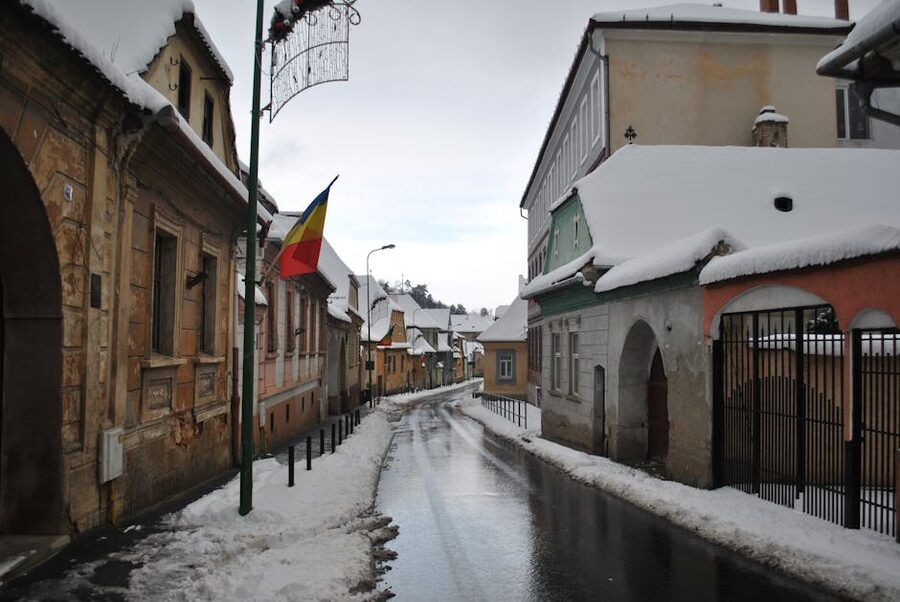
Best months are May, June, September and October. July and August are hot (35C is normal) and the citadel has limited shade. Winter is striking but cold and slippery on the cobbles, and Viscri’s road can get genuinely difficult after snow. April and early November are usually fine but tour frequency drops; some operators run only on demand.
Typical group day from Brașov:
- 8:30am hotel pickup (some private tours offer 7:30am for Rupea-first routing)
- 9:00am leave Brașov, drive northwest
- 10:30am arrive Viscri, walk to the church, 90 minutes including a quick walk through the village
- 12:30pm Saxon-village lunch
- 2:00pm arrive Sighișoara, two hours inside the citadel
- 4:15pm leave Sighișoara, drive south to Rupea
- 5:00pm Rupea Fortress, 45 minutes
- 6:30pm back in Brașov
Private tours flex this freely. The Brașov hotel night before matters more than you would think: if you are staying near the Council Square (Piața Sfatului), you will be walking ten minutes back to the hotel through a lit medieval town in the evening, which is one of the small, free pleasures of basing in Brașov rather than Bucharest.
Going independently: train, bus, rental car
You can do this trip without a tour, but it is harder than it looks on a map.
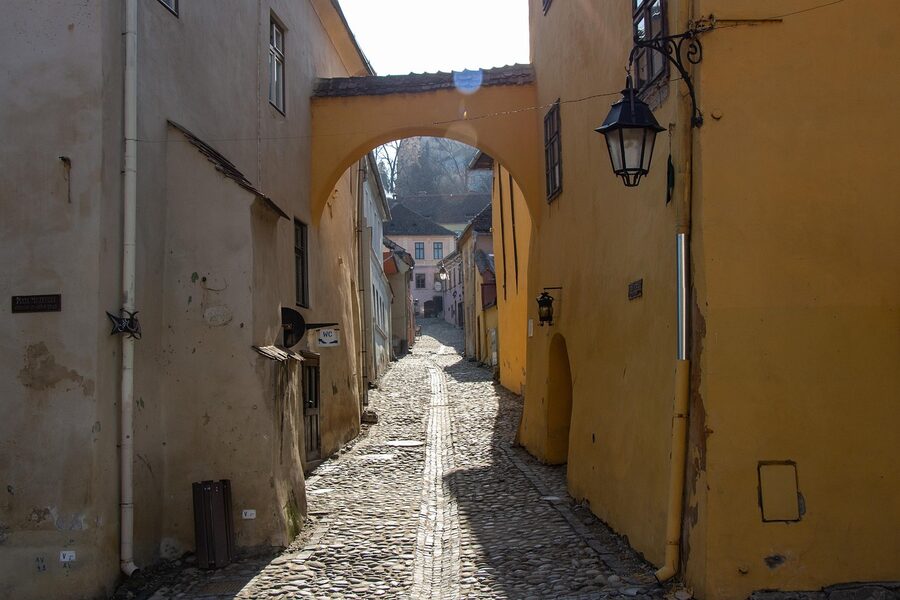
By train is the cheapest. CFR Călători runs three or four trains a day from Brașov to Sighișoara; the journey is two and a half to three hours and tickets are about 50 lei (10 euros) one way. The catch is the timetable: arrive 11am, last reasonable return around 5pm, that is six hours on the ground. Fine if you only want Sighișoara, useless for Viscri or Rupea (no public transport reaches Viscri at all, and Rupea station is 40 minutes walk from the fortress).
By rental car gives you full control. Brașov has half a dozen rental outfits at the airport and downtown, around 30 to 40 euros a day for a small car. The drive is straightforward on E60, two hours each way. Parking inside Sighișoara citadel is restricted; use the lot below the citadel walls for around 5 lei an hour.
By bus is not really a thing for this route. There are minibuses from Brașov’s Autogara 2 but the schedules change month to month and they do not stop at Viscri.
The small-group tour wins on cost-of-time. 100 to 120 euros per person, hotel pickup, three stops including ones you cannot reach independently, lunch arranged. Doing it independently saves you maybe 30 euros per person but loses you the Viscri stop and most of the day in transit logistics.
Practical bits I wish I had known
- Cash: Romanian lei. Most Sighișoara cafes and the Clock Tower museum take cards; Viscri lunch and many small shops are cash-only. Bring 300 to 400 lei in cash for the day.
- Currency hack: Do not change money at the Bucharest airport (terrible rates). Use ATMs at any major Romanian bank for the best rate. The airport-to-city Banca Transilvania ATMs are fine.
- Language: Romanian is the local language; older Saxons in Viscri speak German; almost all tour guides speak good English. A few phrases of Romanian (mulțumesc for thank you) go further than you would expect.
- Toilets: Free at most museums; cafes will let you use theirs if you buy a coffee. Public ones in the citadel cost 2 lei.
- Shoes: This is the one I keep flagging. Cobbles, polished wood on the Stairway, dirt roads in Viscri. Anything chunky-soled and broken in is right. Heels are a bad idea.
- Tipping: Tour guides expect about 10% if you are happy with the day. Restaurants 10% is standard. Drivers usually rolled into the tour but a few lei extra never hurts.
- Photo ban: Inside the Bergkirche photography is sometimes restricted depending on the service schedule; the Clock Tower museum allows photos without flash.
If you are combining Sighișoara with the rest of Brașov
You are already going to want a few days in the Brașov base, because there is a lot to do besides this one trip. The big neighbours from the same hotel: Bran Castle and Rasnov are 40 minutes south on a different day, the bear-watching hides are in the Carpathian forest east of Brașov, and Sibiu is two and a half hours west if you have the time for a longer day.
If your trip starts in Bucharest, the Dracula’s Castle, Peleș and Brașov combo from Bucharest is the right one-day option for the southern Carpathian castles, and the Bran Castle entry-only ticket covers the standalone castle visit. From Brașov, look at the Bran Castle day trip from Brașov for the Bran-Rasnov-Peleș logic, the brown bear watching from Brașov for the wildlife afternoon, and the Sibiu sightseeing tour if you have allowed time for the third Saxon city.
For the Bucharest bookend of the trip, the Palace of Parliament tickets, the communism walking tour and the Therme Bucharest spa are the three I would queue up. The Therme one in particular pairs nicely with a Brașov-heavy itinerary because it is the recovery day after all this walking on cobbles.
If you have done European day trips like the Segovia, Avila and Toledo trip from Madrid, the Toledo half-day from Madrid, the Cathedral and Alcazar combo in Seville, or the Windsor, Stonehenge and Bath trip from London, the rhythm here is similar: pickup, two hours of medieval stone, a Saxon-village lunch, two more hours of medieval stone, a hilltop fortress at the end. You will know the day. The texture is just enough off-Western that the difference is the point.
Castle people: if you are cataloguing European citadels, this one belongs alongside Windsor, Stirling, and Buda Castle, but it is a different beast: not a single fortress but a whole walled town, still lived in.
Affiliate disclosure: We earn a small commission if you book through the tour links above, at no extra cost to you. We use it to keep the site running and to actually visit the places we write about.