
My friend Sarah went up Castle Hill on her own the first afternoon she had in Budapest. She’d read a few blog posts on the funicular and Fisherman’s Bastion, planned a quick loop, and figured she’d be back at the hotel by dinner. Three hours later she came back grinning but a bit annoyed. “There were guides walking past with their groups telling all these stories, and I kept eavesdropping. I missed half of it. I had no idea what I was looking at.”
That’s the case for booking a guided Buda Castle walking tour, in one paragraph. The Castle District is gorgeous, but it’s also a tightly packed maze of 800 years of history — sieges, restorations, royal weddings, communist demolitions, fires, hidden cellars — and on your own you’ll see the pretty buildings without ever knowing why they matter. A 90-minute to 3-hour walk with someone who actually lives there and reads the local archives is the difference between snapshots and stories.
- In a Hurry? Three Quick Picks
- Why a Guided Walk Beats Going Solo Up There
- Three Walking Tours Worth Booking
- 1. Buda Castle District Walking Tour —
- 2. Buda Castle Walk with Saint Stephen’s Hall —
- 3. Buda Castle Walking Tour with a Historian —
- What You Actually See on the Walk
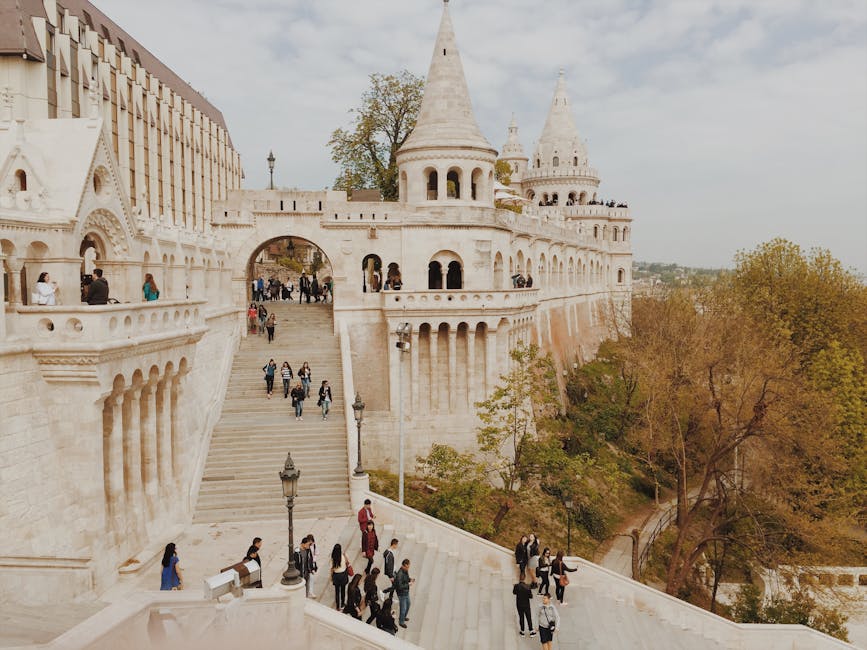
- Fisherman’s Bastion
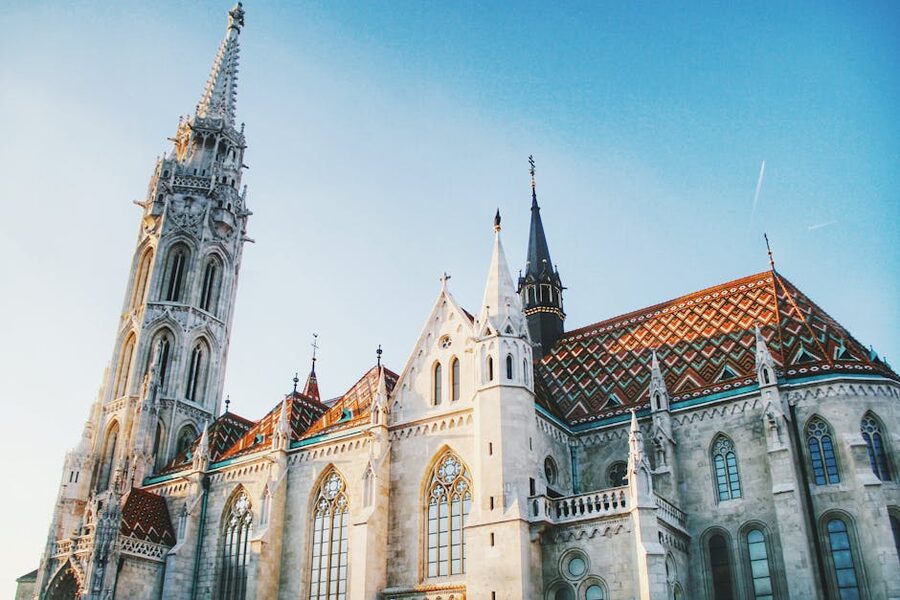
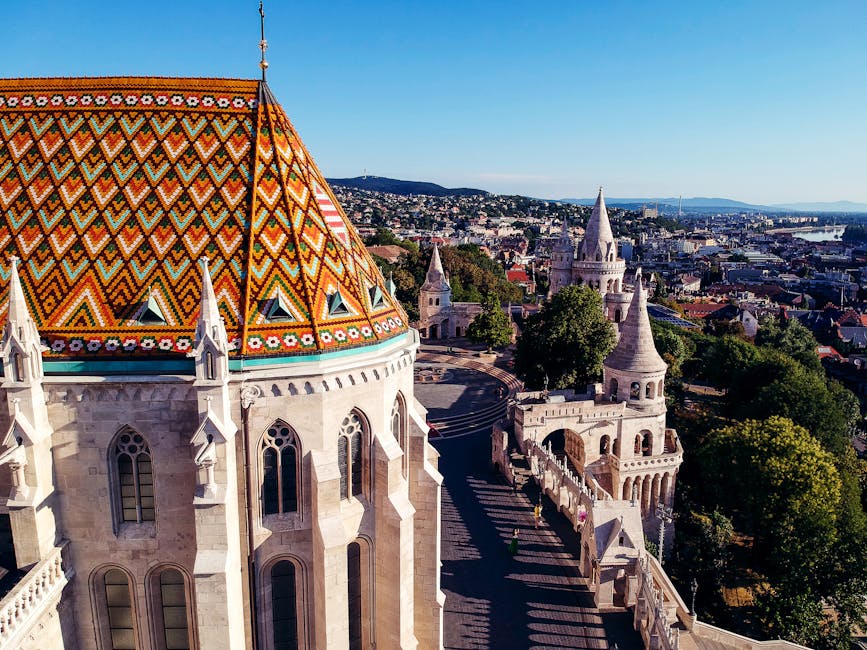
- Matthias Church
- Holy Trinity Square
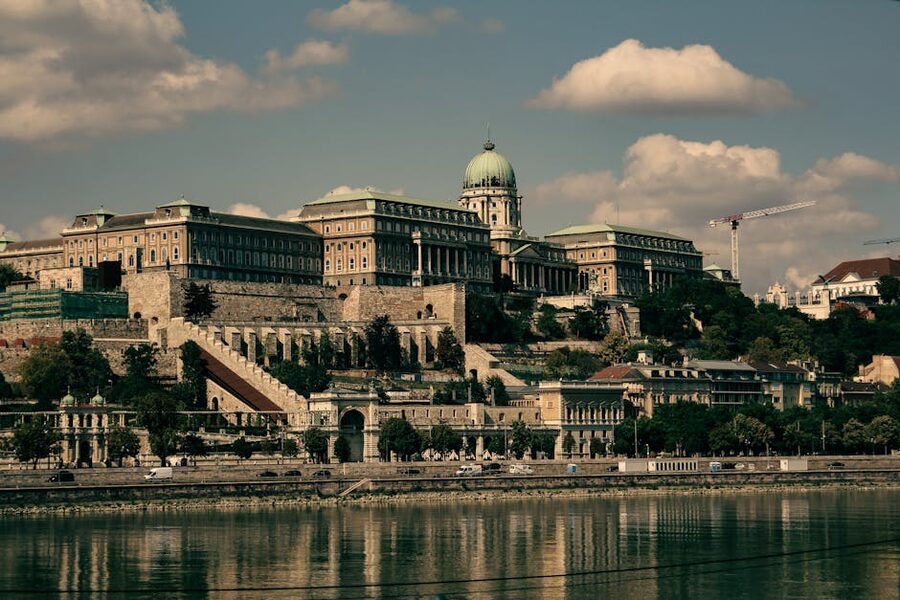
- Royal Palace
- Vienna Gate and the back streets
- How to Pick Between the Three
- What to Bring and Wear
- Getting Up to Castle Hill
- When to Go
- The History You’ll Hear, Briefly
- A Few Quirks Worth Knowing
- Eating and Drinking on the Hill
- Combining Castle Hill with the Rest of Budapest
- Common Mistakes to Avoid
- Pulling It All Together
- Other Budapest Guides Worth a Look
In a Hurry? Three Quick Picks
Best value: Buda Castle District Walking Tour — $14, two hours, the classic outdoor circuit with a friendly local guide.
Best with interior access: Buda Castle Walk with Saint Stephen’s Hall — $29, 90 minutes, gets you inside the recently restored royal hall most tours skip.
Best for history nerds: Buda Castle Walking Tour with a Historian — $63, 2.5 hours, small group, includes Matthias Church entry and a coffee stop.
Why a Guided Walk Beats Going Solo Up There

Castle Hill is small. About 1.5 kilometres long, north to south. You can walk the entire ridge in twenty minutes if you don’t stop. So why pay for a guide?
Because the whole place is layered. The cobblestones you’re walking on were laid in the 1700s on top of medieval streets that were laid on top of Roman tracks. Every building has at least three lives — Gothic mansion, Ottoman barracks, Habsburg apartment, bombed shell, Soviet office, restored hotel. The pretty pastel facades hide bullet holes from 1945 and bomb craters that were filled with rubble in 1958. None of this is signposted. You walk past it.
A good guide turns those silent walls into a running commentary. The cannonball stuck in the side of a house on Úri utca? That’s been there since 1849, when Hungarian forces shelled the Austrians out of the castle in eight days. The fragmented Gothic arches you see set into post-war walls? Those are the few medieval bits that survived the 1944-45 siege, deliberately preserved when the buildings were rebuilt. The reason Matthias Church looks weirdly fancy compared to its neighbours is that 19th-century architect Frigyes Schulek essentially gave it a fairy-tale upgrade for Franz Joseph’s coronation. None of this is in the average guidebook.
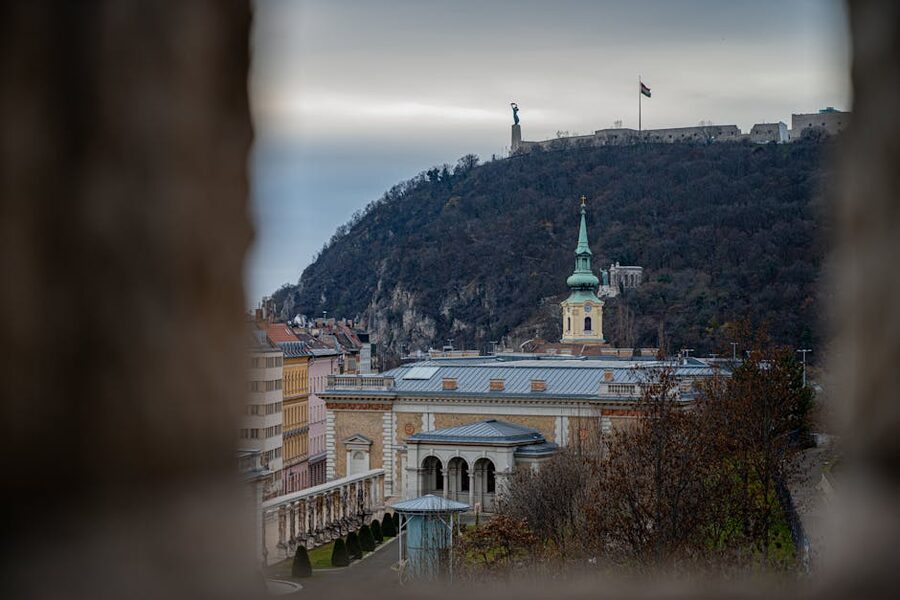
The other reason is timing. The Castle District has perhaps a dozen tour buses worth of foot traffic at any given moment between 11 am and 4 pm in summer. Independent visitors pile up at the same three Instagram spots and miss everything else. A guide knows the rhythm — when Matthias Church empties out for ten minutes, where the back terraces of the Bastion sit empty, which hidden side street has the best afternoon light. You end up seeing more, with fewer people, and you actually understand what you’re looking at.
Three Walking Tours Worth Booking
I’ve narrowed this down to three options that cover the main ways people approach Castle Hill. There are dozens of operators running essentially the same outdoor circuit, but these three are the ones I’d actually recommend to a friend depending on their budget and how deep they want to go.
1. Buda Castle District Walking Tour — $14
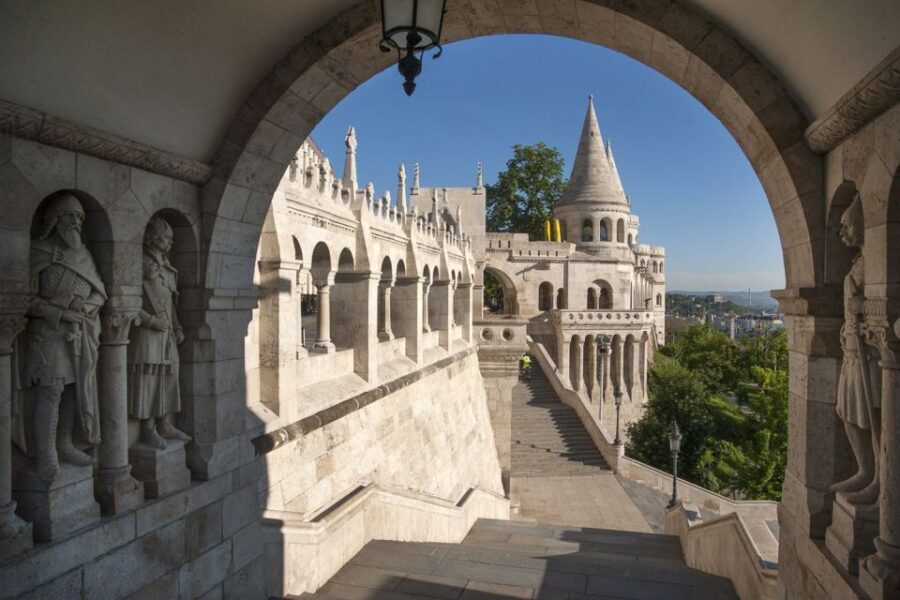
This is the cheapest serious tour on the hill and the one I’d start with if you’re new to Budapest. Two hours, a guide who lives in the city, and a route that hits every postcard view without rushing. Our full review of this tour has more on what’s actually included — short version: it’s exterior-only, no church entry, but it covers more ground than the pricier options. Don’t book it if you want to go inside Matthias Church or St Stephen’s Hall — book one of the others below.
2. Buda Castle Walk with Saint Stephen’s Hall — $29

This is the one to book if you’ve only got an afternoon and you want at least one “wow, I’m inside something” moment to break up the outdoor walking. Our full review covers the hall in detail — it’s been painstakingly recreated from old photographs and surviving fragments, and seeing it is genuinely affecting if you’ve heard the wartime backstory. Guides Johanna and Rita keep showing up in reviews by name, which is usually a good sign.
3. Buda Castle Walking Tour with a Historian — $63
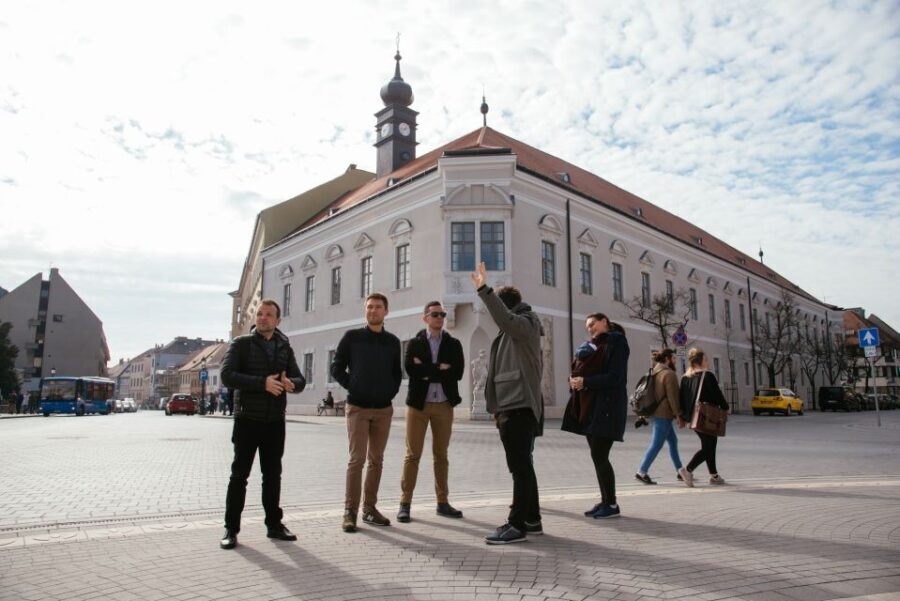
If you’re the kind of person who reads plaque text and asks follow-up questions, this is the tour for you. The historian (often Petra) goes deep on the Mongol invasion, the Ottoman occupation, the 1849 siege, and the wartime destruction — and they’re qualified to actually answer the weird questions. Our full review has more on the inclusions and the small-group format. Sixty-three dollars feels steep for a city walk, but for what you get — entry fee, drink, expert depth — it works out fairly.
What You Actually See on the Walk
.jpg)
The route shifts a bit between operators, but the bones are the same. You’re walking a roughly oval circuit on top of a long limestone ridge, with the Royal Palace at the south end and the Vienna Gate at the north. The whole thing is car-free and pedestrianised, which makes it one of the easier UNESCO districts in Europe to actually enjoy on foot.
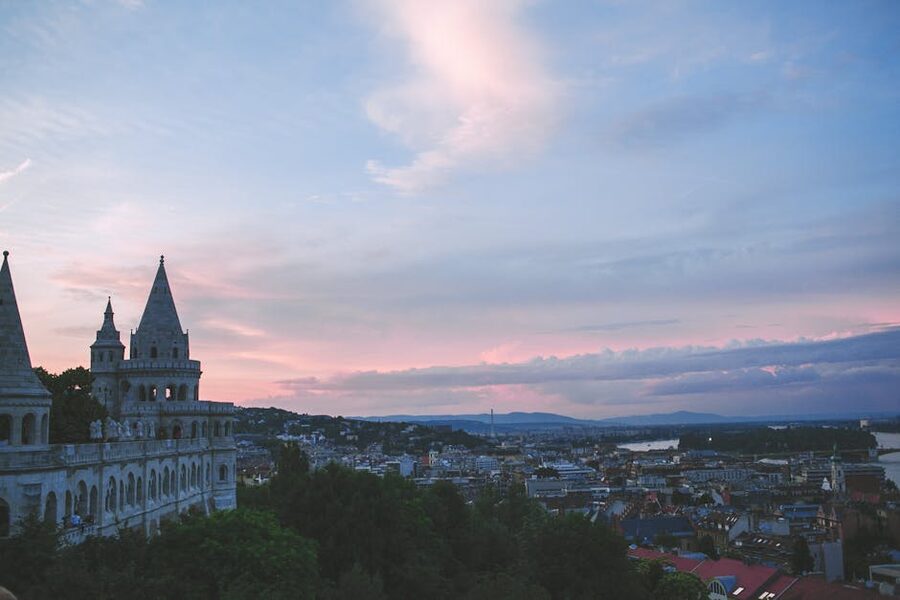
Fisherman’s Bastion
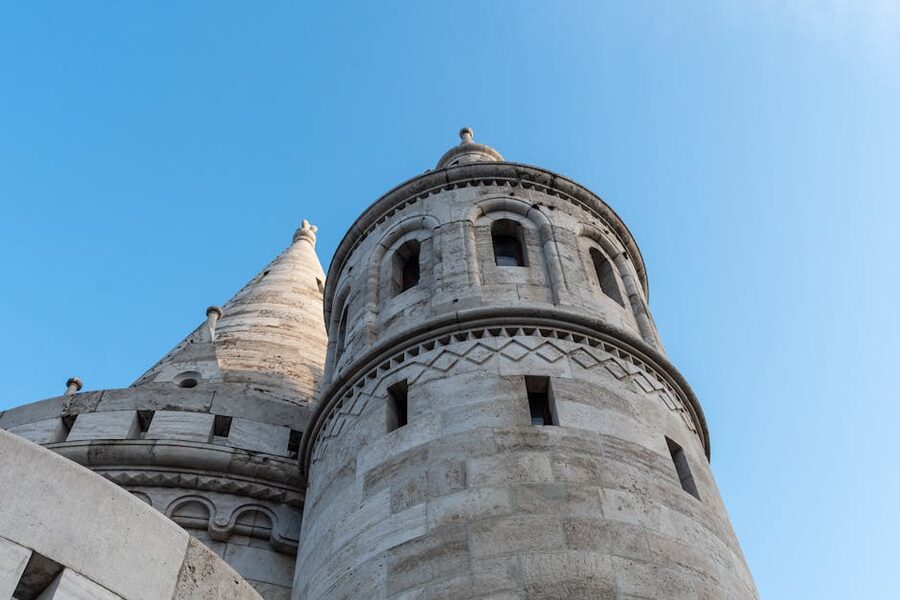
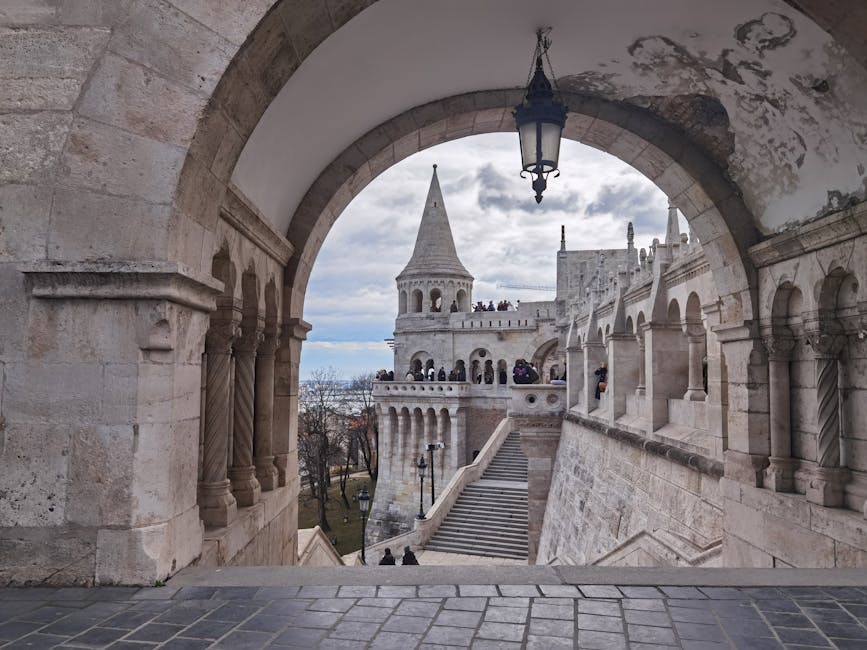
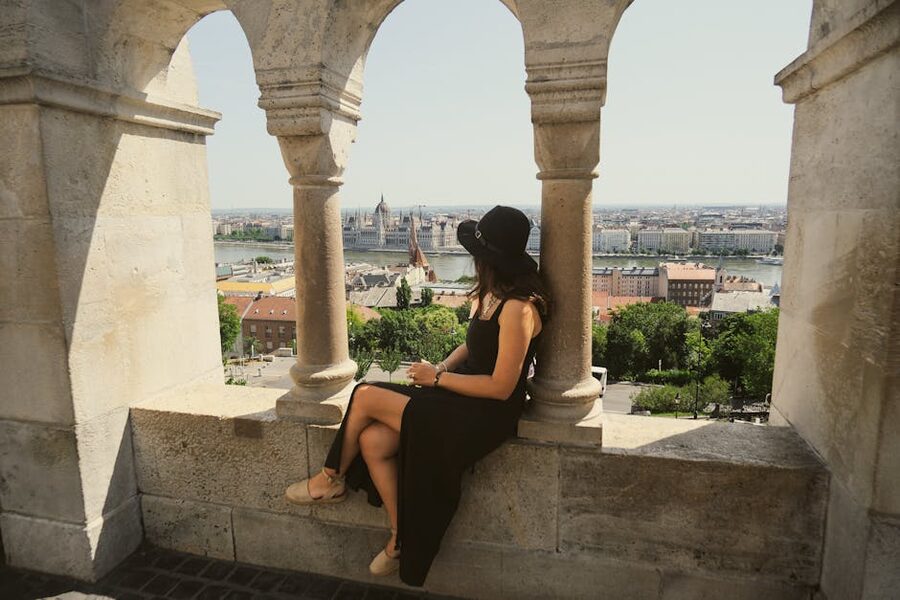
This is the headline stop. Almost everyone wants the Bastion photo and then is mildly annoyed when they realise the upper terraces have a small entry fee (around 1,400 HUF / 4 USD between 9 am and 7 pm in high season). The lower walkways are free and have most of the views worth seeing. Smart guides take you to the lower north end where there’s a clean line down the Danube to Parliament with no crowd around you.
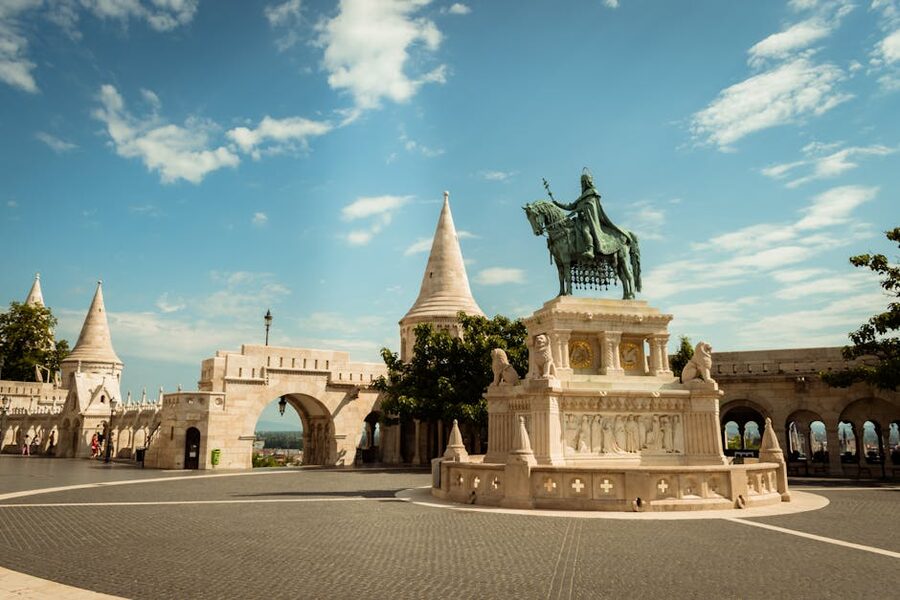
The thing nobody tells you: the Bastion isn’t actually medieval. People assume the white towers and arcaded walkway are some kind of fortress remnant, and they’re not. It was purpose-built as a viewing terrace at the turn of the 20th century, after the old castle walls had outlived their military use. The whole structure exists to let people stand somewhere pretty and look at Pest. It was the Habsburg-era equivalent of a viewing deck. Knowing that changes how you see it — less “ancient defences,” more “world’s most elegant photo platform.”
Matthias Church
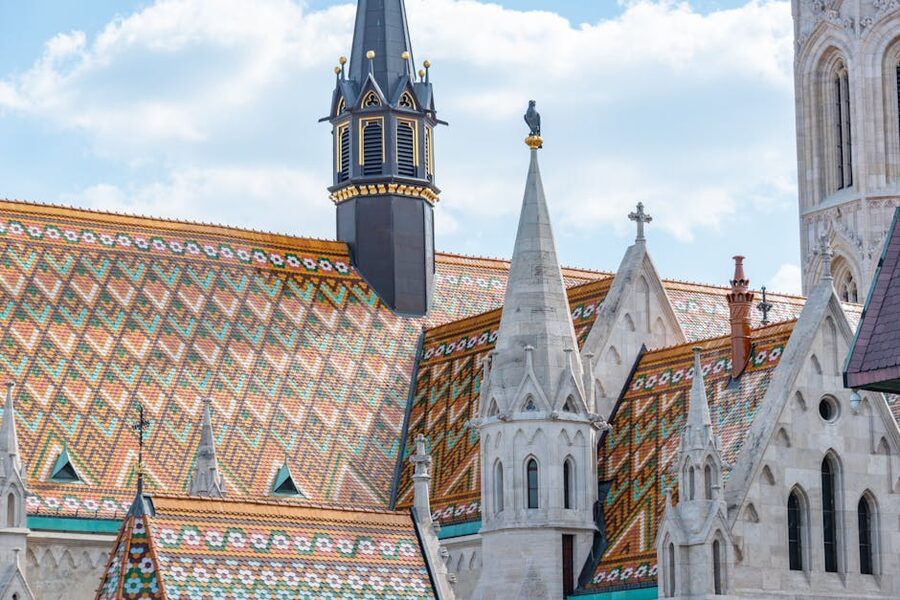
The church goes by several names: Matthias Church, the Church of Our Lady of Buda, or formally the Church of the Assumption of the Buda Castle. None of the regulars on a tour will care which one you use. What matters is the building has been a coronation church (Franz Joseph crowned 1867, Charles IV crowned 1916), a mosque under Ottoman rule (1541-1686), a Catholic church for the rest of its history, and a near-ruin in 1945 with its roof gone and walls cracked.
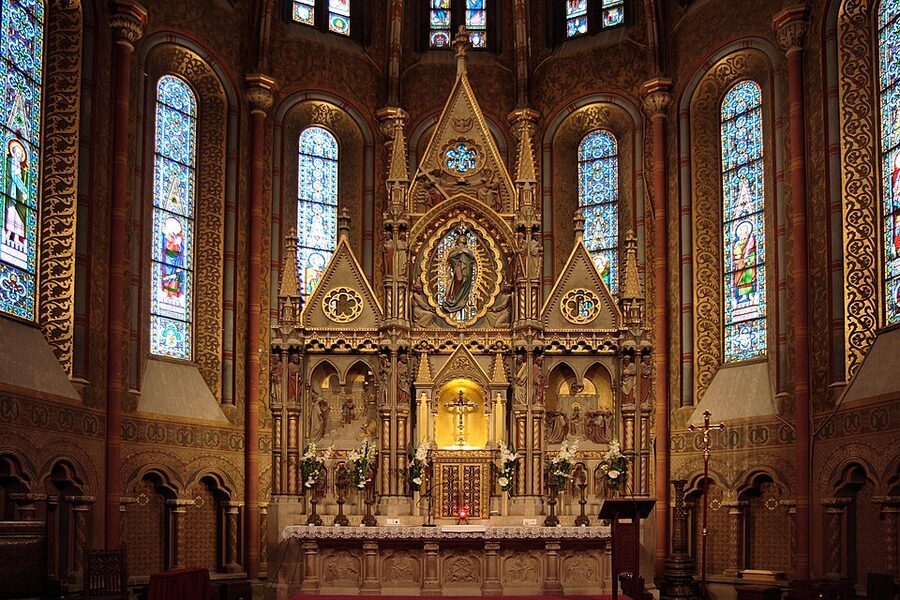

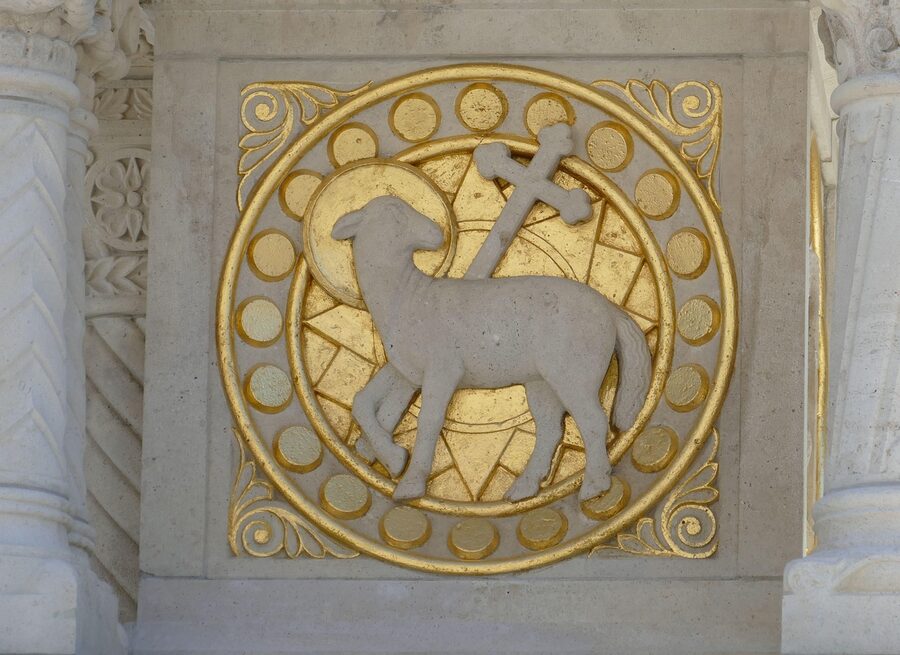
Most cheap walking tours skip the interior — entry is around 2,800 HUF (about 8 USD) on top of your tour cost — and that’s a shame because the inside is where the building genuinely surprises you. The wall paintings are 19th-century Romantic-era work by Bertalan Székely and Károly Lotz, and they cover essentially every flat surface in deep reds, blues, and gold. It’s the most ornate interior in the country. If you’re booking the historian tour above, the entry is included; otherwise you’ll be making a separate call about whether to pay extra.
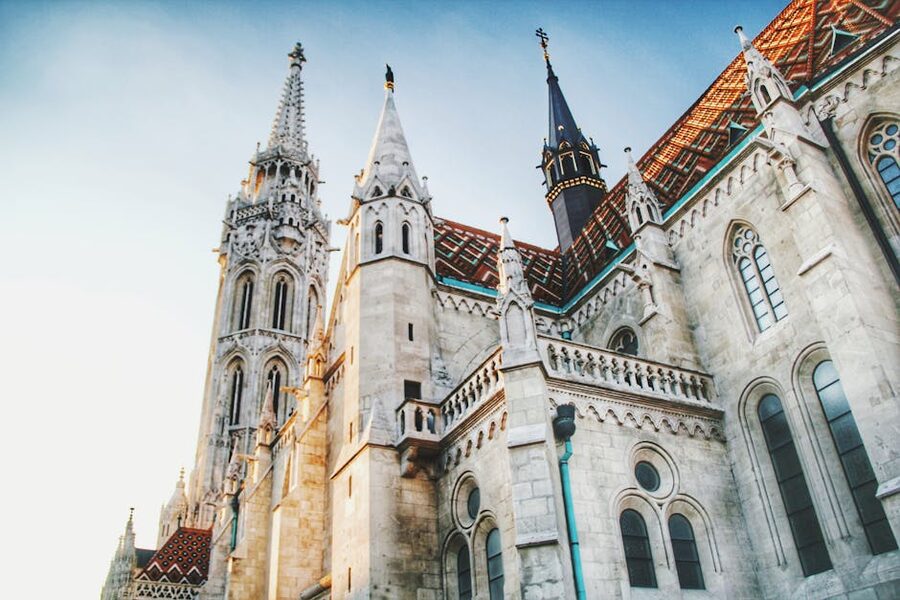
One scheduling note worth knowing: Matthias Church closes for weddings, often on Saturdays. It also closes for Mass — typically Sunday morning until early afternoon. If your tour falls on a wedding day, the guide will pivot smoothly and tell you about the exterior carvings instead of the altar, but you won’t get inside. Booking a tour that includes guaranteed entry (the historian tour does) avoids this.
Holy Trinity Square
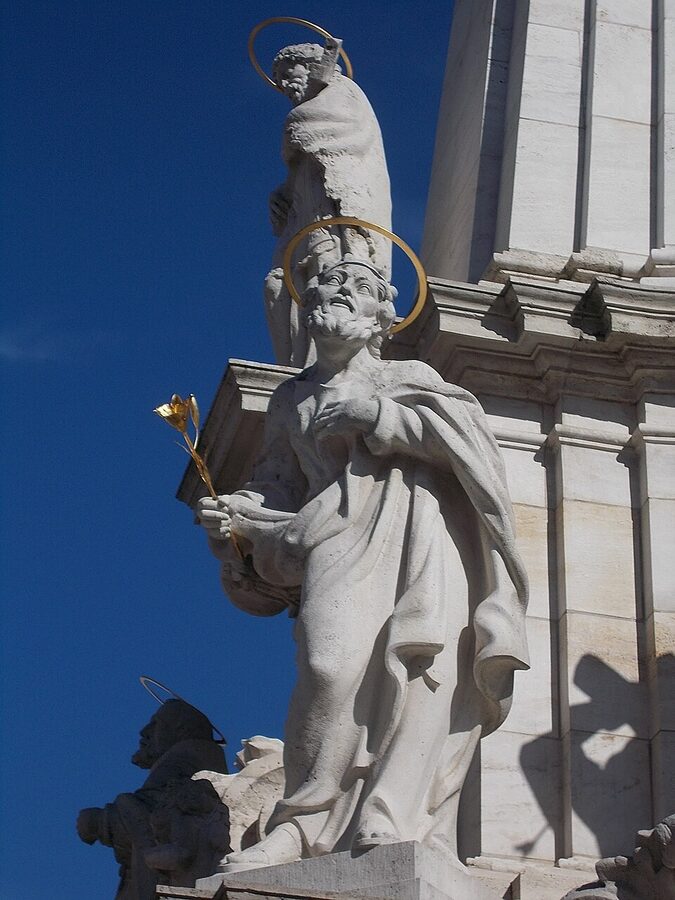

Szentháromság tér (Holy Trinity Square) is the social heart of Castle Hill. Matthias Church on one side, Fisherman’s Bastion on another, the old Buda Town Hall on a third, the wonderfully named Hilton hotel awkwardly modernist on the fourth. A guide will usually pause here to let you orient — this is the point on the hill where most stops radiate out from. The plague column in the middle is an easy meeting spot if you get separated.
.jpg)
Royal Palace
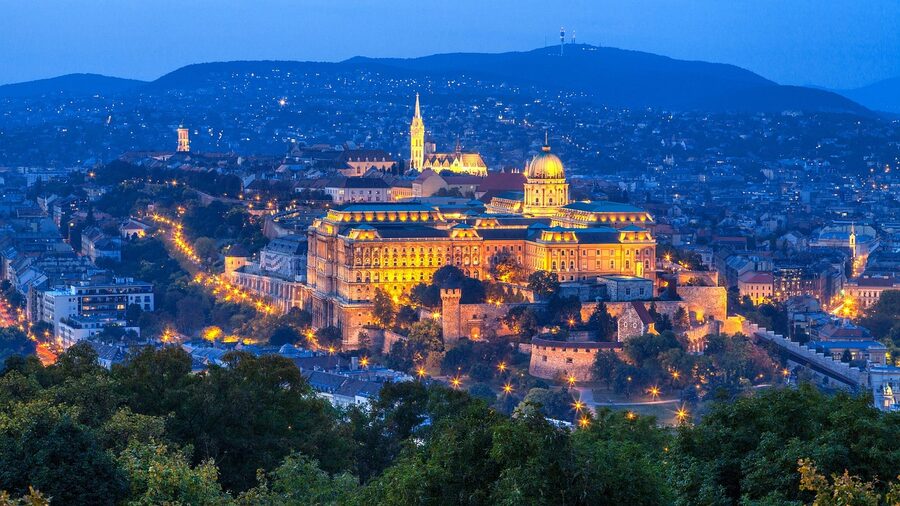
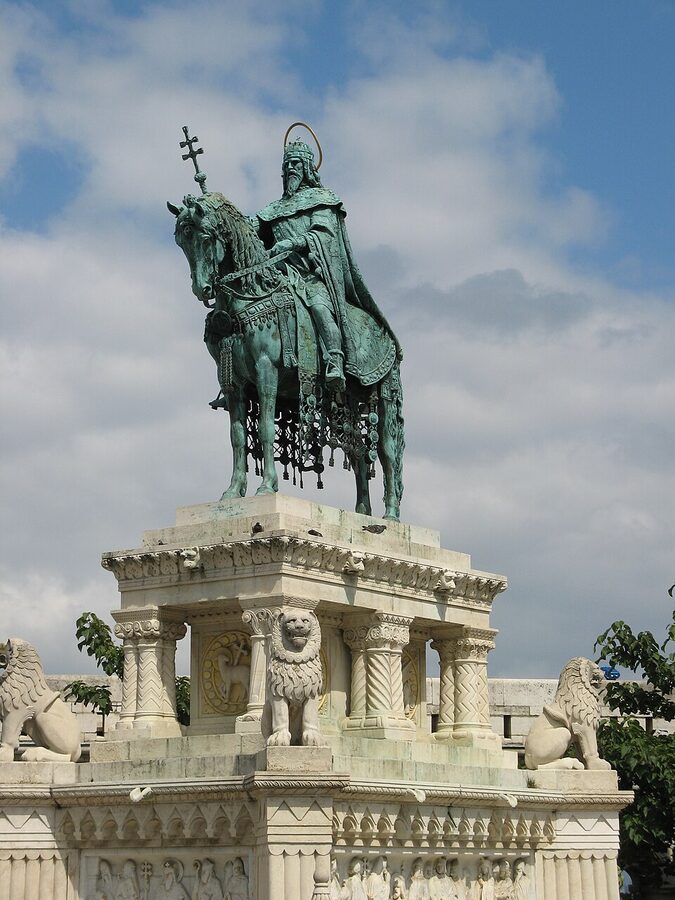
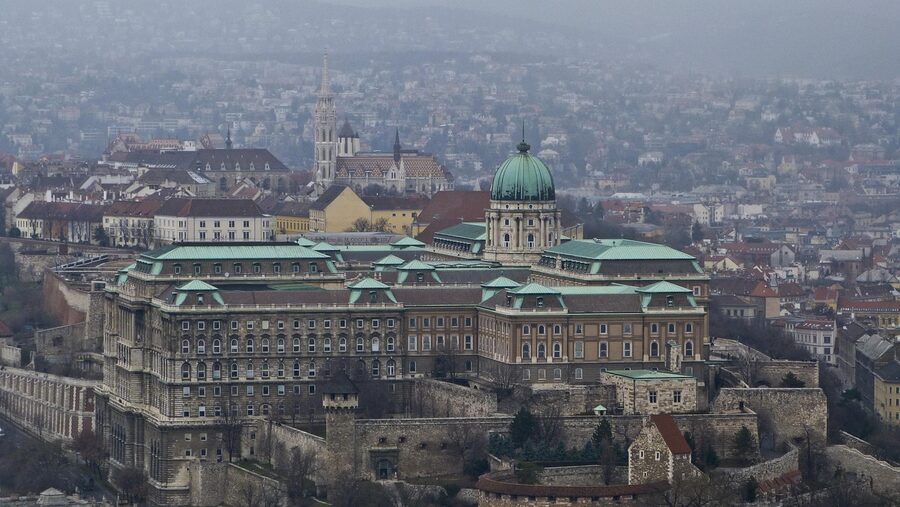
The southern end of the hill is dominated by the Royal Palace — actually a 20th-century rebuild of the Habsburg-era palace, which itself replaced an 18th-century palace, which replaced the medieval royal residence destroyed by the Ottomans. Get the picture. Inside there are now museums (Hungarian National Gallery, Budapest History Museum) which are excellent but a separate day’s worth of looking. A walking tour will typically cross the courtyards, point at the dome, and explain who’s in the equestrian statues without going inside. Our guide to Buda Castle entry tickets covers what’s worth visiting if you want to come back for the museums separately.
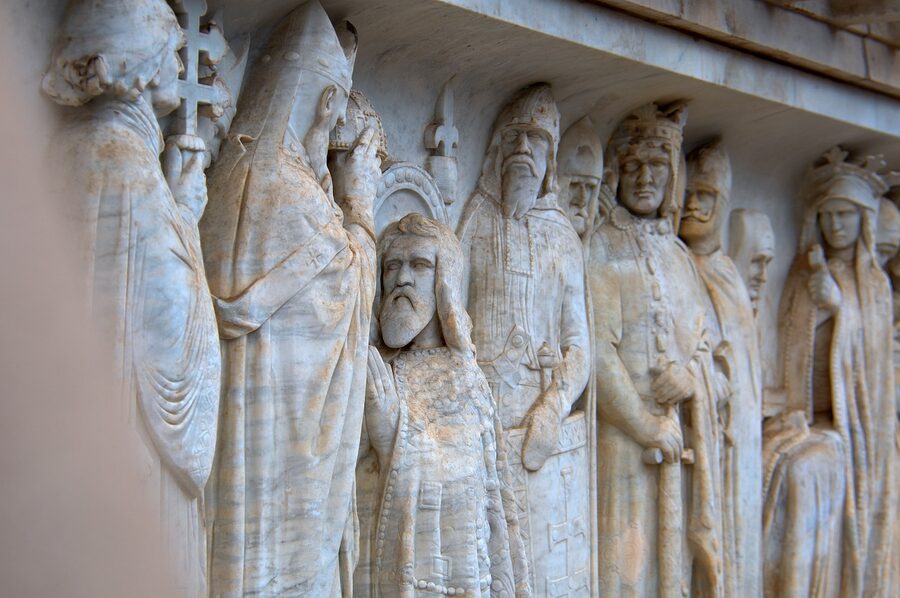
Two things in the palace area worth pointing out specifically. The Lion Courtyard is a quiet quadrangle with four bronze lions and far fewer people than the main approach. And the Matthias Fountain — a 19th-century bronze of King Matthias and his hunting party — is one of the most photogenic monuments on the hill once you find it. It sits in a sunken courtyard on the western side and most independent visitors walk straight past it.
Vienna Gate and the back streets
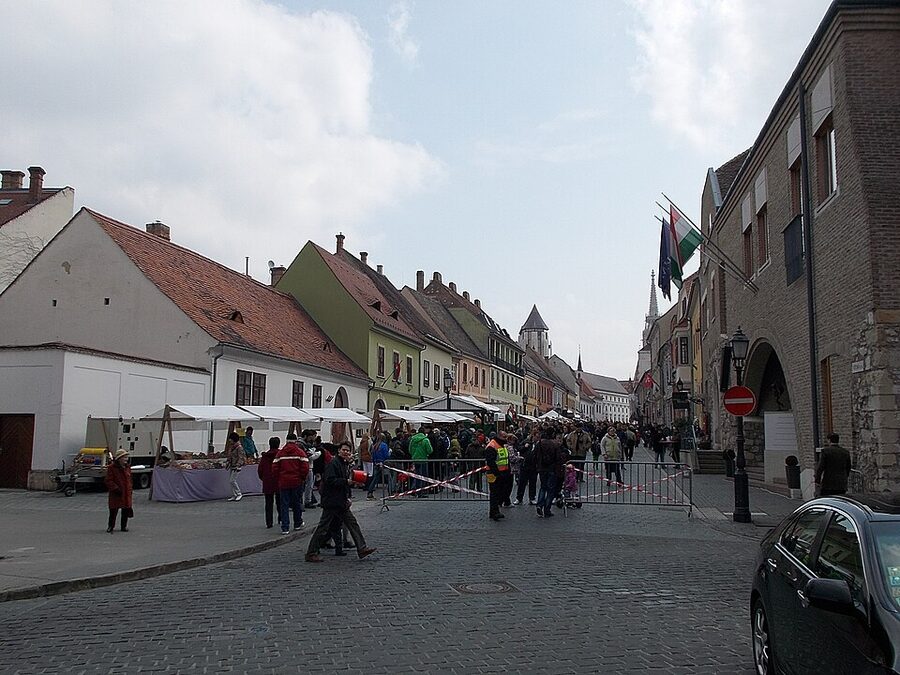

The northern end of the hill — Úri utca, Országház utca, Fortuna utca — is where Castle Hill gets really interesting. These are the residential side streets, full of medieval Gothic windows reset into Baroque facades, half-buried doorways, and small art galleries. The crowds thin out dramatically once you cross north of Holy Trinity Square. A guide who’s done their homework will pull you off the main path here, point at a particular doorway, and tell you about the family who lived there for 300 years before being bombed out in 1945.
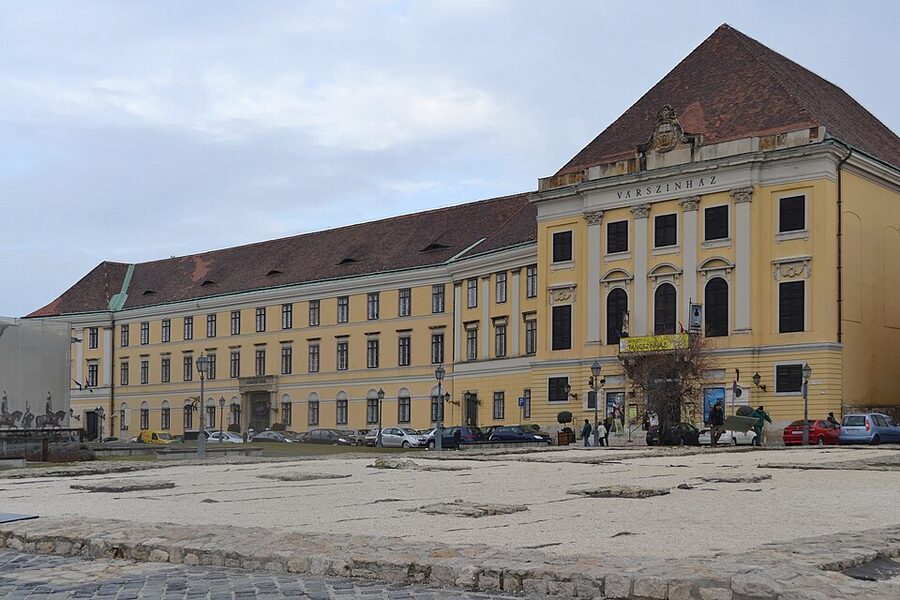

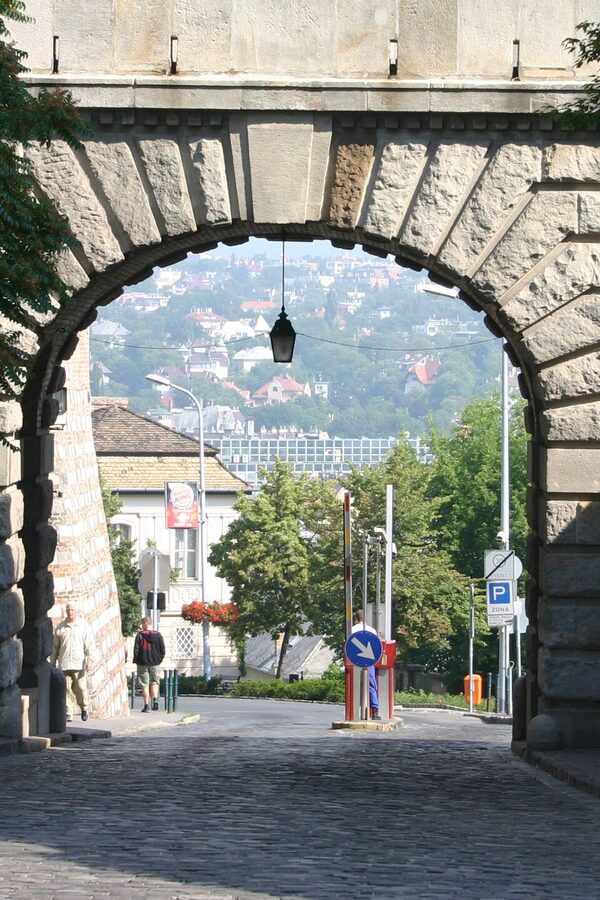
The Vienna Gate itself sits at the north end. It’s the modern reconstruction of the original medieval gate, blown up in 1896 and rebuilt in 1936. There’s a small monument inside the arch commemorating the 1686 retaking of Buda from the Ottomans, which most guides will read aloud. Worth listening to — that siege is what reset the whole demographic of the city, and you can still see its shape in modern Budapest.
How to Pick Between the Three
If you’re new to Budapest and just want a solid orientation walk: the $14 classic. Two hours, all the postcard views, no pressure. You can always come back to Matthias Church on your own afterwards.
If you’ve only got an afternoon and you want one moment of “okay, that was special”: the $29 St Stephen’s Hall walk. Shorter overall but the interior bit gives you a real anchor in the day. Worth it.
If you want depth and don’t mind paying for it: the $63 historian tour. You’ll get inside the church, you’ll have a coffee break, and you’ll come away knowing things even most Budapest residents don’t know. Best for repeat visitors or people who travelled here specifically for the history.
One thing that’s not in the price difference: timing. The cheaper tours run multiple times daily (often 9 am, 11 am, 2 pm, 4 pm). The historian tour runs once or twice a day, often morning only, and books out earlier in summer. If you’re travelling in July or August, check availability before you fly in.
What to Bring and Wear
Comfortable shoes is the obvious one — there’s no escaping cobblestones. But not just any walking shoes. The cobbles up here are rough, and high heels of any kind are genuinely dangerous. A friend twisted her ankle on Úri utca in flat sandals because the gaps between stones are wider than they look. Trainers, light hiking shoes, or sturdy walking sandals.
Layers. Castle Hill is exposed on three sides — Danube wind comes off the river, the open Bastion terraces have no cover, and the temperature can drop several degrees once you’re up on the ridge in the late afternoon. In summer you want a light shirt plus something for the breeze. In winter, full coat plus gloves — the wind there is bracing.
Sunscreen and water in summer. The funicular drops you off in shade but most of the walk is in open sun, and Budapest summer heat regularly hits 32-35°C. Most guides build in a water break but bring your own bottle. There are no public taps on the hill itself.
Cash for snacks. Every cafe up there takes cards now, but a few of the small artisan stalls (Holy Trinity Square has a few) only take cash. A 5,000 HUF note will cover most things.
Getting Up to Castle Hill
Most guided walking tours meet at one of three places: the lower funicular station at Clark Ádám tér, the top of the funicular (the Royal Palace gates), or Holy Trinity Square in front of Matthias Church. Read the meeting instructions carefully — you’d be surprised how often people end up at the wrong end of the hill.
The cheapest way up is bus 16 from Deák Ferenc tér, which takes about 12 minutes and drops you near Holy Trinity Square. A standard BKK ticket (about 450 HUF / 1.20 USD) covers it. The Castle Bus 16A loops the hill itself if you’ve got mobility issues.
The funicular (Sikló) is the photogenic option. Built in 1870, restored after wartime damage, it climbs from the Chain Bridge end of the river up to the Royal Palace in two minutes. It costs 1,800 HUF one-way and queues are real in summer — I’ve seen 30-minute waits in July. Worth it once for the experience, but if you’re in a rush, take the bus and walk the funicular only on the way back down.
Walking up is free and takes about 15 minutes from the Chain Bridge. There’s a stair path up the hill from Clark Ádám tér that most guidebooks don’t mention. Quiet, shaded, no queues — this is what locals do. If you’re booked on a tour starting at the top, this is the most enjoyable approach.
If you’re moving around Budapest more broadly, a Budapest hop-on hop-off bus stop near the foot of the funicular is a useful pickup if you’re combining Castle Hill with sites on the Pest side. A Budapest bike tour is another way to combine it with the river — most bike routes loop down past the Chain Bridge and you can roll right up to the lower funicular.
When to Go
The hill is open year-round and tours run every day. But there are real seasonal differences worth thinking about.
April to early June is my favourite. The weather is reliable (15-22°C), the chestnut trees on the hill are flowering, and the tourist load hasn’t peaked yet. Spring rain happens but rarely all day. You’ll get smaller groups on the historian tour and shorter queues at Matthias Church.
July and August are hot. Like, properly hot — the limestone of the hill radiates heat in the afternoon and there’s not much shade on the Bastion. If you’re going in summer, book the earliest morning slot you can — most tours start running at 9 am and that’s by far the most comfortable time to be up there. By 1 pm it can be miserable.
September and October are arguably the best window of all — warm days, cool evenings, the autumn light is ridiculous, and the crowds drop off after mid-September. Late October you might catch the first of the chestnut leaves turning.
Winter has a unique pull. Castle Hill is genuinely beautiful in light snow — the Bastion’s white towers nearly disappear into a snowy sky, and Matthias Church’s tiled roof against snow is one of the city’s best-known images. December brings Christmas markets to Holy Trinity Square. The downside: it’s cold, often grey, and the upper Bastion terraces close earlier (4 or 5 pm rather than 7).
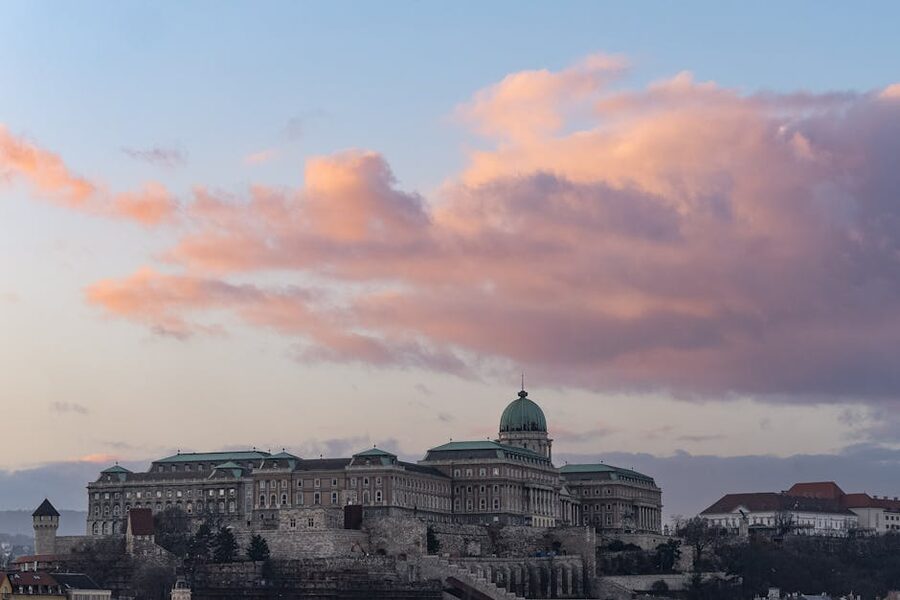
The History You’ll Hear, Briefly

A lot of the value of a guided tour is the history they fill in along the way. Here’s the rough arc your guide will hit, partly so you can follow along, partly so you don’t have to take notes.
The Magyars arrived in the Carpathian Basin in 895 AD. King Béla IV founded the original castle on this hill in the 1240s, after the Mongols flattened the previous settlement. By the late 1400s under King Matthias Corvinus, Buda was a Renaissance court rivalling anything in Italy. Then the Ottomans arrived in 1541 and held the city for 145 years — Matthias Church became a mosque, the population dropped, the Renaissance buildings deteriorated.
The Habsburgs retook Buda in 1686 in a brutal siege that destroyed most of the medieval city. What you walk through now is largely Baroque rebuild from the 1700s, with 19th-century neoclassical and neo-Romanesque additions. The Habsburg royal family used Buda Castle as a Hungarian court when they could be bothered, and the whole hill got progressively grander into the 1880s.
1944-45 is the trauma. The Siege of Budapest lasted 50 days. The Royal Palace was destroyed. Matthias Church lost its roof. Fisherman’s Bastion was scarred. The Castle District was the last German stronghold in the city and the fighting was building-by-building. About 80% of structures on the hill were damaged or destroyed.
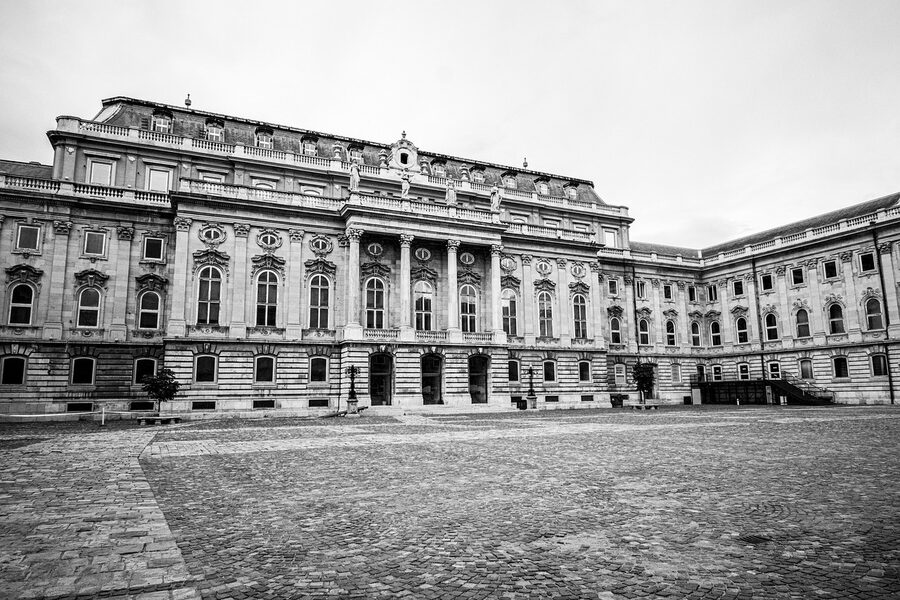
The communist-era reconstruction (1950s-1980s) prioritised getting buildings up over restoring them faithfully. A lot of medieval and Baroque detail was lost to plain plaster facades. Since 1990 there’s been a slow, careful re-restoration — that’s why St Stephen’s Hall only reopened in 2021, after sitting in ruins for 76 years. The Hungarian government has been pouring money into the Castle District in the past decade, and you can see new work in progress on most visits.
That’s the arc. Your guide will personalise it with anecdotes — which family lived where, which Habsburg held a famous ball where, which musician died in which house — and the personalisation is the real value.
A Few Quirks Worth Knowing
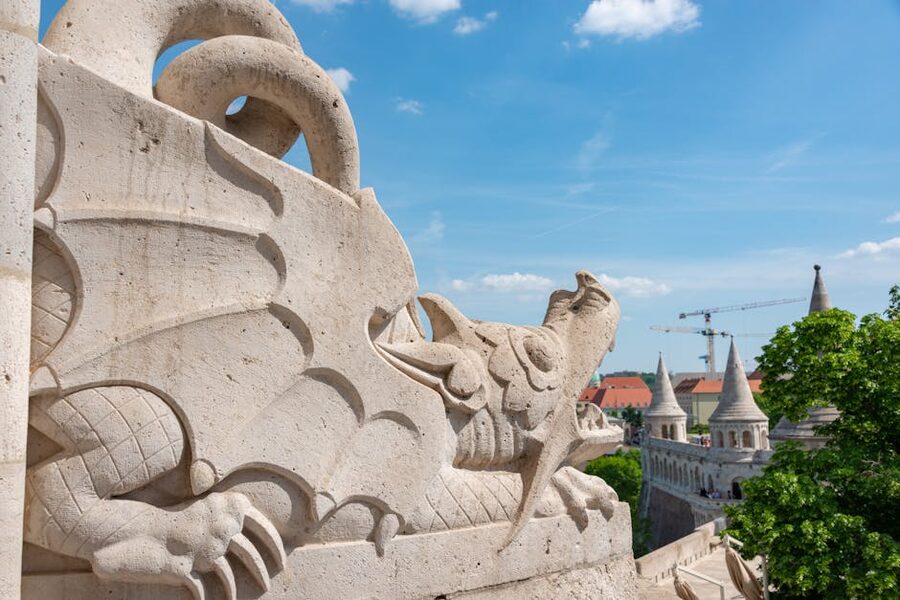
The Bastion has a paid section and a free section. About 70% of what’s photogenic is free. The paid bit (1,400 HUF in summer, free in winter early mornings and evenings) gives you the higher walkway and slightly better angles, but if you’re on a budget, skip it. The free terraces are excellent.
Matthias Church has separate entry fees for the church (around 2,800 HUF) and the church tower (around 2,500 HUF) and the crypt. If you only do one, do the church interior. The tower is a steep 197-step climb for a view that’s only marginally better than what you get from the Bastion.
The Hospital in the Rock museum (Sziklakórház) is at the north end of the hill. It’s not part of any standard walking tour but it’s worth a separate hour — a wartime emergency hospital and Cold War nuclear bunker carved into the limestone underneath the district. Different from the touristic tone of the upper hill, and genuinely affecting. If underground Budapest interests you, our guide to the Buda Castle cave tour covers a different cave system on the same hill.
There are public toilets on the hill but they’re not always obvious — best ones are at the funicular’s upper station, by the Bastion entrance, and inside Matthias Church. Most cafes will let you use theirs if you buy a coffee.
Photography rule of thumb: bring a wide lens for the Bastion, a longer lens for the views across the river. Phone cameras work fine for the wide stuff, but for the Parliament shot from the Bastion you’ll want at least 50mm equivalent.
Eating and Drinking on the Hill
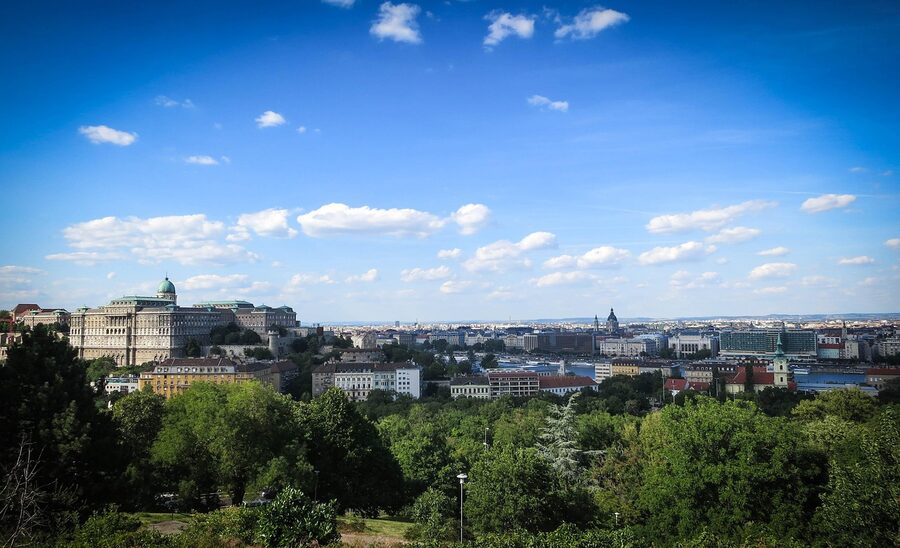
Cafe spots up here are predictably touristy and predictably overpriced compared to Pest. That said, a couple are worth it. Ruszwurm Cukrászda on Szentháromság utca has been serving cakes since 1827 and the krémes (vanilla cream cake) is genuinely excellent. Be prepared to queue for a table — it seats about 15 people.
For something more substantial, Pierrot Café on Fortuna utca does proper Hungarian food — beef gulyás, paprikás csirke, decent house wines — at prices that aren’t insulting. Walt’s Cafe on Tárnok utca is fine for a quick coffee. Skip the places with English menus on the main drag near the Bastion exit — same food, half the quality, twice the price.
If you want to drink with a view, the Bastion has a small cafe on its lower terrace that opens in the warmer months. The coffee is forgettable but the view from the seats is great. For something properly serious, walk down the stairs at the north end of the hill and find a wine bar in the Víziváros (Watertown) area below.
Combining Castle Hill with the Rest of Budapest
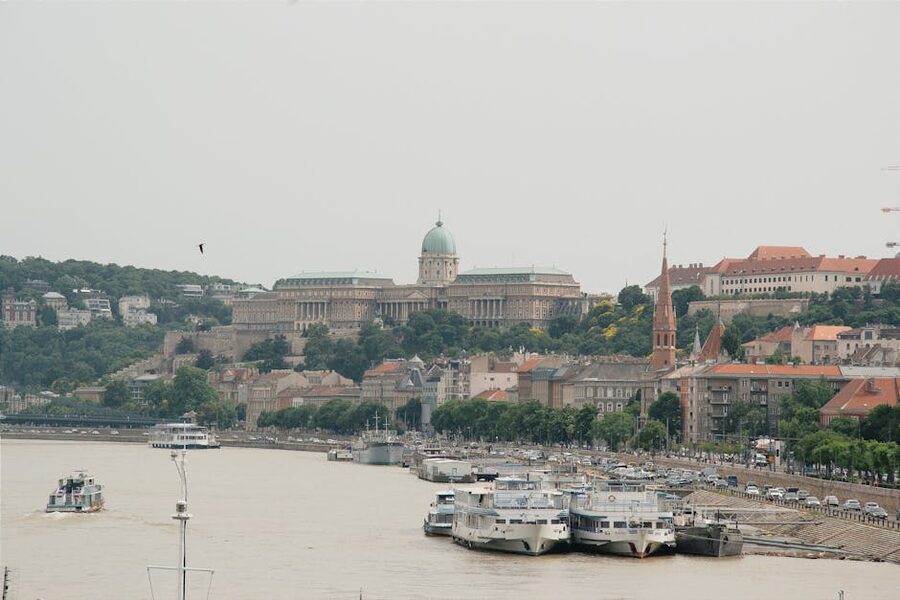
Castle Hill is a half-day at most. People sometimes make it a whole-day plan and end up sitting in cafes by 2 pm wondering what to do. Better to combine it with something on the Pest side or down in the lower Buda hills.
The classic pairing is Castle Hill in the morning, then crossing the Chain Bridge after lunch for the Pest side — Parliament, St Stephen’s Basilica, the riverside promenade. Booking Parliament tickets in advance matters; same for St Stephen’s Basilica, both of which can sell out.
The thermal baths are the perfect afternoon decompressor. Széchenyi is the famous one in the City Park; Gellért is the Art Nouveau one closer to the castle. Either is a good fit after a morning of walking. Castle Hill in the morning, baths in the afternoon, dinner in Pest — a near-perfect Budapest day.
Evenings, a Danube cruise gives you the castle from the water in golden hour or after dark — both are spectacular. If you’ve already done the daylight castle walk, seeing it lit up at night from a boat is the natural other half of the experience. For something completely different after dinner, the vampires and myths night tour covers a different set of Castle Hill stories — properly dark ones that don’t make it into the daytime tours.
Common Mistakes to Avoid
Booking the wrong starting point. The funicular base, the funicular top, and Holy Trinity Square are all common meeting spots and they’re at different ends of the hill. Read the booking confirmation carefully and screenshot the meeting point map.
Going at midday in summer. Worst possible window. 11 am to 3 pm in July is when every cruise group, bus tour, and school trip converges on the Bastion. The hill feels twice as crowded and the heat is brutal. Morning slots cost the same and you’ll have a measurably better time.
Skipping the interior. Whether it’s St Stephen’s Hall or Matthias Church, the interiors are where Budapest’s Castle District genuinely surprises you. The exteriors are postcards. The interiors are quieter, weirder, more specific. Pay the extra 8-10 USD if you can.
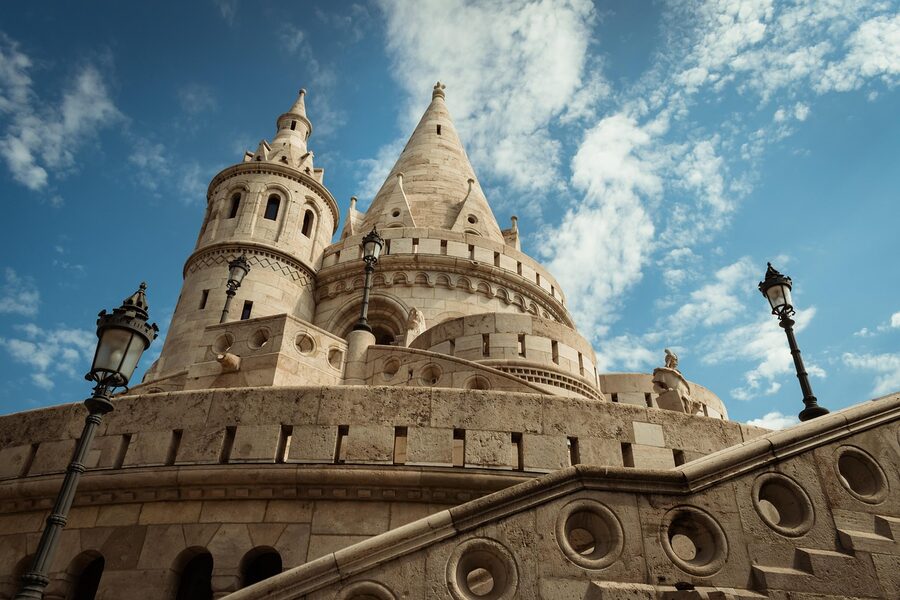
Believing the Bastion was a real fortress. I mentioned this above but it’s worth repeating because nine out of ten visitors think they’re walking on medieval defences. They’re not. They’re walking on a 1902 viewing platform deliberately designed to look medieval. This is fine. Just know it.
Trying to see the Royal Palace museums on the same walk. The Hungarian National Gallery and the Budapest History Museum are excellent and they take 2-3 hours each. They’re a separate trip. Walking tours pass through the courtyards but don’t go inside, and that’s the right call.
Wearing dressy shoes. Do not. Just don’t. The cobbles up here are unforgiving and there’s no taxi rank in the middle of the hill if you wreck your feet halfway through.
Pulling It All Together
Castle Hill is one of those places that gives you back exactly as much as you put in. Walk it solo with no preparation and it’s a pretty hour and a half of sightseeing. Walk it with someone who knows the streets and the stories and you’ll come away knowing more about Hungary than you did about your own country before. Go book a tour.
If I had to pick one for a first visit: the $14 classic two-hour walk. You’ll get the views, the orientation, the basics, and you’ll be free to come back to anything that grabbed your attention. If I had two days, I’d pair the cheap walk with the historian tour on the second day — outdoors first, deep dive second. The combination is excellent and total cost is still under $80.
The Castle District has been here through Mongols, Ottomans, Habsburgs, Nazis, Soviets, and a long quiet rebuilding. It’s not going anywhere. But you might only get one shot at it on this trip — make it count.
Other Budapest Guides Worth a Look
If Castle Hill is your starting point for Budapest, the next obvious moves are the river and the baths. A Danube cruise gives you the castle from the water — totally different perspective, especially after dark — and pairs perfectly with a daytime walking tour. Széchenyi or Gellért baths are the right way to wind down after a morning of walking. For more hidden Budapest, the Buda Castle cave tour takes you into the limestone tunnels under the same hill you’ve just walked across — surreal, atmospheric, and a different kind of history. The vampires and myths night tour covers Castle Hill again but in darker stories you won’t hear during daytime walks. And if you’re trying to cover the Pest side as well, our hop-on hop-off bus guide covers the easiest way to combine both halves of the city. Parliament tours book out fast and need pre-booking — worth setting up the moment your dates are confirmed.
Affiliate disclosure: some links in this article are affiliate links. If you book a tour through them, we may earn a small commission at no extra cost to you. We only recommend tours and activities we’d happily send a friend to.