The best part of this Osaka workshop is that you leave with more than a souvenir: you make a lacquered maneki-neko yourself, using Kyoto washi and gold powder, then grind matcha on a stone mill. The hour is built around careful hands and steady breathing, not a rushed craft demonstration.
I like two things in particular: the finished lucky cat is yours to take home, and the matcha is ground fresh during the session. You also get one instant photo, a nice record of your handiwork without needing to arrange your own picture.
One consideration: an hour is short, and the haori rental for photos is available upon request but is not included in the price. If wearing one matters to you, ask about it before you go.
- Kyoto washi and gold powder: Decorate a lacquered lucky cat with paper and a traditional-style bamboo tube.
- A mindful pace: Breathing and concentration are part of the craft, not just a theme for the session.
- Stone-milled matcha: Spend about 150 seconds grinding tea by hand, then drink it.
- A keepsake to carry home: Your handmade cat and one instant photo per person are included.
- Close to Shin-Osaka: Tawara Building is about a five-minute walk from the station’s East Exit.
- Four languages: The guide is available in English, Chinese, Japanese, and Korean.
- A lucky cat made by your own hands
- Why the breathing is part of the craft
- Grinding matcha on a stone mill
- A photo, a haori, and what you take home
- The hour, step by step
- Getting to Tawara Building
- Is US.70 good value?
- Who will enjoy this workshop most
- Should you book the maneki-neko workshop?
- FAQ
- How long does the workshop last?
- Where is the workshop held?
- How do I get to Tawara Building?
- What can I make during the workshop?
- Is matcha included?
- Is the haori rental included in the price?
- What is included in the price?
- The Best Of Osaka!
- More Workshops & Classes in Osaka
- More Tours in Osaka
- More Tour Reviews in Osaka
A lucky cat made by your own hands
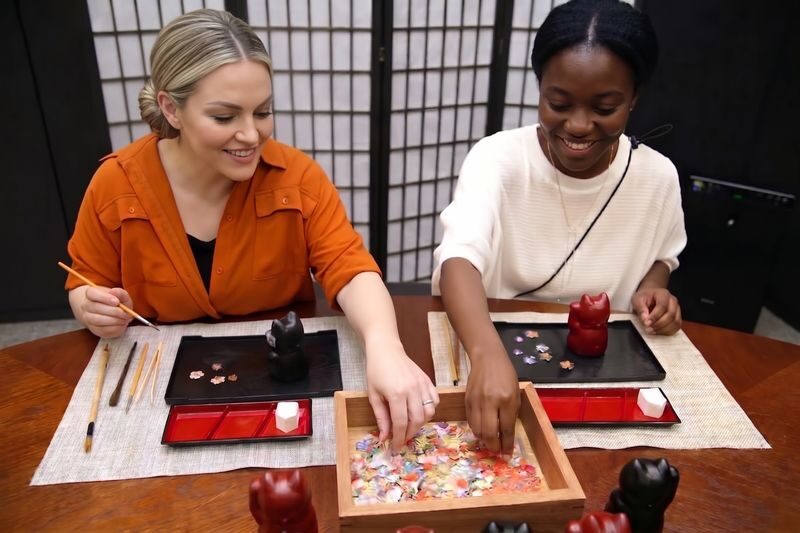
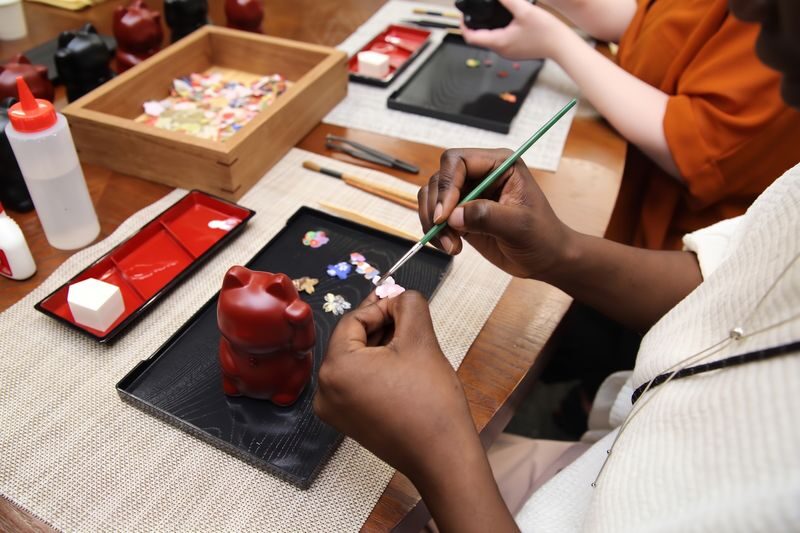
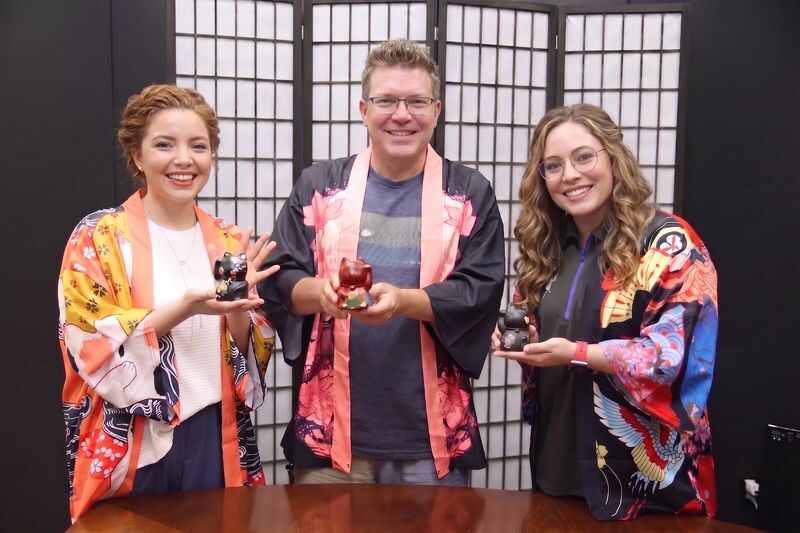
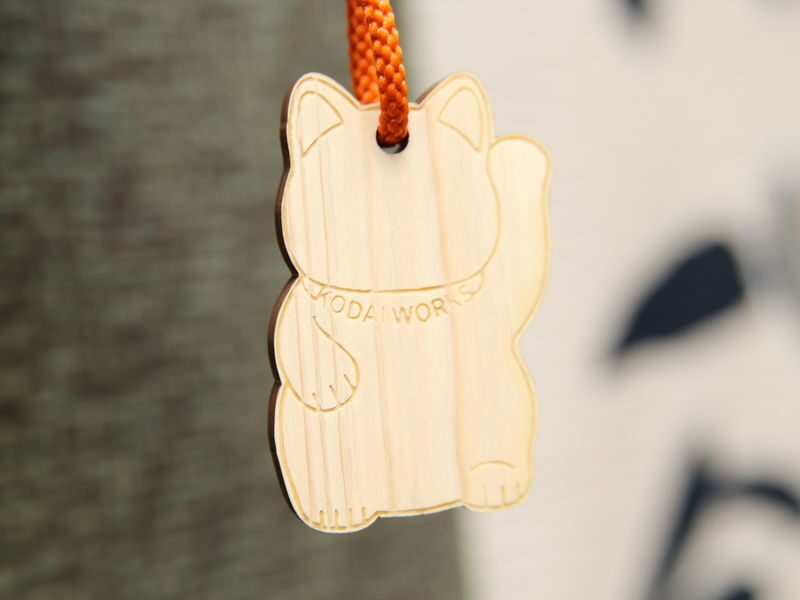
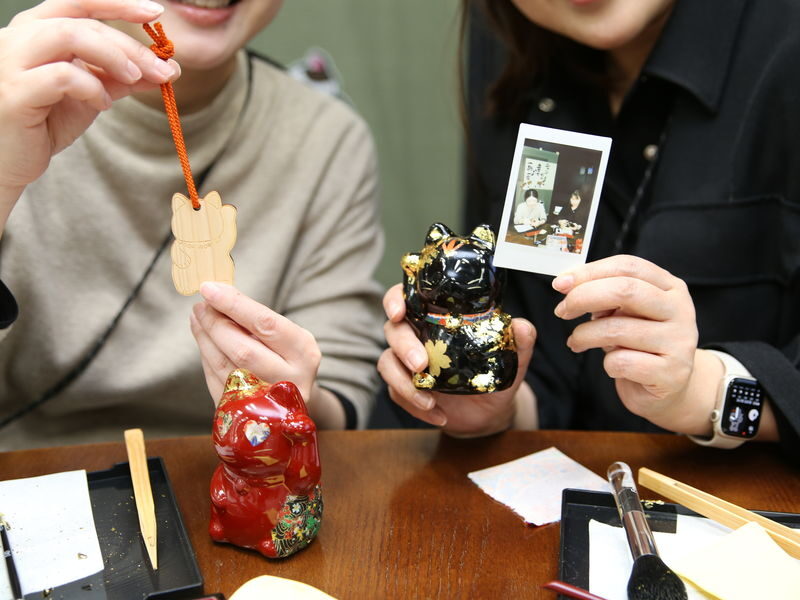
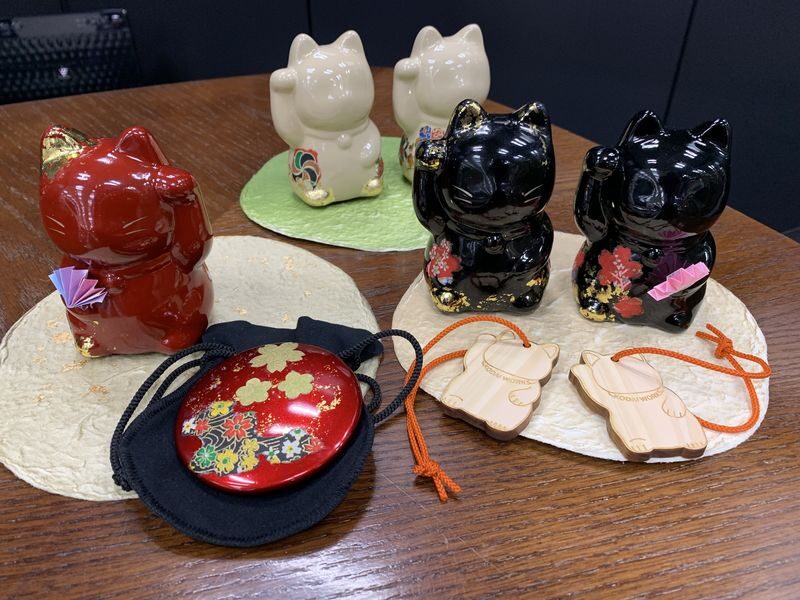
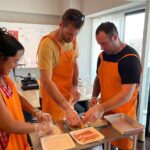
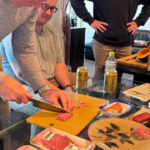
Maneki-neko, the familiar beckoning cat figure, is made here in a form you can personalize. You start with a lacquered cat and decorate it with Kyoto washi, the traditional Japanese paper. Then comes the gold powder, applied with a bamboo tube used in lacquer decoration.
This is not a free-form art class where you are left to guess what comes next. The process is guided, and the workshop is designed around steady breathing and focused movements. That makes it a good choice if you want a hands-on cultural activity but would rather have clear steps than a blank canvas.
The gold gives your cat a distinctive finish, while the washi lets you make it your own. The provided details do not specify how many colors or paper patterns are available, so if you have a particular design in mind, ask the staff what you can choose when you arrive.
👉 See our pick of the The Top 15 Workshops & Classes In Osaka
Why the breathing is part of the craft
The workshop describes itself as a Japanese mindfulness experience, and that idea is tied to what you do with your hands. Applying gold powder calls for control: you use the bamboo tube, steady your breathing, and work with care. The point is not simply to decorate quickly, but to give your attention to a small, precise task.
That slower pace may be a welcome change from a busy Osaka day. It also means the hour is less suited to anyone expecting a lively group activity or a long lesson in Japanese art history. The focus is on trying a technique and making something, rather than receiving an extended cultural lecture.
Staff are there to walk you through the steps. A participant described the staff as helpful, friendly, and encouraging, and noted that they waited outside the building to make the meeting point easier to spot. That is reassuring, though you should still use the address and arrive on time rather than assume someone will find you.
You can also read our reviews of more tours and experiences in Osaka



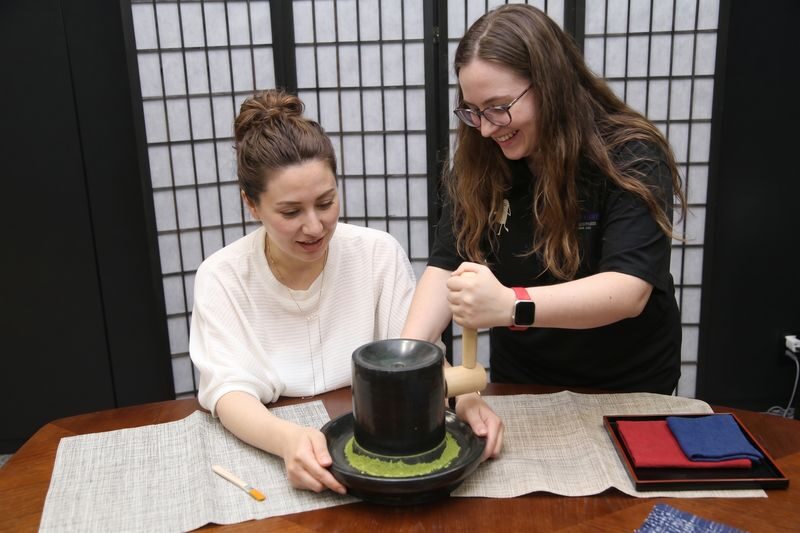
Grinding matcha on a stone mill
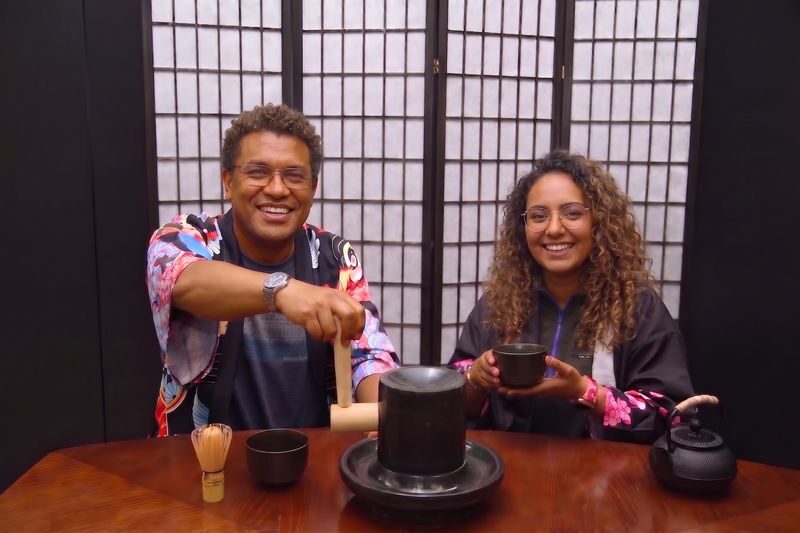
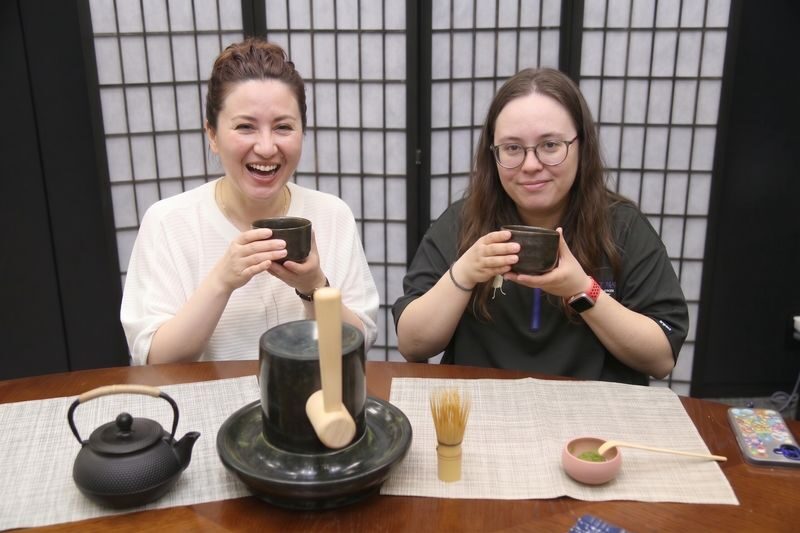
In the second half, you use an authentic stone mill to grind matcha. The task takes about 150 seconds, or roughly two and a half minutes, with the emphasis on quiet concentration. You then enjoy the freshly ground matcha as tea.
This small ritual adds a useful counterpoint to the cat-making. The first activity asks you to decorate; the second slows you down and asks you to repeat one simple motion with care. You are not just handed a prepared cup, though the supplied information does not specify the serving size or whether alternatives are available.
If you have never used a stone mill, this is a compact chance to try one without committing to a longer tea ceremony. Keep expectations in scale: the matcha portion is part of a one-hour workshop, not a full tea gathering.
A photo, a haori, and what you take home
At the end, you can pose with your cat in a Japanese-patterned haori and receive one instant photo per person. The handmade lacquered maneki-neko is included to take home, so the photo is an extra memento rather than the only proof you made something.
There is an important detail about the clothing: haori rental is listed as available upon request and is not included in the price. The activity highlights wearing a patterned haori, but the cost information treats rental as an add-on. Confirm availability and any fee before booking if dressing for the photo is important to you.
A participant also described receiving a lucky charm and a clear file, along with the matcha and instant photo. Those items are not listed as standard inclusions, so treat them as possible extras rather than something to count on.
The hour, step by step
The workshop lasts 60 minutes and takes place at Shin-Osaka. You begin by making your way to Tawara Building, where the activity starts and ends. The session’s first half is devoted to decorating the lacquered cat with Kyoto washi and gold powder.
You then move to the matcha portion, grinding the tea on a stone mill for approximately 150 seconds before drinking it. The final part is the photo, with the handmade cat and, if arranged, a haori. The order and exact timing can vary, so think of the hour as a compact sequence rather than a minute-by-minute appointment.
There is no age limit stated for this activity, and the price is per person. Since the craft involves careful handwork and a quiet atmosphere, it may suit families with children who can enjoy following instructions, but the information does not give a minimum age or child-specific materials. If you are booking for a young child, check with the provider first.
Getting to Tawara Building
The address is Tawara Building 1F, 1-21-33 Higashinakajima, Higashiyodogawa Ward, Osaka. It is about a five-minute walk from the JR Shin-Osaka East Exit, making this an easy activity to fit around a train journey or a stay near the station.
You are responsible for getting yourself to the venue; there is no guide pickup. The meeting point is the same as the workshop’s end point. Arrive five minutes before your selected start time, and take care to book the exact slot you want. Available starts are 10:00, 11:30, 14:00, and 15:30, with corresponding end times of 11:00, 12:30, 15:00, and 16:30.
A participant found the building easy to locate with staff waiting outside, but the official directions still make you responsible for reaching the address. Save the Japanese address as well as the English one, and leave a little margin if you are unfamiliar with the station. Late arrivals and no-shows are not refundable.



Is US$75.70 good value?
At a starting price of US$75.70 per person, this is not a bargain-basement craft activity. The value depends on what you want from an hour in Osaka. You get guided instruction in two hands-on activities, a lacquered cat to take away, freshly ground matcha to drink, and an instant photo. The four-language guide option also makes the process more accessible if you do not speak Japanese.
I think the price makes most sense if you value the finished object and the chance to try the techniques. You are paying for the materials, guidance, a brief cultural activity, and a keepsake that is made during your visit. If you only want a quick cup of matcha or a small souvenir, you may find better value elsewhere.
The haori is the main possible extra to budget for. It is not included, so the advertised price does not guarantee the full dressed-up photo experience. Ask about the rental when you book, and decide whether the photo is still worthwhile without it.
Cancellation terms are relatively practical: a full refund is available if you cancel at least 24 hours before the activity date, using destination local time. Your voucher is valid only for the date and time specified, so double-check the slot before you confirm.
Who will enjoy this workshop most
This works especially well for you if you want a small, hands-on activity between larger Osaka sights, or if you like taking home something you made rather than another shop-bought trinket. The mix of paper, gold powder, tea, and a keepsake photo gives the hour several different moments without requiring a full day.
It is also a good fit for a solo visitor or a pair looking for a calm activity near Shin-Osaka. The guide can work in English, Chinese, Japanese, or Korean, which is helpful when following a craft process. The single available participant review praised the staff’s friendly, encouraging manner, though one review is not enough to promise that every session will feel exactly the same.
Choose something else if you want a long, detailed lesson, a full tea ceremony, or a workshop with plenty of open-ended design time. The experience is brief and structured. That is a strength when you have a tight schedule, but it limits how far you can explore either the craft or the tea ritual.
Should you book the maneki-neko workshop?
Book it if you want a manageable, one-hour cultural activity with a tangible result and a calm change of pace. The strongest reasons are the hands-on gold-and-washi cat, the stone-milled matcha, the included instant photo, and the easy walk from Shin-Osaka.
Before paying, confirm whether you want the haori and whether it can be arranged for your session. Arrive five minutes early, use the East Exit directions, and treat any extras beyond the listed cat, photo, guide, and matcha as unconfirmed. If those details fit your plans, this is a thoughtful way to spend an hour and leave Osaka with a lucky cat that has your own work in it.
24K Gold & Washi: Design Your Unique Manekineko Workshop in Osaka
“Fun activity. Walked through all of the steps to create a meneki neko and the staff were very helpful, friendly and encouraging, and just generally…”
FAQ
How long does the workshop last?
The activity lasts 60 minutes.
Where is the workshop held?
It takes place on the first floor of Tawara Building, at 1-21-33 Higashinakajima, Higashiyodogawa Ward, Osaka City.
How do I get to Tawara Building?
The building is about a five-minute walk from the JR Shin-Osaka East Exit.
What can I make during the workshop?
You decorate a lacquered maneki-neko with Kyoto washi paper and gold powder, then take the finished cat home.
Is matcha included?
Yes. You grind matcha on an authentic stone mill for about 150 seconds and drink the freshly ground tea.
Is the haori rental included in the price?
No. Haori rental for photos is available upon request but is not included.
What is included in the price?
The listed inclusions are a guide speaking English, Chinese, Japanese, or Korean, your handmade lacquered maneki-neko to take home, and one instant photo per person.