The whale shark sets the scale at Osaka Aquarium Kaiyukan. You follow a descending route past large, linked tanks inspired by Pacific habitats, watching the same animals from different heights and angles. It feels less like a row of fish displays and more like a journey from forest streams to the open ocean.
I like two things especially: the central Pacific tank, where whale sharks share the scene with rays and other large fish, and the range of habitats, from a recreated Japan Forest to the deep-sea zone. The route gives you plenty to look at, even if you are not an aquarium regular.
The main catch is timing and crowding. This ticket option is available on weekdays after 3pm, and you cannot enter before the time on your voucher. Weekends can be busy, and a crowd at the glass can make it harder to see smaller exhibits.
- Kaiyukan at a glance
- From the Water Gate to the Pacific
- Japan Forest, Antarctica, and the changing habitats
- The central tank and the whale shark
- Coral, Japan Deep, and the smaller exhibits
- After 5pm: the aquarium in night mode
- Tickets, price, and what the entry includes
- Getting there and planning a half-day
- Is Kaiyukan worth a place in your Osaka plans?
- FAQ
- How long should I plan for Osaka Aquarium Kaiyukan?
- What time can I use this ticket?
- How do I get to the aquarium by metro?
- Can I reach Kaiyukan from Universal Studios Japan by ferry?
- Can I leave the aquarium and come back the same day?
- Are children allowed in free?
- Is the aquarium accessible by wheelchair or stroller?
- Can I take photographs inside?
- Where can I eat near the aquarium?
- What is included in the ticket?
- The Best Of Osaka!
- More Tickets in Osaka
- More Tours in Osaka
- More Tour Reviews in Osaka
Kaiyukan at a glance
 1 / 9
 2 / 9
 3 / 9
 4 / 9
 5 / 9
 6 / 9
 7 / 9
 8 / 9
 9 / 9
- A Pacific-focused route: Explore more than 15 connected habitat tanks inspired by ecosystems around the Pacific.
- A giant central tank: Look for the whale shark, manta rays, spotted eagle rays, leopard sharks, and sea turtles.
- Animals beyond the ocean: The route also includes otters, penguins, sea lions, dolphins, jellyfish, and deep-sea creatures.
- A night-time change: From 5pm until closing, The Sea at Night shifts the lighting and sound to create a darker, quieter mood.
- A practical ticket: The QR voucher can be scanned at the entrance, but this ticket offer is for weekdays after 3pm and does not allow early entry.

👉 See our pick of the The Top 15 Workshops & Classes In Osaka
From the Water Gate to the Pacific
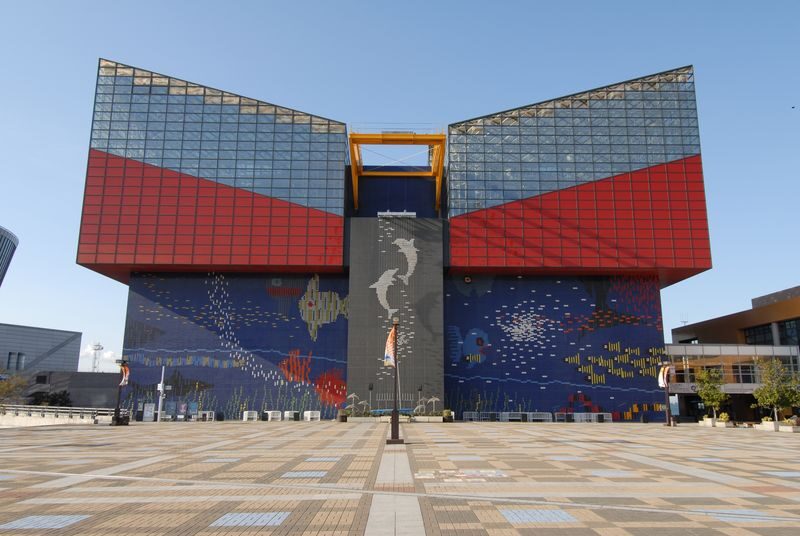
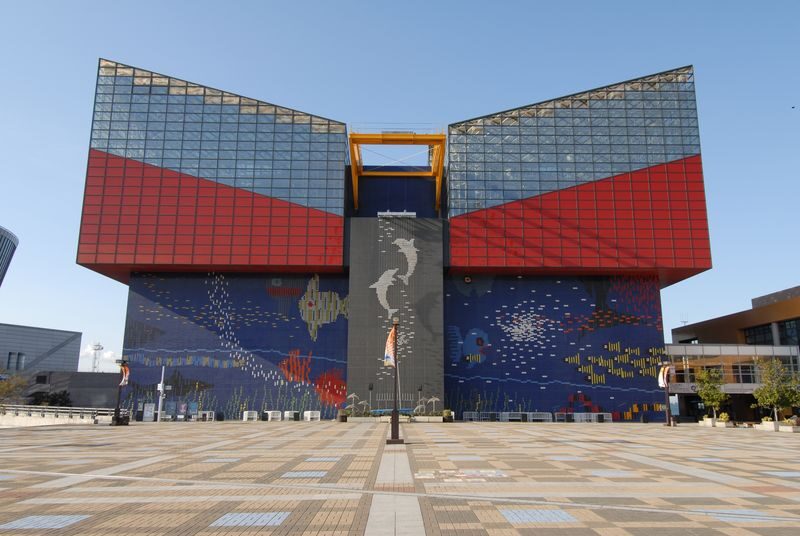
Kaiyukan is in Tempozan Harbor Village, beside Osaka Bay. At the entrance, a circular, vaulted passage known as the Water Gate introduces the aquarium’s underwater theme before the exhibits begin. From there, the route moves through habitats arranged around regions and environments.
One of the clever features is the way the aquarium guides you gradually downward. Instead of viewing each tank from a single spot, you see parts of the central habitat at different levels. That shift gives the Pacific tank a sense of scale: a whale shark may glide past high above you, then appear again from another angle farther along the route.
The aquarium is home to more than 30,000 creatures from 630 species. Those numbers are impressive, but what matters most during a visit is the variety of settings. You move from river and forest scenes to polar waters, coral, and the darker depths around Japan.
You can expect to spend about two to three hours walking through the exhibits. Allow longer if you like reading displays, waiting for animals to come into view, or stopping at interactive areas. The route is popular with families, so take your time and be patient when people gather at the main windows.
You can also read our reviews of more tours and experiences in Osaka
Japan Forest, Antarctica, and the changing habitats
The Japan Forest is a welcome change from the large saltwater tanks. It recreates a Japanese surface environment, with otters near river and surface waters. The contrast helps explain that Kaiyukan is not only about open-ocean animals. It also gives you a calmer start before the larger displays.
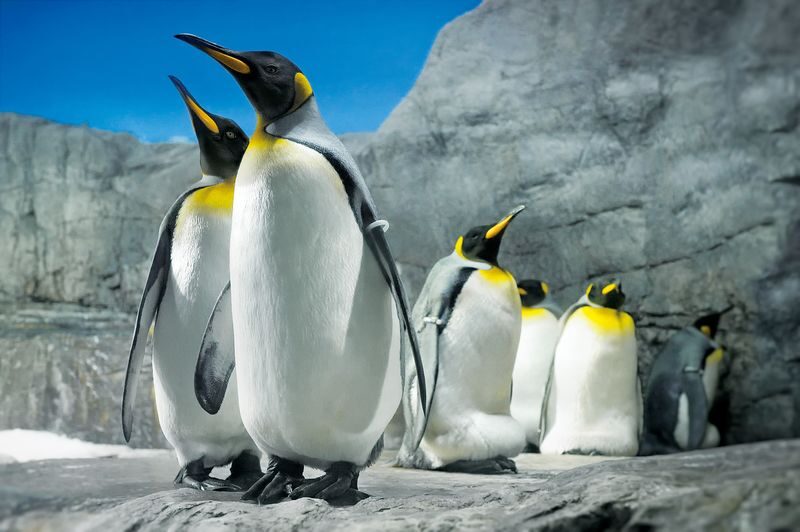
At Antarctica, watch penguins move between land and water. The exhibit is a favorite for families, and you may hear the birds calling as well as see them waddle and swim. The area can draw a crowd, so if the view is blocked, give it a few minutes rather than trying to squeeze in at once.
The route moves between habitats inspired by the Pacific region, showing how different animals live in different conditions. You will see familiar favorites alongside less expected marine life, including octopuses, cuttlefish, jellyfish, and a range of fish. The displays can be enjoyable for children, but they are not only for children: the variety keeps the visit rewarding for adults too.
A themed area called Naturally Adorable puts the focus on small, eye-catching creatures such as clownfish, garden eels, and shrimp. It is a change of pace after the broad views of the main tank. Smaller exhibits are also where crowds can have the biggest effect, particularly when people stop to take photos.
The central tank and the whale shark
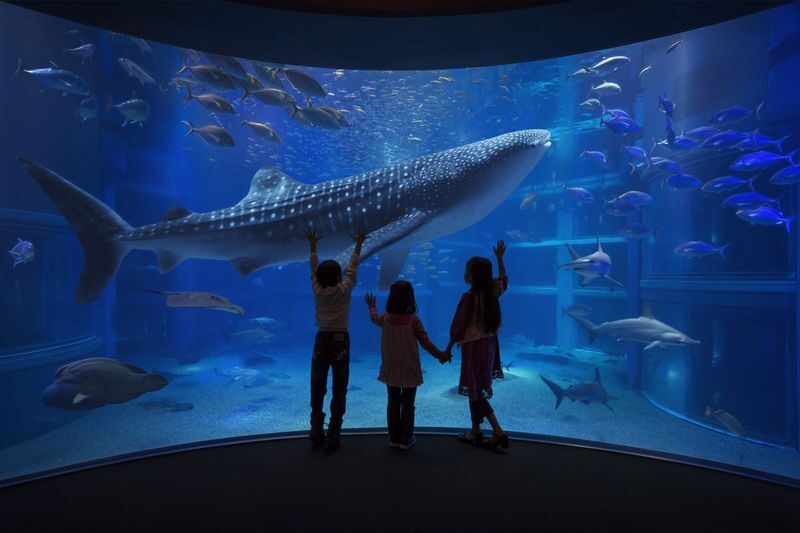
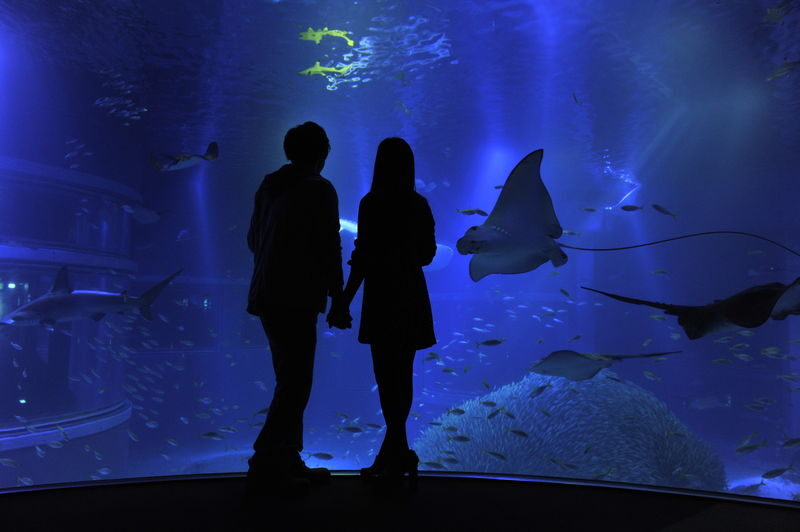
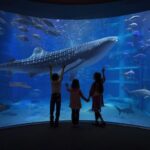
The Pacific Ocean tank is Kaiyukan’s main event. The whale shark is the animal most people come to see, and its size makes the central habitat feel genuinely vast. Rays and other sharks share the water, with sea turtles and other fish adding movement at different levels.
I recommend not treating this as a quick photo stop. The tank is designed to be viewed from more than one point as you descend, so it is worth looking up and around as well as straight ahead. The whale shark may not be in the exact spot you expect when you first arrive; keep moving along the route and you will get other chances to see it.
The tank’s scale is also a reason to plan around other people. When a large group gathers at the glass, shorter visitors may find it hard to get a clear view. If you are visiting with children, try to give them a place near the front, and be ready to pause until the crowd shifts.
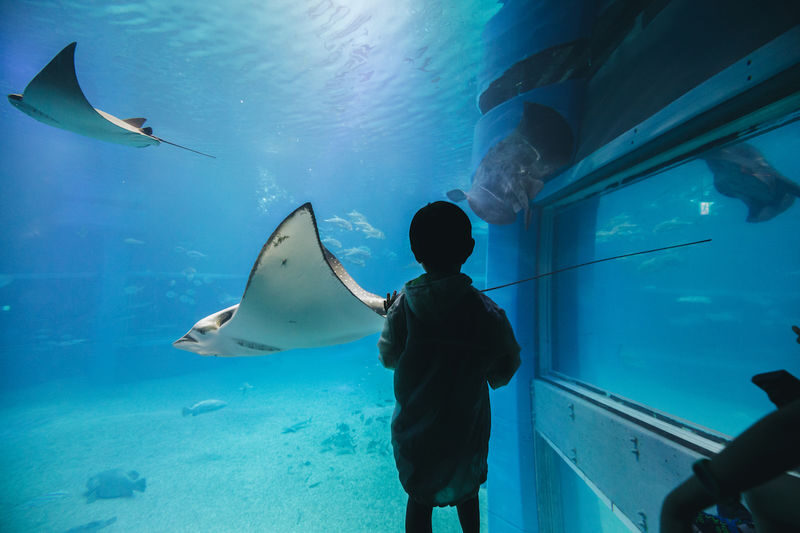
Several visitors especially enjoy getting close to manta rays and watching the animals pass overhead or across the glass. The aquarium also has dolphins, sea lions, and other large marine life elsewhere along the route, so the whale shark is a highlight rather than the only attraction.
Coral, Japan Deep, and the smaller exhibits
The Great Barrier Reef habitat offers a brighter, busier scene, with colorful fish among more than 5,000 coral structures. It provides a sharp visual contrast to the deep, cool tones of the larger ocean tank. If you are visiting with children, this is a good place to point out how habitat and color can change from one exhibit to the next.
Japan Deep represents ocean environments around 200 to 400 meters below the surface. Look for Japanese spider crabs and other deep-sea animals. The darker setting and unusual creatures make this one of the more distinctive stops, especially if you have already seen plenty of tropical fish elsewhere.
Jellyfish and cephalopods add another kind of interest. The jellyfish displays have a softer, more atmospheric feel than the big tanks, while the octopus and cuttlefish exhibits show off animals that are active and expressive in a very different way. These smaller displays reward a slower pace, though they can be harder to appreciate when the room is crowded.
There are also touch and interactive areas. They can give children a more hands-on break from looking through glass, but the specific activities available may vary. Follow the signs and staff instructions, and keep in mind that the aquarium’s strongest feature remains its linked habitats and large viewing tanks.
After 5pm: the aquarium in night mode
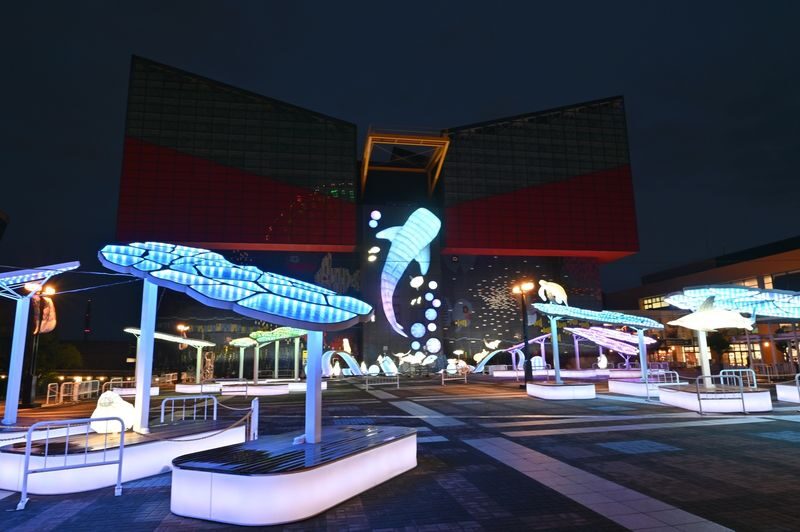
From 5pm until closing, Kaiyukan presents The Sea at Night. The lighting and sound shift to a night-time version, changing the feel of the exhibits without changing the route. If your ticket is for an afternoon entry, you may be able to see the aquarium in both its daytime and evening moods, depending on the date and closing time.
The evening setting is a good reason not to rush through the first half of the visit. It gives familiar tanks a different atmosphere and may make the later part of your route feel calmer. Check the day’s operating hours and your voucher time, since the ticket described here is limited to weekdays after 3pm and no early entry is allowed.
Feeding events may also be part of the day’s schedule. If you want to plan around one, check the aquarium’s current information rather than assuming a particular time. The experience is enjoyable without catching a feeding, but a scheduled activity can help break up a long visit.


Tickets, price, and what the entry includes
The package is an admission ticket. It covers entry to Kaiyukan, not personal expenses or meals. The advertised starting price is from $4.45, but treat that as a starting figure rather than a guaranteed total for your date. Check the final price and the exact ticket conditions before paying.
Booking ahead can save you from waiting to buy a ticket on site, particularly during busy periods. The QR voucher is intended for direct entry at the gate. Be sure to arrive before the scheduled participation time, but do not arrive expecting to enter early. Late arrival may mean a longer wait.
This ticket option is described as valid only on the date and time selected, and available on weekdays after 3pm only. Check those restrictions carefully if you are planning a weekend visit or want to arrive earlier in the day. Children aged 0 to 2 enter free; child categories are ages 3 to 6 and 7 to 15, while anyone 16 or older pays the adult rate.
The ticket permits same-day re-entry. Before leaving, get a hand stamp at the Service Counter by the exit, then show it when you return. That can be useful if you want a meal or a break in Tempozan Harbor Village before coming back for the evening lighting.
Getting there and planning a half-day
The simplest route by metro is to take the Osaka Metro Chuo Line to Osakako Station, then walk about five minutes to the aquarium. From Osaka Station, another suggested route is the train to Bentencho Station followed by a transfer to the Chuo Line for two stops to Osakako. Bus routes 88 from Osaka Station and 60 from Namba also serve the Tempozan stop, with a journey of roughly 40 to 60 minutes and 40 to 50 minutes respectively.
If you are coming from Universal Studios Japan, the Captain Line ferry takes about 10 minutes to reach the Kaiyukan area. It is a useful way to link two attractions without returning to the main rail network, though you should check the ferry’s current schedule when planning your day.
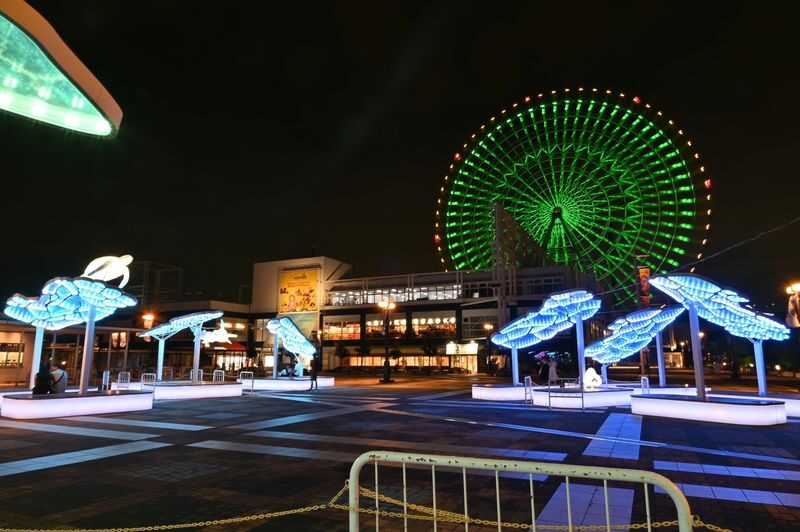
Plan at least two to three hours inside. The wider Tempozan Harbor Village can fill out a half-day: Tempozan Marketplace has dining and shopping, and Naniwa Kuishinbo Yokocho offers Osaka specialties such as takoyaki, okonomiyaki, and kushikatsu. The Tempozan Ferris Wheel and other nearby attractions can also fit into a longer visit.
Weekdays are generally the better choice if you want more space at the viewing windows. Weekends tend to be busier, and crowds can make it tough to see exhibits, especially if you are shorter or visiting with young children. The aquarium is stroller- and wheelchair-accessible; check the official site for specific accessibility details.
Photography is allowed, but flash is prohibited. Commercial photography and video, as well as live broadcasts of the show, are not permitted. Do not bring prohibited items such as bottles, firecrackers, or lasers.
Is Kaiyukan worth a place in your Osaka plans?
Kaiyukan makes the most sense if you enjoy marine life, are traveling with children, or want a substantial indoor attraction that can occupy a half-day. Its strongest qualities are the enormous central tank, the range of Pacific-inspired habitats, and the changing viewpoints along the route. The QR entry option is useful when you want to avoid buying a ticket at the venue.
It is less ideal if you dislike crowds or want a quiet, quick stop. You should also think twice about this specific ticket if you need a morning or weekend entry, since the described option is for weekdays after 3pm. If that timing works, set aside enough time to see the smaller habitats as well as the whale shark, and leave room for dinner or a walk around Tempozan afterward.
Osaka Aquarium Kaiyukan Ticket
“Osaka Aquarium Kaiyukan – Osaka Bay Area There are a lot of people queuing to buy tickets on-site, so it's best to buy tickets online in advance. H…”
FAQ
How long should I plan for Osaka Aquarium Kaiyukan?
Plan to spend at least two to three hours inside. You may want longer if you stop at interactive exhibits, watch feeding events, or take breaks to see the main tank from different levels.
What time can I use this ticket?
The ticket option described here is available on weekdays after 3pm. It is valid only on the date and time selected, and early entry is not permitted.
How do I get to the aquarium by metro?
Take the Osaka Metro Chuo Line to Osakako Station. The aquarium is about a five-minute walk from the station.
Can I reach Kaiyukan from Universal Studios Japan by ferry?
Yes. The Captain Line ferry takes about 10 minutes to reach the aquarium area.
Can I leave the aquarium and come back the same day?
Yes. Ask for a hand stamp at the Service Counter by the exit before you leave, then show it when you return.
Are children allowed in free?
Children aged 0 to 2 enter free. Ages 3 to 6 and 7 to 15 have child ticket categories. Children aged 16 and older are charged the adult rate.
Is the aquarium accessible by wheelchair or stroller?
Yes. The activity information describes the venue as stroller- and wheelchair-accessible. For details about accessibility arrangements, check the official aquarium website.
Can I take photographs inside?
Yes, but flash photography is prohibited. Commercial photography and video, along with live broadcasting of the show, are not allowed.
Where can I eat near the aquarium?
Tempozan Marketplace, next to the aquarium, has dining options. Naniwa Kuishinbo Yokocho serves Osaka foods including takoyaki, okonomiyaki, and kushikatsu.
What is included in the ticket?
The package includes admission to Kaiyukan. Personal expenses are not included.