Osaka’s big advantage is how much easier it can be to link far-flung sights when your group has its own car. This is a private transfer service for the day, not a guided sightseeing tour by default: you choose the stops, and the driver handles the roads and pickup points.
I like two things in particular: door-to-door hotel service saves you from juggling transfers, and a flexible schedule lets your group linger or change course. The trade-off is that the driver may not speak English, and the Osaka City package does not cover Kyoto, Nara, or other nearby areas.
- At a glance
- A private car, not a packaged sightseeing tour
- Planning the Osaka City route
- When the wider Kansai options make sense
- Vehicle size and luggage are part of the plan
- What the price covers, and what it does not
- Communication, timing, and the small print
- Who should book this car service?
- Should you book it?
- FAQ
- Is this specific package for Osaka or Kyoto?
- How long is the car service?
- Where does pickup take place?
- Is a tour guide included?
- Does the driver speak English?
- Are attraction tickets and meals included?
- What vehicle sizes are available?
- Can I bring a child seat?
- What happens if the trip runs over 10 hours?
- The Best Of Kyoto!
- More Private Tours in Kyoto
- More Tours in Kyoto
- More Tour Reviews in Kyoto
At a glance
 1 / 9
 2 / 9
 3 / 9
 4 / 9
 5 / 9
 6 / 9
 7 / 9
 8 / 9
 9 / 9
- Osaka City route: A suggested day runs from Osaka Castle Park to Tsutenkaku, Namba Yasaka Shrine, Shinsaibashi, and Dotonbori.
- Ten hours in a private vehicle: The service includes the car, driver, fuel, insurance, and round-trip hotel transfers within Osaka City.
- You set the pace: Choose your own stops and timing, but keep traffic, opening times, and the 10-hour limit in mind.
- Not automatically a guided tour: A professional guide is optional. Drivers may communicate with translation software, and an English-speaking driver requires an extra fee.
- Check the package carefully: Kyoto, Nara, Kobe, and other destinations require the matching package, and may carry cross-region charges.
- Budget for extras: Admission, meals, parking, tolls, and overtime are not included.

👉 See our pick of the We Rank Kyoto’s 15 Top Workshops & Classes
A private car, not a packaged sightseeing tour
The main appeal here is control. You are not joining a bus group or following a fixed sequence of stops. Instead, you book a vehicle and driver for a standard 10-hour service window, with pickup and drop-off at a hotel or guesthouse in Osaka City.
That setup can be especially useful for a family, a group of friends, or anyone travelling with older relatives. You do not need to coordinate every leg by train, locate a taxi after each stop, or carry shopping bags from one station to another. If you have children, the operator can provide one child seat free of charge if you request it in advance. Infants and children still count toward the passenger limit.
The service is best understood as private transportation with itinerary flexibility. Drivers are described as Chinese- or Japanese-speaking, and translation software can help with basic communication. If you need an English-speaking driver, ask in advance: a designated English-speaking driver costs an additional JPY 5,000. A professional guide is a separate option, not part of the standard service.
That distinction matters. If you want historical explanations at Osaka Castle or temple context at Namba Yasaka Shrine, arrange a guide or prepare your own notes. Some drivers may offer advice or help with translation, as drivers Mr. Qu and Mr. Lu have done for past groups, but you should not assume your driver will act as a guide. Names and services vary.
You can also read our reviews of more private tours in Kyoto


Planning the Osaka City route
The Osaka City package is limited to attractions within Osaka City. Its suggested route links Osaka Castle Park, Tsutenkaku Tower, Namba Yasaka Shrine, and the Shinsaibashi and Dotonbori area. These stops make a reasonable first-time overview, but five named places can still be ambitious once you add traffic, meals, queues, and time inside each attraction.
Osaka Castle Park is a natural starting point if you want a major landmark and open grounds. The castle tower is a separate attraction within the park, and admission is not included. Decide in advance whether you want to go inside or simply see the grounds, since that choice affects how much time you have for the rest of the day.
Tsutenkaku gives you a different view of the city, in the Shinsekai area. It is worth considering if you want a tower visit and a change of pace from the castle. Tower admission is extra, and this stop can take longer than a quick photograph if you plan to go up.
Namba Yasaka Shrine offers a short, distinctive stop on a route through central Osaka. It is not the sort of place that needs a long visit, which makes it a useful counterpoint to the larger attractions. Still, if your day is running late, you and your driver will need to decide whether it belongs on the final route.
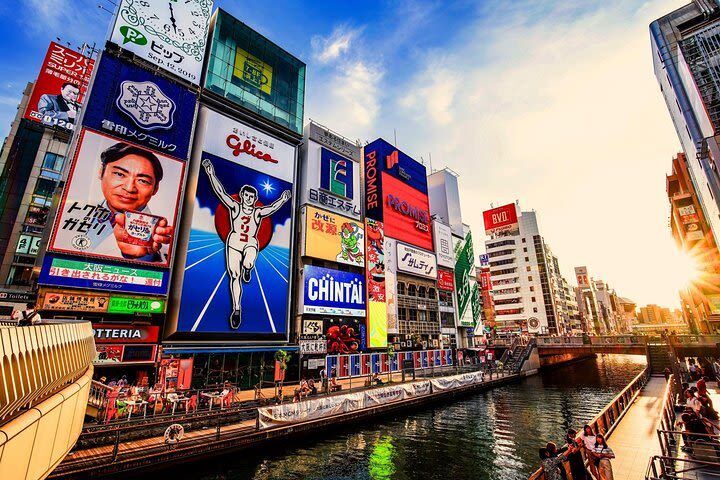
Shinsaibashi and Dotonbori work well together because they offer shopping, food, and a chance to walk around rather than simply move between landmarks by car. The Glico sign is a familiar photo stop, but the point of this part of the day is also to explore on foot. Agree on a clear meeting point with your driver before you leave the vehicle, and keep enough time for the walk and a meal.
The suggested sequence is only a starting point. You can customize it, but the operator notes that weather or capacity may mean some attractions need to be skipped. I would choose two or three priorities, then keep the rest flexible. A plan that leaves room for a proper lunch is more enjoyable than a checklist that turns every stop into a dash.
When the wider Kansai options make sense
The experience is sold in several package versions, including day trips to Kyoto, Nara, Kobe, Wakayama, Amanohashidate and Ine, and other destinations. Those options are not interchangeable with the Osaka City package. The package details described here are specifically for Osaka City attractions, and the included Osaka City service is limited to a round-trip driving distance of up to 100 kilometres.
For Kyoto, Nara, or Kobe, select the matching package and check its route and fees before booking. Cross-region combinations, such as Kyoto and Nara together, may involve an additional service charge. The stated outside-Osaka limit is a round trip of up to 300 kilometres centred on Osaka; extra distance beyond that is charged at JPY 400 per kilometre.
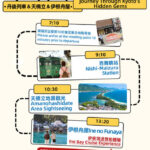
A private car can be a sensible choice for longer routes or places that take several transfers by public transport. One family travelling to Amanohashidate and Ine used the car to combine viewpoints, a boat ride, a seaside meal, and a visit to the boathouses at their own pace. That kind of day can be hard to manage by public transport, but the drive is long, so make sure the route you choose fits the 10-hour service and that you understand any regional surcharge.
For Kyoto, traffic and crowds can cut into the number of stops you manage. A five-stop plan may become three, particularly during popular seasons. Treat the schedule as a set of priorities rather than a promise that every item will fit.
Vehicle size and luggage are part of the plan
Vehicle choice affects comfort, capacity, and price. The listed options include a five-seat car for up to three passengers and two pieces of luggage; a seven-seat vehicle for up to six passengers and four bags; and a 10-seat van for up to nine passengers and 10 bags. Larger vehicles are also listed, including a 14-seat van and an 18-seat vehicle. A larger vehicle may carry up to 23 people only when auxiliary seats are used and there is no luggage.
The package highlights also refer to vehicle choices that may vary by booking. Confirm the exact vehicle, passenger capacity, and baggage allowance for your date instead of relying on the broadest capacity figure. A standard bag is described as 24 to 28 inches. Oversized bags and strollers count as two pieces, and a child seat uses about one and a half passenger spaces.
This is worth checking carefully. The operator can refuse boarding if your group or luggage exceeds the reserved vehicle’s capacity, and the supplied terms say there is no refund in that situation. Count children as passengers, include all bags, and mention strollers or oversized luggage before you travel.
What the price covers, and what it does not
The starting price is $339.45. Treat that as a starting figure rather than a guaranteed total for every group or route. The value depends on how many people share the cost, which vehicle you need, and whether you are booking the Osaka City package or a longer regional trip.
The included items are vehicle use, driver, fuel, operator-provided insurance, and round-trip transfers to and from your Osaka City hotel. For a group, that can be a practical alternative to paying for several taxis or spending time on connections. You are also paying for the ability to adjust stops and return to the car between them.
The price does not include attraction admission, food and drinks, parking, tolls, tips, or personal expenses. Tolls are specifically excluded for Osaka City charters. Out-of-Osaka surcharges may apply, as may fees for picking up or dropping off outside the permitted area. A transfer between Kansai International Airport or Izumisano and the service area carries a one-way charge of JPY 10,000.
Overtime is another cost to watch. For vehicles with 10 seats or fewer, the listed rate is JPY 5,000 per hour; for vehicles with 14 seats or more, it is JPY 10,000 per hour. More than 15 minutes over the allotted time counts as an additional hour. Traffic, waiting for the group, and other delays may also add time, so build a sensible buffer into your plan.
You can also read our reviews of more tours and experiences in Kyoto


Communication, timing, and the small print
Pickup is from a hotel or guesthouse within Osaka City, at a time confirmed after booking. The listed example departure is 08:00, with a typical return around 18:00, but the actual timing depends on your selected departure and itinerary. Be ready 10 minutes early. The driver’s contact details are provided one day before the trip, and the operator will reconfirm the pickup time.
The service operates between 07:00 and 21:00. If the car begins or continues service after 22:00, a late-night fee starting at JPY 5,000 may apply, depending on time and location. Ask about charges if you are planning an unusually early start or a late finish.
Keep communication simple. If you do not speak Chinese or Japanese, make sure you are comfortable using translation software and confirm your pickup point, route, and meeting procedure before leaving the car at each stop. The service notes that WhatsApp, WeChat, or email may be easier for contact than LINE in some regions.
Free cancellation is available with at least 72 hours’ notice. In extreme weather or other unforeseen events, the operator may cancel and offer a rescheduled date or full refund. The voucher is valid only on the date and time booked.
Who should book this car service?
I would consider it if your group values comfort and control more than a guided program. Families with young children, groups with older relatives, and friends who want to make several stops without repeatedly arranging transport are the strongest fit. It can also suit a group with a very specific route or a day when public transport transfers would eat into sightseeing time.
It is less compelling for one or two people who are comfortable using Osaka’s public transport and only want to see a couple of central sights. One past customer felt the Osaka City service was expensive for four stops. That is a fair warning: if your itinerary is compact and easy to reach by train, the convenience may not justify the cost.
The most praised parts of the service are punctual pickup, clean and comfortable vehicles, and drivers who are polite and flexible. There are also serious exceptions in the feedback, including one report of unsafe driving. You cannot guarantee a particular driver, so if anything about the driving makes you uncomfortable, speak up and contact the operator.
Should you book it?
Book this if you have a group, a full day of stops, and a clear reason to value door-to-door transport. Before paying, confirm that you selected the right regional package, check your vehicle and luggage capacity, and write down your priority stops. For an Osaka-only day, choose a manageable route and keep some time for Dotonbori or Shinsaibashi on foot.
If you expect an English-speaking guide, this is not the standard product. Arrange the optional guide or request an English-speaking driver in advance, and confirm the added cost. If you are happy to plan your own sightseeing and want private transport to make the day easier, the service can be useful value for a group.
Osaka Departure | Kansai Region Customized Private Car Day Tour (Osaka/Kyoto/Nara/Kobe/Wakayama)
“very nice and comfortable experience. booked less than 12 hours and still it was catered for.”
FAQ
Is this specific package for Osaka or Kyoto?
The package described here is the Osaka City One-Day Tour, limited to attractions within Osaka City. Kyoto, Nara, Kobe, and other destinations require the corresponding package.
How long is the car service?
The standard service time is 10 hours. Overtime charges may apply if you exceed that period.
Where does pickup take place?
Pickup and drop-off are limited to hotels or guesthouses within Osaka City. Other locations may involve an additional charge or reserved driver travel time.
Is a tour guide included?
No. A professional tour guide is optional and is not included in the standard price.
Does the driver speak English?
The driver does not speak English as a standard service, but may communicate using translation software. An English-speaking driver can be requested for an additional JPY 5,000.
Are attraction tickets and meals included?
No. Admission tickets, meals, drinks, parking, tolls, tips, and personal expenses are not included.
What vehicle sizes are available?
Listed vehicles include five-seat, seven-seat, 10-seat, 14-seat, and 18-seat options. Passenger and luggage limits vary by vehicle, so confirm the capacity for your booking.
Can I bring a child seat?
One child seat can be provided free of charge if you request it in advance. It occupies about one and a half passenger spaces, and children count toward the passenger headcount.
What happens if the trip runs over 10 hours?
Overtime is charged at JPY 5,000 per hour for vehicles with 10 seats or fewer, and JPY 10,000 per hour for vehicles with 14 seats or more. More than 15 minutes over the service time counts as an additional hour.