
I can’t dance. I want to be clear about that. I have the coordination of someone who has never used their limbs before. But standing in a sunlit studio in Triana, arms above my head, feet stomping on hardwood while a woman named Matilde counted out the rhythm — I forgot about all that for an hour. Flamenco has a way of pulling that out of you. Something about the music, the stomping, the fact that everyone around you is equally terrible, makes you stop caring and just move.
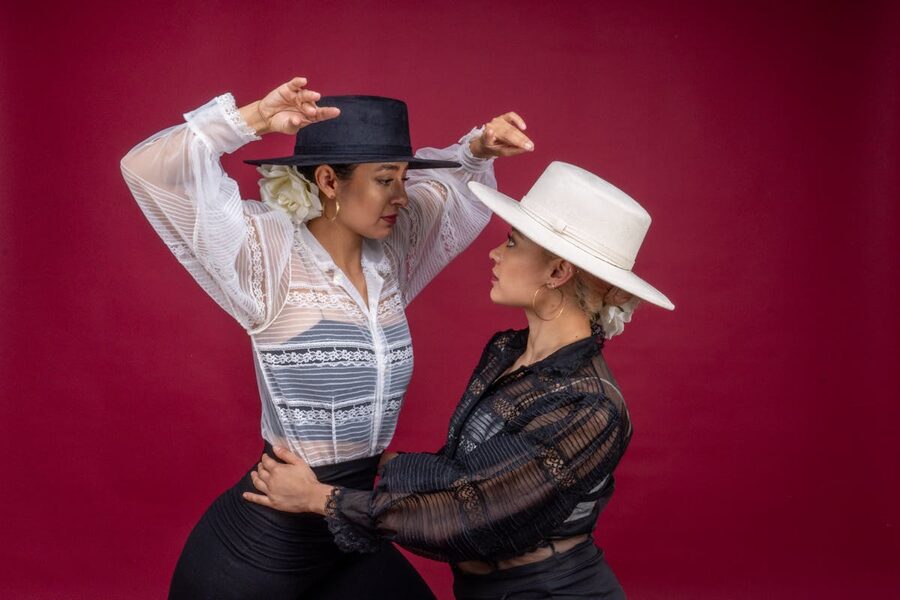
Learning flamenco in Seville is like learning to cook pasta in Naples or surf in Hawaii — you’re at the source, in the city where this art form grew up. The Triana neighbourhood, specifically, is the historical heartland. Roma communities here shaped flamenco over centuries, and the dance studios that offer classes today sit on the same streets where that tradition was born.
- In a Hurry? Best Flamenco Dance Classes in Seville
- What a Flamenco Dance Class Actually Involves
- The Best Flamenco Dance Classes to Book
- 1. Flamenco Dance Class with Optional Costume —
- 2. Flamenco Dance Lesson: 60-Minute Class —
- 3. Flamenco Dance Class via Viator —
- Who Should (and Shouldn’t) Take a Class
- Why Seville and Why Triana
- The Zapateado: Your Feet as Instruments
- What to Wear and What to Bring
- Class vs Show: Understanding the Difference
- Practical Details
- After the Class: What to Do in Triana
- Combine It With These Seville Experiences
In a Hurry? Best Flamenco Dance Classes in Seville
Top pick: Flamenco Dance Class with Optional Costume — $33, 1 hour. The most popular class in Seville. Held in Triana by experienced dancers. You can even dress up in full flamenco costume for photos. Check Availability
Best for small groups: Flamenco Dance Lesson: 60-Minute Class — $88, 1 hour. Smaller class size, more personal instruction. Higher price but more one-on-one attention from the teacher. Check Availability
Alternative: Flamenco Dance Class via Viator — $34, 1 hour. Same Triana class, different booking platform. Good option if you prefer Viator’s cancellation terms. Check Availability
What a Flamenco Dance Class Actually Involves
Forget what you’ve seen in tourist shows. Those are performances — choreographed, dramatic, and polished to perfection. A dance class is nothing like that. It’s messier, funnier, and much more physical than you’d expect.
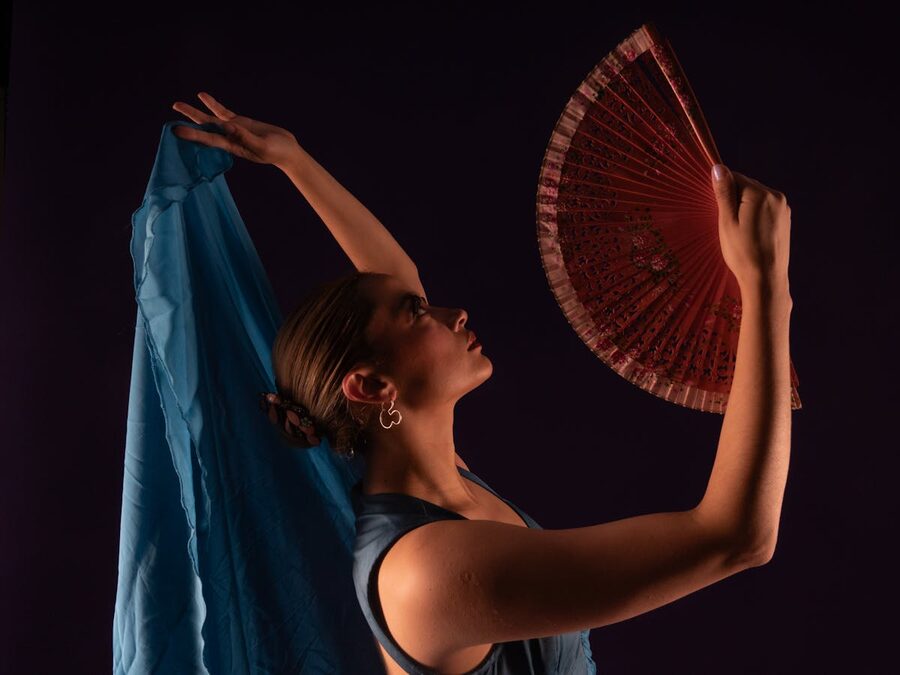
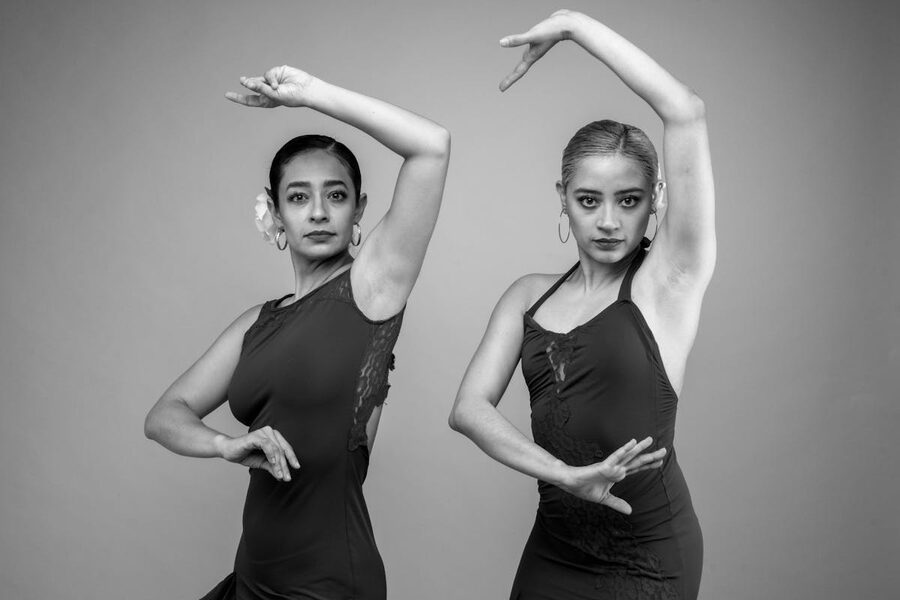
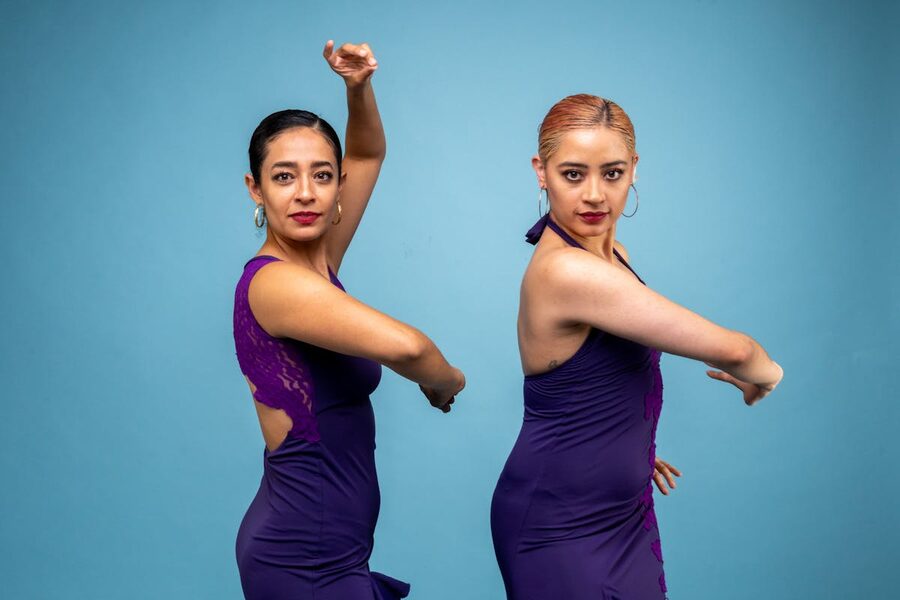
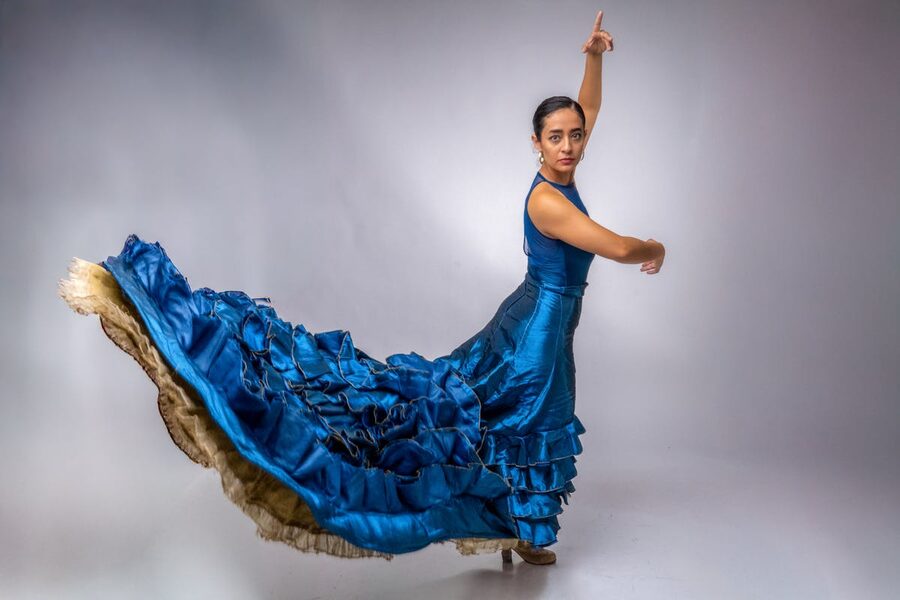
Here’s how a typical one-hour class runs. You arrive at a studio — usually a bright, air-conditioned room with mirrors and a wooden floor that amplifies every footstep. The instructor demonstrates the basic stance first: chest lifted, chin slightly raised, arms curved overhead, weight centred over your feet. It’s the opposite of ballet, which seeks lightness and the illusion of floating. Flamenco is about gravity. About pressing down into the earth. About the weight of your body connecting with the floor through your feet.
Then comes the zapateado — the footwork. This is the percussive heart of flamenco, and it’s the part that catches people off guard. You learn basic stamps and taps, building a rhythm pattern that gradually gets more complex. The shoes matter here — flamenco shoes have small nails hammered into the toes and heels to amplify the sound. In a beginner class, you’ll wear whatever shoes you brought (sturdy flats or short heels work best), but the difference is noticeable. When the instructor demonstrates in proper flamenco shoes, the floor sounds like a drum.
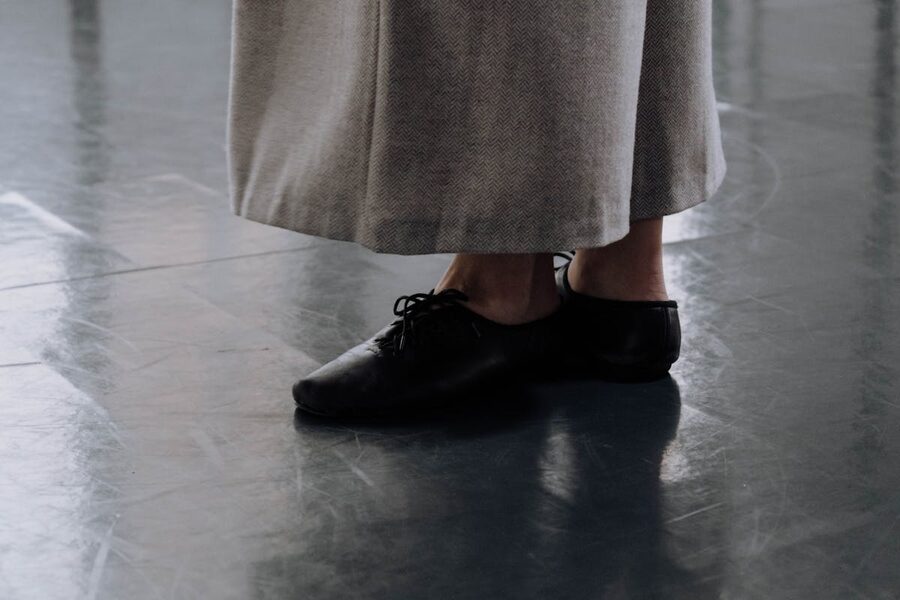
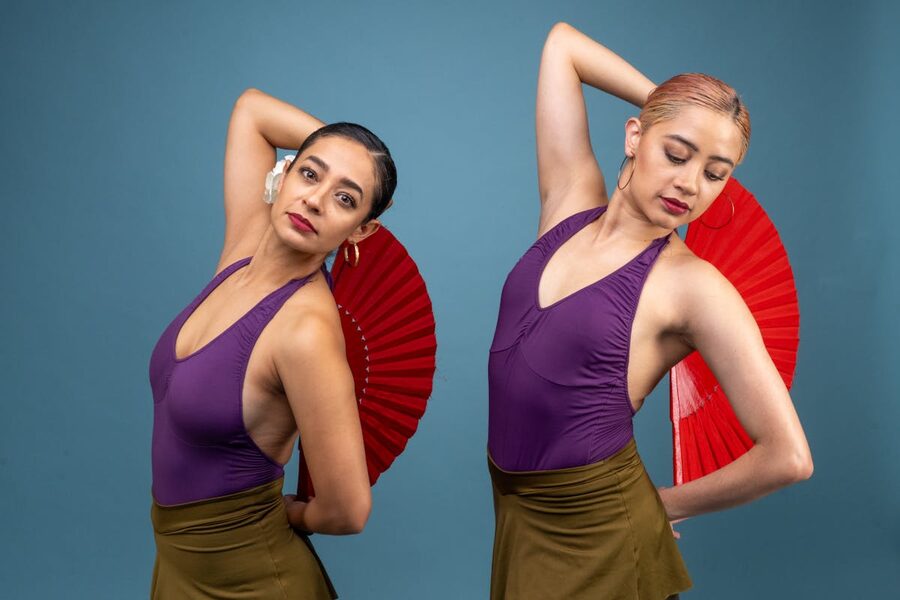
After footwork, you add the arms — the braceo. Curved wrists, rotating hands, arms sweeping in arcs above and beside your body. This is where coordination gets tested. Feet doing one pattern, arms doing another, while also maintaining posture. It’s genuinely challenging, and there’s always a moment about thirty minutes in where half the class dissolves into laughter because nothing is working together. That’s normal. That’s actually the best part.
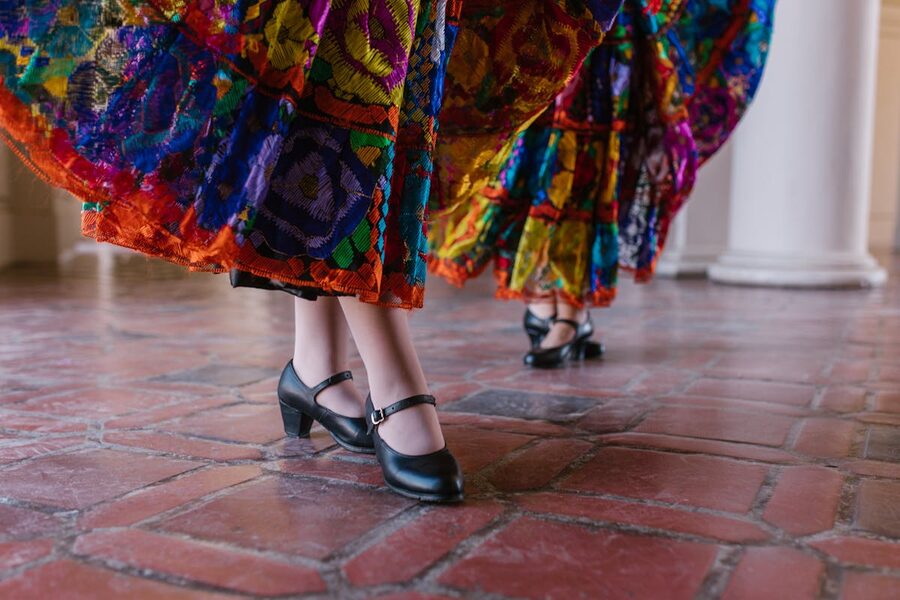
The last 15-20 minutes usually bring everything together — a short choreography combining the footwork, arms, and a few turns. The instructor puts on music (usually something traditional, with guitar and palmas — hand claps), and you run through the routine a few times. By the end, it’s rough and nowhere close to polished, but you’re moving to the music and there’s something deeply satisfying about that.
The Best Flamenco Dance Classes to Book
Three classes stand out in Seville, each offering something slightly different. All are held in Triana, all welcome complete beginners, and all last about an hour.
1. Flamenco Dance Class with Optional Costume — $33
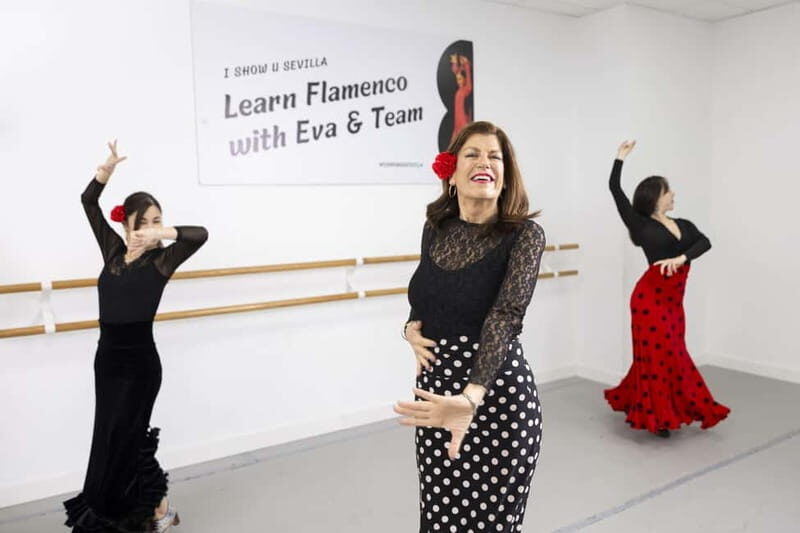
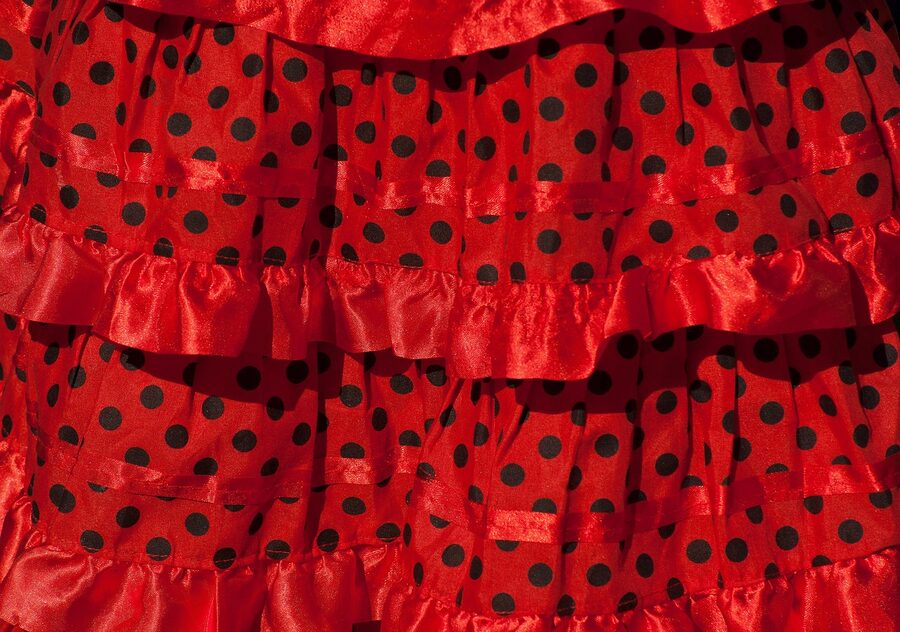
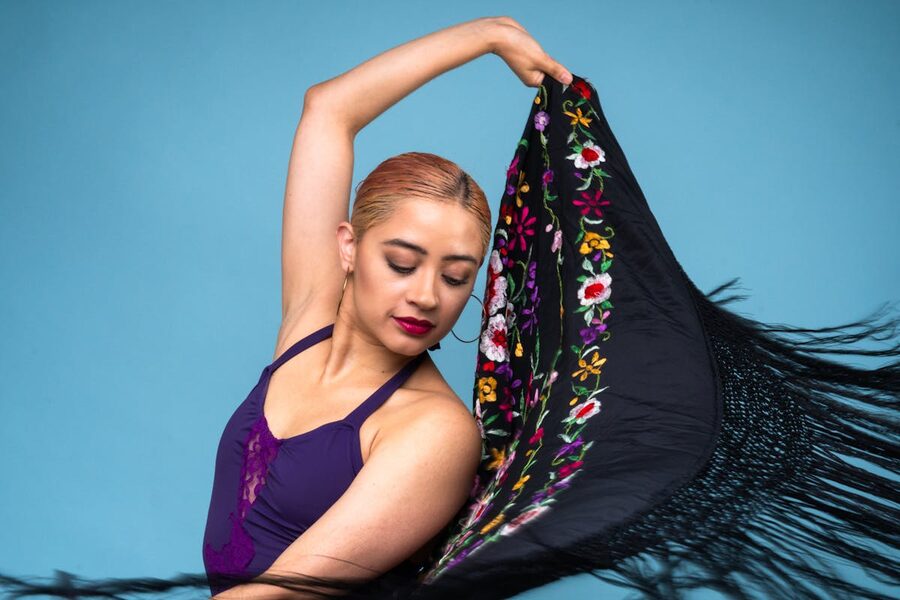
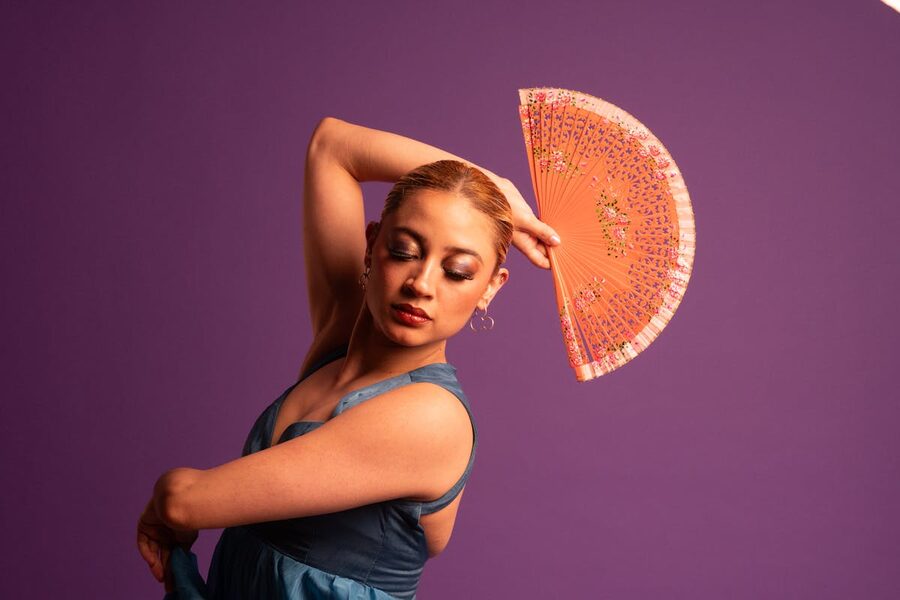
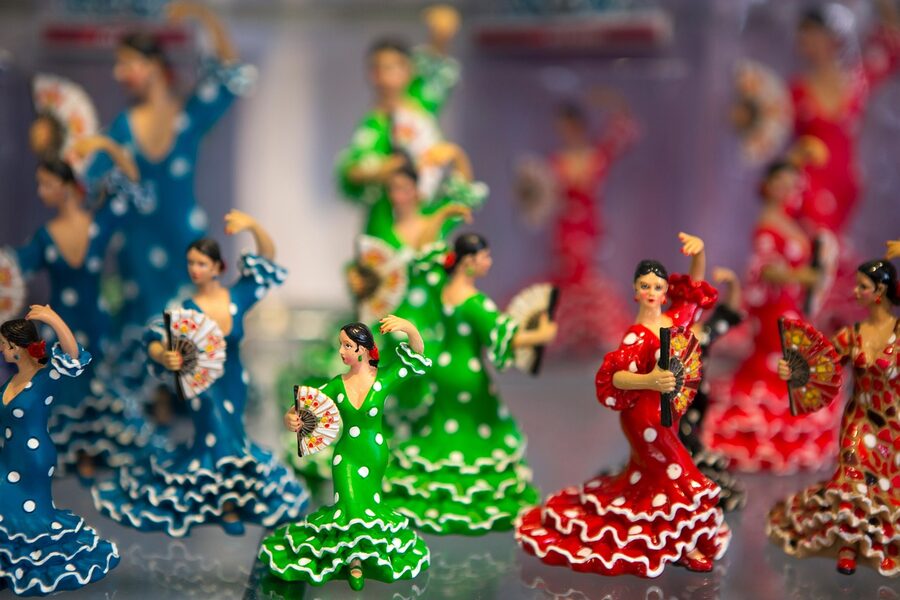
This is the one to book if you want the full experience. The class itself covers fundamentals — footwork, arm movements, and a short routine — but the costume option is what sets it apart. For no extra charge, you can dress up in a full flamenco outfit (polka dot dress, shawl, flower) and take photos in the studio. It’s more fun than it sounds. Our review covers what the class is really like — including the parts that surprised us.
2. Flamenco Dance Lesson: 60-Minute Class — $88
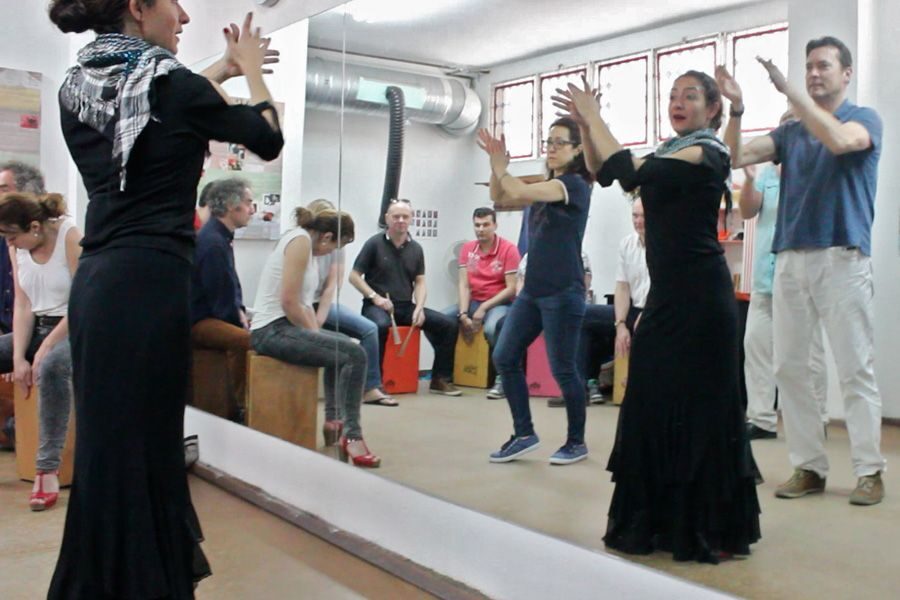
The pricier option, but the smaller group size makes a real difference. Where the $33 class might have 15-20 people, this one caps at 8-10. The instructor has time to correct your posture individually, explain why certain movements feel wrong, and actually teach you something you’ll remember. If you have any dance background or if you’re genuinely interested in flamenco as an art form (not just a holiday activity), this is the better choice. Check our detailed review for the full breakdown.
3. Flamenco Dance Class via Viator — $34
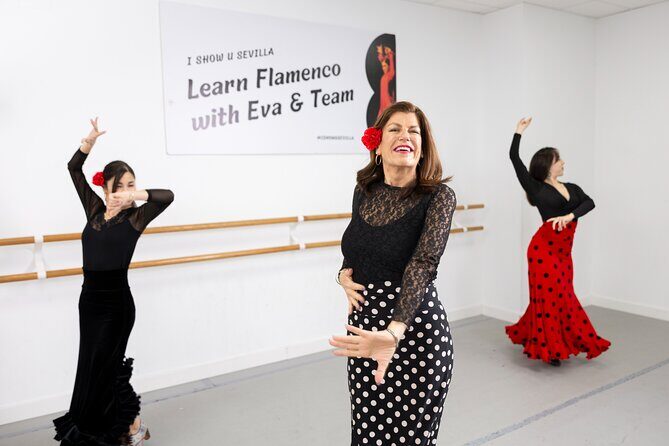
This is the same class as option 1 (same studio, same instructors, same optional costume), just booked through Viator instead of GetYourGuide. Some people prefer Viator’s app, already have credits, or like their cancellation terms better. The experience inside the studio is identical. Our review has the full details on what to expect.
Who Should (and Shouldn’t) Take a Class
Do it if: You want an active, participatory experience rather than just watching from a seat. If you’re curious about flamenco on a physical level — what it feels like, not just what it looks like. Couples, solo travellers, families with older kids (10+), and groups of friends all do well in these classes.
Think twice if: You have knee or ankle problems. The footwork involves repetitive stamping, and it puts real stress on your joints. If you can’t stand and move for an hour, this isn’t the right activity. Also, if you genuinely hate being in front of mirrors or trying new physical things in a group setting, you’ll have a rough time. There’s no avoiding the mirrors.
Why Seville and Why Triana
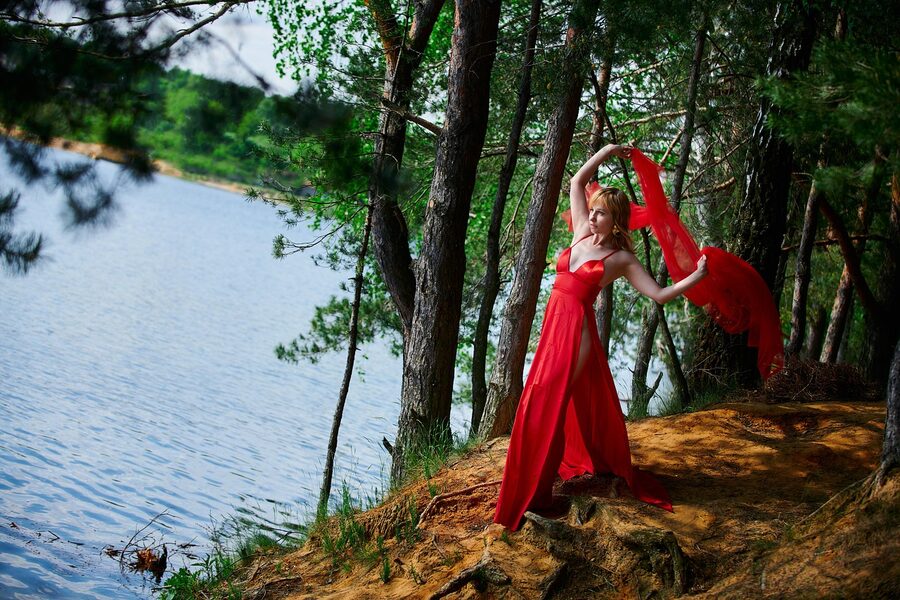
You can take a flamenco dance class in plenty of Spanish cities — Madrid, Barcelona, Granada, even Valencia. But Seville is where you should do it, and specifically, you should do it in Triana.
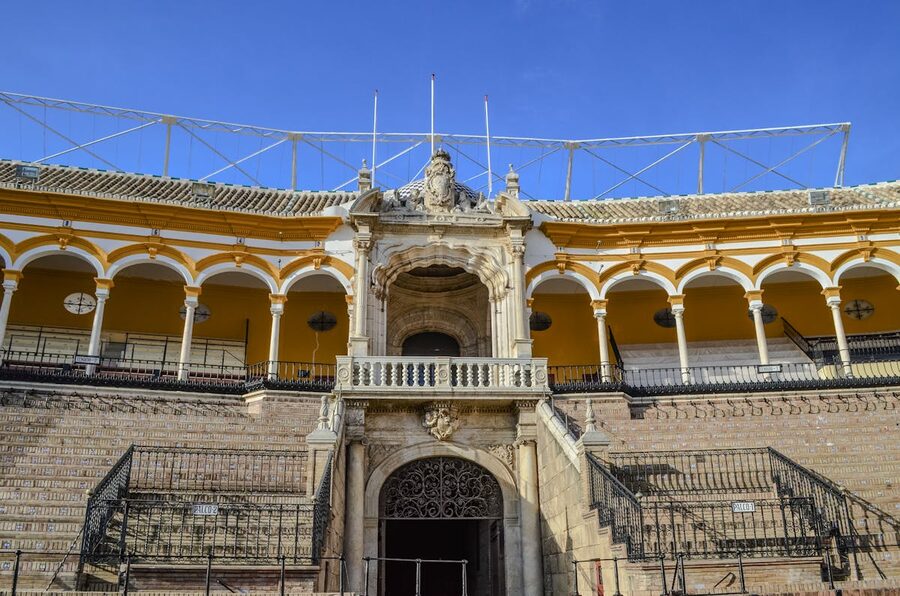
Flamenco as we know it crystallised in the 18th and 19th centuries in the triangle between Seville, Jerez de la Frontera, and Cadiz. The Roma communities in Triana — the neighbourhood on the west bank of the Guadalquivir — were at the centre of it. Triana was a working-class district of potters, sailors, and Roma families, and the cante jondo (deep song) that emerged from their gatherings became the foundation of modern flamenco.
The art form pulls from multiple traditions — Andalusian folk music, Roma musical culture, Moorish rhythmic patterns, and even Jewish liturgical singing. What came out of that mix is something entirely its own. And the basic stance — chest lifted, arms curved, chin proud — is genuinely the opposite of ballet. Where ballet seeks weightlessness and the illusion of leaving the ground, flamenco celebrates gravity, weight, and the connection between feet and earth. The dancer isn’t trying to float. The dancer is trying to become part of the floor.
The Zapateado: Your Feet as Instruments
The zapateado — the footwork — deserves its own section because it’s the part that surprises people most. Flamenco dancers’ shoes have small nails hammered into the soles, both at the toe and the heel. This turns the foot into a percussion instrument. A skilled dancer can produce different tones depending on which part of the foot strikes the floor, how hard, and at what angle. The resulting sound is as complex as a drum solo.
In a beginner class, you won’t achieve anything close to that. You’ll learn maybe four or five basic stamps and taps — golpe (flat foot stamp), planta (ball of the foot), tacon (heel strike), punta (toe tap), and maybe a simple redoble (double tap). But even these basics, combined into a simple pattern, start to feel musical. The instructor counts it out — “ta, ta, ta-ta, TA” — and when the whole class gets it right for even one bar, you feel it in your chest. It’s addictive in a way that’s hard to explain to someone who hasn’t tried it.
What to Wear and What to Bring
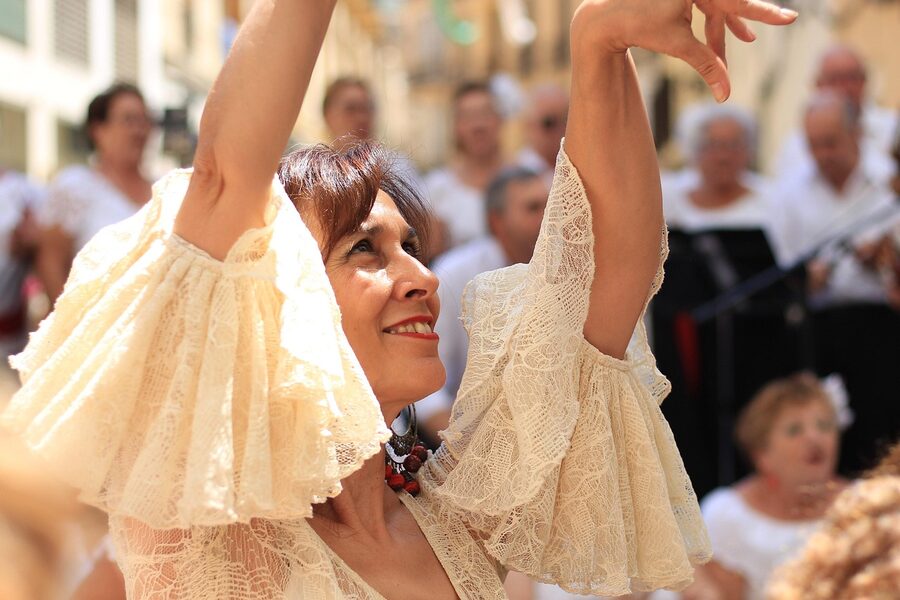
Wear comfortable clothes that you can move in. Flamenco involves lifting your arms above your head, turning, and stomping — so avoid anything tight or restrictive. A skirt or loose trousers work well. For shoes, sturdy flats or short-heeled shoes (2-3cm) are ideal. Avoid trainers — the soft soles absorb the sound and make the footwork feel dead. If you have character shoes from another dance form, those work brilliantly.
Bring water. You’ll sweat more than you expect — the footwork is genuinely cardiovascular. The studios are air-conditioned, which helps, but an hour of stamping and arm work gets your heart rate up. A small towel isn’t a bad idea either.
No dance experience needed. Genuinely. The classes are designed for absolute beginners. You’ll be in a room with people who have never danced anything before, alongside people who did ballet as children, alongside people who are on their honeymoon and just want something fun to do. The instructors are used to all levels and all abilities. They’re patient, funny, and surprisingly good at making you feel less ridiculous than you look.
Class vs Show: Understanding the Difference
Seville is full of flamenco experiences, and it’s easy to confuse them. A flamenco show is a performance — you sit, watch, and marvel at professionals. A flamenco class is active — you stand, move, and struggle through the basics yourself. They’re completely different experiences, and honestly, doing both is the ideal Seville combination.
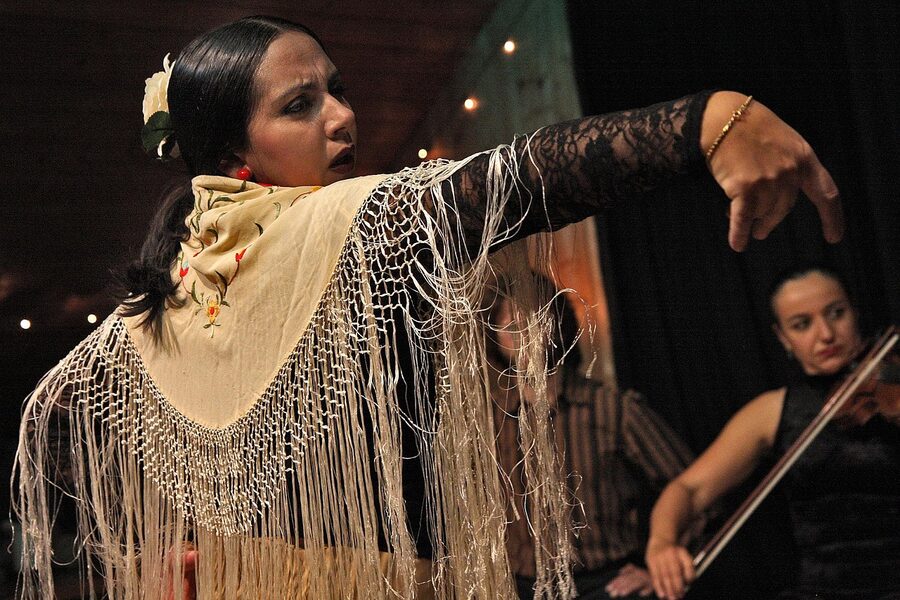
My strong suggestion: do the dance class first, the show second. After an hour of trying (and mostly failing) to execute even basic moves, watching a professional dancer do the same things at full speed is mind-blowing. You appreciate the skill on a completely different level because you know, physically, how hard it is. It’s like trying to play a guitar solo and then watching Jimi Hendrix — the gap between your attempt and their mastery makes the performance ten times more impressive.
Practical Details
Duration: All three classes run about 60 minutes. This is enough to learn the basics and put together a short routine. You won’t leave as a dancer, but you’ll leave understanding what flamenco actually is, which is more than most travelers can say.
Class size: The $33 classes typically have 10-20 participants. The $88 class caps at about 8-10. Smaller is better for learning, but bigger groups are more fun because there’s more collective laughter when things go wrong.
Language: Classes are taught in English and Spanish. The instructors switch between languages easily, and most of the instruction is physical — they demonstrate, you follow. Even if there’s a language barrier, flamenco is one of those things that translates through movement better than words.
Best time to book: Morning classes tend to be smaller. Evening classes are popular with people who’ve been sightseeing all day and want an active experience. Weekday classes are generally less crowded than weekends. During Feria de Abril (two weeks after Easter) and Semana Santa (Holy Week), classes fill up fast — book a few days in advance.
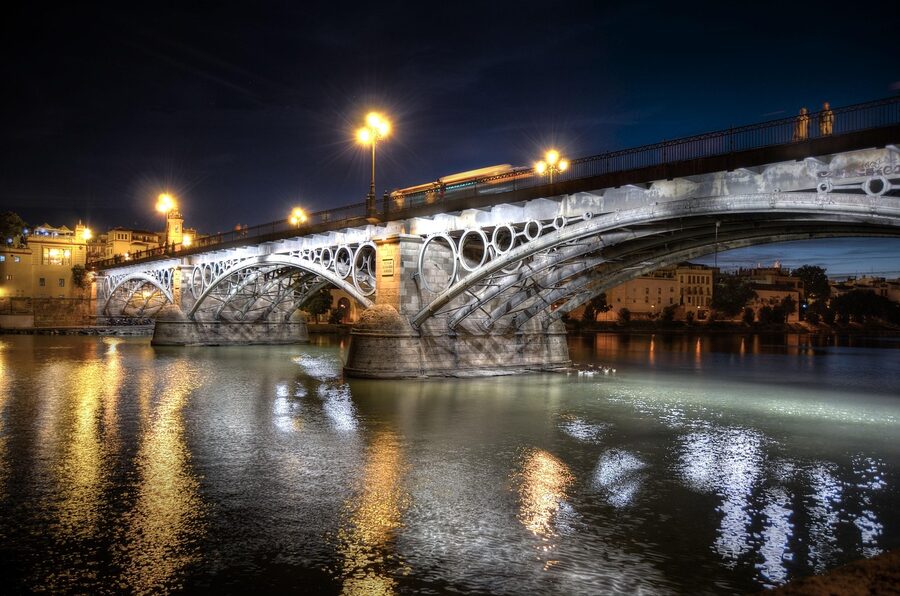
Meeting point: All classes meet in the Triana neighbourhood, usually near the Triana Market or on Calle Betis (the riverside promenade). Exact addresses are provided after booking. From the city centre, cross the Triana Bridge — it’s a 10-minute walk from the Cathedral area.
Cancellation: All three options offer free cancellation up to 24 hours before. This is useful because Seville weather can shift plans — if the forecast turns gorgeous and you’d rather spend the afternoon at the Alcazar gardens, you can reschedule the class for another day.
Age minimum: Most classes accept children from about age 8-10 and up. Under that, the attention span for an hour of instruction usually isn’t there. Check the specific listing for age requirements, but plan on this being an adult or older-kid activity.
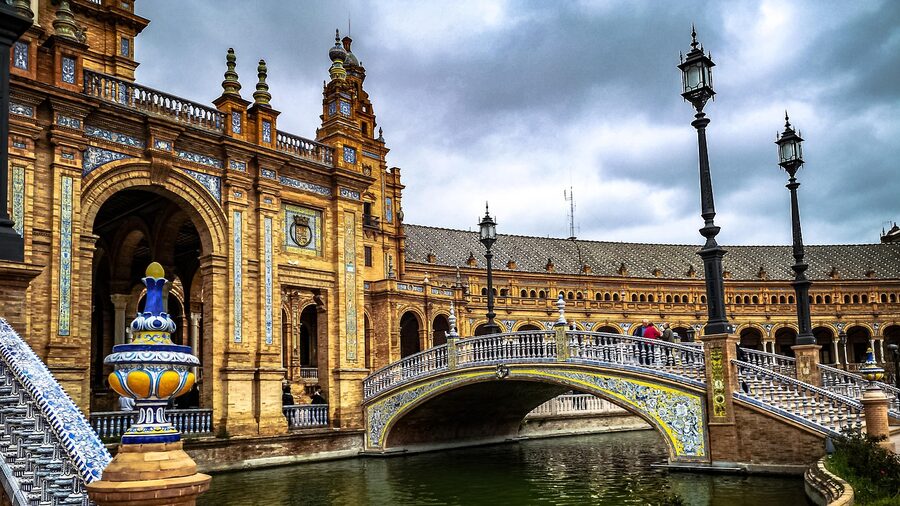
After the Class: What to Do in Triana
Since you’ll already be in Triana — stay. This neighbourhood is the best part of Seville that most travelers skip. Wander the side streets, look up at the ceramic-tiled facades, duck into the Triana Market (Mercado de Triana) for cheap tapas and local produce. The market sits on top of the ruins of the old Castillo de San Jorge — the Inquisition headquarters — and there’s a free exhibition in the basement that’s worth seeing if you’re into dark history.
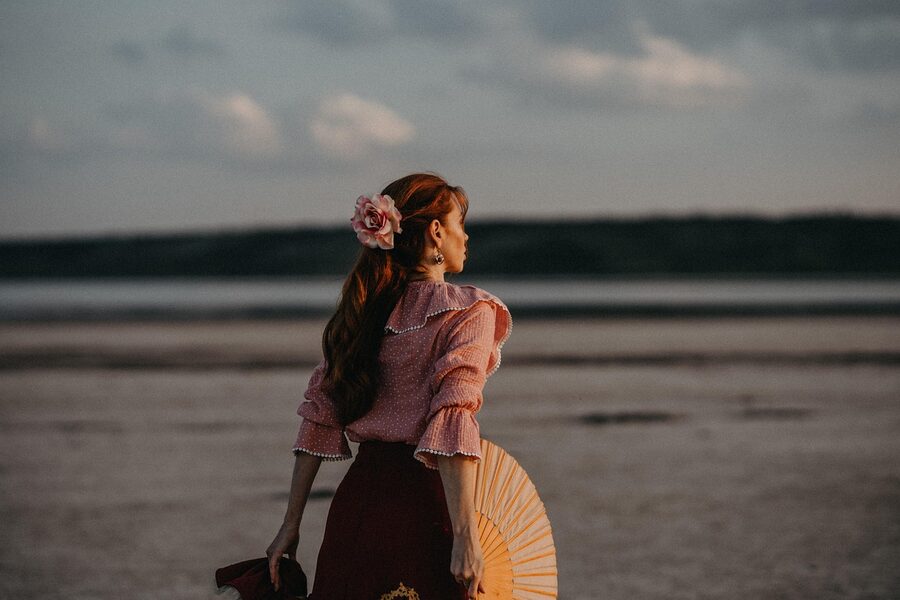
Calle Betis, the riverside promenade, has some of the best sunset views in Seville — looking east across the river at the Torre del Oro and the city skyline turning gold. Grab a drink at one of the terrace bars and watch the light change. After your flamenco class, you’ve earned it.
Combine It With These Seville Experiences
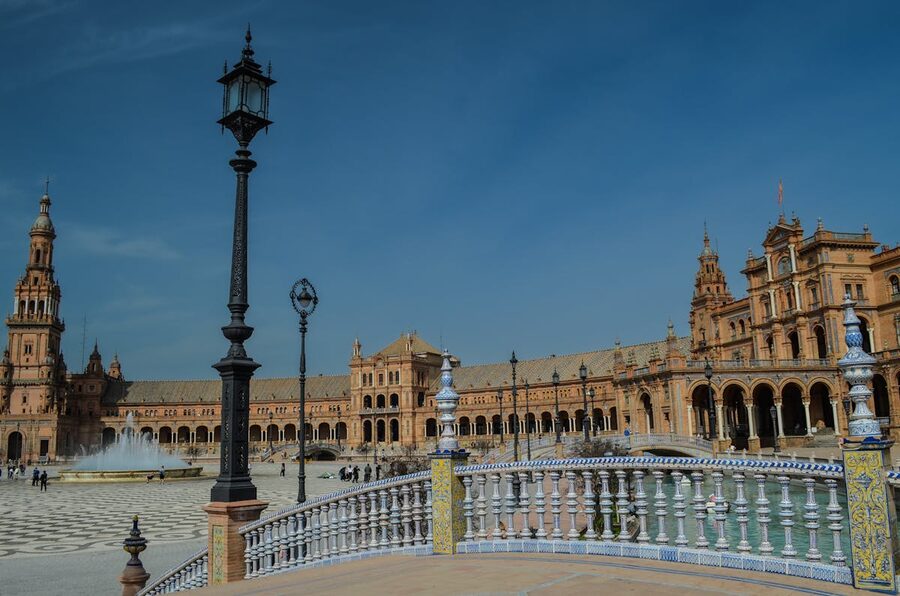
A flamenco class pairs naturally with almost everything in Seville. Start your day at the Cathedral — climb the Giralda for rooftop views, then walk down to the Real Alcazar and spend a couple of hours in those gardens. Cross the river to Triana in the afternoon for your dance class, then stay for tapas and a flamenco show in the evening. That’s a perfect Seville day.
For something different, a Guadalquivir river cruise gives you a different perspective on the city from the water, and a walking tour is the best way to get the lay of the land if it’s your first day. If you have a free morning, a bike tour covers more ground and takes you through Maria Luisa Park. And for a day trip, the White Villages and Ronda excursion is extraordinary — a completely different side of Andalusia from the city.
We participate in affiliate programs. Booking through links on this page earns us a small commission at no extra cost to you. This helps fund our honest, in-depth travel guides.