Gyoza dough is the main event here. In this small Osaka class, you start with flour and work your way to handmade wrappers, then fill and fold them before a chef cooks the gyoza. Instructor Kaito-san is named in several recent accounts of the class, and the English-speaking team makes it accessible even if you are new to cooking.
I like two things in particular: you make the wrappers yourself rather than starting with store-bought ones, and a group capped at eight people leaves room for individual guidance. The Shinsaibashi address also makes this an easy food-focused break from sightseeing in central Osaka.
One point to check before booking: the experience is described as two hours, but the listed session windows run from 10:30 to 13:00 and from 13:30 to 16:00. Confirm the expected finish time, and remember that the workshop is on the seventh floor behind a red door, a detail that can be easy to miss.
- What makes this class worth considering
- Start with dough, not a packet of wrappers
- Fill, fold, and learn the shapes
- Let the chef cook, then sit down to eat
- A small class in central Shinsaibashi
- Is the price good value?
- Dietary needs and other practical details
- Should you book the gyoza class?
- FAQ
- How long does the gyoza class last?
- Where is the meeting point?
- What time can I book?
- Is the class suitable for beginners?
- Are vegetarian or vegan options available?
- What food is included?
- Can children join the class?
- The Best Of Osaka!
- More Cooking Classes in Osaka
- More Tours in Osaka
- More Tour Reviews in Osaka
What makes this class worth considering
 1 / 8
 2 / 8
 3 / 8
 4 / 8
 5 / 8
 6 / 8
 7 / 8
 8 / 8
- The wrappers begin as dough. You knead and roll them yourself, so the class teaches more than how to assemble a ready-made dumpling.
- You practice traditional folds. The instructor demonstrates techniques, giving you time to try shaping the gyoza yourself.
- The group is limited to eight. That small cap suits beginners who may want help with dough, filling, or folding.
- Gyoza comes with yakisoba. You eat your freshly made dumplings with prepared Japanese stir-fried noodles.
- Kaito-san is named by recent participants. The class is described as friendly, clear, and good-humored, qualities that matter when you are learning by doing.
- Dietary options need advance notice. Vegetarian and vegan ingredients are available if you tell the operator ahead of time.
👉 See our pick of the The Top 15 Workshops & Classes In Osaka
Start with dough, not a packet of wrappers
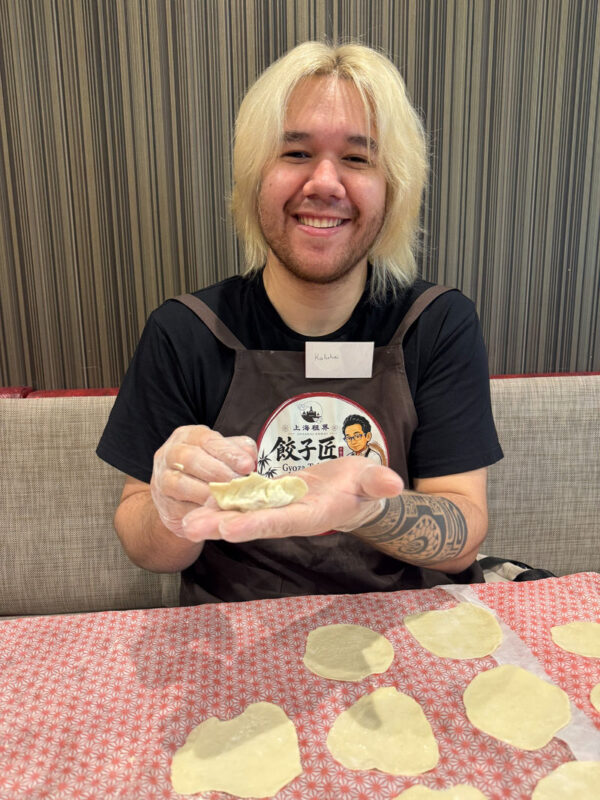
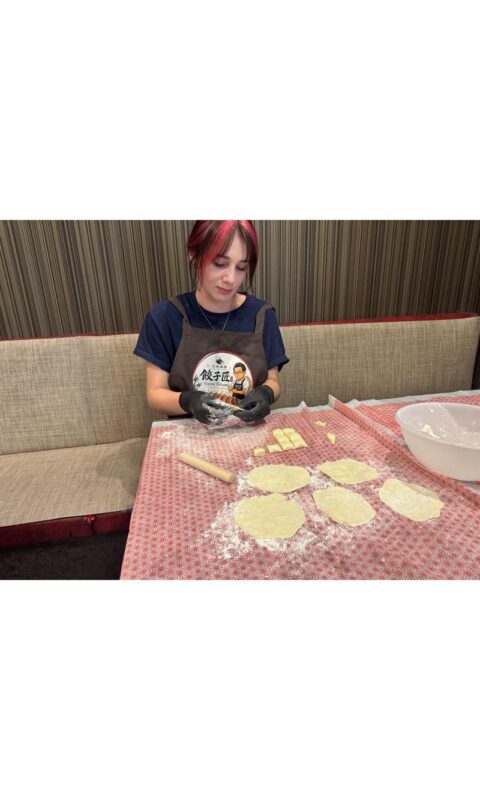
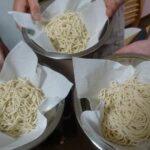
Many cooking sessions begin with ingredients ready to assemble. Here, you start earlier in the process, making dough, kneading it, and rolling it into wrappers. That extra step takes more effort, but it also helps you understand the texture and shape that make a gyoza wrapper work.
The class is designed for beginners, so you do not need prior cooking experience. An English-speaking instructor and staff explain the process, and the small group gives you a better chance to ask for help than a large demonstration would.
Making wrappers by hand is also the part most likely to surprise you. Rolling them evenly takes a little patience, and your first one may not look like the next. That is part of the appeal: you get to practice a useful skill, rather than simply watching a chef do it.
You can also read our reviews of more cooking classes in Osaka


Fill, fold, and learn the shapes
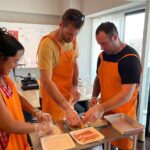
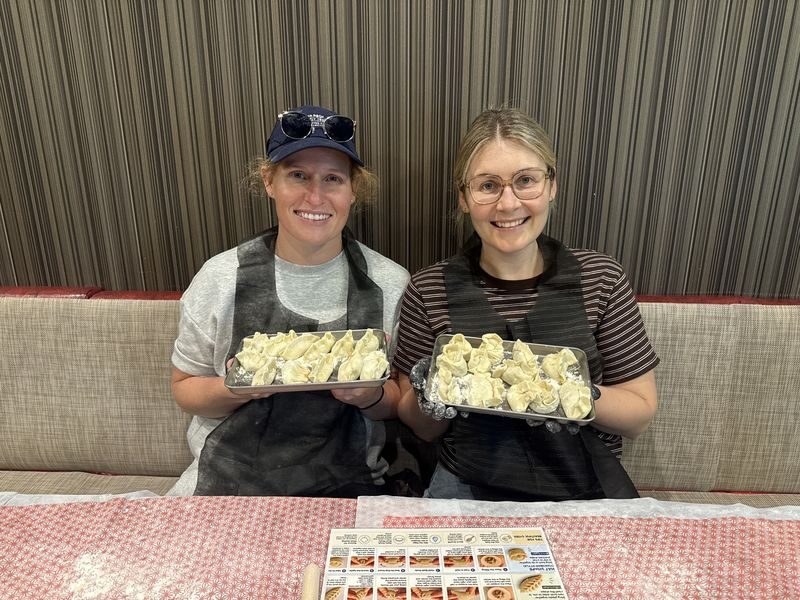
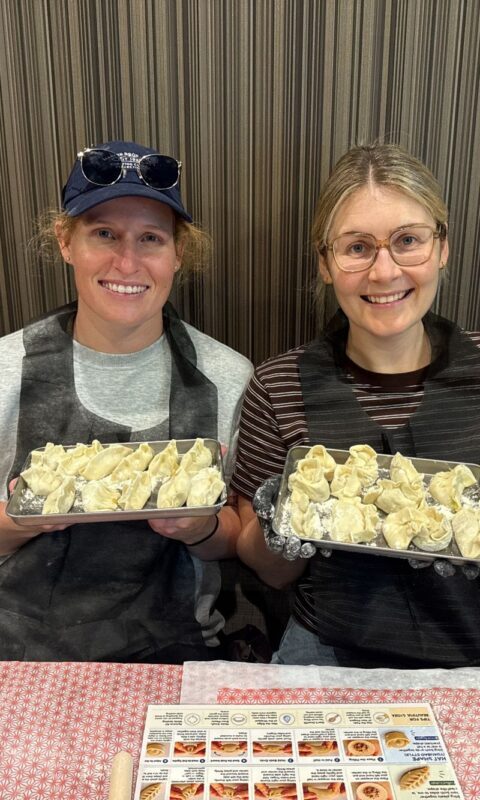
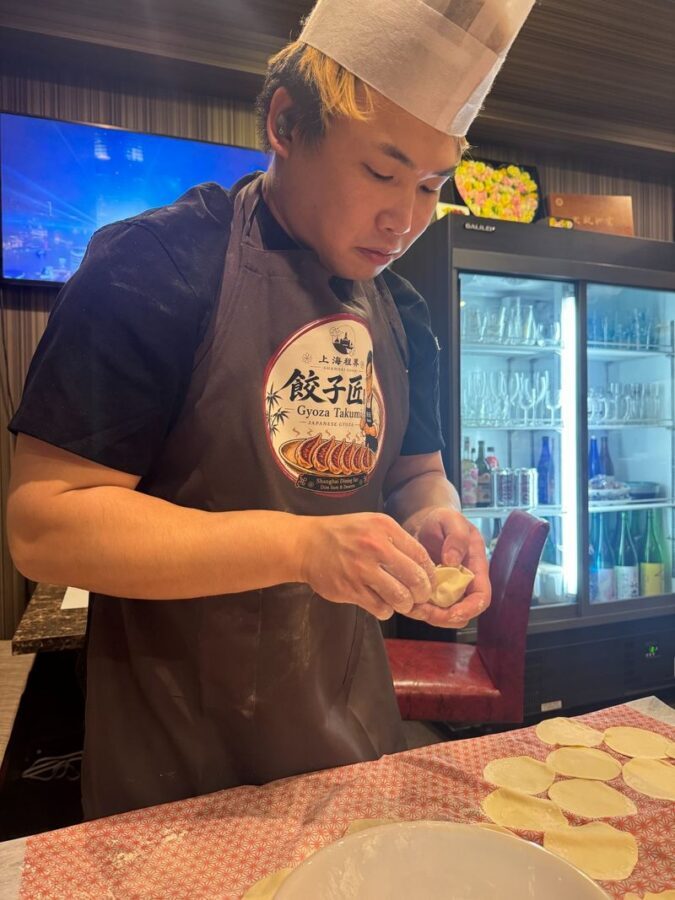
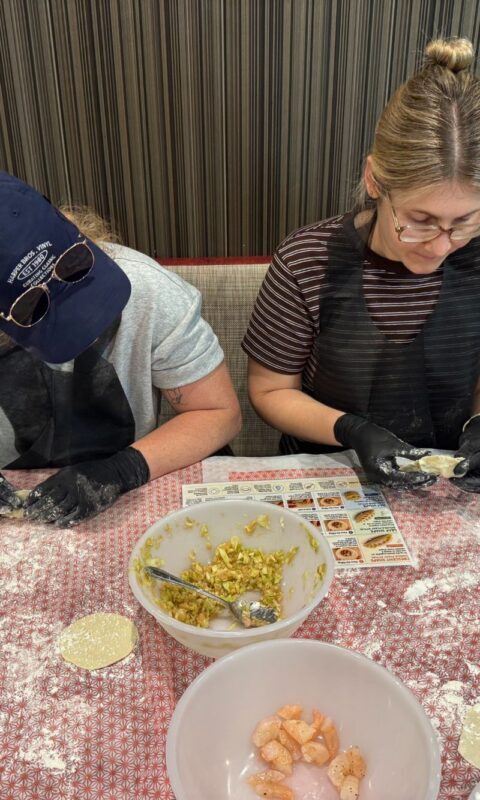
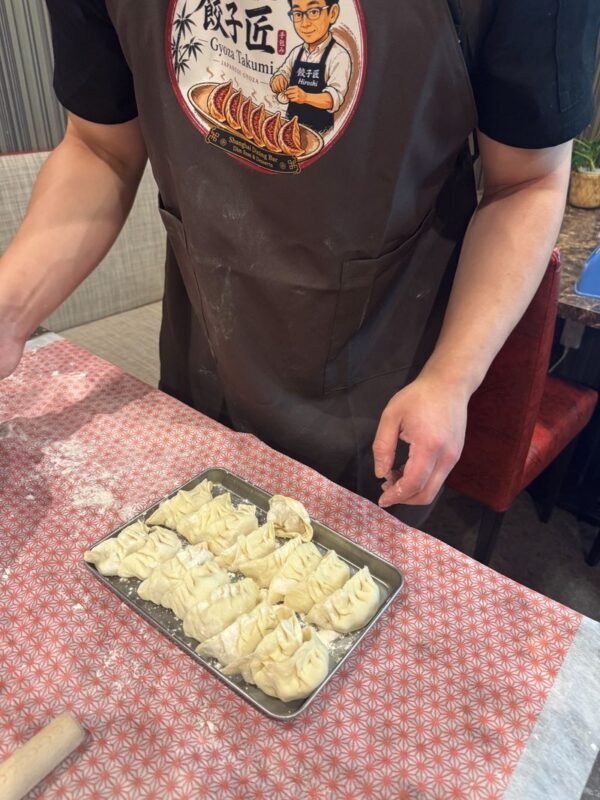
Once the wrappers are ready, you move to the filling and folding. The class covers traditional gyoza folding techniques, with the instructor showing you how to shape each dumpling. You can try more than one fold, which gives the session a practical, hands-on rhythm.
Folding is a small detail with a big effect on the finished dumpling. It helps seal the filling inside, and the class gives you a chance to repeat the motion until it feels less unfamiliar. Do not expect every dumpling to come out identical. The goal is to learn the method and enjoy the making, not produce a tray of restaurant-perfect copies.
Kaito-san is mentioned by name in recent accounts of the class, especially for making people feel at ease and explaining the steps clearly. The comments also describe an upbeat atmosphere. That is useful if you are unsure about joining a cooking class alone or worry that you will be the least experienced person in the room.
Let the chef cook, then sit down to eat
After you have made your gyoza, a professional chef cooks them. The class description promises crispy gyoza, served with freshly prepared yakisoba. You get the satisfaction of eating the dumplings you shaped, while the chef handles the cooking stage.
Yakisoba adds a second familiar Japanese dish to the meal. It means the experience is not only a lesson in dumpling technique, and it makes the meal feel more complete than a quick taste of one item. Lunch or dinner is included, depending on the session you book.
The food is the payoff, but the value is not just the meal. You leave having practiced dough-making and folding, and you receive an English gyoza recipe to take home. That makes the class a good fit if you want something you can try again after your trip.
A small class in central Shinsaibashi
The workshop is at 1-chome-17-27 Higashishinsaibashi, Chuo Ward, Osaka, on the seventh floor. Shinsaibashi is one of Osaka’s popular central areas, so the location can work well alongside shopping or sightseeing nearby. The precise building entrance matters, though: take the elevator to the seventh floor and look for the red door.
The meeting times offered are 10:30 and 13:30, with listed return times of 13:00 and 16:00. Those windows suggest a session of about two and a half hours, even though the experience is also described as two hours. Check the timing shown for your chosen booking rather than planning a tight connection afterward.
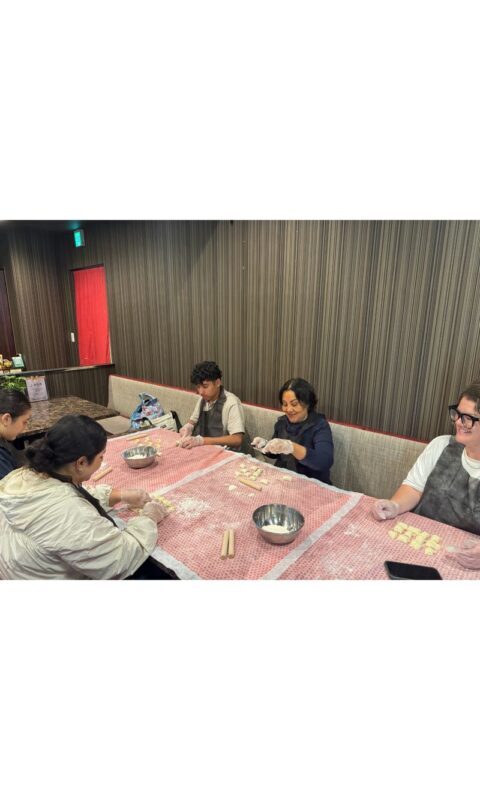
The class is small, with a maximum of eight participants. That cap is a real advantage for a hands-on activity: it can make it easier for the instructor to notice if your dough is too thick or your fold needs a little adjustment. It also means the class is more personal than a large group demonstration.
Is the price good value?
The listed starting price is US$63.09 per person. That is more than you might pay for a plate of gyoza and yakisoba at a casual restaurant, but the comparison misses what you are paying for: English-language instruction, a small-group class, time to make the wrappers and dumplings, the cooked meal, and a recipe to take home.
I would consider it good value if you want a guided activity as well as lunch or dinner. You are not just eating Japanese food; you are learning how a familiar dish comes together from the dough up. If you only want a quick meal, a restaurant will be cheaper and faster.
The class is best suited to curious eaters, first-time cooks, and anyone who enjoys learning a practical food skill while traveling. It can also work for families, but children aged 0 to 12 must attend with a paying adult. Those aged 13 and older are charged the adult rate.
You can also read our reviews of more tours and experiences in Osaka



Dietary needs and other practical details
Vegetarian and vegan options are available, but you need to request them in advance so the operator can prepare suitable ingredients. Do not wait until you arrive to mention a dietary requirement. The provided information does not specify other ingredient substitutions, so ask the operator directly if you have a particular concern.
You will receive a mobile voucher and present it for the activity. Arrive on time: participants who are 20 minutes late or more are not eligible for a refund. You can cancel for a full refund if you do so at least 24 hours before the activity date, using local destination time.
The operator may cancel because of extreme weather or unforeseen events. In that case, you can request a full refund. Rescheduling or other amendments depend on availability.
Should you book the gyoza class?
Book it if you want a social, hands-on food activity that teaches more than how to fill a dumpling. The from-scratch wrappers, traditional folding practice, small group, and gyoza-and-yakisoba meal give the session a clear purpose, while the English-speaking instruction makes it approachable for beginners.
Think twice if your schedule is tight or you are mainly looking for an inexpensive meal. The listed session windows are longer than the stated two-hour duration, and the class involves making food rather than simply tasting it. If those details suit your plans, it is a satisfying way to spend part of a day in Osaka and take home a recipe, along with a new kitchen skill.
Osaka: Handmade Gyoza Cooking Class from Scratch & Yakisoba
“Very good class. A warm welcome; Kaito-san immediately made us feel at ease. He explained well how to make the dough and how to fold it. The class…”
FAQ
How long does the gyoza class last?
The experience is described as two hours, but the listed session windows run from 10:30 to 13:00 and from 13:30 to 16:00. Confirm the expected duration for your selected time when booking.
Where is the meeting point?
The address is 1-chome-17-27 Higashishinsaibashi, Chuo Ward, Osaka, 542-0083, Japan. The class is on the seventh floor; look for the red door.
What time can I book?
The available departure times are 10:30 and 13:30. The options available may depend on the session you select.
Is the class suitable for beginners?
Yes. The class is described as beginner-friendly, with English-speaking guidance through kneading, rolling, filling, and folding the gyoza.
Are vegetarian or vegan options available?
Yes. Vegetarian and vegan options are available if you request them in advance so suitable ingredients can be prepared.
What food is included?
You make gyoza from scratch, and the meal includes your cooked gyoza with freshly prepared yakisoba. Lunch or dinner is included, depending on the session.
Can children join the class?
Children aged 0 to 12 must be accompanied by a paying adult. Children aged 13 and older are charged the same rate as adults.