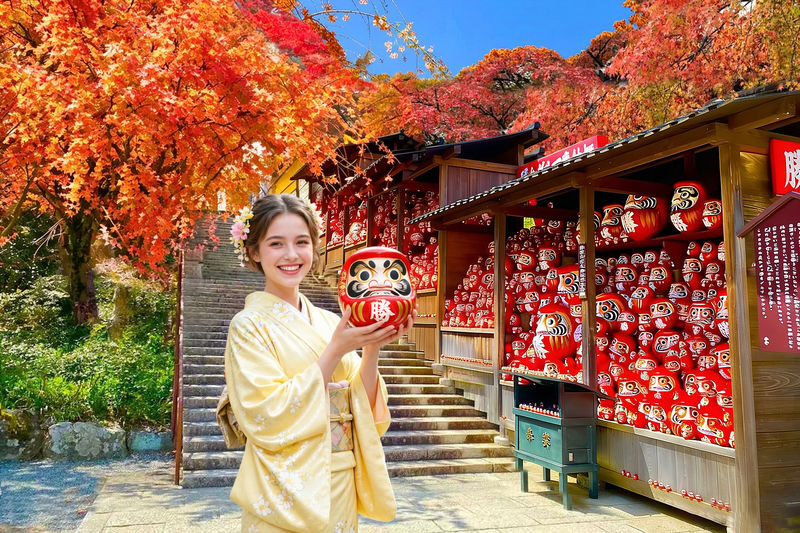
Katsuoji’s hillside grounds, dotted with small Daruma dolls, give this day trip a memorable start. From there, you head to Arashiyama for its river bridge, bamboo path and Kimono Forest, then finish at Kinkaku-ji, Kyoto’s gold-leaf pavilion.
I like two things in particular: the route links places that are awkward to combine by public transport in one day, and the guide can add context while keeping track of meeting times. The mix of temples, nature and design also keeps the day from feeling like one long sequence of shrine gates.
The trade-off is time. You get a broad sample, not a leisurely visit, and Arashiyama’s two-and-a-half-hour stop has to cover several sights, plus a meal if you choose to eat. Temple admission and food cost extra.
- Key points before you book
- A nine-hour route that trades freedom for convenience
- Katsuoji Temple: a wish among the Daruma dolls
- Arashiyama: bridge, bamboo and a quick cultural detour
- Kinkaku-ji: the Golden Pavilion in a reflective pond
- What the guide and bus add to the day
- Price and the real cost of the day
- Who will get the most from this tour
- Should you book it?
- FAQ
- How long is the tour?
- Where does the tour depart from?
- What language does the guide speak?
- How much time is spent at Katsuoji?
- How long is the Arashiyama stop?
- How long is the visit to Kinkaku-ji?
- Are temple admission fees included?
- Are meals included?
- What is included in the tour price?
- Can I bring luggage, and are child seats available?
- More Tours in Mino
- More Tour Reviews in Mino
Key points before you book
 1 / 9
 2 / 9
 3 / 9
 4 / 9
 5 / 9
 6 / 9
 7 / 9
 8 / 9
 9 / 9
- Katsuoji opens the day with a Daruma wish ritual. Its small red dolls are part of the temple’s distinctive character.
- Arashiyama gets the longest stop, at about two and a half hours. That block includes Togetsukyo Bridge, the bamboo path and Kimono Forest.
- Kinkaku-ji gets about 45 minutes. That is enough for the standard route through the grounds, but not a long, unhurried visit.
- English and Chinese guide options are offered. Some packages also include Osaka hotel pickup.
- The starting price is from $43.70, but admission, meals and drinks are extra. Budget for those separately.
- Transport is the main convenience. The tour handles round-trip transfers, tolls, parking and fuel.
A nine-hour route that trades freedom for convenience
This tour connects Katsuoji in Mino with Kyoto’s Arashiyama district and Kinkaku-ji in a single day. Departures are listed from Osaka or Kyoto, with start times around 08:00 or 09:00 depending on the meeting option. The day is expected to finish around 17:00, though return times vary by drop-off point and traffic.
That is a lot of ground. By bus, you avoid planning a chain of train and local transport connections, and you can rest between stops. The downside is the fixed pace: when your time is up, you return to the vehicle, even if a garden or shop has just caught your eye.
Round-trip transfers, tolls, parking and fuel are included. The tour also has English-speaking or English-and-Chinese guide options. Some departures offer Osaka hotel pickup, while the station-based packages use a set meeting point. Check the exact package you select, since pickup arrangements and guide languages vary.
You can also read our reviews of more tours and experiences in Mino.
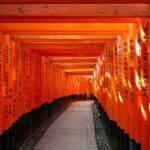
Katsuoji Temple: a wish among the Daruma dolls
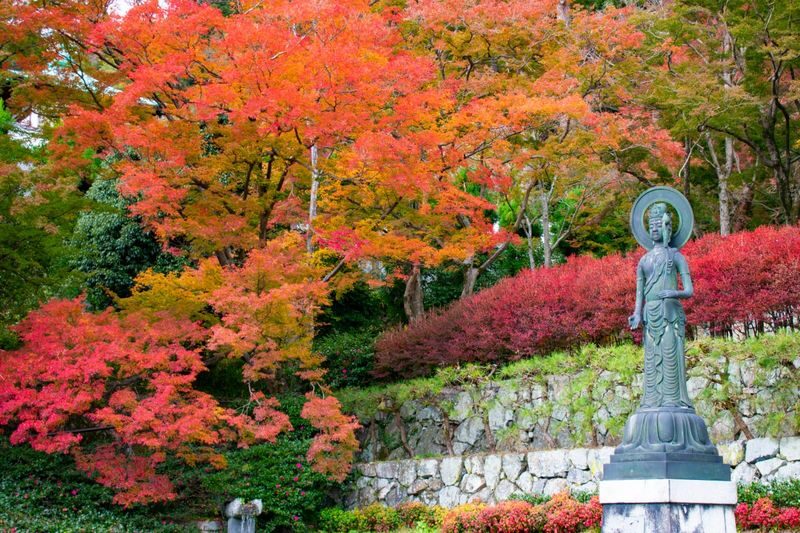
The first stop is Katsuoji, a temple with more than 1,300 years of history that is associated with prayers for luck and success. Its popular nickname, the Temple of Victory, makes it a natural place to pause over a personal goal, whether that is an exam, a new job or simply a good year ahead.
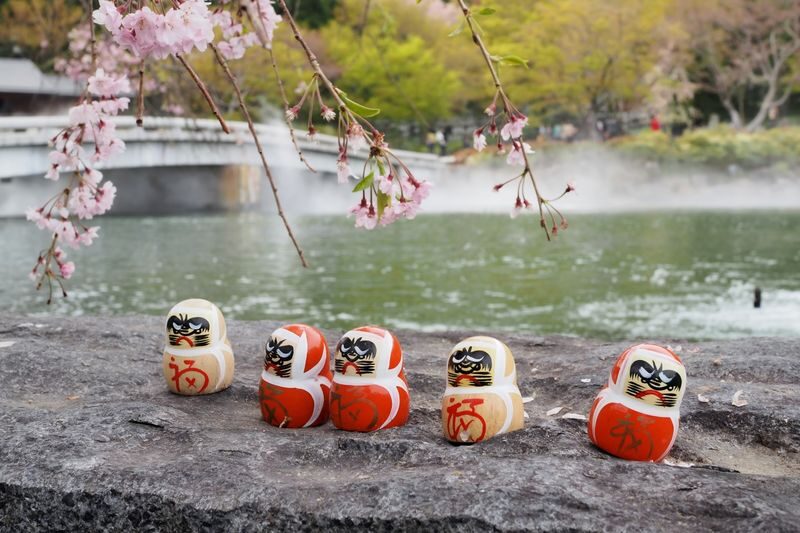
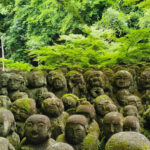
The Daruma ritual gives the visit a hands-on element. The tour information describes painting one eye while making a wish, then filling in the other when the wish comes true. Small Daruma dolls appear around the temple grounds, adding a playful detail to a place that is also a working religious site.
You have about one hour here. That should give you a chance to walk around and take in the setting, but it is not a slow temple visit. Katsuoji’s admission is not included; the stated estimate is about ¥500, subject to change. If the Daruma custom interests you, leave a little time to look at the dolls and understand the ritual rather than treating the stop as only a photo break.
Arashiyama: bridge, bamboo and a quick cultural detour
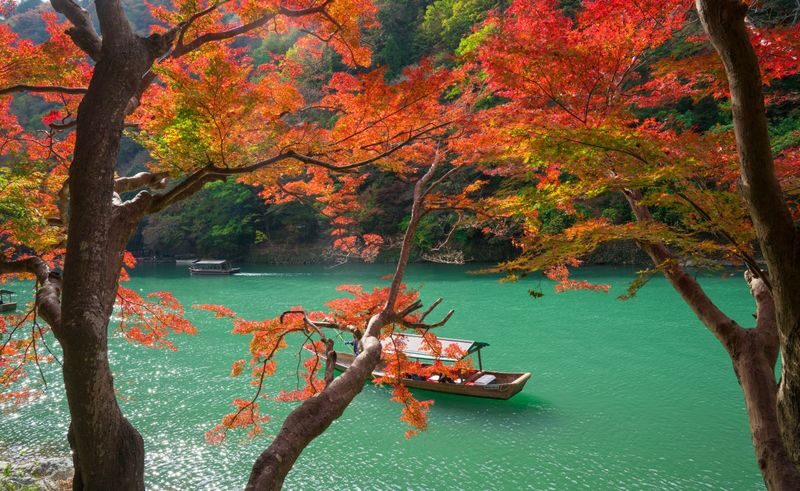
Arashiyama gets about two and a half hours, the longest stop of the day. The area brings together several very different sights: the broad view from Togetsukyo Bridge, a walk through the bamboo grove, and the patterned pillars of Kimono Forest. Nonomiya Shrine is also named among the tour’s points of interest.
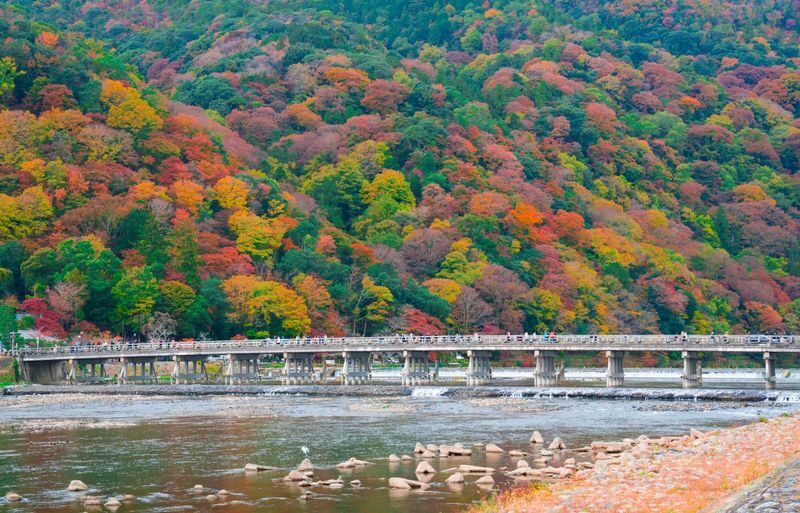
Togetsukyo Bridge crosses the river in a setting framed by hills. It is a useful place to get your bearings and enjoy the open view before heading into the more enclosed paths nearby. The bridge itself is not a long visit, but the river and surrounding mountains give you a welcome change of scale after the temple grounds.
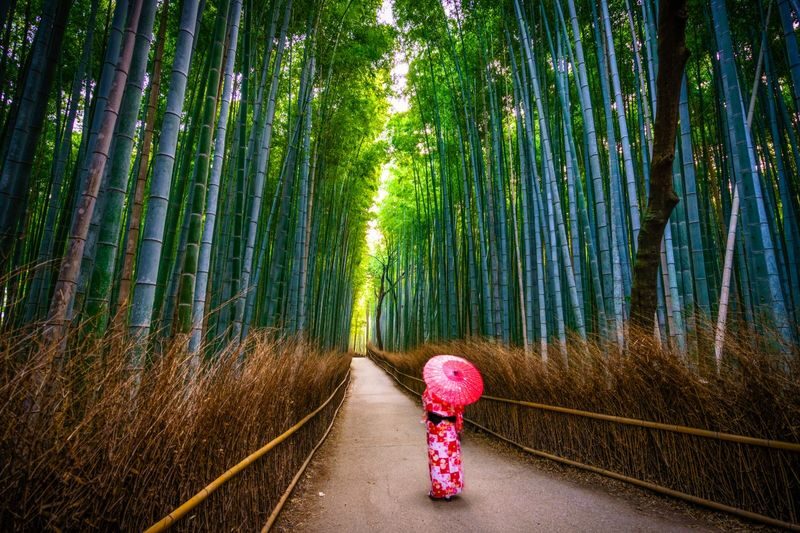
The bamboo path is atmospheric, with tall stalks and filtered light, but keep expectations realistic. It is a public route, not a private forest walk, and the time available depends on how much of the Arashiyama area you want to see. If this is your first visit, the guided schedule makes it easier to reach the main sights without sorting out directions yourself.
Kimono Forest offers a different kind of visual stop. Hundreds of transparent pillars display colorful kimono patterns, creating a corridor of design near the station area. It is easy to photograph and does not demand much walking time, which makes it a sensible stop in a packed day.
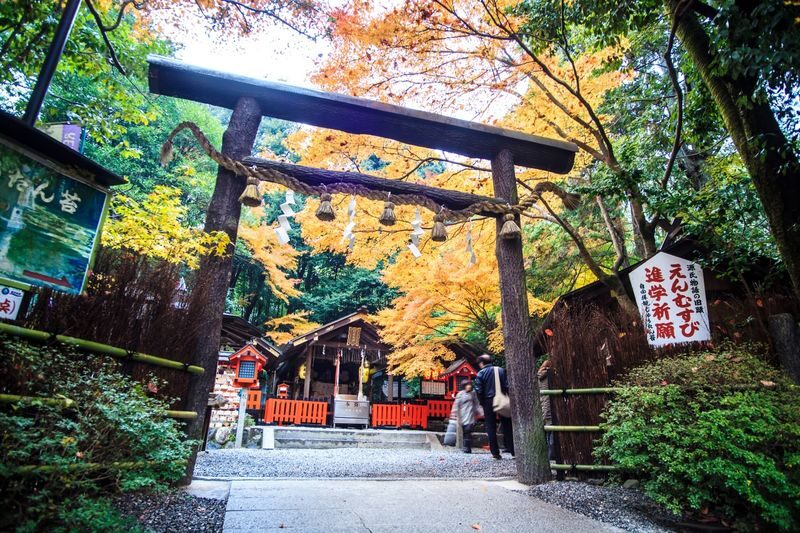
Nonomiya Shrine is associated with prayers for love, health and happiness. You can write a wish on an ema, a wooden votive tablet, if you choose. Tenryu-ji and its Sogenchi Garden are also described as part of the experience, but the timed schedule does not give them a separate visit length. The temple’s admission is extra, with an approximate fee of ¥500. With only two and a half hours for the whole Arashiyama area, you may have to choose between lingering in the garden, eating, shopping or walking farther.
That time pressure is the most important practical point. Some people may prefer to skip a sit-down meal to use the full stop for sightseeing; others will want to make lunch the priority. I would decide before arriving, since wandering without a plan can eat into the time quickly.
Kinkaku-ji: the Golden Pavilion in a reflective pond
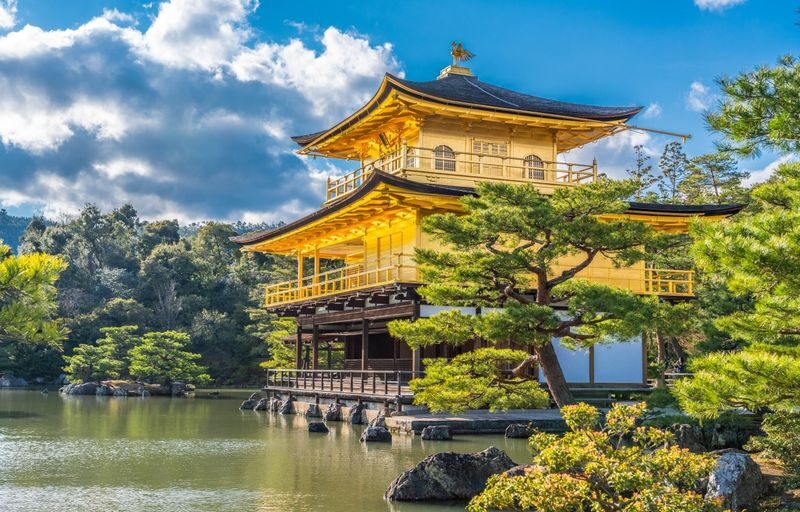
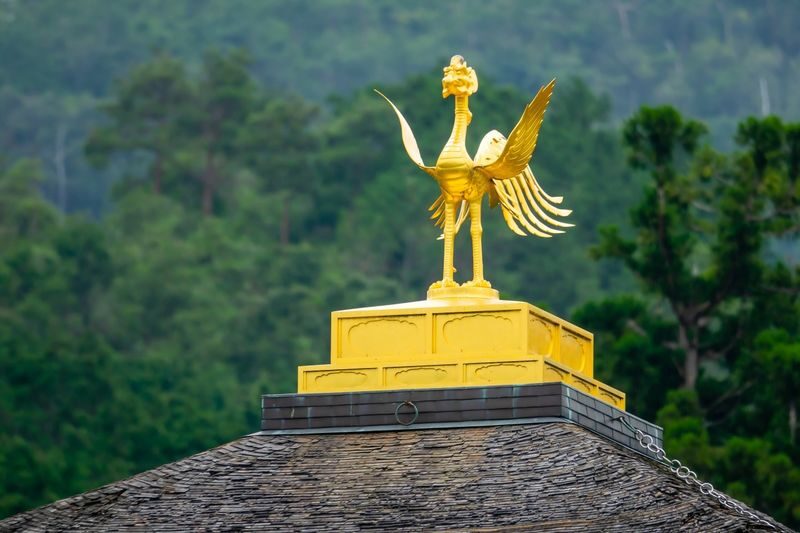
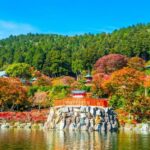
The final major stop is Kinkaku-ji, a UNESCO World Heritage site whose gold-leaf exterior is reflected in Kyoko-chi, or Mirror Pond. The temple was first built in 1397, and the pavilion’s gleaming surface makes a strong closing image after the greener, more open scenery of Arashiyama.
You have about 45 minutes. The route is designed around viewing the pavilion and walking through the grounds, rather than a long temple visit. It can feel brief if you like to stop often for photos, so keep moving at a comfortable pace and save time to look back at the reflection from more than one angle.
Kinkaku-ji admission is not included. The estimated fee is about ¥500, and prices can change. Tenryu-ji and Katsuoji also have separate admission charges, so if you visit all three paid sites, budget roughly ¥1,500 in total for those estimated fees, before food, drinks or personal purchases.
What the guide and bus add to the day
The practical value here is not only the drive. A guide can explain the sites, help the group stay on schedule and make it easier to find the right meeting point after each stop. Recent departures have had guides named Apple, Tina, Amanda, Charles, CC and Nox, but names vary, so you cannot choose one when booking.
Guides have been described as giving clear history and cultural explanations in English and Chinese, sharing maps and meeting reminders, and offering local suggestions for food or souvenirs. Some also help with photos. The real benefit is having someone keep the day organized, especially when the group has mixed language needs.
The bus also gives you a place to sit between attractions. That matters on a route with several hours of sightseeing and enough walking to make the day tiring. But transport does not erase distance or traffic: the order and timing can change with road and weather conditions, and an Osaka hotel pickup that collects people in Kyoto can add time on the road.
Price and the real cost of the day
At from $43.70, the tour can be good value if you want to visit several sites without arranging transport yourself. The price covers the guide, round-trip transfers, tolls, parking and fuel. Those are meaningful inclusions on a day linking Mino and Kyoto.
The base price is not the full spend. Katsuoji, Kinkaku-ji and Tenryu-ji charge separate admission, and meals, drinks and personal expenses are also excluded. Bring enough for entrance fees and lunch, and remember that the tour does not include insurance.
Think of the price as paying for a coordinated route and transport, not a fully prepaid sightseeing day. If you are comfortable using public transport and want to spend longer at each site, planning independently gives you more control. If you have limited time and would rather not manage transfers, the fixed schedule may be worth the compromise.
Who will get the most from this tour
This outing suits first-time visitors who want a quick introduction to Katsuoji and Kyoto’s best-known sights, especially if they are staying in Osaka and want to avoid arranging several connections. It is also useful for solo visitors who appreciate clear meeting instructions and a group guide.
It is less suited to anyone hoping for a slow day. Arashiyama’s many possible stops compete for the same short block, and Kinkaku-ji’s 45-minute visit leaves little room to linger. Families should note that infants and children must be included in the passenger headcount, child seats are not available, and the activity information advises against participation for children aged 0 to 1 and women more than one month pregnant. It also advises against the tour for people with accessibility needs.
Arrive at the meeting point 15 minutes early. Guide details are sent by email around 18:00 the day before, so check your inbox and spam folder. The luggage allowance is two standard-sized pieces per person.
Should you book it?
Book this tour if you want three distinct areas in one day, value guided transport and can accept short visits in exchange for covering more ground. Katsuoji’s Daruma ritual and Arashiyama’s varied sights make the route more interesting than a day focused on one famous temple alone.
Skip it if you want a long lunch, time for unhurried shopping or a deep visit to every temple. The best way to enjoy it is to choose your priorities in advance, pack for the weather and treat the schedule as a sampler rather than a complete account of Kyoto.
Osaka & Kyoto Scenic Spots One-Day Tour: Katsuoji Temple Prayer & Kinkaku-ji Temple Pilgrimage & Arashiyama Togetsukyo Bridge & Kimono Forest & Bamboo Grove Path & Nonomiya Shrine (Departing from Osaka or Kyoto)
“Tour guide Allen gave very detailed explanations in both Chinese and English! Throughout the trip, he introduced the history, culture, and key info…”
FAQ
How long is the tour?
The activity is listed as about nine hours. Departure is around 08:00 or 09:00, depending on the option, with returns scheduled from about 17:00 onward.
Where does the tour depart from?
Departure options include Osaka or Kyoto stations. Some packages also offer Osaka hotel pickup.
What language does the guide speak?
Packages are available with an English-speaking guide or an English-and-Chinese-speaking guide. The guide assigned to your departure may vary.
How much time is spent at Katsuoji?
The scheduled stop at Katsuoji is about one hour.
How long is the Arashiyama stop?
The Arashiyama stop is about two and a half hours. It covers the area’s sights, including Togetsukyo Bridge, the bamboo grove and Kimono Forest.
How long is the visit to Kinkaku-ji?
The scheduled visit is about 45 minutes.
Are temple admission fees included?
No. Admission to Katsuoji, Kinkaku-ji and Tenryu-ji is excluded. Each is listed at an approximate fee of ¥500, subject to change.
Are meals included?
No. Meals and drinks are not included, so bring money for food and beverages.
What is included in the tour price?
The price includes an English- or Chinese-speaking guide, round-trip transfers to and from the meeting location, tolls, parking and fuel.
Can I bring luggage, and are child seats available?
The allowance is two pieces of standard-sized luggage. Child seats are not available, and infants and children must be included in the passenger headcount.