
Most of the people queuing for Buda Castle have no idea they’re standing on top of 3.3 kilometres of caves. The hill the Royal Palace sits on is a hollow lump of limestone — a network of natural caverns that medieval Hungarians turned into wine cellars, then bomb shelters, then a Cold War prison, then back into a public attraction.
You can walk through a stretch of it on a guided cave tour for around $19. It’s one of the cheapest “Castle District” experiences out there, and unless you actively dislike enclosed spaces, it’s far more interesting than another Royal Palace courtyard photo.
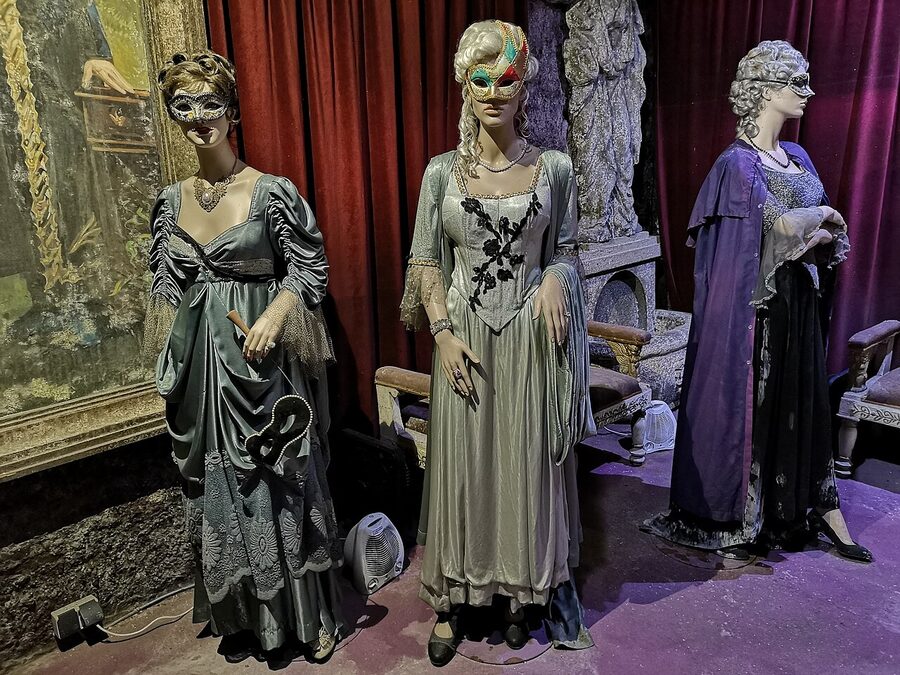


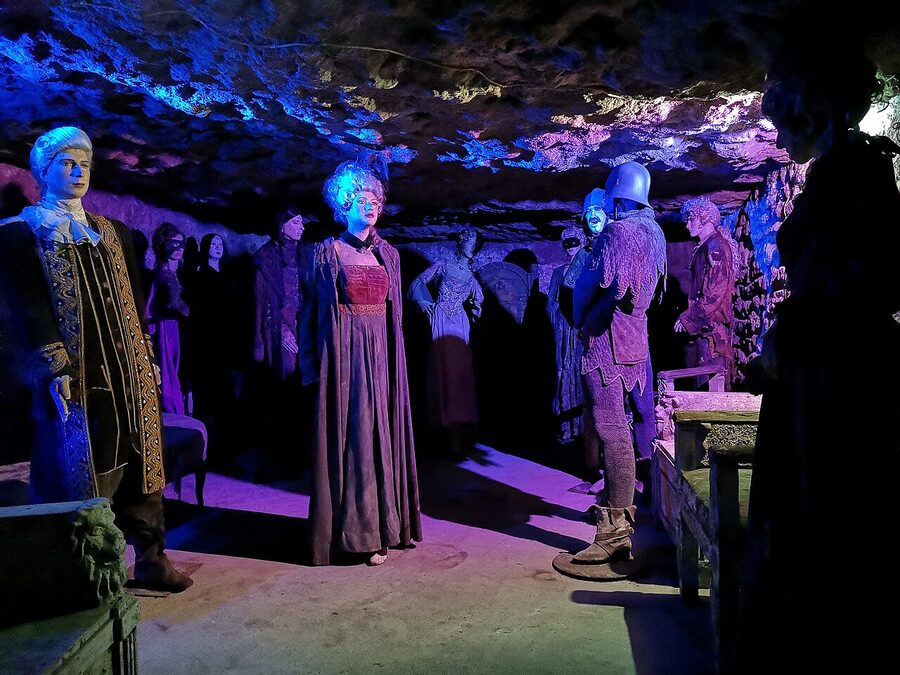

- The classic: Buda Castle Cave Tour — 1.5 hours underground, around $19. The standard route through the Labyrinth, run by the National Park.
- For history buffs: WWII Siege & Bomb Shelter Tour — about $24. Above-ground walking through the Castle District, plus the cellars that were used as shelters during the 1944-45 siege.
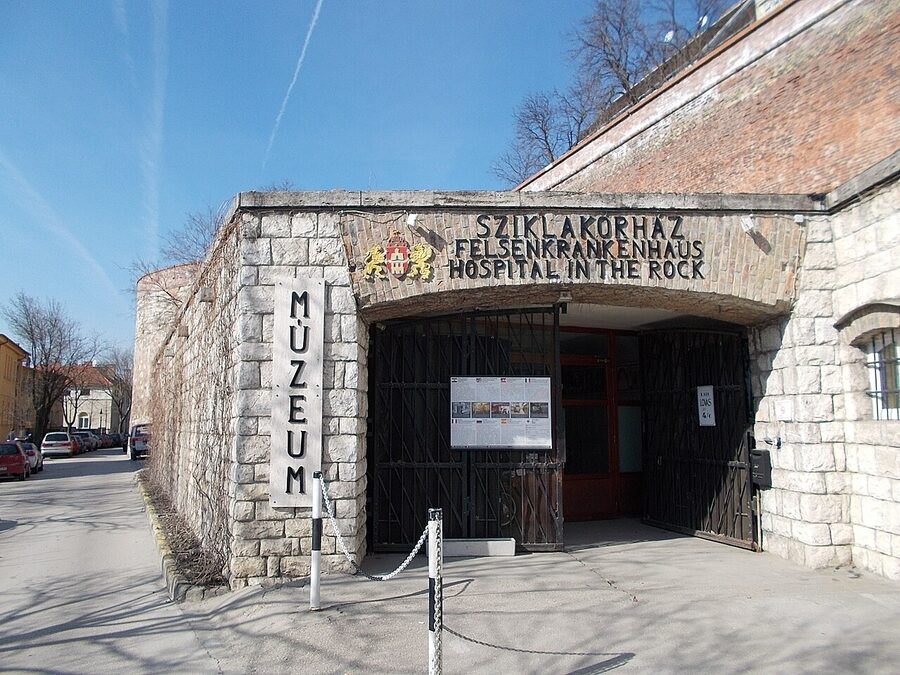
- Half-day option: Buda Walk + Hospital in the Rock — around $42, three hours. Pairs the Castle District walk with the Cold War nuclear bunker museum carved into the same hill.
- What’s actually under Castle Hill
- Two tours, one cave system — which one to book
- The 3 cave tours worth booking
- 1. Buda Castle Cave Tour — from
- 2. WWII Siege of Buda Castle & Bomb Shelter Tour — from
- 3. Buda Walk + Hospital in the Rock — from
- What the tour is actually like
- Booking — what to know before you click
- Best time of day, best time of year
- How it sits next to the other Buda Castle tickets
- What to pair it with on the same day
- Skip-able mistakes
- Practical bits people forget
- Other Buda Castle and Budapest guides
What’s actually under Castle Hill
Castle Hill is one big slab of porous limestone. Hot springs that still feed Budapest’s bath houses bubbled through that limestone for hundreds of thousands of years and ate hollows out of it. Some are tiny, some are big enough to drive a horse and cart through. Locals knew about the caves from the Middle Ages and started joining them up — knocking holes between caverns, digging cellars down from the houses above, eventually creating something close to a parallel street network.
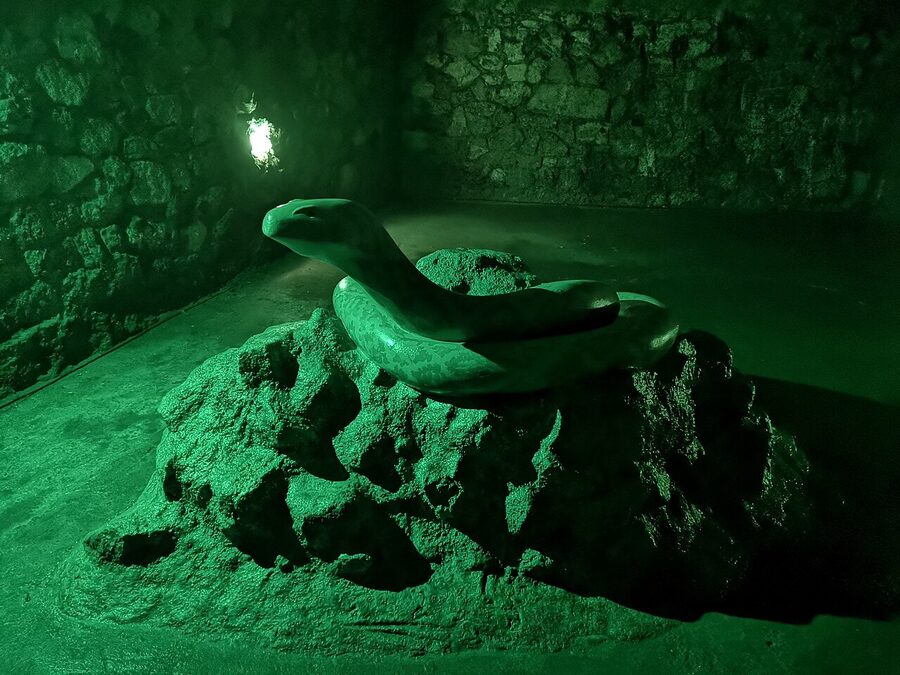

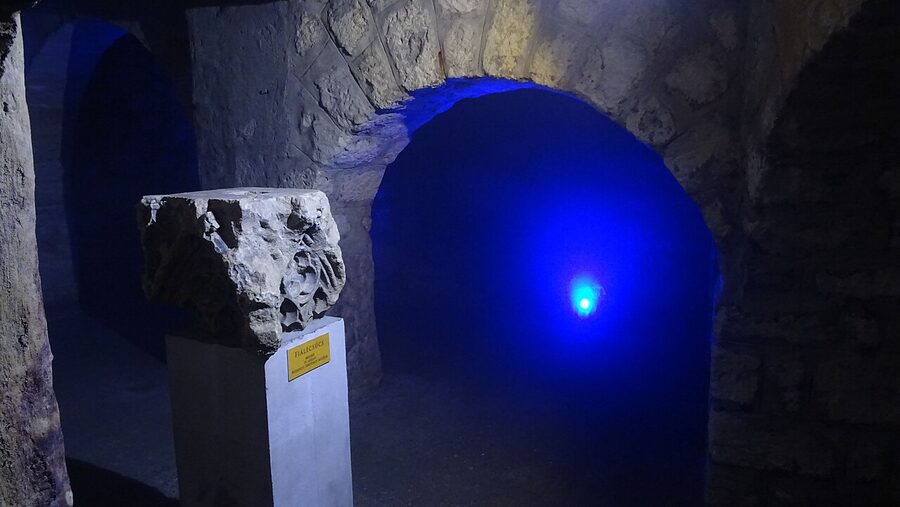
The total system is around 3.3 km long. You don’t see all of it on a tour — you see a chosen stretch, well-lit and paved, that takes in the parts where the storytelling actually works. Geology in one chamber. Medieval cellars in the next. Then deeper sections that were used as bomb shelters during the WWII siege of Budapest, and bits that the communist-era state security service kept as cells. It’s a lot of history in a small footprint.
The cave system is run as a national park property — the Duna-Ipoly National Park Directorate manages it from a small office in the Castle District. That’s why it doesn’t feel commercial in the way the Labyrinth attractions sometimes did in the 2000s and 2010s. There’s no theme-park dressing. It’s a park ranger walking you through actual caves and telling you what happened in them.
Two tours, one cave system — which one to book
The official tours come in two lengths and they’re confusingly close in name. Both go into the same cave system through different doors. Pick by how much time you have and who you’re with.
.jpg)
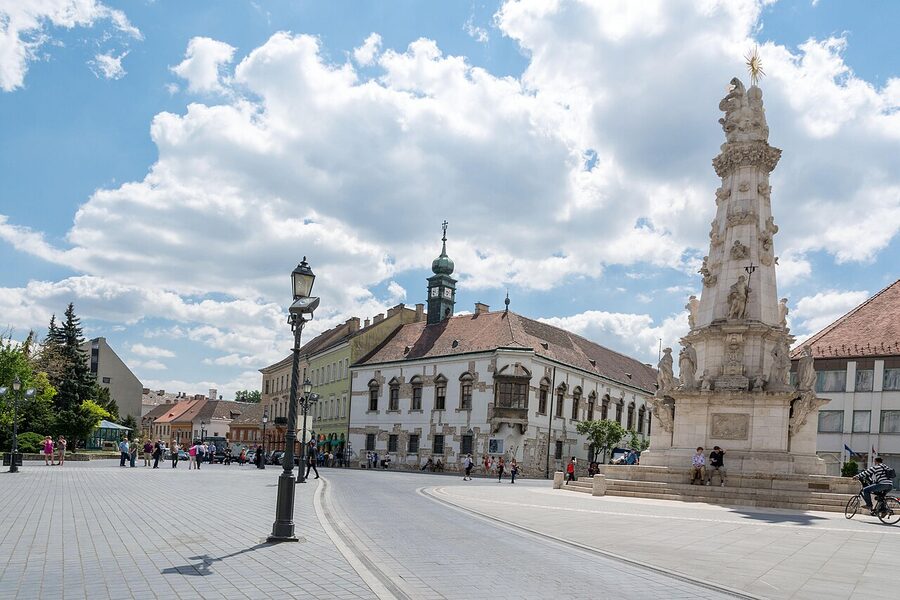
The Normal tour covers about 1.5 km of caves and takes around 1.5 hours. Meeting point is the Holy Trinity Column on Szentháromság Square — opposite Matthias Church, in the heart of the Castle District. It’s pitched as age 12 and up. This is the one most people book and it’s the one I’d send most adults on. You get the geology, the medieval cellars, the WWII shelter section, and the prison block.
The Short tour is 600 m and 45 minutes, starting at Dárda utca 2 (a tiny street off the main castle drag). Age 5 and up. If you’ve got young kids or someone in your group who’s a bit nervous about confined spaces, this is the one — same cave system, less of a commitment, easier exit.
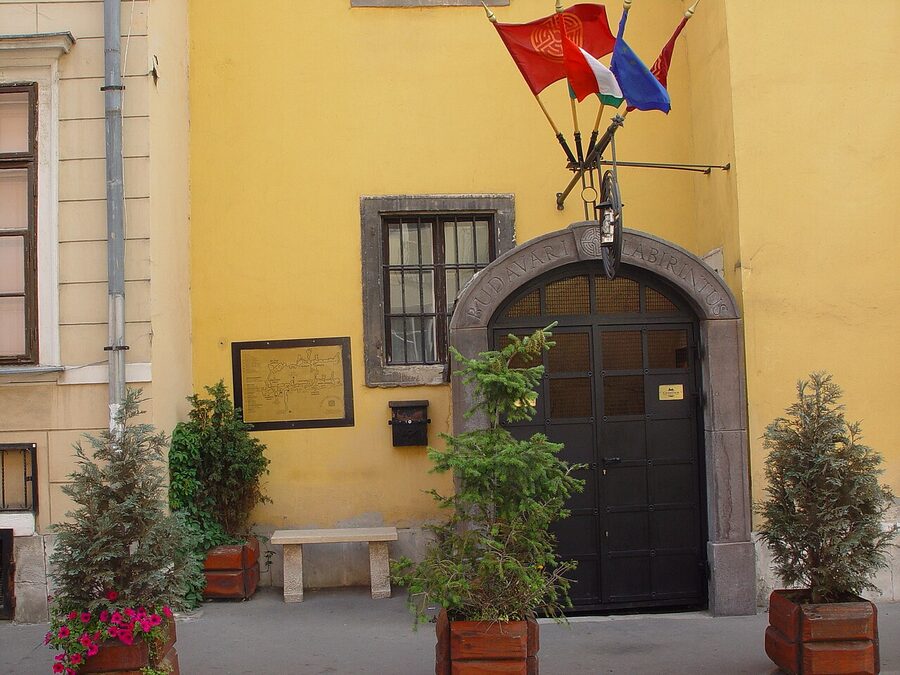
One thing the official site is very firm on: buy tickets online in advance. There are no on-the-day sales at the door. Group sizes are capped at 25 and individual time slots fill up — especially during weekends and the May-September peak. If you turn up assuming you can pay cash on arrival, you’ll be turned away. I’ve watched it happen more than once.
The 3 cave tours worth booking
I’m focusing on the underground side here. You’ll spot a hundred “Buda Castle walking tour” listings on the booking sites — most of those just walk you past the buildings, no caves. These three actually go below ground or pair an above-ground walk with a serious underground site.
1. Buda Castle Cave Tour — from $19
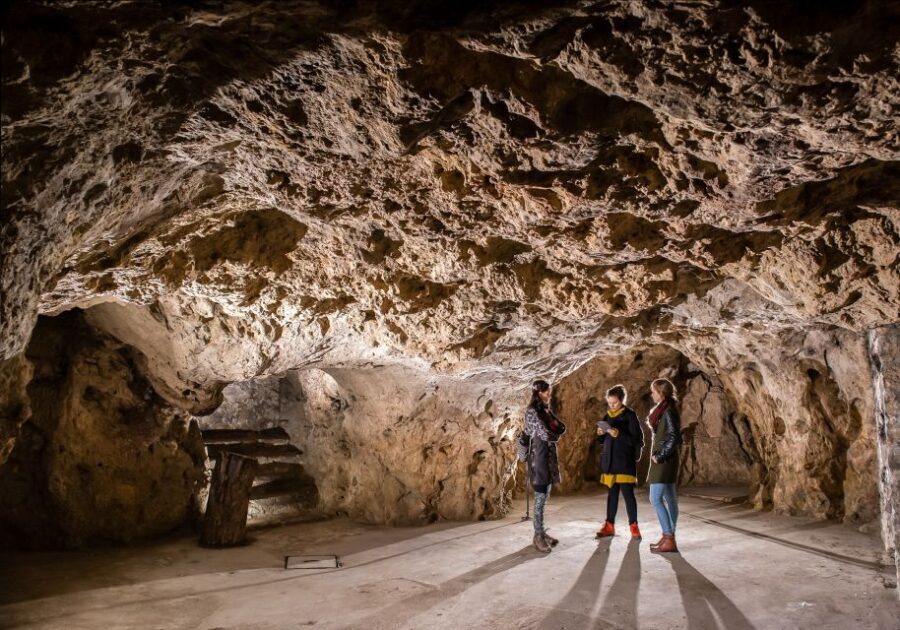
This is the one to book if you only do one. The 1.5-hour route covers the natural cave geology, the medieval cellar layer, and the WWII bomb shelter section — basically all the headline stuff. Our full review of the Buda Castle Cave Tour goes into the guides and the route in more detail. Guides have been a strong point in our checks: knowledgeable on the geology and the human history both, with enough humour to keep an hour and a half from feeling long.
2. WWII Siege of Buda Castle & Bomb Shelter Tour — from $24
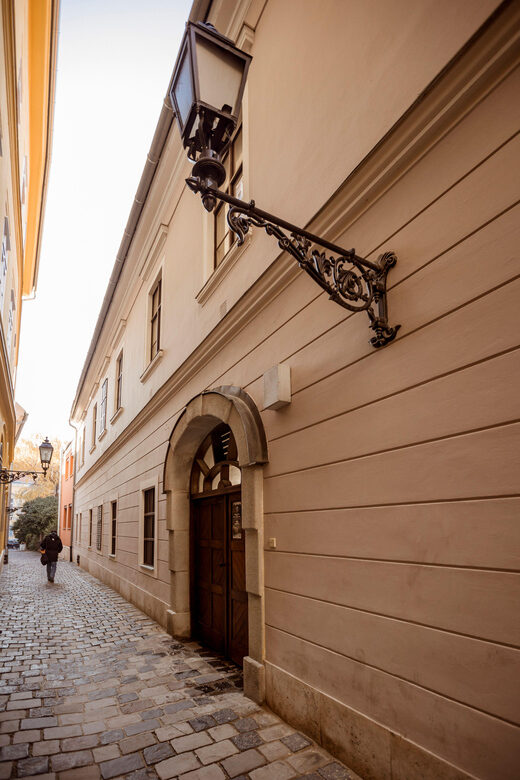
If you’re more interested in the war than the rocks, book this one instead. Our walkthrough of the WWII Siege tour covers the route step by step. The siege of Budapest lasted 52 days and most of the fighting in this district happened block by block — guides take you to the actual streets where it was worst, then down into the cellars where civilians sheltered. It’s heavier going than the standard cave tour, so worth pairing with something lighter on the same trip.
3. Buda Walk + Hospital in the Rock — from $42

This pairs an above-ground walking tour of Buda with a guided visit to the Hospital in the Rock — a separate site carved into the same Castle Hill caves and easily one of Budapest’s most affecting museums. It was a working WWII military hospital, then re-purposed as a Cold War nuclear bunker, with the wax figures and original equipment still in place. The combo tour review has more on what’s inside the hospital. Pricier than the other two, but you’re getting a half-day and you skip the standalone Hospital ticket queue.
What the tour is actually like
You meet on the surface — Holy Trinity Square or Dárda utca, depending which one you booked. The guide runs a quick safety check, hands out any audio gear if it’s a bigger language-mix group, and walks you to the entrance. From there, it’s a flight of stairs down. Not a heart-attack staircase, but enough that anyone with serious mobility issues should ask in advance — there’s no lift.
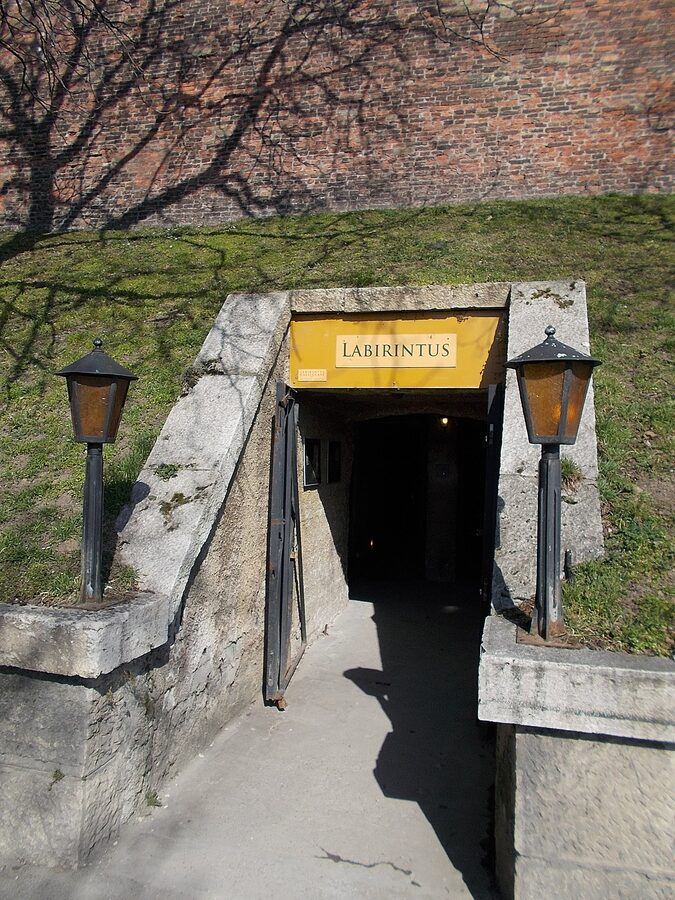

Once you’re underground the temperature drops to around 12°C / 54°F. That’s not a guess — they actually monitor it. Bring a light jacket. Sandals are bad here too: the floor is paved but it’s a damp paving. Closed-toe shoes saved my ankles on a January visit.
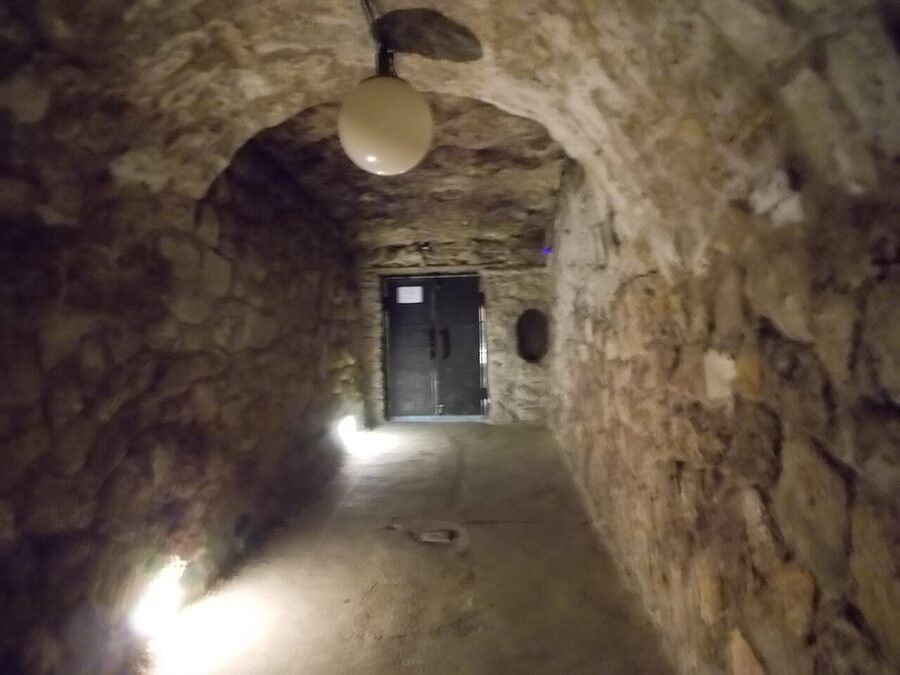

The route moves through about a dozen distinct chambers. The big payoff zones, in order: a natural cavern with visible water-shaped limestone; a medieval cellar that still has the wine-storage niches in the wall; a wider hall used as a WWII air-raid shelter (you can still see chalk markings); a narrow corridor lined with cells that were used by the secret police during the 1950s. Your guide will spend more time in some of these than others, depending on what the group is into.

The exit comes back up via a different staircase to the Castle District. You’re spat out somewhere within a 5-minute walk of where you started, blinking in the daylight. It’s a small disorientation, in a good way.
Booking — what to know before you click
Tickets are online only. The official booking page is operated by Duna-Ipoly National Park (varbarlang.dinpi.hu) and direct booking via that site is the cheapest. The same tickets are also resold via GetYourGuide and Viator, which is what you’ll see on most travel sites — convenience markup of a couple of euros, free cancellation depending on your booking, and you get the receipt with everything else in your trip.
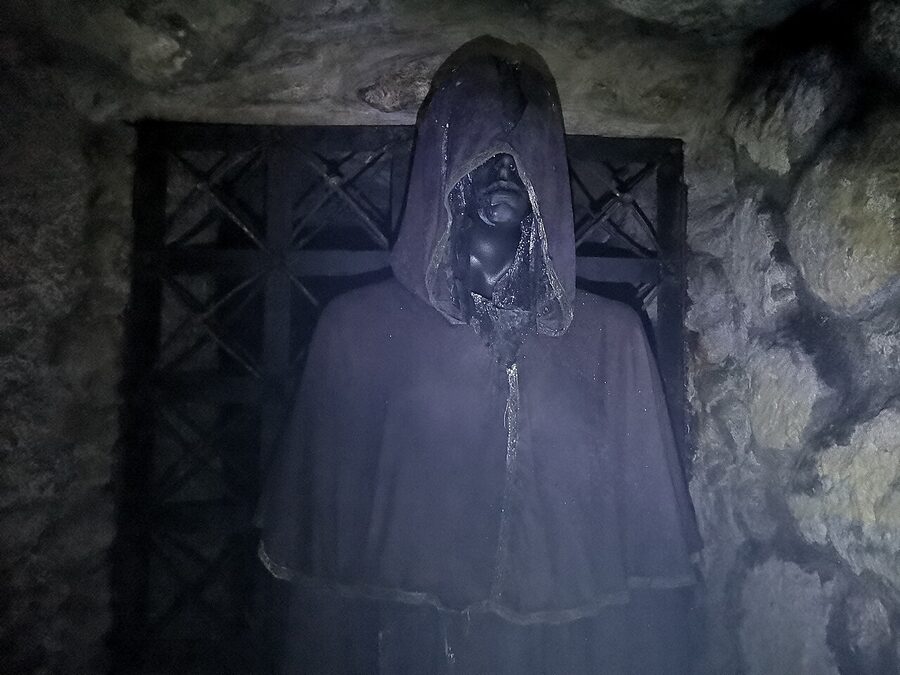

A few things people miss:
- Group cap is 25. If you book a slot that’s already at 24, your group will be the back of the line — guide voices don’t carry that well in caves. Try to book slots that are showing 5-15 people if you can see availability.
- Latecomers are not let in. Plan for the Castle District being a hike from anywhere — Funicular up from Clark Ádám tér, or the 16 bus from Deák Ferenc tér. Add 15 minutes to whatever Google Maps tells you.
- Photos and video need written guide permission. In practice this means quick phone snaps for personal use are fine, but anything tripod-y or commercial gets noticed quickly.
- No on-site ticket sales. If you’re already at the door without a ticket, your only option is to step out into the wifi and book online for the next slot — which might be in three hours.
Best time of day, best time of year
The cave doesn’t care about the weather, which is its biggest selling point in Budapest. February is the only city break that’s reliably miserable above ground — wet, grey, around 0°C — and the cave tour runs at the same 12°C it always does. If your trip is in winter, this is the one to book first.

For summer trips, the cave is a refuge from heat. Budapest hits 35°C with no breeze in late July and August. An hour underground at 12°C is a genuine reset. I’ve seen people book the tour purely as an air-conditioning play and end up loving it.
For time of day, aim for the first slot of the morning. The cave is quieter, the guide is fresher, and you’ve got the whole afternoon free for above-ground sights. Last slot of the day works too, but the group sizes tend to be larger because tour groups bunch their itineraries around lunch and afternoon. The sweet spot is 9am or 10am, mid-week if you can.

How it sits next to the other Buda Castle tickets
This trips up a lot of first-time visitors. There are several different Buda Castle “tickets” depending on what you actually want to see:
- The cave tour (this article) — going underground.
- Buda Castle entry tickets — the Royal Palace itself, the Hungarian National Gallery, the Castle Museum. Different building, different ticket entirely.
- Matthias Church entry — separate again, run by the church.
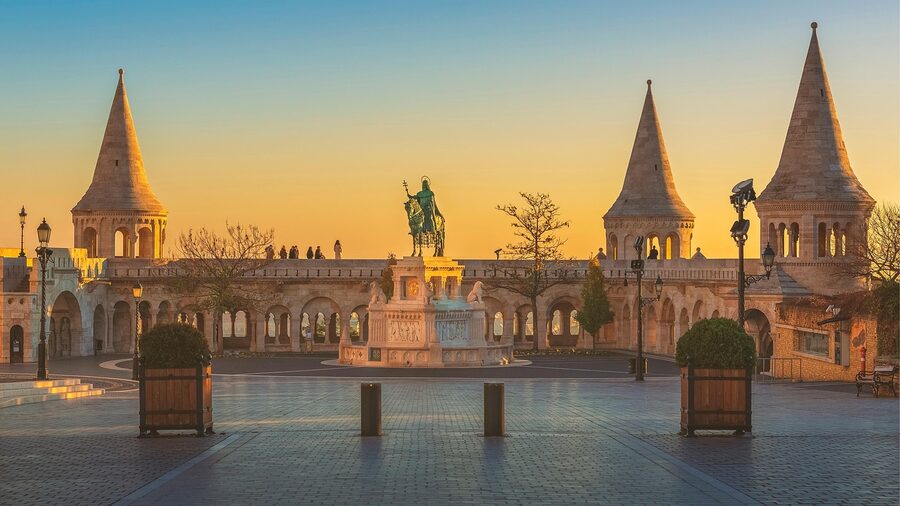
- Fishermans Bastion upper terrace — the upper viewing tower has a small fee in peak hours; the lower terraces are free.
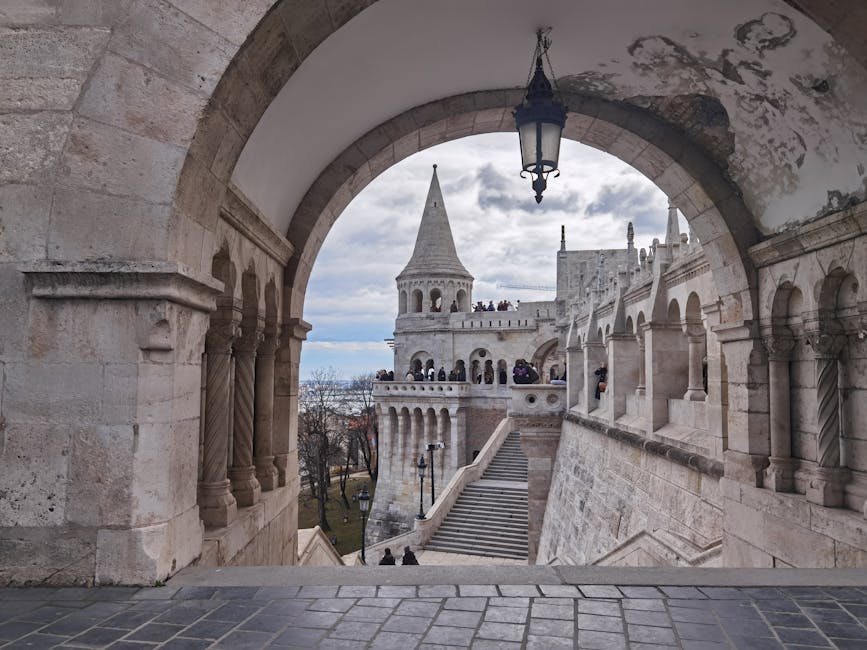
The cave tour is the cheapest of these and the most “different” — the one that gives you something you genuinely can’t see elsewhere. If you’re picking only one Castle District activity, it’s a strong contender. If you’ve got time for two, my personal pairing is the cave tour first thing in the morning, then a slow walk up to St. Stephens Basilica back across the river in the afternoon — the Basilica’s panorama deck gives you a bird’s-eye view of the Castle Hill you just walked under, which is a satisfying loop.
What to pair it with on the same day
The cave tour is short — 1.5 hours, plus 15 minutes either side — so don’t build the whole day around it. The Castle District is small. You can walk every street up there in 90 minutes. Some pairings that work:

Cave tour + Fishermans Bastion + Matthias Church. This is the obvious classic Castle District morning. All three are within 200m of each other. Coffee at Ruszwurm afterwards, where the cake’s been the same recipe since 1827.
Cave tour + a Danube cruise. Underground in the morning, water in the afternoon. Read our guide to booking a Danube cruise in Budapest for which boat company to pick — the cheap evening cruises with drinks beat the daytime sightseeing ones for value.
Cave tour + Széchenyi or Gellért bath. Two of Budapest’s most underrated experiences are underground (cave) and waist-deep in 38°C water (bath). They make a strong contrast as a single day. The Széchenyi guide covers the bath ticket types — the morning bath ticket is cheaper, so the order would be cave first, then bath after lunch.
Cave tour + Parliament tour. If you want a full day of “indoor Budapest”, the morning cave + afternoon Hungarian Parliament tour works neatly — though Parliament tickets sell out further in advance than the cave tour, so book Parliament first and the cave second.
Skip-able mistakes
A few mistakes I’ve watched friends make over the years.
Don’t buy the “VIP cave experience” packages on Viator that bundle the cave with a private guide and dinner — they’re three to four times the official price and the cave portion is the same standard tour. The premium goes on the dinner restaurant, not the cave.
.jpg)
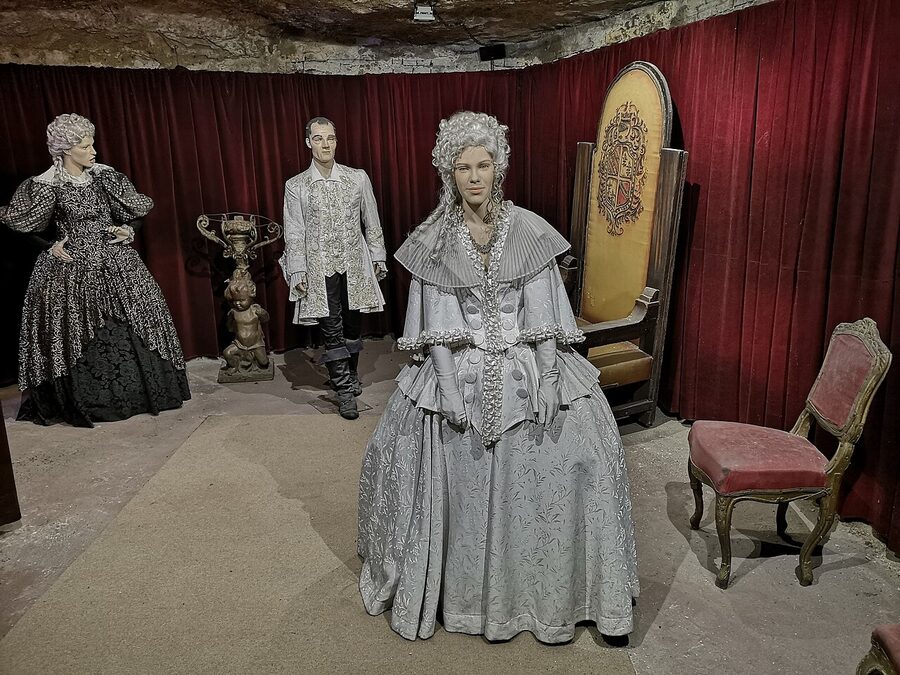
Don’t book the same-name “Labyrinth” attraction at Lovas utca instead of the cave tour — that was a separate, themed cave museum that operated in the same Castle Hill cave network with mannequins and Vlad the Impaler displays. It’s been rebranded a few times. The National Park guided tour is a different product entirely. If your booking doesn’t say “Duna-Ipoly Nemzeti Park”, “Buda Castle Cave Tour”, or list a 1.5km/45-minute or 0.6km/45-minute route, you’ve booked something else.
Don’t skip the cave tour if you’re claustrophobic but only a little bit. The chambers are mostly room-sized, not crawl-space. There’s exactly one narrow passage and you can see the next chamber from inside it. If you’re seriously claustrophobic, yes, skip — but mild “I don’t love crowded lifts” levels are fine.
Don’t pair the cave tour with the spooky Buda Castle Vampires and Myths night tour on the same day. Both are 1-1.5 hours of guided walking in the same district — your feet will hate you. Split them across two days.
Practical bits people forget
Cash isn’t useful here — everything’s online. Bring a small backpack at most; the corridors aren’t built for big rolling suitcases. There are no toilets inside the cave system. Use the ones at Ruszwurm or the cafés on Tárnok utca before you go down.

If you’re doing the Buda Castle Cave Tour and the WWII Siege Tour both, do them on different days. The historical content overlaps and you’ll feel some déjà vu. The cave tour is best paired with a non-historical activity like a bath or a cruise; the WWII tour is best paired with the Hospital in the Rock or the Terror House on Andrássy út for a coherent half-day of dark history.

One more — the cave is fine for kids 5+ on the short tour and 12+ on the normal one, but the WWII section talks about civilian casualties during the siege in plain language. If you’ve got a sensitive 12-year-old, take the short tour. The standard route doesn’t pull punches on that history, and the guides won’t water it down on request.
Other Buda Castle and Budapest guides
If you’ve decided the cave tour’s your thing, the rest of the Castle District is a 90-minute walk in either direction. Up the hill, the Royal Palace ticket guide covers the Hungarian National Gallery and the Castle Museum entry — a good rainy-day combo if you want more indoor history. For after, head down to the river and read the Danube cruise booking guide — the evening cruises are the best-value way to see the Buda Castle hill from the outside, lit up at night.

For the bigger Budapest itinerary, the Széchenyi bath and Hungarian Parliament tour guides will round out a 2-3 day trip nicely. If you’re staying longer, the Budapest bike tour guide is an underrated way to see the Pest side flat — you’ll cover ground you wouldn’t manage on foot. And if you want to extend the dark-history theme that the cave tour starts, the Buda Castle vampires and myths night tour walks the same Castle District after dark with a folklore angle.
The cave isn’t going anywhere. It’s been there for hundreds of thousands of years and people have been walking through it for at least eight hundred. Book the morning slot, dress like you’re going camping for an hour, and let a National Park ranger walk you under one of the prettiest hills in Europe.
Affiliate disclosure: some of the booking links on this page are affiliate links. If you book a tour after clicking through, we earn a small commission at no extra cost to you. We only recommend tours we’d send our own family on.