
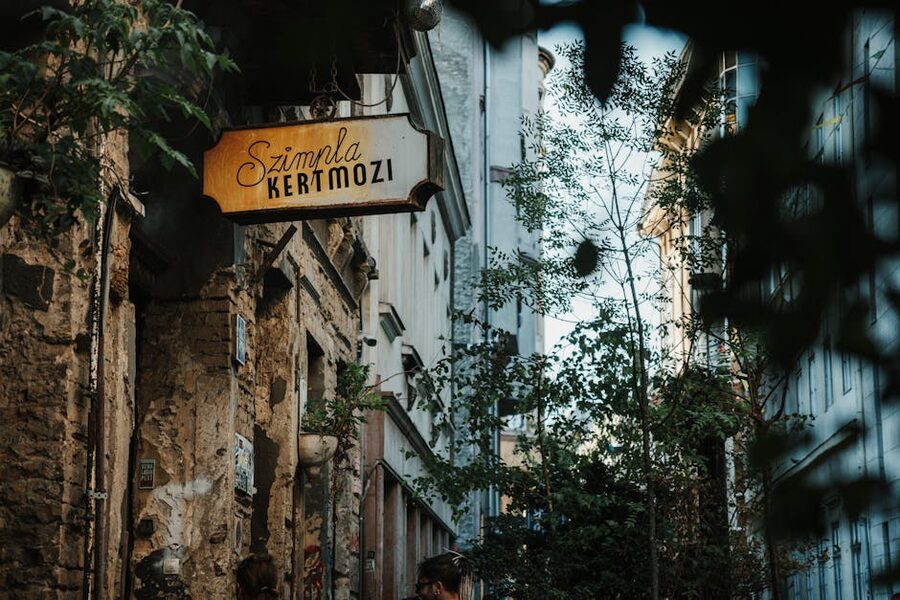
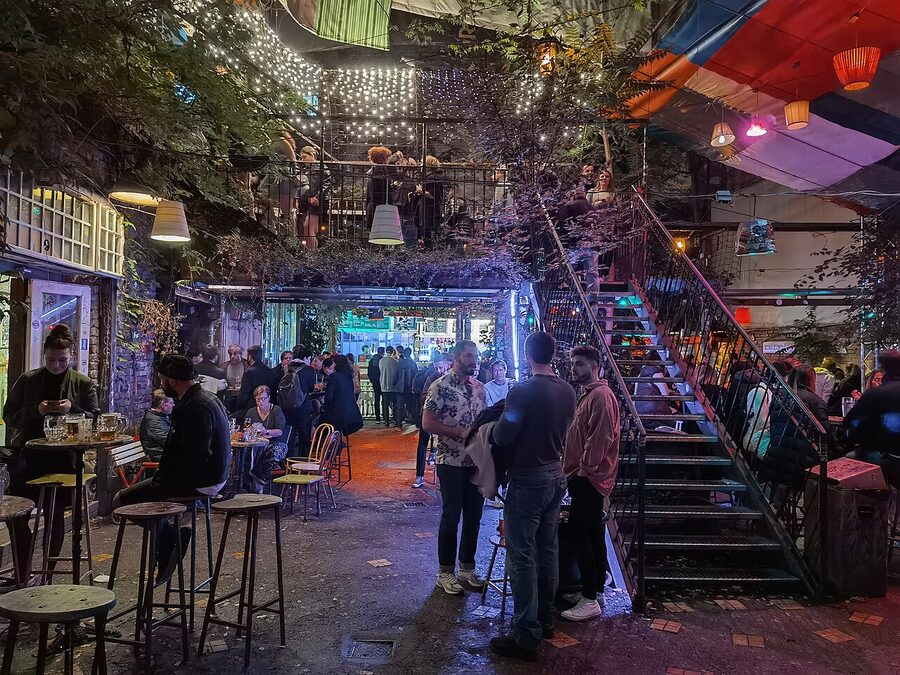
The mistake almost everyone makes their first night in Budapest goes like this. You read about Szimpla Kert online, you pin it on your map, you wander down Kazinczy utca around 8pm on a Friday and you queue. The line moves. You get inside. And then you stand there in the middle of a packed courtyard, looking at five different bars and three different rooms, with no idea which drinks are good, which corner has the best music, which staircase leads where, or whether anyone speaks English at the next bar over. So you order whatever the closest bartender suggests, sit on a bathtub-turned-sofa for forty minutes, and eventually wander back out into the night feeling vaguely like you missed it.
I’ve watched this happen to friends and I’ve done it myself. Ruin bars are designed to be confusing — that’s part of the point — and going in cold means you spend the whole evening figuring out the system instead of actually drinking your way through it. A pub crawl fixes that, and a good guide can change a single-bar shrug into the kind of night you remember.
.jpg)
Best value: Ruin Bar Pub Crawl with Entry Tickets — about $11pp, five hours, free shots and skip-the-line entry into Szimpla.
Most fun for groups: Guided Pub Tour with Games and 6 Shots — around $16pp, drinking games included, ends with VIP entry to a club.
For the locals’ picks: Bar Crawl with a Local Guide — around $44pp, smaller groups, off-Kazinczy bars and the stories behind Hungarian drinks.
- What a ruin bar actually is (and isn’t)
- Why a guided crawl actually works here
- The three crawls I’d actually book
- 1. Ruin Bar Pub Crawl with Entry Tickets — about pp
- 2. Guided Pub Tour with Games and 6 Shots — about pp
- 3. Bar Crawl with a Local Guide — about pp
- Where these crawls actually take you
- The mistake most first-timers make: Sundays
- What you actually drink
- Eat first. Seriously.
- The Jewish Quarter context most crawls skip
- What you’ll actually pay for, and what you won’t
- Getting there and meeting up
- What to wear, what to bring, what to leave
- The mistakes worth avoiding
- If you only have one night in Budapest
- Other Budapest guides worth a look
What a ruin bar actually is (and isn’t)
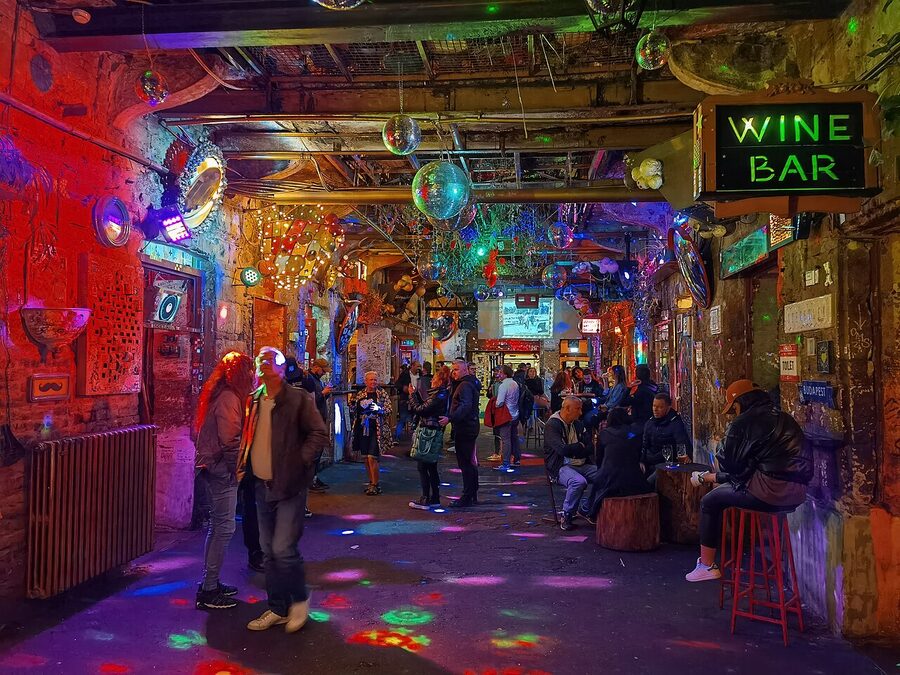
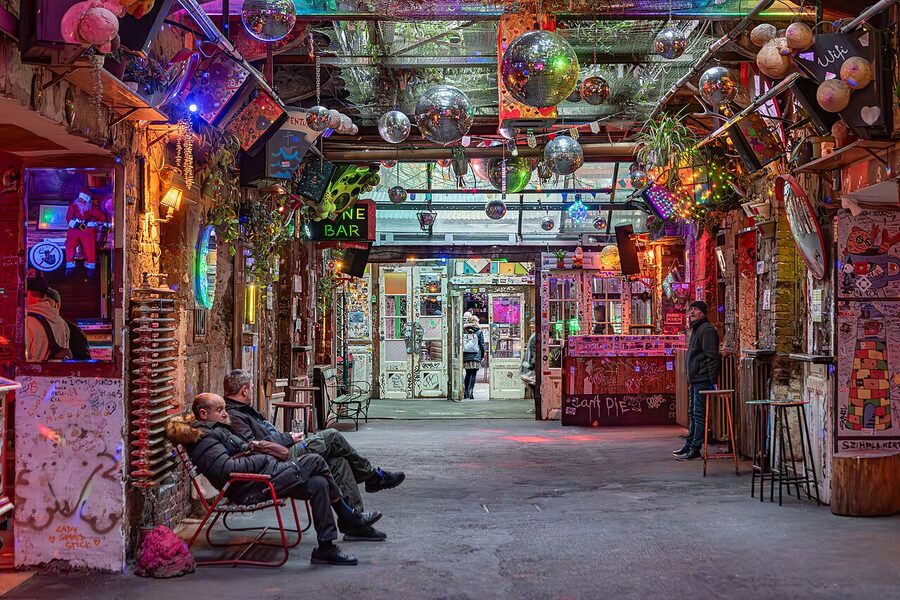
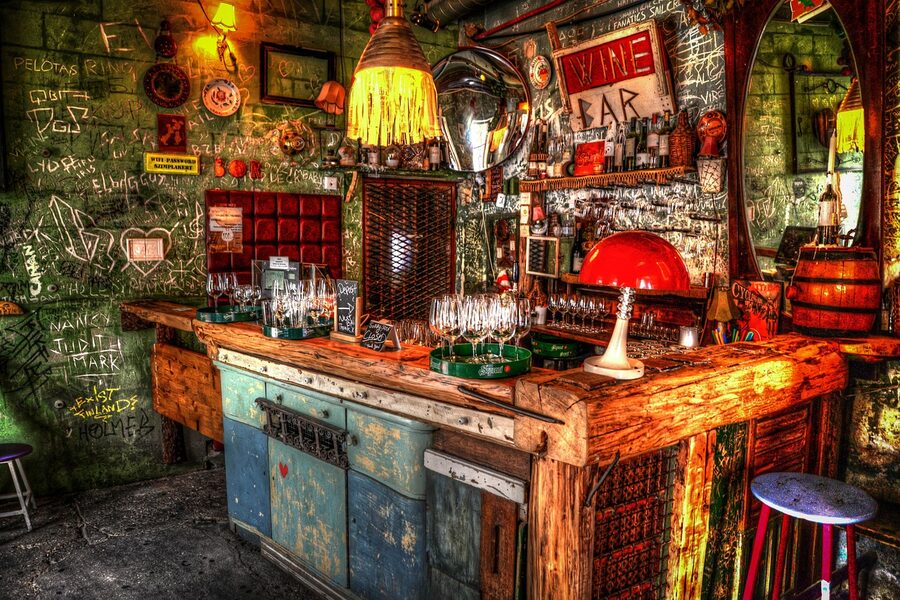
A ruin bar — romkocsma in Hungarian — is what happens when someone takes over an abandoned tenement building in the old Jewish Quarter, doesn’t bother gutting it, and just opens a bar inside. The walls stay cracked. The plaster falls off in patches. They drag in mismatched chairs from flea markets, hang Christmas lights and old bicycles from the ceiling, paint murals on whatever survives, and serve cheap drinks until 4am.
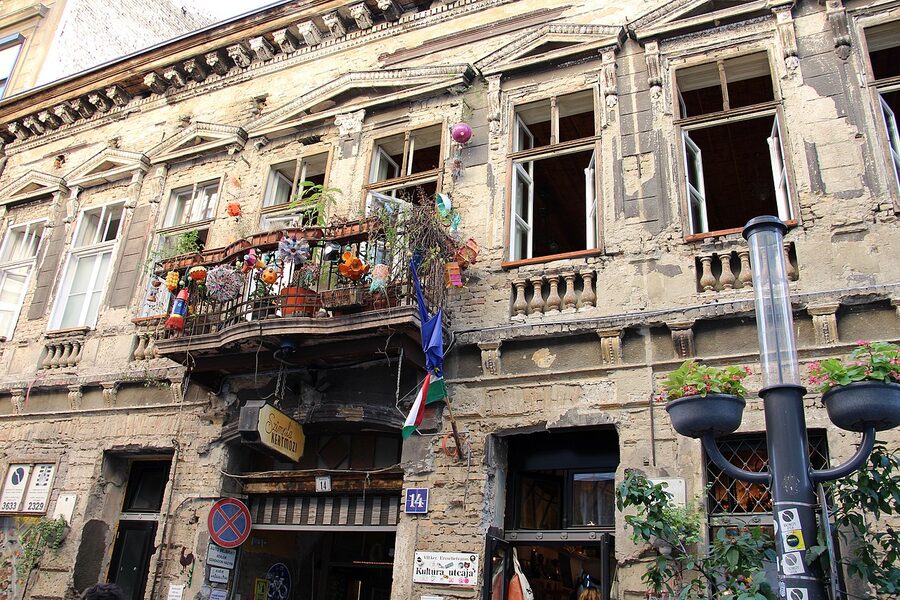
That’s it. That’s the formula. It started in 2002 when a few friends took over a derelict building on Kazinczy utca, called it Szimpla Kert (Simple Garden), and accidentally invented the most copied bar style in Central Europe. Within a decade there were dozens of them across District VII, plus imitators in Berlin, Prague, Belgrade, and every other city with a stock of communist-era buildings nobody knew what to do with.
What it isn’t: a polished cocktail lounge, a craft cocktail bar, or anything resembling a place you’d find in a hotel. The cocktails are fine. The beer is local and cheap. The point isn’t the drinks — it’s the rooms, the people, and the strange architecture of being in a bar that looks like the residents got evicted last week and a band moved in.
.jpg)
Why a guided crawl actually works here
I’d usually steer people away from any kind of organised pub crawl. They’re noisy, often half the group is on holiday from the same university, and the bars are usually paying a kickback so the drinks are weak and the music is loud enough to kill conversation. Ruin bars are the exception, and the reason is simple: the rooms.
You can’t really “discover” Szimpla Kert. You walk in and you see one bar, and you have no idea that the back room down the corridor on the left has a separate cocktail bar, the upstairs gallery has a rotating art exhibit, the side courtyard has its own DJ, and the corner room near the entrance is where everyone smokes. A guide walks you through this in twenty minutes and then takes you to four other bars where you’d otherwise have walked past the front door without realising it was a bar at all.
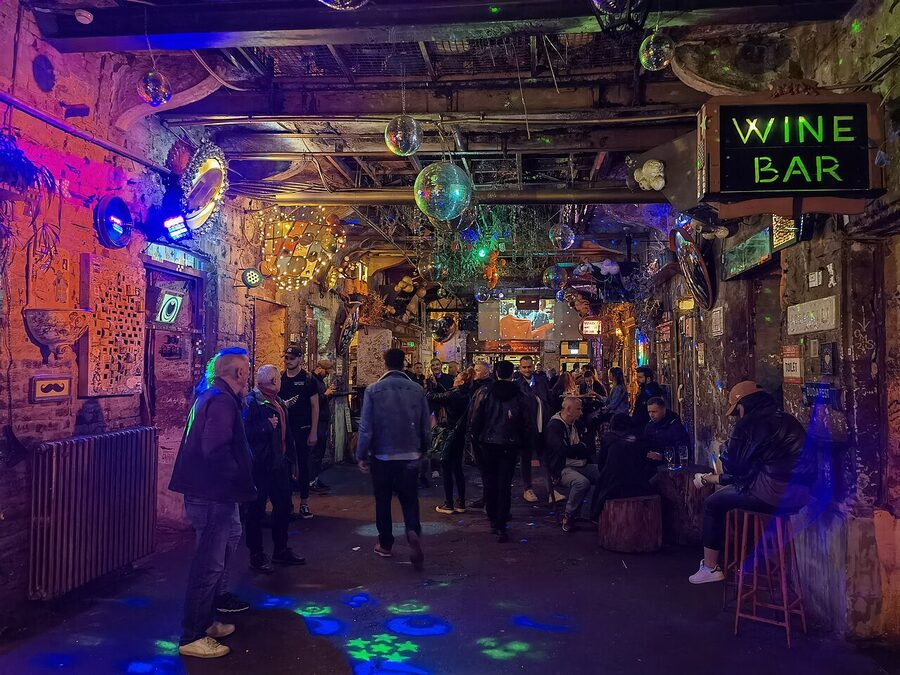
The other reason: language. Most ruin bar staff speak English, but the bar menus are usually in Hungarian, the drink names involve Hungarian words you’ve never heard (fröccs, Unicum, pálinka, somlói galuska — that last one is a dessert, but you get the idea), and ordering off-script gets faster results when there’s a local doing the asking. You also get house specials and shots that wouldn’t make it onto an English menu, which is half the fun.
The three crawls I’d actually book
There are at least a dozen ruin bar pub crawls running every night in Budapest, and they’re not all created equal. Some are basically taxi services that drop you outside Szimpla, hand you a wristband, and disappear. The three below are the ones I’d send a friend to — each picked because it does something different rather than because they all do the same thing slightly differently.
1. Ruin Bar Pub Crawl with Entry Tickets — about $11pp
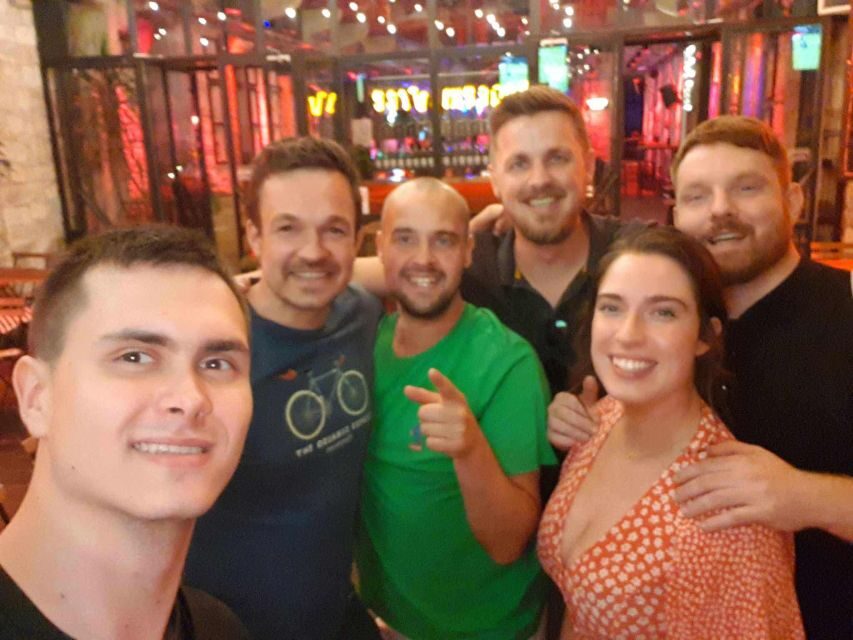
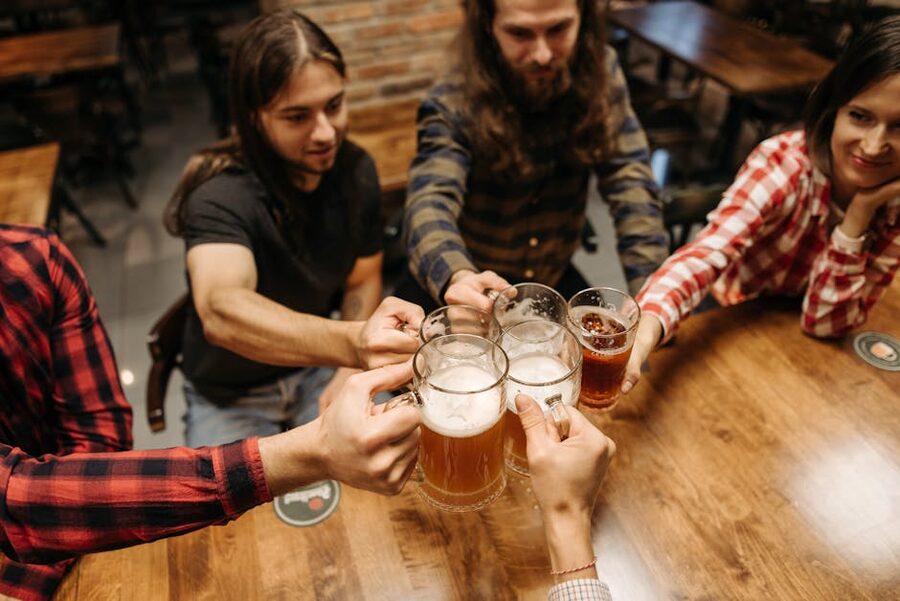
This one’s the workhorse — five hours, four bars, free welcome drink and free shots along the way, and skip-the-line entry into Szimpla Kert which on a Friday night saves you the queue down the block. The guides aren’t fancy storytellers but they know the bars well, the group sizes are sensible, and at $11 it costs less than two cocktails would cost you DIY. Our full review goes deeper on what’s included and the route they typically run.
2. Guided Pub Tour with Games and 6 Shots — about $16pp
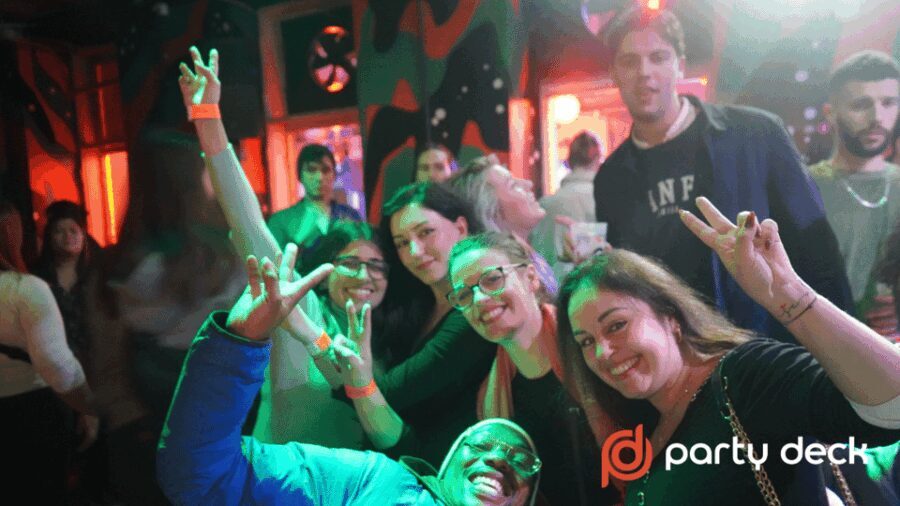
If you’re travelling in a group of three or more and you actually want to do drinking games — Hungarian card games, beer pong, the whole thing — this is the one to pick. It hits four to five hand-picked ruin bars, the guide keeps the energy up, and the night ends with VIP entry into a club so you don’t have to figure out where to go after closing. We covered the route and the games in our full review.
3. Bar Crawl with a Local Guide — about $44pp
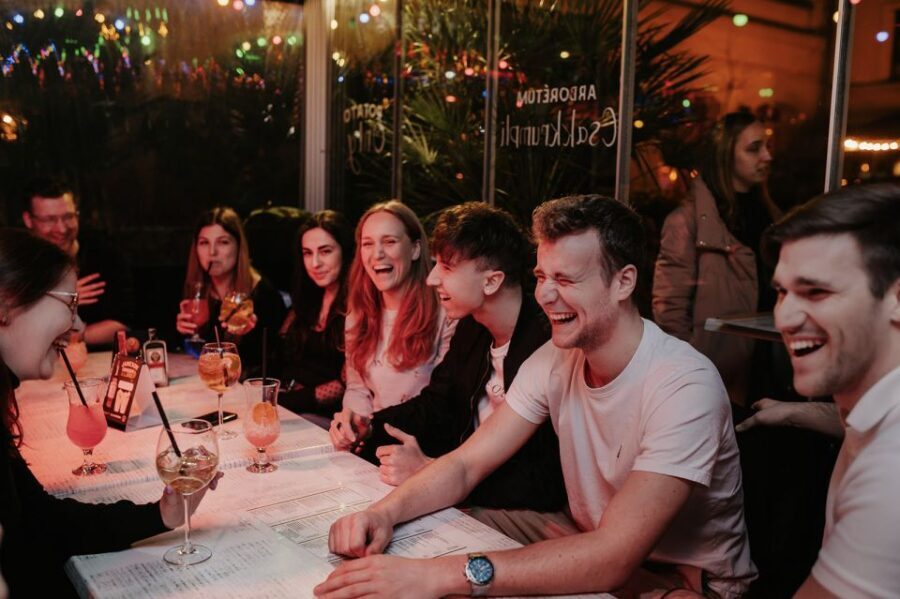
This is the most expensive of the three and also the most genuinely useful if you want to actually learn something. It’s a three-hour crawl starting near the Budapest Eye, ending at Füge Udvar, with two drinks, four shots, and a guide whose entire job is telling you the stories behind Hungarian drinking — why pálinka is taxed differently, what sör and bor mean, why everyone clinks their glass for tóst. Read our review for what to expect from the storytelling side.
Where these crawls actually take you
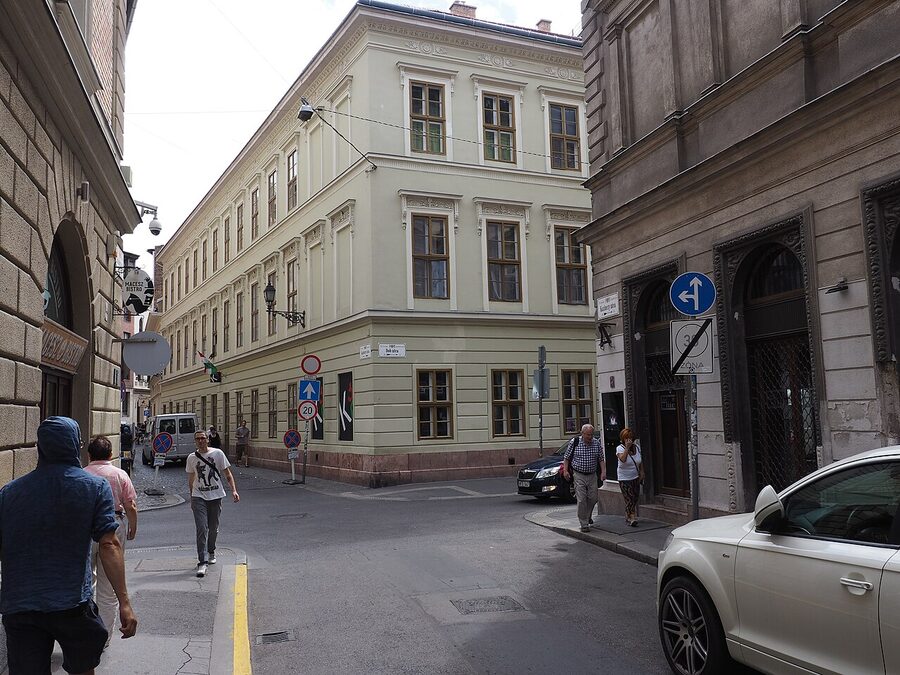

Almost every crawl in Budapest works the same neighbourhood: District VII, also called Erzsébetváros, also called the old Jewish Quarter. The whole ruin bar scene is packed into about eight square blocks bordered by Király utca, Erzsébet körút, Wesselényi utca, and the Dohány Street Synagogue. You can walk the whole circuit in twenty minutes if nothing was open. With the bars open, it takes most of the night.
The bars vary, but the rotation usually includes some combination of these:
- Szimpla Kert — the original, opened 2002, biggest, loudest, most touristed. Almost always the first or last stop.
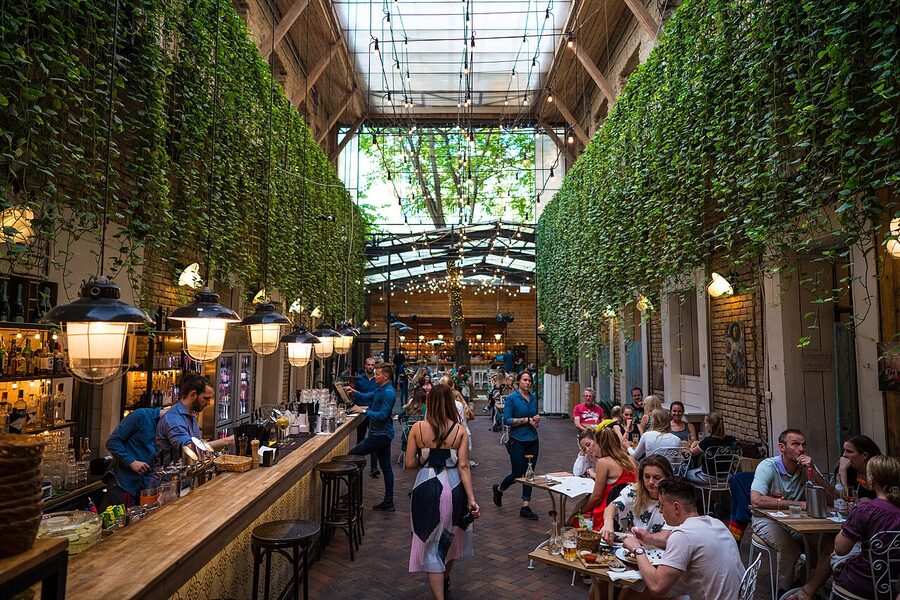
- Mazel Tov — newer, more polished, Middle Eastern food and a glass-roofed courtyard. Less ruin, more restaurant.
- Anker’t — bigger industrial space off Andrássy, electronic music focus, runs a vegan farmers’ market on Sunday mornings (yes, really).
- Csendes Létterem — the smaller, weirder one, with sculpted faces hanging off the walls and a quieter cocktail crowd.
- Telep — locals’ favourite, gallery space and a downstairs concert room.
- Doboz — multi-floor, more club than pub once midnight hits.
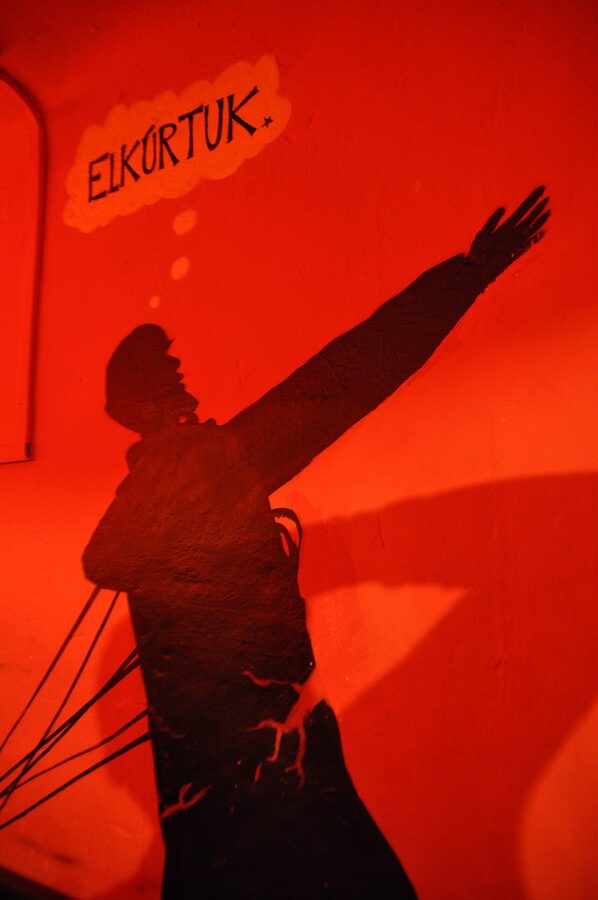
- Red Ruin Bár — political satire on every wall, communist-era posters, smaller and weirder.
.jpg)

You won’t hit all of these on one crawl. Most run four or five stops in a five-hour window. The sequencing matters more than the choice — guides save Szimpla for the middle or the end so you’ve already been pre-warmed by quieter, cheaper, faster bars.
The mistake most first-timers make: Sundays
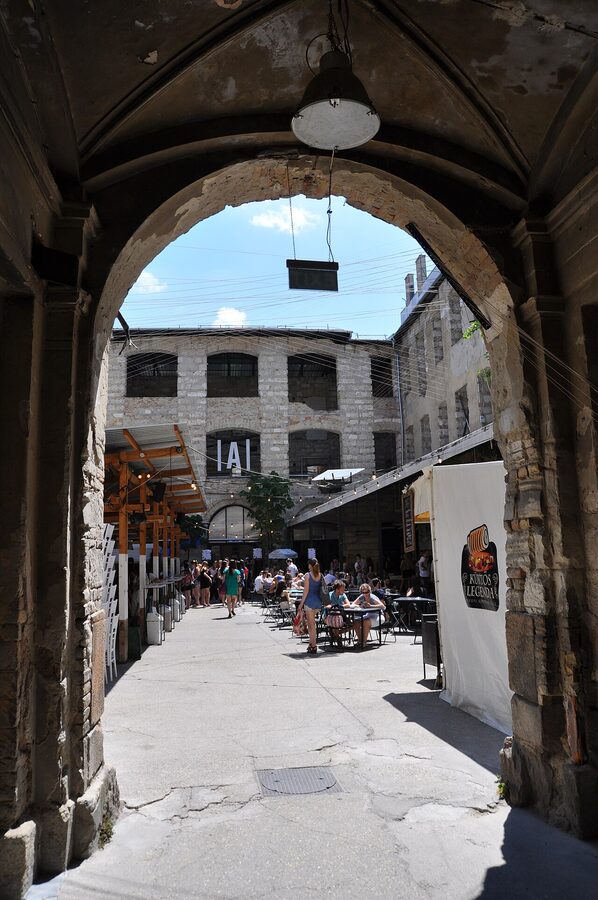

This is the one that catches people out hardest. Szimpla Kert runs a farmers’ market every Sunday morning from 9am to 2pm. Anker’t does a vegan version. The bars look like bars at night and like markets in the morning, and there’s a crossover hour where you can sometimes find both happening — produce stalls being broken down, drinkers wandering in, the bar staff still cleaning from the night before.
If you book a Sunday daytime “ruin bar tour,” you’re not getting drinks. You’re getting a walking tour of empty bars and active markets, which is interesting in its own right but not what most people booked for. Almost every operator runs the actual pub crawl Thursday through Saturday nights only. Sunday and Monday nights are the slowest of the week — some bars don’t open at all, and the ones that do have skeleton staff and no music.
The other Sunday catch: if you fly in late Sunday and your only night in Budapest is Monday, factor this in. A weeknight ruin bar tour is a different vibe. It works, it’s quieter, you’ll have an easier time talking to the guide, but the energy isn’t the same as a Friday or Saturday.
Best nights to book: Thursday is a sweet spot. Locals are out, the queues at Szimpla are manageable, and the bars are properly busy without being shoulder-to-shoulder. Friday and Saturday are the loudest. Wednesday is fine. Sunday and Monday — pick a different activity, like a Danube cruise or the Széchenyi Baths, and save the crawl for later in the week.
What you actually drink
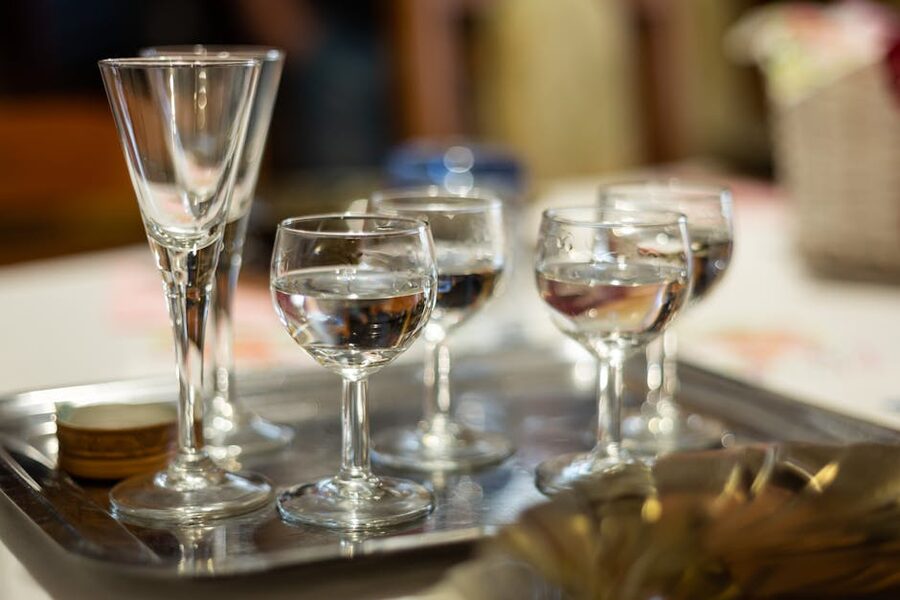
The shots that come included on most crawls aren’t tequila or vodka. They’re pálinka: a Hungarian fruit brandy distilled from plums (szilva), apricots (barack), pears (körte), or cherries (meggy). It’s strong — most are 40 to 50 percent ABV — and you do it in one go, like a Greek tsipouro or a Polish vodka. The trick most guides will tell you: warm it slightly in your hand before drinking, and exhale through your nose afterwards rather than chasing it.
The other Hungarian shot you’ll meet is Unicum: a black bitter herbal liqueur with the consistency of cough syrup and the flavour of forty herbs simmered for too long. The marketing pitch is that it’s been made by the Zwack family since 1790. The actual pitch is that it’s an acquired taste, you’ll either love it or hate it after one sip, and Hungarians treat it as a digestive after heavy meals. Most crawls give you one shot of it just to say you’ve tried.
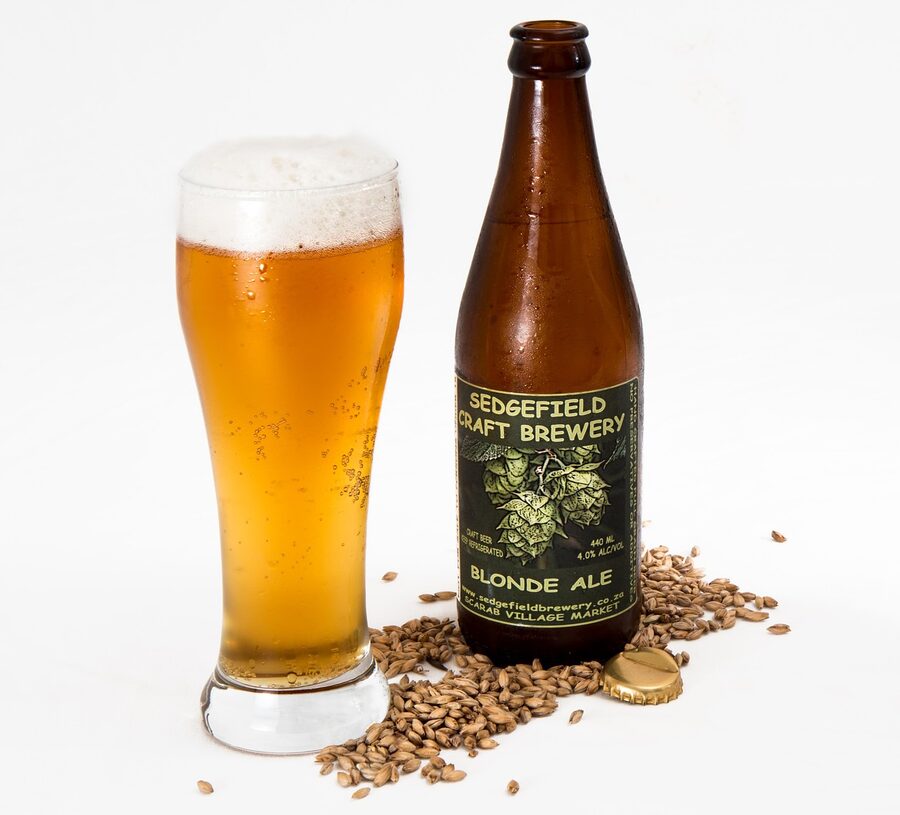
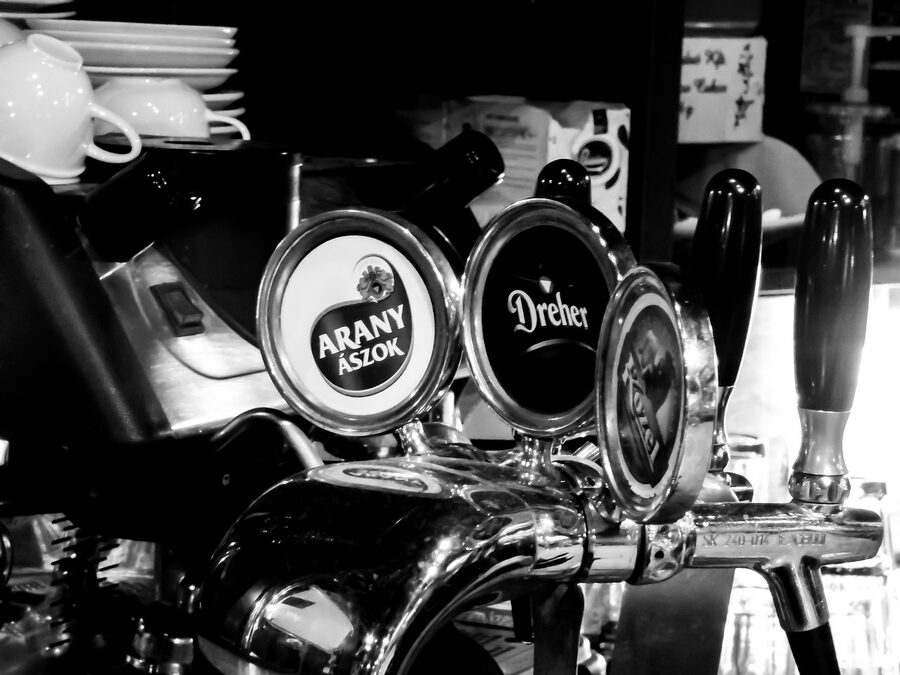
For beer, the macro choices are Soproni, Borsodi, and Dreher (lagers, all fine, all cheap). For craft, look for Mad Scientist Brewing, Horizont, Fehér Nyúl, and First Légió — most ruin bars carry at least one of these. Wine drinkers should ask for a fröccs, which is wine cut with sparkling water — a dry Olaszrizling or Furmint with a generous splash of soda is the classic summer drink and runs about 800 forints (around $2.20) at a ruin bar.
Eat first. Seriously.
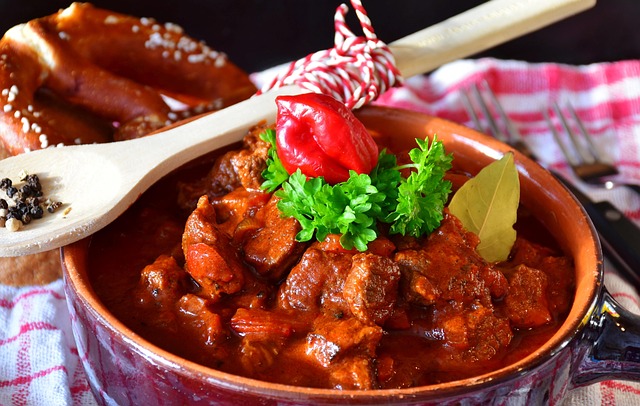
The crawls usually include four to six shots plus a welcome drink, and you’re walking between bars on largely empty stomachs unless you eat first. Hungarian food is built for this. Gulyás (the soup, not the stew) and pörkölt (the meaty stew, not the soup — yes the English word “goulash” is its own confusion) are paprika-heavy beef dishes that line the stomach properly.
The Jewish Quarter has a dozen places to grab a bowl before the crawl starts. Hummus Bar (multiple locations) is cheap, fast, and open late. Kőleves on Kazinczy is the slightly nicer sit-down option. Frici Papa on Király is old-school Hungarian working lunch — paprikás csirke, túrós csusza, dumplings, the works. Eat by 7pm and your 10pm self will thank you.
If you forgot or skipped, the bars themselves will save you. Most have small kitchens or food stalls — Szimpla has lángos and pizza, Mazel Tov does proper Israeli plates, Csendes pulls out toasties after midnight. None of it’s gourmet but it’s all reliable.
The Jewish Quarter context most crawls skip
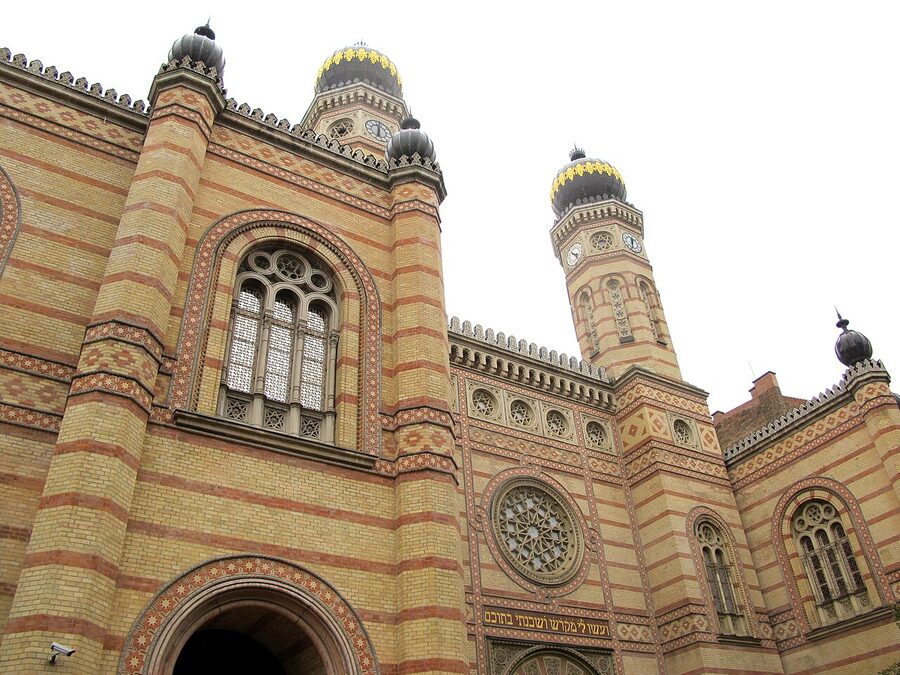

This is the part most crawls don’t slow down for, and it’s the reason ruin bars exist where they do. District VII was the Pest Jewish ghetto during WWII — a walled-off section of the city where roughly 70,000 people were confined in late 1944, most never made it out, and the buildings that survived sat half-empty for the next sixty years. The Dohány Street Synagogue, three blocks from Szimpla Kert, is still the largest synagogue in Europe.
When the late 1990s came around, Budapest had a problem: hundreds of derelict buildings in District VII, owned by the city, structurally fine but completely unrentable as housing because nobody wanted to pay to renovate them. A few young Hungarians figured out you could open a bar in one for almost nothing. The walls didn’t need fixing — they were the aesthetic. The plumbing only needed to work in the kitchen and the bathrooms. Drinks were cheap to import. And the building owners (often the city) were happy to lease them out short-term.
The first ruin bar opened in 2001 at Sziget Festival. Szimpla Kert opened in its current spot on Kazinczy utca in 2004, and within five years there were imitators on every block. The 2010s saw the city try to clamp down — noise complaints from new luxury hotel residents, rent hikes — and several of the original bars closed or moved. Szimpla survived by becoming a tourist anchor rather than a local hangout. Whether you think that’s a good outcome depends on whether you saw it before 2010.
Most pub crawls don’t tell you any of this. The Local Guide tour above gets closer than the others, and a daytime walking tour of the Jewish Quarter pairs perfectly with a ruin bar night — eat one in the afternoon, drink the other after dark, and the same streets feel completely different.
What you’ll actually pay for, and what you won’t
Here’s what’s normally included on a Budapest ruin bar pub crawl:
- Skip-the-line entry into Szimpla Kert (the real value if you’re going on a weekend)
- Welcome drink at the start — usually a beer or a pálinka shot
- Three to six included shots through the night, depending on the operator
- An English-speaking guide for three to five hours
- Cover charges into any bars that have them (most don’t)
- VIP entry into a club at the end, on tours that include it
Here’s what’s not:
- Anything you order beyond the included drinks (cocktails, beers, more shots — you pay your own tab)
- Food, including the bar food at any of the stops
- Tips for the guide (10-15% is typical at the end)
- Transport to and from the meeting point (the Jewish Quarter is small enough you walk everywhere)
- Drinks at the end-of-night club beyond the entry itself
Budapest is still cheap by Western European standards — a beer is 800 to 1,200 forints (around $2.20 to $3.30), a pálinka shot is 700 to 1,500 forints, a cocktail is 2,200 to 3,500. So even with the included drinks, expect to add another $15 to $25 to your tab over the night if you actually keep drinking past what’s on offer.
Getting there and meeting up
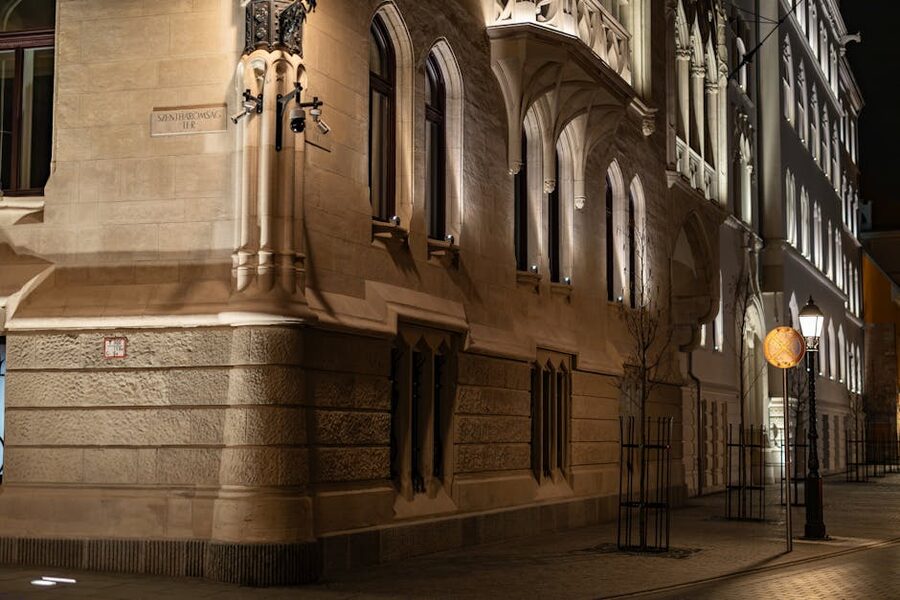
Almost every ruin bar pub crawl meets in the Jewish Quarter itself. Common meeting points are Deák Ferenc tér (the central transit hub, where the M1, M2, and M3 metro lines converge), the Budapest Eye on Erzsébet tér, or directly outside Szimpla Kert at Kazinczy utca 14. Walking from any central Pest hotel takes ten to fifteen minutes — Astoria, Király utca, Anker köz, all within easy walking range.
If you’re staying in Buda, on the other side of the Danube, give yourself thirty minutes. The 4 and 6 trams run along Erzsébet körút all night. The metro stops at midnight. After that, taxis and Bolt ride-shares are cheap and reliable — a ride from Buda Castle to the Jewish Quarter runs about 2,500 forints.
Most crawls start between 9pm and 10pm. Show up fifteen minutes early. The guides usually wear a coloured wristband or hold up a small sign — the email confirmation will say which. Bring your booking confirmation on your phone; some operators check before they hand out the wristband that gets you the included drinks.
If you’ve already got a busy night ahead — say a floating bus tour earlier or a vampires and myths walk at sunset — pick the 10pm crawl rather than the 9pm. The 10pm slots also tend to be slightly cheaper and the bars are properly busy by the time you arrive.
What to wear, what to bring, what to leave
Casual. Truly casual. Ruin bars do not care what you wear — there’s no dress code anywhere except a couple of late-night clubs that some crawls end at, and even those are loose about it. Sneakers and jeans is the standard kit. The floors at Szimpla are uneven, sometimes sticky, and you’ll be standing for most of the night, so don’t wear anything you’d cry over getting dirty.
What to bring: cash and a card. Most ruin bars take both, but some of the smaller ones are cash-only after a certain hour. ATMs are everywhere on Király and Kazinczy. Bring an ID — Hungarian law requires it, and a few bars actually check for the under-25 set.
What to leave: your nice camera, anything you can’t replace, and any expectation that you’ll get a quiet drink. Phones for photos are fine; everyone takes them, the bars expect it. Just don’t film inside the bathrooms (yes, this happens) and don’t expect the music to ever drop below conversational-shout level.
The mistakes worth avoiding
I’ve already covered the Sunday one — that’s the big mistake. Here are the other ones I see often enough that they’re worth saying out loud:
Don’t try to do all the bars. A common rookie move is treating the crawl like a checklist — every bar must be entered, every shot must be taken. The crawl is the introduction. Pick one or two bars from the night that genuinely clicked with you, and go back the next night on your own to actually drink there. That’s where the night gets memorable.
Don’t book the latest start time if you have a flight in the morning. The crawls run until 1am or 2am minimum. The 9pm crawls end around 1am. The 10pm crawls end around 2am or later. Add the time it takes to get back to your hotel and you’re looking at 3am. If you’ve got a 7am flight from Liszt Ferenc, pick a different night.
Don’t drink the pálinka if you genuinely don’t drink spirits. Most crawls let you swap your shots for a beer or a soft drink — just ask. The guide will not be offended. They’d rather you swap than spit it out.
Don’t tip the bartender on every drink. Hungarian tipping is 10% at the end on the full tab, not per drink. American-style tipping at every round adds up fast and isn’t expected. Tip the guide at the end of the crawl in cash — 1,500 to 2,500 forints is the standard for a five-hour tour.
Don’t expect any of this to be quiet. If you’re someone who hates loud bars, the crawl isn’t going to fix that. The Local Guide tour above is the calmest of the three, but it’s still the kind of night where you go home with your voice gone.
If you only have one night in Budapest
I’d still pick a ruin bar crawl over a Danube dinner cruise or a thermal bath party. The dinner cruises are pretty but generic — the views are spectacular but you’re eating Hungarian food at hotel-restaurant standards while a tour guide reads facts off a script. The thermal baths after-hours parties have their own charm but they’re crowded with bachelor parties and the music is even louder than the bars.
The ruin bars are the thing nowhere else has. Berlin tried, Prague tried, Belgrade tried — none of them quite landed it. The combination of derelict-but-beautiful Habsburg buildings, dead-cheap Hungarian alcohol, a city government that mostly looked the other way for fifteen years, and a generation of Hungarians who decided to own being ruined, is unrepeatable.
One night, one crawl, one notebook of which bar you want to come back to — that’s the move.
Other Budapest guides worth a look
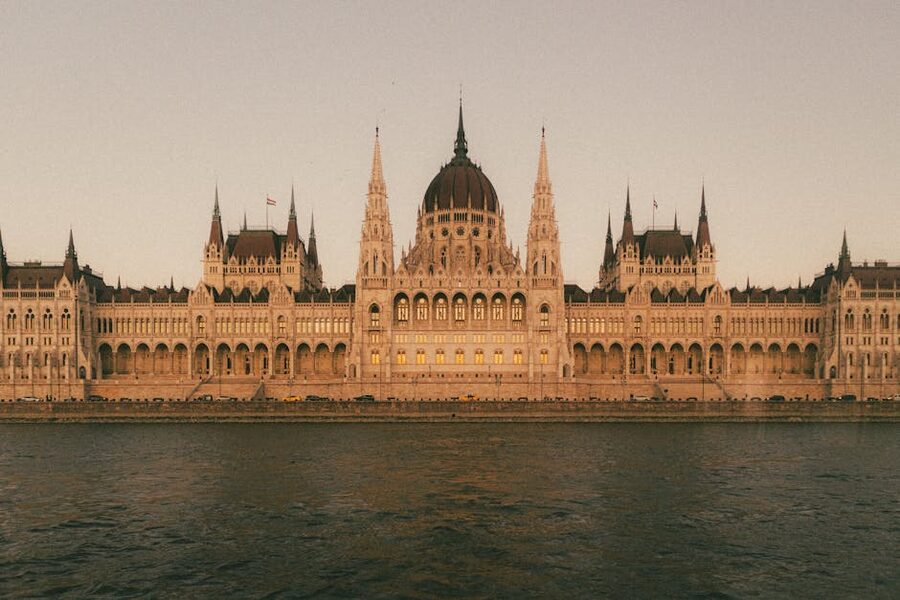
If you’re stitching a Budapest itinerary together around the ruin bar night, a couple of the city’s other after-dark options pair well: a Danube cruise at sunset before the crawl gives you the postcard views without burning a separate night, and the Széchenyi Baths are the perfect hangover cure the morning after. For a quieter Budapest night, the vampires and myths walking tour covers the same Jewish Quarter streets but with stories instead of shots, and a daytime general walking tour of Pest fills in the historical context the pub crawls skim over. If you’ve got more days, a Buda Castle walking tour on the other side of the river is the obvious pairing, and a hop-on-hop-off bus is the easiest way to connect the two halves of the city without burning a metro ticket every other stop. The Hungarian Parliament is worth pre-booking if you want to see the Holy Crown without queueing.
Affiliate disclosure: some of the booking links above earn us a small commission if you book through them, at no extra cost to you. The recommendations are based on what we’d actually book ourselves.