
Pay €29, sit in what looks like a yellow tour bus parked on Széchenyi Square, and forty minutes later you’re floating past Margaret Island with the bus engine quietly throbbing under the waterline. That’s the trick. The whole point of Budapest’s RiverRide is that you don’t change vehicles when you reach the river — the bus drives in. Forty‑five seconds of slope, a lurch, a gasp from whoever’s sitting at the front, a mild slap of brown Danube water against the windscreen, and you’re a boat.
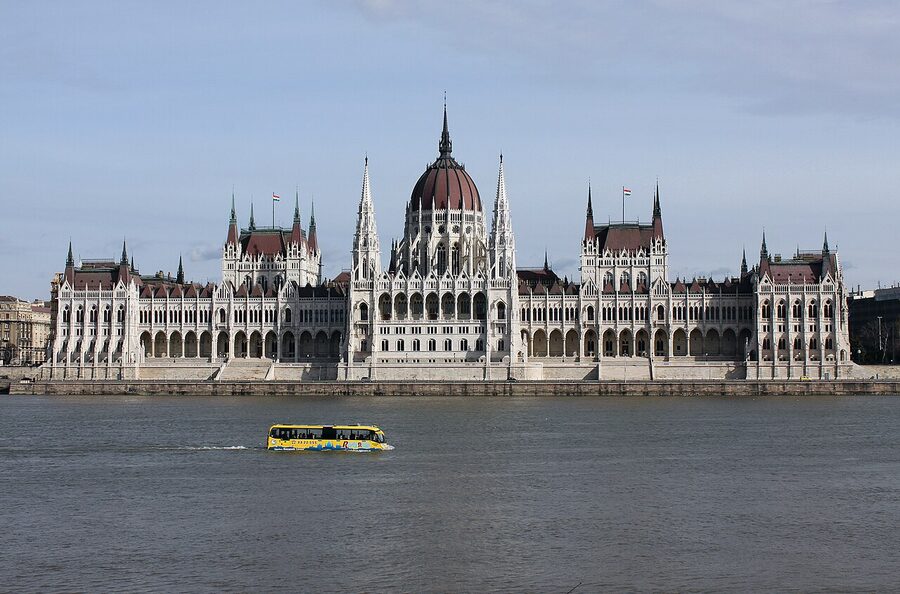

The vehicle has been doing this in Budapest since 2009 — the first amphibious sightseeing bus in Europe. There’s only one operator (RiverRide), only one route, and only really one decision to make: the short tour, or the full one. Below: how the booking works, why I’d pick the longer ticket nine times out of ten, and what to do when the maintenance days line up against you.


- In a Hurry? Here’s What to Pick
- What the Floating Bus Actually Is
- Short Tour Versus Full Tour: The Honest Comparison
- How the Booking Actually Works
- The Departure Point and How to Find It
- What You Actually See
- Pest streets, first half
- Andrássy Avenue and Heroes’ Square
- The splash
- The river leg
- The One Tour to Book
- 1. Budapest: Floating Bus Tour by Land and Water — €29 / €39
- If the Floating Bus Is Sold Out
- What to Bring and What to Skip
- When to Book and Pricing Reality
- Year-Round, With Caveats
- Practical Things People Forget
- Is It Worth It?
- Where Else to Read
In a Hurry? Here’s What to Pick
Best for first‑timers: the 1.5‑hour full tour. €39 per adult. You get fifty minutes on the water, plus the loop up Andrássy and a spin around Heroes’ Square before the splash. Check availability.
Best with kids who get bored: the 50‑minute short tour. €29. Twenty minutes on the water, a tighter land loop, in and out before patience evaporates. Check availability.
If RiverRide is sold out: a regular 1‑hour Danube cruise shows you the same Parliament-and-Castle stretch from the water for under €20. You miss the splash. You don’t miss the views. Check availability.
What the Floating Bus Actually Is
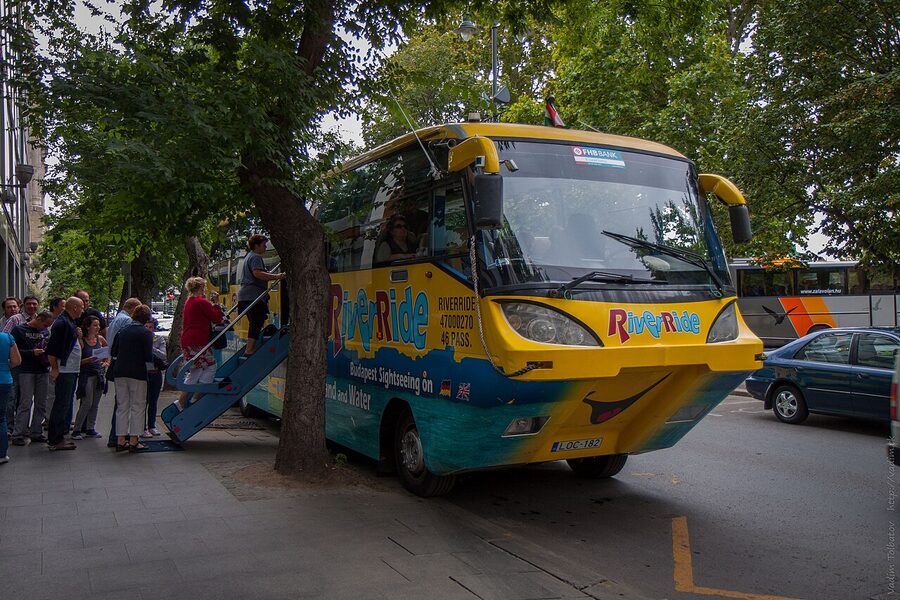
The technical name is an amphibious vehicle. The marketing name is a floating bus. The local nickname for the yellow ones — and they are very yellow — is “the boat-bus”, which Wikimedia Commons literally files them under. There are about a dozen amphibious tourist services running worldwide, mostly in cities with a serious river or harbour: Boston, Liverpool, Rotterdam, a couple in Asia. Budapest’s was the first in Europe and is still the one most people think of when this kind of vehicle gets mentioned.
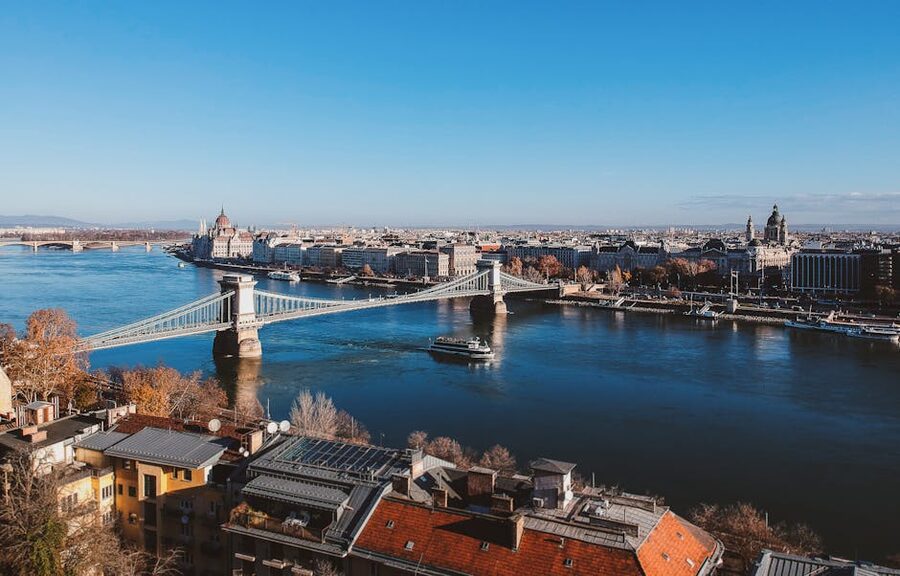
The bus weighs 15 tons. It seats just under 50 passengers depending on the configuration. It has a propeller under the back, a pair of marine engines that take over once the wheels stop touching tarmac, and a driver-and-skipper who needs both a heavy bus licence and a Danube boat licence to be at the wheel. There’s air conditioning in summer and heating in winter — important, because the windows stay shut on the river, and they get steamy fast. There is no toilet on board. Plan accordingly.
The whole experience runs in two halves. The first is a regular sightseeing loop on Pest streets, with live commentary in your chosen language. The second is the river leg, where the same bus you’ve been sitting in becomes a slow boat past Parliament, Margaret Island and Buda Castle. You don’t get off in between. The continuity is the whole pitch.

Short Tour Versus Full Tour: The Honest Comparison
Two ticket types. They are not interchangeable.
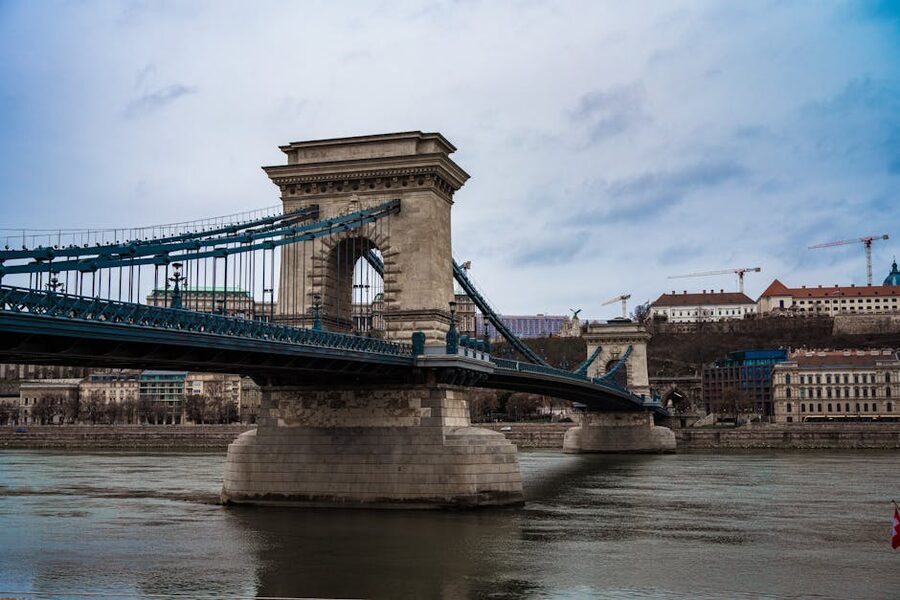
The short tour runs once a day at 10:30. About 50 minutes total. Twenty of those are on the water. The land leg is a tight loop around the inner Pest blocks — Chain Bridge, Vörösmarty Square, the Basilica from a distance, then straight down to the splash zone. You don’t get up Andrássy. You don’t see Heroes’ Square. On the river you go upstream past the Parliament, swing around Margaret Island, and head back. Around €29.
The full tour runs three times a day (11:30, 14:00, 16:00) and four times on Saturdays (the extra is at 17:30). About 90 minutes total. Fifty of those are on the water. On land you head up Andrássy, hit Heroes’ Square, swing back via the City Park edge, and pass Dohány Street Synagogue when traffic plays nice. On the river you get the same upstream Parliament-and-Margaret loop as the short tour, plus a longer downstream stretch where you actually pass Buda Castle from the water. Around €39.
Pick the full tour unless you have a reason not to. The price difference is €10 for a tour that’s almost twice as long, with twice as much water time, and includes the only stretch where you see the Castle from the river. If you’re travelling with a child who’s three and won’t last 90 minutes, that’s a reason. If you have a flight at 1pm, that’s a reason. Otherwise the short tour feels like you bought half a ticket.
The thing both tours have in common is the splash. Same vehicle, same slipway, same fifteen seconds of water hitting the windscreen. If you only care about the splash and not about which sights you’ll see, the short tour does the job. Some Budapest cluster guides treat the splash as the whole experience — it’s not, but I get the appeal.
How the Booking Actually Works
There’s an office on Akadémia Street, number 1, in the 5th district. Open daily 9:00 to 17:00. You can walk in and buy a ticket for that day or the next. Cash and card both work. If you’re staying within twenty minutes of the centre and your dates are flexible, this is the cheapest version of the booking — no platform commission.
The catch is supply. RiverRide runs one vehicle. Capacity is around 48 passengers per departure. Three full tours a day plus the short means somewhere between 200 and 250 seats per day, total. In summer high season — late June through August — those seats sell out by mid-morning. Walking up at 1pm hoping for a 14:00 departure in July is how you end up doing the 16:00 instead, or doing nothing.
So online is the safer bet. The main platforms — GetYourGuide, Tiqets, Klook, Viator — all sell the same product at the same price. They don’t do surge pricing or insider discounts. The reason to use them is the calendar view: you can see at a glance which slots are still open, which are sold out, and which are flagged as a maintenance day. That last point is the one that catches people. The bus needs servicing the way any vehicle does, and once a month a handful of days drop off the schedule. If you walk up to the office on a maintenance morning the desk will tell you. The website tells you weeks in advance.
I’d book at least 48 hours ahead in shoulder season and at least a week ahead in summer. Free cancellation up to a day before is standard on the major platforms — useful if Budapest weather goes haywire and you’d rather move your slot than show up to a thunderstorm.
The Departure Point and How to Find It
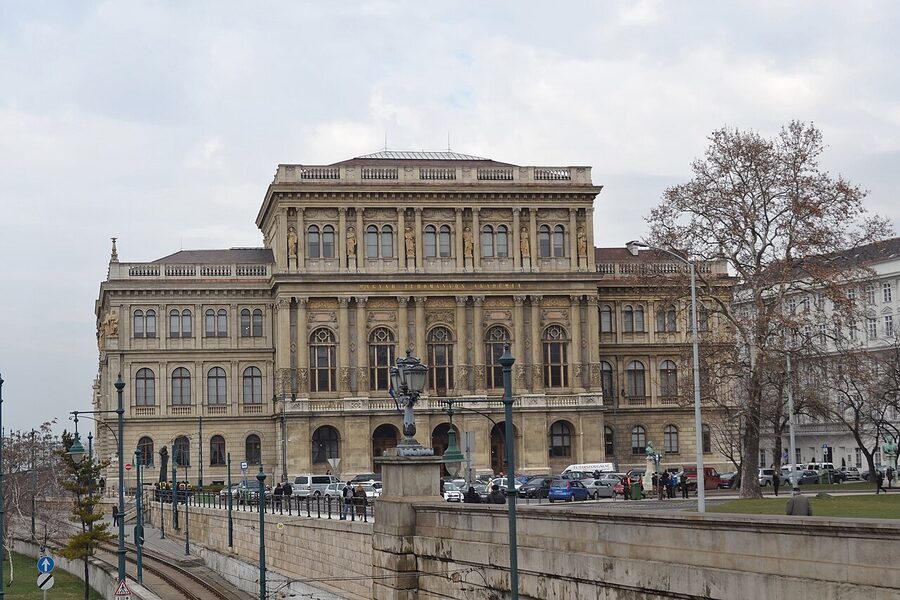
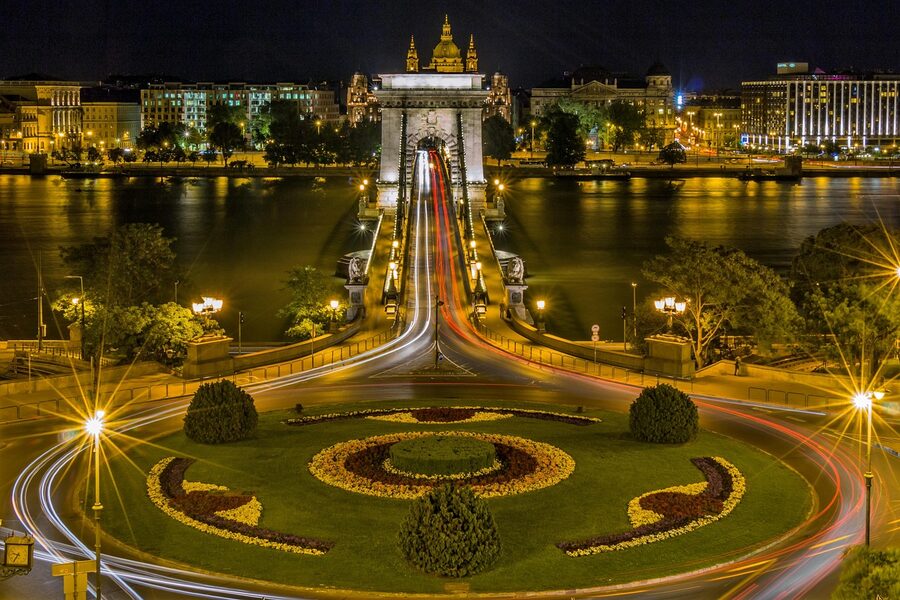
Both tours leave from 7/8 Széchenyi István Square, on the kerb in front of the Tokio Restaurant. That’s the small square that opens onto the river right next to the Chain Bridge, on the Pest side. The Academy of Sciences is the giant pale neo-Renaissance building that flanks the square — if you can see that, you’re in the right spot.
Three ways to get there:
- Metro M1 (the yellow line) to Vörösmarty tér, then walk five minutes north along the river. The yellow line is a UNESCO-listed thing in itself — the second-oldest underground in the world after London — and worth riding once even if you’re not going to RiverRide.
- Tram 2 along the Pest embankment to Eötvös tér. That tram is consistently rated one of the most scenic in Europe by anyone who keeps that kind of list, so the journey to the bus is part of the day.
- Walk. From the basilica it’s seven minutes downhill. From Vörösmarty Square it’s four. From Parliament it’s about ten if you cut through the back streets and avoid the embankment crowds.
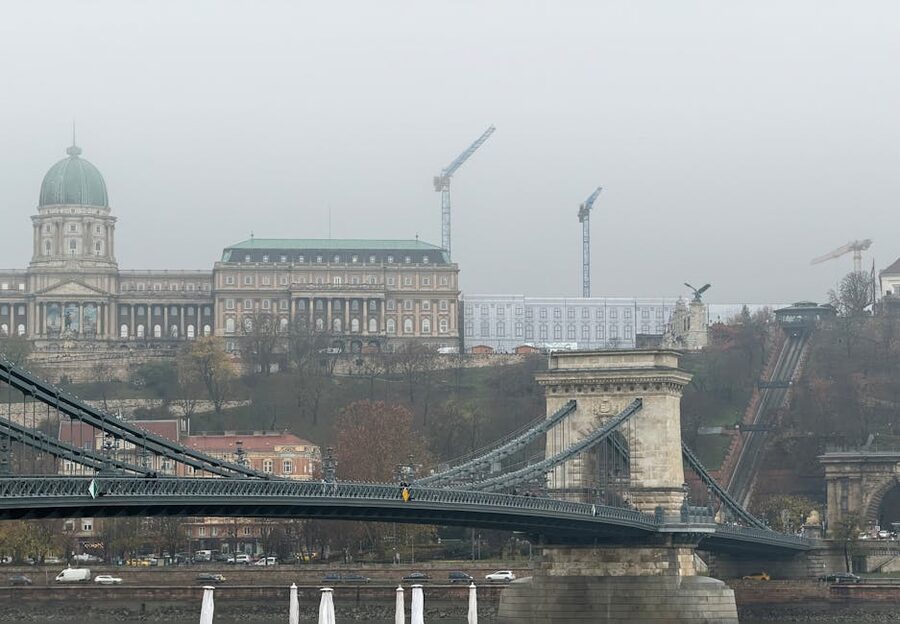
Show up fifteen minutes before the slot. Seats aren’t assigned. The first ten people on board take the front rows, which give you a clean view through the windscreen during both the road sections and the splash. Front rows on RiverRide are the equivalent of the top deck front of a hop-on hop-off — a small gain that’s free if you’re punctual. Twenty-five minutes is overkill. Five is too tight; the door closes a couple of minutes early and the bus pulls away on time.
What You Actually See
The route is a lopsided figure-eight on land followed by a straight upstream-and-back on the water. I’ll go in order.
Pest streets, first half
The bus pulls out of Széchenyi István Square and heads east into the inner Pest grid. You pass Vörösmarty Square (the M1 metro endpoint, the Christmas market site in December, Café Gerbeaud’s home base) and the Basilica from a block or two away. On the full tour the route then bends south and east toward Dohány Street.
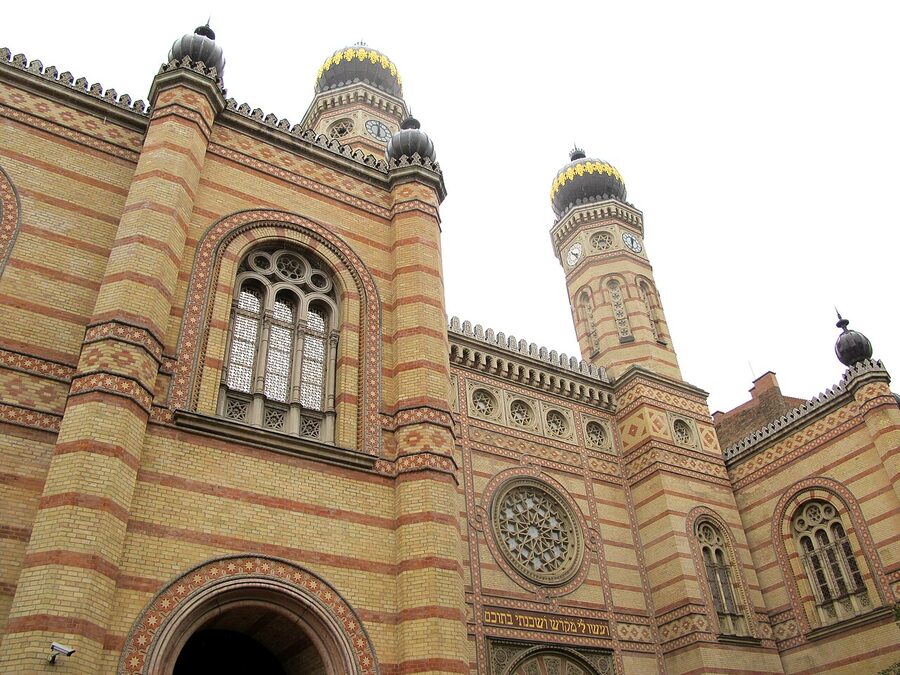

The Dohány Street Synagogue stop is traffic-dependent. If the route is busy the guide will narrate it from a block away rather than slow the whole tour to drive past it. I’d budget that as a 50/50 — sometimes you get a clear shot, sometimes you get a pointed finger and a story. Either way the synagogue itself is worth a separate visit on foot when you have an hour.
Andrássy Avenue and Heroes’ Square
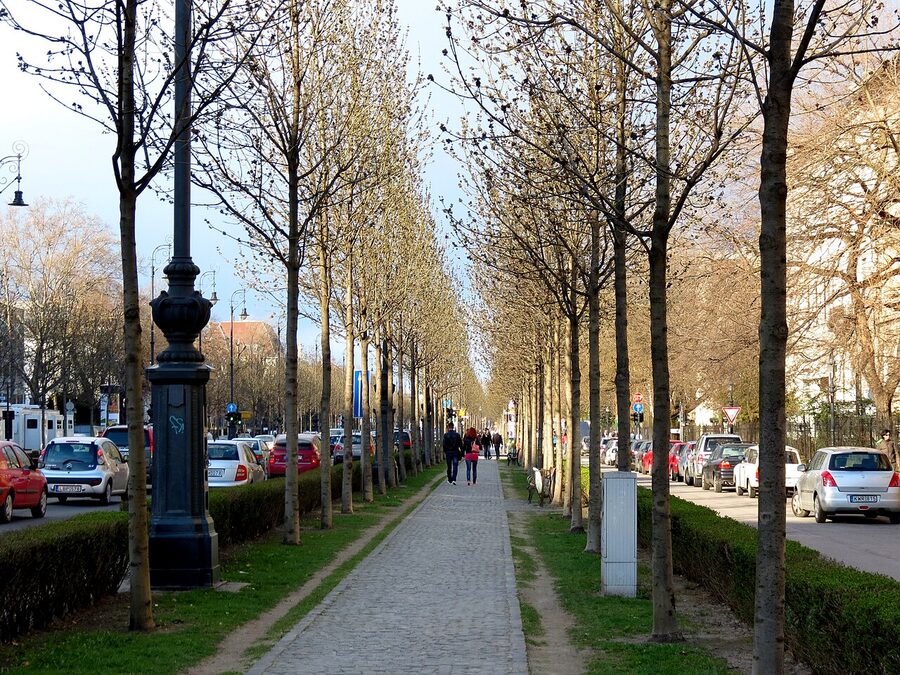
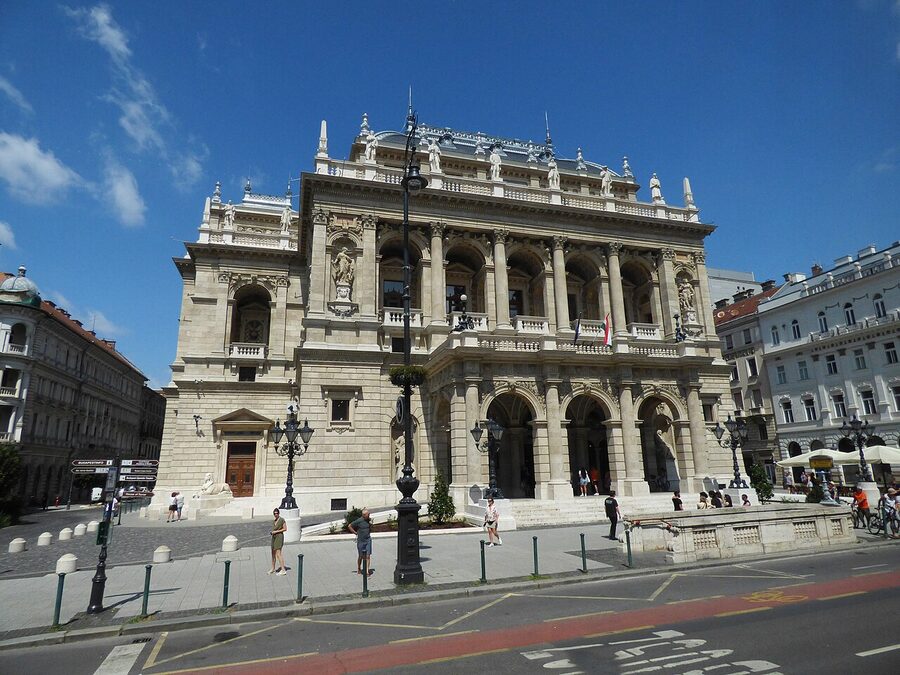
This is the showpiece of the land leg. Andrássy is Budapest’s grand boulevard — a 2.5-kilometre UNESCO-listed stretch lined with neo-Renaissance palaces, embassies and the Opera House. From a bus window it photographs better than it walks, because the avenue is wide enough that the buildings telescope away nicely on either side.
_(13229312245).jpg)

At the top of Andrássy you arrive at Heroes’ Square, an enormous open space anchored by the Millennium Monument. The bus doesn’t stop, but it slows enough that you can see the seven mounted Magyar chieftains and the column of Archangel Gabriel that towers over the lot.
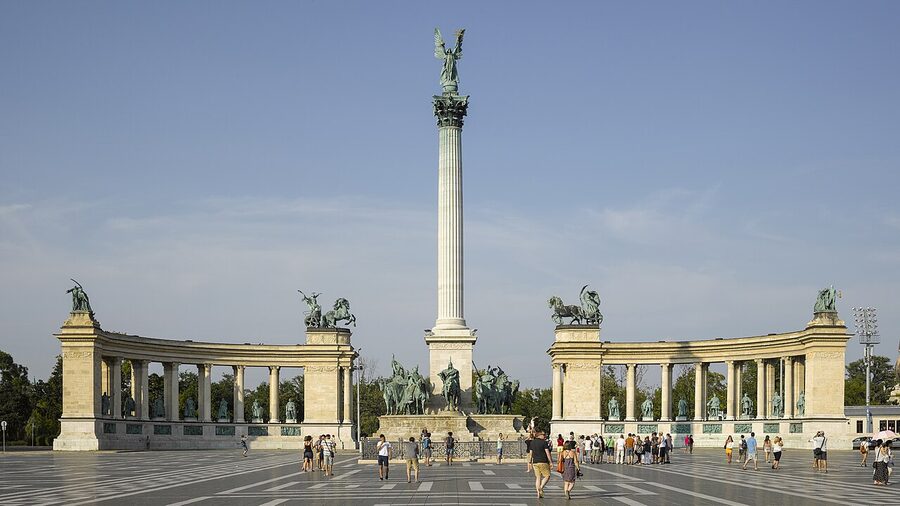

If you fell in love with Heroes’ Square from the bus and want to come back on foot, the City Park behind it has Vajdahunyad Castle and the Széchenyi thermal baths within a 10-minute walk. The bus doesn’t linger long enough to do justice to either, so a return visit is recommended.
The splash
After Heroes’ Square the bus loops back via Dózsa György Street, skirts the City Park, and drops down toward the river at a dedicated slipway just north of the inner-city stretch. You’ll feel the road tilt downward. The guide will talk over it. The driver kills the speed and the bus rolls forward at walking pace.
The actual entry into the water lasts about ten seconds. There’s a small jolt as the wheels disengage and the propeller picks up. Water sluices up the windscreen — usually halfway up the glass, occasionally over the top. People cheer. Phones come out. Someone screams. It’s a moment.
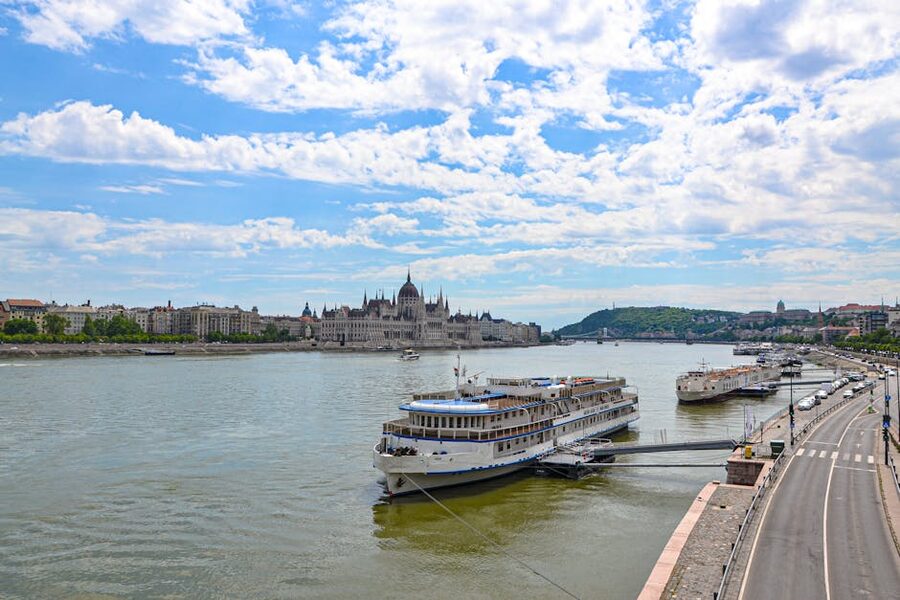
Ten seconds of theatre. If you’ve watched the YouTube clips and you think the splash is going to be more dramatic — it isn’t. It’s the geometry that makes it special, not the spray. A vehicle that was on a road thirty seconds ago is now a boat. That’s what you bought, and that’s what you get.
The river leg
This is where the price-per-minute reverses. The land sections are pleasant and you’ve covered most of those sights via metro or hop-on hop-off if you’ve been in Budapest a couple of days. The river leg you can’t reproduce — the only other way to see Parliament from the water is on a regular Danube cruise, which doesn’t include any of the land-side narration or the splash entry.
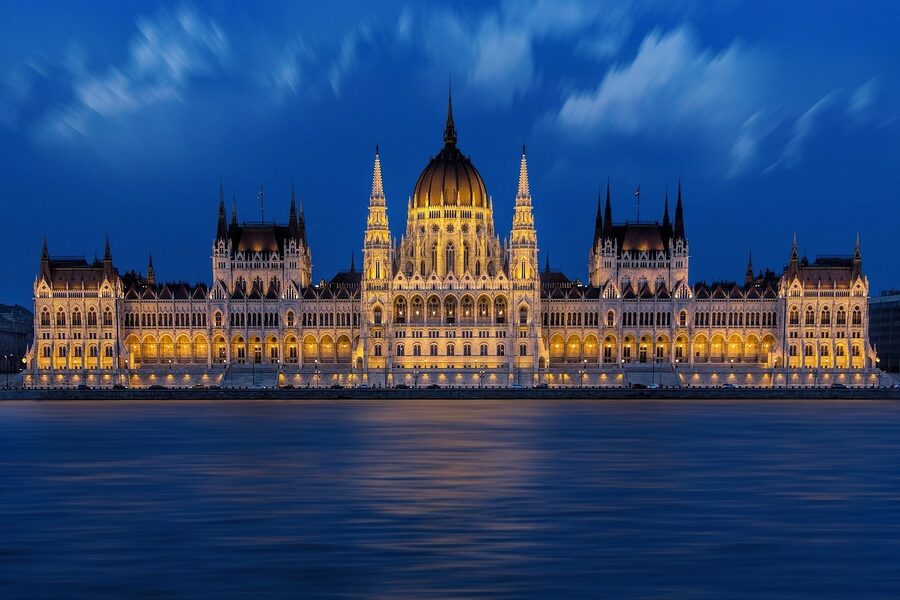
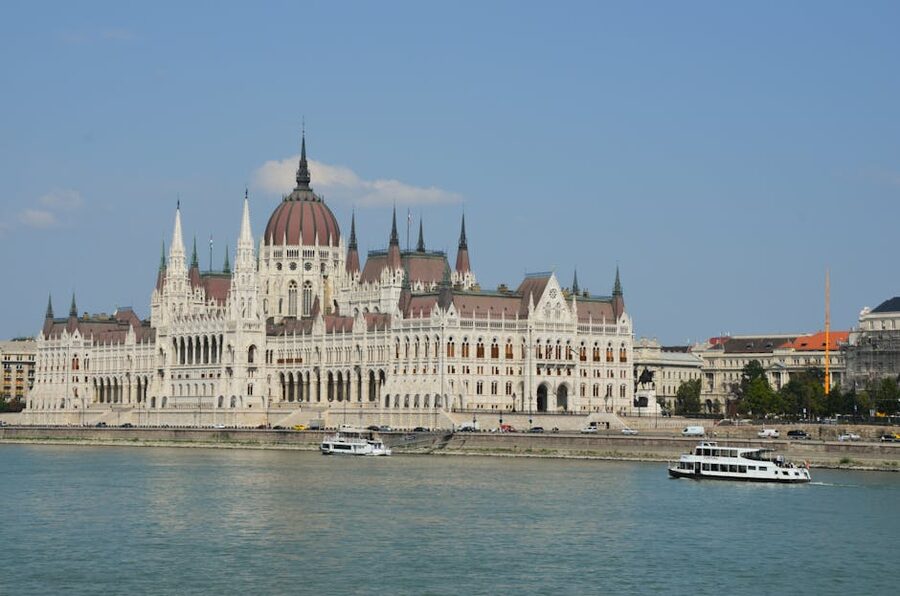
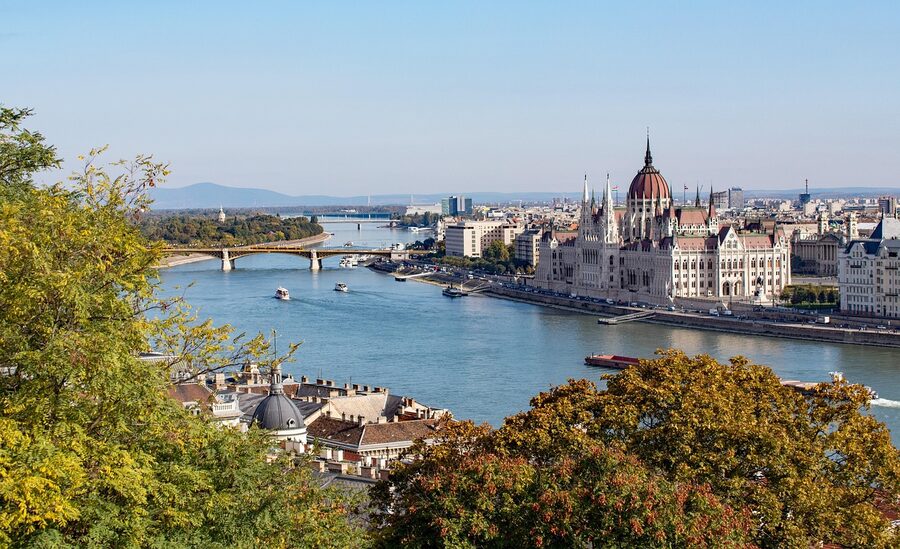
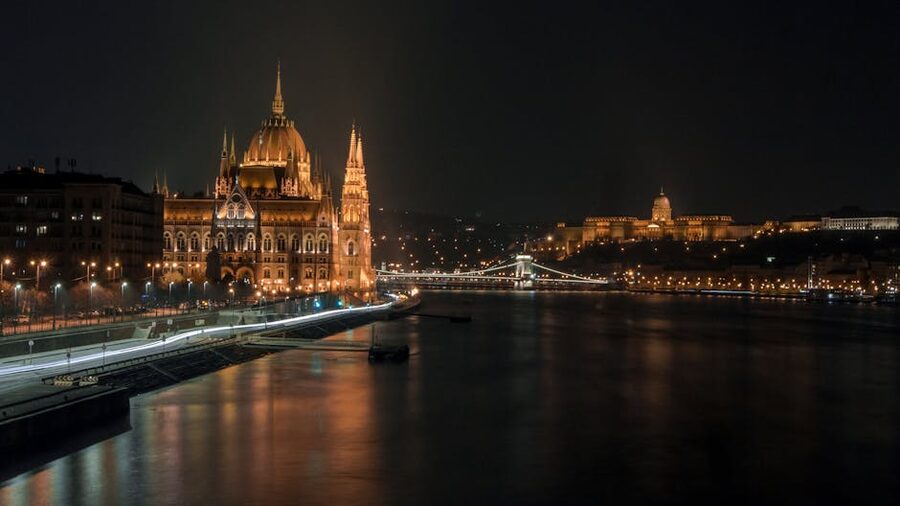
You head upstream on the Pest side. Parliament dominates the right-hand windows for a solid four minutes. The bus moves slowly enough that you can put the phone down between the wide shot and the dome close-up. The guide drops the line about 96 metres being the height of the dome and 96 being the year of Hungary’s founding (896 AD). It’s a neat coincidence, true, and worth knowing.
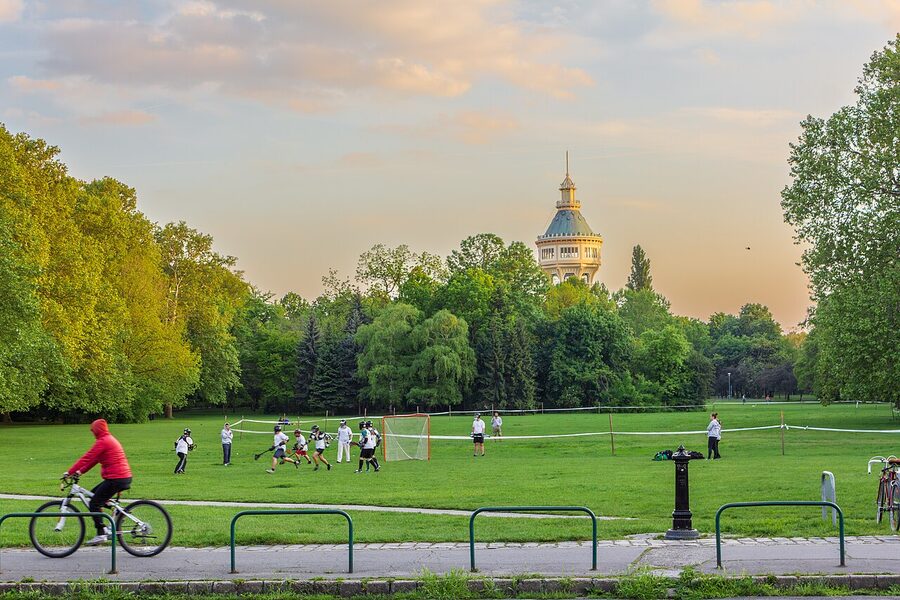
You round the southern tip of Margaret Island, catch a glimpse of the Margaret Bridge upstream, and turn around to head back south. On the full tour you keep going past the original splash point and continue downstream toward Buda Castle. The short tour stops here.
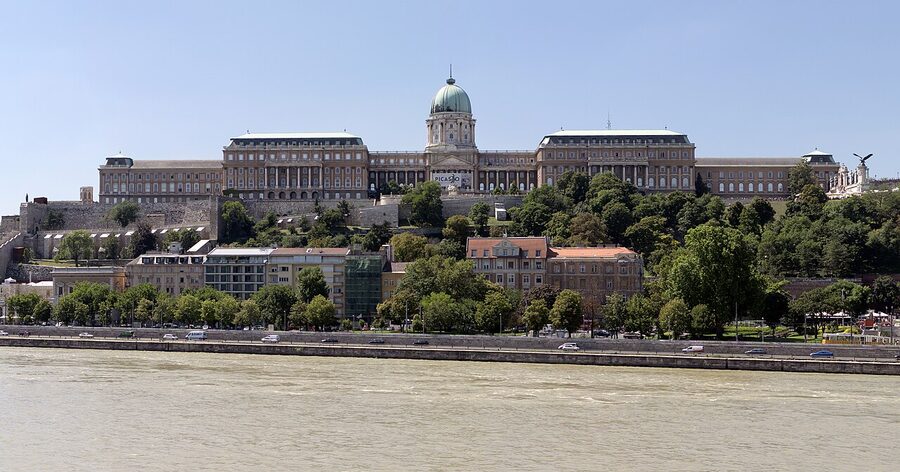

If you have time after the tour, getting up to Buda Castle on foot is the obvious follow-up — you’ve just seen it from the river, you may as well see the river from it. The funicular at the Pest end of the Chain Bridge does the climb in two minutes.
The One Tour to Book
There is only one operator, so the recommendation is simple. The product to book is RiverRide’s full tour — the 1.5‑hour version — unless one of the specific reasons above (kids, time, budget) pushes you toward the short tour.
1. Budapest: Floating Bus Tour by Land and Water — €29 / €39

This is the only product. RiverRide runs both the 50‑minute short tour (€29, 10:30 daily) and the 1.5‑hour full tour (€39, 11:30 / 14:00 / 16:00 daily, plus 17:30 on Saturdays) on the same yellow amphibious bus. Live commentary in seven languages on board, audio in thirteen, and the splash entry is the same regardless of ticket type. Our full review covers the seating advice, the maintenance-day calendar quirk and the family-friendly read on the noise level.
Honest count: there is one floating bus operator in Budapest. RiverRide owns the slipway, the licence and the only amphibious vehicle running. Other listings you’ll see on Tiqets, Klook or Viator (including the “Exclusive Rent” private-charter version) are the same product on different booking platforms — same vehicle, same departure time, same crew. Compare the calendar view across two of them on busy weeks; otherwise just book on whichever platform you already have an account with.
If the Floating Bus Is Sold Out
It happens, especially July and August, especially at the 14:00 and 16:00 slots. Three honest alternatives:
A regular Danube cruise covers the same Parliament-and-Castle stretch from the water. No splash, no land leg, but you get an hour on the river for under €20 and most of them have a free drink. If the river views were the part you wanted, this is functionally the same thing minus the gimmick.
The hop-on hop-off bus handles the land coverage. You won’t get the river leg, but you’ll cover Andrássy, Heroes’ Square, and a chunk more besides — the routes typically include Castle Hill, the Citadella and the Buda thermal baths, none of which RiverRide touches.
The Budapest bike tour is the third option if you want a guided land tour with proper depth — three to four hours rather than 90 minutes, and the guide stops to explain things you’ll only see for two seconds from the bus. Different shape of day, but it’s the next-best “see the city under guidance” option once RiverRide is full.

What to Bring and What to Skip
Don’t overthink this. The bus is enclosed, heated in winter, air-conditioned in summer. You will not get rained on, sunburnt, or drenched by the splash. The water spray hits the outside of the windscreen, not you.
Bring a phone with charge — the river leg is photo-heavy and you’ll want both wide shots and the occasional video of the splash entry. A light jacket if you’re on the 17:30 Saturday slot in autumn (the windows fog up if it’s cold outside, but the cabin stays warm). A bottle of water — the bus doesn’t sell drinks, and you’ll be on board 90 minutes without a toilet stop.
Skip: tripods, selfie sticks longer than your forearm, full-frame cameras on neck straps. The aisle is narrow and the gaps between rows are tight. Skip wheelchairs unless you can manage stairs to the bus entrance — RiverRide is not wheelchair-accessible. Skip strollers; fold them and stow them under the seat if you must bring one.
The big skip: don’t book RiverRide and a separate Danube cruise on the same day. You’d be paying twice for substantial overlap. If you want extra river time, book the full RiverRide tour and then either a sunset cruise or a dinner cruise for a different evening.
When to Book and Pricing Reality
Pricing has been steady around €29 (short) and €39 (full) for the past two seasons. The platforms occasionally run small promo discounts — typically 5-10% — but they don’t materially change the maths. There’s no real cheap-day-of-week trick; demand is steady across the week, with weekends being slightly busier.
The pricing surprise is the family ticket. Two adults plus two kids under 12 typically lands around €110 on the full tour, which works out cheaper per head than two solo adult tickets. Kids under 3 are free if they sit on a parent’s lap, but the tour is a long sit for a toddler — the short tour is the smart pick for that age group.
If you have a Budapest Card, RiverRide isn’t included. The card knocks 10% off if you book at the office in person, which is the only real reason to walk up rather than book online. Worth doing the maths if your card was bought separately and you can save a couple of euros.
Year-Round, With Caveats
The bus runs all twelve months. The exceptions are extreme-weather events: the Danube ices over occasionally in deep winter (rare, but it happened in 2017), the river floods after spring snowmelt, and the slipway can become unusable when water levels fall too low in late summer drought years. Each of these can take RiverRide off the schedule for a few days at a time.
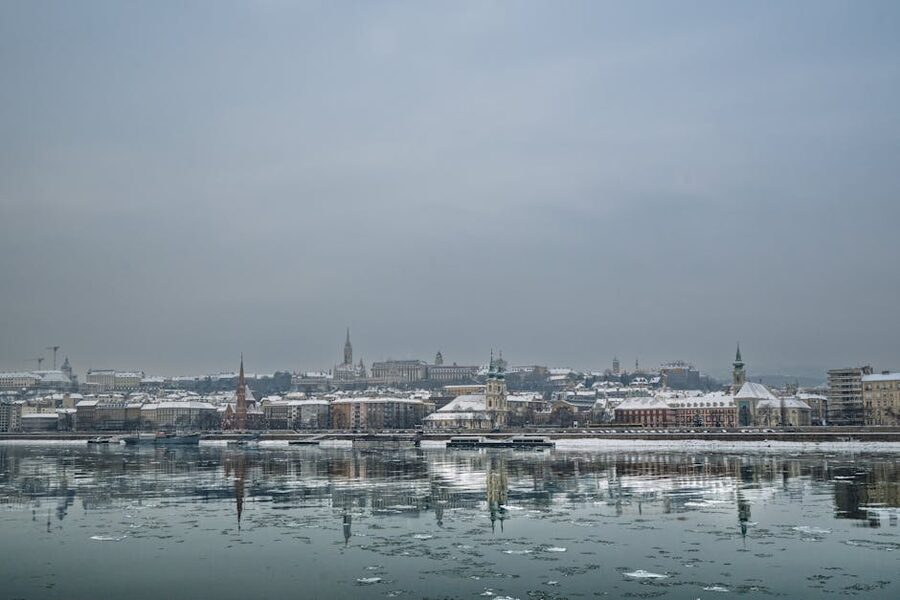
The reliable months are May, June, September and early October — warm enough to enjoy the windows-shut cabin, cool enough that the Danube is at its photogenic mid-river level, and outside the July-August holiday rush. Late autumn through early spring works for visitors who want quiet — the 11:30 full tour rarely sells out in February — and the city looks dramatic with snow on the Buda hills. Just check the operating calendar 24 hours before; maintenance days cluster more in the off-season.
The other caveat: Budapest weather. RiverRide runs in rain. It runs in light snow. It does not run in thunderstorms (lightning over a metal vehicle on water is a no), and it does not run in fog so thick that other Danube traffic can’t see the boat. Both are rare, both are decided morning-of, and the operator emails ticket-holders proactively when a slot is cancelled.
Practical Things People Forget
The audio guide is on every seat. If your group includes kids and adults who want different languages, you can each pick your own. The live guide at the front speaks the language of the majority booking — usually English, sometimes German.
The seating layout is two-and-two with a centre aisle. The right-hand side has the better view going up Andrássy (Opera House, palaces) and the better view downstream on the river (Parliament, Margaret Island). The left-hand side has the better view coming back through the Pest grid (Vörösmarty Square) and the better view of Buda Castle on the way back from the splash. Net: right-hand side is marginally better if you’re picking. Front rows always beat back rows for windscreen visibility during the splash.
There is no luggage hold. Backpacks fit under the seat. Cabin-sized roller bags do not — you’ll be asked to leave them at the office and pick them up after the tour, which works but eats a few minutes either side.
Is It Worth It?
Mostly yes, with one caveat. The novelty value is real — there are not many cities where you can do this, and Budapest’s version is the original European one. The view content is genuinely good: Parliament from the river is a top-five Budapest sight, and the Andrássy-and-Heroes’-Square land leg ticks off the second-tier sights efficiently. At €39 for the full tour, the ratio of memorable moment to euro spent is solid.
The caveat: if you’ve already done a long Danube cruise and a hop-on hop-off, RiverRide will feel duplicative for half its run. The land coverage you’ve seen, the river views you’ve seen — what’s new is fifteen seconds of slipway entry. That’s a fair amount of money for fifteen seconds of theatre. People who book it as their first guided experience in Budapest get the most out of it; people who book it as their fourth tend to underrate the value. Sequence matters.
If you can only do one thing combining land sightseeing and a Danube cruise, RiverRide is the smart pick — it’s not the absolute best at either job, but it’s the only product that does both at once with the splash on top.
Where Else to Read
The Budapest cluster on the site has the rest of what you’ll need for a long weekend. The standalone Danube cruise guide is the obvious companion piece — book that for a different day if you want a longer river session, or as the backup if RiverRide is full. The Parliament tour guide picks up where the floating bus leaves off — you’ve seen the building from the water; the inside is twice as good. For the area around Heroes’ Square, the Széchenyi thermal baths guide is the natural follow-up — they’re a 10-minute walk through the City Park. And for getting up to the other side of the river, Buda Castle and the Buda Castle cave tour are the two ways to spend an afternoon on Castle Hill. If you want a Budapest curiosity at the opposite end of the spectrum from the floating bus, the vampires and myths night walk is its night-time spiritual cousin — same audience, totally different mood.
For the rest of the city loop on land, the hop-on hop-off guide is the broader-coverage land alternative, the Budapest bike tour is the deeper-context land alternative, and the St Stephen’s Basilica and Gellért thermal baths are the two stops that round out a three-day Budapest itinerary if RiverRide is your second-day morning. Pick whichever combination matches the time you have.
Some links in this guide are affiliate links. If you book through them we may earn a small commission, at no extra cost to you. We only recommend tours we’d take ourselves.