
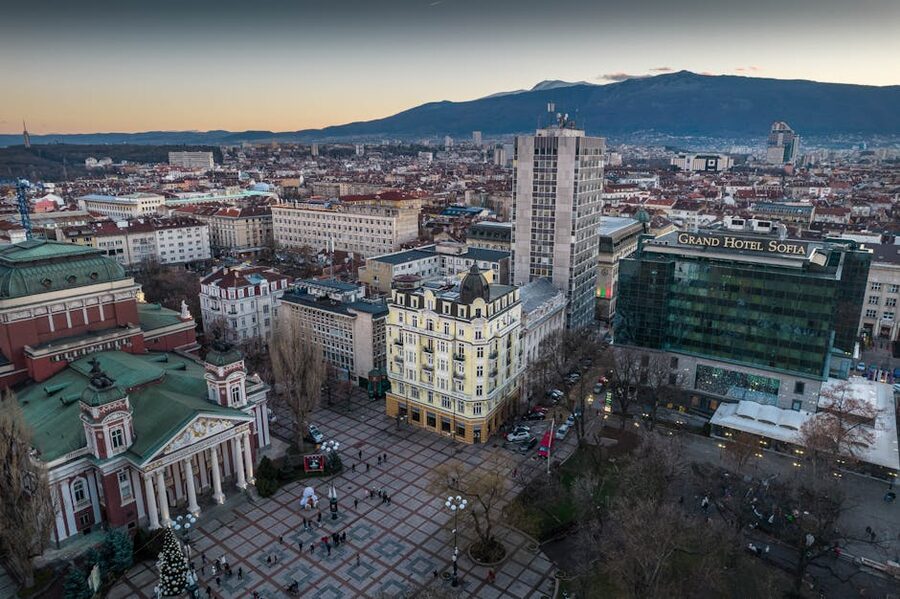
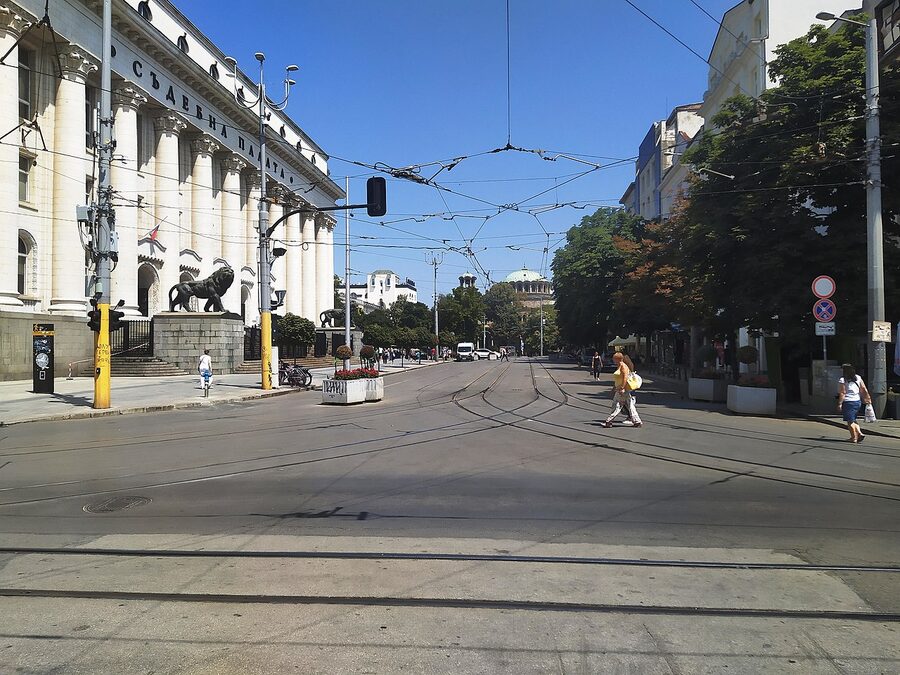
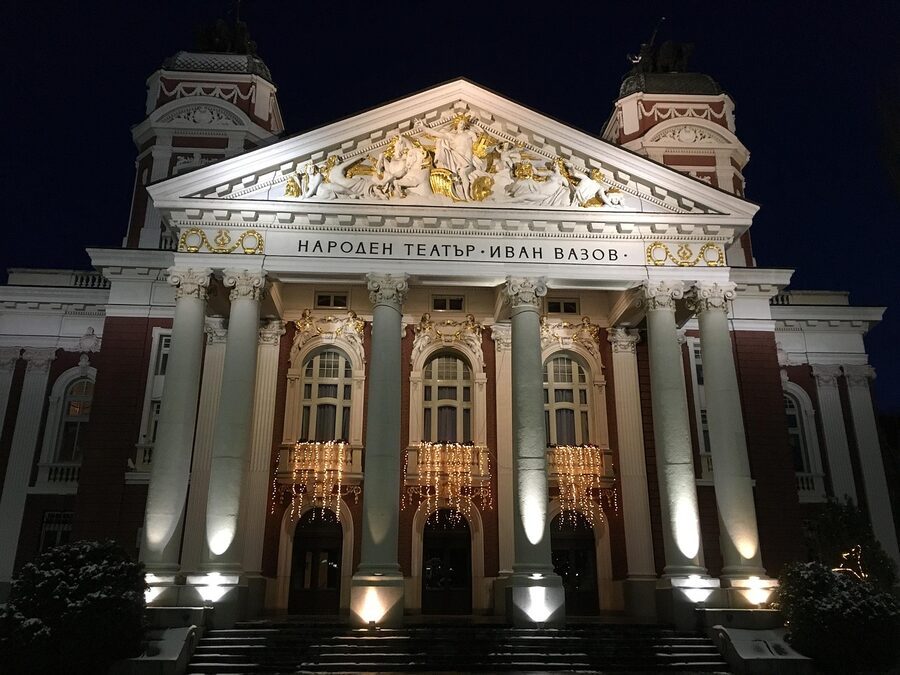
Stand outside the National Theatre on a bright morning, with the yellow-brick boulevard sweeping away under your feet, and Sofia looks like any handsome Belle Epoque capital. Walk three blocks north, and the city changes its mind. The boulevard ends in a Stalinist plaza of three matching limestone slabs, and right beside them, an Ottoman mosque keeps quietly doing its job. That collision is the whole tour.
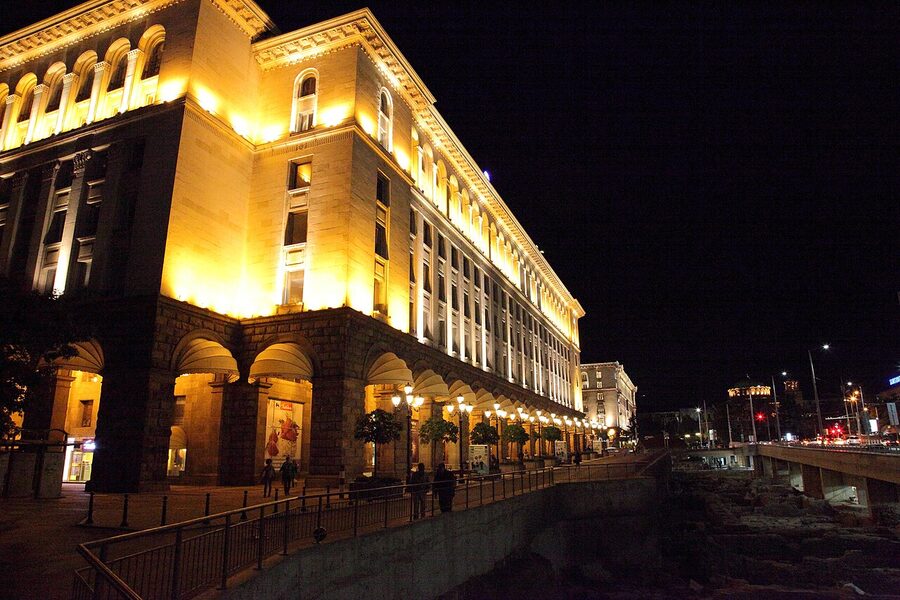
_ZUM_in_Sofia_at_night_PD_2012_03.JPG)
This is the easiest way to make sense of Sofia in three hours. The communist tour is a short, walkable history lesson covering the 45 years (1944 to 1989) when Bulgaria belonged to the Eastern Bloc, told through the buildings, plazas, and monuments still standing in the city centre. You don’t need any prior knowledge. You do need flat shoes and an appetite for being slightly disturbed by what you learn.
.jpg)
Alternative: 365 Communist Walking Tour of Sofia, $22. Same price band, run by the city’s veteran free-tour outfit.
- What the tour actually shows you
- The Sveta Nedelya assassination story
- The TZUM and the question of what shopping was like
- Book this tour
- 1. Sofia: Communist Walking Tour:
- 2. 365 Communist Walking Tour of Sofia:
- The Soviet Army Monument and why it keeps changing colour
- Was religion really banned
- The State Security tunnels and other ghost stories
- The National Palace of Culture and the Zhivkov family
- The 1300 Years monument that isn’t there anymore
- Where the tour ends and where you should go next
- Practical details and tips
- How this tour fits with the rest of your Sofia trip
- If you want a parallel experience in another capital
What the tour actually shows you
The route changes a little between operators, but the spine is the same. You start near Sveta Nedelya Cathedral or the Largo, walk a tight loop through the city centre, and finish either at the Soviet Army Monument in Knyazheska Garden or near the National Palace of Culture. Most stops fit in a 1.5 km radius. Three hours, almost no breaks, your guide doing about 90 percent of the work.
_20180224.jpg)
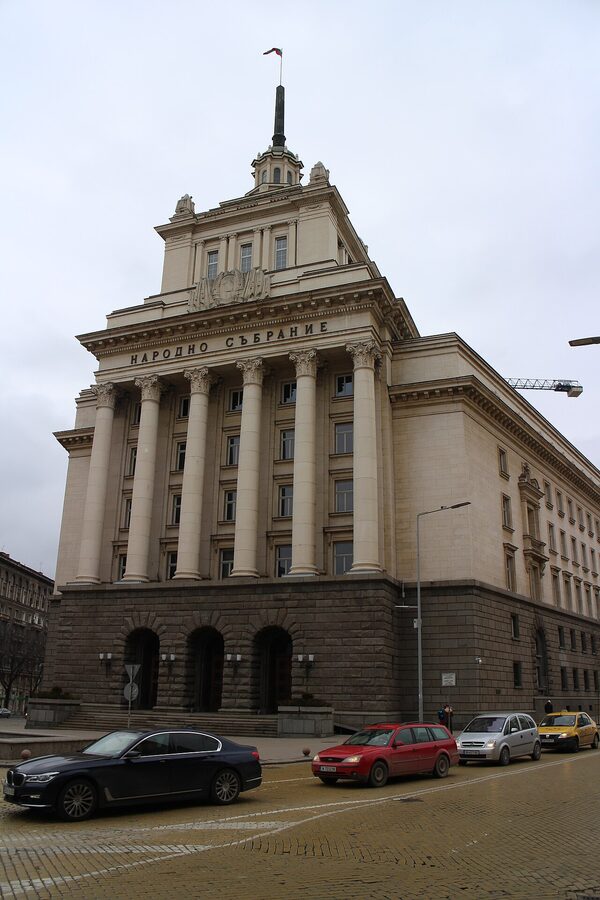
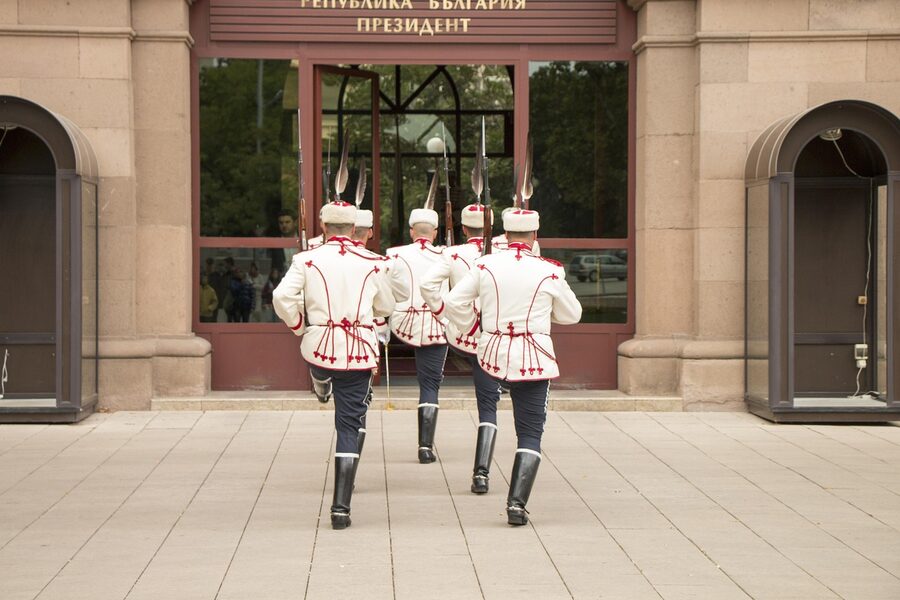
The Largo is where the tour finds its emotional gear. Three buildings, all faced in the same yellow stone as the older boulevards (a deliberate softening choice by the architects), arranged around a long pedestrian rectangle. The middle one was the Communist Party HQ. The eastern wing now holds the President’s office and parts of the Council of Ministers. The western wing is TZUM, the old state department store. Stand in the centre and you can see all three at once, with the Banya Bashi Mosque bobbing into the frame behind you. Six centuries of overlapping power in a single 360-degree turn.
The Sveta Nedelya assassination story
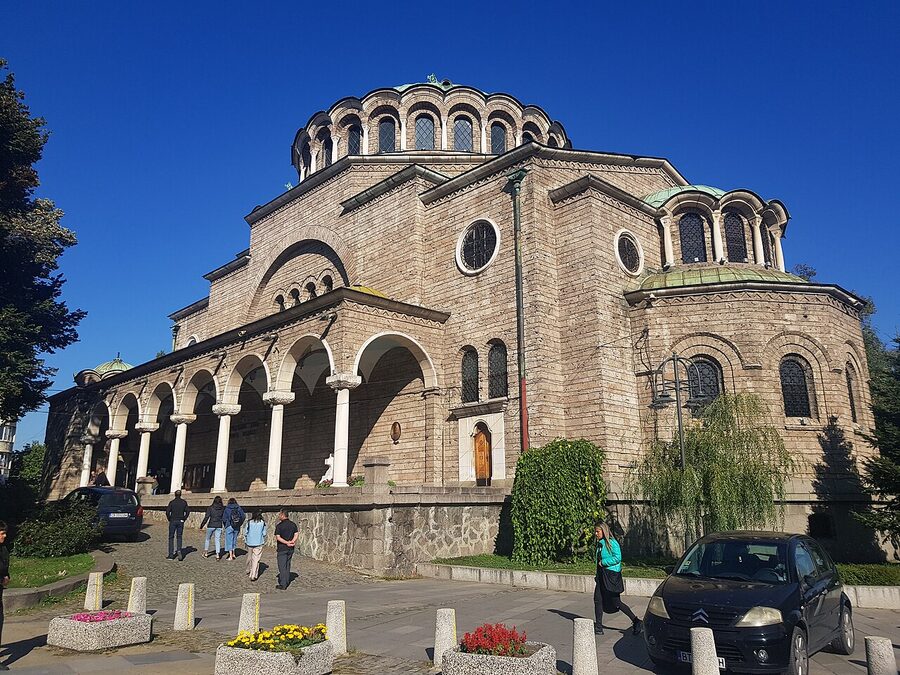
Most tours stop in front of Sveta Nedelya Cathedral early on, partly because it’s beautiful and partly because the worst Bulgarian terrorist attack of the 20th century happened there. In April 1925, communist agents detonated a bomb in the dome during the funeral of a general, hoping to kill King Boris III. The king wasn’t there. Around 150 people were killed and hundreds wounded. The reprisals went on for months. It’s a heavy story, but it sets up the politics of the next twenty years cleanly: Bulgaria’s communists weren’t a sudden post-war import, they had a long, violent prehistory.

The TZUM and the question of what shopping was like
TZUM (Tsentralen Universalen Magazin, the Central Universal Store) is now a normal mall with a Hugo Boss and a Starbucks. In 1989 it was the only place in Sofia where you might find a stack of imported coffee or a French perfume, and even then only sometimes. The tour usually pauses at the corner so the guide can describe the mechanics of communist-era shopping: the fixed-price shelves, the empty windows, the rumours about a delivery that would send everyone running to queue up. If you ever wondered why your Bulgarian friends’ parents collected plastic bags well into the 2010s, this is the part of the tour that explains it.
Book this tour
The two distinct walking-tour products in Sofia trace almost the same route at the same price. The choice comes down to which operator’s voice you’d rather spend three hours with. Both are good. Neither sugarcoats. Neither is theatrical about the dark stuff.
1. Sofia: Communist Walking Tour: $21
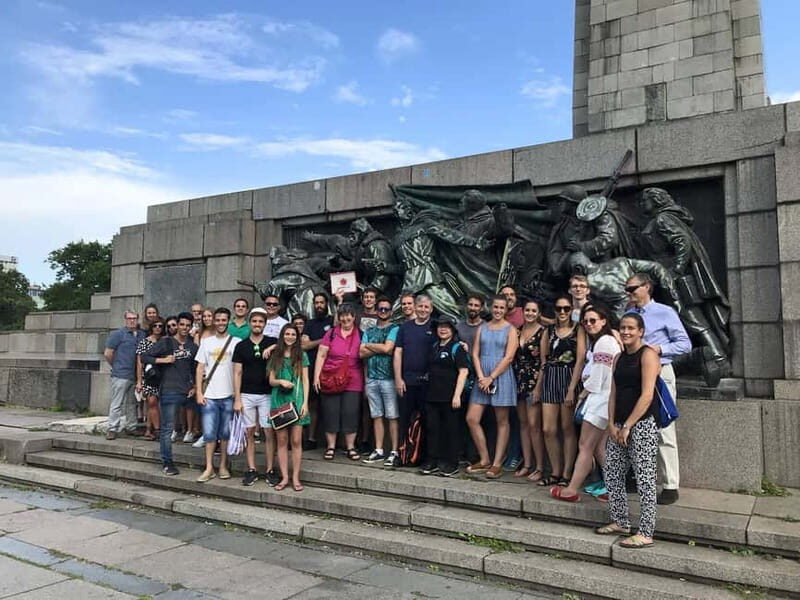
The most-booked of the two. Three hours, a route that takes in the Largo, TZUM, the Soviet Army monument, and the area around the National Palace of Culture, with the guide weaving in personal family stories from the regime years. Our review of this tour goes into how the guides handle the politically tricky parts (they’re balanced, not preachy), which is the main reason it edges ahead.
Check Availability
Read our full review
2. 365 Communist Walking Tour of Sofia: $22
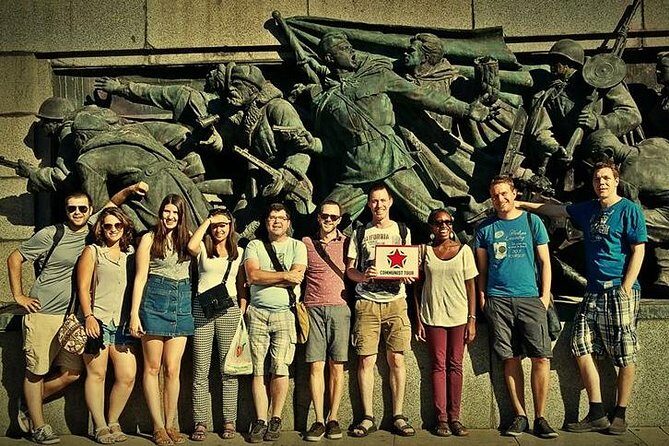
The veteran option. 365 Association has been running walking tours in Sofia since 2010 and the communist tour is their most senior paid product. Slightly more lecture-driven than the GetYourGuide version, with more dates and statistics, less family memoir. Our full review gets into when each style suits which kind of traveller.
Check Availability
Read our full review
The Soviet Army Monument and why it keeps changing colour
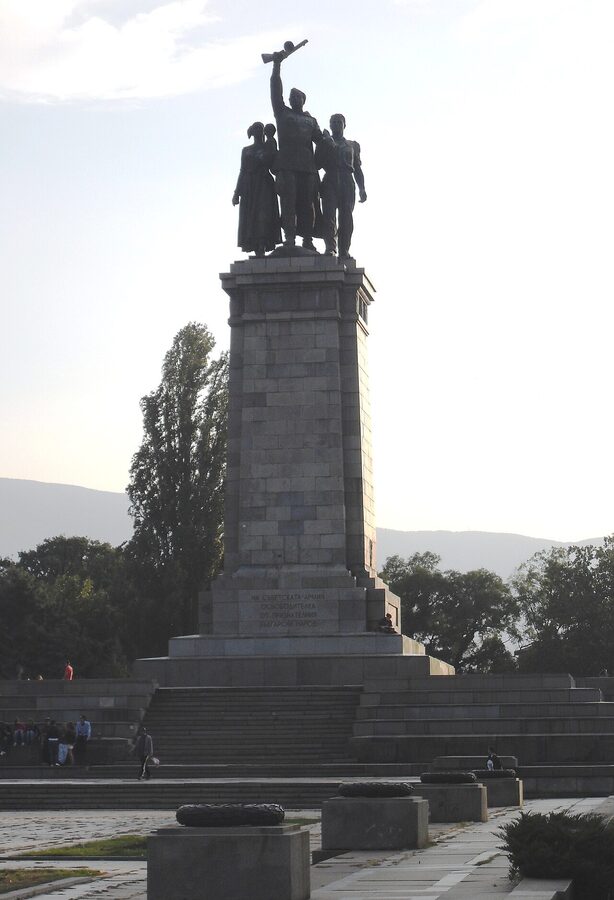
This stop is the most photographed of the tour, and the most argued about. The monument went up in 1954 to thank the Soviet Red Army for its role at the end of WWII. It’s a 37-metre granite column with a Red Army soldier and two civilians at the base, plus a long side relief showing socialist workers, peasants, and soldiers marching forward together. From a distance it’s a textbook piece of Stalinist monumental art. From three feet away, it’s been one of the most contested objects in Sofia for the last fifteen years.
.JPG)
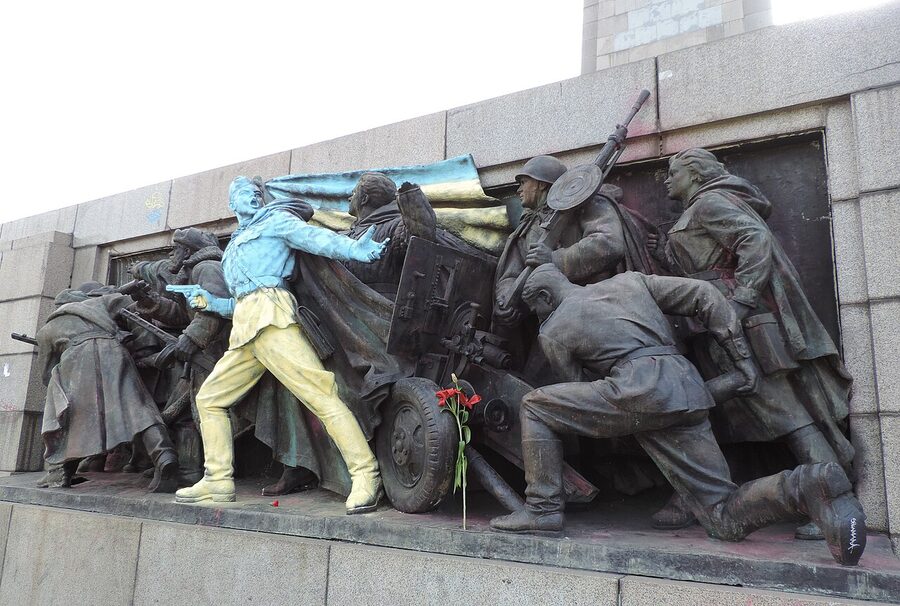
The side relief has been repeatedly turned into a political canvas overnight. In June 2011 someone painted the marching soldiers as Captain America, Superman, the Joker, Ronald McDonald, and Santa Claus, with a caption underneath reading “abreast with the times.” In August 2013 the monument was washed in pink to mark the anniversary of the 1968 Prague Spring with an apology to Czechoslovakia. In February 2014 the same figures came up overnight in the blue and yellow of the Ukrainian flag, with “Glory to Ukraine” in Cyrillic. Bulgarian authorities clean each version off, the artists come back. The cycle is part of the tour now.

The Bulgarian government began a partial dismantling of the monument in late 2024, removing the upper figures while leaving the column for further debate. By the time you read this, the silhouette may already have changed. Ask your guide what’s left when you book, and what’s been moved, because the situation has shifted three times since the war in Ukraine started. If you’re interested in how other capitals have handled the same question, our Third Reich tour in Berlin covers an even more complicated case, and the Berlin city walking tour takes you past several memorials that went through similar removal debates in the 1990s.
Was religion really banned
This was the question I was wrong about going in. I assumed Bulgarian communism worked like Soviet communism, with churches closed and priests imprisoned. The reality, your guide will explain, is messier and more depressing. Churches stayed open. People could attend, baptise children, marry, bury their dead. But the State Security Committee (Bulgaria’s KGB equivalent) kept lists. Going to church didn’t get you arrested. It just quietly killed your prospects, your child’s university place, your spouse’s promotion. So most people stopped going. The buildings filled up briefly at Easter and Christmas and stayed empty in between.
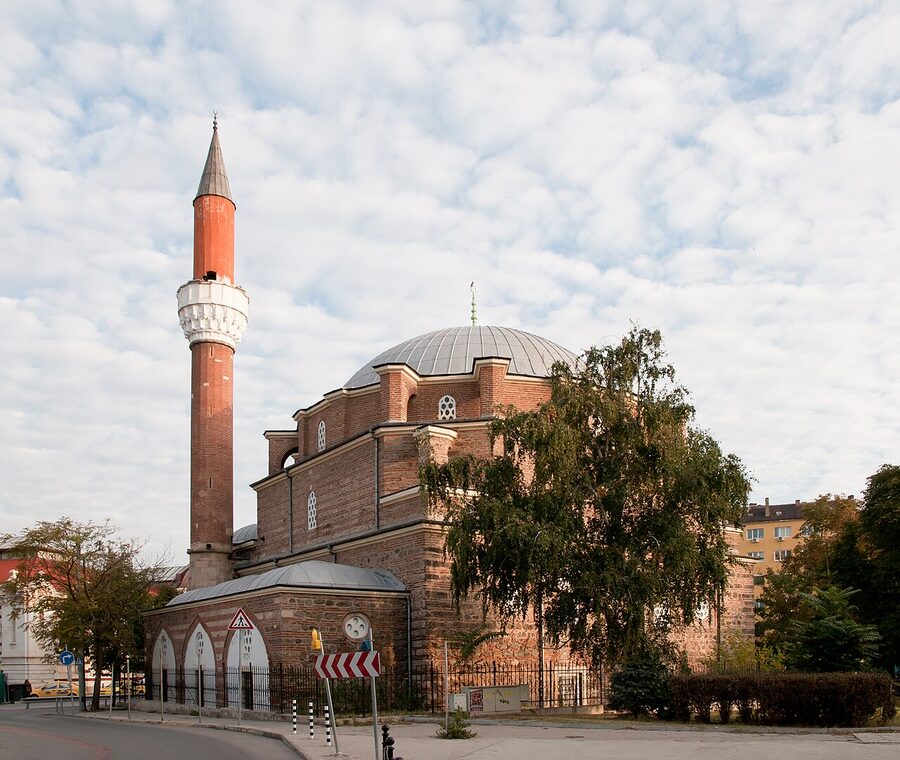

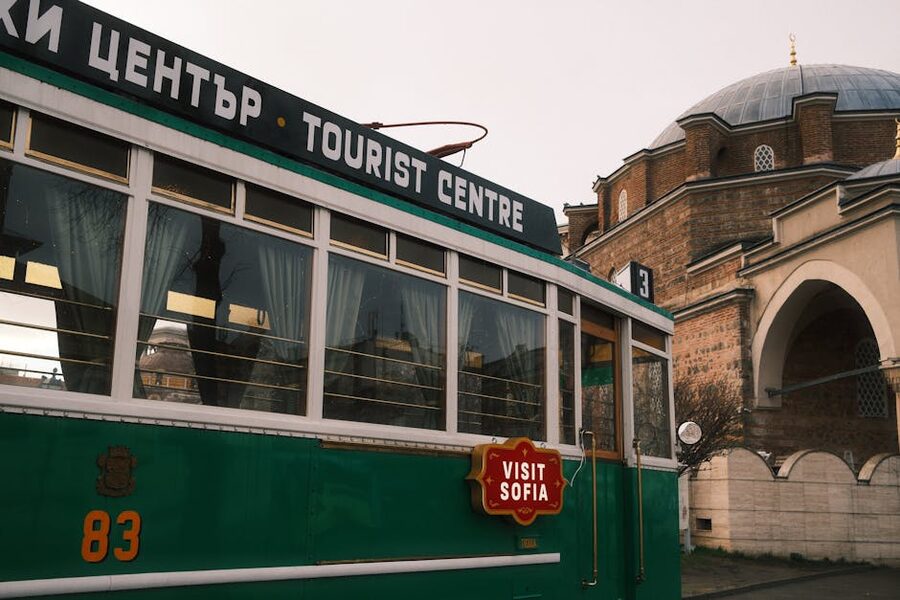
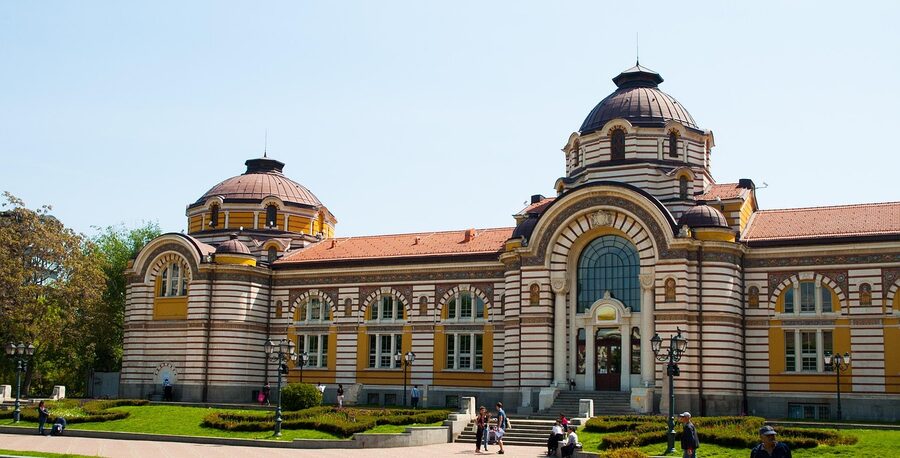
The mosque has its own version of this. Sofia’s Muslim community shrank during the regime years, particularly after the 1984 forced-name-change campaign that gave Bulgarian Turks Slavic names overnight. Banya Bashi was reduced to a single working mosque for a city that had once had a dozen. It’s still the only working mosque in central Sofia today.
The State Security tunnels and other ghost stories
Every guide has at least one tunnel anecdote. The State Security building near the centre is rumoured to have been connected to a network of underground passages, some converted from old Sofia sewer infrastructure, some dug specifically. The unofficial story is that some of those tunnels were absorbed into the metro when Sofia built its first underground line in the 1990s. The official story is that there’s nothing to see here.
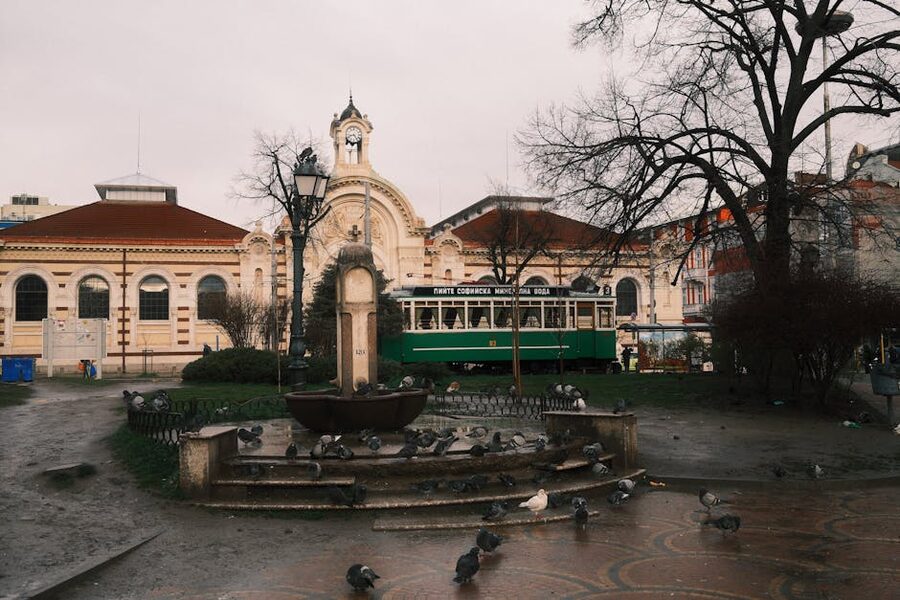
The interesting bit isn’t whether the tunnels exist (probably yes, in some form) but how the rumour functions. People in Sofia in the 1980s believed the whole city centre was wired and watched. Whether or not it actually was, the belief shaped behaviour. Your guide will probably retell a few jokes that landed Bulgarians in interrogation rooms, and the punchlines were always things you’d say to a friend at a dinner table without thinking. That’s the thing the tour does best: it makes the surveillance state feel claustrophobic in the way it actually was, rather than spy-thriller-cinematic.
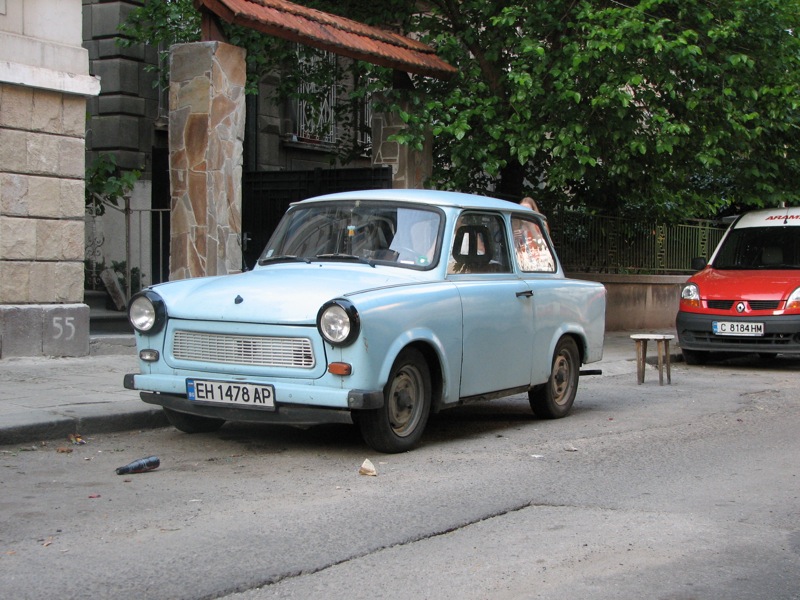

The National Palace of Culture and the Zhivkov family
Most tours end somewhere near the National Palace of Culture (NDK in Bulgarian), the giant 1981 cultural complex on the south side of the city centre. NDK was the personal project of Lyudmila Zhivkova, daughter of the long-serving communist leader Todor Zhivkov, and a fascinating figure in her own right: minister of culture in her early thirties, devoted to Indian philosophy and Roerich, dead at 38 under circumstances Bulgarians still argue about (heart attack, suicide, KGB poison, take your pick). She got NDK built in three years, supposedly for the 1300th anniversary of the founding of the Bulgarian state.
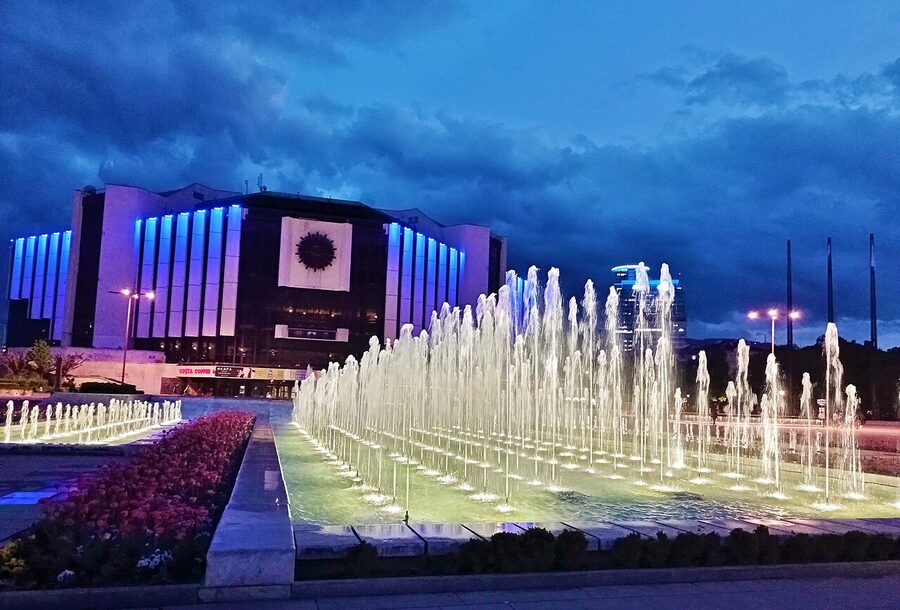
NDK is the moment in the tour when the politics complicate. Yes, the building was a propaganda project. It was also the venue that brought Pink Floyd, the Vienna Philharmonic, and dissident jazz to Sofia. Bulgarians had genuine affection for NDK in a way they never had for the Largo. Asking your guide what they personally remember from inside the building (school assemblies, first-ever concerts, Christmas celebrations) is usually how you get the most interesting unscripted bit of the whole afternoon.
The 1300 Years monument that isn’t there anymore
You’ll hear a lot about a monument that no longer exists. The “1300 Years of Bulgaria” sculpture stood in front of NDK from 1981 until it was dismantled in 2017. It was widely disliked, voted “ugliest monument in Bulgaria” in multiple polls, and crumbling so badly by the 2010s that chunks of it were falling off. The empty pedestal area is now used for the new “Saint Sofia” replacement that’s still in design competition. It’s a useful stop because it lets your guide talk about how Bulgaria has actually dealt with communist-era public art: not by smashing it triumphantly, but by quietly letting it weather and then taking it down when nobody’s looking.
Where the tour ends and where you should go next
Most tours wrap up either at NDK or back near the Largo. If you have any energy left, three follow-ups extend the experience nicely.
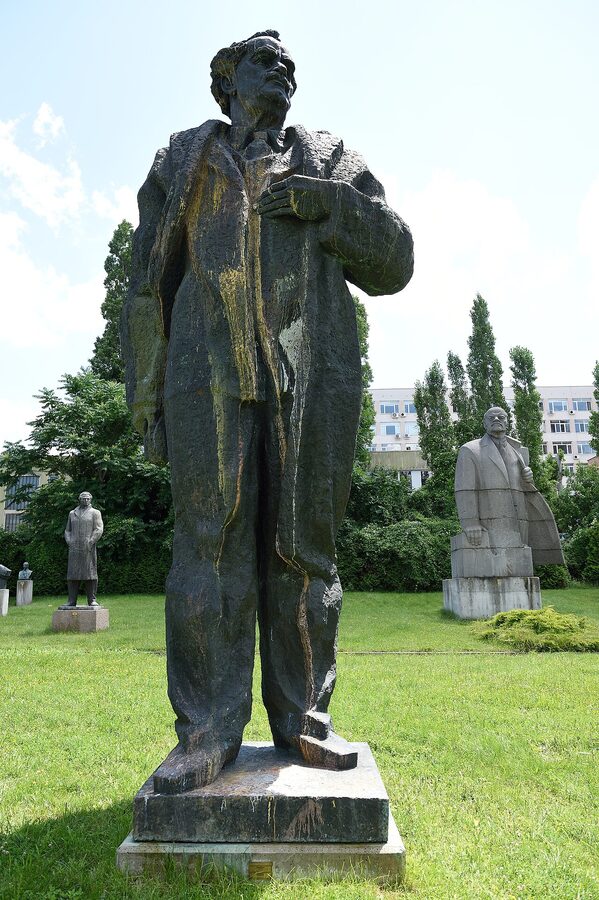

The first is the Museum of Socialist Art, in the southern outskirts of the city. It’s a 15-minute taxi ride and most walking tours don’t include it. The outdoor sculpture garden has the original Lenin from Independence Square, the original red star from the Party HQ, and dozens of socialist-realist statues quietly arranged like guests at a deeply awkward party. Entry is around 6 leva. There’s an indoor gallery too, which rotates exhibitions but is worth the extra 30 minutes if it’s open. Tuesdays through Sundays, closed Mondays.
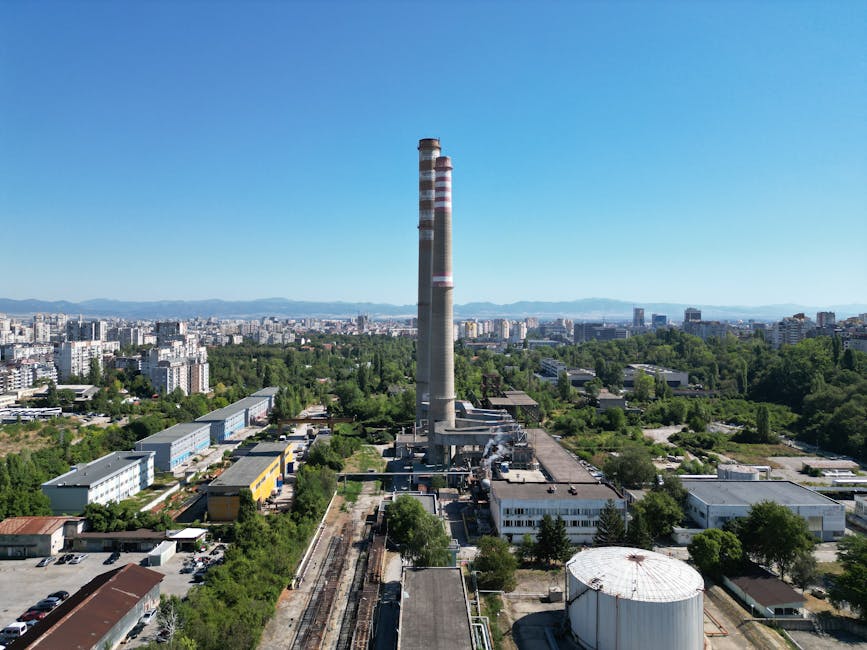
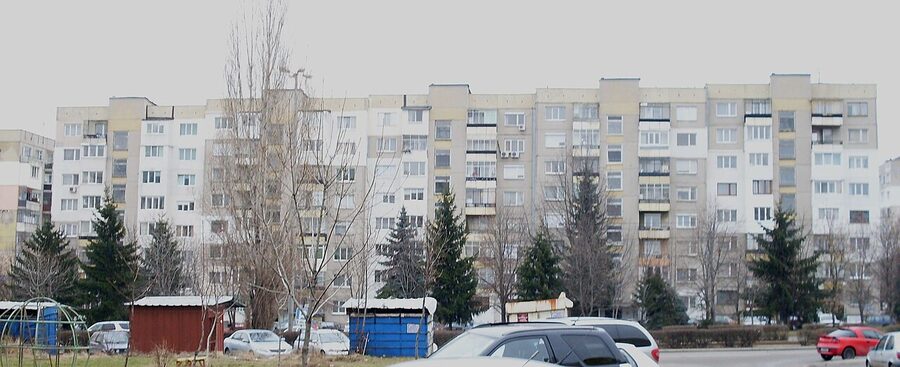
The second is the panelka neighbourhoods on the city’s outskirts, especially Mladost and Lyulin. These are the giant prefab concrete housing blocks that absorbed the rural-to-urban migration of the 1960s and 1970s. From a distance they look like the cliché of Eastern European socialism. Up close, they’re often softened by gardens, balconies stuffed with potted plants, and surprisingly green courtyards. Take any metro line out for two stops past the centre and you’ll see them. The contrast with the Largo is the point.

The third is just to walk the city centre again the next morning, alone, after the tour has changed how you read what you’re looking at. Bulgaria spent 45 years inside that system. The buildings are still talking about it.
Practical details and tips
You don’t need to be a history nerd to enjoy this tour. You probably should not bring children under about 12, because some of the stories are heavy (the assassination, the labour camps, the State Security stuff) and the 3-hour walking commitment will lose them by the second hour anyway. Older teenagers usually find it absorbing.
Wear flat shoes. The pavement around the Largo is polished granite, which gets slippery when wet. The Soviet Army Monument area is uphill on cobble. Pack a layer; Sofia sits on a plateau and the temperature drops fast in late afternoon, even in summer.
Both tours run year-round, but November to February the wind off the Vitosha massif makes the outdoor sections genuinely uncomfortable. Spring and autumn are the best windows. May and October specifically have the right combination of clear light and bearable temperatures for the long stops in front of the monuments.
Tip your guide. The standard for a paid tour like this is around 5 to 10 leva per person if you enjoyed yourself, more if the guide gave you a lot of personal stories. They earn it. These walking tours are one of the few jobs in Sofia where speaking decent English actually pays, and the good guides are doing the work of an unpaid history teacher for three hours straight.
Bring some cash. A few of the small stops (the public spring water tap, a coffee at a kiosk on the route, a postcard) are cash-only places. 20 leva is plenty.
How this tour fits with the rest of your Sofia trip
The communist tour pairs naturally with two other Sofia experiences. Do the standard free walking tour first if you’ve never been to the city; it covers the antiquity-to-Belle-Epoque layer that the communist tour skips. Doing them in reverse order also works, but the communist tour adds a depth to the rest of Sofia that’s hard to recover if you’ve already toured the surface. The other natural companion is a day trip to the Rila Monastery and Boyana Church; Bulgaria’s religious art tradition is a useful counterweight to the communist material, and it explains why the regime put so much energy into managing the church question.
If you’re spending more than three days in Bulgaria, two day-trip experiences from Sofia round out the picture nicely. The Seven Rila Lakes hike gets you out of the city completely, into the alpine zone where the regime built holiday camps for party cadres (some of which are still there as faded eco-lodges). And the Plovdiv day trip shows you a Bulgarian city that was always more cosmopolitan than Sofia, with a Roman amphitheatre, an Ottoman old town, and a different relationship to the same 45-year period.
If you want a parallel experience in another capital
Sofia’s communist tour is one of a small but excellent group of Eastern European walking tours that handle the same material in different ways. Bucharest’s Communism Walking Tour is the closest sibling, covering Ceaușescu’s Romania with a similar 3-hour format and an even darker subject (the Securitate, the systemic poverty, the 1989 revolution). Krakow has a different angle entirely: the Jewish Quarter tour in Kazimierz works the WWII and post-war Polish material together, and the layered history of one neighbourhood becomes the lens. And Berlin’s Third Reich tour, paired with the wider Berlin walking tour, treats the dual question of Nazism and East German communism as two layers of the same physical city.
Do them in any order. Each works on its own. Together, they’re the cheapest, most-walking-shoes way to understand twentieth-century Europe that I know of.
Disclosure: some of the booking links above are affiliate links. If you book through them we earn a small commission at no extra cost to you, which helps keep this site running. We only recommend tours we’d send our own friends on.