
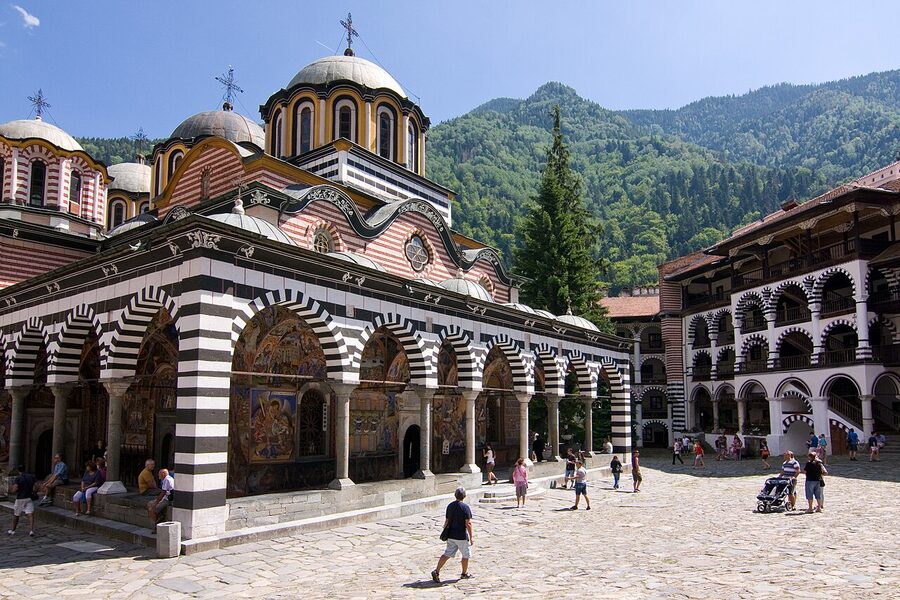
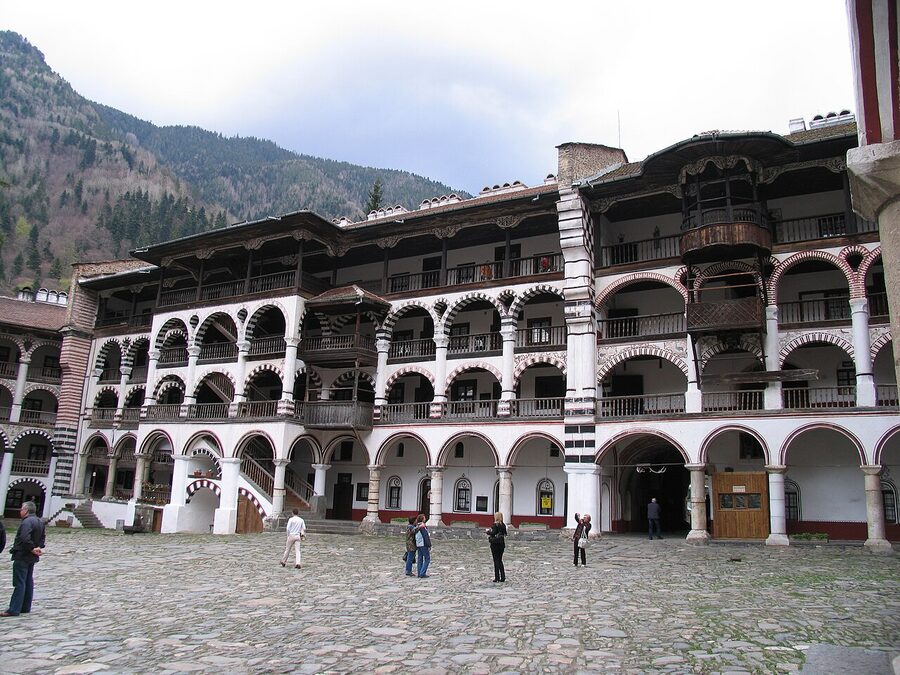
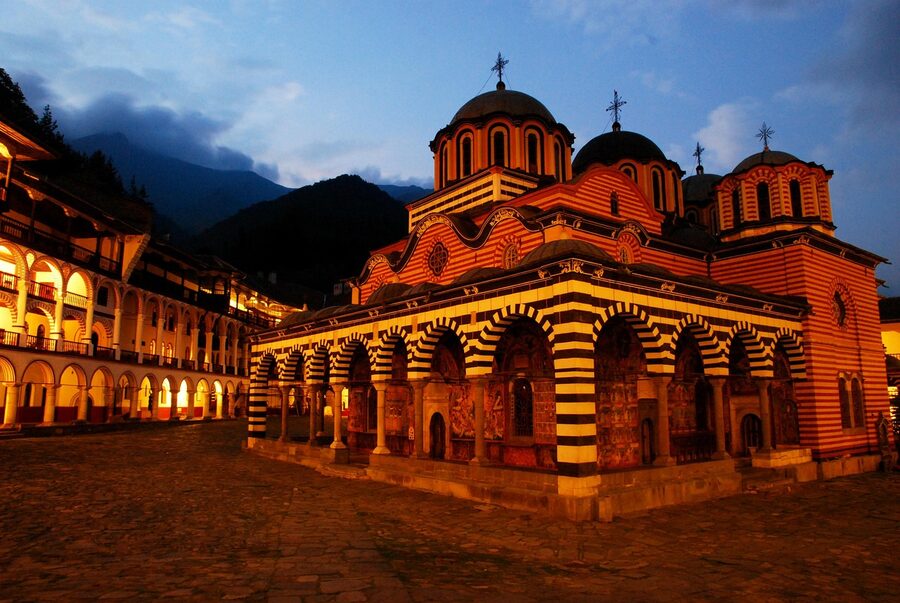
The Church of the Nativity at Rila Monastery has frescoes covering every interior surface. Walls, columns, ceilings, vaulted naves, even the porticoes outside, every square centimetre painted in saturated jewel tones. Most Eastern Orthodox churches paint just the iconostasis. This one painted everything, and that is the surprise.
Rila sits 117 km south of Sofia in a piney mountain valley, founded in 927 AD by a hermit named Ivan of Rila. Boyana Church is much smaller, on the edge of the city, and famous for a separate reason: 1259 frescoes that art historians argue prefigure Italian Renaissance realism by 200 years. Both are UNESCO. Most day tours pair them.
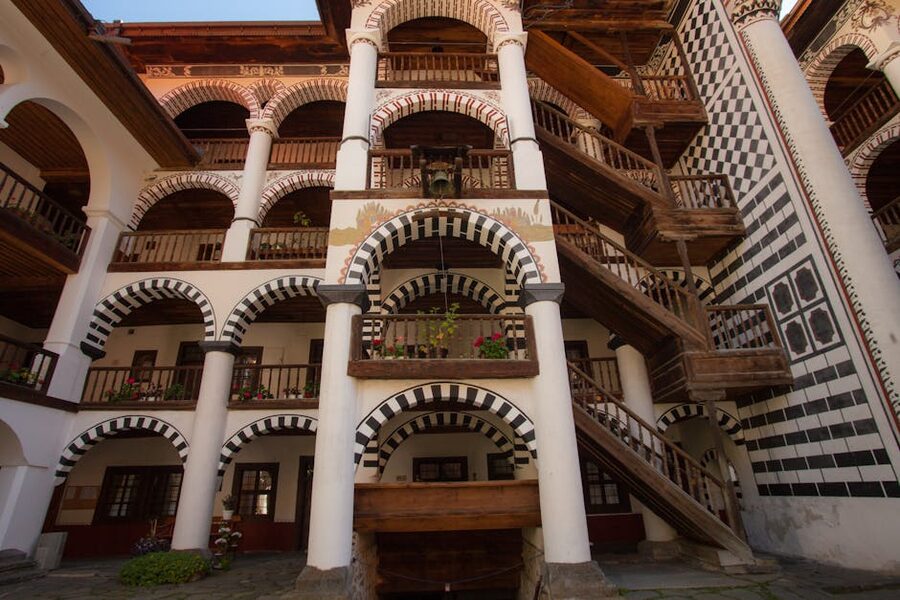
Cheapest option: Rila Monastery with Optional Boyana Church Day Trip, $24. Same operator, Viator listing.
Smaller group: Sofia: Rila Monastery and Boyana Church Full-Day Tour, €55. Higher-touch guide, less coach-tour feel.


- Why two UNESCO sites in one day
- The three tours worth booking
- 1. From Sofia: Rila Monastery and Optional Boyana Church Day Tour: €24
- 2. Sofia: Rila Monastery and Boyana Church Full-Day Tour: €55
- 3. Rila Monastery with Optional Boyana Church Day Trip from Sofia:
- What the day actually looks like
- The frescoes are the point
- Hrelyo Tower and the museum
- Boyana Church: ten minutes inside, then back on the bus
- What to wear and what it costs
- Going independently or by car
- When to go
- The Sofia context
- The frescoes question, briefly
- Other Bulgaria-from-Sofia tours worth pairing
Why two UNESCO sites in one day
Rila and Boyana are not really comparable. Rila is enormous, remote, dramatic. Boyana is one small stone church on a Sofia hillside, behind a ticket booth and a 15-minute viewing window. But they are paired because they are both UNESCO, both Bulgarian Orthodox, and the logistics line up. Boyana sits at the foot of Vitosha Mountain on the way back into Sofia. The detour adds maybe 40 minutes to the day.
If your trip is short and you only have one day for sites outside the city, this is the combination to do. Both deserve a half-day on their own, but the half-day at Rila is enough to take in the headline experience, and Boyana only allows 10 to 15 minutes inside anyway because of conservation rules. The pairing works because of how Boyana is gated, not despite it.

The three tours worth booking
Bulgaria’s Rila and Boyana day-trip market is dominated by a single operator (Traventuria) running the workhorse coach tour, plus a smaller-group GetYourGuide product, plus the Viator-listed version of the same coach. I would book the GetYourGuide flagship 90% of the time. Below are the three options, in order.
1. From Sofia: Rila Monastery and Optional Boyana Church Day Tour: €24
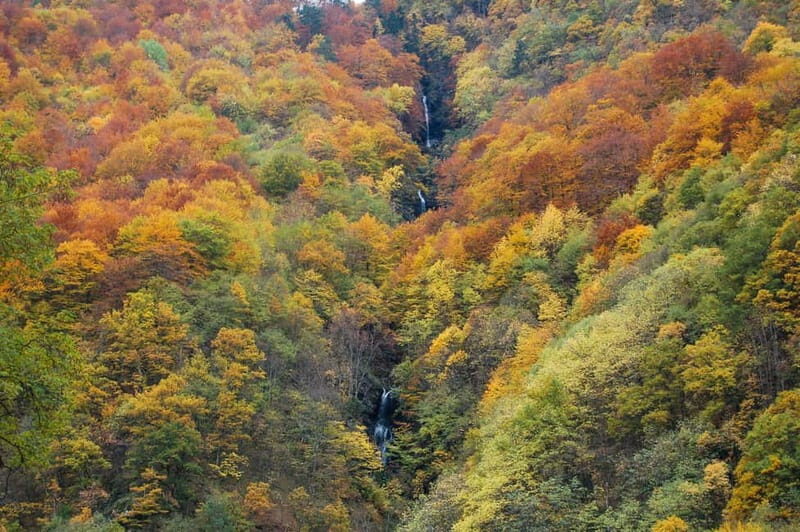
This is the GetYourGuide flagship and the best value in the market by a clear margin. Pickup is from Vasil Levski Monument near the Slovakia embassy at around 9am, you get to Rila about noon, three hours on site including a guided walk, then back to Sofia with a stop at Boyana on the way in. Our full review covers the timing in more detail, including the bit where the Boyana visit is genuinely just 10 minutes by design.
Check Availability
Read our full review
2. Sofia: Rila Monastery and Boyana Church Full-Day Tour: €55
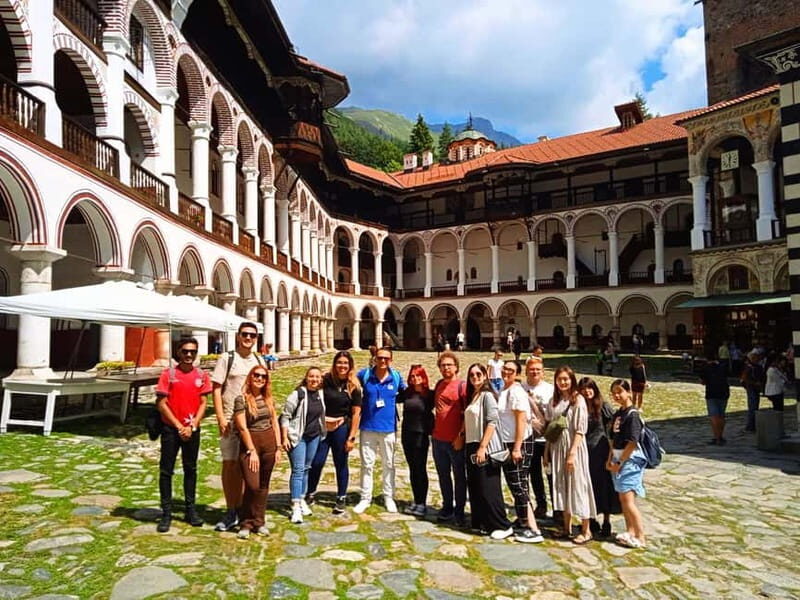
This is the option if you do not want to be on a 50-seater. Smaller groups, a guide who can actually answer your questions while you are inside the church rather than herding you, and the whole day feels less like a school trip. Worth the bump if you are travelling as a couple or if frescoes are why you came to Bulgaria, and our review goes deeper on the guiding quality.
Check Availability
Read our full review
3. Rila Monastery with Optional Boyana Church Day Trip from Sofia: $24
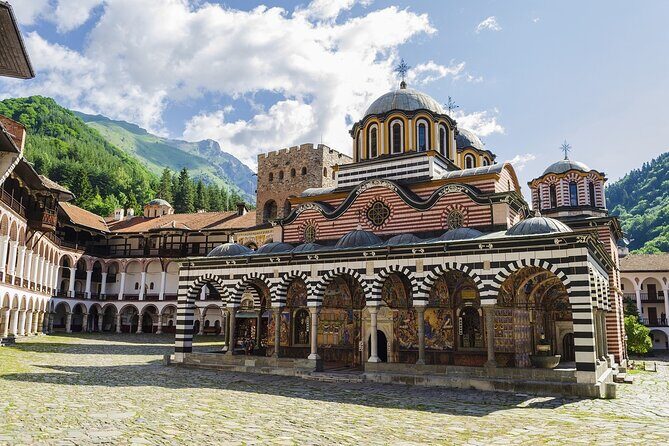
If you book through Viator out of habit, this is the equivalent listing of the Traventuria coach. Same vehicle, same guide, same 8-hour structure, sometimes a few cents cheaper because of the way the platforms price. The full review sets out when the price difference is worth chasing.
Check Availability
Read our full review
What the day actually looks like
Pickup is at 9am from Vasil Levski Monument in central Sofia, opposite the Embassy of Slovakia. Get there at 8:45 with a coffee. The bus is usually a 50-seat AC coach for the budget tour and a 16-20 seat minibus for the smaller-group product.
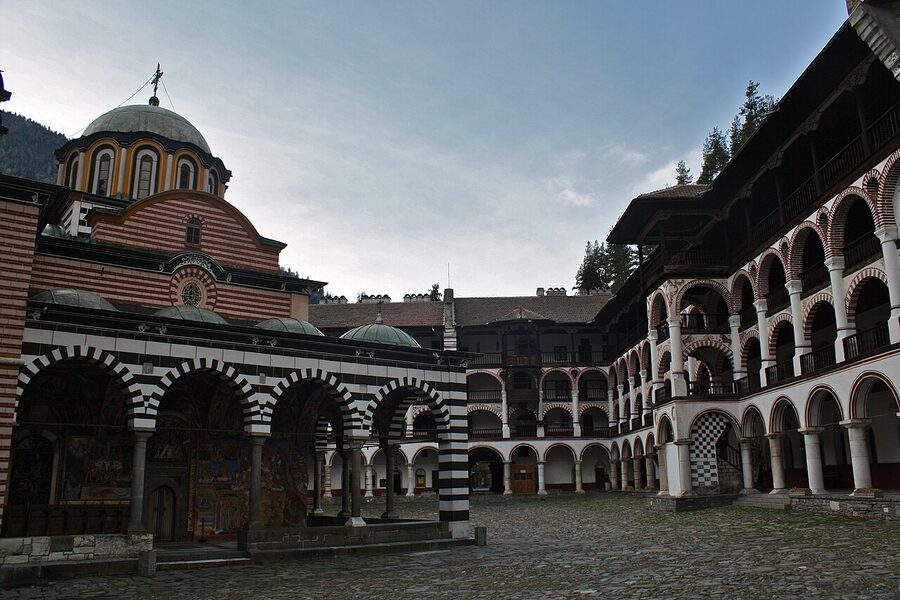

The drive south is around two and a half hours. You skirt the Vitosha Mountains, then cross into the Rila valley proper, and the road climbs through forest the last 30 minutes. There is usually one rest stop at a roadside cafe where the toilets cost 50 stotinki and the coffee is bad. Buy water before you board.
You arrive at Rila around 11:30 to noon. The standard format is: 30 to 40 minutes of guided walking through the courtyard and main church, then about 2 hours and 15 minutes of free time. Lunch is on you. There is a bakery just outside the gate that sells mekitsa (Bulgarian fried dough) and there is a proper restaurant 200 metres further down. Skip the museum cafe.
Departure back to Sofia is around 3pm. The Boyana Church stop happens on the way in around 5:30pm. Total return time to central Sofia is between 6:30 and 7pm. Long day. Wear something you can sit in for five hours of bus time.
The frescoes are the point
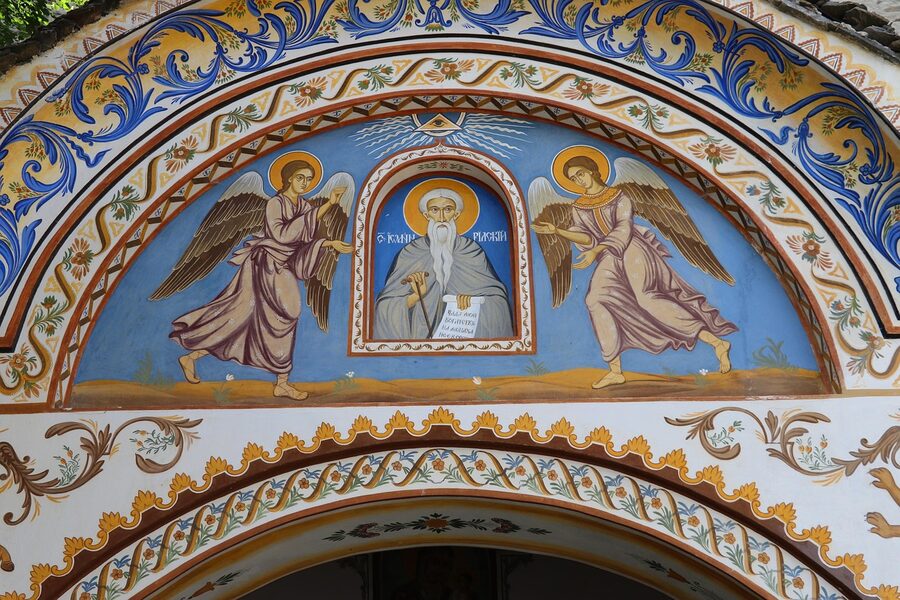
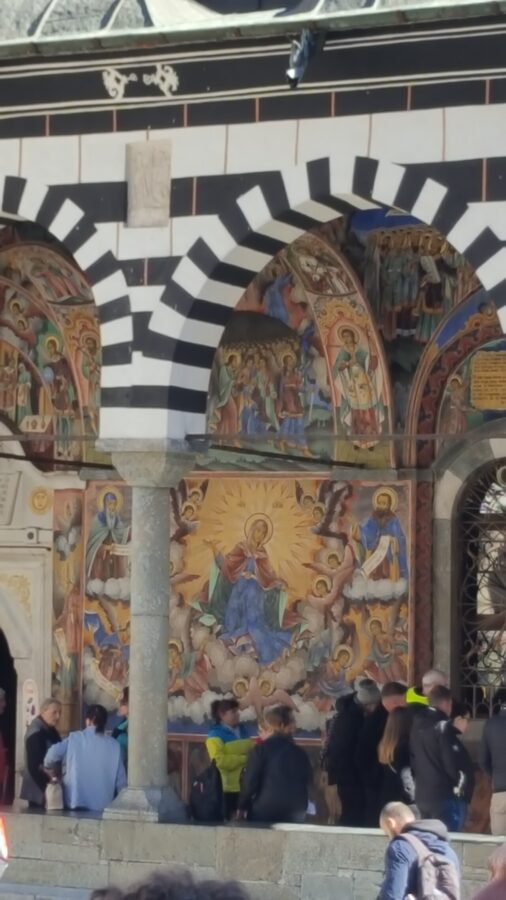
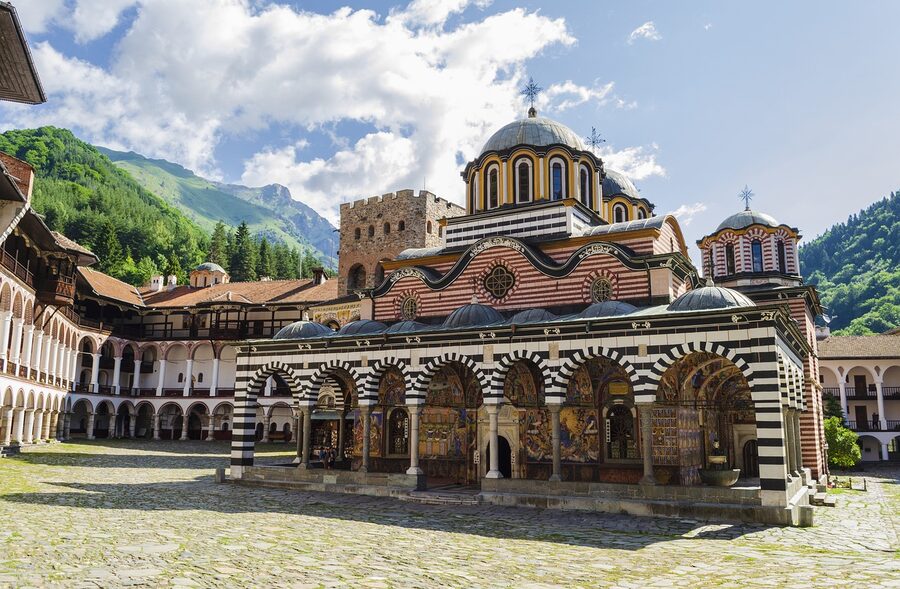
Rila’s reputation rests on its 19th-century frescoes. The man who painted most of them is Zahari Zograf, a Bulgarian master from the Samokov school who worked here in the late 1830s and early 1840s. He was not the only painter, but his hand is on the most photographed walls. The headline detail: every interior surface of the Church of the Nativity is painted, including the porticoes facing the courtyard, and the work is in saturated jewel tones (deep blues, blood reds, ochres) rather than the muted earth palette of older Orthodox churches.
_-_fresco_2.JPG)
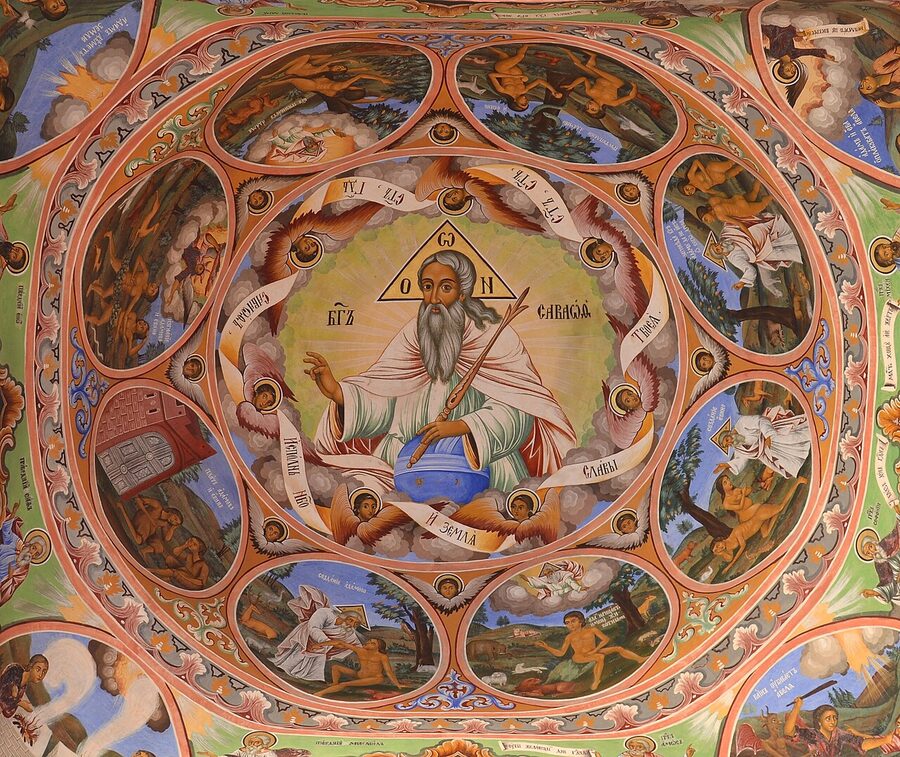
Stand under the western portico, look up, and read the panels left to right. The lower registers (closest to eye level) are the bits with demons, hell, sinners being dragged off to torment. Bulgarian Orthodox churches use this physical placement on purpose. Sin is for the visitor to read at eye level, redemption is overhead. Once you see it you cannot unsee it, and it makes every other Eastern Orthodox church you visit afterwards feel sparse.
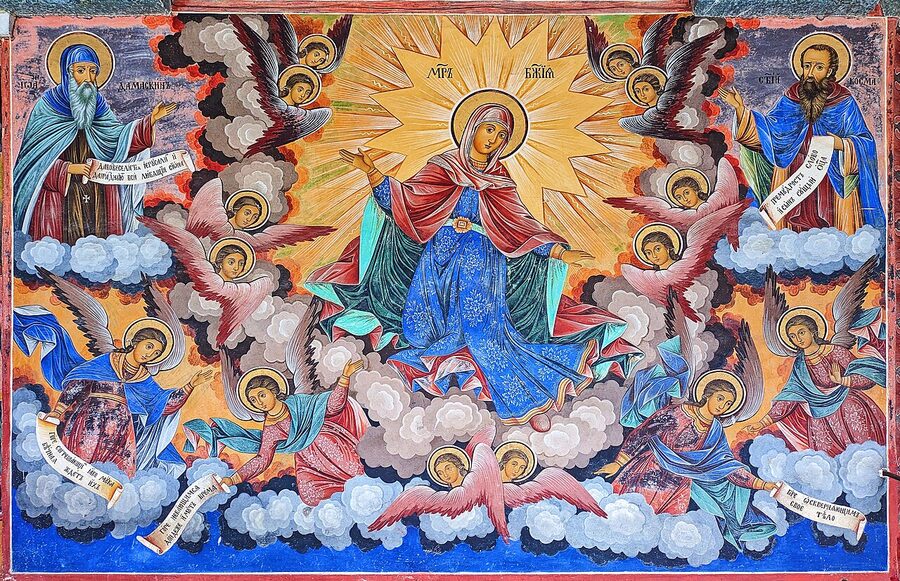

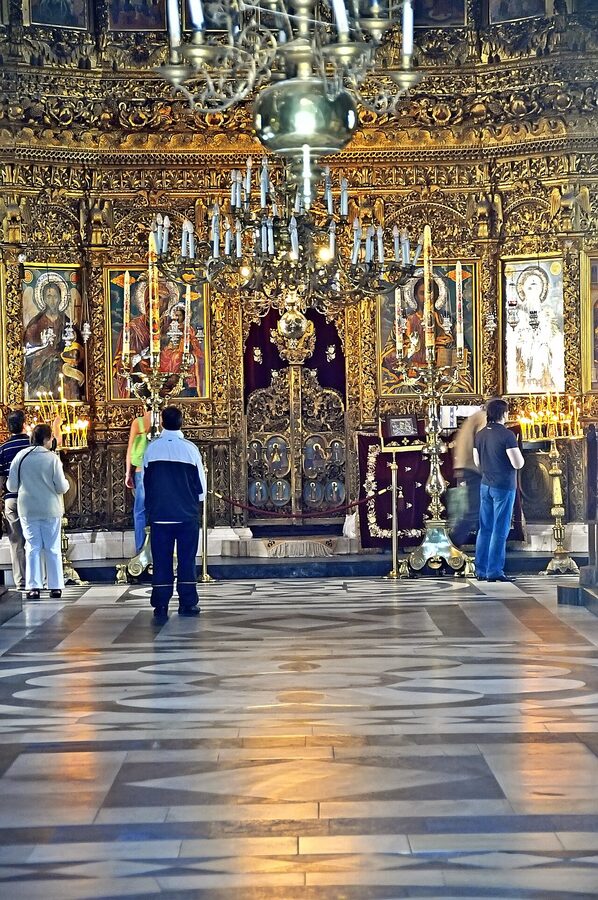
Inside the church (no photos allowed) the iconostasis is the other showpiece. Gold-plated, hand-carved, finished in 1842. The icons themselves were repainted by Zahari Zograf and the Samokov masters. If your guide does not mention the iconostasis carving specifically, ask. It is one of the more intricate examples of Bulgarian National Revival woodcarving in the country.
.jpg)
Hrelyo Tower and the museum
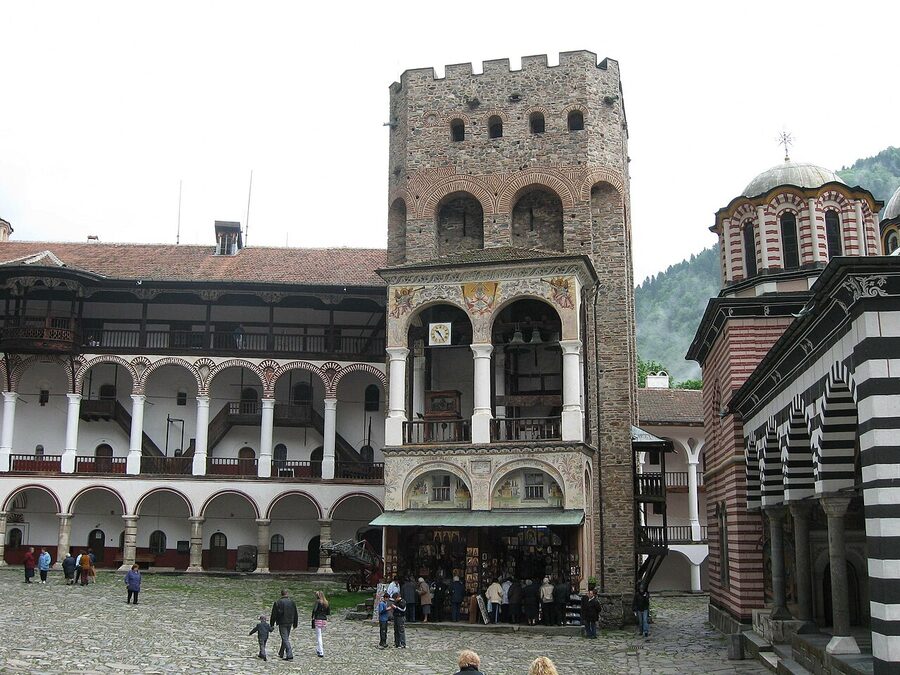
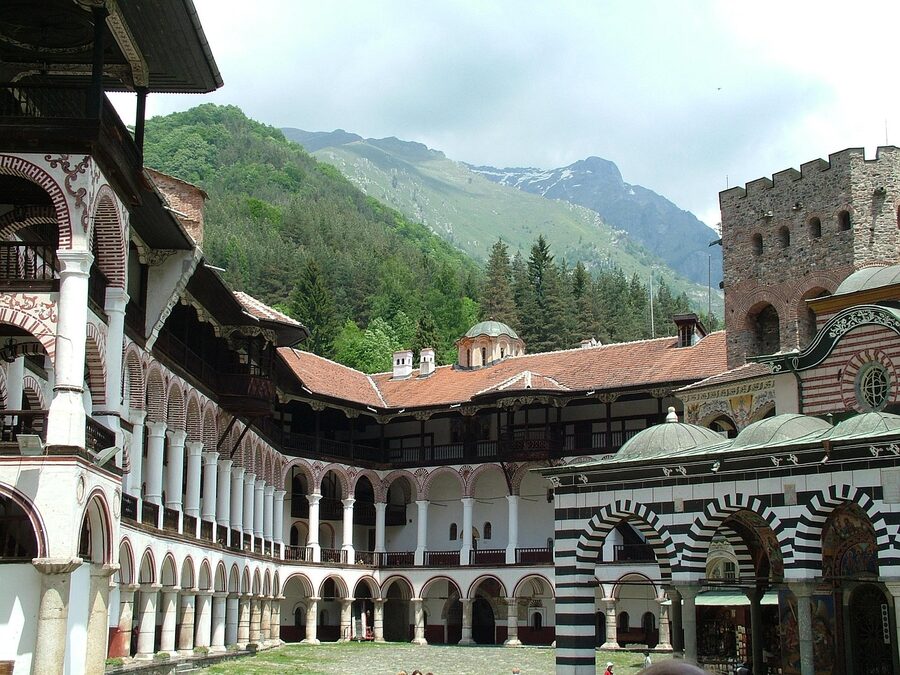
The dark stone tower in the corner of the courtyard is the only surviving part of the medieval monastery. Hrelyo Tower was built in 1335 by a feudal lord called Stefan Dragovol, also known as Hrelyo, who was a vassal of the Serbian king. The tower was a defensive structure, with arrow slits and a small chapel on the top floor. You can sometimes climb the tower for a few lev extra, depending on whether the staff is around. The view from the top is mostly down into the courtyard, not out.

The monastery has several small museums, each charged separately. There is a combined ticket for €12, or single-museum entries at €2.50 to €4. The one worth paying for is the History Museum, which holds the Rafail Cross, a small wooden crucifix carved by a single monk over 12 years. He carved 104 biblical scenes and 650 human figures into a piece of wood smaller than your forearm and went blind doing it. The cross is displayed under a magnifying glass because the detail is too fine for the naked eye. Skip the others.
Boyana Church: ten minutes inside, then back on the bus
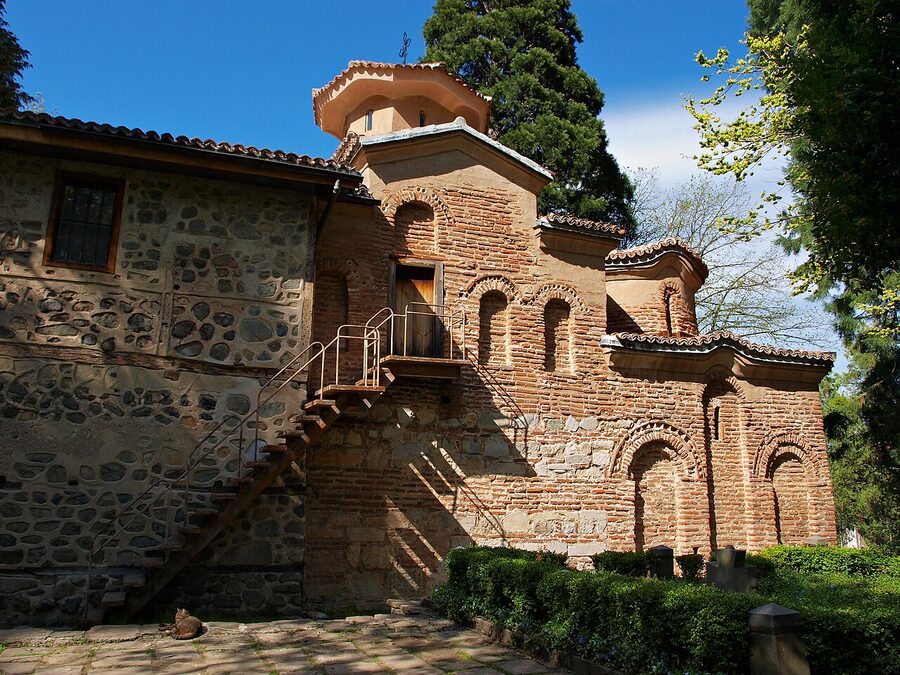
Boyana Church is so small and so fragile that the conservation rules cap visitors at eight people for ten minutes. You queue at a small ticket booth in a forested park on the southern edge of Sofia, pay €6 entry, and you are sent in batches. There is a guide inside who walks you through the four building phases (10th-11th century, 13th, 16th, 19th) and points to specific frescoes. Then you are out.

The 1259 frescoes are the reason Boyana is UNESCO. The argument from art historians is that the saints depicted have individualised faces (not the stylised, abstract faces of standard Byzantine iconography) and that the bodies have a sense of weight and three-dimensionality. This was a full 200 years before Giotto, who is usually credited with the same shift in Italy. The argument is not universally accepted (some scholars push back, saying the realism is overstated), but the figures genuinely do look different from typical 13th-century Byzantine work. Look at the face of Saint Catherine on the south wall. The eyes track you.
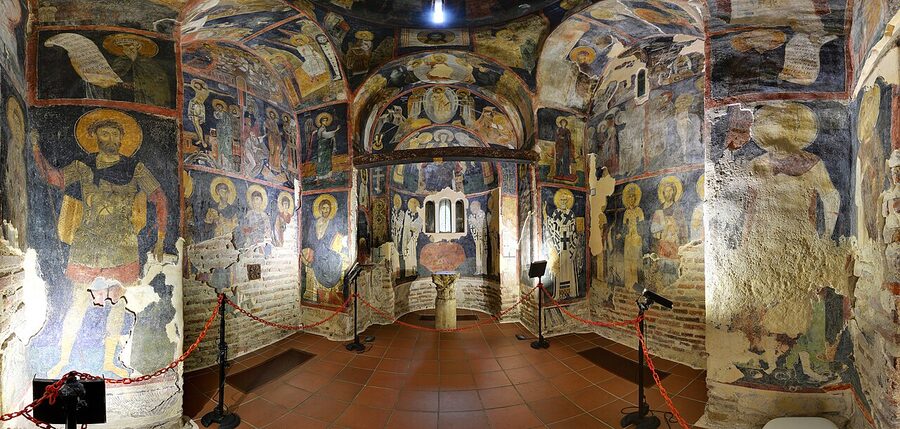

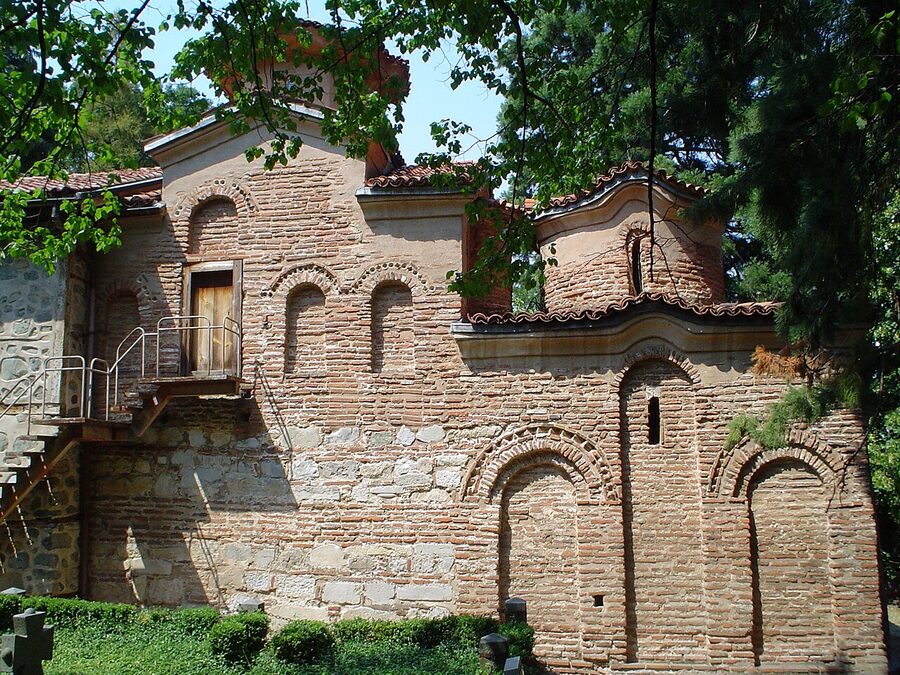

One thing worth knowing: the 10-minute slot includes the time it takes for the guide to deliver their script. Stay quiet, do not interrupt with questions, and make sure you are looking at the wall they are pointing at. The good guides walk you through the four phases efficiently. The bad ones spend three minutes on logistics and you barely get to look. If you ask one thing, ask about the eyes.
What to wear and what it costs
Rila is an active monastery. Cover shoulders and knees inside the main church. There is no formal dress code in the courtyard, but if you arrive in a tank top expect to feel awkward. They sometimes hand out cover-up scarves at the church entrance, free, but supplies run out by mid-morning. Bring a light cardigan even in summer.
Total cost for a day, before food: €24 for the budget tour, €6 for Boyana entry, €0 for the main monastery and church (free), €2.50 to €4 per Rila museum or €12 combined. Add €5 to €10 for lunch. So €40 to €50 all-in for the cheap version, €70 to €80 for the smaller-group version. Bulgaria adopted the euro on 1 January 2026, so prices are euro-denominated now. Cards work everywhere except the museum tickets at Rila, where you may need a few coins.
Going independently or by car
Public transport to Rila is technically possible but not pleasant. There is a single shuttle from Sofia at 9am, costs €18 each way, leaves from Vasil Levski Monument, and gets you back to Sofia by about 5:30pm. That is €36 return for what the GetYourGuide tour does for €24, plus you do not get a guide and you do not get Boyana. Skip it.
By car is genuinely good if you are comfortable with assertive Balkan driving. The A3 motorway most of the way, then a single mountain road for the last stretch. About 1 hour 45 to 2 hours from central Sofia. Parking at the monastery is free in a lot just outside the gate. If you drive, you can also detour to the Stob pyramids (rock formations 10 km from the monastery) or stop at Boyana on the way back into Sofia, both of which a tour does not allow time for.

When to go
May to October is the easy window. The road is open year-round, but November to March can throw snow at you and the early-morning bus pickup at 9am in winter is uncomfortable. June and September are the best months: long daylight, no risk of snow on the descent, fewer crowds than July-August. Avoid the first weekend in August, which is when Bulgarian schools have a major end-of-summer outing and the courtyard fills with school groups.
If you are flexible, go on a Tuesday or Wednesday. Weekends bring Sofia day-trippers in addition to the tour buses. The monastery courtyard at 9:30am on a Tuesday is one of the more atmospheric experiences in the Balkans. By 11am on a Saturday it is loud.
The Sofia context
Most visitors do this day trip from a one or two-night Sofia base. If you have only one full day in Sofia and you spend it on this tour, you will miss the city itself. Try to give Sofia at least a half-day of its own. The Communist-era core (the Largo, TZUM, the Soviet Army Monument) is genuinely interesting and the food in the Kapana-style streets in central Sofia is good and cheap.
If you are basing in Plovdiv instead, do not do this tour. Plovdiv is 145 km southeast of Sofia and getting back from Rila to Plovdiv on a tour bus is not how the operators schedule it. Plovdiv has its own day-trip ecosystem and it is a better idea to do Plovdiv from Sofia on a separate day if you have time.
The frescoes question, briefly
Why do Bulgarian Orthodox churches paint every surface, when Greek and Serbian Orthodox churches mostly do not? The short answer is the Bulgarian National Revival period (1762 to 1878). Bulgarian identity was suppressed under five centuries of Ottoman rule, and when monasteries started rebuilding in the late 18th and early 19th centuries, they were also functioning as cultural strongholds. Painting everything was a statement: this is ours, this is Bulgarian, this is the visual language of our faith and our nation. Rila is the cathedral of that movement. If you only see one Bulgarian Orthodox church, see this one.
Other Bulgaria-from-Sofia tours worth pairing
If you have more than one day in Sofia, the natural follow-on is the alpine half. The Seven Rila Lakes hike is in the same mountain range, three or four kilometres from the monastery as the crow flies, but the experience is opposite: hard hiking at altitude, no buildings, glacial lakes named after their shapes (the Eye, the Tear, the Kidney). Some operators combine it with the monastery in a single longer day, but the hiking time is short if you do that. Better as a separate trip.
For Sofia city itself, the Communist walking tour is the natural pair to the monastery: one full day on the Bulgarian Orthodox cultural heritage, one half-day on the 20th century. The contrast is the point. And if you have a third day, the Plovdiv day trip takes you to the oldest continuously inhabited city in Europe and a remarkable Roman amphitheatre that still hosts opera.
If you are putting together a wider Balkans or Central European itinerary, the parallel sites worth knowing about are Lake Bled from Ljubljana for the alpine-religious-monument combo, the Bucharest communist tour for the Romanian equivalent of Sofia’s communist core, and London’s St Paul’s Cathedral if you want to see what Western European cathedral painting looks like by comparison (the answer: much less of it, on much less surface).
Affiliate disclosure: this article contains affiliate links to GetYourGuide and Viator. If you book a tour through one of these links, we may earn a small commission at no extra cost to you. We only recommend tours we have researched and would book ourselves.