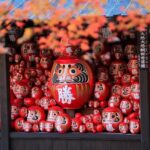
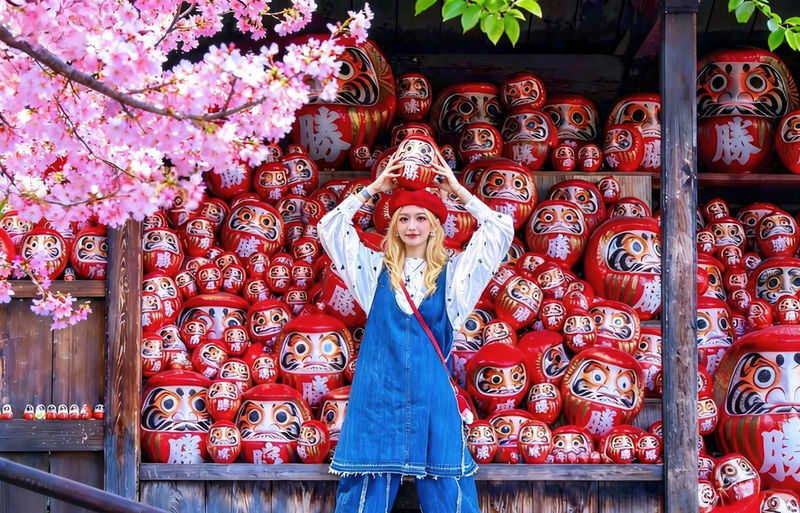
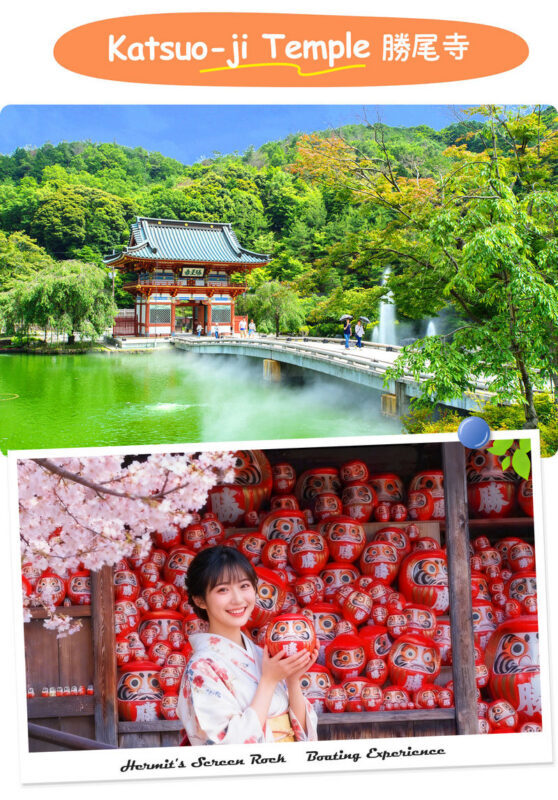
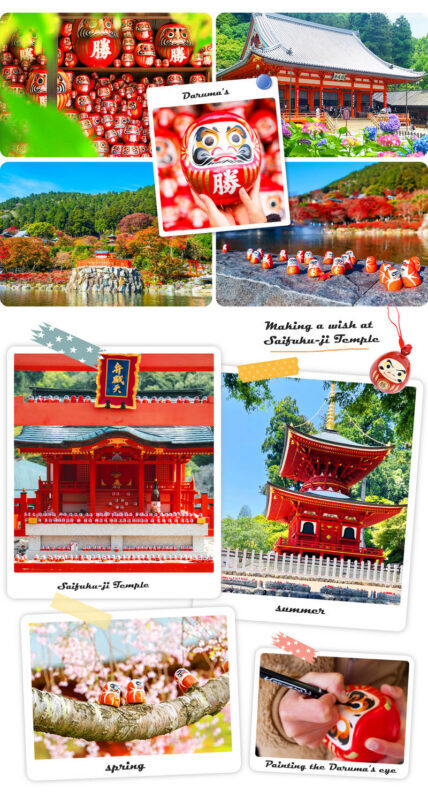
At Katsuo-ji, the hillsides are dotted with red Daruma dolls, each one a small marker of someone’s wish for victory or perseverance. You can choose a doll, paint in its right eye, and carry it home as a reminder of your own goal. The temple visit gives this day trip a personal ritual, not just another photo stop.
I like that the route links three very different places, and that the six temple stamps give you a playful reason to look closely around the grounds. I also like having transport to Miyama, which is harder to reach by public transport. The trade-off is time: the stops are brief, especially Miyama’s 45 minutes, and Arashiyama can feel rushed.
- Key points before you book
- One day from Osaka, three very different stops
- Katsuo-ji: Daruma wishes on a wooded hillside
- Miyama’s thatched roofs and red mailbox
- Arashiyama: bridge, bamboo, and a busy path
- What the guide does, and what you do yourself
- The price, the pace, and the fine print
- Who should choose this day trip?
- FAQ
- What is included in the tour price?
- How long is the tour?
- How much time is planned at each stop?
- Is Katsuo-ji Temple admission included?
- Are Tenryu-ji and all Arashiyama sights guaranteed?
- Can I cancel for a refund?
- The Best Of Kyoto!
- More 1-Day Tours in Kyoto
- More Tours in Kyoto
- More Tour Reviews in Kyoto
Key points before you book
 1 / 8
 2 / 8
 3 / 8
 4 / 8
 5 / 8
 6 / 8
 7 / 8
 8 / 8
- Daruma dolls and six stamps: At Katsuo-ji, collect stamps around the grounds to redeem a limited-edition postcard. You can also take a Daruma home and finish its eye ritual when your wish comes true.
- A rare village stop: Miyama’s thatched-roof houses, red mailbox, and mountain setting offer a quiet change of pace, but the scheduled visit is only 45 minutes.
- Three stops, one long day: The tour saves you the work of arranging transport between places, though there is substantial driving and little flexibility to linger.
- Arashiyama at a glance: You have about two hours for Togetsukyo Bridge, the bamboo path, Kimono Forest, Nonomiya Shrine, and potentially Tenryu-ji.
- Self-guided time: The guide handles transport and gives information, but you explore the stops independently. This suits you if you like setting your own pace within a fixed window.
- A language and vehicle check matters: English and Mandarin options are listed, but mixed-language groups may share a vehicle. Group size ranges from 6 to 48, and vehicle type and comfort can vary.

👉 See our pick of the We Rank Kyoto’s 15 Top Workshops & Classes
One day from Osaka, three very different stops
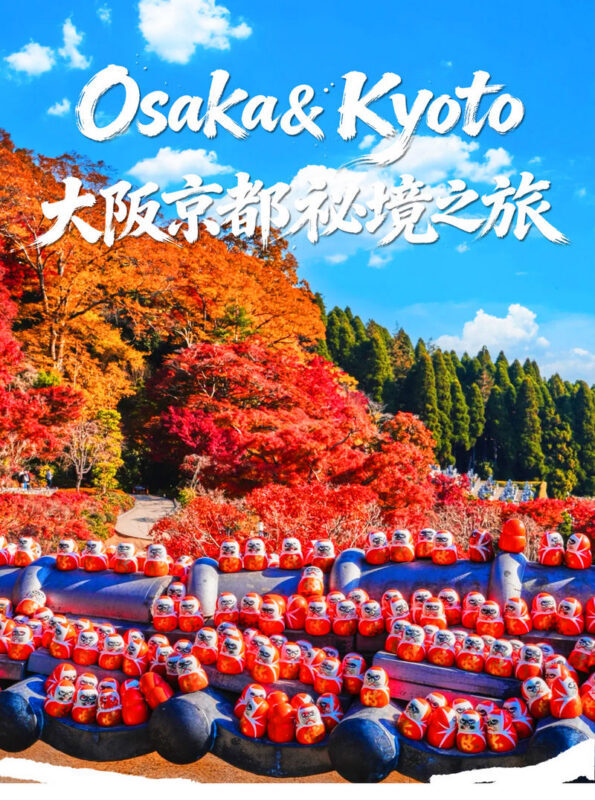
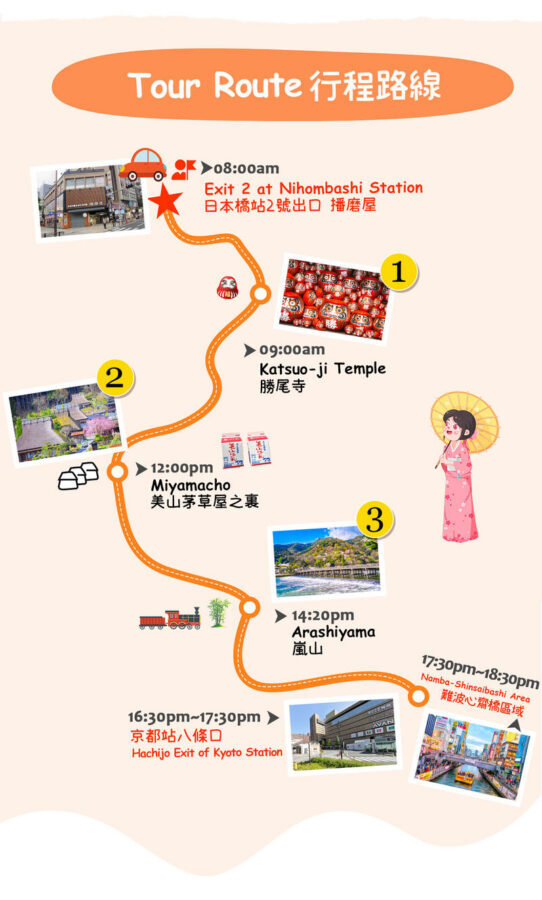
This is an ambitious day out, not a slow country ramble. Departing from Osaka at 8:00 a.m., the route takes you first to Katsuo-ji, then north to Miyama in Kyoto Prefecture, and finally to Arashiyama. The scheduled return is around 4:30 to 5:30 p.m. at Kyoto Station, or 5:30 to 6:30 p.m. at Osaka’s Kintetsu Nipponbashi area. Traffic and weather can shift those estimates.
The appeal is straightforward: you get a ride to several places that are spread out and not equally easy to reach on your own. Round-trip transport and a guide are included in the starting price of $44.85, though admissions, meals, and drinks are extra. For a day with long stretches between stops, that can be good value if convenience matters more to you than unhurried visits.
The tour runs as a shared group, with a stated size of 6 to 48. If the group is small, the operator may use a smaller vehicle and have the driver serve as guide. That can make boarding and gathering easier, but the ride may be cramped, and the commentary may be shorter than on a large coach. You cannot choose the vehicle type.
You can also read our reviews of more tours and experiences in Kyoto
Katsuo-ji: Daruma wishes on a wooded hillside
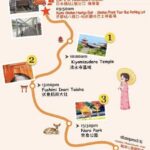
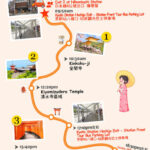
The first stop is Katsuo-ji, scheduled for about 9:00 a.m. and 1 hour 20 minutes. Its vermilion gate, Purification Bridge, and hillside setting make a memorable opening to the day. The Daruma dolls are the main draw: they appear across the temple grounds, representing wishes, effort, and the hope of overcoming a challenge.
If you buy a Daruma, you can write your wish on it and paint in the right eye before taking it home. When the wish comes true, the custom is to return the doll, paint in the left eye, and offer it back at the temple. It is an easy ritual to understand, but one that gives the visit a more thoughtful point than simply snapping a picture and moving on.
There are also six stamp locations around the grounds. Collect them all to receive a limited-edition postcard; the design may vary between visits. This small scavenger hunt is a nice fit for families and anyone who enjoys a tangible keepsake. It also gives you a reason to explore beyond the first Daruma-filled spot you see.
Admission is not included. The listed fee is 500 yen for high school students and older, 400 yen for junior high and elementary school students, and 100 yen for preschool children. Children under two enter free. Budget a little extra time for the temple itself, since the grounds invite wandering, but keep an eye on the meeting time. The group cannot wait for late arrivals.
Miyama’s thatched roofs and red mailbox
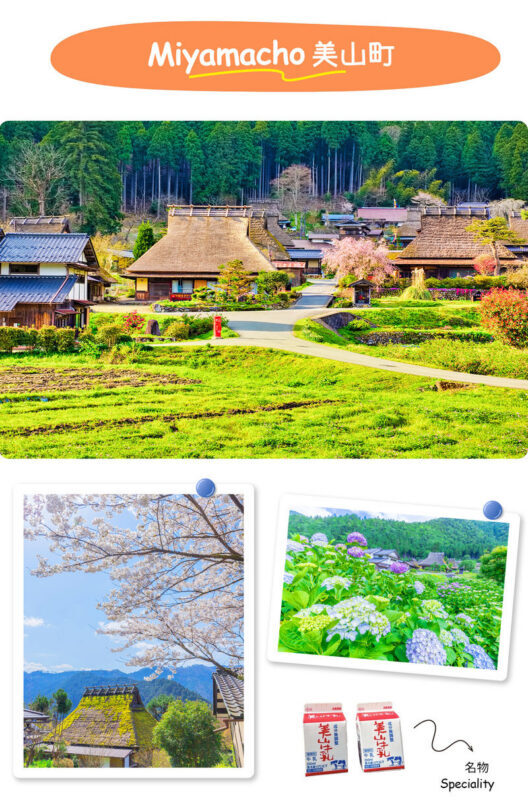
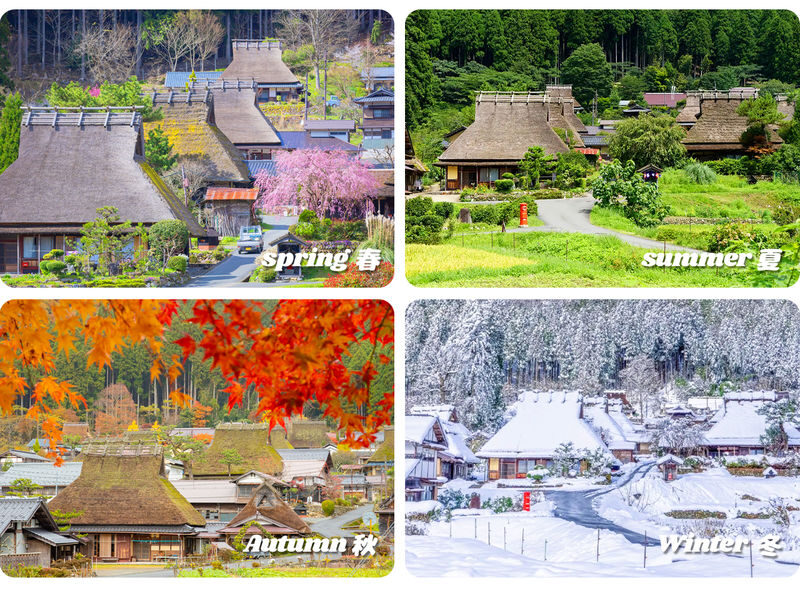
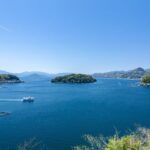
Miyama’s Kayabuki no Sato is the quiet counterpoint to Katsuo-ji. Its thatched-roof houses preserve an old rural look, framed by green mountains and water. The red mailbox is a popular photo spot, and the village’s Miyama milk and ice cream are local treats worth seeking out if time permits.
The planned stop is only 45 minutes. That is enough for a short walk, a few photographs, and perhaps a quick snack, but not a leisurely visit to every corner. If you want to browse slowly or sit down for a proper meal, this schedule will feel tight. Meals and drinks are not included, and you should not count on having time for a long lunch here.
This is the stop where the tour’s transport is especially useful. Miyama is a rural destination, and arranging a visit independently takes more planning than reaching central Kyoto sights. In exchange for that convenience, you accept a fixed departure time and a short stay. I would treat Miyama as a first look at the village, rather than a full day in the countryside.
The setting changes with the season and weather. Snow can make the thatched roofs especially striking, while rain may soften the views and make walking less pleasant. Seasonal conditions are not guaranteed, and the operator may adjust the schedule when weather or traffic requires it.
Arashiyama: bridge, bamboo, and a busy path
The afternoon gives you roughly two hours in Arashiyama, a lot to fit into one stop. Togetsukyo Bridge crosses the Katsura River and is a familiar Kyoto scene, with its appearance shifting through the seasons. The Sagano Bamboo Forest Path offers a different mood: tall stalks, filtered light, and the sound of wind moving through the bamboo.
The bamboo path is a public attraction, not a private garden, so expect other people, particularly at busy times. One English-language tour participant described the area as crowded and the time there as rushed. That is a fair planning caution: this stop is best for a taste of Arashiyama, not a slow wander through every lane and shop.
Kimono Forest, near the station, uses illuminated columns decorated with traditional Yuzen patterns. Nonomiya Shrine sits by the bamboo area and is associated with prayers for marriage. The itinerary also names Tenryu-ji’s garden as a possible final visit, with its pond and seasonal views. However, the schedule says some attractions may be skipped because of capacity or weather, so do not assume every listed sight is guaranteed.
Tenryu-ji admission is extra for its gardens, halls, and Dharma Hall. With only about two hours for the whole Arashiyama stop, you may need to choose between a longer walk, a temple visit, a snack, or shopping. Ask the guide which sights are realistic on the day, then pick your priorities rather than trying to race through everything.
What the guide does, and what you do yourself
This is closer to a transport-supported day out than a fully escorted walking tour. The guide shares information, helps coordinate the group, and gets you to each stop, but the visits are self-guided. That arrangement works well if you want independence and do not need someone beside you at every shrine and path.
Guide names associated with past departures include Zhang Yanjin, Kangfu, Bunny, Owen, and MIA. The assigned guide is not guaranteed, and the amount and style of commentary can differ. If the language is important to you, choose the English or Mandarin option that fits, and check how commentary is handled when people with different language needs share the vehicle.
There is one practical wrinkle: the tour information says guests of other language backgrounds may travel with you. If you are booking the English option, it is sensible to confirm the expected language arrangements before departure rather than assuming every explanation will be in English. The guide and vehicle details are sent by email between 8:00 and 9:00 p.m. the night before, though peak-season messages may arrive later.


The price, the pace, and the fine print
At $44.85, the main value is the transport between distant stops, plus a guide and a full day’s itinerary. You are not paying for an all-inclusive outing: Katsuo-ji admission, Tenryu-ji entry, meals, drinks, and personal purchases are separate. Add those costs when comparing this trip with arranging your own transport.
The schedule can also be affected by traffic, weather, and the day’s group arrangements. The tour operator may change the order or reduce the time at an attraction, and the stated return times are estimates. Avoid booking an evening activity that depends on arriving at a precise time.
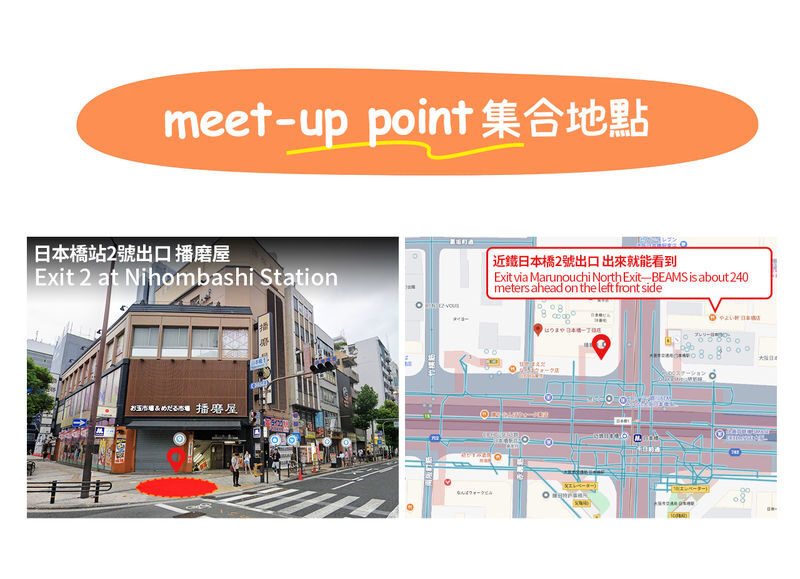
Arrive at the Osaka meeting point 10 minutes early. The listed location is Harimaya, 1-3-11 Nipponbashi, near Nihombashi Station Exit 2, where the guide holds a GOGODAY flag. Late arrivals and no-shows are not refunded. The tour requires at least six participants; if that minimum is not met, the operator says it will offer a rescheduled time or refund.
One piece of luggage per person is allowed if you note it when booking. Do not turn up with a large suitcase without checking first, especially if the group is assigned a small vehicle. Child seats are not available. Children aged three and older pay the adult rate; children aged zero to two can join free if they do not need a separate seat, but they still count toward the passenger headcount.
Who should choose this day trip?
I would choose this tour if I had one day to connect Katsuo-ji, Miyama, and Arashiyama without working out several separate transport routes. It is particularly useful if Miyama is high on your list, since that rural stop is the hardest to combine with the Kyoto sights on your own.
It is less suited to you if you want long visits, a guide at your side throughout, or plenty of time for shops and meals. The appeal is breadth and convenience, not depth. Families may enjoy the Daruma dolls and postcard stamps, but should factor in the long ride, short stops, and lack of child seats.
Book it for the range of places and the transport, not for a slow, fully guided tour. If you are comfortable exploring independently and can keep to the group’s timetable, this is a practical way to sample three distinct corners of the Kansai area in one day.
Katsuo-ji Temple, Miyama, and Arashiyama Day Trip
“Thank you for your hard work, tour guide Zhang Yanjin.”
FAQ
What is included in the tour price?
Round-trip transfers from the Osaka meeting point and a Chinese-speaking guide are included in the listed package. English-speaking guide packages are also offered. Temple admission, meals, beverages, and personal expenses are not included.
How long is the tour?
The day is listed as 8.5 hours, with departure at 8:00 a.m. Return times are estimates: around 4:30 to 5:30 p.m. at Kyoto Station or 5:30 to 6:30 p.m. in Osaka.
How much time is planned at each stop?
The schedule allows about 1 hour 20 minutes at Katsuo-ji, 45 minutes at Miyama’s thatched village, and two hours in Arashiyama. Traffic, weather, and other conditions can affect the timings.
Is Katsuo-ji Temple admission included?
No. The listed fee is 500 yen for high school students and older, 400 yen for junior high and elementary school students, 100 yen for preschool children, and free for children under two.
Are Tenryu-ji and all Arashiyama sights guaranteed?
No. Tenryu-ji admission is extra, and some attractions may be skipped because of capacity or weather conditions. The order and time at stops can also change.
Can I cancel for a refund?
The stated policy offers a full refund if you cancel at least 24 hours before the activity date, subject to the destination’s local time and the policy’s conditions. Late arrivals and no-shows are not refunded.