Ramen’s noodles get the attention, but the broth is what makes a bowl memorable. At Musoshin Ramen Dojo in Kyoto’s Gion district, you learn to make ramen soup with ingredients and seasonings you can buy back home, then eat the bowl you made.
I like two things in particular: the lesson aims to give you a recipe you can actually repeat in your own kitchen, and the custom-engraved chopsticks turn a cooking class into a useful keepsake. Chefs including Shin and Sherry teach the class, with humor and clear explanations at its heart.
One consideration: this is a focused, roughly 90-minute activity, not a full ramen-and-gyoza cooking course or a market visit. It is best for you if you want to learn about broth and make a meal, rather than spend half a day in the kitchen.
- What makes this ramen class worth considering
- A broth lesson, not just a bowl of noodles
- Inside the Musoshin Ramen Dojo in Gion
- What happens from arrival to your first spoonful
- The instructors make the cooking easier to follow
- What the starting price includes
- Who will enjoy making ramen in Gion
- Booking details to check before you go
- Should you book the Musoshin ramen class?
- FAQ
- Where does the ramen class take place?
- How long is the activity?
- What start times can I choose?
- What will I learn to make?
- Which instructors may lead the class?
- What is included in the price?
- Can children join?
- Is the class suitable for vegetarians and vegans?
- What souvenirs do I take home?
- What is the cancellation policy?
- The Best Of Kyoto!
- More Guided Tours in Kyoto
- More Tours in Kyoto
- More Tour Reviews in Kyoto
What makes this ramen class worth considering
 1 / 6
 2 / 6
 3 / 6
 4 / 6
 5 / 6
 6 / 6
- A broth recipe for home: The class is designed around seasonings and ingredients available in your own country.
- Chefs lead the instruction: Shin and Sherry are among the instructors, with Amir also named by participants as part of the welcoming team.
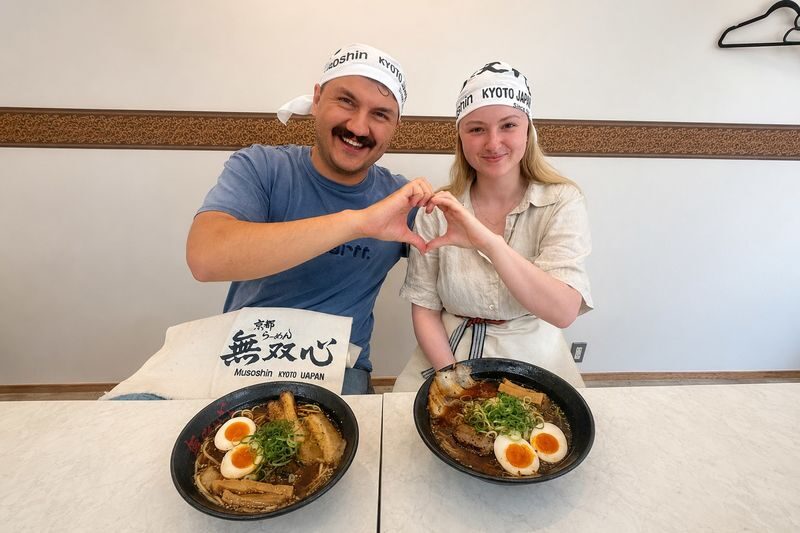
- You eat what you make: Your own ramen is included, so the cooking lesson ends with a proper meal.
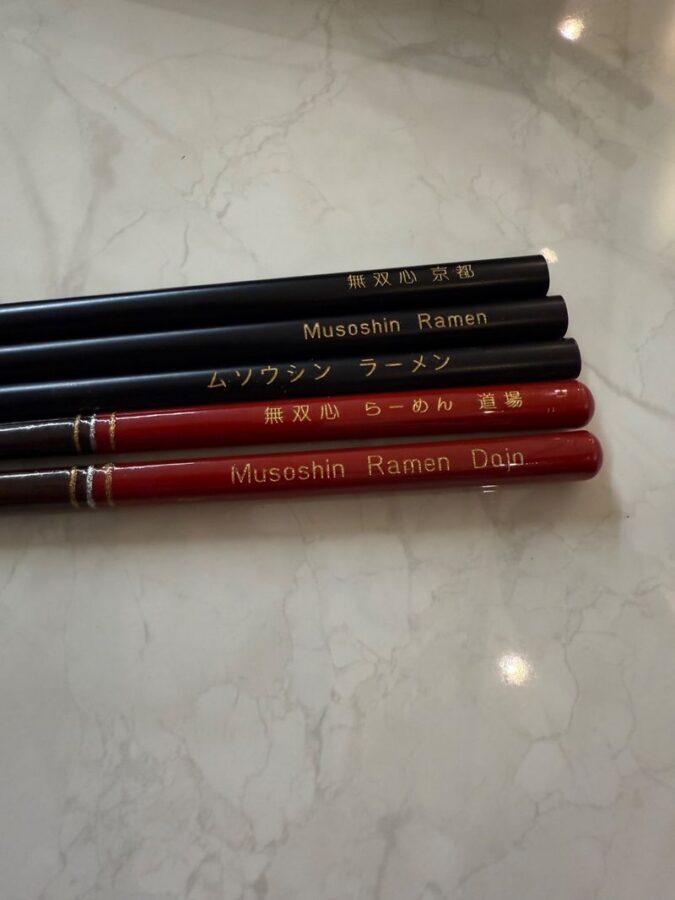
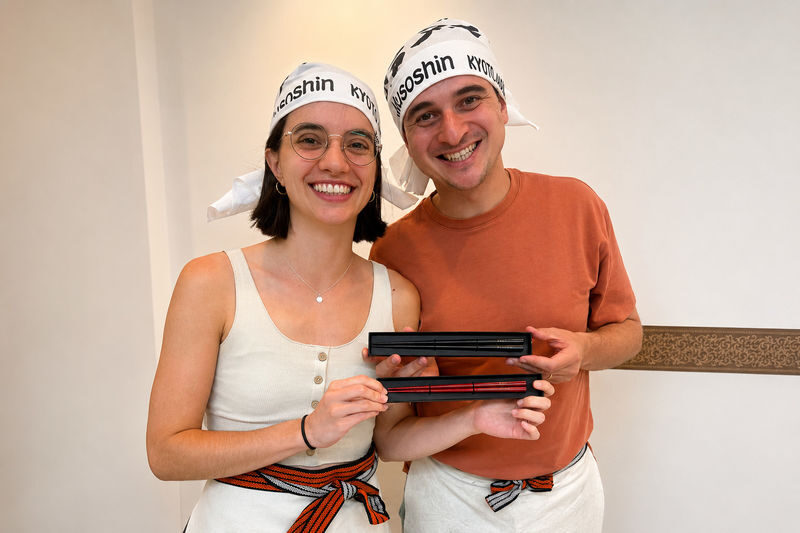
- Your chopsticks get your name: You take home the pair used during the class, engraved as a personal souvenir.
- Gion is the setting: The dojo is at 570-262 Gionmachi Minamigawa, in Kyoto’s Higashiyama Ward.
- Children from age five can join: The activity is described as suitable for families, and children aged five and older pay the adult rate.

👉 See our pick of the We Rank Kyoto’s 15 Top Workshops & Classes
A broth lesson, not just a bowl of noodles
The central idea here is refreshingly practical: noodles may be easy to find around the world, but a good ramen soup is something you can learn to make yourself. The instructor shows you how to prepare a broth using seasonings and ingredients that are available where you live. That makes the class more useful than a cooking demonstration built around hard-to-find products you cannot replace at home.
The focus is on the soup, rather than a broad survey of Japanese cooking. You make ramen under a chef’s guidance, learn about the process and ingredients, and get a recipe to take away. The specific technique and recipe details are not listed in advance, so do not expect a precise menu or a promise of particular toppings. What is clear is that you will make your own ramen and get instruction aimed at helping you repeat the broth at home.
The host is Musoshin Group, a Kyoto-based ramen brand with locations internationally. Its Toronto location has been featured in the Michelin Guide, a useful bit of context about the company behind the class. That distinction applies to the Toronto location, not a claim that this Kyoto workshop itself has a Michelin star or Michelin Guide listing.
The class is called Michelin make your own ramen and chopsticks, but the draw is the hands-on lesson and the chance to eat your own work. If you want to understand how broth shapes a bowl, this is a more personal way to do it than ordering ramen at a restaurant and wondering what went into it.
You can also read our reviews of more guided tours in Kyoto


Inside the Musoshin Ramen Dojo in Gion
The address is 570-262 Gionmachi Minamigawa, Higashiyama Ward, Kyoto, 605-0074. That places the class in Gion, a district many visitors already include in a Kyoto visit. The meeting and return point are both Musoshin Ramen Dojo, so the outing is straightforward: arrive for your chosen start time, take the class, and finish back at the dojo.
You can choose from departure times at 10:00, 12:00, 14:00, or 16:00. The corresponding return times are listed as 11:30, 13:30, 15:30, and 17:30, depending on the slot you book. That makes it easy to plan around a meal or another activity, though you should leave a little breathing room rather than schedule another commitment right on the return time.
The small time commitment is part of the appeal. You get a guided activity and a meal without giving up most of your day. On the other hand, if you are hoping for a long, leisurely cooking session with several dishes, this is not presented as that kind of class. Its promise is narrower and more focused: ramen broth, your own bowl, a recipe, and custom chopsticks.
What happens from arrival to your first spoonful
The itinerary is simple, with departure, the Musoshin Ramen Dojo session, and return to the same place. There is no separate sightseeing stop or transport segment described. The value is in the time spent cooking and learning, not in covering ground around Kyoto.
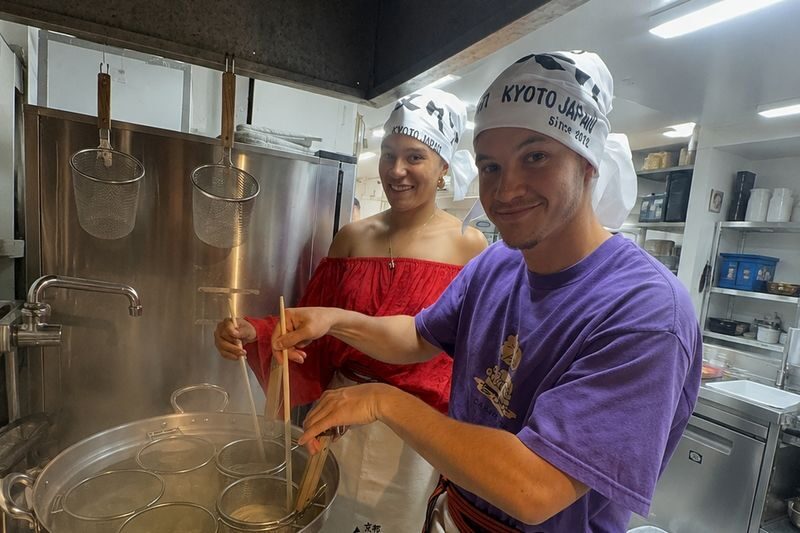
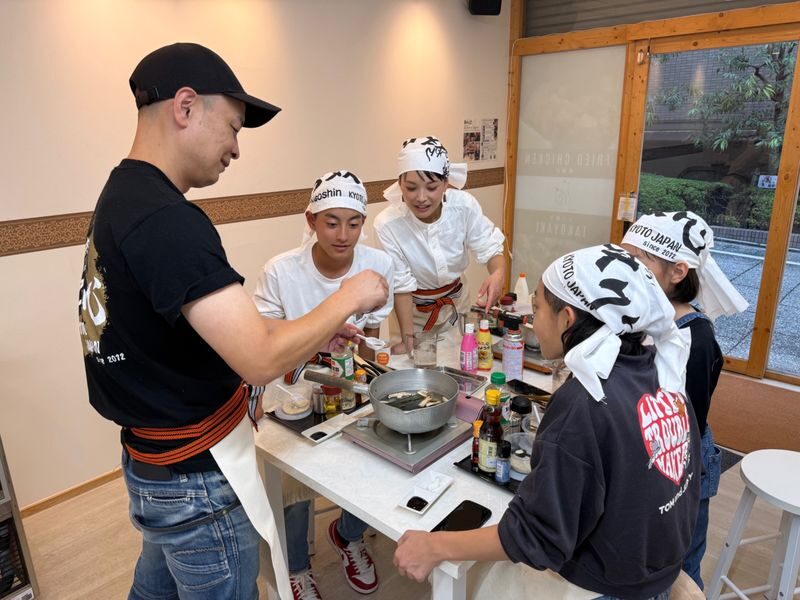
At the dojo, a chef guides you through making ramen soup. Shin is named as an instructor and owner of several ramen restaurants; he is described as passionate about the craft and able to explain the process in an engaging, clear way. Sherry is also named in several accounts of the class, with a lively, patient teaching style. Amir is another member of the team noted as helping make the session fun. The exact instructor can vary, so treat these names as a sense of the teaching team, not a guarantee that one particular chef will lead your session.
The lesson is meant to keep you involved rather than leave you watching from the side. One family with a five-year-old found the child could take part safely, which is encouraging if you are considering the class with a young cook. Still, children must be at least five, and every participant aged five or older is charged the adult rate.
Once you have made the ramen, you sit down to eat it. That meal is an important part of the class: you can taste the result of the broth work while the steps are fresh in your mind. The activity includes the ramen you make, and the package details also list lunch and dinner. Since those meal labels may depend on the time slot, check the booking details if you need to know exactly what is served beyond your own ramen.
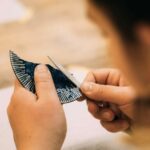
Before you leave, you receive a recipe, a Musoshin Ramen Dojo bandana used during cooking, and chopsticks engraved with your name. The recipe is the most practical souvenir, since it supports the experience’s main goal: making the broth again at home. The chopsticks and bandana are a tangible reminder of the class, rather than generic items picked up in a shop.
The instructors make the cooking easier to follow
A cooking class can be technically sound and still feel stiff. Here, the teaching style is a major part of the experience. Shin is praised for explaining the soup-making process with humor and for making sure participants understand each step. Sherry is described as warm and patient, while Amir is also associated with a fun, welcoming atmosphere.
That matters if you are new to Japanese cooking or unsure how much English support you will get. The activity includes an English- or Japanese-speaking guide, and the instruction is described as clear and easy to follow. Participants have found the explanations useful, not just entertaining. You should come away with a better sense of how the soup is made and a recipe to help you remember the process.
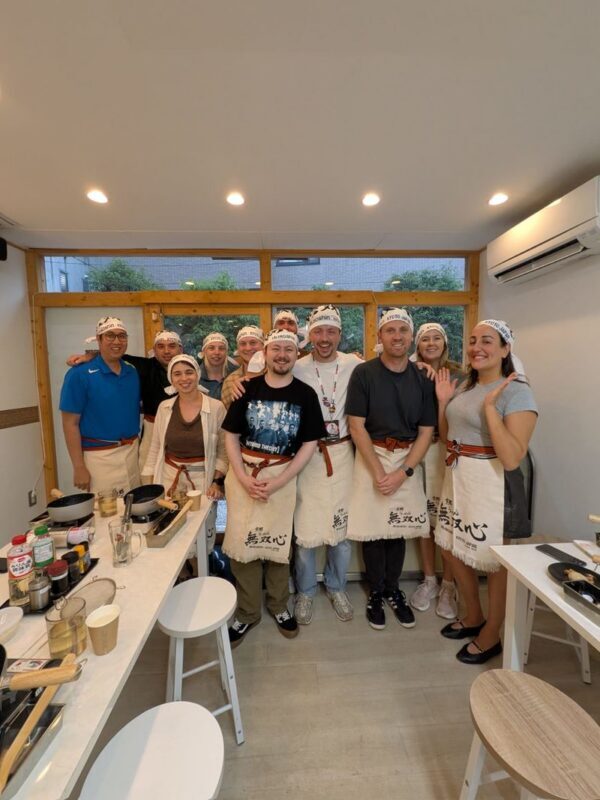
The atmosphere can be intimate. Some sessions have been private in practice because no other participants booked the same time. That can mean more direct attention from the chef and a relaxed pace. If you prefer meeting other cooks and sharing the table with a group, a quiet session may feel less social than you hoped. Group size is not specified, so I would not book expecting either a private lesson or a lively class full of strangers.
What the $79 starting price includes
The package starts at US$79 per person. In return, you get a guided ramen-making class, your own bowl of ramen, a recipe, a cooking bandana, and chopsticks engraved with your name. Lunch and dinner are also listed as included, though the exact meal arrangement is not explained. For a short activity that combines instruction, food, and personalized keepsakes, the price has several parts to it.
The strongest value is the recipe and the chance to learn a method you can use after your trip. The meal is immediate pleasure; the recipe can keep paying off once you are home. The chopsticks add a personal touch, though you should value them as a souvenir rather than the main reason to book.
There is a fair limitation to keep in mind. This is not a broad Japanese food class with several dishes, nor is it described as a tour of ramen shops. If your goal is to try multiple local specialties or compare different bowls around Kyoto, you may get more variety from a food tour. If you want to learn one useful skill and enjoy the ramen you make, this class offers a more hands-on return for your time.
Vegetarians and vegans can take part, according to the activity details. The exact ingredients or substitutions are not specified, so if you have dietary needs beyond that, check with the provider before booking rather than assume every recipe variation will suit you.
You can also read our reviews of more tours and experiences in Kyoto
Who will enjoy making ramen in Gion
This is a good fit for couples looking for a shared activity, families with children aged five and up, and solo cooks who enjoy learning by doing. You do not need to be an expert in the kitchen to take part; the class is built around guided instruction. The recipe also makes the experience appealing if you want more than a one-time meal in Kyoto.
It suits curious eaters, too. Ramen is familiar to many people, but learning to make its soup gives you a reason to pay attention to the part of the dish that can otherwise be easy to take for granted. You get to taste the result straight away, which makes the lesson feel immediate rather than abstract.
I would look elsewhere if you want a long class, a large social group, or a full menu of Japanese dishes. You may also want to compare it with a noodle-making class if shaping noodles is your main interest. This workshop emphasizes the broth and home-reproducible seasonings, not noodle production.
Booking details to check before you go
Choose one of the four listed start times and arrive at the Gion address for that slot. The voucher is valid only on the date and time specified, so make sure your plans match your booking. Confirmation is expected within minutes; if it does not appear, contact customer support.
Children must be at least five years old, and those five and older pay the adult rate. The activity is described as suitable for vegetarians and vegans, but ask ahead about specific ingredients if you need a particular accommodation. The cancellation terms allow a full refund when you cancel at least 24 hours before the activity date, using destination local time.
Should you book the Musoshin ramen class?
Book it if you want a short, hands-on cooking experience in Gion, value a recipe you can use at home, and like the idea of eating the ramen you make. The personalized chopsticks and bandana are pleasant extras, while the real payoff is learning from a chef and leaving with a repeatable approach to broth.
Skip it if you want a long cooking course, a guaranteed group atmosphere, or a wider tour of Kyoto food. For the right cook, though, this is a useful and enjoyable way to spend about an hour and a half: make something, eat it, and take home a skill rather than just another souvenir.
Ramen Broth Class by Michelin Guide Shop & Custom Chopsticks
“Sherry was absolutely wonderful! Her charm really made the class. We were the only ones booked for the time slot but we had a great time. Best rame…”
FAQ
Where does the ramen class take place?
It takes place at Musoshin Ramen Dojo, 570-262 Gionmachi Minamigawa, Higashiyama Ward, Kyoto, 605-0074, Japan.
How long is the activity?
The listed departure and return times are about 90 minutes apart. The available return time depends on the departure slot you choose.
What start times can I choose?
The listed departure times are 10:00, 12:00, 14:00, and 16:00. Options may vary with the booking and itinerary duration.
What will I learn to make?
You will learn to make ramen soup using seasonings and ingredients available in your own country. The activity also includes the ramen you make and a recipe to take home.
Which instructors may lead the class?
Shin and Sherry are named as instructors, and Amir is also mentioned as part of the teaching team. The specific instructor for your session is not guaranteed in the activity details.
What is included in the price?
The package includes an English- or Japanese-speaking guide, your ramen, a recipe, a cooking bandana, and chopsticks engraved with your name. Lunch and dinner are also listed as included.
Can children join?
Yes. Participants must be at least five years old. Children aged five and older are charged the same rate as adults.
Is the class suitable for vegetarians and vegans?
Yes. The activity is described as suitable for vegetarians and vegans. Specific ingredients or substitutions are not detailed.
What souvenirs do I take home?
You receive the bandana used during cooking, a ramen recipe, and the chopsticks used during the class, engraved with your name.
What is the cancellation policy?
You can receive a full refund if you cancel at least 24 hours before the activity date, using destination local time.