Japanese calligraphy is more than making a character look elegant. At SAMURAI HONOR, near Osaka Castle, you’ll learn to guide the brush with care, try kanji chosen for its meaning, and write your name in Japanese characters. The lesson begins with a change into traditional dress and ends with a personal piece to take home.
I like that you get time to practise before making your final work, and that the instructor can explain the meaning behind the kanji used for your name. I also like the practical keepsakes: your artwork, a personalized wooden name tag, and photos sent by email. One consideration: the room can feel less quiet when a nearby samurai class is in session, and the group size may affect how much individual attention you get.
- Your name becomes part of the lesson: The instructor can choose kanji to represent a foreign name and explain each character’s meaning.
- The brushwork is taught step by step: You practise strokes and characters before attempting your finished piece.
- Traditional clothes are included: Choose a kimono or hakama for the session.
- You get personal keepsakes: Take home your calligraphy, a bag, and a wooden tag marked with your Japanese-character name.
- The location is convenient by train: SAMURAI HONOR is a short walk from Osaka-jo Koen Station and Osaka Business Park Station.
- Afternoons may be quieter: The venue is relatively busy from morning until 2 pm, so later sessions may be private.
- Start with the meaning behind the brush
- Change into a kimono before you begin
- Learn brush control one stroke at a time
- Choose a kanji, then give your name a Japanese form
- Make a finished piece to take home
- Get photos without turning the class into a photo stop
- Understand the value of the .15 starting price
- Plan your arrival near Osaka Castle
- Decide if this is the right kind of Osaka activity
- Should you book it?
- FAQ
- How much does the calligraphy experience cost?
- Do I need calligraphy experience?
- What is included in the price?
- Where does the activity take place?
- Can children take part?
- What should I bring, and what if I can’t sit on the floor?
- The Best Of Osaka!
- More Tours in Osaka
- More Tour Reviews in Osaka
Start with the meaning behind the brush
 1 / 10
 2 / 10
 3 / 10
 4 / 10
 5 / 10
 6 / 10
 7 / 10
 8 / 10
 9 / 10
 10 / 10
The appeal here is the mix of craft and personal meaning. Japanese calligraphy depends on the shape of a character, but also on how you make it: the pressure of the brush, the movement of your hand, and the way you leave space on the paper. The teacher explains that fine lines, dots, and shading can change the feel of a character.
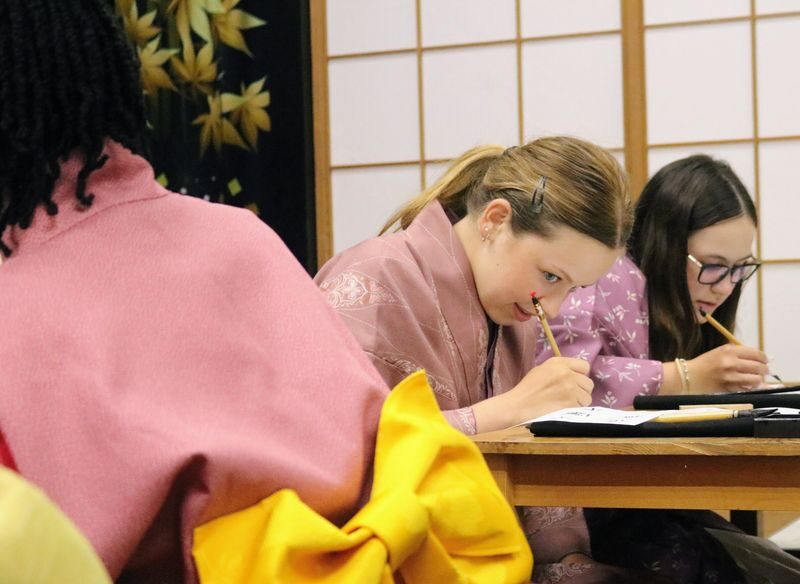
You don’t need to arrive with artistic skill. The class is aimed at beginners, and you’ll have practice paper before you make a finished piece. That matters: calligraphy can look simple when someone else does it, but controlling a brush takes patience. A few guided attempts help you see what your hand is doing rather than just repeating a shape without knowing why.
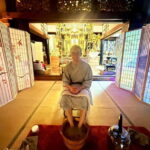
The experience is described as a lesson in the Zen of calligraphy. In practical terms, that means slowing down, paying attention, and trying to keep your mind quiet as you write. It isn’t a meditation retreat, and you shouldn’t expect a long session of formal meditation. The focus is on learning a traditional art through calm, careful practice.

👉 See our pick of the The Top 15 Workshops & Classes In Osaka
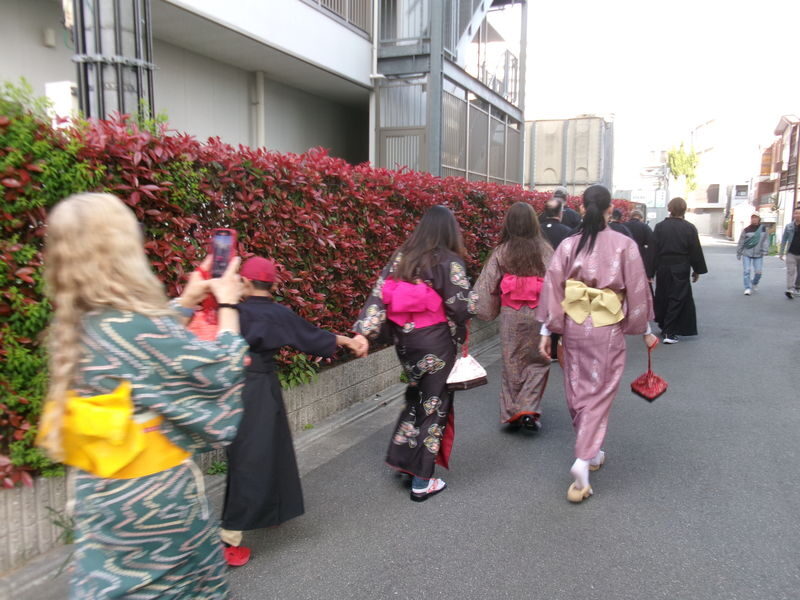
Change into a kimono before you begin
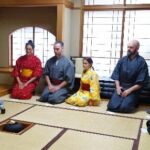
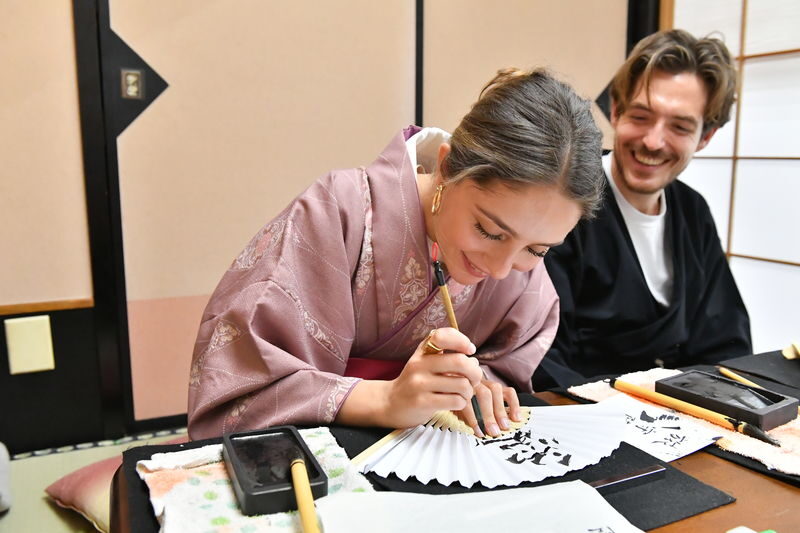
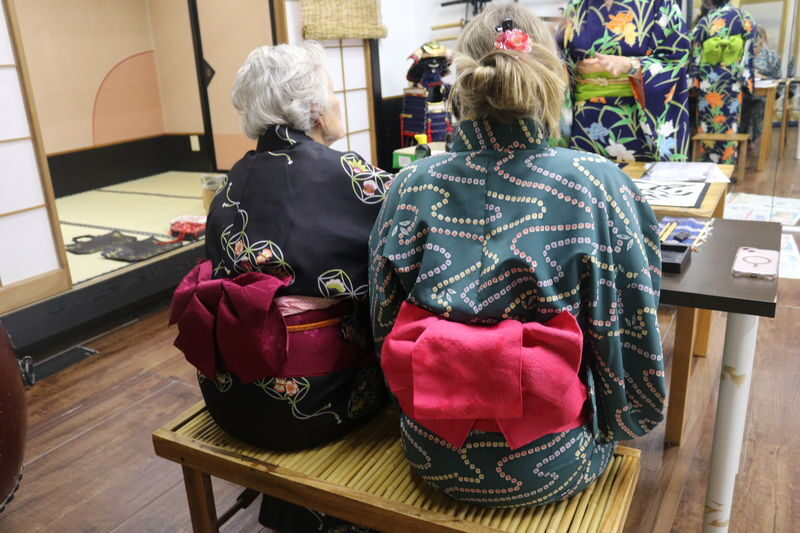
You’ll start by changing into Japanese-style clothing, with kimono and hakama options. Clothing is included in the listed price, along with the calligraphy tools and a bag for your work. Bring an undershirt and underpants, as requested. If you wear hakama, empty your pockets before changing so small items don’t slip out.
The change of clothes adds a sense of occasion, but it’s worth keeping expectations practical. One group of five found the range of kimono choices limited, while another visitor described a good selection. The range may depend on what is available that day, so don’t count on a particular colour or style.
The venue has changing space and lockers, though storage fees may apply. If sitting on the floor in seiza is uncomfortable, ask for a desk and chair. You can still work on your calligraphy without forcing yourself into a position that distracts from the lesson.
You can also read our reviews of more tours and experiences in Osaka.



Learn brush control one stroke at a time
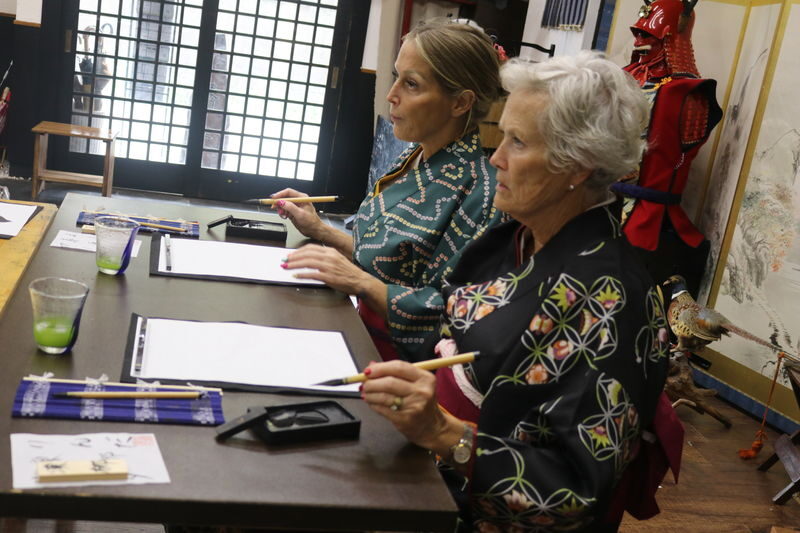
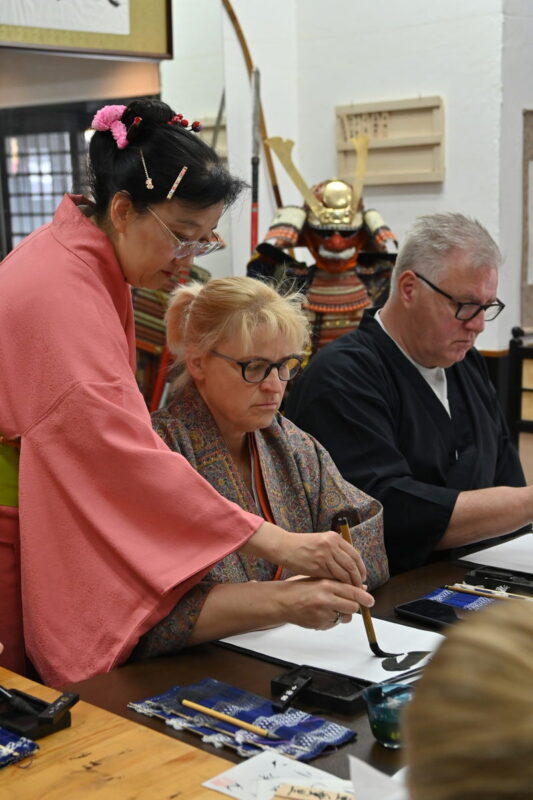
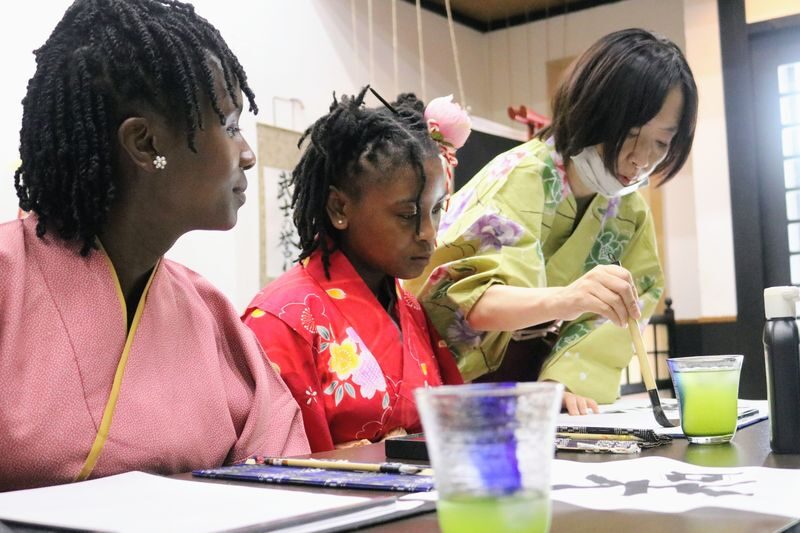
Once you’re dressed, the instructor introduces the tools and shows you how to handle the brush. You’ll practise the order and direction of strokes, then repeat the movements on practice paper. This is the useful part of the class: you get a chance to understand the technique before you try to make something worth keeping.
Expect a hands-on lesson rather than a lecture. The teacher demonstrates, you follow, and you can ask questions as you work. Past classes have been led by an instructor named Kaori, who is described as patient and clear. Instructors and language support may vary, however, so don’t assume the same person will lead every session.
English-speaking staff and a guide are included, and the activity is presented as suitable for beginners. Still, one participant reported a serious communication problem with an instructor who spoke no English. If clear explanations are essential for you, contact the operator before booking to confirm what English support will be available for your date.
The class can also vary in atmosphere. One visitor found a nearby samurai activity distracting, which is worth bearing in mind if you’re hoping for complete silence. The venue may be calmer after 2 pm, when it is less busy and can become a private experience, but that isn’t guaranteed.
Choose a kanji, then give your name a Japanese form
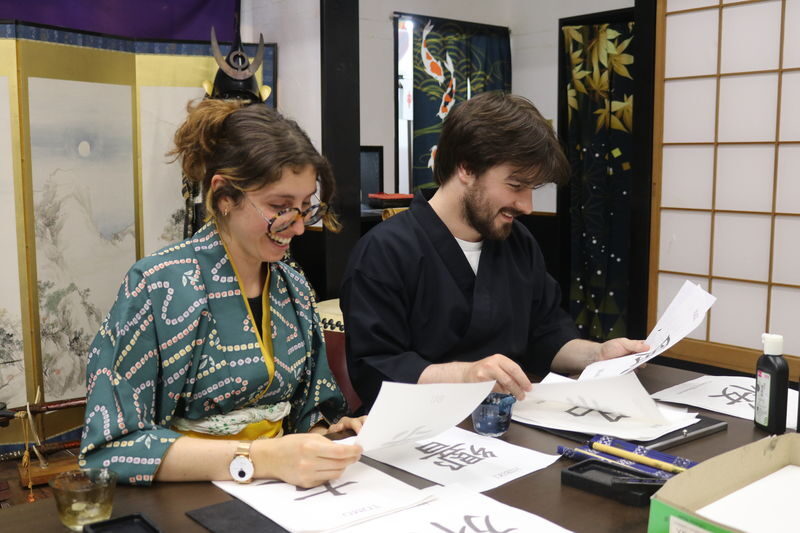
After practising basic technique, you’ll work with a kanji character of your choice. The available characters come from a selection, so this isn’t an open-ended lesson in choosing any character in the language. The instructor can explain what your chosen character means, giving you a reason to care about the shape you’re learning to write.
A personal name adds another layer. The teacher may apply kanji to a foreign name and suggest a Japanese-style name written in those characters. Since kanji carry meaning, ask what each character represents and how it relates to your name. That explanation can turn a souvenir into a small language lesson, not just a decorative translation.
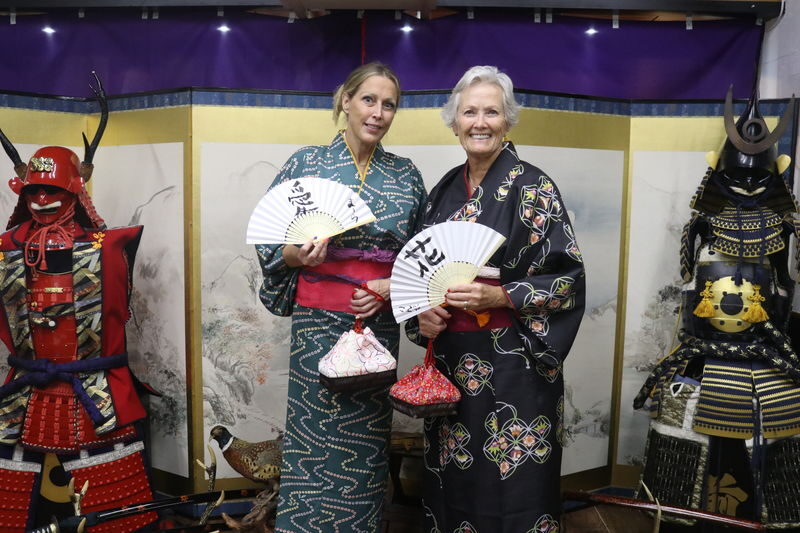
The name activity is one of the most distinctive parts of the experience. Several participants valued having their names prepared or interpreted for them, and some wrote their names on a fan. The exact finished item may depend on the session, so ask what you’ll be able to choose before you begin.
Make a finished piece to take home
After practice, you’ll write your chosen kanji on calligraphy paper, using the technique you’ve learned. This is the moment when the lesson becomes a keepsake. Your lines may not look like the instructor’s, and they don’t need to. The point is to bring together the character, its meaning, and the brushwork you’ve been practising.
The class provides calligraphy tools and a bag for your work. The instructor also writes your artwork on a bag and your name in Japanese characters on a wooden tag. Some participants have made a fan or a piece on display-ready card stock, so ask which options are available for your booking. Traditional Japanese hanging scrolls carry an extra charge of ¥2,200, payable on site.
You may be able to keep practice pages too. If you like seeing how your hand improved over the lesson, ask before you leave rather than assuming every sheet will be packed up for you.
Get photos without turning the class into a photo stop
Photos are taken during the activity, and the image files are sent to an email address you provide. That’s a nice extra: you can focus on writing instead of asking someone in your group to document every step. The photos also record the kimono or hakama, your brushwork, and the finished artwork.
Treat this as a record of the lesson, not a professional photo shoot. Image quality has been described as mixed, and the nearby area is not necessarily a scenic backdrop. Flash photography inside the attraction is prohibited, so don’t bring a flash-based setup or expect to stage your own shots with flash.
The class itself is the best setting for your photos. If you want pictures around Osaka Castle as well, plan that separately. The workshop is near the castle, but it takes place at SAMURAI HONOR, not inside the castle grounds.



Understand the value of the $52.15 starting price
At a starting price of $52.15, this is a reasonable choice if you want an activity that combines instruction, traditional clothing, and a take-home object. The price includes an English-speaking guide and staff, a certified professional instructor, a welcome gift, tax, clothing, calligraphy tools, and photos sent by email. That’s more than a short demonstration: you get time to practise and make your own work.
The value depends on what you want from a cultural activity. If your main goal is a quiet, highly individual lesson, a large group or a neighbouring class could be a drawback. If you like learning a practical skill and coming away with something personal, the included clothing and keepsakes make the price easier to justify.
Budget for extras if you want a traditional hanging scroll. The listed surcharge is ¥2,200, payable at the venue. There is also a stated ¥6,600 deposit for an additional participant; confirm with the operator what applies to your booking before making plans around it. Transport, accommodation, hotel transfers, and personal expenses are not included.
Plan your arrival near Osaka Castle
The meeting point is SAMURAI HONOR at Excellence Takayama in Osaka’s Joto Ward. The address information gives 2-3-19 in the area name, and the venue is described as a one-minute walk from Osaka Business Park Station and around one to two minutes from JR Osaka-jo Koen Station. JR Kyobashi Station is about a ten-minute walk away.
Because the address appears with slightly different spellings in the supplied location details, use the map attached to your booking and check the venue name before setting off. The workshop is open daily from 10 am to 9 pm, with last admission at 8 pm. Your voucher is valid only on the date and time booked, so arrive at the stated meeting point rather than relying on a walk-in.
The activity does not include transport or hotel pickup. If you’re combining it with a visit to Osaka Castle, allow time to get between the workshop and the sights you want to see. Nearby does not mean the class takes place at the castle.
Decide if this is the right kind of Osaka activity
This workshop suits you if you want a hands-on cultural activity, enjoy making things, or are curious about Japanese writing. It also works for families with children aged six and up. Children aged six to ten must attend with a paying adult, and children aged eleven and older pay the adult rate. Infants are not recommended.
You don’t need prior calligraphy experience, and the stated fitness level is beginner. A chair and desk are available if sitting in seiza is difficult. Child seats are not available, and pets are prohibited. Outside food and drink are not allowed, and the venue may refuse service to anyone who appears intoxicated without a refund.
For a quieter experience, consider a time after 2 pm, when the venue is said to be less busy and may offer a private session. If the exact instructor, language support, or souvenir format matters to you, confirm those details in advance. You can cancel for a full refund at least 24 hours before the activity date, using the destination’s local time.
Should you book it?
Book this if you want more than a quick photo in traditional clothes. You’ll learn the basics of brushwork, practise a chosen kanji, and explore how your name can be represented in Japanese characters. The personalized tag, artwork, and emailed photos give you tangible reminders of the class.
Look elsewhere if your priority is a silent, guaranteed one-to-one lesson or a scenic photo location. Group size and activity in the adjoining space can affect the mood, and language support is worth checking before you go. For a practical introduction to calligraphy close to Osaka Castle, though, this offers a worthwhile mix of learning, dressing up, and making something of your own.
Learn Japanese calligraphy and Zen while wearing a kimono
“this was an absolutely incredible experience, everyone was so kind and patient! i came away so so many cute, unique souvenirs, and photos to rememb…”
FAQ
How much does the calligraphy experience cost?
The listed starting price is $52.15. A traditional Japanese hanging scroll costs an additional ¥2,200, payable on site.
Do I need calligraphy experience?
No. The activity is suitable for beginners, and no prior experience is needed.
What is included in the price?
The package includes kimono clothing, calligraphy tools, a bag for your work, an English-speaking guide and staff, a certified professional instructor, a welcome gift, tax, and photos sent to an email address you provide.
Where does the activity take place?
The meeting point is SAMURAI HONOR at Excellence Takayama in Osaka. It is near Osaka Castle and a short walk from JR Osaka-jo Koen Station and Osaka Business Park Station.
Can children take part?
Yes. Participants must be at least six years old. Children aged six to ten must be accompanied by a paying adult, and children aged eleven and older are charged the adult rate.
What should I bring, and what if I can’t sit on the floor?
Bring an undershirt and underpants for changing into the kimono or hakama. Desks and chairs are available if sitting in seiza is difficult.