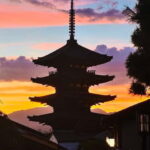
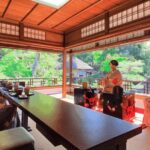
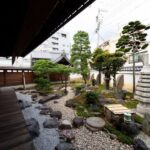
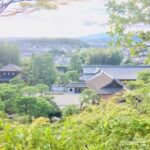
Nara’s deer, Fushimi Inari’s long red tunnels, and Arashiyama’s mountain scenery are three very different sides of Japan, packed into one day from Osaka. This is a practical way to reach them without working out separate train connections, but you’ll need to keep an eye on the clock at every stop.
I like two things in particular: the chance to feed Nara’s deer with a cracker provided for the group, and the contrast between the vermilion torii gates at Fushimi Inari and the quiet Zen garden at Tenryu-ji. You also get several hours in Arashiyama, the longest stop of the day.
The trade-off is pace. Nara and Fushimi Inari each get about an hour, and traffic or weather can change the schedule. If you want long temple visits, a full hike through the torii gates, or a slow meal in Arashiyama, this group trip may feel rushed.
- Nara’s deer crackers are included: Each group receives one, or two for a group of four to six. Extra crackers are not promised.
- Fushimi Inari is a short visit: You get about 1 hour 20 minutes, enough to see the famous gates but not necessarily to walk the full mountain route.
- Arashiyama gets the most time: Plan on roughly three hours for the area, including its bamboo paths and Togetsukyo Bridge.
- The Sagano Scenic Railway costs extra: The train ticket is not included, and time or capacity may affect whether you can fit it in.
- You can return to Kyoto or Osaka: Kyoto Station is the earlier listed drop-off; Osaka’s Nipponbashi is listed for around 18:00.
- Expect a shared, fixed-route tour: Pickups outside the designated points are not provided, and the vehicle may range from a van to a large bus.
- One day, three very different stops
- Nara Park: deer, crackers, and a long walk to Todai-ji
- Fushimi Inari: a brief walk beneath the red gates
- Arashiyama: three hours for river views and temple calm
- Shared transport makes the route possible, with limits
- What the price covers, and what it may not
- Timing, meeting details, and the return journey
- Who will get the most from this day trip
- Should you book it?
- FAQ
- Where does the tour depart from?
- Where can I get off at the end of the tour?
- How long do you spend at each stop?
- Are deer crackers included?
- Is the Sagano Scenic Railway included?
- What languages does the guide speak?
- Is temple admission included?
- How much luggage can I bring?
- Can young children join the tour?
- Can I cancel and get a refund?
- The Best Of Kyoto!
- More 1-Day Tours in Kyoto
- More Tours in Kyoto
- More Tour Reviews in Kyoto
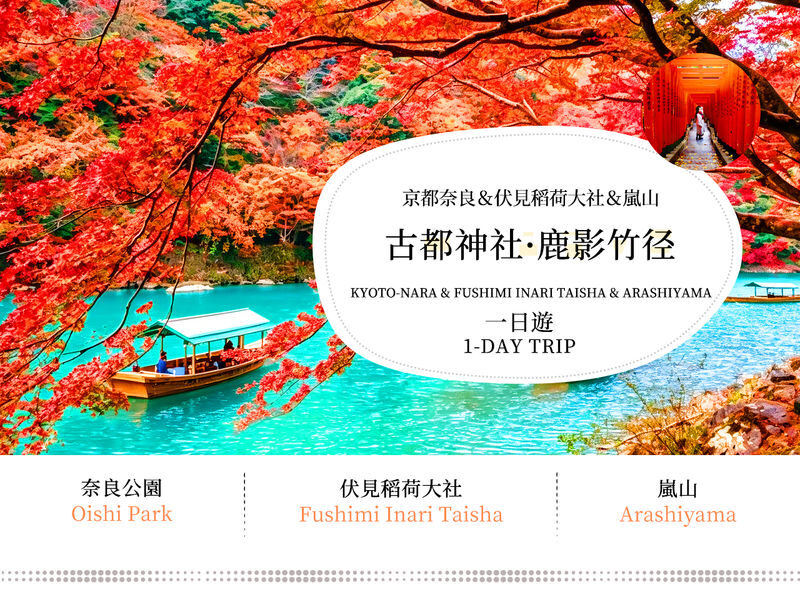
One day, three very different stops
 1 / 6
 2 / 6
 3 / 6
 4 / 6
 5 / 6
 6 / 6
This trip links Nara, Fushimi Inari, and Arashiyama in a single loop from Osaka. The appeal is range: you can meet Nara’s free-roaming deer, visit one of Kyoto’s best-known shrines, and finish among Arashiyama’s river, hills, and temple gardens without arranging the transport yourself.
That convenience comes with a clear limit. You are joining a shared group, not hiring a private driver, and the stop lengths are set to keep the whole route moving. I’d choose this tour to get a first look at the region’s highlights, not to study each site at leisure.
The experience is described as including Tenryu-ji Temple and its Zen garden, but the detailed schedule gives three hours for the wider Arashiyama area rather than a separate timed temple visit. Admission to attractions is not clearly listed among the inclusions, so check the selected package details before booking and be ready for possible entrance costs.

👉 See our pick of the We Rank Kyoto’s 15 Top Workshops & Classes
Nara Park: deer, crackers, and a long walk to Todai-ji
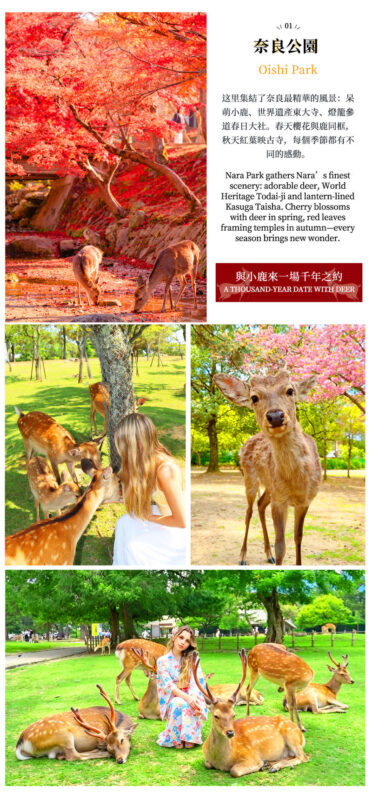
The day begins with a scheduled visit to Nara Park at about 09:00, for around one hour of self-guided time. The park is known for roughly 1,200 deer that roam freely. You can buy deer crackers, and the tour includes a small group allowance: one cracker for each group, or two if the group has four to six people. That is a taste, not a full supply for a large group.
The deer encounter is the stop’s most immediate pleasure. Keep your food secure, follow posted guidance, and don’t assume the deer will behave like tame pets. They are wild animals, and a cracker is a good reason for them to come close.
Nara Park also places several major historic sites within reach, including Todai-ji, Kasuga Grand Shrine, and Kofuku-ji. Todai-ji is famed for its enormous wooden temple building and Buddhist statue, but getting there can take time. Parking restrictions mean the vehicle may not be able to stop close to the temple, and the walk can eat into your one-hour window.
That warning matters. If seeing Todai-ji is your priority, ask the guide how much time the route allows on the day. The tour operator recommends Nara Park as an alternative because the temple approach may strain the schedule. With only an hour, you may have to choose between lingering with the deer and making the walk to the temple.
The park changes with the seasons. Cherry blossoms are a spring draw, while autumn brings colorful leaves, but the timing depends on nature. Don’t book around a promised bloom or peak foliage date.
You can also read our reviews of more tours and experiences in Kyoto

Fushimi Inari: a brief walk beneath the red gates
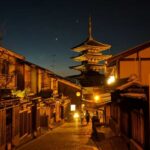
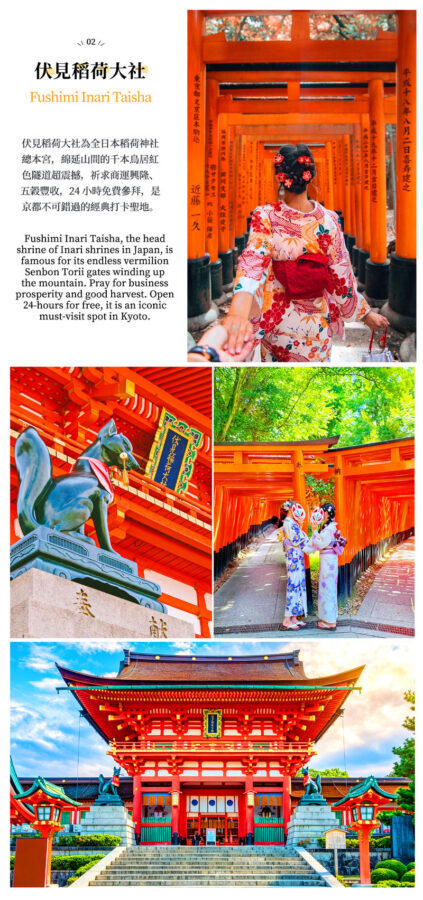
Around 11:00, the group reaches Fushimi Inari-taisha for about 1 hour 20 minutes of independent time. The shrine is dedicated to Inari Okami, associated with harvests and business prosperity. Its famous Senbon Torii are rows of vermilion gates that form striking passages up the hillside.
You’ll have time to enter the shrine grounds and walk through part of the torii route. The gates are a memorable sight, but the time allowance is not designed for a full mountain hike. If you want to explore farther, keep a close watch on the meeting time and turn back early enough to return to the vehicle.
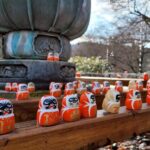
The fox-shaped votive tablets, called ema, offer a small detail to look for. You can write or draw on them, adding a personal stop to a place that can otherwise feel like a steady stream of photo opportunities.
Fushimi Inari’s popularity can make the paths crowded, and the schedule may shift with traffic or visitor numbers. Treat this as a focused visit rather than a quiet shrine stay. Comfortable walking shoes will help on the paths and steps.
Arashiyama: three hours for river views and temple calm
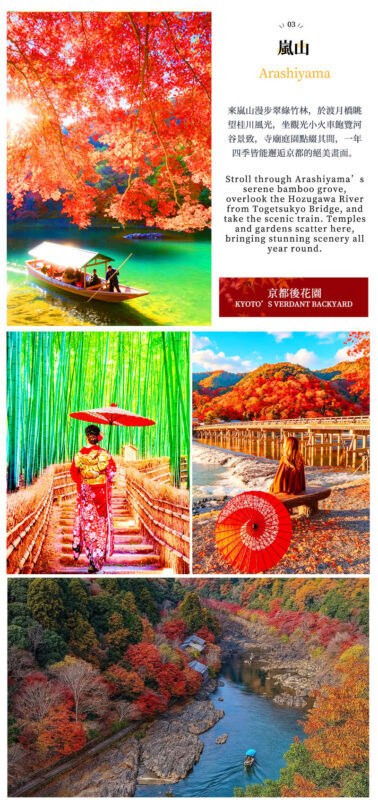
The longest stop begins at about 13:20, with roughly three hours in Arashiyama. This gives you more room to choose how to spend your time than at the earlier stops, though it still won’t cover every corner of the area.
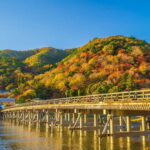
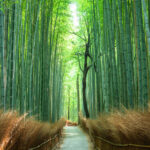
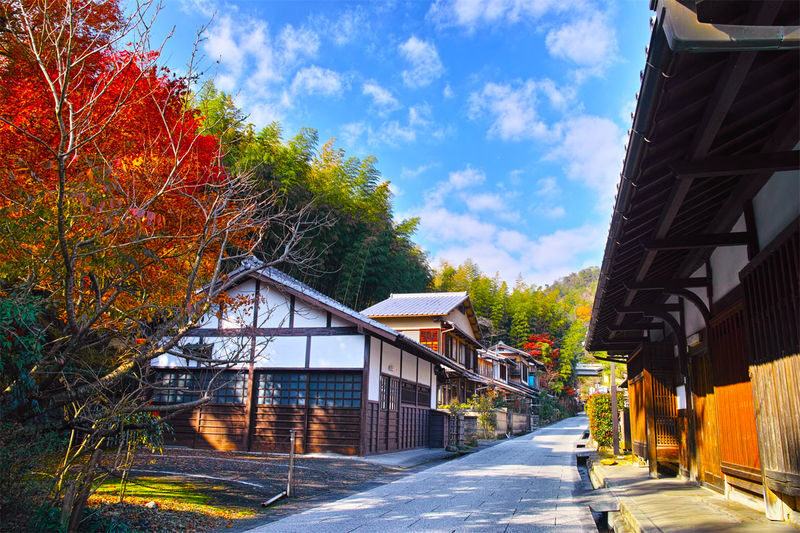
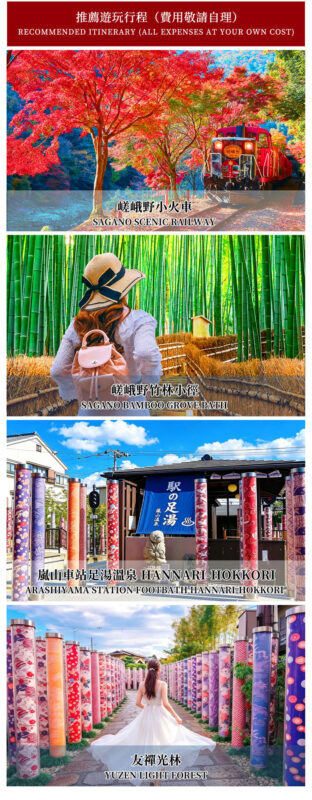
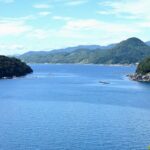
The bamboo grove is known for its tall green stalks and shaded walking paths. Togetsukyo Bridge crosses the Katsura River, with mountains in the distance. The setting changes through the year: spring brings blossoms, while autumn foliage draws visitors for its reds and golds. Seasonal color is never guaranteed on a particular date.
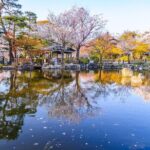
Tenryu-ji is another key draw, especially for visitors interested in Zen gardens. The tour description includes the temple as a World Cultural Heritage Site, but the schedule does not give it a separate admission allowance. Before you set off, confirm whether entry is covered in your chosen package and leave enough time to reach the group meeting point.
You may also want to ride the Sagano Scenic Railway through the valley. Its ticket is specifically not included, and the timetable, capacity, and your available stop time can affect whether it works. Don’t buy a ticket without checking the day’s schedule with the guide.
Three hours sounds generous after the short earlier stops, but it can pass quickly if you want the bamboo grove, bridge, temple, lunch, and train. Choose your priorities before arriving. If the railway is essential, it may be wiser to skip another activity than to try to fit everything in.
Shared transport makes the route possible, with limits
Round-trip transfers, tolls, parking, and fuel are included. The vehicle is shared with other people, and the operator may use anything from a Toyota Alphard or HIACE to a small or large bus, depending on group size. In smaller groups, the driver may also act as guide, with shorter explanations while focusing on the road.
The tour is listed with English, Chinese, and Japanese guide service. The precise language arrangement and staffing can vary. A Korean-speaking guide was provided on one occasion despite not being expected, but Korean is not among the languages promised here, so don’t count on it.
This is a fixed-route outing. The vehicle stops only at designated places, and temporary pickups or drop-offs are not offered. You cannot leave midway and expect the unused part to be refunded.
Luggage rules are strict: each person may bring one free piece. Extra pieces cost JPY 2,000 each, paid to the driver or guide, and should be declared when booking. If the vehicle cannot take the group’s luggage, the operator can refuse boarding without a refund, so pack light and be upfront.
What the price covers, and what it may not
The lowest listed price is $44.79. Other package choices are listed from $56.79 and $70.99, including an option described as adding a one-way Sagano Scenic Railway experience. Package names and details are similar, so compare what each one actually includes before paying. The railway ticket is otherwise noted as excluded.
At the lower price, the main value is the long-distance transport and the ability to visit three headline areas in one day. You avoid arranging the connections yourself, and included fuel, tolls, and parking reduce the number of separate travel costs to manage. For a first visit with limited time, that can be worth more than the low fare alone suggests.
The price is less compelling if you prefer to move at your own pace or want guaranteed time inside each temple. The schedule does not clearly say that temple admission is included, and the deer-cracker allowance is limited. Keep some room in your budget for any tickets, food, or extra deer crackers you choose to buy.

Timing, meeting details, and the return journey
Departure is scheduled for 08:00. Arrive at the designated meeting point at least 15 minutes early. The exact departure location is not provided in the details here, so check your booking confirmation and the operator’s email rather than assuming a familiar Osaka landmark.
The guide and vehicle information should arrive by email the day before, between 16:00 and 22:00 Japan time. If several messages arrive, use the latest one. The guide will not contact you in advance, and late arrivals or no-shows are not refunded.
The return schedule lists Kyoto Station’s Hachijo Exit at about 16:40, and Osaka’s Nipponbashi Exit 2 at about 18:00. Return departures begin around 16:00, and actual arrival times can change with road conditions or a faster schedule. Leave the evening open rather than booking a dinner, train, or other timed activity you cannot miss.
The order and length of stops can change because of traffic, weather, crowds, or other conditions. Some attractions may be skipped due to capacity or weather. That flexibility helps the operator keep the day moving, but it means you should treat the schedule as a guide rather than a guarantee.
Who will get the most from this day trip
I’d recommend this tour if you’re staying in Osaka, have one day for Nara and Kyoto, and value straightforward transport over a slow, independent visit. It suits first-time visitors who want a taste of several famous sights and are comfortable making quick choices at each stop.
It is a weaker fit if your main goal is to hike the full Fushimi Inari route, spend a long time at Todai-ji, or explore Arashiyama without watching the clock. Families should note that children aged three and older pay the adult rate, children aged zero to two travel free only if they do not need a separate seat, and child seats are unavailable.
The activity is not recommended for people with certain medical conditions, including high blood pressure or epilepsy. People aged over 70 need to present a medical certificate, and those over 70 and pregnant participants must request and return a liability waiver at least one day ahead. Pets are not allowed.
Should you book it?
Book this trip if you want a low-cost, guided way to connect Nara Park, Fushimi Inari, and Arashiyama in one day, and you can accept short visits and schedule changes. The best parts are the playful deer encounter, the striking torii gates, and the longer stretch in Arashiyama.
Skip it if you want unhurried temple visits or a full walk through Fushimi Inari’s gates. For the strongest experience, travel light, choose your Arashiyama priorities in advance, confirm the meeting point and package inclusions, and keep your return evening free.
Nara Deer & Fushimi Inari-taisha Shrine & Arashiyama Day Trip (Departing from Osaka)
“It was wonderful! Feeding the deer rice crackers in Nara Park was so much fun, haha. I was a bit of a troublesome customer, as I was late on the fi…”
FAQ
Where does the tour depart from?
The tour departs from Osaka at 08:00. Check your confirmation and the day-before email for the exact meeting point and vehicle details.
Where can I get off at the end of the tour?
The listed return points are Kyoto Station’s Hachijo Exit and Nipponbashi Exit 2 in Osaka. The expected arrival times are about 16:40 and 18:00 respectively, but traffic can change them.
How long do you spend at each stop?
The schedule allows about one hour at Nara Park, 1 hour 20 minutes at Fushimi Inari-taisha, and three hours in Arashiyama. Times and stop order can change.
Are deer crackers included?
Yes. Each group receives one deer cracker, or two if the group has four to six people. They are complimentary, and no refund is given if they run out.
Is the Sagano Scenic Railway included?
The railway ticket is not included in the standard tour details. A separate package is described as including a one-way experience, so check its exact inclusions before booking.
What languages does the guide speak?
Guide service is listed in English, Chinese, or Japanese. The guide and vehicle information is sent by email the day before the tour.
Is temple admission included?
The included items do not clearly specify admission to the temples. Check the package details before booking and allow for the possibility of separate admission costs.
How much luggage can I bring?
One piece of luggage per person is free. Each extra piece costs JPY 2,000 and should be declared when booking.
Can young children join the tour?
Children aged zero to two can join free if they do not occupy a separate seat. Children aged three and older pay the adult rate. Child seats are not available.
Can I cancel and get a refund?
A full refund is available if you cancel at least 24 hours before the activity date, in local destination time. If extreme weather or an unforeseen event leads the operator to cancel, you can reschedule or request a full refund.