Mass Extinctions: BIG FIVE puts the story of Earth’s five great extinction events at the center of a museum visit in Osaka. I like that admission also covers the permanent exhibition, and that you can buy a ticket in advance for a smoother arrival at the counter.
I also like the setting inside Nagai Park, which gives you room to pair the museum with time outdoors. The main consideration is space: the special exhibition area is not large, and it can feel cramped when crowded.
- At a glance
- Seeing the Big Five in Osaka
- A compact special exhibition, plus the permanent collection
- Making the most of Nagai Park
- Getting to the Nature Hall
- Timing your visit carefully
- Is the ticket good value?
- Who should book Mass Extinctions: BIG FIVE?
- FAQ
- Where is Mass Extinctions: BIG FIVE held?
- When does the exhibition run?
- What are the opening hours?
- Is the museum open on Mondays?
- What does the ticket include?
- How do I redeem the ticket?
- Can I leave and come back in?
- How do I get to the museum by train?
- Are there any admission requirements for students or children?
- The Best Of Osaka!
- More Museum Experiences in Osaka
- More Tours in Osaka
- More Tour Reviews in Osaka
At a glance
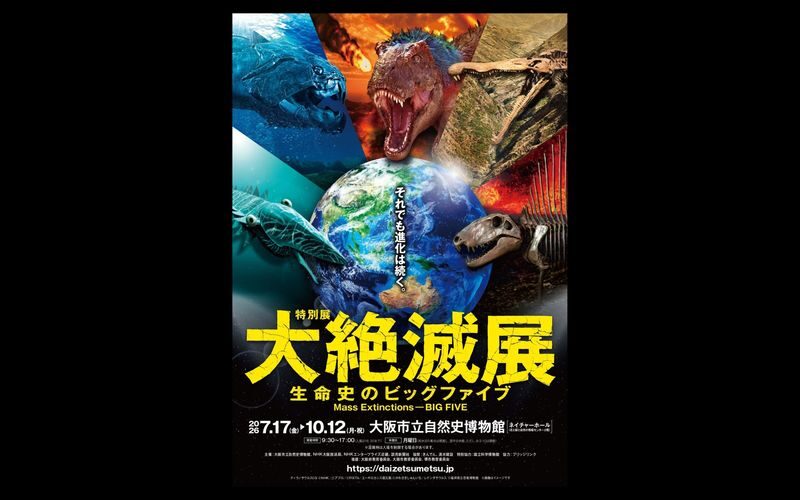
- Five extinction events take center stage: The exhibition title frames the show around the Big Five, with fossils and large models among the displays.
- Your ticket covers two exhibitions: Admission includes Mass Extinctions: BIG FIVE and the museum’s permanent exhibition on the same day.
- The special exhibition is compact: Expect an exhibit you can visit as part of a museum outing, not a sprawling hall that fills an entire day.
- Crowds can affect the visit: The exhibition space may feel tight, and numbered entry tickets or other restrictions may be used when it is busy.
- Nagai Park adds an outdoor option: The museum is in Nagai Park, so you can make a broader outing of your visit.
- Plan around the calendar: The exhibition runs July 17 to October 12, 2026, and the museum normally closes on Mondays.

👉 See our pick of the The Top 15 Workshops & Classes In Osaka
Seeing the Big Five in Osaka
Mass Extinctions: BIG FIVE takes on a huge subject in a focused setting: the major extinction events that changed life on Earth. Fossils and large models give the exhibition a visual hook, while the topic itself invites you to think beyond individual specimens and consider how life changes over time.
That combination should suit curious adults and families with school-age children. A fossil can be impressive on its own, but the extinction theme gives you a useful question to carry through the display: what does the evidence tell us about life before and after a major change? The available information does not specify the full exhibit sequence or list each extinction event, so I would avoid arriving with a fixed expectation of particular specimens or sections.
The exhibition is held in the Nature Hall on the second floor of the Flower, Greenery and Nature Information Center at Osaka City Museum of Natural History. It is a special exhibition within a larger museum visit, rather than a separate attraction with a full-day program. That matters if you are planning a busy Osaka itinerary: you can make the exhibition your main reason to come, then use the permanent collection to extend the visit.
There is no guide or guided tour specified with this ticket. Plan to explore at your own pace, reading the displays and taking time with the models and fossils that catch your eye.
You can also read our reviews of more museum experiences in Osaka

A compact special exhibition, plus the permanent collection
The main trade-off is the size of the special exhibition. It is not as large as some visitors may expect, so you should think of it as a concentrated show rather than a long sequence of enormous galleries. If you enjoy a focused topic and clear visual displays, that can be a strength. If you want a full day devoted to the Big Five alone, the space may feel limited.
Crowds can make that limitation more noticeable. In a tight exhibition area, even interesting displays are harder to enjoy when people are gathered close together. The museum may use numbered entry tickets or other admission controls if congestion rises, so give yourself some flexibility rather than planning a tight appointment immediately afterward.
The permanent exhibition is an important part of the ticket’s value. You can visit it on the same day, giving you more to see after the special show and a wider natural-history context for the fossils and models. The ticket does not promise re-entry, though, so take your time before leaving the museum.
The special exhibition and permanent collection work best as one combined visit. Start with the temporary show if it is your priority, then move on to the permanent exhibition. Or, if the special exhibition is crowded when you arrive, ask staff about any entry restrictions and use your time sensibly. The key point is to keep both exhibits within the same day and not leave the venue expecting to come back in.
Making the most of Nagai Park
The museum sits in Nagai Park, which gives this outing a useful extra dimension. You can pair indoor exhibits with time outside, a welcome option if you are visiting with children or simply want a pause between museum rooms. The park itself is not listed as a ticketed inclusion, but it is part of the setting around the museum.
This makes the experience easier to shape around your interests. If fossils are your main draw, focus on the special and permanent exhibitions. If you want a slower day, allow time for the park as well. Just remember that the ticket covers museum admission, not personal expenses, and there is no re-entry after you exit.
The experience is also a reasonable choice if you are looking for something beyond Osaka’s best-known city sights. It offers a subject-specific museum visit in a quieter, greener setting, without requiring a full-day commitment to the special exhibition. The payoff depends on your interest in natural history: the theme is broad and thought-provoking, but the temporary display itself is compact.
Getting to the Nature Hall
The address for the museum is 1-23 Nagai Koen, Higashisumiyoshi Ward, Osaka. The exhibition entrance is in the Nature Hall, on the second floor of the Flower, Greenery and Nature Information Center. Check the map before setting out so you know you are heading to the correct building within the park.
From Nagai Station on the Osaka Metro Midosuji Line, the museum is about 800 meters east of South Ticket Gate Exit 3. From Nagai Station on the JR Hanwa Line, it is about one kilometer east of the east exit. If you are coming from Yada Station on the Kintetsu Minami-Osaka Line, the museum is about 1.8 kilometers west.
Osaka City Bus routes 4 and 24 also serve nearby stops: Nagai Higashi and Nagai Higashi 2, respectively. The Metro or JR station options offer a clear walking approach, while the bus may be useful depending on where you are staying. Check current transit details before you travel, since the provided directions do not include journey times or service frequencies.
Timing your visit carefully
The exhibition runs from Friday, July 17, through Monday, October 12, 2026, a national holiday. Opening hours are 9:30 a.m. to 5 p.m., with last admission at 4:30 p.m. Arriving well before the last entry gives you more breathing room to see both exhibitions.
The museum is normally closed on Mondays. When a Monday is a national holiday, it stays open and closes on the following weekday instead. It is also scheduled to open on August 3 and August 10, so check the calendar rather than assuming every Monday follows the usual closure pattern.
The ticket is for a single entry during the exhibition period. The voucher is valid until October 12, 2026, at 4:30 p.m., and the stated effective usable date is October 12, 2026. Since the package is described as a same-day ticket, check the date and validity shown when you book, and confirm the official exhibition information before your visit in case arrangements have changed.
You redeem the ticket by presenting your mobile voucher. Keep it intact: a ticket becomes invalid if torn or detached. Admission restrictions, including numbered entry tickets, may be introduced if the venue is congested. These rules are straightforward, but they make it wise to avoid relying on a last-minute arrival.


Is the ticket good value?
No ticket price is provided here, so I cannot judge value by comparing a specific cost with other Osaka attractions. The clearest value point is that one admission includes both the special exhibition and the permanent exhibition on the day you enter. If you plan to see both, the ticket offers more than access to the temporary show alone.
Value also depends on what you want from the outing. For someone keen on fossils, large models, and the story of mass extinction, the subject matter gives the visit a clear focus. For someone expecting a vast exhibition that takes several hours by itself, the compact space may disappoint. The permanent exhibition and the nearby park help make the trip feel more rounded.
The open-ticket wording should not be mistaken for unlimited flexibility after entry. Admission is a single visit, re-entry is not allowed, and the voucher has a stated end date. Check the date and opening calendar before you commit your day to the museum.
Who should book Mass Extinctions: BIG FIVE?
I would put this on the list for natural-history fans, families with children who enjoy fossils, and visitors looking for a thoughtful museum stop in Osaka. The large models and fossil displays offer visual appeal, while the extinction theme gives the visit more substance than a display of objects without a clear thread.
It is less suited to anyone who needs a long, roomy exhibition experience or wants to come and go freely. The special show is compact, it may get crowded, and you cannot re-enter after leaving. You will get the most from it if you arrive with enough time, see the permanent exhibition on the same visit, and treat the park as a pleasant extra rather than part of the admission ticket.
Special Exhibition: Mass Extinctions – BIG FIVE
“Since I was able to purchase tickets in advance, I was able to enter smoothly at the counter on the day of my visit. The staff were also accustomed…”
FAQ
Where is Mass Extinctions: BIG FIVE held?
It is at Osaka City Museum of Natural History’s Nature Hall, on the second floor of the Flower, Greenery and Nature Information Center, at 1-23 Nagai Koen, Higashisumiyoshi Ward, Osaka.
When does the exhibition run?
The exhibition period is July 17 through October 12, 2026.
What are the opening hours?
The listed hours are 9:30 a.m. to 5 p.m. Last admission is at 4:30 p.m.
Is the museum open on Mondays?
The museum is generally closed on Mondays. If Monday is a national holiday, it stays open and closes the following weekday instead. It is also open on August 3 and August 10, 2026.
What does the ticket include?
It includes admission to Mass Extinctions: BIG FIVE and the museum’s permanent exhibition on the day of entry.
How do I redeem the ticket?
Present your mobile voucher at the venue.
Can I leave and come back in?
No. Re-entry is not allowed after you leave the venue.
How do I get to the museum by train?
From Nagai Station on the Osaka Metro Midosuji Line, it is about 800 meters east of South Ticket Gate Exit 3. From the JR Hanwa Line’s Nagai Station, it is about one kilometer east of the east exit.
Are there any admission requirements for students or children?
High school and university students must show a valid student ID. Preschool children and holders of a Disability Certificate are admitted free, with up to one accompanying caregiver also admitted free when valid proof is presented.