
Can you walk Brussels Old Town without a guide and still actually get it? You can absolutely walk it. Whether you’ll get it is the part nobody warns you about. Brussels hides its best stories behind plain doorways, in dead-end alleys, and on building corners that look like nothing until somebody points up.
For tasters: Legends of Brussels Historical Walk with chocolate and waffle tasting from around $42. Smaller groups, livelier guides on the food side.
Want everything in your mouth: Walking and Tasting Tour from around $85, with waffle, fries, chocolate and Belgian beer included.
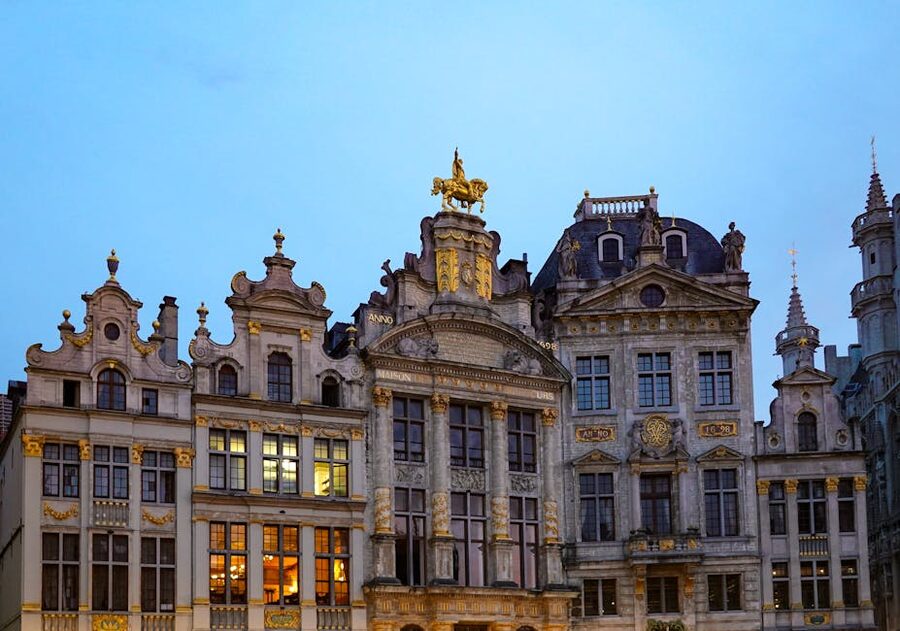
Brussels is genuinely walkable. The historic core is small, mostly flat in the Lower City, and packed so tight you can hit Grand Place, Manneken Pis, the Galeries Saint-Hubert, the Cathedral and Mont des Arts in a couple of hours of easy strolling. The catch is that nine out of ten visitors hit those exact spots, take a few photos, and leave with no idea what they just looked at. A guided walking tour is what bridges the gap between sightseeing and understanding.
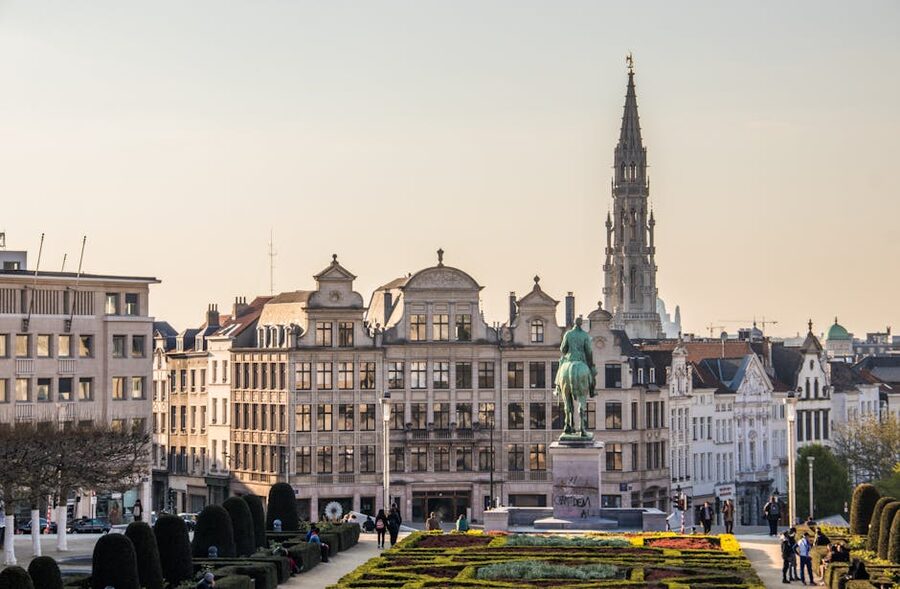
I’ll walk you through how Brussels guided walks actually work, what they cover, what to skip, where they go wrong, and the three tours I’d actually book.
- What a Brussels Walking Tour Actually Covers
- The bit nobody mentions in the booking page
- The Three Tours I’d Actually Book
- 1. Brussels: Guided Walking Tour:
- 2. Legends of Brussels: Historical Walking Tour with Chocolate and Waffle Tasting:
- 3. Brussels Walking and Tasting Tour:
- Grand Place: Why It’s the World’s Most Beautiful Square
- What you’re actually looking at
- The flower carpet, every two years
- Manneken Pis vs Jeanneke Pis: The Real Question
- The statue everyone misses
- The Galeries Royales Saint-Hubert: Older Than Every Other Arcade
- Neuhaus and the praline
- Mont des Arts: The Hinge Between Lower and Upper City
- The Cathedral of St Michael and St Gudula
- The Upper City Loop: Place Royale, Royal Park, Coudenberg
- Practical Booking Notes
- What time of day
- Weather and gear
- Accessibility
- Languages
- Group size
- How long actually
- Doing It Without a Guide
- What to Skip on a Brussels Walking Tour
- Combining With Other Brussels Activities
- How Brussels Walks Compare to Other European City Walks
- Other Brussels Guides You Might Want
What a Brussels Walking Tour Actually Covers
Most Brussels walking tours run two to three hours and follow a similar route through the historic centre. They start at Grand Place. They end at Grand Place. In between is where guides distinguish themselves.
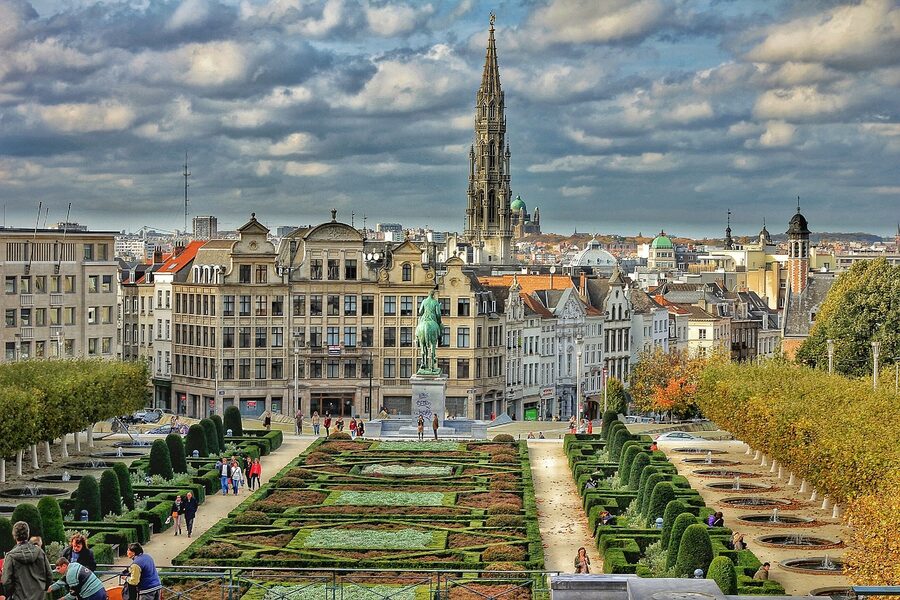
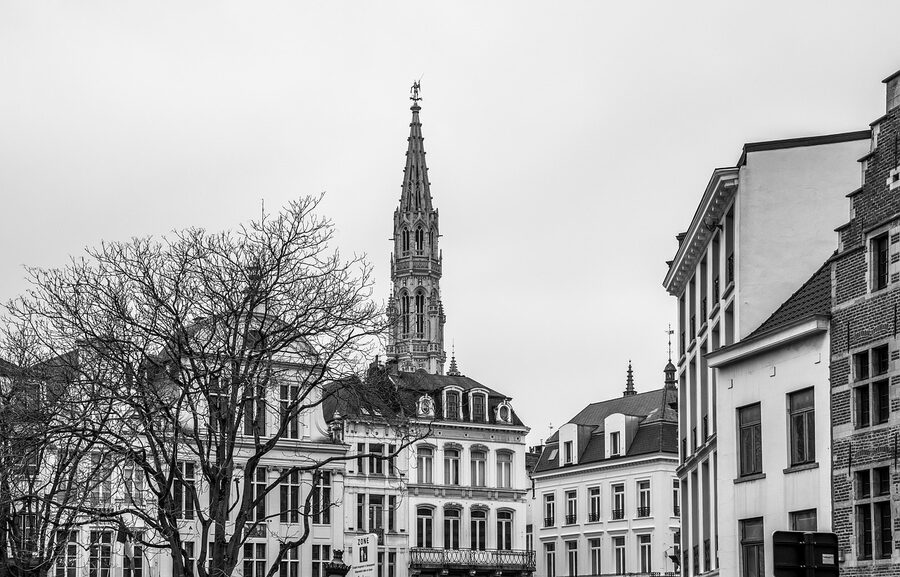
The standard route hits five anchors. Grand Place itself, with its gold-trimmed guildhouses and the Town Hall tower. Manneken Pis, three minutes south. The Galeries Royales Saint-Hubert, the oldest covered shopping arcade in Europe. The Cathedral of St Michael and St Gudula. And Mont des Arts, the terraced viewpoint that connects the Lower and Upper City. A few tours add Place Royale, the Royal Park, and the Coudenberg Palace ruins for the Upper City loop.
Guides typically build in two short stops. One for a chocolate tasting at a real shop, not a souvenir trap. One at a bar or window for a context break, sometimes with a beer or waffle if the tour includes tasting. The 2.5-hour standard tours skip the food-tasting overhead. The four-hour “walk and taste” versions add waffle, fries, beer and chocolate, which is great if you’re hungry and bad if you’re not, because you’re paying triple the price for the food rather than the walk.
The bit nobody mentions in the booking page
What you actually pay for is the connecting tissue. Anyone can find Grand Place. The Town Hall tower is hard to miss. What you cannot find on your own is the relationship between the buildings, the fact that the medieval city was almost entirely destroyed in 1695 by French artillery and rebuilt in five years by guilds competing to outdo each other, the language wars baked into every street name, and which Belgian frites stand actually fries in beef fat versus the seven that don’t.
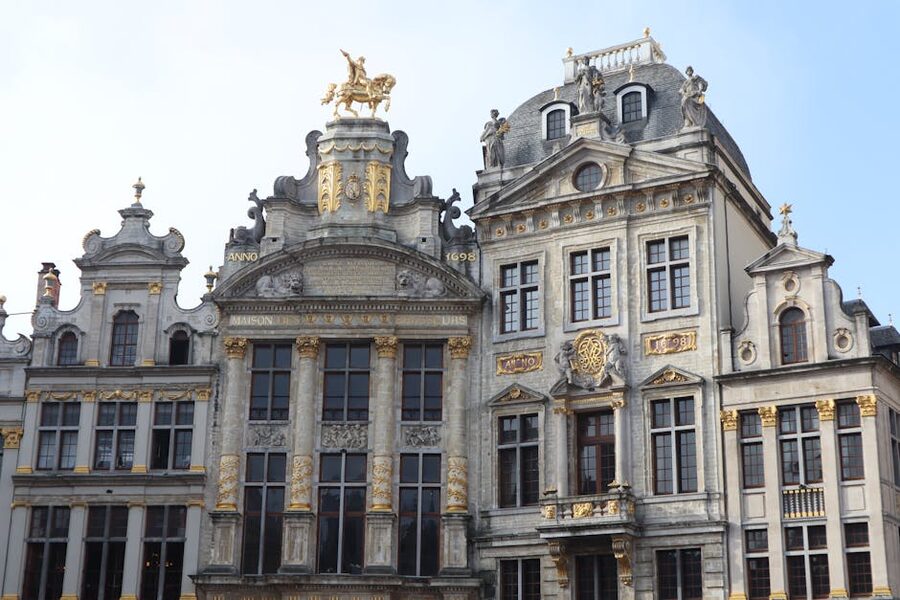
The information density is the thing. A two-hour guided walk delivers more useful context than a full day with a guidebook, because the guide can react to what you’re looking at and point things out you wouldn’t have noticed.
The Three Tours I’d Actually Book
I sorted Brussels walking tours by review count, then read through the recent reviews looking for guides named multiple times, complaints about pacing, and whether the chocolate tasting was real or a single sad praline at the end. These three are the ones worth your money.
1. Brussels: Guided Walking Tour: $23
This is the most-booked Brussels walking tour by a wide margin and the one I’d start with. Guides Christophe, Liam, Edwin and Ian come up repeatedly in recent feedback for the same reason: they tell stories instead of reciting dates. The 2.5 hours covers both the Lower and Upper City with a chocolate tasting at the end, and our full review goes into how the route handles language, accessibility, and what to do with the time afterwards.
2. Legends of Brussels: Historical Walking Tour with Chocolate and Waffle Tasting: $42
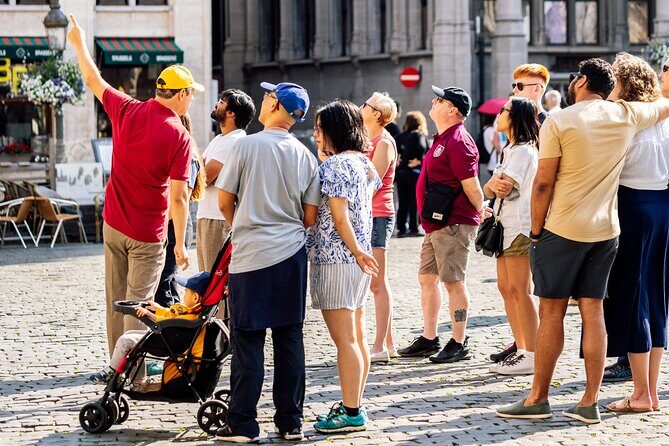
Roughly twice the price of the GYG basic tour, and worth it if you want a proper waffle and the chocolate tasting to be more than ceremonial. Group sizes cap lower so you actually hear the guide. Our tour breakdown covers exactly which stops have tastings and how the timing works in cold weather.
3. Brussels Walking and Tasting Tour: $85
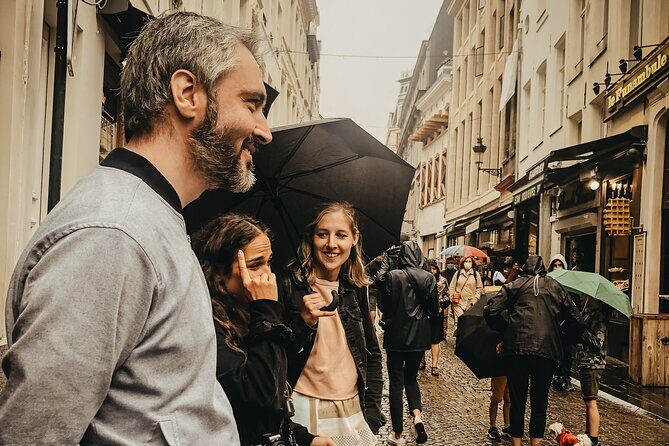
The big-ticket option. Useful if you want one combined activity instead of separately booking lunch, a beer stop, and a chocolate shop. Tiago and the Soda Entertainment guides handle weather changes well, which matters because Brussels is rainy on average 199 days a year. Our deep dive covers the route, the friterie they use, and dietary substitutions.
Grand Place: Why It’s the World’s Most Beautiful Square
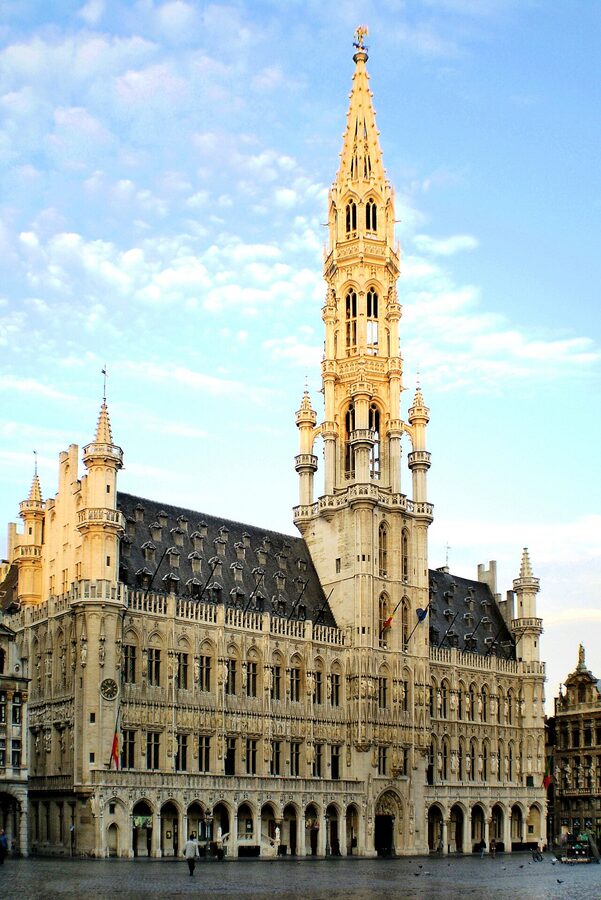
People throw “most beautiful square in Europe” around a lot. Grand Place actually earned the title in 1860 from Victor Hugo, who lived right here in exile and called it “the most beautiful square in the world” in a letter to his daughter. UNESCO confirmed it as a World Heritage Site in 1998. There’s a reason both of them landed on the same conclusion.
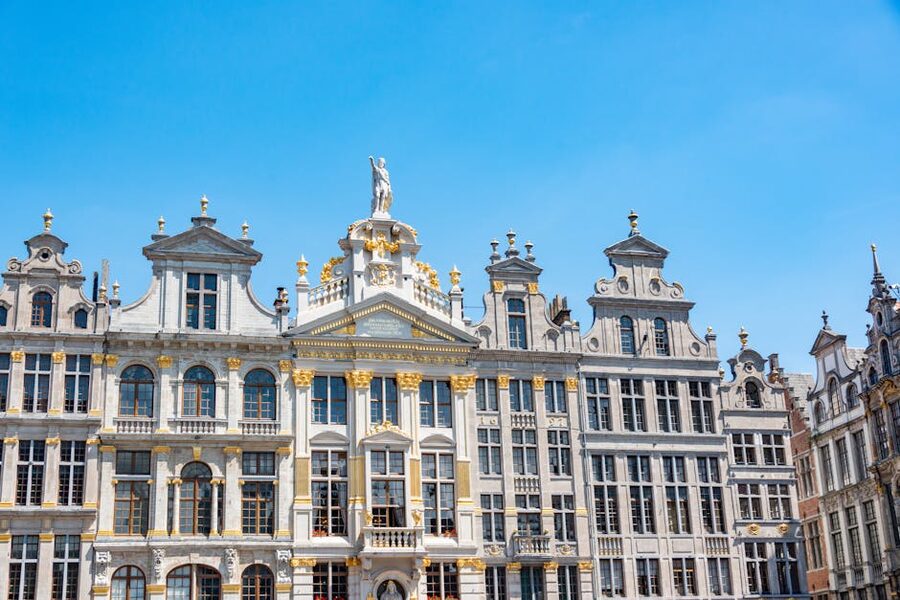
The square is small. It’s about 110 metres long and 70 wide, smaller than Florence’s Piazza della Signoria and tiny next to Madrid’s Plaza Mayor. The compactness is the trick. You’re surrounded on all four sides by ornate guildhouses at roughly the same height, with the Town Hall breaking the symmetry, and the visual density is dialled to the maximum without ever feeling cluttered.
What you’re actually looking at
Most of what’s standing was built between 1696 and 1700. In August 1695 the French king Louis XIV ordered Marshal Villeroy to bombard Brussels for 36 hours straight. About 4,000 buildings were destroyed, including most of Grand Place. The city’s guilds, who used the square as their commercial and ceremonial heart, rebuilt their houses in a kind of competitive arms race. Each guildhouse is a different design, but they were all completed in the same handful of years, which is why everything coheres so tightly.
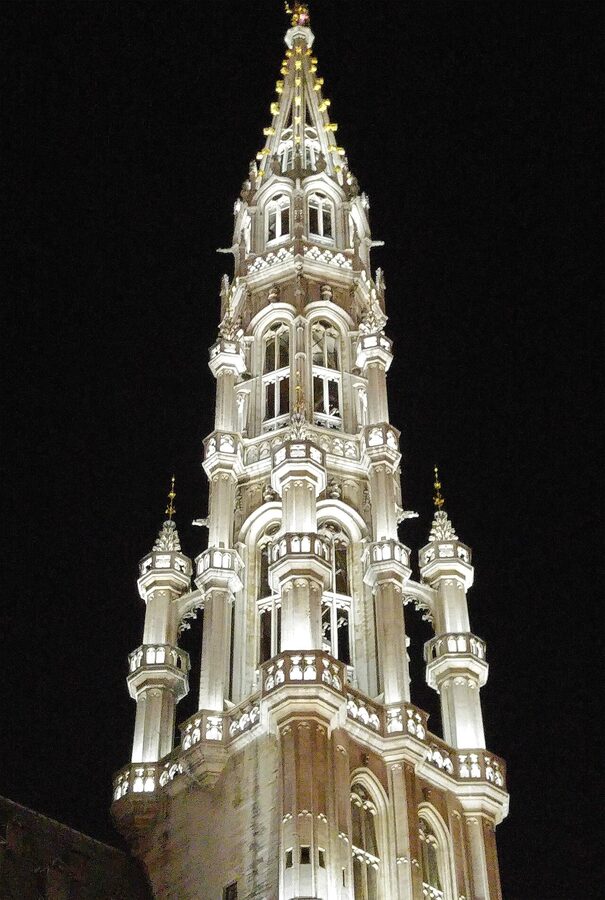

The Town Hall is the only major medieval survivor, partly because Villeroy used the asymmetric tower as his aiming point and his cannons kept missing it. The tower was completed in 1455. The off-centre position of the entrance arch, by the way, is not because the architect threw himself off after realising he’d messed up. The Town Hall was built in two stages a century apart. The off-centre look is just two phases of construction not lining up. But your guide will tell the suicide story anyway because everyone wants to hear it.
The flower carpet, every two years
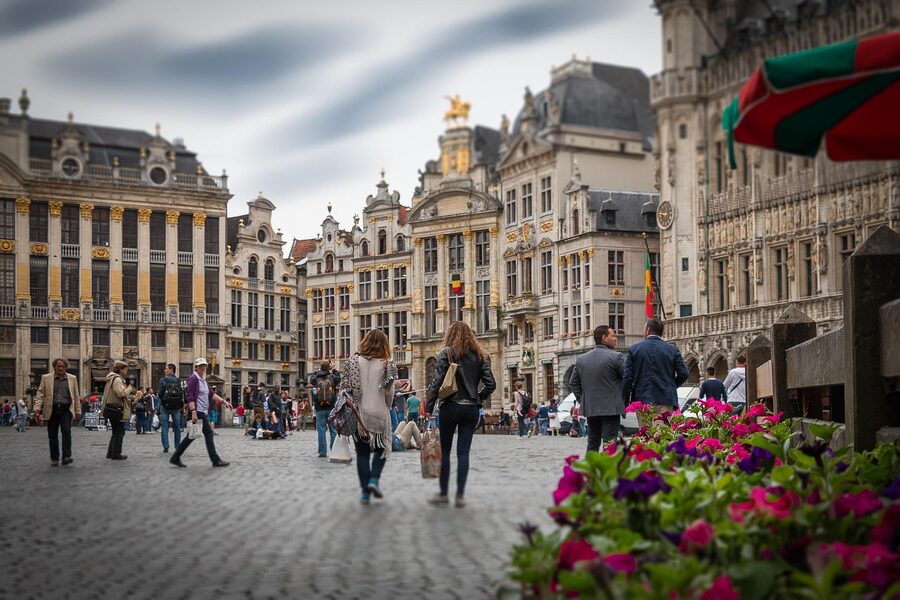
Every two years in mid-August the city covers Grand Place in nearly a million begonias arranged in a 75-by-24 metre carpet. It runs four days. If you can time a trip around it, do, but book accommodation six months out. Hotels go ballistic that weekend.
Manneken Pis vs Jeanneke Pis: The Real Question
Here’s the part of the walking tour where everyone gets disappointed for about 30 seconds and the guide rescues it.
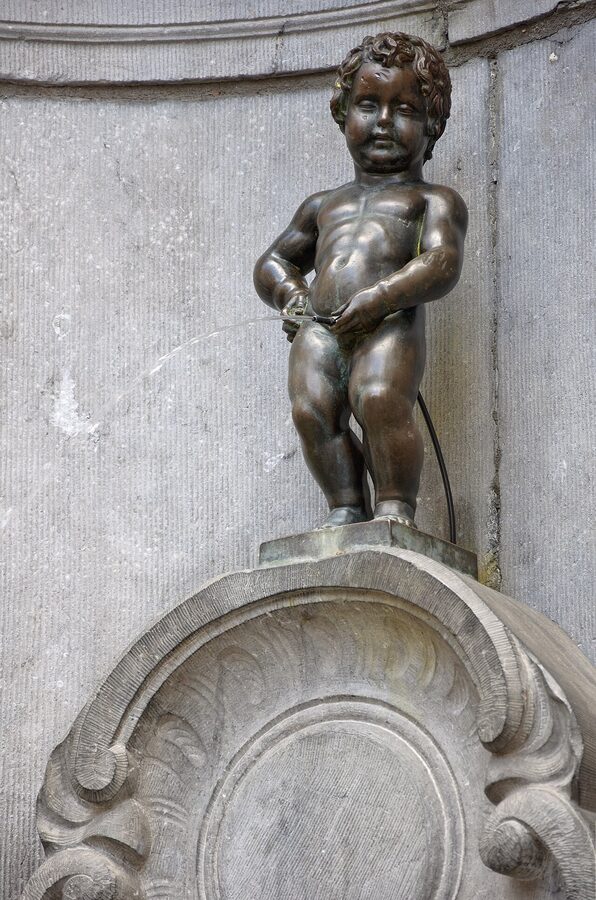

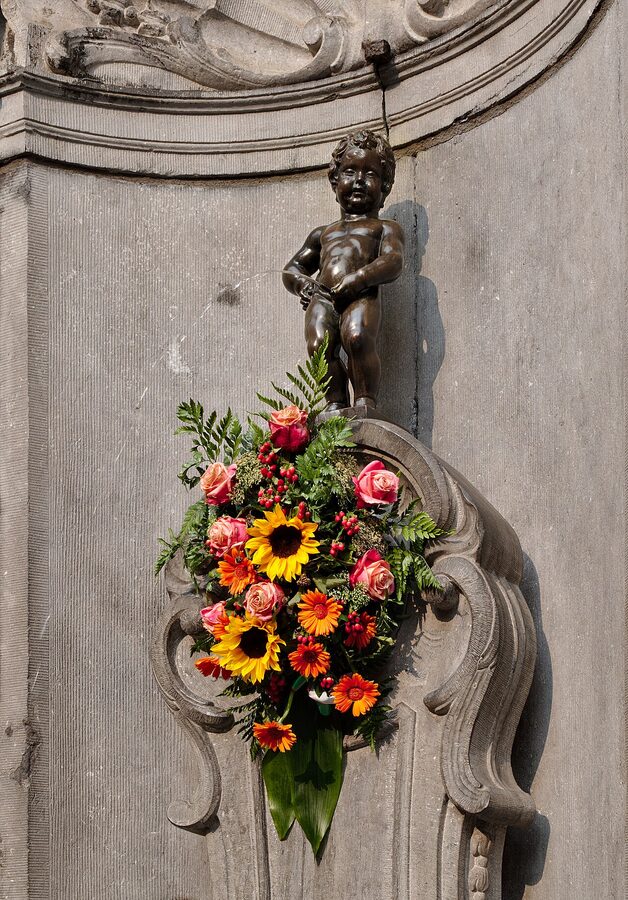
Manneken Pis is famous and tiny. Tourists arrive expecting something on the scale of the Trevi Fountain and find a 61-centimetre bronze of a boy peeing into a basin in a corner shop window. The reaction is consistent: confusion, then phones up to compare scale with their hand, then a photo, then on. Guided tours handle this well by leaning into the absurdity. The statue has its own wardrobe of more than 1,000 costumes donated by visiting heads of state. He’s dressed in something different about three days a week and the schedule is online if you want to time a visit. The wardrobe is on display at the Garderobe MannekenPis museum two minutes away, and that’s actually worth a quick stop.
.jpg)
The statue everyone misses
Five minutes northeast of Manneken Pis, behind the Galeries Saint-Hubert in a dead-end alley called Impasse de la Fidelite, there’s a smaller statue: Jeanneke Pis, the squatting girl. She was installed in 1987 by a local restaurateur as a feminist counterpart, and she gets maybe a hundredth of the foot traffic. She’s behind iron bars to stop her being damaged. The reason hardly any tourist finds her is that the alley looks like a service entrance and Google Maps gives up halfway down it.
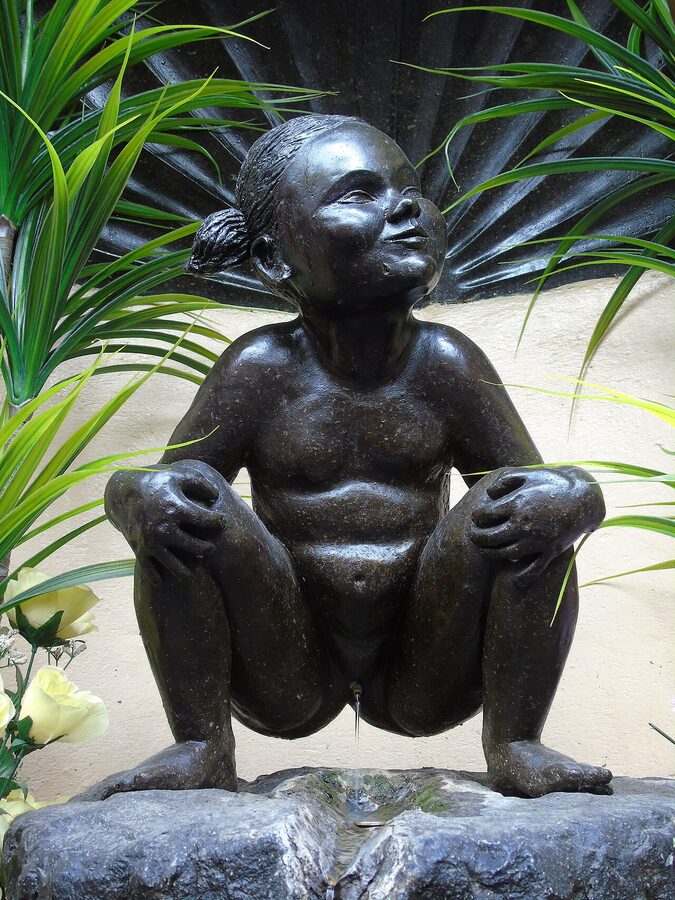

Better tours include her. Cheaper tours often skip her because she’s not on the official route and the alley is awkward to fit a group of 25 into. If you book the Legends tour or the smaller-group walks, ask if Jeanneke is included. If she isn’t, walk over to her yourself after the tour ends. It’s a four-minute detour from Grand Place.
And then there’s the third one nobody mentions. Het Zinneke, a peeing dog statue on the corner of Rue des Chartreux and Rue du Vieux Marche aux Grains, installed in 1998 to complete the family. He’s the easiest to miss, just a small bronze terrier lifting his leg against a bollard. Three pissing statues, one city. That’s a Brussels thing.
The Galeries Royales Saint-Hubert: Older Than Every Other Arcade
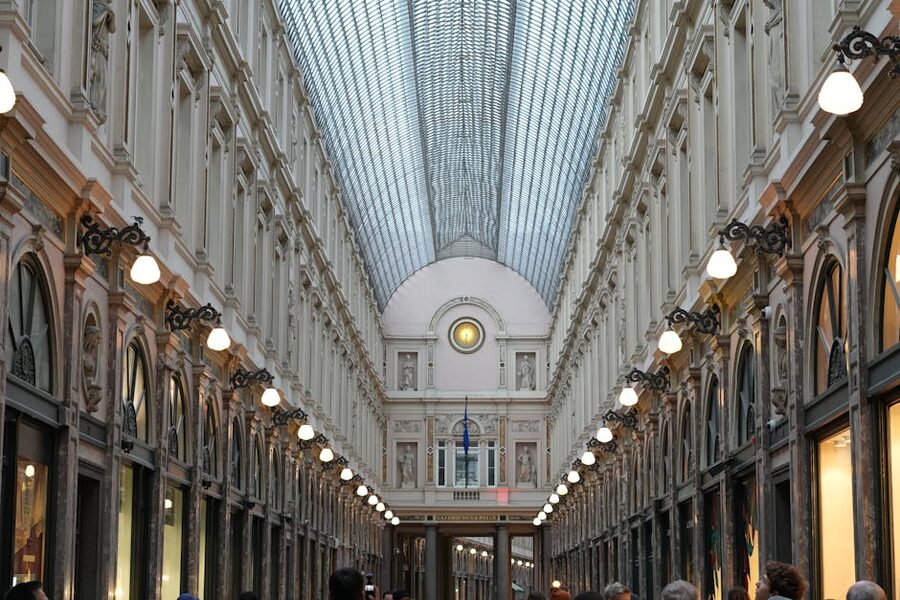
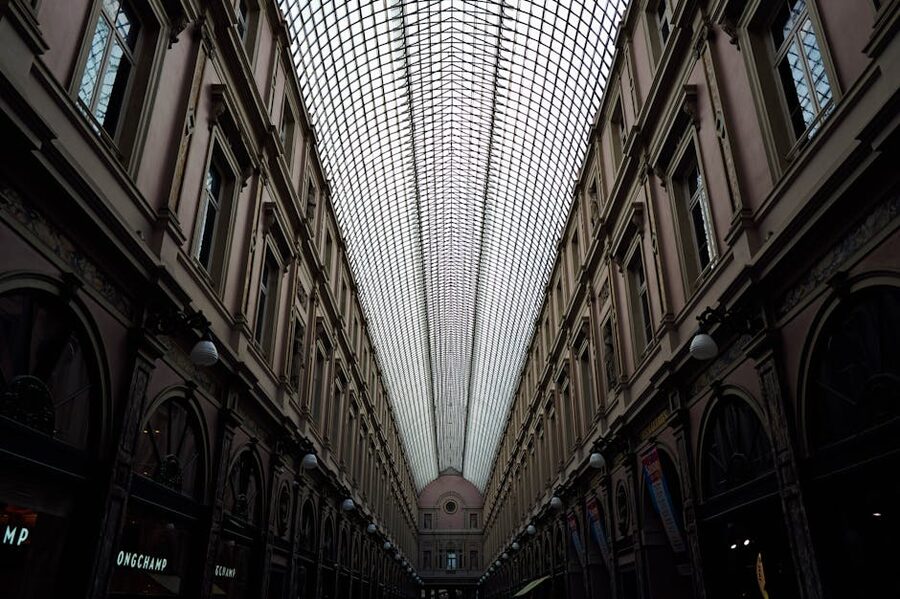
The Galeries Saint-Hubert opened on 20 June 1847 and was the first major covered shopping arcade built in Europe at this scale. King Leopold I cut the ribbon. It’s 213 metres long, divided into three sections (Galerie de la Reine, Galerie du Roi, and the smaller Galerie des Princes), and the glass roof was a structural showpiece in 1847 because nobody had built one this big before.
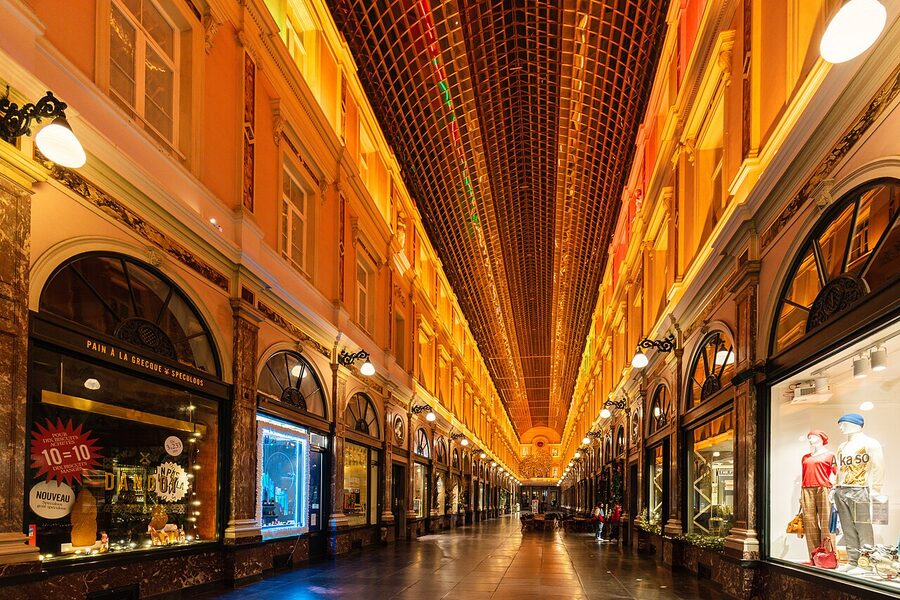

The Galeries are still working as a shopping arcade rather than a tourist relic. Mary chocolatier (one of the official suppliers to the Belgian Royal Court) has a shop here. So does Neuhaus, which invented the praline in this exact arcade in 1912. The Theatre des Galeries is upstairs. There are about 50 shops, mostly chocolate, leather goods, books, and jewellery, plus three or four restaurants.
Neuhaus and the praline
The Galeries are where the modern Belgian chocolate praline was invented. Jean Neuhaus II, working in his family’s pharmacy-turned-confectionery in the Galerie de la Reine, started filling chocolate shells with creams and ganaches in 1912 to make medicine more palatable. The technique caught on. Belgium has been the praline-making capital of the world since.
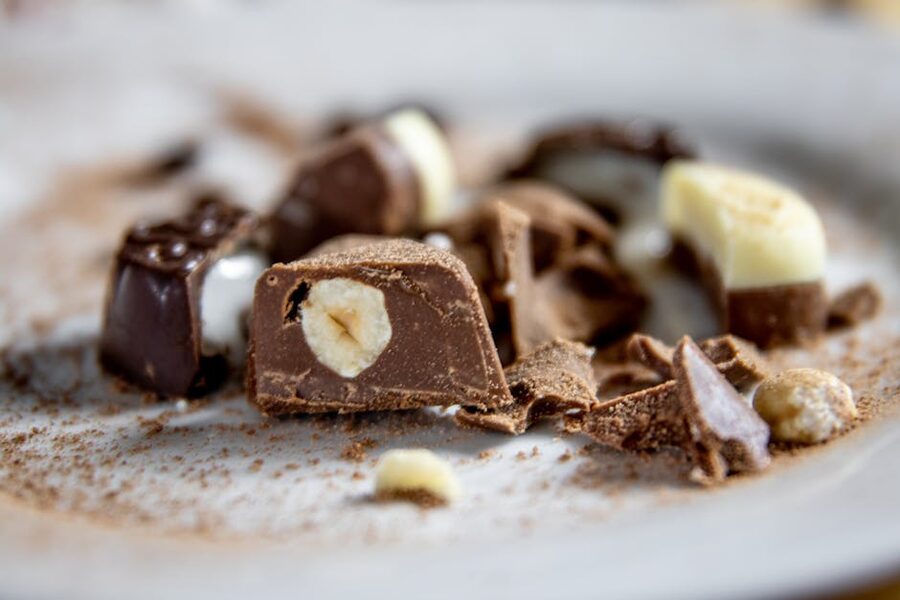
If your tour includes a chocolate tasting in the Galeries, that’s where you want to slow down and ask questions. The good guides will explain how to tell a real praline from a mass-market one (centres should be soft, not crunchy; chocolate should snap rather than break; the workshop name should be on the shop, not just in the marketing).
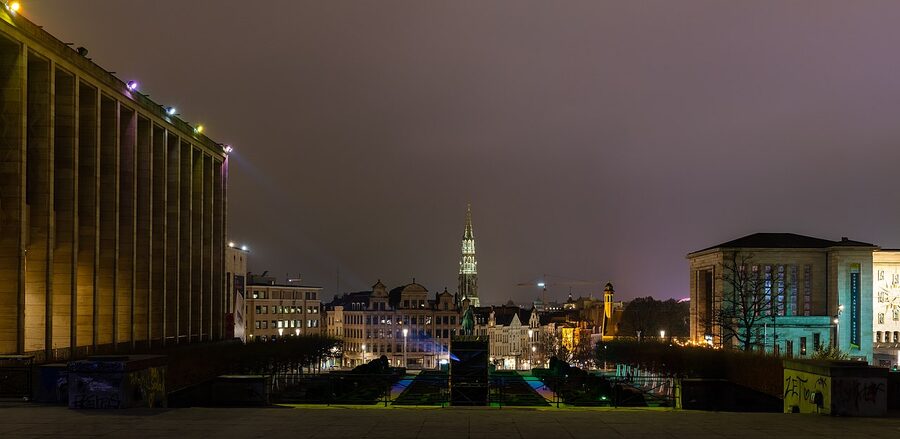
Mont des Arts: The Hinge Between Lower and Upper City
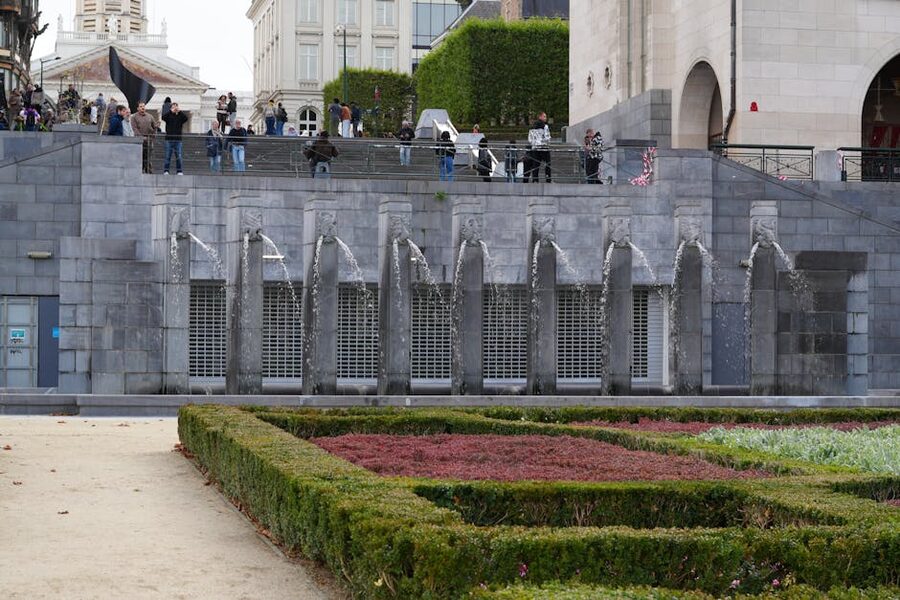
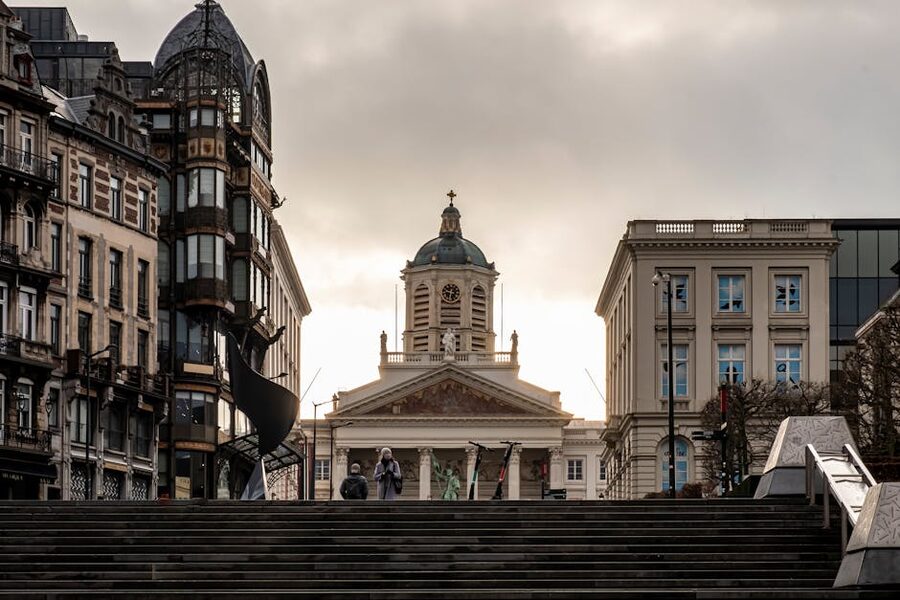
Brussels has two cities. The Lower City is medieval, mercantile, and where everything that smells of food and beer is. The Upper City is royal, ceremonial, and where the museums are. Mont des Arts connects them via a series of formal terraced gardens that step up the hill.
.jpg)
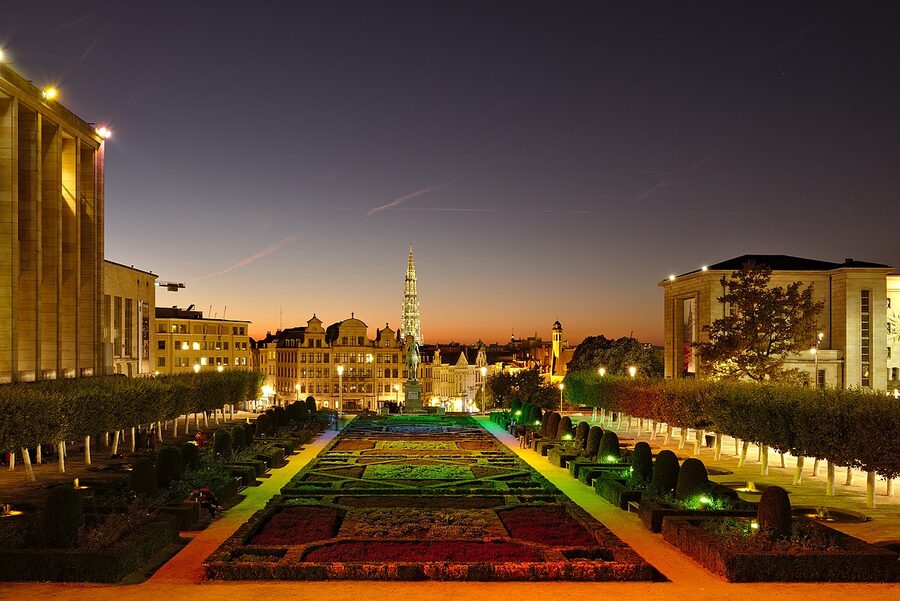
The garden is technically called Kunstberg in Dutch and Mont des Arts in French. It was designed in the 1950s for the 1958 Expo and laid out in a formal French parterre with low boxwood hedges, a rectangular reflecting pool, and clipped lawns either side. The viewpoint at the top of the staircase is the unofficial city panorama spot, with the Town Hall tower spike in the middle of the frame.

The Cathedral of St Michael and St Gudula
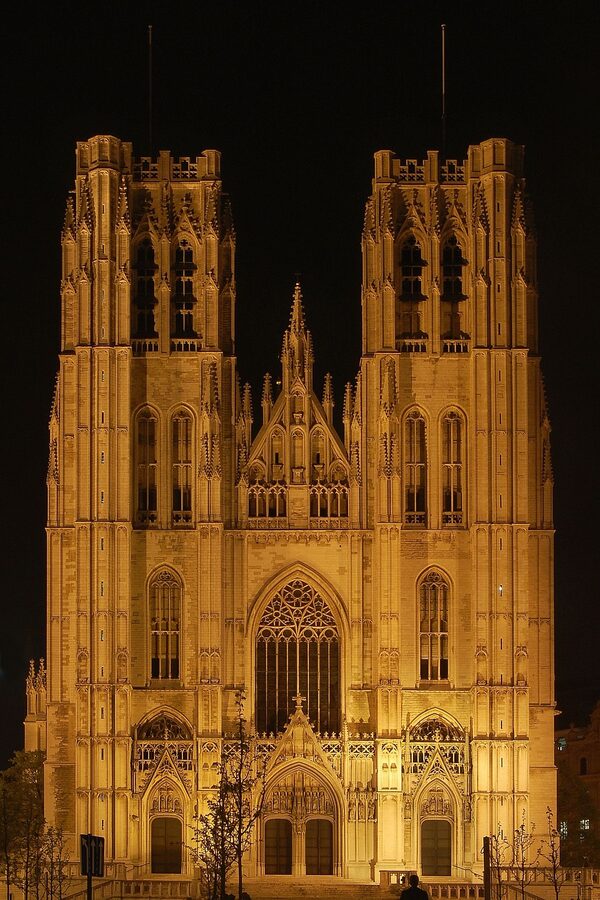

This is where the walking tour usually pauses for ten minutes. The Cathedral of St Michael and St Gudula is Belgium’s national church, used for royal weddings, state funerals, and the funeral of King Baudouin in 1993. Free to enter, open most days from 8am till 6pm. Pay a small extra fee for the crypt, which is fascinating if you’re into Romanesque archaeology and dull if you aren’t.
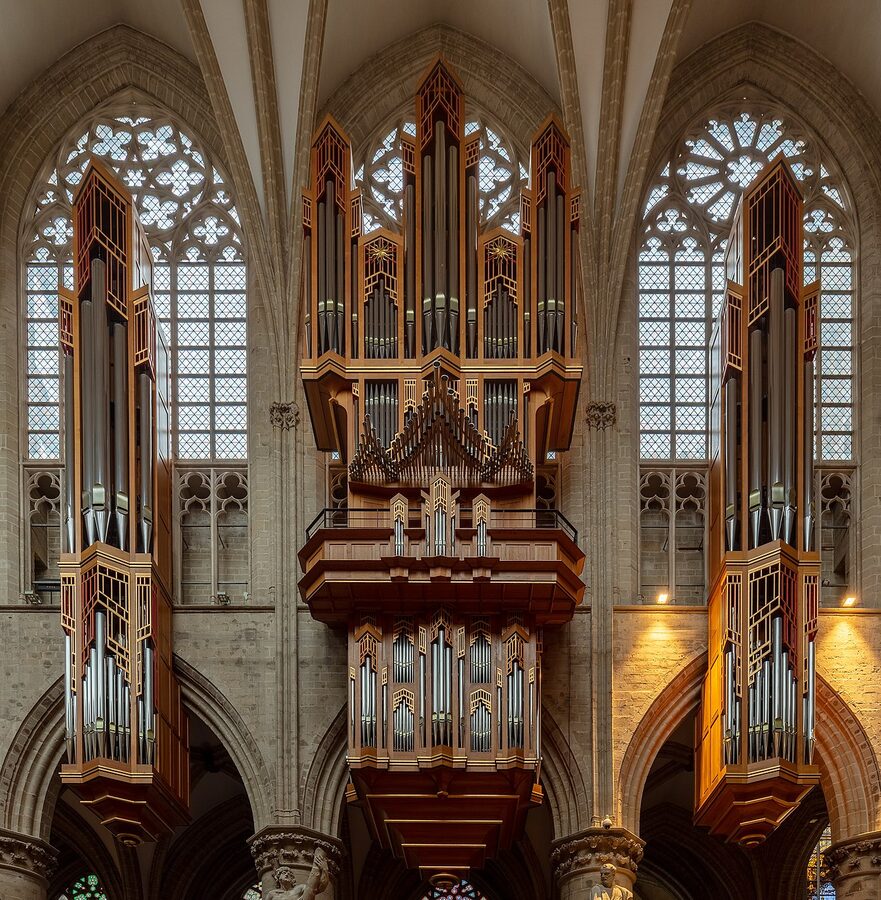

The standout details a guide will point out are the 16th-century stained glass windows in the chapel of the Holy Sacrament (commissioned by Charles V), the carved oak pulpit by Hendrik Verbruggen showing Adam and Eve being thrown out of Eden by an angel, and the contemporary statues by Tom Frantzen on the exterior. Without a guide you’ll mostly see “another big Gothic cathedral.” With one you’ll see why this one matters.
The Upper City Loop: Place Royale, Royal Park, Coudenberg
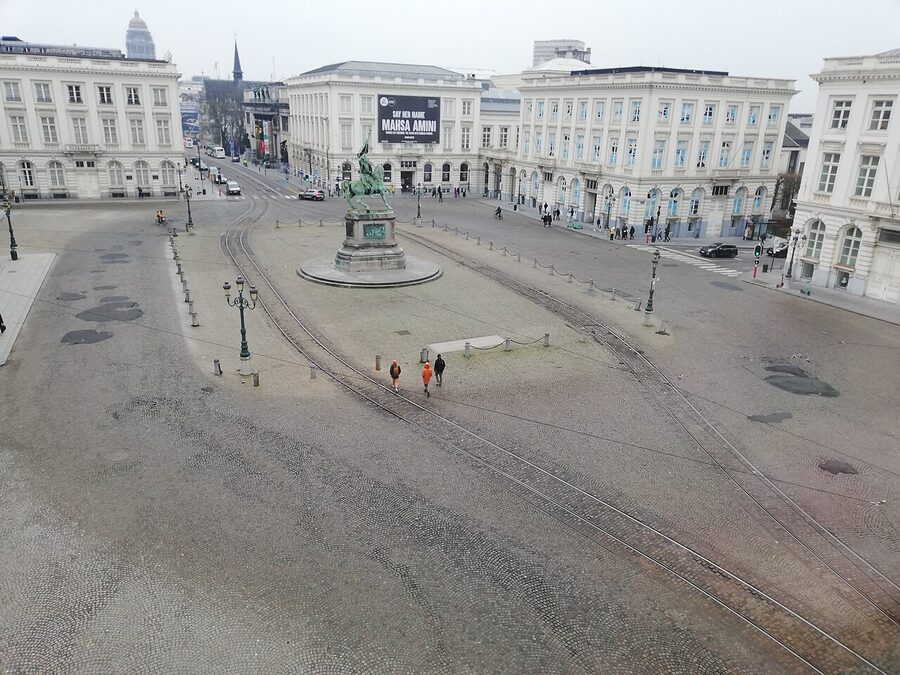

The 2.5-hour tours include a pass through the Upper City. Tours under 90 minutes usually skip it. Ask before you book if you want to see Place Royale, the Royal Park (a formal park modelled on Versailles, with strict geometry), and the Royal Palace (which is closed to the public most of the year, open mid-July to early September only).
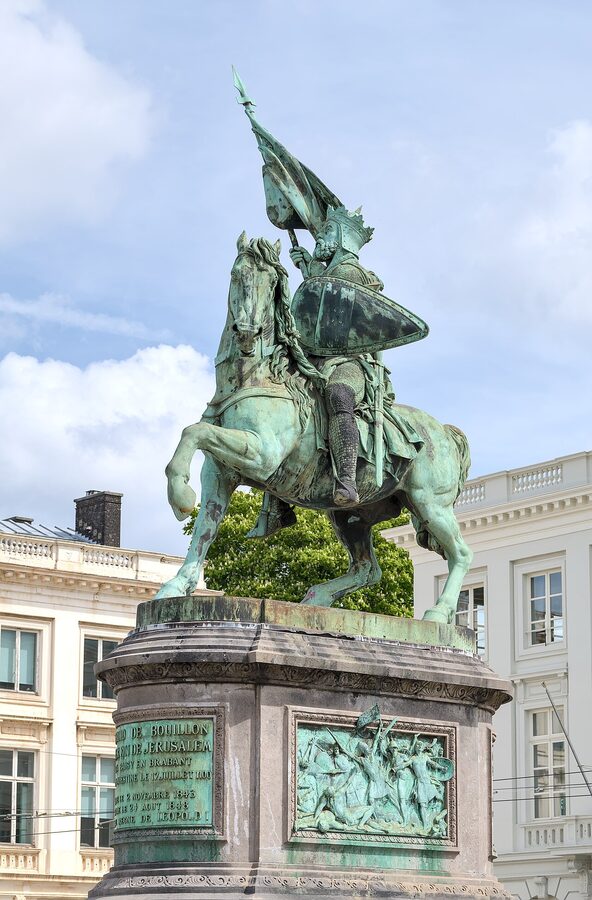
Beneath Place Royale, you can visit the Coudenberg Palace ruins. The original palace was the residence of the Dukes of Burgundy and the Holy Roman Emperor Charles V. It burned down in 1731 and was deliberately demolished in 1775 so the new neoclassical Place Royale could be built on top. The cellars and ground floor still survive underground and you can walk through them. About 7 euro entry, allow 45 minutes. Most walking tours don’t include this; you do it separately.
Practical Booking Notes
What time of day
Morning tours (10am or 10:30am starts) are the standard. You get the best light on Grand Place, fewer people, and finish in time for lunch. Afternoon tours (2pm or 2:30pm) work if you’ve slept off a late arrival flight and want to settle into the city slowly. Evening tours (6pm in summer) are rare but excellent because Grand Place is illuminated and the temperature drops to walking-comfortable.
Weather and gear
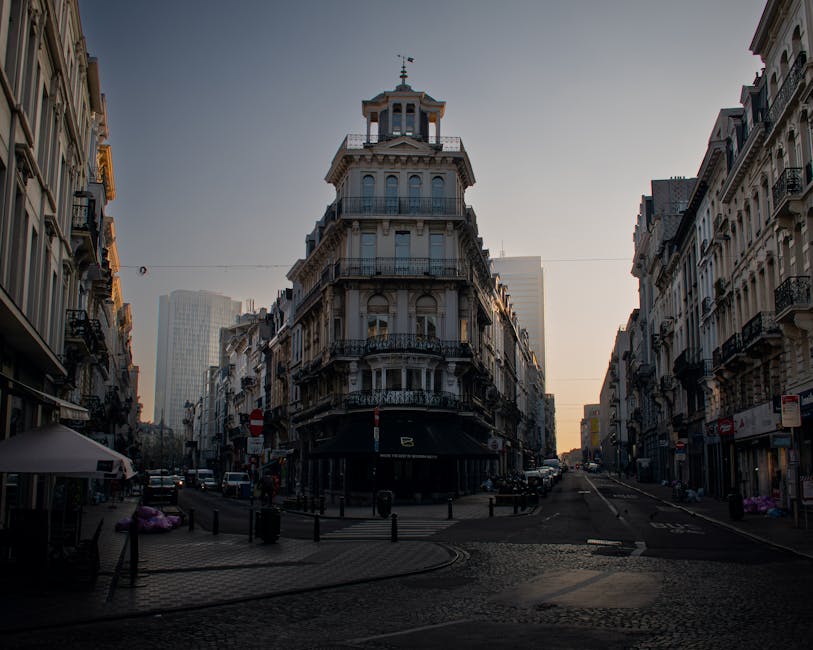
Brussels rain is real. The city averages 199 days of rain per year. Pack a small folding umbrella every day, even in July. Tours run rain or shine and guides will not cancel just because it’s drizzling. Wear shoes that can handle wet cobblestones. The Lower City streets are paved in stone setts that get slippery in any rain. No heels.
Accessibility
The Lower City is mostly flat. The walk between Grand Place, Manneken Pis and the Galeries Saint-Hubert is wheelchair-friendly. The route up to Mont des Arts and Place Royale involves stairs (about 50 in total). Some tours offer a wheelchair-accessible alternative that uses the lift at Mont des Arts to bypass the staircase. Confirm at booking. The 2.5-hour Brussels Guided Walking Tour explicitly markets itself as wheelchair accessible and reroutes around the steps.
Languages
English is universal across all major Brussels walking tours. French and Spanish are common. Dutch tours exist but are rarer because most Dutch speakers visiting Brussels will take an English tour anyway. German tours run a few times a week with the bigger operators. If your group needs a less-common language, book at least a week ahead.
Group size
The cheap GYG tours run with up to 30 people. The mid-range tours (Legends and similar) cap around 15. The premium walking-and-tasting tours run smaller, sometimes 8 maximum. Smaller groups mean you actually hear the guide, can ask questions, and aren’t waiting at every stop while a slow person catches up.
How long actually
The “2.5 hour” tour is usually 2 hours 30 to 2 hours 45 minutes. The “3 hour” walks tend to land at 3 hours 15. Tours involving food tasting can run 4 hours. Plan an extra 20 to 30 minutes of buffer either side because the meeting points are sometimes hard to find first time and groups don’t depart bang on the hour.
Doing It Without a Guide
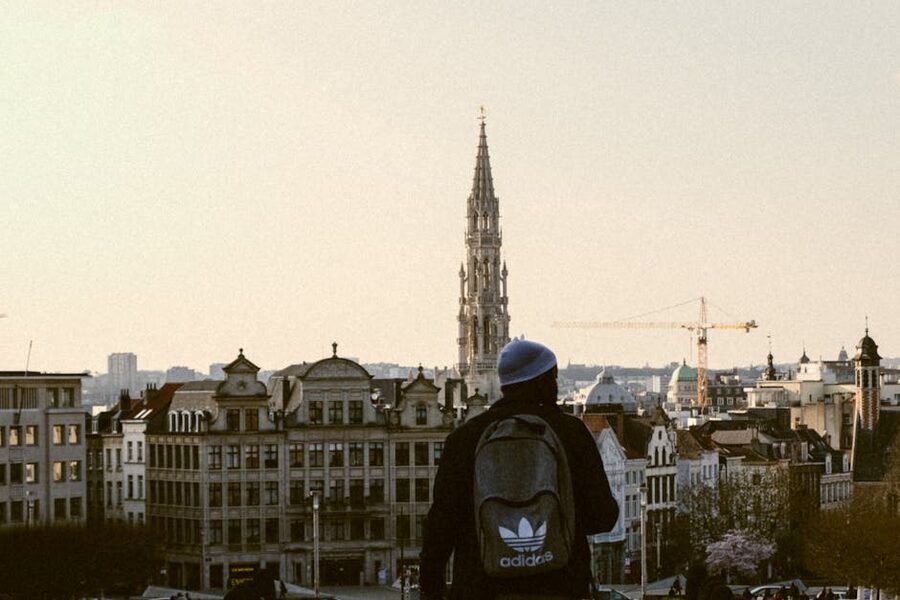
You can absolutely walk Brussels Old Town without a guide. The route is logical: start at Grand Place, south to Manneken Pis (3 min), back up to Grand Place, east through the Galeries Saint-Hubert (10 min), to the Cathedral (5 min walk), south to Mont des Arts (5 min), up the steps to Place Royale (5 min). Total walking time is 35 minutes. Add another 90 to 120 minutes for stops, photos, and reading plaques.
Tools that help if you’re going solo:
- Rick Steves’ free Brussels audio walk (90 minutes, downloadable as an MP3 or via his app). It’s good. He gets you to the right places with the right context.
- The MyVisit Brussels app from the city tourist board is patchy but has reliable opening hours.
- Google Maps offline area for “Brussels Pentagon” downloaded before you go, because Belgian mobile data on roaming gets expensive fast for non-EU travellers.
- The free Discover Brussels card from the BIP Visitor Centre on Place Royale. It includes a paper map with QR-coded stops.
If you’re tight on budget and you’ve already done a guided walking tour somewhere else recently and you’re confident reading a plaque, walking solo is fine. If this is your first European old town in a while, or if you’ve come specifically to understand Brussels rather than just look at it, book a guide.
What to Skip on a Brussels Walking Tour
Three things commonly featured on tours that you can safely skip if you’re picking and choosing.
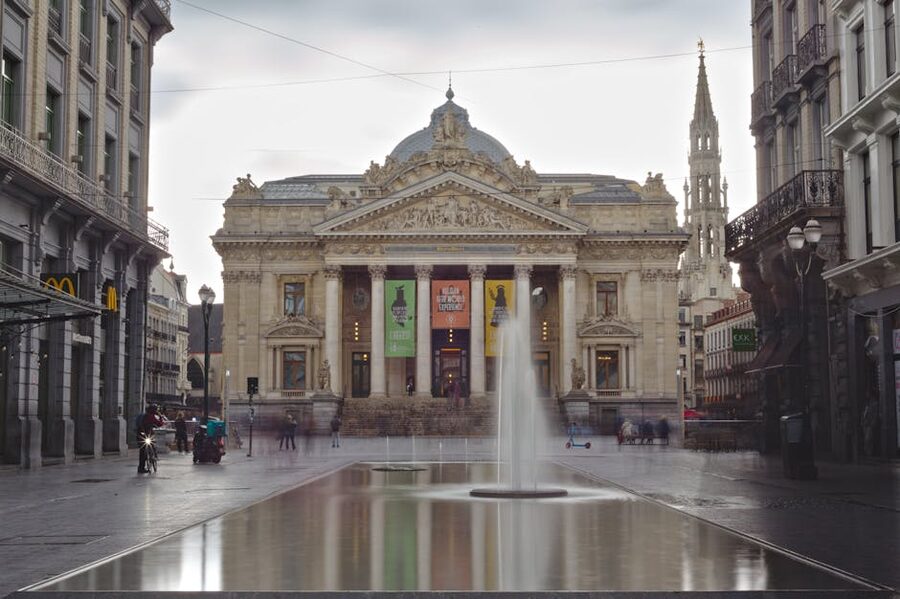
The Bourse / Stock Exchange. Currently a museum (BeerWorld, opened 2023). The exterior is fine but unmemorable next to Grand Place. Walking tours that linger here are padding.
The “tin tin” mural detour. Belgium loves its comics and Brussels has roughly 60 painted murals across the city. About six are in the central walking tour area. They’re charming but they’re not what you came for. If you want a comics tour, do that separately as a dedicated half-day.
Atomium combinations. A few tours bundle Grand Place walking with a bus or metro out to the Atomium. Do not do this. The Atomium is in Heysel, 8 km north of the centre. You burn 90 minutes on transit. Book the Atomium separately on a different day.
Combining With Other Brussels Activities
The walking tour is the foundation. After it ends, you’ve got context for everything else. Smart day-builds:
Morning walk + afternoon HoHo bus. The Grand Place walking tour gives you the Old Town. A hop-on hop-off bus covers the EU quarter, the Royal Palace, the Atomium, and Cinquantenaire (the Triumphal Arch park) which are all spread out. Together you’ve seen the whole city in one day.
Walk + Choco-Story Brussels. The walking tour explains why Brussels is the chocolate capital of the world. Choco-Story Brussels shows you exactly how the chocolate is made, with a live demonstration and tastings. The two reinforce each other.
Walk + Bruges or Ghent day trip. The Brussels walk gives you a sense of Belgian urban scale. Bruges and Ghent show you the medieval Flemish version. Do the Brussels walk on day one, day-trip out on day two.
Walk + a chocolate-tasting tour. The standard walking tour includes a small chocolate tasting. If you want a deeper food-focused walk, the dedicated chocolate walking tour visits multiple chocolatiers with tastings at each. Don’t book both for the same day, pick one.

How Brussels Walks Compare to Other European City Walks
If you’ve done a city walk in another European capital, you’ll find Brussels recognisable but with quirks.
It’s denser than most. Compared to a Budapest walking tour which covers maybe four kilometres of riverside Pest, a Brussels walk does 2 to 3 km but in a much tighter loop, with stops every 100 metres rather than every 500.
It’s denser than Warsaw too. Warsaw’s Old Town is fundamentally a 1950s reconstruction (most of the buildings were rebuilt after WWII). Brussels is mostly genuine 17th-century construction (rebuilt after the 1695 bombardment, but that was 300 years ago).
It’s similar in style to Lisbon and Porto in that the historic core is small enough to walk in 2.5 hours and dense enough to need a guide. Different from Gdansk in that Brussels has a working modern city around it (Gdansk’s Old Town feels more like an open-air museum).
And it’s nothing like a Krakow walking tour, where the route is a long single sweep through the Planty park. Brussels is a tight loop in concentrated streets. Different rhythm. Different intensity.
Other Brussels Guides You Might Want
If you’ve got a couple of days in Brussels and you want to make them count, the walking tour is the foundation but it’s not the whole picture. The Atomium is the giant 102-metre steel atom from the 1958 World Expo and worth half a day on its own out at Heysel. The hop-on hop-off bus is genuinely useful in Brussels because the EU quarter and Cinquantenaire are too far to walk from Grand Place. Choco-Story Brussels is the chocolate museum near Grand Place with a live praline-making demo, distinct from the multi-shop walking chocolate tour. And if you’re picking a day trip, Bruges beats Ghent on photogenic charm but Ghent is the better one if you actually want to eat well and avoid coach loads of tourists.
Affiliate disclosure: Some of the booking links in this guide are affiliate links, which means we earn a small commission if you book through them. The price you pay stays the same. We only recommend tours we’d book ourselves.