
The Vasa was supposed to be the proudest warship in Europe. She made it 1,300 metres into her maiden voyage in August 1628 before a gust of wind tipped her over and the harbour swallowed her whole. Then she sat in the mud for 333 years.
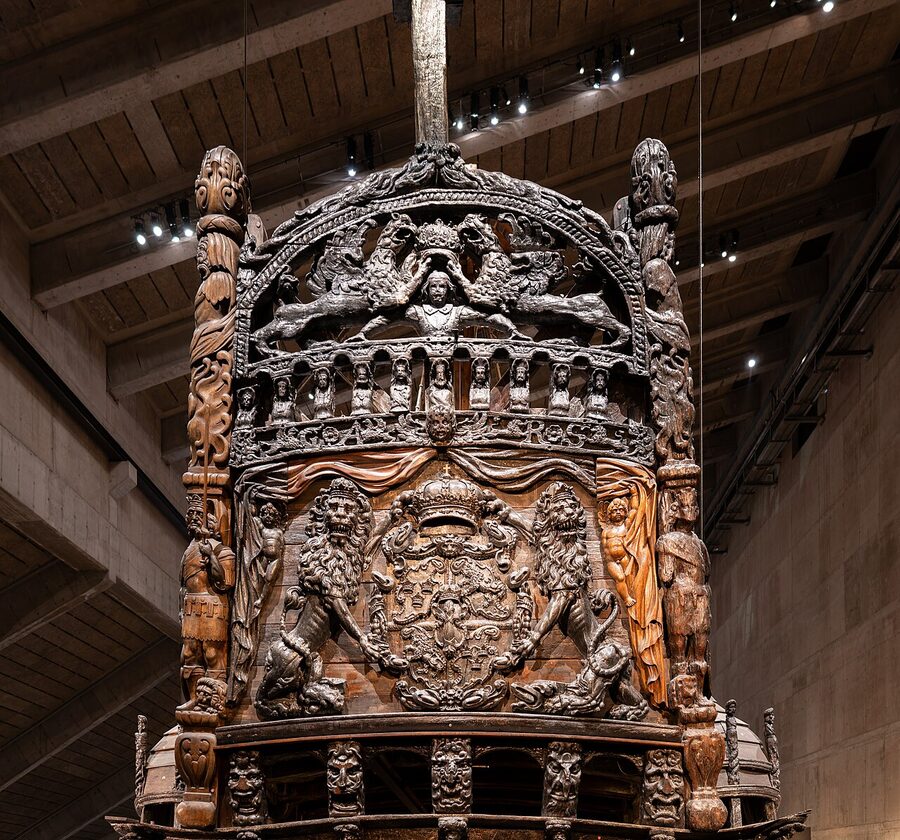
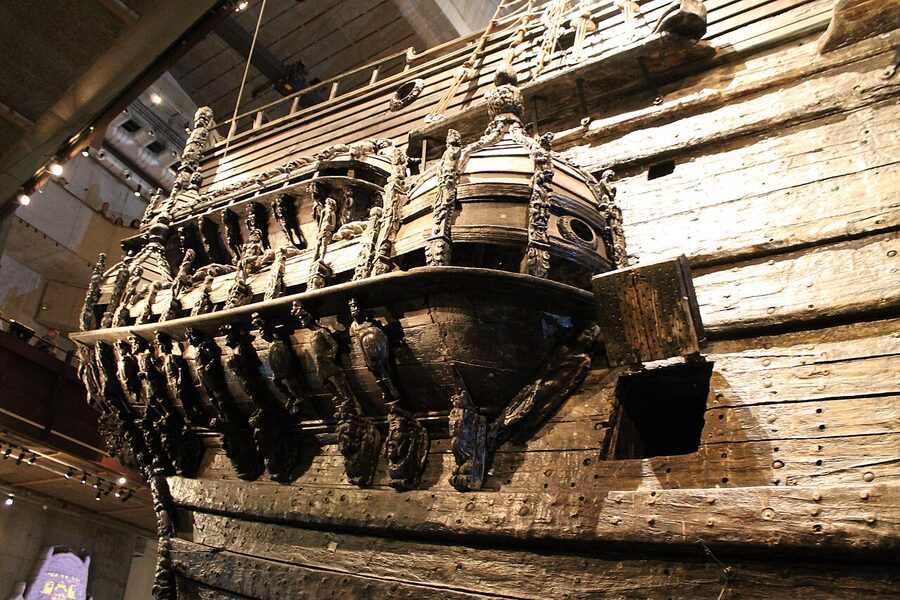
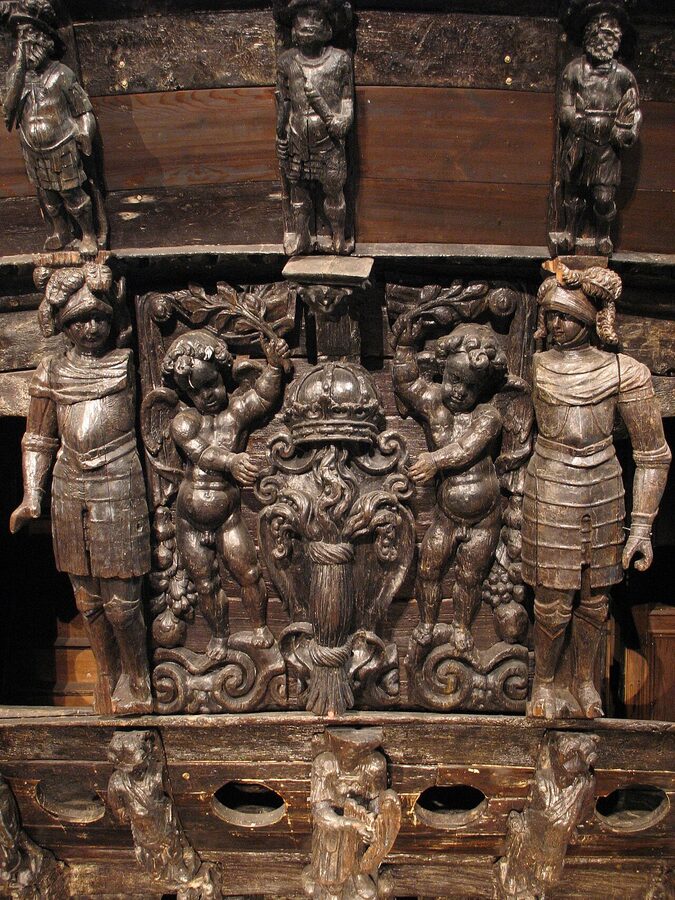
The wild part is what you walk into today. The cold, brackish, low-oxygen water of Stockholm’s harbour preserved the ship so completely that 98% of the wood you see in the Vasa Museum is original. Not reconstructed. Original. Carved in 1627. Sprayed with polyethylene glycol for seventeen straight years to stop it shrinking. And now it sits in a purpose-built hall on Djurgården while around 1.5 million people a year file past, mouths slightly open.



- In a Hurry? Three Ways to Visit
- What You Actually Get for Your Ticket
- The Three Tickets I’d Actually Book
- 1. Stockholm: Vasa Museum and Vrak Museum of Wrecks Combo Entry:
- 2. Vasa Museum Guided Tour, Including Entry Ticket: .49
- 3. Stockholm Pass: Includes Vasa Museum Ticket: from
- How to Get to the Museum
- The Surprising Story of How a Warship Sank in 1,300 Metres
- Why She Survived 333 Years in the Mud
- The Polyethylene Glycol Trick
- What to Look For Inside
- When to Visit
- Practical Things Worth Knowing
- Pairing the Vasa with Other Stockholm Stops
- Common Mistakes I See Tourists Make
- One More Thing
- Other Stockholm Guides Worth a Look
In a Hurry? Three Ways to Visit
Best value: Vasa + Vrak Museum combo entry (around $35) covers both maritime museums and stays valid for three days, so you can split the visit if you get tired.
Best with a guide: Vasa Museum guided tour with entry ticket (around $60). Two hours, knowledgeable guide, you skip the gawking-without-context phase that wastes the first half of most visits.
Best for multi-day trips: Stockholm Pass (1 to 5 days, from around $95) bundles Vasa with 50+ other attractions, worth it if you’ll hit four or more museums.
What You Actually Get for Your Ticket
A standalone adult ticket at the door costs about 220 SEK (roughly $20-22 depending on the exchange rate). Anyone under 19 walks in free, which is genuinely unusual for a museum this famous. Audio guides cost extra and come in around fifteen languages. Tickets are sold on the day at the front desk and online via the museum’s website, and there’s no time-slotted entry system, you can show up whenever you like during opening hours.
.JPG)
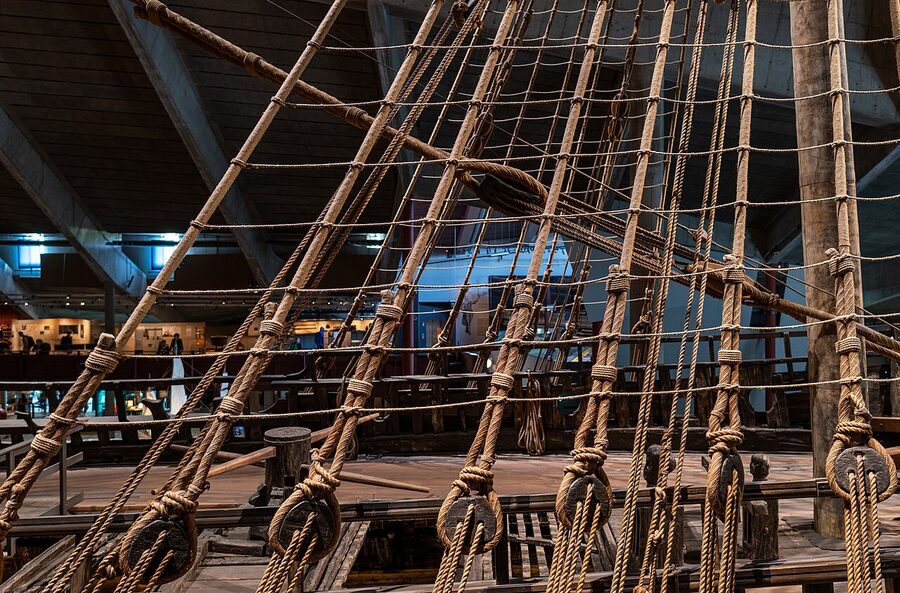
What you don’t get for that 220 SEK is a guided tour. The museum has a small free film that runs every half hour or so on the ground floor, plus signage in English at every exhibit. That’s enough information for most people. But if you’ve come all the way to Stockholm for this, paying a bit more for an actual guide is the better call. The museum has so many small details (the original ropes, the tools used in the salvage, the stories of the crew) that you’ll miss without someone pointing them out.
The combo ticket with the Vrak Museum of Wrecks is the option I’d push hardest if you have any interest in maritime history. Vrak sits maybe 200 metres away on the same quay, and the combo entry costs barely more than a single Vasa ticket. Vrak is newer, focused on the dozens of other wrecks in the Baltic (the cold water preserves wooden ships there in a way that doesn’t happen anywhere else in the world) and uses a lot more interactive screens. It’s a good follow-up. You can do the Vasa first, walk to Vrak, decompress over coffee, and you’ve got two world-class museums covered.

The Three Tickets I’d Actually Book
1. Stockholm: Vasa Museum and Vrak Museum of Wrecks Combo Entry: $35
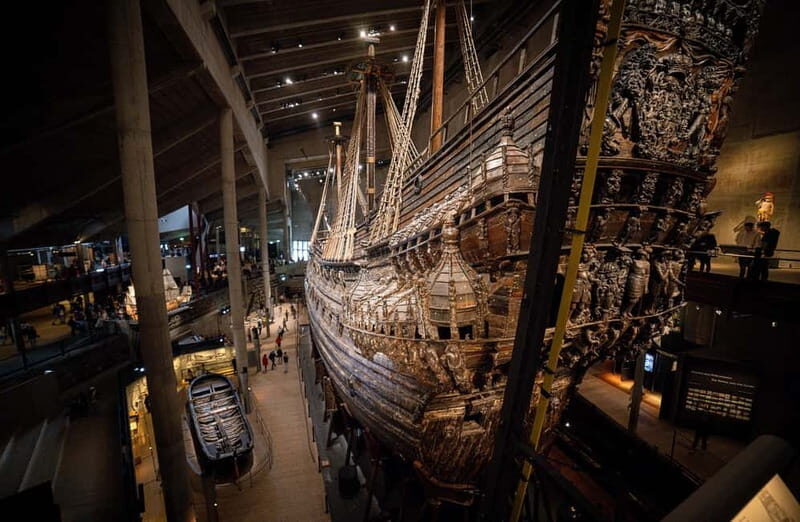
For about the price of a single Vasa entry you get into both maritime museums, and the three-day window means you don’t have to do them in one go. Our review of the combo walks through how to pace it. Vrak is newer and a touch more interactive, which makes a nice contrast after the hush of the Vasa hall.
2. Vasa Museum Guided Tour, Including Entry Ticket: $60.49

If your trip to Stockholm has the Vasa as a must-do, spend the extra $35 over a basic entry and walk in with a guide. Our walk-through of this tour covers what’s included. You learn the things signage can’t capture, the way the gun ports are spaced wrong, the survivor accounts, the politics of why the ship was rushed.
3. Stockholm Pass: Includes Vasa Museum Ticket: from $95
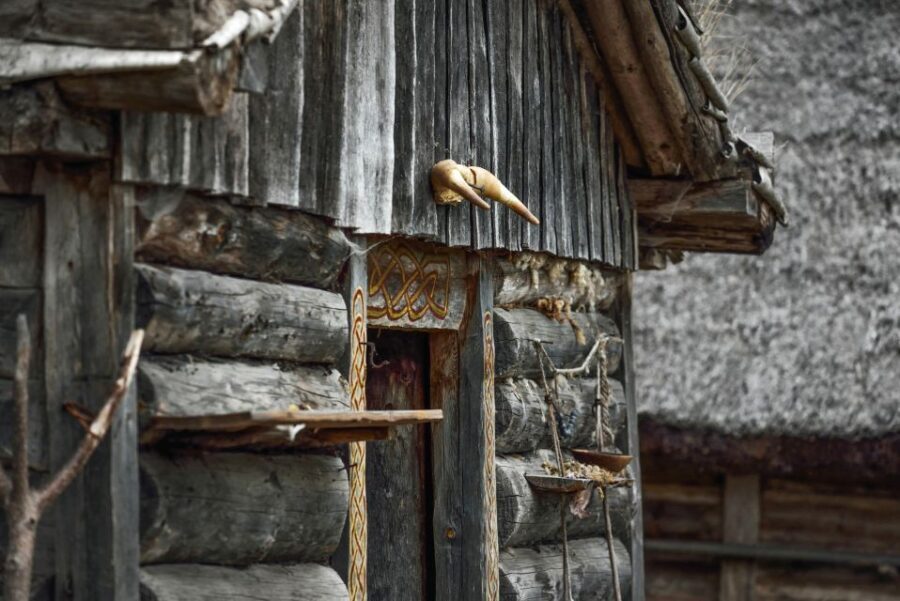
Useful if your itinerary already includes the Royal Palace, Skansen, the ABBA Museum, and a hop-on hop-off bus, the pass starts paying for itself around the third or fourth attraction. Our breakdown of the Stockholm Pass shows the maths for typical routes. For a one-day Vasa-focused trip, this is the wrong choice.
How to Get to the Museum
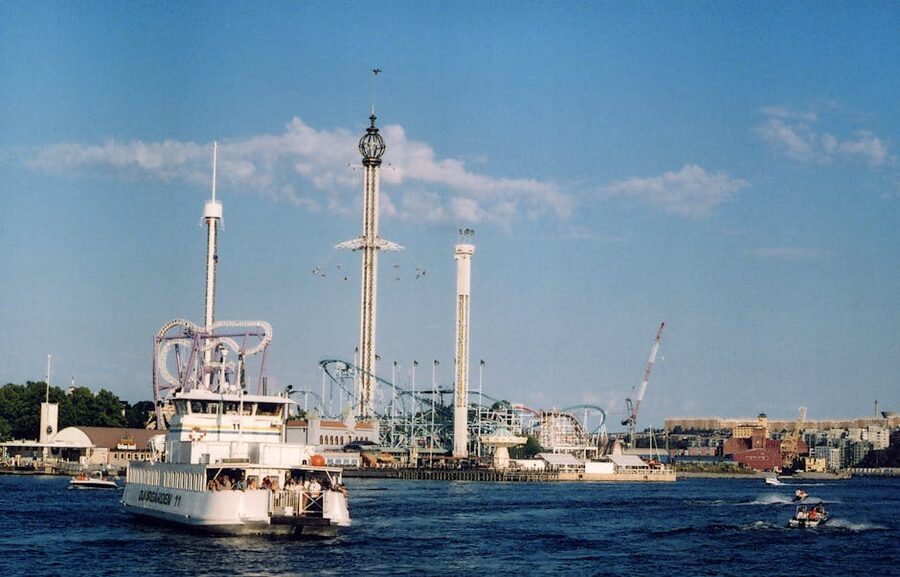
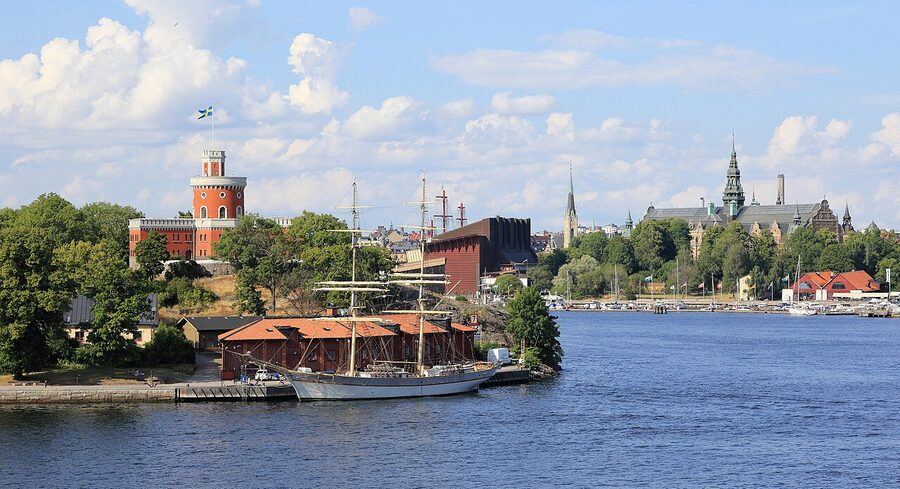
The museum sits on Djurgården, an island that’s basically Stockholm’s outdoor museum quarter. Three options for getting there.
Tram 7 runs from Sergels Torg in the city centre out to Djurgården and stops a five-minute walk from the museum entrance. This is the fastest dry-weather option, around 12-15 minutes from the centre.
The Djurgården ferry from Slussen takes a similar amount of time but is genuinely scenic, you sail past the city’s waterfront before docking near Gröna Lund amusement park. If the weather’s good, this is the better arrival.
Walking works too, but it’s a 30-40 minute walk from the centre, and Stockholm’s broken-up-by-water layout means the route is longer than it looks on a flat map. If you’re up for it, the route past Skeppsholmen and across Djurgårdsbron is quite pretty. If you’re not sure, take the tram.
If you’re working out how to combine multiple Djurgården attractions in a single day, the Stockholm hop-on hop-off bus is the lazy answer, the boat-and-bus combo ticket also stops at Vasa, Skansen, and the ABBA Museum on a 30-minute loop. Worth knowing about even if you only use it for one leg.

The Surprising Story of How a Warship Sank in 1,300 Metres

King Gustavus Adolphus needed warships. Sweden was at war with Poland-Lithuania, and Gustavus was building the navy that would carry the country to its short-lived superpower status during the Thirty Years’ War. He commissioned four ships in 1625, and the Vasa was the largest, intended to project power and shock Catholic Europe into respecting a Lutheran kingdom no one had taken seriously before.
So far so good. The problem was timing. Gustavus wanted bigger guns. Specifically, he wanted two full gun decks instead of one, doubling the firepower, and he wanted them now. The shipwright, Henrik Hybertsson, had already laid the keel for a single-gun-deck ship. He was told to add the second deck anyway. Hybertsson died of stress halfway through the build. His brother took over and finished it.
,_64_Gun_Warship,_Stockholm,_Sweden_-_Murat_%C3%96zsoy_06.jpg)
Before launch they ran what amounted to a stability test. Thirty sailors ran from one side of the deck to the other while the ship was at anchor. After three runs the captain stopped the test, the ship was rocking so violently they were afraid it would capsize at the dock. The vice-admiral noted his concerns. The ship sailed anyway. The king wanted his fleet.
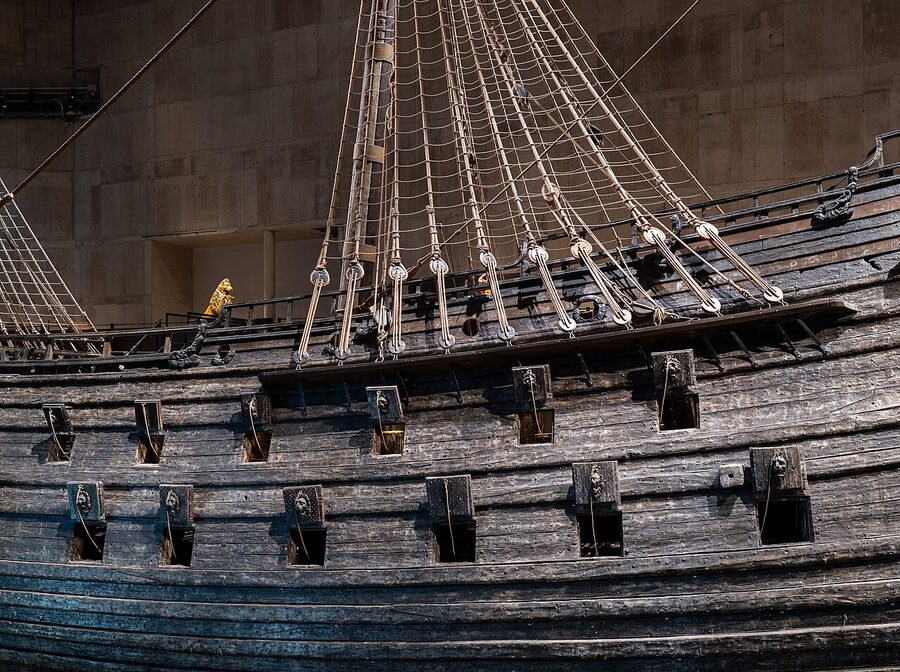
August 10, 1628. The Vasa cast off from the Stockholm shipyard with a crew of around 150, plus their families and friends along for a ceremonial first voyage. The wind was light. Sails went up. About 1,300 metres into the trip a stronger gust hit her broadside, the ship rolled sharply onto her side, water poured in through the open lower gun ports, and she sank in roughly 30 metres of water with what’s now estimated as 30 dead.
An inquest followed. Nobody was punished. The shipwright was dead, the king was abroad, and assigning blame would have meant pointing at Gustavus himself. The ship was written off. Some of the bronze cannons were salvaged in the 1660s by a diver in a primitive bell. The hull was forgotten.
Why She Survived 333 Years in the Mud
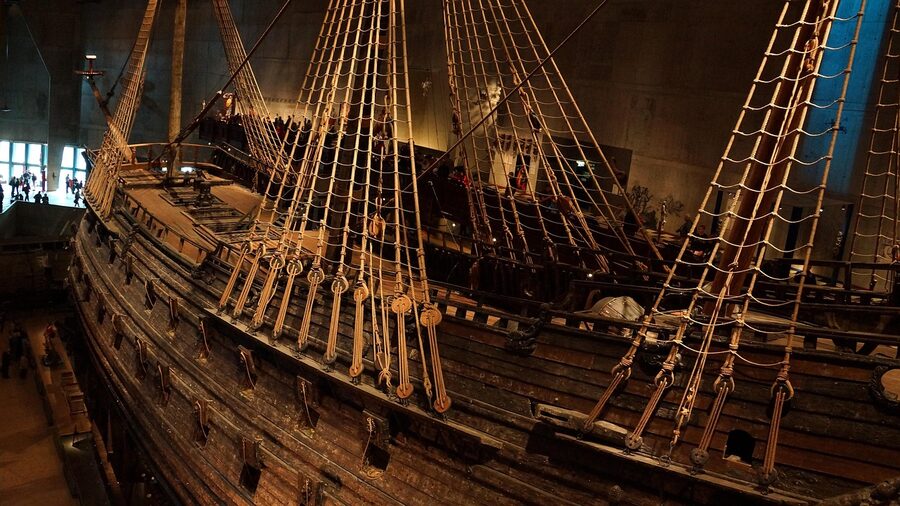
This is the part most people don’t realise until they’re standing in front of the ship. The reason 98% of the wood is original, why the carvings are still recognisable, why even the rigging blocks survived, is the Baltic Sea.
The Baltic is brackish, only one third as salty as a normal ocean. That low salinity means the shipworm Teredo navalis, which destroys wooden wrecks within a few decades almost everywhere else in the world, can’t live there. Add the cold water and the low oxygen of harbour mud and you have the best timber-preservation conditions on Earth. The Vasa wasn’t lucky in 1628. She was extremely lucky in where she sank.
An amateur archaeologist called Anders Franzén spent five years in the 1950s working out where she actually was, dragging a grappling iron through the harbour from a small boat. He hit the wreck in 1956. The ship lay at a slight list at 32 metres below the surface, hull intact, almost embarrassingly findable once you knew where to look.
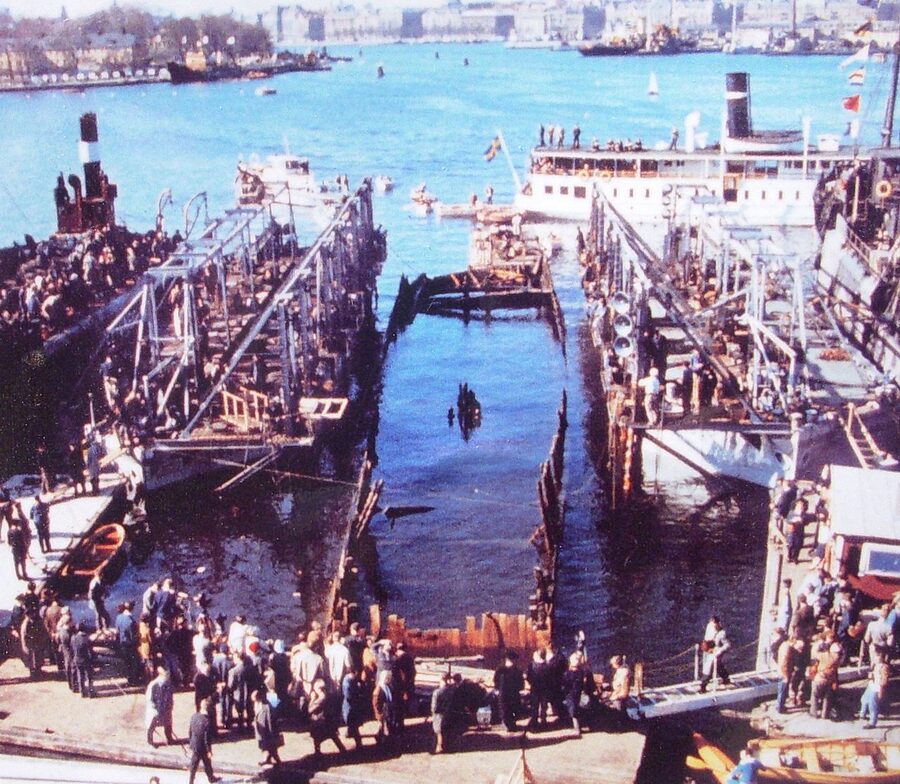
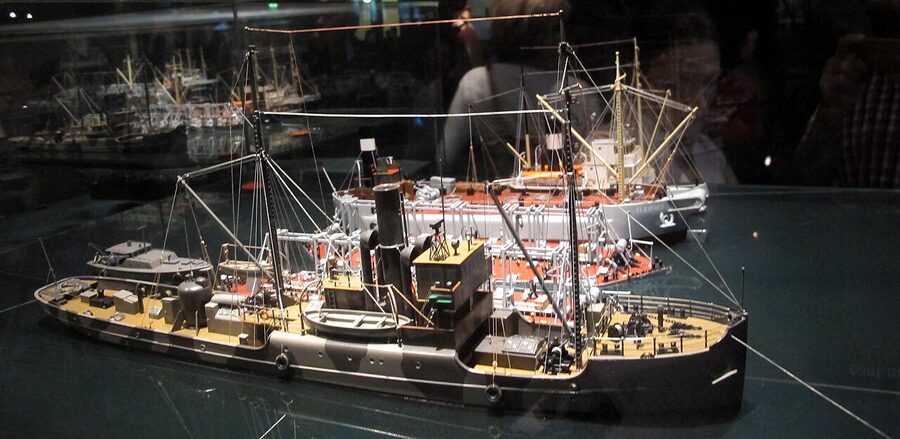
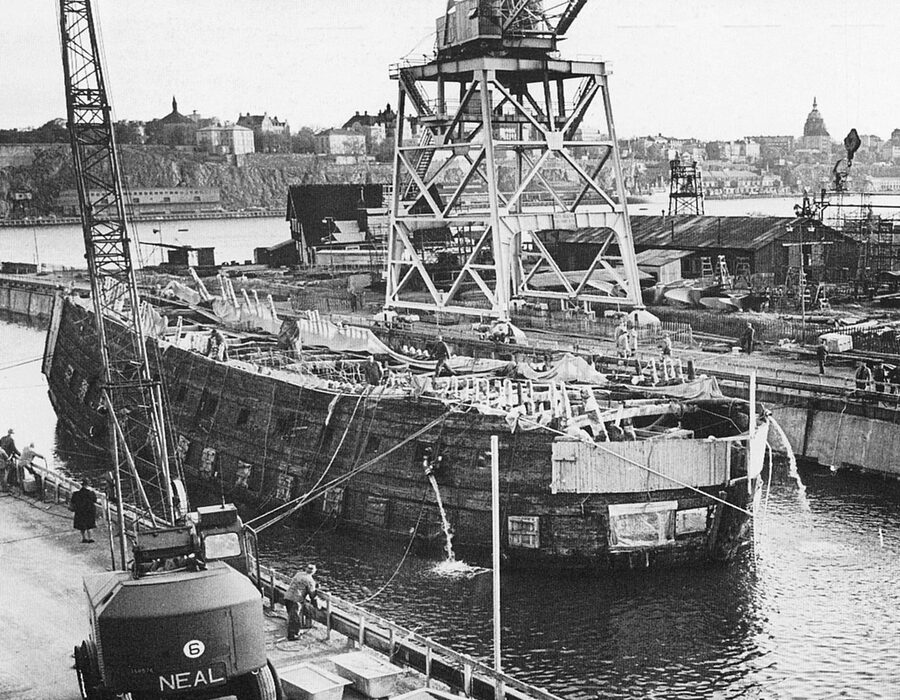
Then came the lift. Divers spent two years tunnelling six channels under the hull to thread cables through. The ship was raised in stages, dragged into shallower water again and again, then finally lifted into a pontoon on 24 April 1961 and floated to a temporary berth. She had been underwater for 333 years.
The Polyethylene Glycol Trick
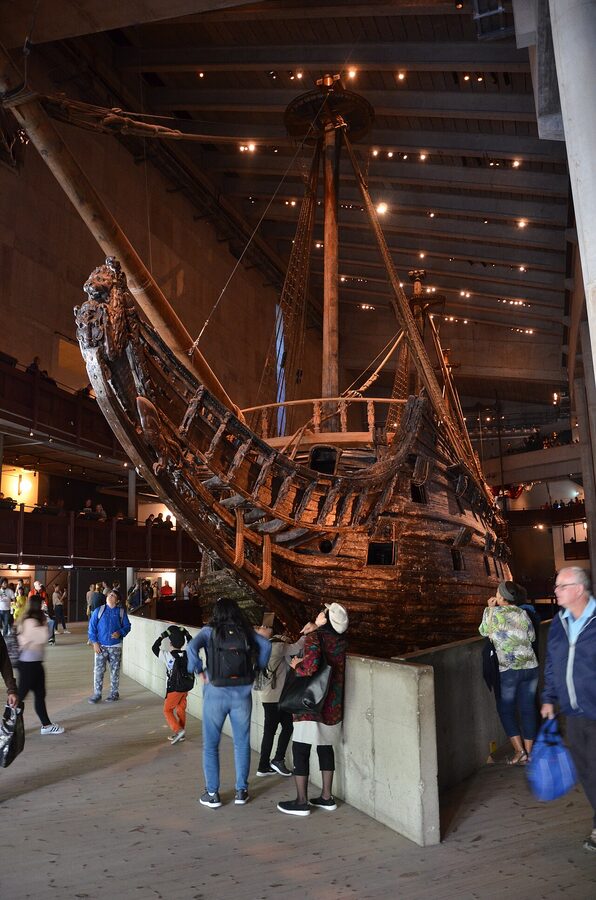

The ship came up wet. That was the easy part. The hard part was that waterlogged 17th-century oak, when allowed to dry naturally, shrinks and cracks until the timbers split into pieces. You can’t just put a ship in a building and hope.
The conservators settled on polyethylene glycol, a waxy synthetic substance that replaces the water in the wood cells molecule by molecule. They sprayed it on, fine mist after fine mist, day after day, year after year. For seventeen years. From 1962 to 1979. The ship sat under sprinklers for the whole period, slowly trading water for wax until the timbers were stable enough to display dry.
Even now, the chemical war isn’t fully over. The conservators still monitor sulfur compounds in the wood (the iron bolts left over from 1628 react with the moisture and produce sulfuric acid that quietly eats the timbers from inside). Every year there’s research published on how to slow the rot. The Vasa is the most-studied ship in history, and it’s also the one with the most ongoing maintenance.

What to Look For Inside
Most visitors do the museum in 90 minutes to two hours. With a guided tour you can stretch it to three. Here’s what I’d actively look for, the stuff that’s easy to miss if you walk in cold.
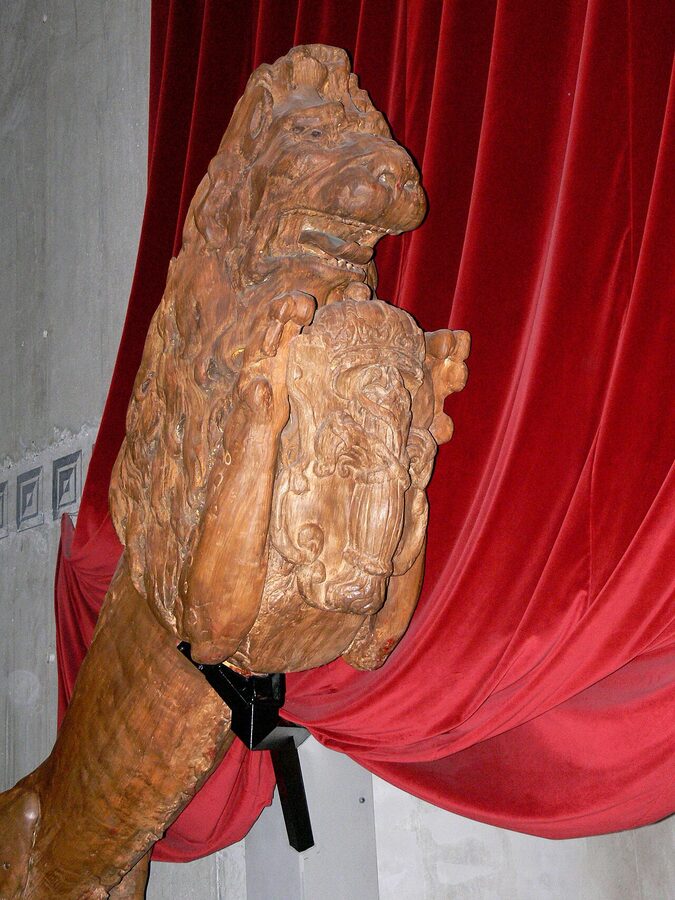
The lion figurehead on the bow. Three metres long. Originally bright red and gold. There’s a colour reconstruction of it on a model nearby, compare them and the contrast is striking.

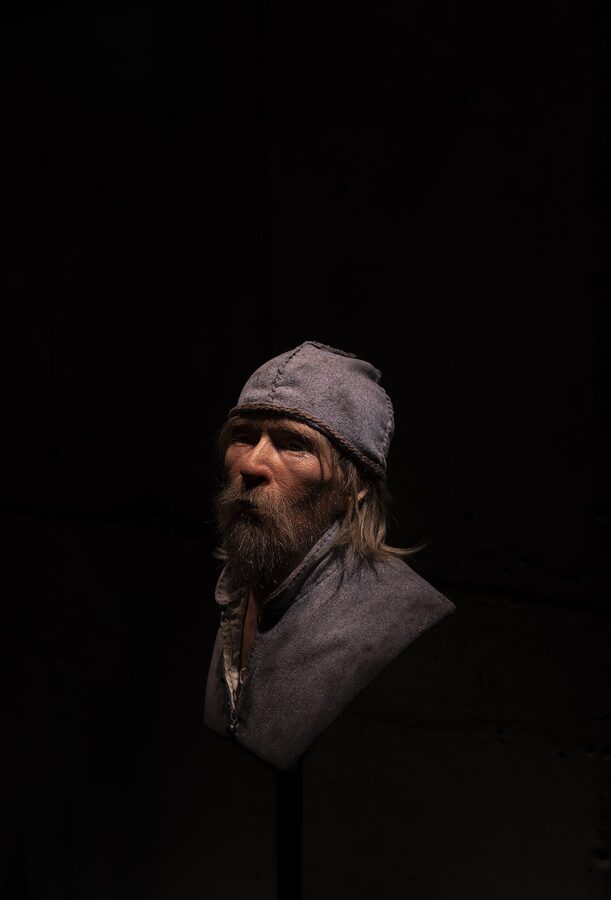
The wax figures of the dead. The museum recovered the remains of around fifteen people from the wreck and a forensic team reconstructed their faces. They sit in glass cases on the upper levels. Reading their stories (a sailor with arthritis, a young woman whose name is unknown, a man who almost certainly wasn’t supposed to be aboard) makes the disaster human in a way the ship alone doesn’t.

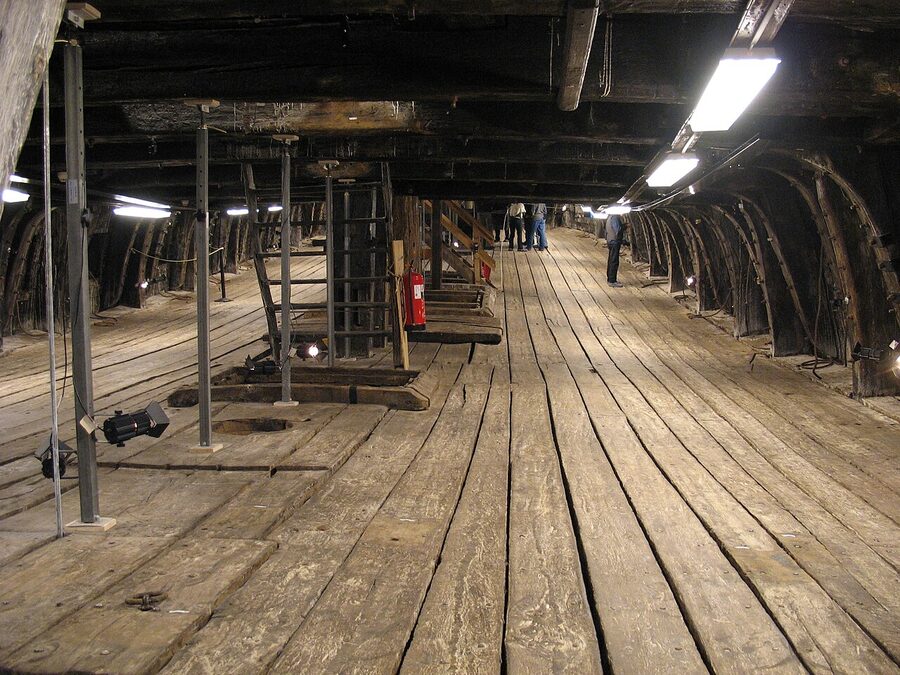
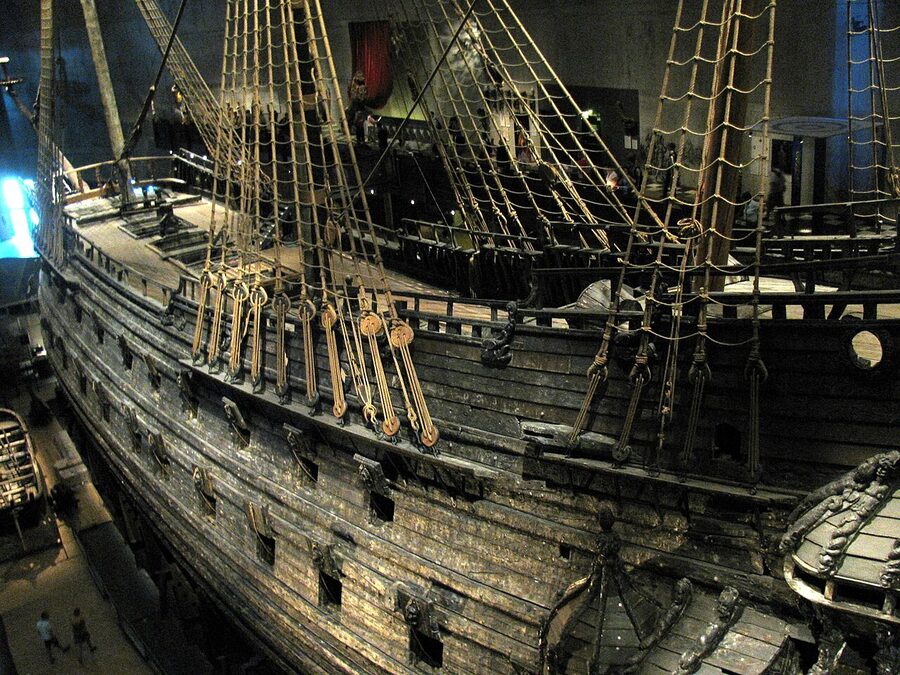
The lower gun deck cutaway. One section of the ship has been cut away to show the gun deck arrangement. You can see exactly how cramped life aboard was, and exactly why open lower gun ports were the kill stroke when she rolled.

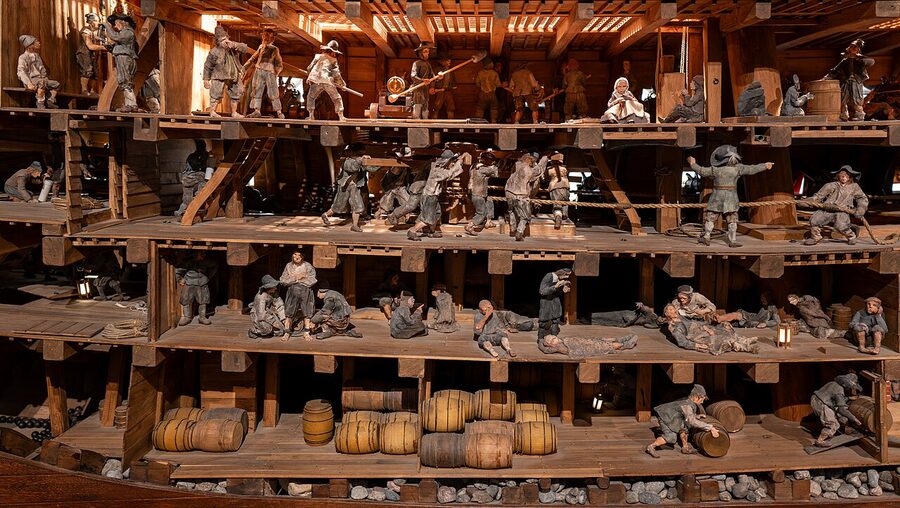
The model of life aboard. Tucked on one of the side galleries. Tiny figures in their hammocks. A captain reading a letter. Cooks at the galley. It’s the museum’s way of showing what 150 men and the families travelling for the maiden ceremony were doing in the half hour before everything went wrong.

The sister ship Vasa II model and the dive equipment used in 1956 sit in side rooms, easily missed if you bee-line back to the gift shop. Worth ten extra minutes.
When to Visit

The museum is open daily, 365 days a year except for a couple of holidays. Hours run roughly 10am to 5pm in low season and stretch to 8pm in summer (June through August). Check the official site before you go, the schedule shifts year to year.
Summer (June-August) is the busy season. Cruise ship passengers, tour groups, families on holiday. Queues at the entrance can hit 30-45 minutes at midday. Solution: turn up at opening time (the first hour is genuinely peaceful) or after 4pm when the crowd thins. The museum is also at its hottest in summer because the climate control fights the body heat of the visitors.
Spring (April-May) and autumn (September-October) are the sweet spots. Daylight is reasonable, queues are short, and Djurgården itself looks beautiful with budding trees in spring or autumn colour around Skansen and the Nordic Museum.
Winter (November-February) is genuinely empty. You’ll often have whole sections of the museum to yourself, especially mid-morning on weekdays. The trade-off is short daylight (sunset around 3pm in December) and bitter cold outside, so factor in transport options. The tram is heated and runs reliably year-round; the ferry sometimes shuts in heavy ice.
One quiet tip: the museum is open Christmas Eve, Christmas Day, and New Year’s Day in most years (with shorter hours). It’s an oddly perfect way to fill a holiday afternoon when half of Stockholm is closed.
Practical Things Worth Knowing
,_64_Gun_Warship,_Stockholm,_Sweden_-_Murat_%C3%96zsoy_23.jpg)
Photography is allowed, no flash, no tripods. The low light makes hand-held shots tough, push your ISO up and brace against a railing if you can. A phone in night mode does a surprisingly good job.
The cafe on the ground floor is fine, not great. Sandwiches, coffee, a few hot dishes. If you have time, walk five minutes back toward the main road and there’s a string of better lunch spots near the Nordic Museum.
The gift shop is unusually good for a museum gift shop, books on the salvage, on Swedish naval history, plus a few decent reproduction items. Worth a browse even if you’re not buying.
Strollers and wheelchairs can use the museum’s full route. There are lifts to every level. Drawers and tactile exhibits exist for visitors with sight impairments. The audio guide has a version with extra description.
Bag storage, lockers near the entrance, free, you’ll need a one-krona coin you get back. Backpacks are fine inside but most people use the lockers anyway.
Pairing the Vasa with Other Stockholm Stops

The Vasa Museum doesn’t fill a day on its own, even with the guided tour. So most people pair it with something else on Djurgården. Here’s how I’d pair it.
Same morning, then Skansen. The world’s first open-air museum sits a 10-minute walk away. Skansen tickets get you 150 historic buildings, a Nordic-animals zoo, and craft demonstrations. Vasa in the morning, lunch on Djurgården, Skansen in the afternoon is a classic Stockholm day.
Same morning, then ABBA. If you’ve got teenagers or just like ABBA, the ABBA Museum is five minutes from Vasa on foot. Two hours each, both indoor, both can be booked online to skip the queue.
Vasa first, archipelago boat in the afternoon. Stockholm sits on the edge of an enormous archipelago, and a half-day cruise is one of the city’s best experiences in summer. A morning at Vasa, a 1pm boat out into the islands, and back at sunset works beautifully. Our guide to visiting the archipelago covers the boat options.
Vasa first, then a walking tour of Gamla Stan. Different mood, different scale, but a good complement. Vasa shows you the warship that helped Sweden become a 17th-century power; a walking tour of the Old Town walks you through the streets where that power was wielded. If you want something darker after dinner, a lantern-led ghost walk through Gamla Stan covers the 1520 Bloodbath and several other reasons not to wander Stockholm’s alleys alone at night.

If you want a slower water-based pairing, a Stockholm canal or harbour boat tour is the gentle counterpoint to two hours of stern carvings and forensic faces. They run from the same waterfront the Vasa once sailed from.
Common Mistakes I See Tourists Make
Going at midday in summer. Worst possible timing. The queue is at its longest, the building is at its warmest, and the upper galleries get genuinely crowded. First hour or last two hours, always.
Skipping the audio guide or a real guide. The signage is good, but the museum has so many layers (politics, engineering, salvage, conservation, forensic anthropology) that you really do come away with a fraction of the story if you read alone. The 50 SEK audio guide is the cheapest upgrade. The full guided tour is the best one.
Thinking the model out front is the ship. There’s a colour-painted scale model in the entrance hall. People sometimes glance at it and think they’ve seen the museum. The actual ship is in the dim main hall behind it. Walk through.
Not visiting Vrak. If maritime history interests you at all, the combo ticket is the obvious call. People skip Vrak because it’s newer and less famous. It’s also a much better museum than that reputation suggests.
Treating it as just a Stockholm activity. The Vasa is one of the great museums of Europe. If you’re a one-museum-per-trip kind of traveller, this is the one in Stockholm. Treat it like the main event, not a 90-minute filler.
One More Thing
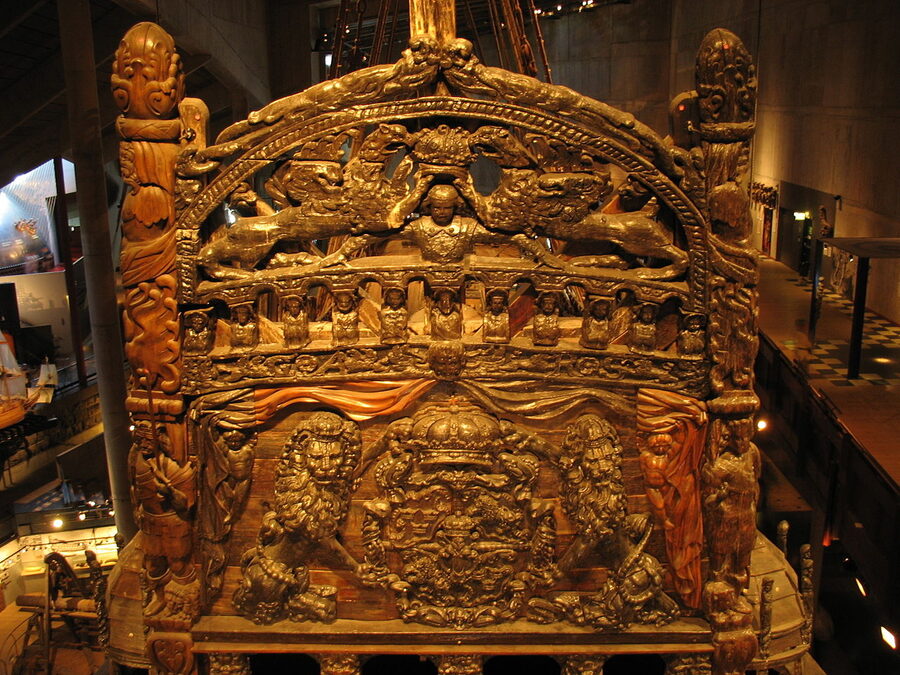

The thing that gets me, every time, is that it’s still here. A 17th-century warship, lost on her maiden voyage, sat in mud for thirteen generations, and someone fished her out and built a museum around her. We don’t have anything else like this. There’s no equivalent in Britain, in France, in Italy. The Vasa is the only intact 17th-century ship in the world.
Buy the ticket. Take the guide. Walk around the hull a second time before you leave. The audio guide will repeat itself and you’ll still notice three new things on the second loop. That’s the kind of museum it is.
Other Stockholm Guides Worth a Look
If you’re putting together a Stockholm itinerary, the rest of our Swedish coverage might help. The most-asked questions on a first visit are usually about how to actually get around (Stockholm spreads across 14 islands and the metro map can lie about distances), so the hop-on hop-off bus guide is the easy starting point. After that, a guided Old Town walk is the best way to get the city’s history in two hours, while a harbour or canal boat tour covers the angle Stockholm always looks best from. For families, Skansen and the ABBA Museum are the obvious Djurgården add-ons. And if you have a full day to spare, the archipelago boat trip is the Stockholm experience most travellers come back raving about. For an evening of something darker, a Gamla Stan ghost walk is the perfect cap to a Vasa day.
Affiliate disclosure: some links above go to GetYourGuide and Viator. If you book through them, we may earn a small commission at no extra cost to you. It helps keep the lights on.